Uncovering Khetri : A Hidden Gem in the Shekhawati

In my search for places that could be visited on a single day trip from Gurugram, Khetri seemed to pop up on a few occasions. I did try to plan a Khetri trip a few times over the last three years, even attempting to rope in my colleagues once, but it was not to be, especially since it would need a detour from all the major roads. I also abolished thoughts of doing a solo drive to Khetri because I was uncertain about the condition of roads and the remoteness I would encounter.

That was until the time my parents were here in Gurugram, and we really had to find something for a day trip before they returned to Odisha. While mother is always excited for any arbitrary new place, father only agreed once I brought to the fore the connection of Khetri with Swami Vivekananda. So, off we started on a mid-December morning around 10 AM in the quest to uncover Khetri.

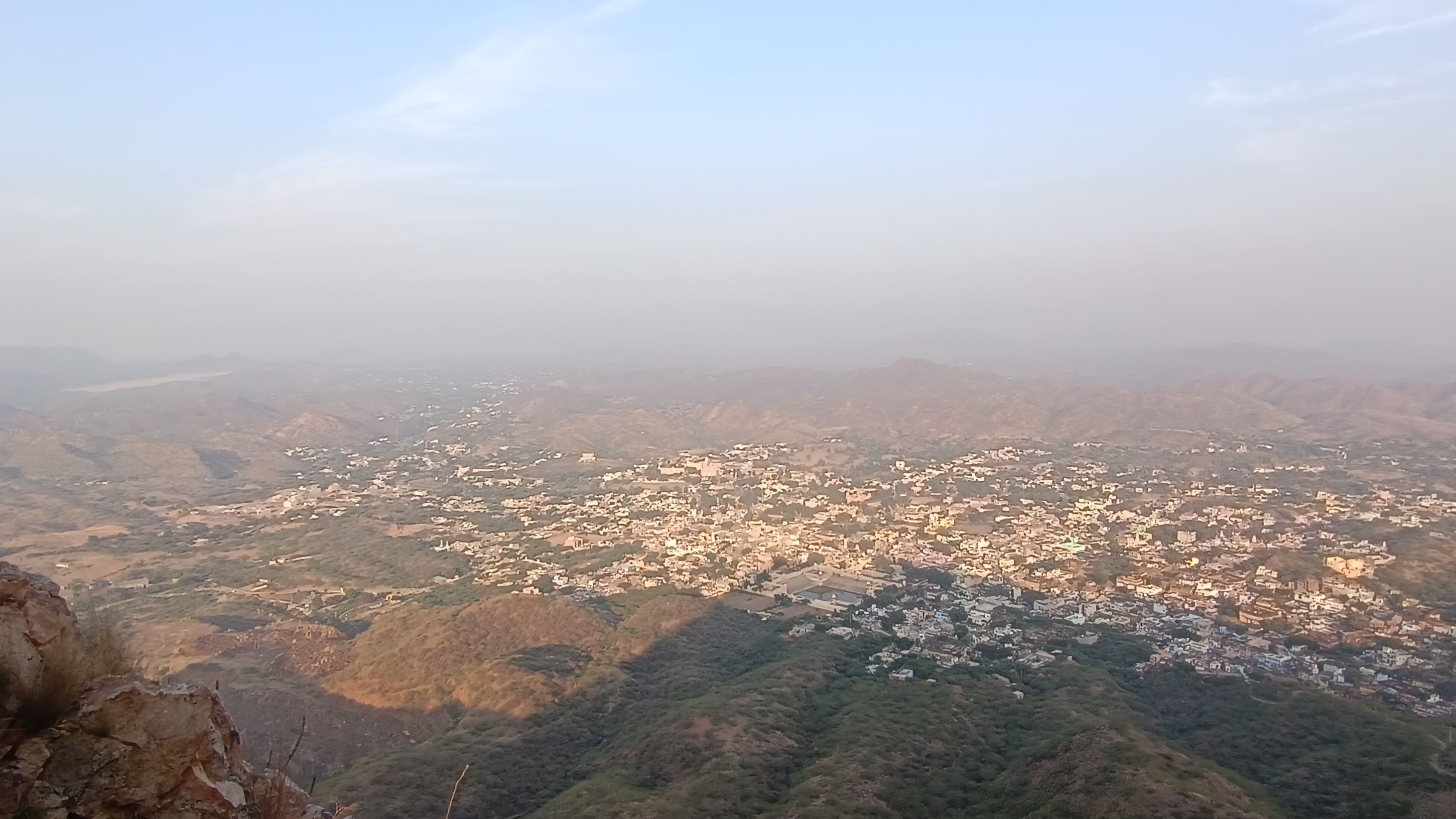
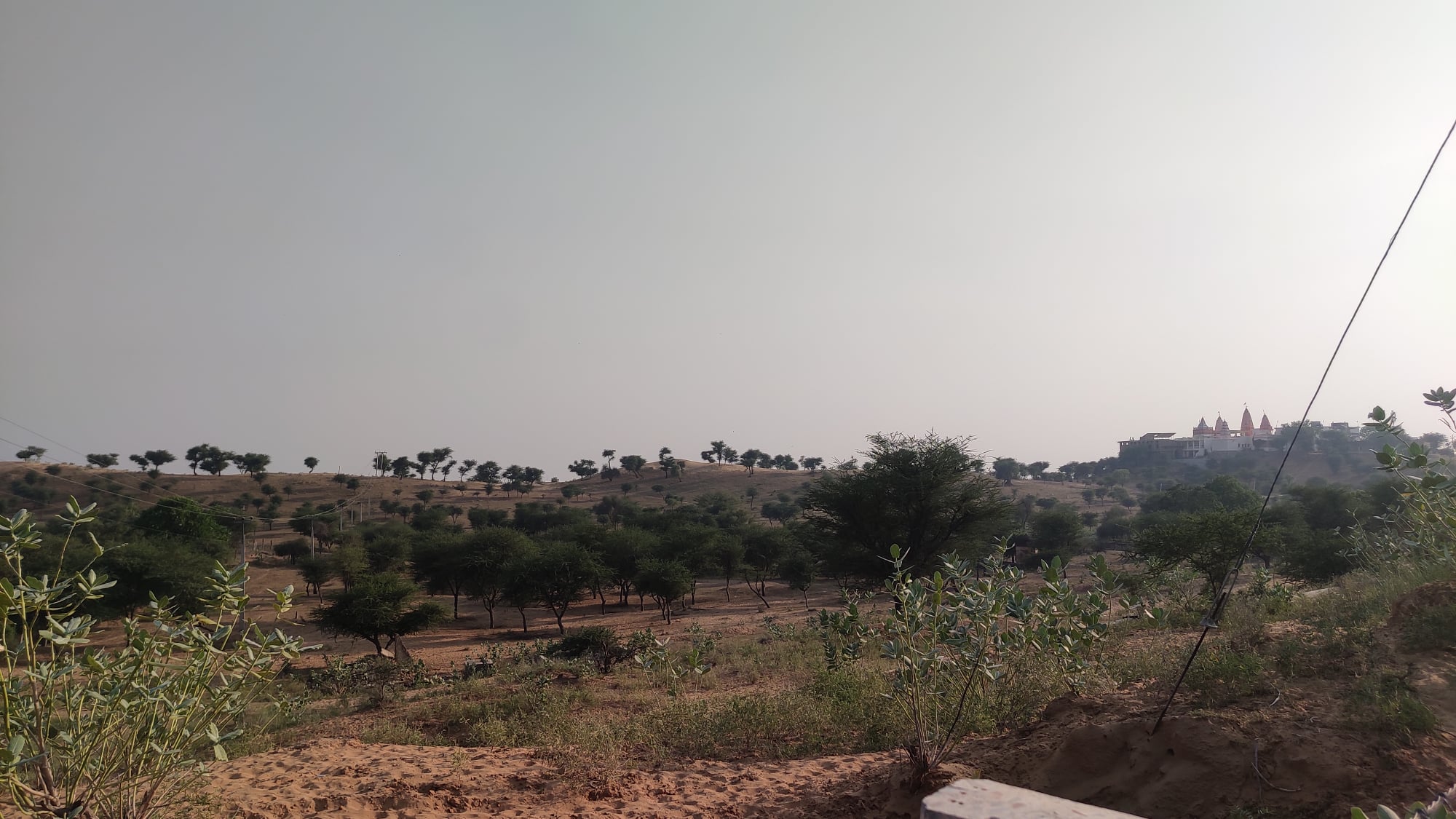
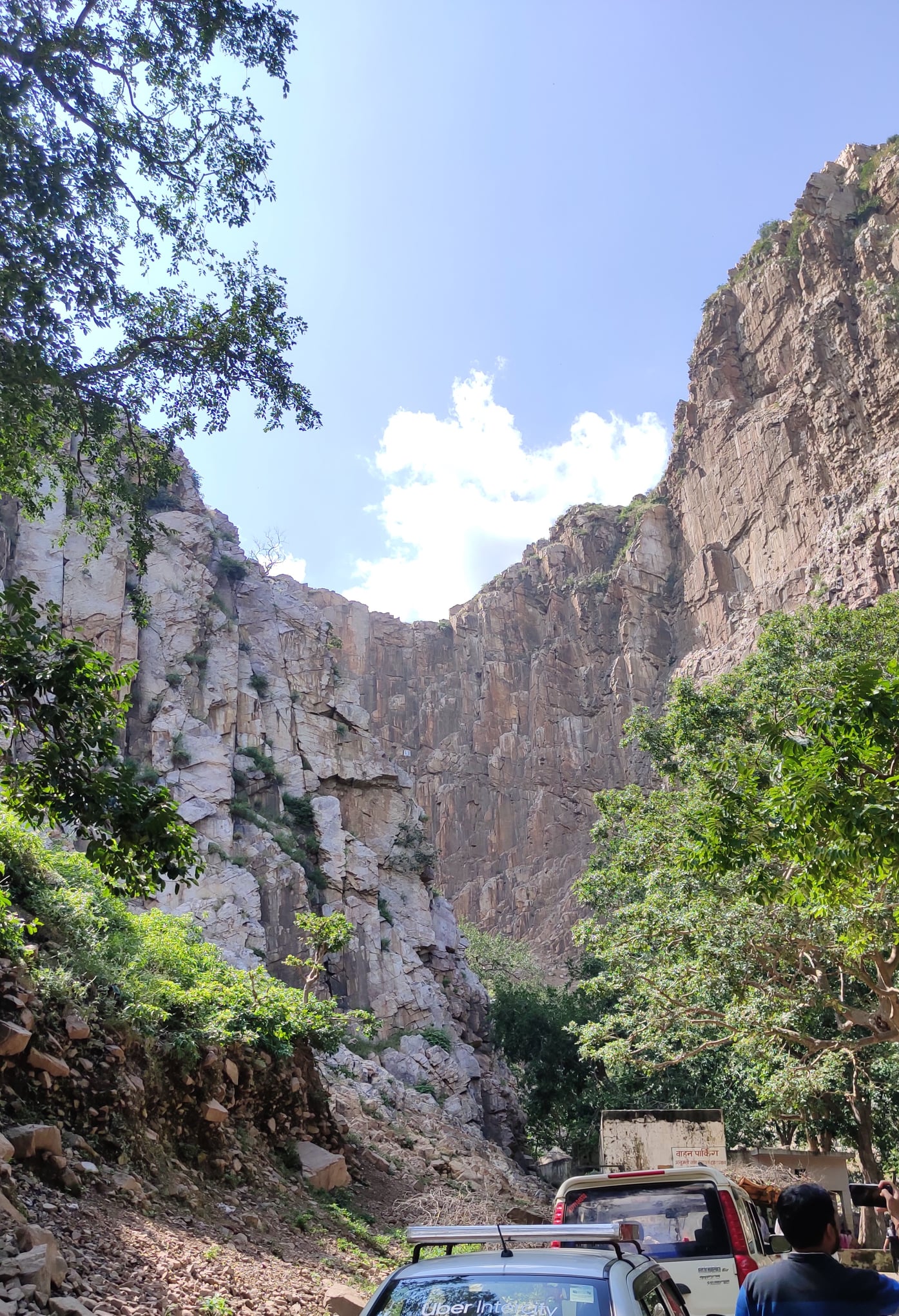
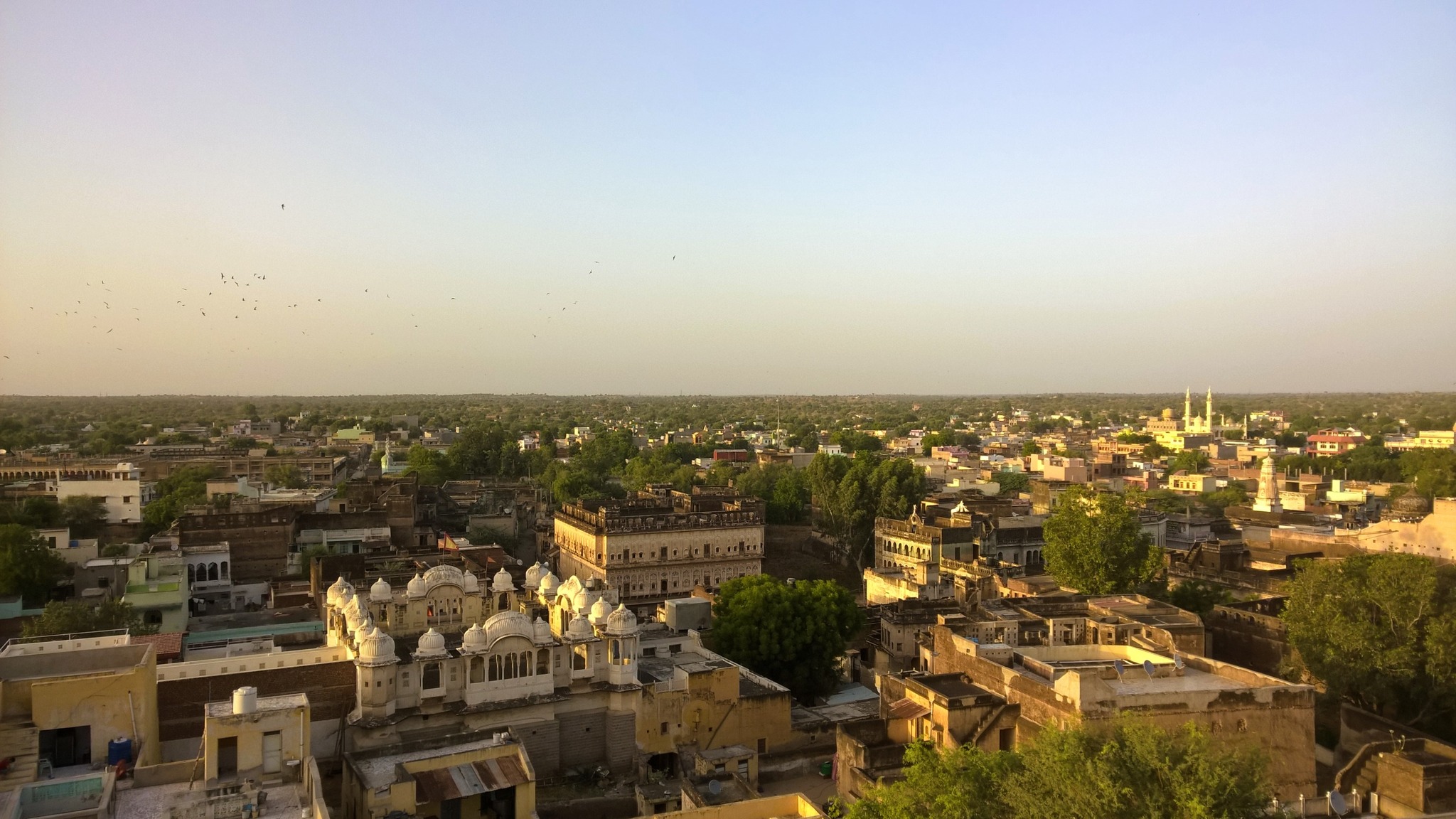
We first drove towards and bypassed Rewari, then took NH 11 – that runs westwards to Jaisalmer through Jhunjunu – till Singhana, and then turned to the left, passing first by a low stretch of the Aravalli, and then approaching a pass in a cluster of the low Aravalli hills. Soon we were flanked by the Aravallis on both the sides, as we drove up the road winding through the pass, and finally reached a wide patch of undulating land surrounded by the Aravallis, with low houses and buildings sprawling across the dry valley, and swarming with people betraying a certain laid-backness in their demeanour.

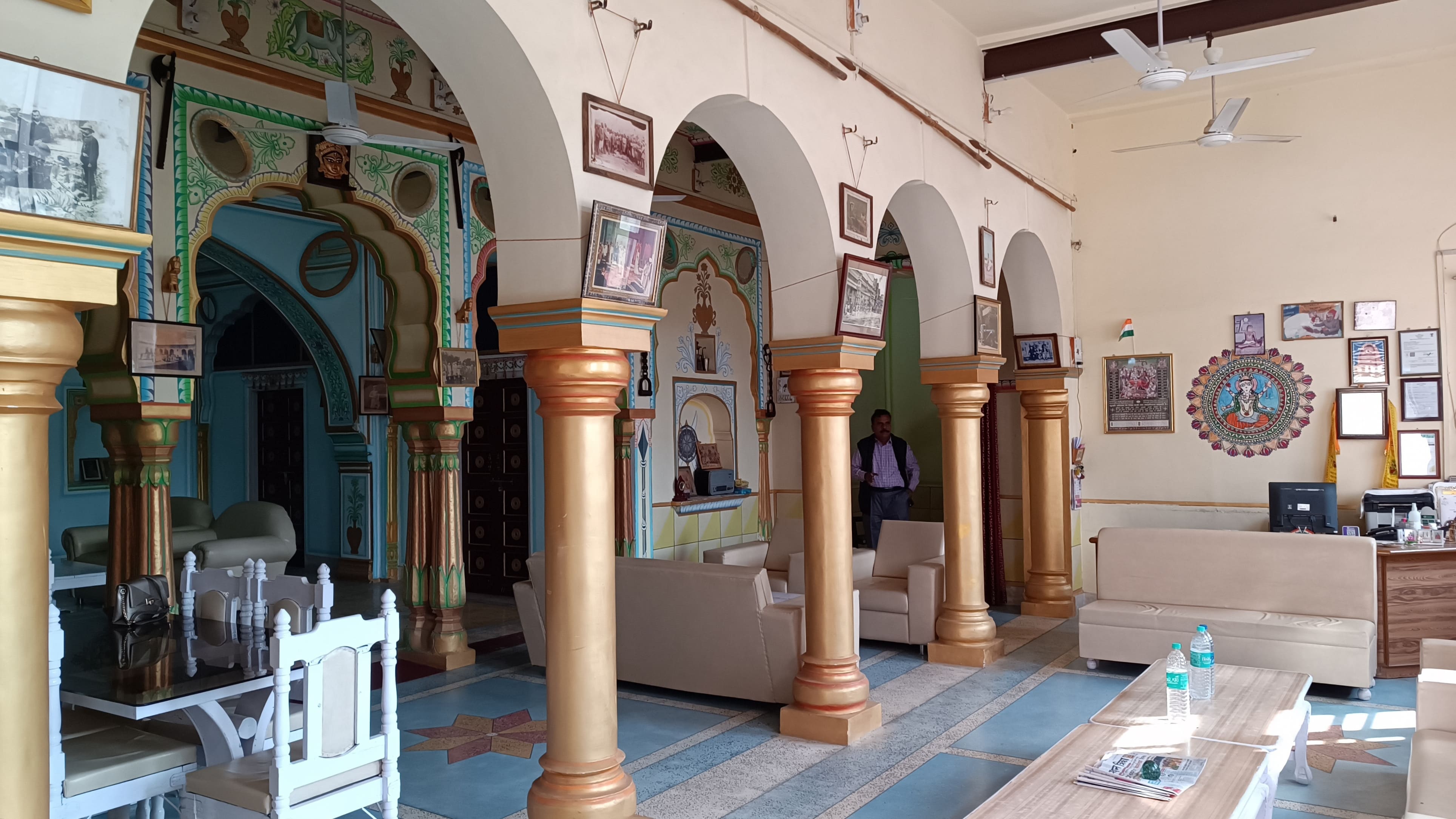
It already being 1.30 PM, we asked around for a good place to have lunch, and took a hairpin upturned bend from the main road, reaching a haveli that once belonged to the royal dynasty. Now turned into Hotel Haridiya Heritage, the haveli is located higher than most of the town, affording a view of the erstwhile king’s palace which lies almost adjacent to it, and a view of the Aravallis running on the other side of the town. Photographs and souvenirs from the past adorn the walls of the main hall transporting one to a more circumspect time, convincing us that the haveli would be a good retreat for someone looking to spend time in Khetri.
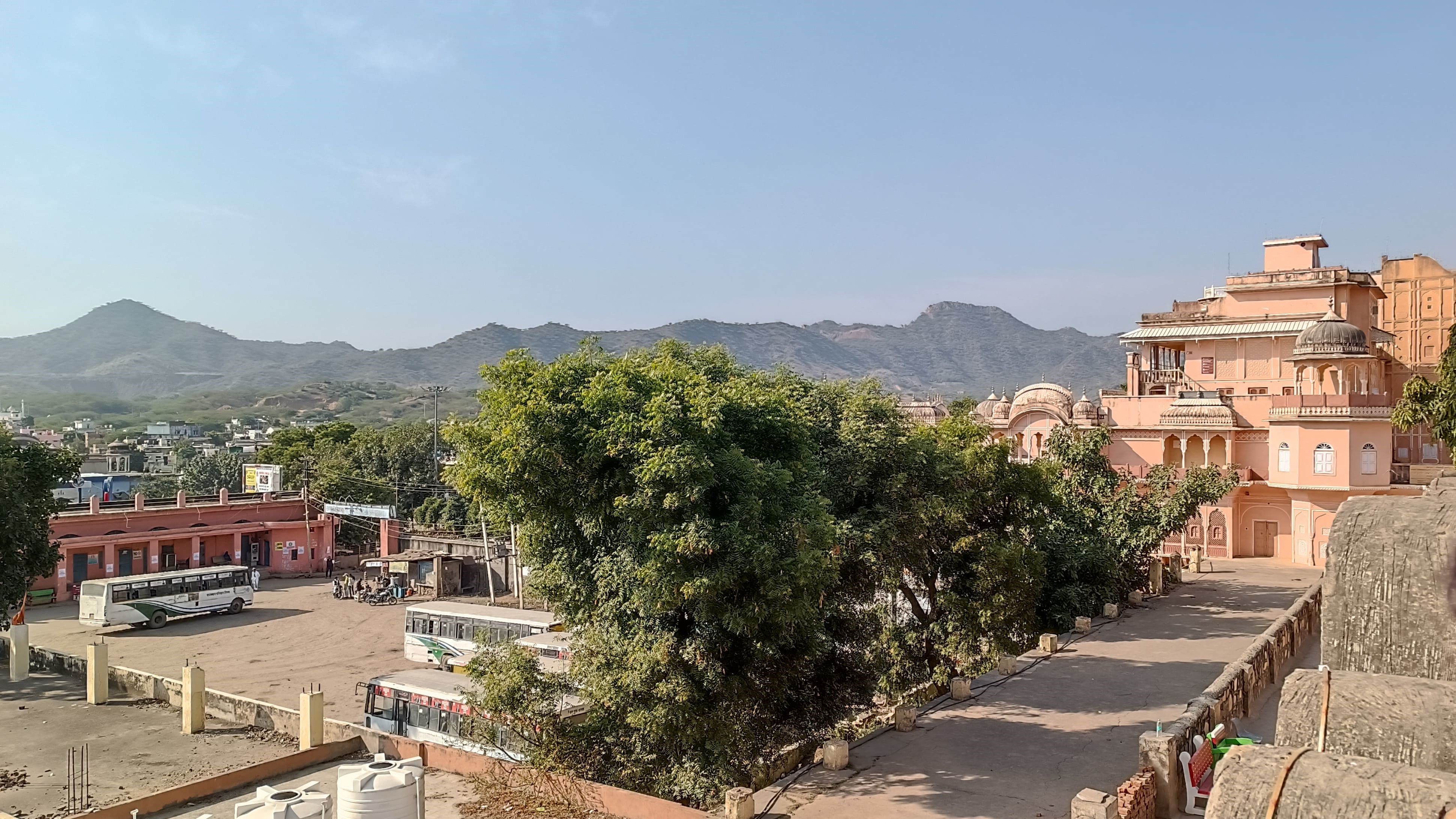
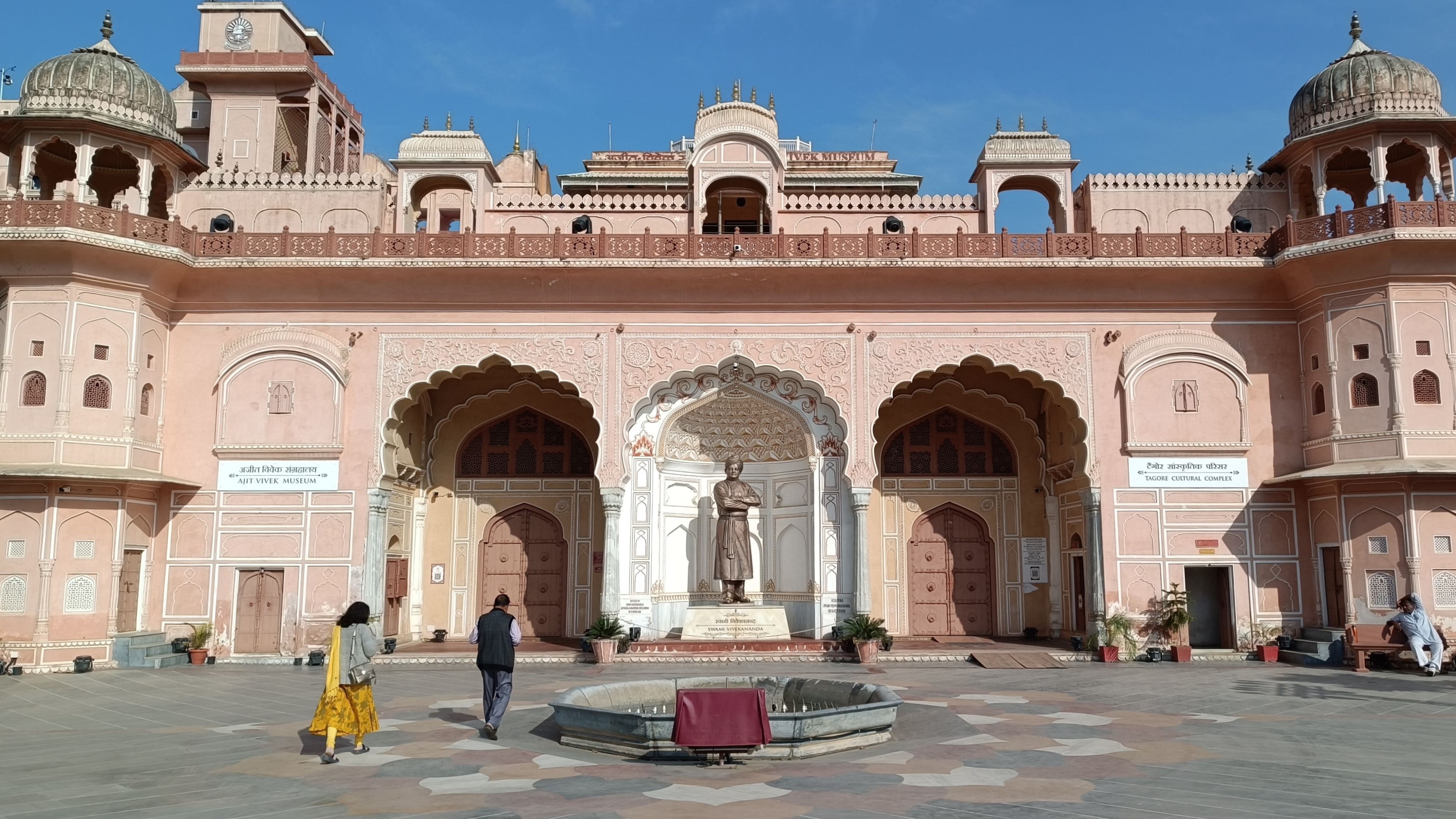
Our next stop following lunch was the royal palace which has since been given over to the Ramakrishna Mission who now run the mission in part of the palace. The remaining part has been turned into the Ajit-Vivek museum dedicated to displaying the life and teachings of Swami Vivekananda. But why is this quaint little town nestled in the Aravallis being spoken of in the same breath as a monk from Bengal, a land in the east of India? Well, this seems like a good point to take a detour and learn about the connection between Khetri and Swami Vivekananda.

Khetri and Swami Vivekananda

After starting his life as a wandering monk in 1888, Swami Vivekanand first set foot in Khetri in June 1891, meeting Ajit Singh, the ruler of the Shekhawat estate (thikana) of Khetri. Following a discussion on a wide range of subjects, Ajit Singh invited Vivekananda for dinner. Vivekananda ended up staying in Khetri from 4 June 1891 to 27 October 1891, during which period Ajit Singh taught Vivekananda to wear a turban in the Rajasthani style to protect him from the hot wind blowing in the area. With variations added of his own, Vivekananda made the turban a staple of his life, as evident from most of the well-known pictures of the monk. A teacher-disciple relationship and a life-long friendship had begun.

Vivekananda visited and stayed in Khetri a second time from 21 April 1893 to 10 May 1893. Learning of his wish to participate in the Parliament of World’s Religions as a speaker, Ajit Singh readily provided him with financial aid, and the tickets for the voyage, even escorting him till Jaipur, from whereon Ajit Singh’s Munshi escorted Vivekananda till Bombay. Purportedly upon Ajit Singh’s request, the monk also assumed the monastic name Vivekananda replacing his then-assumed name Vividishananda. The two remained in correspondence during Vivekananda’s stay in the west, with Ajit Singh providing him financial support whenever required.

Vivekananda visited Khetri a third and final time in 1897, upon Ajit Singh’s invitation, where he gave a lecture attended by Ajit Singh and many Eurpoean guests. During this visit, Vivekananda openly expressed his gratitude to Ajit Singh for his support. In 1898, Vivekananda requested that a monthly stipend given by Ajit Singh to his mother, be made permanent even after Vivekananda’s death. Ajit Singh honoured this arrangement, without publicising this, till his death in 1901 due to a collapse of a tower he was standing on, at the age of 39. Incidentally, Swami Vivekananda also died at the age of 39, the following year.

In 1958, Ajit Singh’s grandson, Bahadur Sardar Singh donated the then abandoned and dilapidated Palace of Khetri to the Ramakrishna Mission, who cleared and restored one part of the palace to establish a mission. Later, another part of the building, Fateh Vilas, was turned into a museum showing Vivekanda’s life and teachings, while also honouring Ajit Singh. The room overlooking the town and the Aravallis, where Vivekananda lived during his stays in Khetri has now been turned into a prayer room. Some letters of correspondence between Vivekananda and Ajit Singh are also on display.
*************

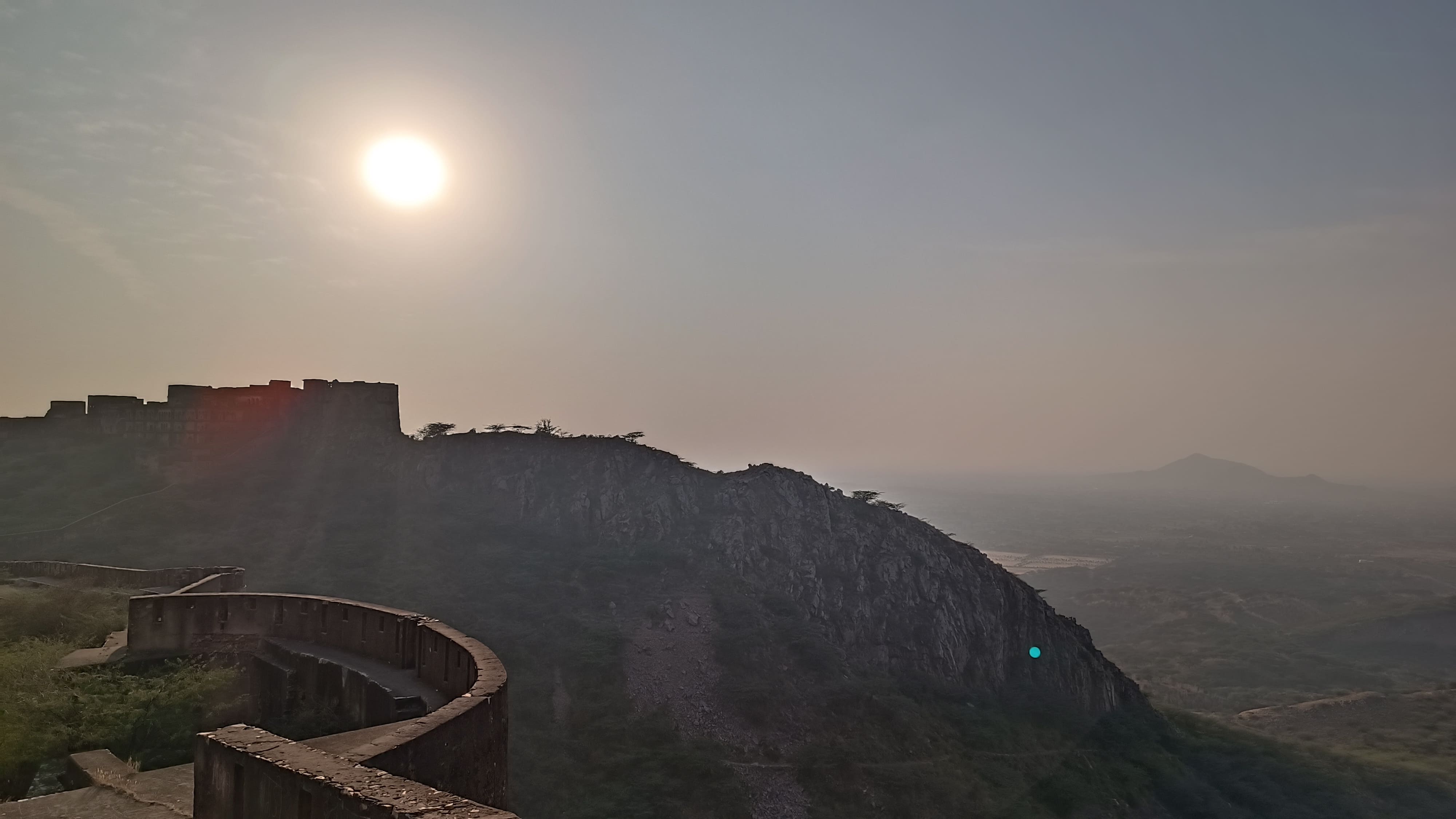
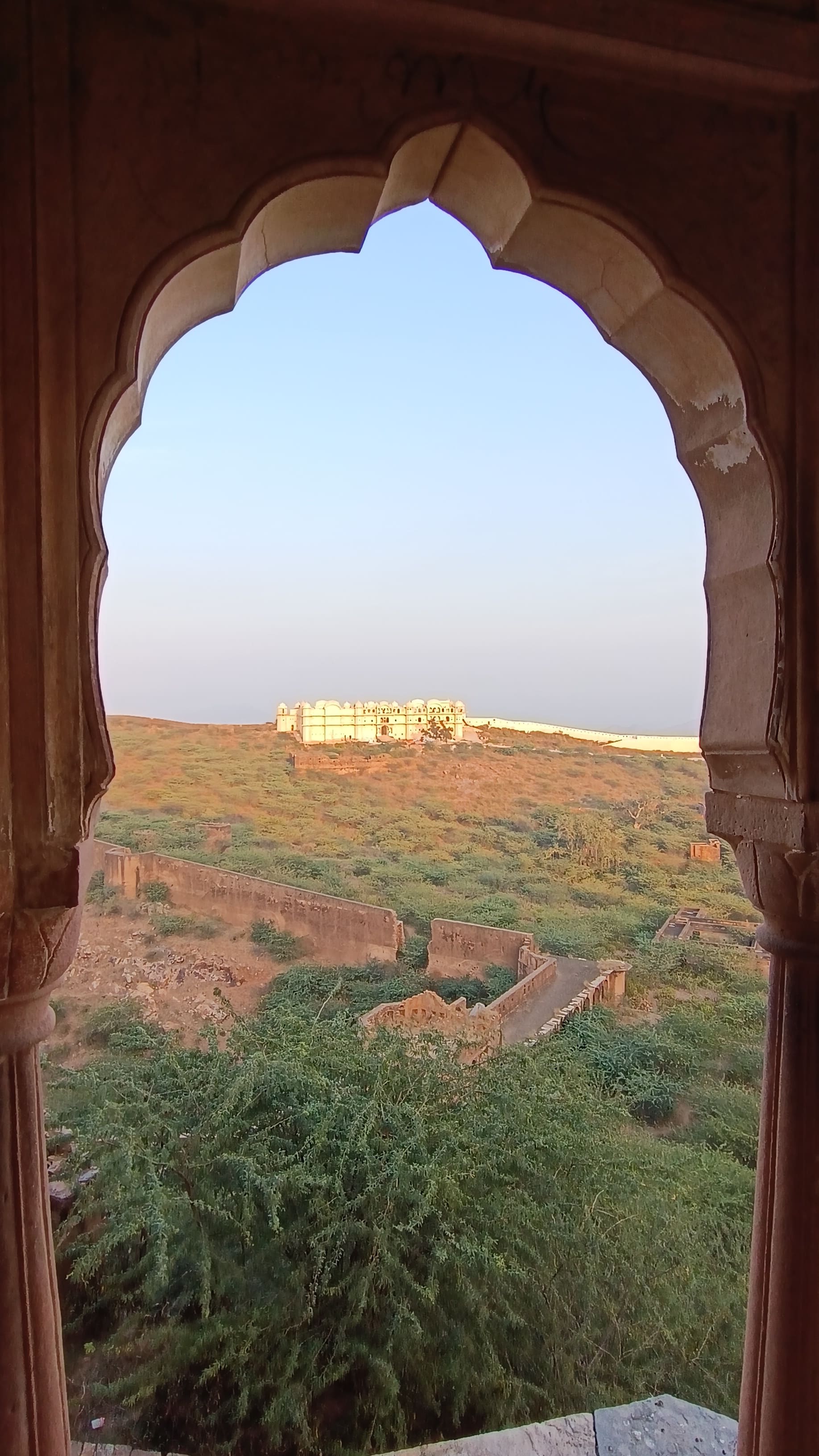
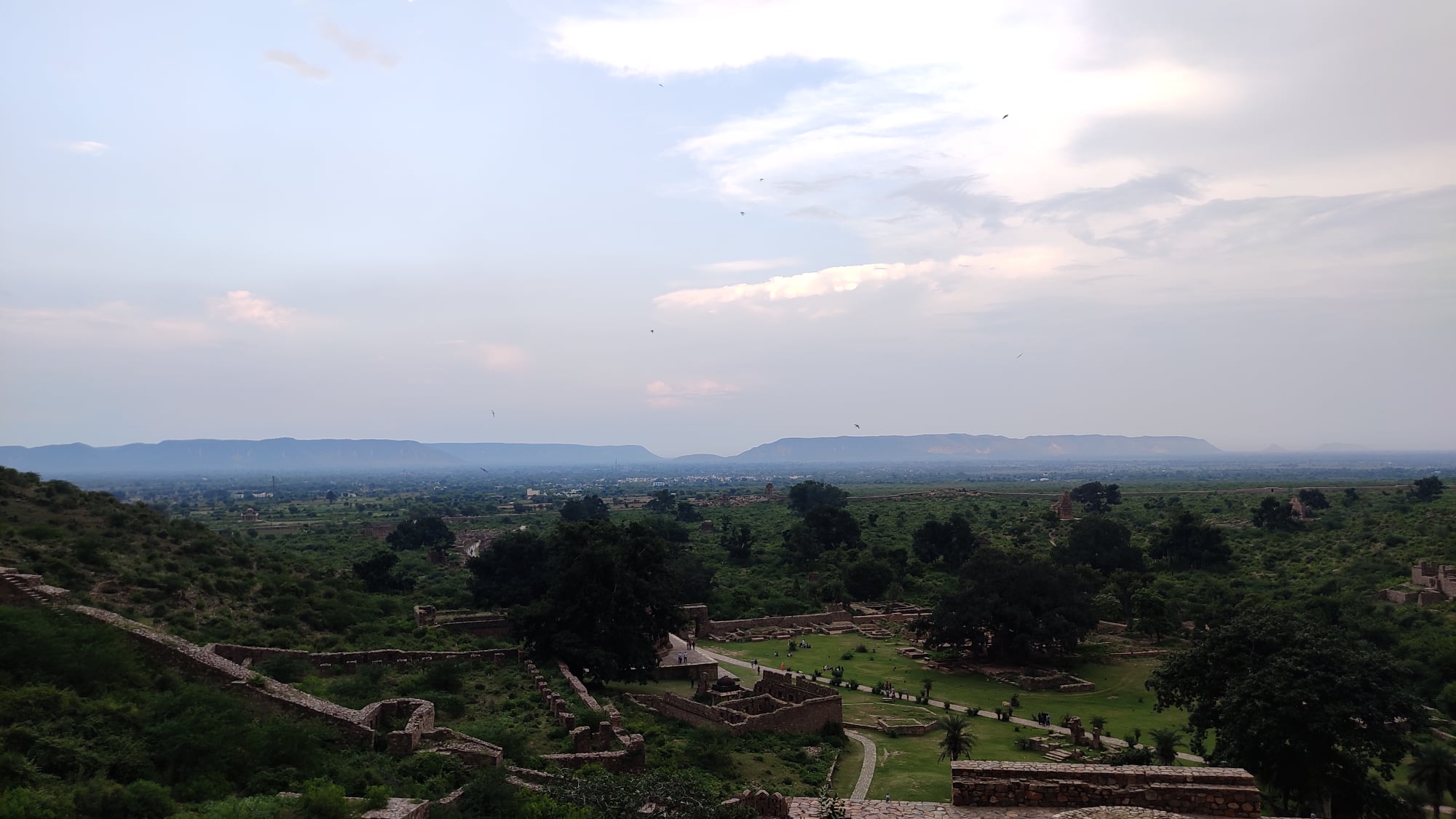
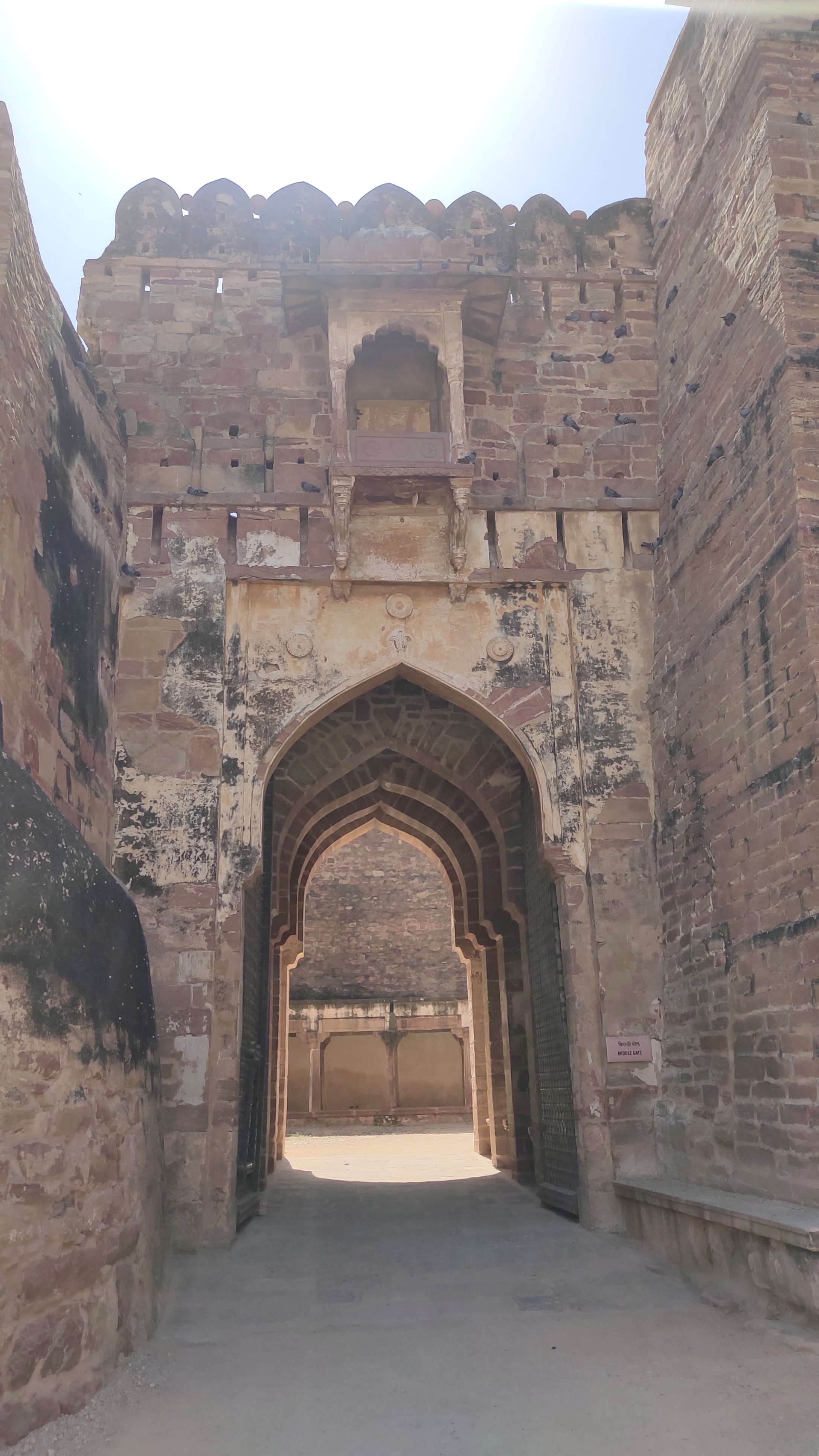
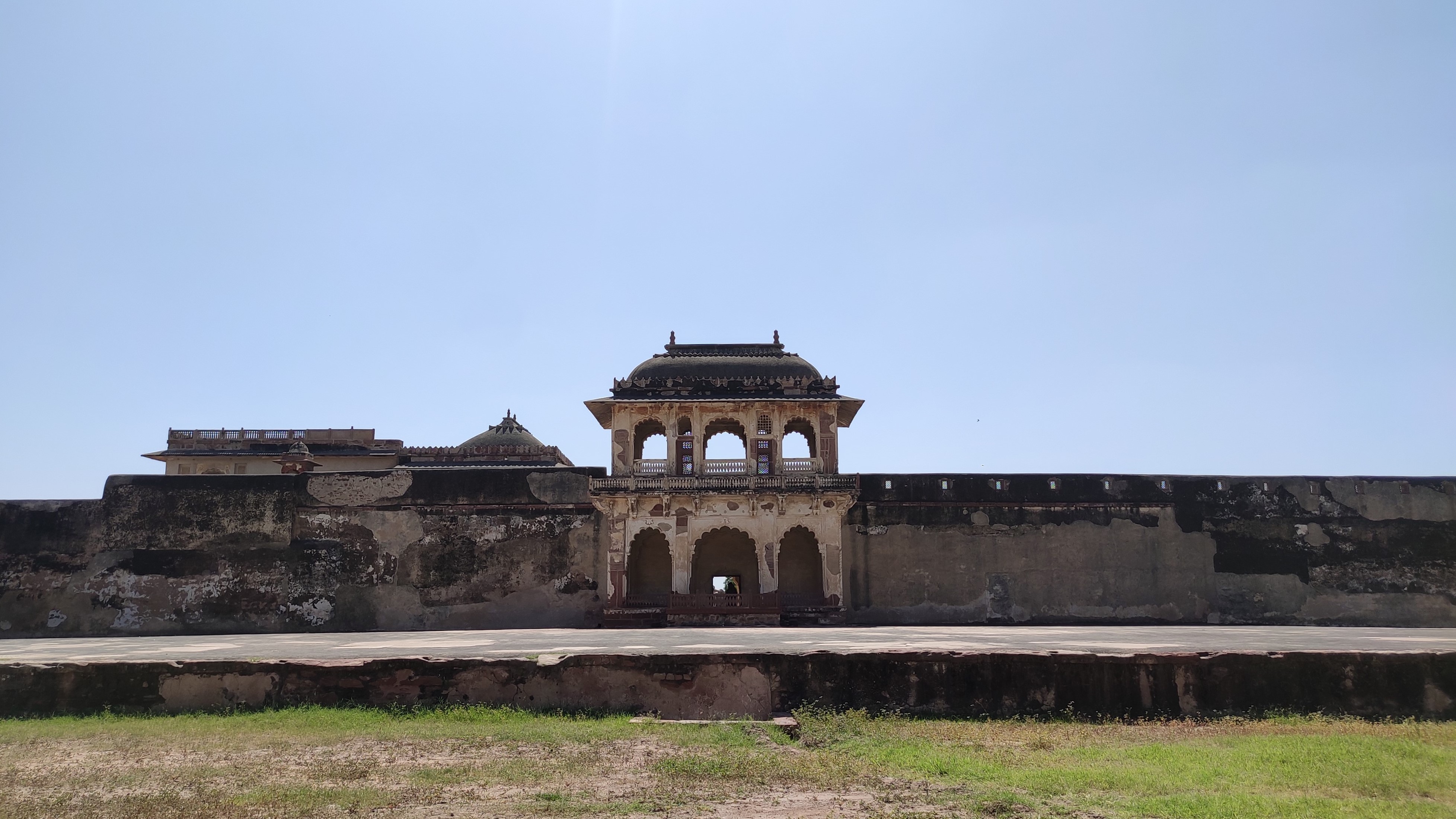
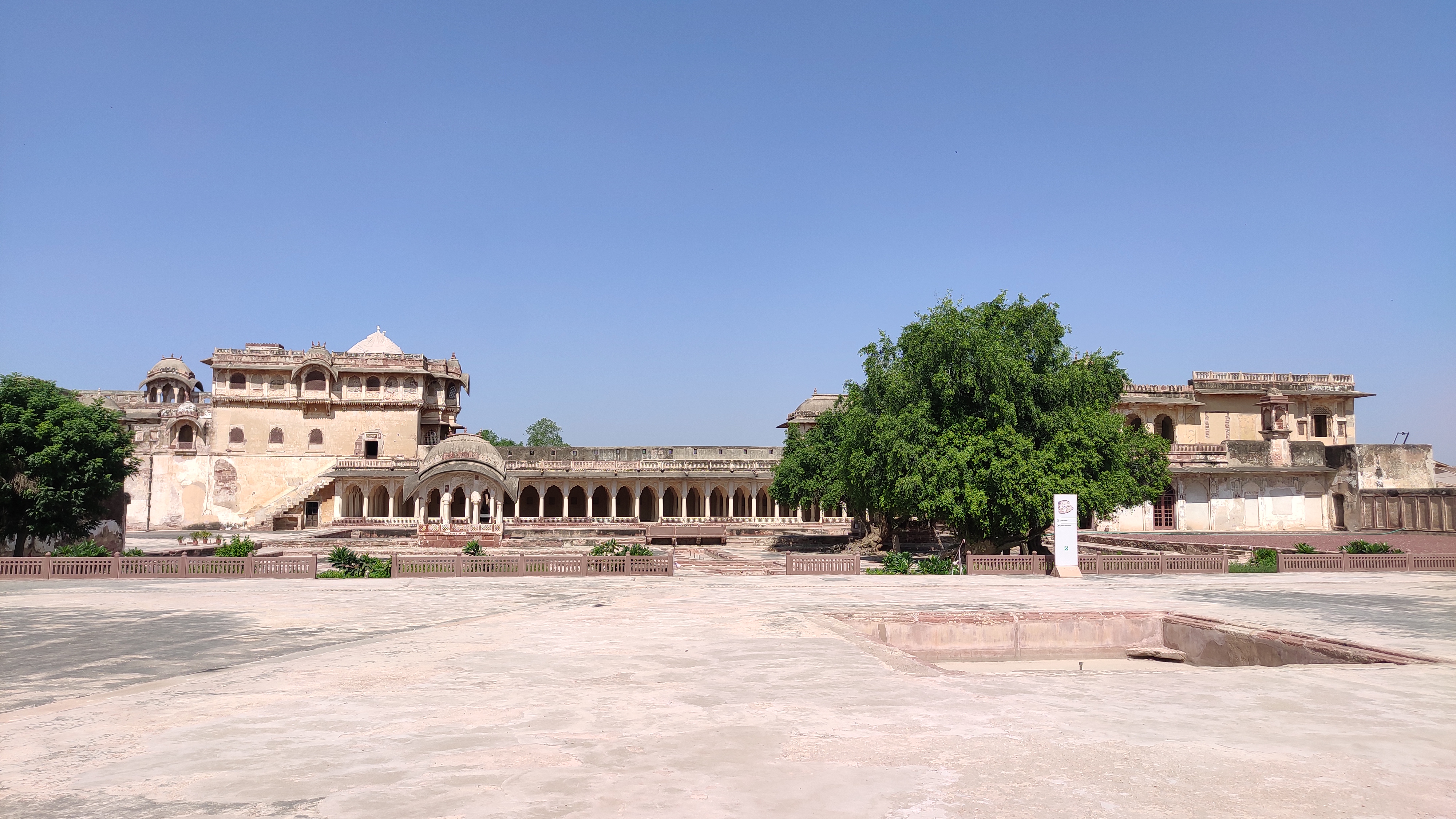
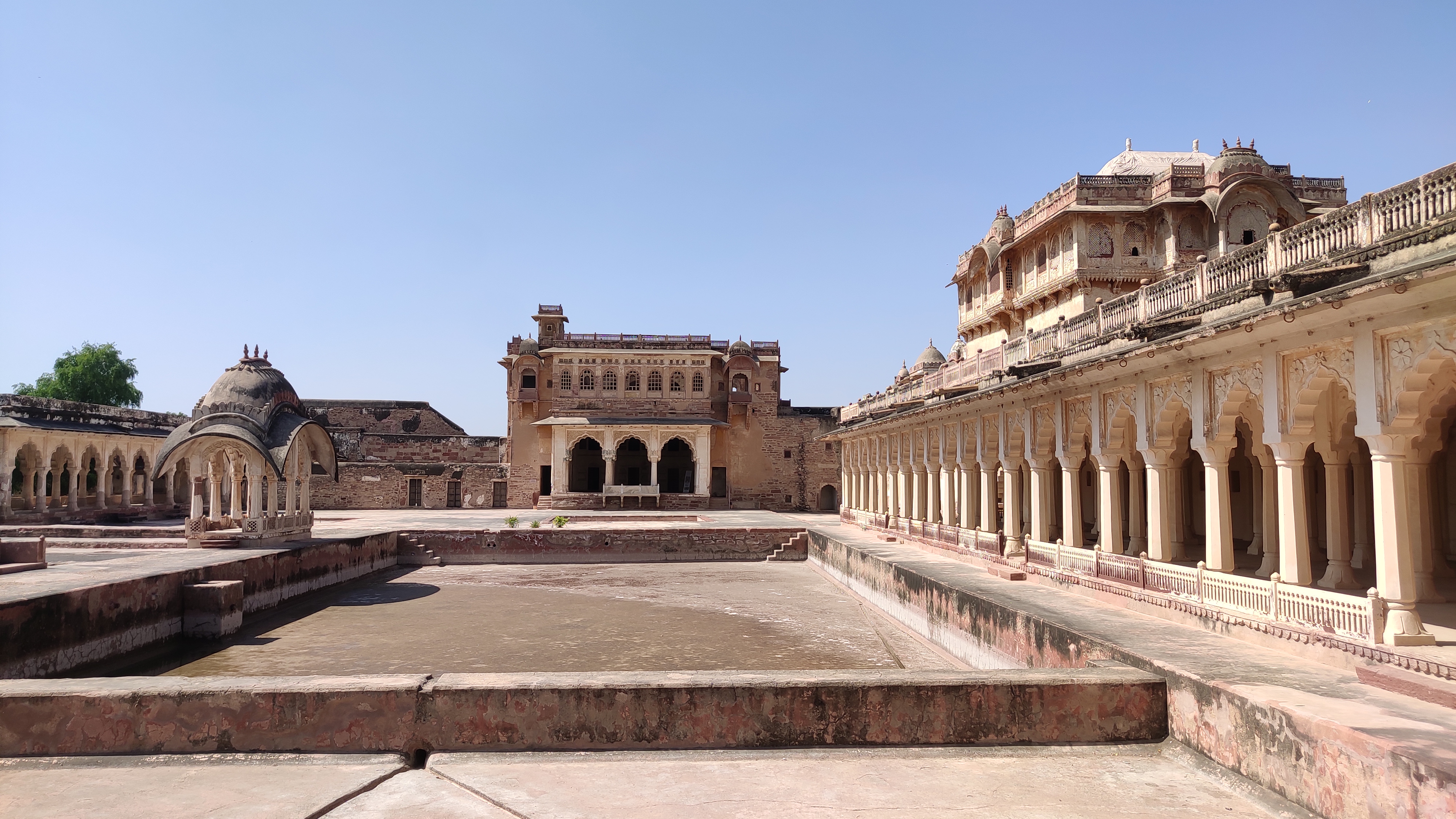
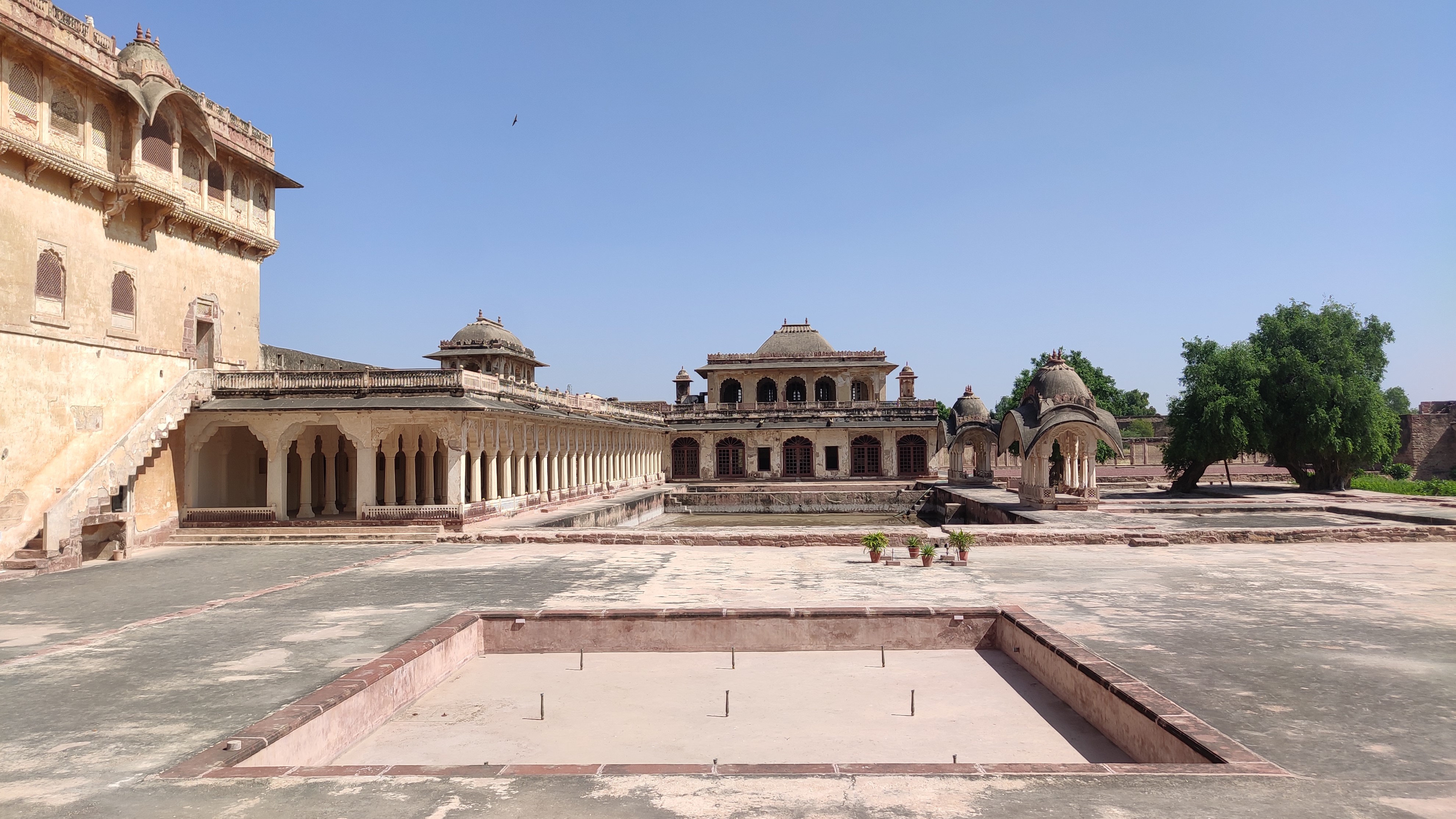
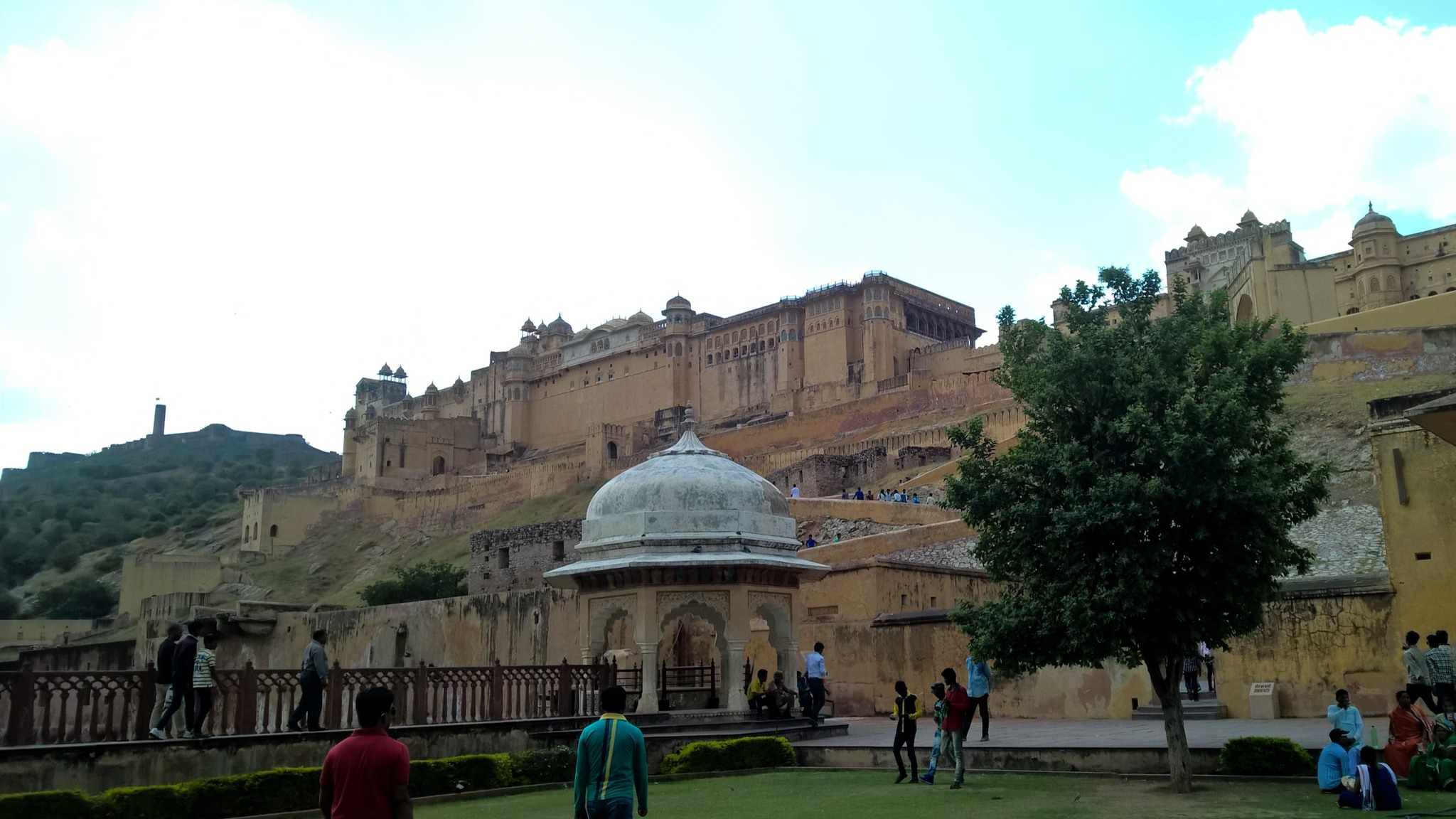
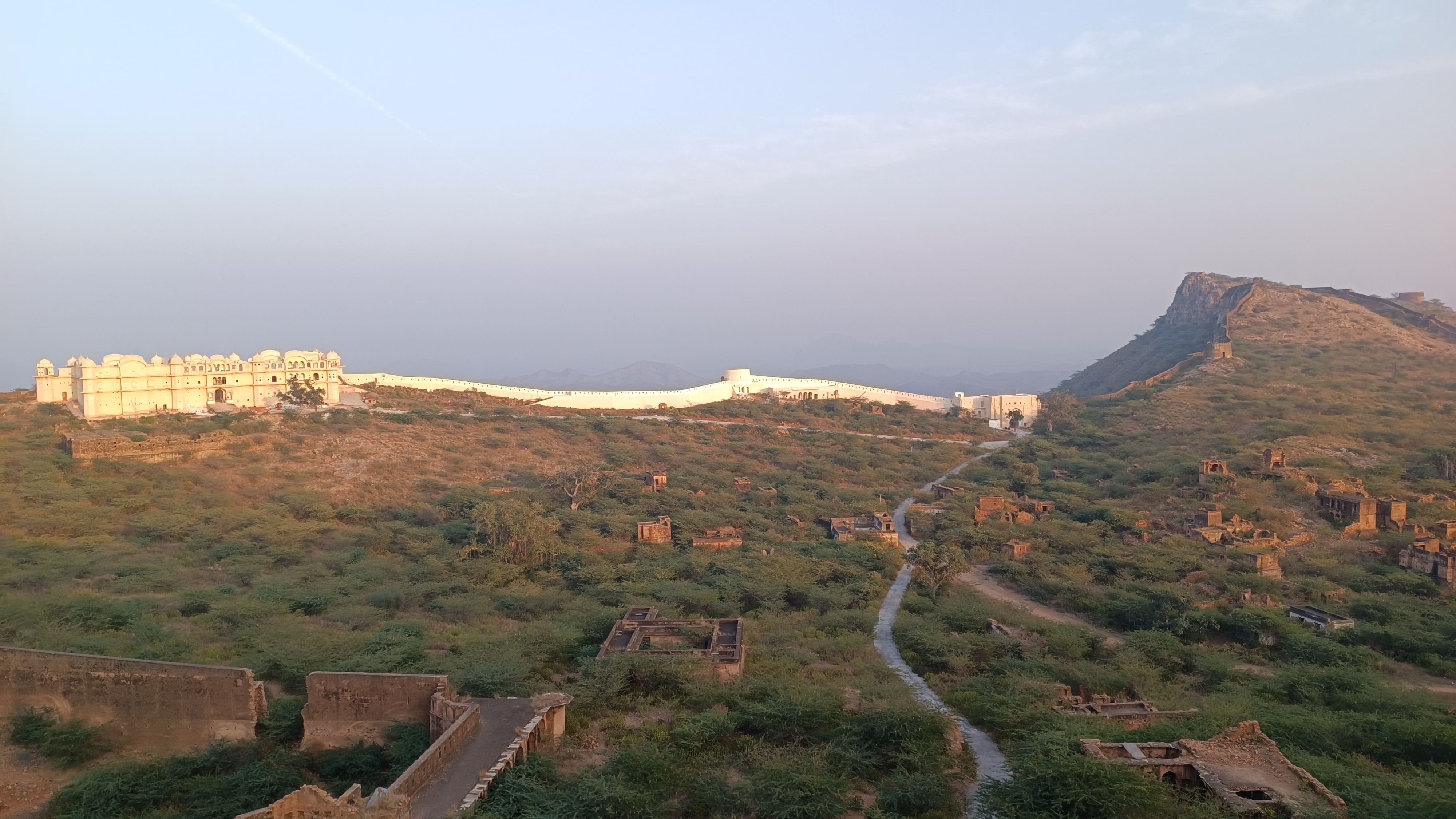
Offering our prayers in the prayer room, we then proceeded to the 270 year-old Bhopalgarh fort that beckoned us from the hilltop in the distance. Taking a steep two-kilometre winding road we were at the fort’s gate around 3.30 PM, with the Khetri town visible down below. Entering the fort premises, we immediately got a bearing of the area – the fort wall encloses an area shaped like a trapezoid, with most of the inner part depressed, resembling a wide crater.

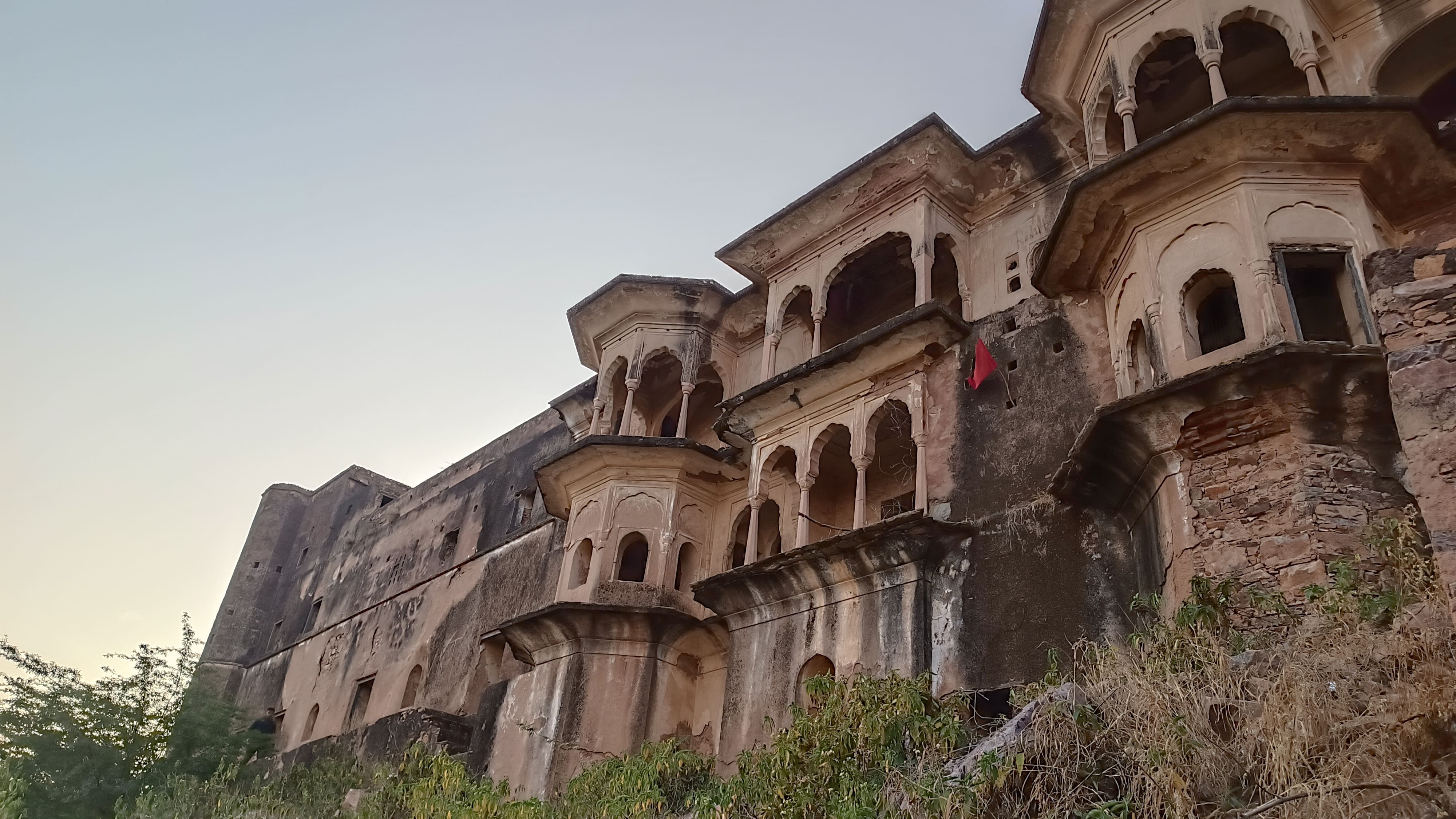
Half a kilometre to the right of the entrance, bang on the fort wall is a palace sporting multiple windows and balconies, called the Sheesh Mahal, which is currently closed for renovation. Peeking in from the corridor at the main gateway, one could see a large courtyard and multiple storied halls and rooms surrounding the hall. Walking beyond the palace on the fort wall, one gets a clearer view of the Khetri town and the surroundings, including some now-defunct copper mines, nestled in the Aravallis.
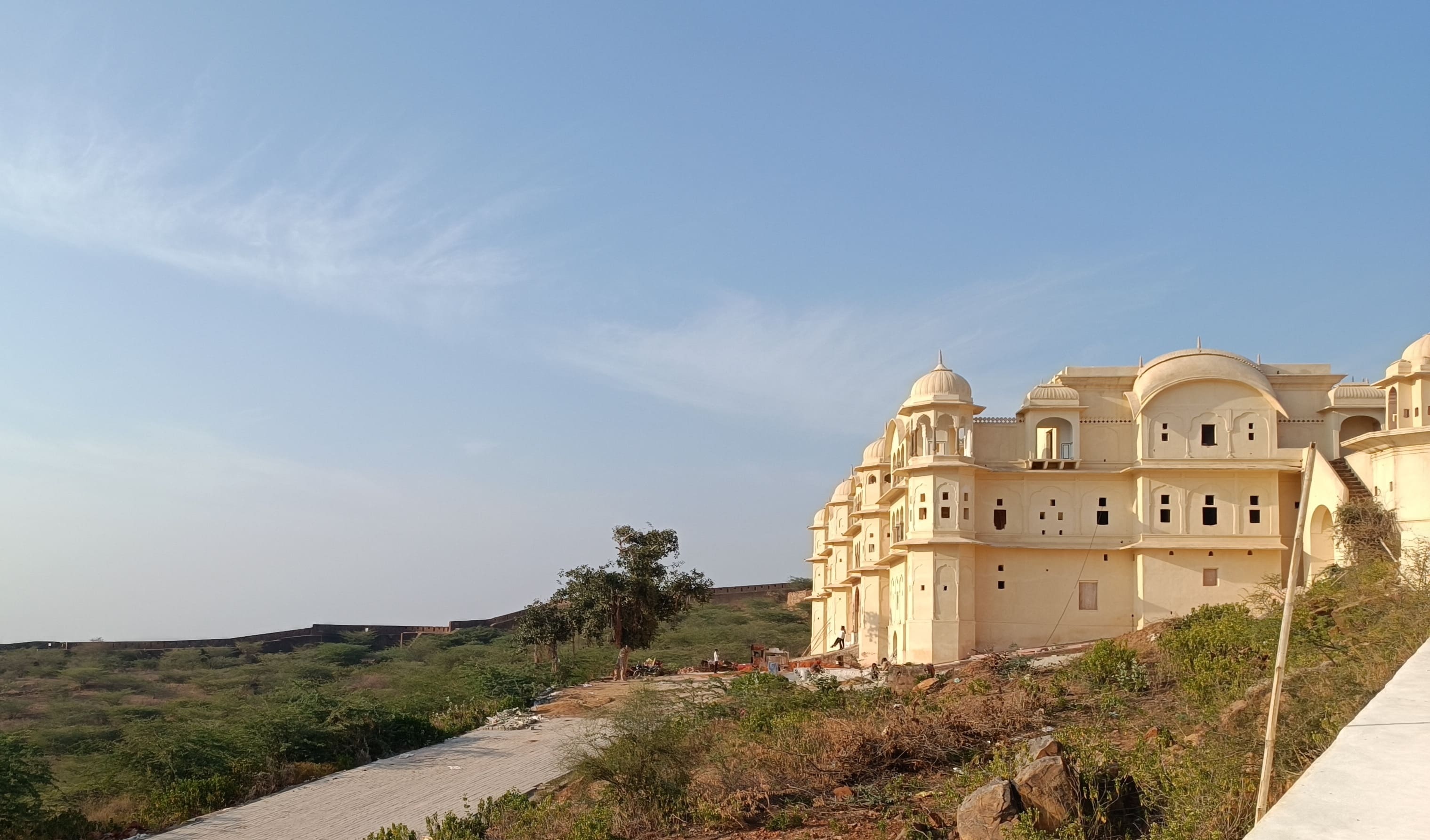
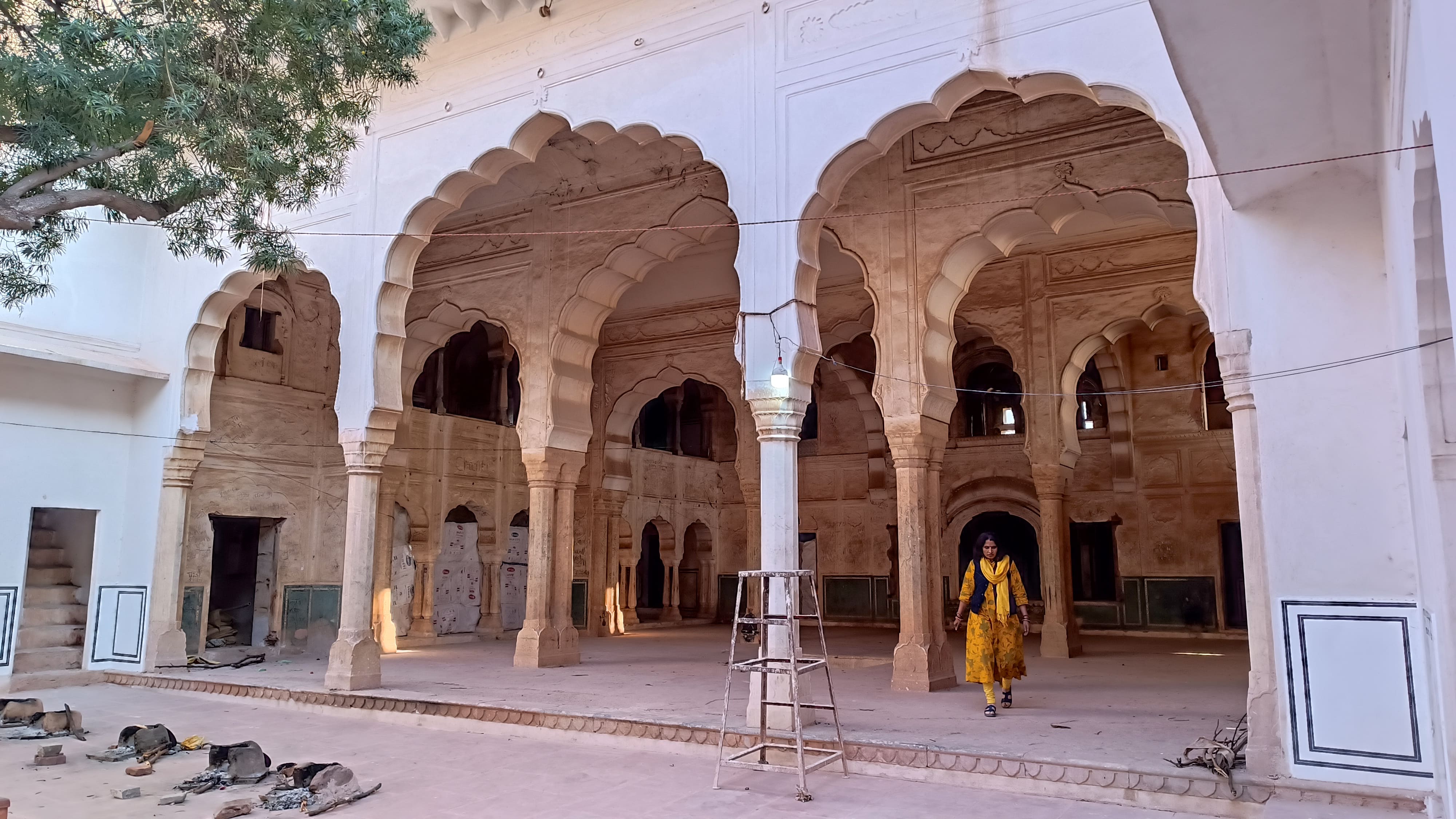
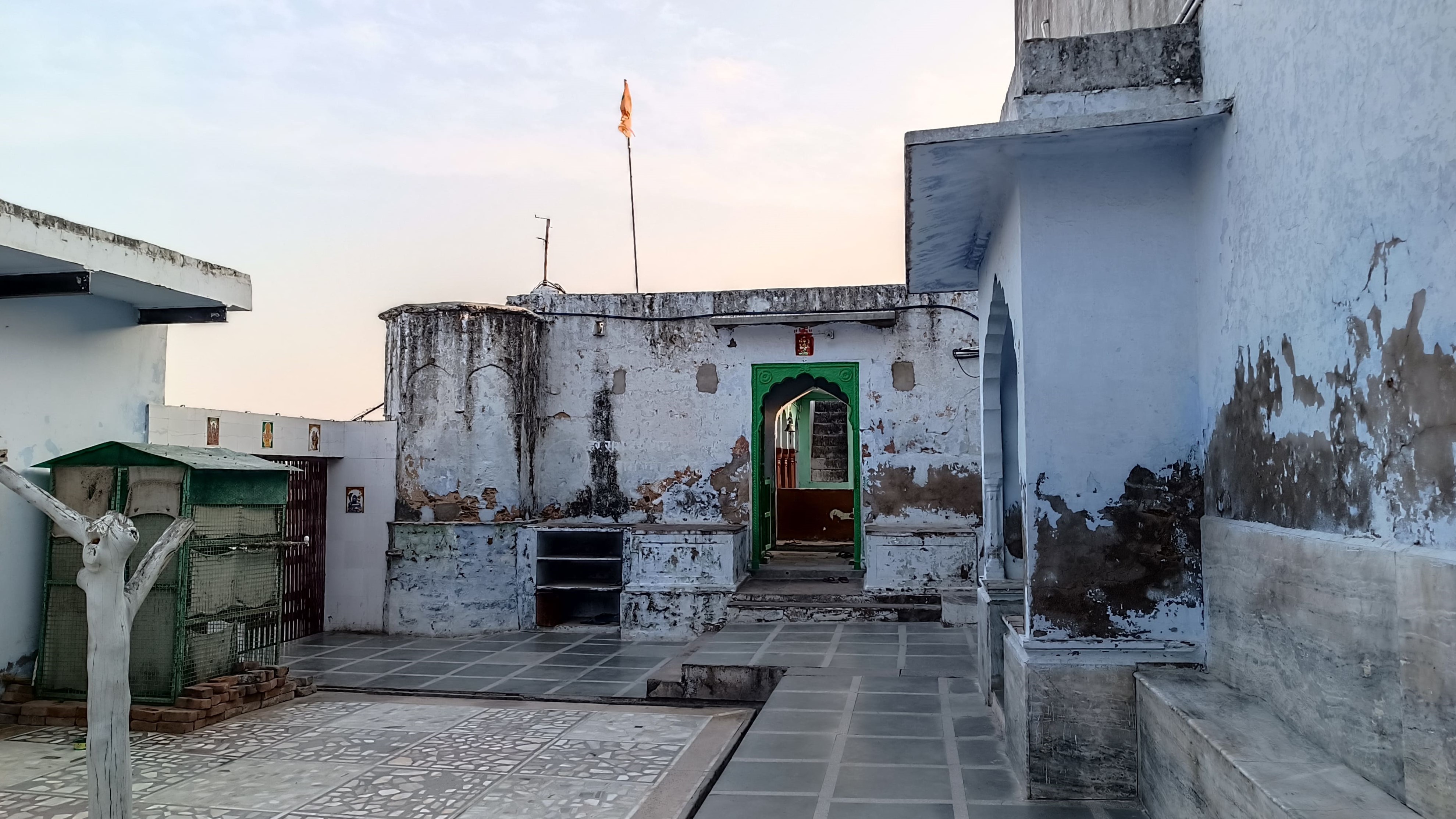
From the side of the entrance and the walls stretching on both sides of the entrance, one can clearly see the Moti Mahal, an elongated palace, located at the far opposite side of the fort. In between, in the depressed portion, lay swathes of low jungle with vestiges of more stone structures. I traversed through the jungle by foot, and found the Moti Mahal in a desolate condition with the front of the palace overgrown with thorny bush and jungle, making it look like a prohibited place. However, adjoining the Moti Mahal, is located the Gopinath temple, dedicated to Krishna, with an attached dharamsala, teeming with some people, which made the adjunct palace look less hostile.
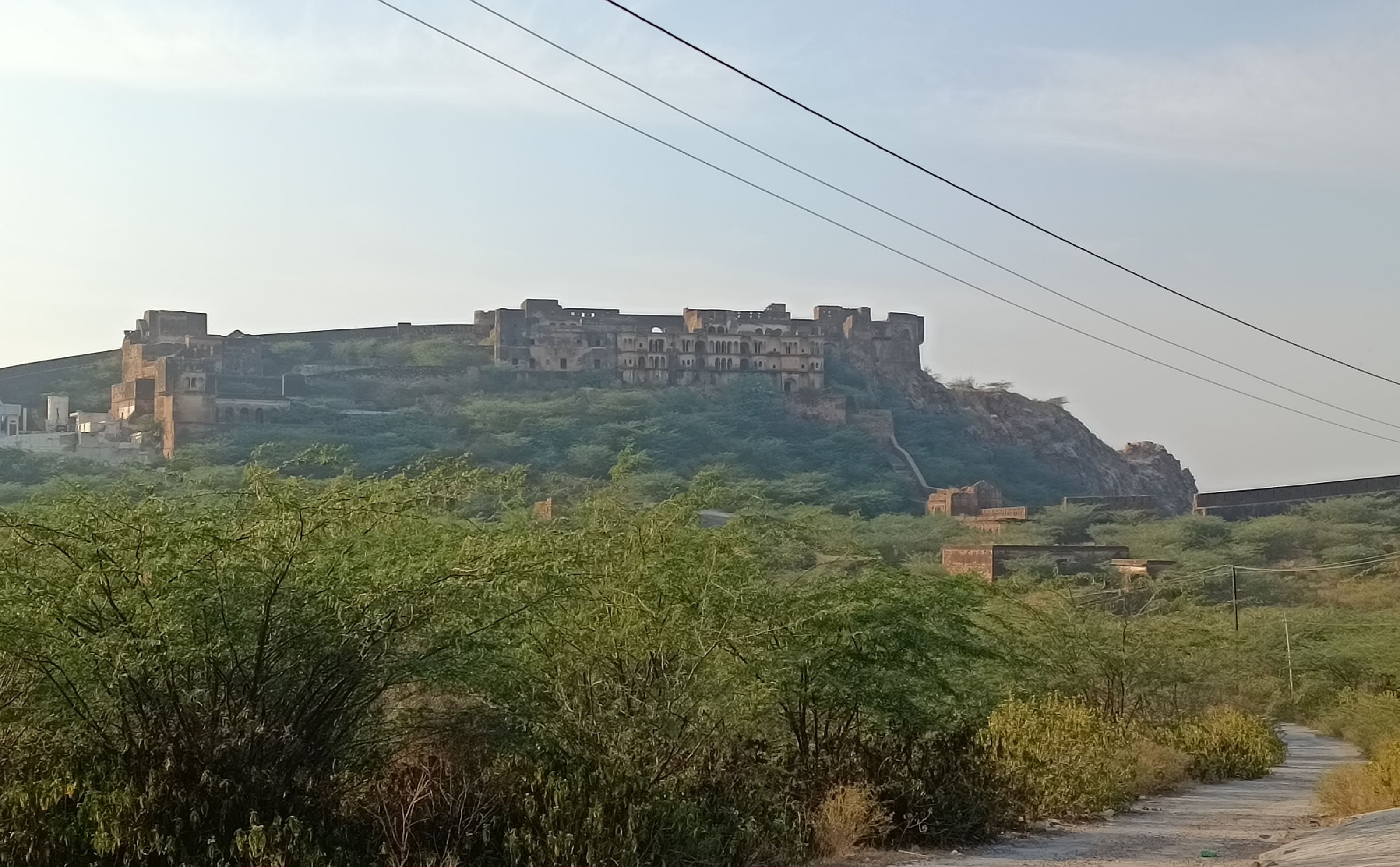
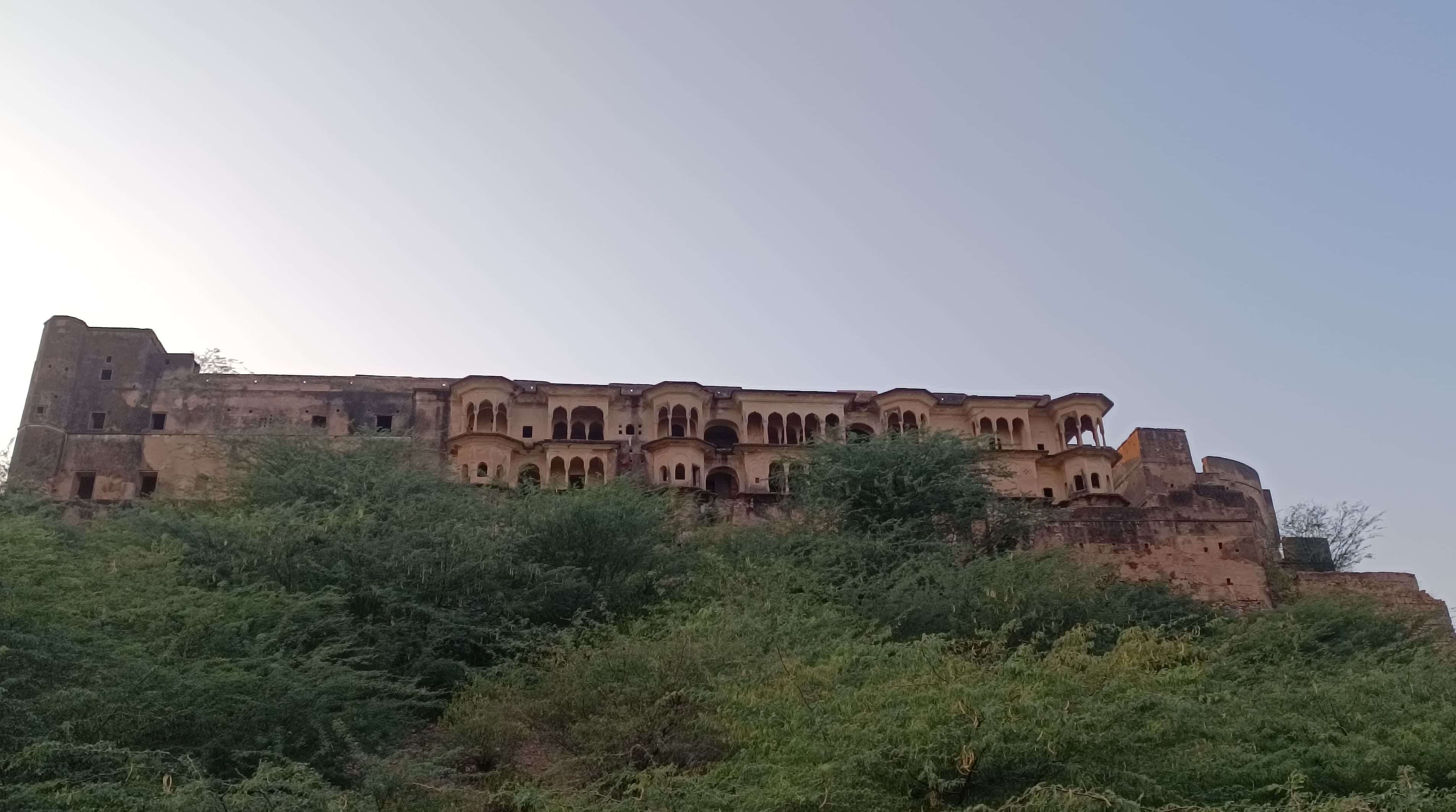
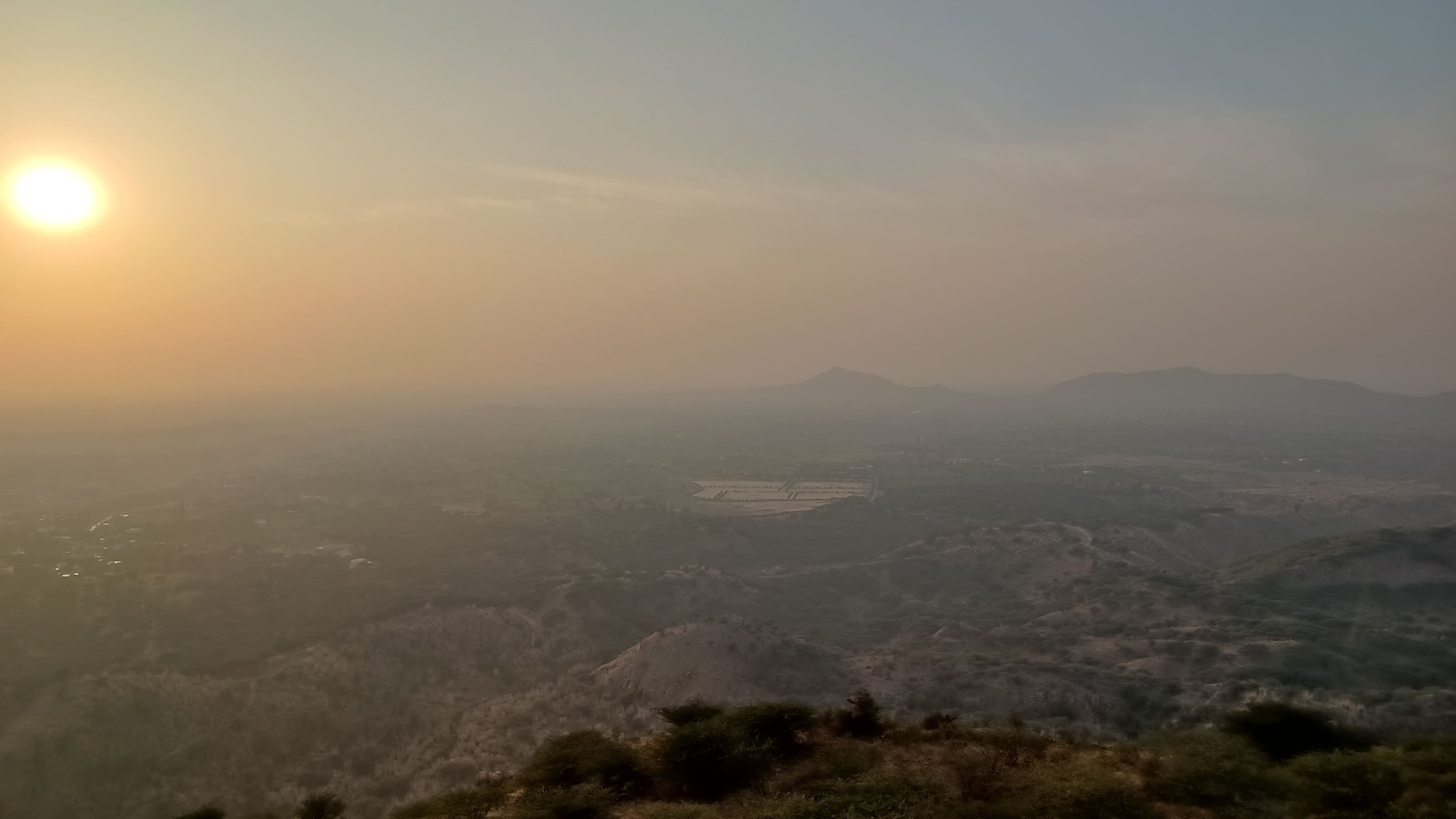
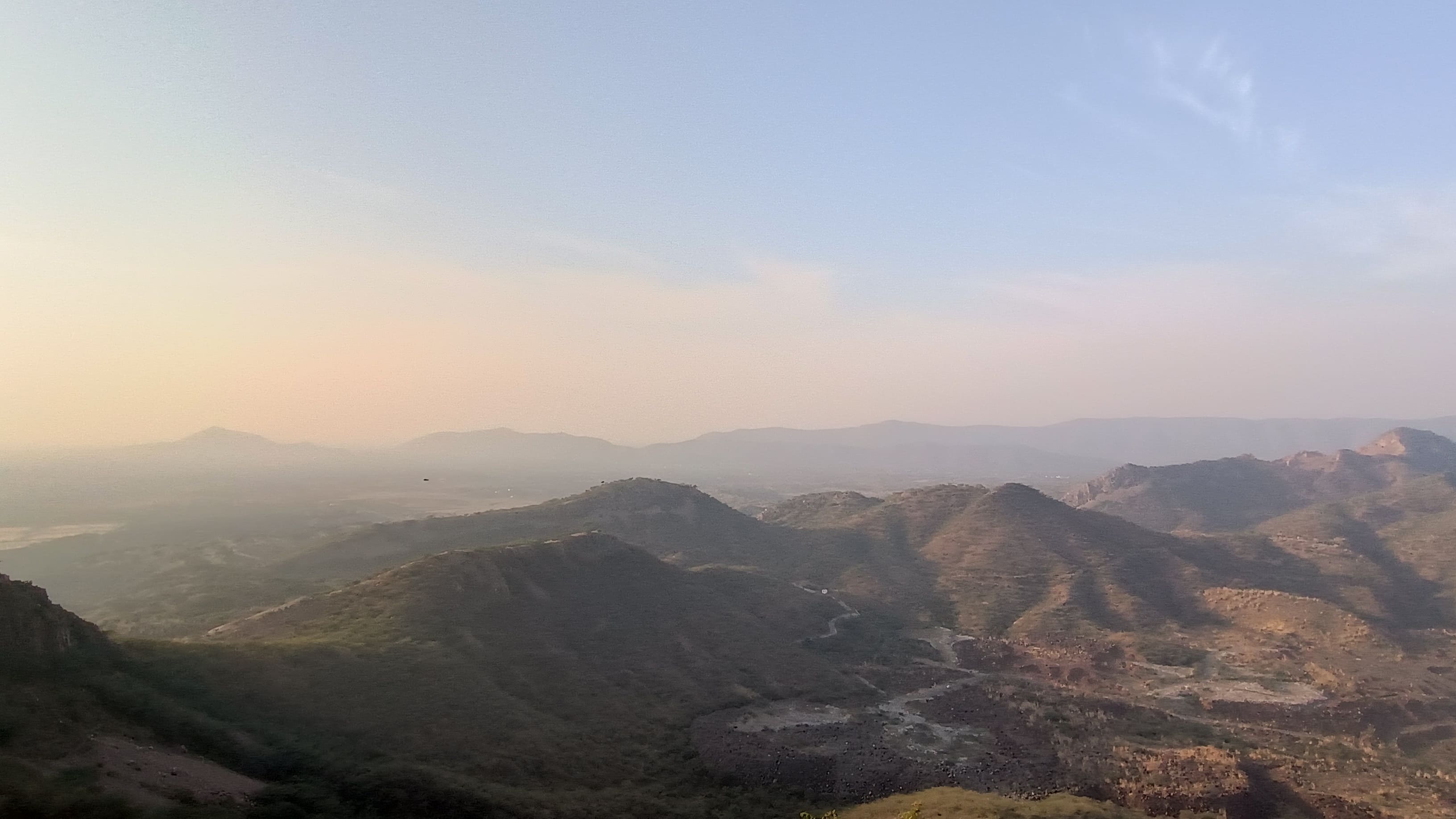
All this while, with my mind constantly racing about whether or not to enter the Moti Mahal, I kept lingering on the outside of the palace. It already being 4.30PM, with the prospect of darkness descending soon, I decided to take the plunge. With my heart in my mouth, wading through the thorny bush and jungle, I somehow managed to gain access into the palace, and was at first greeted by what looked like the king’s throne where he gave audience to the court. Walking through labyrinthine corridors and staircases, I managed to get access to the roof of the palace, from where I was treated to breathtaking views of the Shekhawat countryside chequered with low hills, and arid plains.
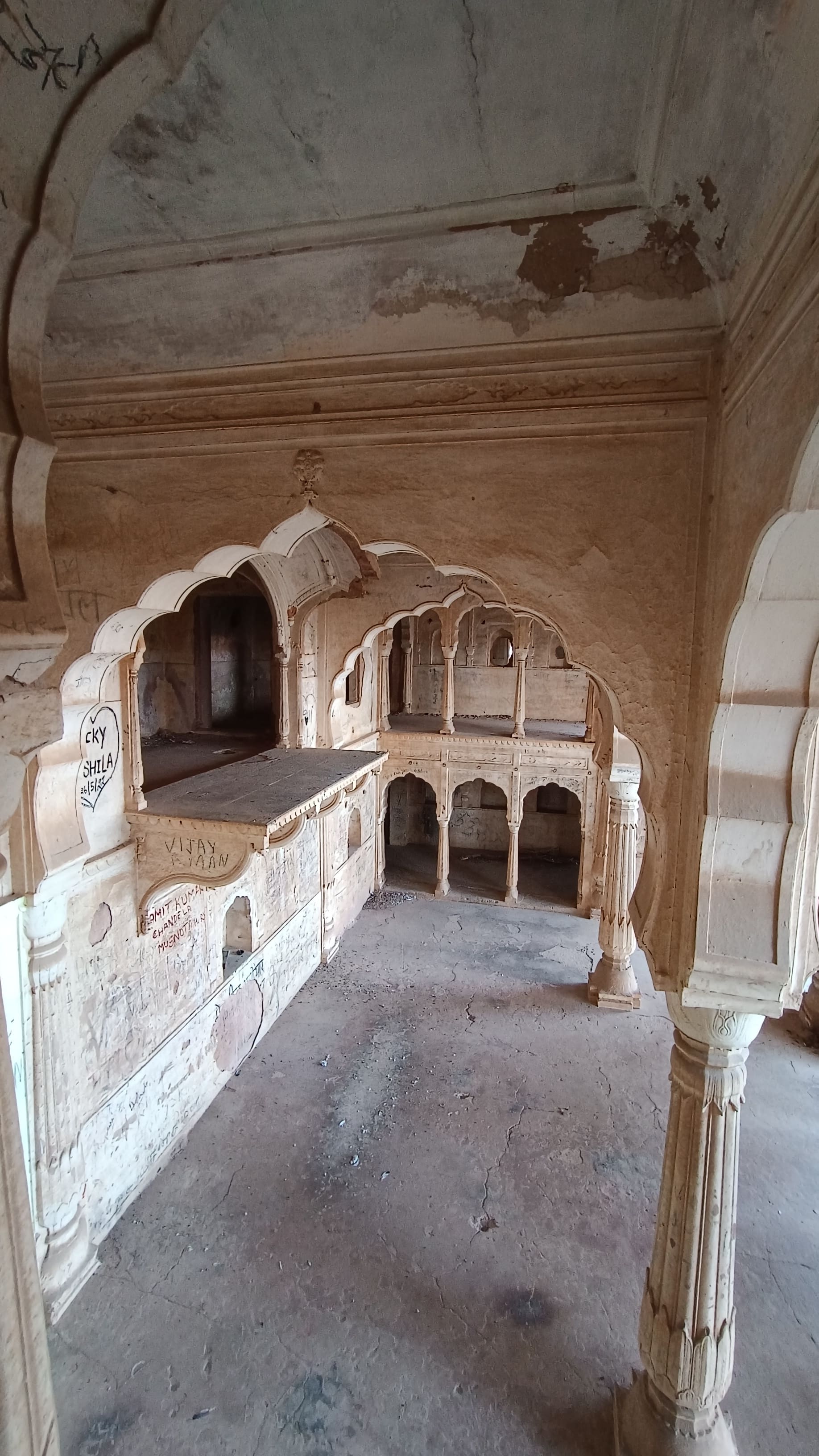
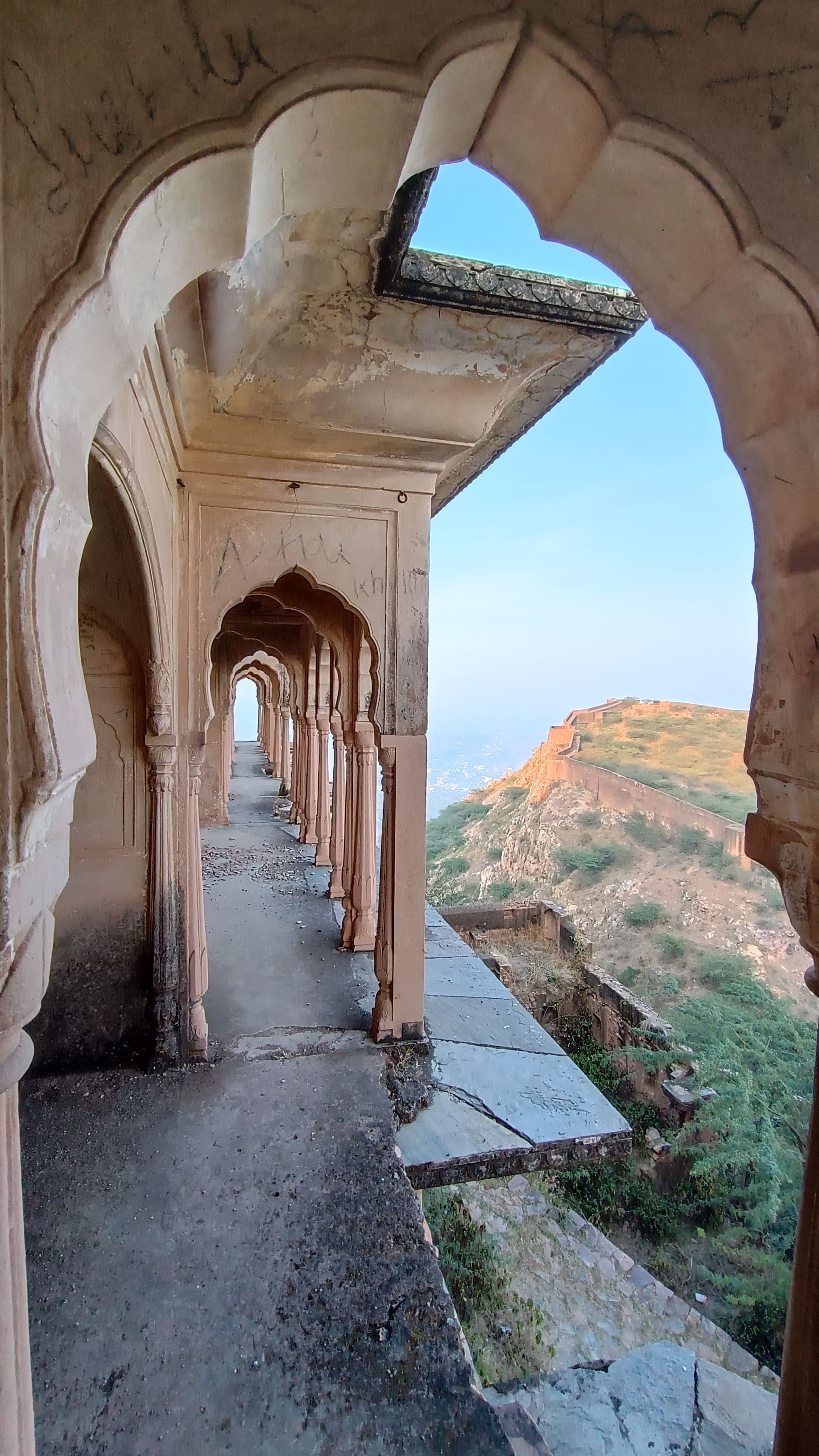
Around 5 PM, I descended from the roof of the Moti Mahal, intending to head back, and promptly lost my way through the labyrinthine corridors! After fumbling about in the low light, forced to use my mobile phone as a torch, for about 5 minutes, I was finally relieved to see that the exit had been present right before my very eyes – in my nervousness, I had simply not seen it! Exiting, I walked as fast as I could through the jungle to reach the fort’s entrance where my parents were waiting.
As we drove back through Khetri town, we looked with fondness at the agglomeration of houses straddling the valley in the Aravallis. Here was a town that retained the charm and compactness of a British-era princely state, and yet was no stranger to modern flourishes. It was easy to see why the monk Vivekananda would have appreciated the coziness of this town ensconced in the Aravallis, spending here 3 months at a stretch. Surely we could come back to spend 3 weeks at the least, we concurred amongst ourselves.

Exploring Rajasthan through the Eyes of a Solo Backpacker turned Car Driver

Learning to drive has been a boon.

As a kid, I had been entranced by the pictures of sand dunes and forts in school textbooks and children’s magazines. One particular image from a Tinkle issue – a coloured sketch of the Vijaya Stambh at Chittorgarh fort had stuck in my mind, and in 2013, on one of my solo trips, I finally set foot on the Chittorgarh fort, and was absolutely spellbound by the location atop a table-top hill and the scale of the area bounded by its imposing walls. I have explored Rajasthan further, making it a point to explore at least one new place every year. Until before the pandemic struck, I had visited almost every major city of Rajasthan and then some.

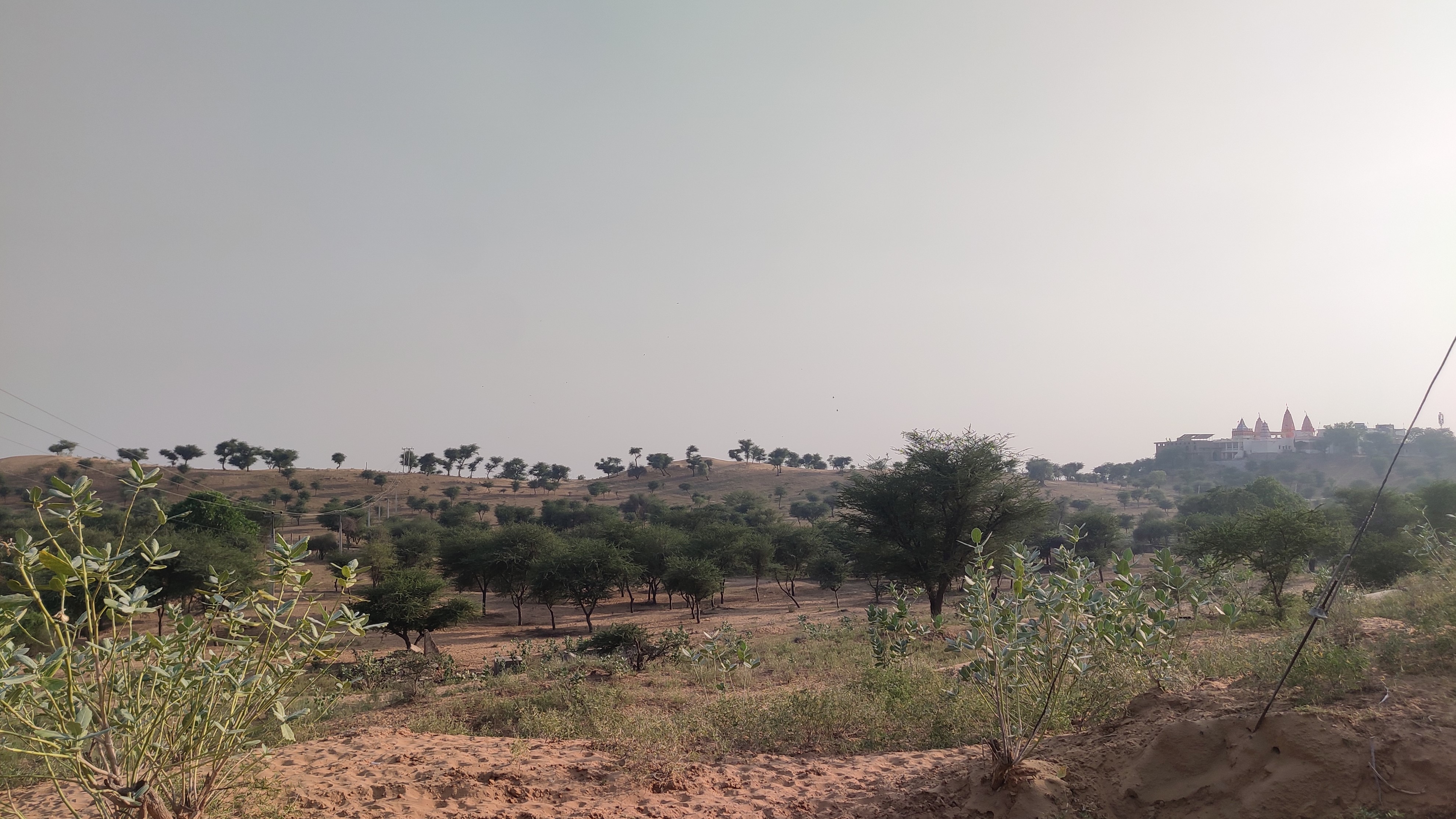
However, it has never been about the destination as far as Rajasthan is concerned. Looking through the State Roadways bus windows, or craning the neck out from cabs and fancily decked-up auto-rickshaws, I have often marvelled at the intriguing shifts in landscapes – straddled by the Aravallis intercepting you shortly after you have entered from the East, with its table-top ranges swishing across like stripes of a tiger, some covered in a rich green cloak, yet others balding with their denuding rocky surfaces exposed, flanked now by swathes of lush green agricultural land, now turning light brown or pink or yellow with short lean trees strewn around as if social-distancing since time immemorial, then slowly turning golden as the ground surface mutates into waves of sandy dunes of the Thar. Abandoned forts and fortress walls crown hill tops every few scores of kilometres. Further south near Mount Abu, the Aravallis look nothing short of a slice from the Western or Eastern Ghats.

There is also a vast Salt Lake (Sambhar) somewhere at the edge of the desert in the heart of Rajasthan. Villages only turn up after long sprees of nothingness, and even then they are a collation of a handful of houses. Dried river channels cross your path occasionally, their sandy beds hinting at an older time of more abundance. Camels trundle along serenaded by their handlers, their upturned mouths betraying an indifference towards their dreary lives. Nomadic herders appear out of nowhere with flocks of little sheep and goats. Deeper in the desert, if you’re lucky, you may spot a monitor lizard or a hyena lurking amidst the shrubs.
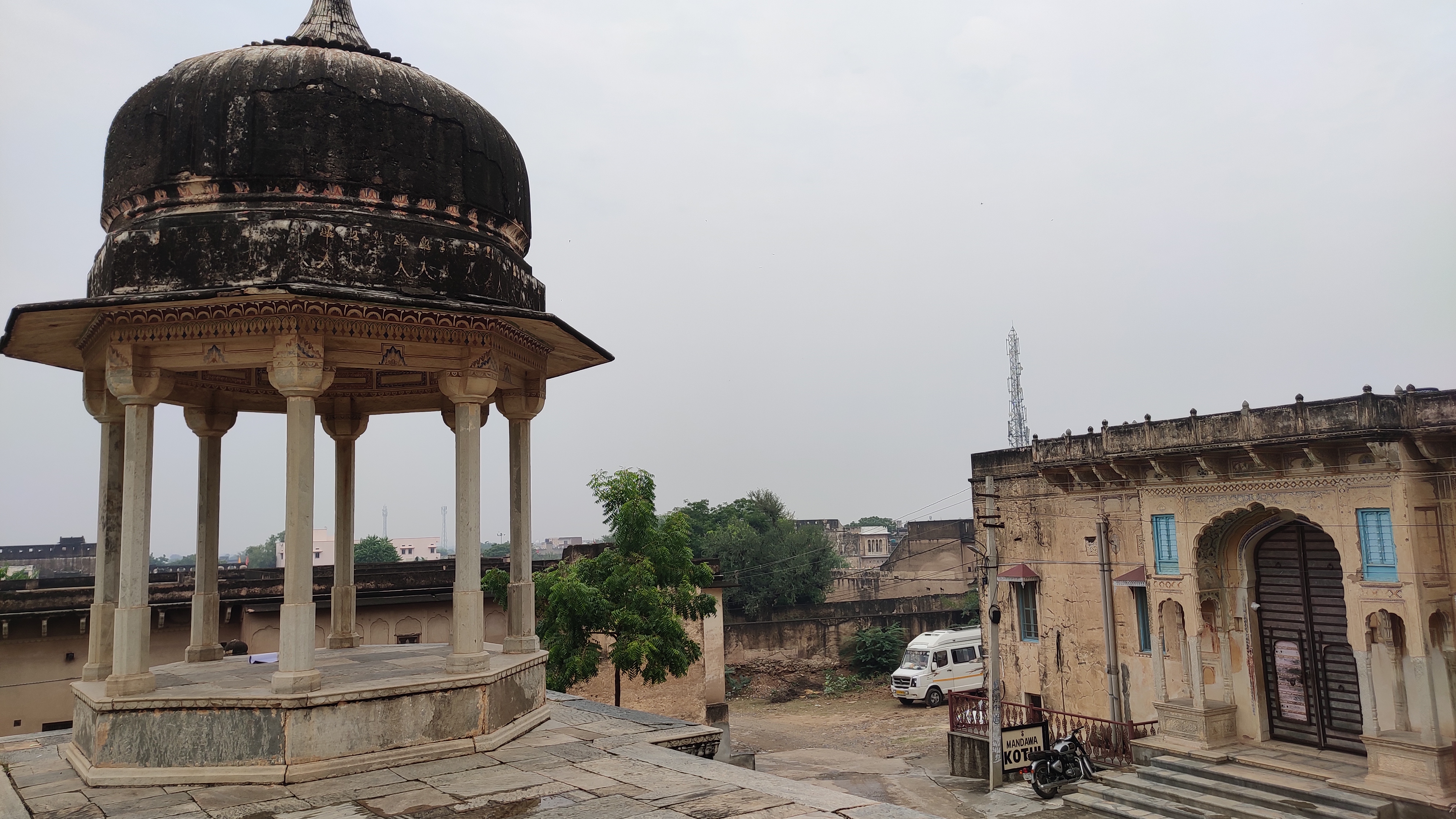
In all of my trips prior to the pandemic, I have often been constrained by the mode of transport. There have been points or locations on the routes, which I have earmarked to return to later at my own leisure, since stopping by then was not an option. There have been roads emanating from the main roads that have often left me wondering as to where they led to. Now at 35, after learning to drive, I finally have the wherewithal to indulge in the fantasies that I harboured while travelling in my erstwhile cloistered fashion. This is an album to celebrate the many facets of the Rajasthan landscape that I have chanced upon on my most recent and some of my very first ever self-driving trips, which will hopefully be enriched with future trips.

Shekhawati and Nagaur: A Quick Getaway

With parents finally being able to visit Gurugram after the second wave of Covid-19 pandemic had receded, it was time to unwind with a weekend trip. We decided to check out relatively lesser-known places, hoping to beat any semblance of crowds. Previously, I had visited Mandawa, and enamoured by the scenery of the areas I had passed through to reach there, I had been longing to have a taste of the larger area surrounding Mandawa – Shekhawati. With our personal vehicle at our disposal, exploring Shekhwati would now be feasible.

Part 1: Shekhawati

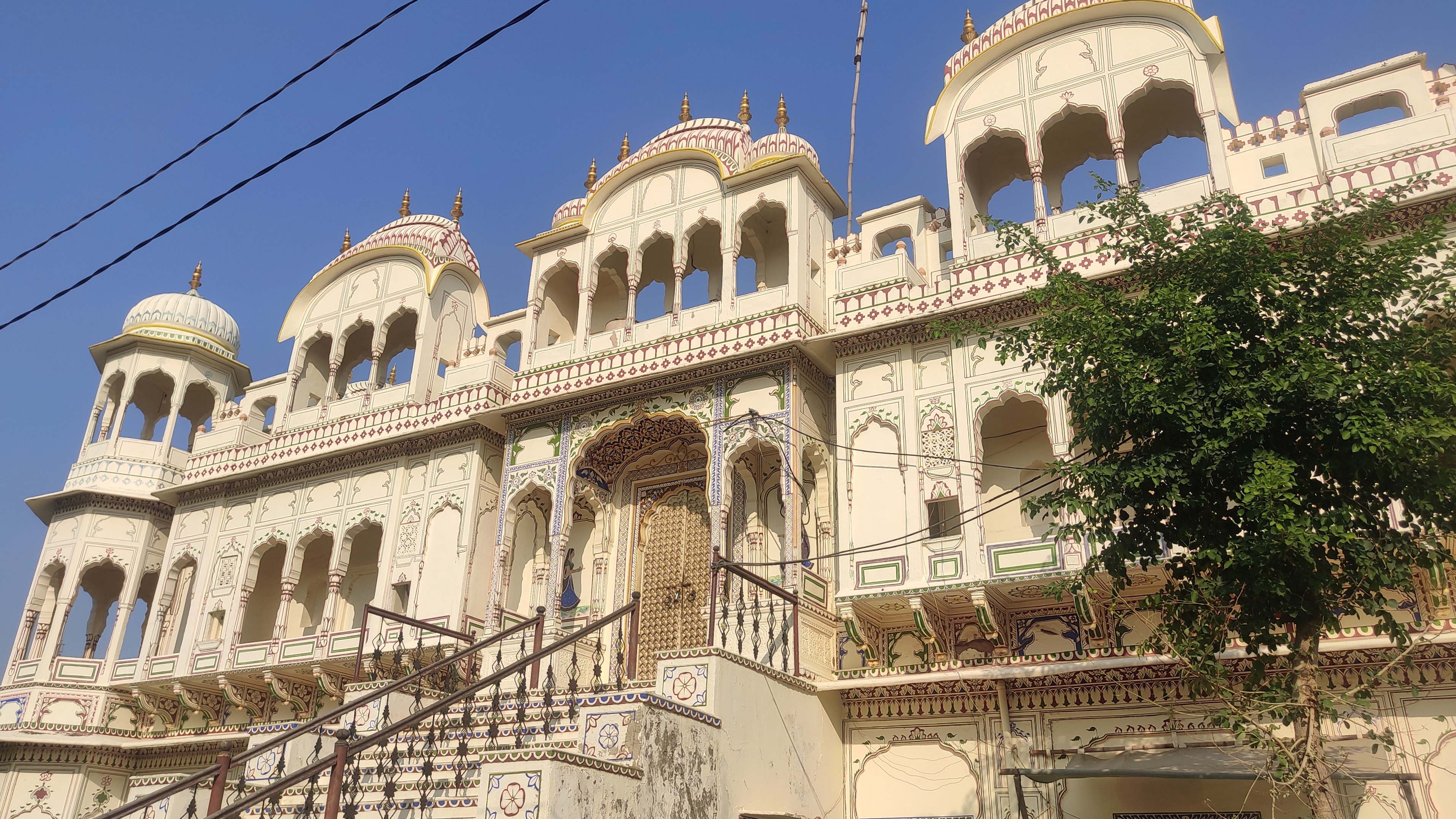
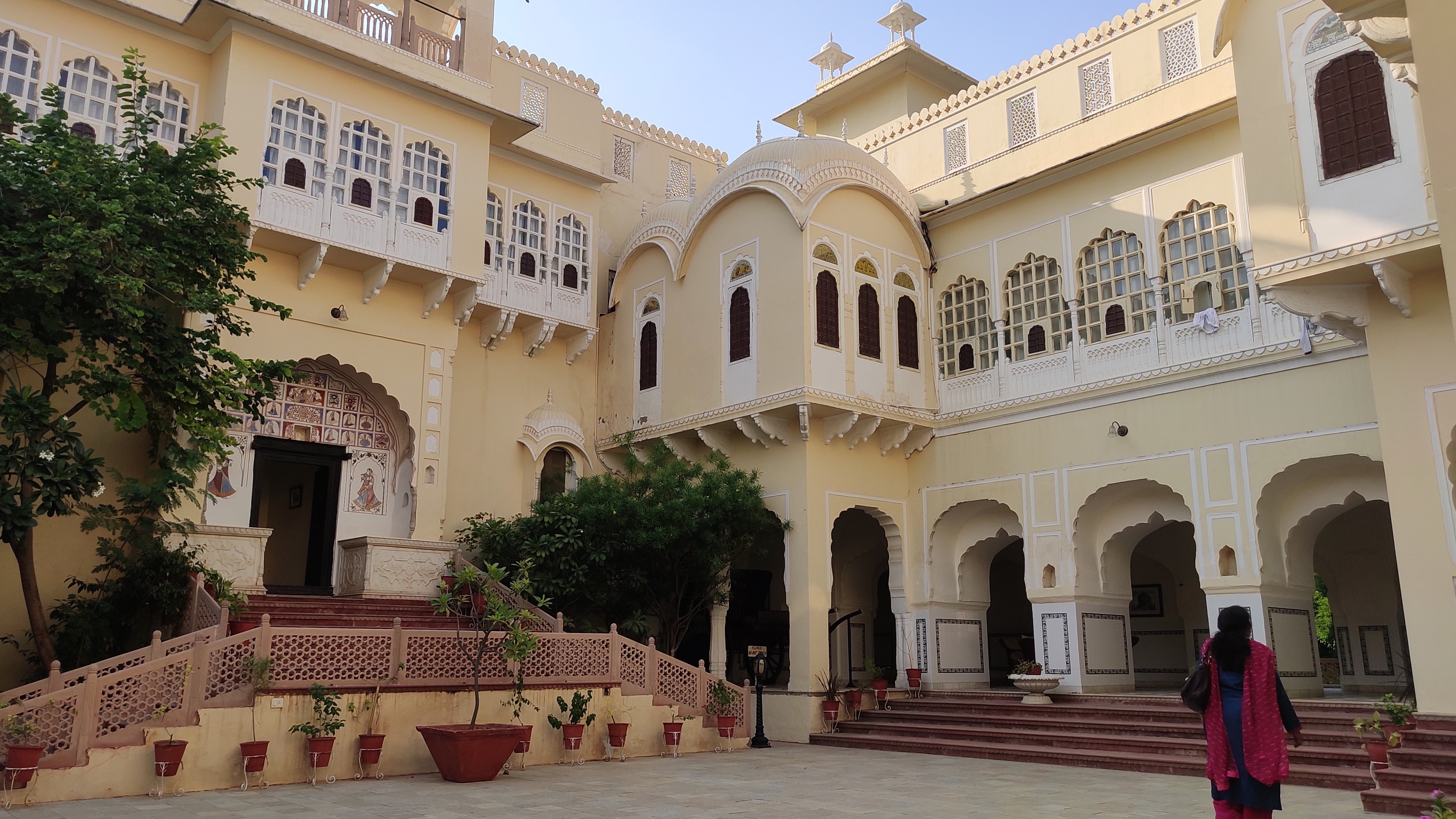
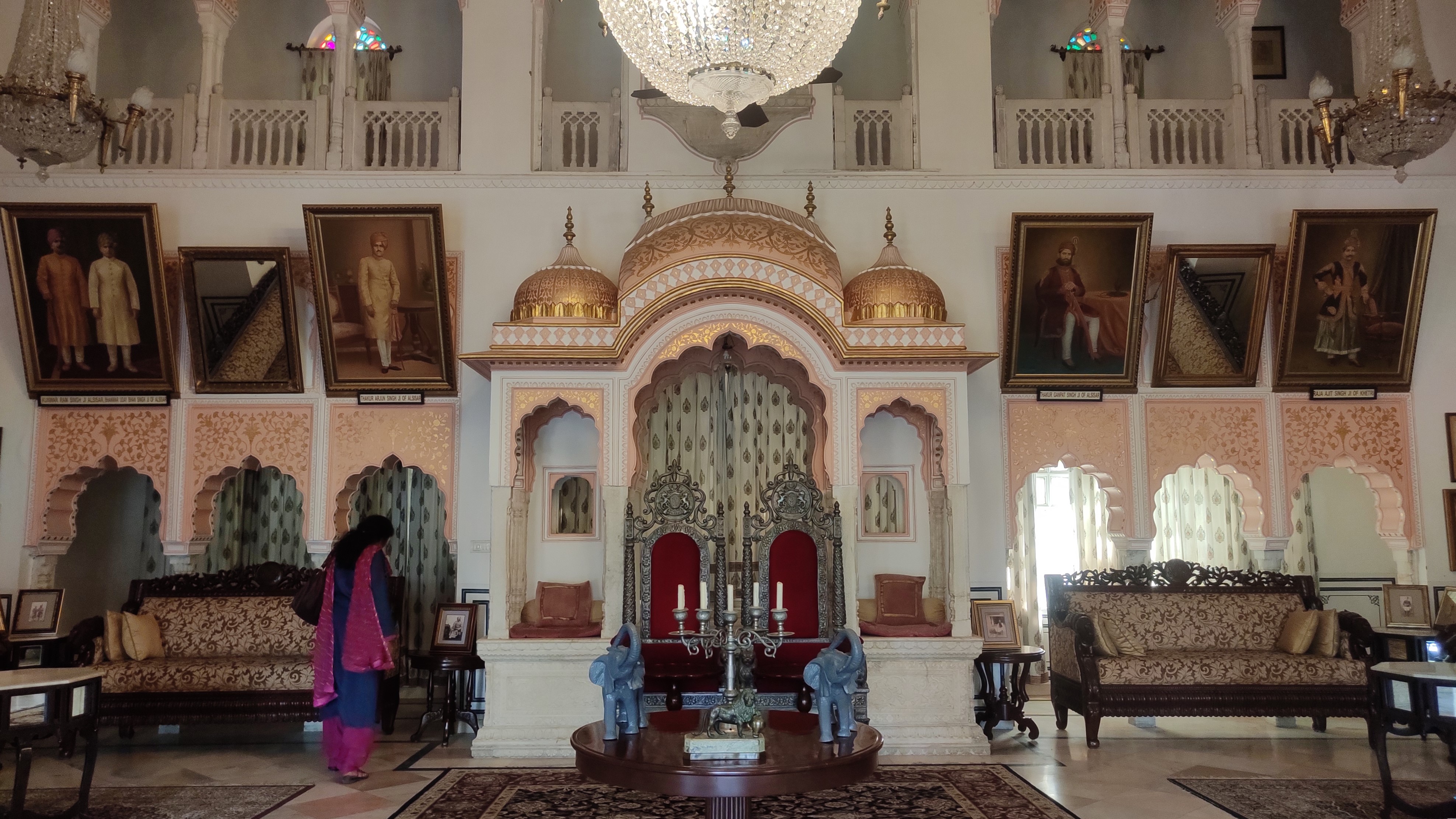
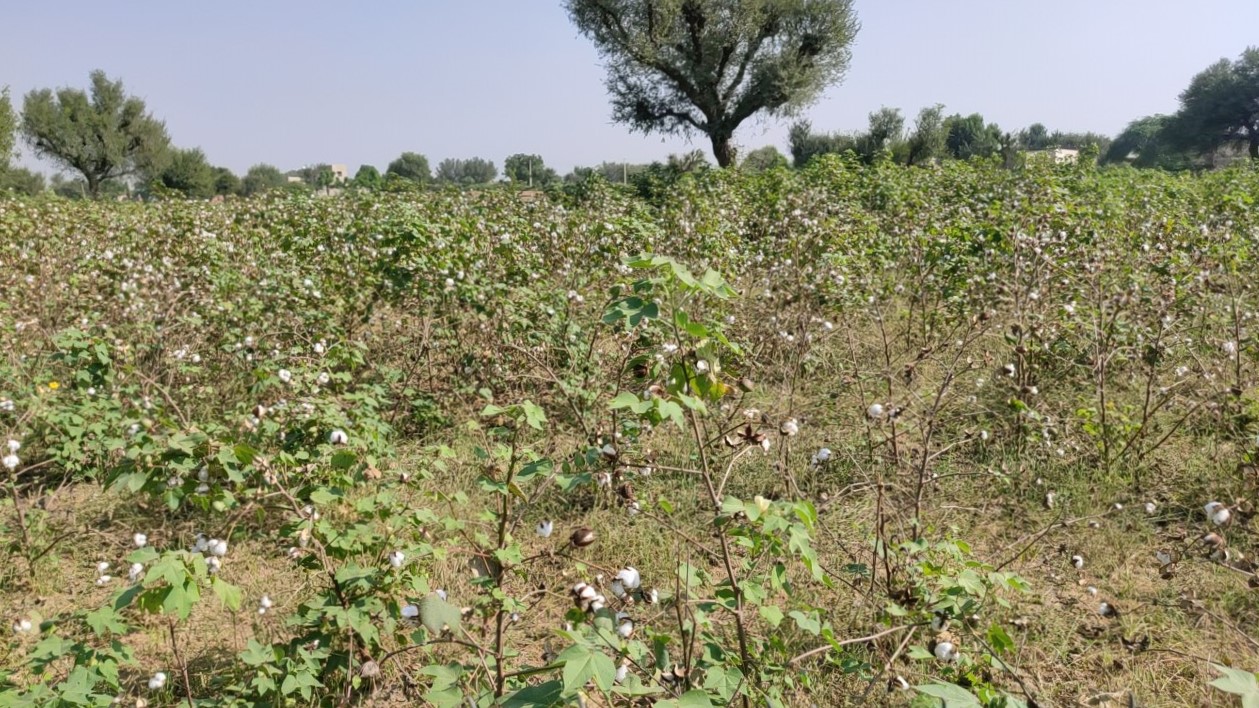
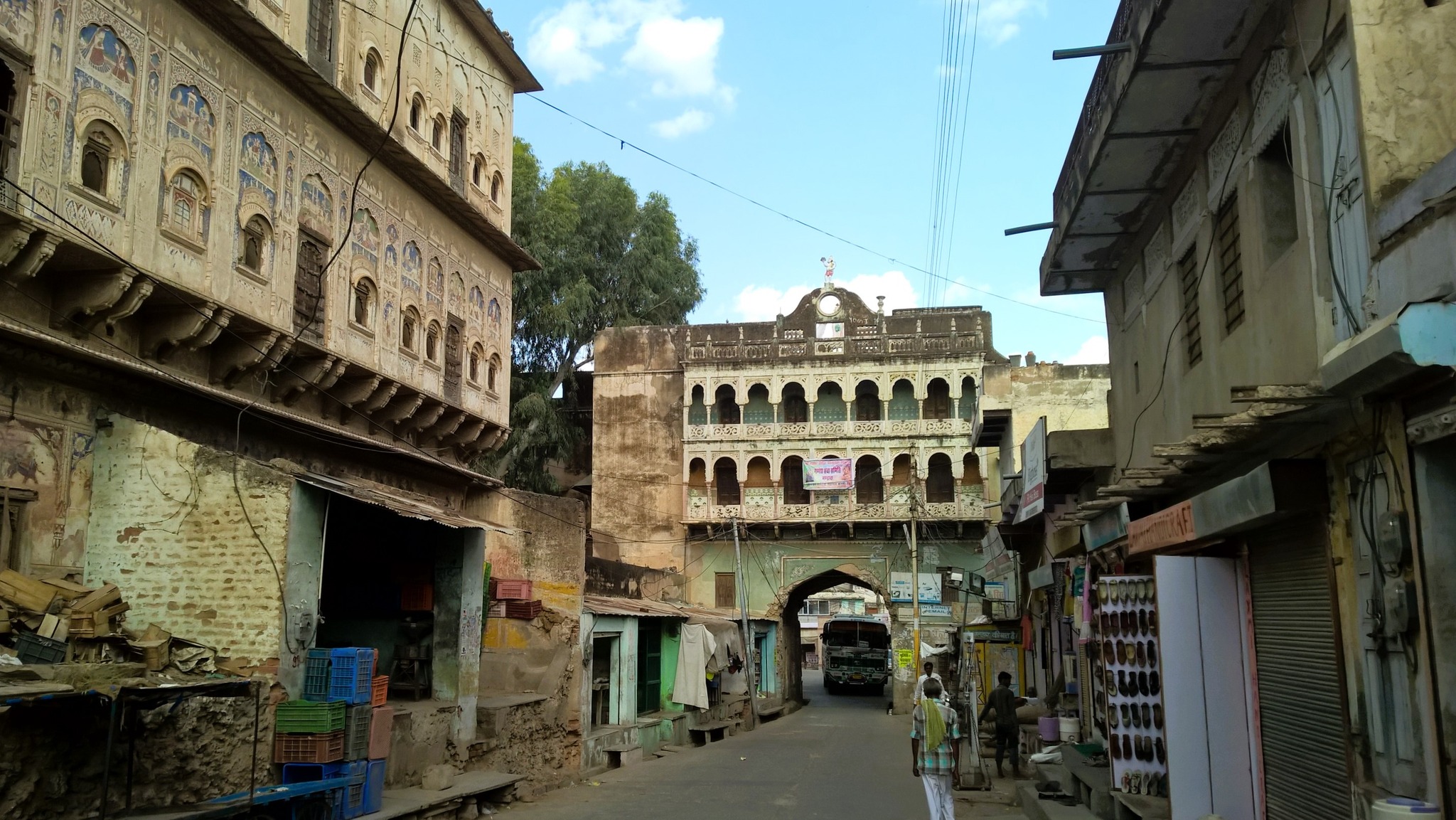
We kicked off our trip by first heading off to Pilani – which my father, on account of being an educator had wanted to see for a long time – via Loharu. After getting a glimpse of the BITS Pilani University, we proceeded to Alsisar, on a narrow arterial road that cut through cotton fields, and part-flat, part-undulating arid patches populated with khejri and babul trees. At Alsisar, cutting through the town on our way to Alsisar Mahal, we were immediately enchanted by the stately havelis sporting painted facades. A tour through Alsisar Mahal, a 18th century palace-turned-heritage hotel standing right in the middle of the town, transported us to a more wistful time.
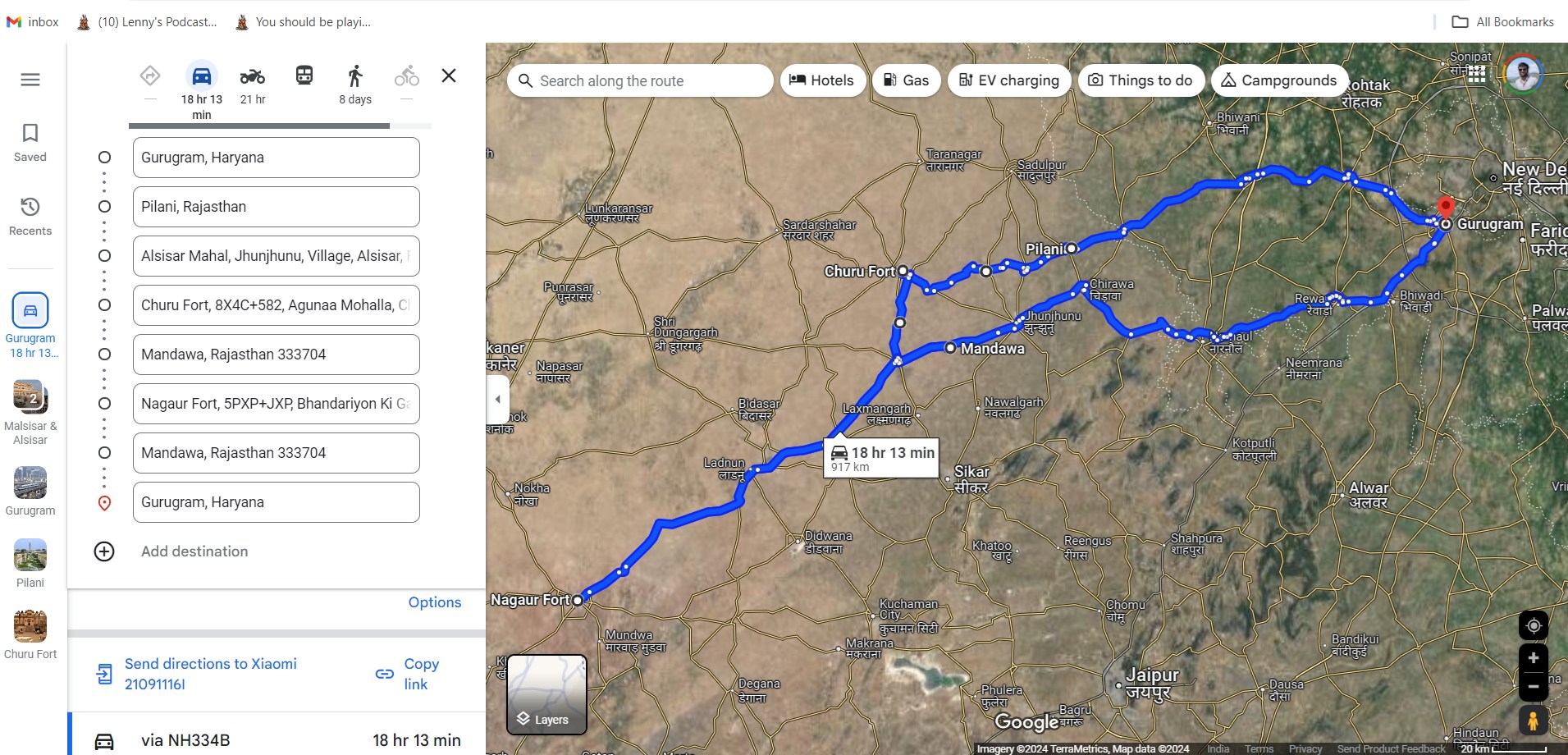
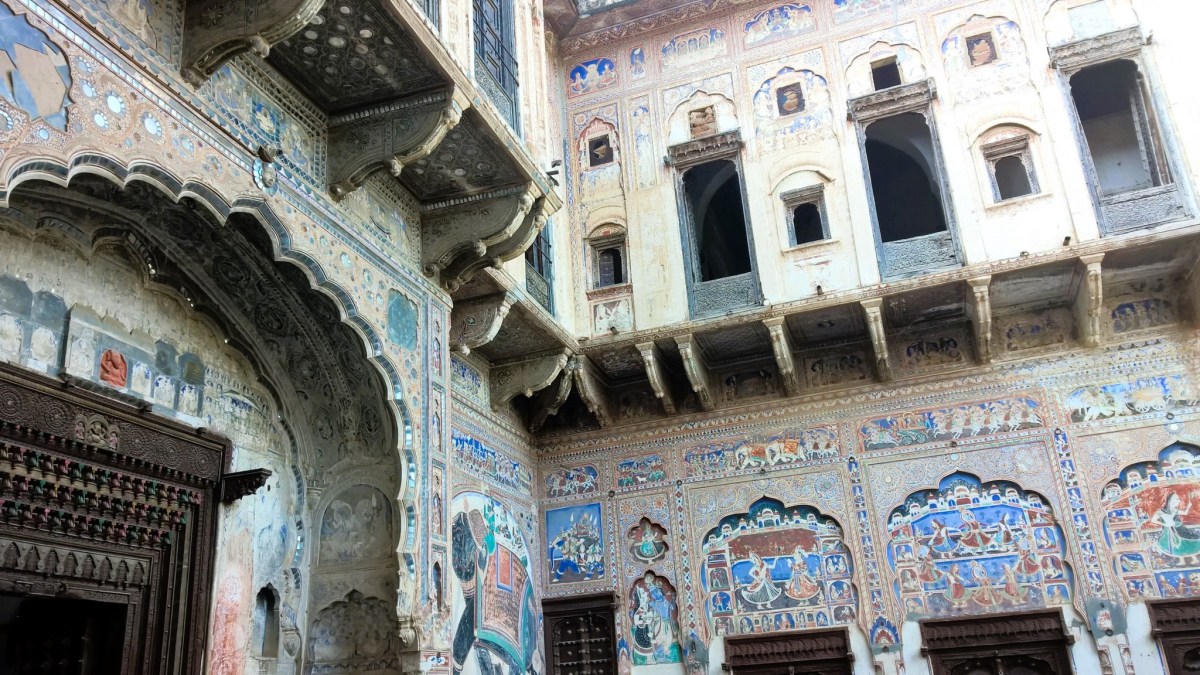
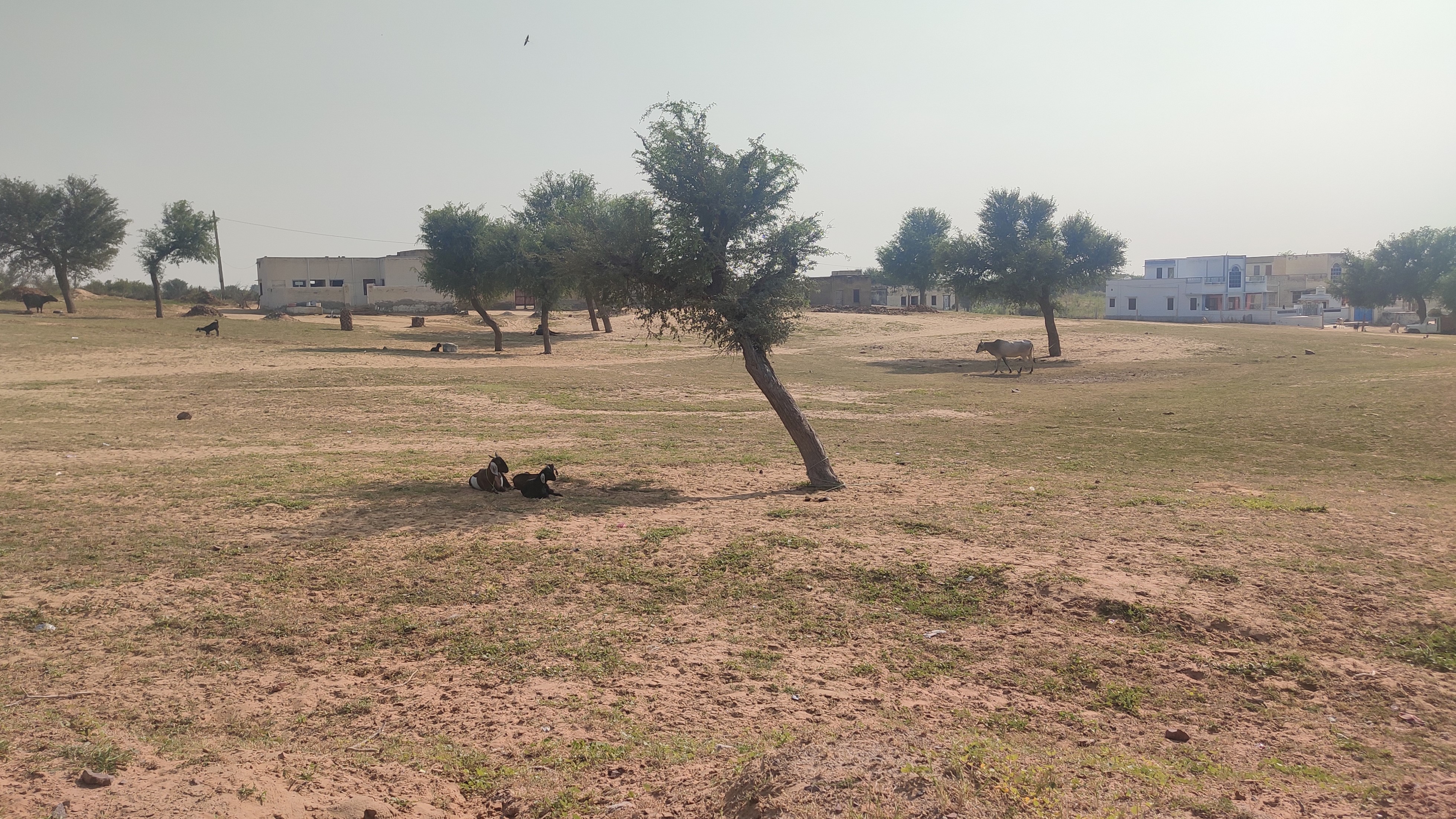
At this point, we did not have an itinerary for the rest of the day, the only objective being that we reach Mandawa by the end of the day. So, we then drove towards Malsisar, a twin town of Alsisar – it is said the towns are named after two sisters, Alsi and Malsi, respectively – and took a turn left towards Bissau just at the periphery of Malsisar. Now, as the cotton fields gave way to patches growing millet, with the landscape gradually turning more arid, cattle lounged about in the shade of the sparsely scattered trees. Soon, as we approached Bissau, dunes started appearing in the distance – we were at the edge of the Thar.

Our next stop was Churu, known as the gateway to the Thar and also one of the three largest towns of Shekhawati, the other two being Jhunjhunu and Sikar. Intent on seeing the Churu fort, we had to drive through the city centre, that was very busy on account of traffic on rather narrow roads, flanked by havelis on both sides. However, the fort not being open in the sense that tourists could visit, we concluded our Shekhwati sojourn for the day and started south towards Mandawa.

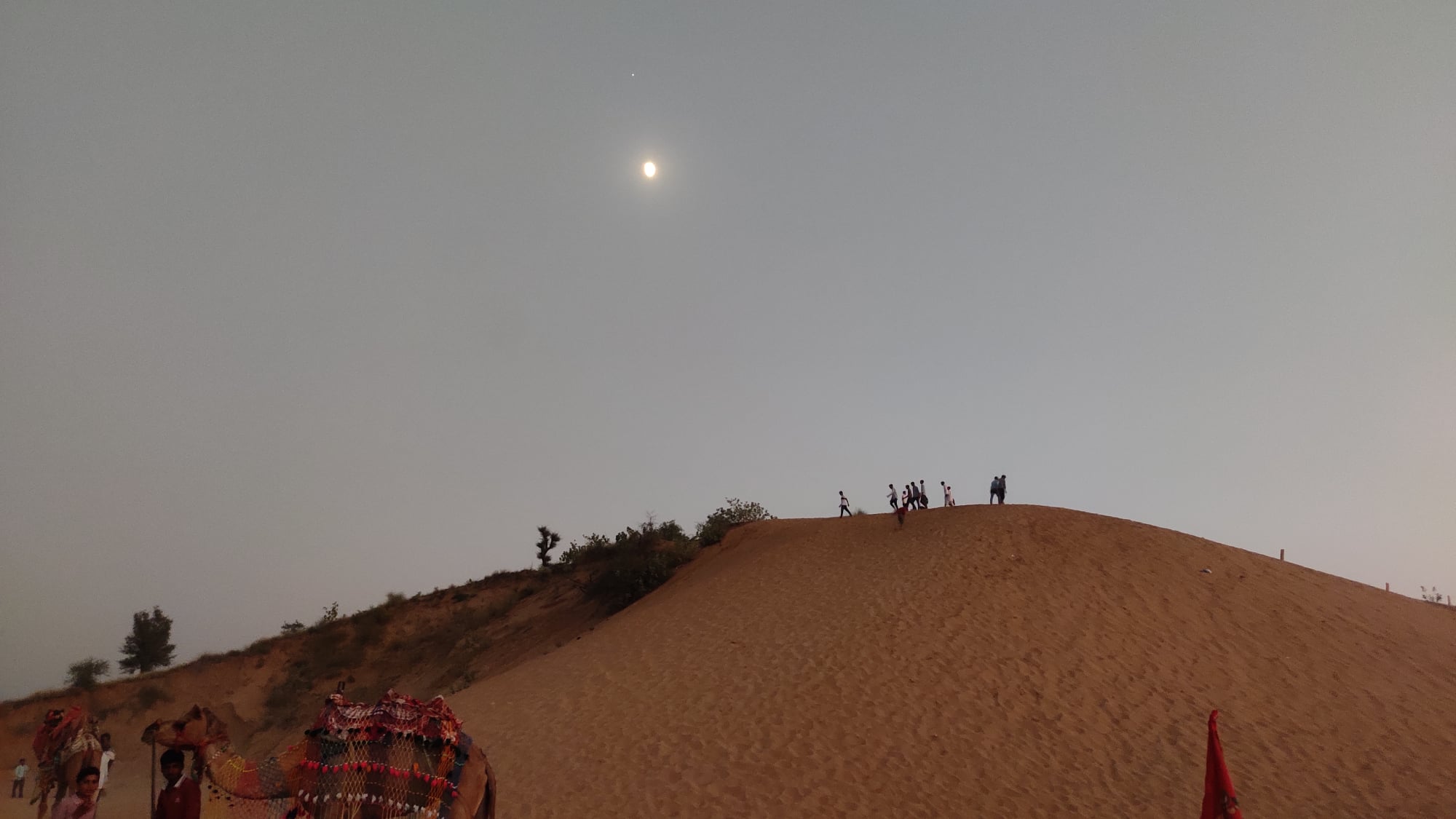
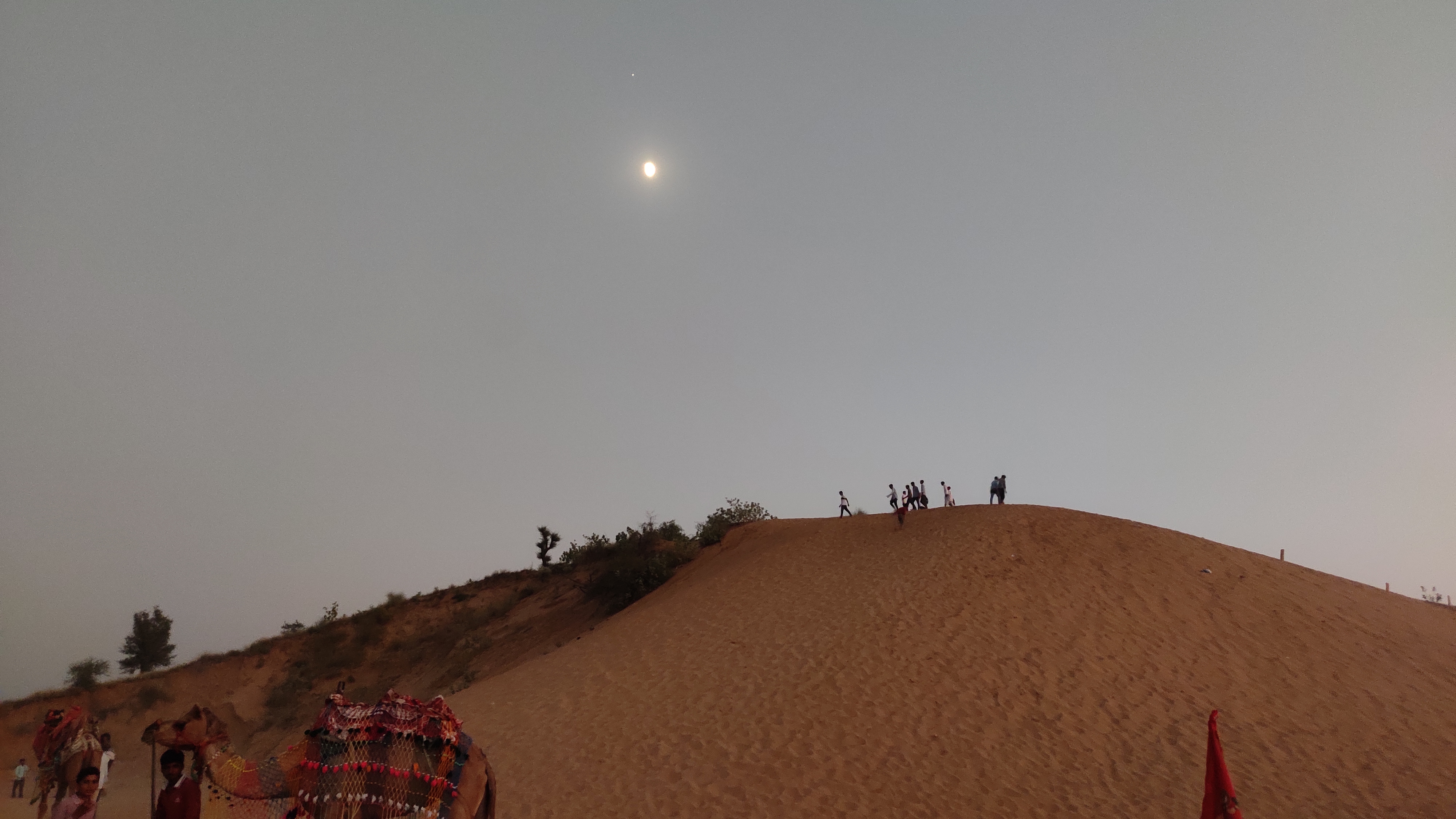
As evening fell and we approached Fatehpur, we passed by sand dunes shining in the moonlight, stopping at one particular sand dune where camel rides were being offered. Soon, passing through quite narrow lanes of Fatehpur, another town abounding in havelis, we reached Mandawa around 7.30pm and checked-in for the night at a fairly new haveli. The haveli, the receptionist told us, had recently played host to a crew that was in Mandawa for shooting an OTT series featuring Sonakshi Sinha (this series later turned out to be Dahaad). Following dinner at the rooftop on the haveli, we went off to sleep, as a day-long detour from Shekhawati awaited us the following day.

Part-2: Nagaur

The following day, after breakfast, we started off for Nagaur, a place that had been on my radar for a few years now. Once again passing through the haveli-laden, narrow lanes of Fatehpur, we headed west this time, straight into the Thar desert. As the the density of houses grew thinner, so did vehicular traffic, however, the traffic was supplanted with hordes of saffron-clad devotees walking by foot to some place that we did not know yet. In echoes of kawad yatra that happens in North India in July, trucks laden with similarly attired devotees, playing bass and disco-beat laden devotional songs too were headed in the same direction. We realized they were headed to the Salasar Balaji Temple once we crossed Salasar.

Beyond Salasar, as the two-lane highway winded through the arid, undulating land, we would be alternating between sights of crests of low sandy mounds rolling in the distance when riding a crest ourselves and the prospect of climbing up a pass between sandy mounds when passing through a trough. The cherry on top was the tarmac, smooth and devoid of a single pothole, making it a pleasure to drive on. Sparsely populated towns, that we mostly by-passed, greeted us on the highway, before we entered the throes of the conspicuously bigger city of Nagaur, and promptly navigated through, first the wider streets, and then the narrow lanes, on our way to the older part of the city.

Being on the offbeat track, Nagaur is not heard of as often as the likes of Jaipur, Udaipur, Jodhpur, Jaisalmer etc., and yet turned out to be a pleasant surprise, what with a UNESCO site in the form of the Ahichhatrapur Fort or the Nagaur fort. Nagaur once served as an important stop on trade routes passing through the Thar desert. But it has had a chequered past ever since it encountered Ghanznavid invasions in the 9th-10th centuries. It kept changing hands and was fought for amidst bigger states placed around it, but its protectors fought equally hard to retain it.

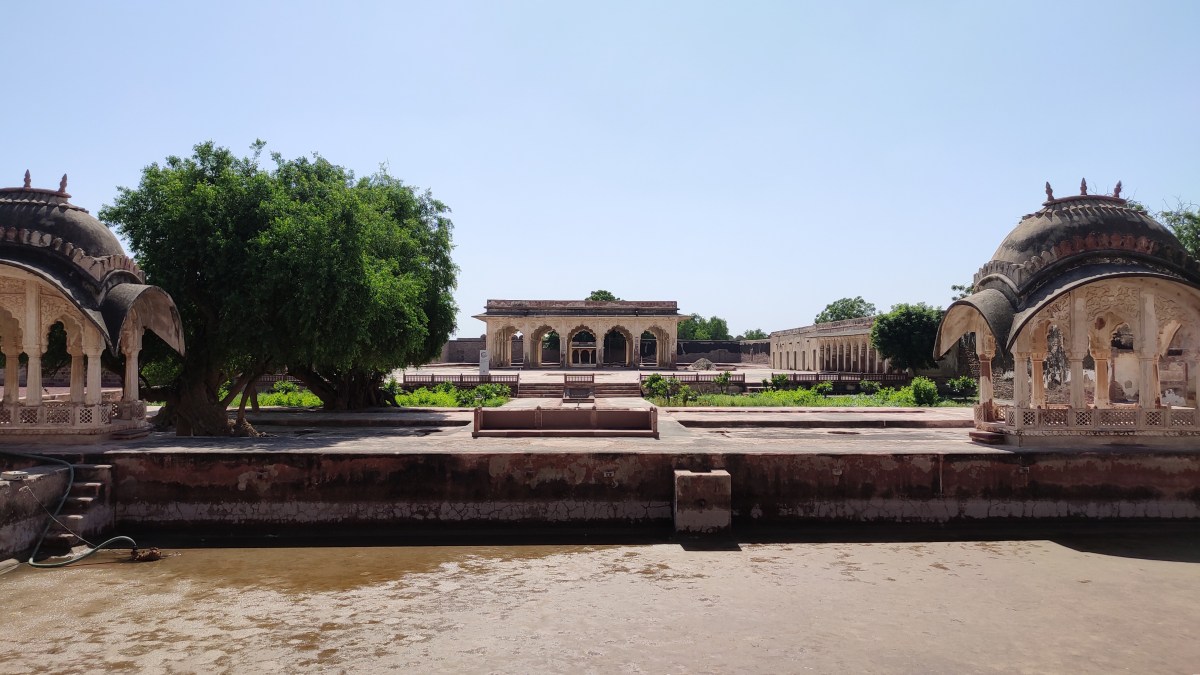
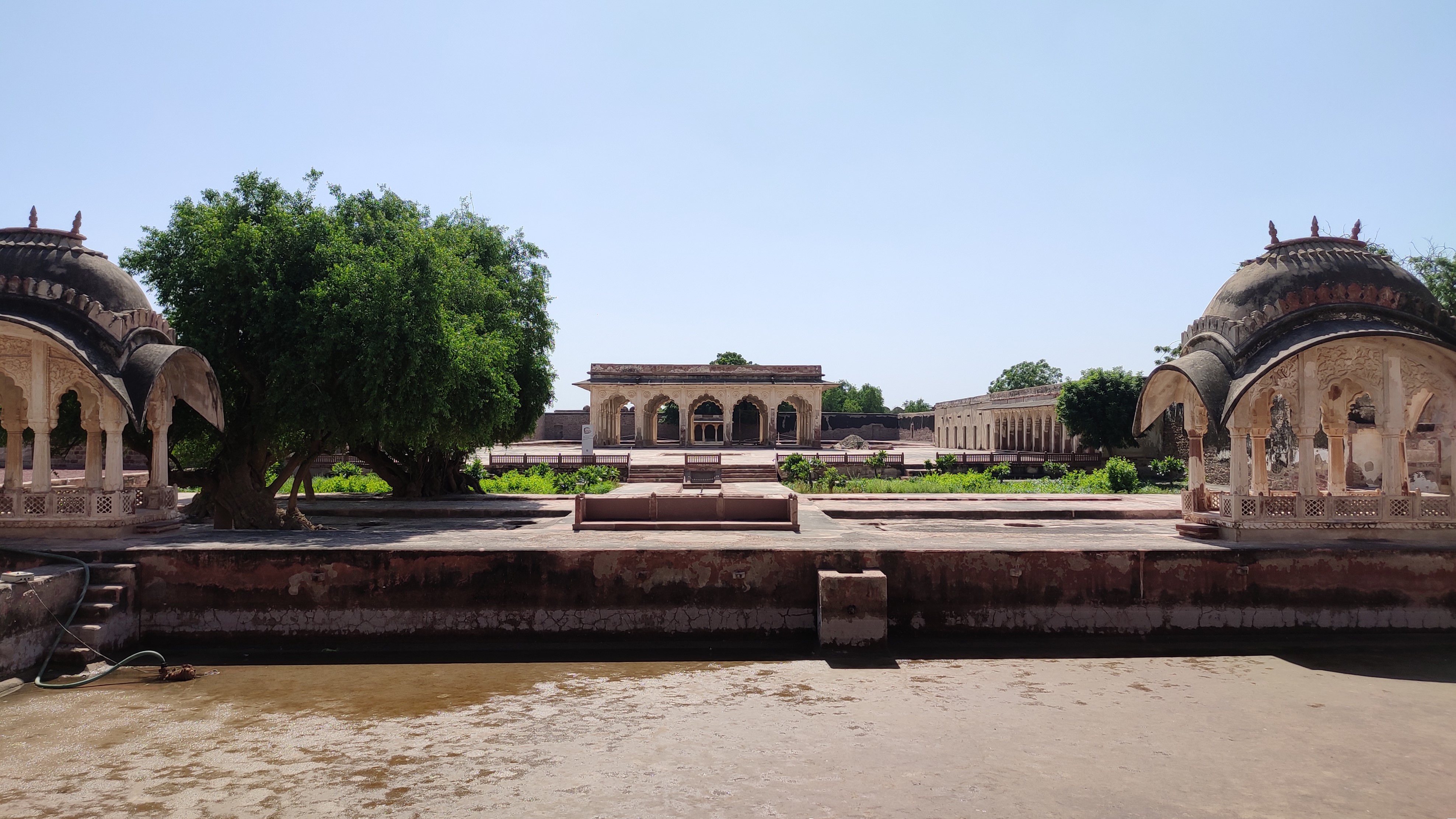
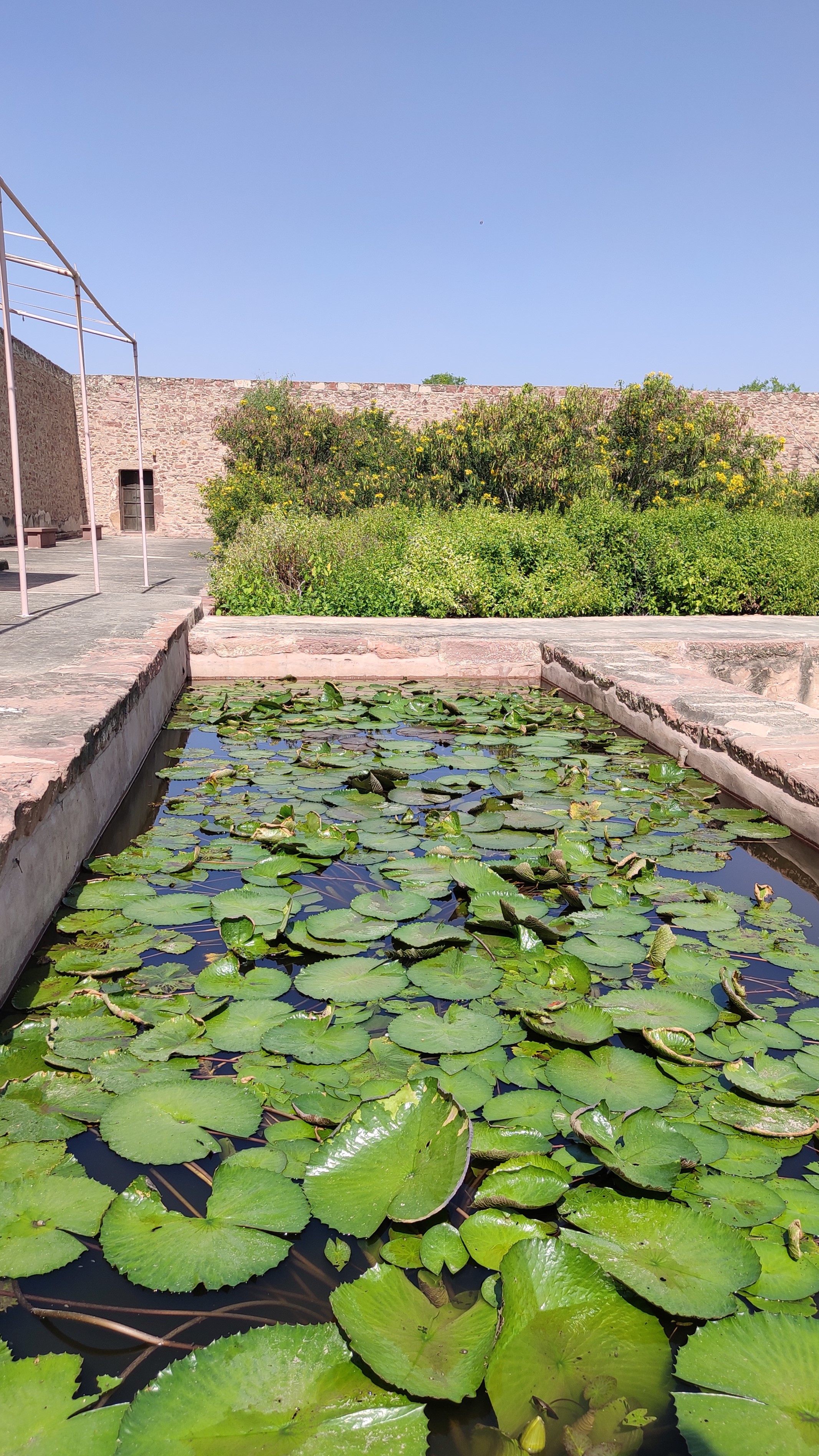
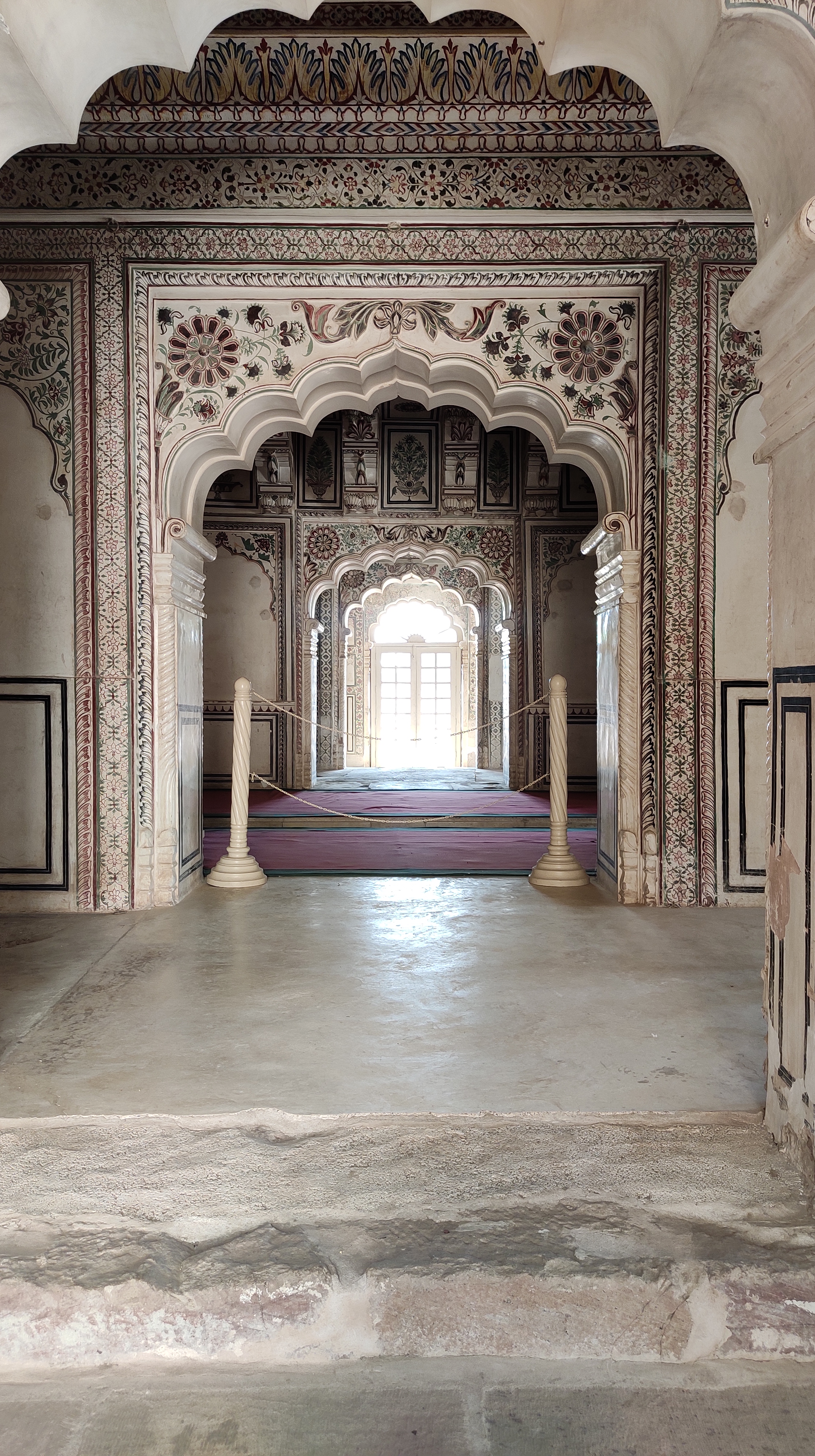
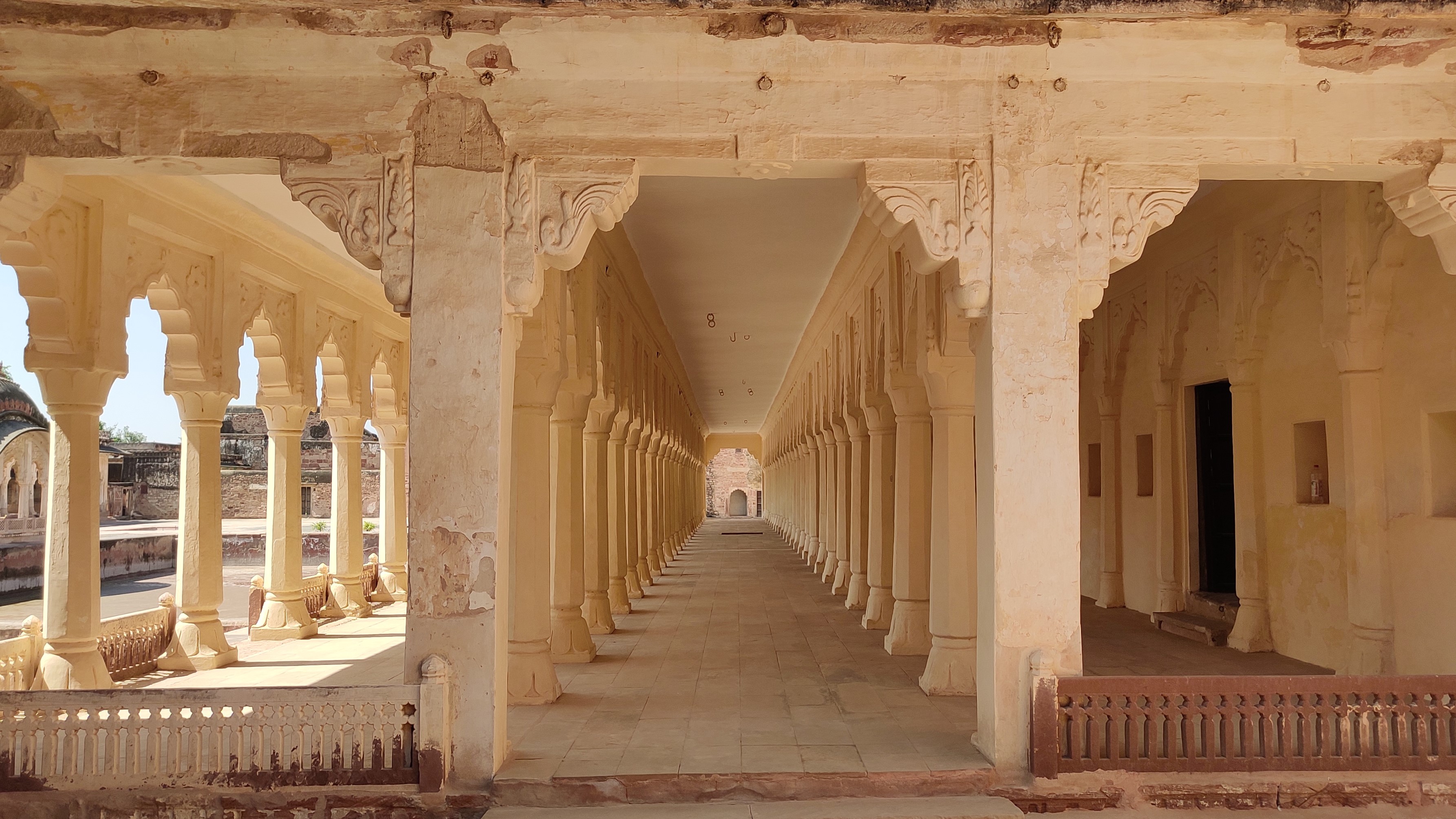
Inside the Ahichhatrapur fort, itself opulently built with a formidable fortification wall enclosure, we walked through the multiple palaces, namely, Sheesh Mahal, Deepak Mahal and the Hadi Rani Mahal, interspersed by large courtyards with lush gardens, placid pools and exquisite fountains. We lost ourselves in the corridors running from one arched-door to another, with the pillars sporting colourful motifs and the ceilings rife with frescoes. After spending almost 2 hours, being awed by the beautiful antiquities inside the fort, a different world in itself, we had our lunch around 2.30 pm and were back by 6 PM at Mandawa, where we checked into the 200-year-old Radhika Haveli.

Part 3: Mandawa

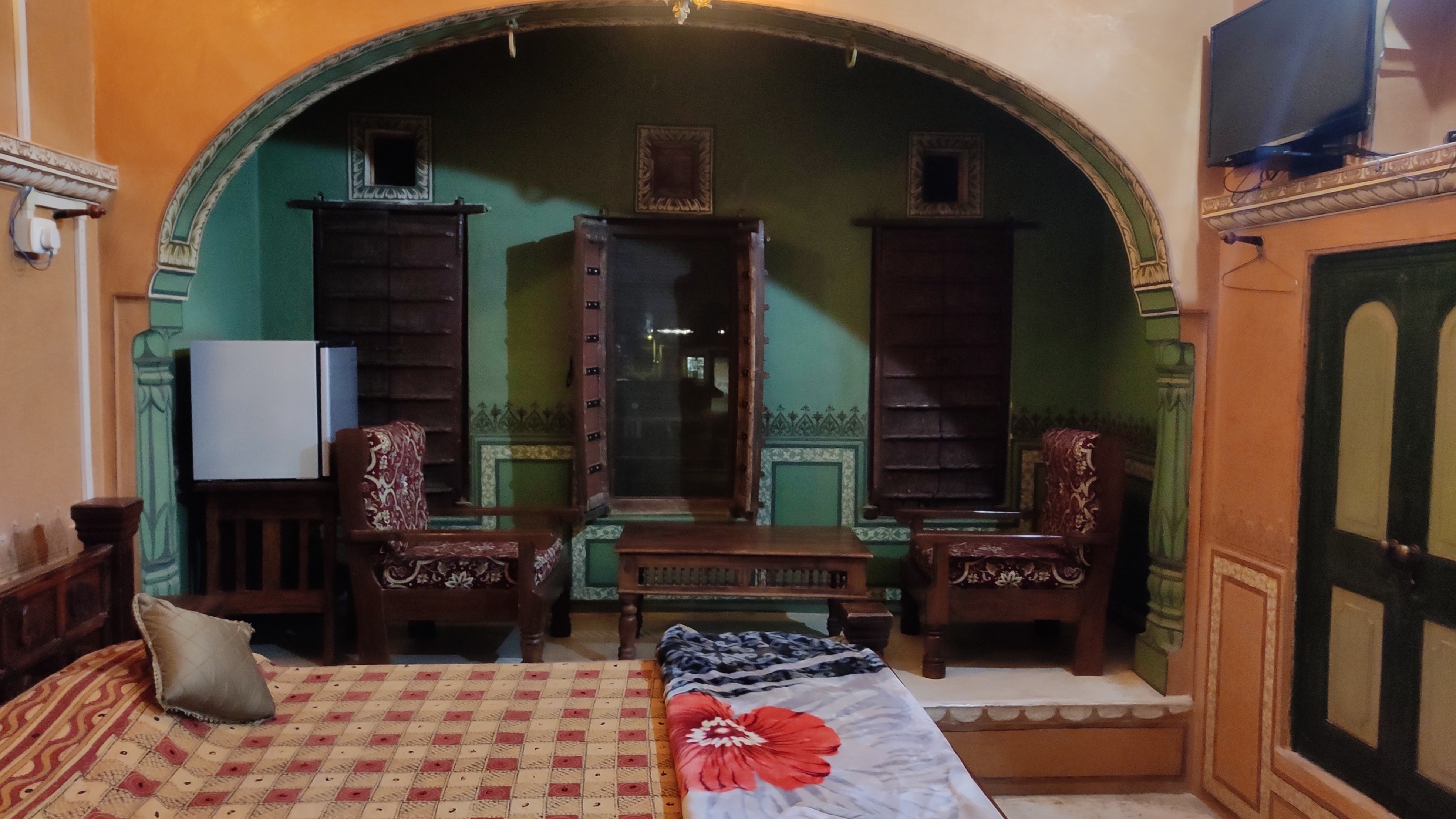
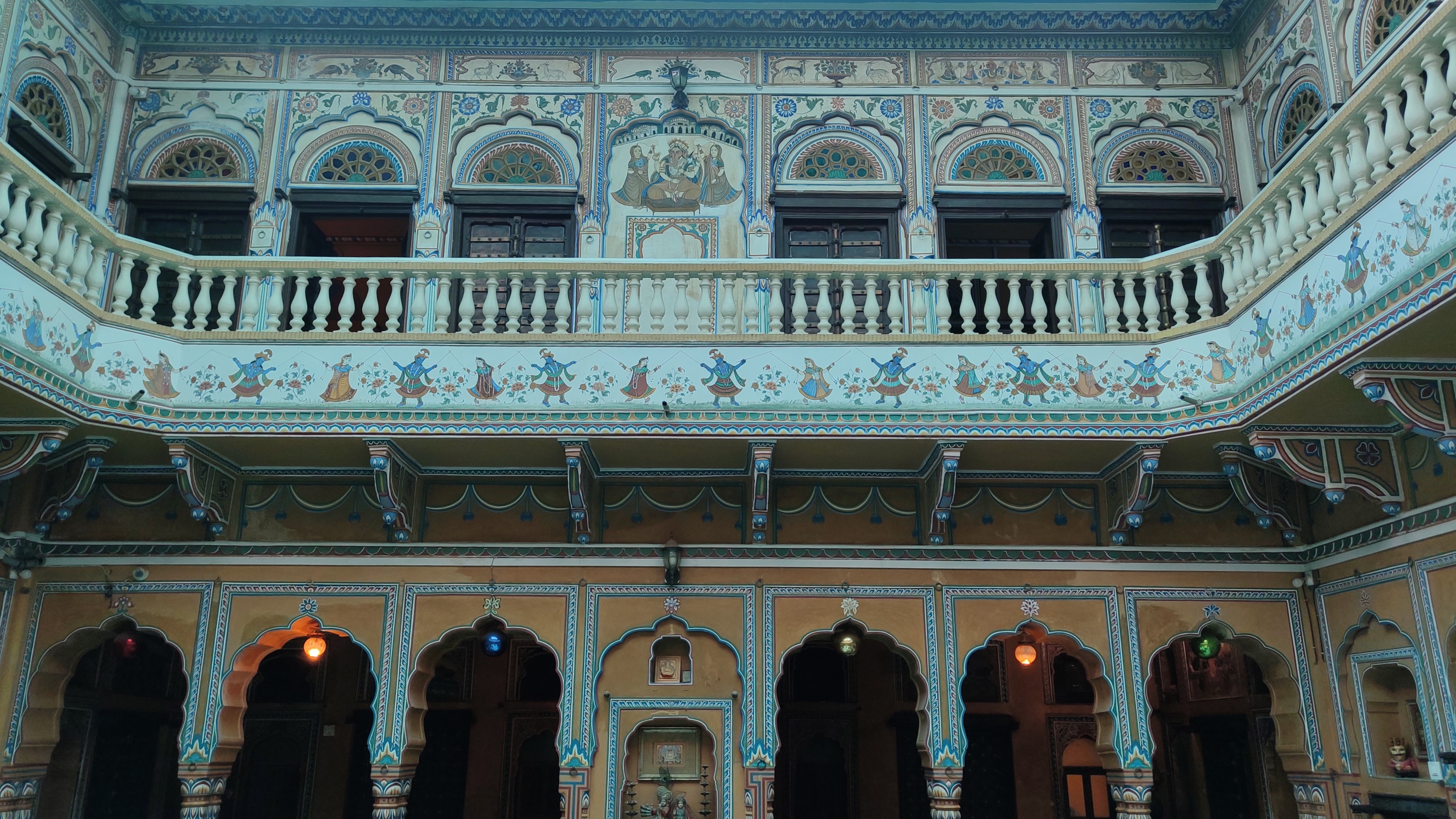
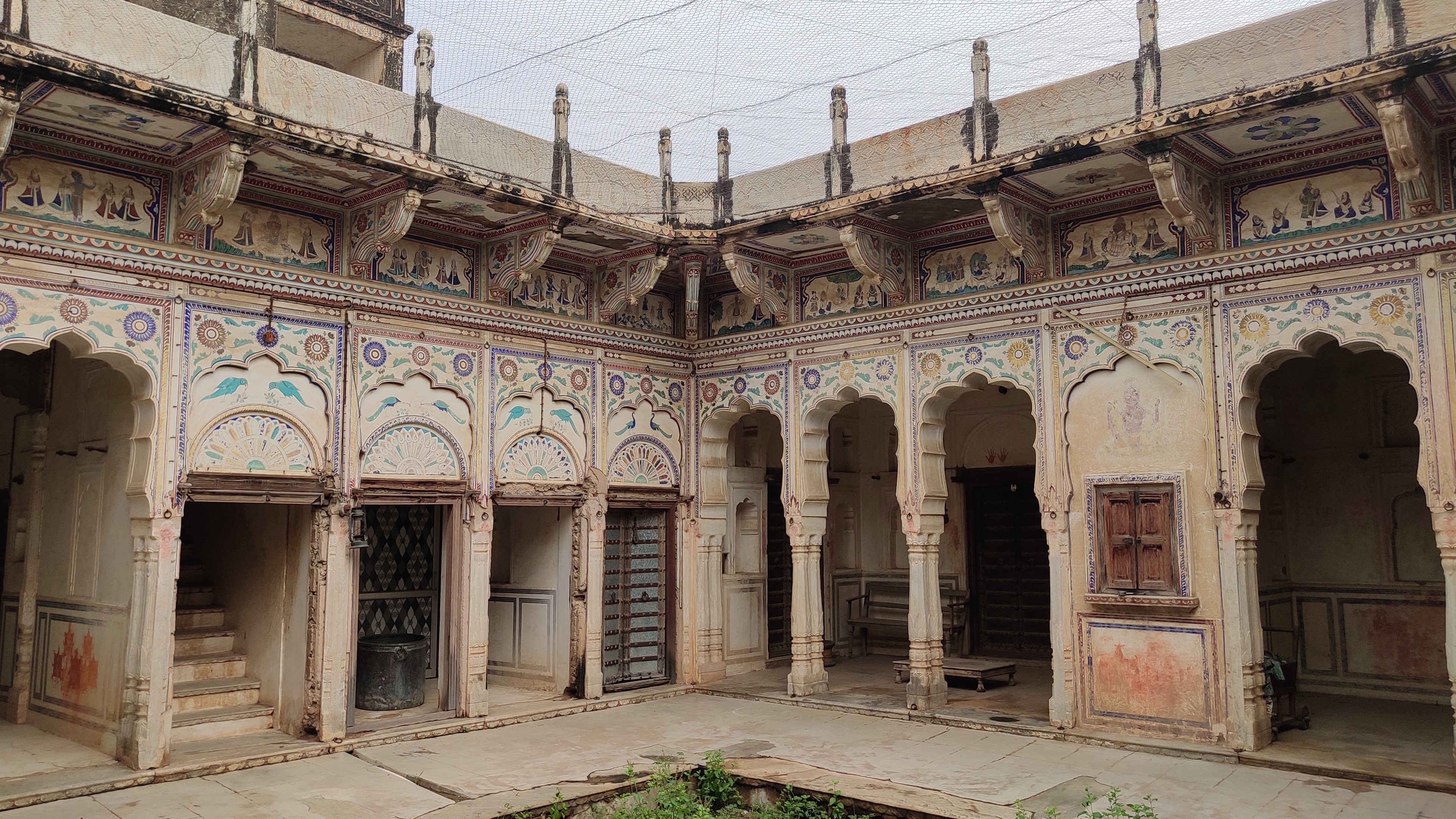
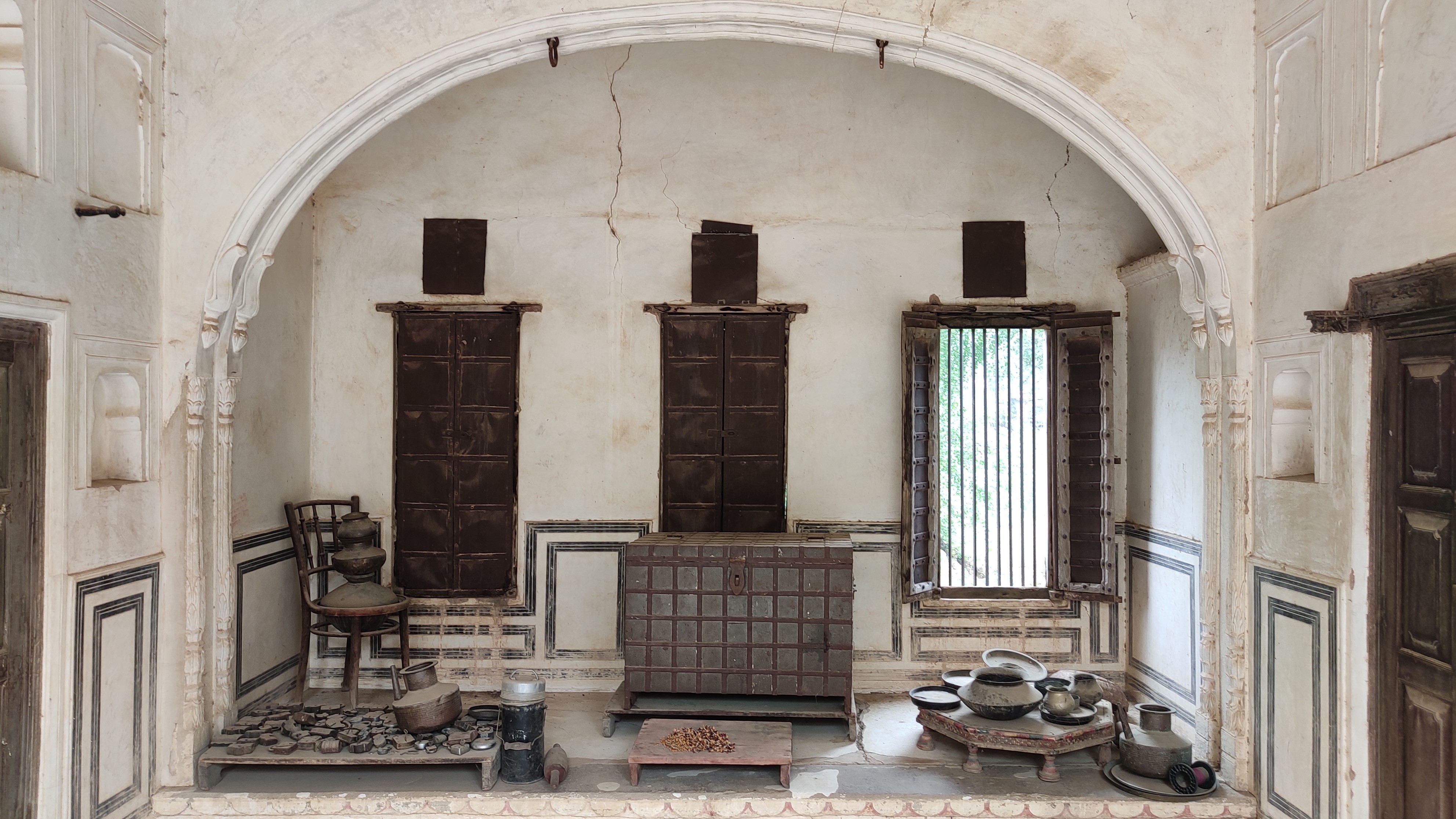
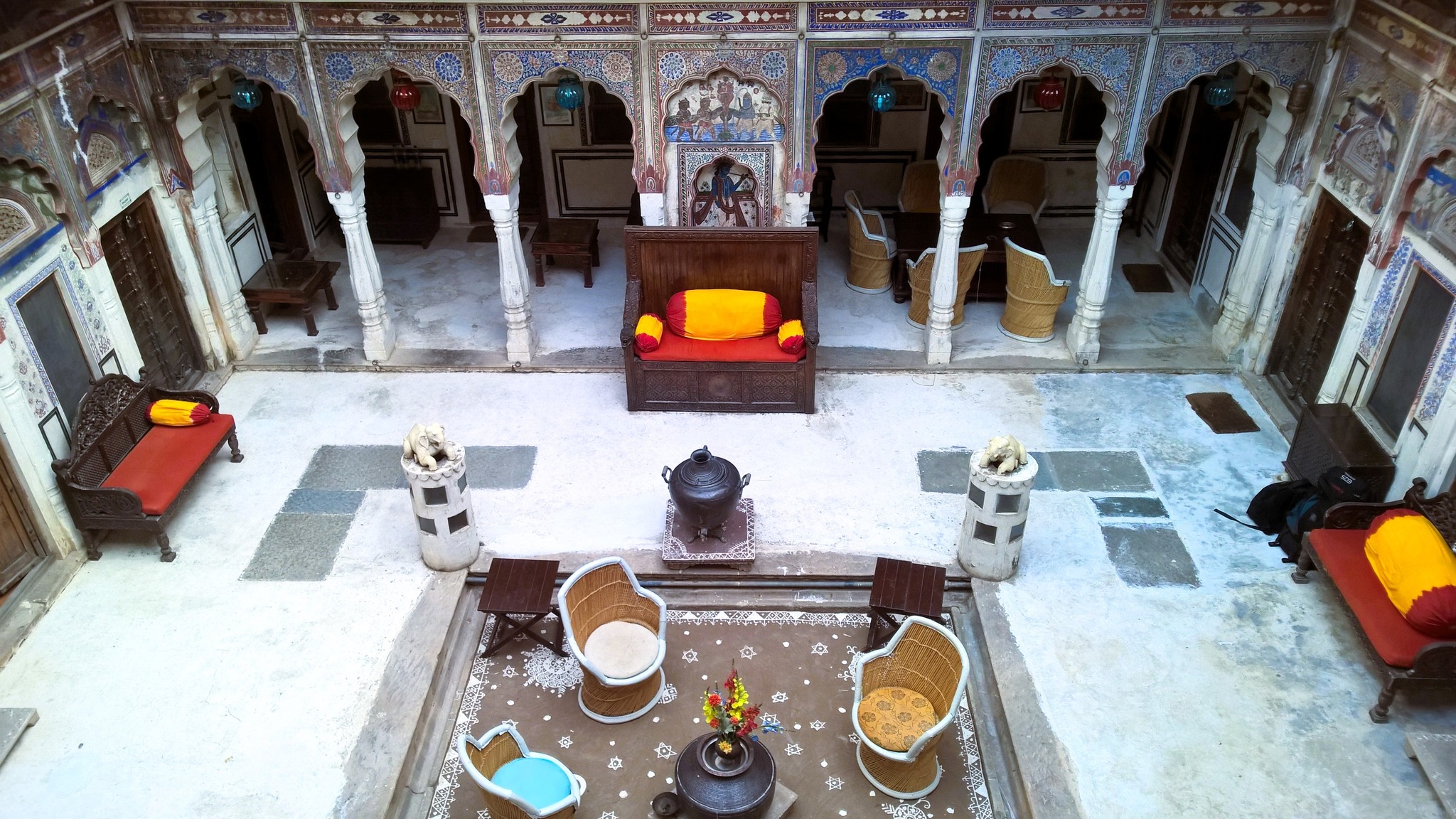
Radhika Haveli is a typical Shekhwati style haveli with a large courtyard in the middle of a rectangular-shaped two-storeyed living area. Rooms lie stacked one after another, ranging from sizes small to big, with old-style windows, with their painted and glazed wooden shutters, opening to the lane outside. We realised the floor of our room was two-tiered, with the higher tier, the narrower of the two, running by the side of the wall with the window. The old queen-bed lay between the cylindrical pillars holding up the ceiling, and a coffee table along with old-style chairs stood beside the window.

At around 8 PM, stepping out by foot in search of a pharmacy, we were immediately confronted by a desolate lane, which the faint streetlights did little to illuminate, prompting us to retreat and resume the search with our car. Back in the room, when we switched off the lights using the lever on the antique round-shaped bakelite base, we were engulfed by an atmosphere of eery quietude.

The next morning, the hosts at the Radhika Haveli pampered us with a complimentary sumptuous breakfast comprising poha, puri-sabzi, idli-sambhar, fruit, tea and coffee and were still flooding us with so more food, when we had to decline because we were beyond full. Thereon, through the maze of streets criss-crossing the agglomeration of painted havelis, we proceeded to do a tour of havelis, to name a few, Jhunjunwala haveli and Chokhani haveli, and spots where scenes of some famous movies, namely, P.K. and Bajarangi Bhaijaan, were shot.

Noon onwards, we immersed ourselves in appreciating and purchasing some of the local art and handicrafts, of which Mother was simply not getting enough of. By 2 PM, we were still not done, as the variety on offer was overwhelming, and Mother was having a hard time choosing, her misery ending when Father said, ‘why choose when you can take all!’ By 2.30 PM, with a six hour journey lying ahead of us, we had to bid adieu to Mandawa, with a heavy heart and unsatiated mind, and head back to Gurugram, reaching by 8 PM. The good thing about places that one leaves feeling pangs of ‘unfinished business’ is that one could always go back to those places.

Trip Summary

Day 1
Gurugram to Mandawa via Pilani, Alsisar and Churu (320 km).
Overnight stay in Mandawa.

Day 2
Mandawa to Nagaur and back to Mandawa (370 km).
Overnight stay in Mandawa.

Day 3
Mandawa to Gurugram via Jhunjhunu (240 km).

Mandawa: Impressions from a First-time Visit

Eager to get away from the humdrum of our job, my colleague Amit and I, decided to make a weekend getaway to Jaipur.

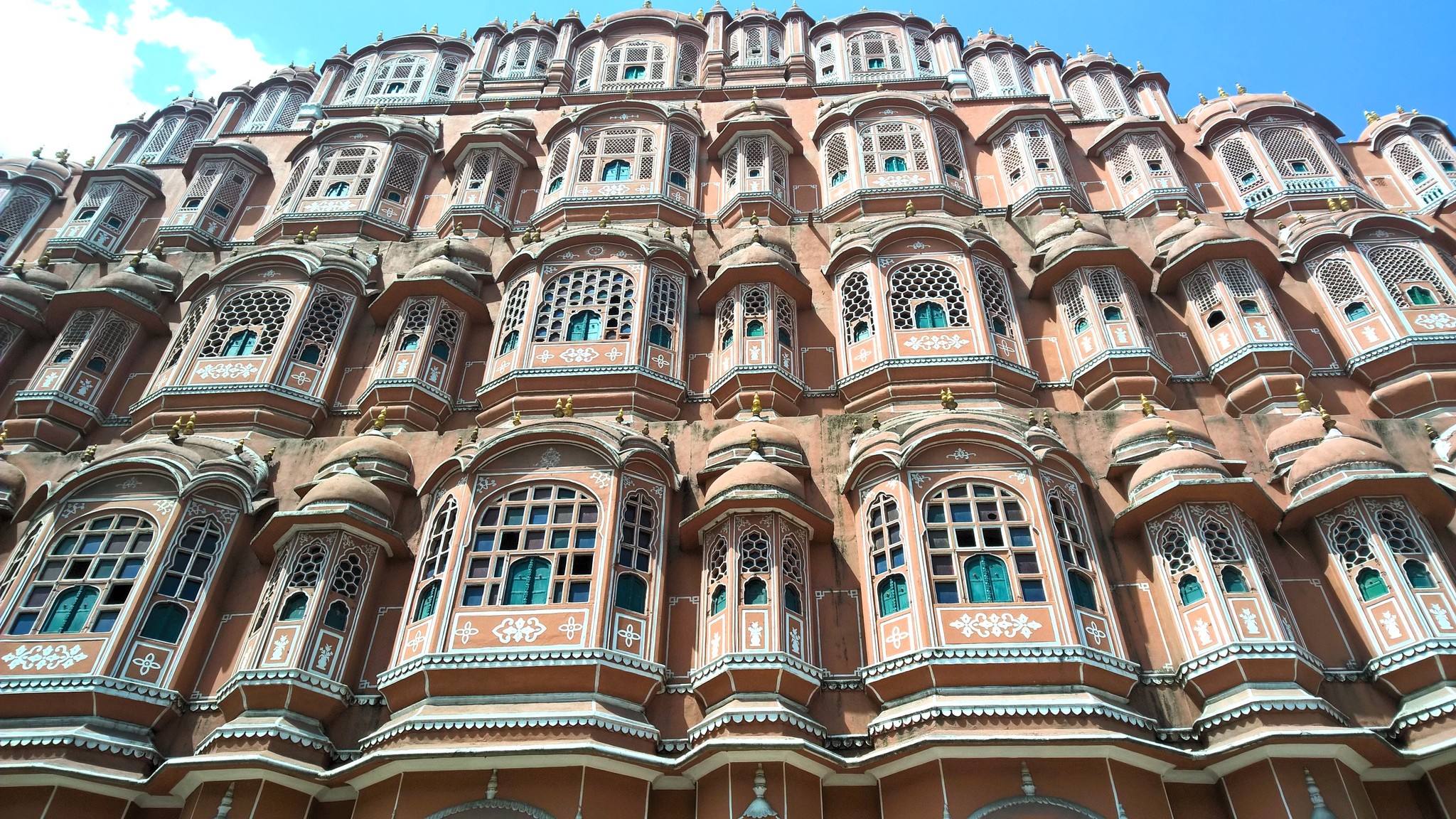
This being my third visit to Jaipur and Amit’s first, I drew from my previous experience, and we booked a day-long package with an auto-rickshaw driver, who took us to Hawa Mahal, Jantar Mantar, Amer fort, Jaigarh fort, and finally, to Nahargarh fort. Later, in the evening, we got a taste of Rajasthani culture and cuisine at Chokhi Dhani.

Now, where do we go to the next day? I really wanted to go to Sambhar Lake, but not able to find any information on how to reach there, we considered other places, which is when I remembered Mandawa, from two movies released a couple of years ago, namely, P.K. and Bajarangi Bhaijaan. It turned out Mandawa could be reached by public transport, complemented by a bit of local transport.

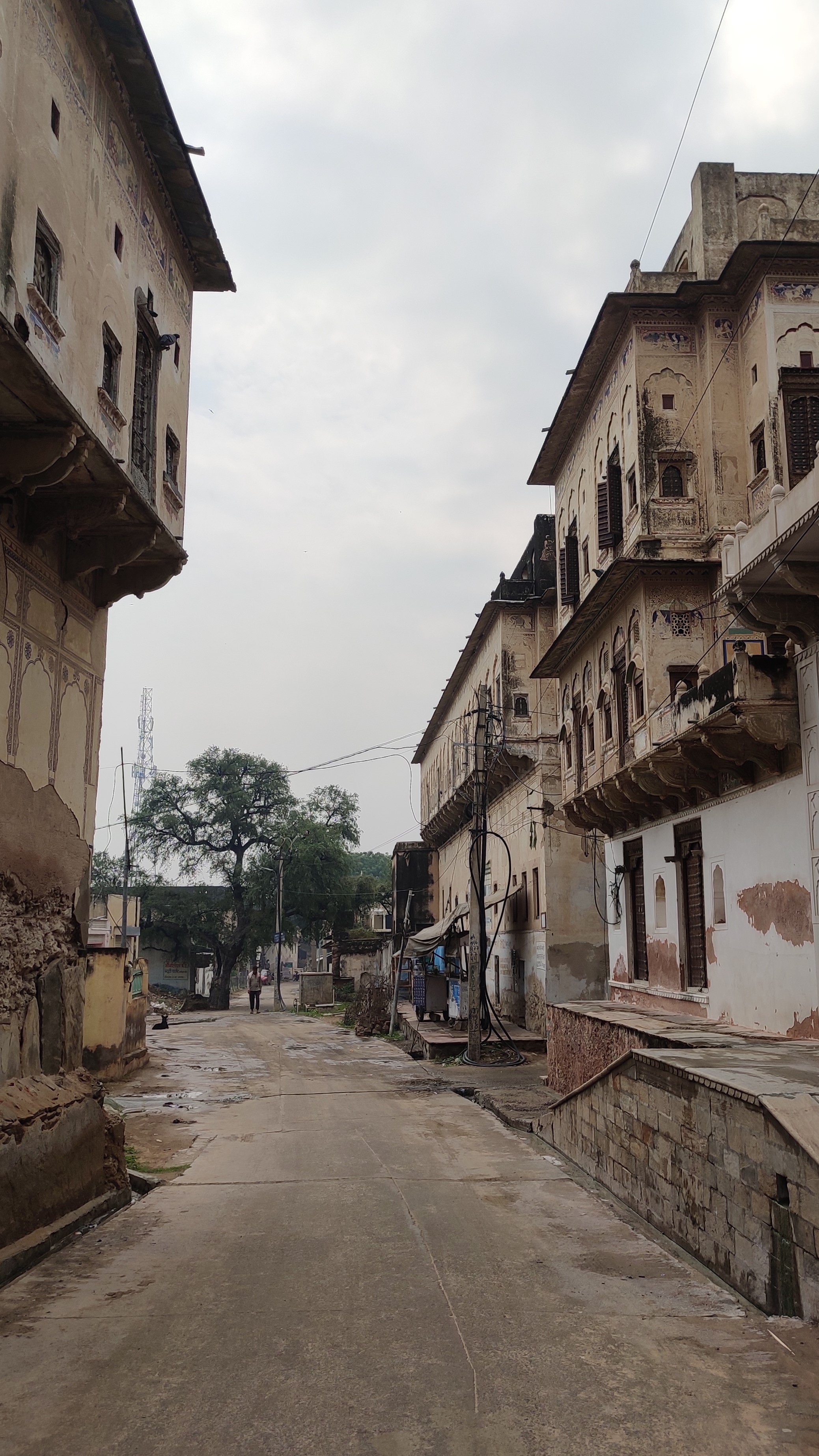
So, the next day at 8 AM, we set off by public road transport to Mukundgarh. As we passed Sikar, and then, Nawalgarh, I was fascinated by the set-ups of the towns – lying as disjointed clusters in the midst of the semi-arid landscape, with not much construction found along the road connecting the towns. The road cutting through each town was flanked on both sides by houses with their facades aligned, albeit in a jagged manner, with other houses on their respective side of the road. The houses, mostly painted yellow or white, wore an old world charm, transporting you to at least a hundred or more years back.

Getting down at Mukundgarh, we got around to looking for conveyance to Mandawa, when a strange-looking vehicle drew up alongside us. It was an auto-rickshaw which was decked up with fancy colourful decorations, with even more decorations on the inside, and covered with a canopy that formed a closed compartment! We were so intrigued that we hopped into the fanciful auto-rickshaw without even haggling.

As we advanced on the road to Mandawa, we saw the landscape gradually becoming more and more arid, and as we got nearer to Mandawa, we could see on both sides endless expanses of undulating sandy flats with a few sprinklings of low trees and shrub, even as villages each comprising just a handful of huts greeted us from time to time. Soon, we saw a bigger cluster of houses, and were welcomed by an arched gate on a wall that seemingly enclosed a town inside – Mandawa was here.

As we entered the gate, we were ushered in by two arrays of verandahs of the buildings abutting either side of the narrow road. Some buildings hosted shops, some others were residences, and some were merely the entrance to a larger building standing behind the front row.

Before we could get a hang of the place, we entered a bylane that apparently led to the Mandawa castle, but failing to locate the gate, we kept walking, past many havelis, until we reached an open area somewhere adjacent to the castle. We saw a shanty serving Maggi instant noodles and tea, and decided to first fill our tummies, while scratching our heads as to how really to explore the place, in the absence of a guide or any prior knowledge.

This is when appeared a boy – someone we would later refer to as Chhutku – barely 8 years of age, with disheveled hair, dressed in crumpled, undersized clothes, who sensing we were the touristy types, offered to show us around, for a price, and kept insisting on it until we had finished our meal. Partly to humour him, and partly impressed with his enterprise at such an early age, we relented.

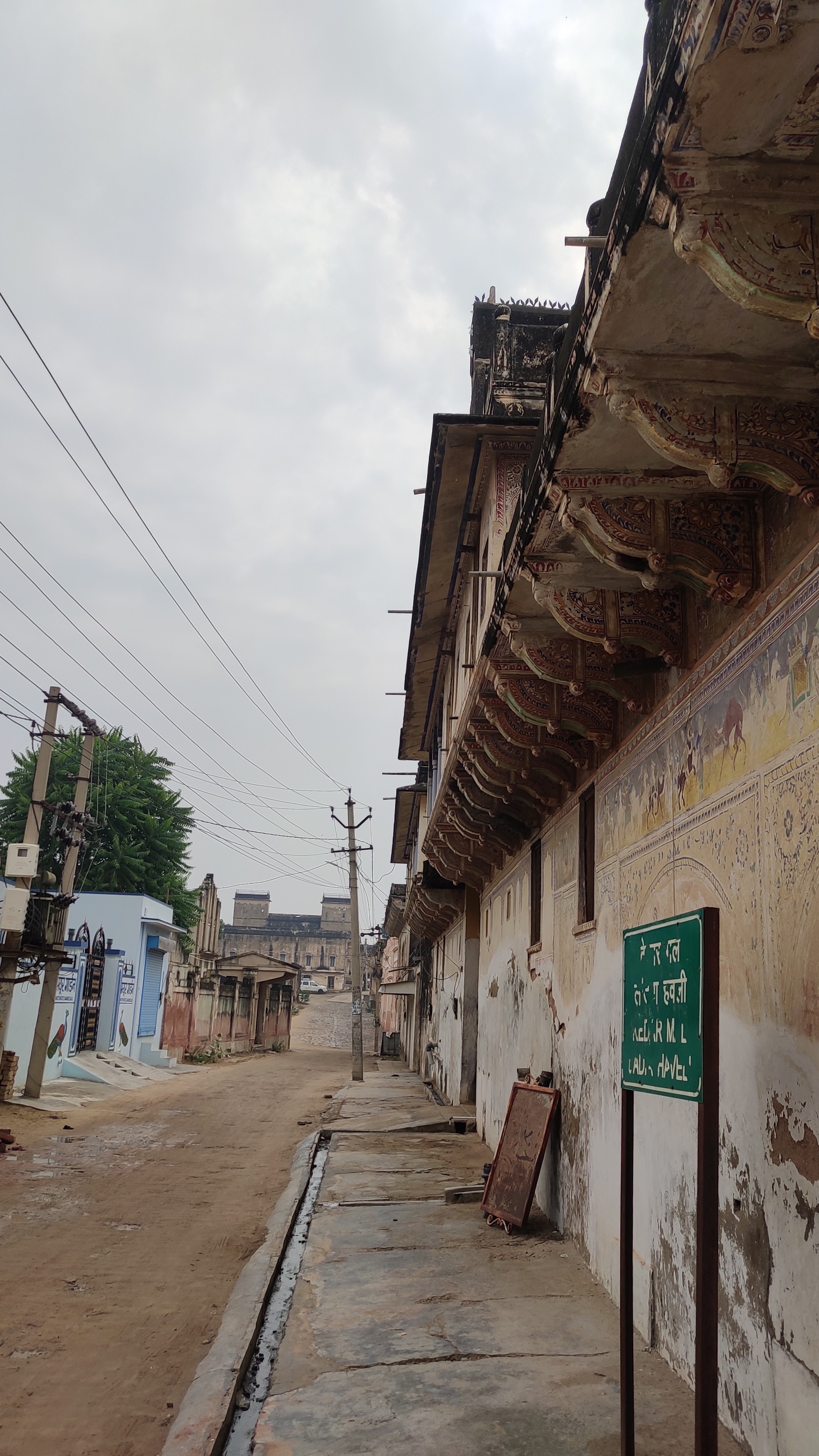
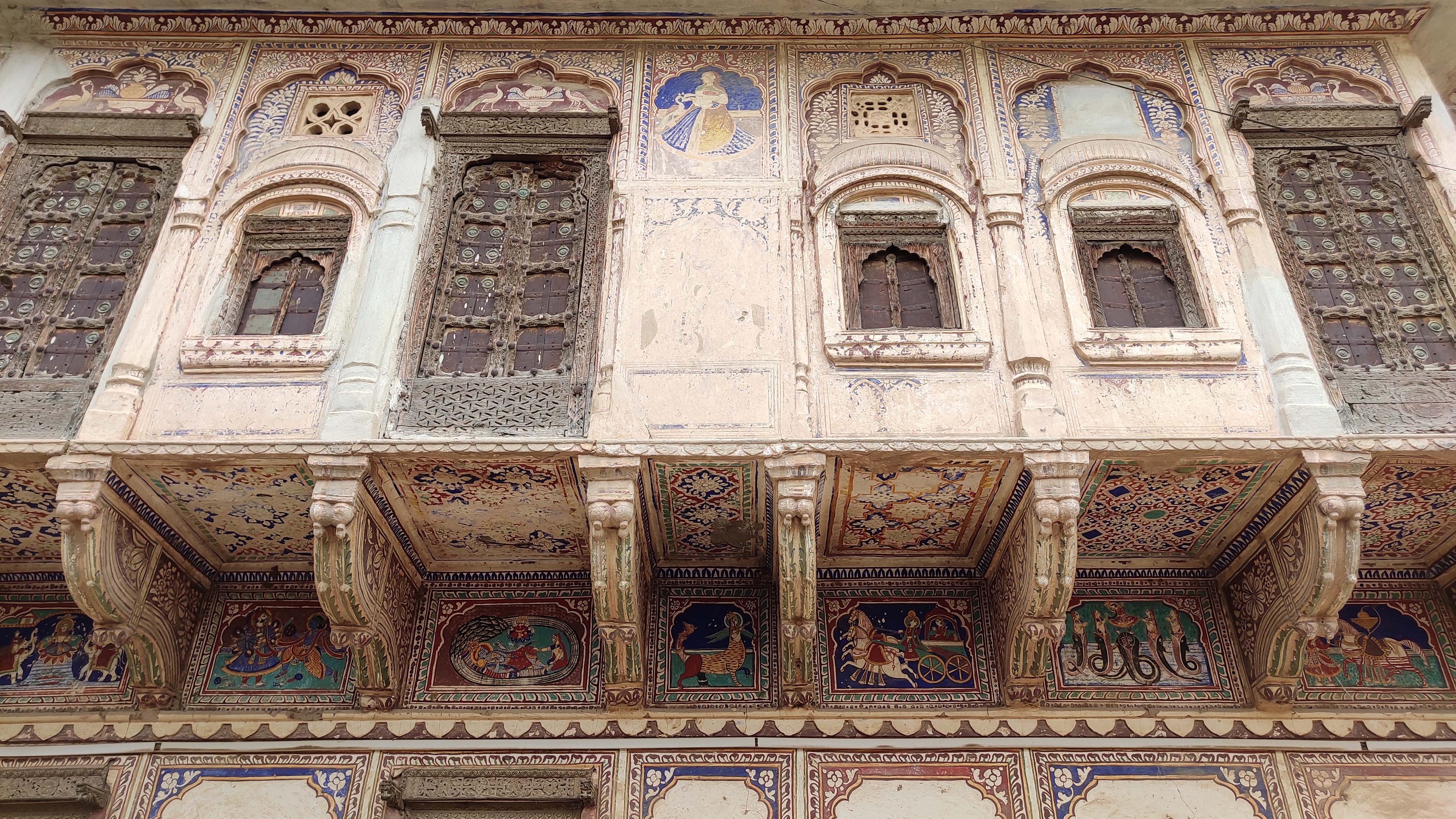
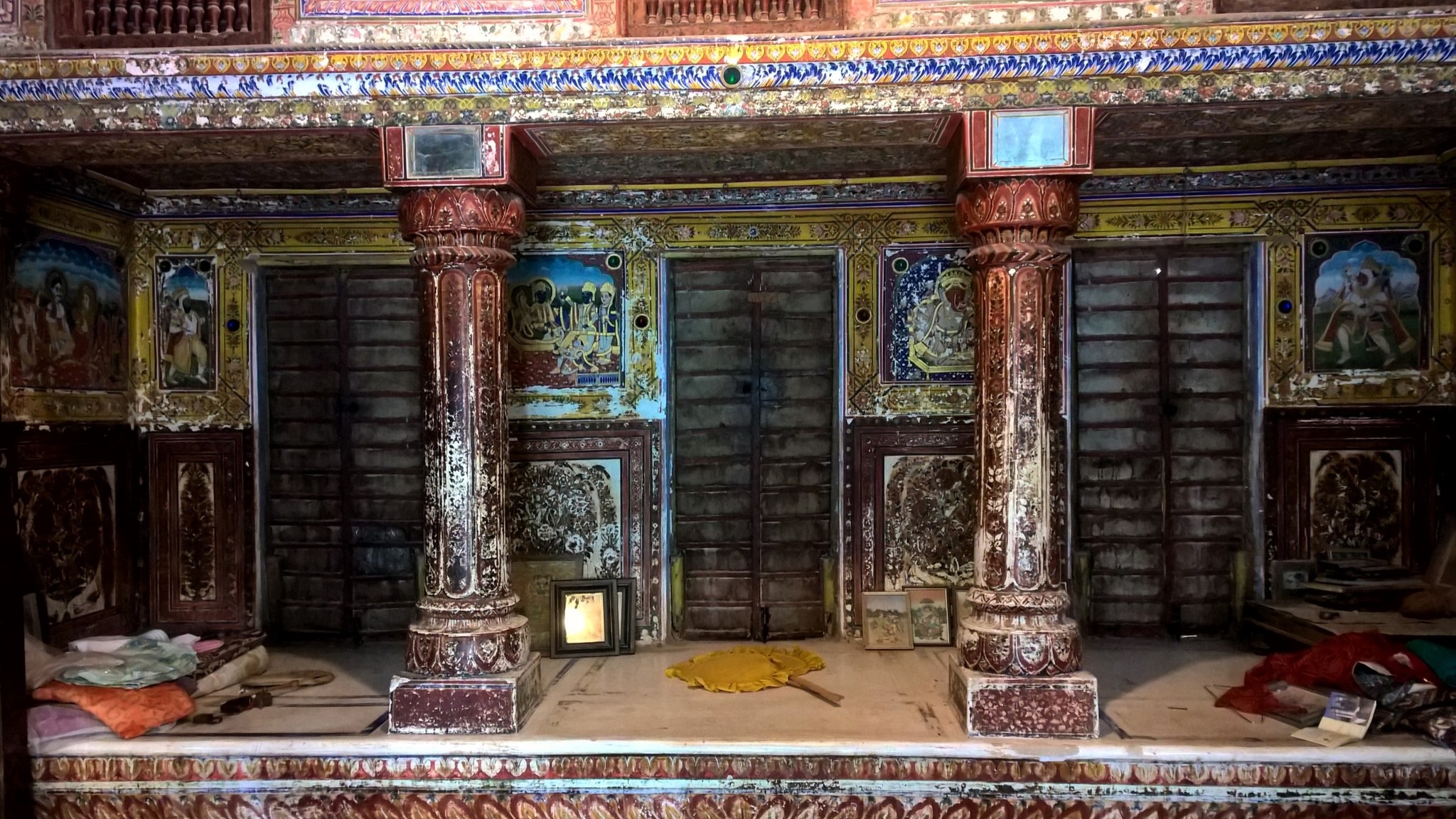
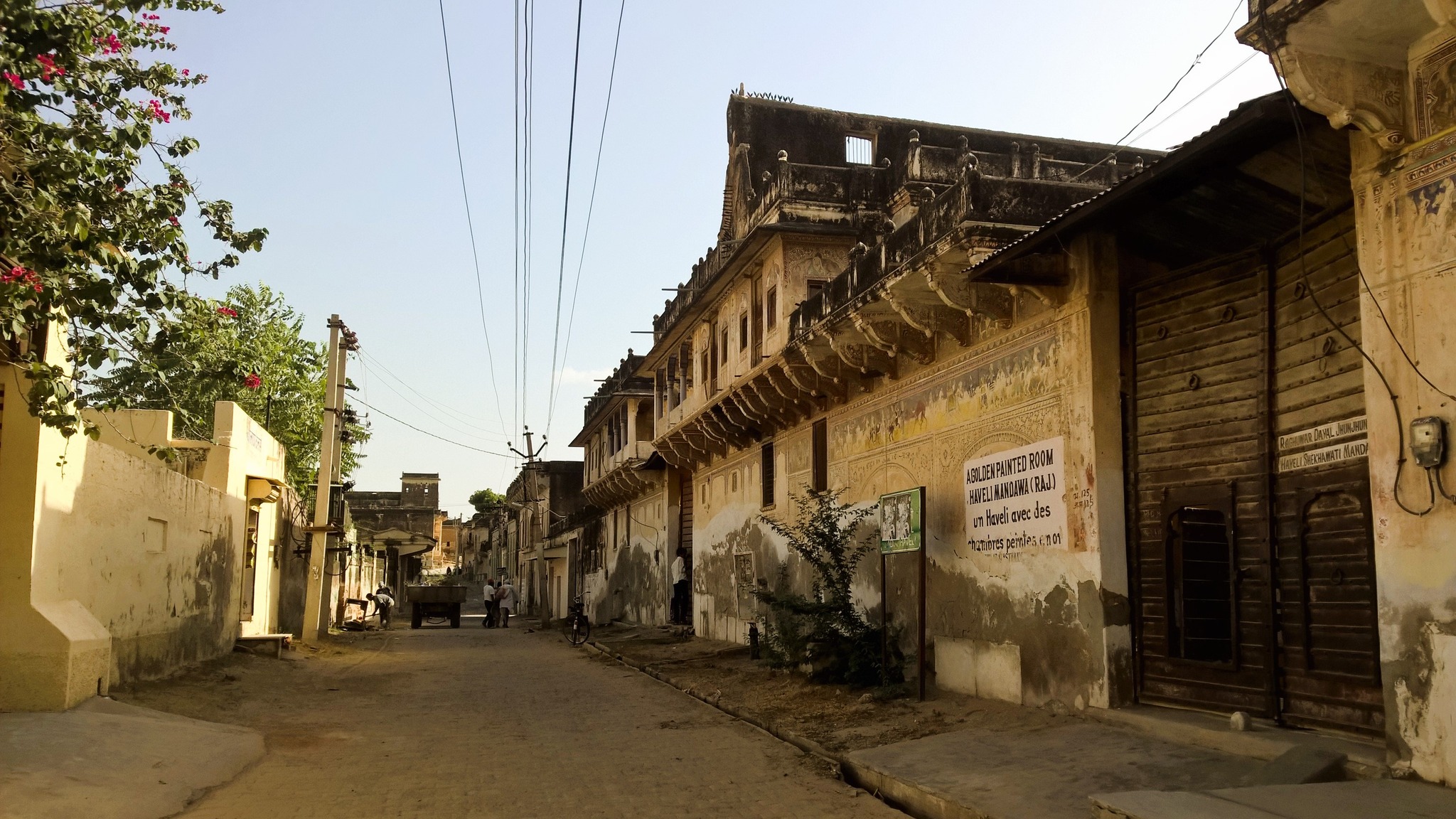
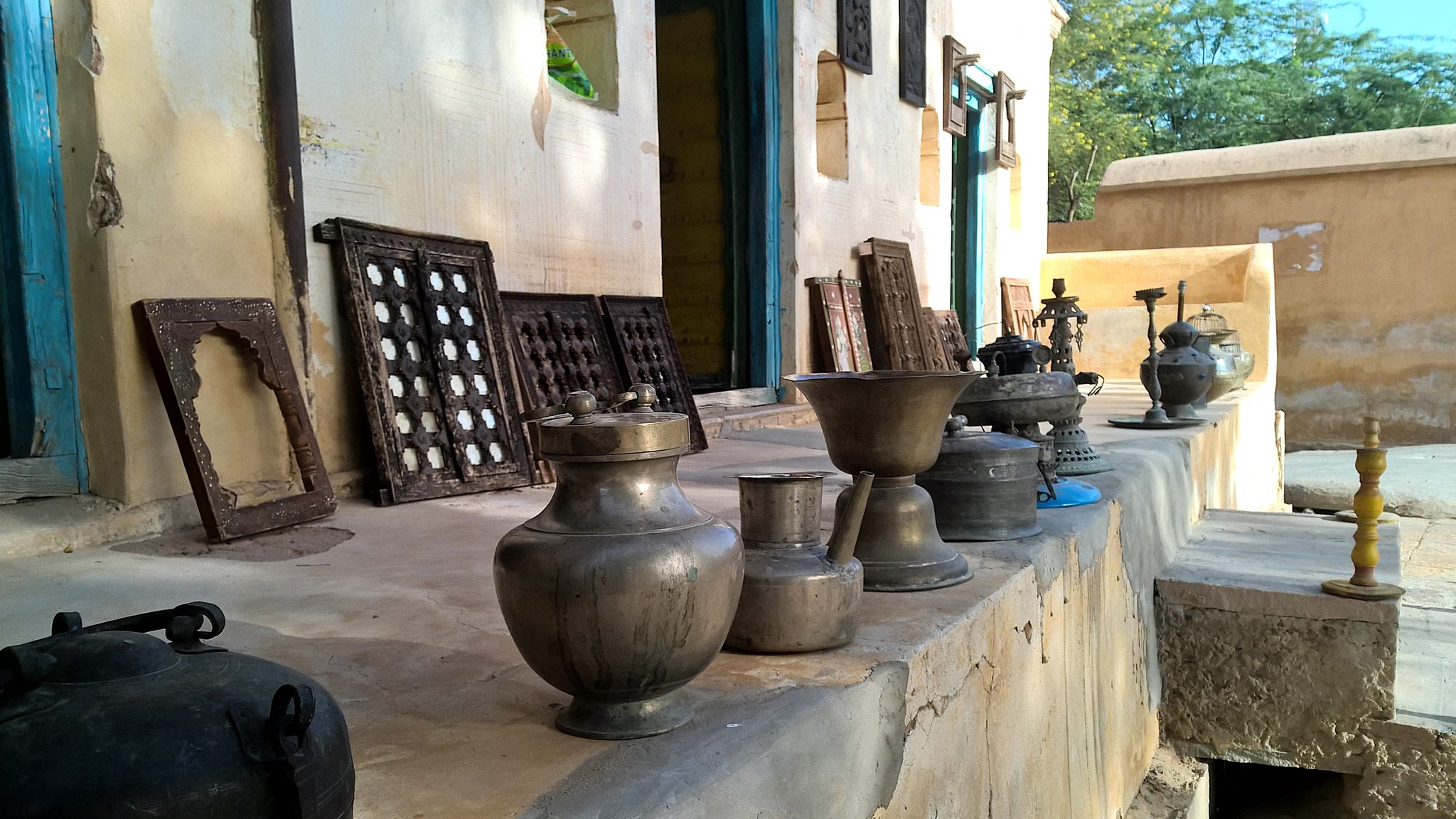
So, courtesy of Chhutku, we saw a handful of havelis, with their painted facades, part covering the balconies jutting out and peering over the street, and part forming the front wall proudly strutting their evocatively painted visages, all but weathered by time. One particular haveli, Jhunjhunwala Haveli, aptly nicknamed the Golden Haveli, houses a room with intricately painted golden-coloured decorations, along with artifacts from a time gone by – giving us a glimpse of the lives and times of the merchants that built and lived in the lavish residences.

After the tour of the havelis, Chhutku bid us adieu at the Mandawa Castle, where we learnt the castle had long since been operating as a hotel, but was also open to tourists in lieu of a hefty fee. Nevertheless, we took the opportunity to see around the castle, get views of the town and the countryside from the rooftop, and take pictures around the sprawling swimming pool.

At long last, darkness fell, and it was time to confront the dilemma of whether to stay the night or return to Delhi – it was resolved when we learnt that there was a 10 PM public road transport bus running directly to Delhi. Following dinner at a Tripadvisor-recognized restaurant, we boarded the bus, still not having got a bearing of where exactly we were located with respect to Delhi.

By 5 o’clock in the morning though, when I opened my eyes as we entered Delhi, I was still hungover from the overwhelming and intriguing air of the quaint town that stood astride the trading routes of the past. Although located amidst the barrenness of the desert, the unique vantage point of the town in those times ensured that its mien and ambience remained anything but barren.