
This November, almost 5 years to the time this trip was first mooted, we managed to set foot in Aurangabad. Back then, the first Covid-19 lockdown had come into force just as we were about to book our air tickets. Aurangabad would be the gateway to the Ajanta and Ellora caves, both UNESCO World Heritage Sites, which had been on my bucket list since I first learnt about them in school. The trip had been getting deferred for so long that I was prompted to take a virtual 3D tour of the Ajanta Caves at the National Museum in Delhi in the intervening years, to get a taste of the caves. Nevertheless, the real trip was worth the wait.
Ellora
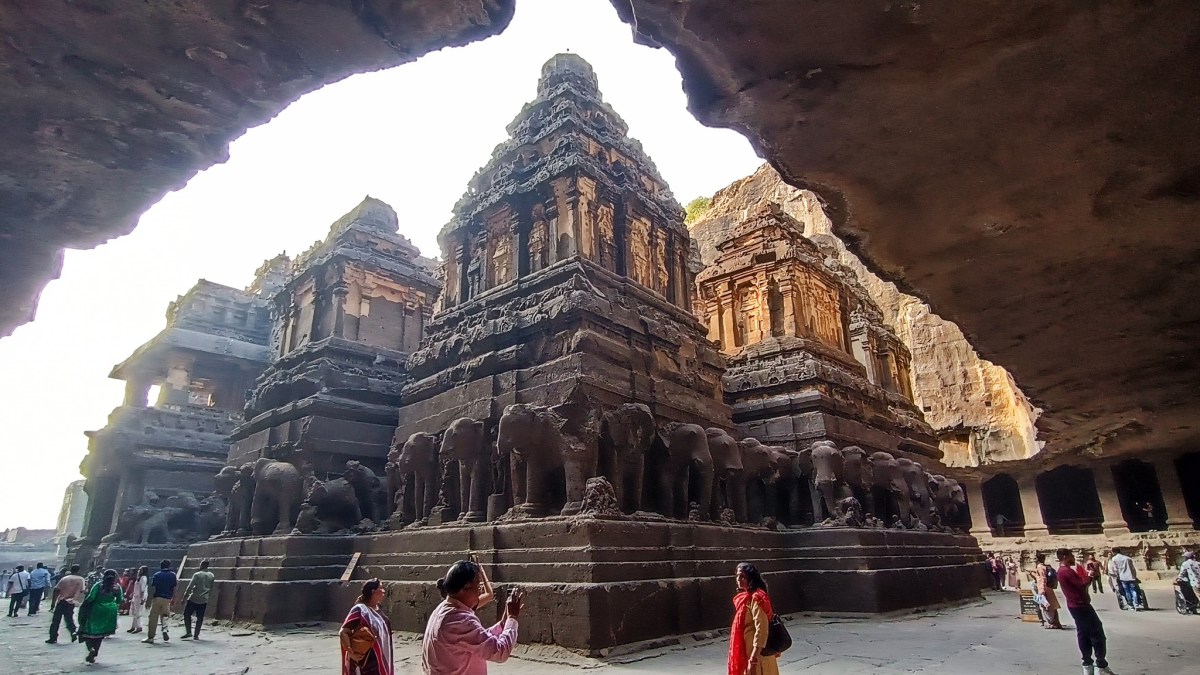
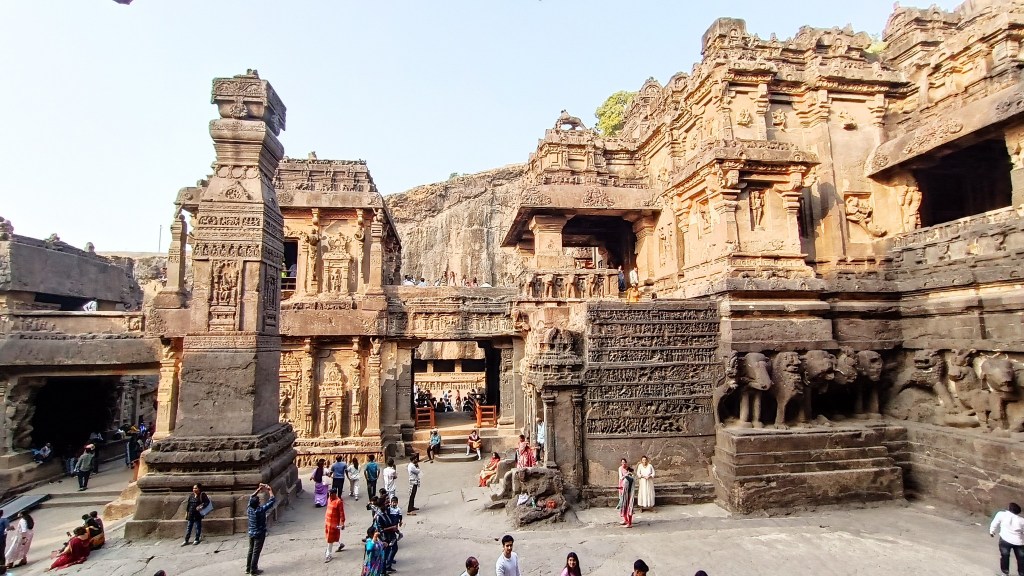
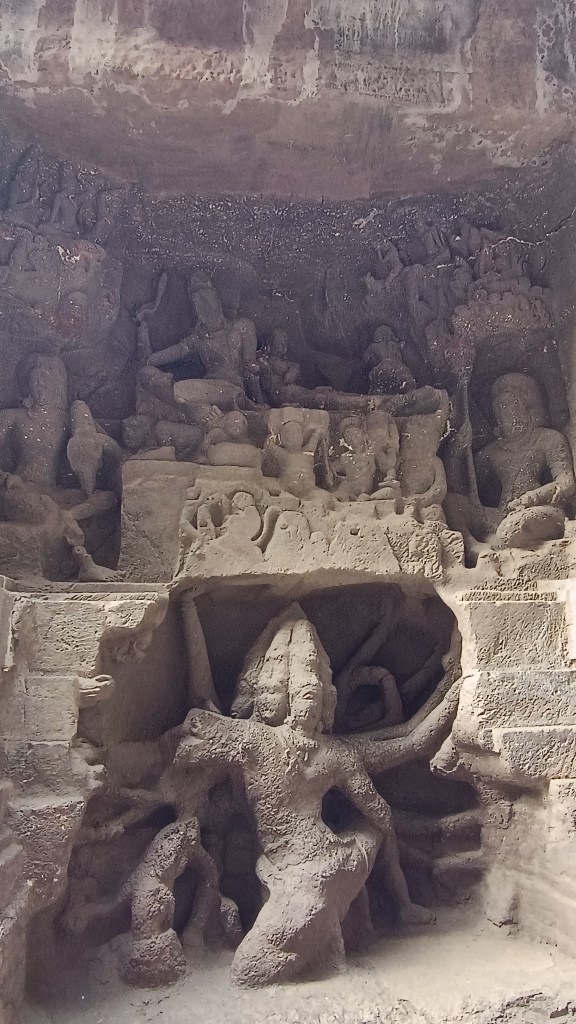
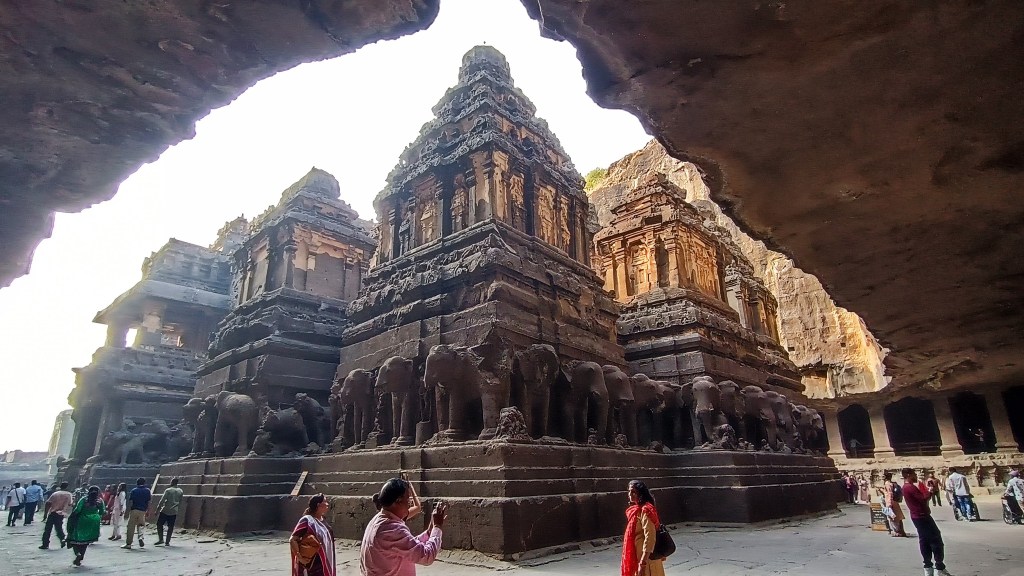
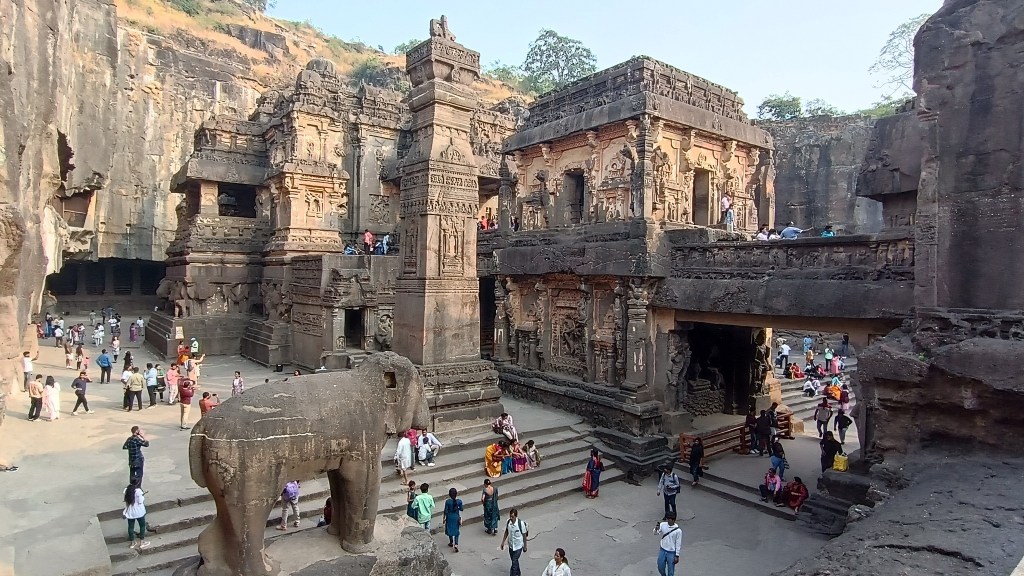
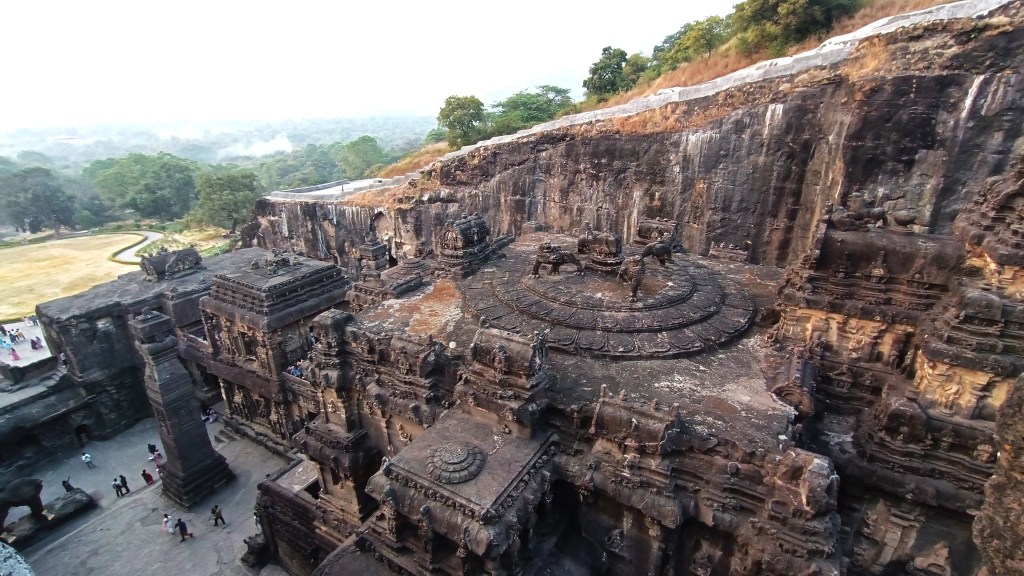
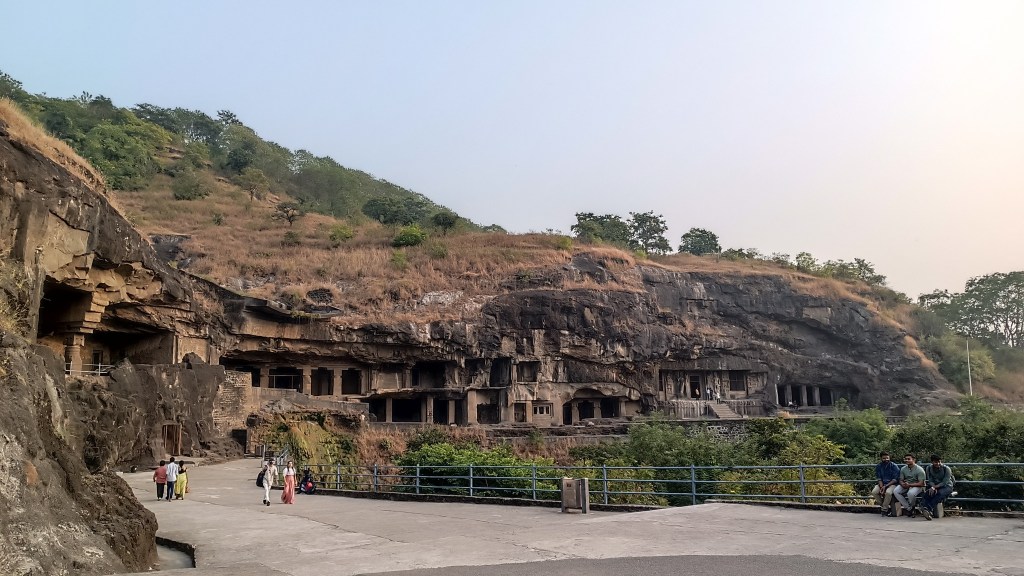
Ellora, 33 km northwest of Aurangabad, is home to more than 100 Hindu, Buddhist and Jain caves, created between 6th and 11th century, out of which 34 are open to the public. The main highlight is the chariot-shaped Kailasa temple, the largest single monolithic excavation in the world, carved out from the sloping basalt hillside. The Kailasa temple, dedicated to Shiva, is believed to have been built, for most part, by the Rastrakuta king Krishna I sometime in between 756 and 773 AD, with later parts added by later Rashtrakuta kings. The temple features many Hindu deities, animals, especially, the elephant, lion and horse, and summaries of the epics, Ramayana and Mahabharata in relief.
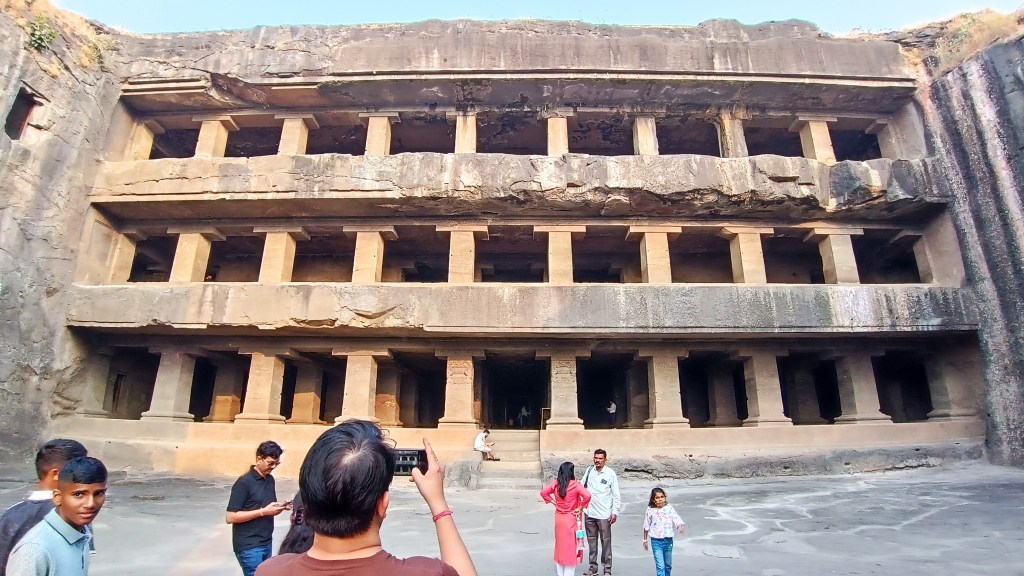
The earliest caves are purported to be of Hindu origin, and built around 550 to 600 AD with the patronage of Traikutakas and Vakatakas. This seems to have been followed by the Buddhist ones, 11 of which are viharas (monasteries) with the remaining one being a chaitya (place of worship), built in between 600 to 730 AD with the support of Chalukyas. The latter Hindu caves, of which the Kailasa temple is one, seems to have overlapped with the excavation of earliest Jain caves, with the Jain caves exhibiting imagery of Hindu influence. The earliest Jain caves are purported to have been patronized by Rastrakutas, while the latter ones by the Yadava dynasty.




Ajanta
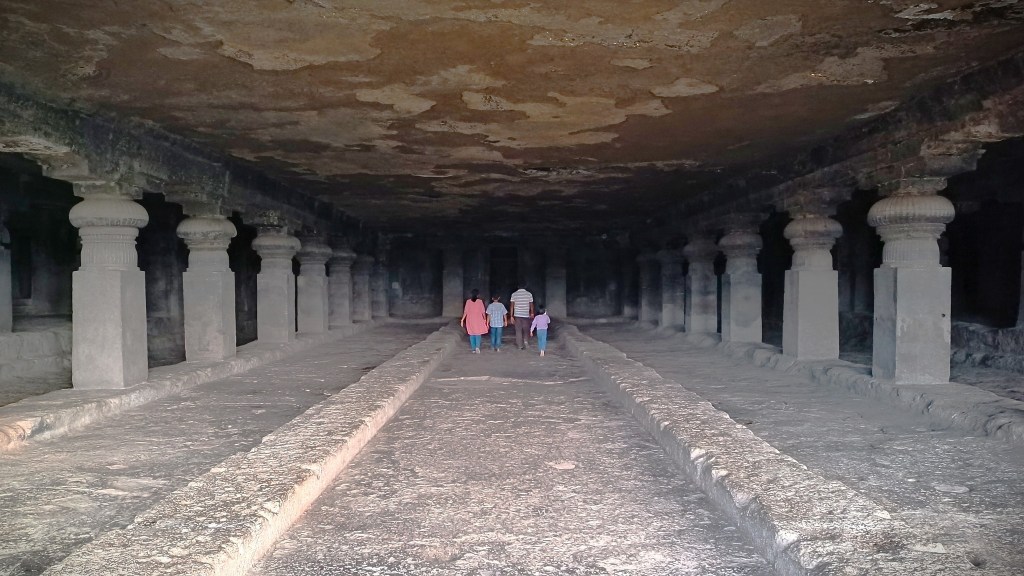
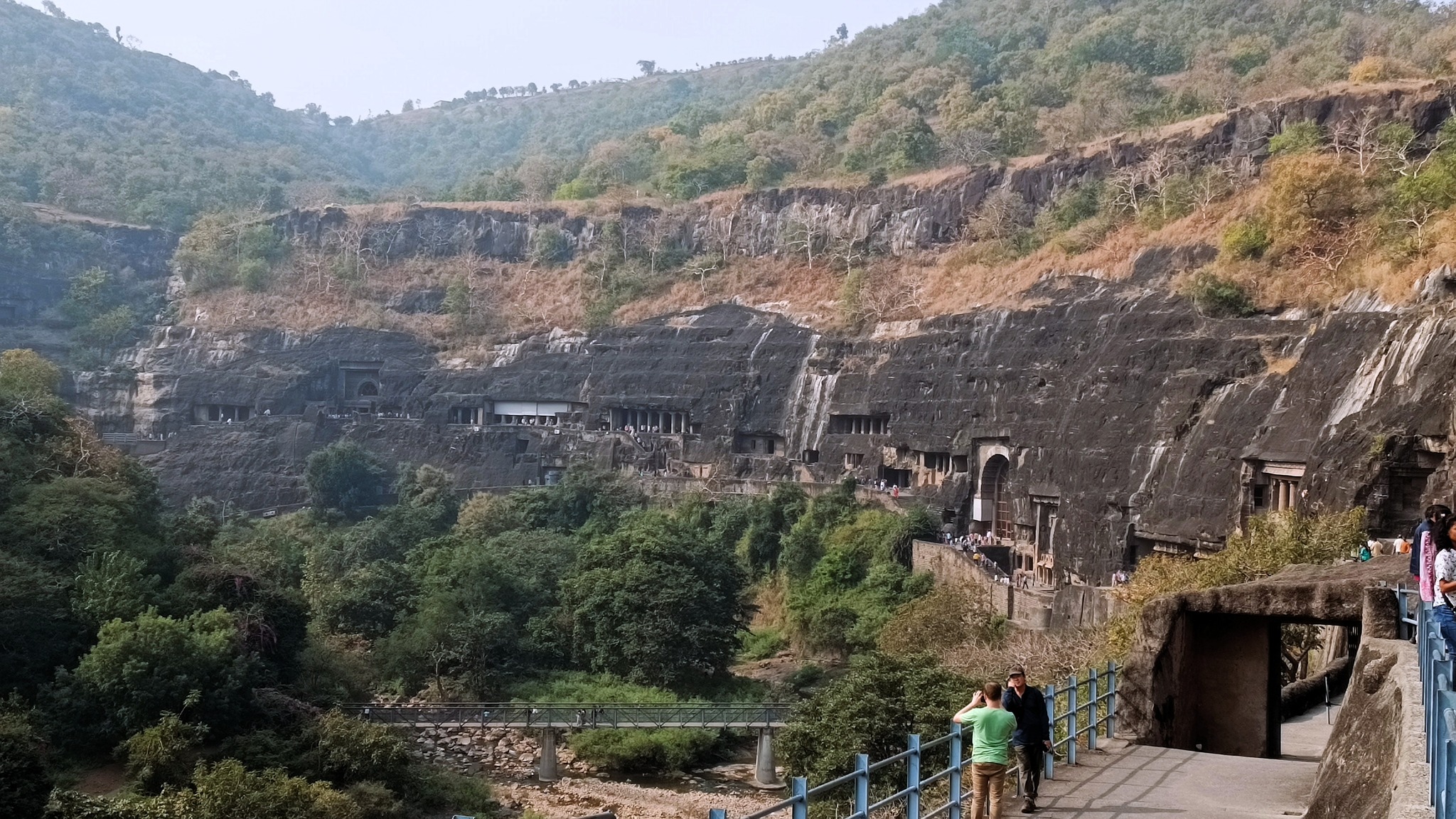
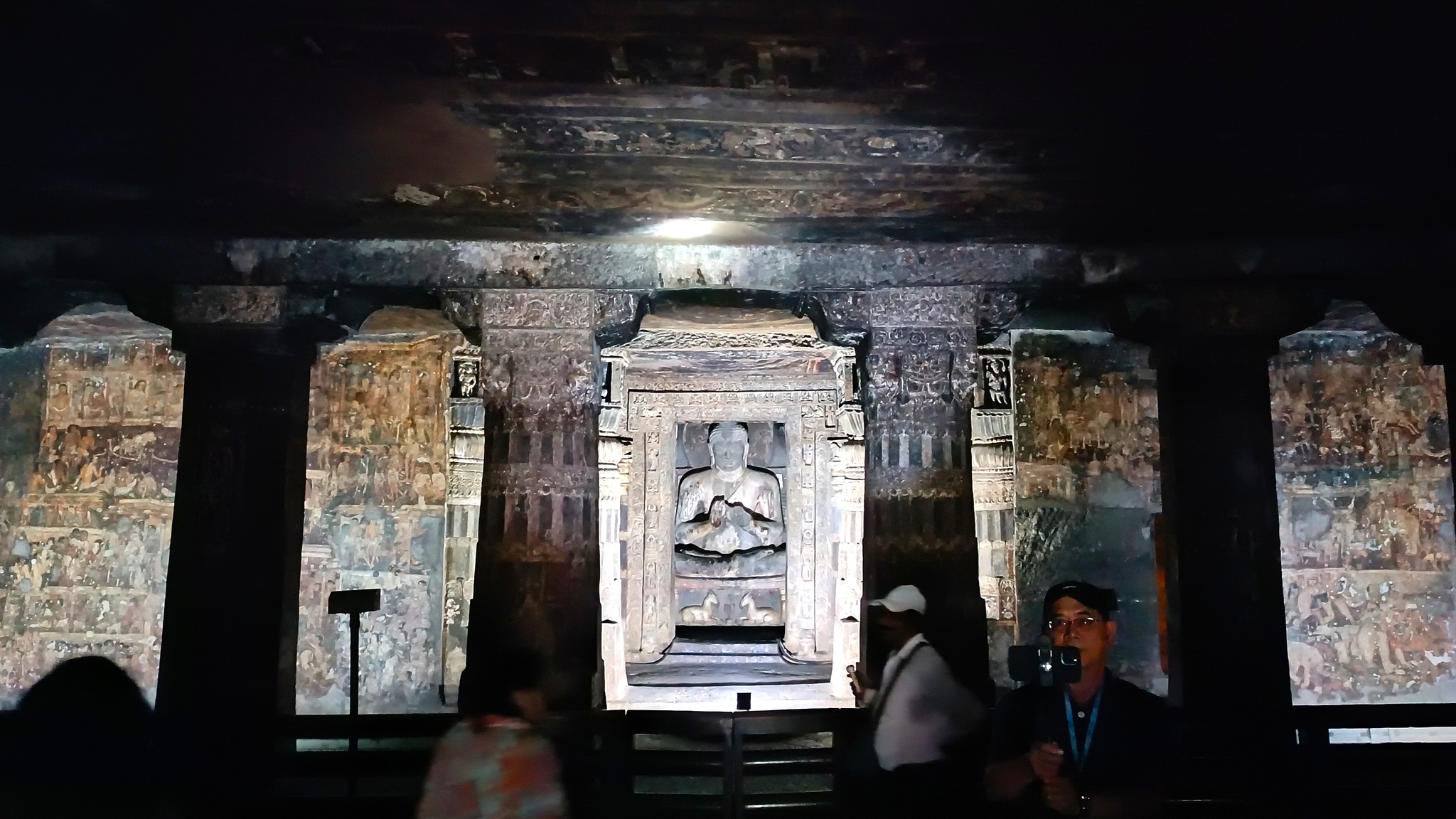
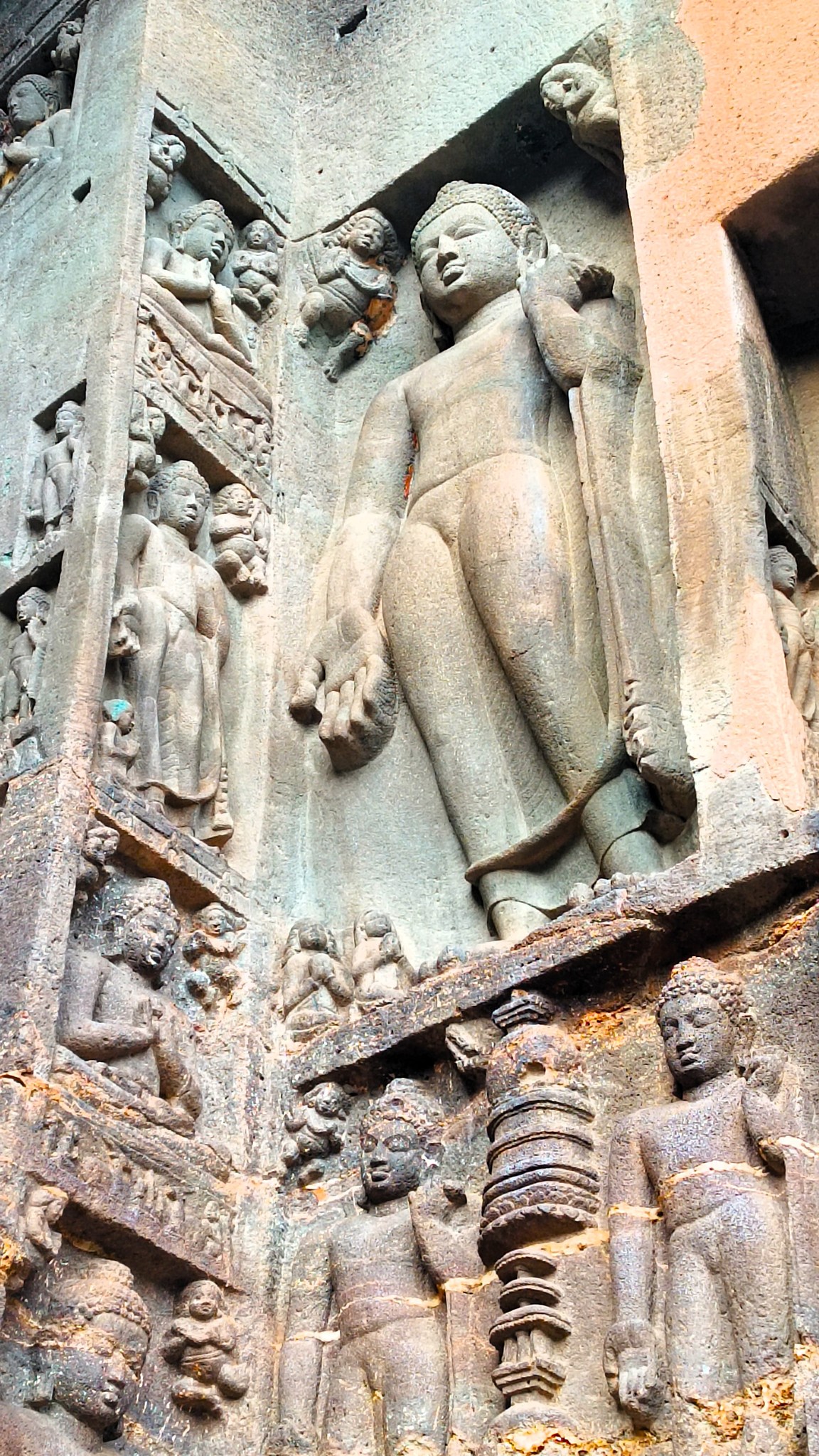
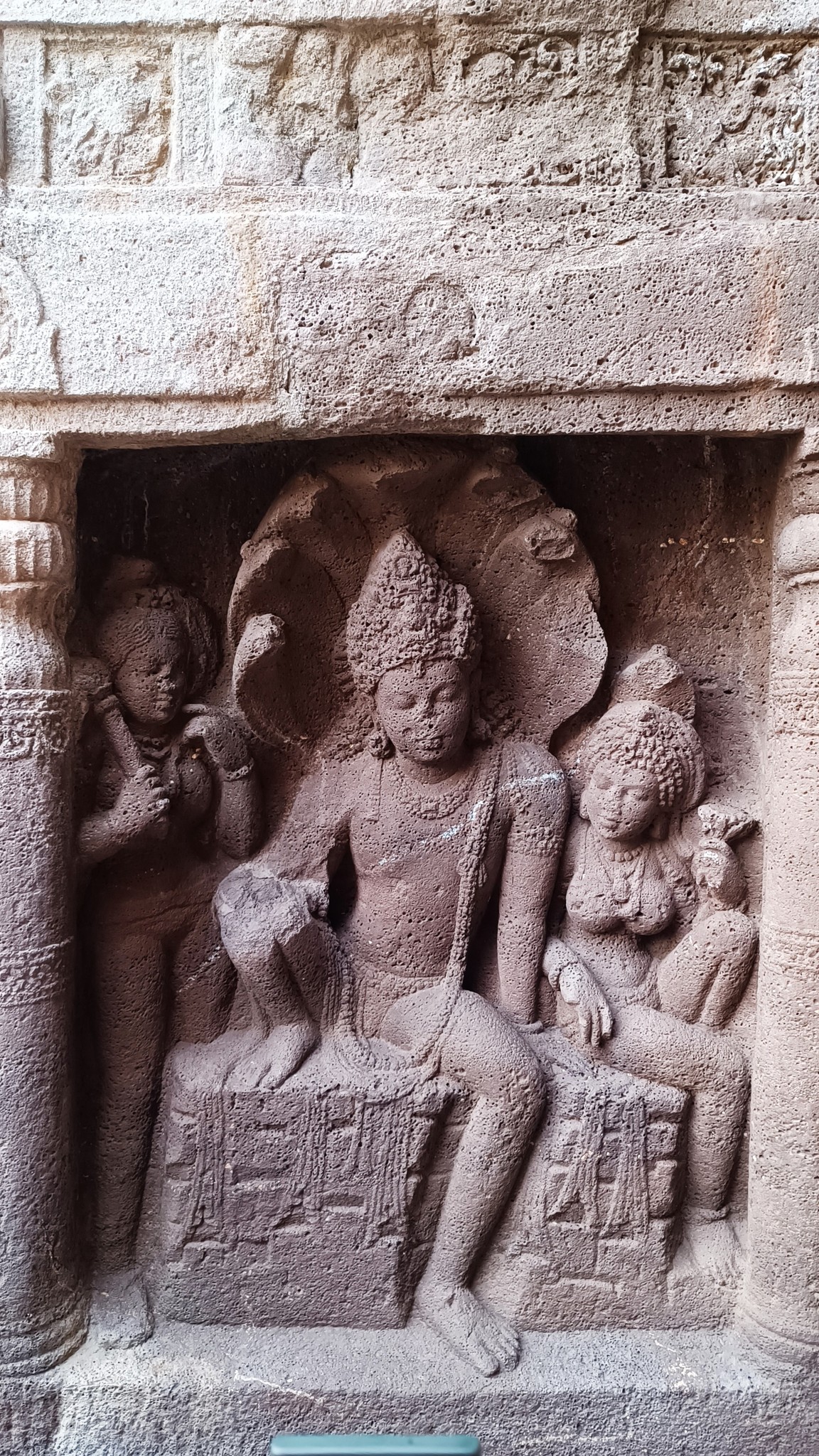
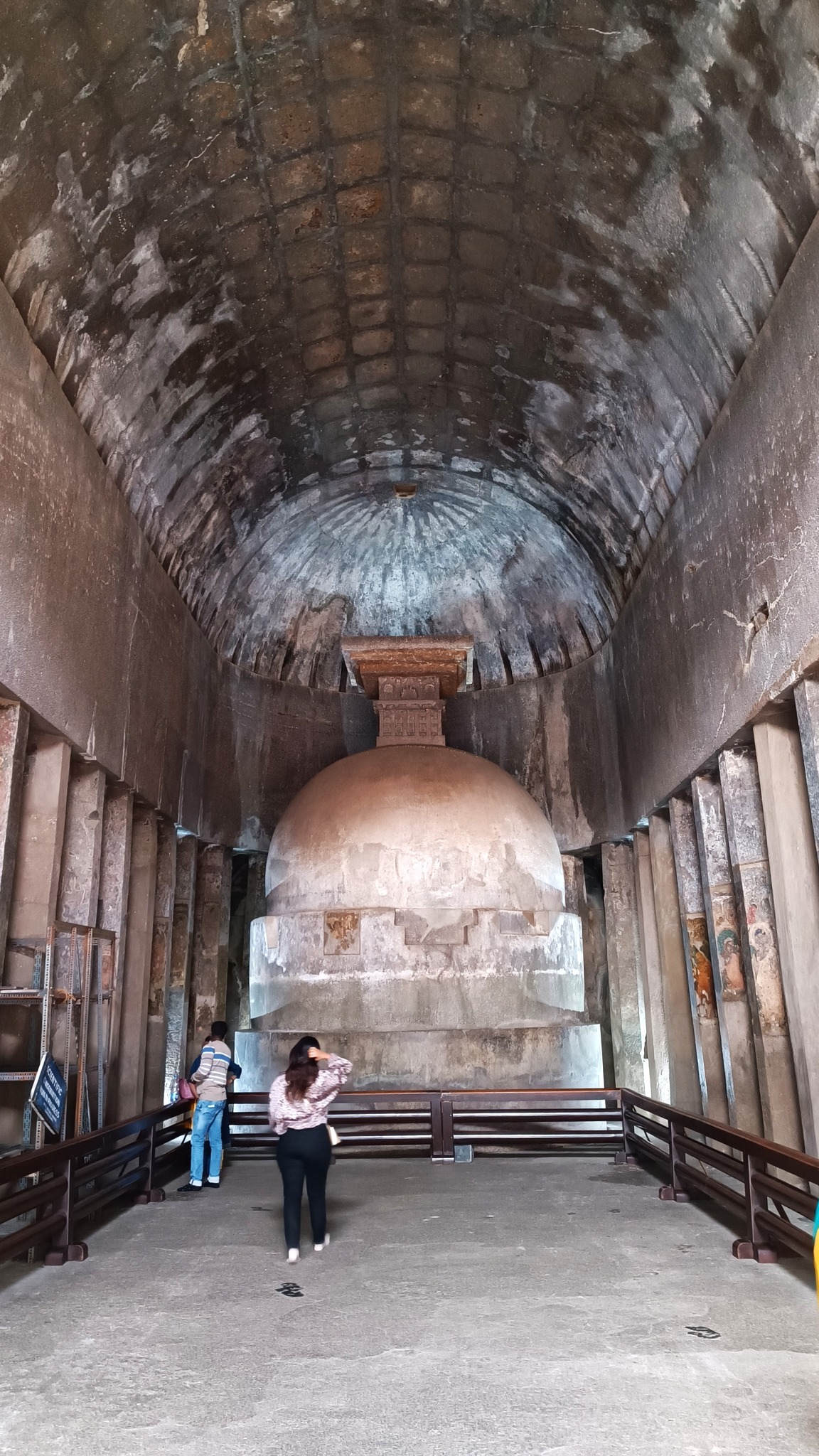
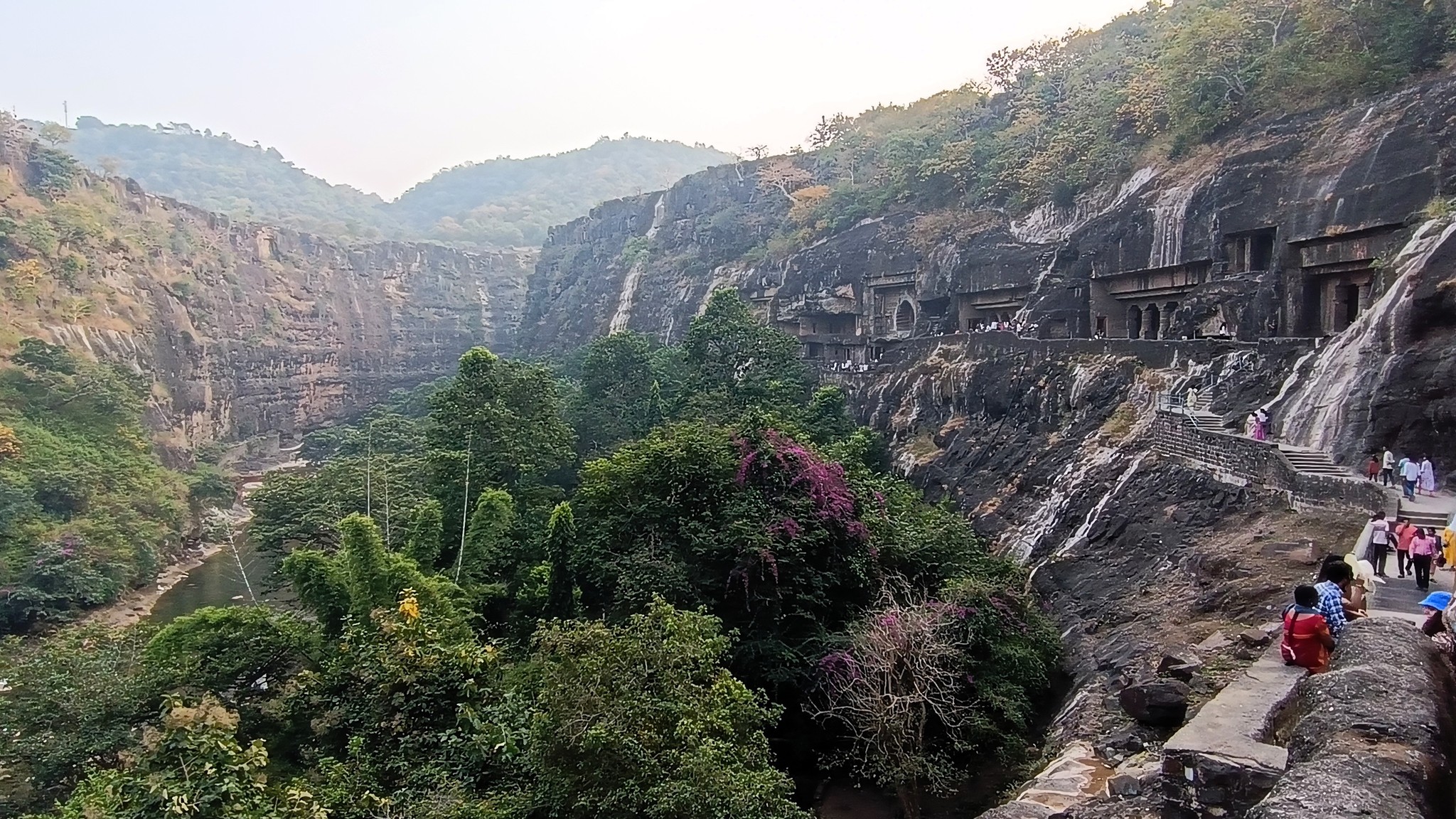
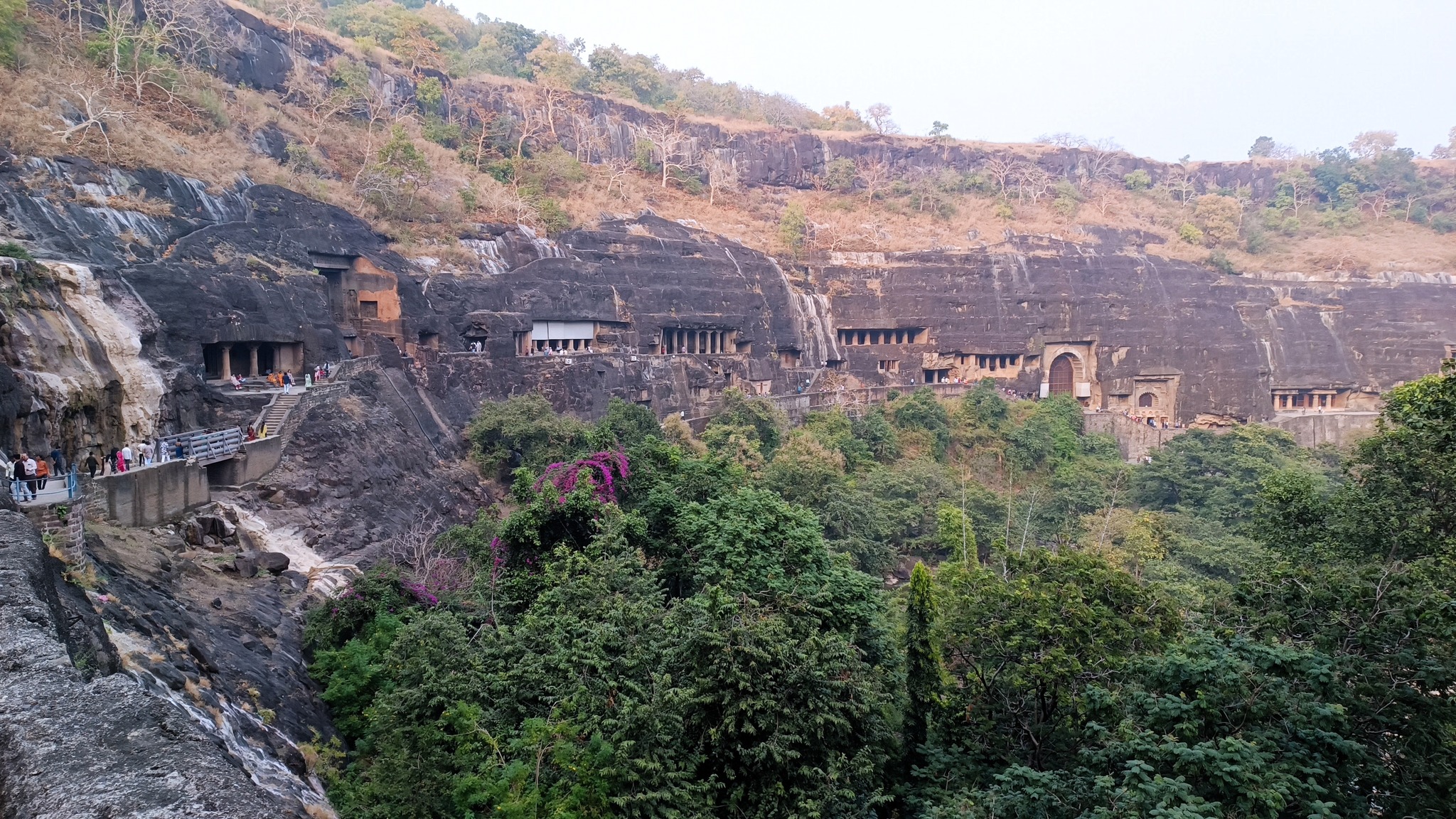
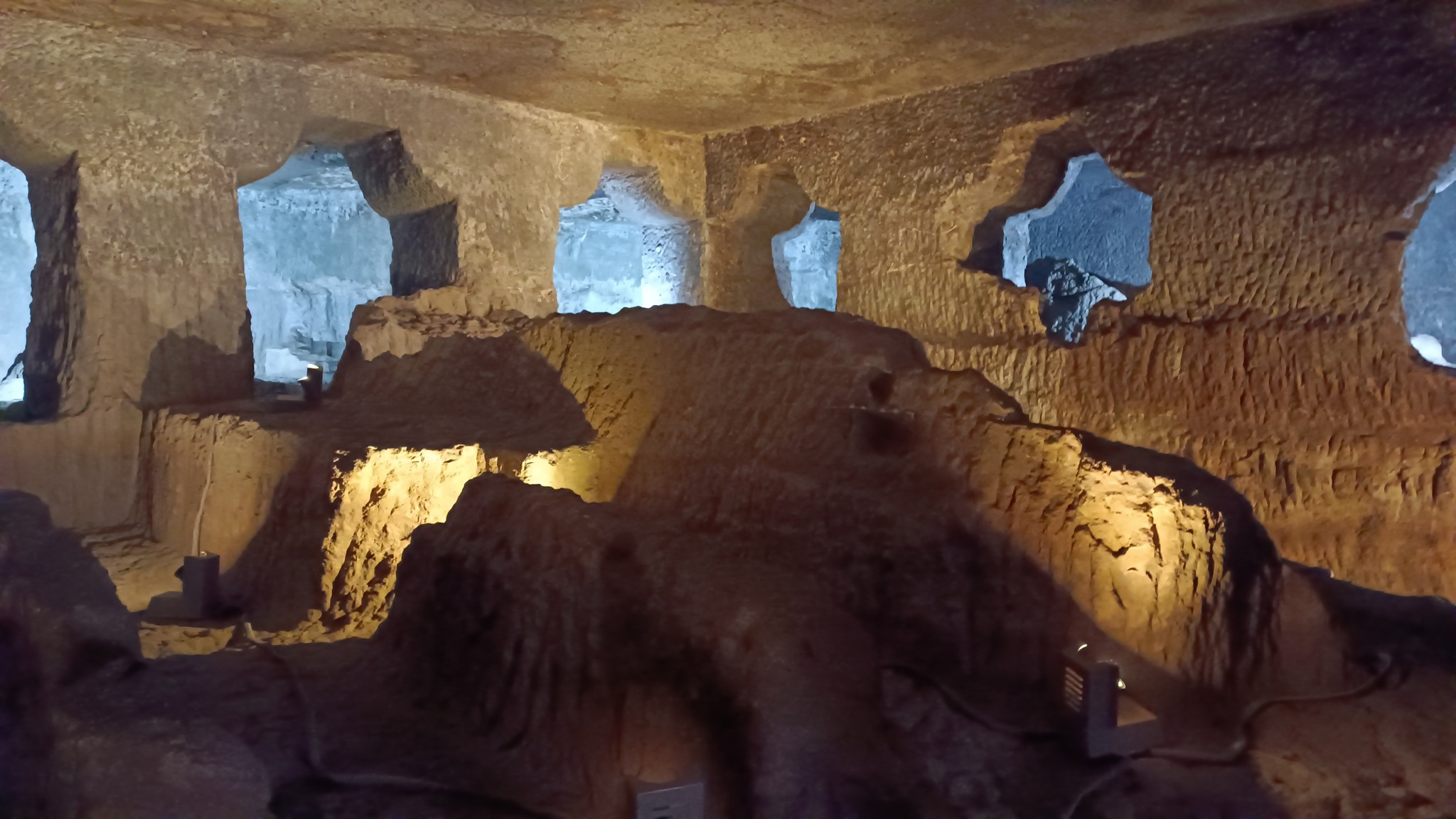
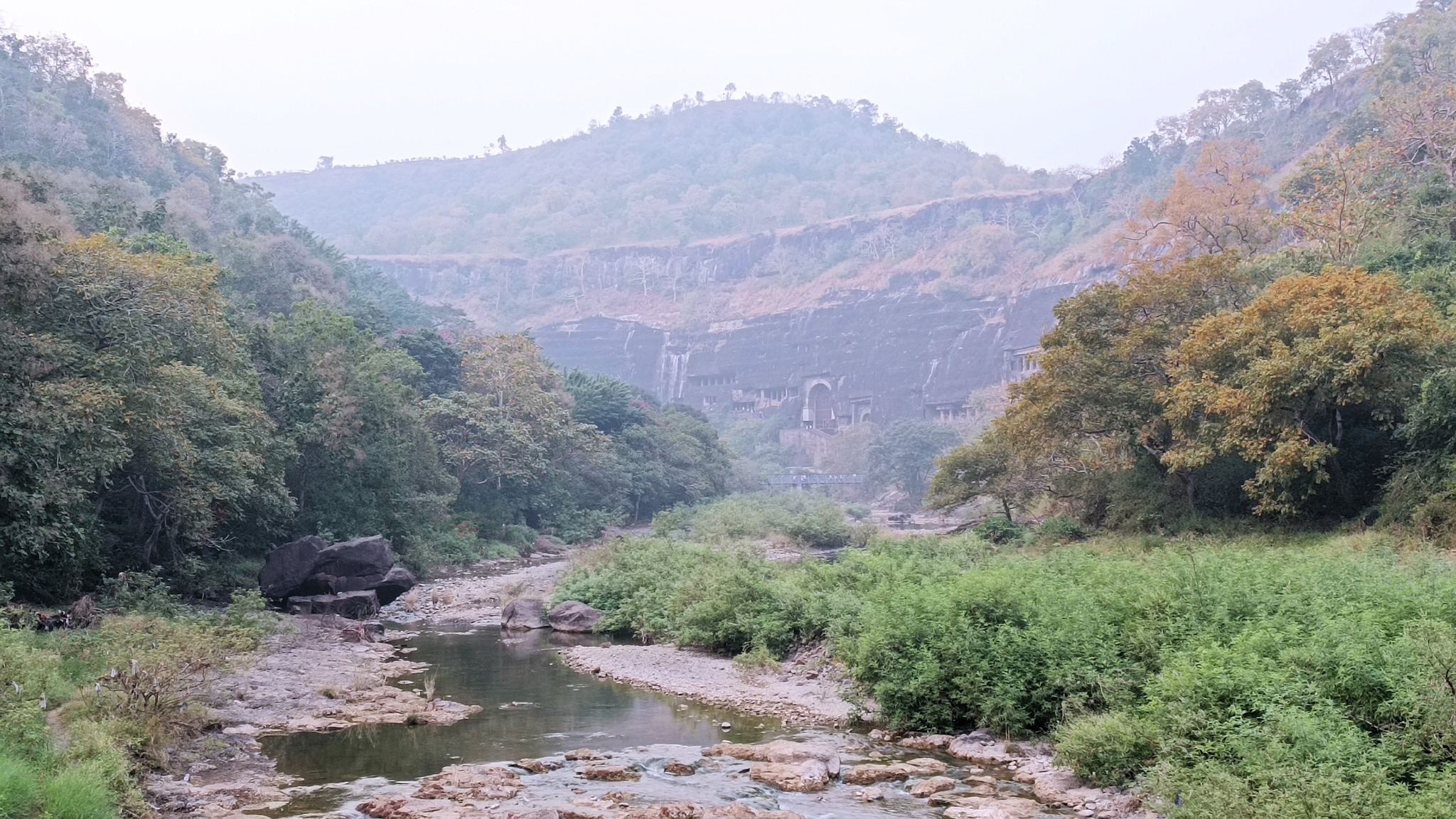
The defining feature of the Ajanta caves, 100 km north-east of Aurangabad, seems to be the alignment of caves in a horse-shoe shape around a sharp bend of the Waghura river. Whereas, the Ellora caves are located alongside a highway, the Ajanta caves are tucked 4km away from the main road in a valley, which can be accessed by the tourist only by buses run by the tourism department. A steep staircase, which can be bypassed using an adjacent long winding ramp, then leads to the planes where 30 caves lie. The caves, built between 2nd century BC and 5th century AD, comprising 5 chaityas (places of worship) and 25 viharas (monasteries) belong to both the Hinayana and Mahayana sects of Buddhism.
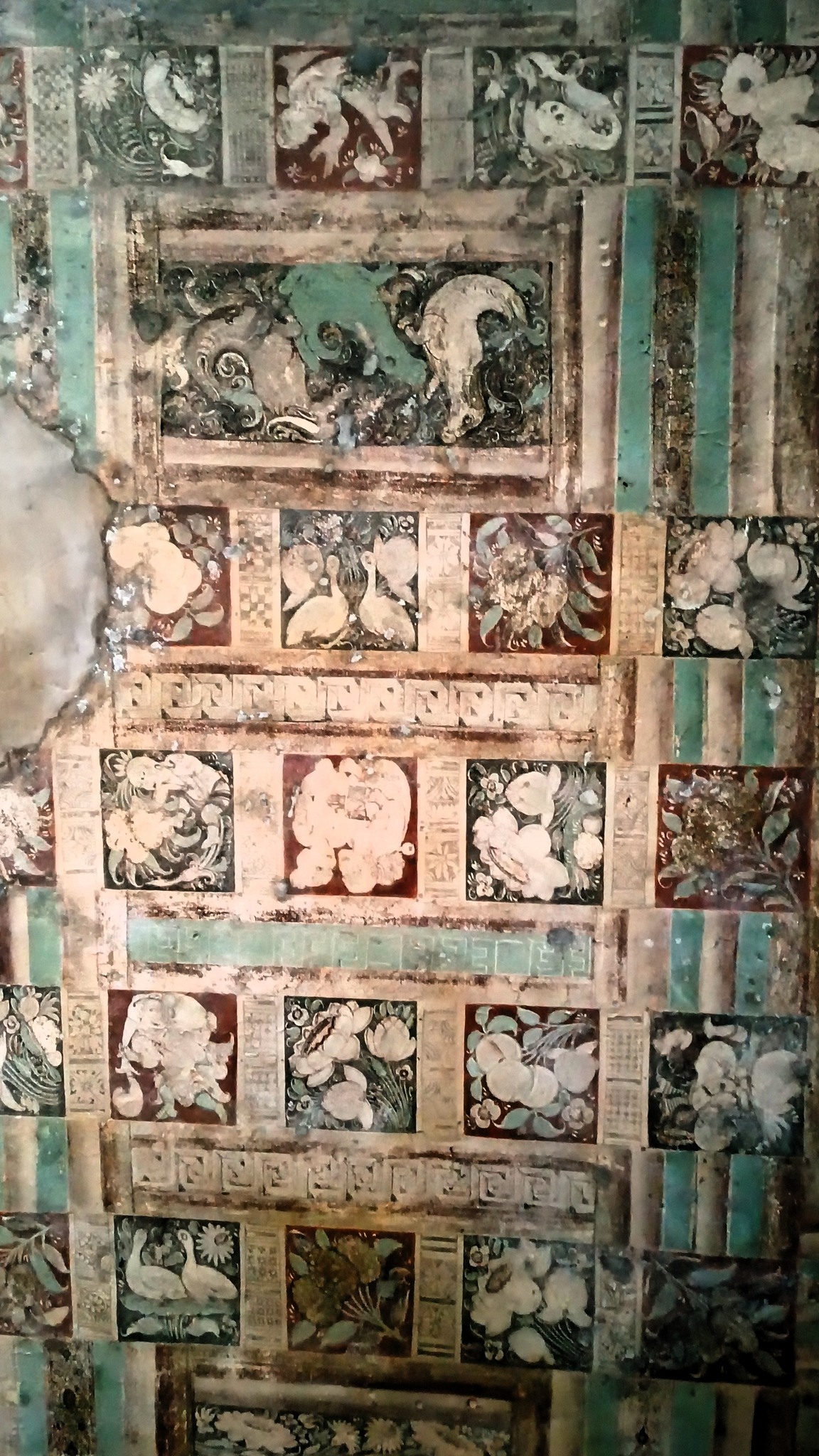
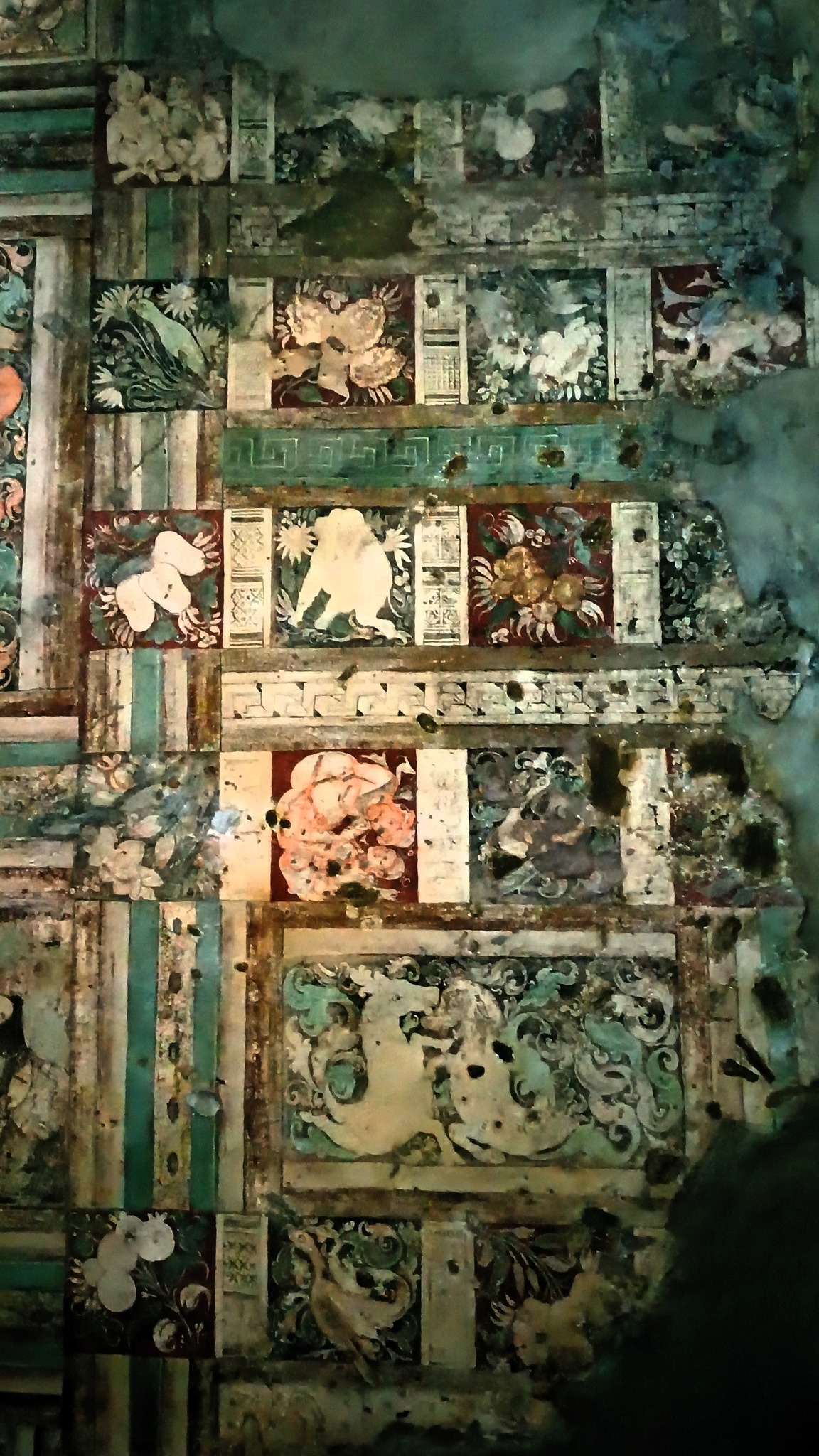
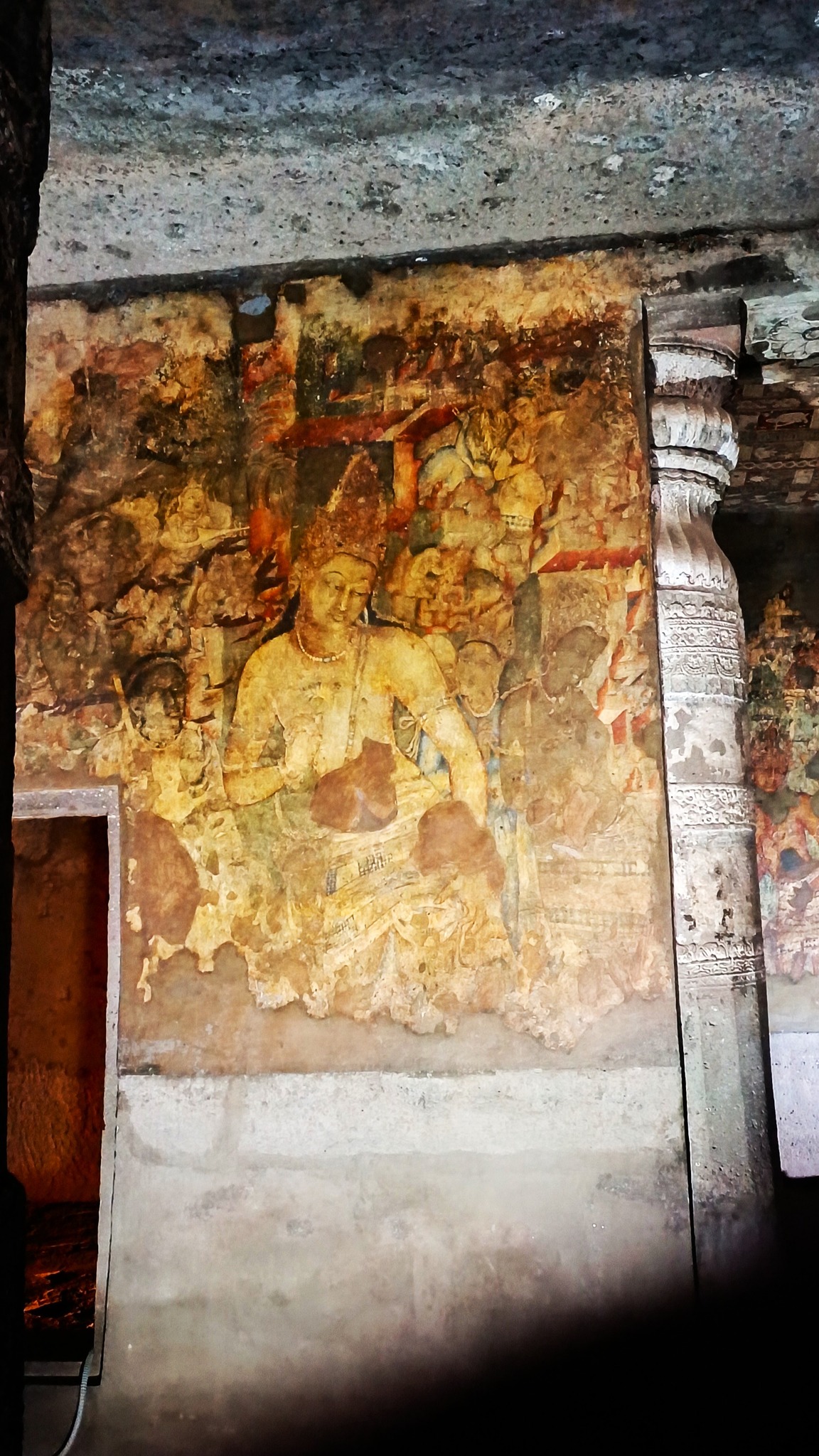
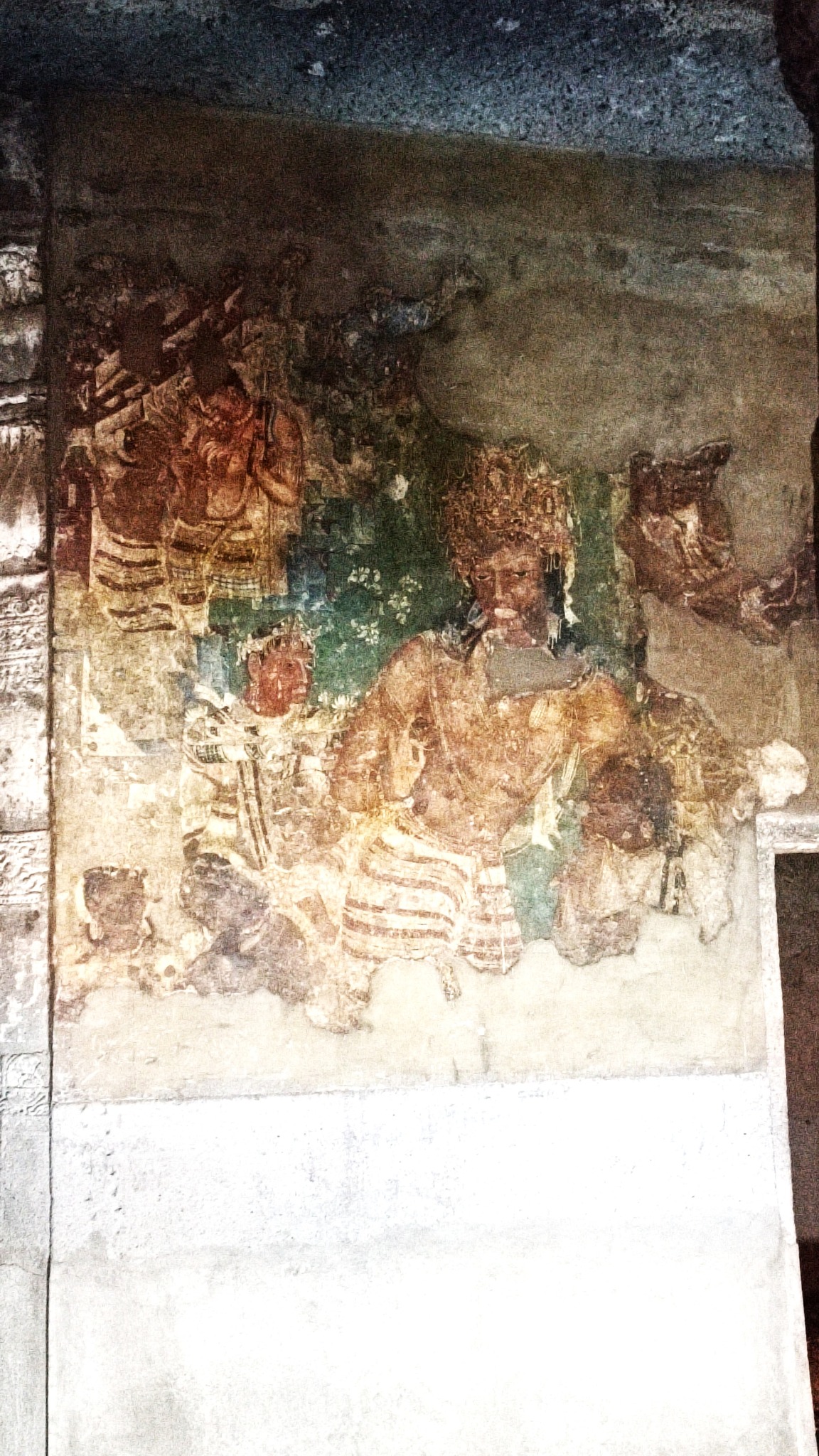
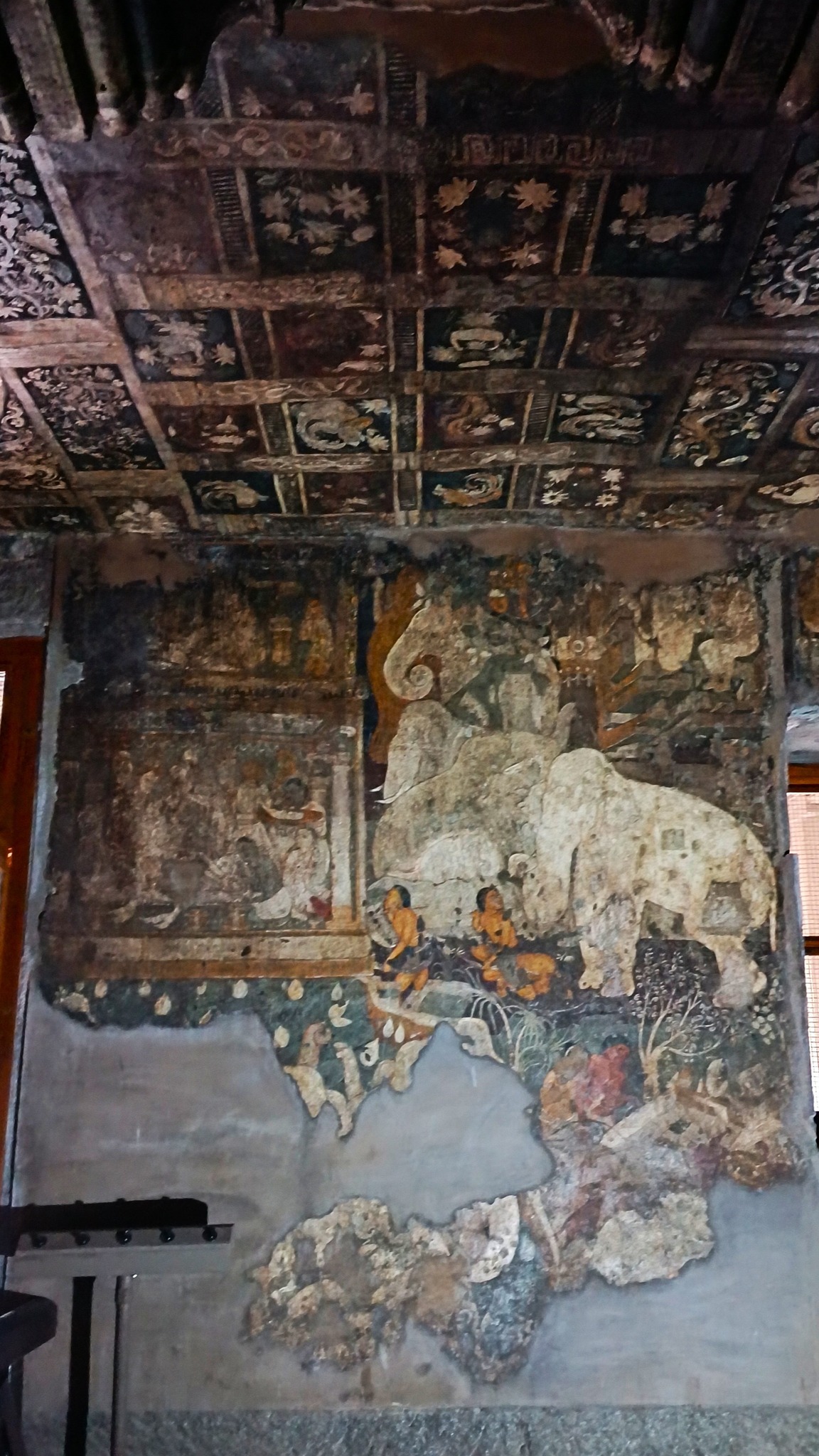
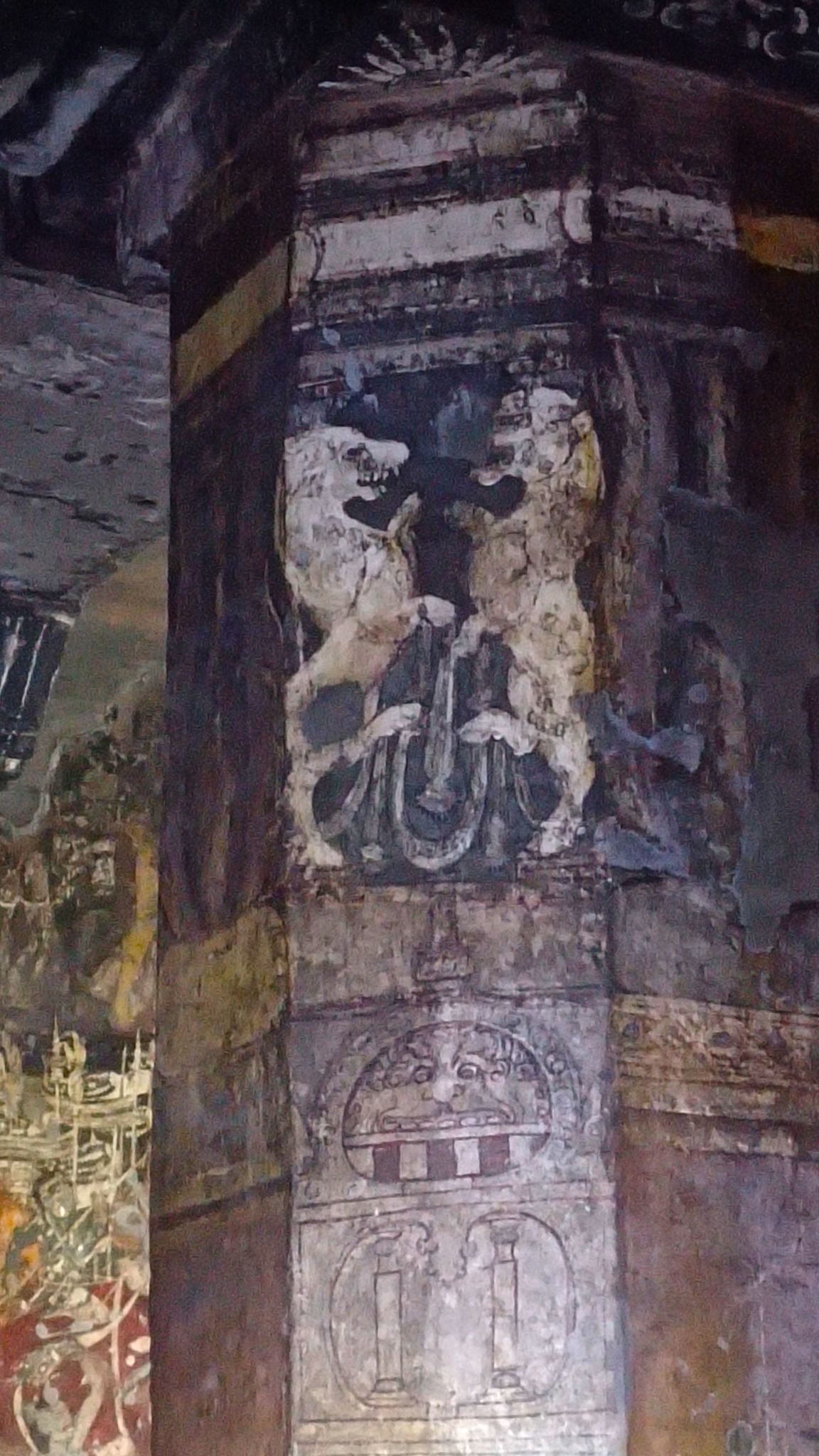
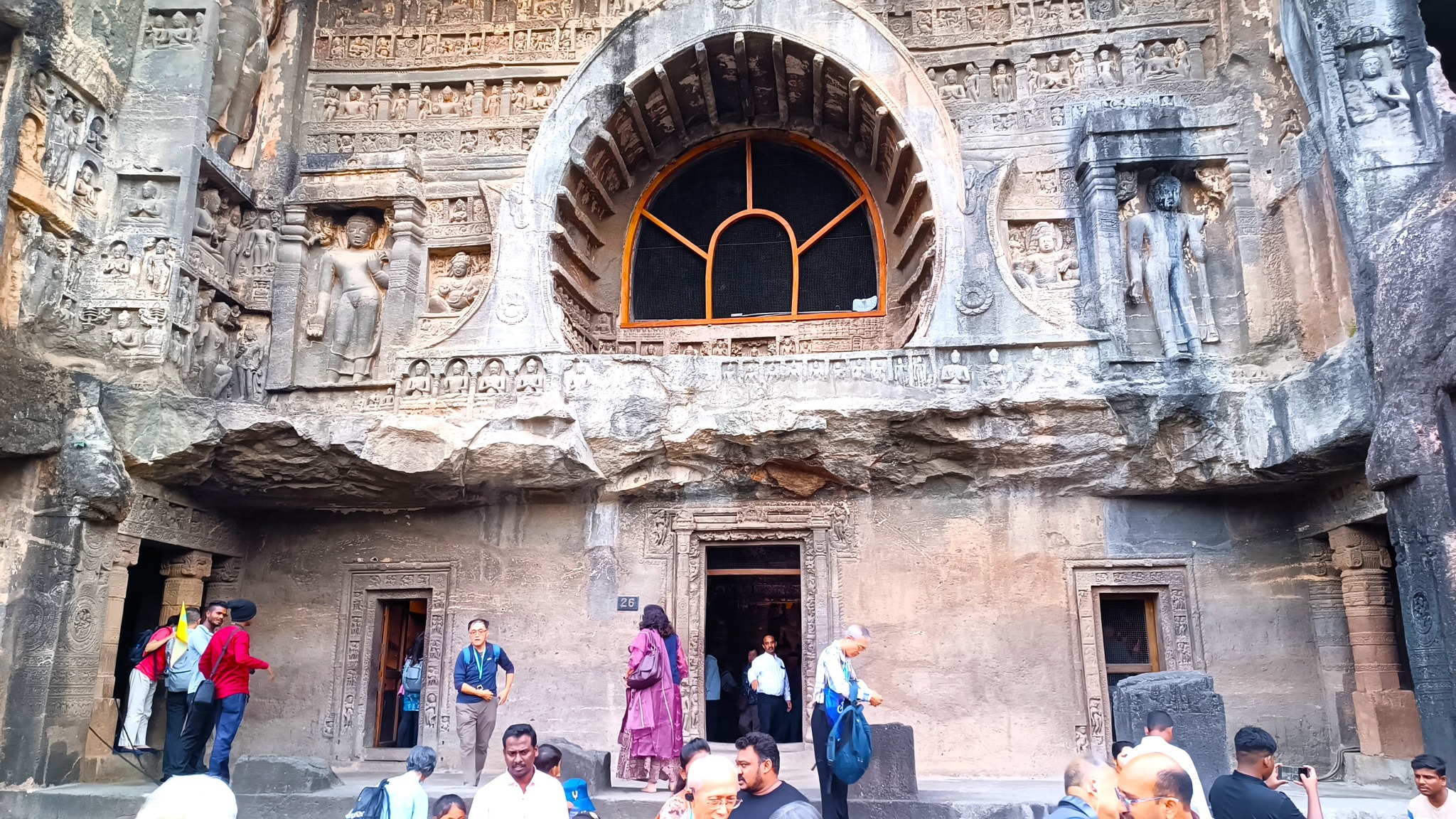
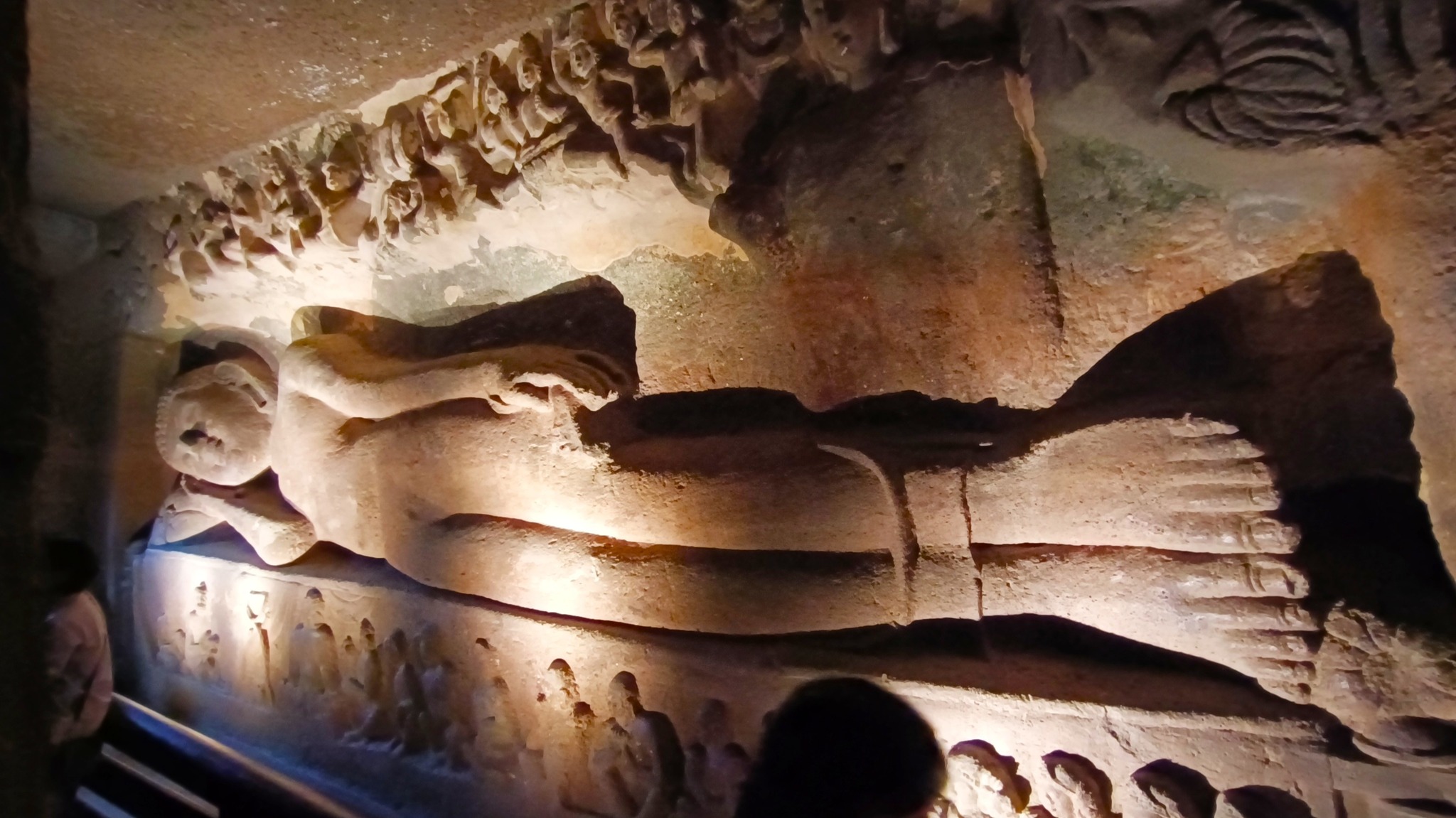
Of main interest are the frescoes on the ceilings and walls of the caves, with most of the paintings depicting the Jataka tales, stories of Buddha’s previous births. Most notable of these are life-size paintings of the Bodhisattvas Padmapani and Vajrapani in Cave no. 1. With the earliest cave excavations corresponding to the prevalence of Hinayana Buddhism, the shift to Mahayana Buddhism is visible in the caves where idols of Buddha and ostentatious carvings on entrances, in case of chaityas, and frescoes, in case of viharas, exist. A notable sculpture in relief is that of the Mahaparinirvana of Buddha, i.e. Dying Buddha in the left aisle of Cave no. 26. Besides, one is treated to excellent views of the horseshoe-shaped valley from almost all points.



Daulatabad
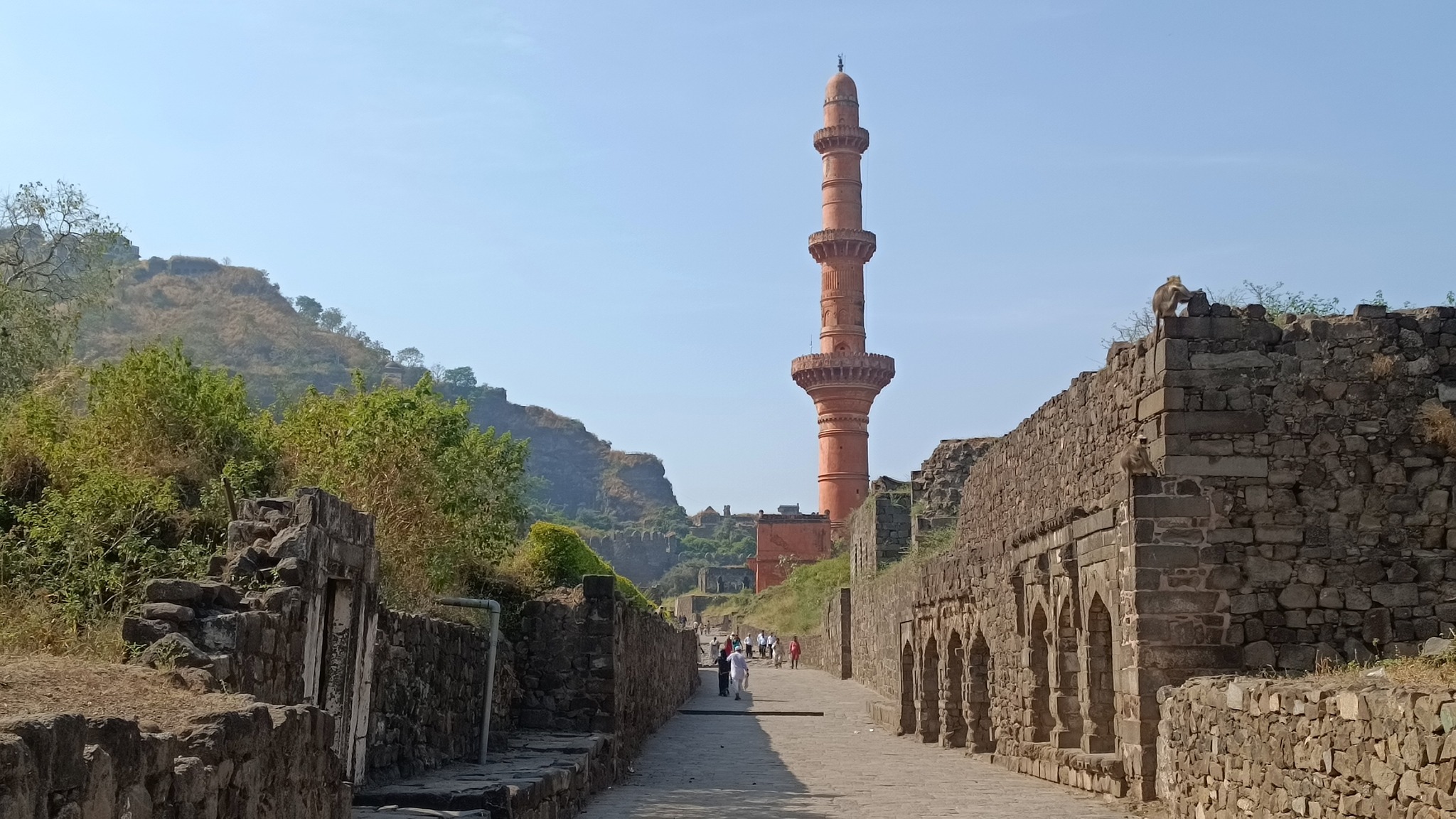
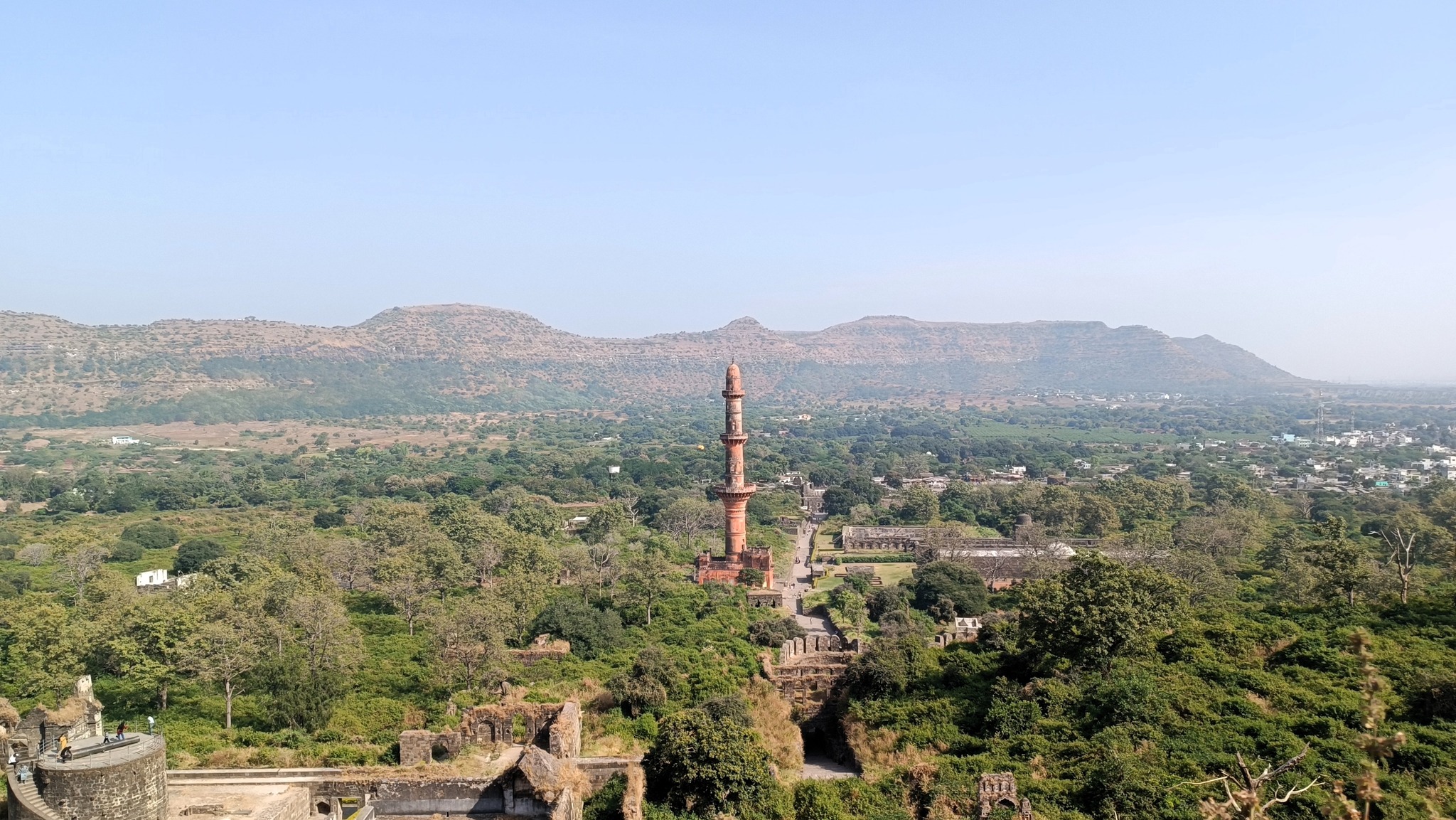
Midway between Aurangabad and Ellora, lies Daulatabad Fort, a remarkable 12th-century hilltop fortress. Originally constructed by the Yadava dynasty and named Devagiri (the Hill of Gods), it gained prominence when Sultan Muhammad bin Tughlaq renamed it Daulatabad (City of Prosperity) and briefly shifted his capital there in the 14th century. Later, it was taken over by the Bahmani Sultanate. Among the fort’s notable structures is the Chand Minar (Tower of the Moon), a striking 30-meter-high tower built in 1445 by Ala-ud-din Ahmad II of the Bahmani Sultanate after his victory against the Vijayanagara kingdom. Inspired by the Qutb Minar in Delhi, the tower is adorned with Persian-style blue tiles and intricate carvings, and is said to be visible from every corner of the fort.
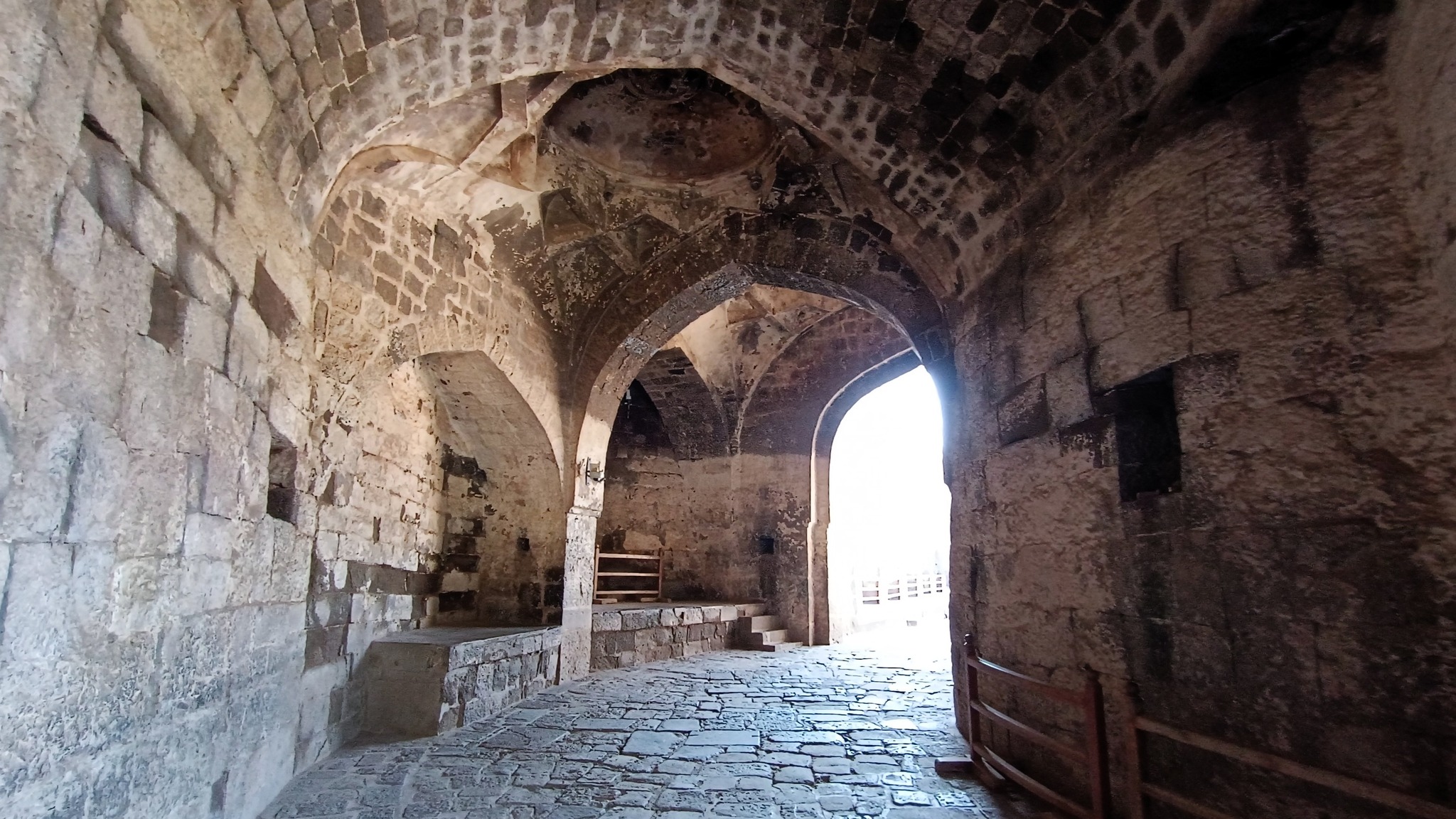
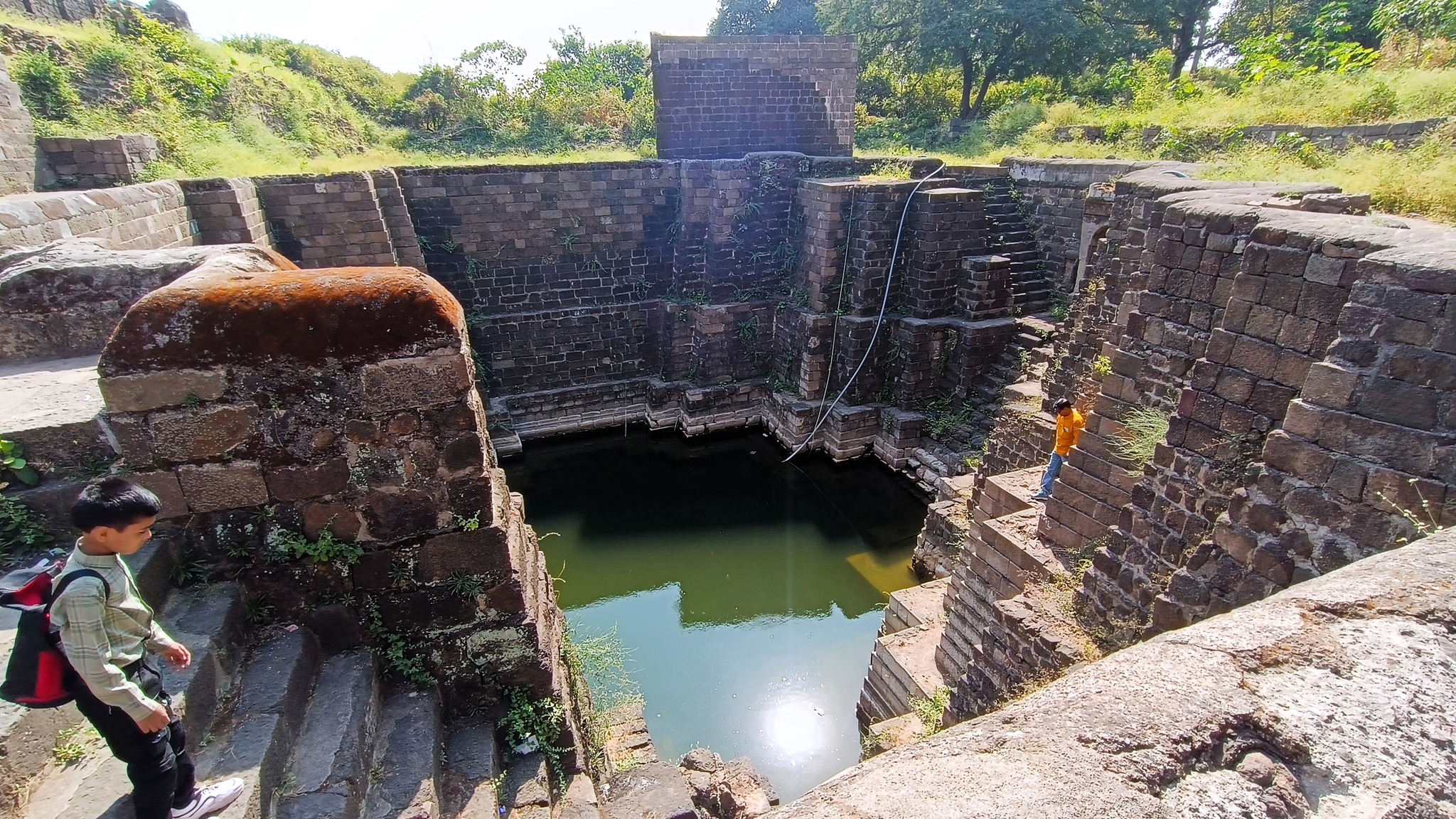
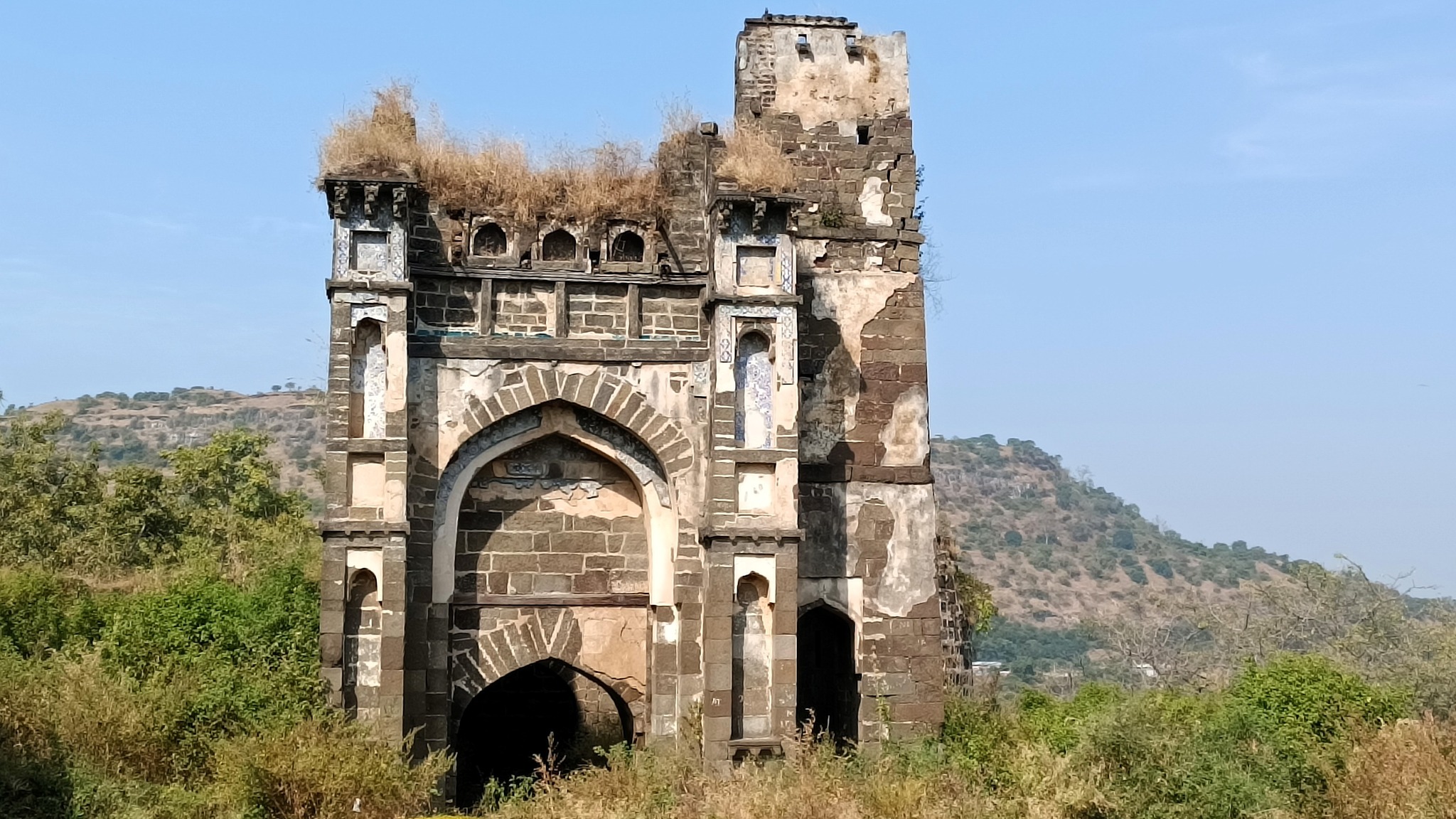
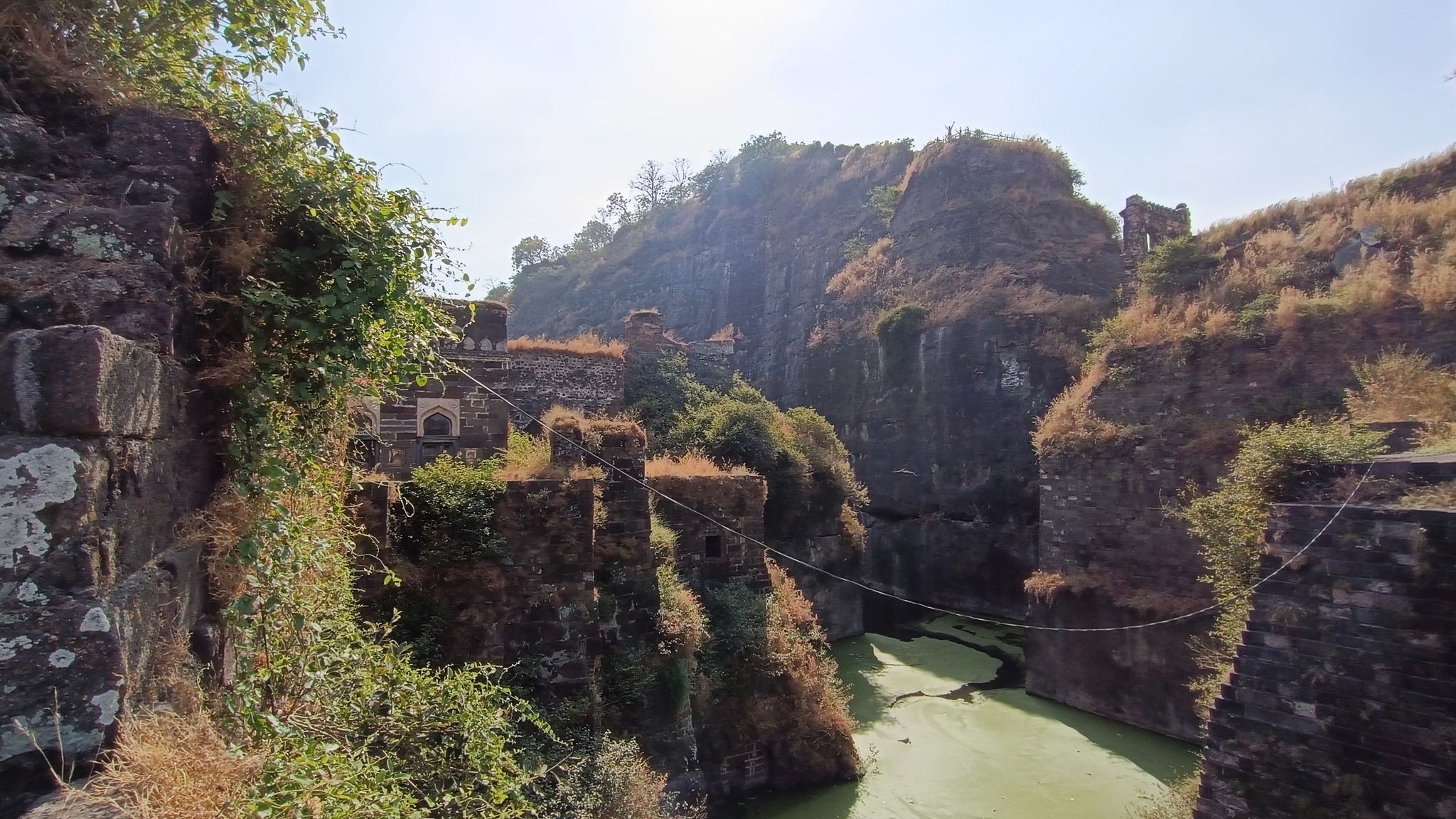
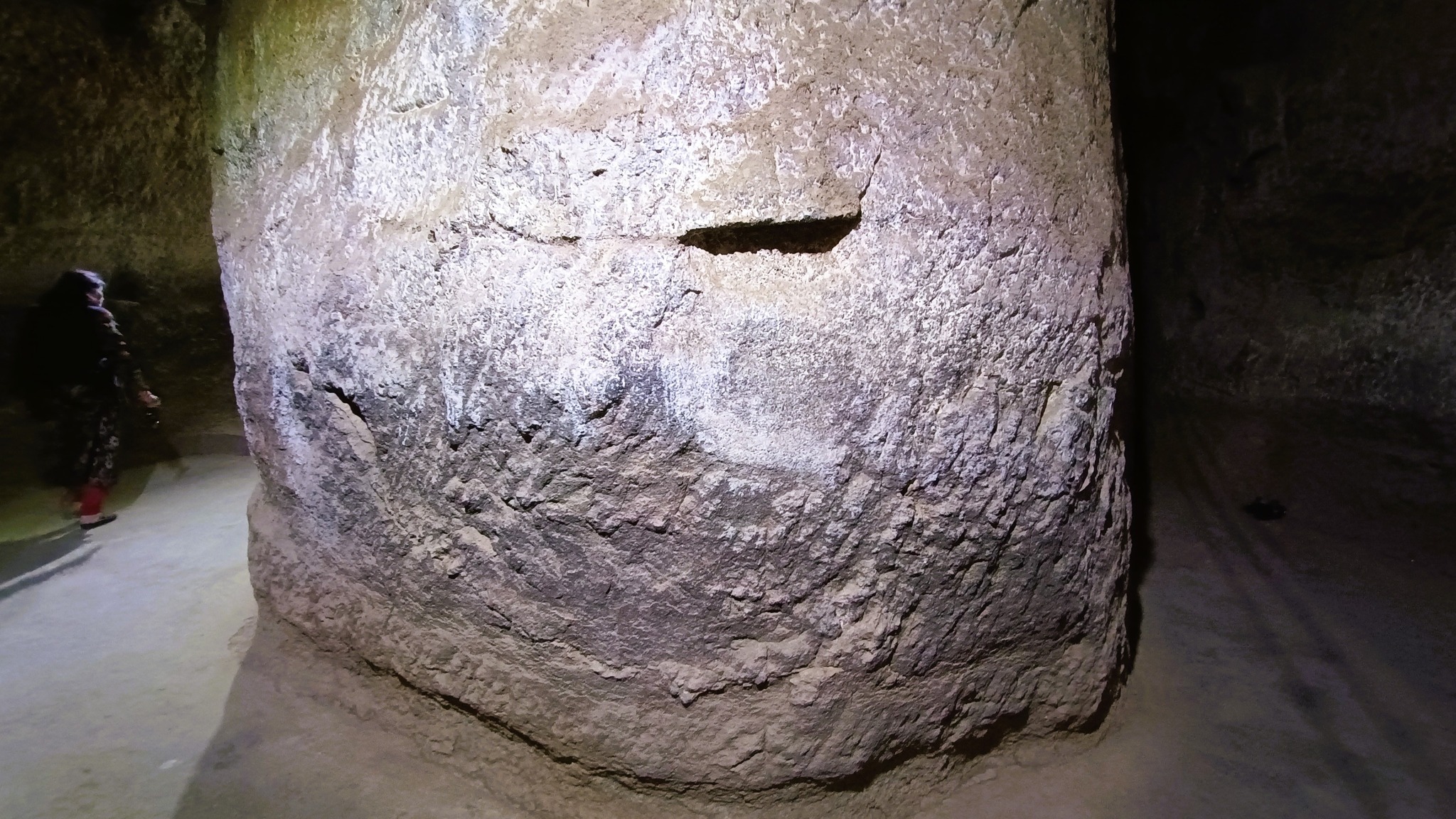
The fort’s defining feature is its ingenious defensive design, incorporating multiple strategic layers to thwart invaders. It begins with an outer wall encircling a moat at the foothill as the first line of defense, followed by an intermediate wall and then an inner wall surrounding another deep moat with no bridges, carved directly into the hillside Beyond these lies a maze of tunnels with dead ends and concealed porches where soldiers could ambush attackers. These tunnels lead to a steep flight of stairs ascending to the fort’s highest point. Along the way, enormous cannons dot the trail, which comprises 750 steps from bottom to top. The challenging climb is well worth it, offering exhilarating views of the Deccan countryside from various vantage points.




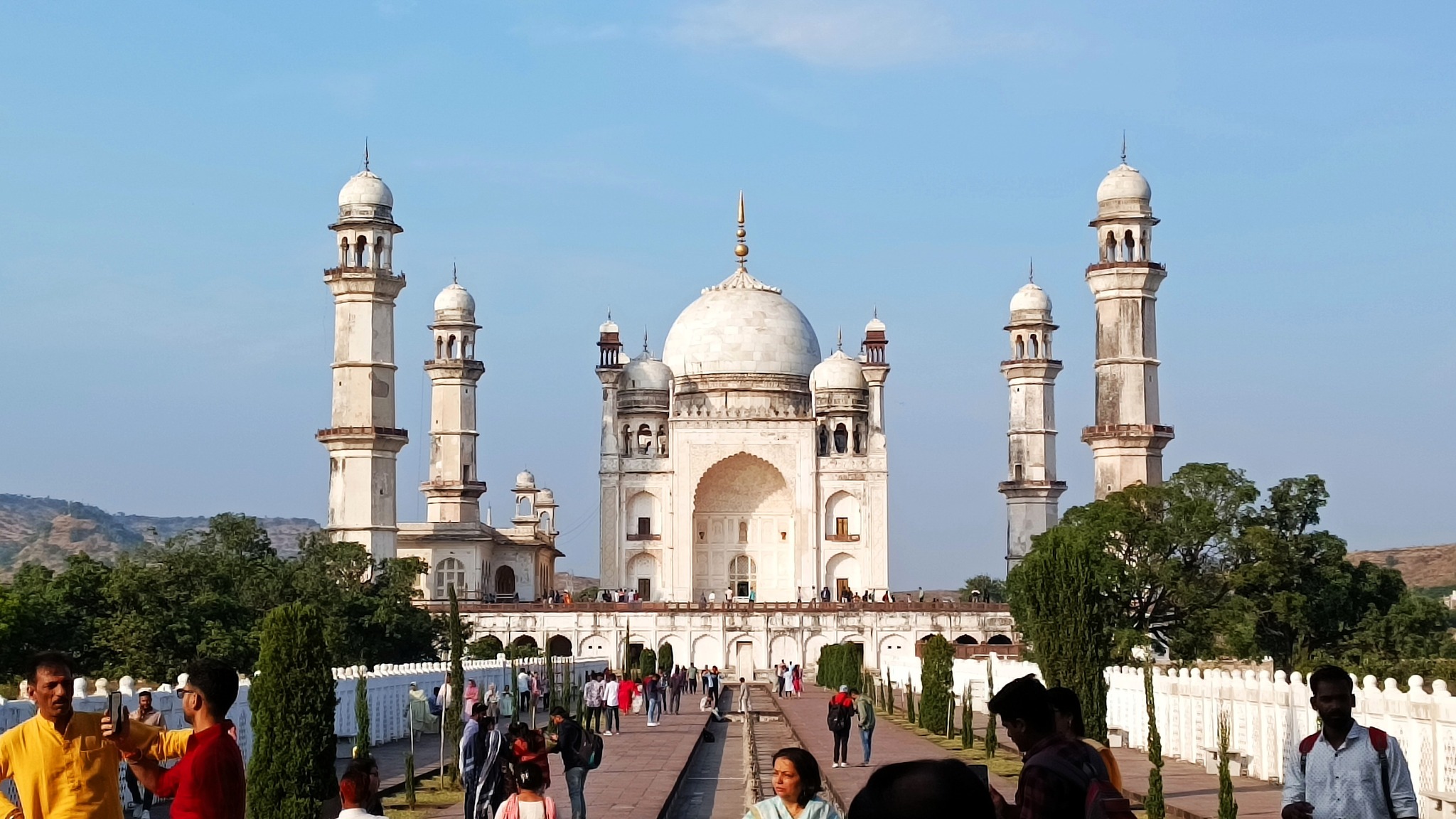
Honorable Mention: Bibi Ka Maqbara
Located in Aurangabad, Bibi ka Maqbara, is a 17th-century mausoleum built by Prince Azam Shah, one of Aurangzeb’s sons, in memory of his mother, Dilras Banu Begum. Often called the ‘Taj of the Deccan’ due to its resemblance to the Taj Mahal, it was constructed between 1651 and 1661 under Mughal Emperor Aurangzeb’s reign. The structure features a central marble dome surrounded by four minarets and is set amidst landscaped gardens with intricate pathways and fountains. Though less ornate than the Taj Mahal, its elegant Mughal architecture and historical significance make it a prominent monument of the region.
Trip Itinerary
Day 1: Grishneswara Jyotirlinga temple and Ellora Caves
Day 2: Ajanta Caves
Day 3: Shirdi
Day 4: Daulatabad and Aurangabad
Information for Visitors
Ellora
1 hour drive from Aurangabad. Best to book a cab.
You will need the the whole day (6-8 hours) if you wish to you see Caves 1 – 34.
To see the most notable ones, reserve 4 hours, out of which 2 would be spent in the Kailasa temple (Cave No. 16).
Caves 1 – 12 are Buddhist. Most notable are Caves 5 (Maharwada), 10 (Vishwakarma’s) and 12 (Teen Taal).
Caves 13 – 29 are Hindu. Most notable are Caves 15 (Dashavatara), 16 (Kailasa temple), 21 (Rameshwar temple) and 29 (Dhumar Lena).
Caves 30 – 34 are Jain with sprinklings of Hindu influence. Most notable are 30 (Chhota Kailash), 32 (Indra Sabha) and 33 (Jagannatha Sabha).
Guide fee: 2050 (for a group of 5), half day (2-4 hours) as of November 2024.
Ajanta
100 km/3 hour drive from Aurangabad. Begin early from Aurangabad, if you wish to see the whole trail.
You will need 6-8 hours if you wish to peruse the frescoes and stone art in more detail. The corpus of frescoes is humongous, and in fact would require multiple days to go through.
There are 30 caves, all Buddhist, out which 26 are open to the public.
Of the 30 caves, 4 are chaityas (worship halls): Caves 9, 10, 19 and 26, all notable.
Out of the remaining caves, all viharas (monasteries/resting places), the most notable are 1, 2, 6, 16 and 17.
Of the unfinished caves, the most notable is Cave 24.
Guide fee: 2050 (for a group of 5), half day (2-4 hours) as of November 2024.
While porter facility is available for ferrying people, if mobility is still possible, as in case of senior citizens, you can still bypass the initial long flight of stairs using a long winding ramp.
Another hack is a path which starts to the left of the aforementioned flight of stairs, crosses the Waghura river, running alongside it for a distance before crossing it once again to meet in front of Cave 8. In fact, this path is the recommended exit from the Cave trail.
Daulatabad fort
A 40 minute drive from from Aurangabad. Be prepared for a steep climb after about 60% of the trail, i.e. after the Andheri, the zig-zag tunnels. Carry water, wear comfortable clothes and appropriate shoes.
I highly recommend doing the trail till the end of the Andheri, which should require about 2 hours for the round trip.
For those on a time-squeeze, or with mobility issues, go till the Kalakot, or if you could push yourself just a little bit, then till the Khandak, the inner moat before the Andheri begins.
The round trip till the top and back could be 3 to 4 hours depending on your ability to manage your breath and exhaustion in the last 40% of the trail. All told there are 750 steps in the complete trail from bottom to top.
 The Timber Trawler