Ruminating over fond memories of my previous excursions to the Thar, I realized that it was time my family members also got a taste of the desert, and so materialized my family’s first tryst with the Thar – and my third – in the end of November 2019. We took the Mandore Express from Gurgaon railway station, where we had to execute the train boarding with rocket-science precision on account of the train stopping only for 2 minutes, and reached Jodhpur at 8 AM next morning.
Day 1: Jodhpur and Mandore
We checked in to the Om Heritage hotel that afforded an excellent view of the Mehrangarh fort from its rooftop. The plan for the day, drawn on the experience of my previous sole trip to Jodhpur, was set, and so, the first thing we did was hire for the whole day one of those large auto-rickshaws that could accommodate all five of us, and headed over to the Umaid Bhawan Palace. Our next stop after that was at Mandore Garden, the place that had me mesmerized in my previous trip to Jodhpur.
Mandore, the seat of the Gurjara-Pratiharas in the 6th century AD, later became the capital of the Rathores before Rao Jodha shifted to the newly-founded city of Jodhpur. At Mandore, we first walked through the lawns and saw some of the temples and royal cenotaphs, and then visited the Government Musuem. From there, walking up an incline, we crossed a dammed mini-reservoir, and reached the ruined Mandore fort located on the top of a hill, getting a panoramic view of Mandore. After an hour and half well spent, we had our lunch in Mandore, and proceeded to Jaswant Thada on our way to Mehrangarh Fort.
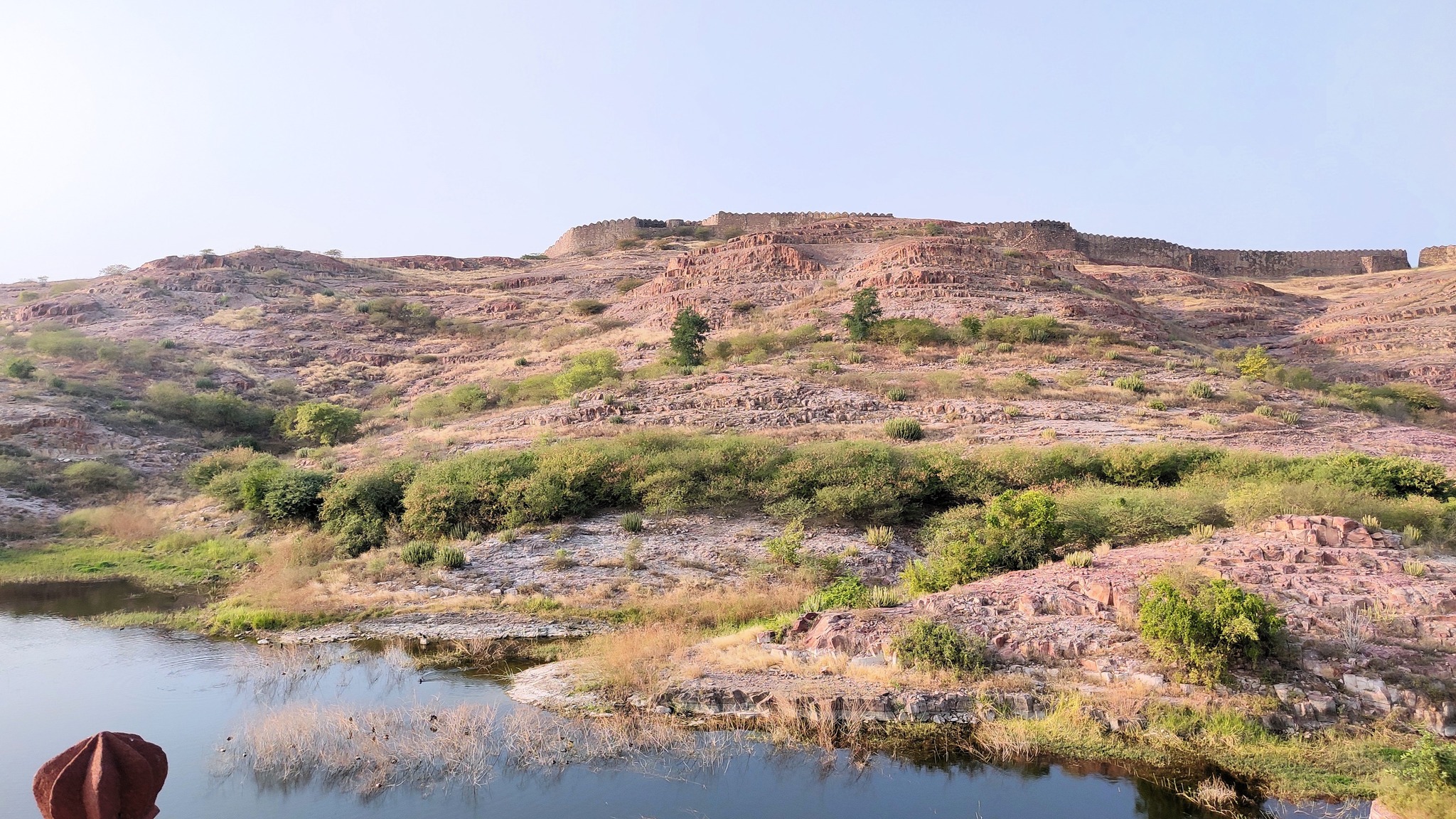
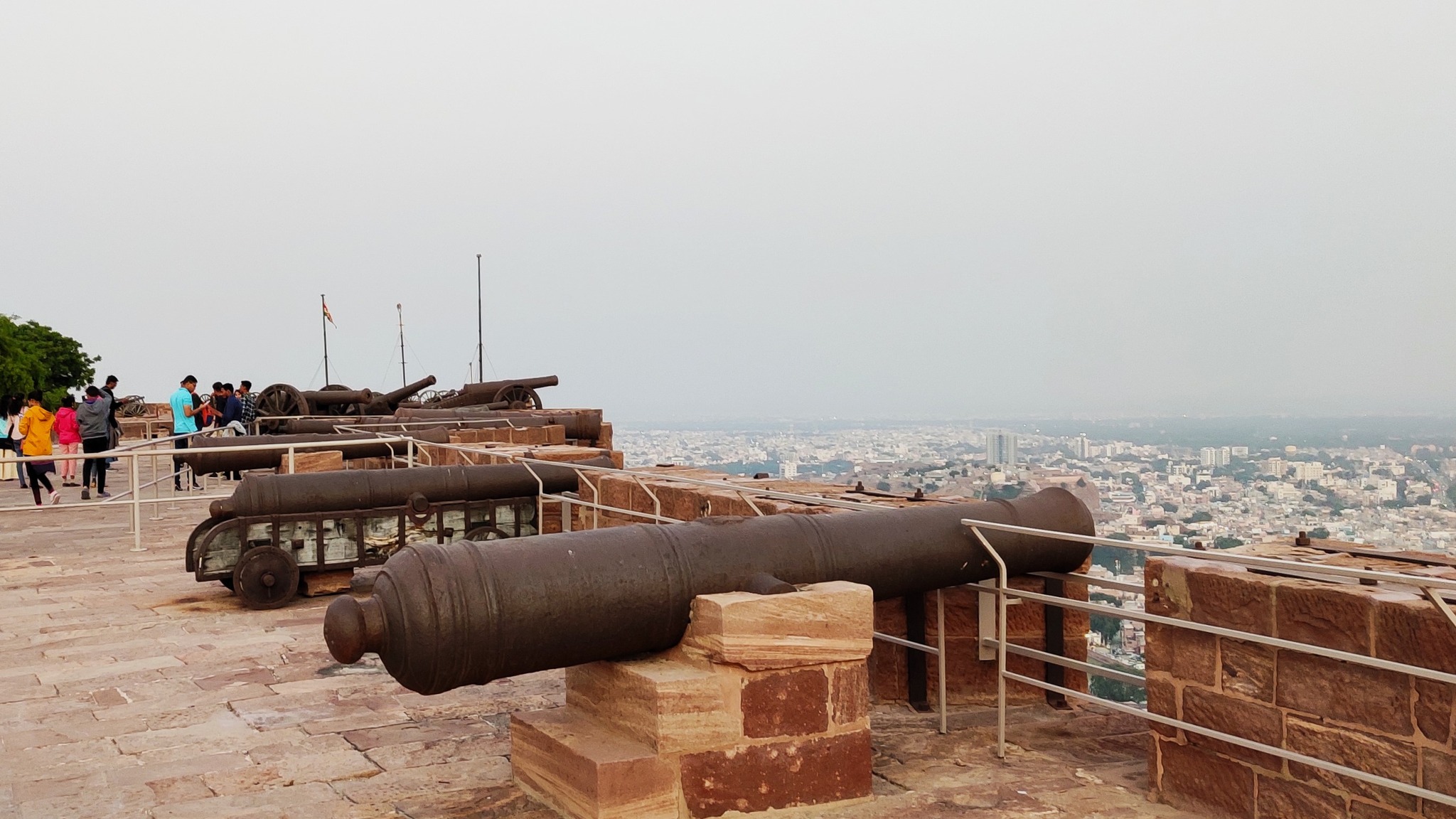
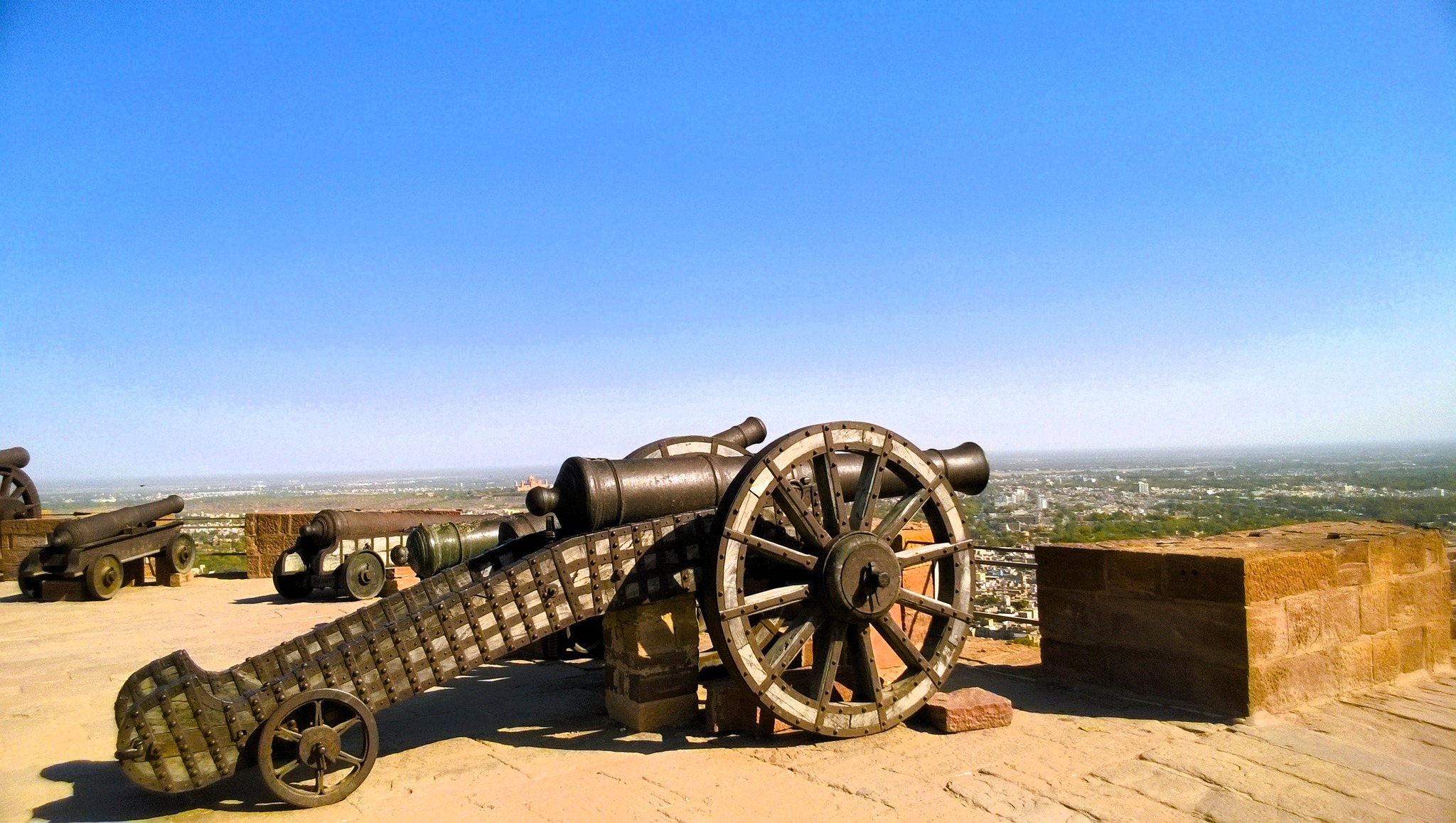
The Jaswant Thada itself is located on the top of a flat red-coloured rocky hill which is barren, only punctuated with water pools, and has the scenic backdrop of the Mehrangarh fort on one side. Next up was Mehrangarh fort, which we reached at 4.30 PM just in time before the gates closed for entry. Taking up a guided tour, we gawked at the imposing palaces and exquisitely done interiors, before ending the tour at the raised long platform lining the fort wall the end of the fort where the cannons stand. We were then back in the hotel to have dinner, and prepare for checking out next day to proceed to the next leg of our trip.
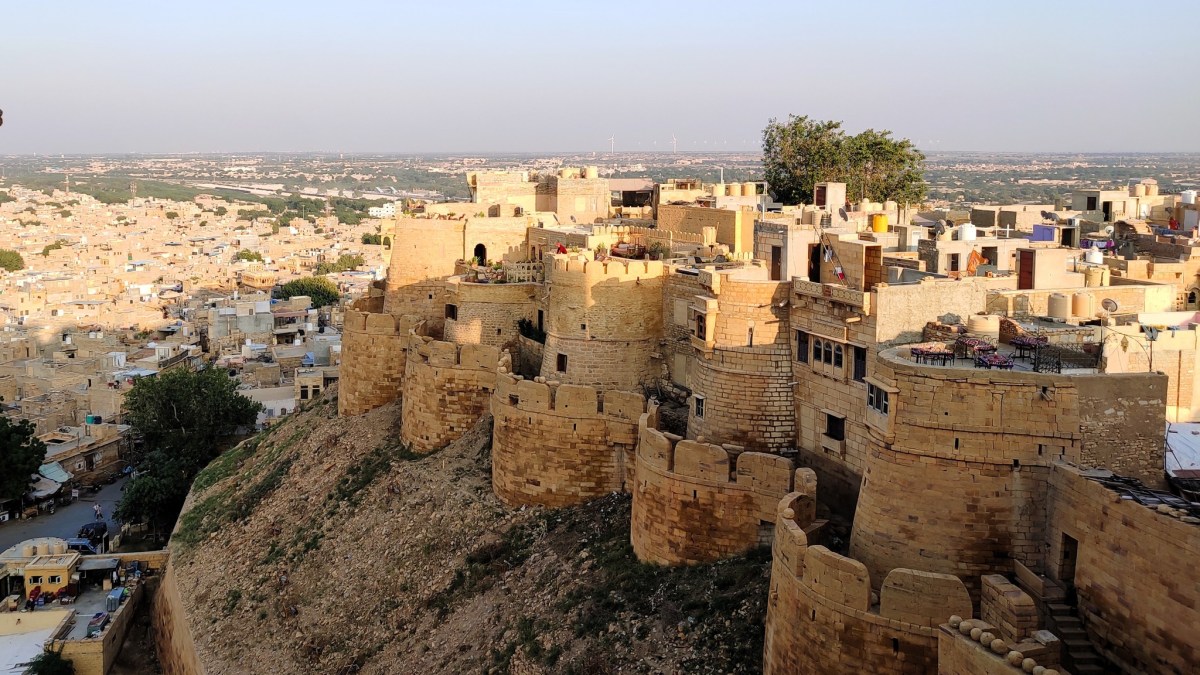
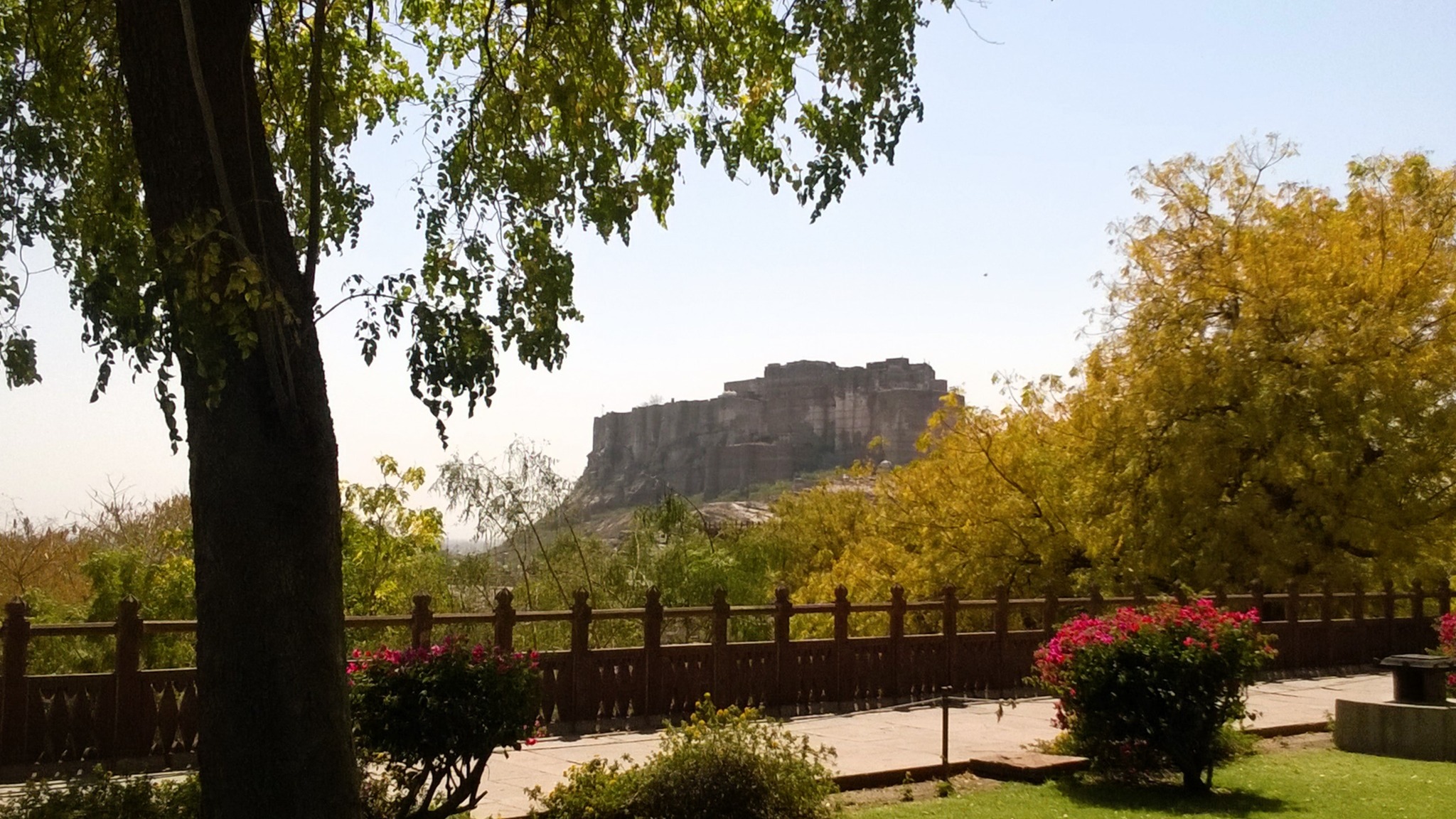
Mehrangarh fort as seen from the rooftop of Om Heritage Hotel
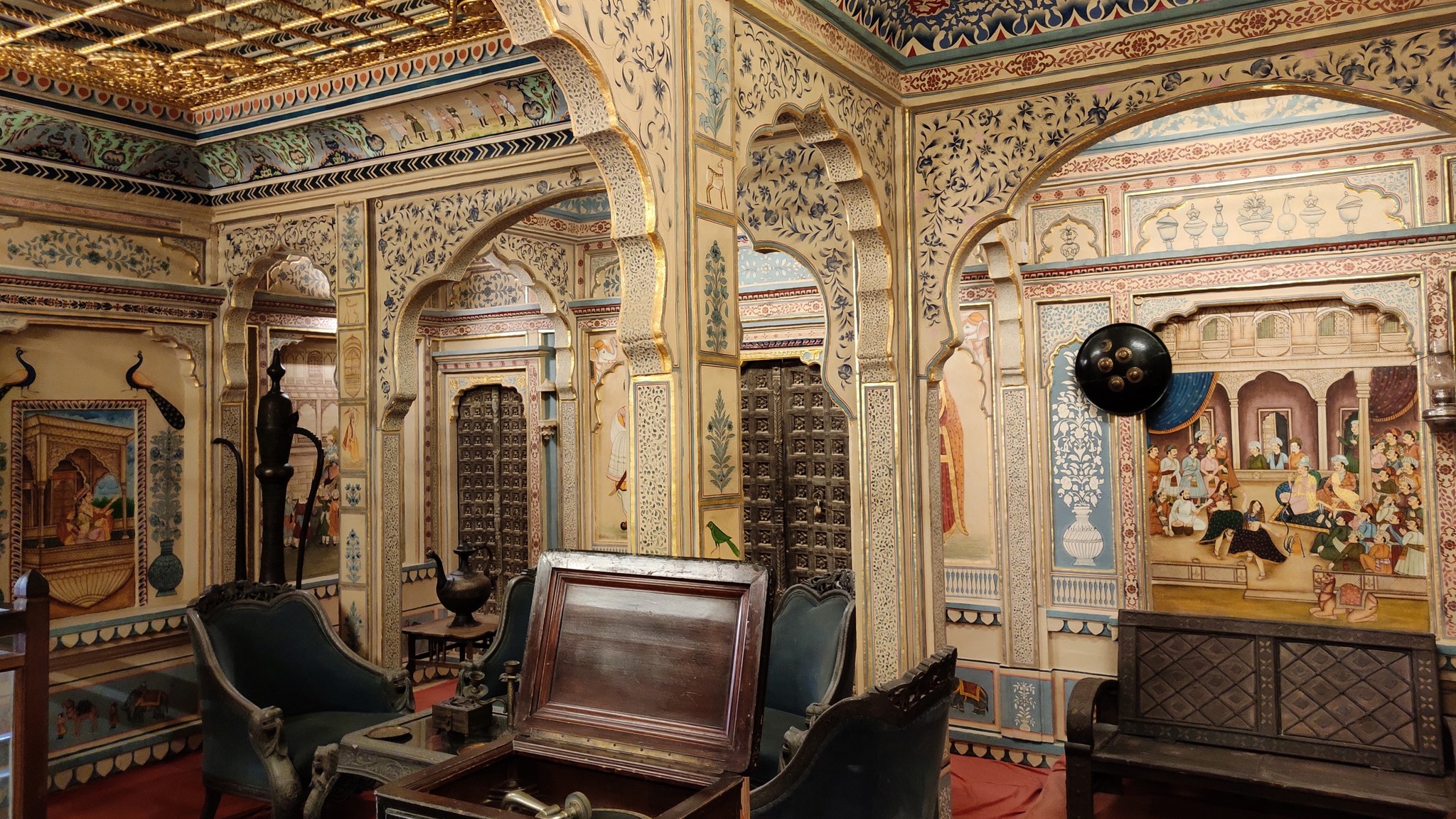
At Mandore Garden, on the outskirts of JodhpurLandscape around Jaswant Thada, JodhpurPalace in Mehrangarh fort, JodhpurCannons at Mehrangarh fort, Jodhpur
Day 2: Exploring Jaisalmer city
The next morning, we started at 8.30 AM by the Innova car we had booked for the remainder of the trip. We passed through Balesar, as the land became progressively arid, with it becoming more distinctively barren and sandy as we approached Pokhran. By 2 PM, we had reached Jaisalmer and checked in at Hotel Heritage House, a hotel modelled as a typical Jaisalmer-style haveli. After a quick lunch at Shree Jee Restaurant, we went to see Patwon ki Haveli, actually a cluster of five small havelis, of which the most famous is the one in the front called Kothari’s Patwa Haveli.
Patwon ki Haveli was constructed over 50 years, starting in 1805 AD commissioned by Guman Chand Patwa, a trader of jewelry and fine brocade. The haveli is typified by latticed balconies carved out of sandstone but seeming as if carved from wood, ornate wall paintings, exquisitely carved pillars, and extensive corridors and chambers. After seeing the haveli, we proceeded to Jaisalmer Fort. At Jaisalmer fort too, we took a guided tour through the main palaces, hearing stories of the past, getting transported to the times when these were inhabited by the royals.
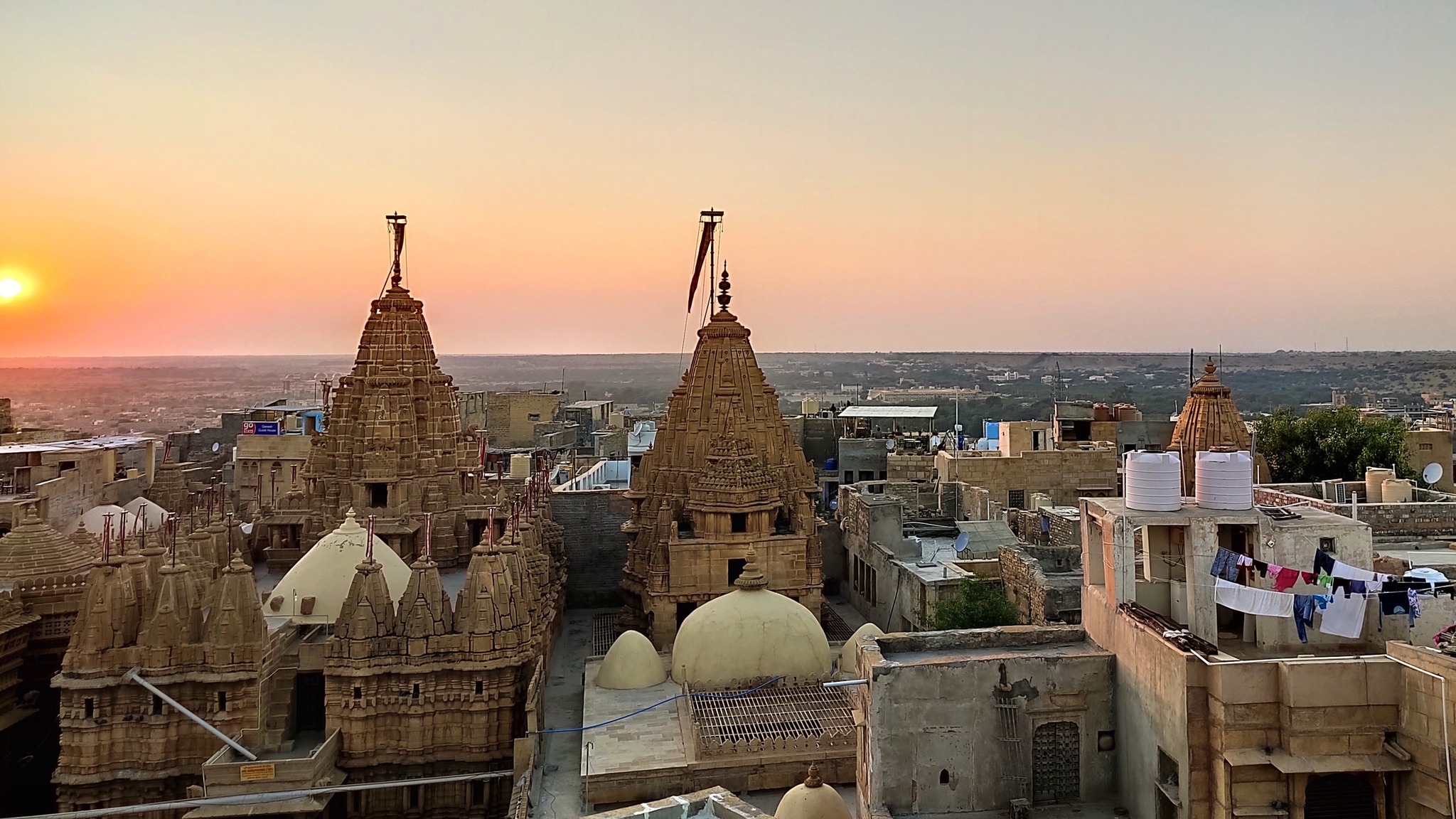
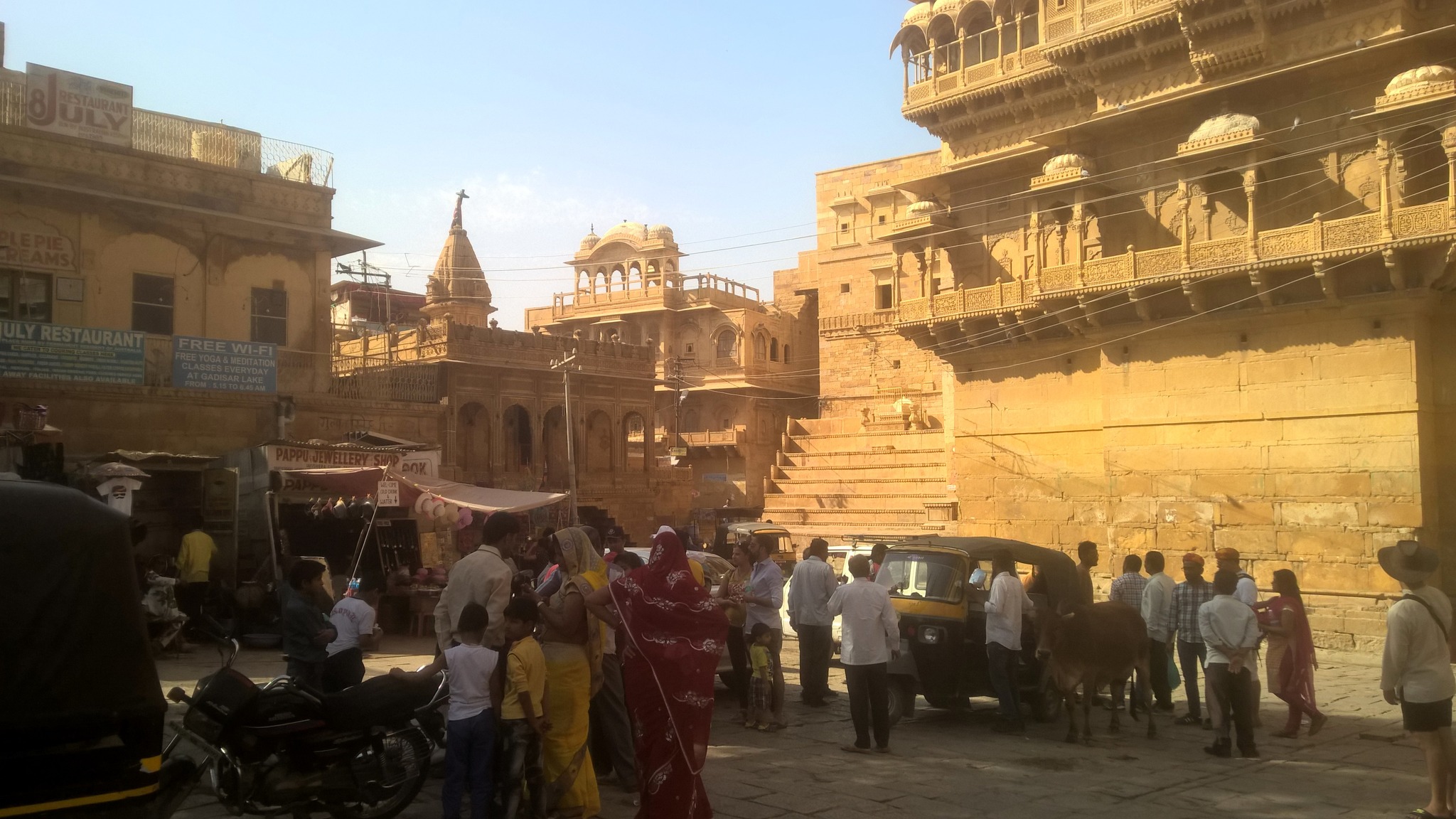
Later, we walked through the streets outside the palace, passing by and entering the street on the left side of the Lakshminathji temple. Just 100 metres in, we came upon the Baa ri Haveli, which we entered out of curiosity and were treated to interesting tidbits of the Rajasthani culture by way of of the artifacts on display, such as sculptures, furniture, toys, handicrafts etc. As we reached the terrace of the haveli, we saw the sun setting in the horizon marked by a long sandy ridge running in the distance outside the city limit, while twin spires of two temples stood in the foreground right in front of us.
An ornately decorated and painted hall in the Patwon ka Haveli, Jaisalmer
View of fort walls from the balcony of a palace in the Jaisalmer fort
Sunset view from Baa ri Haveli, Jaisalmer fort
Soon after, we had tea and snacks at a roof-top restaurant hugging the fort wall while enjoying views of the city and the barren landscape beyond it. Back in the hotel, we retired to bed after dinner in anticipation of our outstation trip from Jaisalmer the next day.
Day 3: Off to the Border – Ranao, Tanot and Longewala
We started lazily next day, checking out of the hotel at around 11 AM and proceeded towards Tanot, stopping at places to get down to admire the desert landscape, and taking pictures of the landscape and of ourselves. By 1 PM, we reached the location that had left such a lasting impression in my mind the last time that it was the primary reason I was so excited about the trip, keen to show it to my family too. Yes, the place was Ranao, and it lived up to its promise and how!
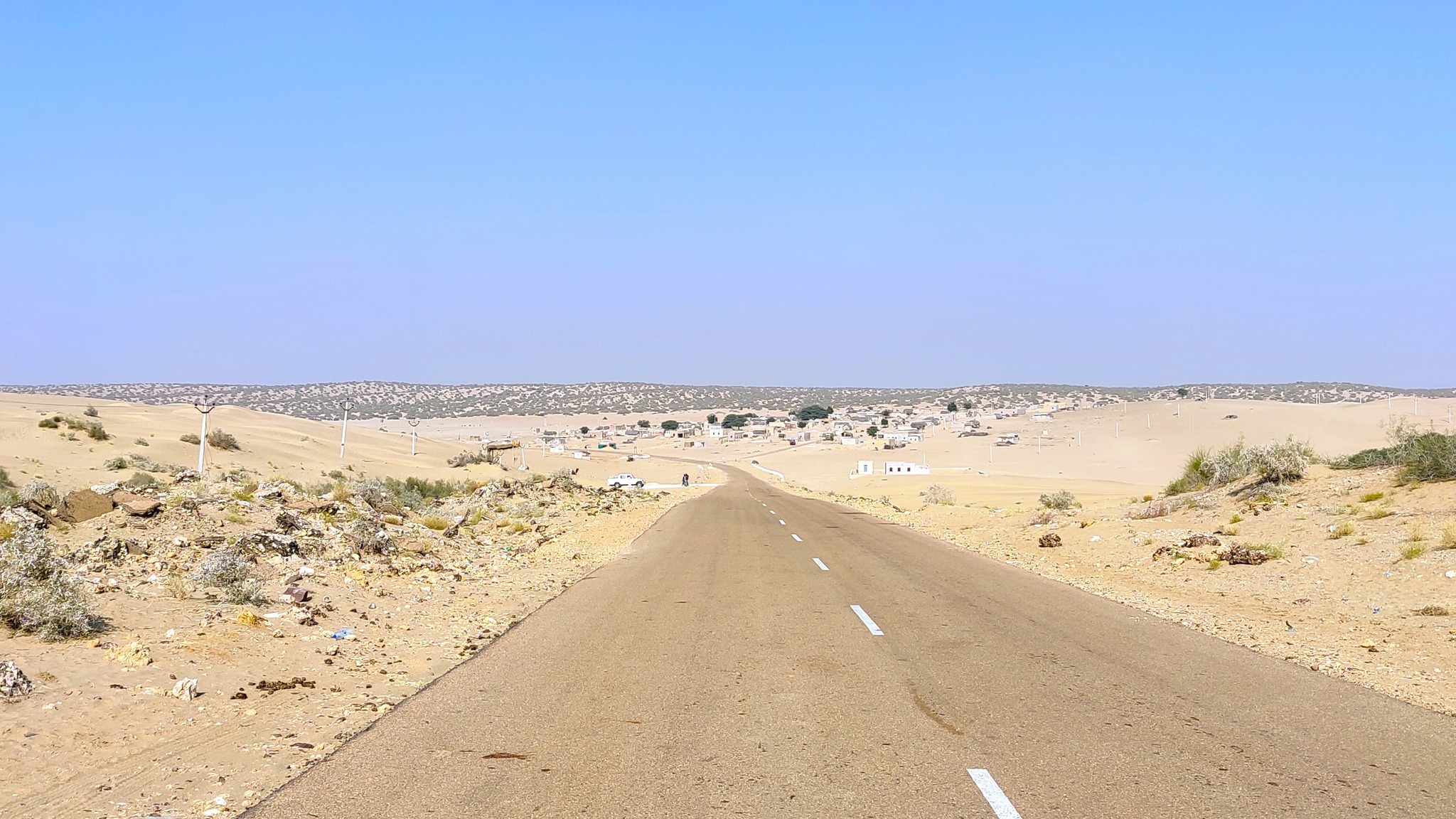
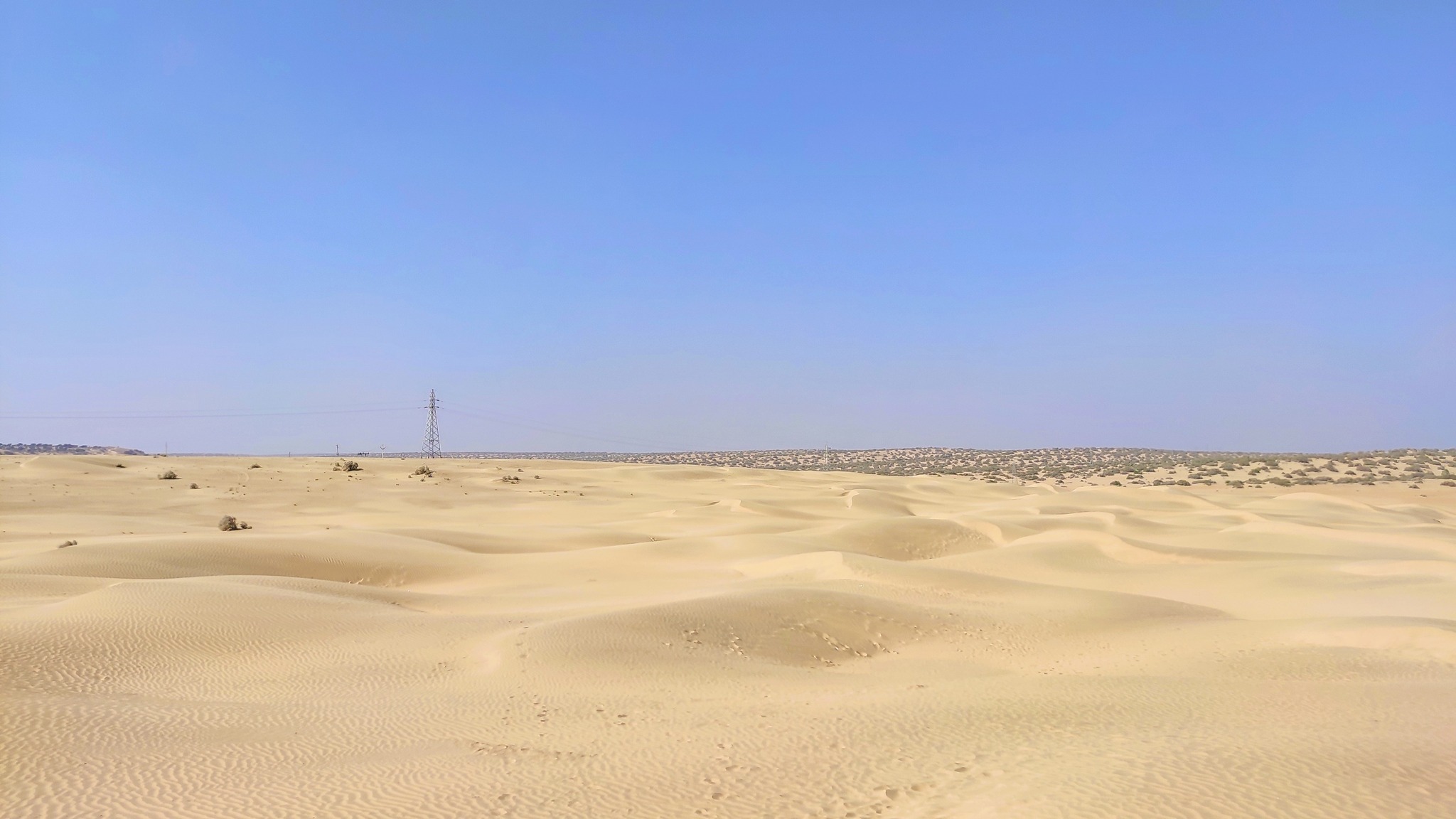
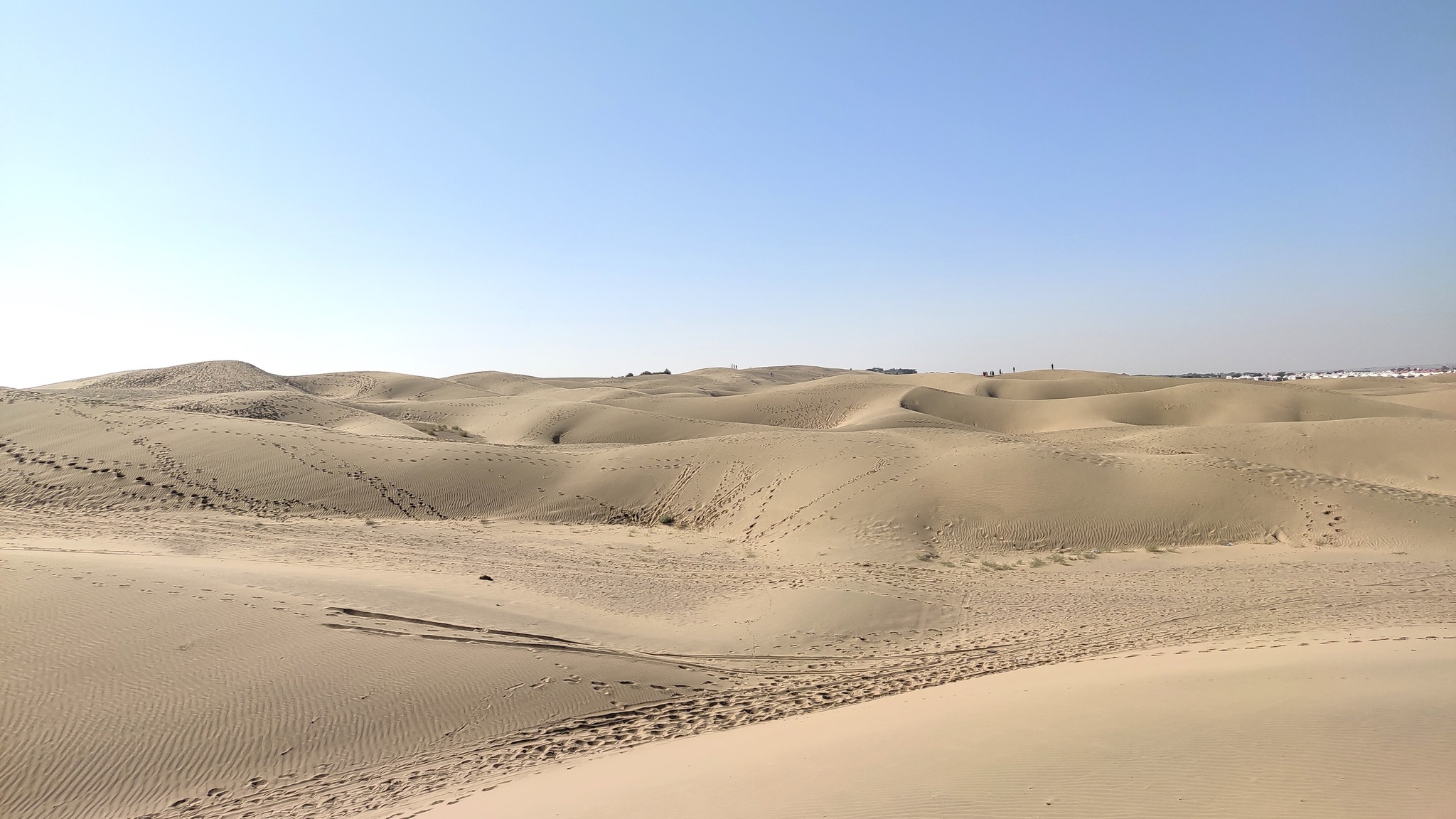
We got down at the decline before the road reached the lowermost point of the depressed stretch reminiscent of a river bed, and ventured into the sand dunes lying on the side of road, taking pictures. As we began to move on, and were almost reaching the bottom of the ‘bed’, we were hailed by a person standing beside a Bolero pick-up, who offered us a paid session of dune-bashing as well as a tour of the vestiges of the Indo-Pak war. We readily agreed, and were amply rewarded with an enriching experience as we wandered through the sands going up and down the dunes. Further, we checked out the numerous bunkers, and sat on the sands partaking of the views of the oceans of sand.
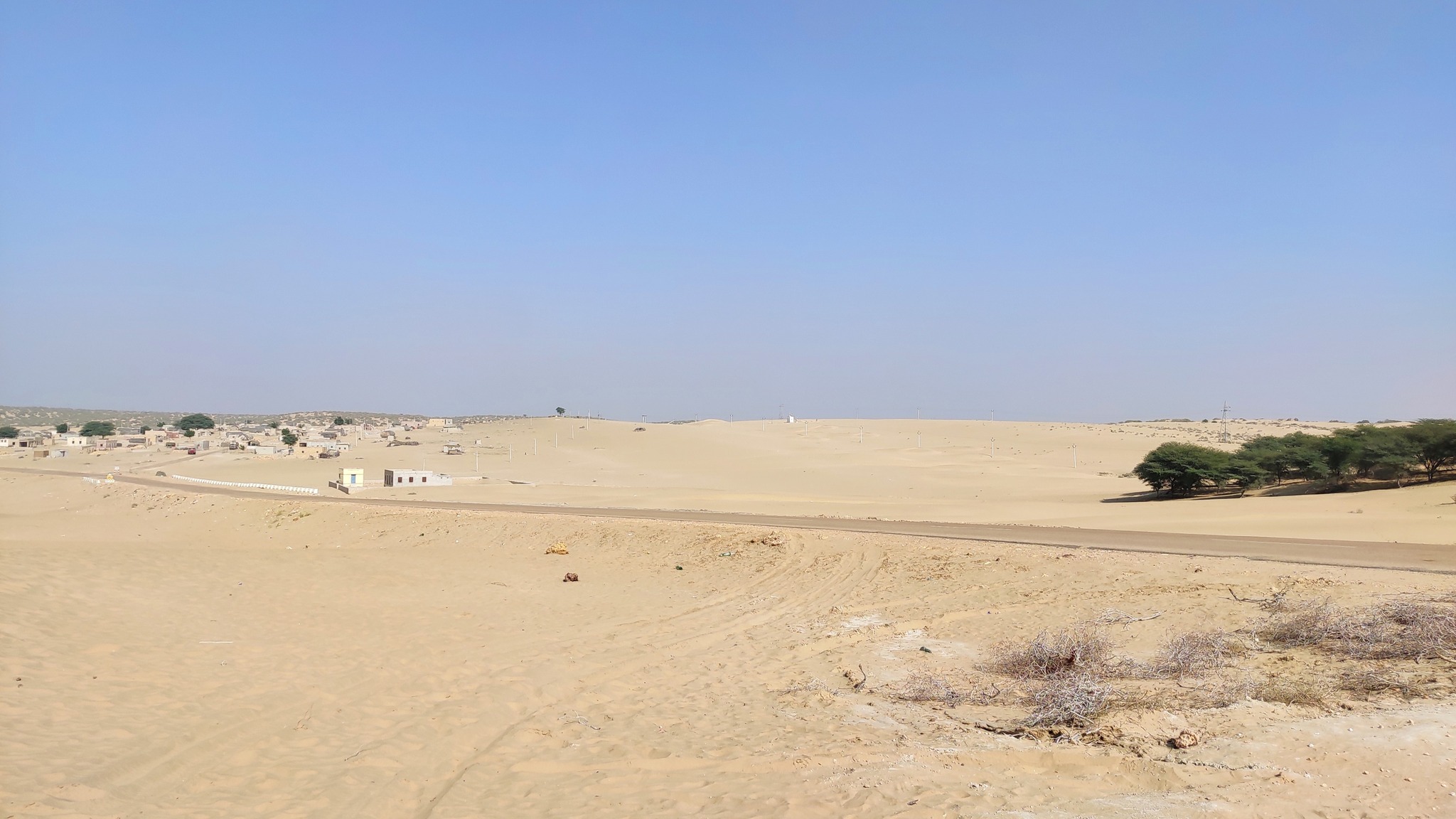
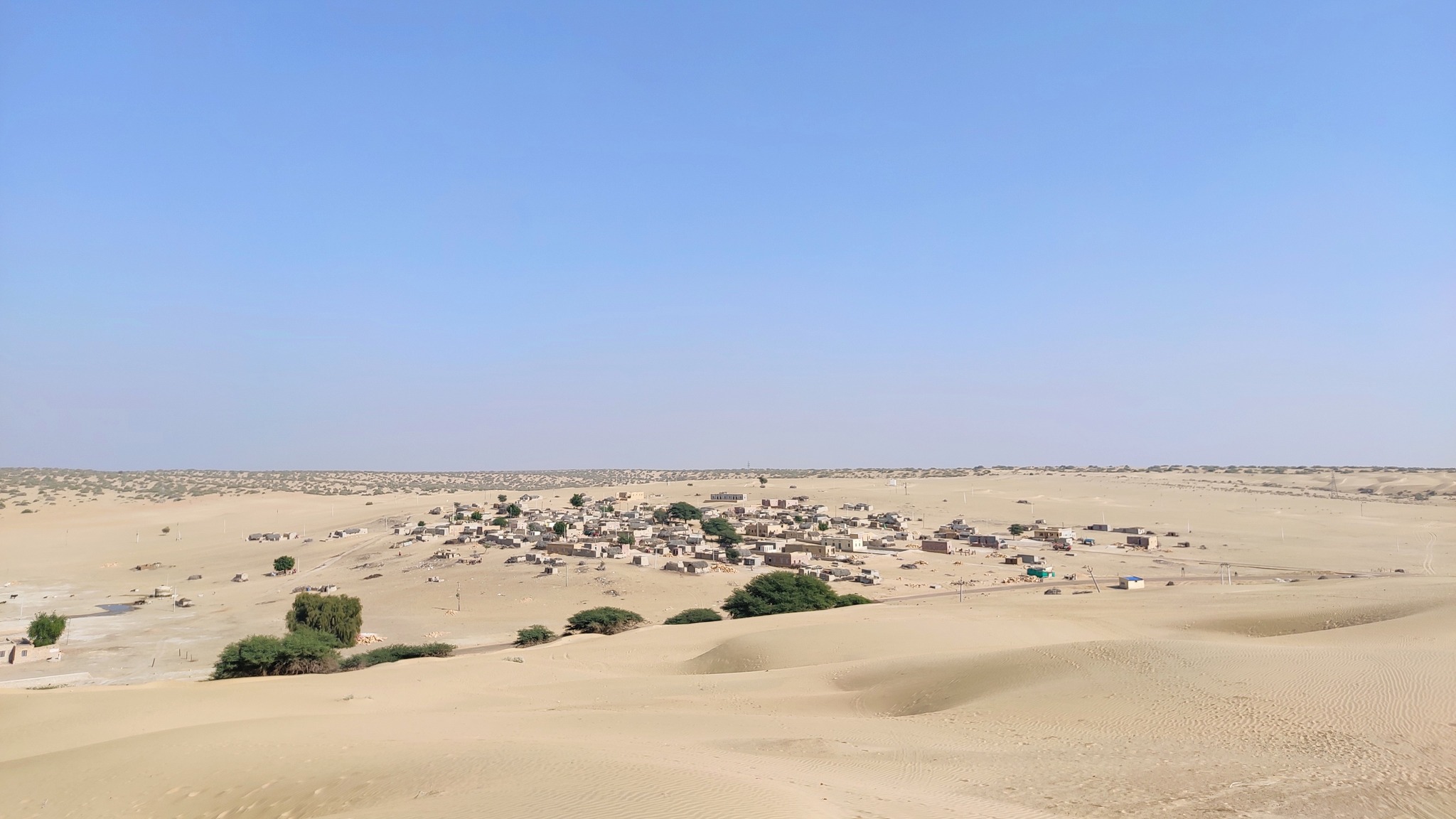
Ranao village lies in the dried ‘river bed’
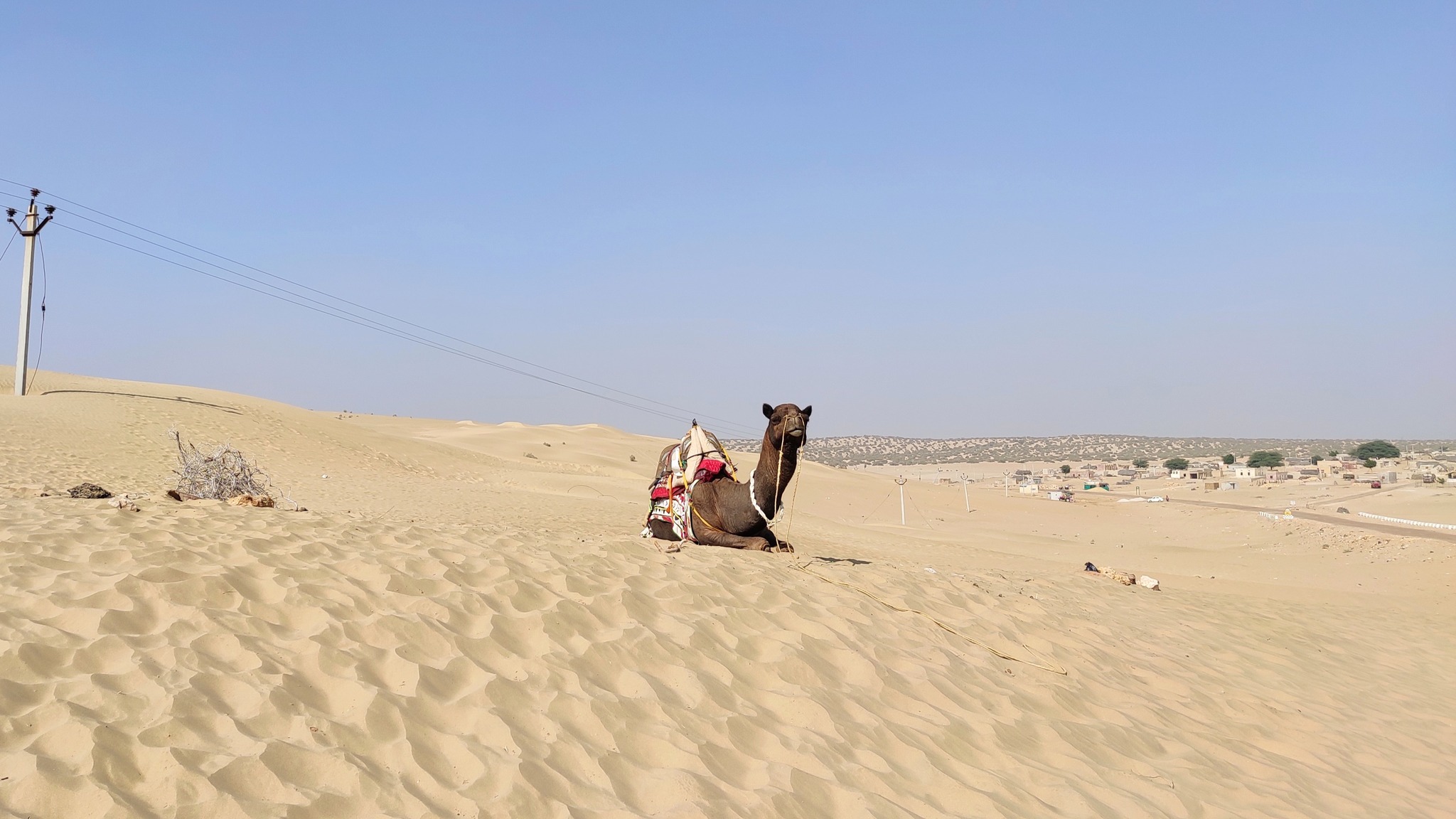
A camel lounges about at RanaoA little further in the sand dunes
Deep in the sand dunes area in Ranao
A view of Ranao village from another point on the ocean of sand dunes surrounding it
Finally, even though not content, in the interest of time, we left Ranao for Tanot which we reached by 3 PM. There, having a light meal, we proceeded to Longewala moving alongside the Pakistan border, reaching at 4 PM the War Memorial where we could spend just a little over half hour as evening was fast approaching. Thereafter, we headed back in the direction of Jaisalmer, reaching Sam Sand Dunes around 6.30 PM by when darkness had already fallen. We checked in to the Vinayak Desert camp, our stay for the night, where after seeing the folk art programme and a Rajasthani buffet, we went to sleep.
Day 4: Back to Jopdhpur through Osian
Early next morning, I woke up specifically to see sun rise from behind the sand dunes, barely catching the marvellous sight. A little later, we had breakfast, and then checking out from the camp around 10 AM, proceeded to do some camel-riding near the sand dunes. After that, we were headed to the last site of our Jaisalmer leg, the ruins of Kuldhara, which was as fascinating to me this time as it was the previous two times I was here. I was glad to see the family was enamoured too.
Sunrise as seen from the Desert camp at Sam Sand Dunes
Morning at the Sam Sand Dunes
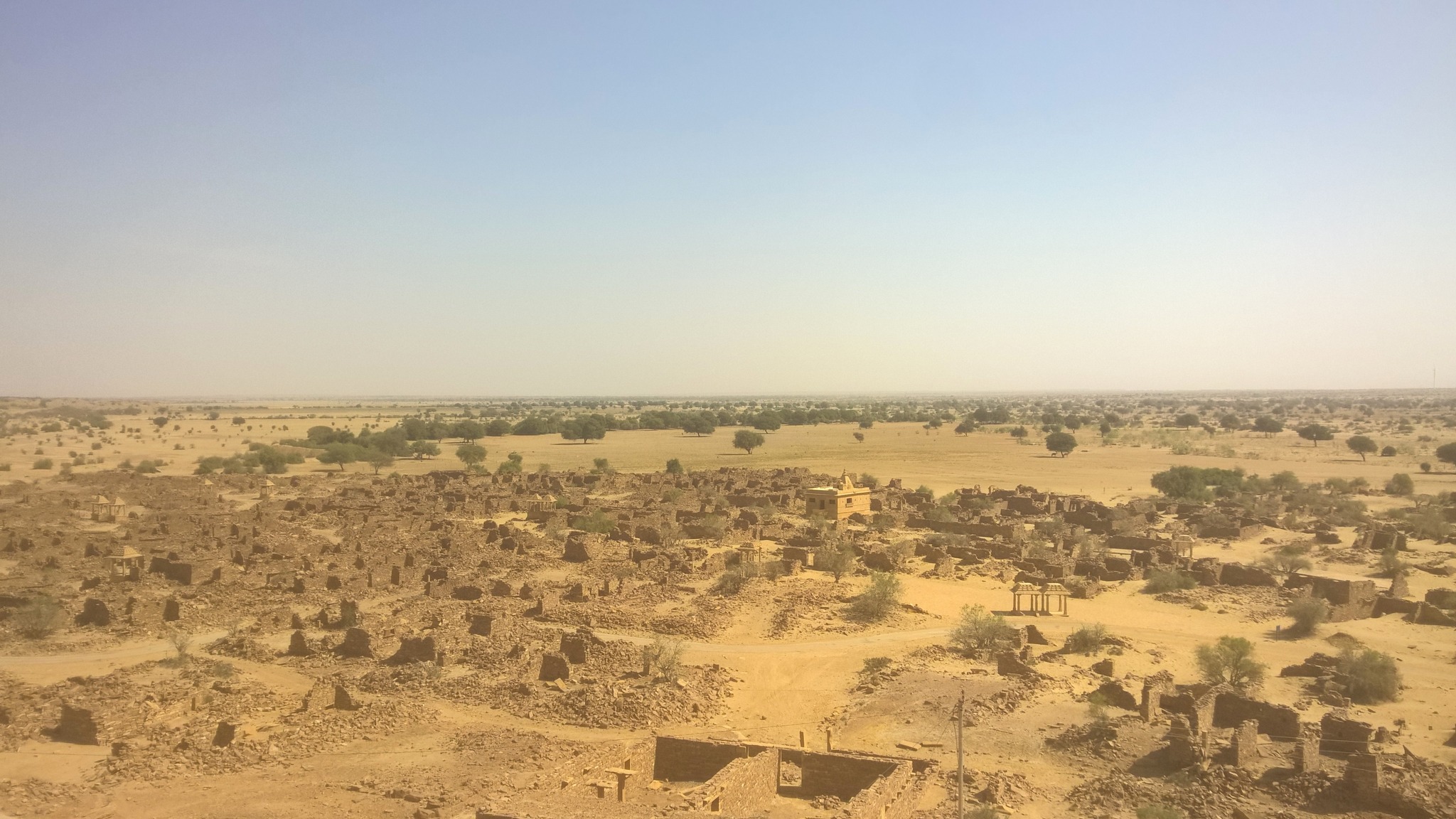
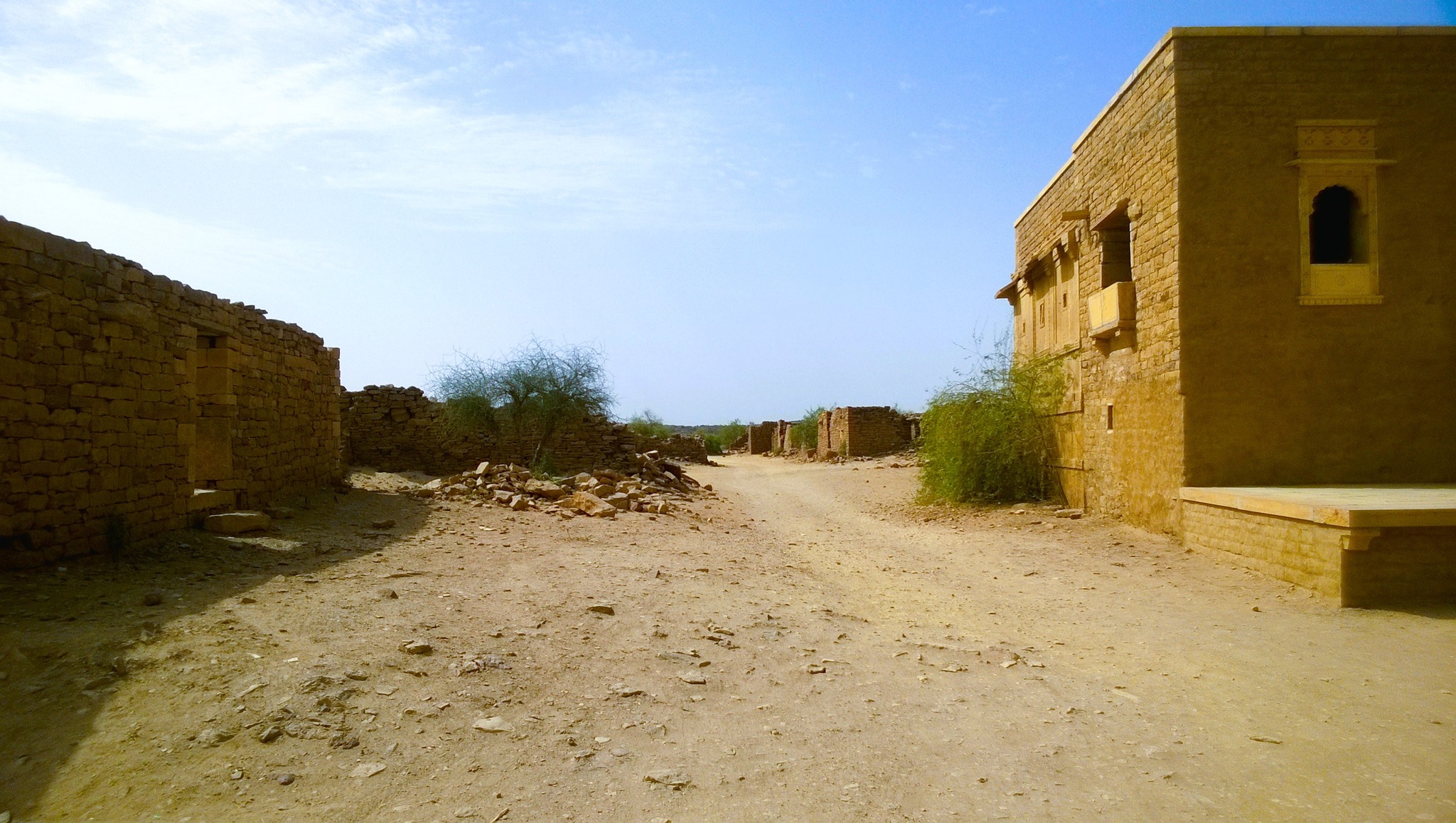
View of the ruined village from a restored building in Kuldhara
By 12, we were back again on the road headed back to Jodhpur, through a different route than the one we took for the outward leg from Jodhpur. Around 2.30 PM, we stopped at Phalodi to have lunch, and by 4.30 PM, we were at Osian. Osian, dubbed an oasis in the Thar, was a major religious centre of the Gurjara-Pratihara period dating from the 5th to 12th century AD, and had been a trading centre from well before that, at least from the Gupta period onwards. Today, the ruins of Jain and Hindu temples from that period stand witness to its glorious past. The Oswal community is said to have originated from Osian.
At Osian, we visited the Sachiya Mata temple – Sachiya Mata being the town deity, who as per Jain legend is the form of Chamunda that was turned vegeterian by Acharya Ratnaprabhasuri in 457 BCE. As a result, Sachiya Mata is worshipped also by Jains, and the temple itself has many Jain features. From the temple which is situated on a hillock affords a panoramic view of the landscape beyond the town, including the sand dunes located on the outskirts of the town. Apart from the Sachiya Mata temple, I managed to get a glimpse of a few other temples, including the ruins of the Harihara temple, Vishnu temple and Sun temple that were located on or in the vicinity of the main road.
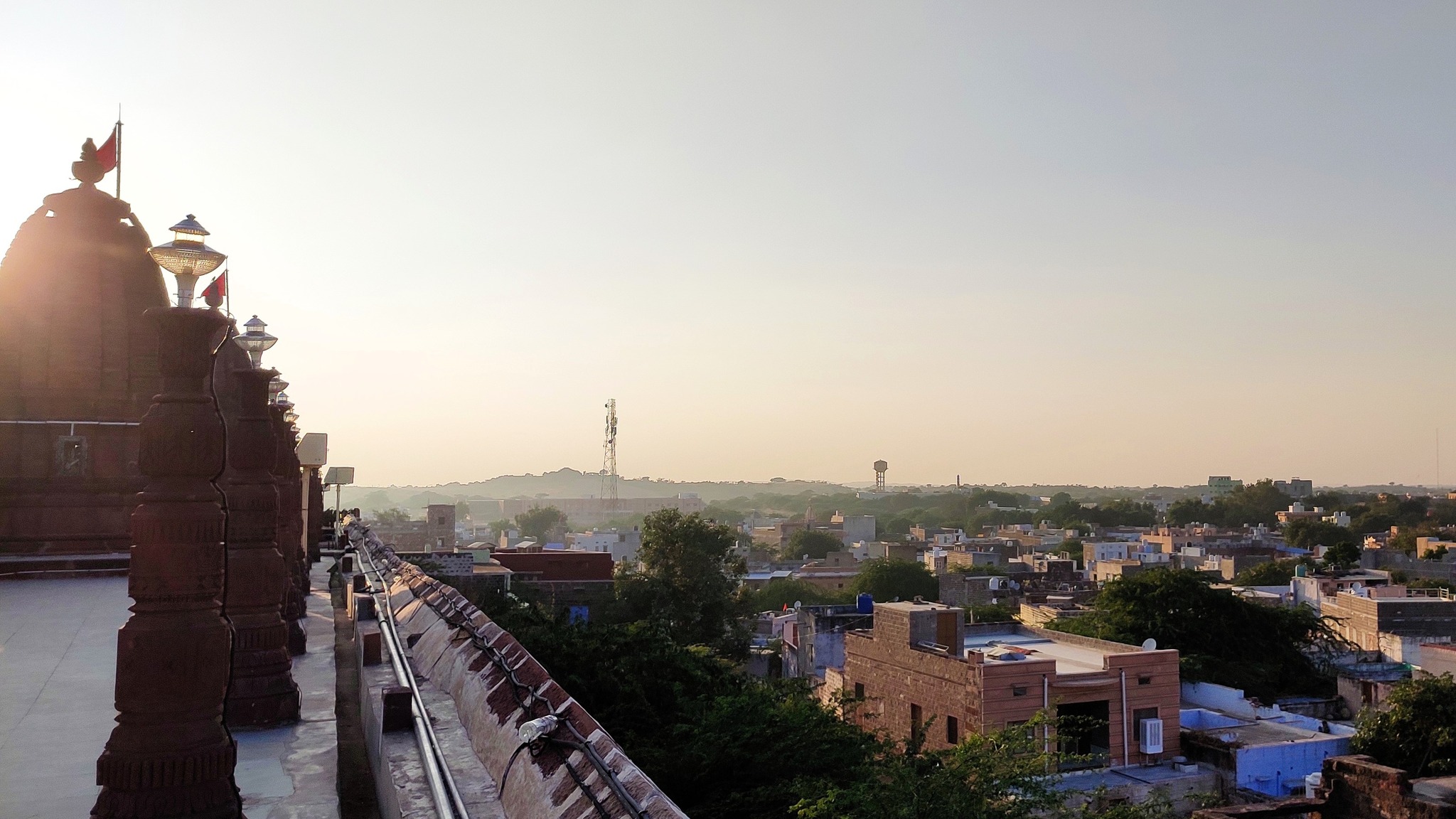
View of Osian town and beyond from Sachiya Mata temple premise
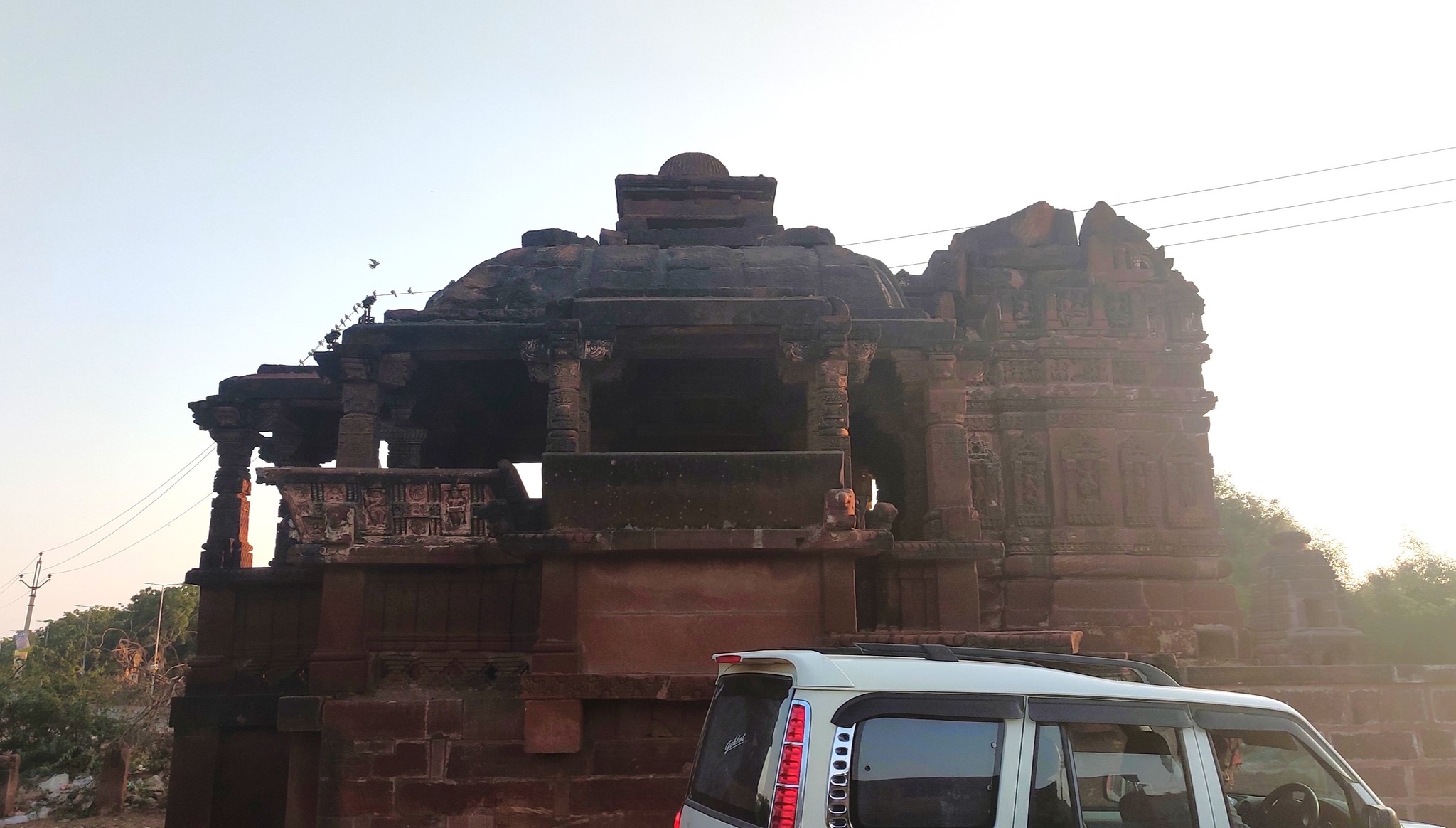
A ruined temple in OsianA ruined temple in Osian
By 5.30 PM, we had to leave Osian as it was getting dark and we had a train to catch from Jodhpur. We caught the 8.30 PM Mandore Express from Jodhpur and reached Gurgaon the next morning, still delirious from the memorable family expedition into the Thar desert.
With my B-school admission fast approaching, and my mobility improving 2.5 months into the recovery after my accident in Khajuraho, I decided to make one last big trip before I left Delhi for the year-long intensive course. So, my friend and colleague Amit and I took off to Jaisalmer by Ranikhet Express, which started around 10 AM from Delhi after a 6 hour delay. That did not put a dent to our itinerary though, since we reached Jaisalmer early the following morning instead of reaching the same night.
After a quick check-in at a motel just below the Jaisalmer fort and freshening up, we set out to have breakfast at a roof-top restaurant. And then, undecided on what to do next, we loitered around, first in search of a hostel, where Amit wanted to put up, while I dissuaded him from the same telling him that we were better off spending that money on an outstation trip, and camping out in the desert. Anyway, we still went to check out a Zostel property, ran into an old acquaintance of Amit and again got back to bickering about the next steps – the bone of contention being, whether we should first see Jaisalmer and then go outstation or do it vice versa.
Part 1: Off to the Border
The bickering was only the beginning of our shenanigans. Continuing to dawdle and finally agreeing upon a plan to go outstation first , we reached a lassi shop near the road leading into the Jaisalmer fort, where we were told we could get our lassis spiked with bhaang, an offer that my wise friend took up on. It tasted about the same, my friend reported while downing the drink, even as I found a cab driver and started negotiating with him for a two-day trip. Shortly, we were on the road leading to Tanot, on the border with Pakistan.
As soon as we left Jaisalmer town behind, we were looking at swathes of yellow with windmills standing tall in the distance. As we pushed deeper into the Thar desert, Amit kept tell me about how useless the lassi was, as it had no effect on him. Meanwhile, the density of vegetation kept decreasing and the distance between the occasional hamlet gradually increased.
About an hour-and-half of driving deep into the desert, passing by expanses of sand dunes with smatterings of grass and shrub, we came upon a steep decline – ahead of us was a depression in the ground, stretching from one end to the other. It looked like the dried bed of a river – only the surface of the bed still looked indistinguishable from the higher ground all around – even as the road winded down the depression and rose again on the other side. There was no trace of vegetation, with only a handful of huts strewn around being the only habitation for as far as we could see of the other side of the ‘river bed’.
Google Maps told us that the place was called Ranao or Ranau, and it was quite a sight, prompting us to stop and stare. We got down, admiring and taking pictures of the landscape. By now, an air of whimsy was descending upon Amit, and he suggested we take staged ‘candid’ photographs of ourselves in the marvellous background, resulting in us whiling away time posing for self-timed clicks for the next half hour.
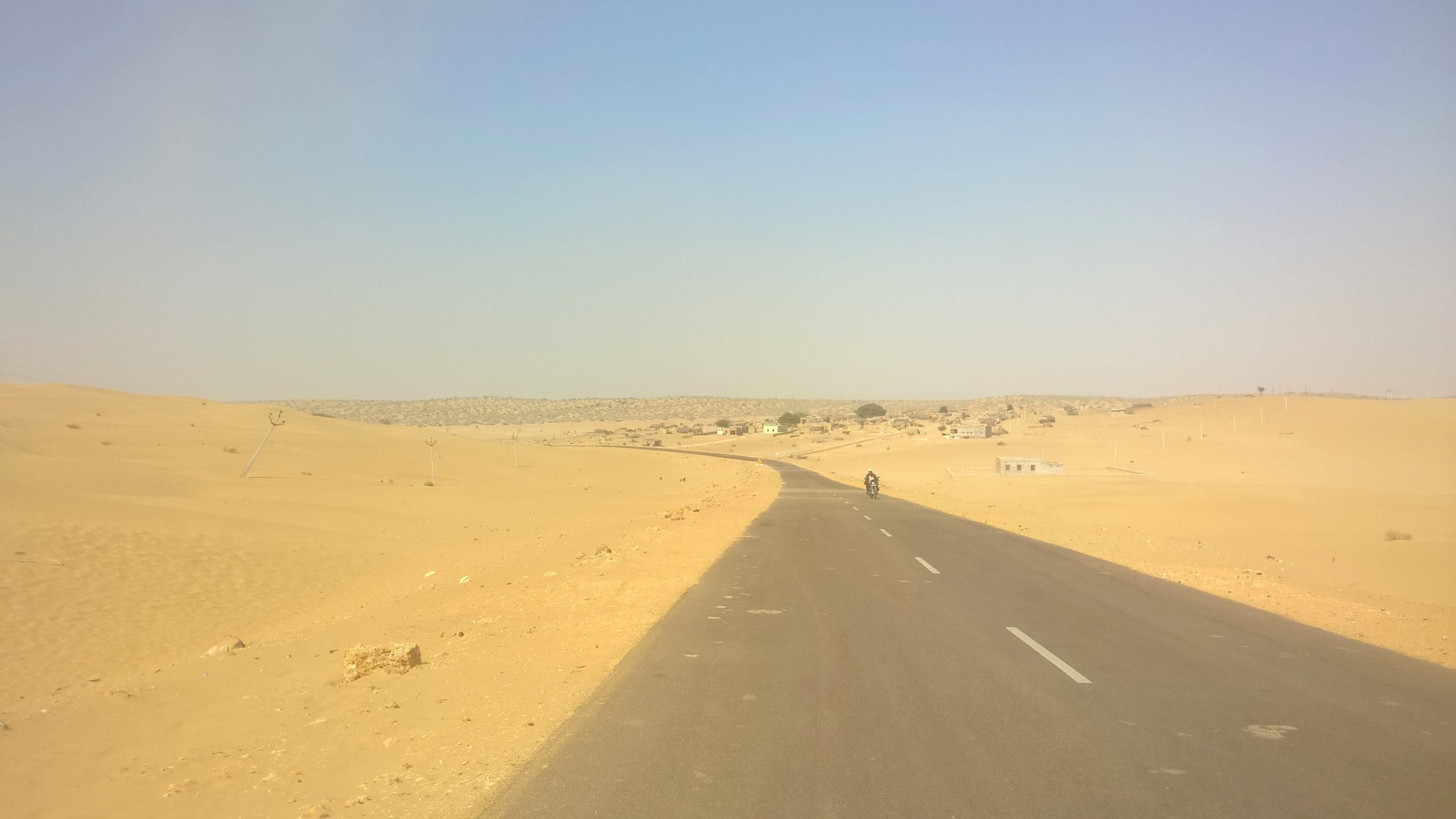
The road declines to a depression that resembles a dried ‘river bed’ at Ranao
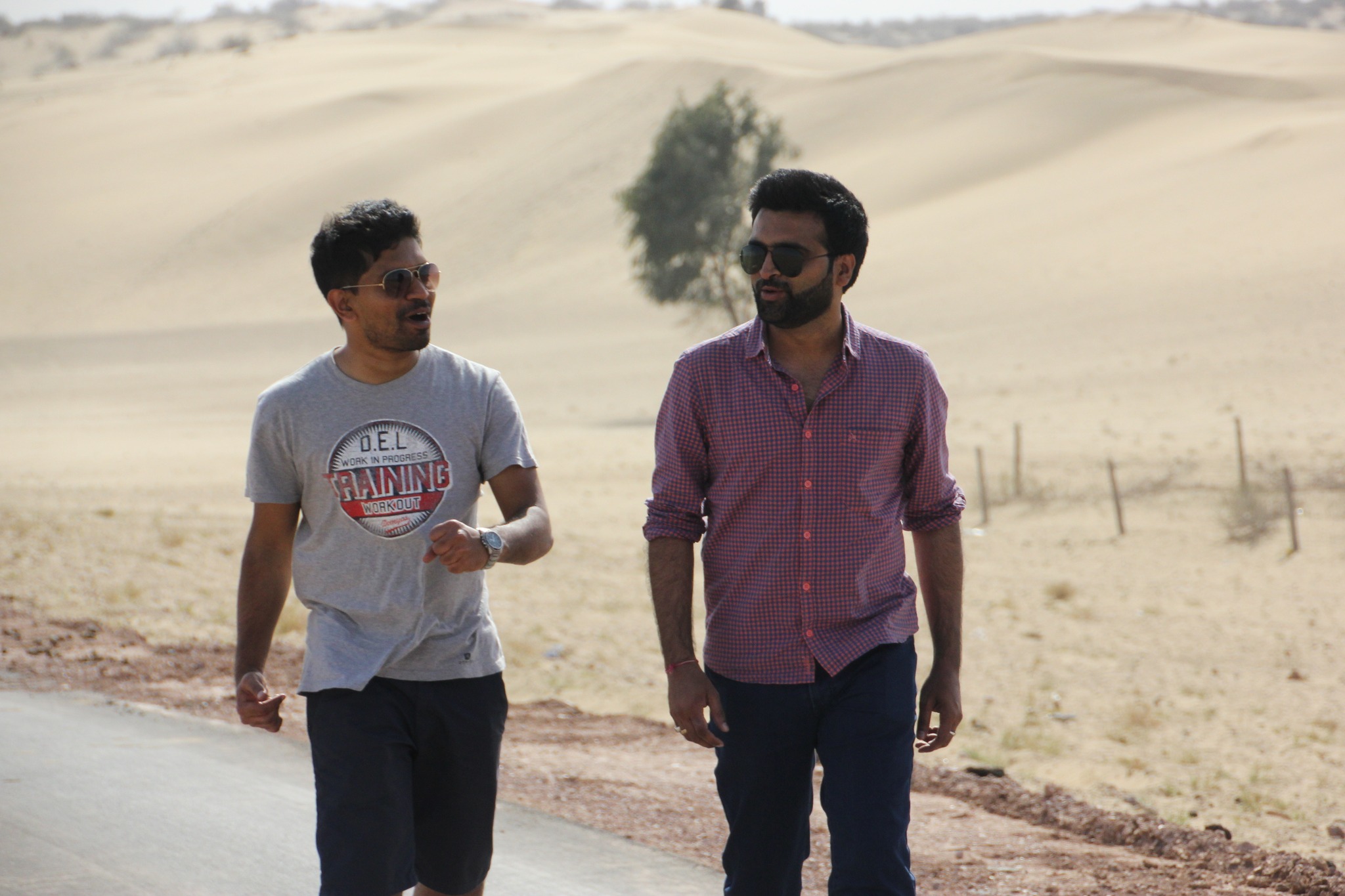
Staged ‘candid’ at Ranao (taken on Amit’s Canon DSLR camera)
Moving on from Ranao, another half hour later, we were at Tanot, where Amit was washed over by a wave of religiosity and euphoria, forcing him to admit that the lassi was finally taking effect. Paying our respects at the Tanot Mata temple, we proceeded alongside the Pakistan border towards Longewala, through completely empty desert, with only electric poles with transmission lines, the narrow tarred road, our car and its passengers indicating the only traces of human existence. At Sadewala, midway to Longewala, we finally saw humans – a few kids, with whom we took a few pictures.About 45 minutes after leaving Tanot, we were at the Longewala War Memorial, where again under the spell of Amit’s exuberance, we clicked a host of zany pictures.
Tanot Mata temple
Dunes at Sadewala, on the way to Longewala, driving parallel to the Pakistan border
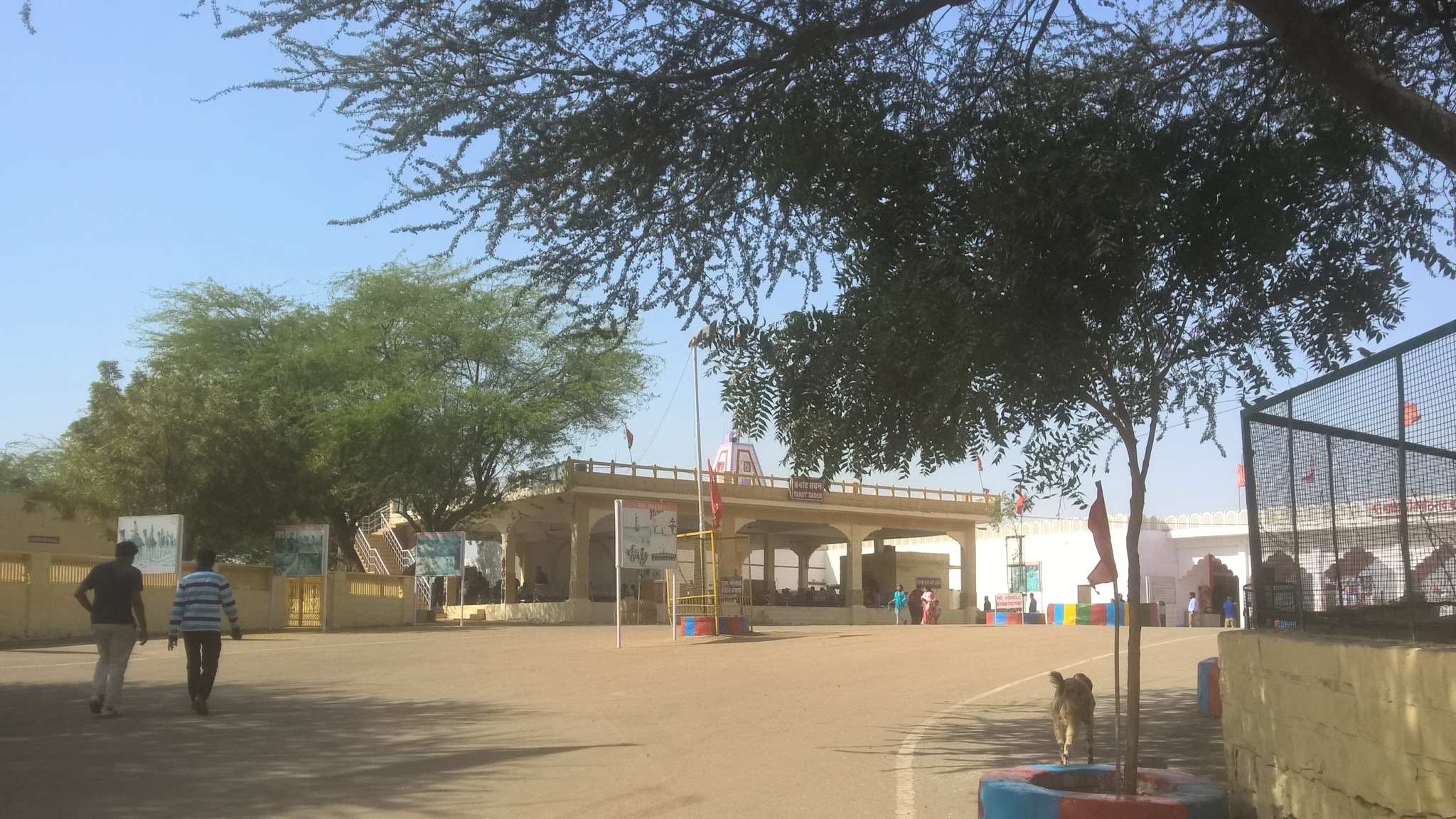
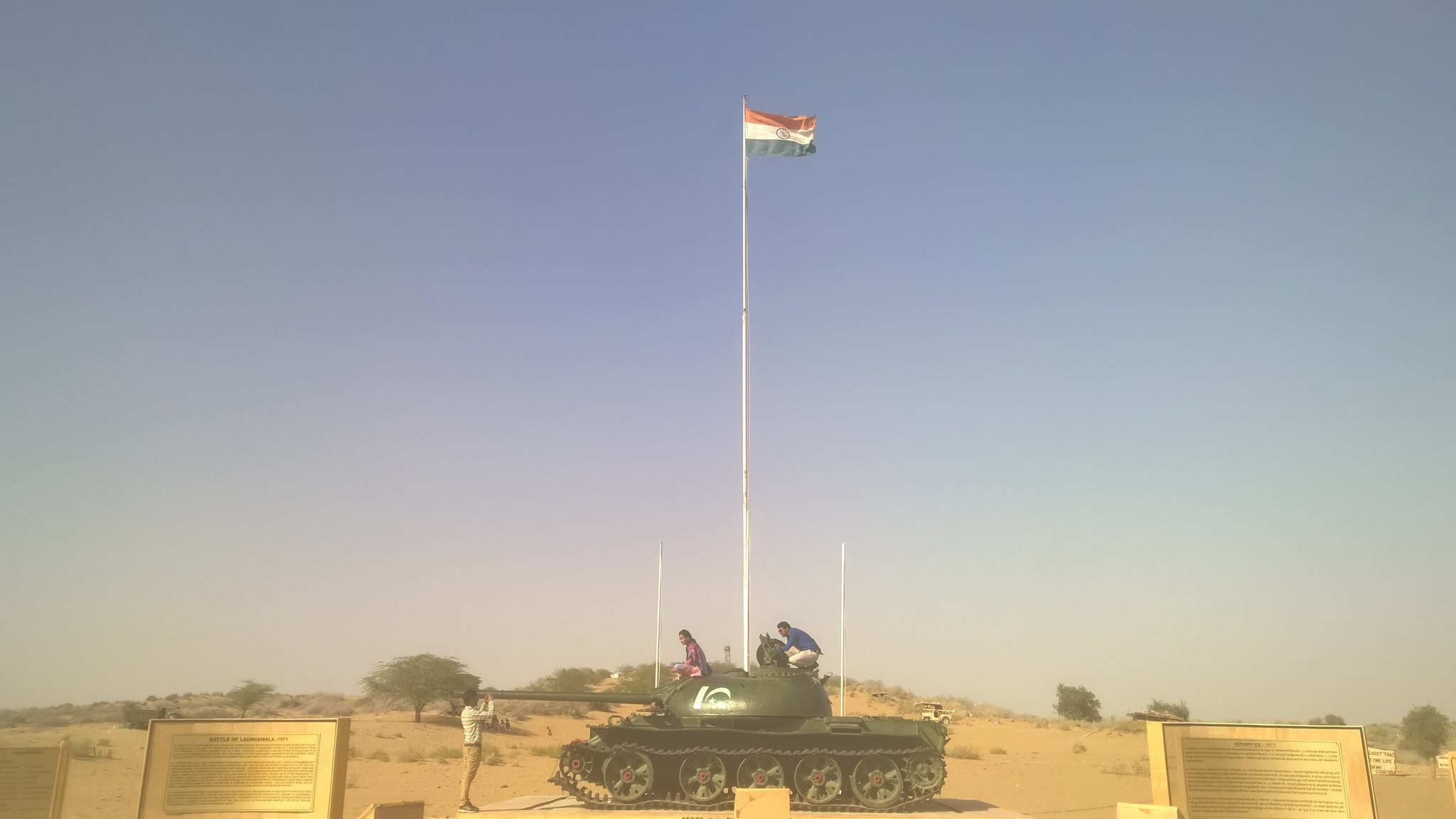
Longewala War Memorial
It was now already 4.30 PM – with the prospect of darkness descending soon, we decided to turn back in the direction of Jaisalmer. By 6 PM, we were at the Sam Sand Dunes, horsing around amidst the camels in the glare of the setting sun, for about an hour, after which we checked-in to the first desert tent-camp resort that our eyes fell on. Watching the folk-arts programme, and having dinner, we went off to sleep.
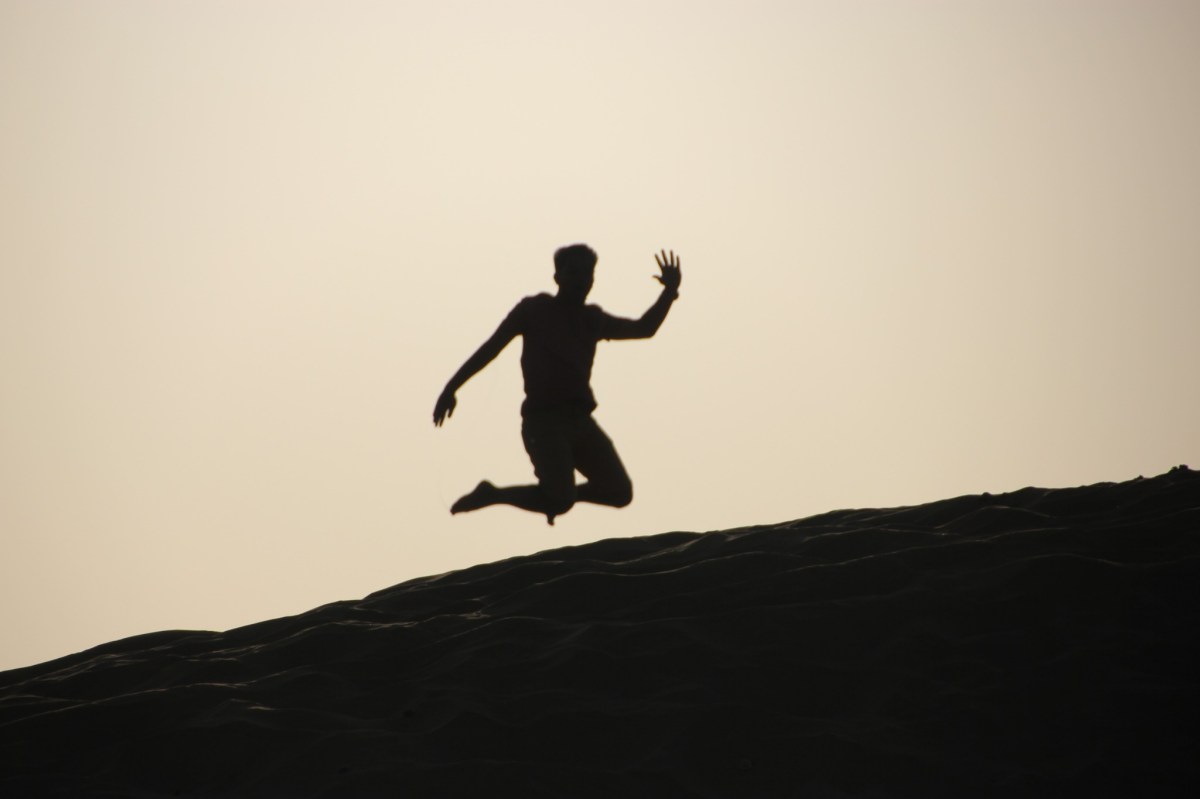
Tomfoolery at the Sam Sand Dunes (Taken on Amit’s Canon DSLR camera)
Part 2: Jaisalmer and Nearabouts
Actually, the title for this part should have been: Nearabouts of Jaisalmer and Jaisalmer, as we started the day 45 km away from Jaisalmer, at Sam. Although the effect of bhang on Amit had worn off, still taking some cues from the freedom it gave us, we did some more tomfoolery on the Sam sand dunes, and moved to the south, reaching the Desert National Park, which I had been forced to miss in my sole previous trip to Jaisalmer due to paucity of time.
The Desert National Park is a vast area of desert including a variety of topographical features, such as, sand flats, dunes, craggy rocks, and compact salt bottoms, straddling the Jaisalmer and Barmer districts. Earmarked by the government to preserve the unique and fragile ecosystem of the Thar, the park is home to species, including the monitor lizard, desert fox, Russell’s viper, and many migratory and resident birds, of which one of the most noteworthy is the Indian Bustard.
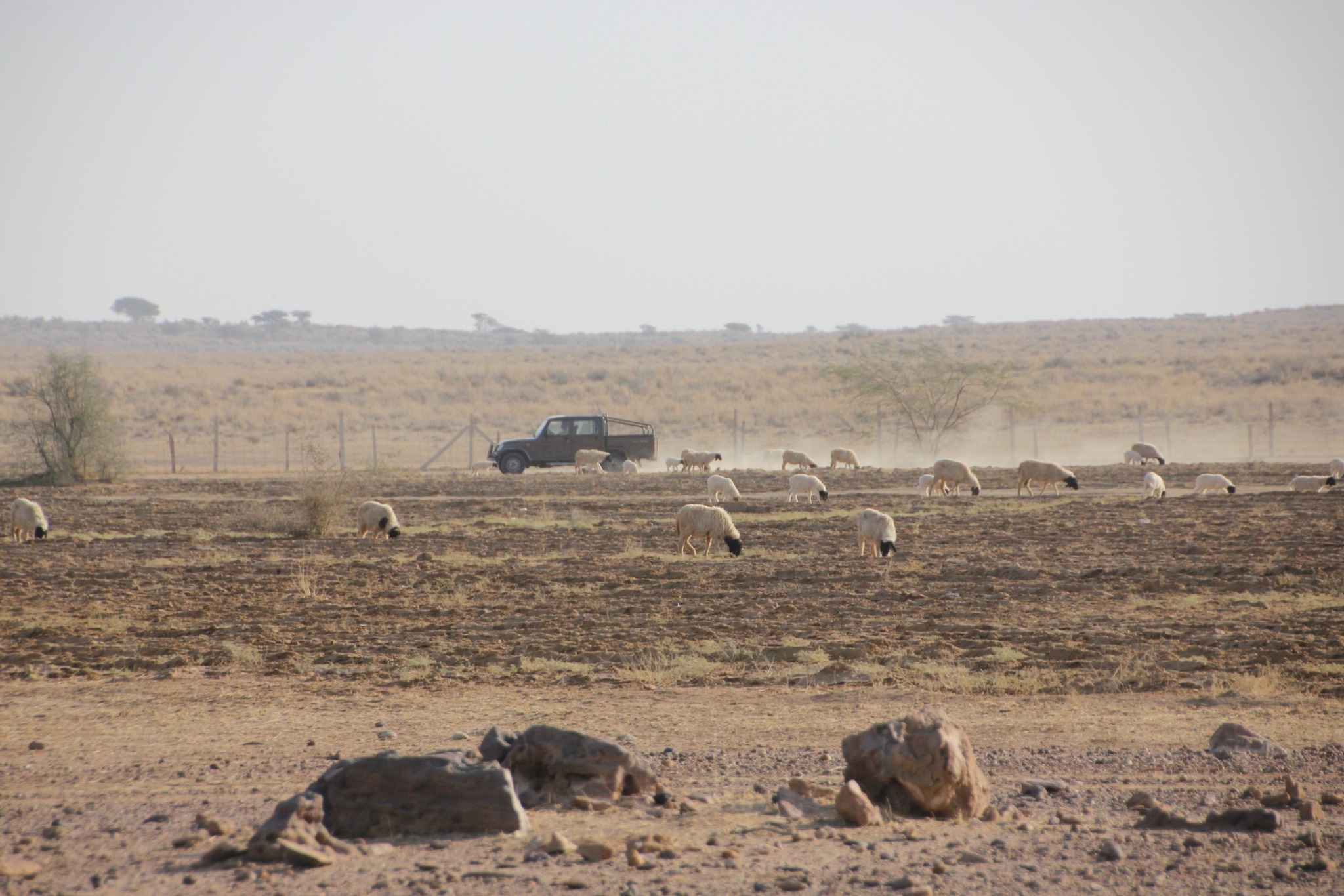
Nevertheless, from the little Park office located just some distance inside the park, we booked a safari, and spent more than an hour roving inside the park, taking pictures with a flock of sheep, and then spotting eagles, monitor lizards, and finally, an Indian Bustard. On the whole, the safari was easily one of the most memorable experiences of my life. For those on a leisurely trip to Jaisalmer and mildly interested in nature, the Desert National Park is highly recommended, in fact, a must-visit.
At the Desert National Park, a must visit! (Picture credits: Amit)
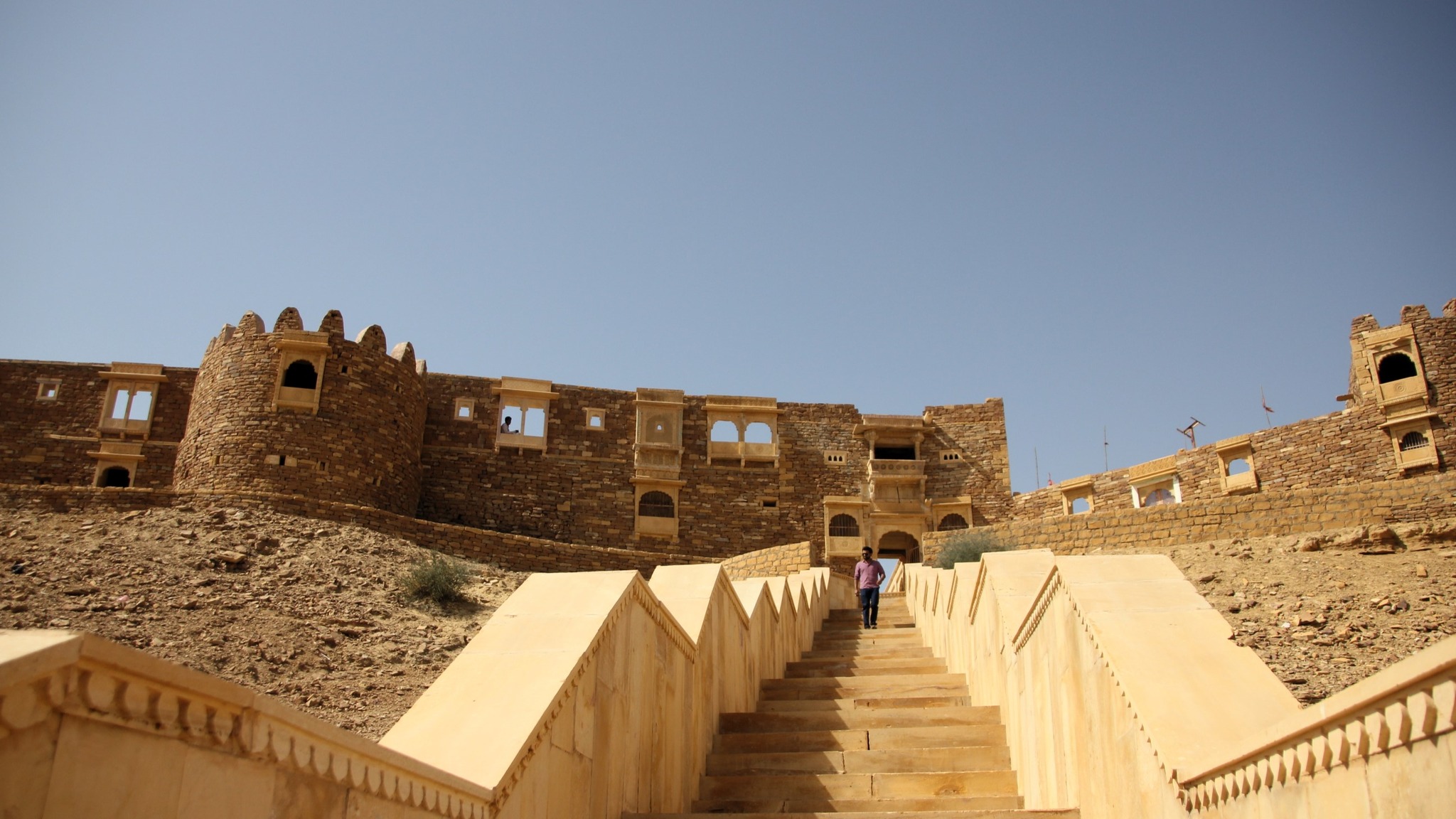
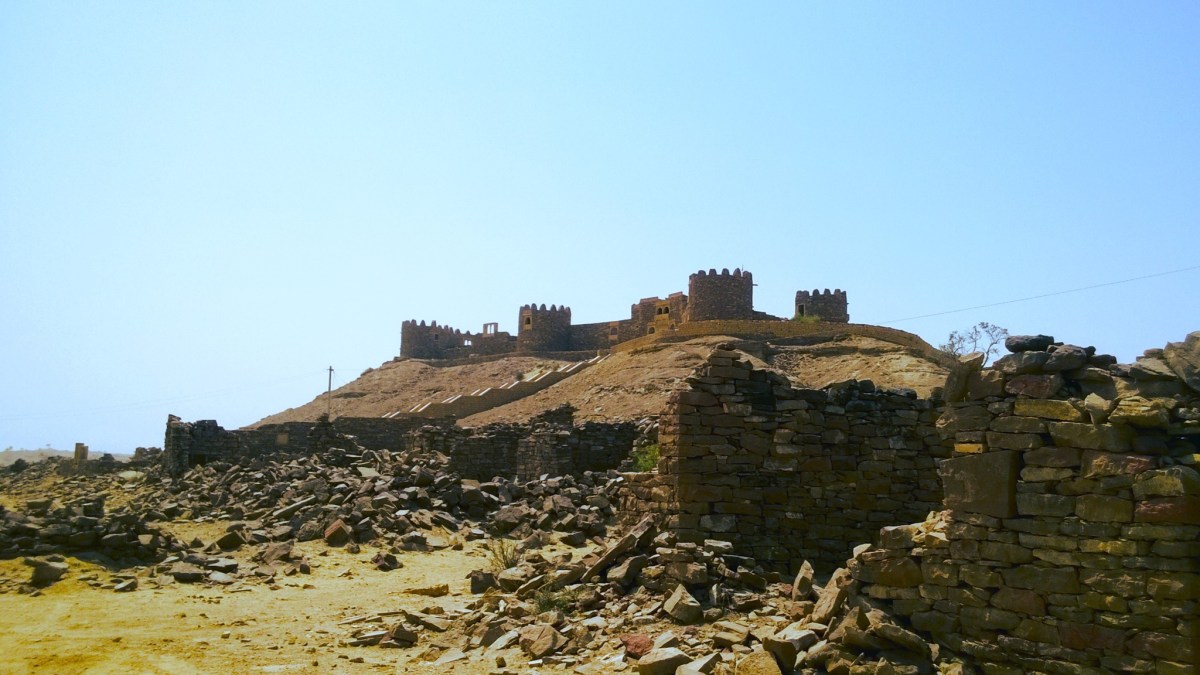
After the safari, we took an interior road that ran through the sands, then passed by craggy outcrops on which stood tall windmills, and more than an hour later, reached Khabha fort, a compact structure that stood like a lone sentinel on the edge of a low cliff in the middle of the desert. Down in the escarpment lay the stony ruins of an abandoned town, a sight similar to which we found in Kuldhara, which we reached half an hour later. Touted as a haunted village, Kuldhara does give off eerie vibes, more so in the sense of transporting you to a time gone by than anything else.
Khabha fort (Picture credits: Amit)
Ruins at Khabha, as seen from Khabha fort
We then re-entered Jaisalmer, and headed off to theJaisalmer fort, where we spent another hour walking through the corridors and halls in the palaces and the alleys along the fort wall. After that we headed off to Akal Wood Fossil park that lies about half hour south-east of Jaisalmer, which we reached around 5 PM. We trudged through the barren, desolate rocky land, coming across preserved fossilized wood dating back to more than 200 million years, then climbed on a flat hill, and surveyed the intriguing landscape.
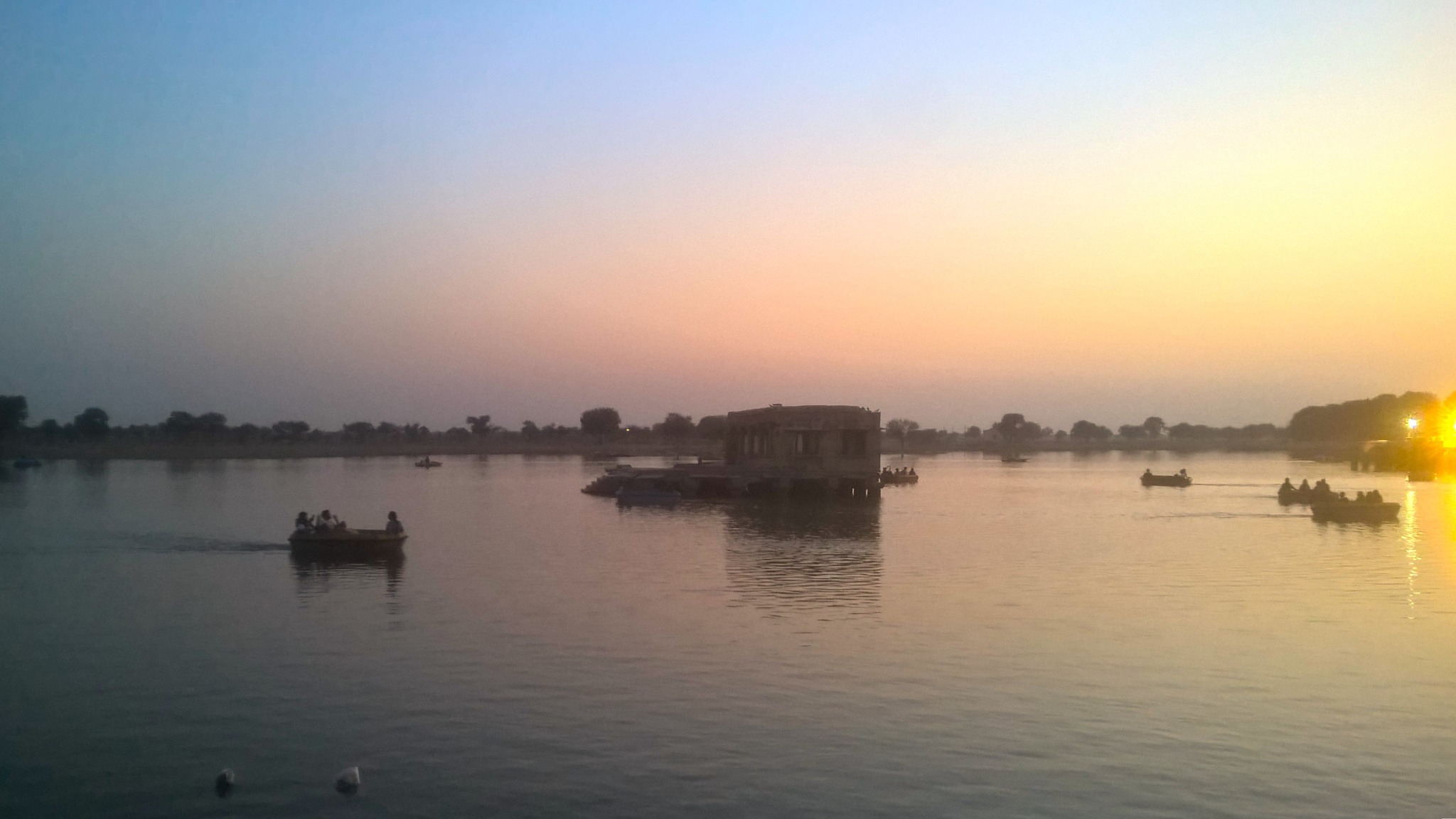
As it began to get dark, we headed back to Jaisalmer city, and bid adieu to the cab driver, who by then had become a partner in our shenanigans, at Gadisar Lake. Spending the twilight at the lake, we headed off to the railway station to catch the overnight Leelan Express train to Bikaner.
Inside Jaisalmer fortLandscape at Akal Wood Fossil Park
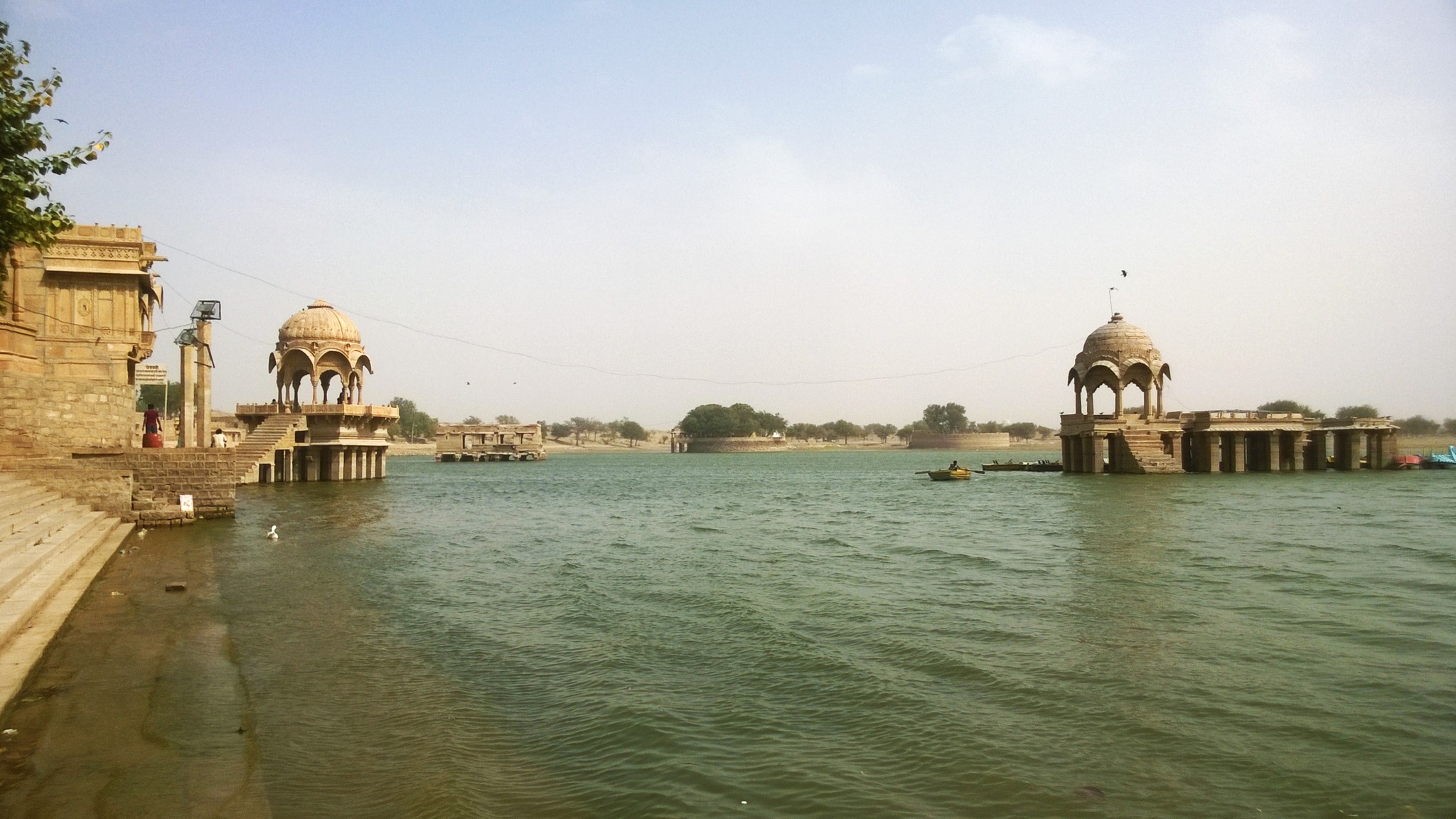
Twilight at Gadisar lake, Jaisalmer
Part 3: Bikaner
Next morning, we got down at Bikaner railway station and checked-in to a hotel nearby. After resting a while, freshening up, and having breakfast, we hired an auto-rickshaw to take us around for the day, and were in Junagarh fort by noon.
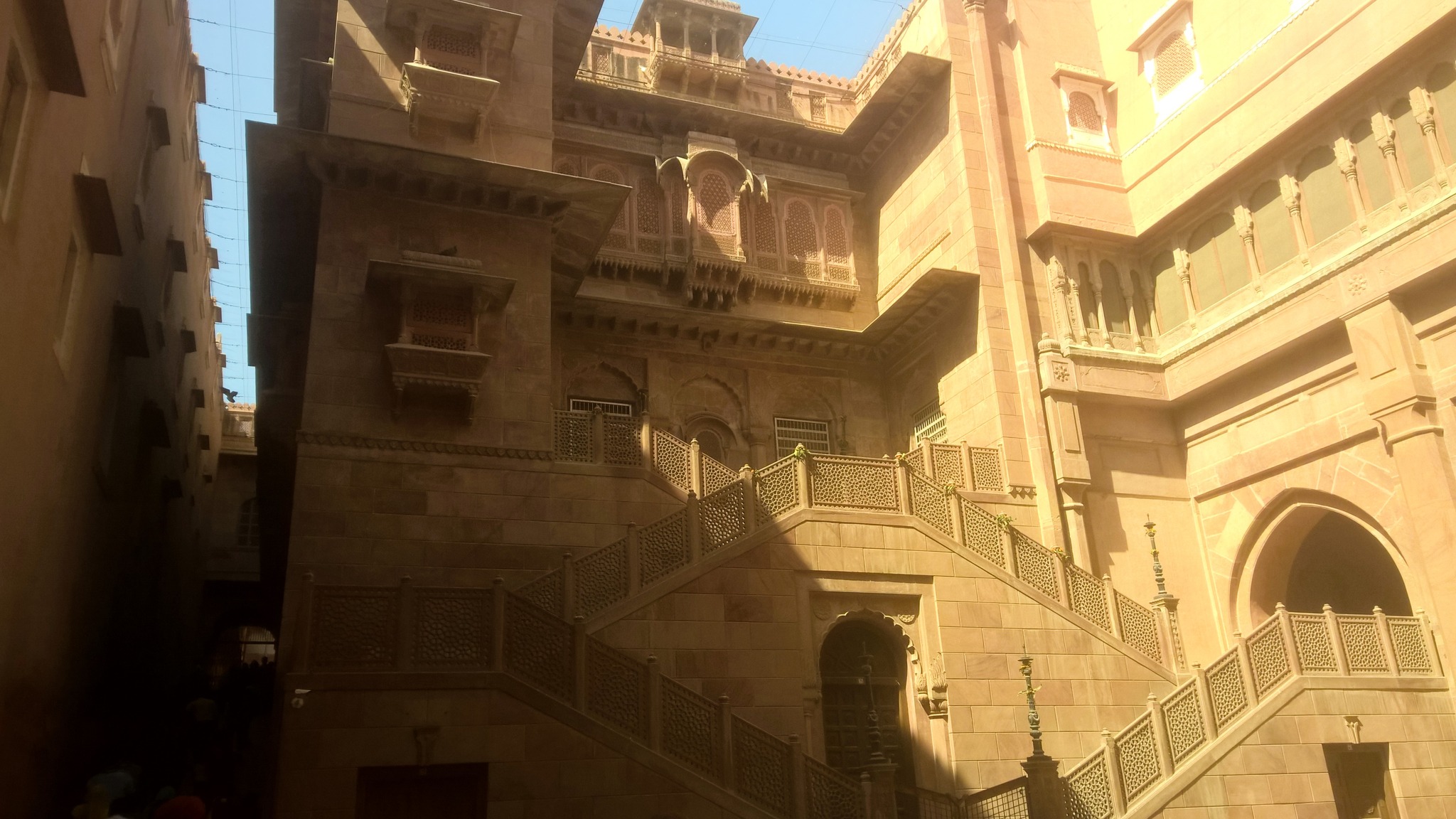
Bikaner city was founded Rao Bika in 1488 AD, after striking out on his own not wanting to inherit Jodhpur state from his father, despite being heir apparent to the throne. The Junagarh fort, itself was built from 1589 to 1594 AD by the sixth ruler of Bikaner, Raja Rai Singh. Earlier called Chintamani, the fort only got its present name in the early 20th century after the royal family moved to the nearby Lalgarh Palace, ‘Juna’ meaning ‘old’. The Junagarh fort is open to public as musuem, with many daily use items including furniture intact in their respective places in the rooms, giving a glimpse of how the royal family of Bikaner lived in the past.
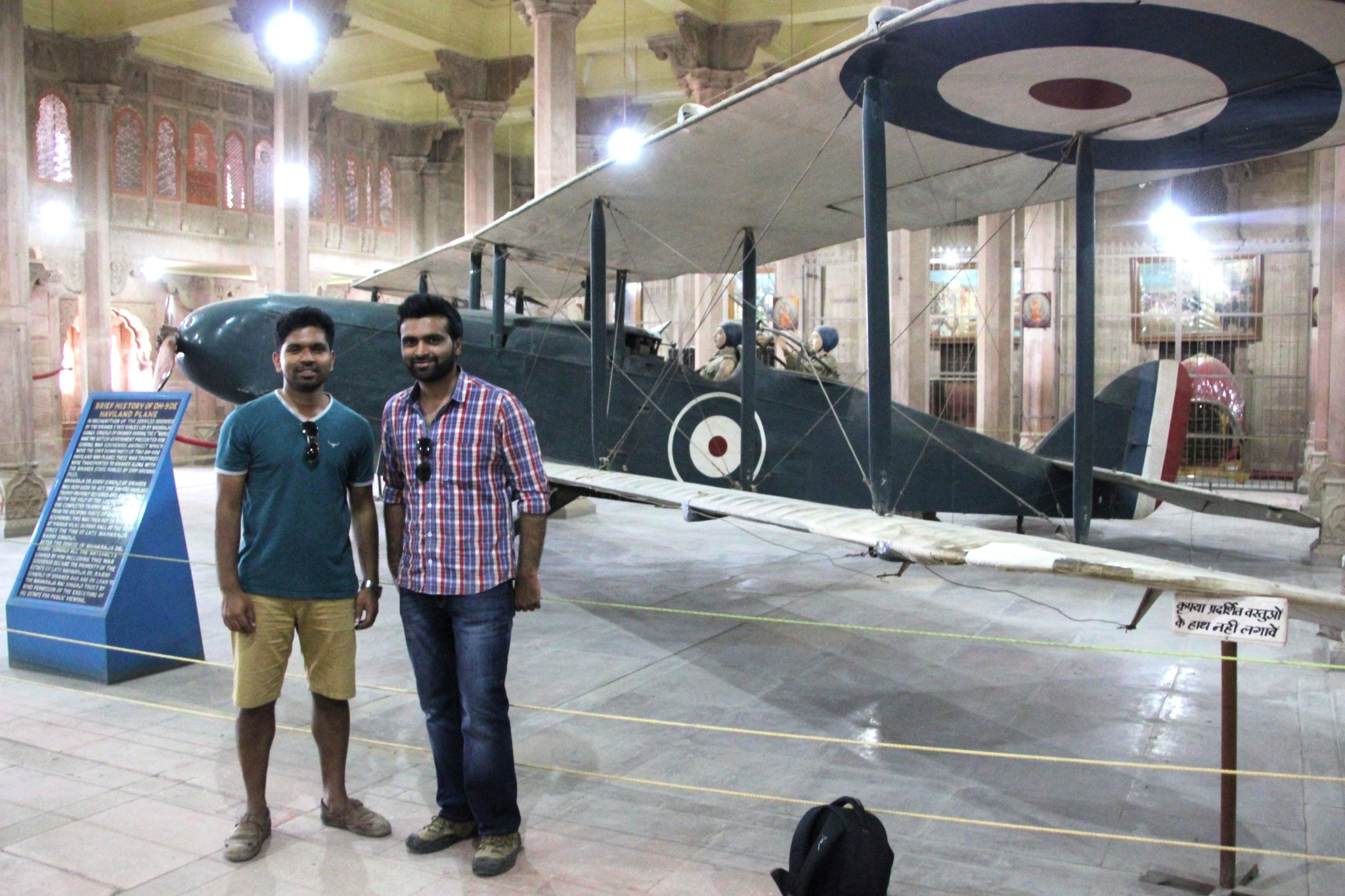
Walking through the various palaces, halls, hallways, corridors, flights of steps, terraces – every succeeding ruler progressively adding more structures and accommodations – we finally came upon a large section, which held in display a DH-9 De Havilland single-engine biplane that saw action in the First World War. This was installed by piecing together the parts from one of two such warplanes shot down in the First World War, which were gifted to Bikaner state in recognition of the 500-strong camel cavalry support provided by Maharaja Ganga Singh to the British Government in the war then-dubbed as the Imperial War.
Palace just inside the entrance of Junagarh fortThe DH-9 de Havilland at Junagarh fort
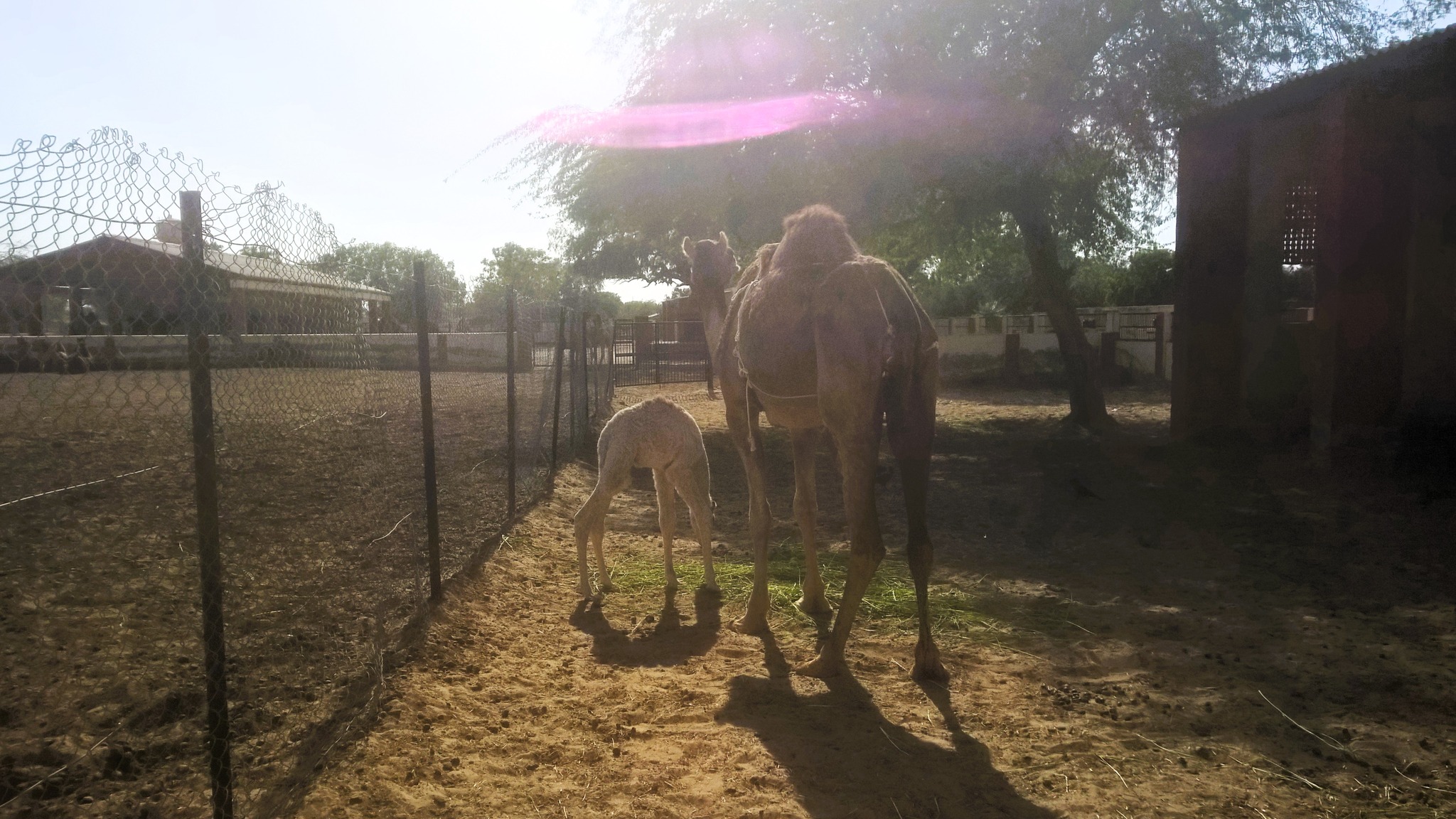
At around 2 PM, we left the fort, had lunch and reached the ICAR-National Research Centre on Camel lying on the outskirts of the city, where we learned about five breeds of camels, namely, Bikaneri, Jaisalmeri, Kachchi, Mewari and Jalori, and their respective lifecycles. We also learned how significant and integral the camel is to the human sustenance in the Thar – the camel is useful not while it is alive, but also after it dies, when its skin, fat and bones including teeth are turned into useful products, such as water bags, pouches, lighting oil, ornaments , decorative items etc.
At ICAR-National Research Centre on Camel, Bikaner
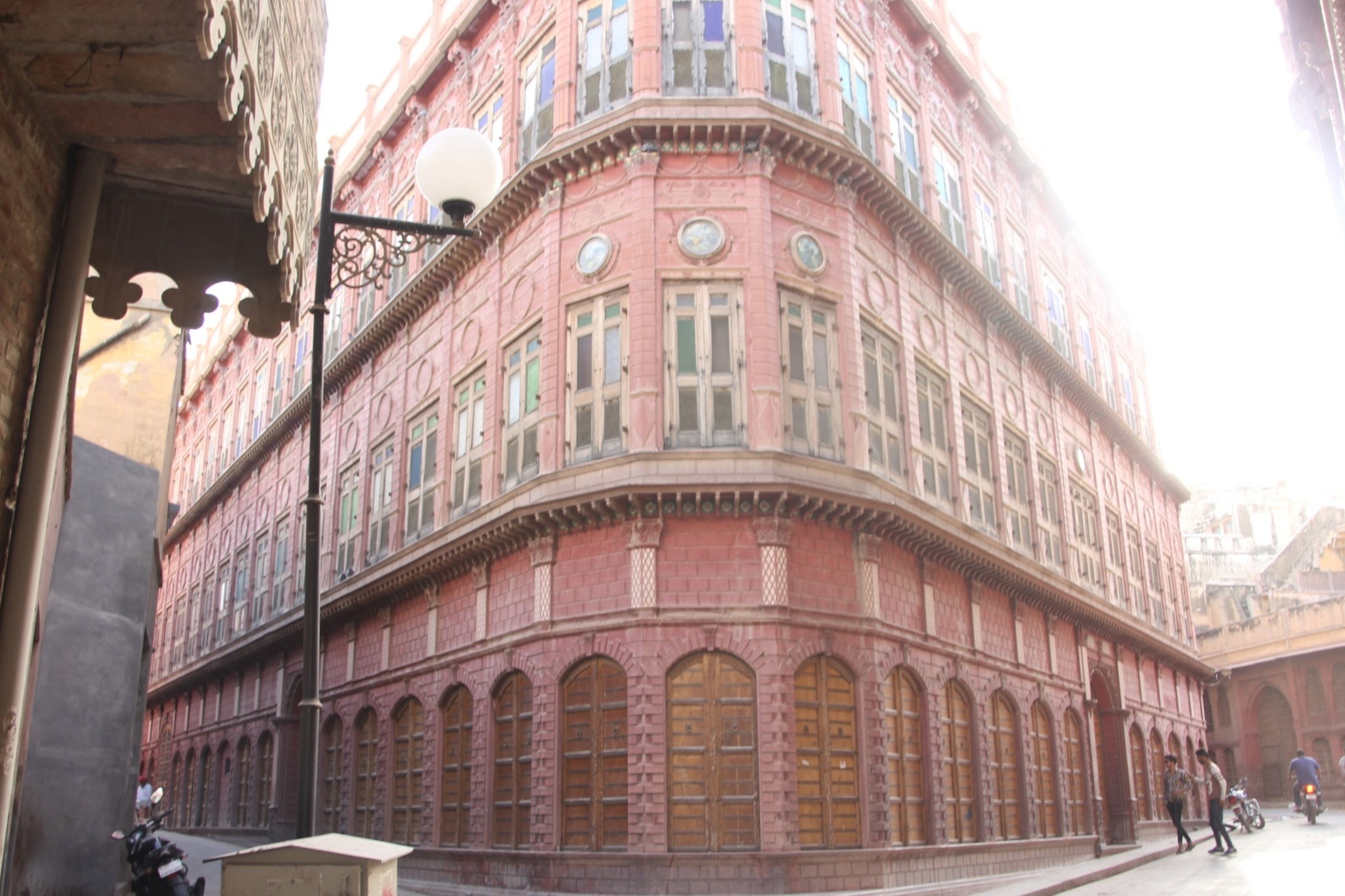
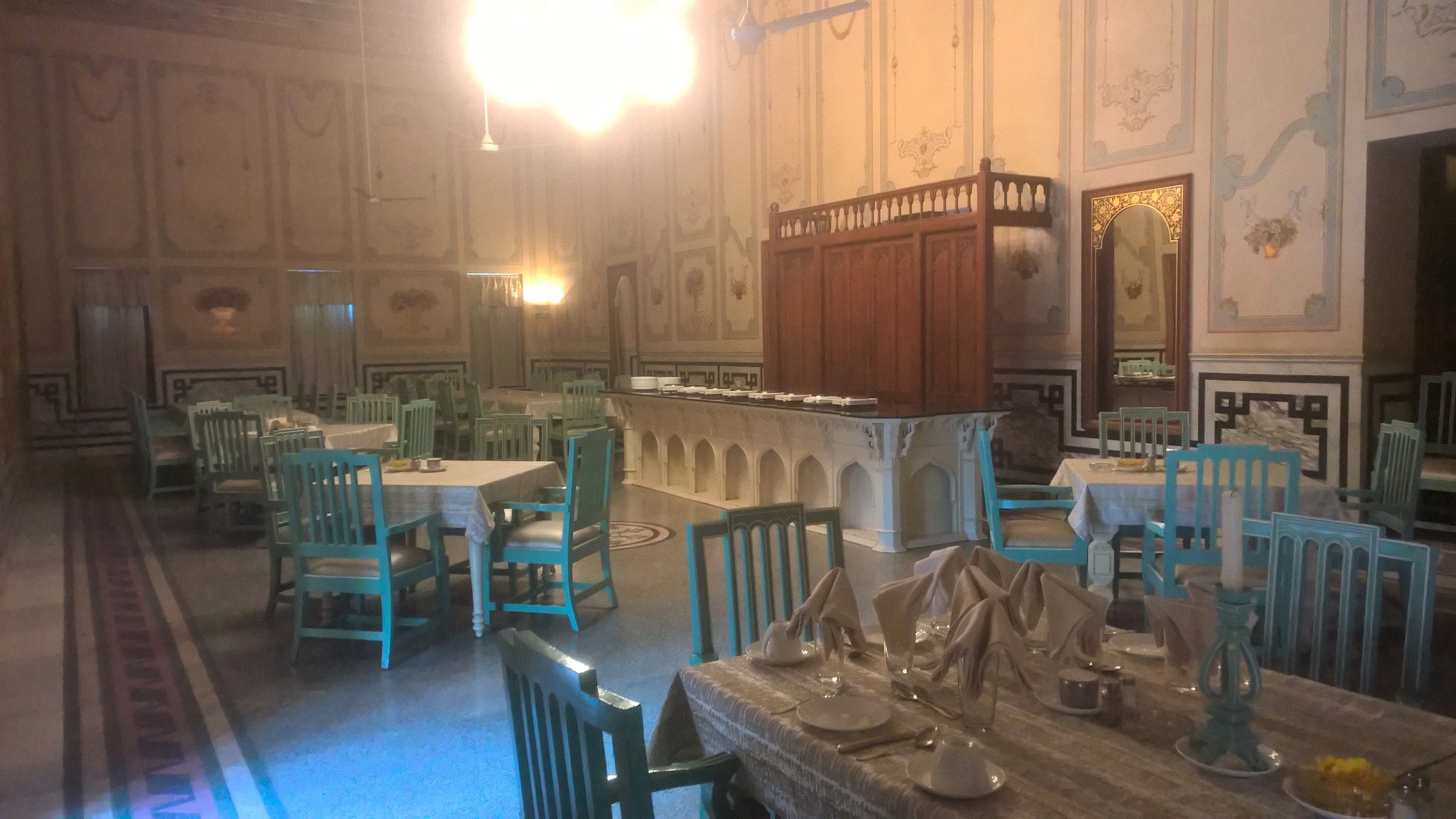
Around 4.30 PM, we reached the old part of Bikaner, where lie many havelis of merchants and royal ministers of the past, one of the most notable havelis being the Rampuria Haveli. Just behind the Rampuria Haveli is the Bhanwar Niwas, now turned into a hotel, which we took a short walking tour of by requesting the gateman. Then, walking through the narrow lanes, we came upon the 12th century Bhandasar Jain temple – dedicated to the the 5th Tirthankara Sumatinatha – notable for its beautiful leaf paintings, frescoes and ornamented mirror work.
Rampuria Haveli, Bikaner (picture taken on Amit’s Canon DSLR camera)
Dining Hall in Bhanwar Niwas, BikanerBhandasar Jain temple
At long last, we surveyed the Rajasthani snack shops, now run by descendants of the originators of traditional Bikaneri snacks, such as Bikaneri bhujia, lehsun sev, gathia etc, packets of which we picked up for family members back home. After dinner at one of the restaurants in the old town, we headed to railway station to catch the overnight train to Delhi, and were back in our office the next day.
March 2014. Spring was here, again, bringing with it pangs of fernweh – a feeling of ‘far-sickness’, a longing for distant places – nagging away at my being. The train of heartbreak had barely left the station, all the more reason why I needed to get away in the opposite direction, all on my own, reinforcing at least to myself, the sense of liberation that came of detachment from all things that brew emotional dependence.
However, I could not detach myself from the yearning for the distant lands I had read about in school or seen on TV – the so-called sand dunes and camel rides in the Thar desert in and around Jaisalmer and Bikaner. And then there was Jodhpur, which a General Knowledge book addressed as the Blue City, something about the colour describing a city only piquing the curiosity to see the place in person. I had also taken a liking for forts, my favorite being Chittorgarh, and all these places in the Thar – Jaisalmer, Bikaner and Jodhpur – wore their forts on their sleeves.
After gaining ample confidence from my solo trips to Jaipur and Udaipur in the two preceding years, it was now time to up the ante or increase the dosage, if you will, given how the duration of my previous two Rajasthan trips had incremented by a day each, with the Jaipur sojourn being one day long and the Udaipur one being for two days. Also, the destination on the second trip, Udaipur, was farther from Delhi than was Jaipur, making it imperative that I strike out even further into Rajasthan this year. With these thoughts in mind, choosing the Holi long weekend, Holi falling on 17th March 2014, a Monday, I straightaway booked well in advance a train ticket for my return from Jaisalmer for the evening of Holi.
Finally, on the evening of 13th March, a Friday, I was standing again at Iffco Chowk after office waiting for the next state road transport bus headed to Jaipur. On the bus, it was a familiar feeling with familiar sights, passing through the outskirts of Gurgaon, then passing through the hill forest beyond Manesar, where I remember listening to the Mad Season album by Matchbox Twenty, and then crossing the barrage near Rewari. By 10 PM, I was in Jaipur, where after having a Rajasthani dinner, I hopped onto a state transport bus to Jodhpur, getting a seat beside a foreigner lady accompanied by his Indian guide. By 6 AM next morning, I was in Jodhpur, where like in my Udaipur trip, I simply walked some distance and checked-in to a budget hotel. And started feeling feverish!
Exploring the Blue City
Nevertheless, feeling feverish was a familiar feeling on my solo trips, which I countered this time, by taking a paracetamol tablet following a breakfast of poha. Then, like on my previous trips, I hired an auto-rickshaw with a whole-day tour package that I determined based on the recommendations given by the hotel receptionist, and reached Umaid Bhawan Palace, the current residence of the ruling dynasty of Jodhpur. Located on a hillock, the construction of the palace was started in 1929 by the Maharaja Umaid Singh, 37th Rathore ruler of Marwar state to provide employment to famine-strike farmers, and was completed in 1943, when the Maharaja started occupying it.
The Umaid Bhawan Palace
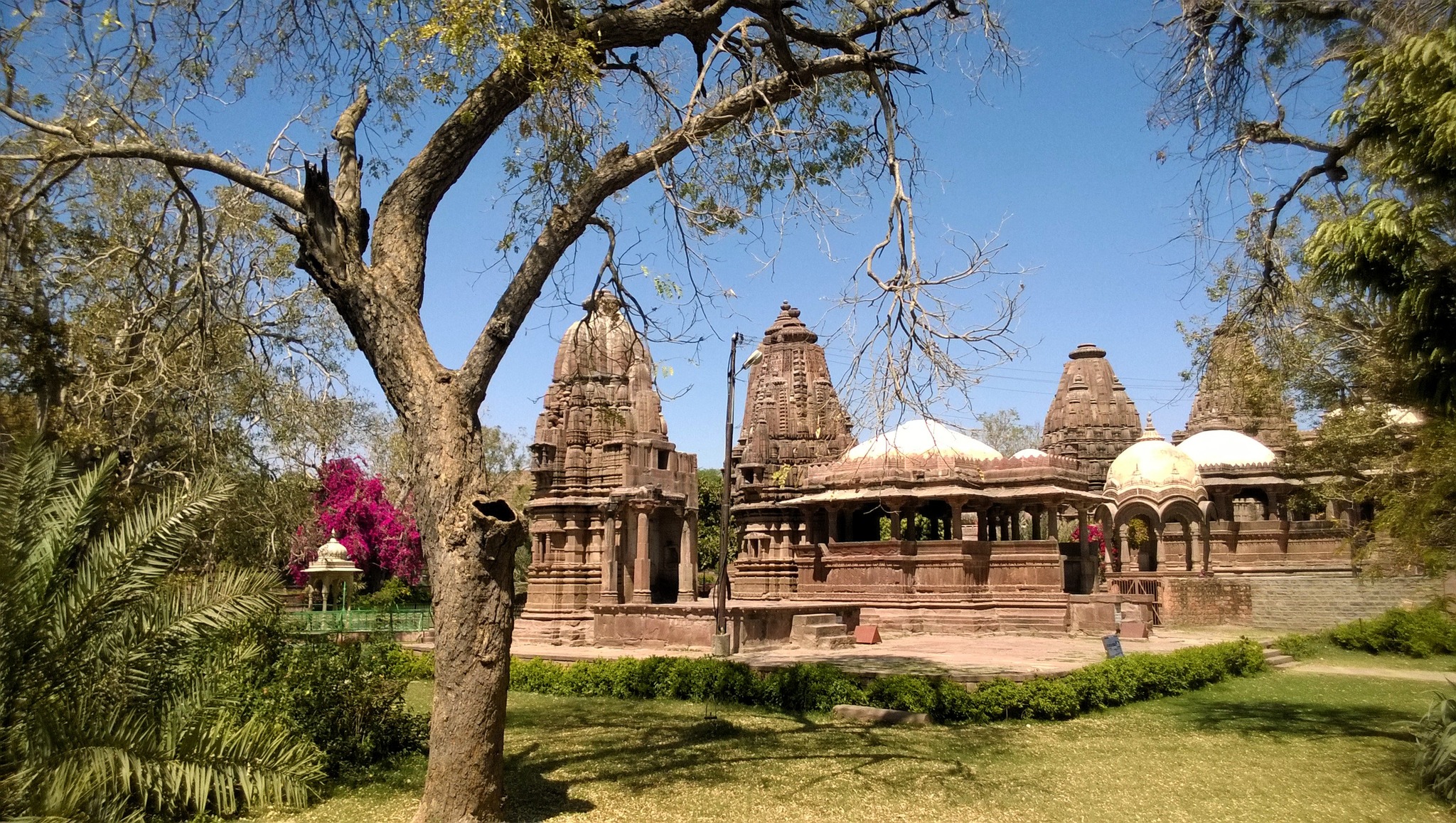
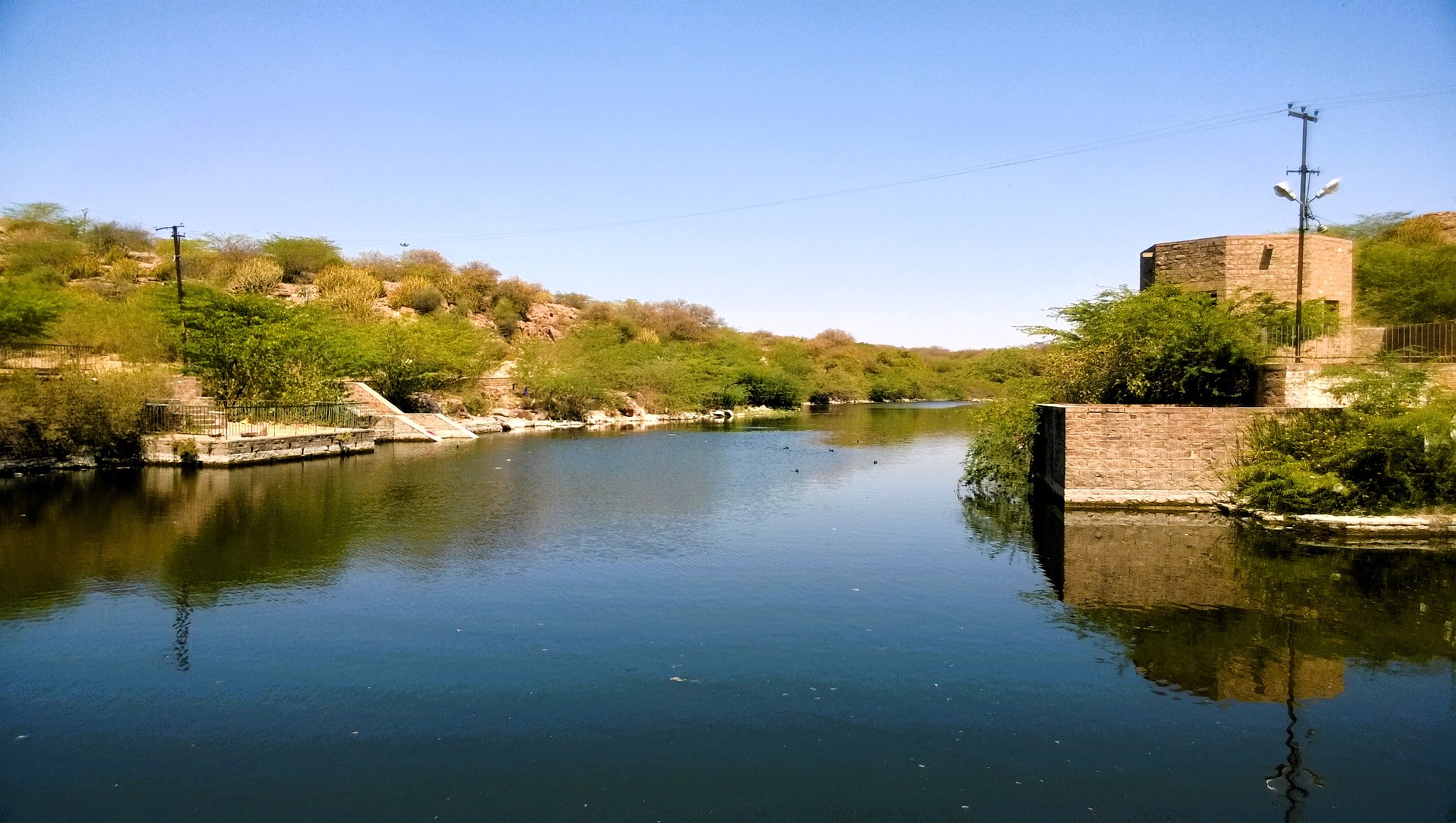
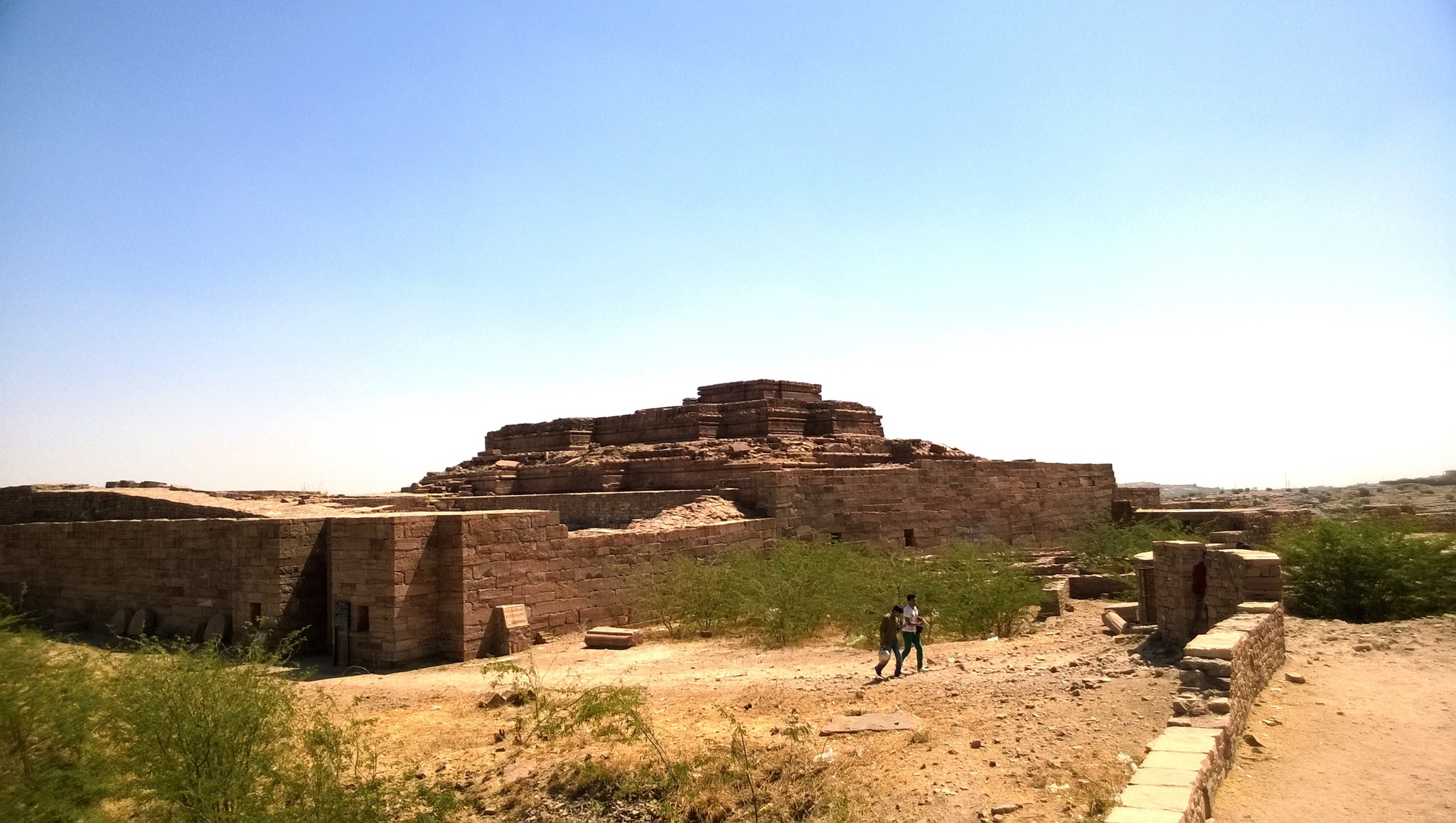
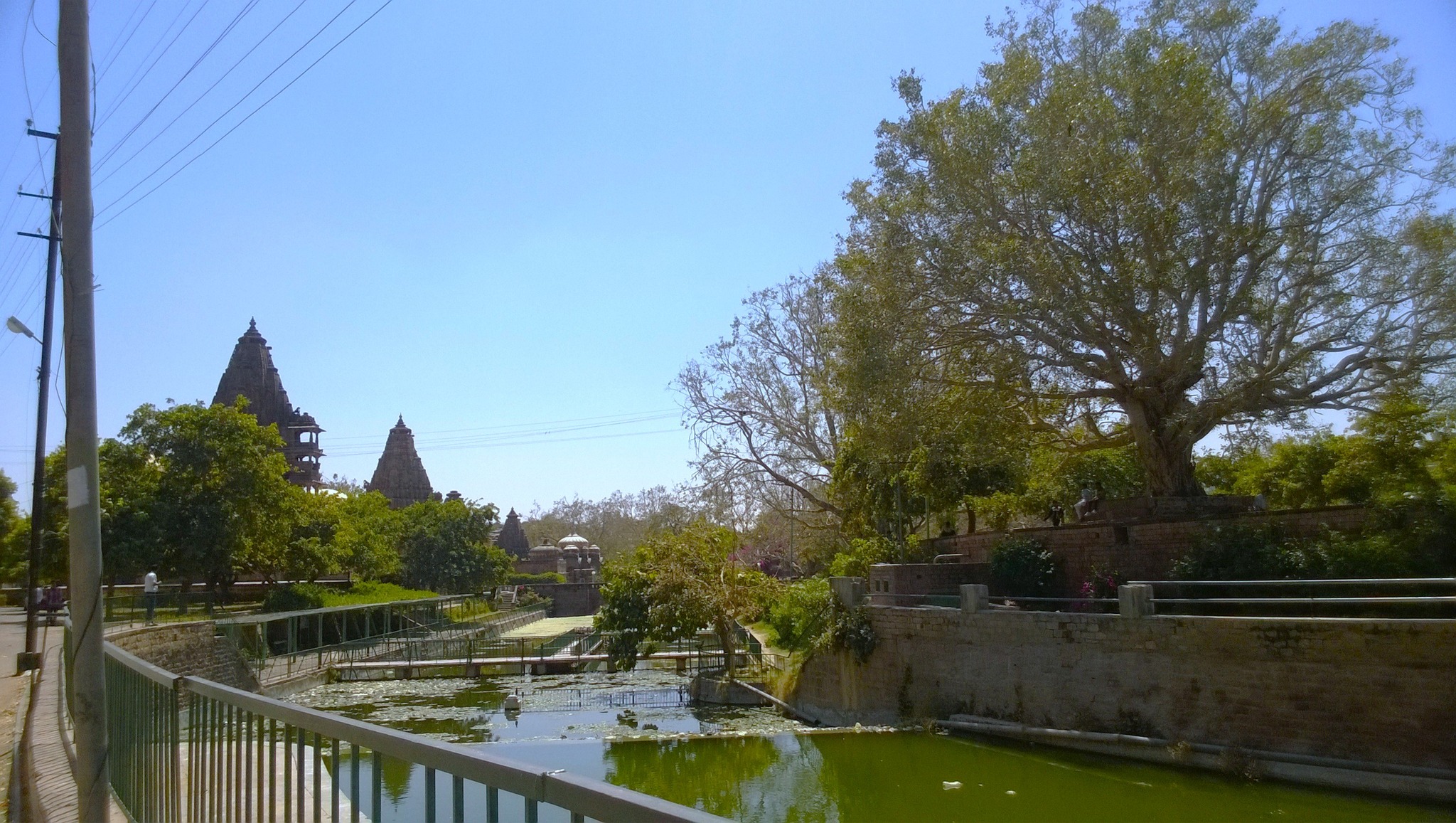
From there, I proceeded to Madore, a place that I only learnt about in Jodhpur, located about 8 km from the city, purported to be the native place of Mandodari, Ravana’s wife. Historically, Mandore, the seat of the Gurjara-Pratiharas in the 6th century AD, later became the capital of the Rathores before Rao Jodha shifted to the newly-founded city of Jodhpur. At Mandore, I was completely mesmerized by the scenes unfolding in front me – beautifully manicured lawns surrounding sandstone temples and cenotaphs, with a stone path trailing beside a canal abounding in lotus and lilies, that crossed a water tank and winded up the hill, with a the ruins of a fort lying on top of the hill. From the hilltop, spires of temples, the domes of the cenotaphs and the lushness of the lawns down in the garden below presented the most eye-pleasing views.
Temples in Mandore Garden
A swimming tank in Mandore GardenRuins of the Mandore fort
A canal inside Mandore Garden
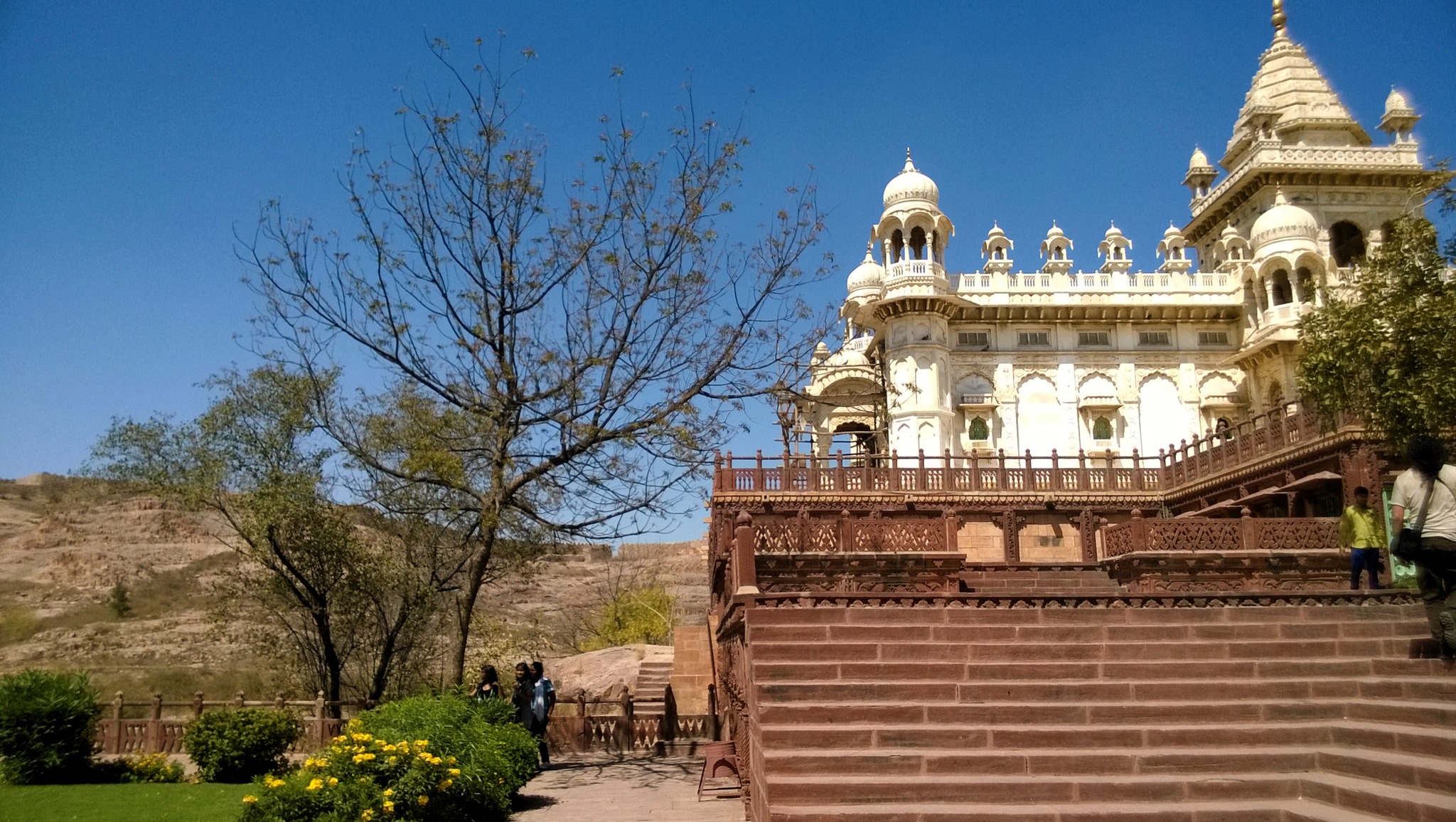
Leaving Mandore with reluctance, the autorickshaw driver drove me to Balsamand Lake, on the banks of which lies a summer palace, and from there, returned inside the city, stopping at Jaswant Thada. The Jaswant Thada, a cenotaph built of Makrana Marble for Maharaja Jaswant Singh II in 1899, itself is located on the top of a flat, barren red-coloured hill of igneous rock, only punctuated with water pools and barely any vegetation, and has the scenic backdrop of the Mehrangarh fort on one side. After admiring the striking landscape around the Jaswant Thada, I moved on to the Mehrangarh fort.
Landscape around Jaswant thadaSide view of the Jaswant Thada
View of Mehrangarh fort from Jaswant Thada complex
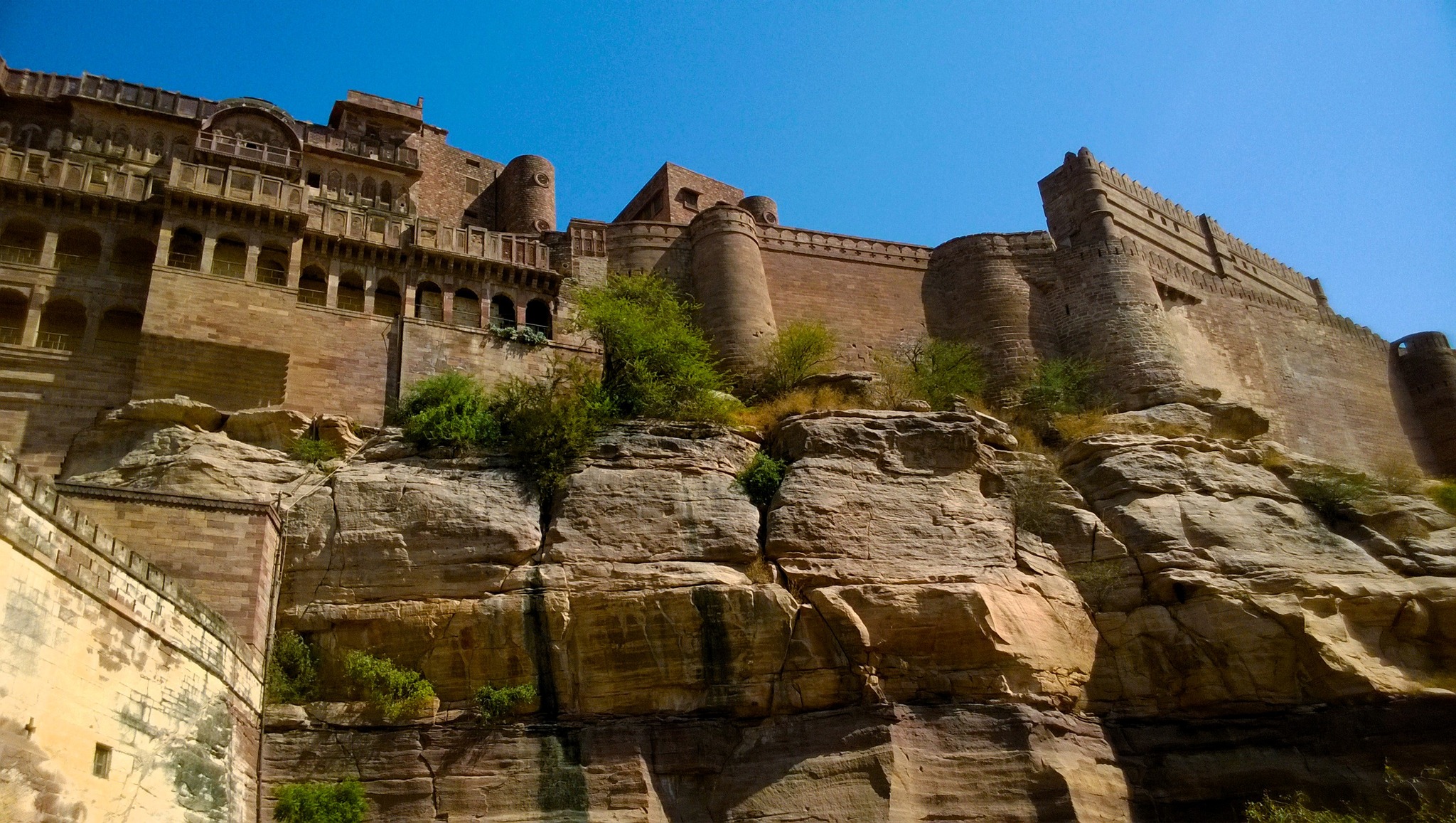
The construction of Mehrangarh fort was started in 1459 AD by Rao Jodha, who founded Jodhpur city after moving from Mandore the same year, with most of the current structures being constructed in the 17th century. The fort stands atop a 122 metre high rocky hill overlooking the city, with its distinct red sandstone profile with the red coloured hill base standing out and visible from long distances all around. I walked through the numerous tall arched gates, and then gawked at the imposing palaces and exquisitely done interiors, before ending the tour at the raised long platform lining the fort wall the end of the fort where the cannons stand.
Mehrangarh fort
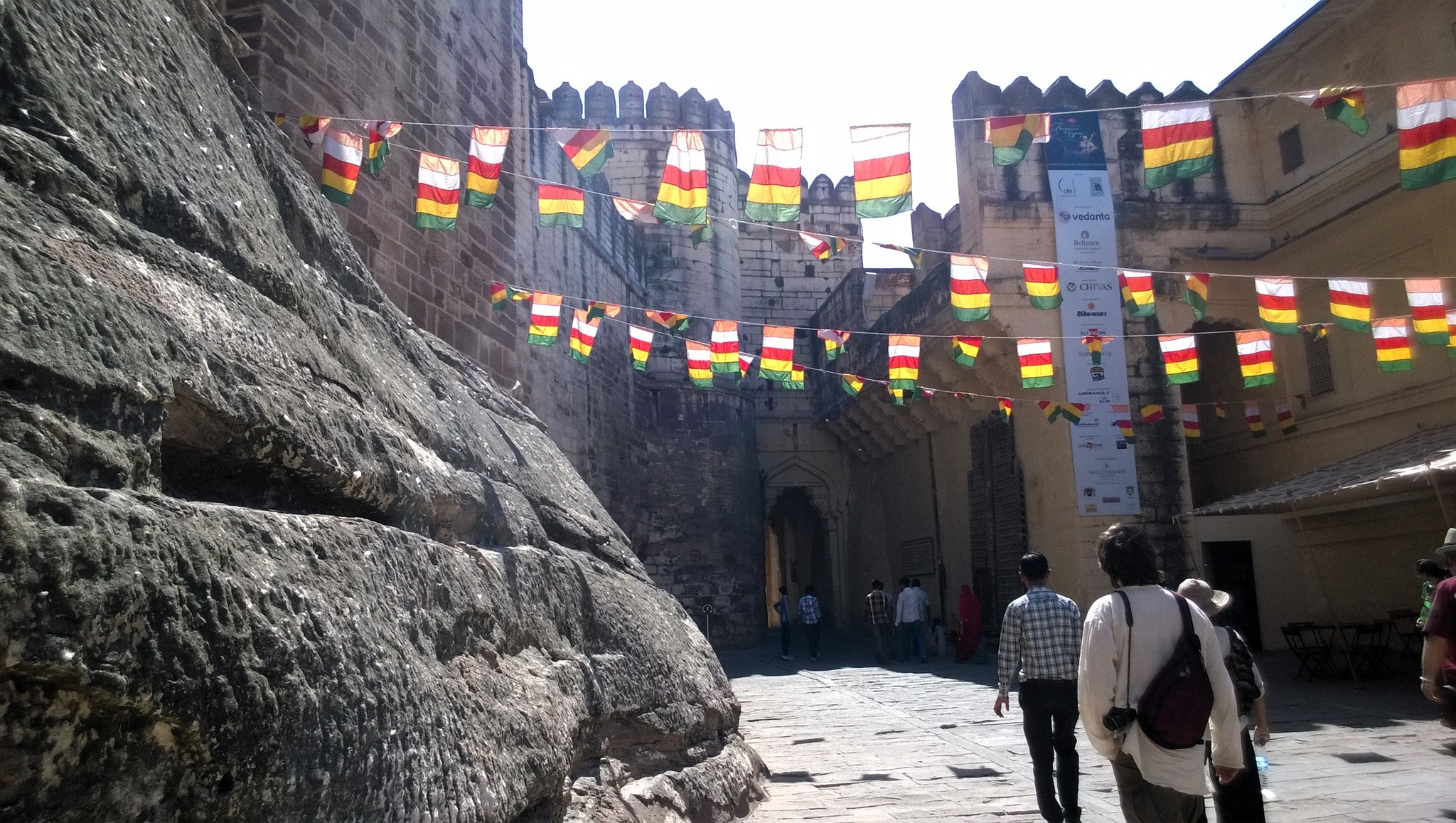
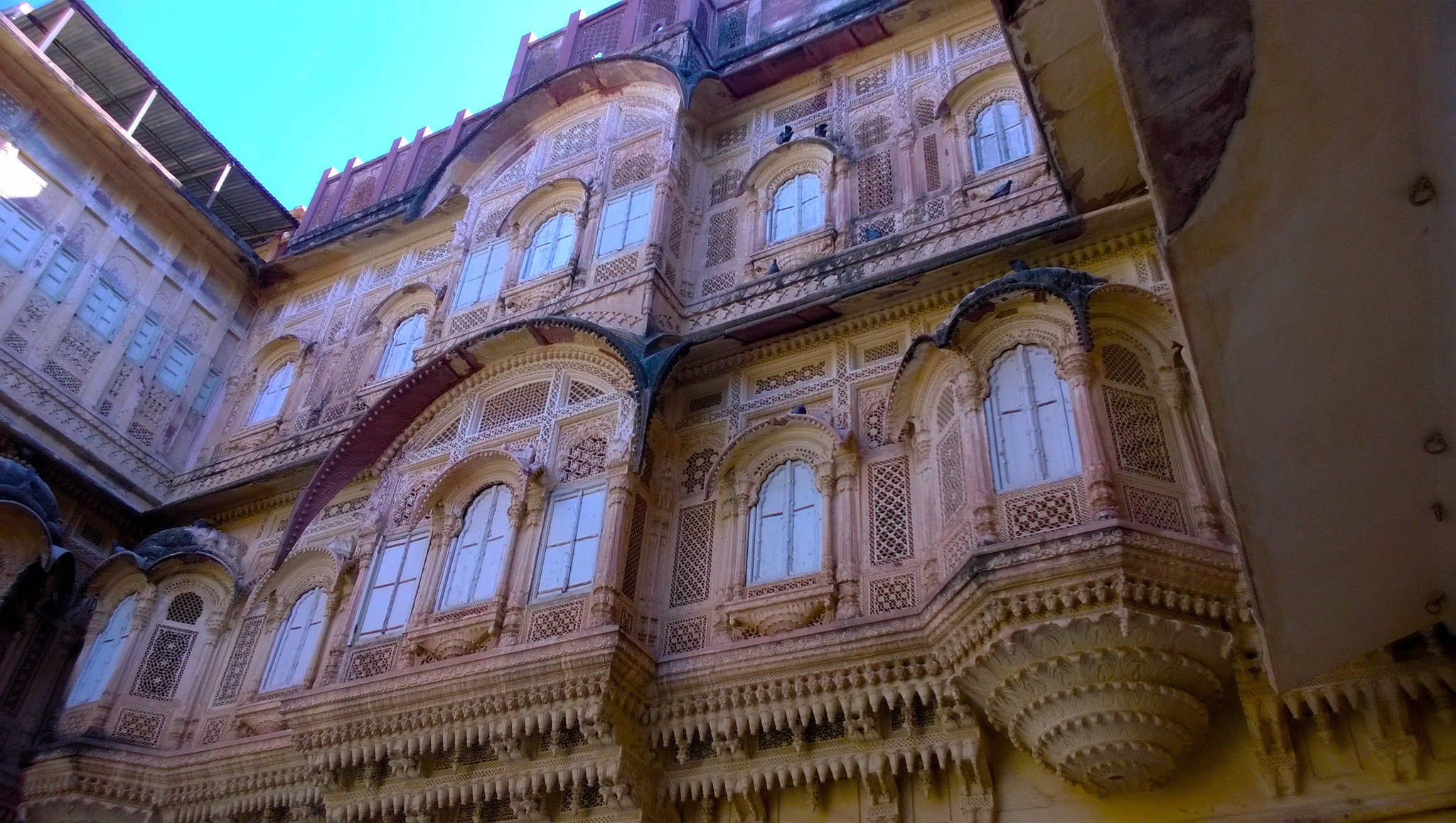
An entrance gate of Mehrangarh fortPalace facade inside Mehrangarh fort
Cannons inside Mehrangarh fort
Descending from Mehrangarh, we again headed to the outskirts, this time in the west passing on a road flanked by kumat plants with their golden coloured ears, to Kaylana lake, an artificial lake built by Pratap Singh in 1872, in the midst of igneous rock formations. After spending the sunset on the Kaylana Lake, I returned to the city, stopping at the clock tower, and retired to bed, after a day well spent, with my heart throbbing in anticipation of seeing the desert the next day.
Off to the Dunes
The next morning, I left the hotel and was inside a road transport bus headed to Jaisalmer by 8.30 AM. As we left the city, the landscape became progressively arid, with it becoming more distinctively barren and sandy as the bus approached Pokhran, where khejri trees stood scattered with large expanses of empty space between each other. I distinctly remember listening to the album The Bends by Radiohead as I marvelled at the white-yellowish sparsely vegetated soil shimmering under the sun. At 3 PM, as I stepped down at Jaisalmer, a streak of electrified excitement passed through my body. Soon, I was picked up by a local who I had called beforehand based on a colleague’s referral.
Landscape on the way to Jaisalmer somewhere between Jodhpur and Pokhran
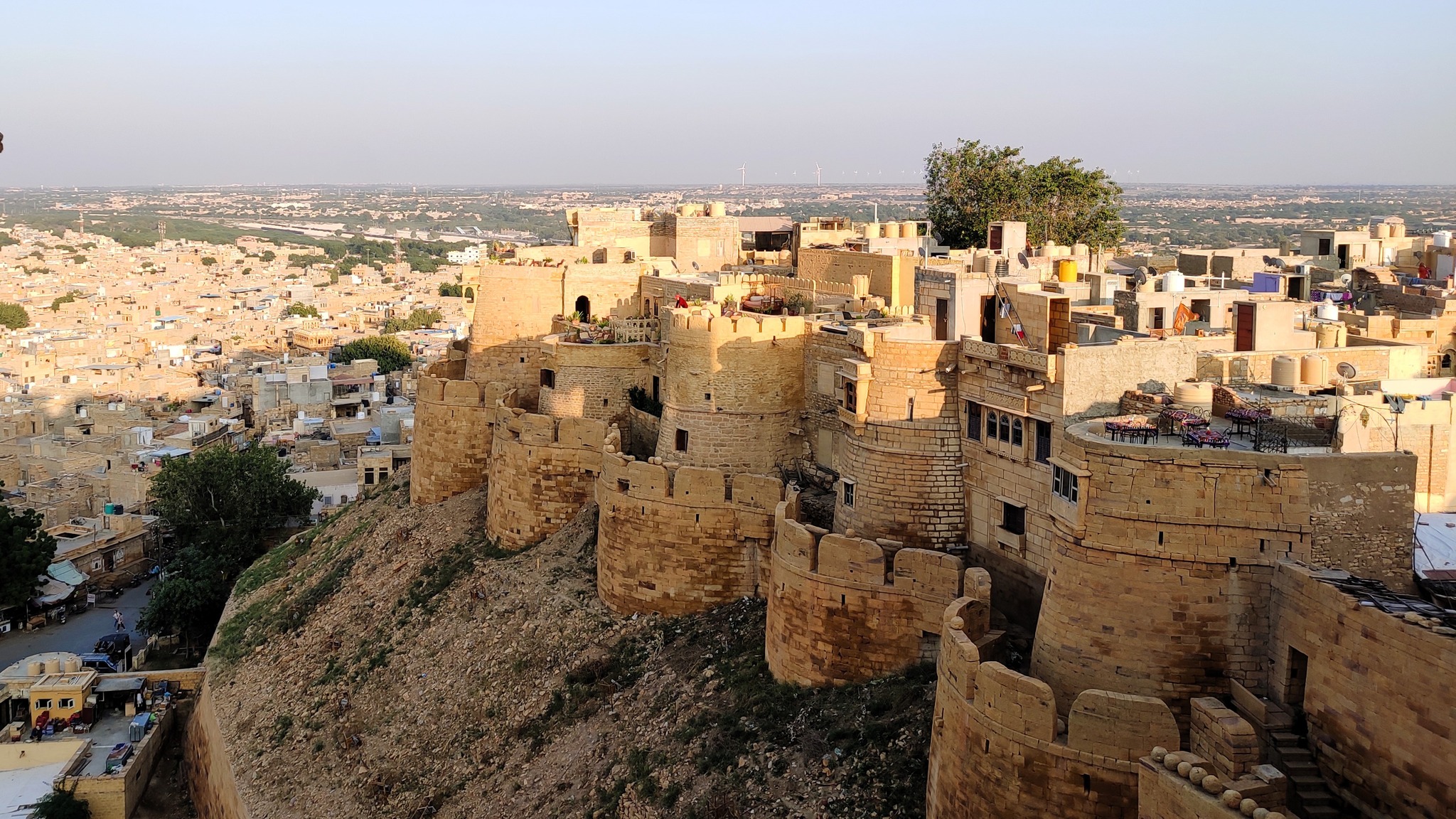
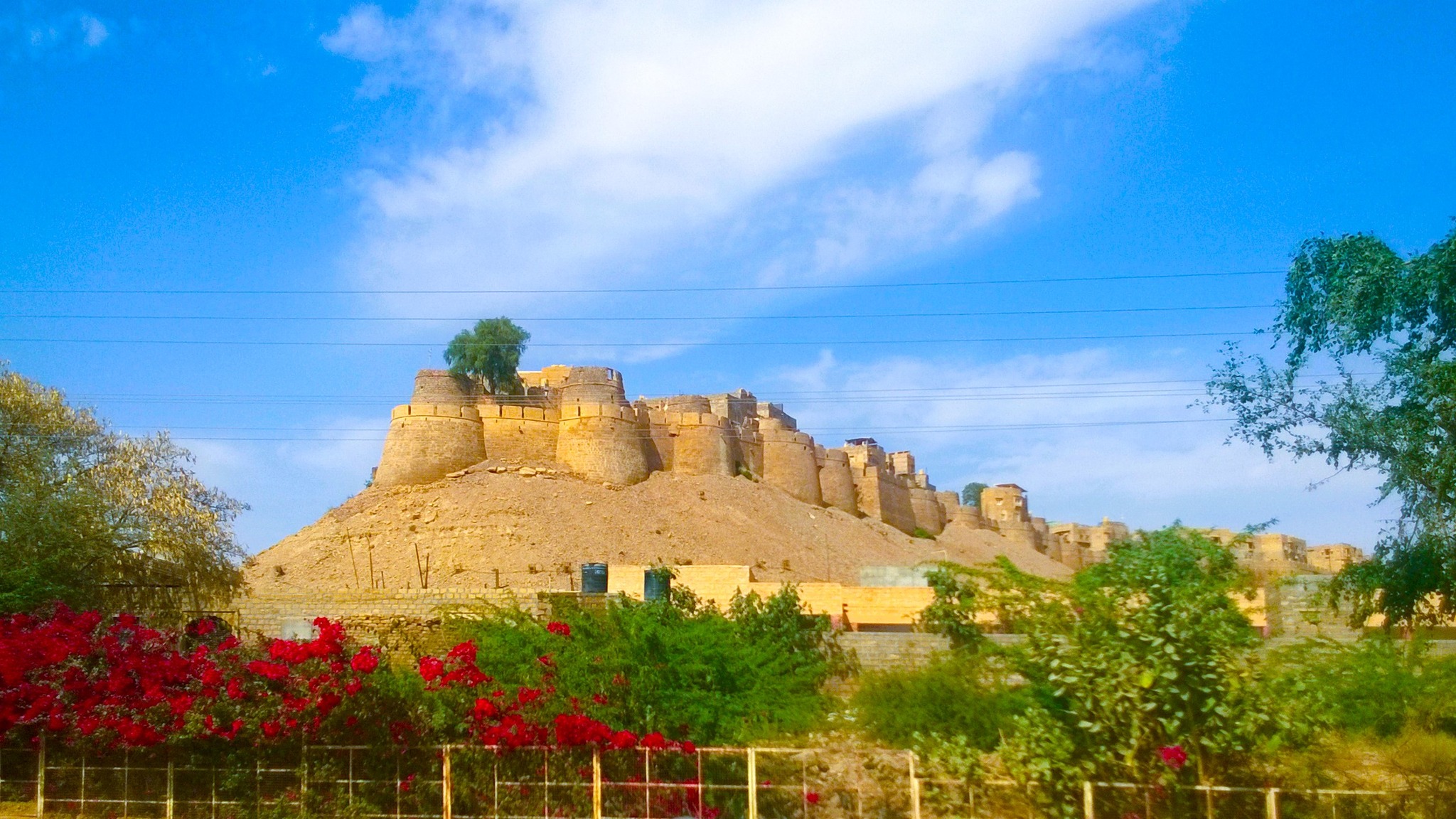
The first sight that struck me as I rode pillion on the local’s motorcycle was that of the Jaisalmer fort radiating in all its golden glory with multiple golden coloured stony turrets stacked one after the other along the edge of a golden coloured rocky hillock. It was the physical manifestation of the images that I had created in my mind from reading in a book or hearing in the context of a movie (Sonar Kella by Satyajit Ray) or seeing in pictures or documentaries. But stepping physically inside that physical manifestation of my mental image had to wait, for there was yet another mental image born from childhood dreams that I had to physically soak in first – the sand dunes.
View of Jaisalmer fort (‘Sonar Kella’, or golden fort, as nicknamed by Satyajit Ray)
So checking into a budget hotel at the foot of the hill on which the fort is located, I rented a scooter from a nearby shop, and armed with a map and directions provided by the rent-a-bike shop scooted off towards Sam. As I left the periphery of the city, habitation and vegetation disappeared, while the road dipped and rose in curves streaking across the arid landscape shooting and disappearing into the horizon. Alongside the road, stood tall windmills in the midst of tall grass, with the skyline in the background lined by a long sandy ridge running from one end to another end of the purview.
As I rode up and down the wavy road, stopping at places to click photographs of the landscape, the thin clusters of huts and the camels either solitary or in groups whiling away time, I was welcomed by flat patches of sand with sparse vegetation on both sides. After almost an hour of riding, resorts in the form of desert camps started appearing, signalling the arrival of the Sam Sand Dunes. Right at the location where the Jaisalmer local’s contact person at Sam Sand Dunes had indicated earlier over the phone, there stood a camel with its minder waiting for me. And soon, the camel, with its minder and I seated on its back, heaved with a jerk from its kneeling position to stand upright, even as I saw the ground beneath sinking away, and lurched into the vast expanse of shimmering mounds of sand lying in front of me.
Glimpses of the landscape on the way to Sam Sand Dunes from Jaisalmer city
After staggering up and down the peaks and troughs of the dunes for about a kilometer, the camel stopped, and the minder beckoned me to get down, and soak in the atmosphere and the sands. As I sat on the sand, sifting through it, taking a fistful of it, and letting it stream down from my hands, I was overcome by the delight and glee of a child that has been left to play in a theme park. I sat marvelling at nature’s unique creation, observing the ribbed contours formed on the sand due to effects of wind, and the trails of footprints left behind by camels and humans and the tracks of the wheel carts swishing across the undulations. Beholding the sun setting behind the dunes, I turned around only to be awestruck by the near full moon hovering just over the horizon in the opposite direction.
The Sam Sand Dunes
A moonlit meeting
In the twilight, I trod by foot over the sand dunes back to the point where I had parked my scooter, and headed across the road to the resort where the Jaisalmer local had arranged for my dinner. After witnessing a folk programme of Rajasthani music and dance, and gorging on the buffet of Rajasthani cuisine, I headed back on my scooter to the city. Riding all alone at 8.30 PM in the night, with the seas of moonlit sands glimmering all the way to the horizon on both sides of road, the near full moon hanging right over my head keeping me company and the cool breeze blowing against my face, I reckoned that I had transcended all bounds of the material world – I was floating in a meditative plane, wanting the ride to never end. It was pure bliss.
Folk programme inside a desert camp resort
Riding alone through the desert on a moonlit night
Desert Frenzy
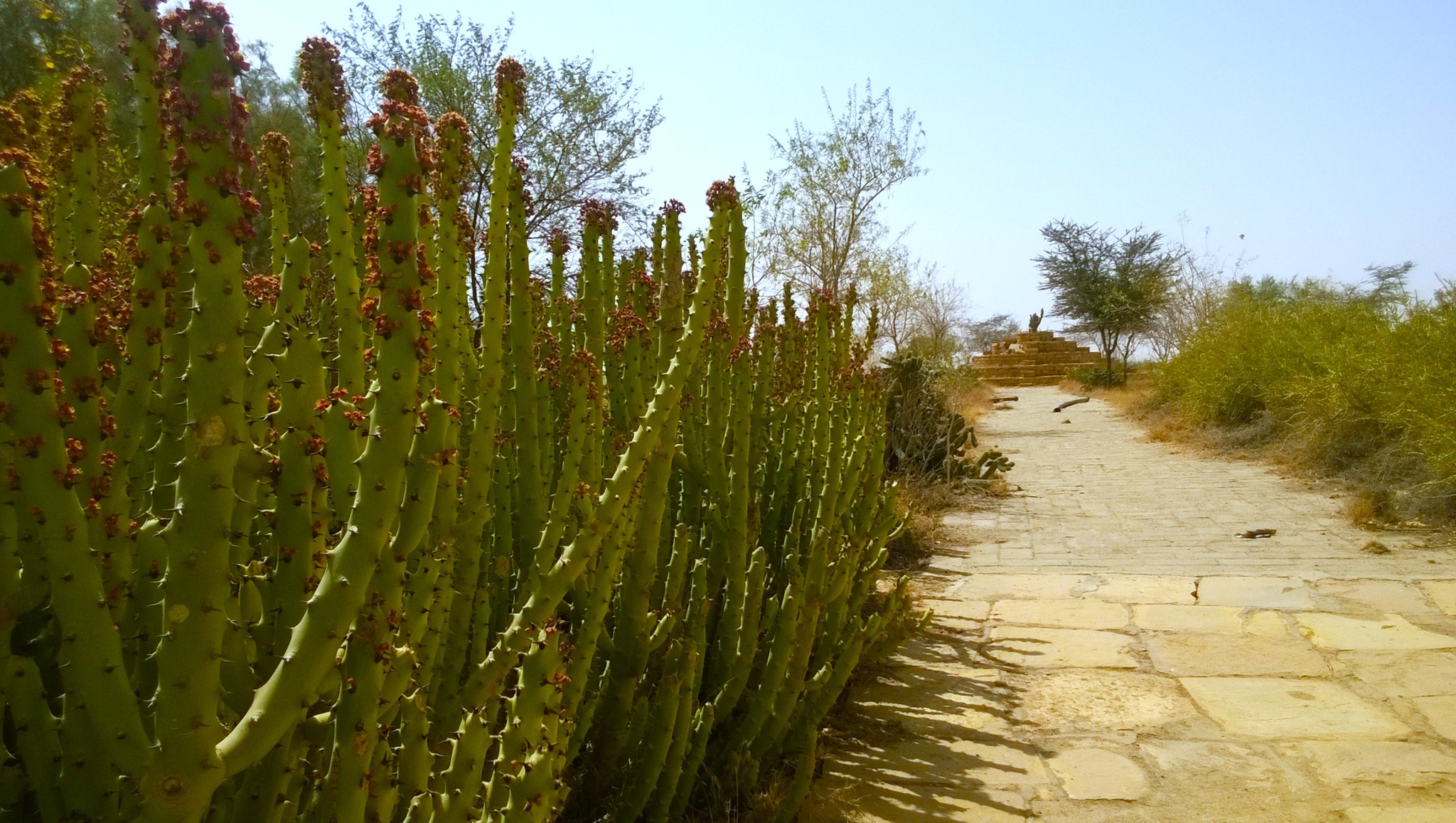
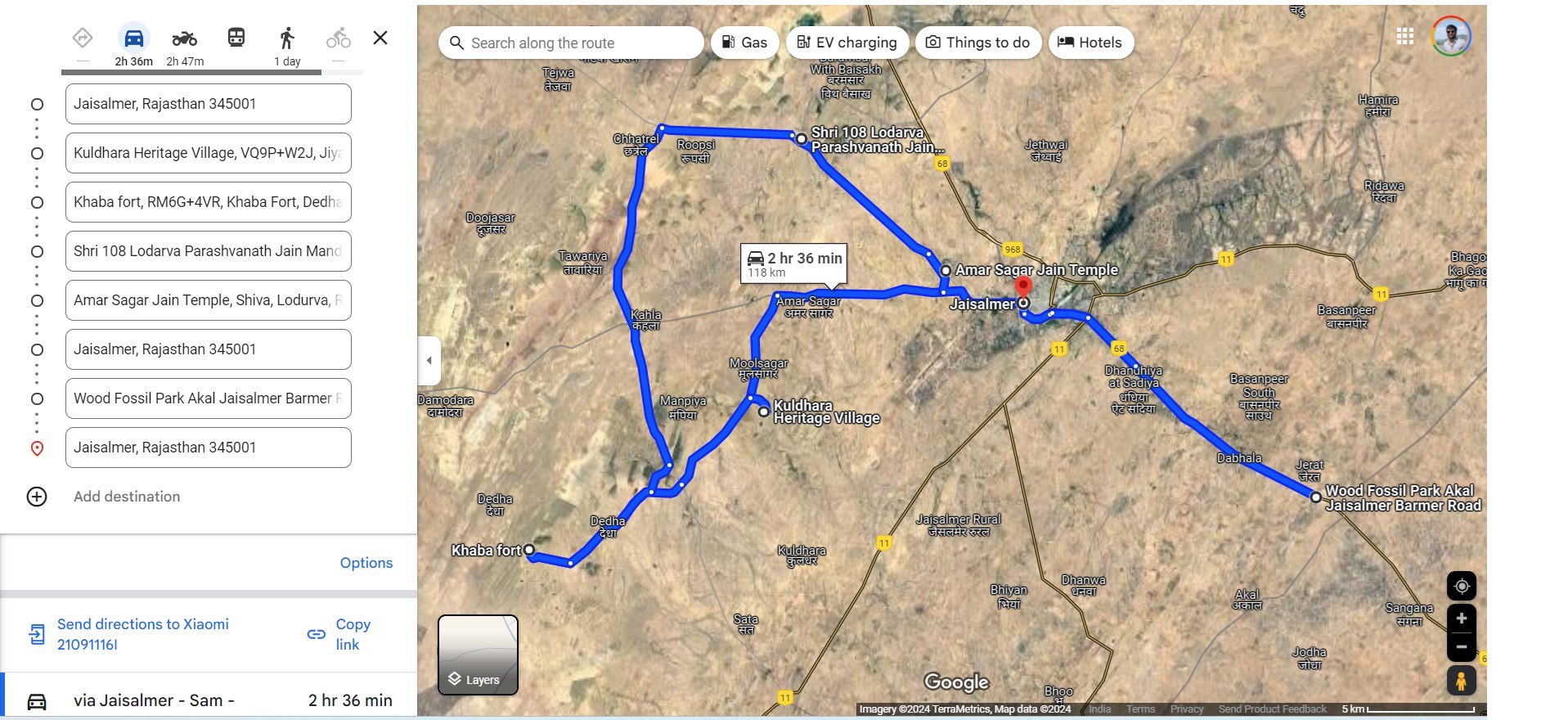
The next day was going to be jam-packed, what with my return scheduled on the 6 PM train that evening. So, I started around 9.30 AM after breakfast on the scooter, and headed back on the same road leading to Sam Sand Dunes. Midway though, I took a left turn and headed off on the narrow road piercing the desert, and reached Kuldhara, an abandoned village, also touted as a haunted site, right in the middle of the desert. At Kuldhara, there lay rows of abandoned stone houses with only their walls remaining, alongside a temple around which the town’s life seems to have centered around. Adjacent to the lies a garden dubbed Jurassic Cactus Park, with a fascinating assortment of cactus varieties.
Established in the 13th century by Paliwal Brahmins who had emigrated from Pali, and is said as per a local legend, to have been abandoned overnight and cursed by the villagers when the prime minister Salim Singh set eyes on the village chief’s daughter and threatened the villagers with dire consequences if they defied his wish. However, research seems to suggest that Kuldhara and other such villages nearby were abandoned gradually over time, mainly due to damage due to earthquakes and dwindling water supply, and the abandonment seems to have been precipitated by early 19th century due to the oppressive tax regime of Jaisalmer state propagated by Salim Singh.
Ruins at Kuldhara village
Cacti at Jurassic Cactus Park in Kuldhara village
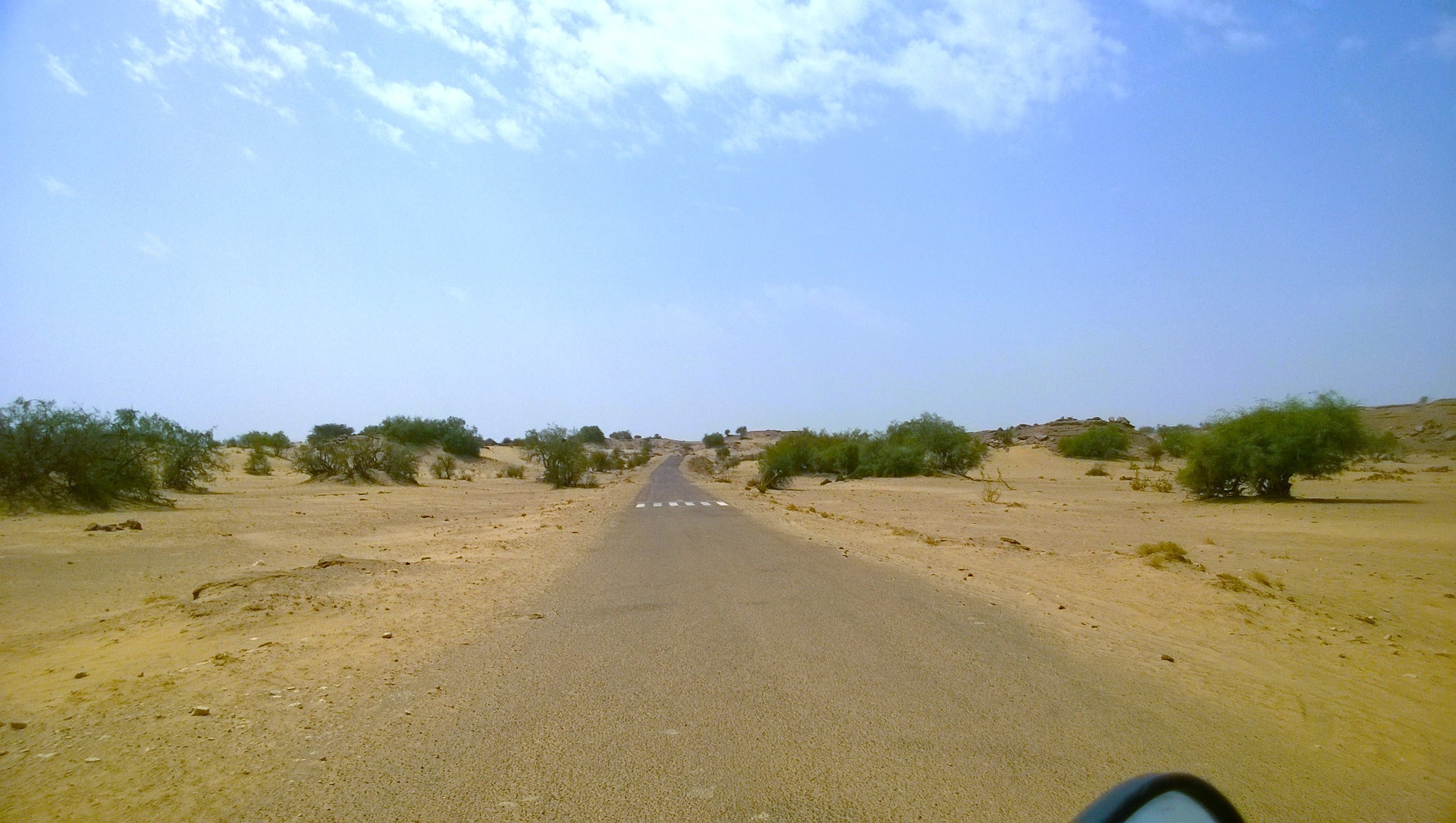
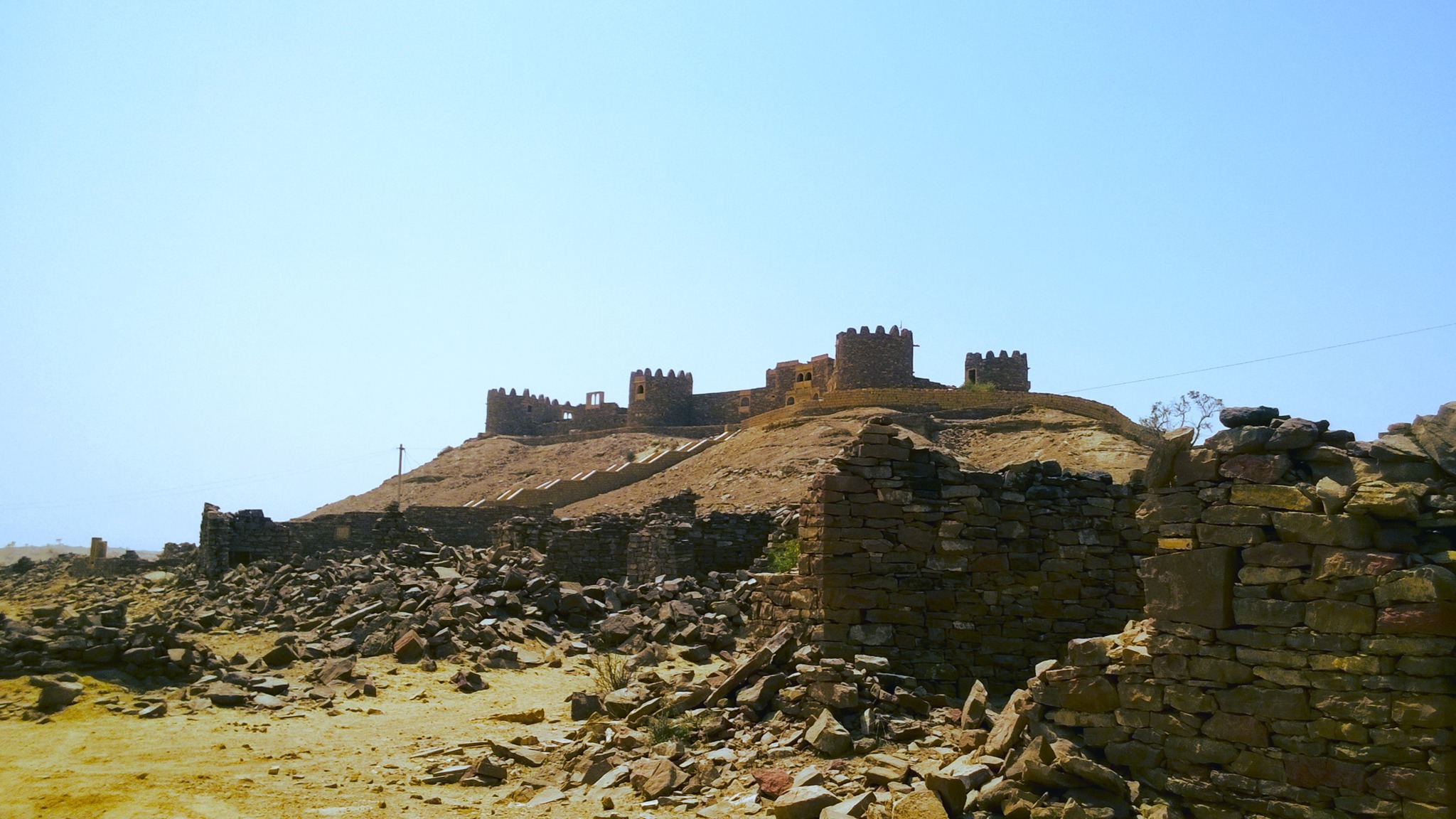
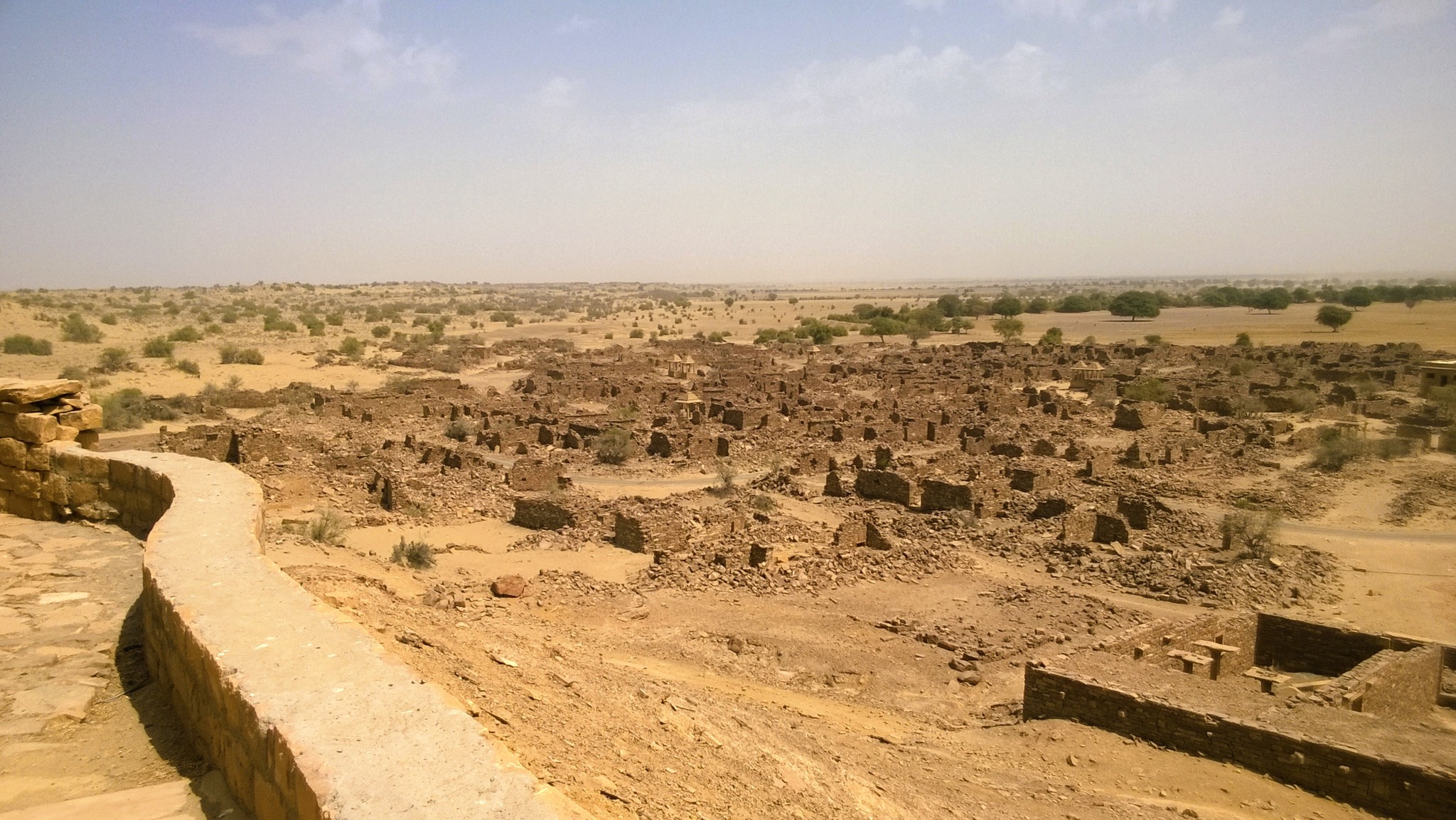
Pushing further into the desert, all alone on the scooter, with nary a human in sight, I headed towards Khabha. About half an hour later, passing through sands with occasional patches of 3 feet tall grass beneath some of which, one or more camels would be resting, I beheld a ridge, resembling a plateau on which stood a compact golden-coloured fort. Ascending up the ridge, I was soon inside the Khabha fort, with tiny turrets lining its peripheral wall, where I was amazed to find a museum of natural history. The fort stood all alone in desolation, a lone sentinel on the edge of a low cliff in the middle of the desert, overlooking, in the escarpment below, the stony ruins of an abandoned village, a sight similar to that I had just seen in Kuldhara.
Somewhere in the desert on the way to Khabha
View of Khabha fort from the foot of the ridge
Ruins at Khabha as seen from Khabha fort
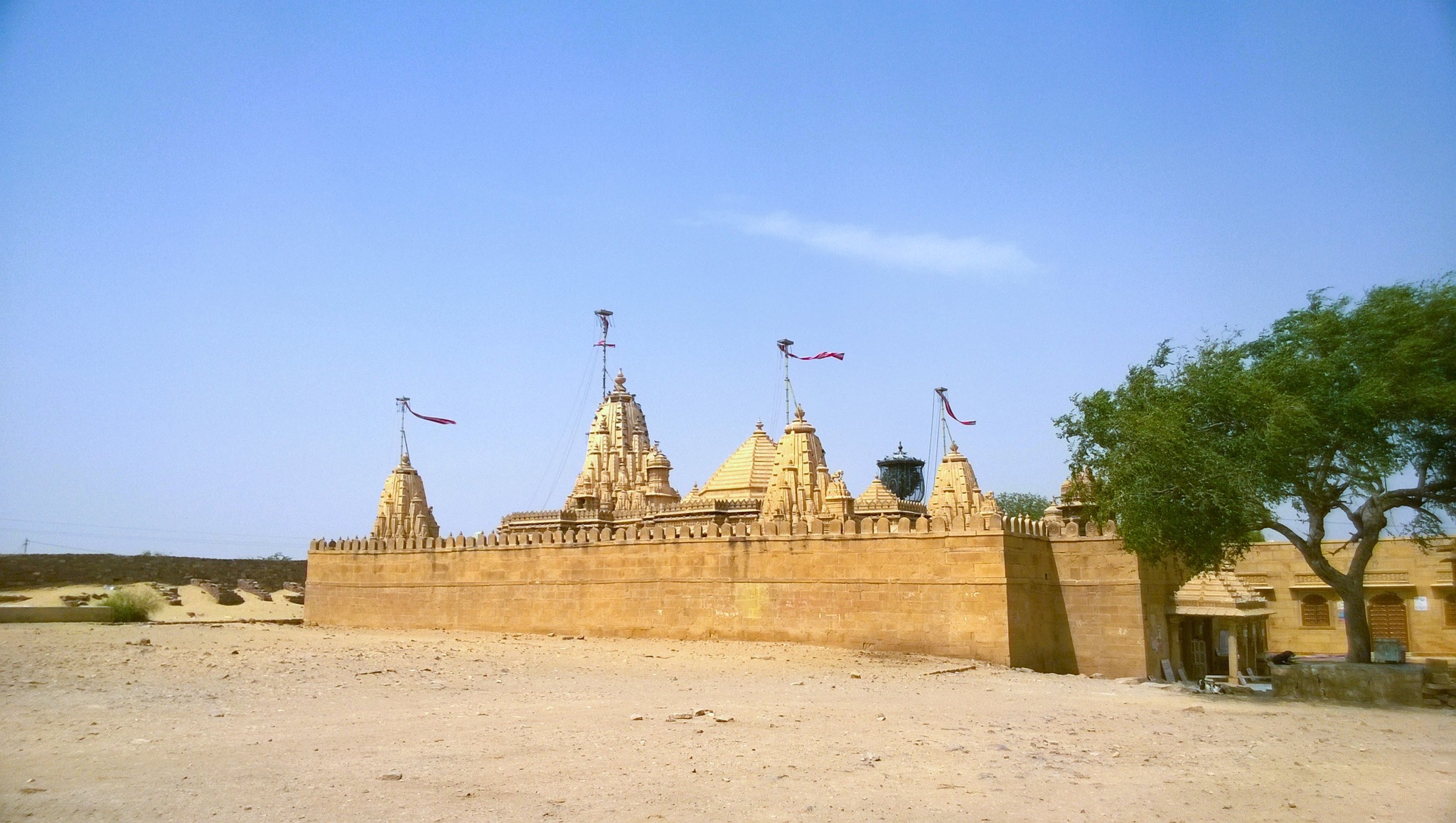
Leaving Khabha, I rode back towards the Sam road, and crossed it to move over to the other side, where the landscape was relatively greener, and then riding parallel to the Sam road but towards Jaisalmer, I reached Lodurva, which was the capital of the Bhattis before Rawal Jaisal founded Jaisalmer in 1156 CE. At Lodurva, I visited the Shree Parshvanath temple, dedicated to the 23rd Tirthankara, built in the 9th century in yellow limestone and sandstone, which was destroyed in 1152 by invaders, and later renovated and repaired in 1615 AD. Riding further, I was accosted by a couple of youth on a motorcycle who were intent on smearing rangoli, since it was Holi. I sped as fast as I could, with the duo in hot pursuit, finally managing to lose them, and only stopped, nearer to Jaisalmer, at the Amar Singh Jain temple.
The Parshvanath temple at Lodurva
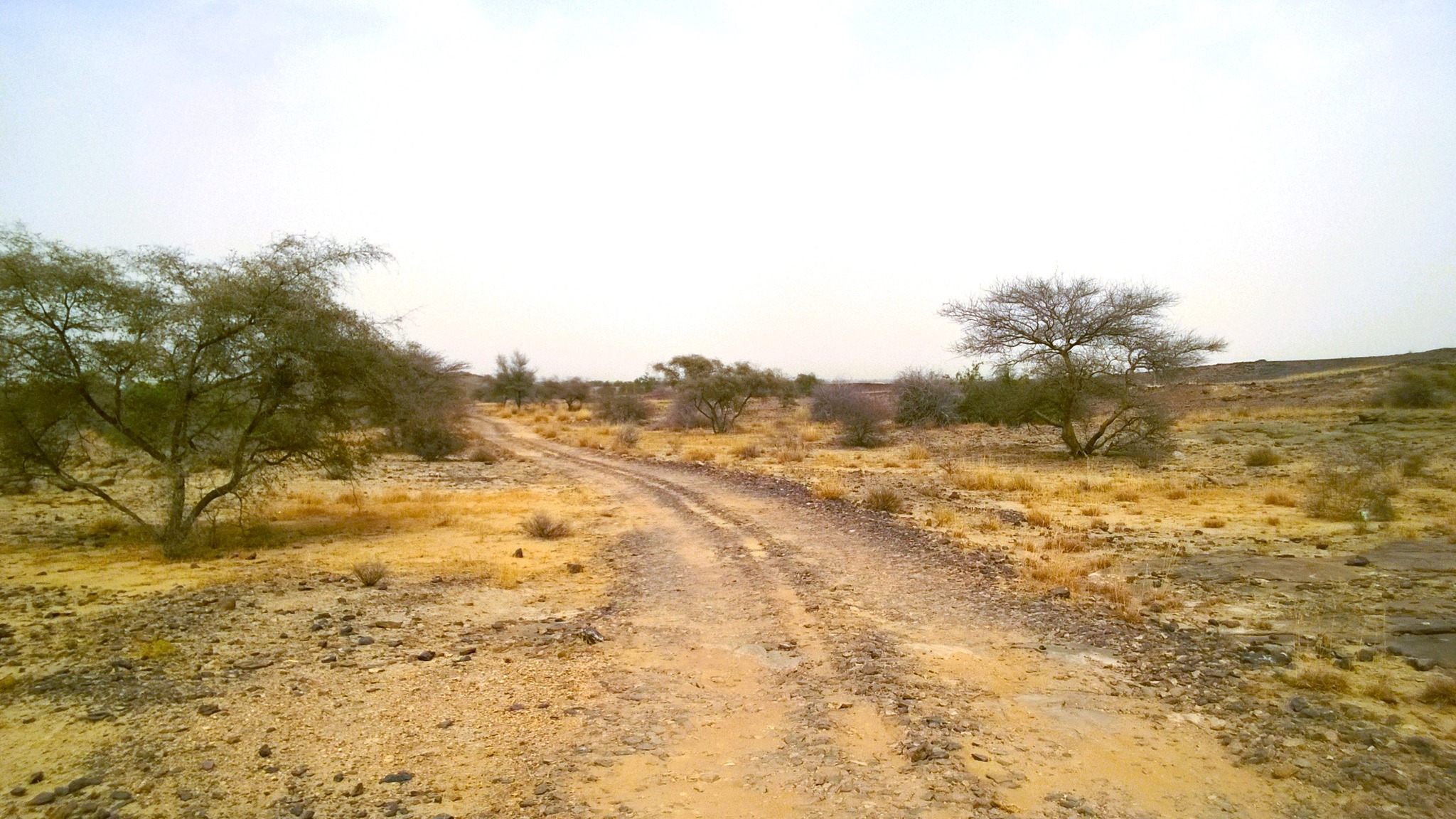
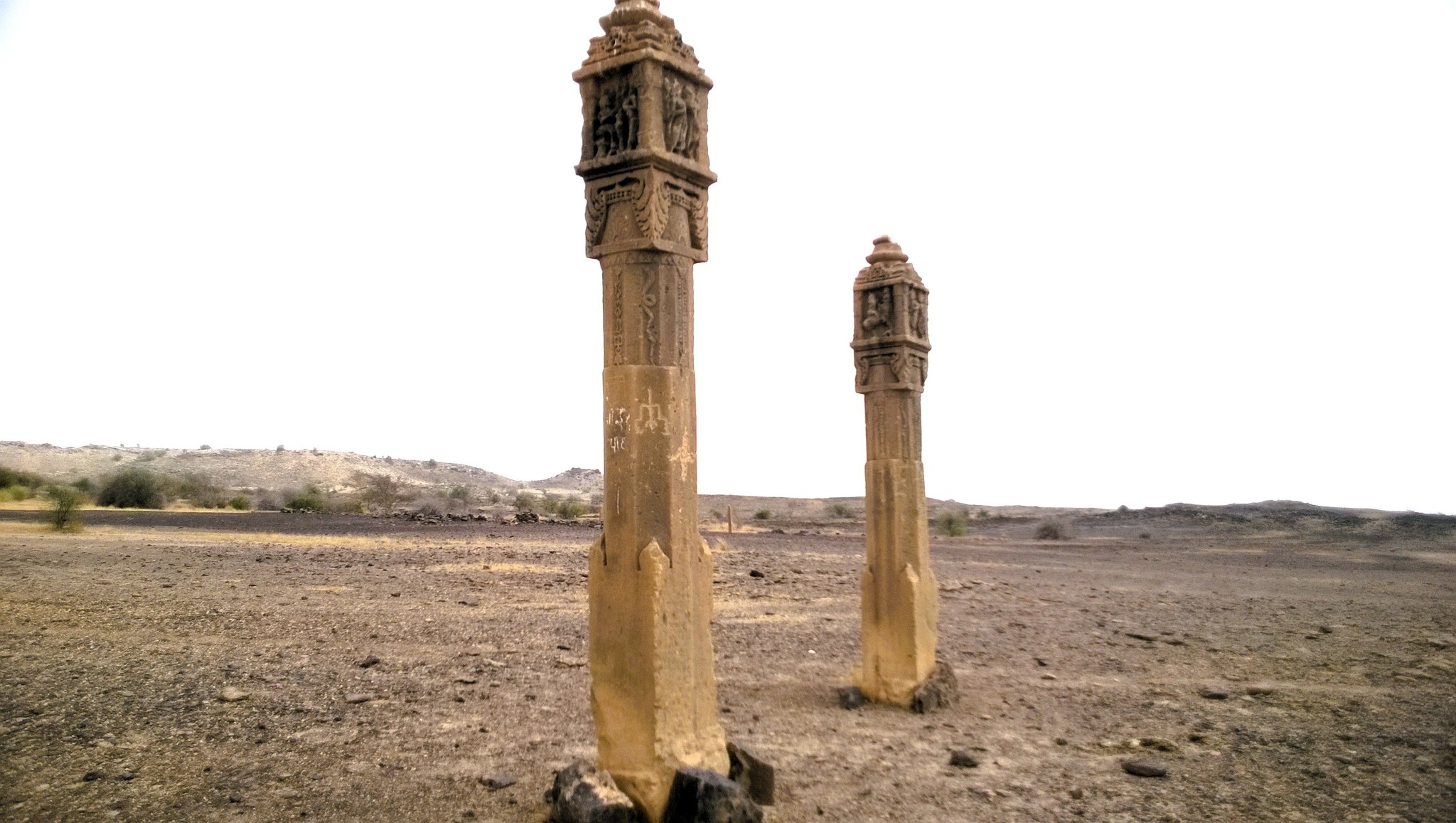
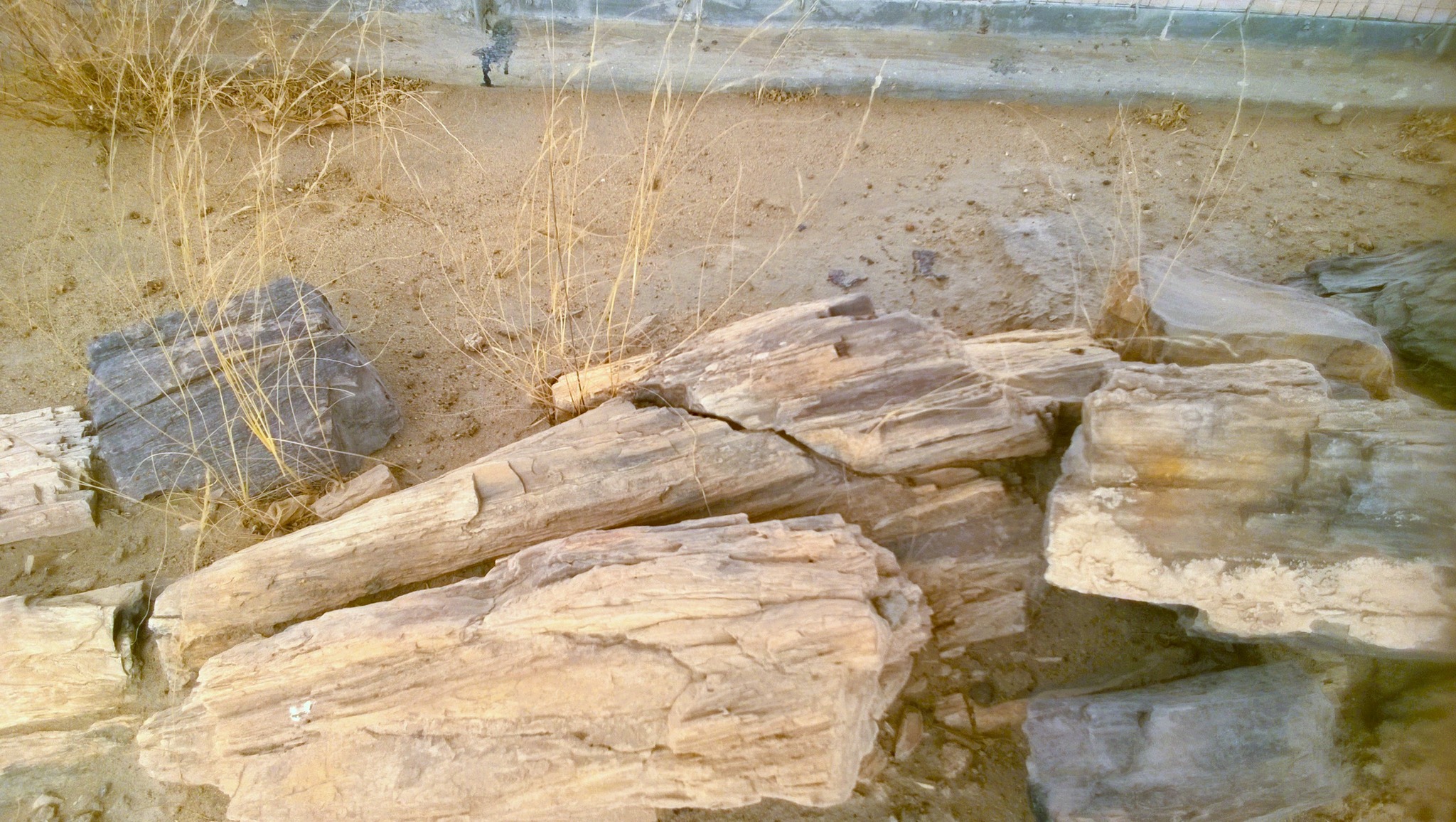
It was now 1 PM, and I had on my wish list, still one more outstation site to see, but this site was located on the other side of the city. Calculating the time I had in hand, I crossed Jaisalmer city, and sped on the Barmer highway to reach Akal Wood Fossil Park, lying about 18 km south-east of Jaisalmer, where I was welcomed by a couple of emus and an assortment of wood fossils dating back to 200 million years. I rode through the desolate desolate brown rocky land, coming across more preserved fossilized wood dating and pairs of pillars for which there was no explanation. After wandering for a while inside the fascinating park, I headed back to the city, where I stopped at Gadisar Lake, an artificial lake created in 1156 to serve as the main water source for the then newly-founded city.
Welcomed by emus in Akal Wood Fossil Park
Riding deep into the Akal Wood Fossil Park
A pair of pillars in Akal Wood Fossil ParkWood fossils in Akal Wood Fossil Park
Gadisar Lake in Jaisalmer city
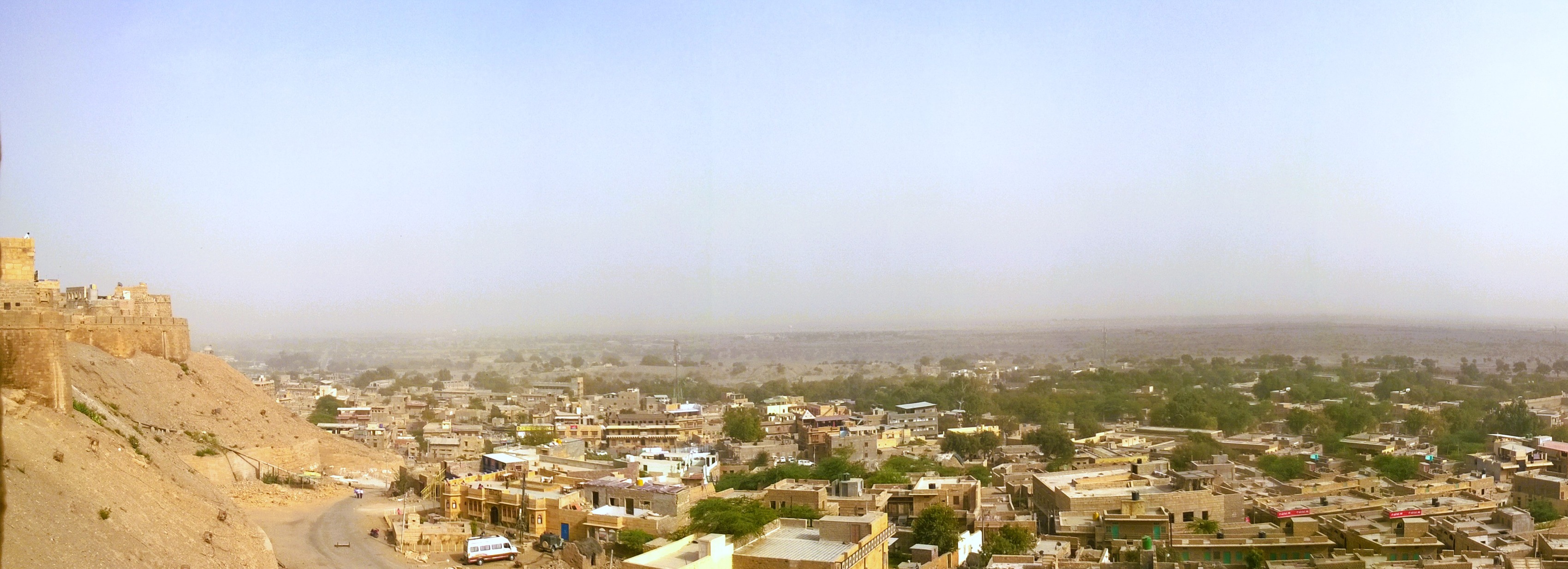
After surrendering the scooter at the rent-a-bike shop, at around 4 PM, I finally found myself inside Jaisalmer fort. Soon, I was walking through the streets of the bustling town lying inside the fort premises. After whizzing past the courtyards, corridors and halls in the palaces, I came upon the the alleys running along the ramparts of the fort, winding around the turrets, in maze-like form. Standing on the ramparts, I was treated to breathtaking views of the cityscape and the barren, desert landscape beyond it with its meeting point with the sky shrouded in a haze of sand, leaving me in a trance.
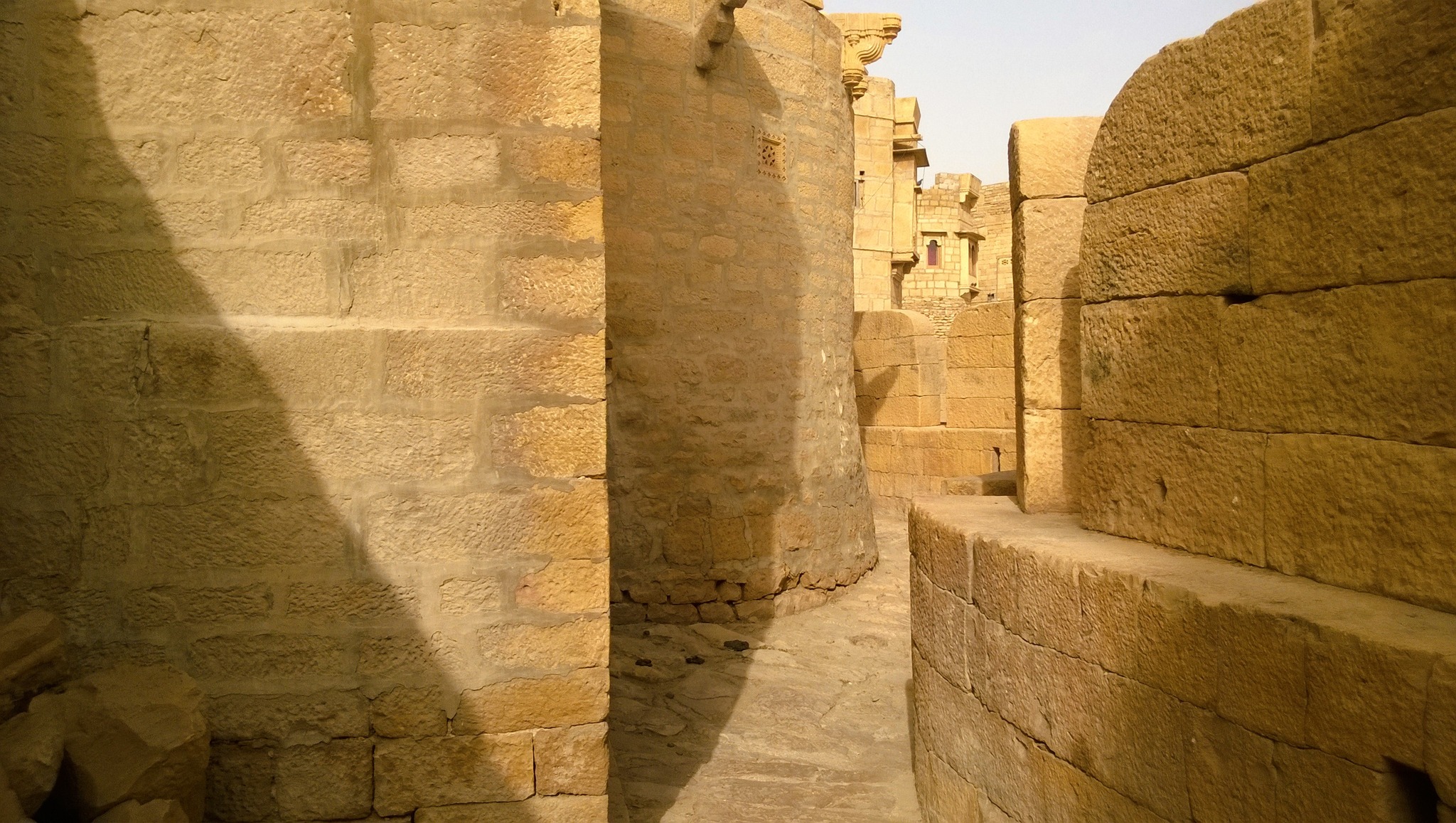
Inside Jaisalmer fort
Walking on the ramparts of Jaisalmer fort
Panoramic view of the city and beyond from the ramparts of Jaisalmer fort
My reverie was broken when the local who had arranged my accommodation and camel ride at Sam Sand Dunes called, asking if I was prepared to be dropped at the railway station. Walking down the fort road, I was not able to escape an assault of rangoli launched by a passerby, rendering patches of colour on my shirt and hair, leaving me fuming. But then, I saw a group of white tourists who had completely immersed themselves enjoyment of the festival of colours, and I told myself, what’s the big deal?, and greeted them, followed by exchanges of polite colour smearing.
As I mounted the motorcycle to sit behind the Jaisalmer local, with my backpack lugging on my back, I took one parting look at the mesmerizing golden fort sitting proudly and timelessly on the rock. An hour later, I was inside the train, fondly scrolling through the gallery on my Nokia Lumia phone, with the photographs on my phone, the smudges of rangoli on my person, and the wistfulness in my heart, being the only remaining and undying vestiges of my tryst with the Thar.

















 The Timber Trawler