My little brother paid the motherland a visit after 2 years, and before the Indian summer set in with its full glory, the family decided to make it the first ever self-driven road trip for the family. So, off we set in late March, on a 6-day road trip with an itinerary so fluid that we only knew the first 3 places we planned to visit. Deciding to let the vagaries of chance sprinkle our journey with generous doses of surprise, we did not also book a hotel prior.
And boy, was it rewarding! With a mix of the famous and the little known (or even barely-frequented), this time we forayed through the desert to brush with history stretching back to 5000 years ago, in search of a lost river and a lost civilization, chanced upon desert lakes and desert wildlife, hobnobbed with human-like rats, and delved deep into a jungle on a temple chase while the sun was going down.
Hanumangarh
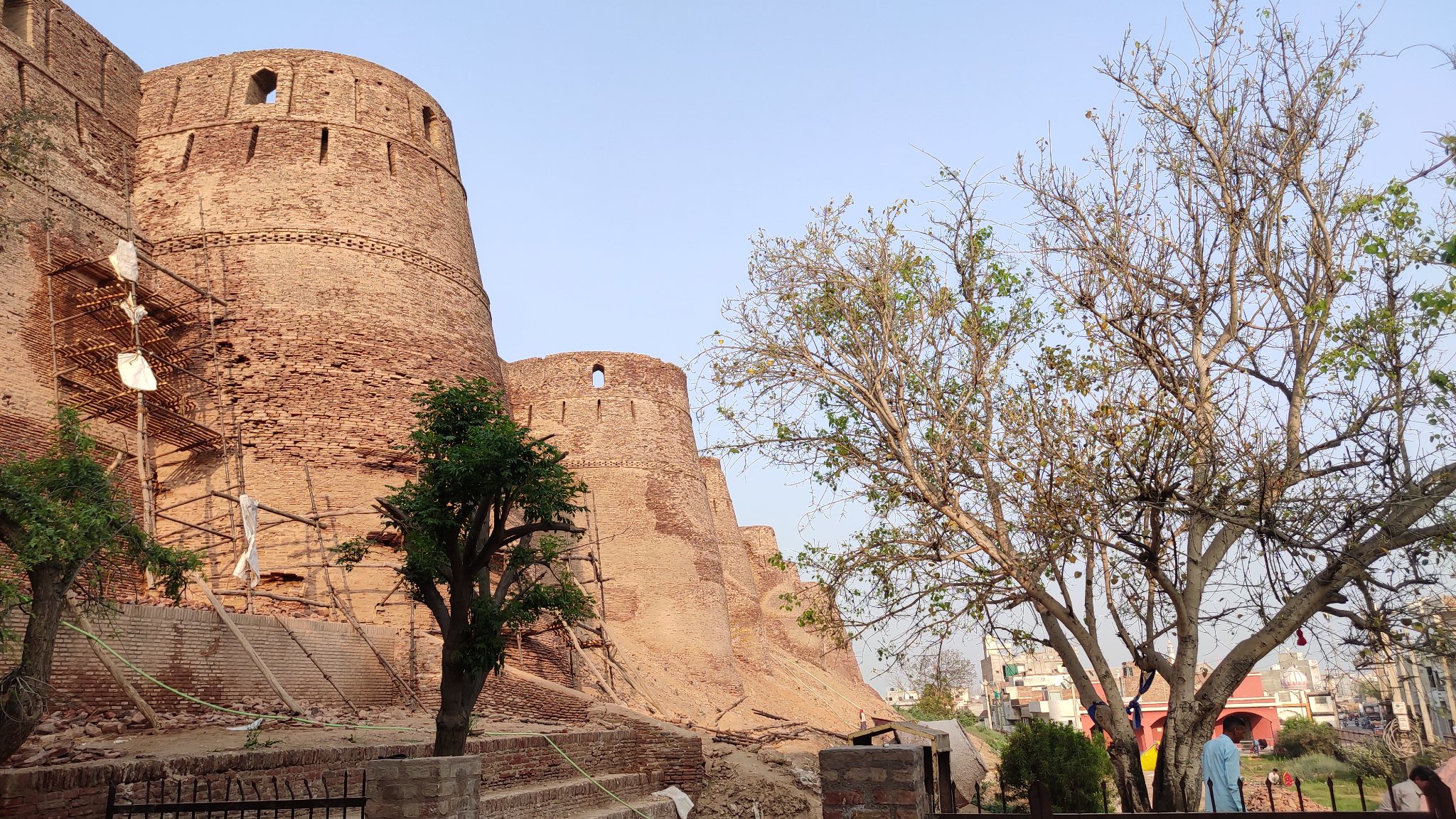
Our search of the mythical River Saraswati led us to the desert town of Hanumangarh, where we came upon the Bhatner fort, which dates its origin to the 2nd century AD. The old structures are now buried in mud, and the fort is being renovated.
Walls of Bhatner fortMounds over structures, Bhatner fort
Kalibangan
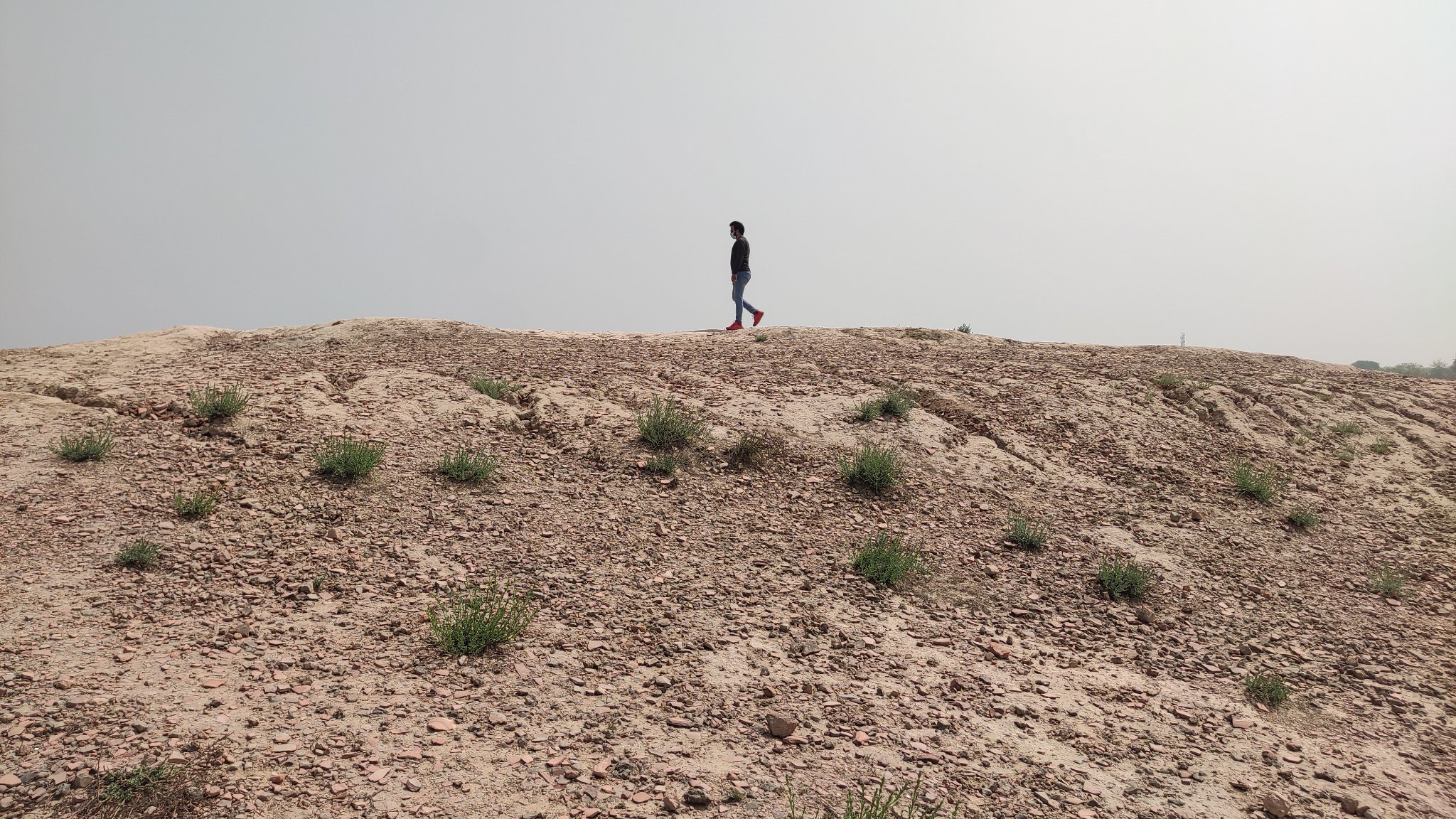
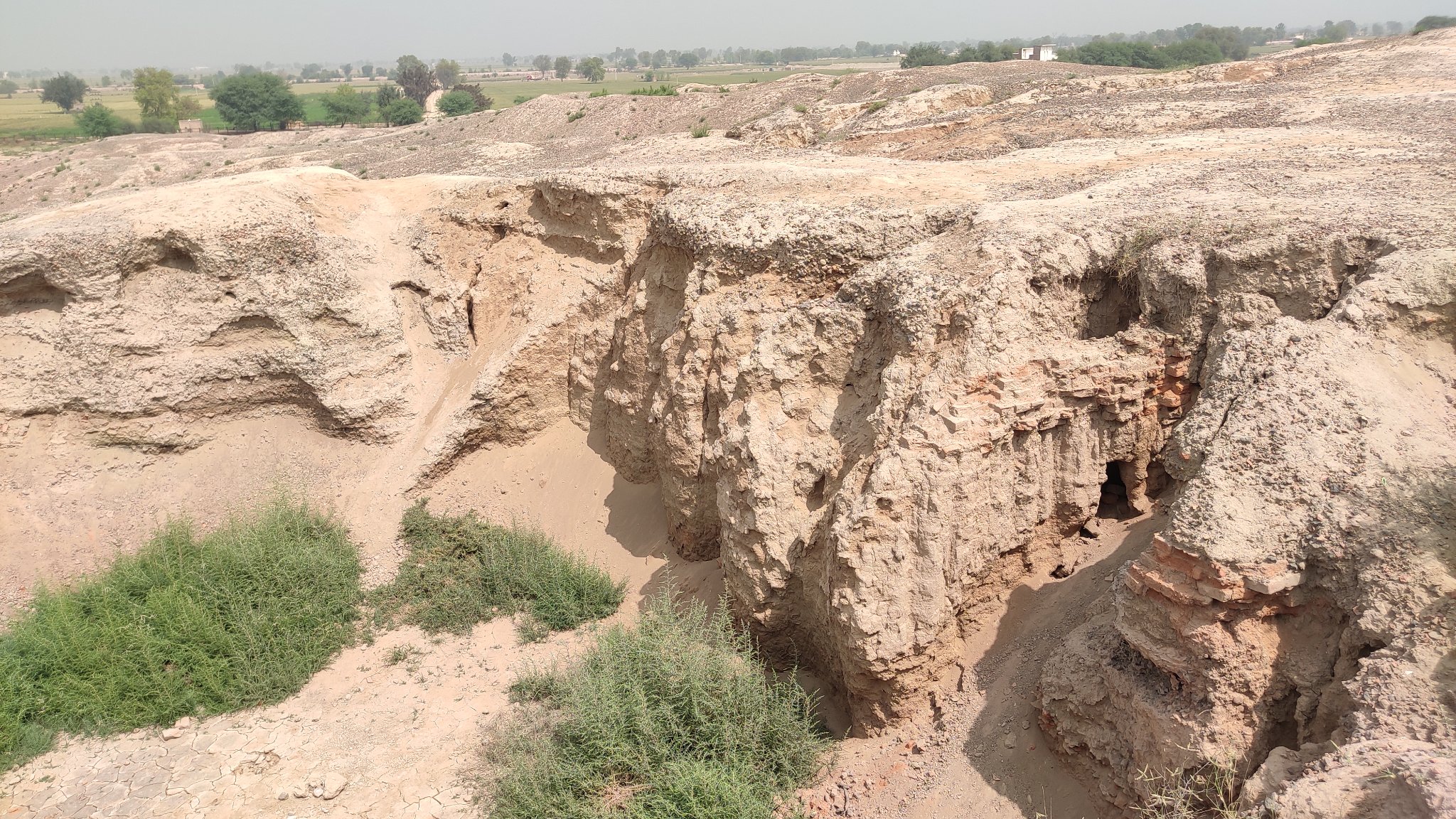
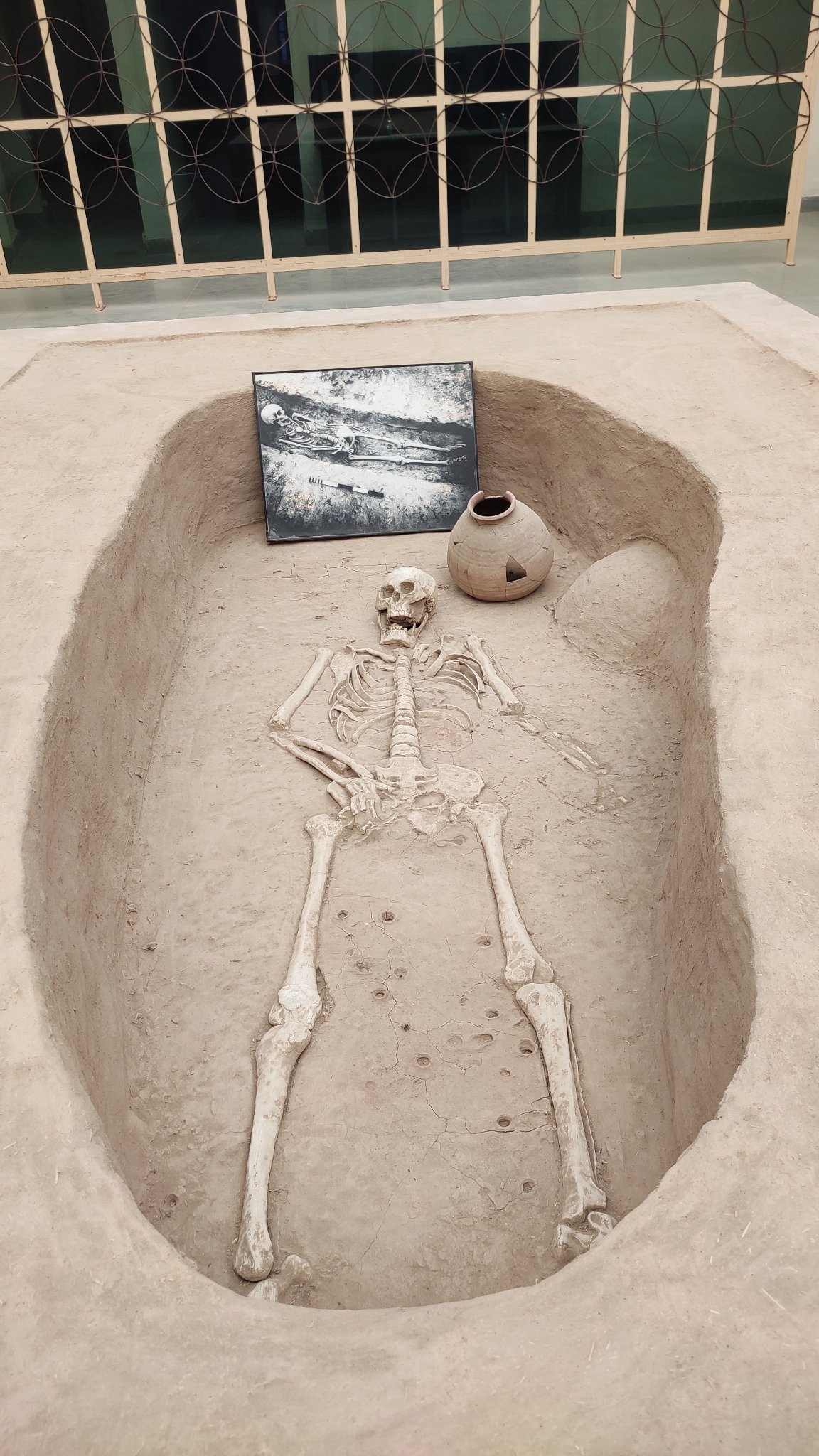
One of the earliest discovered and excavated Harappan sites, Kalibangan gave us a sneak peek into 5 millennia earlier. Sadly, the ruins are buried in mud, even the excavations have been covered up by the Archaeology Survey of India (ASI) to prevent further deterioration.
Walking on 5000 years of history, a civilization now lies buried under mounds
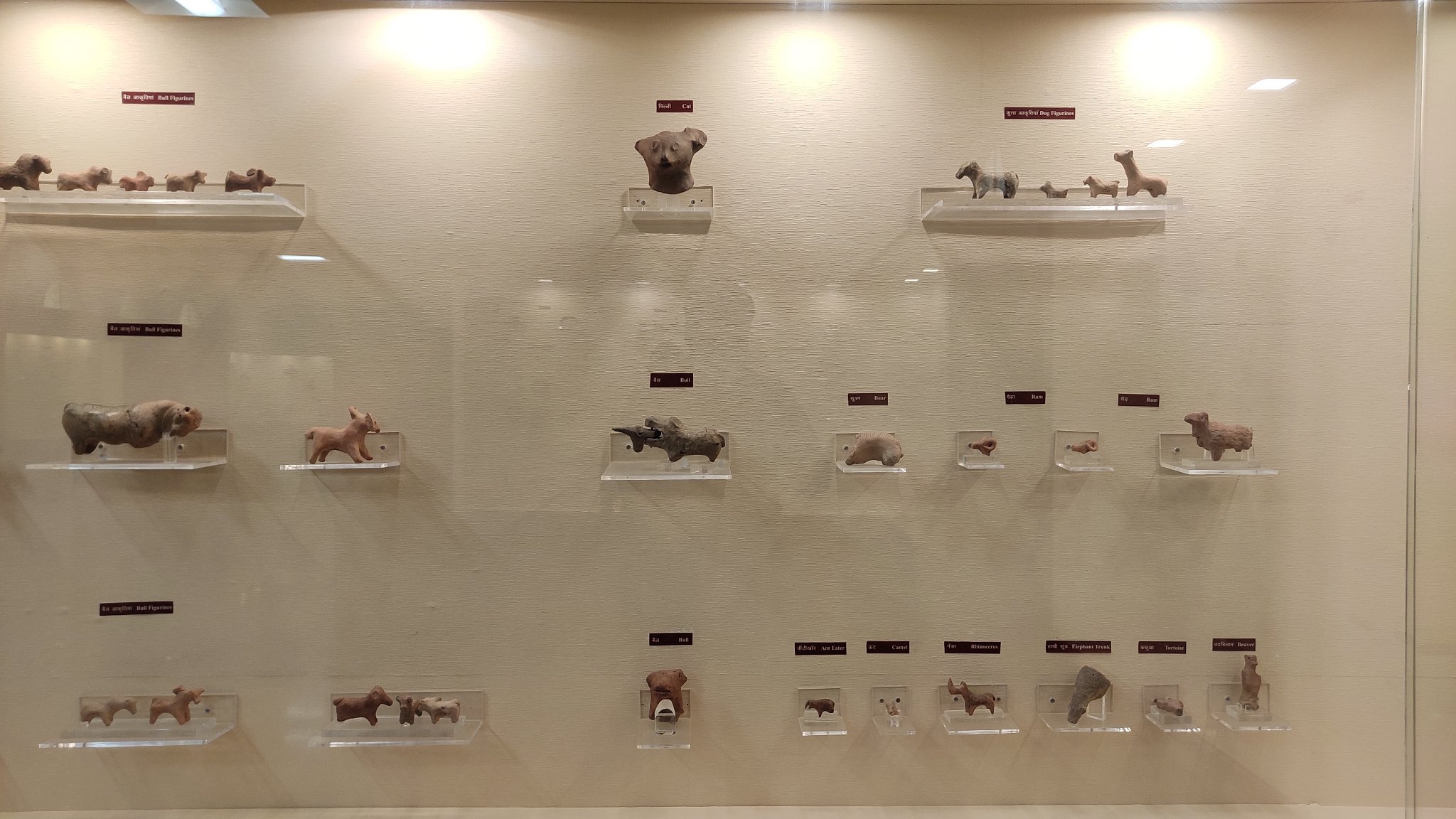
Harappan structures lay below the mudArtifacts from the past
A Harappan
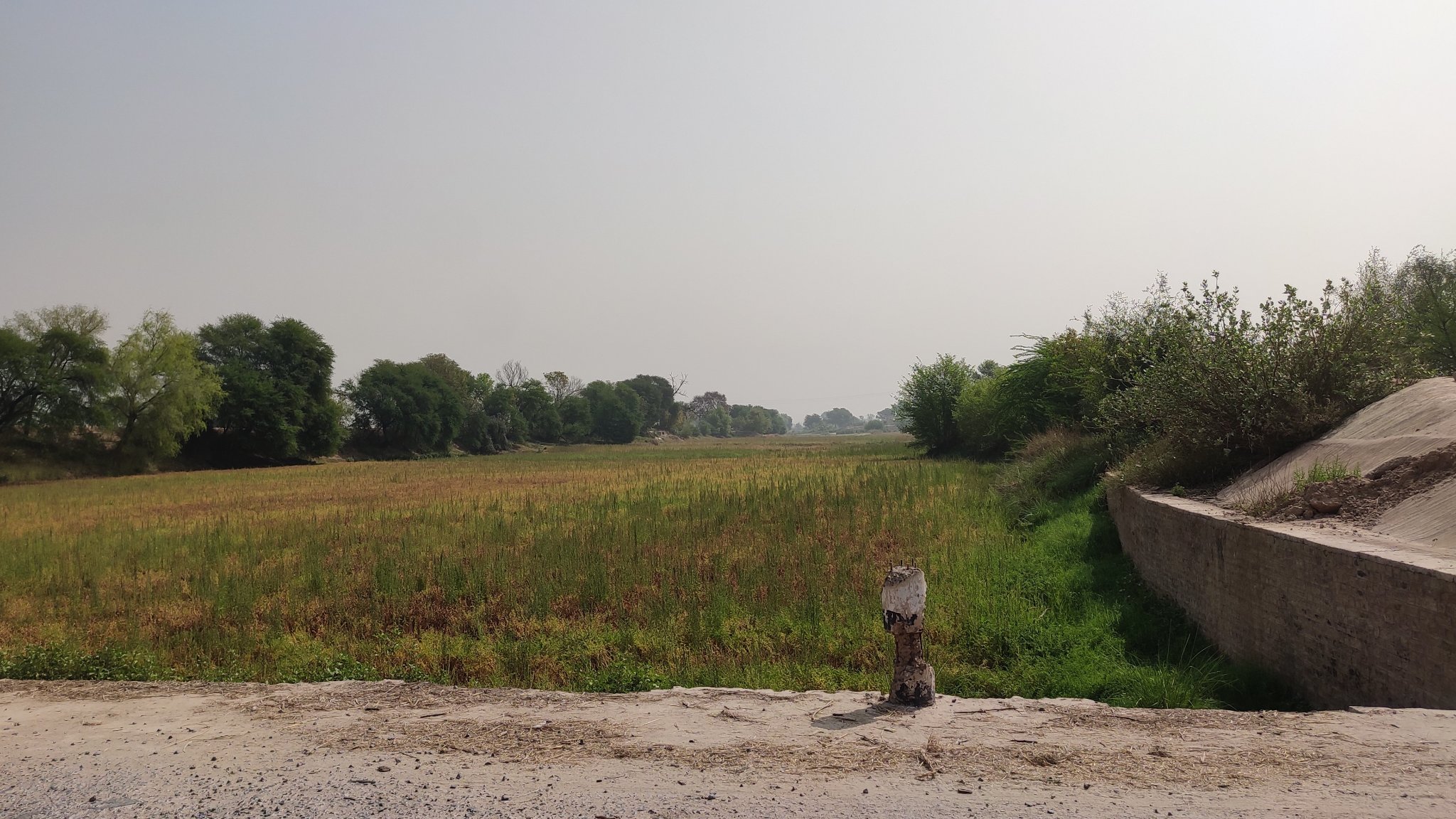
In the vicinity, we finally met the Ghaggar River, which is purported to be the Vedic Saraswati River – nothing more than a dried-up intermittent, almost obscure rivulet right now.
The dried bed of the Ghaggar river – purported to be the mythical Saraswati river
Badopal Lake
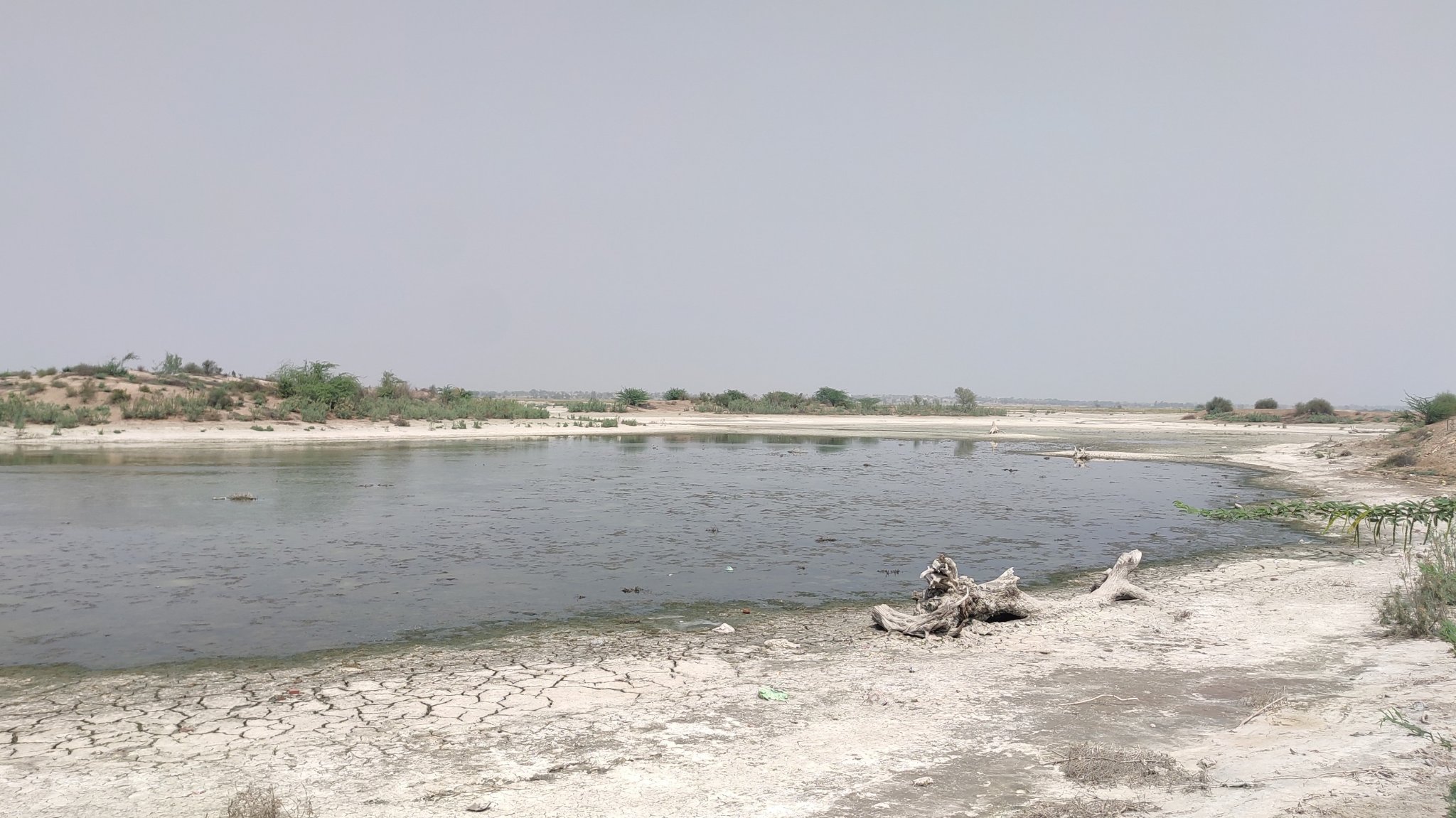
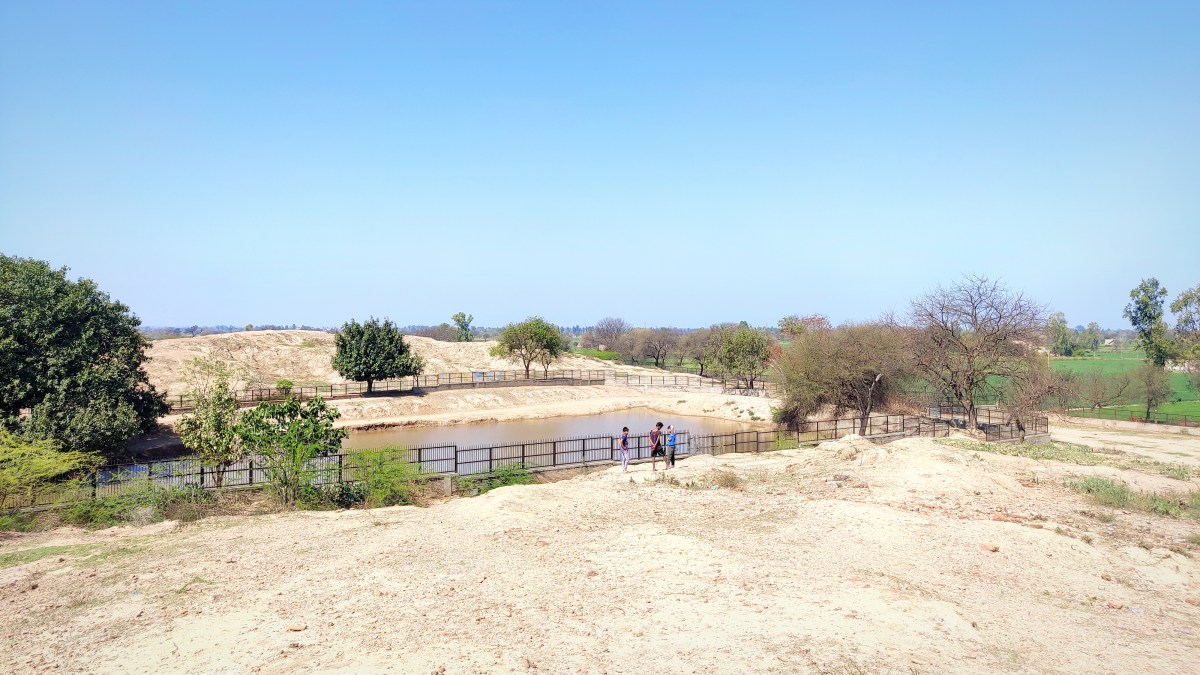
We took a slight detour through the desert hinterland to take a peek at the Badopal lake, a salt lake located beside the Badopal, an ancient mound, and part of the Rang Mahal culture.
Badopal Lake
Suratgarh
Another desert town midway between Hanumangarh and Bikaner, noted for its Thermal Power station and the air force base.
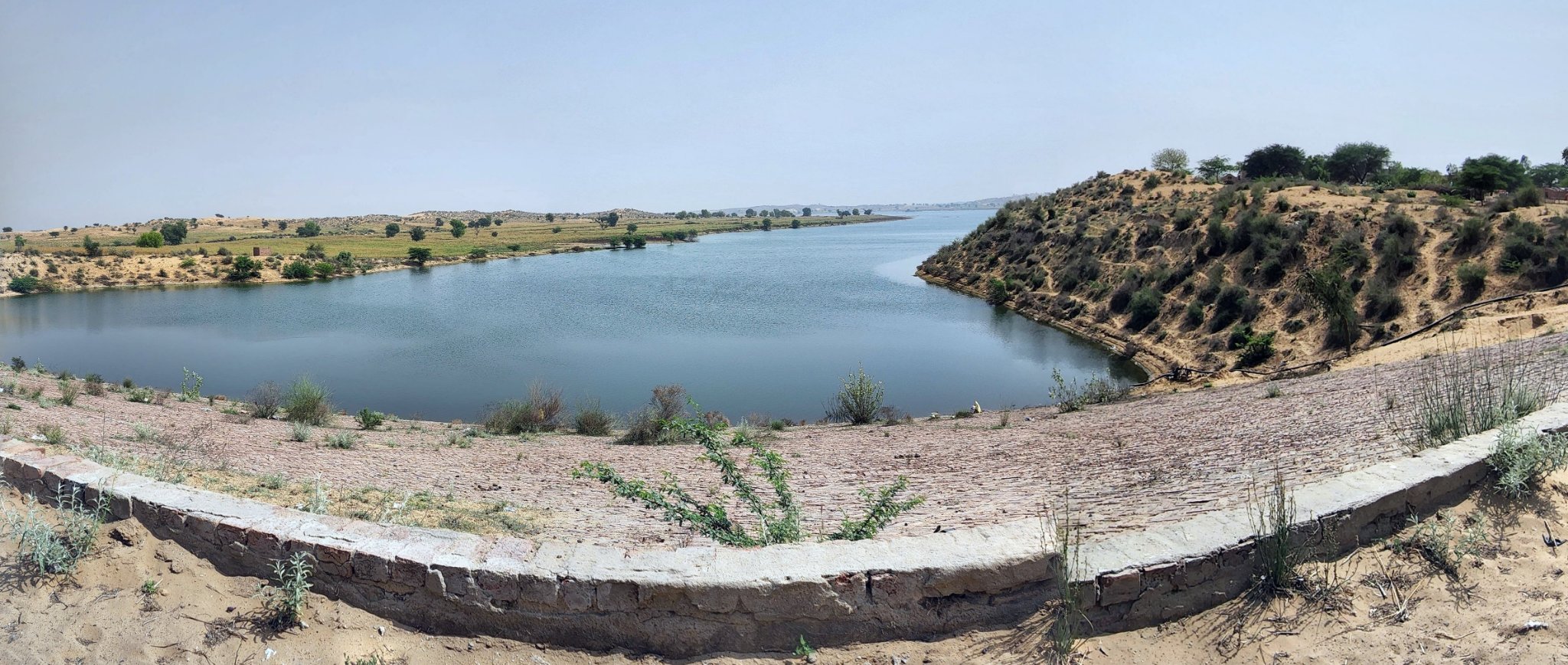
Dam on the outskirts of Suratgarh approaching from Badopal
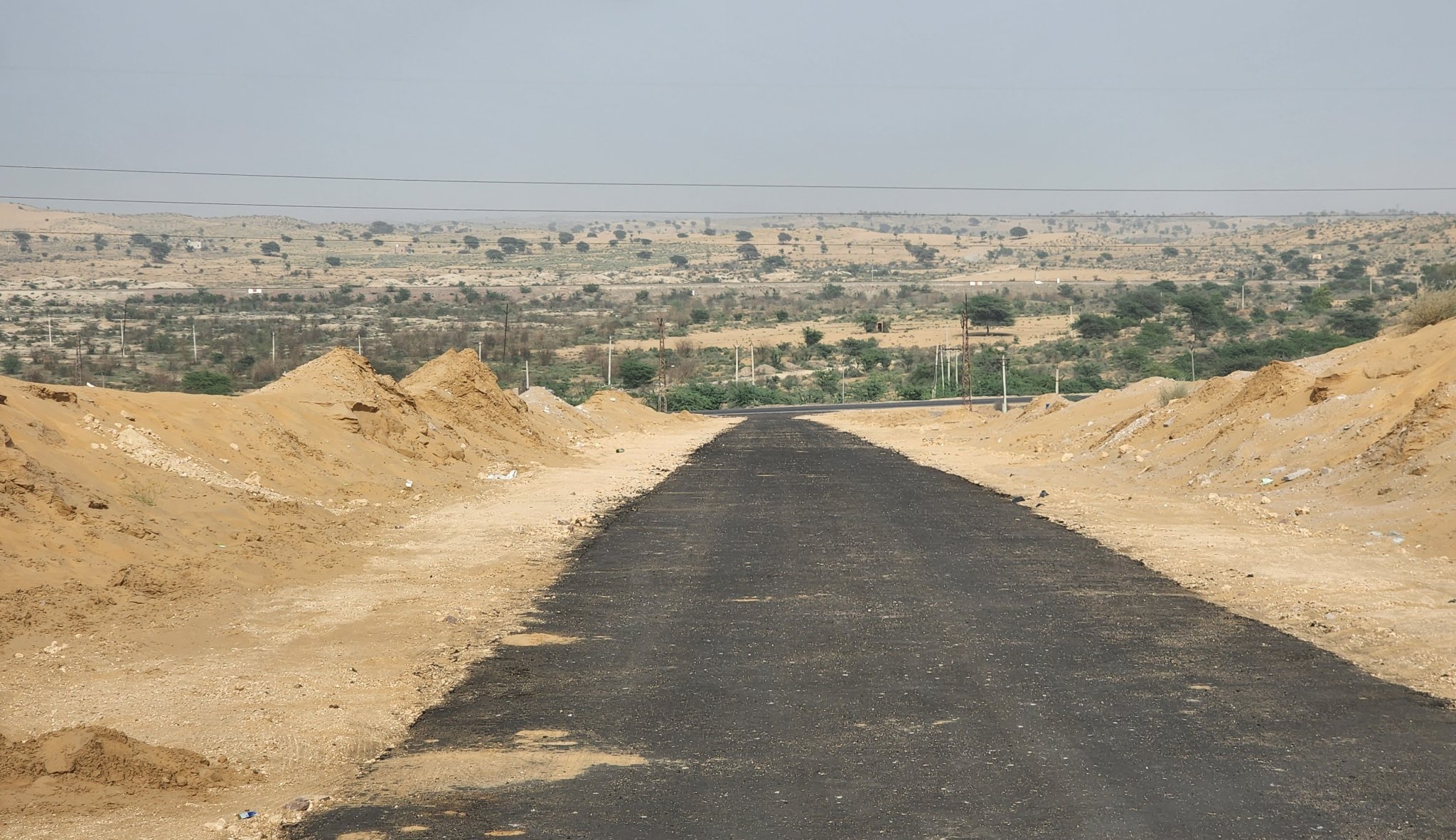
Dunes outside Suratgarh enroute Bikaner
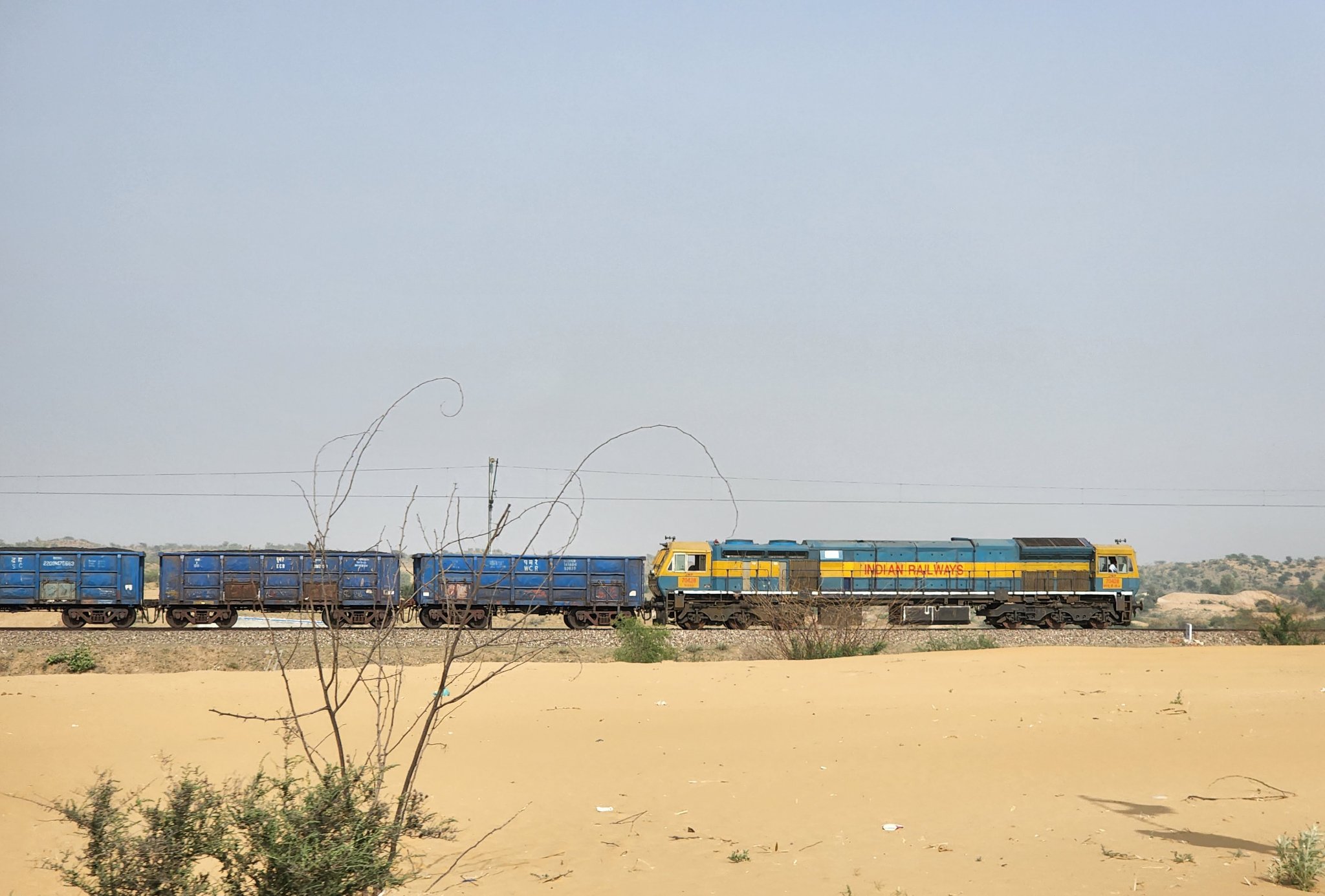
Keeping pace with a train, SuratgarhA view of the landscape, Suratgarh
Lunkaransar
A fairly expansive salt-lake that is home to migratory birds, midway between Suratgarh and Bikaner
Salt lake at Lunkaransar
Bikaner
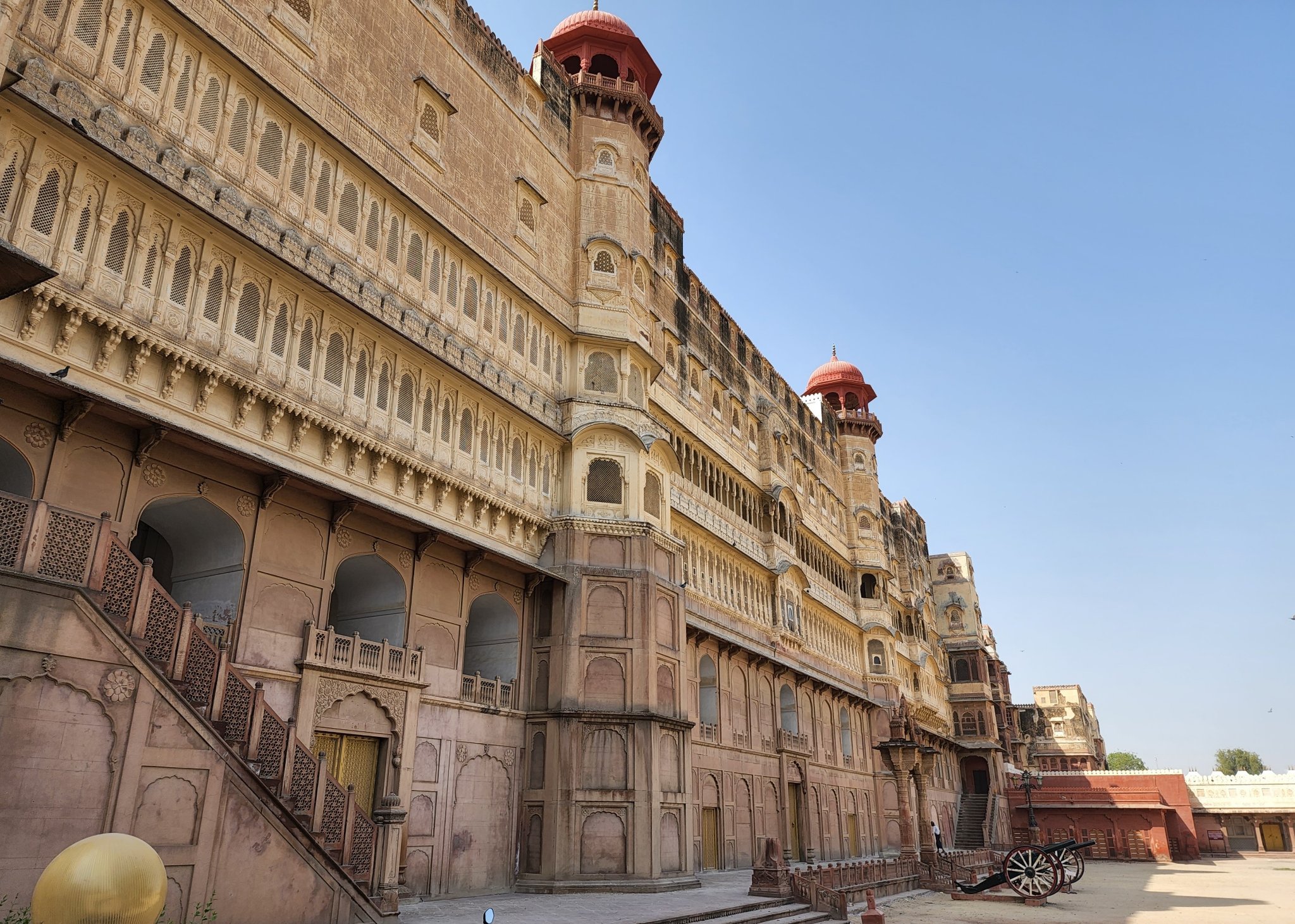
One of the major cities of Rajasthan, founded by Rao Bika, famous for Junagadh Fort and savory sweets and snacks
Bikaner fort
Deshnoke
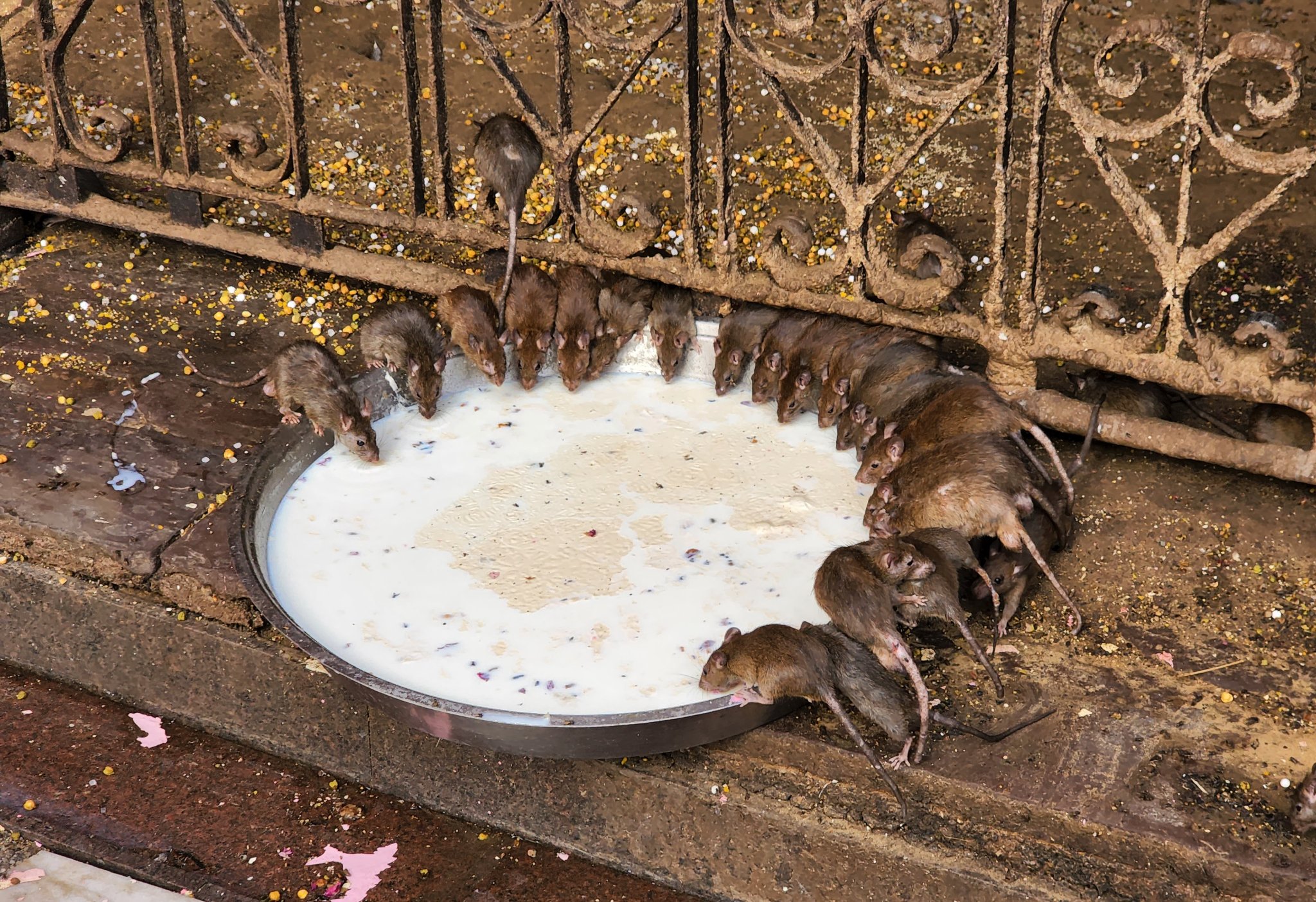
Home to the Karni Mata Temple, where rats, who are considered children of the Goddess, behave just as humans! Eating nibbled on by the rats is considered auspicious. Accidentally or deliberately killing a rat requires replacing it with one made of gold or silver as atonement.
Rats feeding on offerings at Karni Mata temple
Kolayat
The place where the Vedic Sage Kapil (Kapil Muni) is said to have shed his body. Home to a lake and temples on its bank.
Lake at Kolayat
Bundi
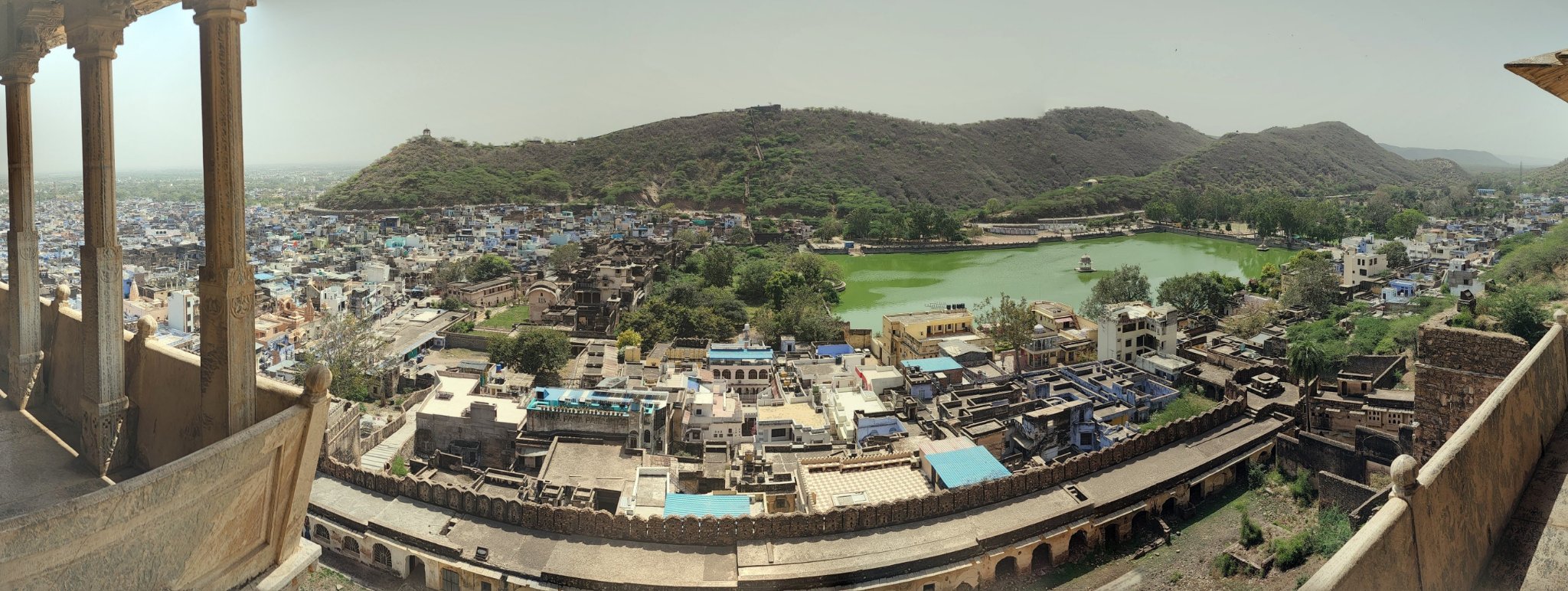
A quaint town nestled in the Aravallis, with an imposing hill-side palace overlooking a lake.
View of the Garh Palace from the main road, Bundi
View of the surroundings from a balcony in the Garh Palace, Bundi
Badoli Temple Complex
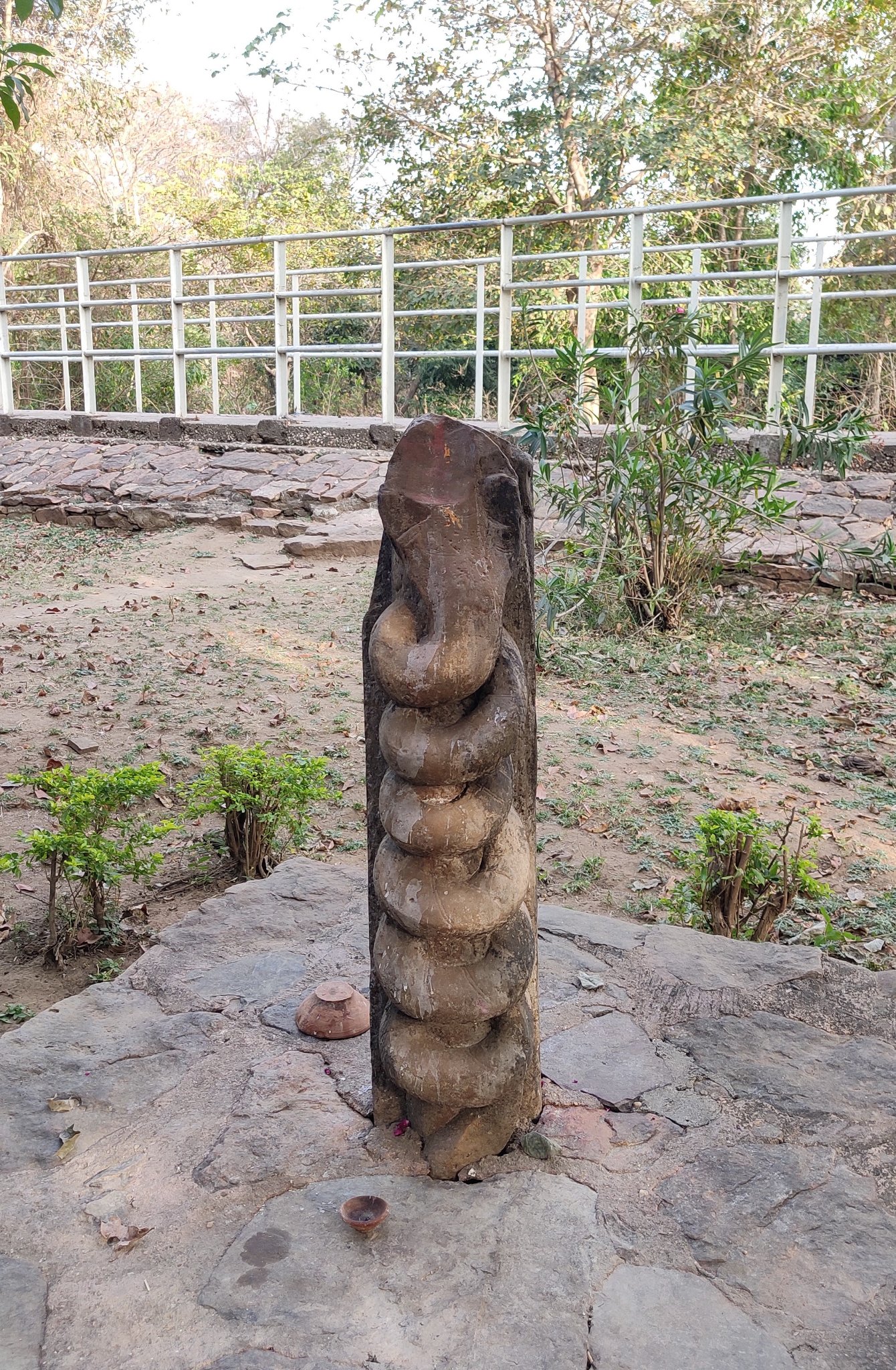
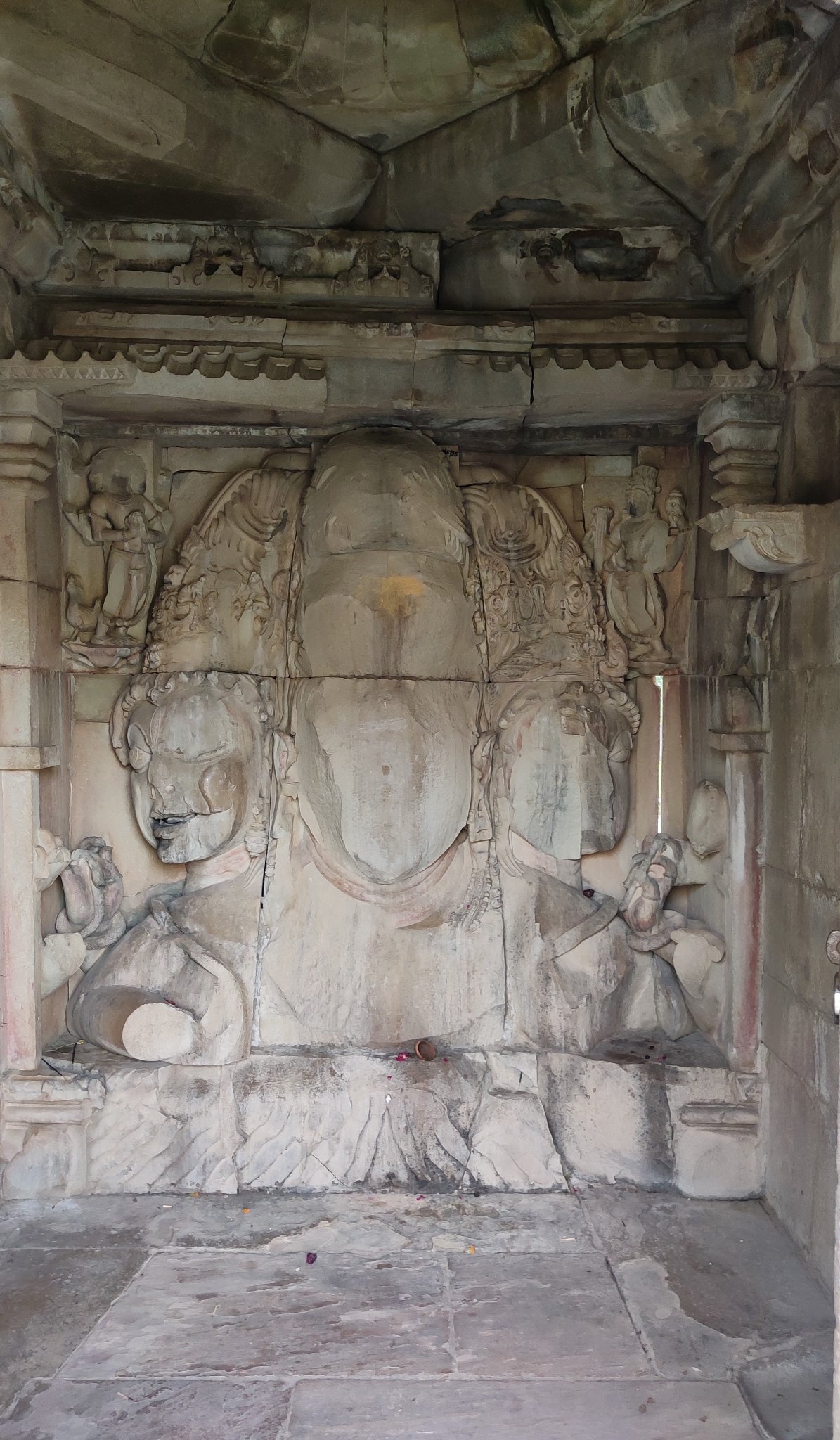
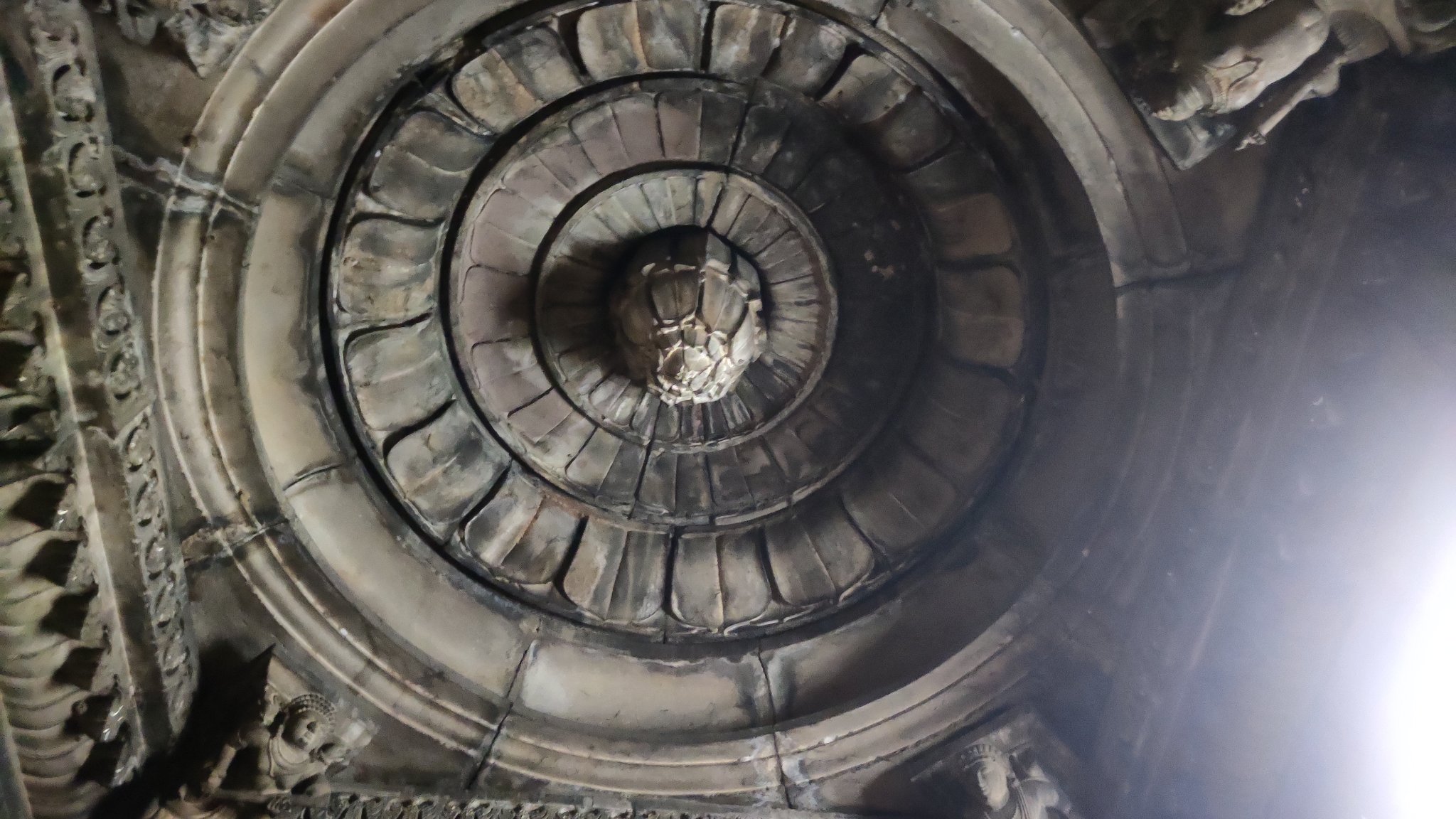
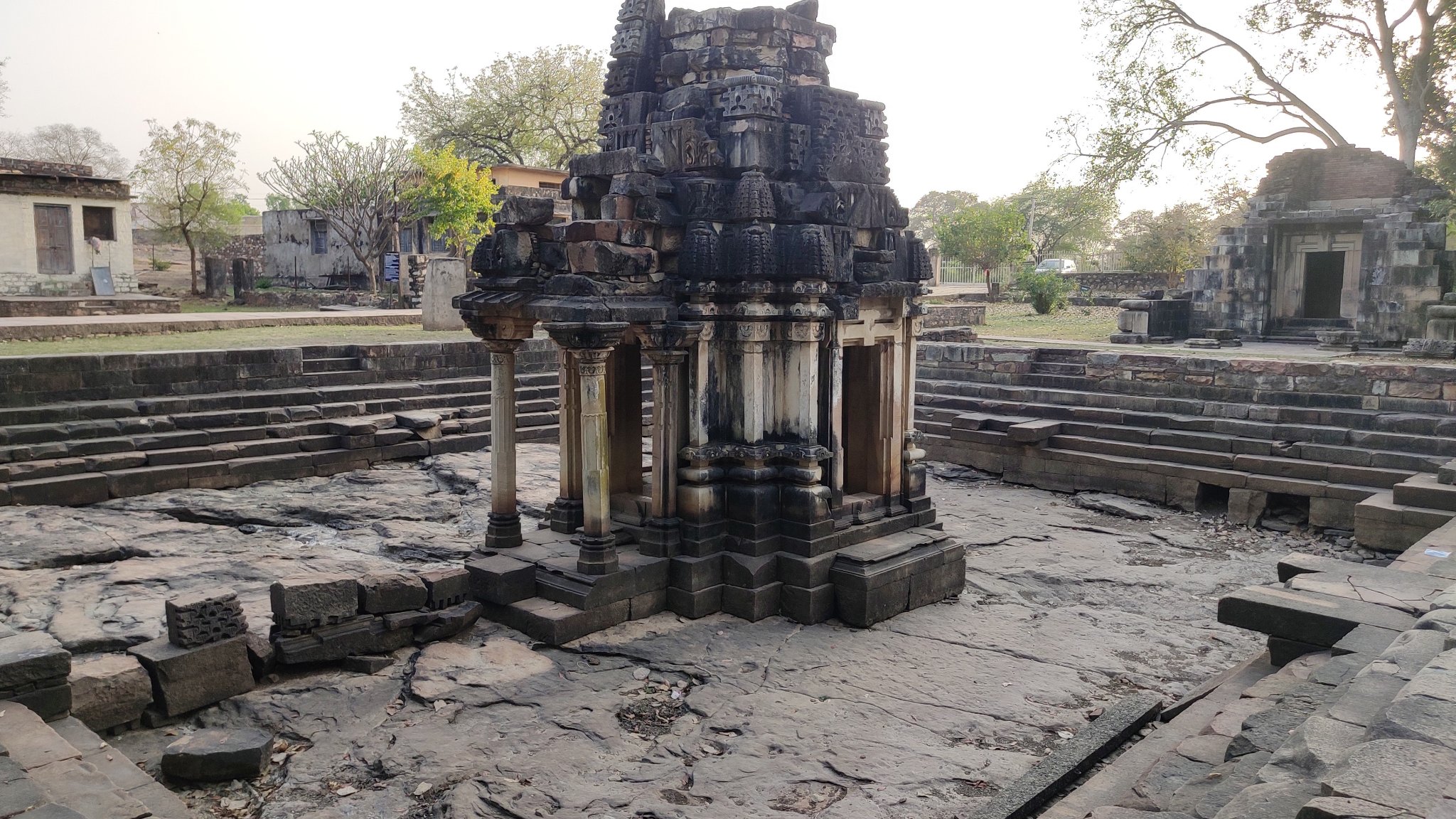
A 10th-11th century temple complex which crept into our plan by serendipity as we were short on time to visit the Gagron fort. The temples, dedicated to Shiva, Vishnu, Ganesha etc., were built by the Gurjara-Pratihara dynasty, and are described as one of the best representations of the temple. Situated on the banks of the Chambal just outside the village of Rawatbhata, it can be reached from Kota through winding roads cutting across hills and forest. As the sun was beginning to set, the ride through the forest was a race against time, and quite the adventure!
Glimpses of the Badoli Temple complex
Ranthambore Fort
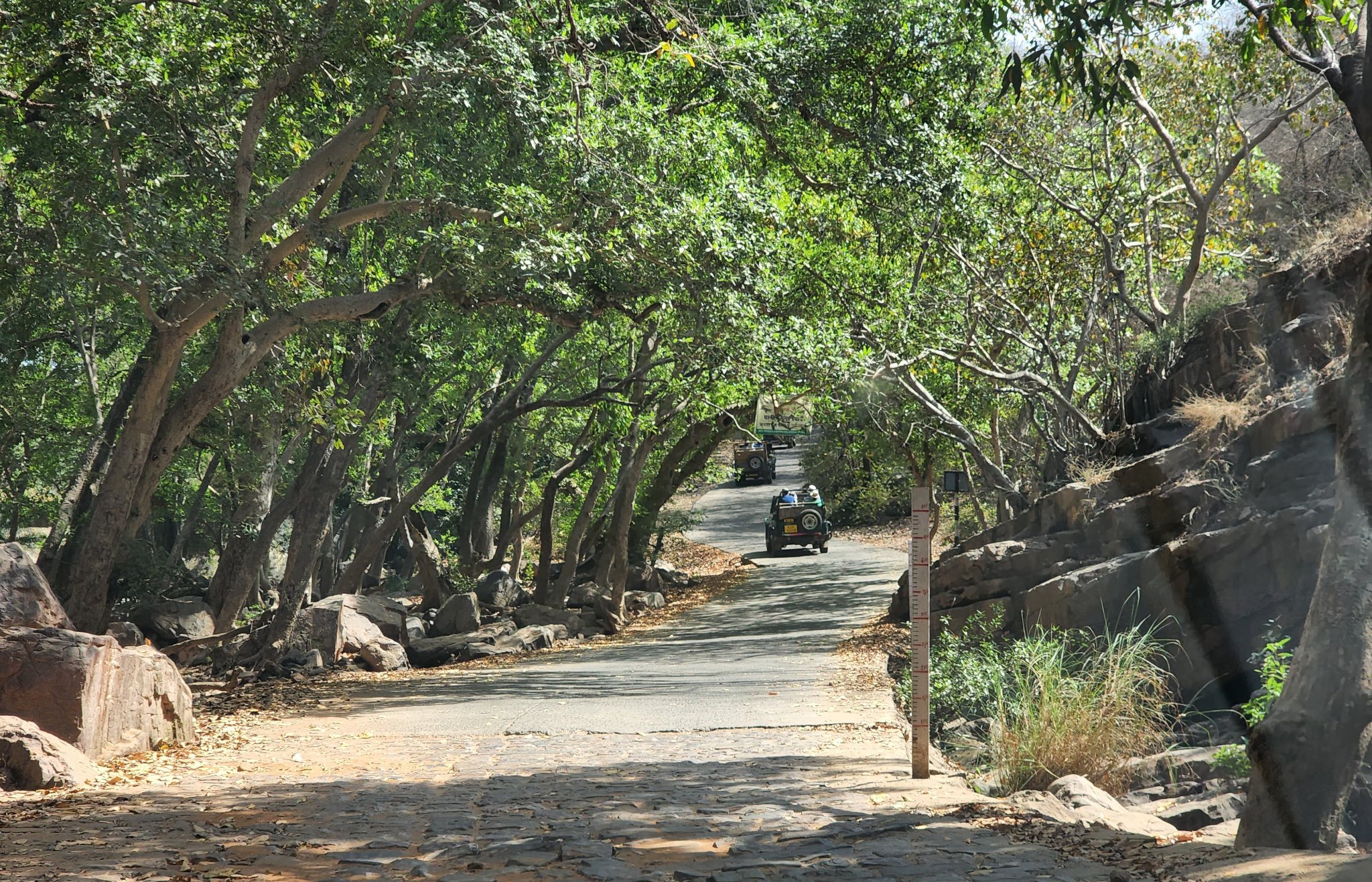
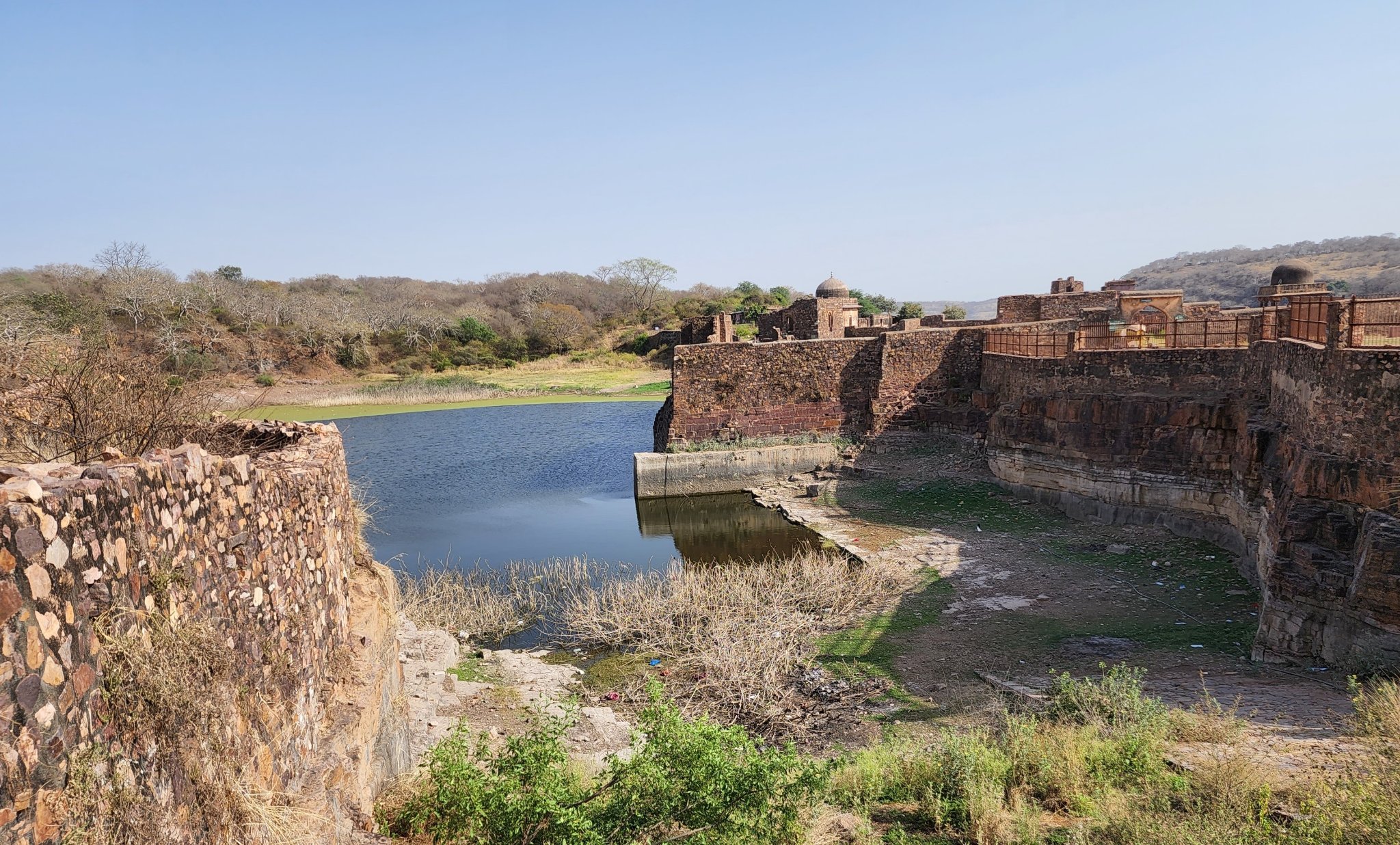
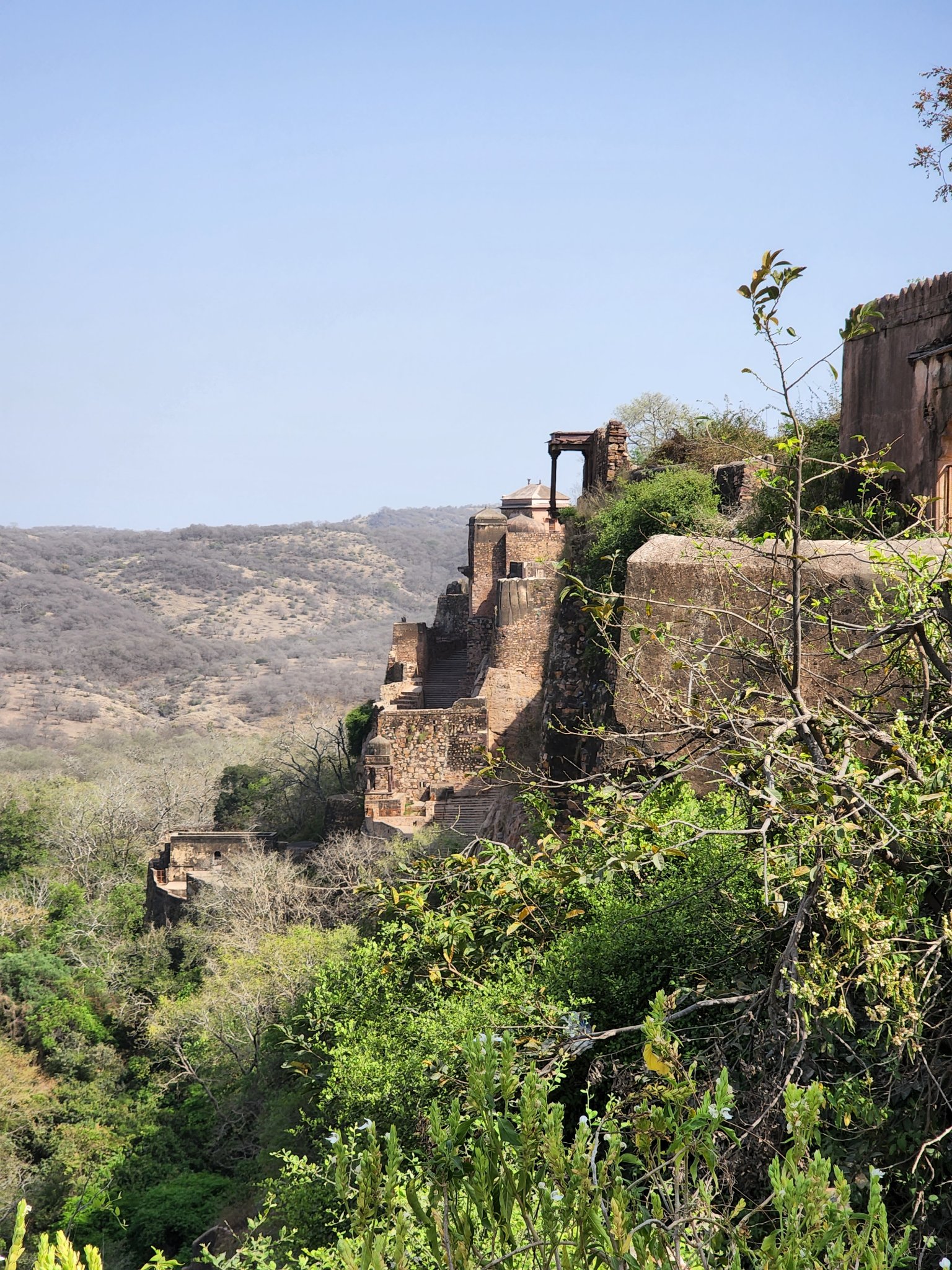
Rounding off the trip was the magnificent and legendary Ranthambore fort, situated on top of a hill right in the middle of the Ranthambore Tiger Sanctuary. The ride through the forest is memorable and so are the sights from atop the fort.
Approach road leading to the Ranthambore fort through the Ranthambore sanctuary
Water tank inside Ranthambore temple
The entrance road to Ranthambore fort as seen from a ledge inside the fort
Trip Summary Day 1: Gurgaon to Hanumangarh via Sirsa (lunch break in Sirsa) Saw Bhatner fort at Hanumangarh (overnight stay in Hanumangarh)
Day 2:
Hanumangarh to Kalibangan Kalibangan to Suratgarh via Badopal (lunch break in Suratgarh) Suratgarh to Bikaner via Lunkaransar (overnight stay in Bikaner)
Day 3: Bikaner fort early morning (lunch at Bikaner after seeing the fort) Bikaner to Deshnoke to Kolayat, and back to Bikaner (overnight stay in Baikaner)
Day 4: Bikaner to Jaipur via Sikar (overnight stay in Jaipur)
Day 5: Jaipur to Bundi Bundi to Badoli Temple complex (Rawatbhatta) Badoli to Kota (overnight stay in Kota)
Day 6: Kota to Ranthambore Ranthambore to Gurgaon via Dausa and Manoharpura
Alighting from the Haryana Roadways bus at Hansi, 20km before Hisar, my first reaction was one of regret. It was already 6pm and I was circumspect about the situation I had gotten myself into owing to my mad uncontrollable urge to venture into the Harappan Civilization clusters in and around Hisar. But then I fired up Google Maps and walked towards the Hansi Fort. And am I glad I did!
Earlier that day, I had ditched the India-Australia World T20 Cricket final 10 overs in, when it became clear that India were going to be decimated. And still reeling from the after-effects of finishing the book ‘The Lost River: On the Trail of the Sarasvati’, I had packed a few bare essentials and taken a bus to Hisar from Gurugram bus-stand, with no itinerary in place, except for one pointer – get as far into the purported Sarasvati Valley as possible.
The only trouble was – I did not know how to get there. A colleague from the Hisar region had earlier dissuaded me from venturing solo into that area. In fact, he did not know about the Harappan sites around Hisar. It also didn’t help that there was little material on the internet pertinent to tourists addressing these Harappan sites.
So in Hansi as I walked towards the fort through the city’s old-fashioned streets, and passed through the Barsi Gate, I pacified myself visualizing Prithviraj Chauhan’s troops rolling in. The Fort would have been closed by 6pm as per Google – still, something kept me clambering up the hilly incline to the entry point of the fort, where I realized there was no closing time, and there were most certainly no closed gates. With the sun already down, I entered the final gate and presently came upon the fort enclosure set upon the plateau atop the hill. As the few remaining visitors retreated in the twilight, I started surveying the scattered structures.
By the time I was done, it was pitch dark and not a single soul was in sight. With my heart pounding, but my blood awash with adrenaline, I was leaving a subterranean long hall-like structure with nothing but darkness inside, when I chanced upon silhouettes of 3 people sitting near the roof of the structure. If I had any survival instincts intact, my first reaction should have been to flee. But I decided to approach them to inquire about the structure. And as it would turn out – all I had to do was ask!
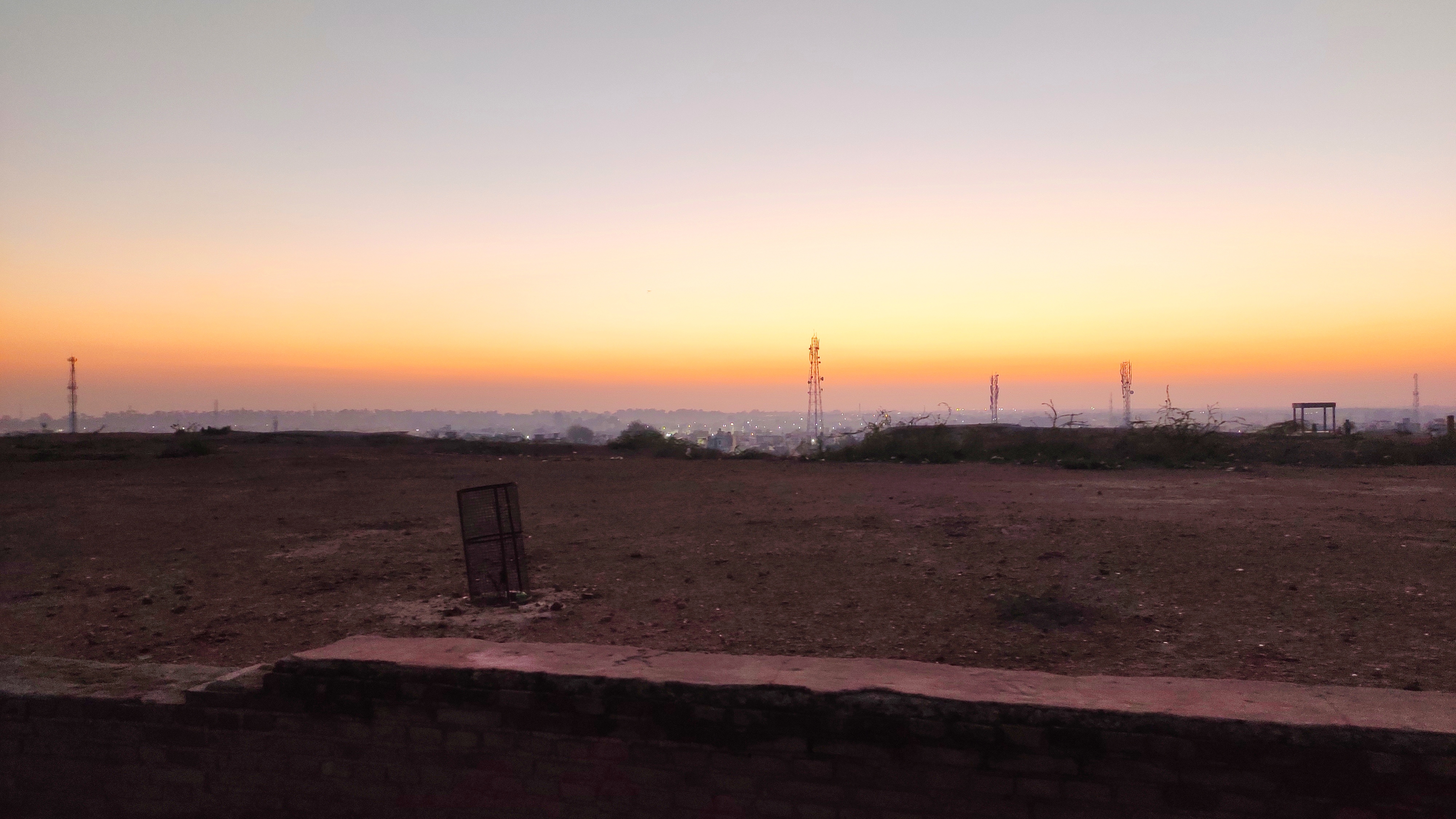
A view of the city from atop Hansi fort in the quickly engulfing darkness
They told me the structure was an erstwhile horse-stable, and as we spoke about the fort, they asked me as to what brought me to Hansi. I explained I had landed in Hansi since it would be the nearest hub to the Harappan sites, which I had been keen on exploring for a long time. One of these persons, who I learnt was from the Tehsil office, was so impressed with my motive that he assured me it was quite easy to reach these sites, especially Rakhigarhi, and he promptly gave me the phone number of a Mr. Ram Niwas, a Rakhigarhi resident no less! and local Tehsil official. He suggested I call him before I reached there.
So with an apparent lead in hand, I left the dark confines of the fort, illuminated with renewed hope of realizing my dream of setting foot on a Harappan site. I checked into an inexpensive lodge in front of the bus-stand, got little sleep from anticipation of the next day’s events, and woke up late! As I was stepping out after having a cheap quick breakfast, I beheld a bus headed to Jind already leaving the bus-stand exit. I ran in parallel to the driver’s window, asking in a scream if the bus was going to Narnaund. The bus slowed down, and I scurried around the front side of the bus and hopped onto it.
In 30 minutes, I was at Narnaund, where the diversion to Rakhigarhi originated. I called up Mr. Ram Niwas and in a short conversation comprising sentences alternating between pure Haryanvi from his end, and Hindi from mine, I only deciphered that he would indeed meet me at Rakhigarhi. I hopped onto a Scorpio that was carrying passengers headed to Rakhigarhi, and following 20 minutes of riding on a well-laid road, squeezed amidst the village folk, I was standing at the main cross of Rakhigarhi village.
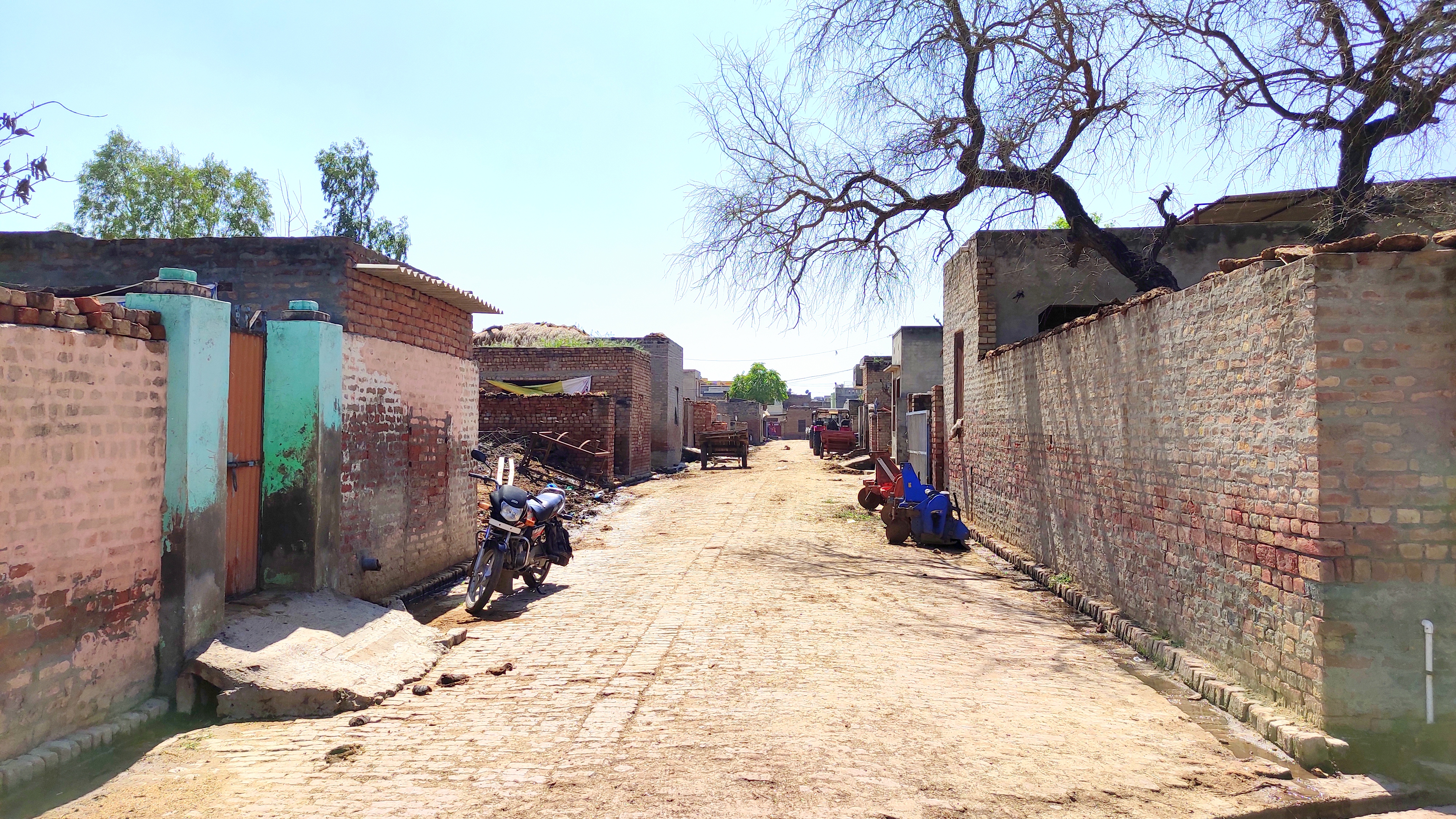
Thereupon, Mr. Ram Niwas appeared on a motorcycle. He was nothing as I had imagined. Ram Niwas ji is a lanky white-mustachioed soft-spoken elderly gentleman, somewhere in his late 50s or early 60s. After exchanging pleasantries, I rode pillion with him towards his home ensconced somewhere within the rows and rows of brick-walled houses. The brick-laid streets for the most part cut each other perpendicularly, and in places, were slushy from puddles of rainwater and patches of cow-dung. On some walls, cow-dung cakes hung drying in the sun. Neat open drains lined both sides of all the streets we traversed.
One of the wider typical Rakhigarhi streets
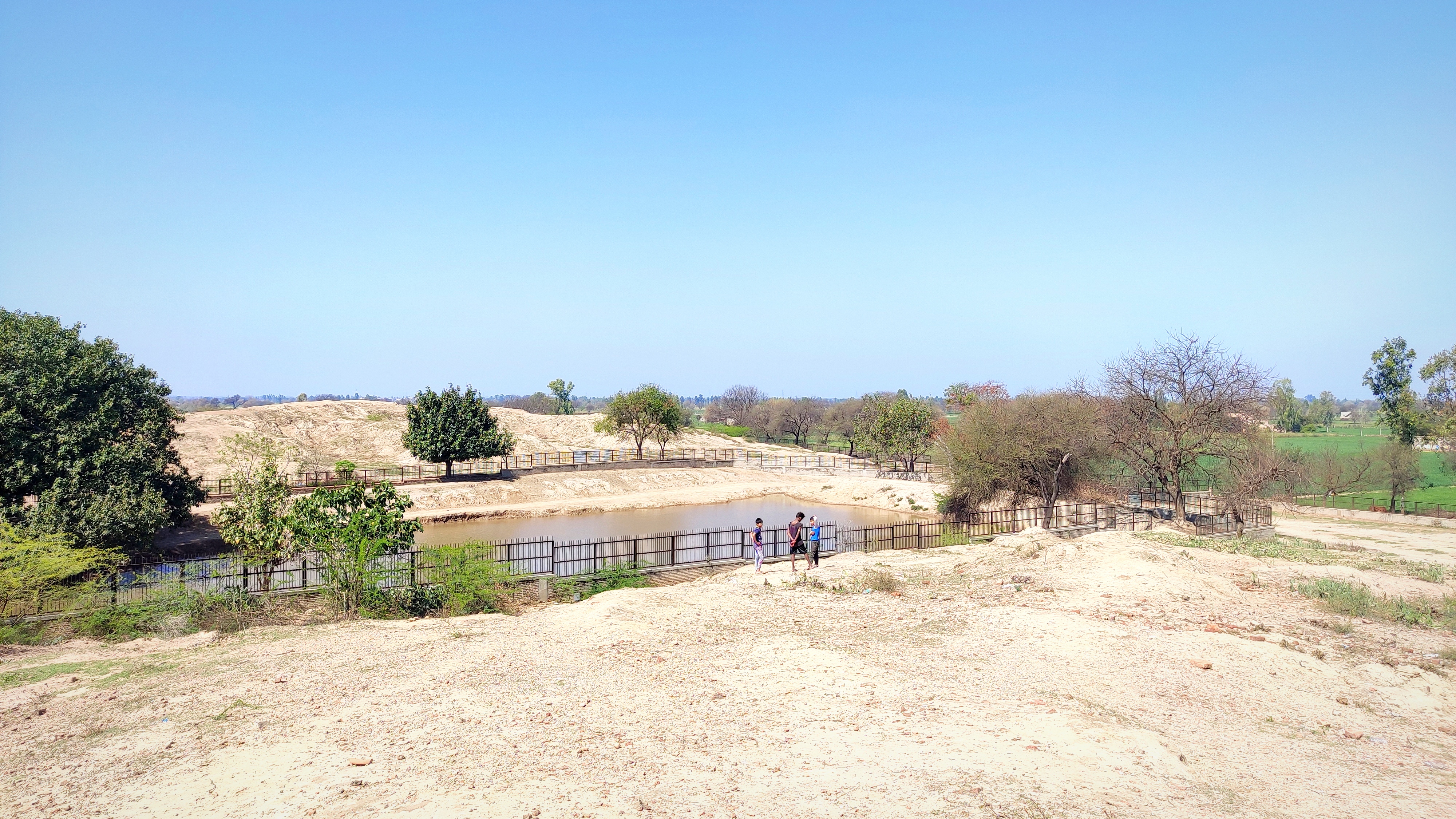
The route we took headed to the north, went up an incline and then sloped down, and I wondered aloud if we were on one of the Rakhigarhi mounds, to which Ram Niwas ji answered in the affirmative. As we rode further down the slope I could see two huge mud mounds before me, one straight ahead and another to its left, with iron fences delineating each from the other and from the village streets. Turning to the east for a short distance, we turned south again into a lane which again went up an incline and suddenly diverted towards the left and opened up again to reveal a couple of havelis large enough in comparison to the basic box-shaped brick houses below, of which one belonged to Ram Niwas ji.
In his quaint unadorned drawing room that opened directly into the lane, we had tea and introductions to other members of his family. Ram Niwas ji laid out the plan for the day – he would show me around all the mounds and the upcoming museum on his motorcycle, and get me to speak to somebody who would then be able to identify the mounds from the pictures I showed him. And then I would have to have lunch! To my perfunctory remonstrations, his gentle yet firm Haryanvi-laced reply was, ‘khaana toh khaana padega (lunch will need to be had).’
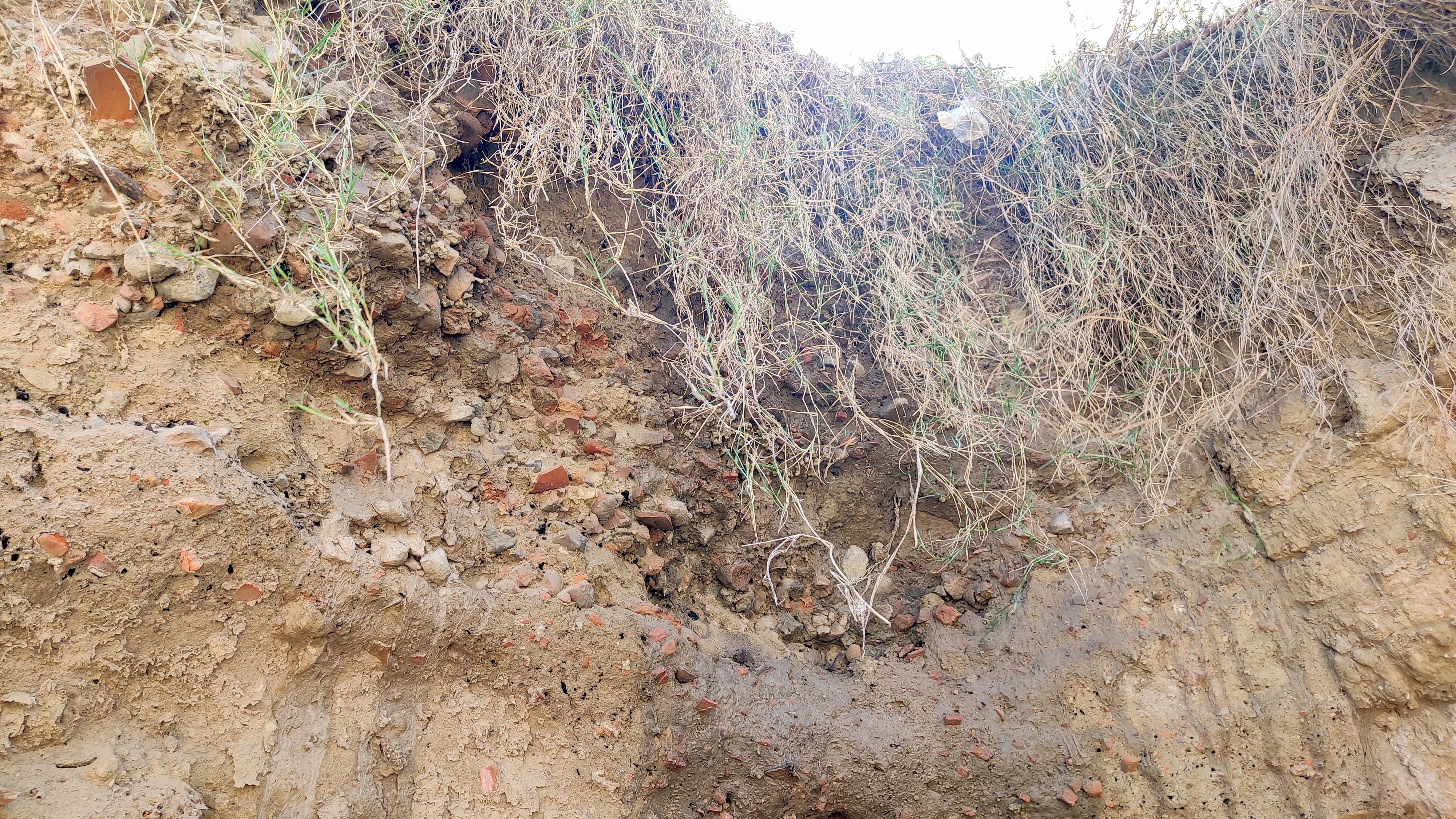
And so we went first to a mound (RGR-4) on the east side of the village where a street had been carved from one of its sides revealing the brick lining of an old Harappan structure. Taking pictures, we proceeded to the two mounds I had spotted earlier. We rode up the mound on the left first (RGR-2) upon which tall shrubs were growing and children were playing. I alighted and was taken aback by the continuous layer of pottery shards and little portions from bricks strewn across the whole surface of the mound. The mound must have been about 40m by 20m. Excavations done on this mound had been back-filled with mud on top of polymer sheets to enable easy stripping for display or exposure of the excavated parts in the future.
Old and new co-exist near this excavation on the side of Mound RGR-4Bricks of a Harappan-time structure revealed on RGR-4
I ambled across the northern side of the mound soaking in the energy of the place, transported to a day in the lives of our ancestors who inhabited the innards of the metropolis I was standing on at present. I zeroed in on a day sometime in 2500BC, where I walked through paved streets bustling with traders and carts rumbling along loaded with earthenware, and the air imbibing the fragrance of burning wood and food getting cooked in earthen ovens in the nearby brick houses. There I stood transfixed on the luscious grain fields down below, spread to the farthest my eyes could fathom, wondering if such fields stood at the same place back then or if they were now standing on metres and metres of silt deposited over more structures underneath. Ram Niwas ji told me the famous Rakhigarhi skeleton was dug up from somewhere amidst those fields.
Standing on Mound RGR-3 and looking at Mound RGR-2
Ram Niwasji with shards of ancient pottery
The mound to the east (RGR-3) was separated from the mound I was standing on, by a small pond of clear water. I walked my way to the top of RGR-3 where a small blue-coloured structure dedicated to a Pir saint stood. This mound too had pottery shards strewn all across its surface. We then rode further east to the mound (RGR-1) that had been excavated first. The same pattern of pottery shards and brick pieces strewn across the surface repeated, with the mound too having been excavated and covered up. It had other visitors besides us – a handful of Red-naped Ibises!
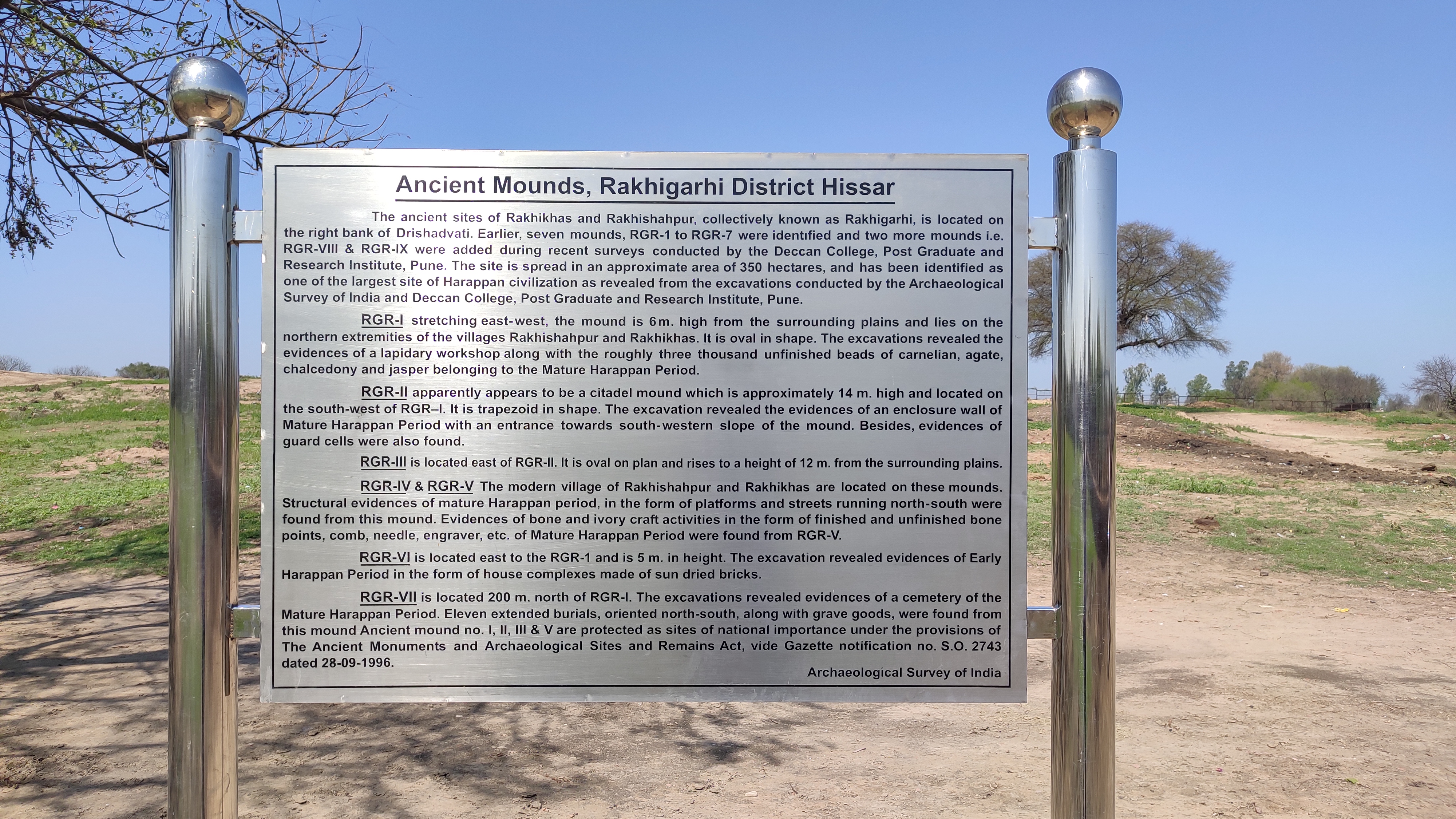
Signage at RGR-1, the first mound to be excavatedAn avian visitor – a Red-naped Ibis!
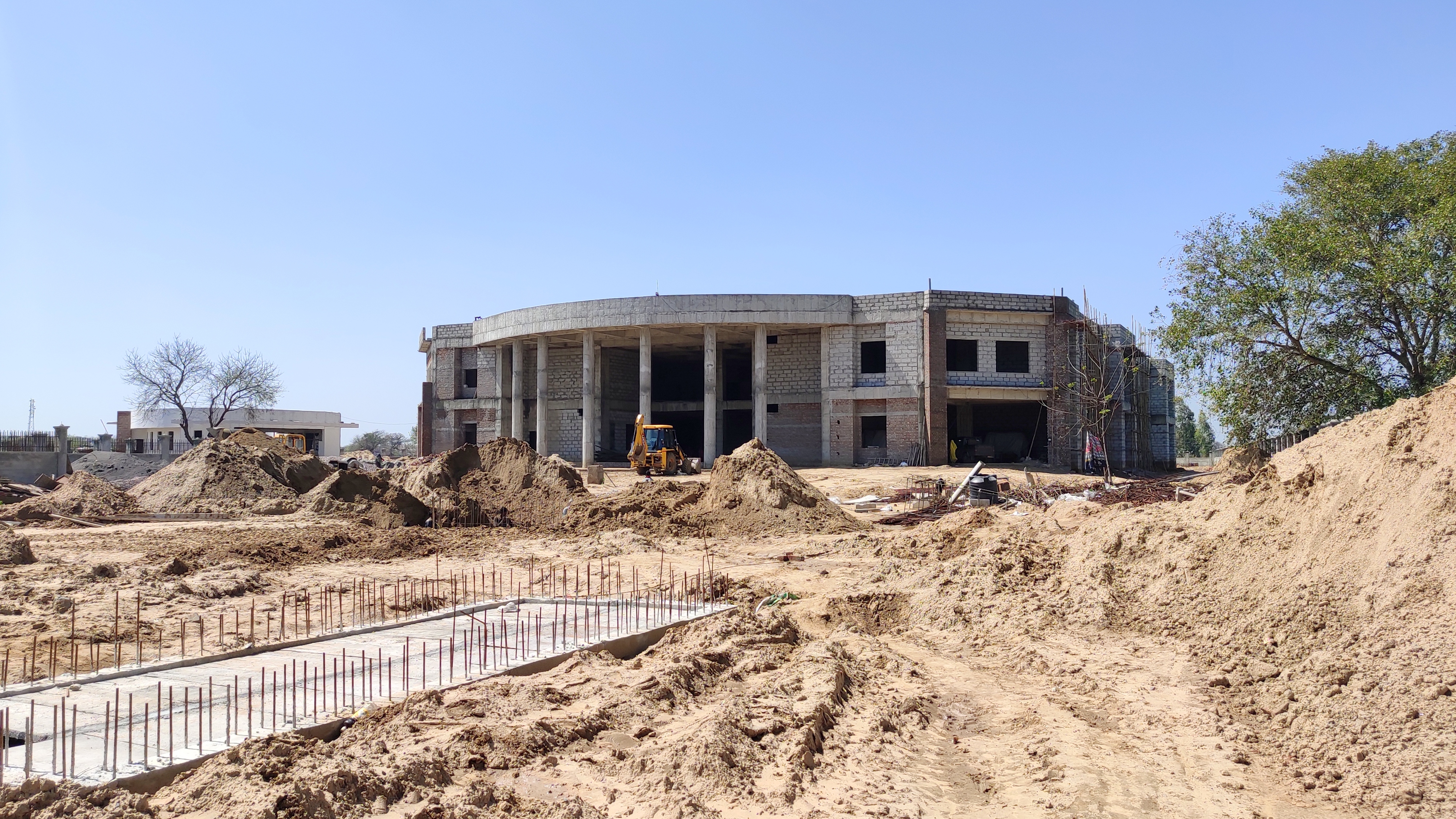
Moving further east and then turning to the north past a couple of clear-watered amply filled ponds, we got to the sprawling Rakhigarhi Museum, which is still under construction and is expected to be up-and-running in 2 to 3 years. Locals believe that once the Museum comes to life, and a settlement has been reached between the villagers and the Government with regards to the rehabilitation of locals whose houses are built on two major mounds, Rakhigarhi would be a major tourist hub.
The sprawling Rakhigarhi musuem under construction
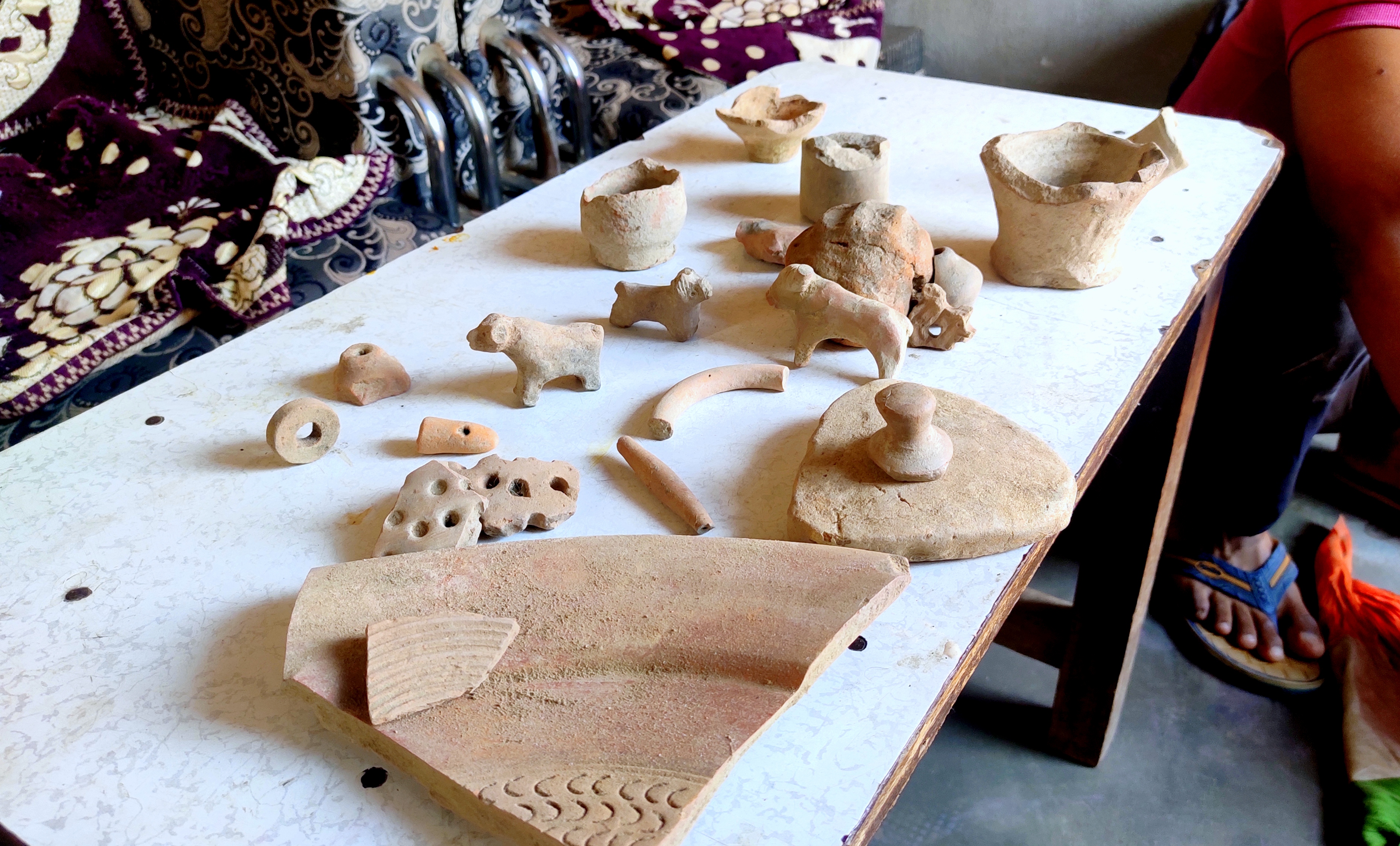
It was already 2 hours since we had been riding around, and once back at Ram Niwas ji’s place and after having a spartan yet filling meal of chapatis and raita, another surprise awaited me! Ram Niwas ji’s younger son, in his early 20s, took me to one of the rooms where a waist-high iron chest lay huddled in the corner. From there in, he extracted a cloth wrapped into a pouch and opened its knots to reveal several relics gathered from the mounds – terracotta toys including miniature animals such as the bull and the dog, pieces of pottery of different styles and a seal! He went on drawing out relic after relic – this cloth pouch being the figurative gift that kept on giving – until I asked him to stop. My glee upon being able to touch these pieces from the past knew no bounds – money couldn’t buy the preciousness of the objects I held in my bare hands!
Treasures from Harappan times – terracotta figures and earthenware
At last it was time to bid adieu. Ram Niwas ji vehemently refused to accept some money I offered as a token of my appreciation. I touched his feet and got into his car with his son, who dropped me back at Narnaund. From there as I retraced my way back to Gurugram through Hansi on a local bus on the wide smooth highway, I could not help but smile at the sight of the seas and seas of wheat and mustard fields lining both sides of the highway. Whenever I saw a mound-like elevation, I wondered if there were cities of the past buried underneath. Maybe I used to live in one of them.












 The Timber Trawler