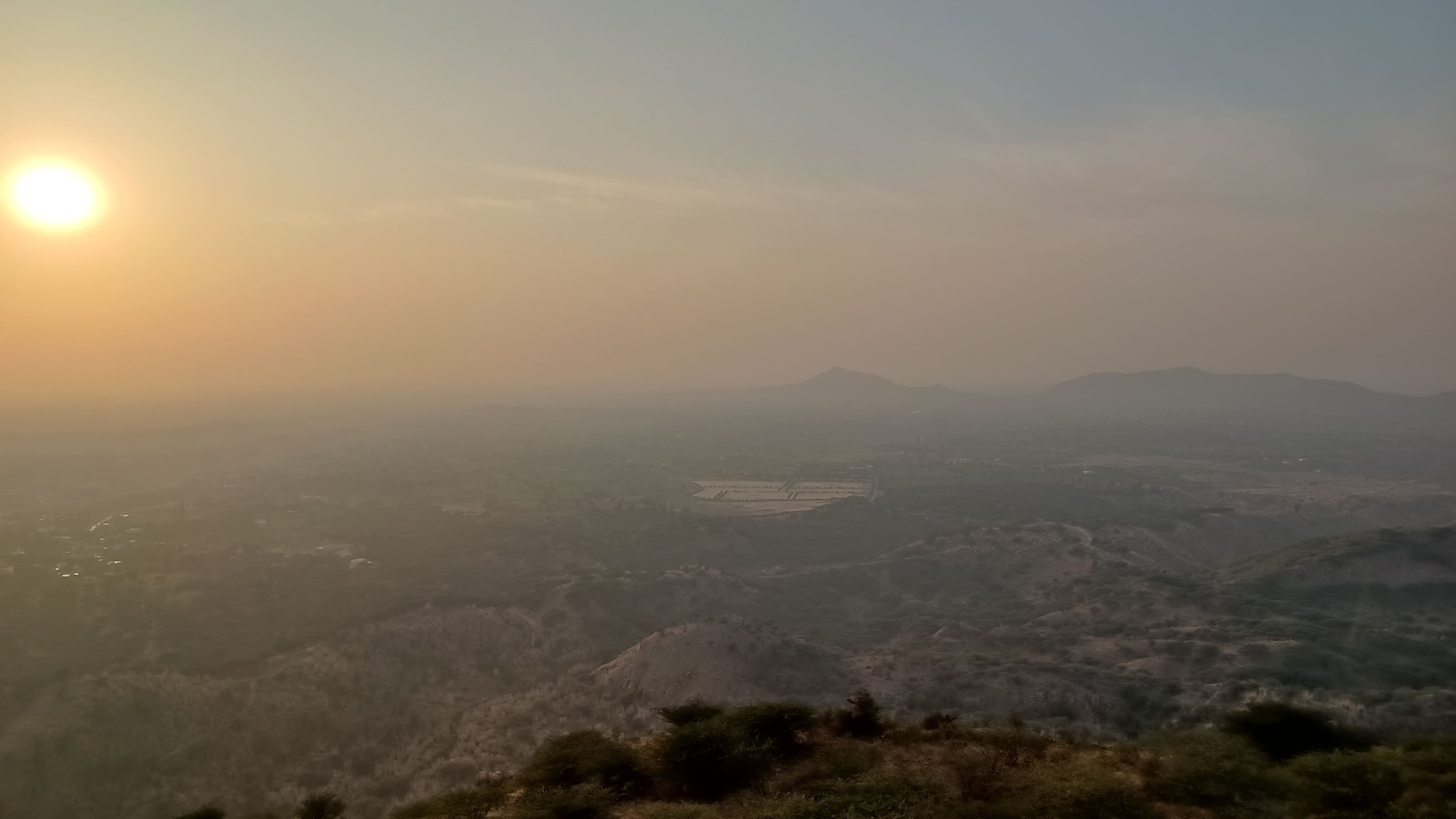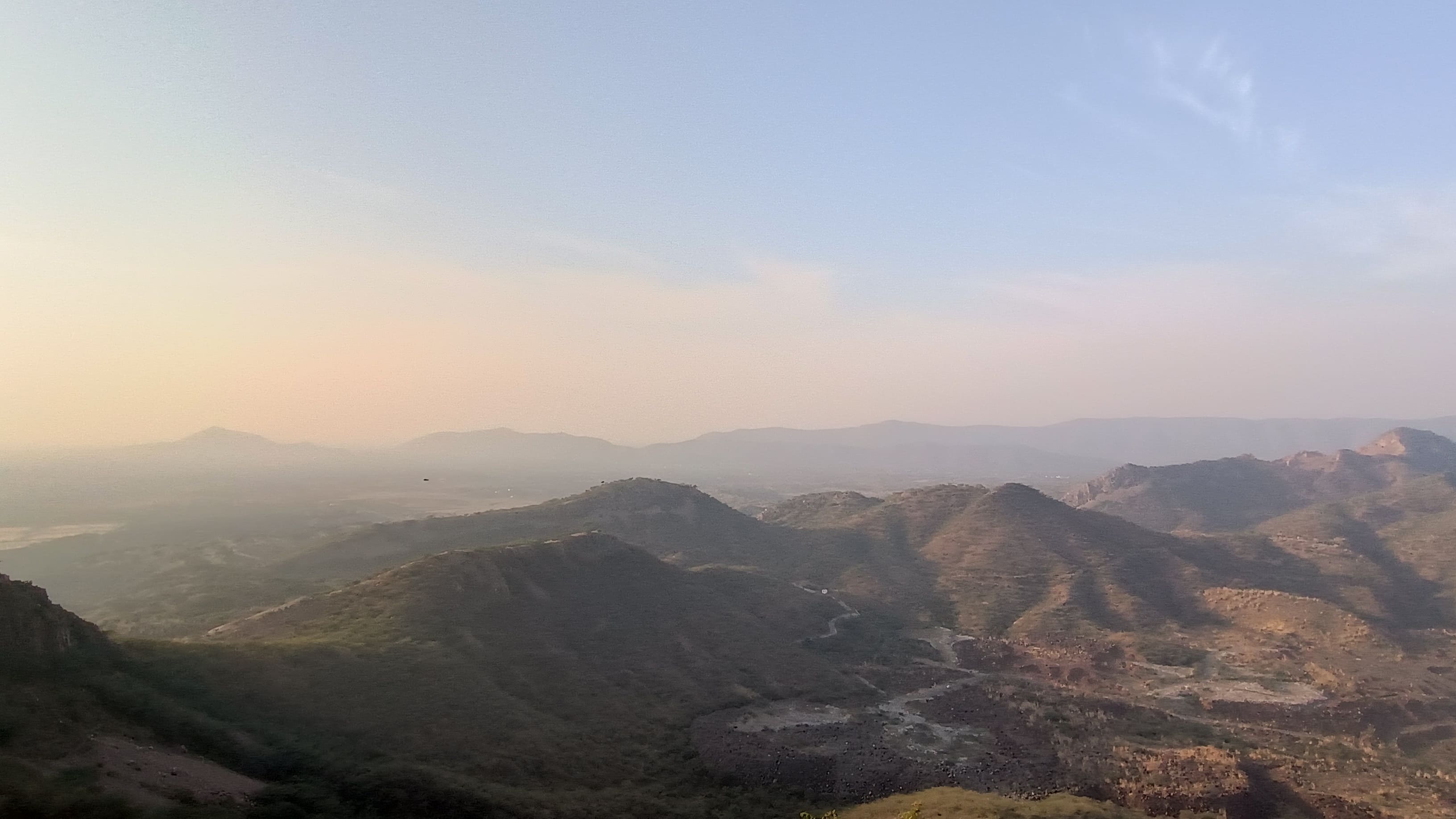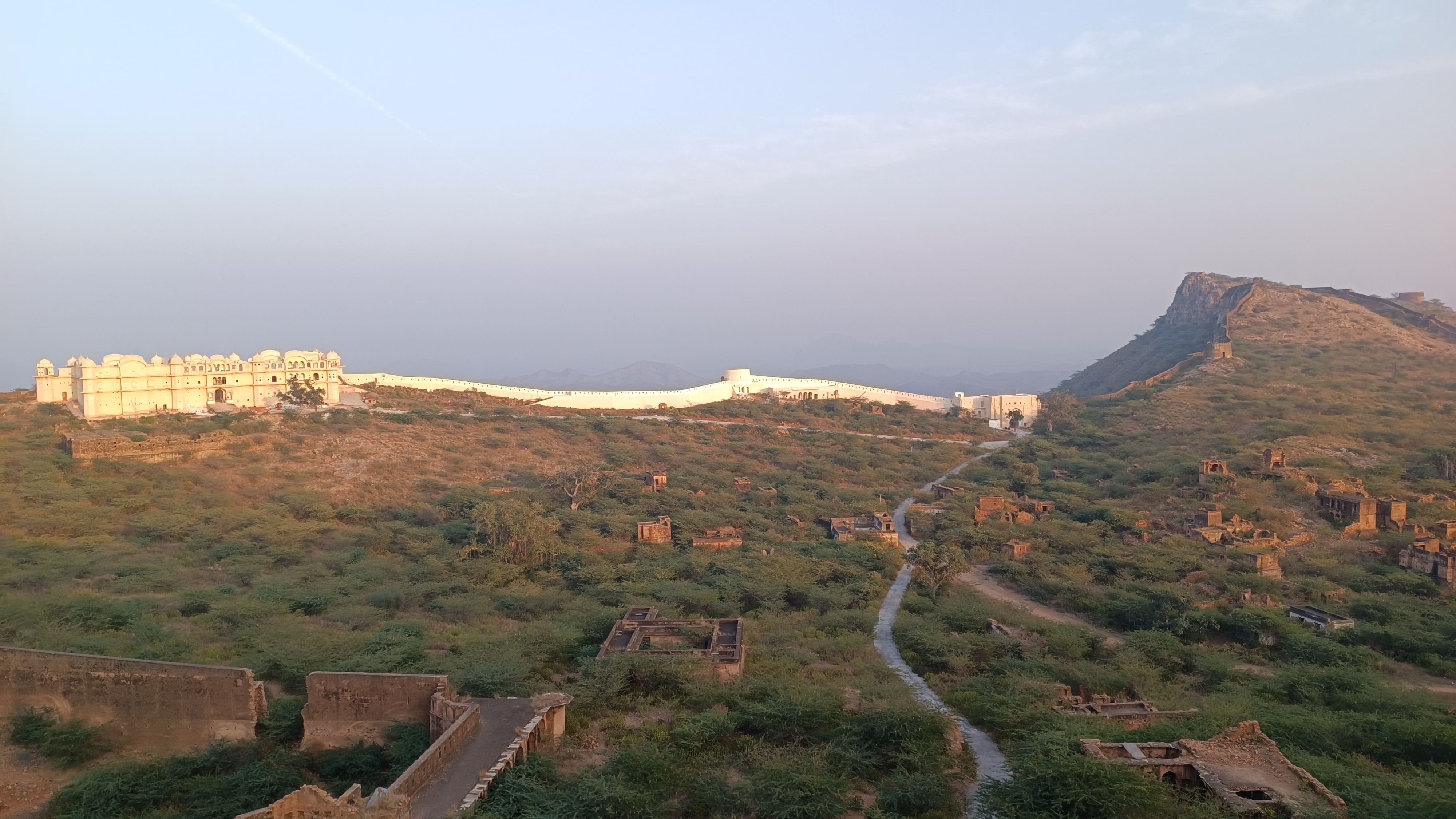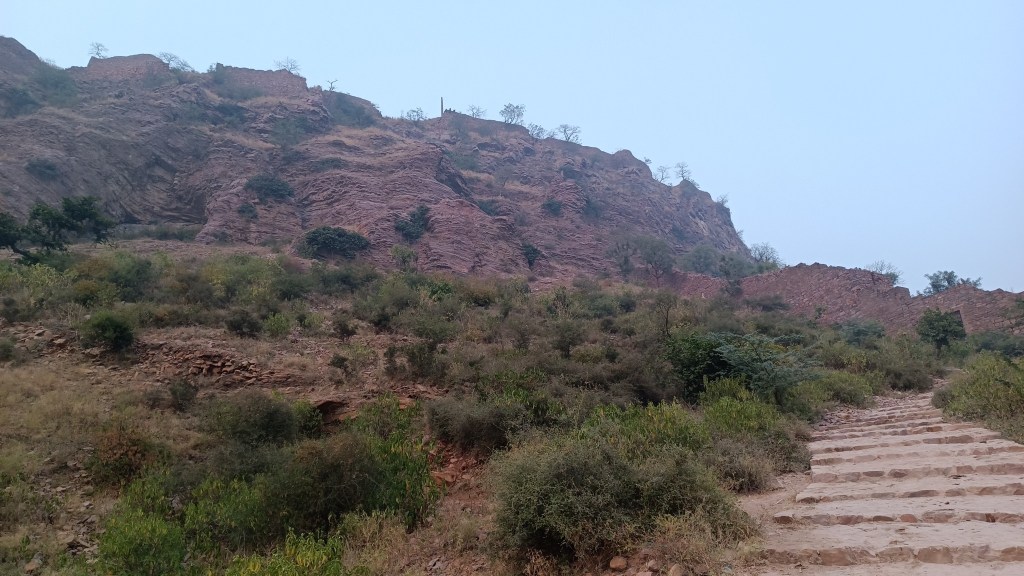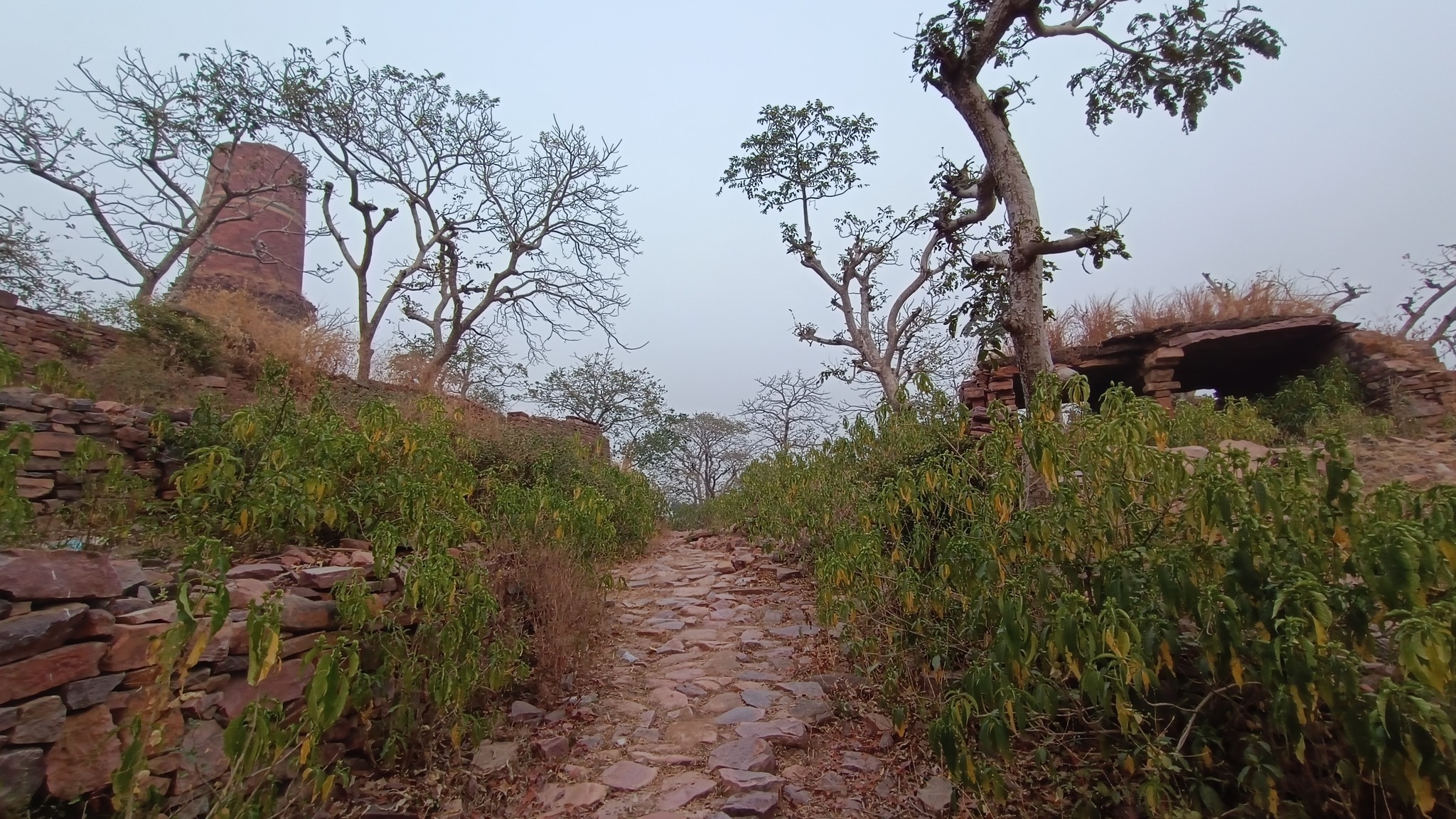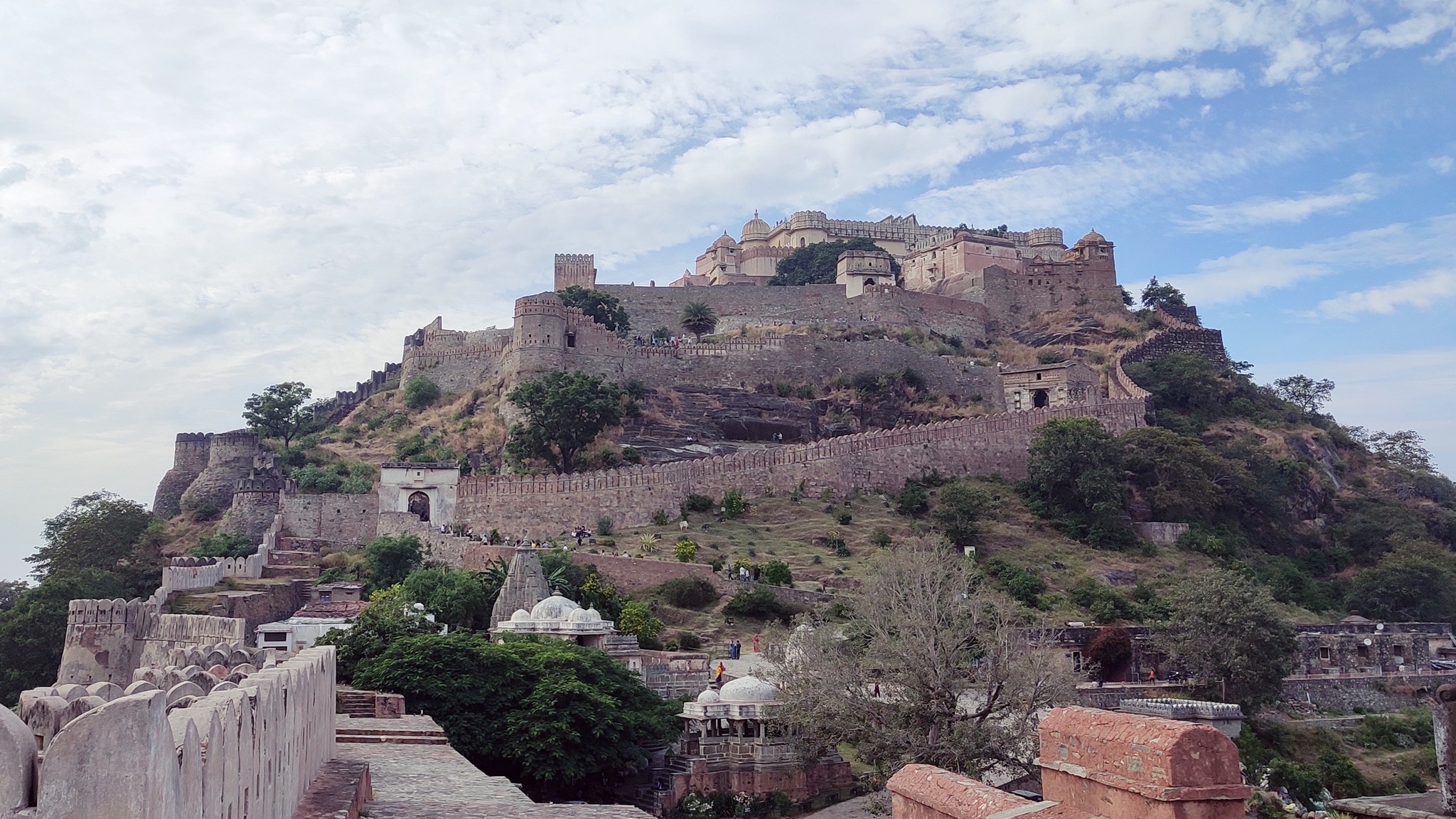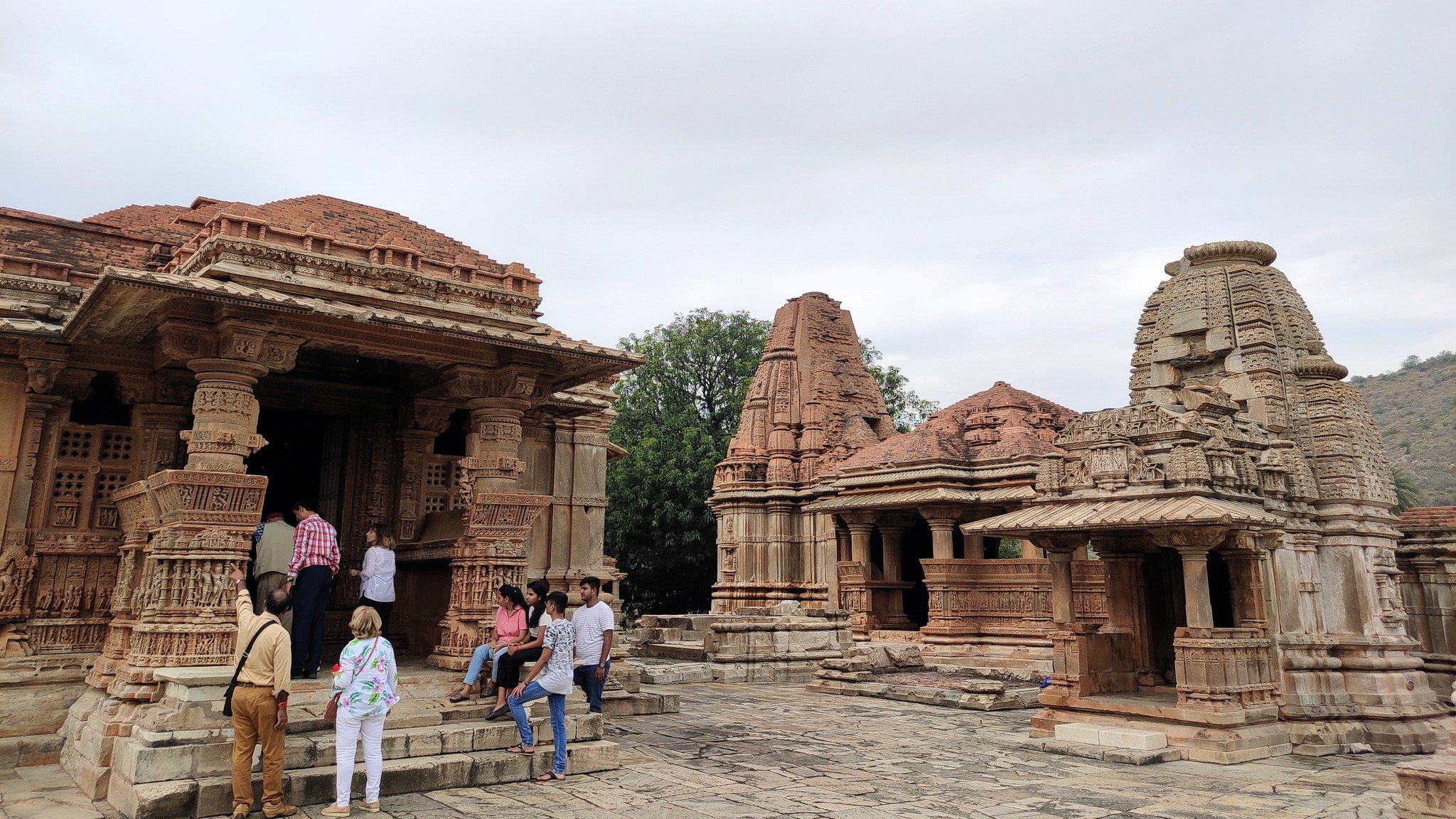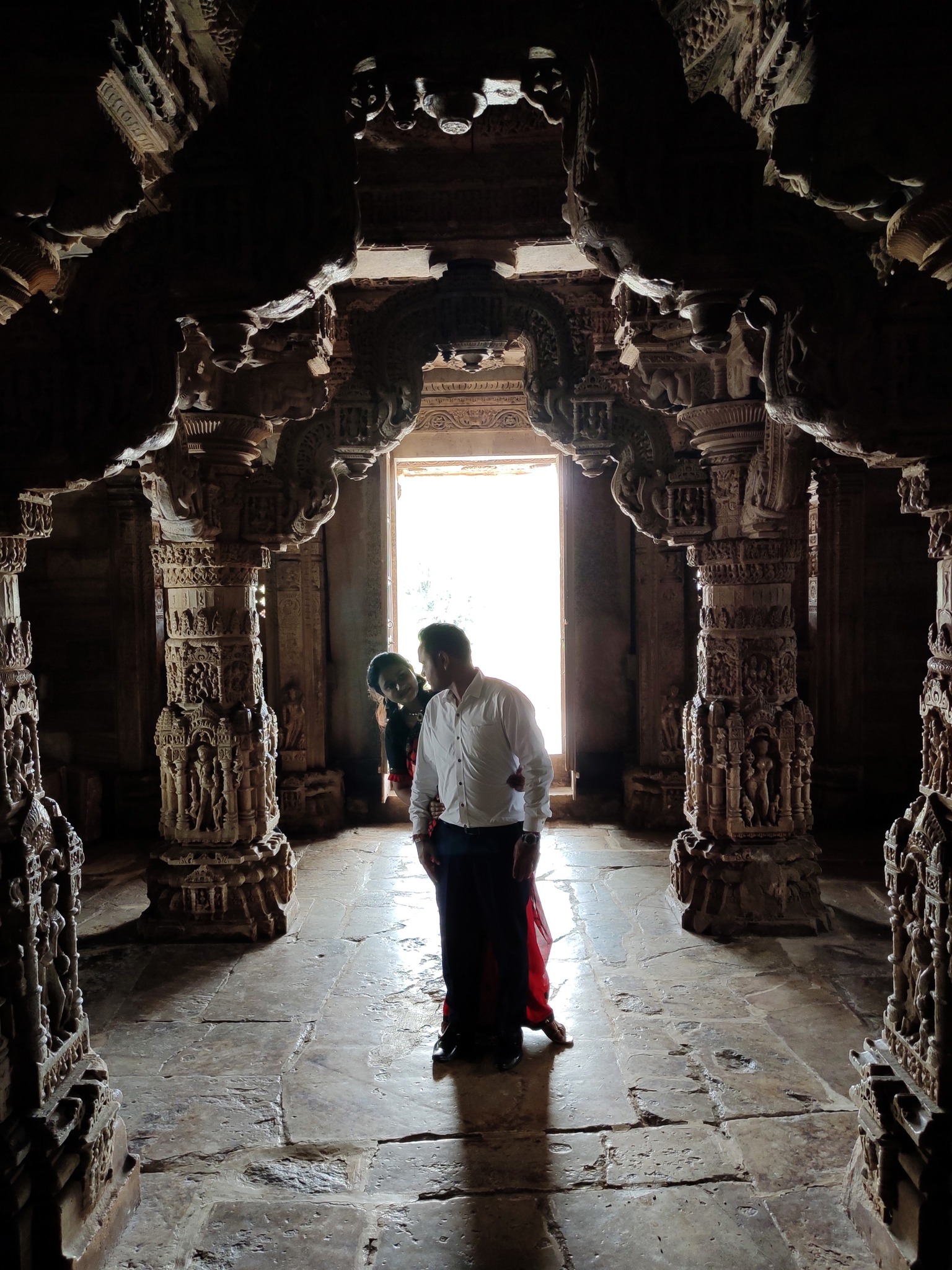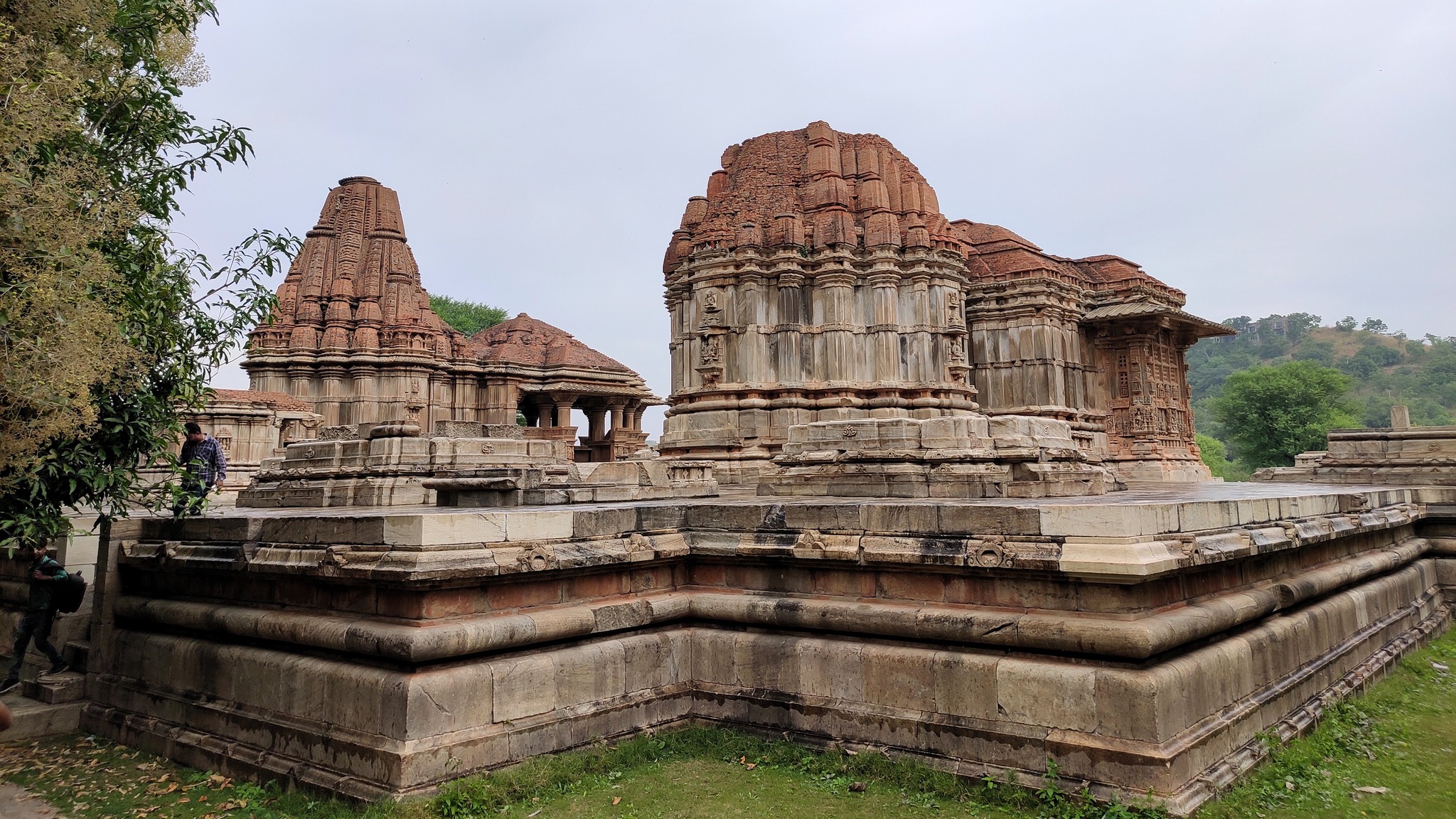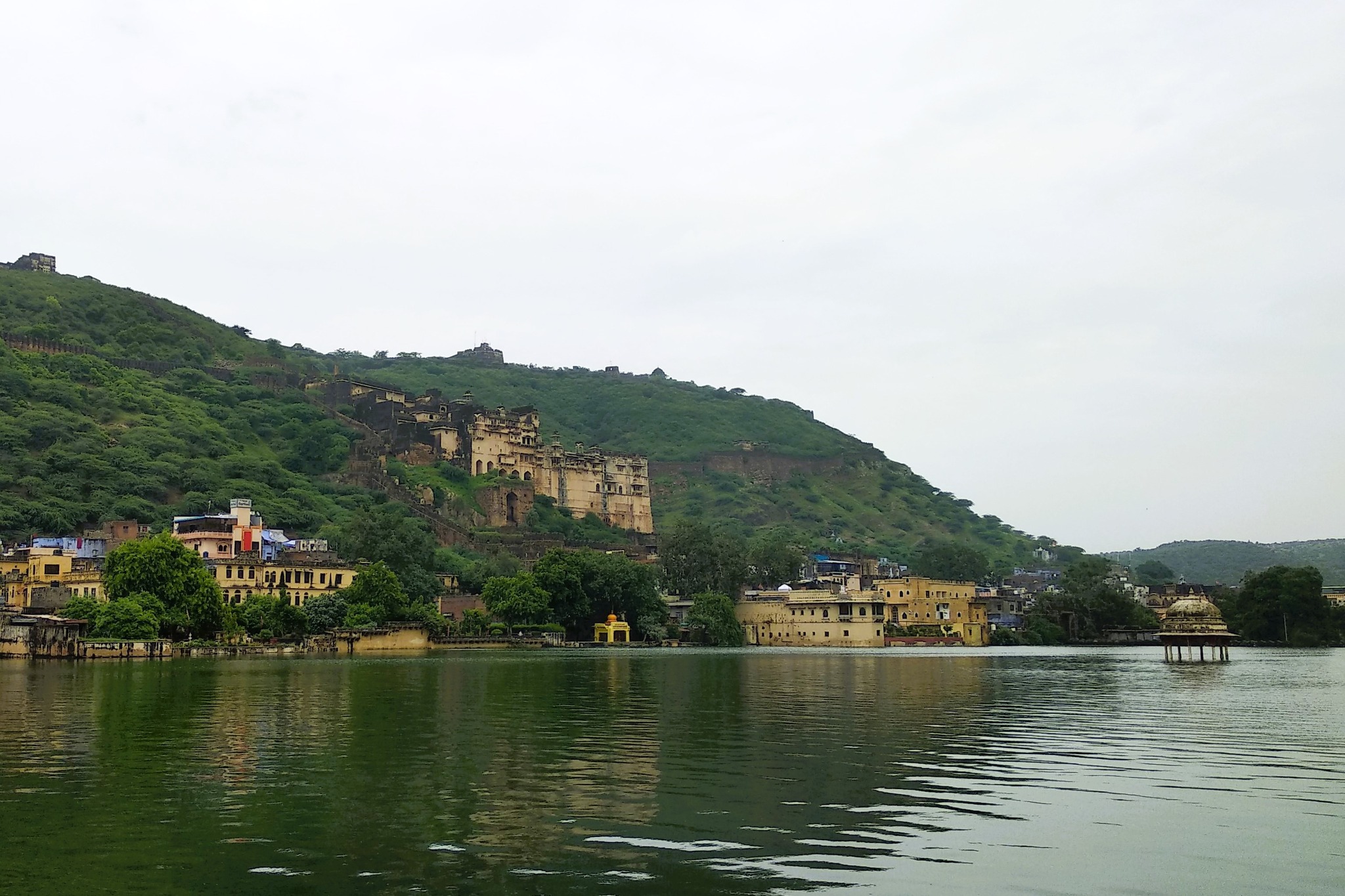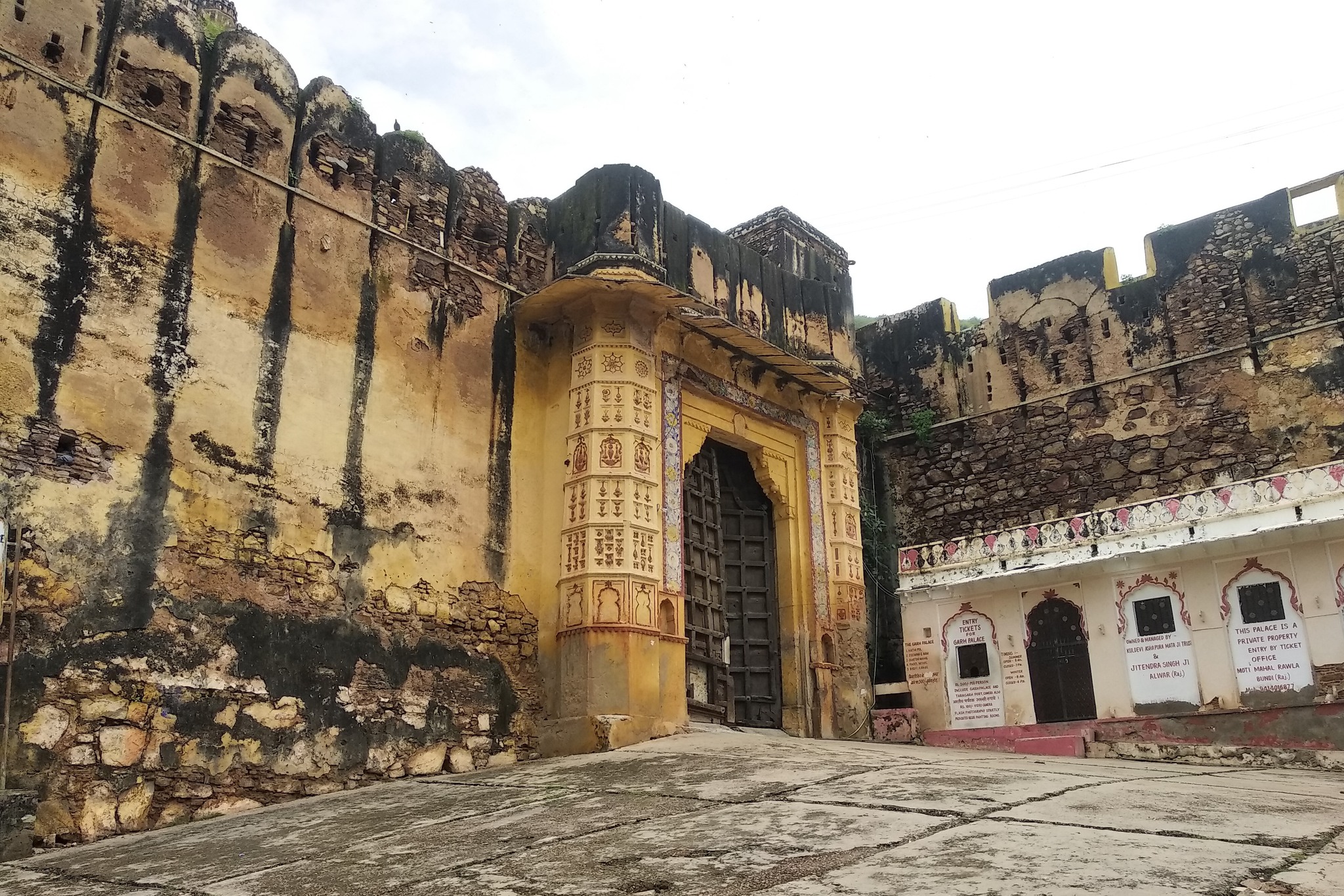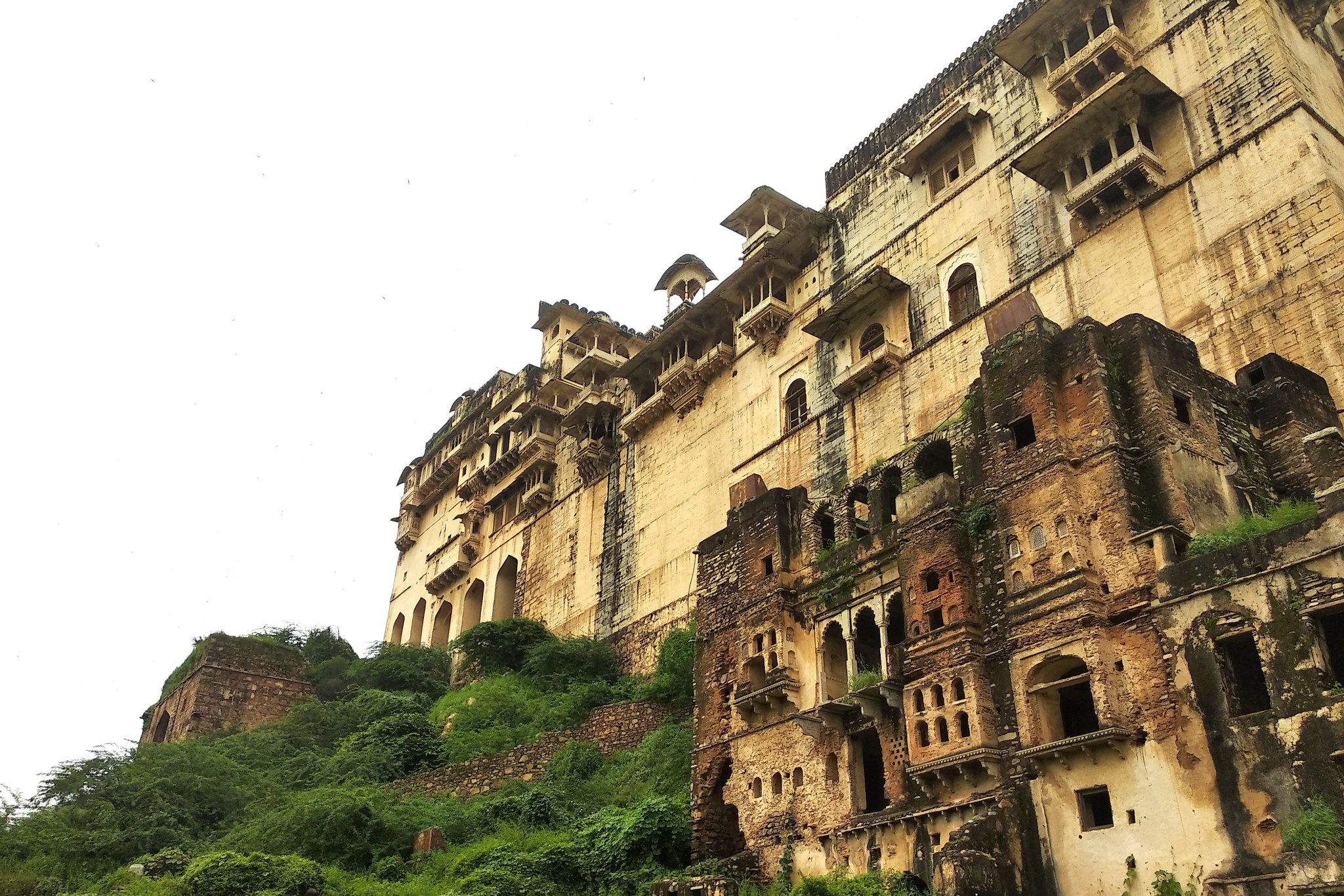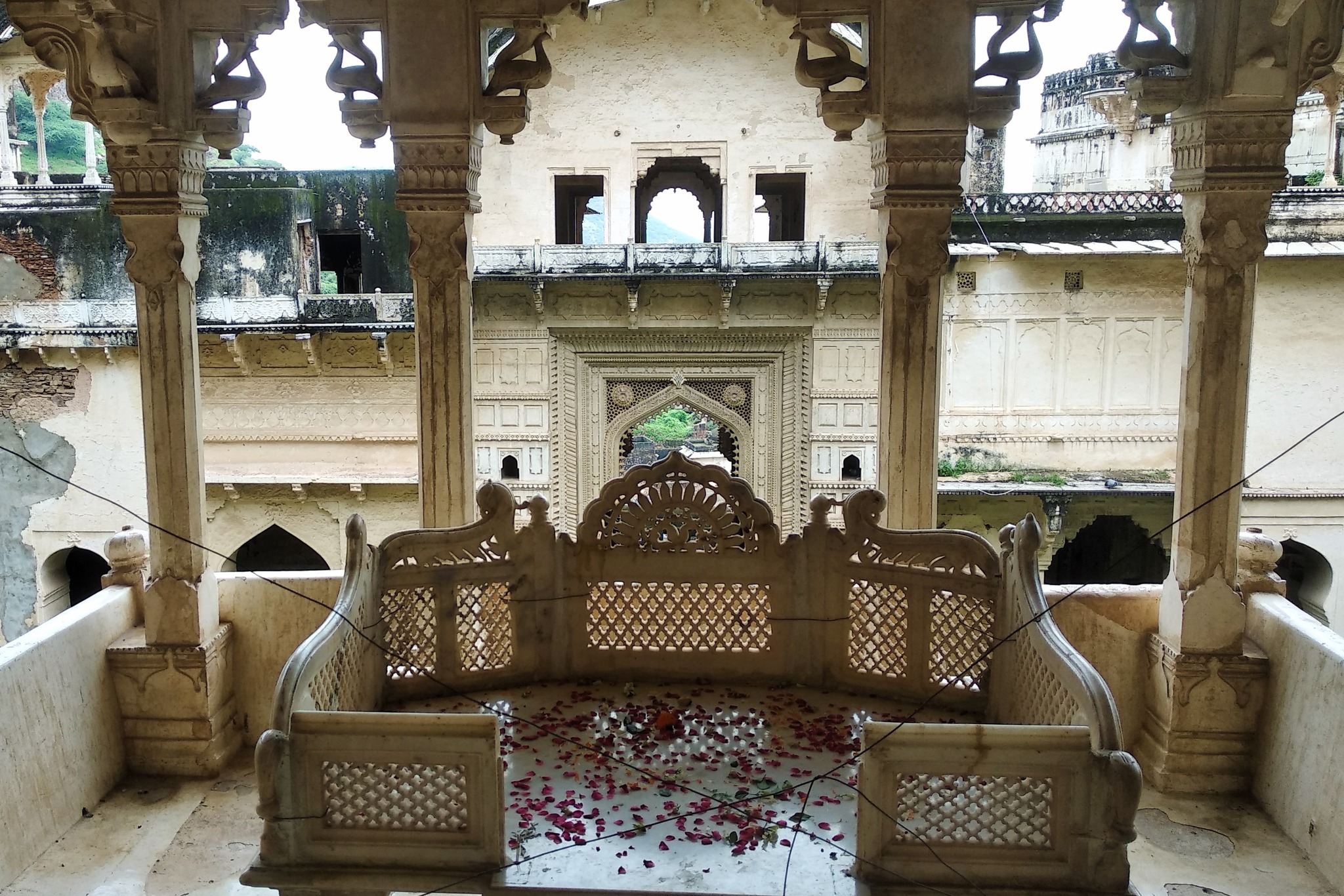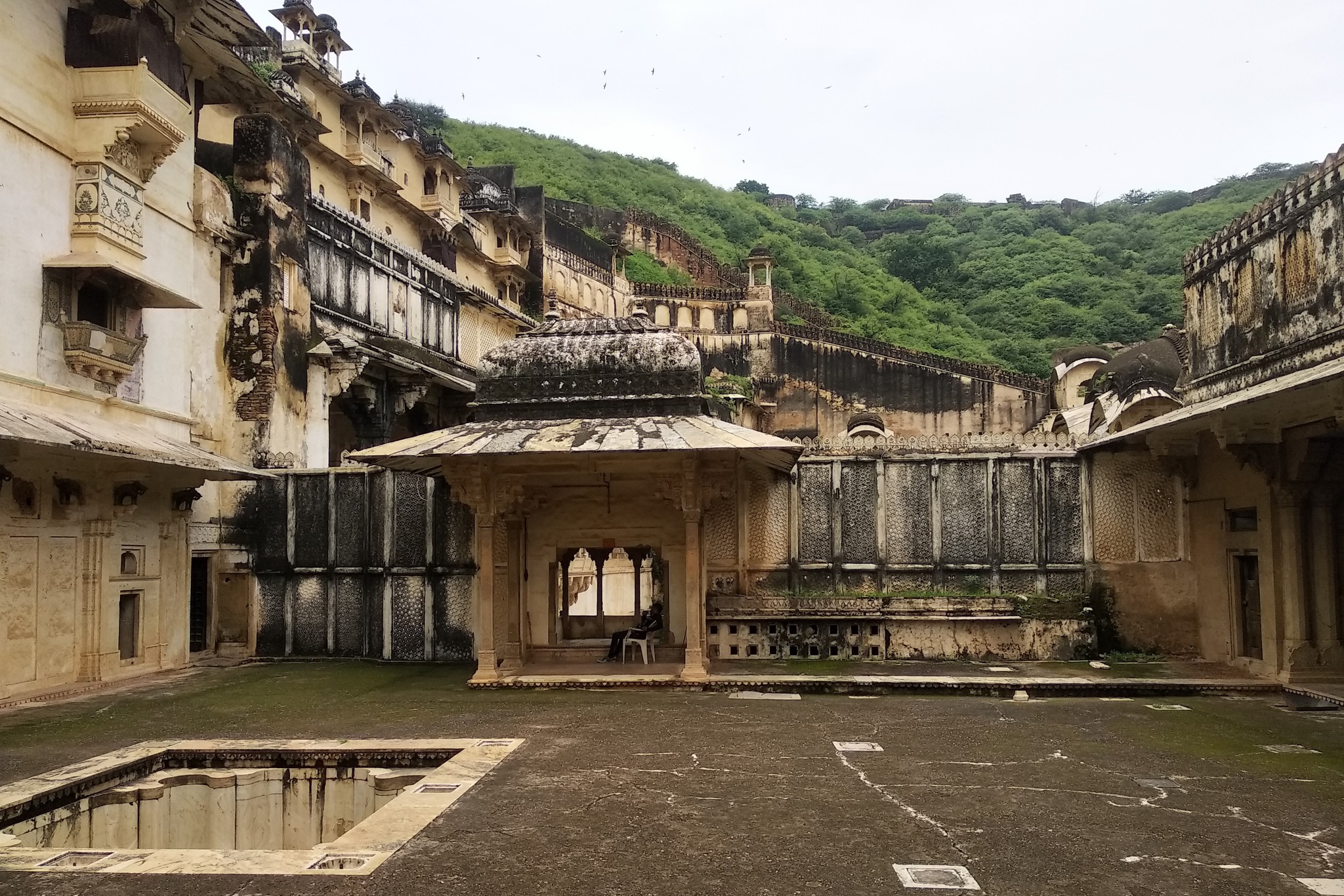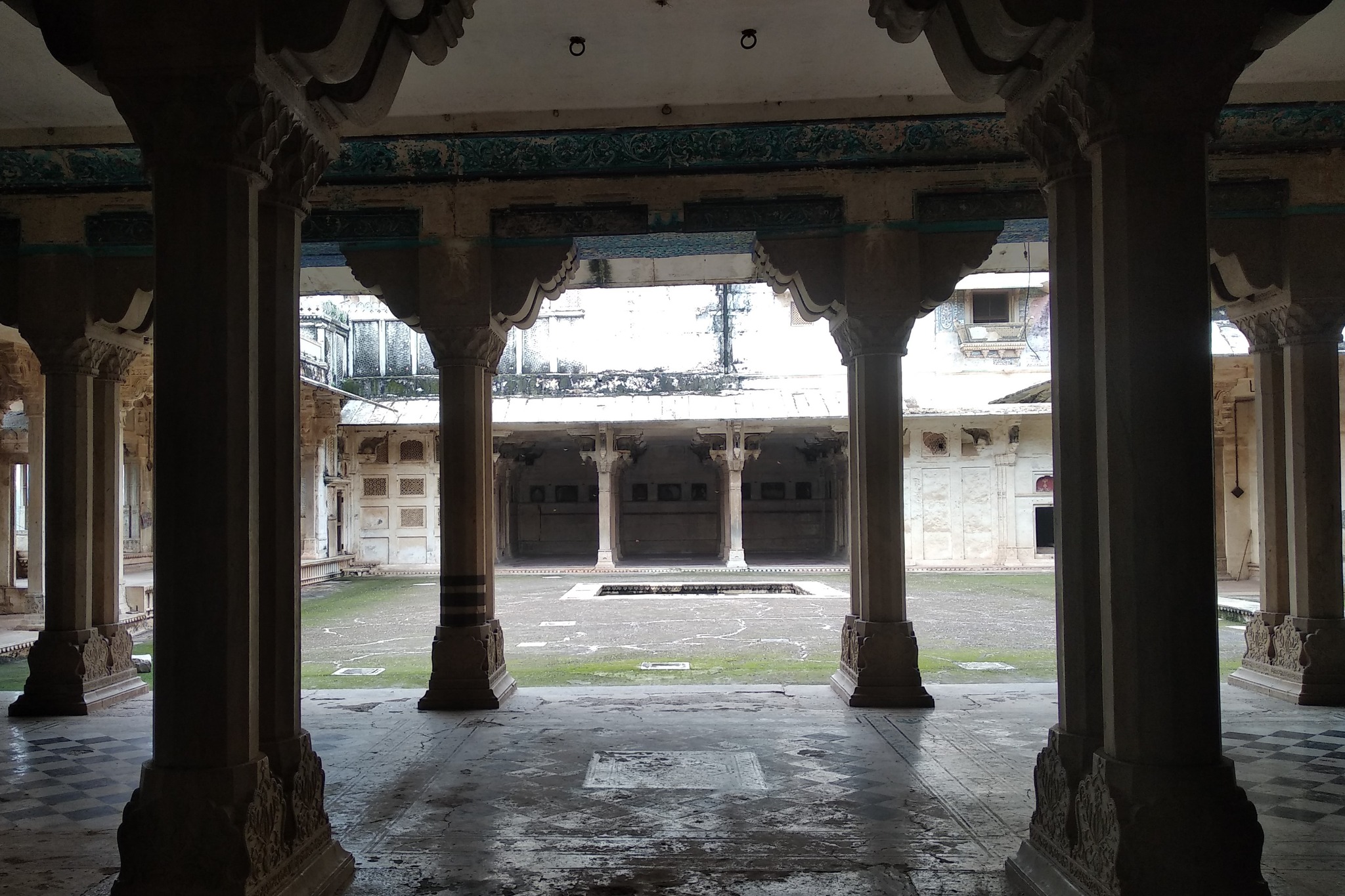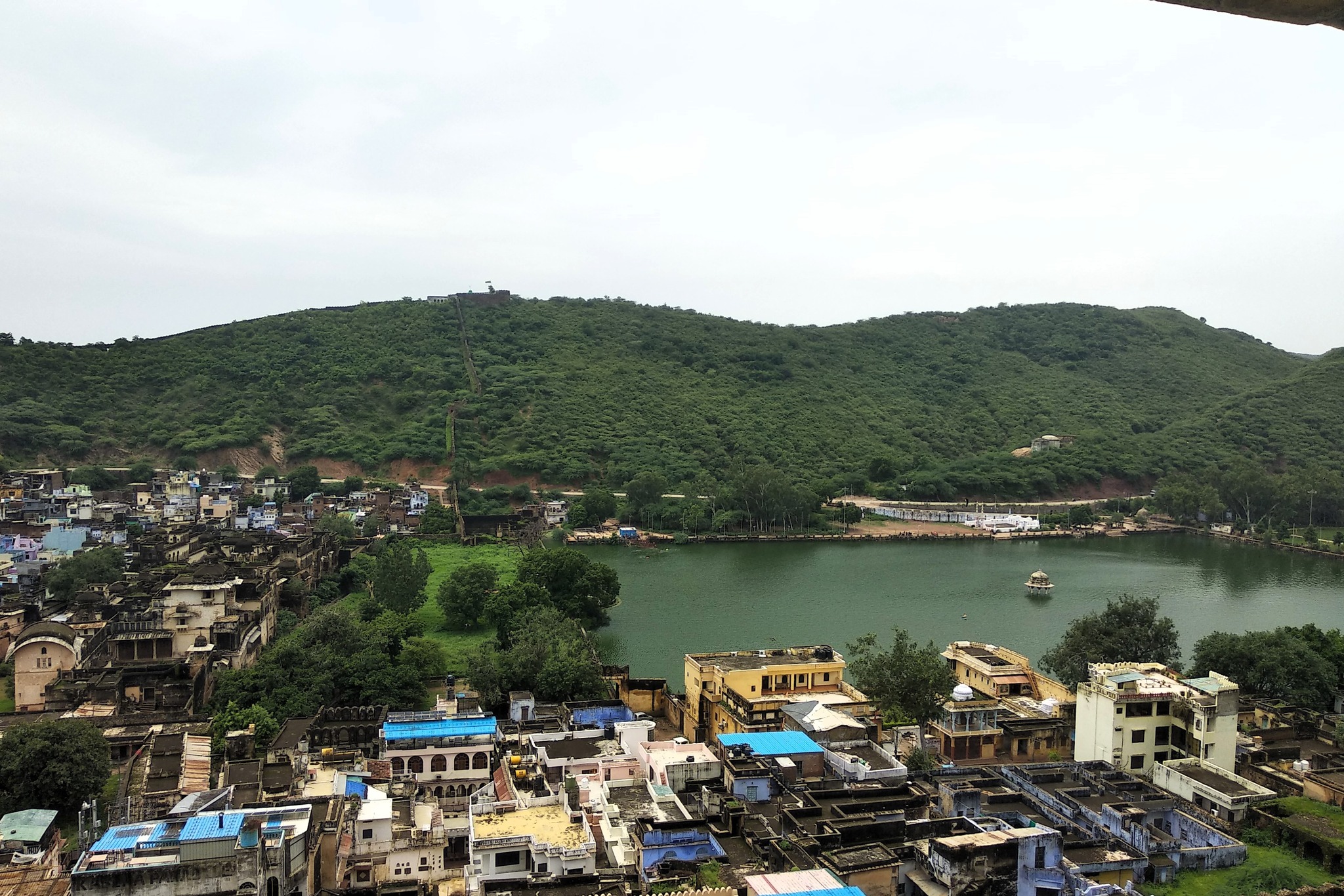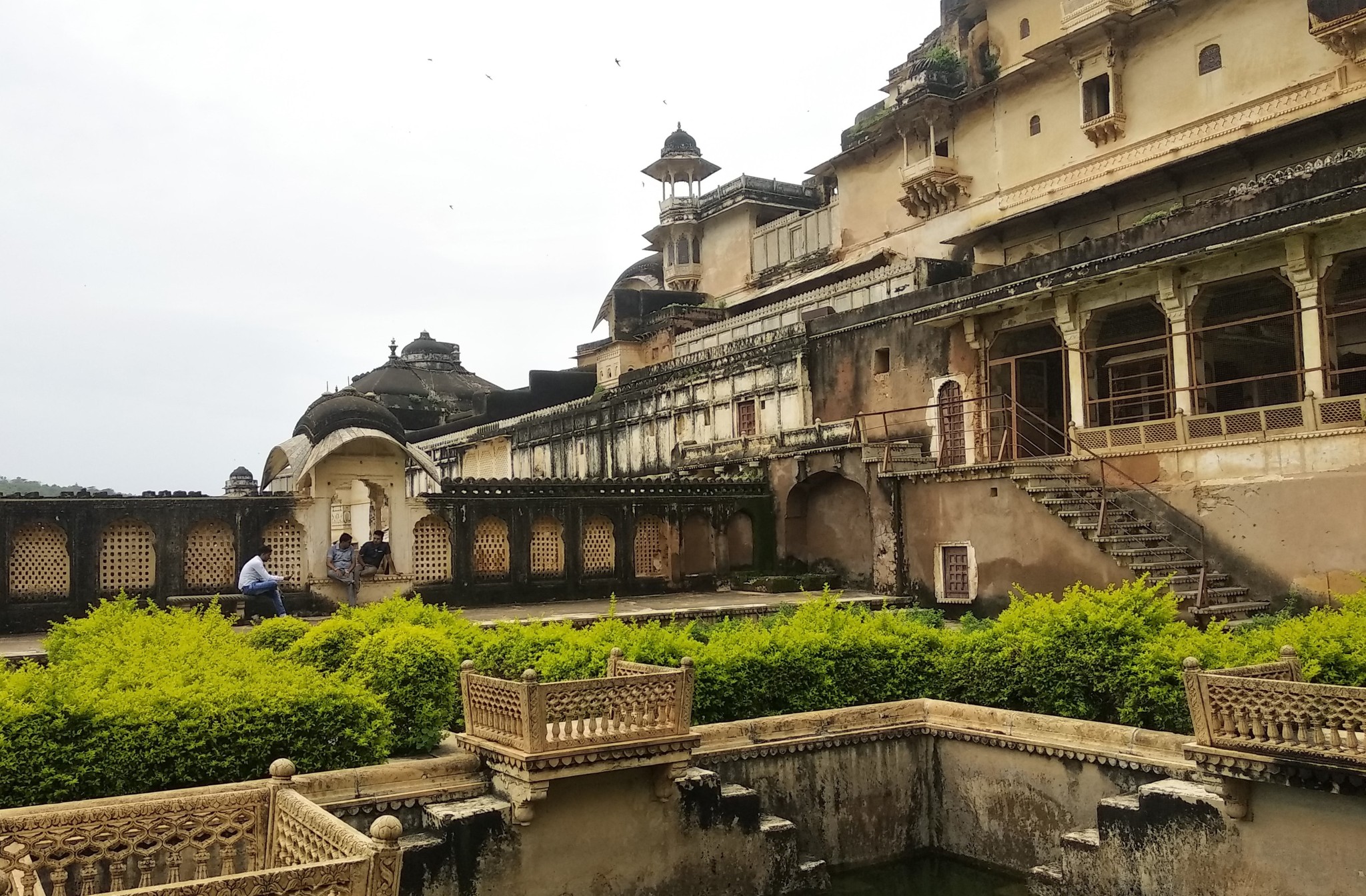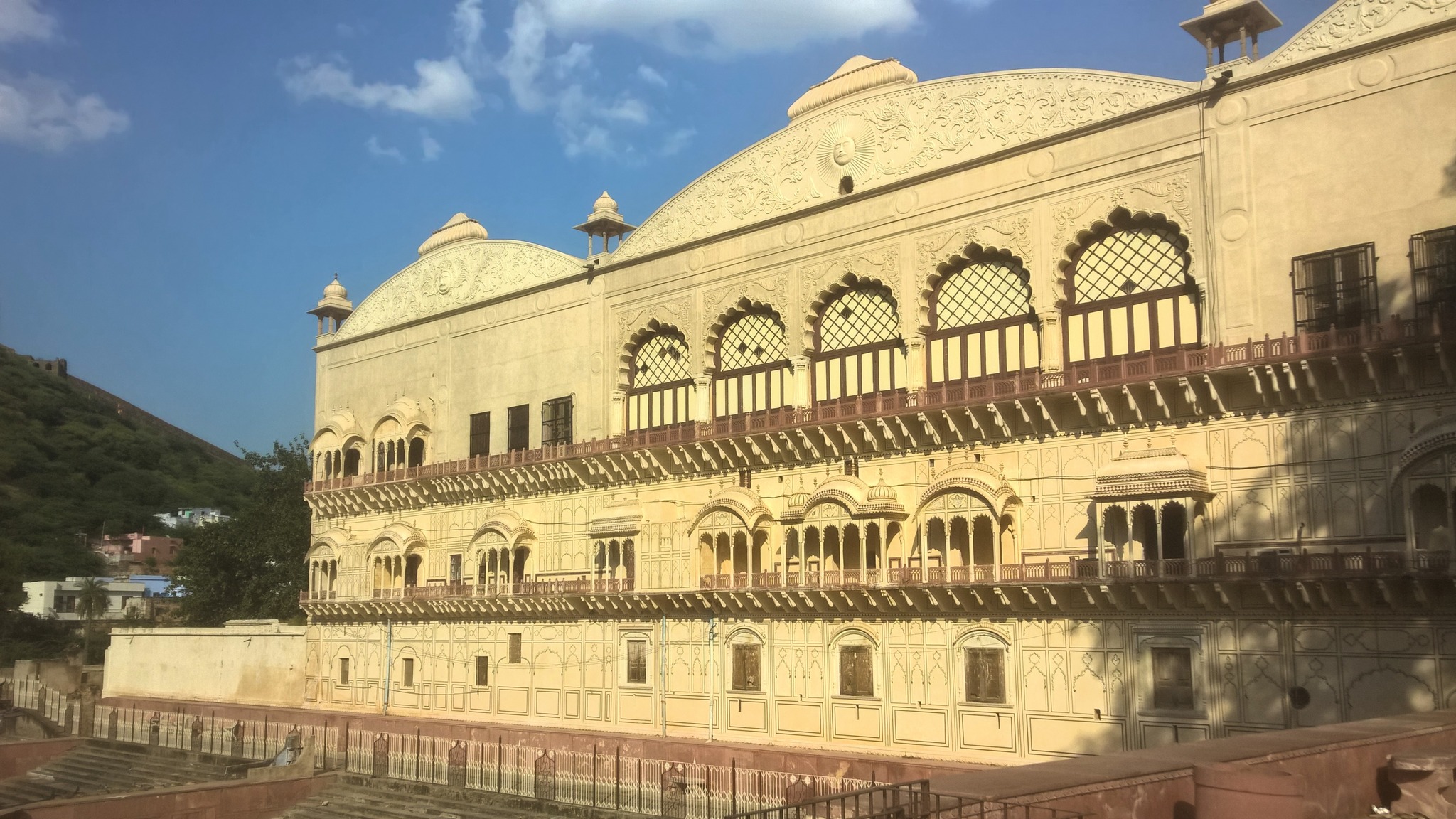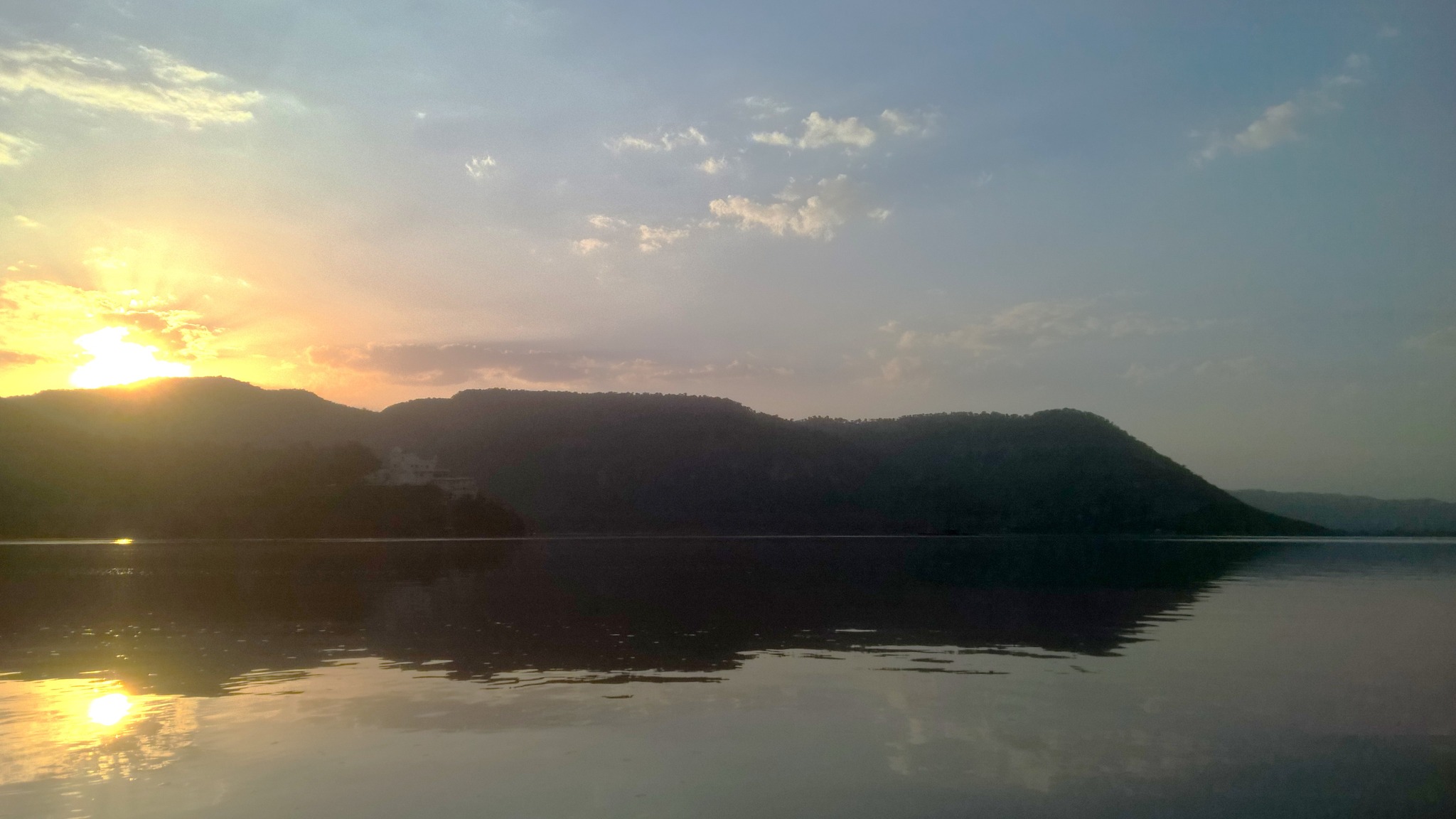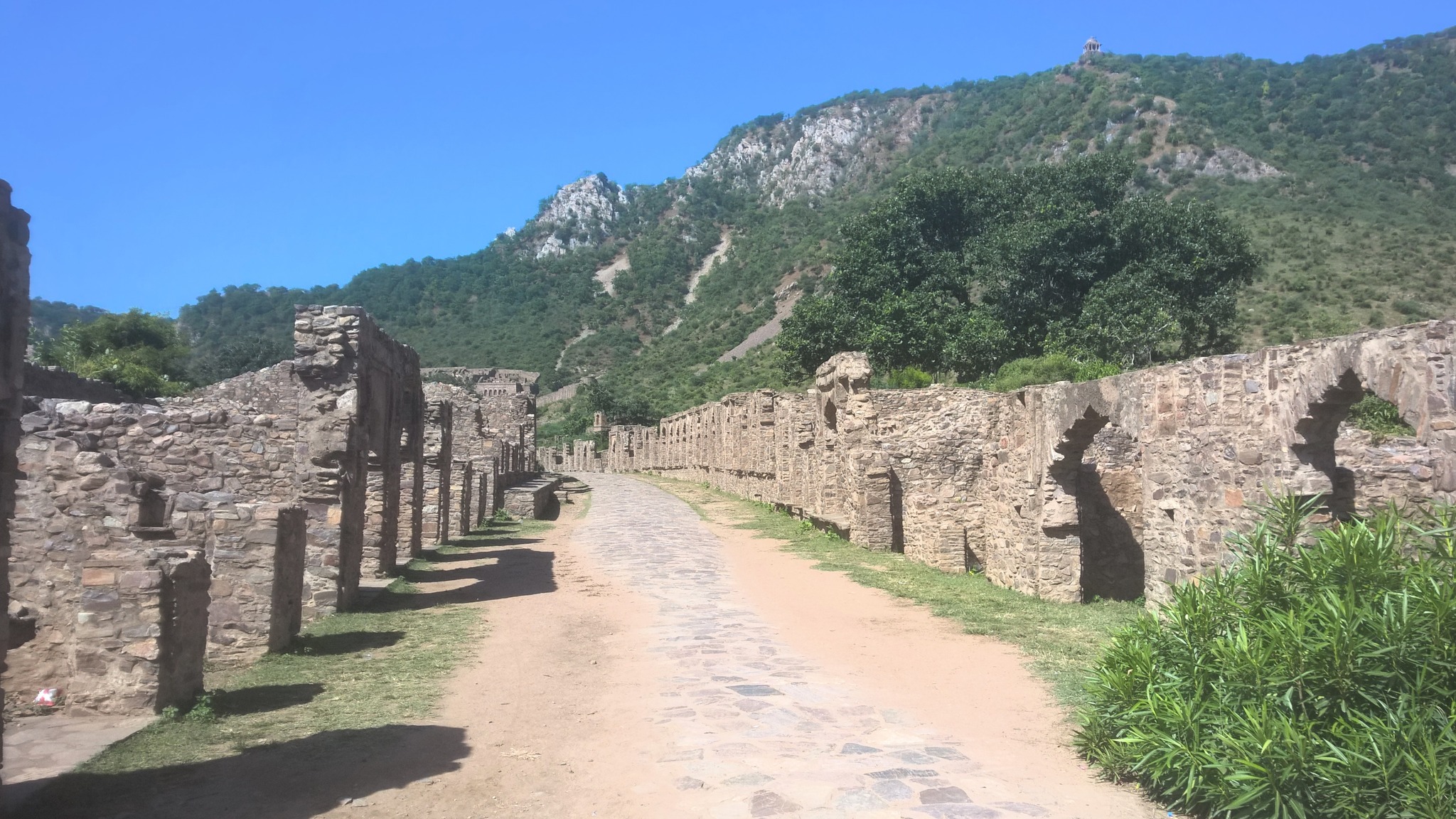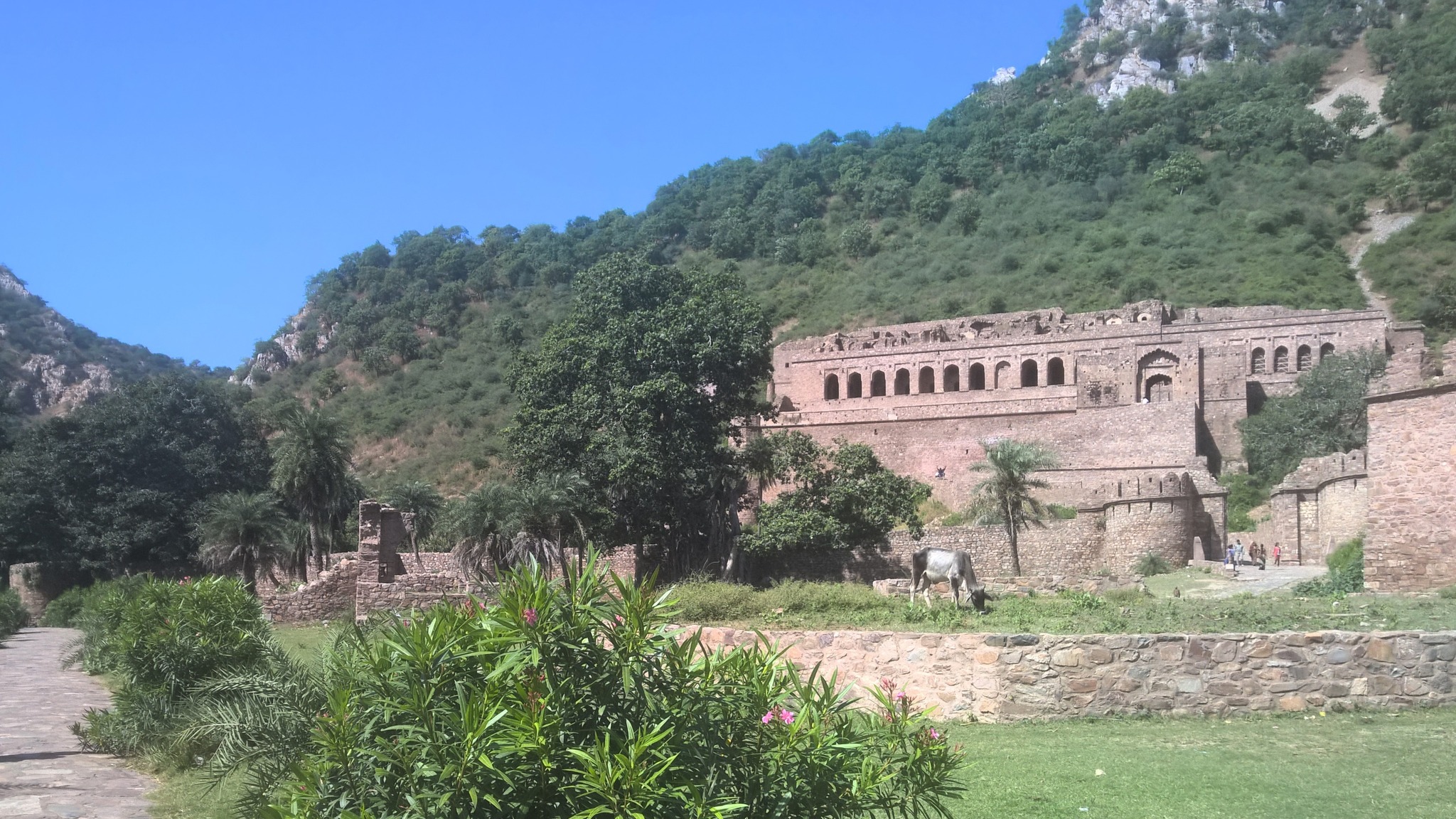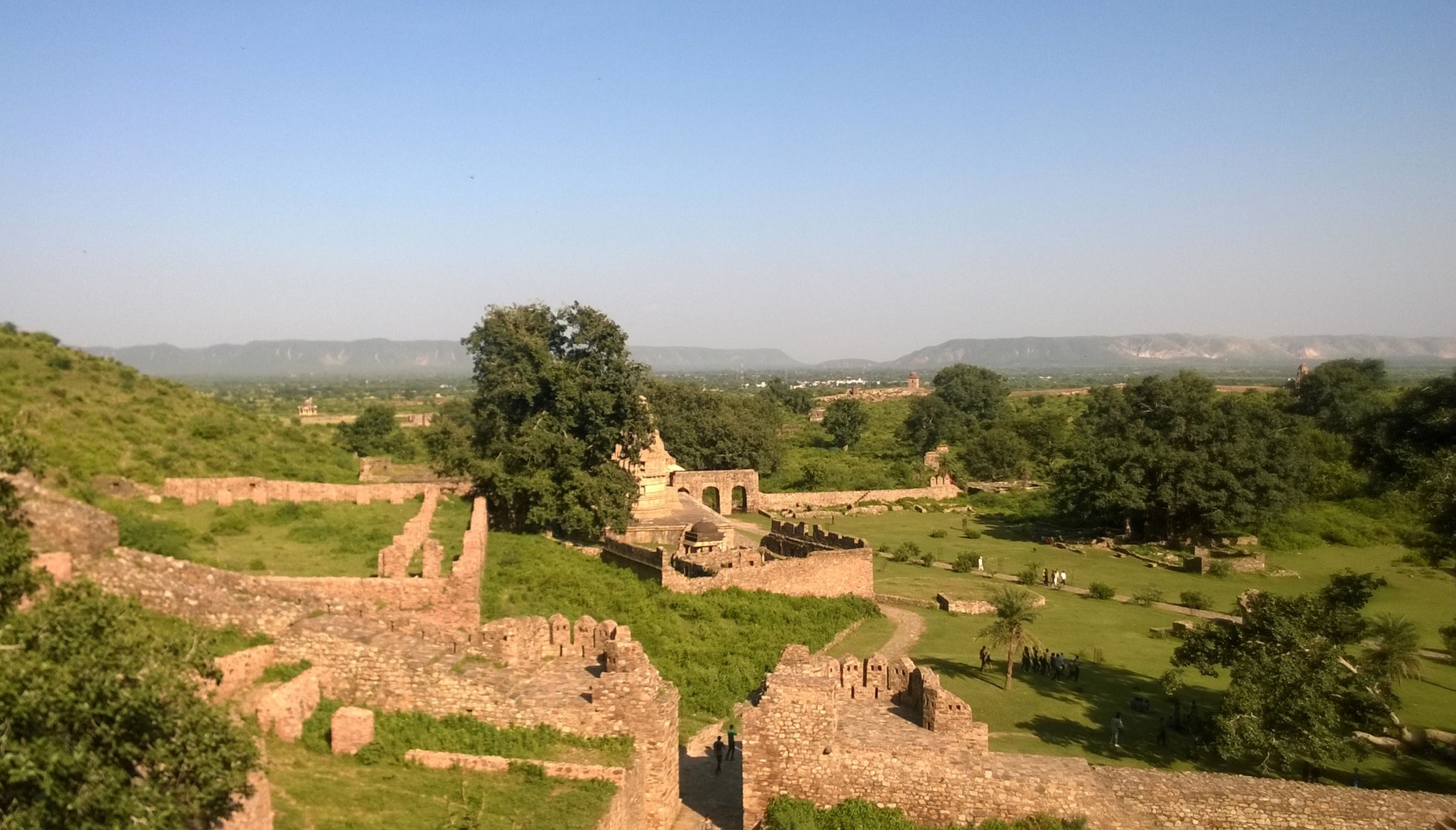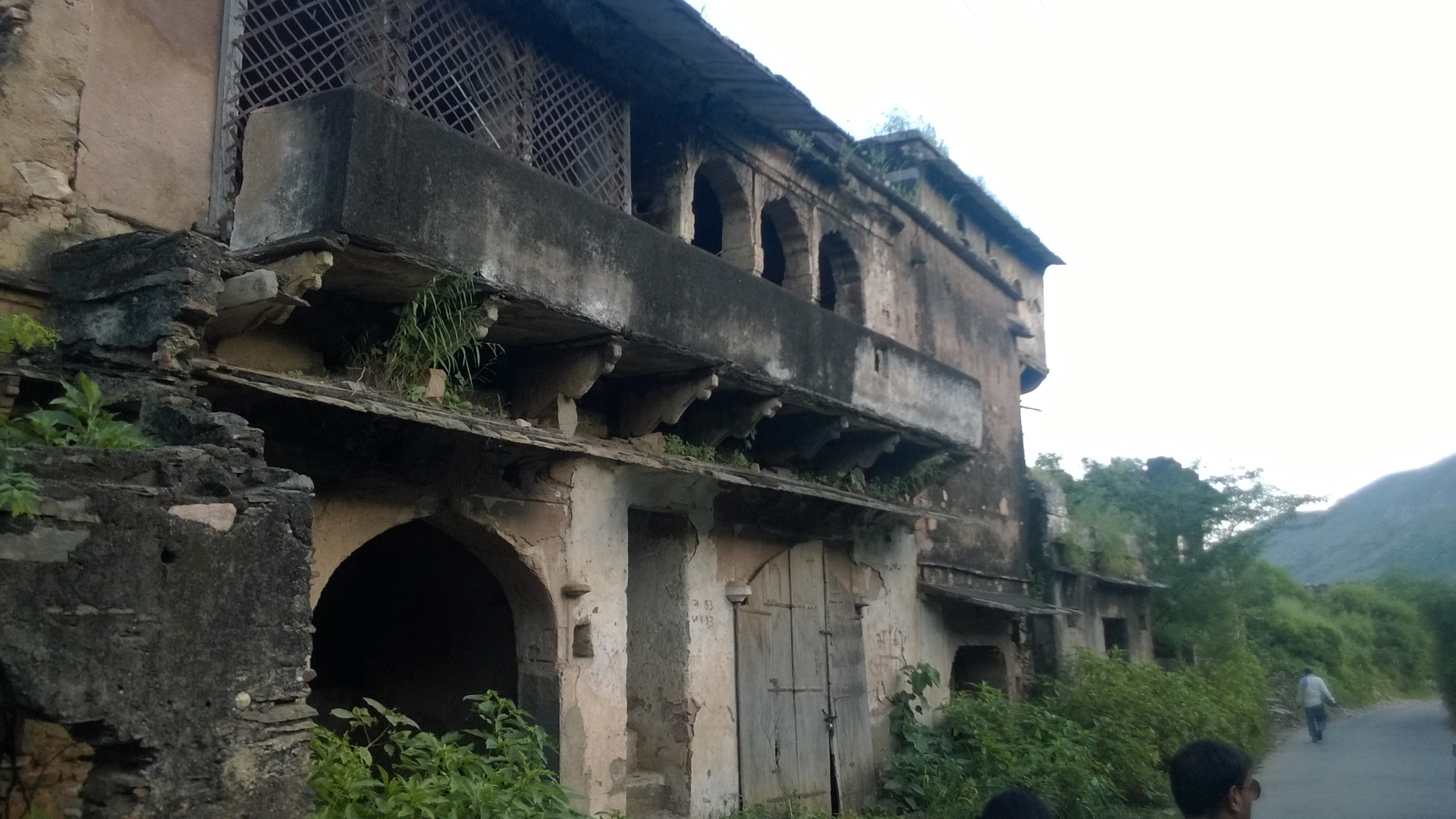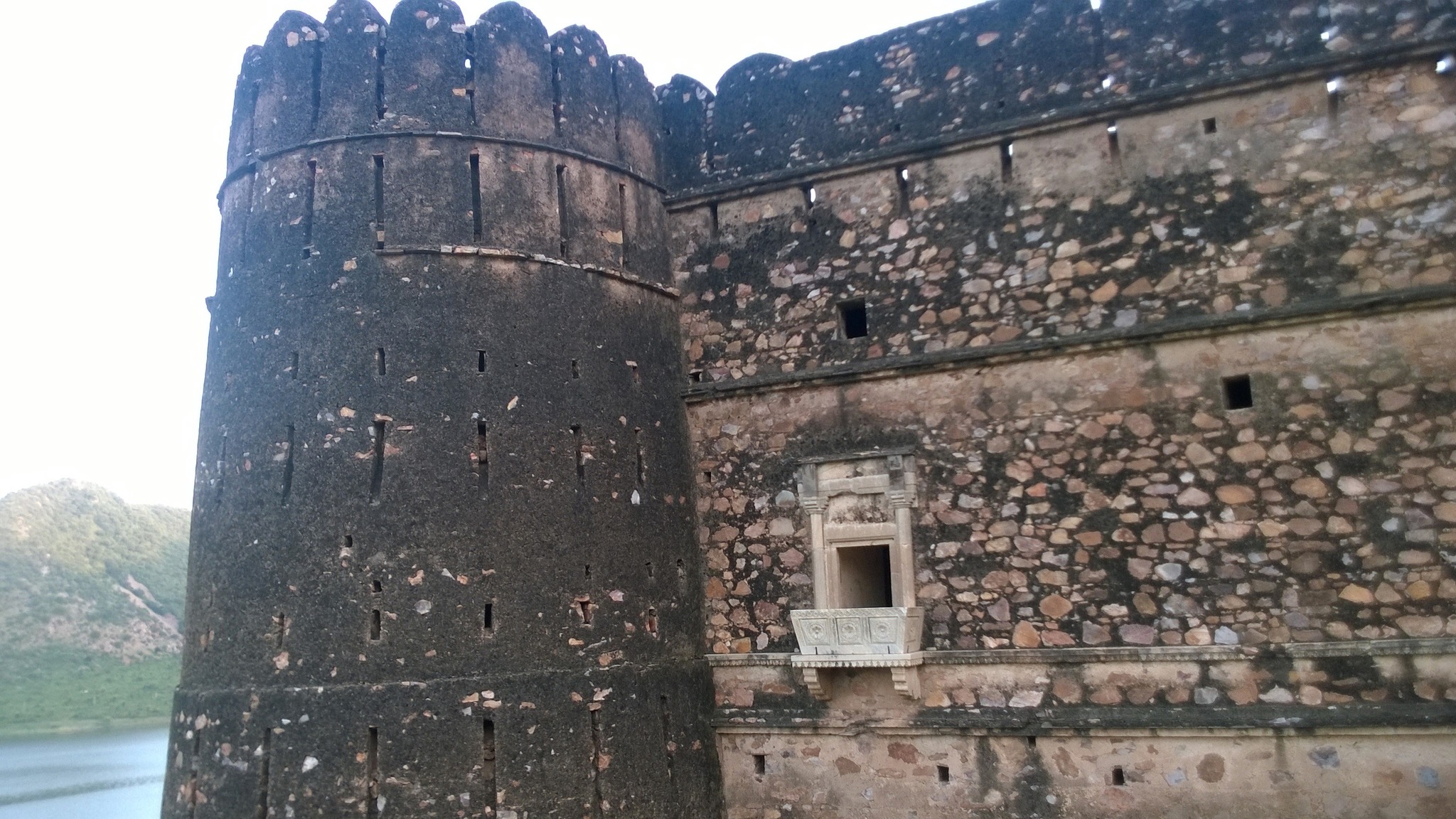
Meandering in the Monsoons: Bijolia, Banswara, Arthuna and Udaipur

Continuing the tradition of the annual self-drive family trip, this year we decided to explore the lesser-known side of Rajasthan. Of course, this trip came about after having exhausted the roster of all the well-known Rajasthani cities, except Barmer, but it was really hastened by the incidence of the monsoons. It was now time to experience something different than the arid landscapes, desert expanses, and mountainous folds of the Aravallis. What better region than the south-western part of Rajasthan to soak in the splendour of the rain-sprinkled countryside?

The place in focus on this trip was Banswara, touted as the ‘city of 100 islands’—a place many travel bloggers exhorted to visit, specifically in the monsoons. However, Banswara, being a good 800 km from Gurgaon, necessitated stops, and the stops were better worth it. Those stops turned out to be Chittorgarh on the outward leg and Udaipur on the return, thus helping me fulfil my mother’s long-cherished wish of seeing Nathdwara and Ranakpur, and my own wish of showing my brother Kumbhalgarh. In fact, we did the latter three stops on the same day, surprising even ourselves!

As usual, we did not book accommodations beforehand, and simply let serendipity be our guide. That’s how I found myself at Chittorgarh Fort, at the same place, the same day I was 10 years ago. That’s how we beheld the beauty of a temple complex getting showered in a cloudburst. That’s how we chanced upon a temple complex with a waterfall, straight from the imagery of an Indiana Jones movie. That’s how we found ourselves meandering upon the low rolling hills leading to and adorning the course of the mighty river Mahi, with intermittent spells of monsoon rains for company.

Highlights of the road-trip

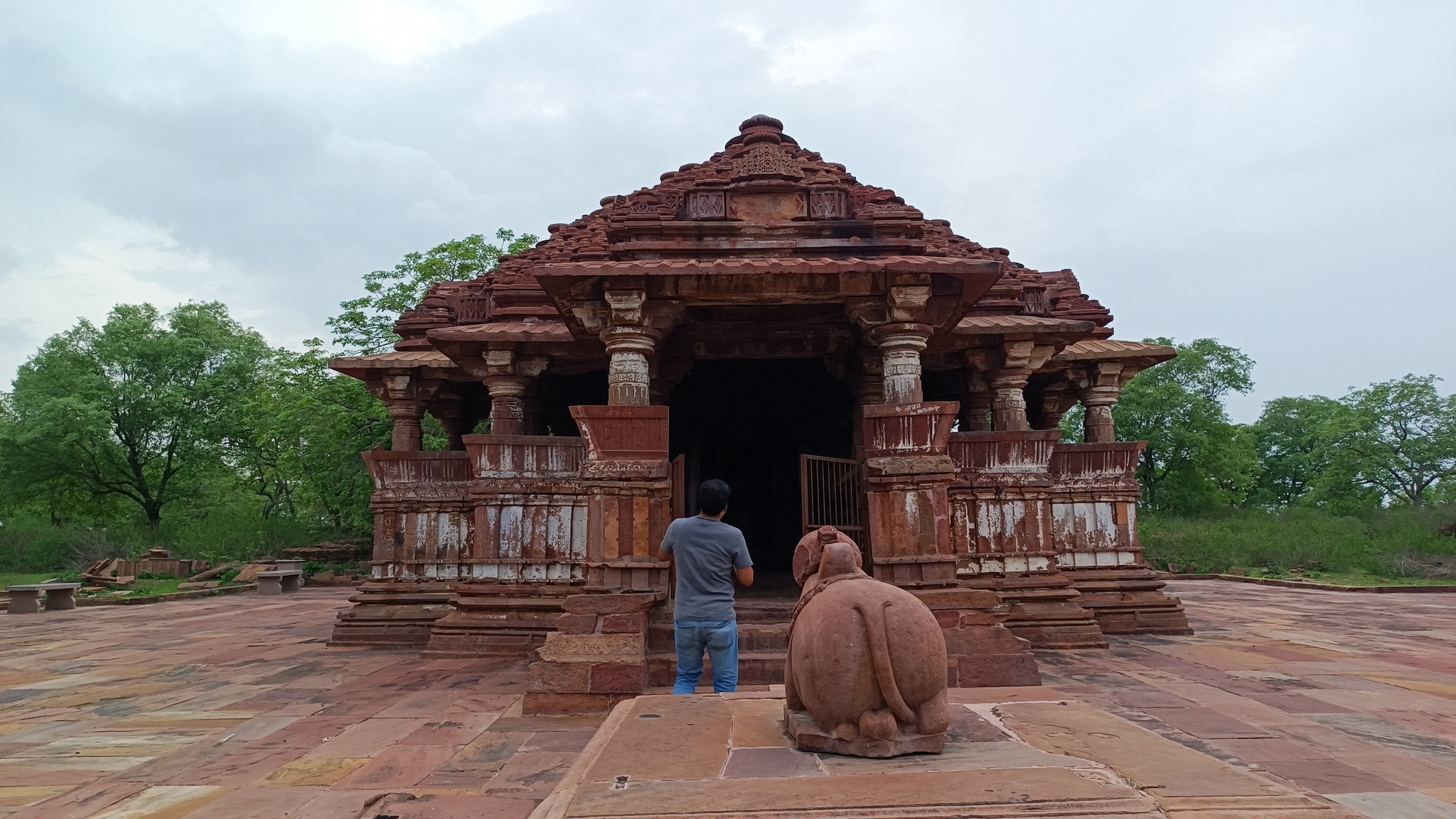
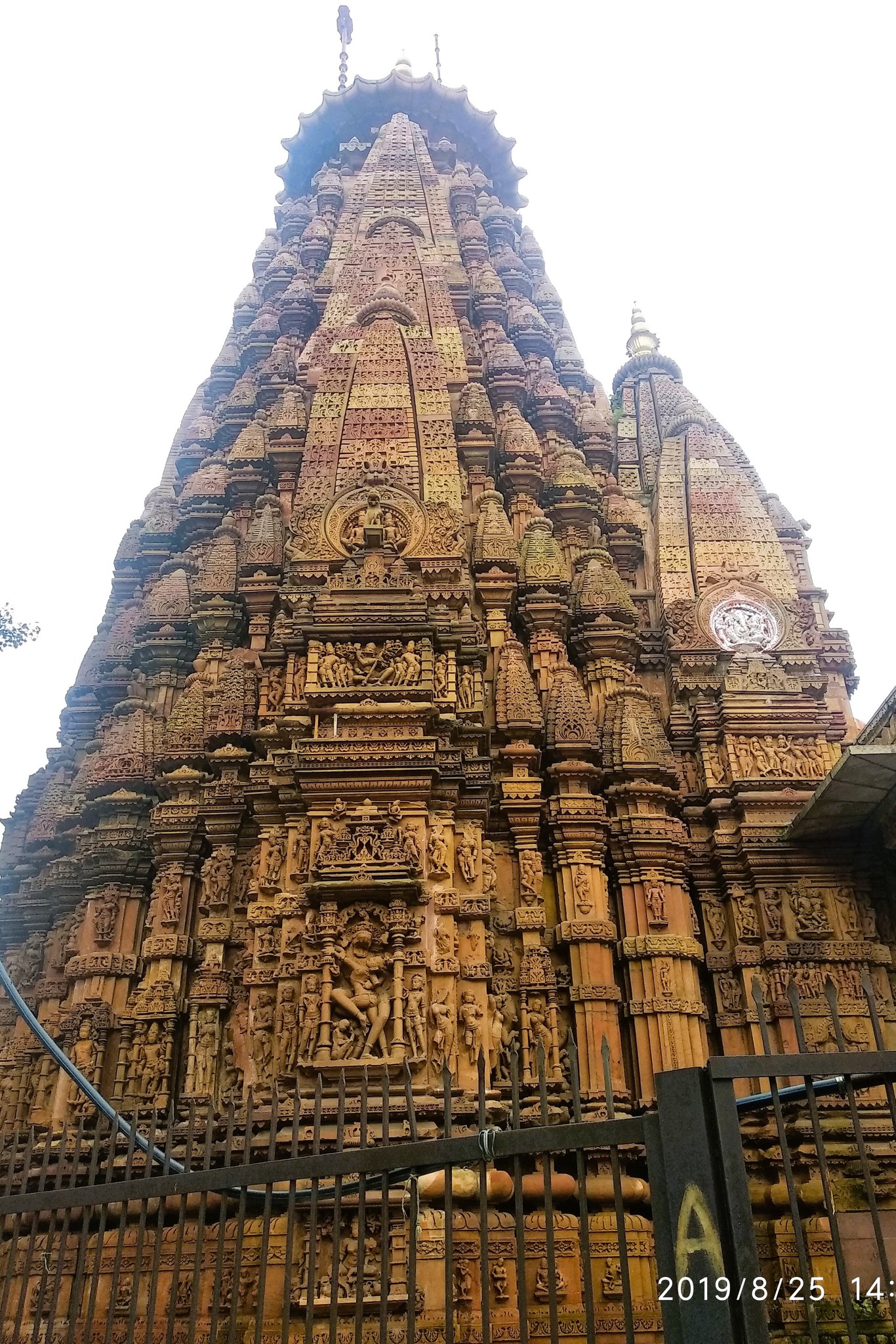
Mandakini Temple, Bijolia

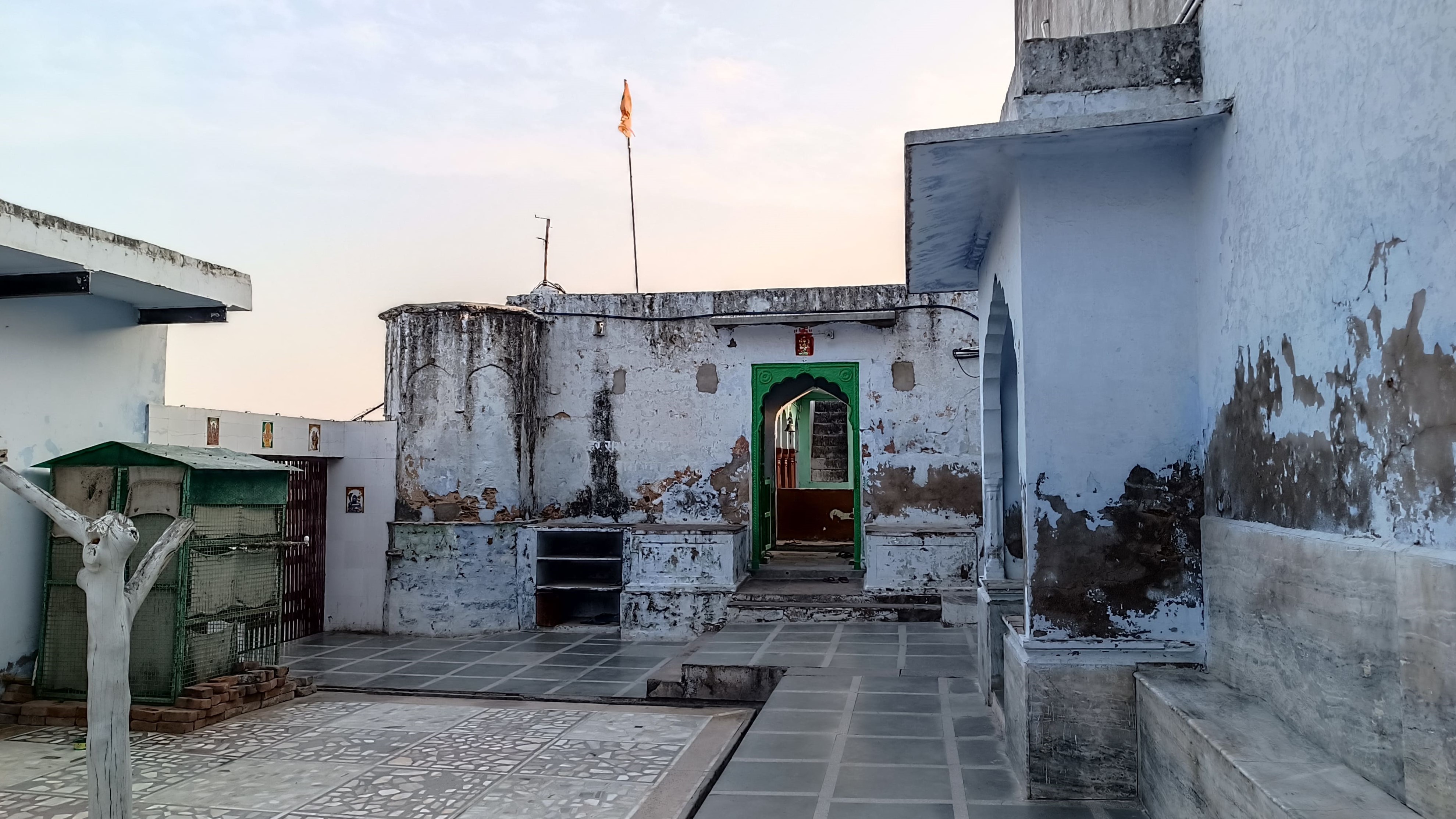
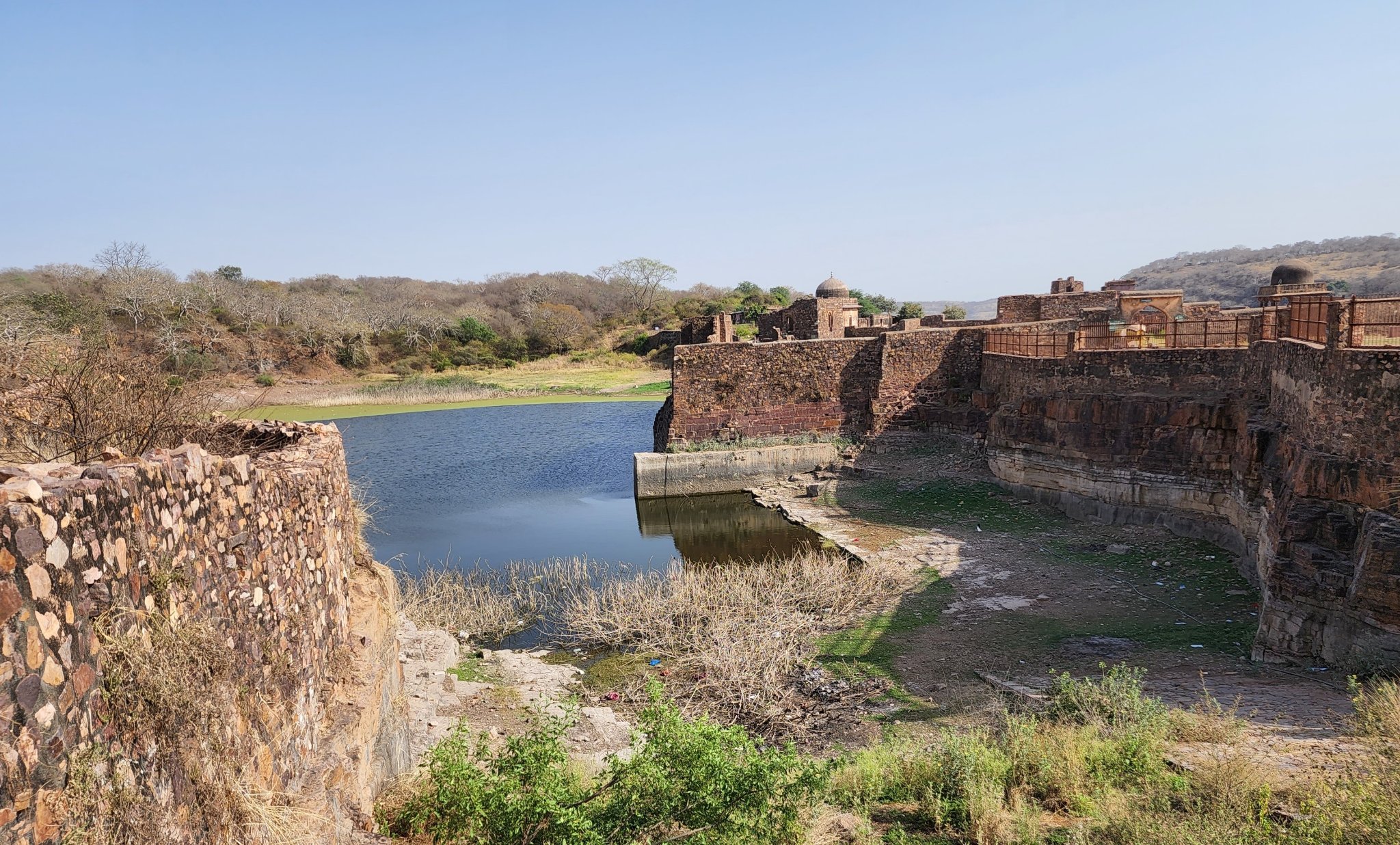
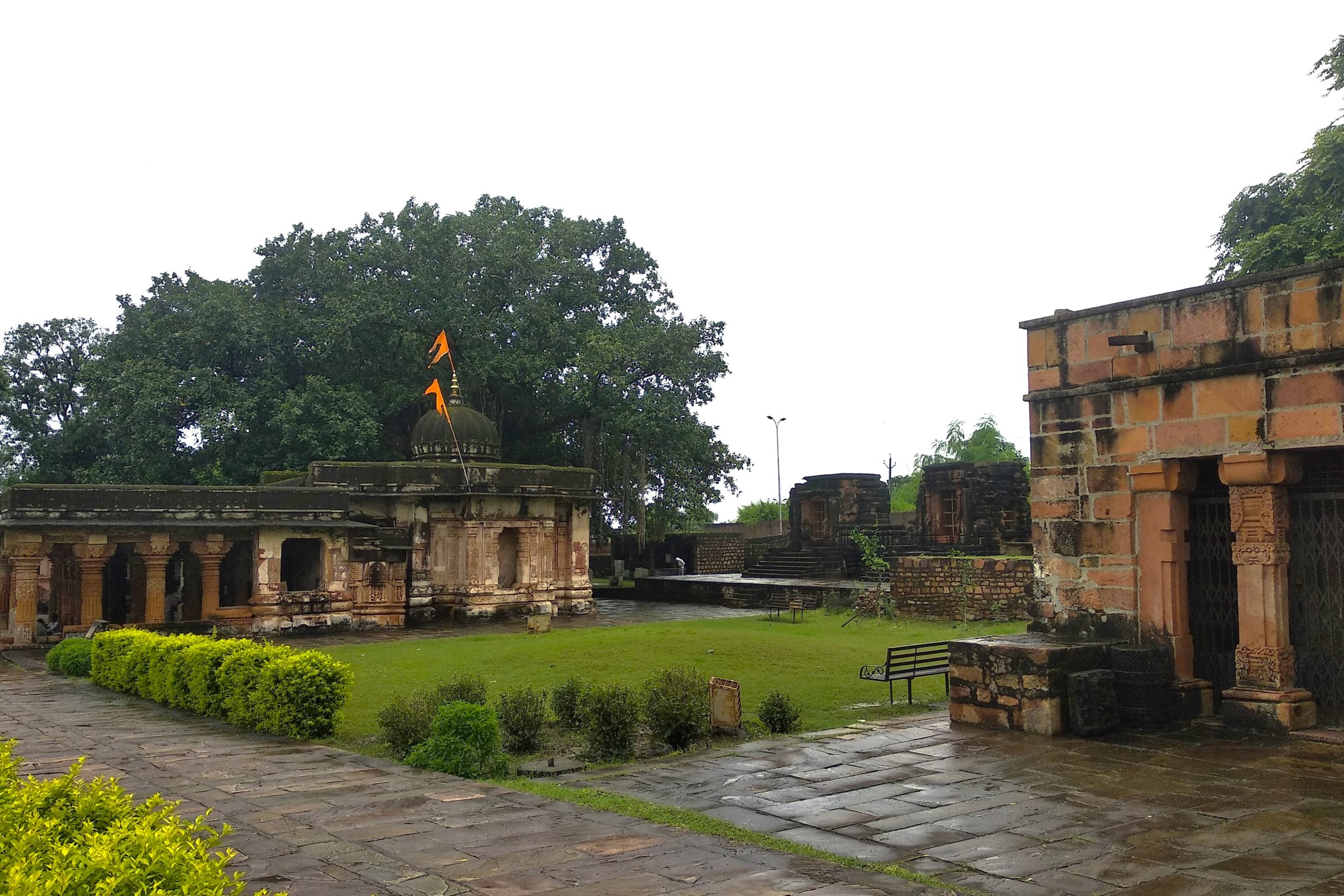
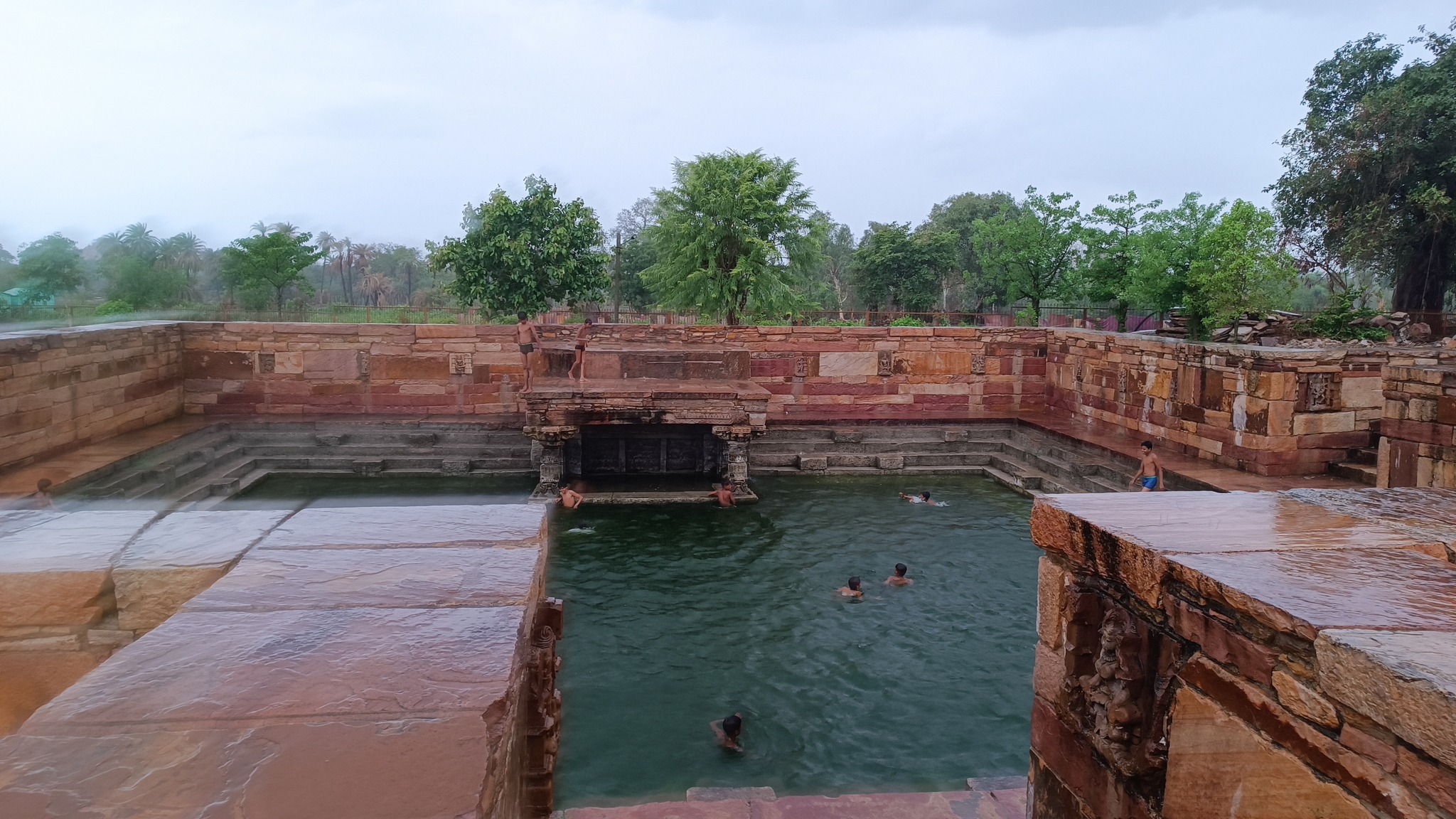
This temple complex comprises three Shiva temples – the oldest being from the 11th century called Mahakal – and a water tank, and lay just beside our route to Chittorgarh. Just as we stepped out of the car, there was a cloudburst, forcing us to run inside the temple complex and take shelter under the roof of one the temples.

Menal and Mahanal temples, Menal

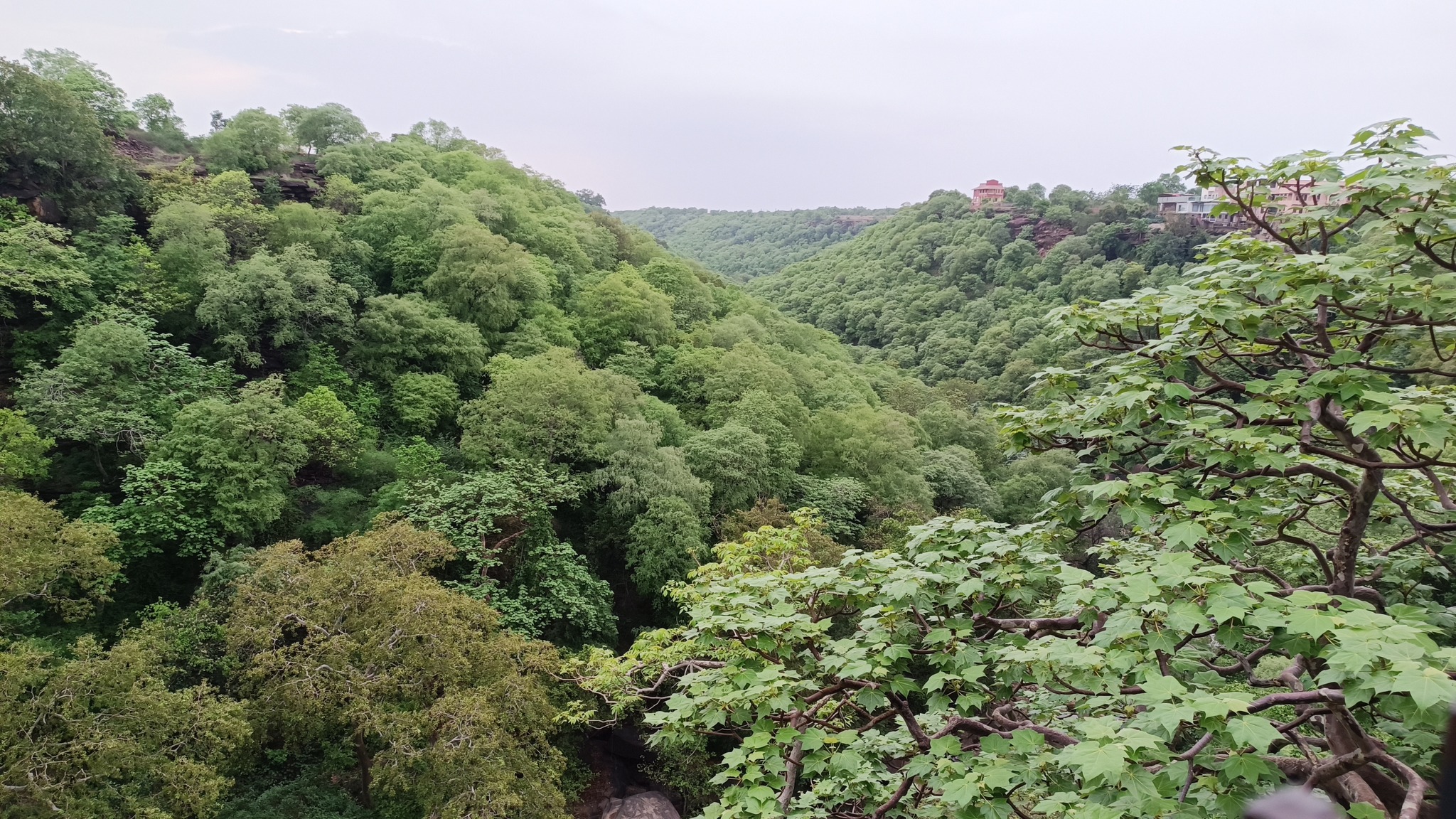
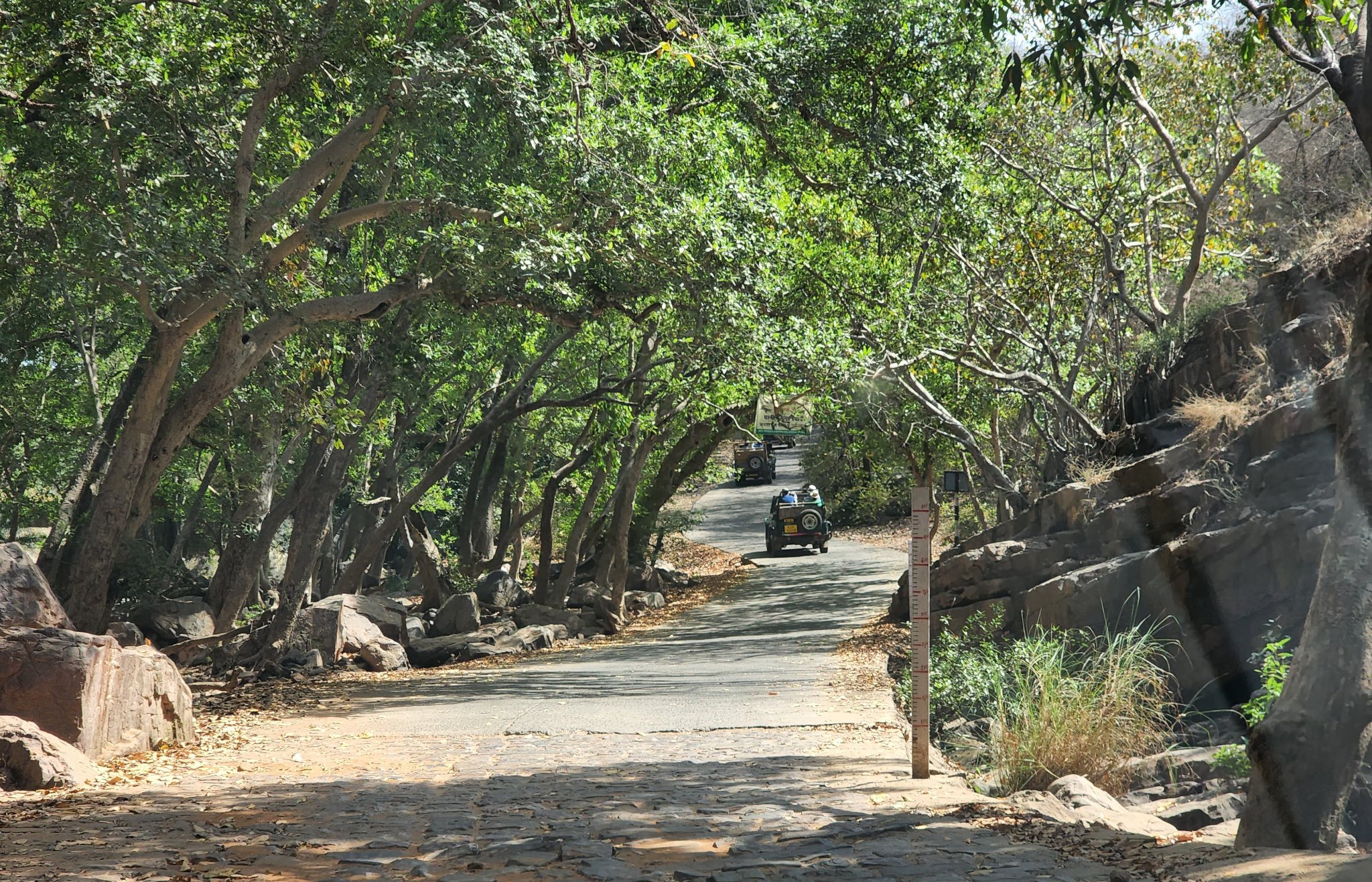
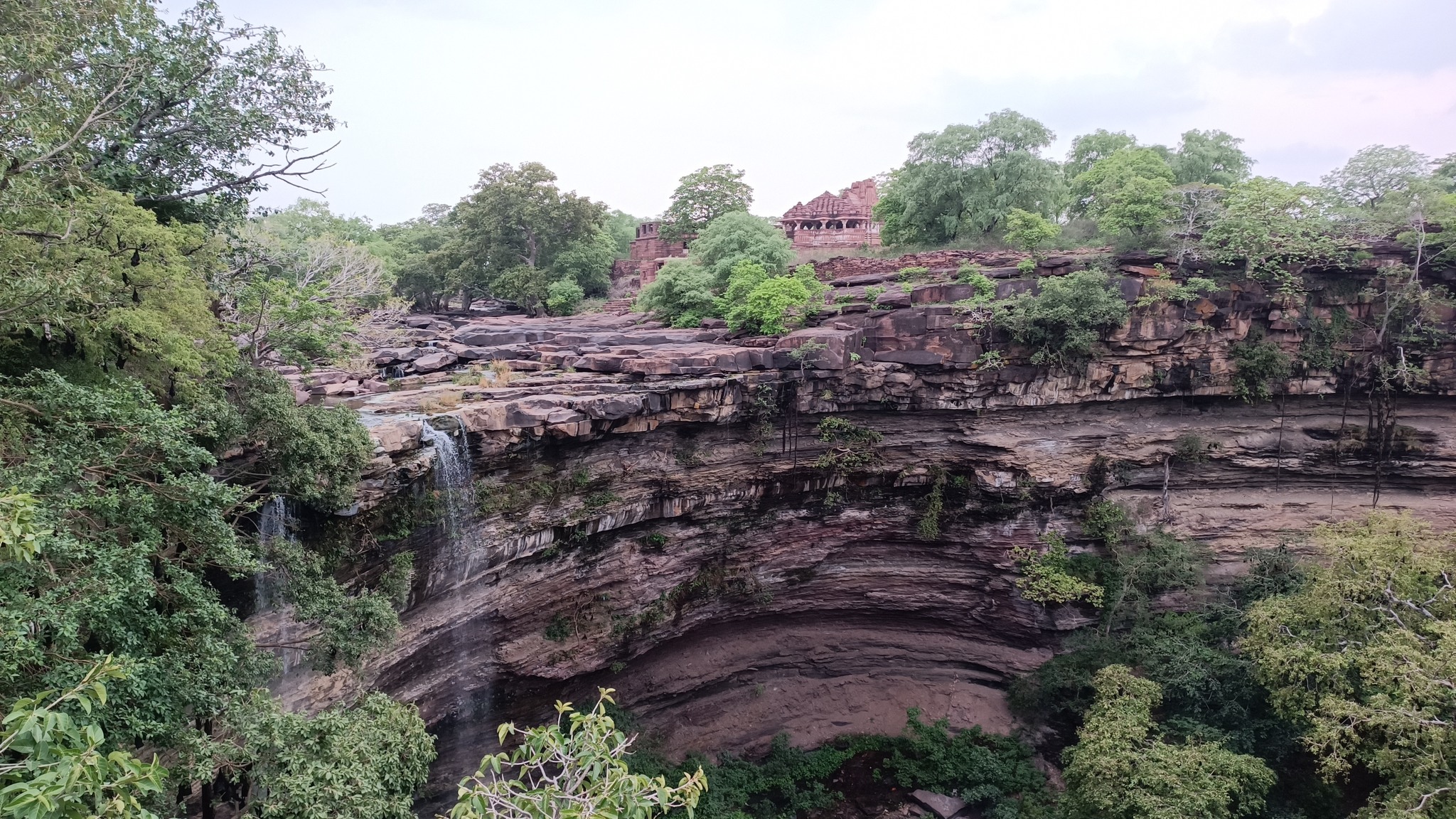
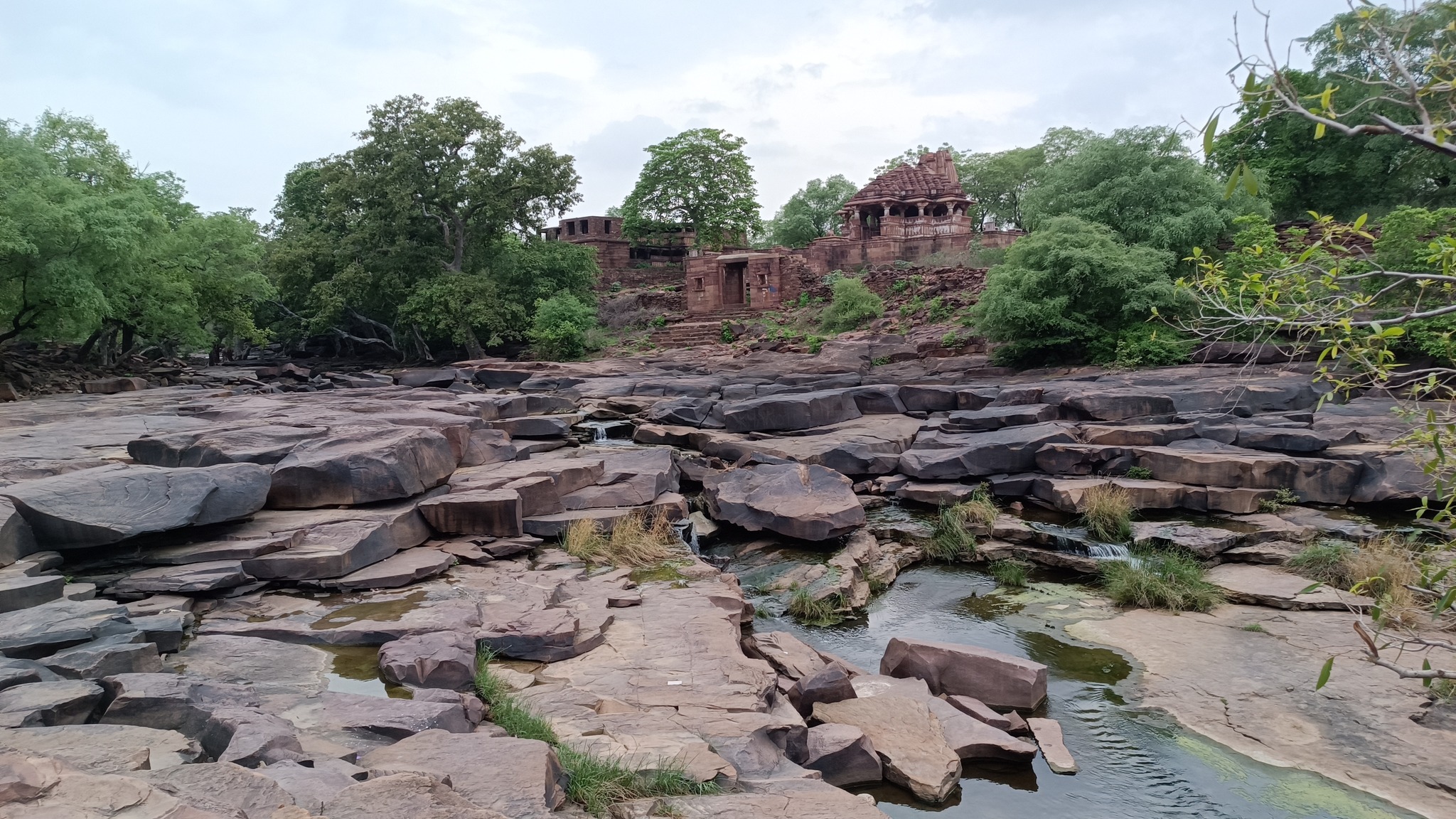
This was just an unexpected, happy accident that happened because my brother was simply scanning Google Maps on our way to Chittorgarh. The 11th century Shiva temple complex lies just beside the highway, nestled in a forest, straddling a stream with a waterfall dropping into a gorge. Across the steep waterfall is one of the temples, with an adjoining monastery in ruins, which one can access by simply crossing the stream before it drops into the gorge. Now, that’s truly a set-up venturing into Indiana Jones territory.
Chittorgarh

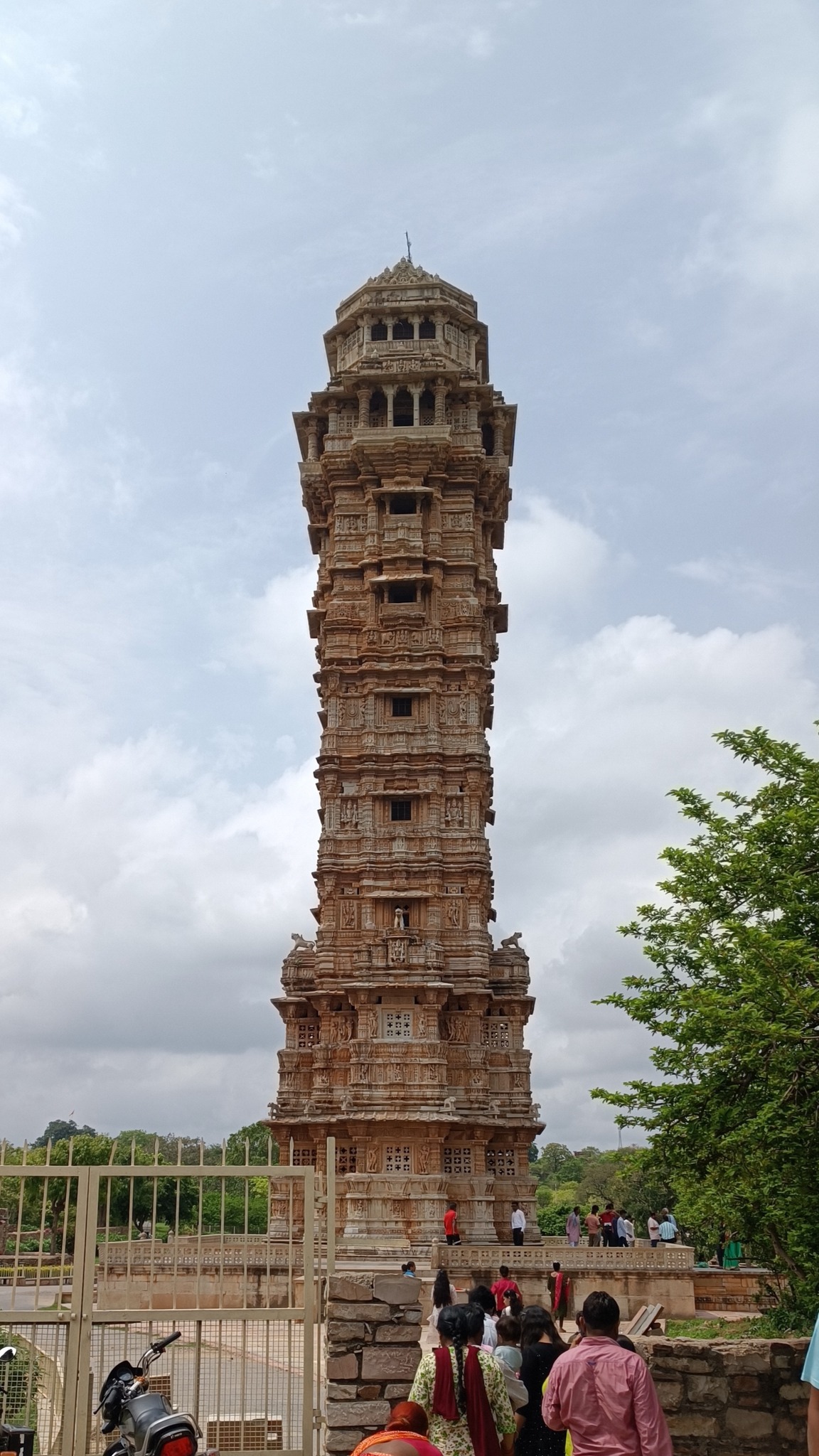
What can be said in a line or two about Chittor fort that would capture what it is, what it stands for, what legacy it bears, what history it has seen!

But what struck me most upon first visiting the place, and has remained with me since, is how it is a self-contained city spread upon a vast flat-topped hill, like on a plateau. The palaces and structures are far-flung, interspersed with water tanks and jungle. This is a place that is removed from the rest of the world that lies beneath, one that transports you to another era as a time machine.

Banswara

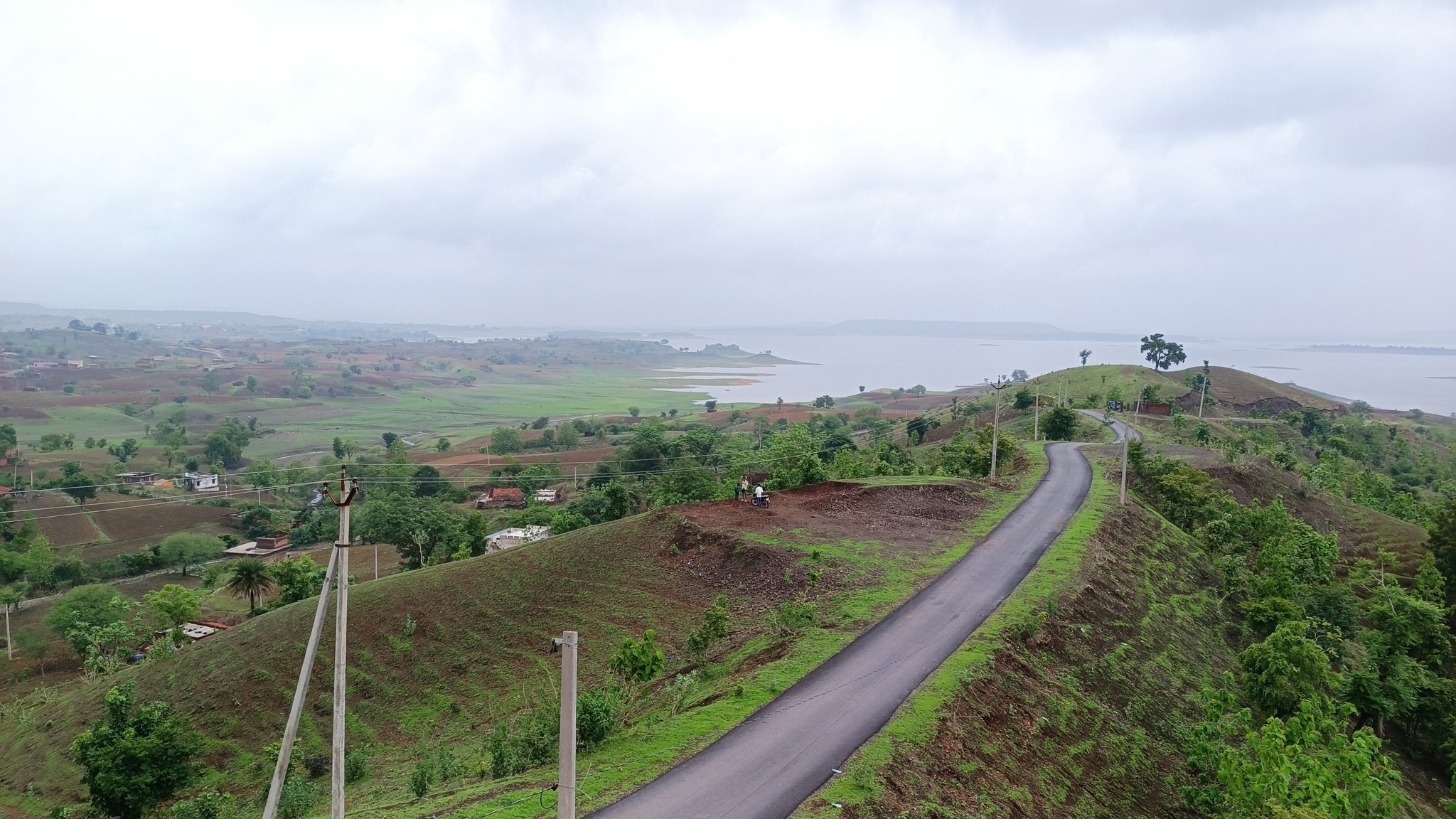
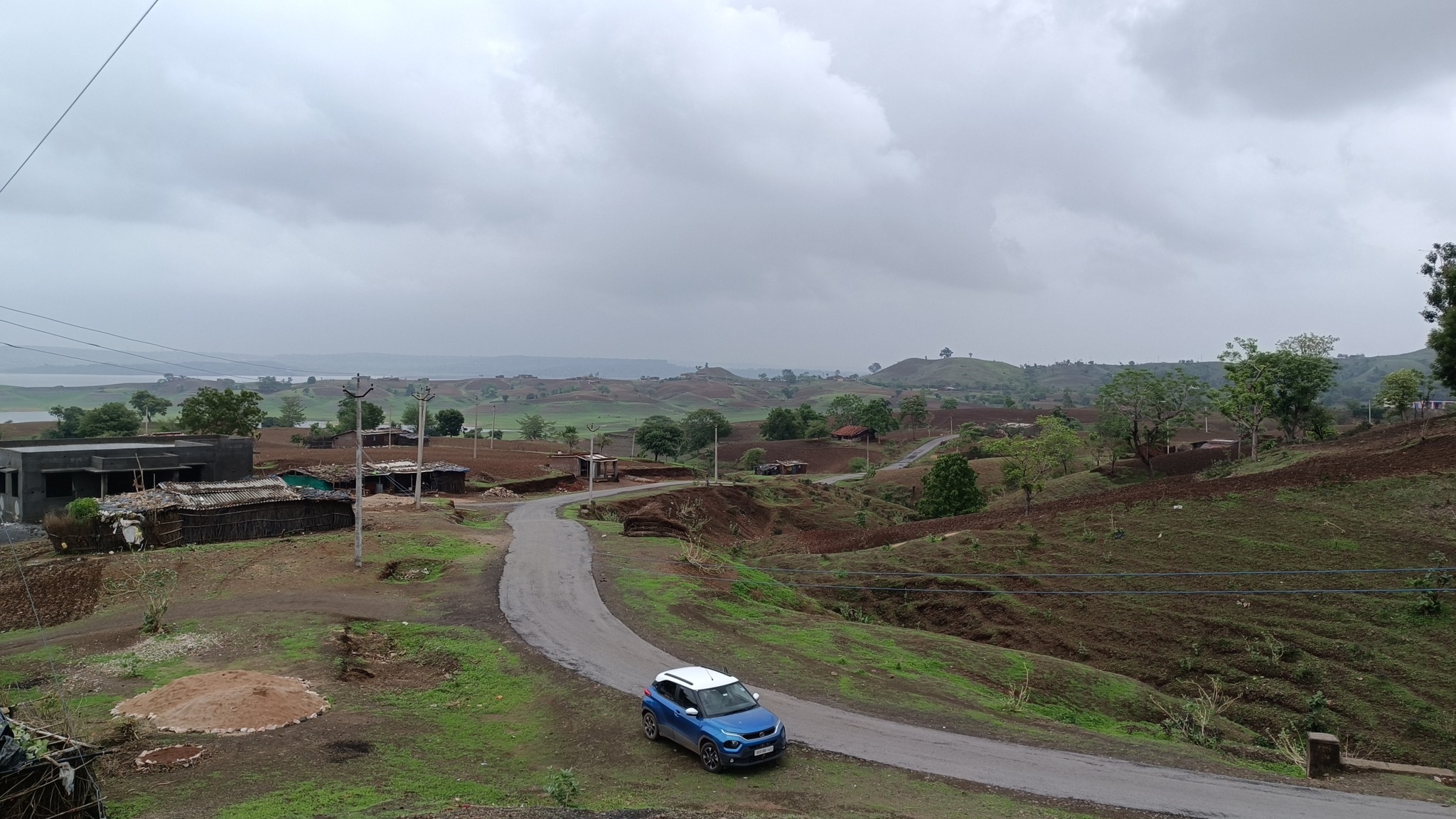
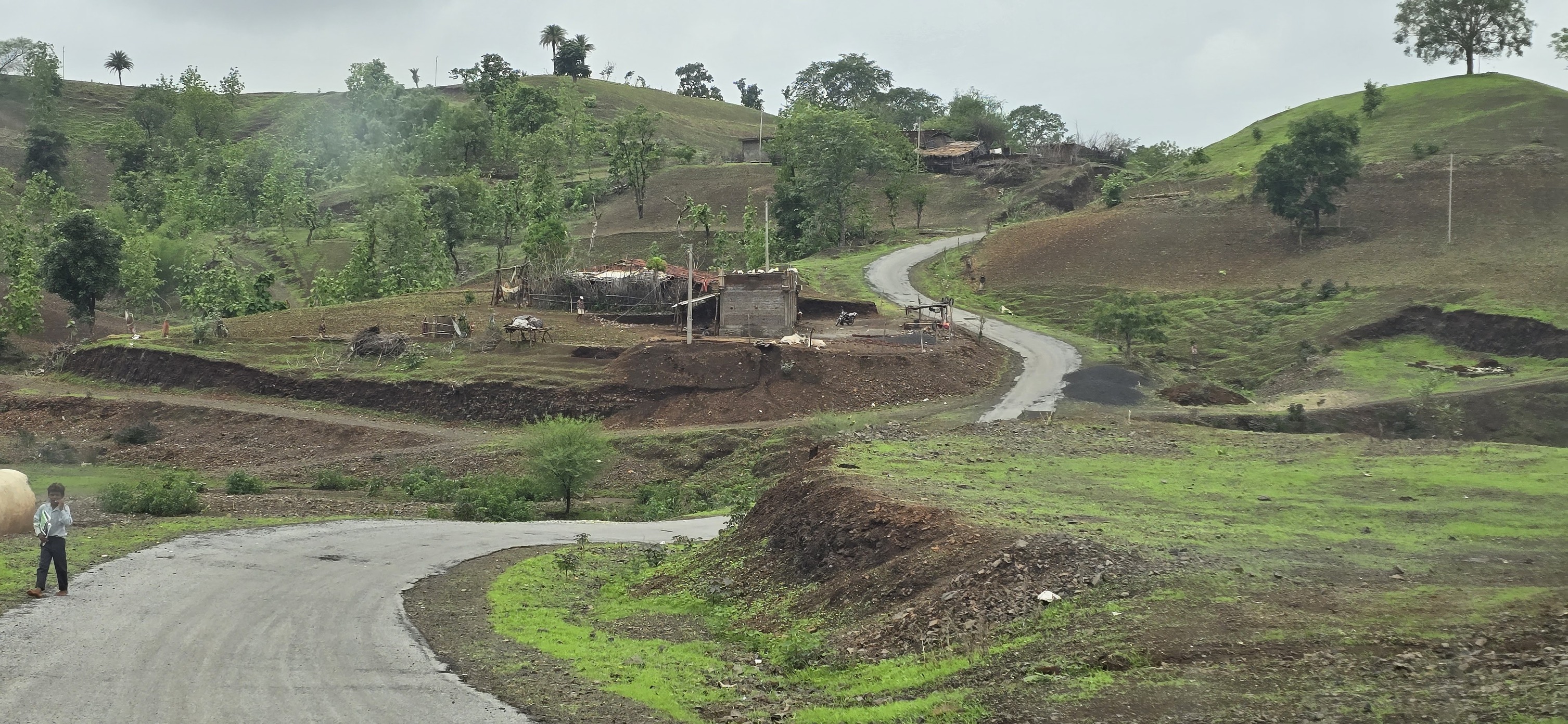
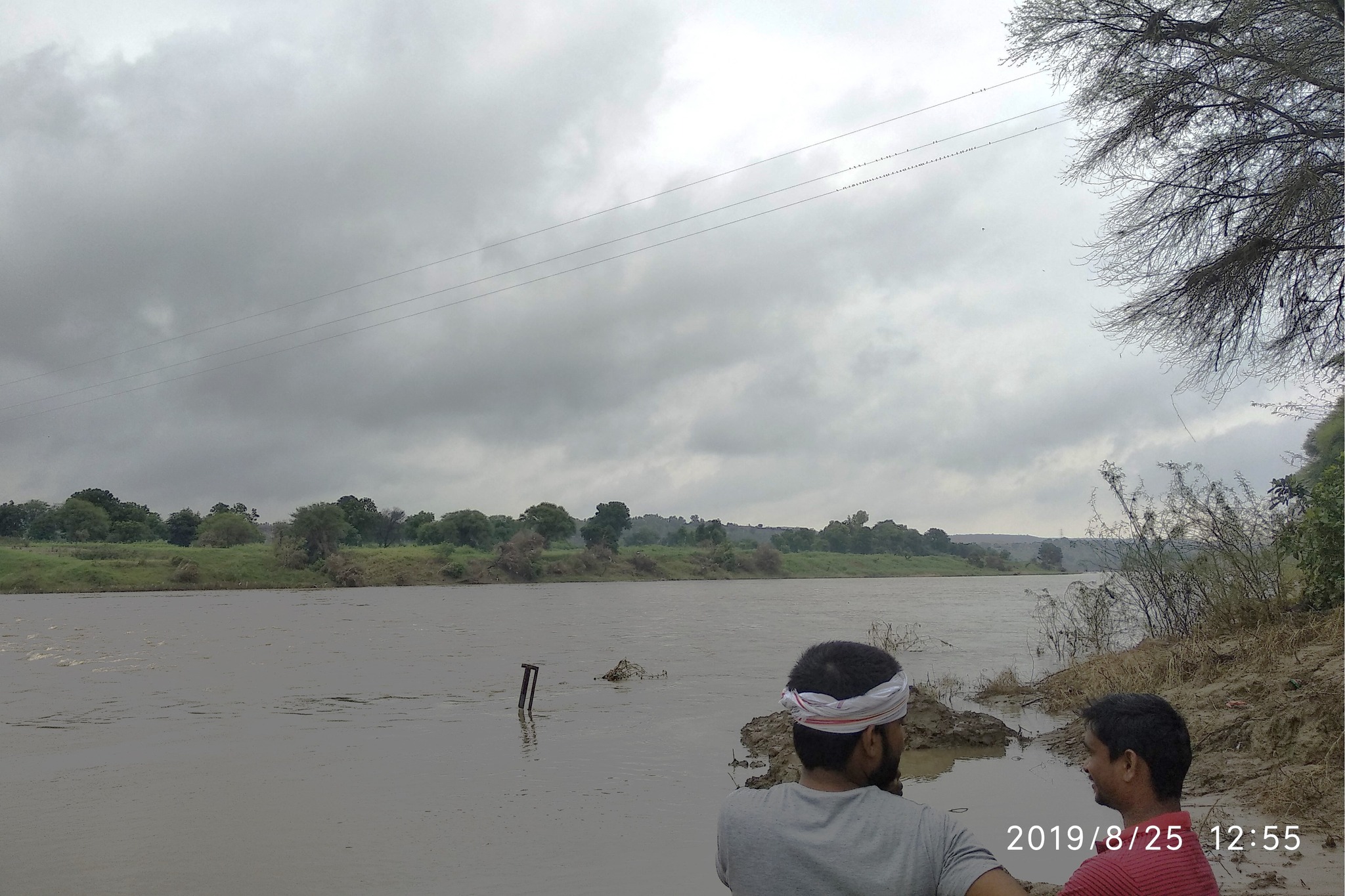
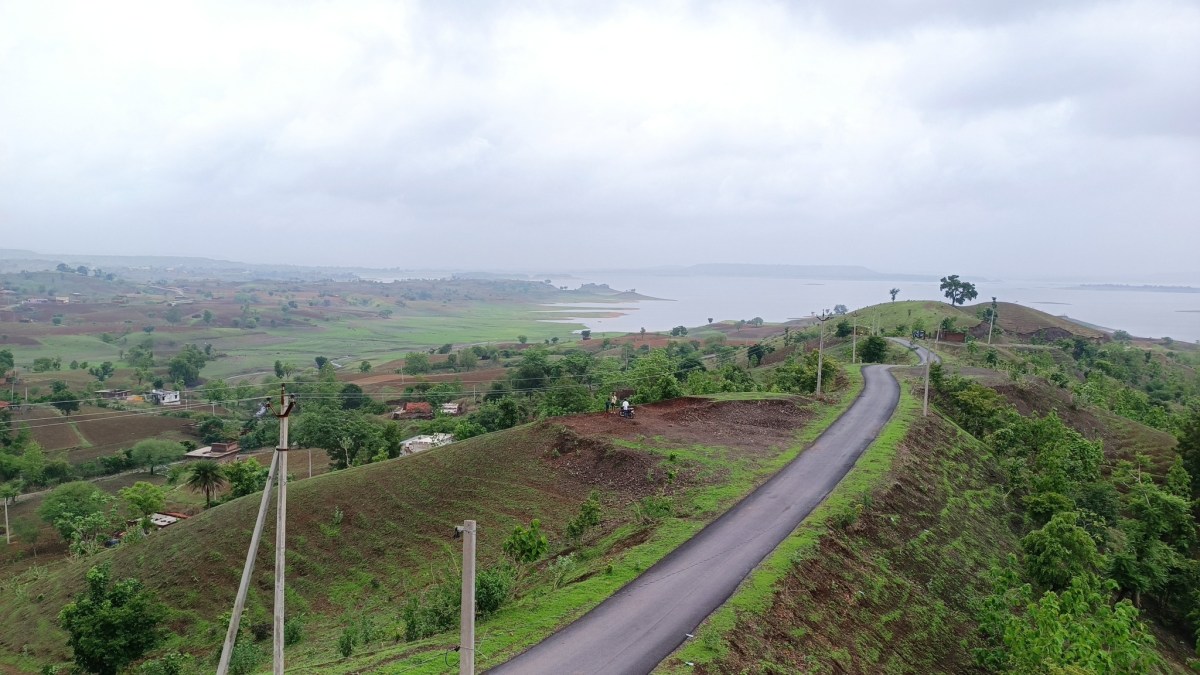
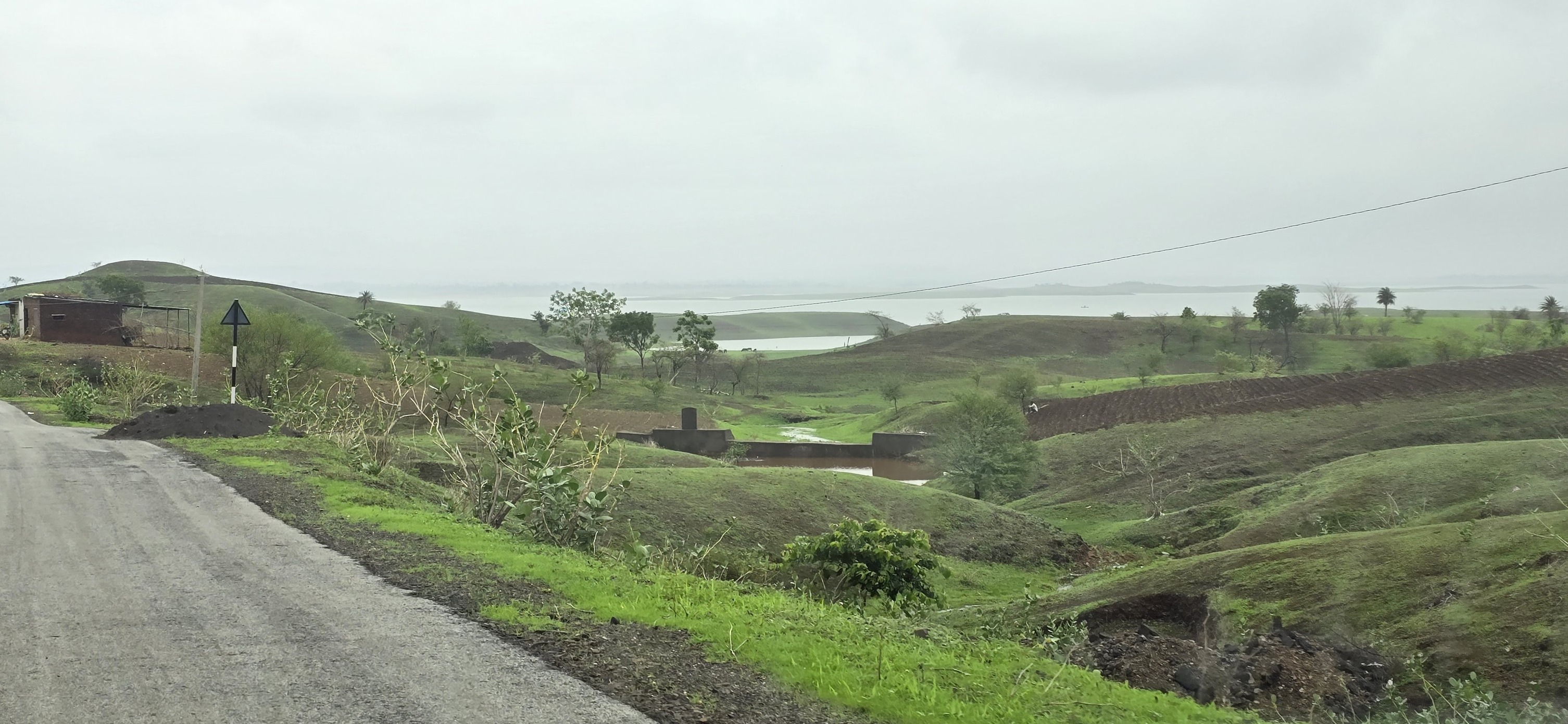
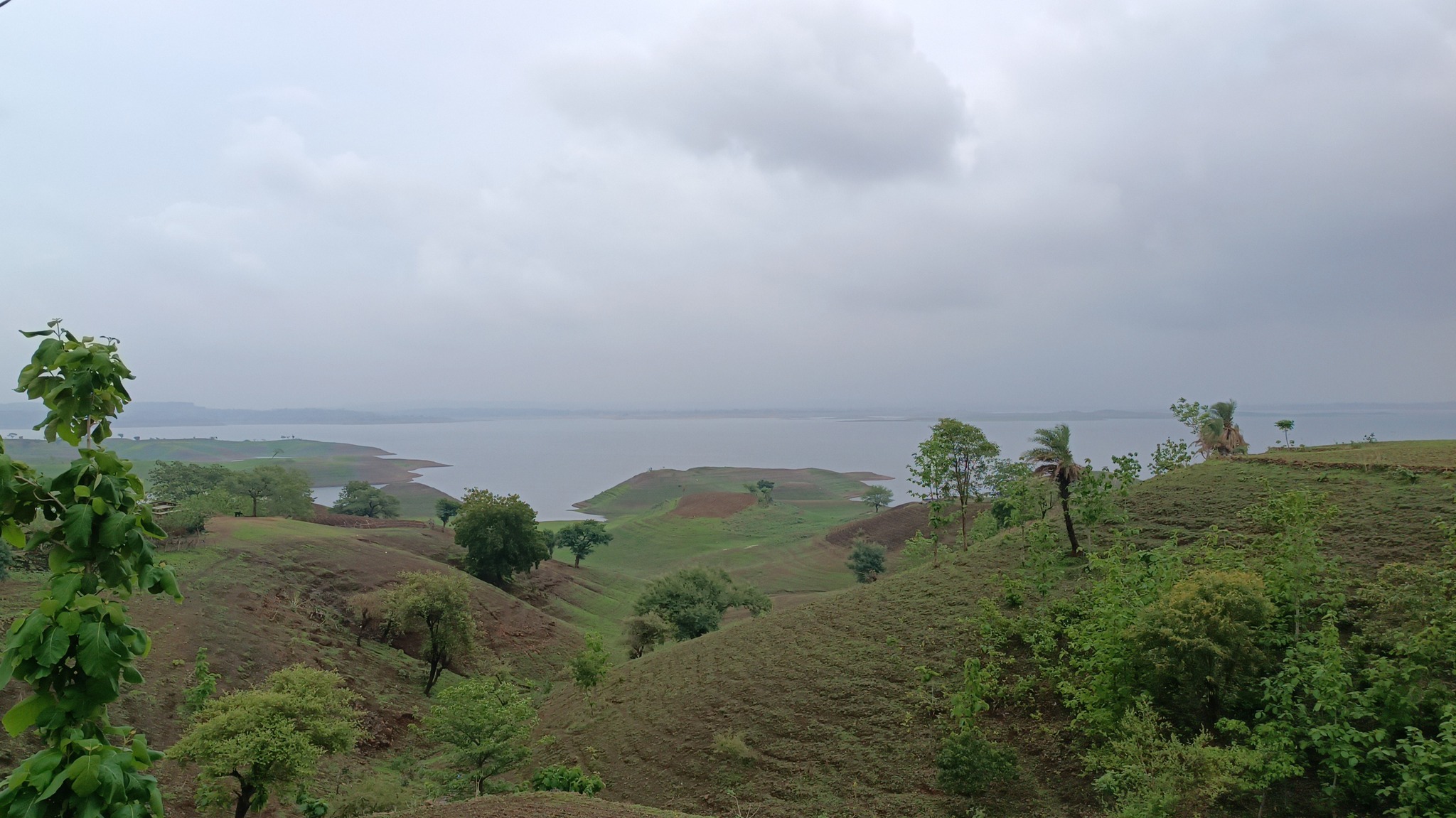
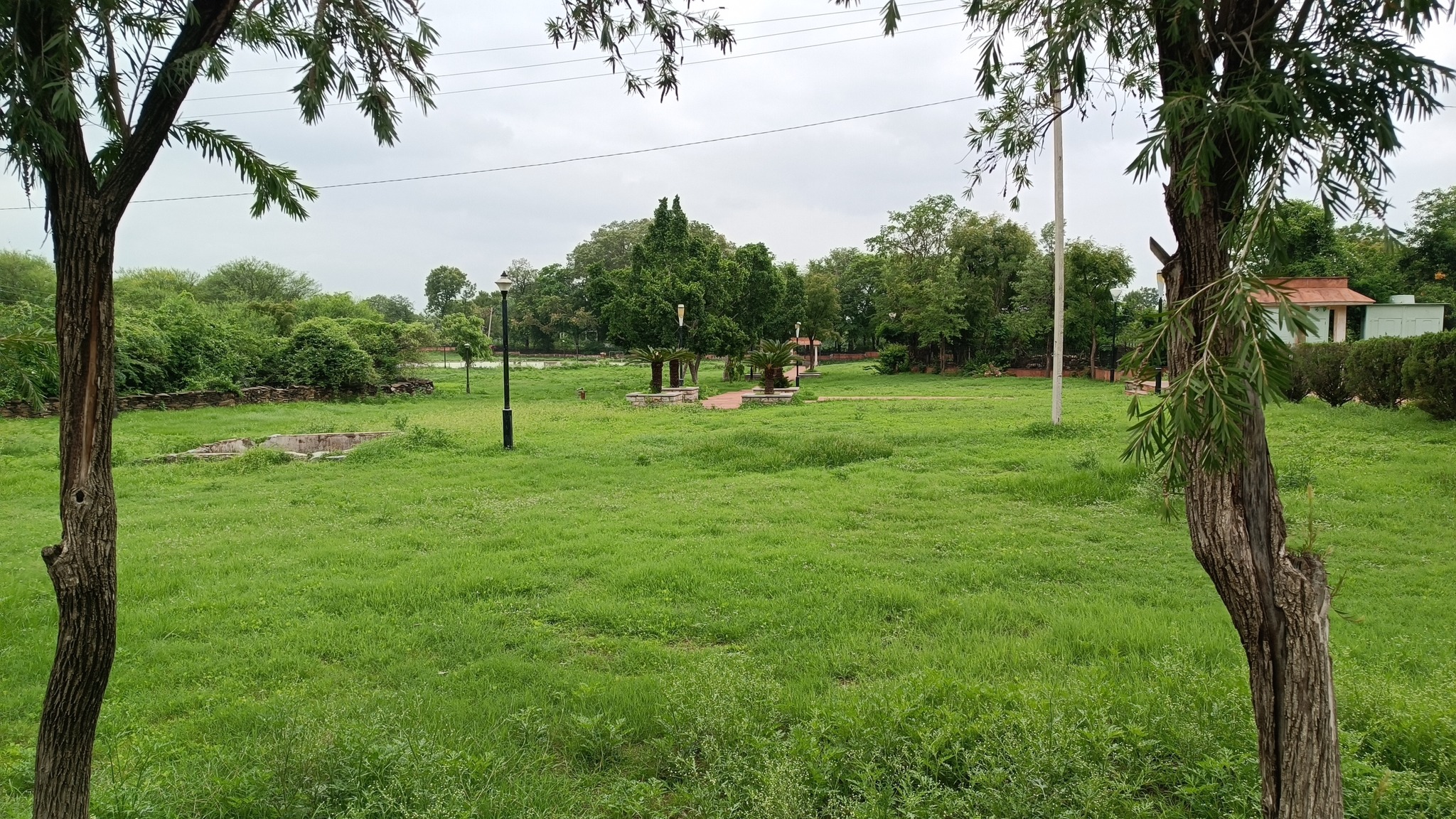
Banswara region lies in the Mahi catchment area in south-west Rajasthan, and is home to the massive Mahi Dam. The region is typified by low rolling hills undulating for miles, whose tops turn into meadows in the monsoons, evoking scenes from a Kashmiri landscape. This topographical feature has also led to formation of islands in the reservoir created by the Mahi Dam.
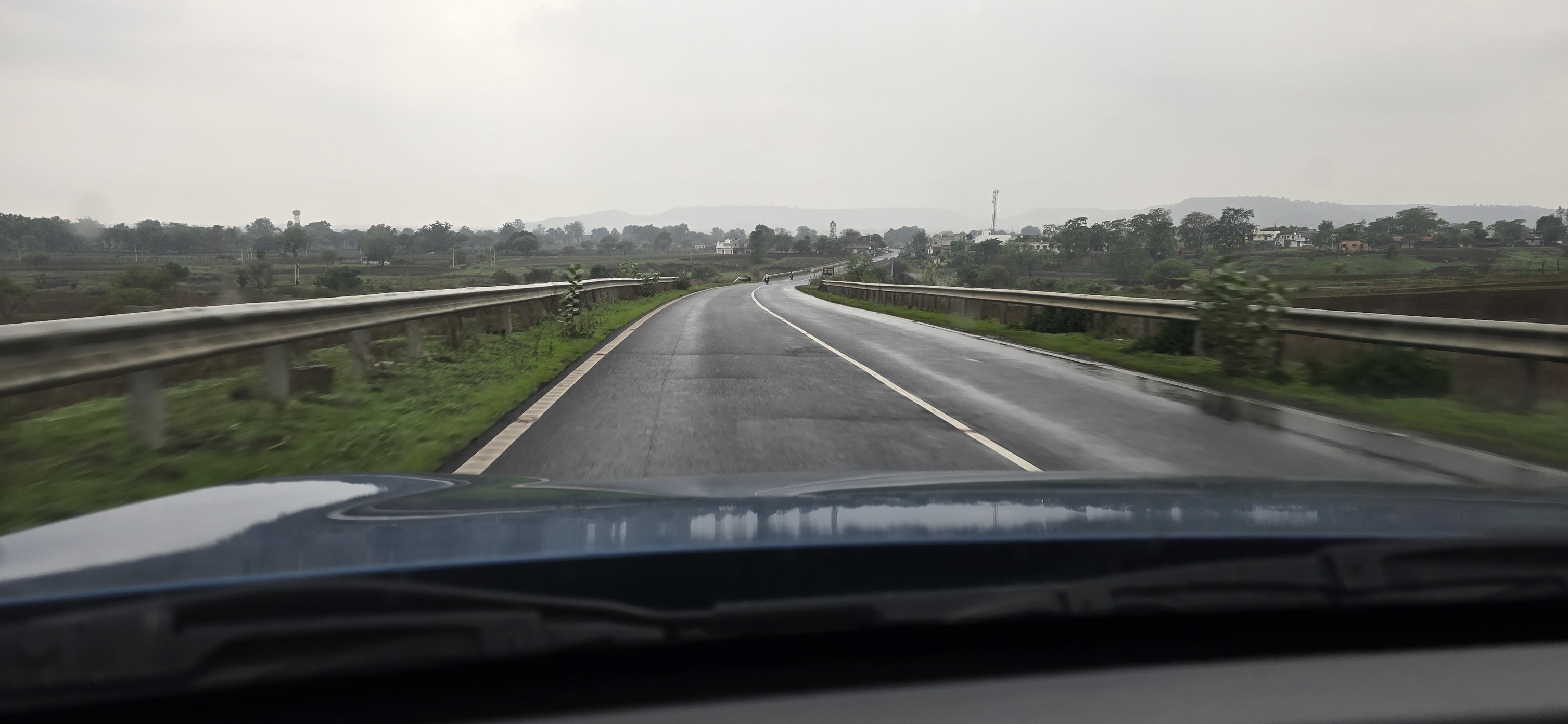
The road, winding across the ridges, leading to a village called Chacha Kota, affords a roller-coaster like ride with breathtaking views of the low rolling hills stretching to the horizon, as well as the islands in the reservoir. With overcast skies, you might even feel you’re gliding through the clouds.
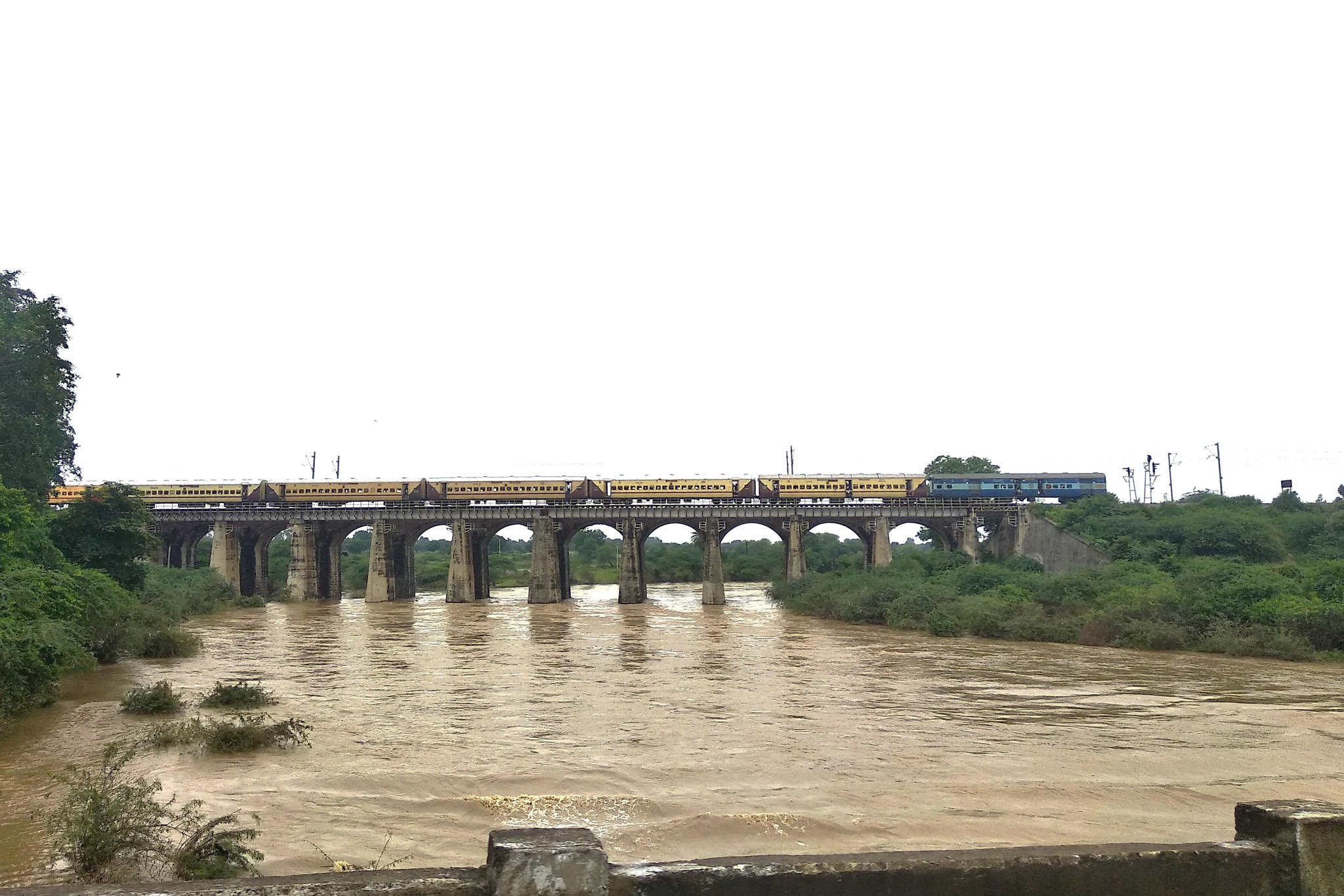
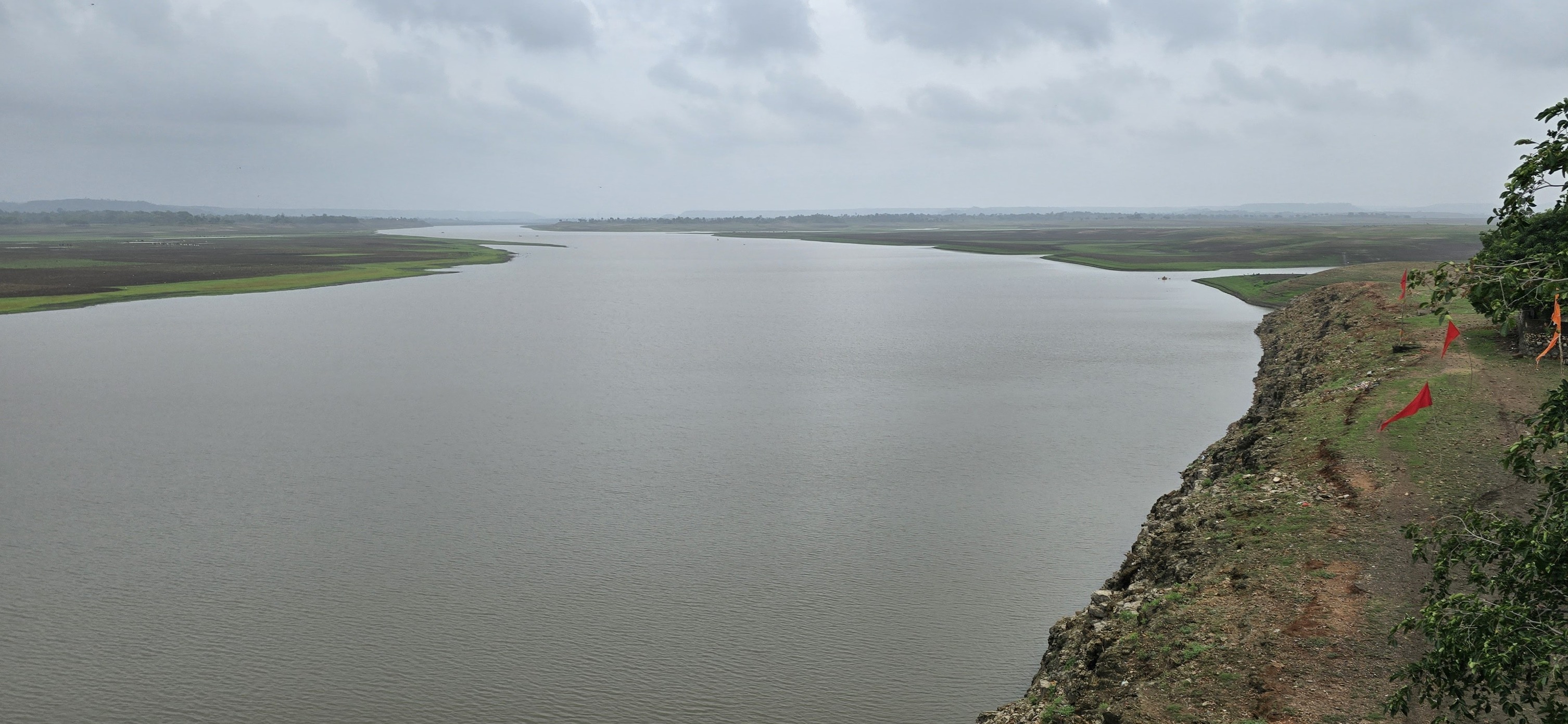
Another point of significance is the long Maharana Pratap Setu (Bridge) over the Mahi River on the road to Ratlam, where the Tropic of Cancer also passes through.
Arthuna

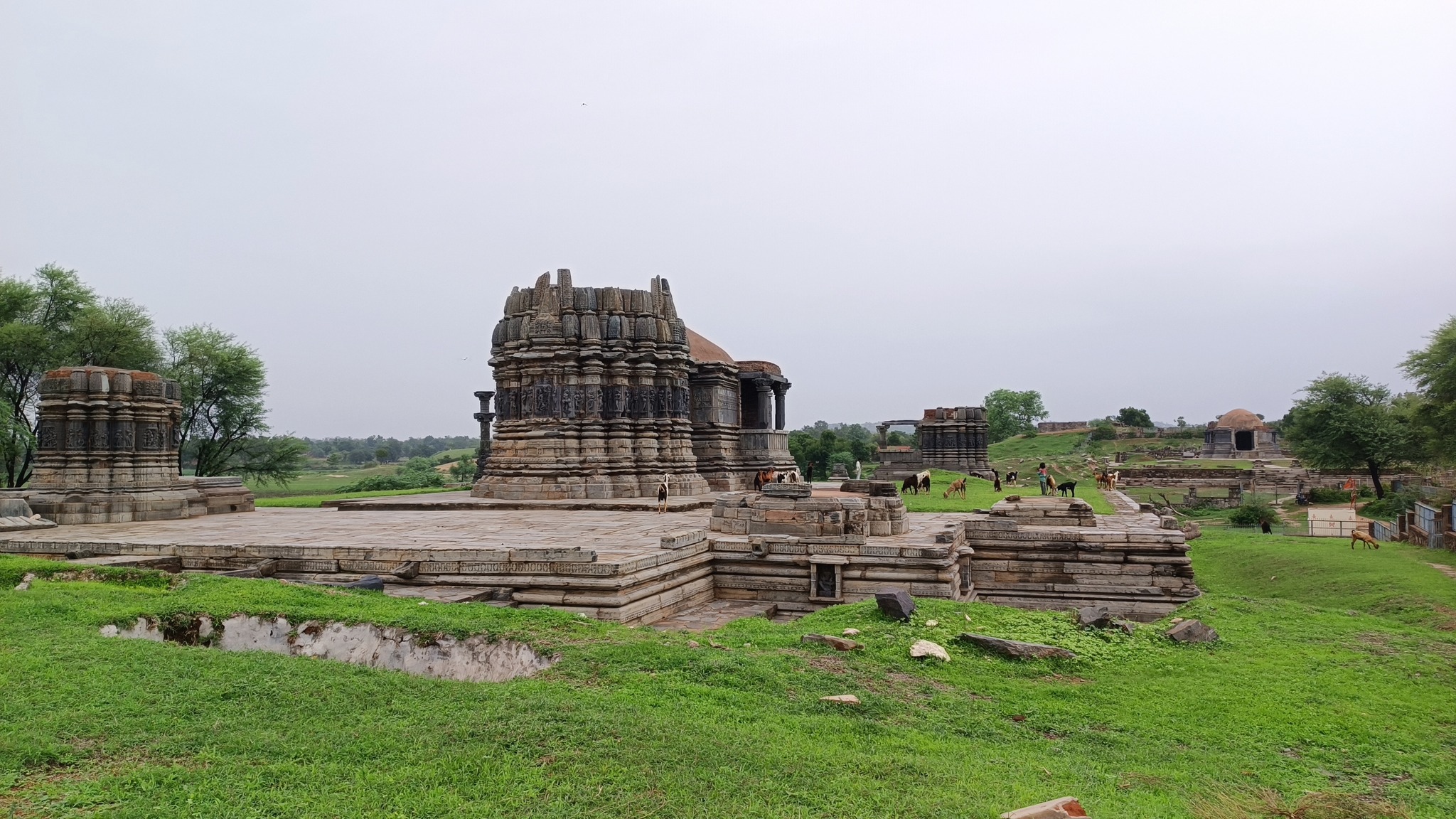
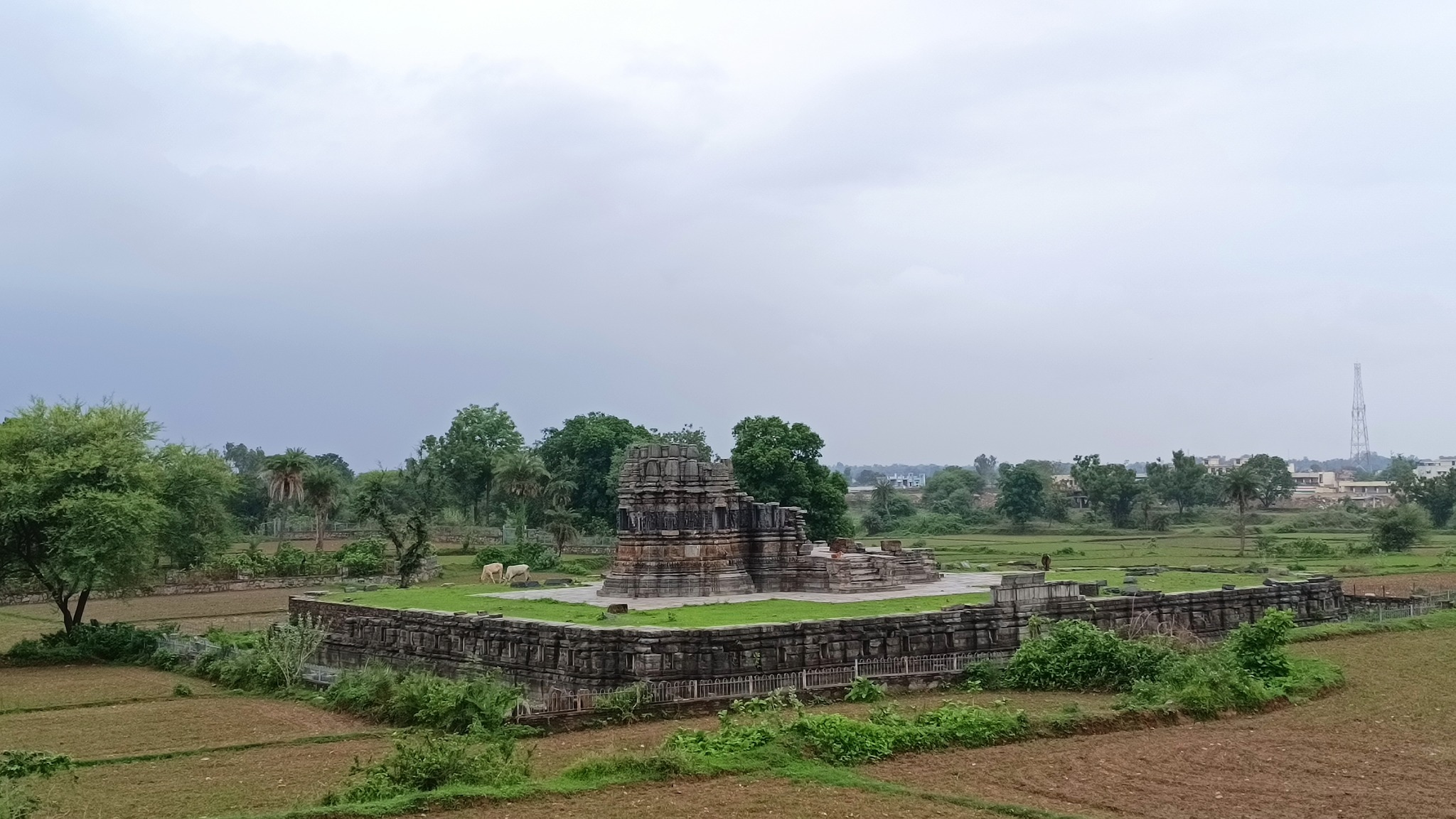
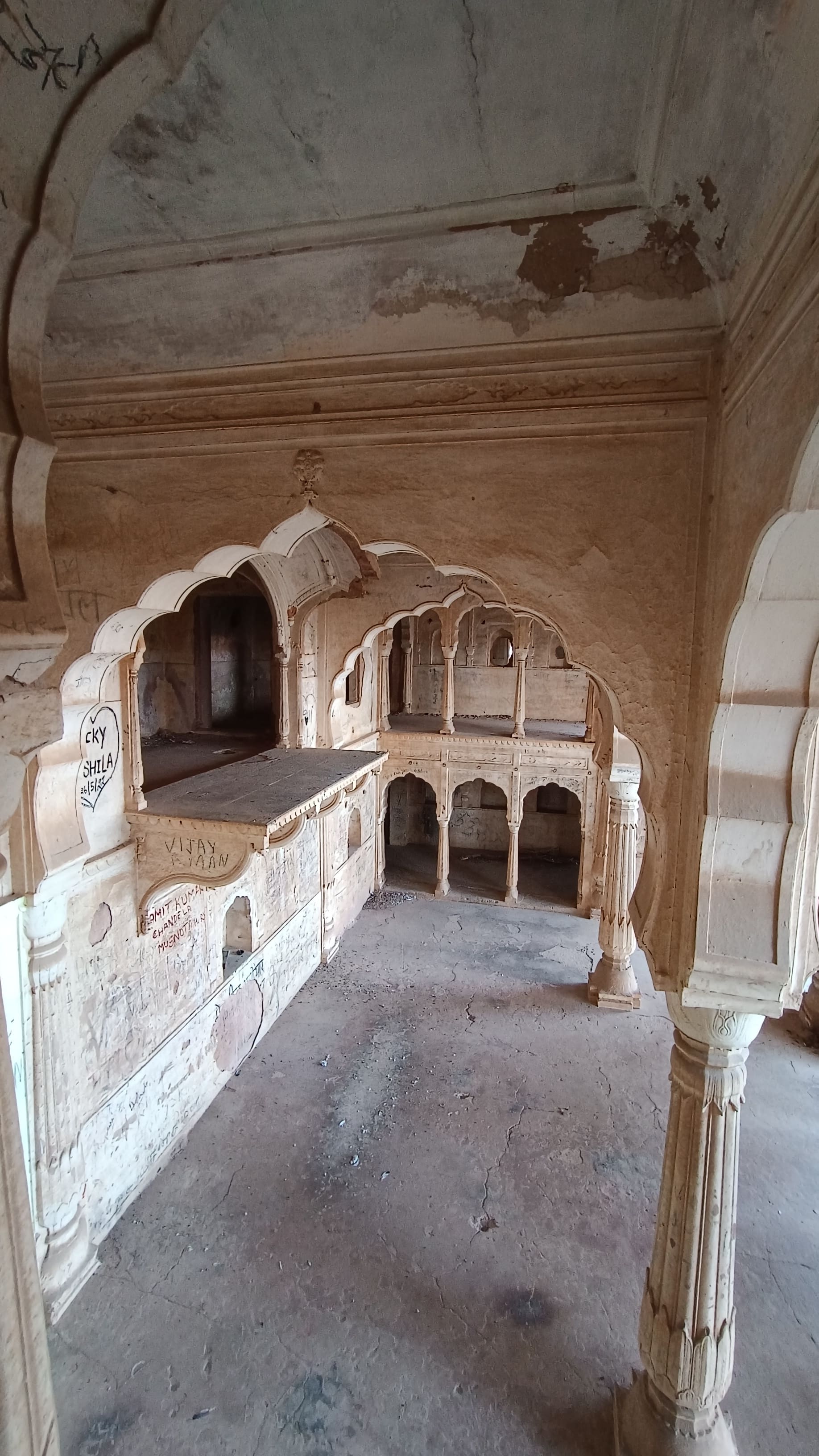
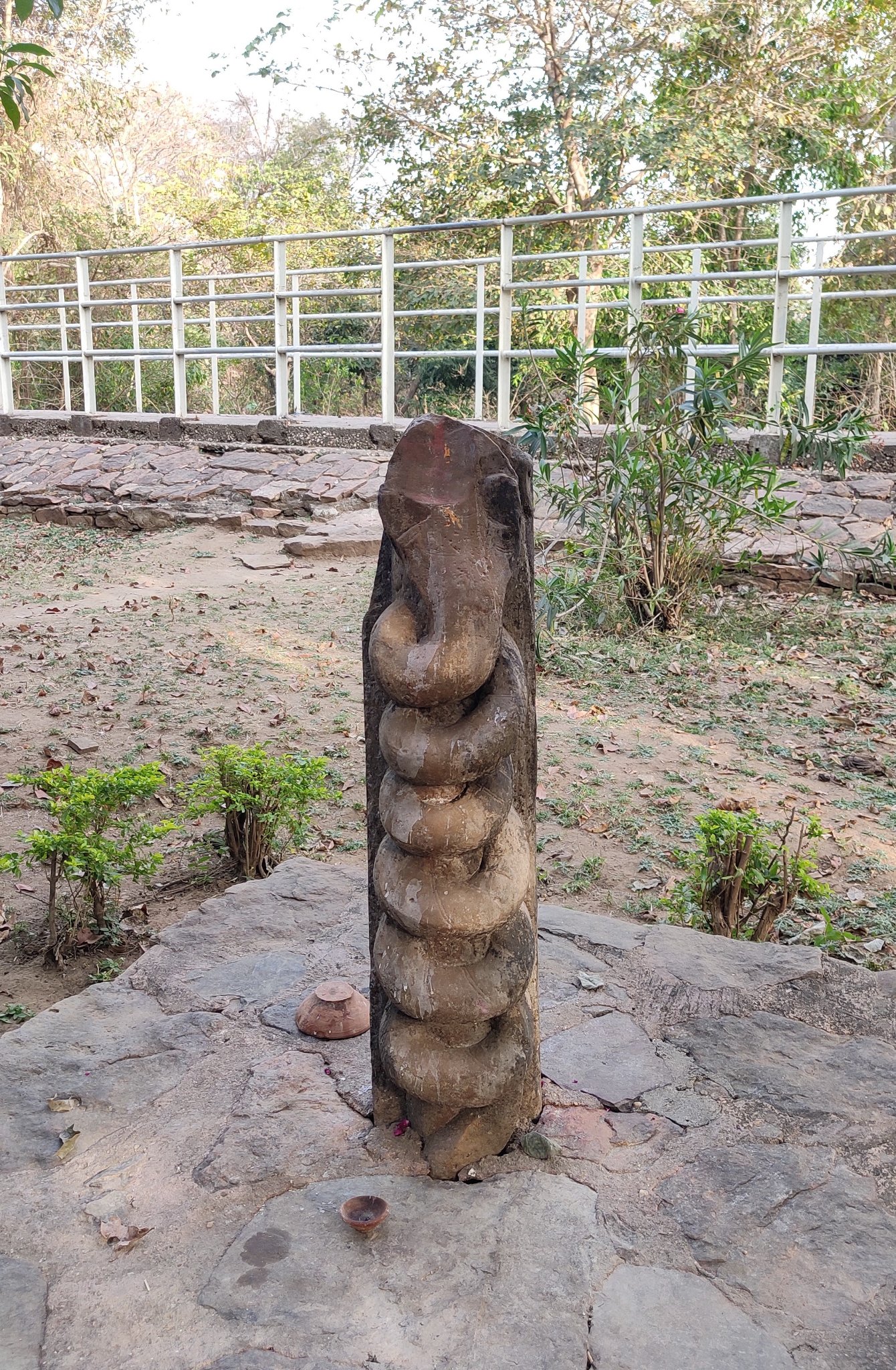
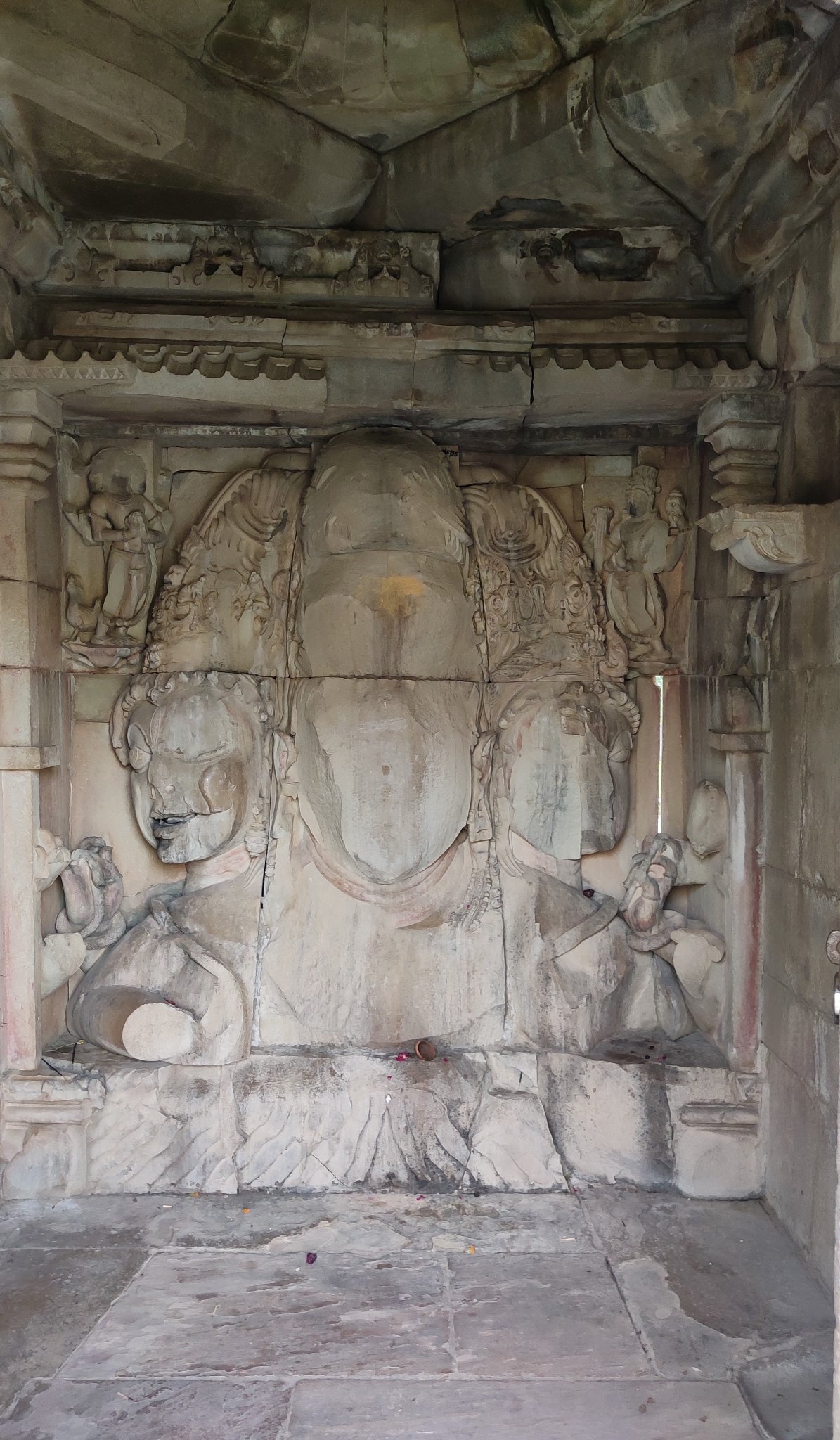
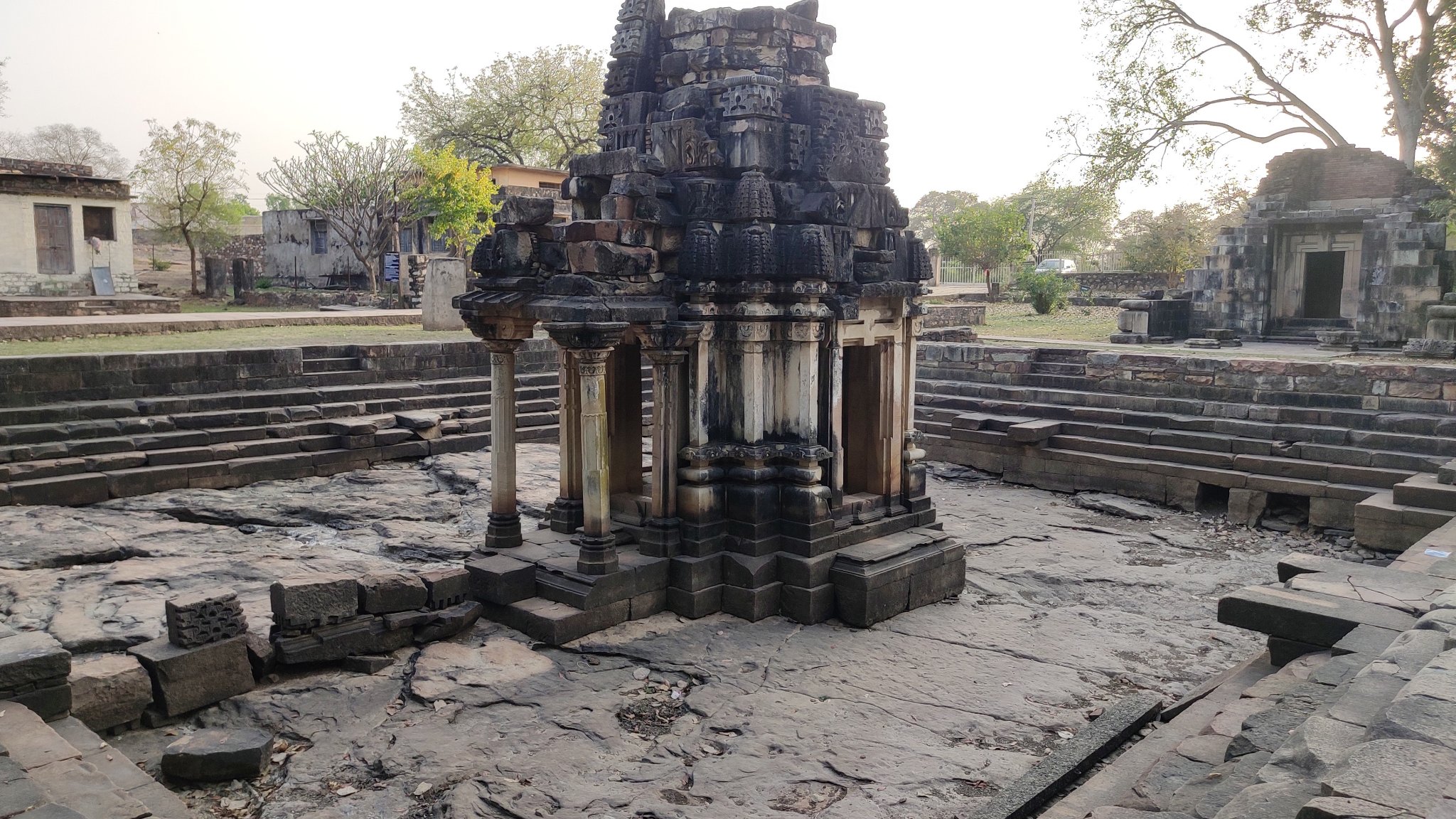
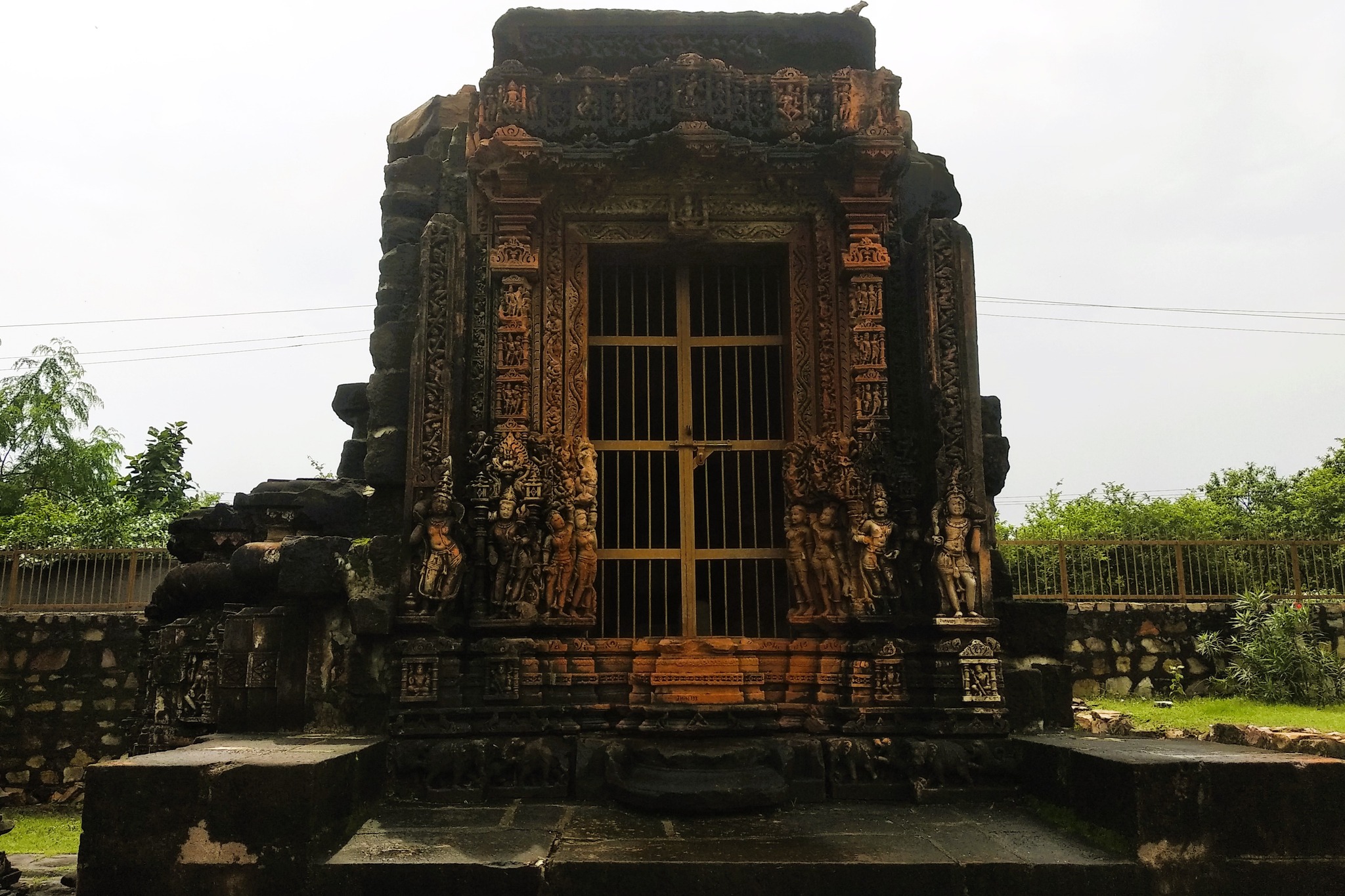
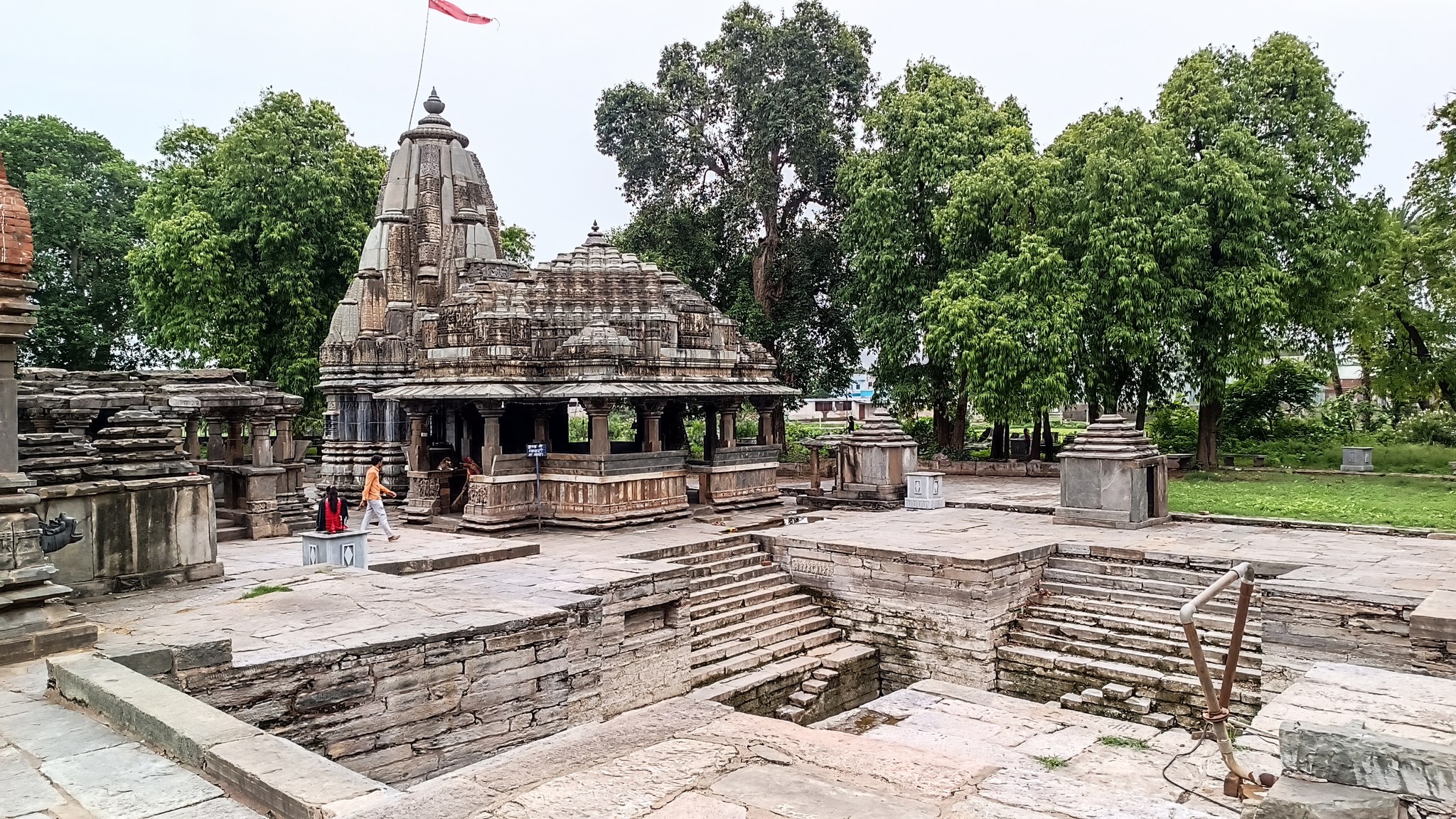
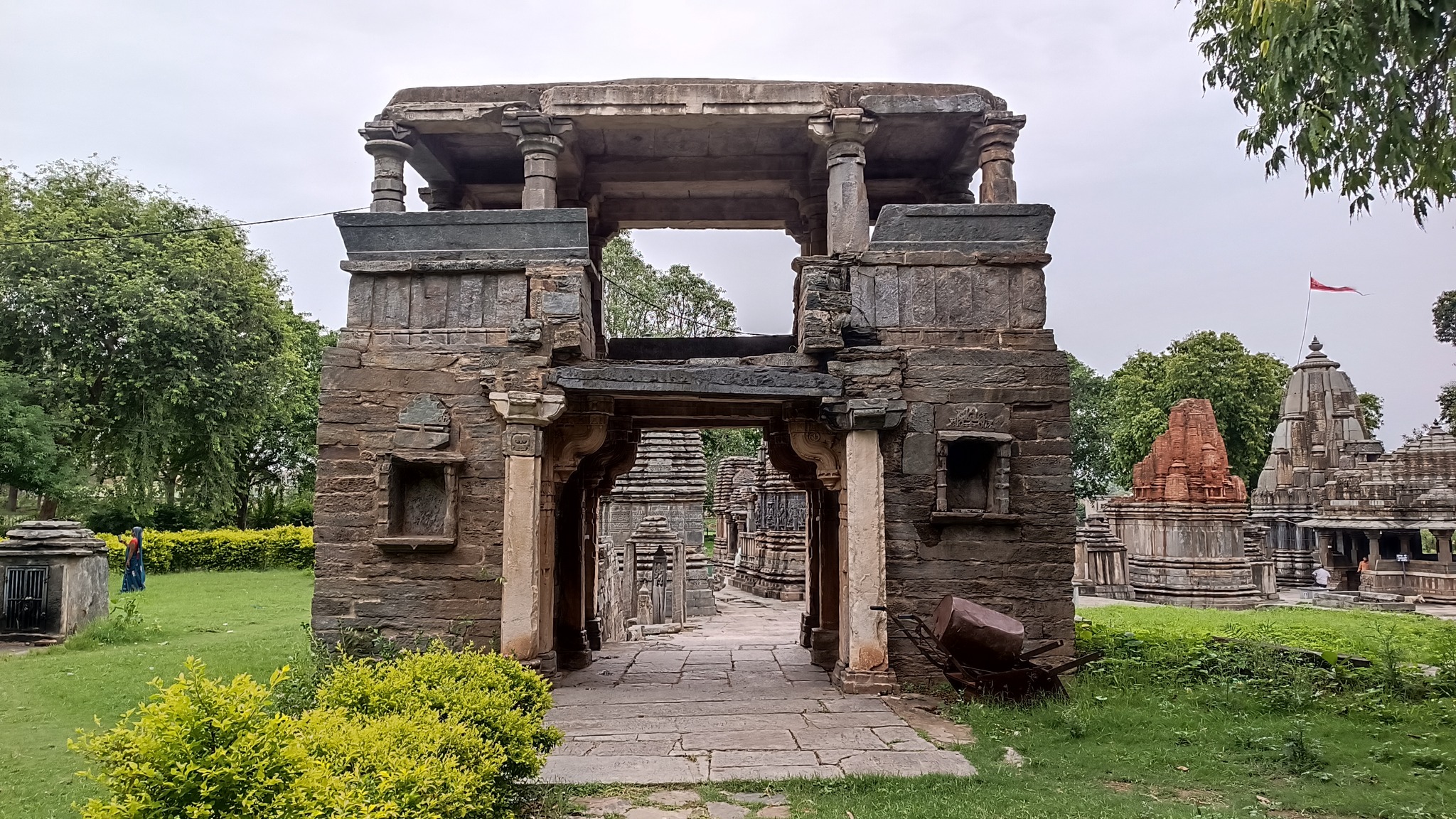
Arthuna, also called Utthunaka, the capital of the Paramaras of Vagad in the 11th-12 century AD, was an important commercial centre at the time. Home to a complex containing multiple temples, from the same period, dedicated to Shiva, and a stepped tank. What is interesting is that outside this complex, there are ruins of even larger temples, and several mounds probably concealing even more structures.
Nathdwara

Home to the temple of Shrinathji, an infant form of Krishna.

Ranakpur

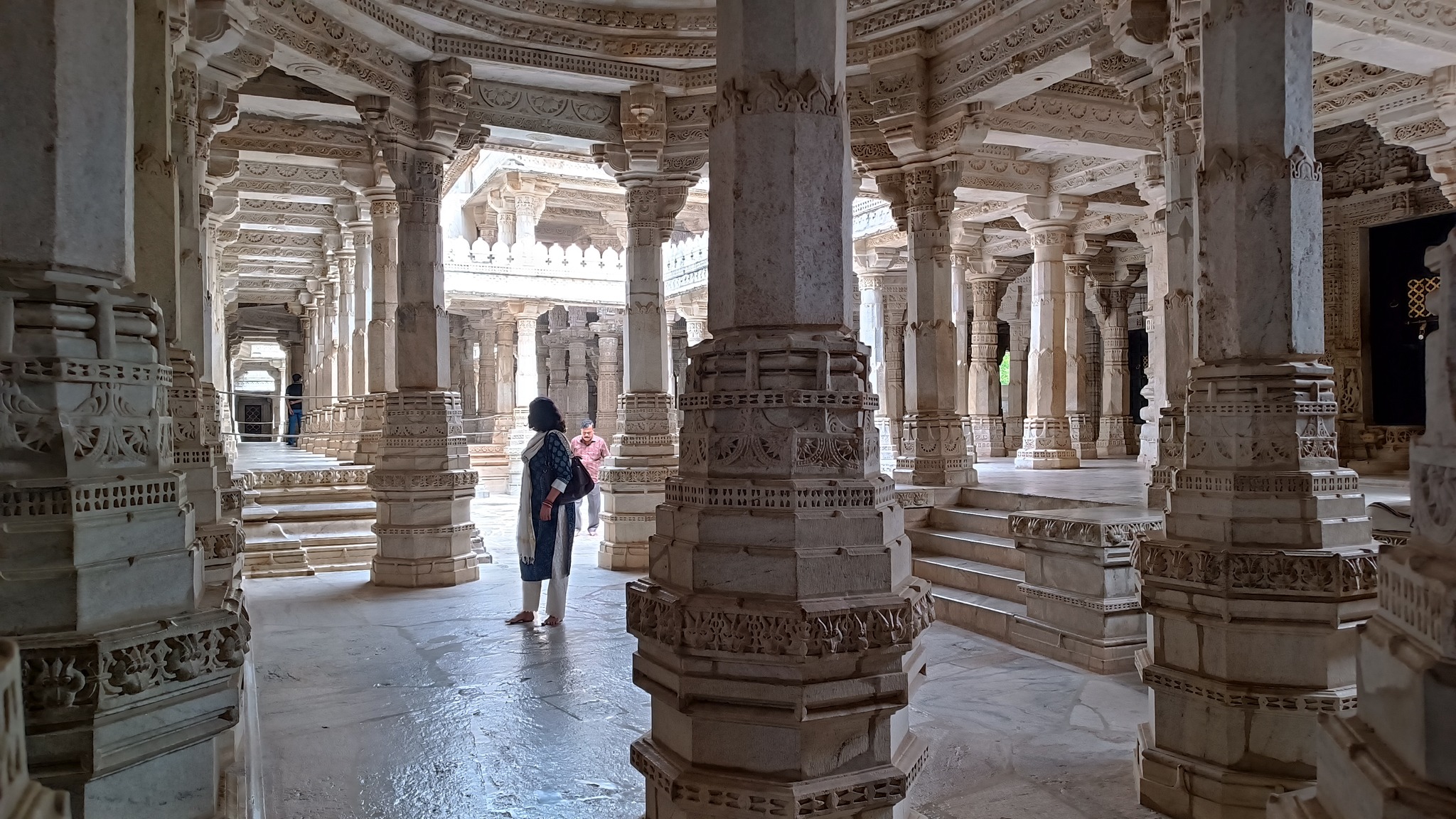
A 15th century Jain temple built entirely in marble sits majestically in the jungle at the Aravalli foothills. I would put this temple alongside the Taj Mahal as a mediaeval wonder of India.

Kumbhalgarh

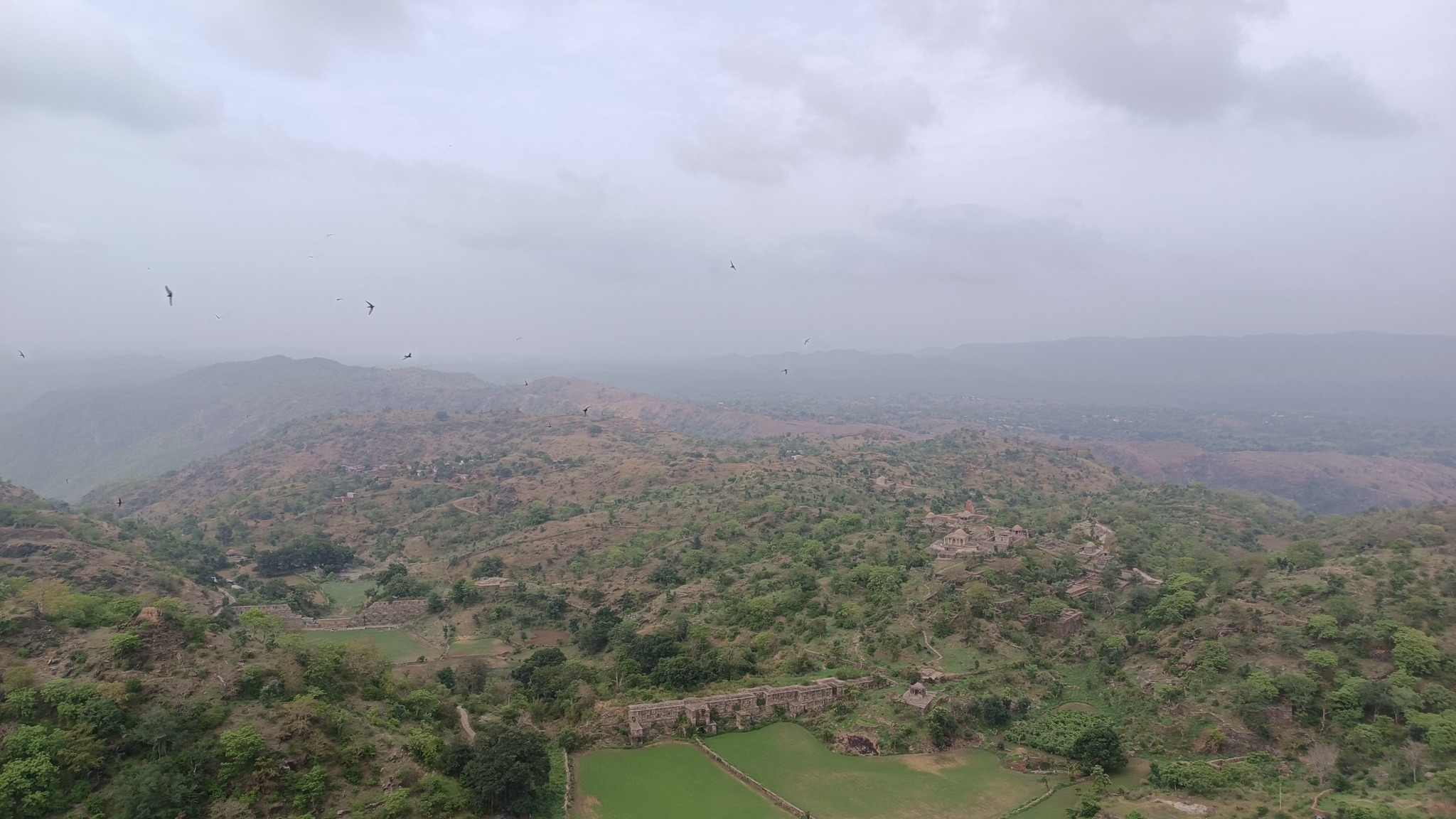
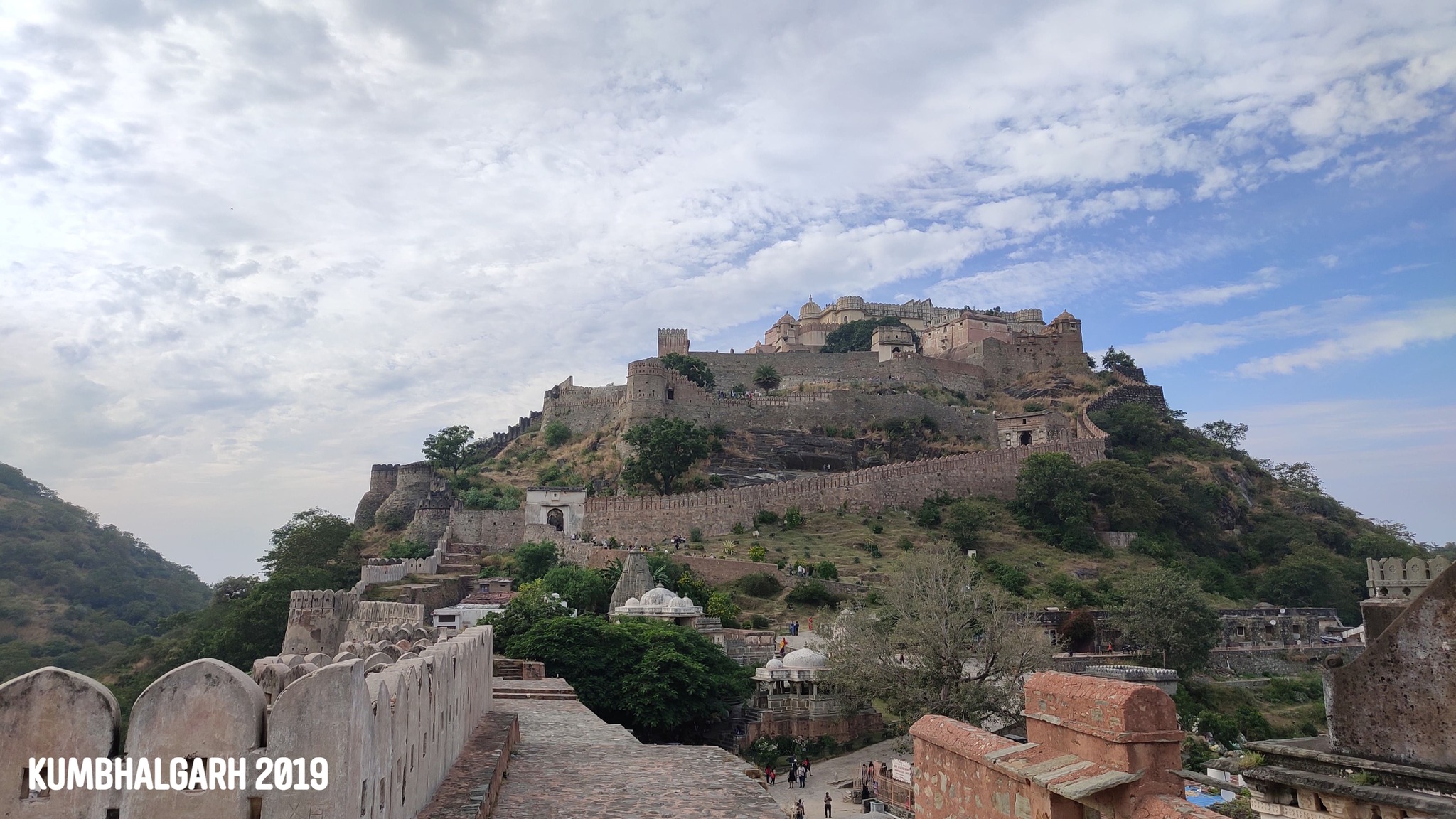
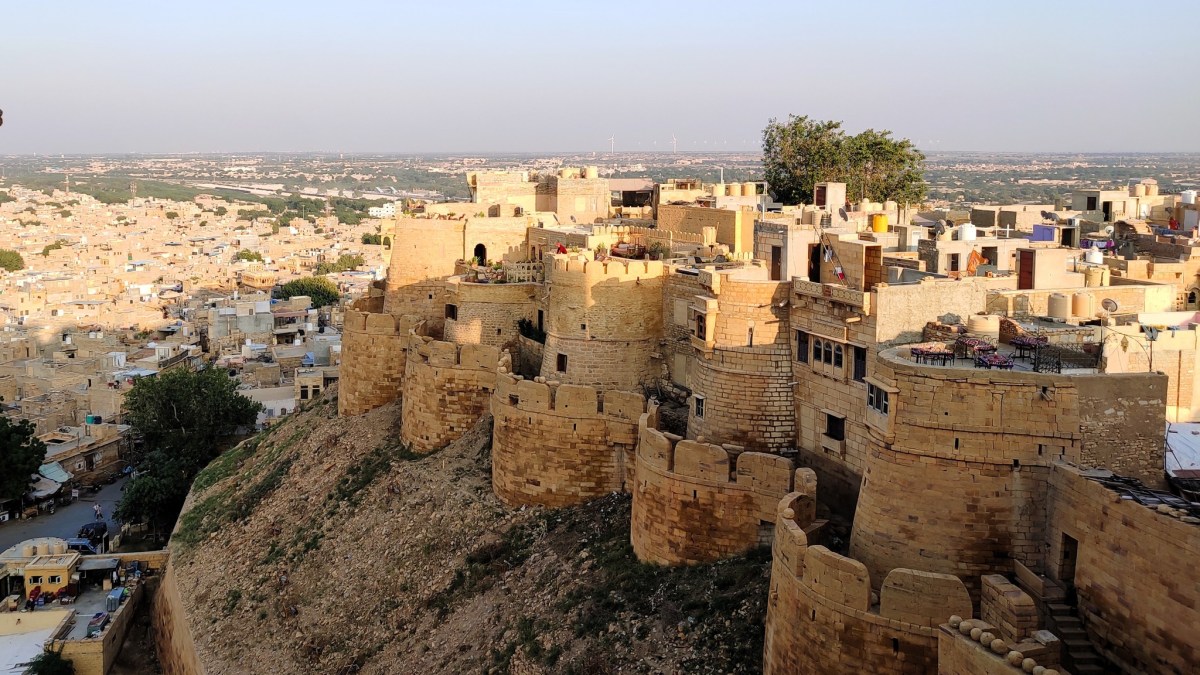
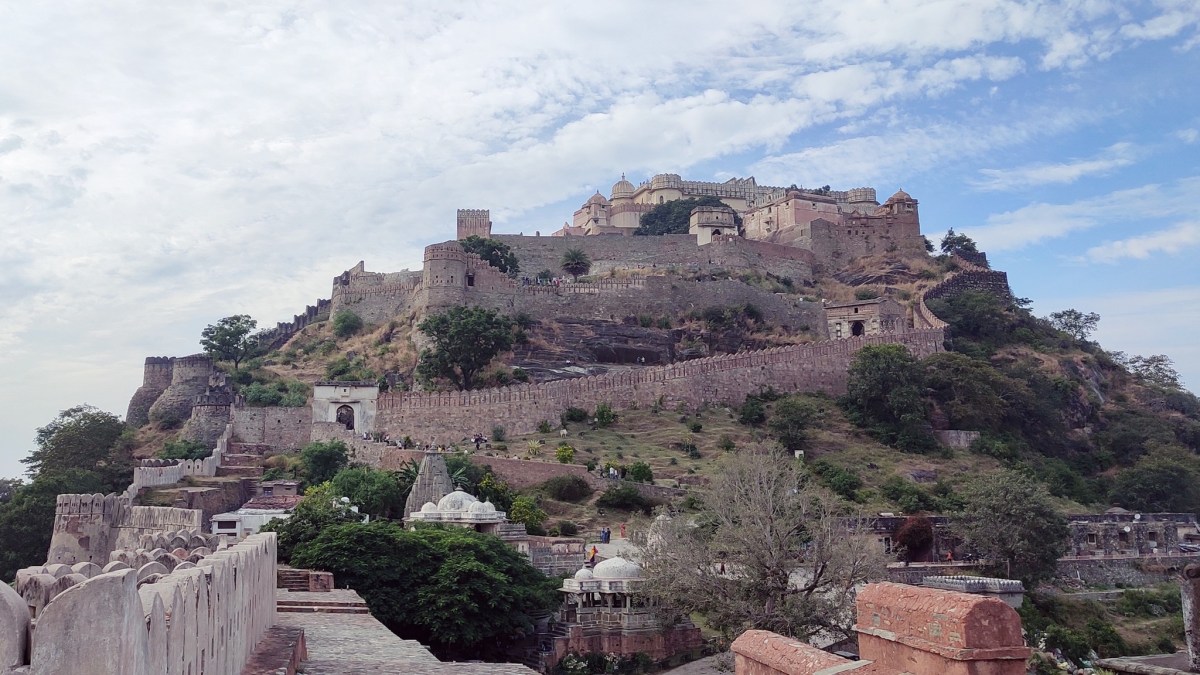
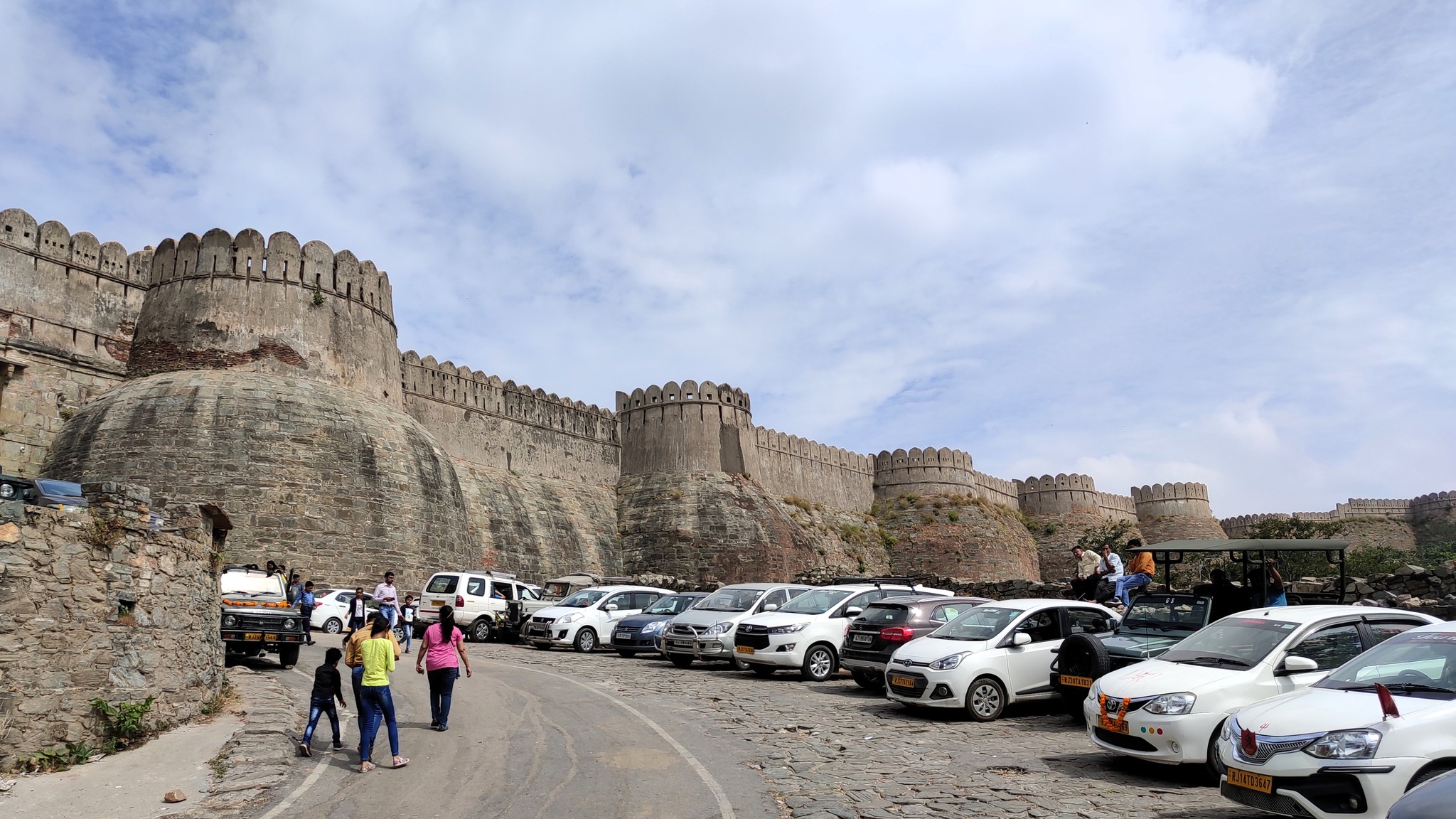
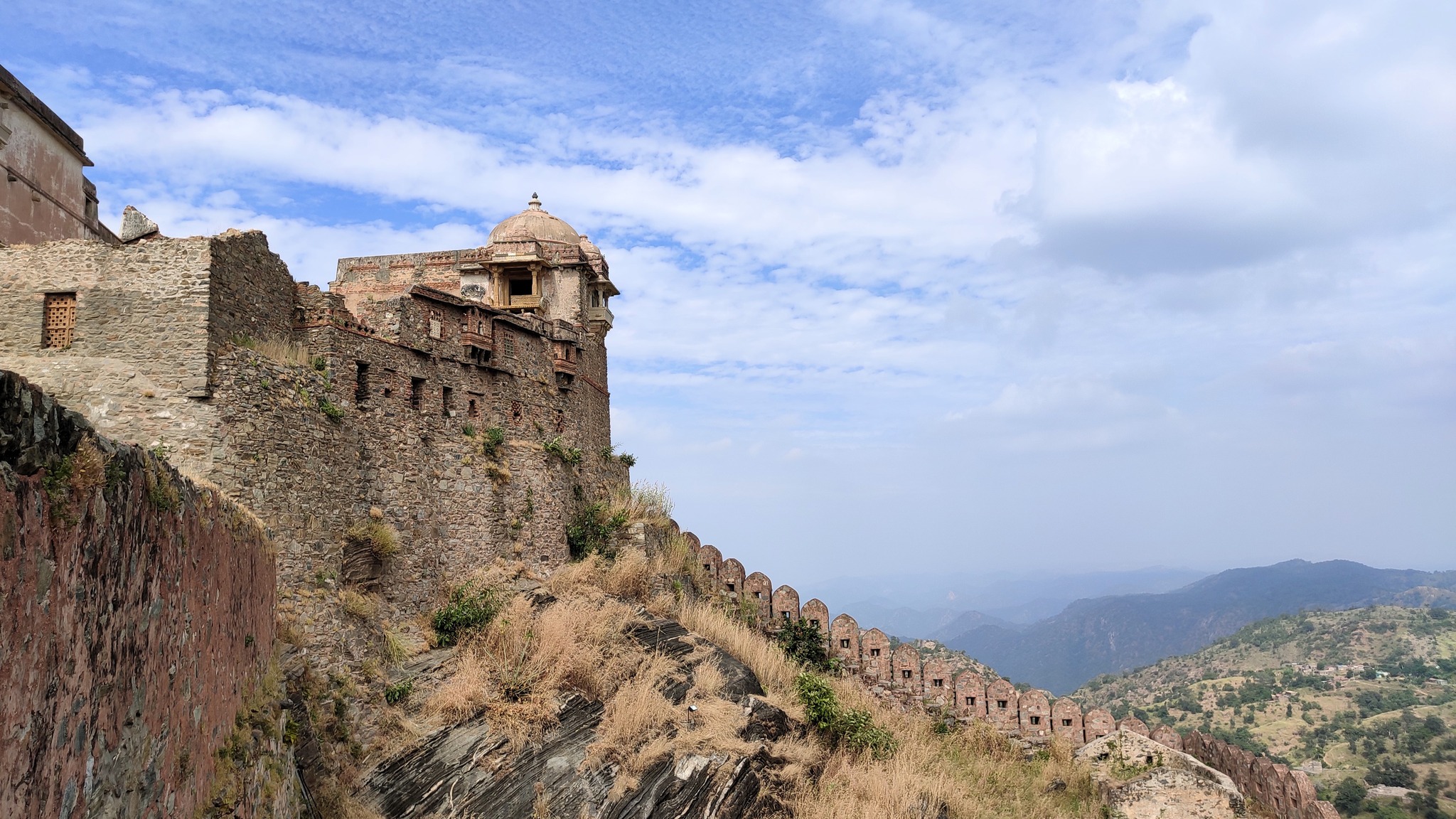
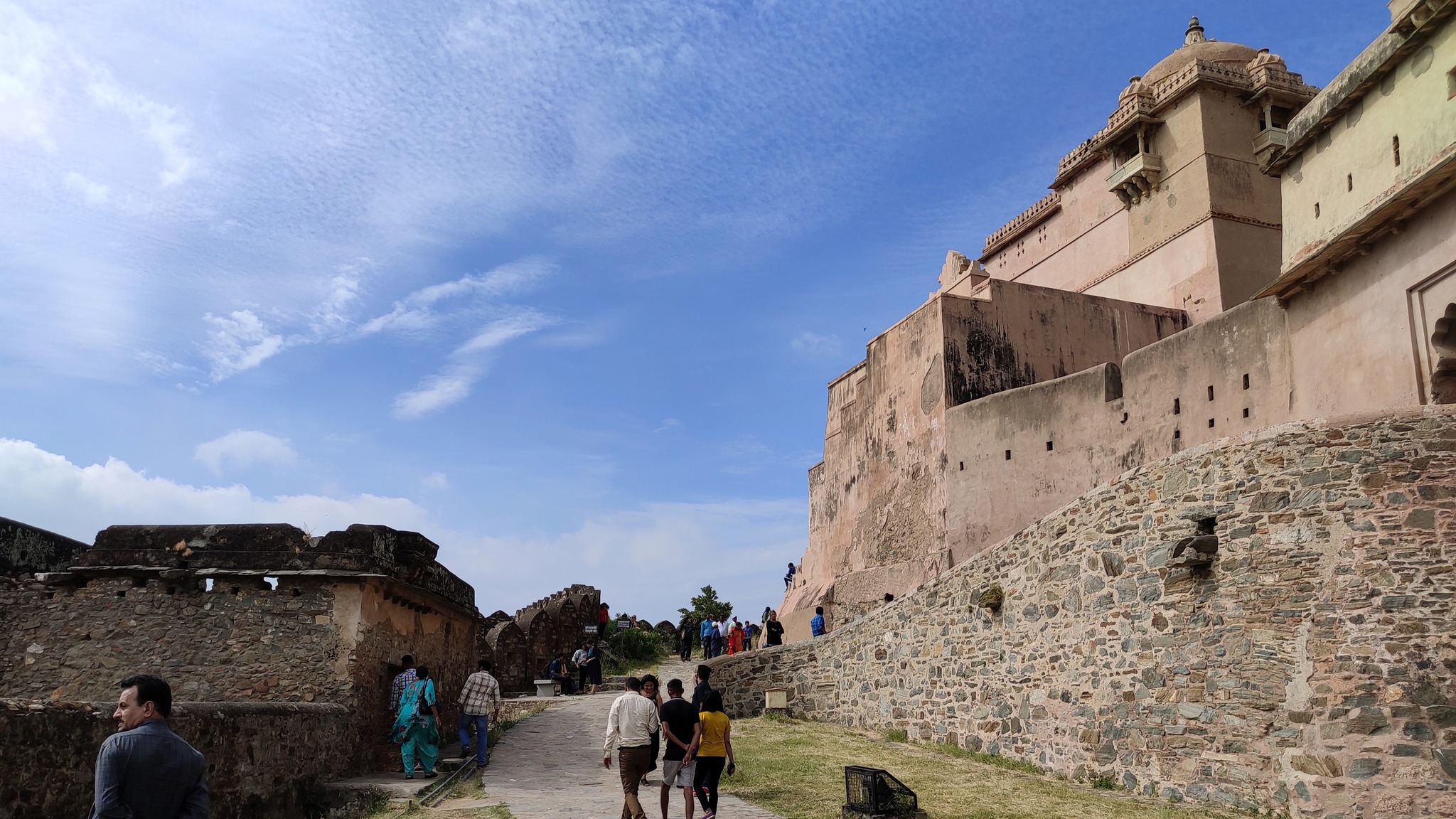
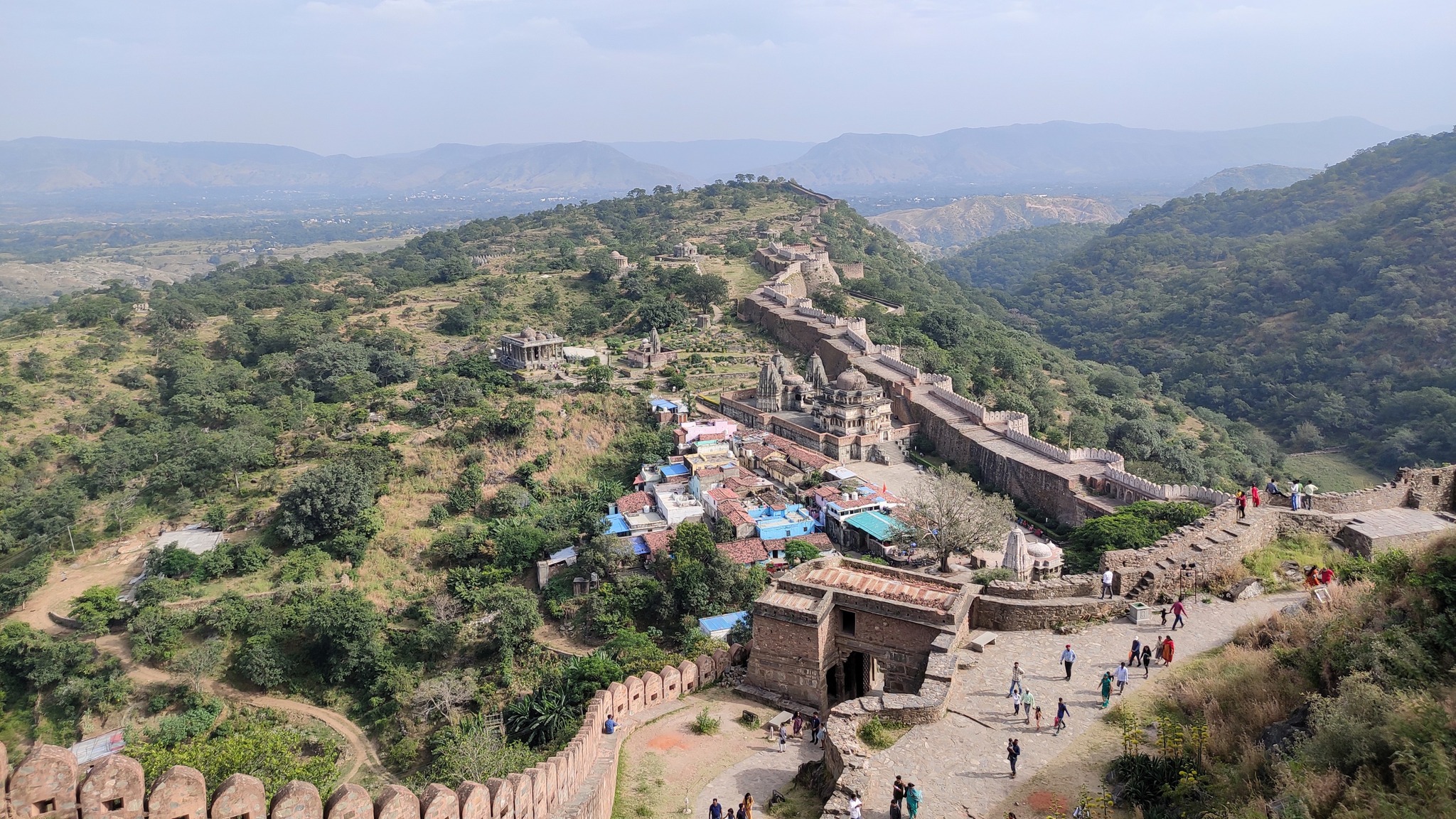
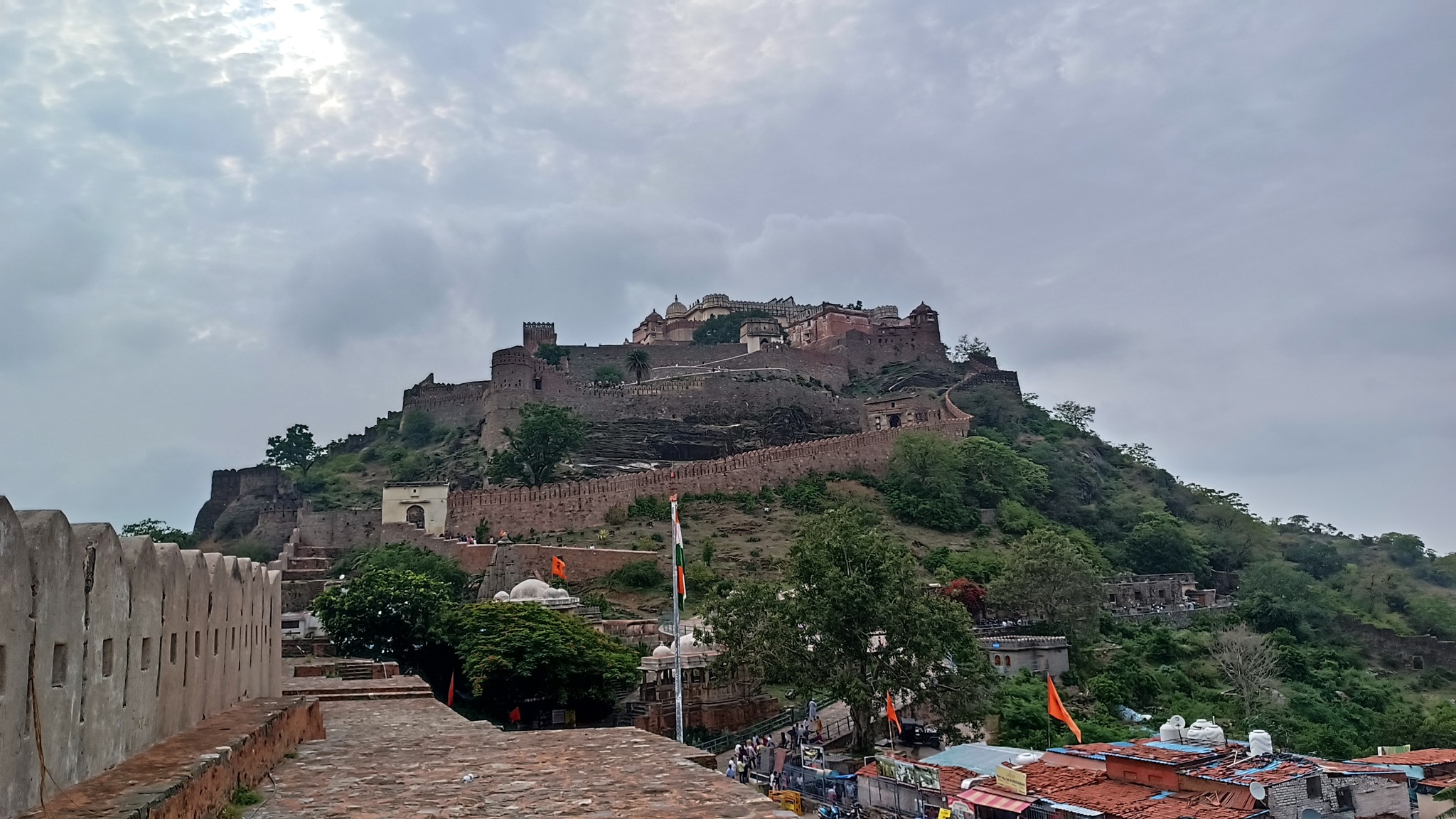
Another historic fort, the birthplace of the legendary Maharana Pratap, and hailed as the fort with the longest fortification wall in India (2nd in the world) at 36 km. From the top of the main palace, aptly named Badal Mahal (or Palace of the Clouds), it is said, one can see the Marwar on one side, and Mewar on the other.
Rakt Talai (Pool of Blood)

As one crosses Haldighati pass, the region around which served as the battleground between the armies of Maharana Pratap and Akbar, and reaches Khamnore, there comes a depressed patch of land where a pond is said to have existed. The pond is said to have turned red with rainwater that trickled down into it, after mixing with the blood of those fallen in the battle of Haldighati on 18 June 1576.
Trip Summary

Day 1:
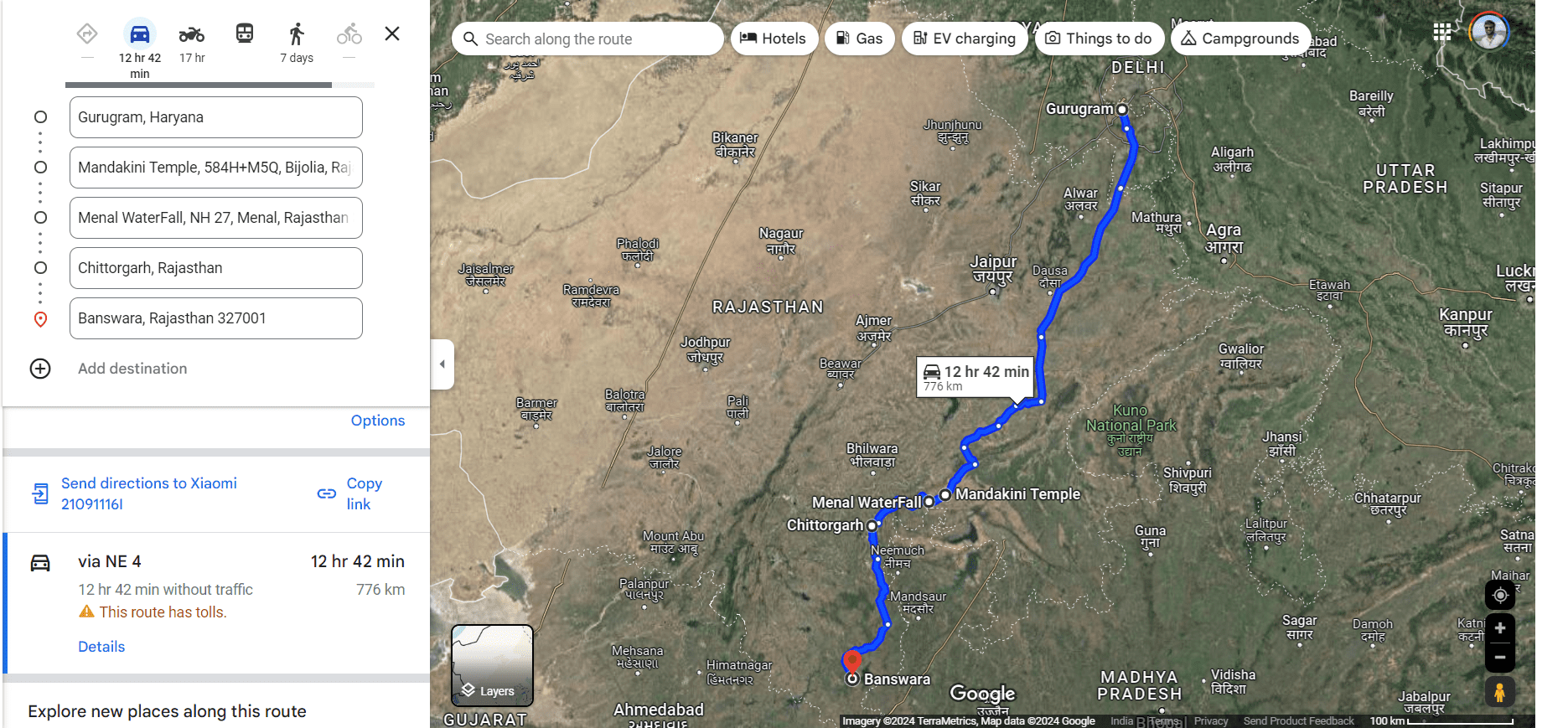
Gurugram to Chittorgarh via Bijolia and Menal

Day 2:
Chittaurgarh fort, and then on to Banswara

Day 3:
Banswara and thereabouts including Mahi River Bridge, Chacha Kota and Mahi Dam.
On to Udaipur via Arthuna and Dungarpur

Day 4:
Udaipur to Nathdwara, then on to Ranakpur and Kumbhalgarh, and back to Udaipur

Day 5:
Udaipur to Gurugram via Haldighati and Bhilwara

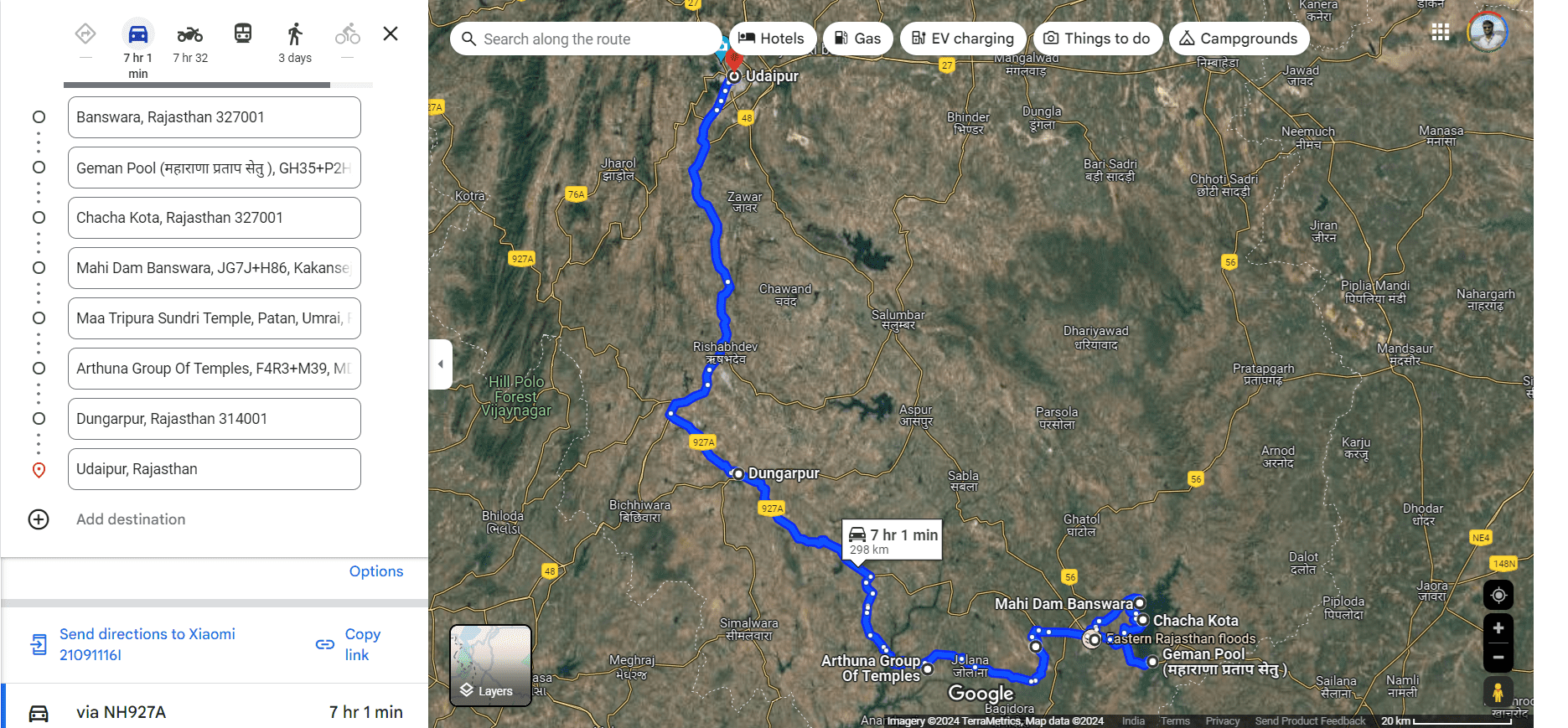
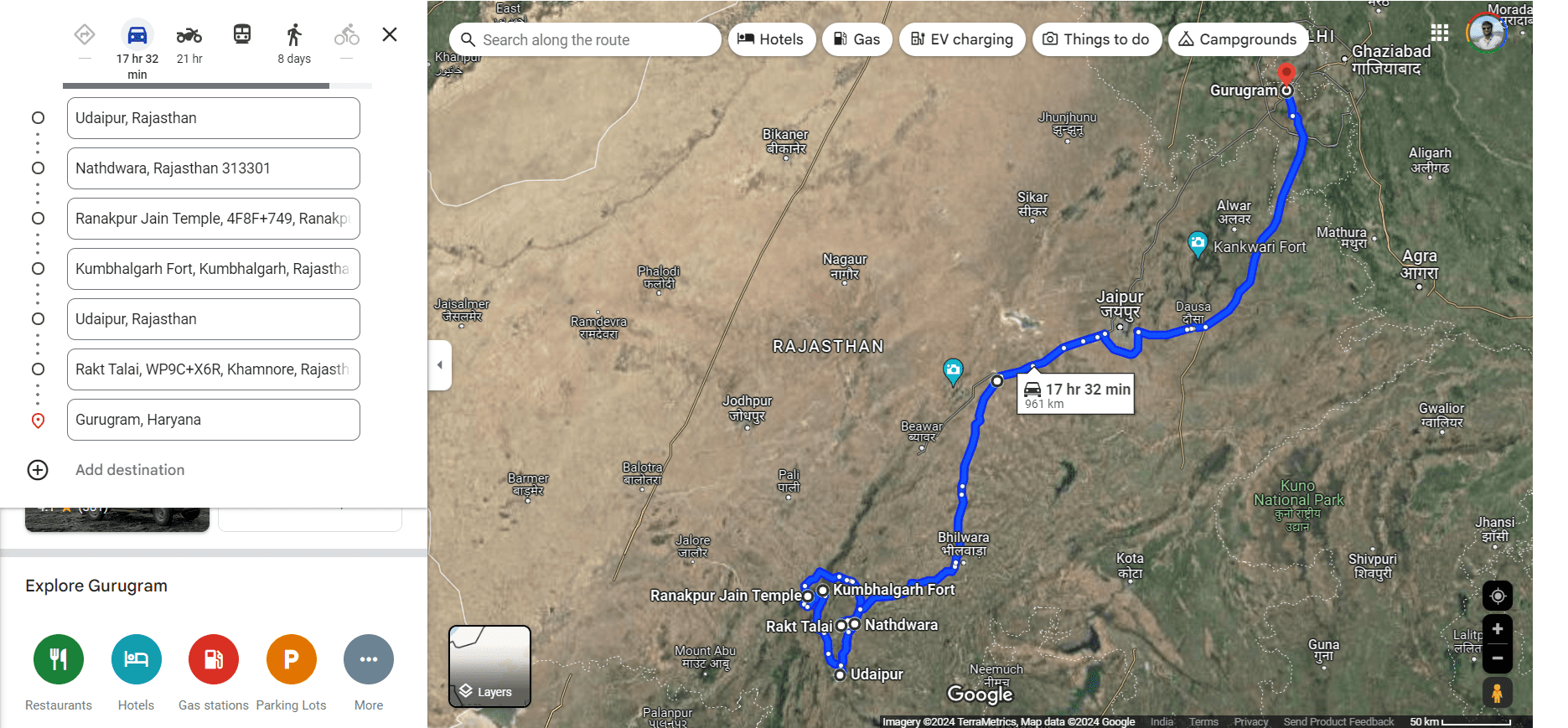
Trip maps
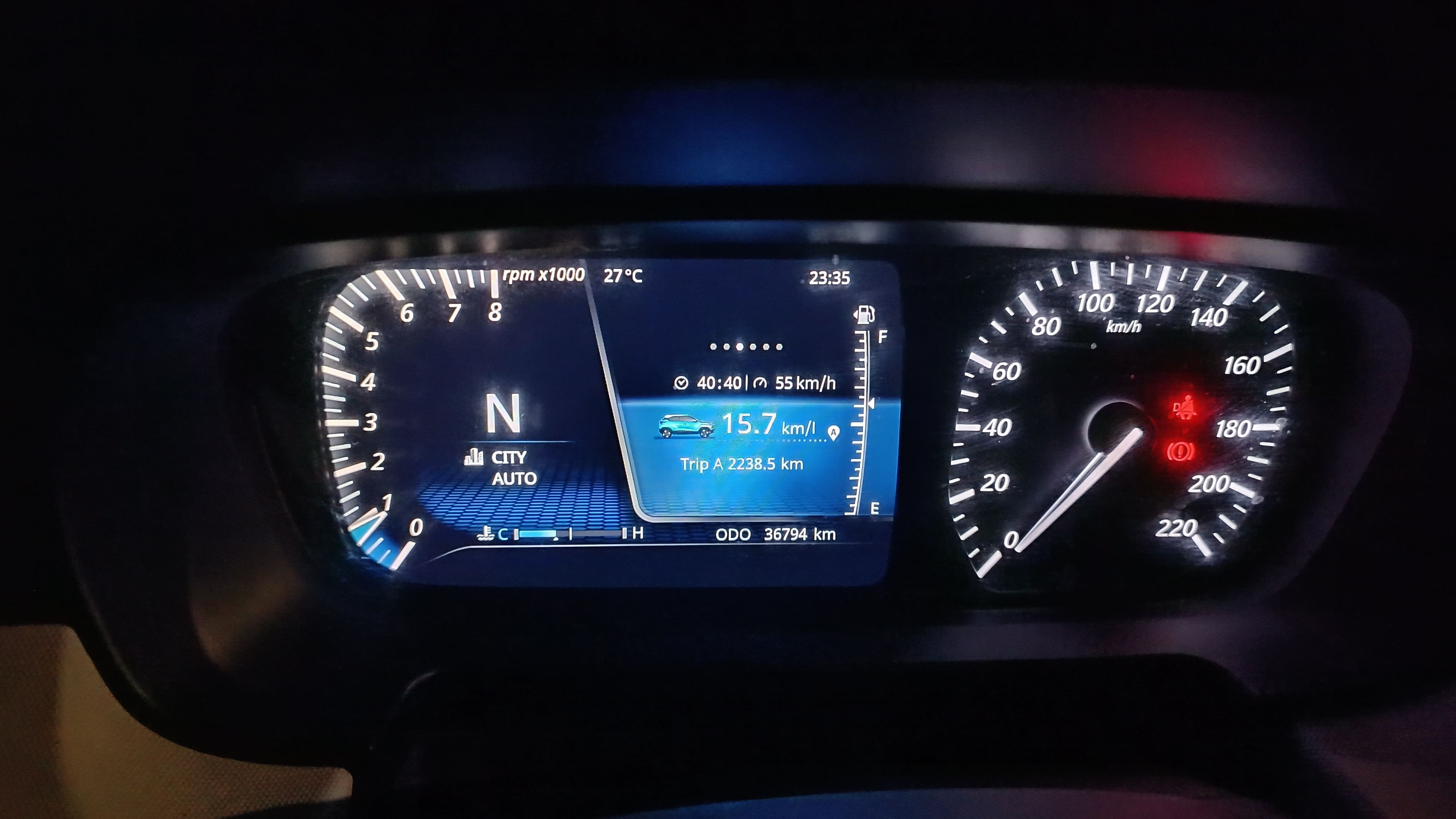
Trip statistics
Uncovering Khetri : A Hidden Gem in the Shekhawati

In my search for places that could be visited on a single day trip from Gurugram, Khetri seemed to pop up on a few occasions. I did try to plan a Khetri trip a few times over the last three years, even attempting to rope in my colleagues once, but it was not to be, especially since it would need a detour from all the major roads. I also abolished thoughts of doing a solo drive to Khetri because I was uncertain about the condition of roads and the remoteness I would encounter.
That was until the time my parents were here in Gurugram, and we really had to find something for a day trip before they returned to Odisha. While mother is always excited for any arbitrary new place, father only agreed once I brought to the fore the connection of Khetri with Swami Vivekananda. So, off we started on a mid-December morning around 10 AM in the quest to uncover Khetri.

We first drove towards and bypassed Rewari, then took NH 11 – that runs westwards to Jaisalmer through Jhunjunu – till Singhana, and then turned to the left, passing first by a low stretch of the Aravalli, and then approaching a pass in a cluster of the low Aravalli hills. Soon we were flanked by the Aravallis on both the sides, as we drove up the road winding through the pass, and finally reached a wide patch of undulating land surrounded by the Aravallis, with low houses and buildings sprawling across the dry valley, and swarming with people betraying a certain laid-backness in their demeanour.

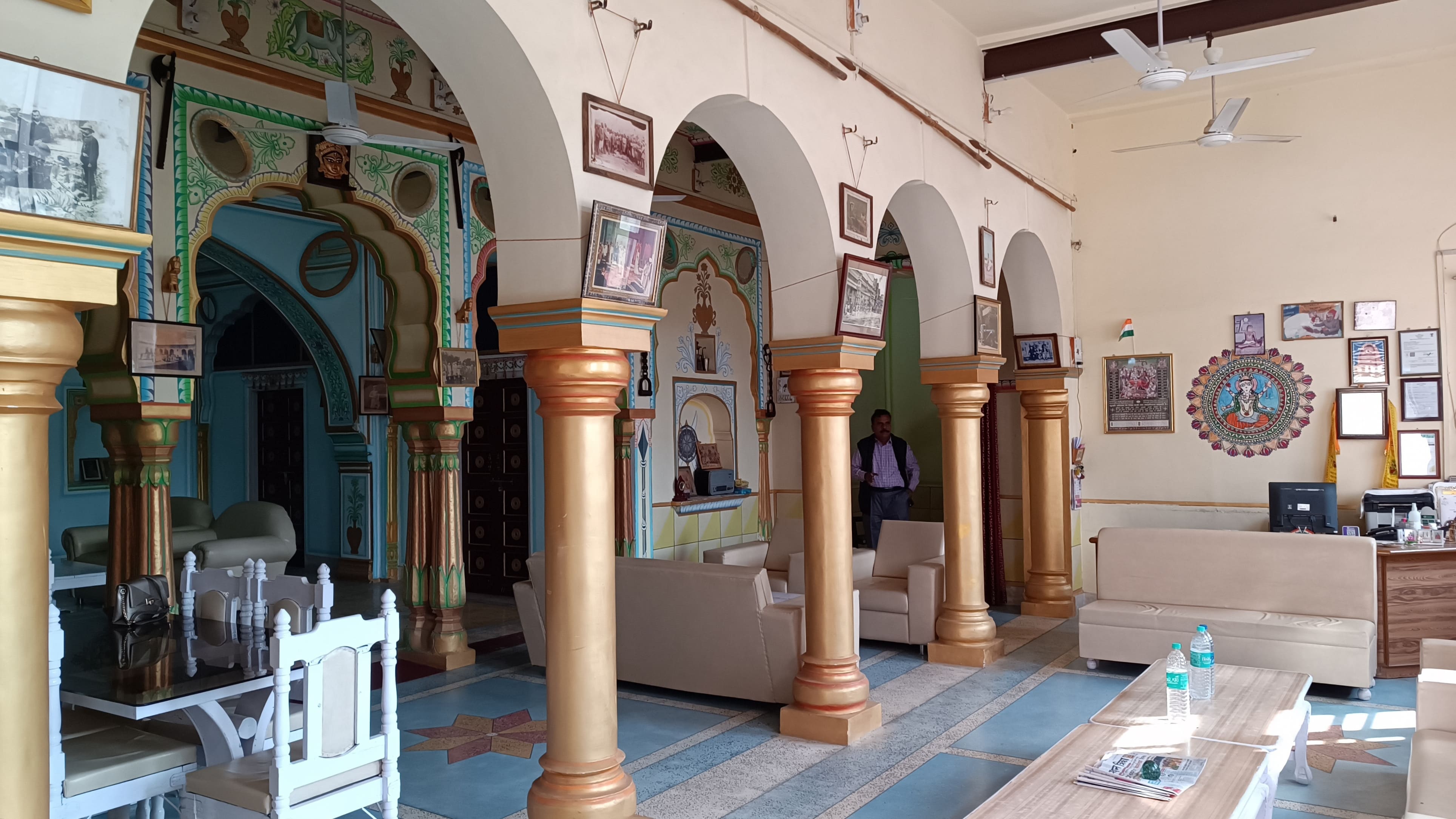
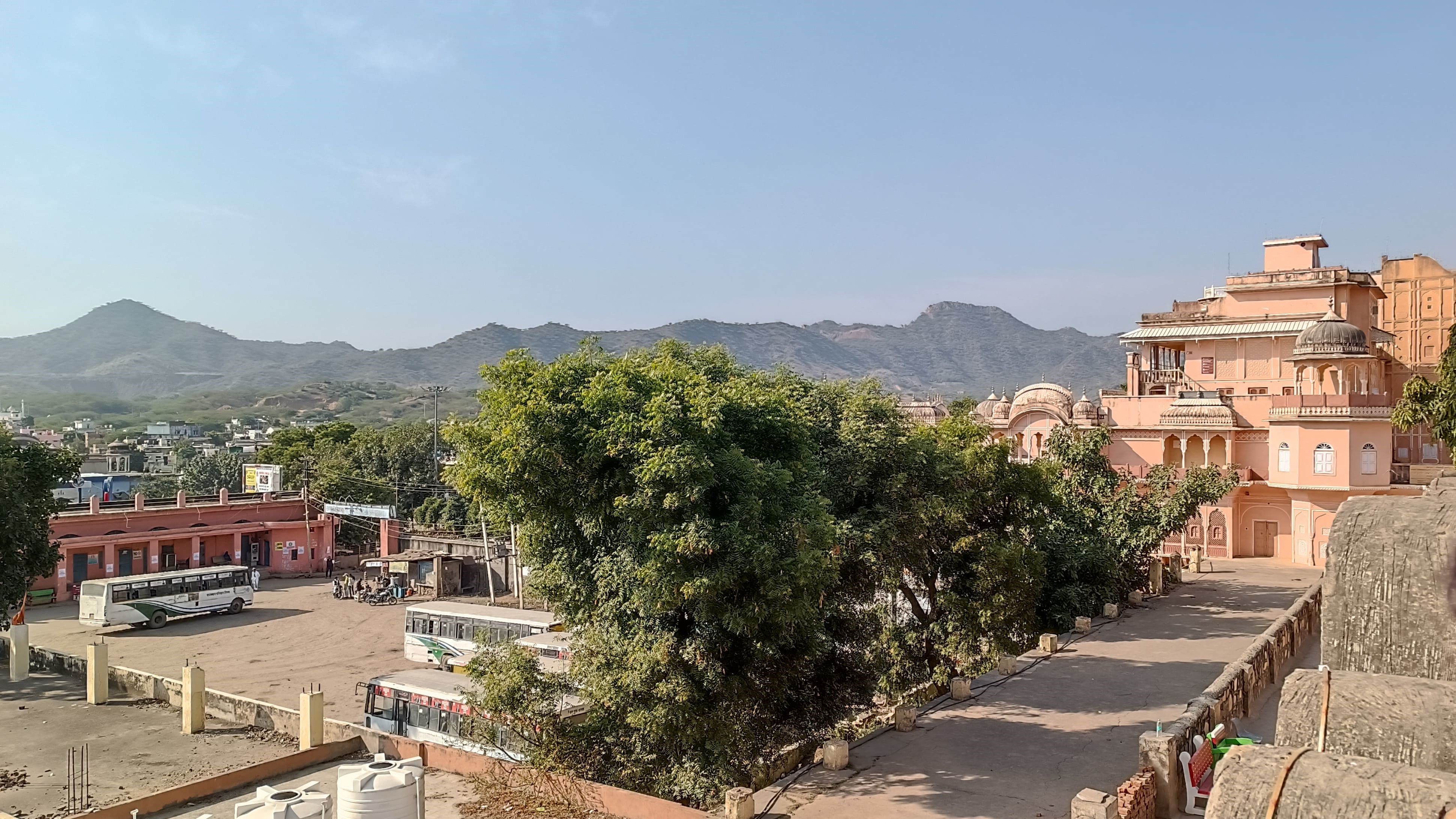
It already being 1.30 PM, we asked around for a good place to have lunch, and took a hairpin upturned bend from the main road, reaching a haveli that once belonged to the royal dynasty. Now turned into Hotel Haridiya Heritage, the haveli is located higher than most of the town, affording a view of the erstwhile king’s palace which lies almost adjacent to it, and a view of the Aravallis running on the other side of the town. Photographs and souvenirs from the past adorn the walls of the main hall transporting one to a more circumspect time, convincing us that the haveli would be a good retreat for someone looking to spend time in Khetri.

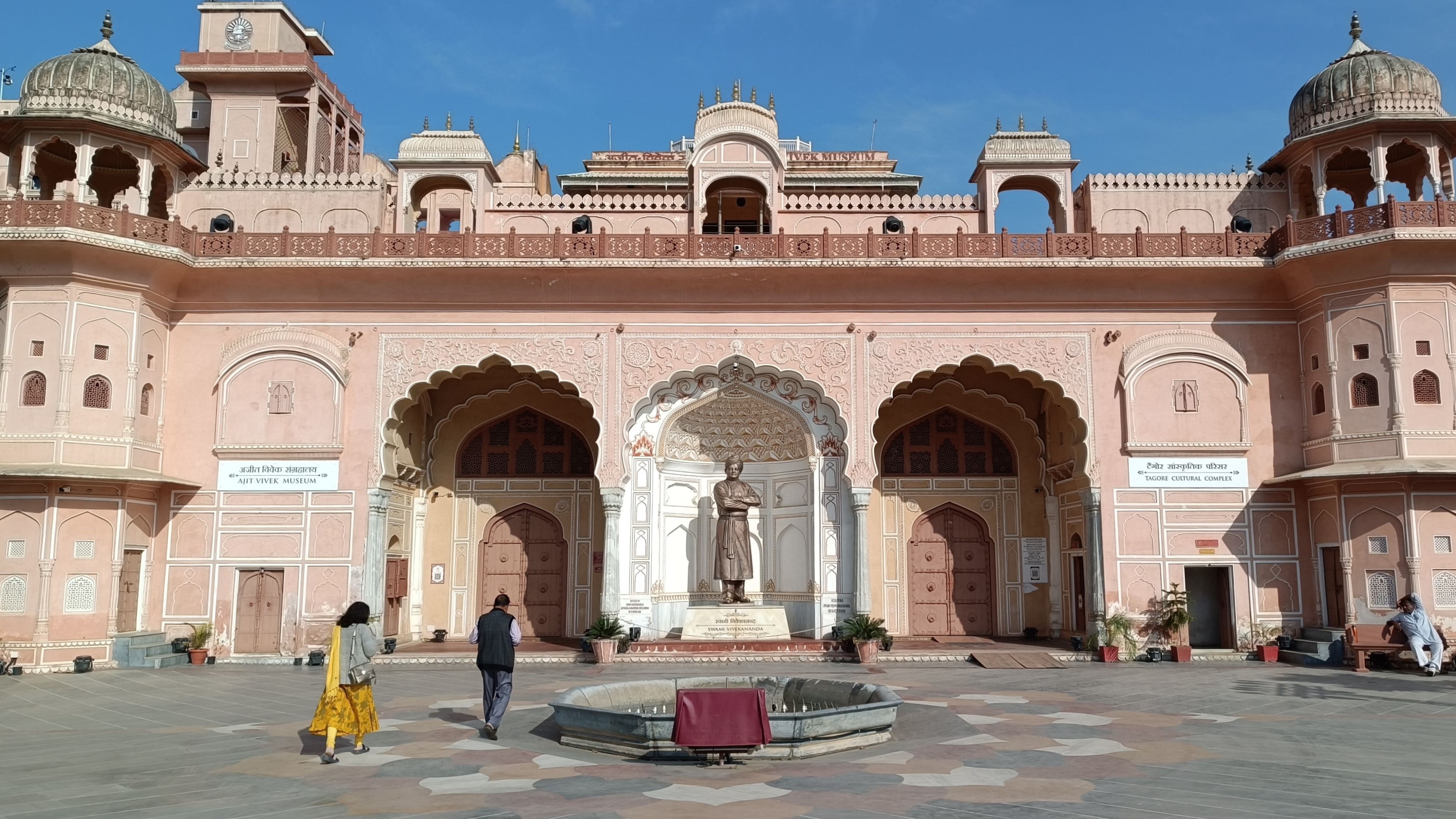
Our next stop following lunch was the royal palace which has since been given over to the Ramakrishna Mission who now run the mission in part of the palace. The remaining part has been turned into the Ajit-Vivek museum dedicated to displaying the life and teachings of Swami Vivekananda. But why is this quaint little town nestled in the Aravallis being spoken of in the same breath as a monk from Bengal, a land in the east of India? Well, this seems like a good point to take a detour and learn about the connection between Khetri and Swami Vivekananda.

Khetri and Swami Vivekananda

After starting his life as a wandering monk in 1888, Swami Vivekanand first set foot in Khetri in June 1891, meeting Ajit Singh, the ruler of the Shekhawat estate (thikana) of Khetri. Following a discussion on a wide range of subjects, Ajit Singh invited Vivekananda for dinner. Vivekananda ended up staying in Khetri from 4 June 1891 to 27 October 1891, during which period Ajit Singh taught Vivekananda to wear a turban in the Rajasthani style to protect him from the hot wind blowing in the area. With variations added of his own, Vivekananda made the turban a staple of his life, as evident from most of the well-known pictures of the monk. A teacher-disciple relationship and a life-long friendship had begun.

Vivekananda visited and stayed in Khetri a second time from 21 April 1893 to 10 May 1893. Learning of his wish to participate in the Parliament of World’s Religions as a speaker, Ajit Singh readily provided him with financial aid, and the tickets for the voyage, even escorting him till Jaipur, from whereon Ajit Singh’s Munshi escorted Vivekananda till Bombay. Purportedly upon Ajit Singh’s request, the monk also assumed the monastic name Vivekananda replacing his then-assumed name Vividishananda. The two remained in correspondence during Vivekananda’s stay in the west, with Ajit Singh providing him financial support whenever required.

Vivekananda visited Khetri a third and final time in 1897, upon Ajit Singh’s invitation, where he gave a lecture attended by Ajit Singh and many Eurpoean guests. During this visit, Vivekananda openly expressed his gratitude to Ajit Singh for his support. In 1898, Vivekananda requested that a monthly stipend given by Ajit Singh to his mother, be made permanent even after Vivekananda’s death. Ajit Singh honoured this arrangement, without publicising this, till his death in 1901 due to a collapse of a tower he was standing on, at the age of 39. Incidentally, Swami Vivekananda also died at the age of 39, the following year.

In 1958, Ajit Singh’s grandson, Bahadur Sardar Singh donated the then abandoned and dilapidated Palace of Khetri to the Ramakrishna Mission, who cleared and restored one part of the palace to establish a mission. Later, another part of the building, Fateh Vilas, was turned into a museum showing Vivekanda’s life and teachings, while also honouring Ajit Singh. The room overlooking the town and the Aravallis, where Vivekananda lived during his stays in Khetri has now been turned into a prayer room. Some letters of correspondence between Vivekananda and Ajit Singh are also on display.

*************

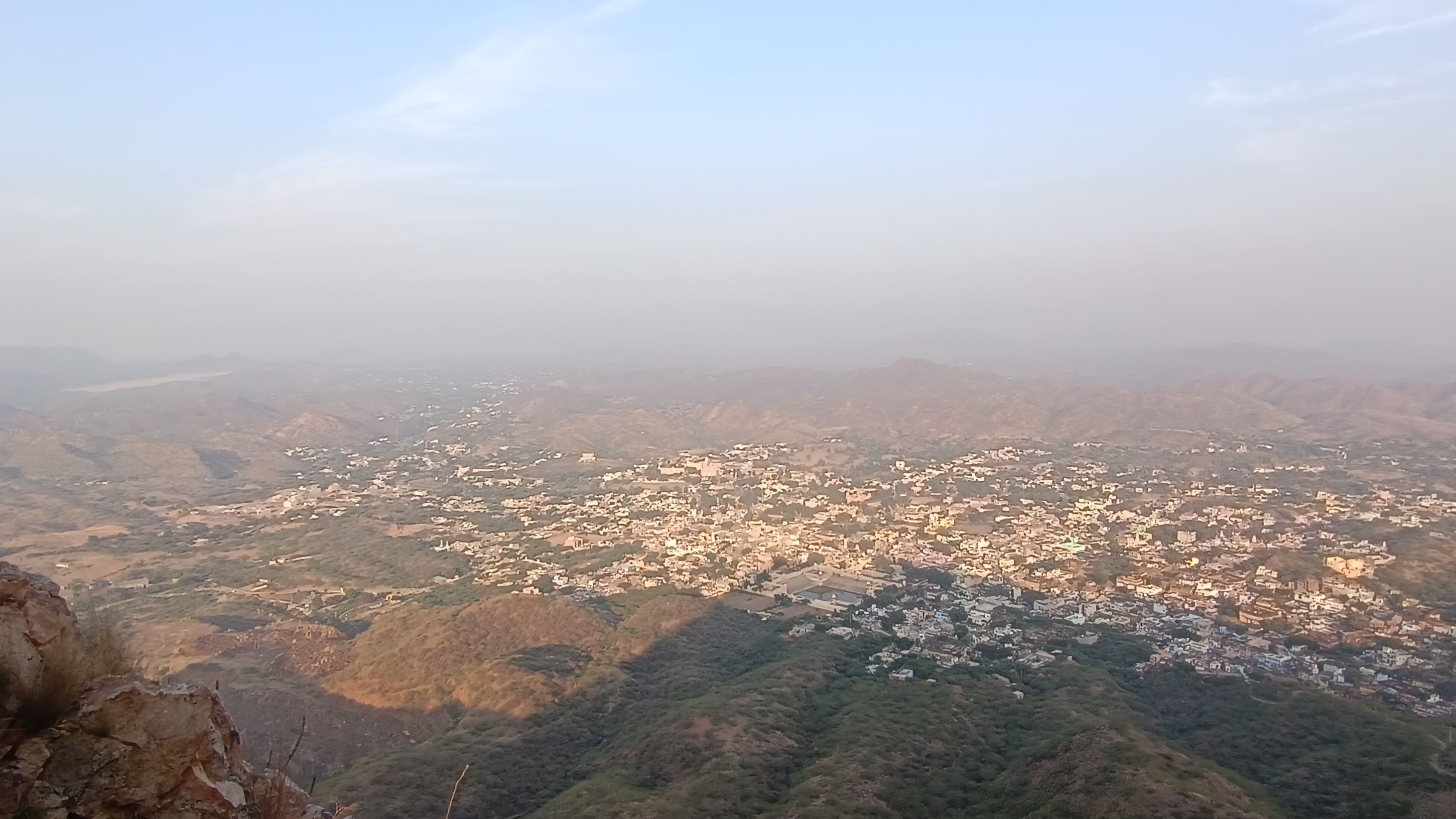
Offering our prayers in the prayer room, we then proceeded to the 270 year-old Bhopalgarh fort that beckoned us from the hilltop in the distance. Taking a steep two-kilometre winding road we were at the fort’s gate around 3.30 PM, with the Khetri town visible down below. Entering the fort premises, we immediately got a bearing of the area – the fort wall encloses an area shaped like a trapezoid, with most of the inner part depressed, resembling a wide crater.

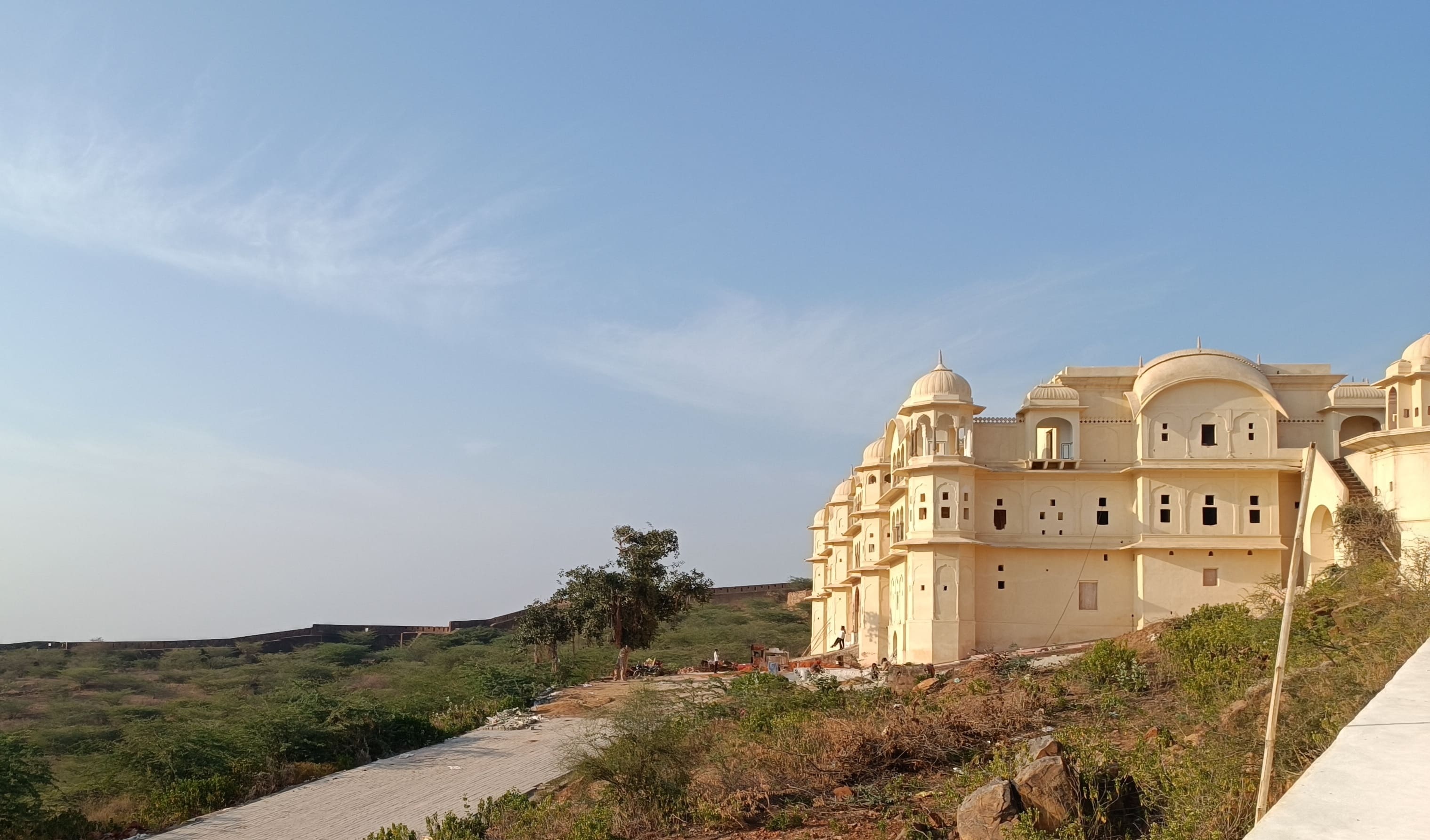
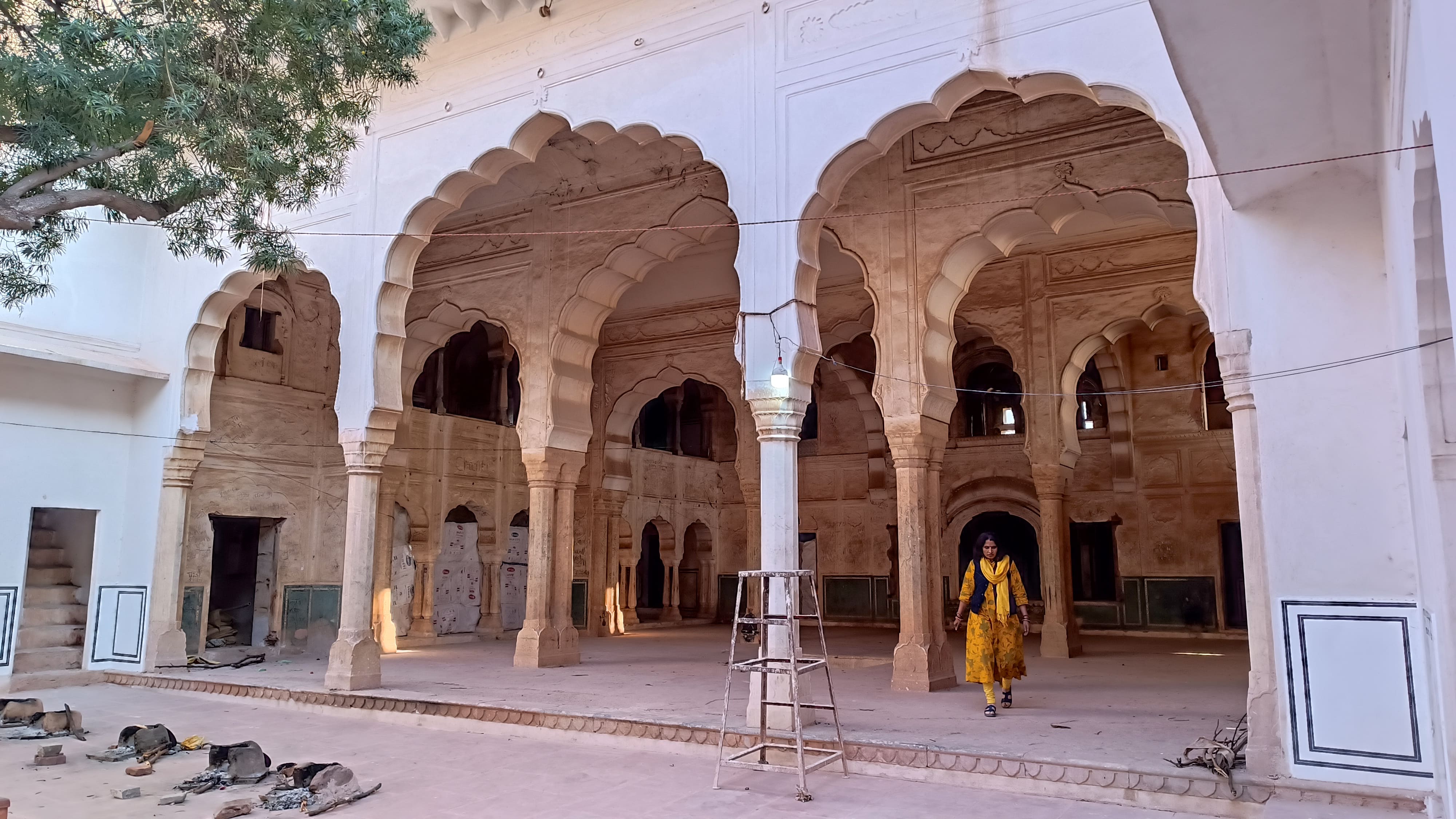
Half a kilometre to the right of the entrance, bang on the fort wall is a palace sporting multiple windows and balconies, called the Sheesh Mahal, which is currently closed for renovation. Peeking in from the corridor at the main gateway, one could see a large courtyard and multiple storied halls and rooms surrounding the hall. Walking beyond the palace on the fort wall, one gets a clearer view of the Khetri town and the surroundings, including some now-defunct copper mines, nestled in the Aravallis.

From the side of the entrance and the walls stretching on both sides of the entrance, one can clearly see the Moti Mahal, an elongated palace, located at the far opposite side of the fort. In between, in the depressed portion, lay swathes of low jungle with vestiges of more stone structures. I traversed through the jungle by foot, and found the Moti Mahal in a desolate condition with the front of the palace overgrown with thorny bush and jungle, making it look like a prohibited place. However, adjoining the Moti Mahal, is located the Gopinath temple, dedicated to Krishna, with an attached dharamsala, teeming with some people, which made the adjunct palace look less hostile.

All this while, with my mind constantly racing about whether or not to enter the Moti Mahal, I kept lingering on the outside of the palace. It already being 4.30PM, with the prospect of darkness descending soon, I decided to take the plunge. With my heart in my mouth, wading through the thorny bush and jungle, I somehow managed to gain access into the palace, and was at first greeted by what looked like the king’s throne where he gave audience to the court. Walking through labyrinthine corridors and staircases, I managed to get access to the roof of the palace, from where I was treated to breathtaking views of the Shekhawat countryside chequered with low hills, and arid plains.

Around 5 PM, I descended from the roof of the Moti Mahal, intending to head back, and promptly lost my way through the labyrinthine corridors! After fumbling about in the low light, forced to use my mobile phone as a torch, for about 5 minutes, I was finally relieved to see that the exit had been present right before my very eyes – in my nervousness, I had simply not seen it! Exiting, I walked as fast as I could through the jungle to reach the fort’s entrance where my parents were waiting.

As we drove back through Khetri town, we looked with fondness at the agglomeration of houses straddling the valley in the Aravallis. Here was a town that retained the charm and compactness of a British-era princely state, and yet was no stranger to modern flourishes. It was easy to see why the monk Vivekananda would have appreciated the coziness of this town ensconced in the Aravallis, spending here 3 months at a stretch. Surely we could come back to spend 3 weeks at the least, we concurred amongst ourselves.

Barely Bright and Bovine Encounters at Bayana Fort

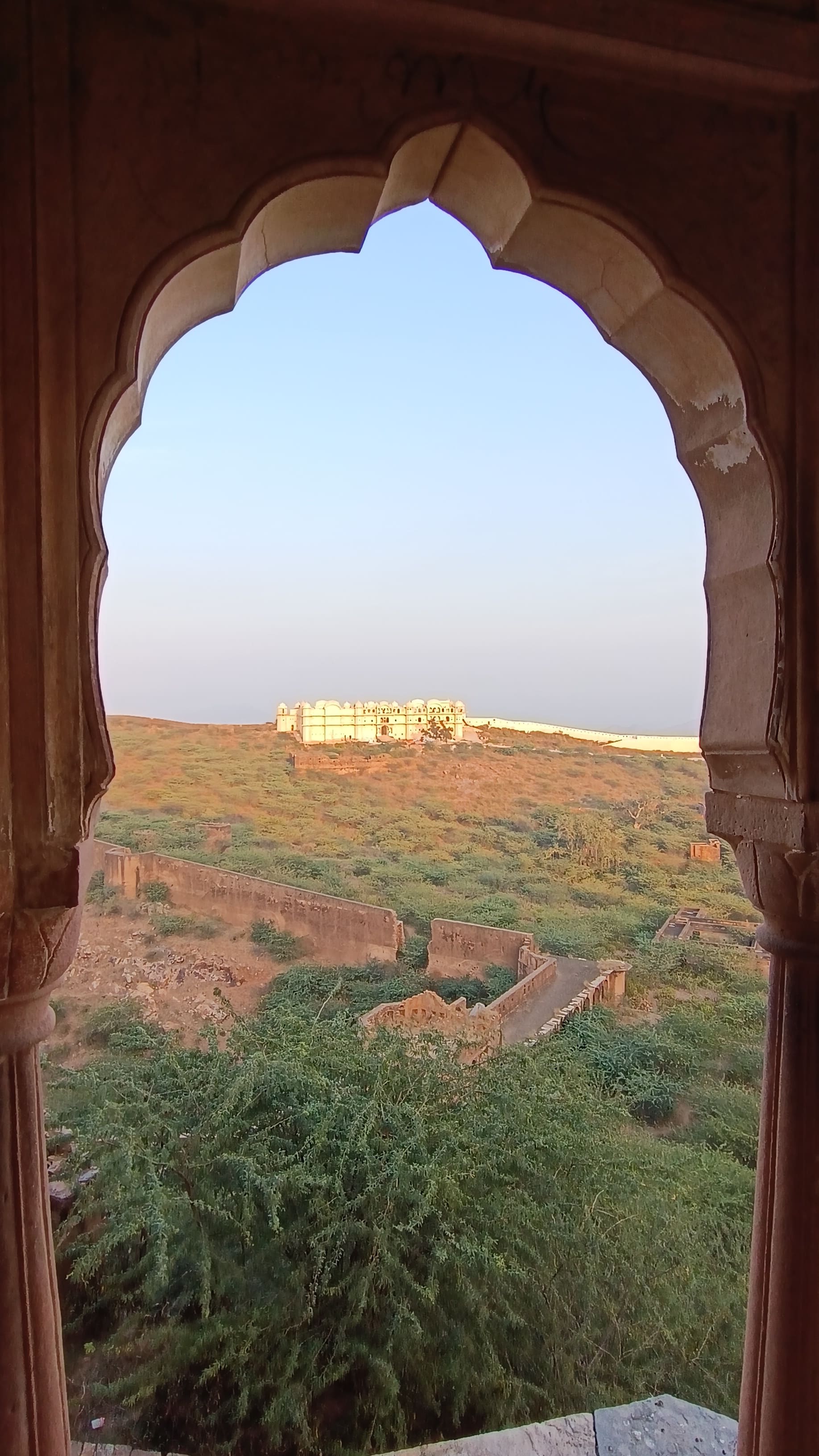
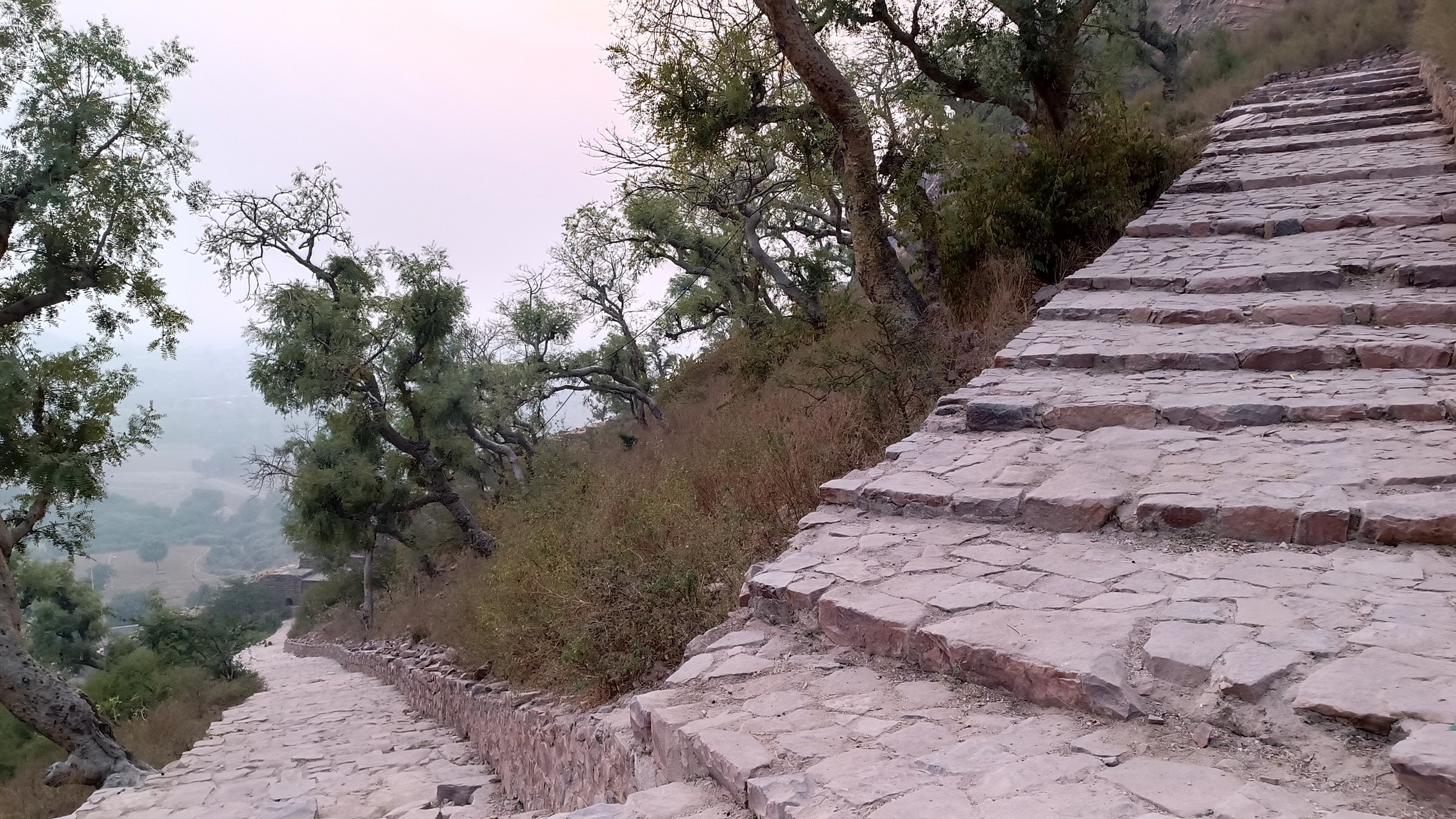
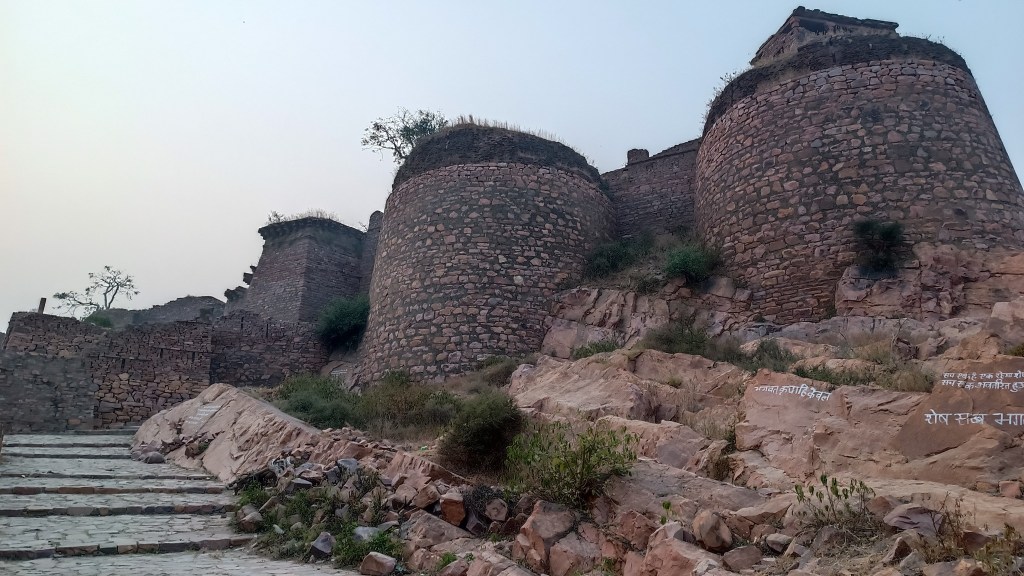
Somehow, circumstances lead me into situations where I land up in remote places on the verge of sundown. This time, it was at the base of a high cliff atop which sat the Bayana fort, with fortification walls stretching for miles and miles. I learned about Bayana Fort only a few months ago from a book called ‘Forts of Rajasthan’, and had been itching to set foot on it since. It was quarter to five on this mid-November evening when I finally arrived at my destination, having driven for an eternity, having been slowed down by narrow winding roads, interrupted by a political rally, and rocked by an undulating last-mile dirt road.

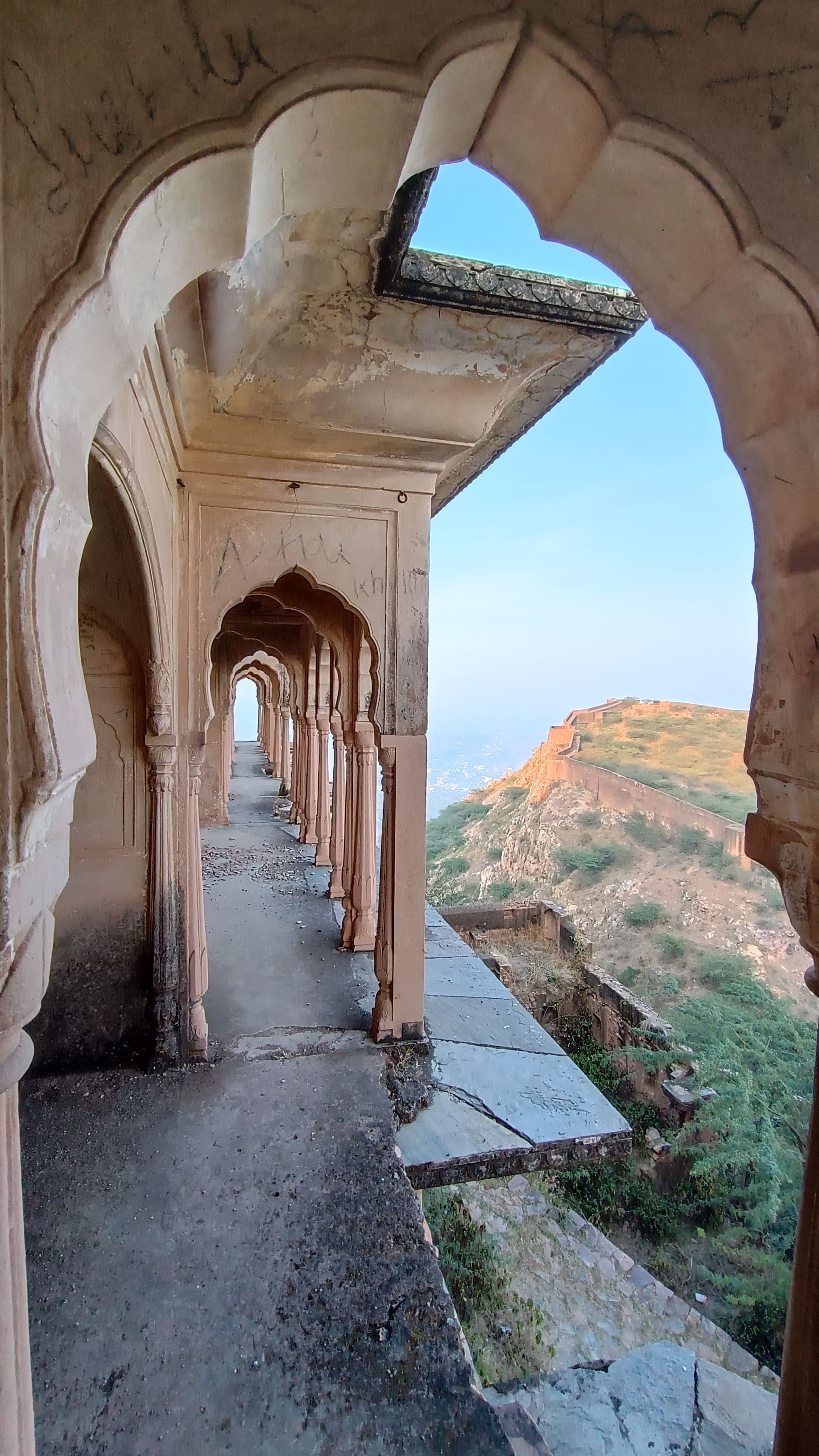
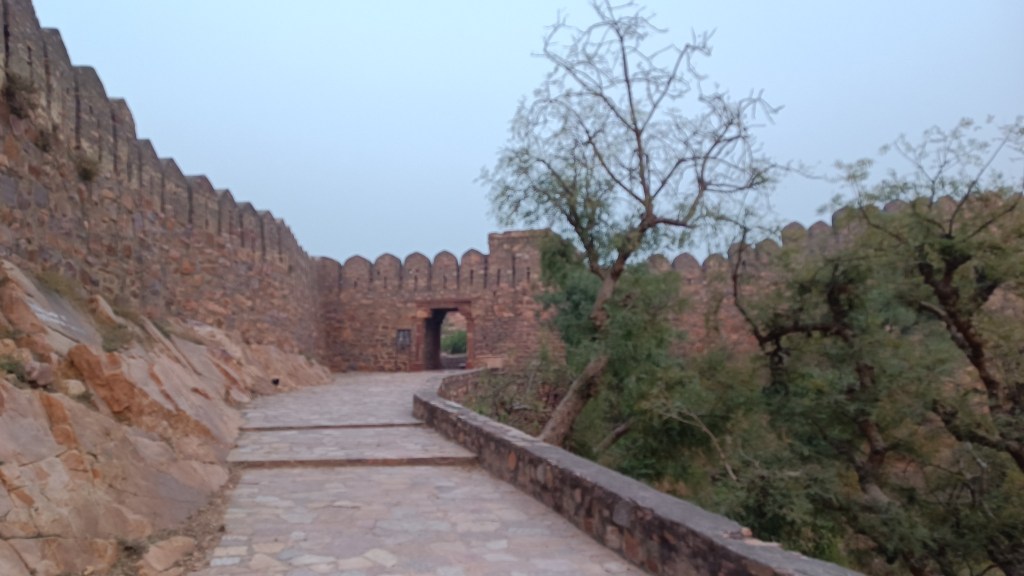
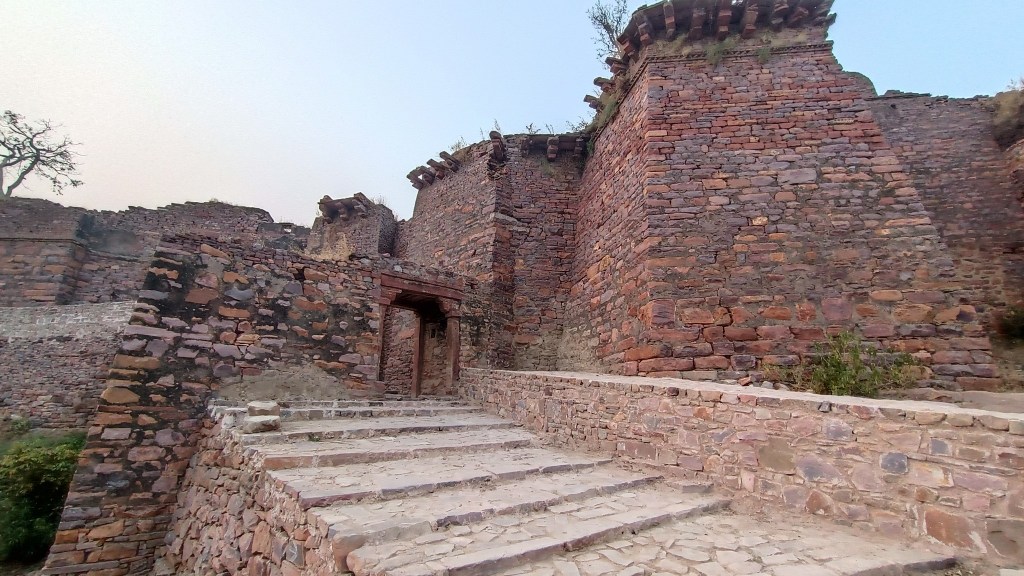
As I stood at the bottom of the long flight of stony steps, with the last group of people having already descended, I mulled over whether it would be a prudent idea to climb uphill at this hour. Figuring I did have a small window of sunlight, I virtually ran up the tall, sloping steps, stopping mostly to catch my breath at each hairpin bend and sometimes to steer clear of the langurs. In 10 minutes, I was within the fort precincts, passing through multiple arched gates after almost a kilometre-long climb. The panoramic view of the countryside was breathtaking from that height.

On the flat hilltop, flanked by jungle, stood several buildings in various stages of decay and a half-finished minar dedicated to Ibrahim Lodi. To say that I was scared out of my wits, owing to the lack of human presence, would be an understatement. Add to that the fear of wild animals and reptiles that could be lurking just around the corner. Could there also be a supernatural presence? As I waded through the jungle, I saw a figure emanating from behind a bush. I was almost happy, hoping for it to be human, but was startled to come face-to-face with a cow! I jumped aside, but the cow following the first one simply darted off, as if it had seen a ghost! Perhaps, nay, definitely, it was time to turn back now.

With darkness fast approaching, as I was descending down the stairs, I came face-to-face again with a long line of cows and buffaloes, making their way up, who simply refused to budge and let me pass. The stand-off continued for 10 minutes with me perched atop a ledge…till a calf, of all the bovines out there, decided to take the bull by its horns (pun intended) and took a few steps forward; the adults followed. I heaved a sigh of relief as the last one passed me by. With the sun already down, I hiked back, admiring the loftiness of the fort walls and the lushness of the landscape awash in the waning twilight while peacocks went about their evening walks.

Bovine encounters on the way back

******

Bayana is associated in the lore of Krishna with Banasur, and the precursor to the Bayana fort itself can be traced to 4th century AD at least, from some inscriptions found on the hill. However, the fortification was reinforced and the fort repaired by king Vijayapal in the 12th century AD who named it Vijaymandir. It subsequently fell to the Sultanate, then passed through the hands of the Lodis, and then the Mughals. The battle between Babur and Rana Sanga at nearby Khanwa proved to be a landmark event in the Mughal conquest of Northern India.

How to reach
While Bayana town itself is reachable from Delhi by public transport or by a 5 hour drive from Delhi, the fort, 8km away from the town, needs private transport to reach. Alternatively, one can also reach Bayana town and the fort from Agra by a 2.5 hour drive.

A Decade of Exploring Rajasthan: Jaipur 2012 AD to Jaipur 2022 AD

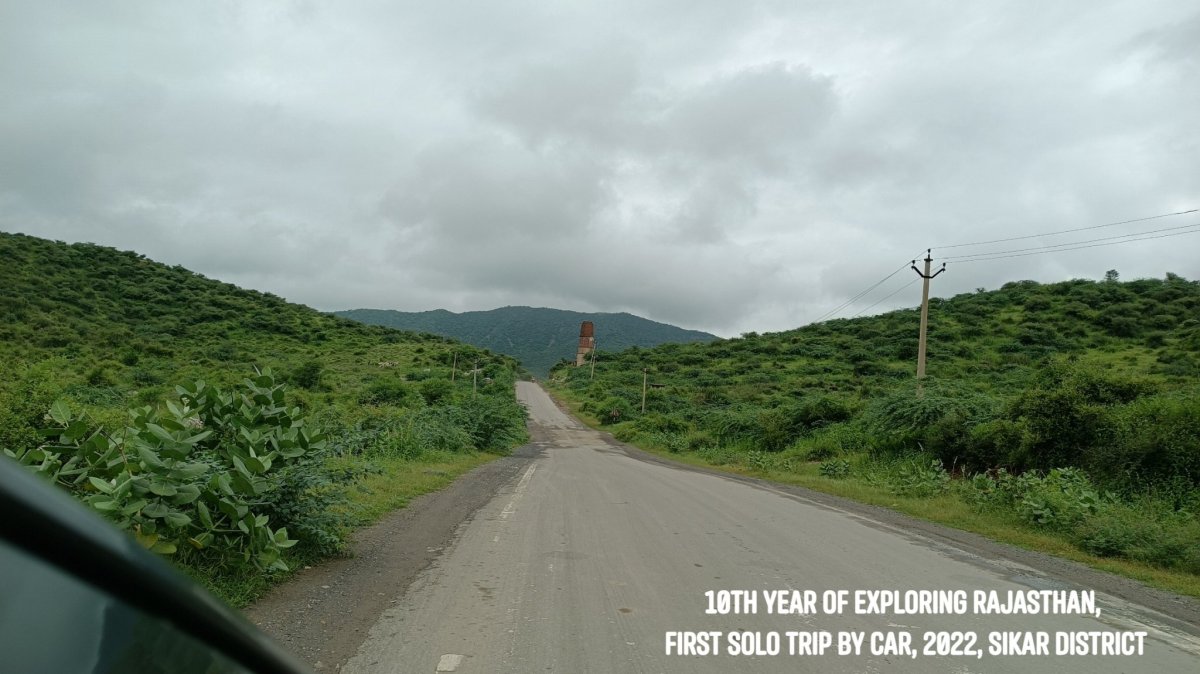
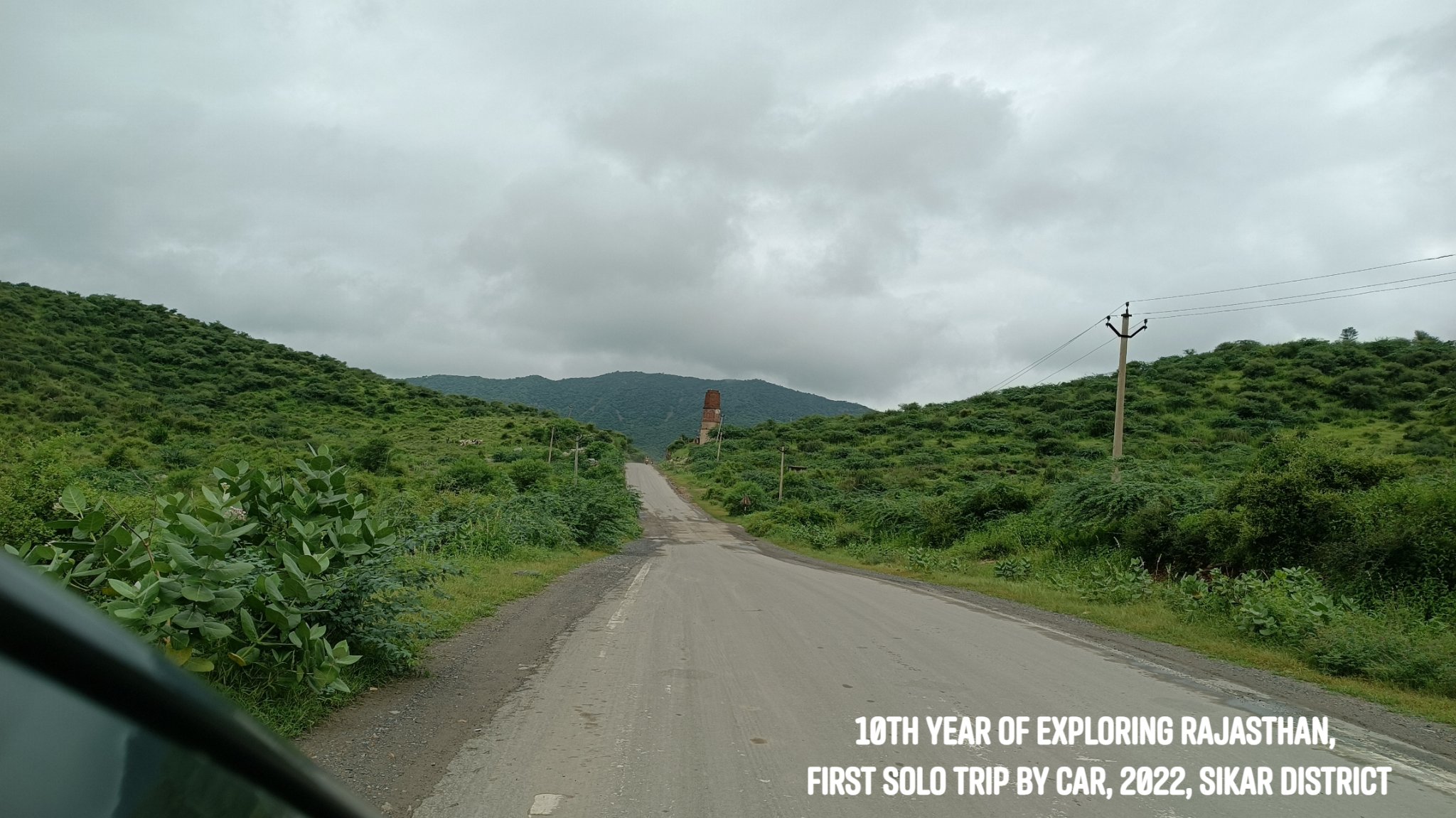
In April 2012, my first ever trip to Rajasthan was solo – by public transport, with the destination being Jaipur. In August 2022, I rounded off a decade of exploring Rajasthan by reprising the solo trip to Jaipur – only this time it was by driving on my own. A 700km self-driven solo adventure!

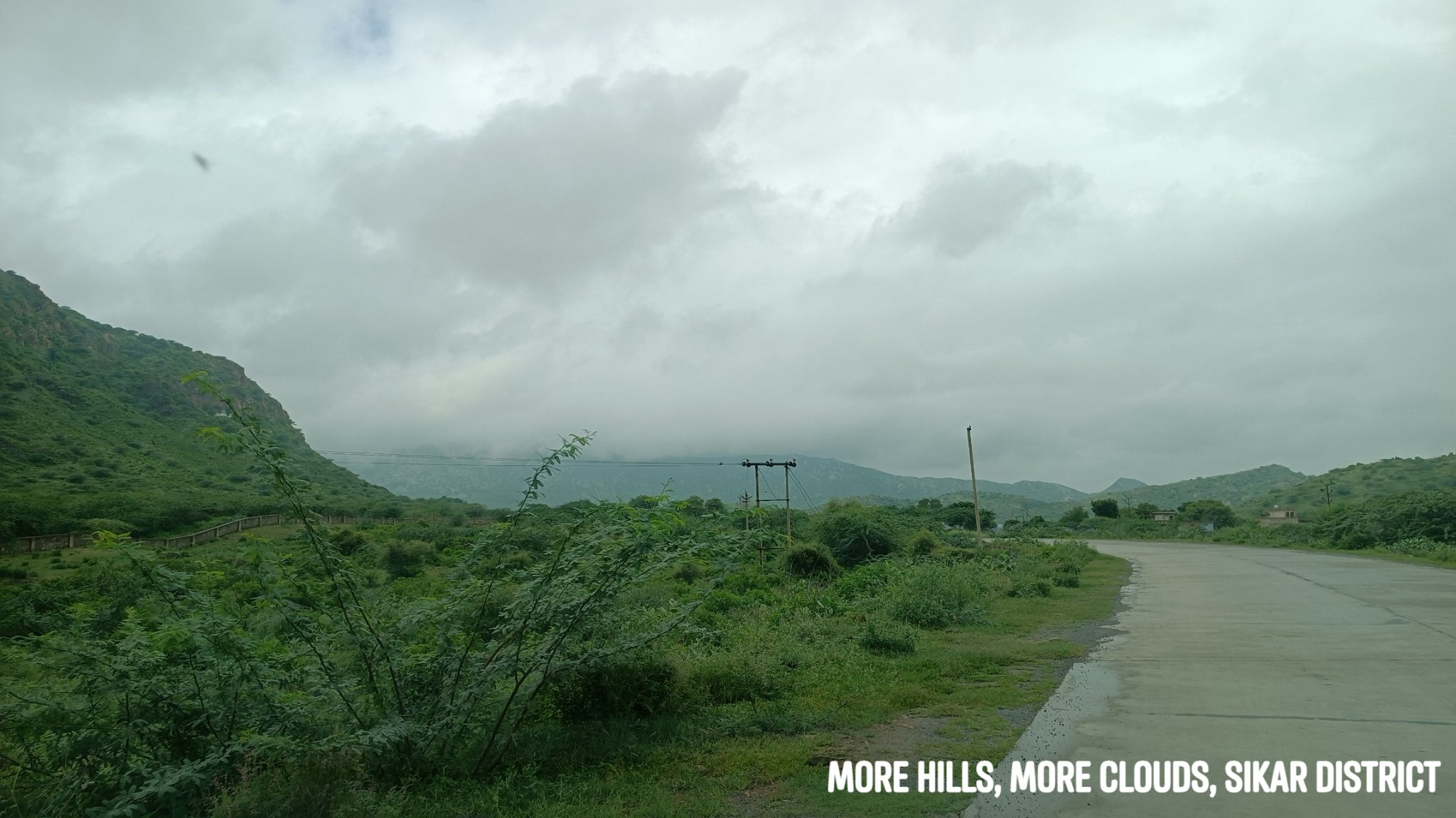
As always, it is rarely about the destination – and so off I went wandering through roads I had not trodden before, exploring a bit of the Aravallis in the Shekhawati region, while the sun and rain played hide and seek, and folds of hills lay in the distance in front and around me, their peaks crowned with fluffs of cloud.

I plead guilty to the charge of scooting off to Rajasthan every chance I get, even at the risk of inviting ridicule. ‘Why don’t you try out some other place this time – why not Himachal, Uttarakhand, UP?’, I have been asked. I say, some people love the mountains, some the beaches – as for me, I yearn most for the desert, the Aravallis, the forts…

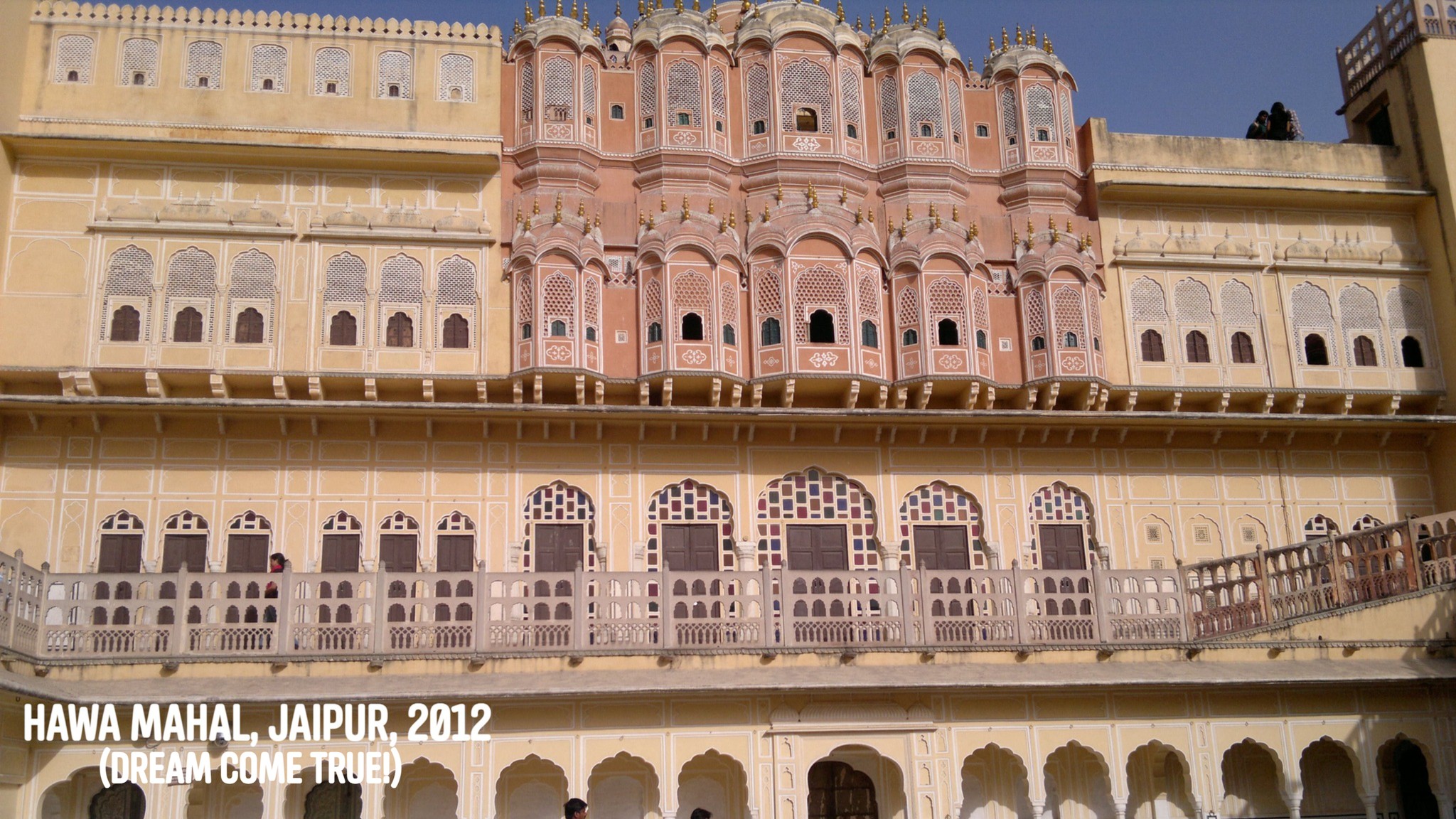
Growing up in Odisha, I had had a fascination with Rajasthan long since I could remember. In Grade 4 – the black-&-white picture of the Hawa Mahal in a textbook, and the mention of the Thar around Bikaner and Jaisalmer, images of the Vijay Stambh at Chittorgarh and the Dilwara temples at Mount Abu were imprinted in my head. A General Knowledge book addressed Jaipur as the Pink City, and Jodhpur as the Blue City. I always wondered looking at those black-and-white pictures how the cities might look like in real life in their famed hues.

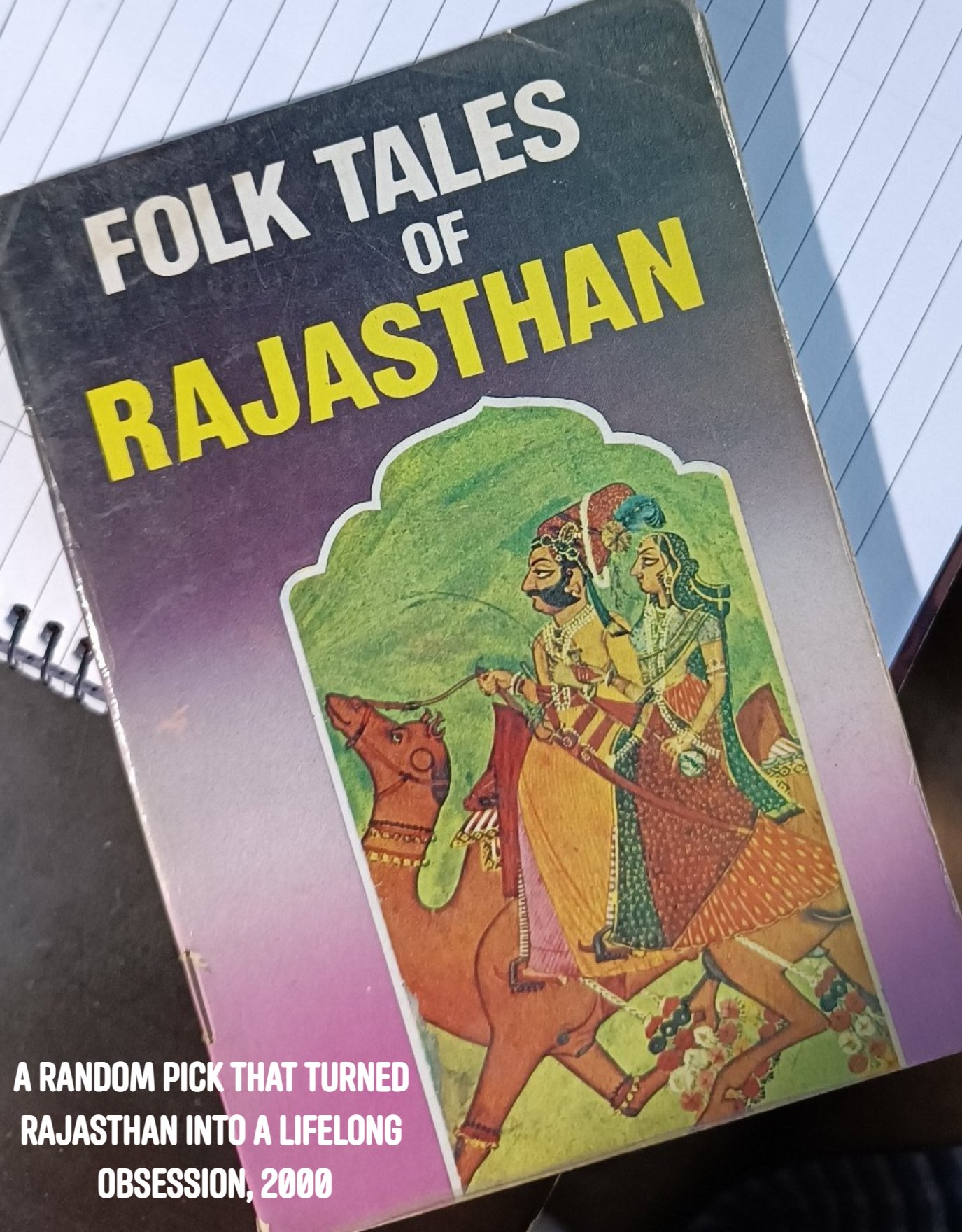
Some years later as we were embarking on a train journey, Dad let me pick up a thin paperback from the book stall on the railway station- it was called ‘Folk Tales of Rajasthan’. While on that train, in my mind, Rajasthan turned into a place of magic, of kings, bards & princesses, of Pabuji, star-crossed lovers & clever thieves, of camels & shifting sands…I was enamoured.

Rajasthan was always just too far away though, and little did I know I would later land up at the gateway to it – Delhi. Little did I know as time progressed, I would reside at a place, on the outskirts of Gurgaon, where I could simply lug a backpack on my back and in half an hour, be inside Rajasthan. Little did I know I would once also drive solo to Rajasthan…

***

On this trip, instead of driving directly to Jaipur from Gurgaon, I took a detour midway, towards the north and drove through some of the most exotic sounding places – Kotputli, Neem ka Thana, Udaipurwati.

Udaipurwati

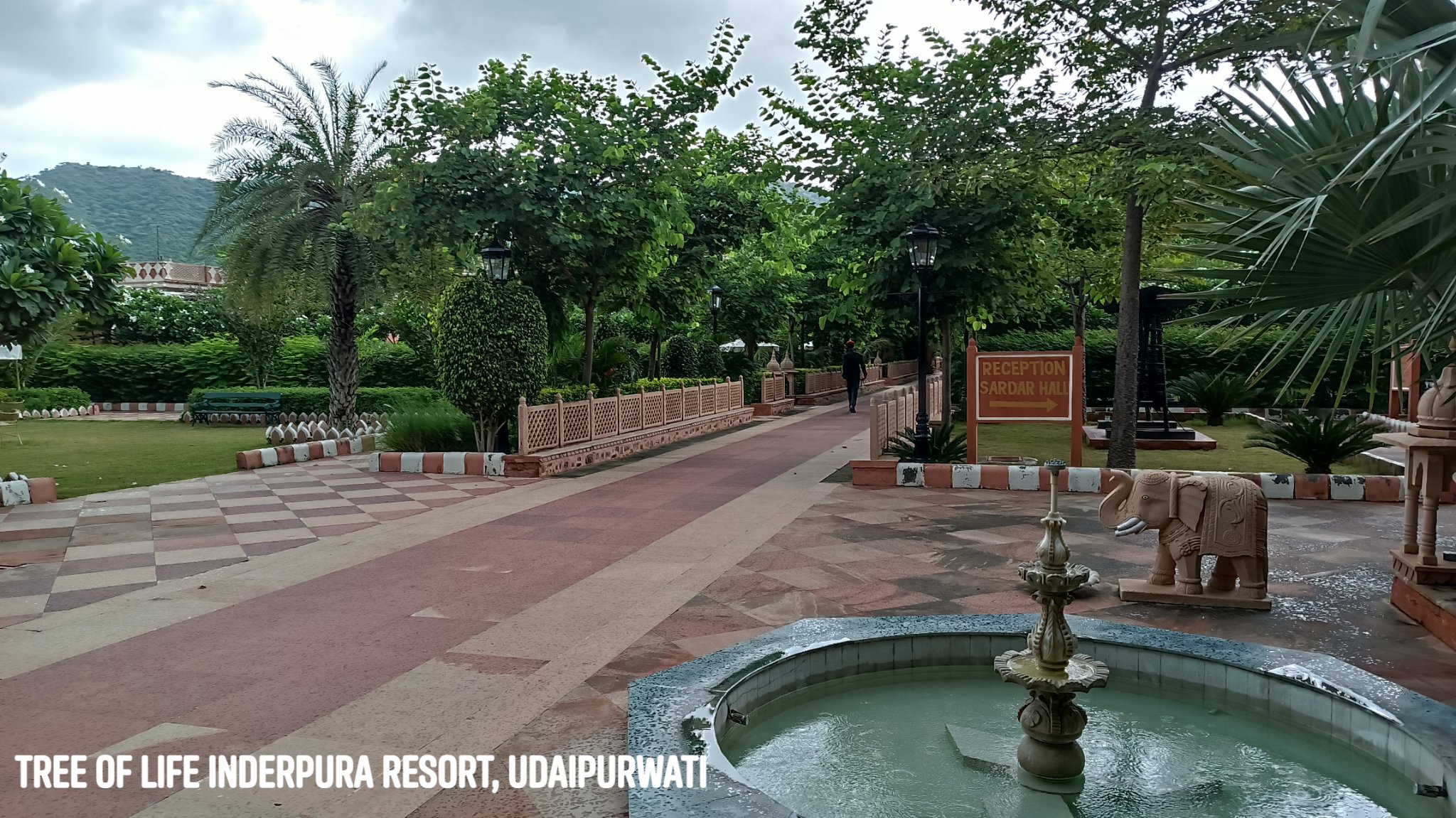
A quaint little town nestled within a gap in the Aravallis, is home to an excellent resort called The Tree of Life Inderpura.

Lohargal

Near Udaipurwati, within a crevice in the hills is a holy spot with a natural spring feeding a bathing tank and ancient Sun Temple. According to myth, weapons and armour of a Pandava army that camped here after their victory, dissolved in the water, giving the place its name: Loha (Iron)+Gal (To melt).

From thereon in Jaipur, I visited a couple of places that I had not seen before, both nestled in the Aravallis.

Rani Sisodiya Bagh

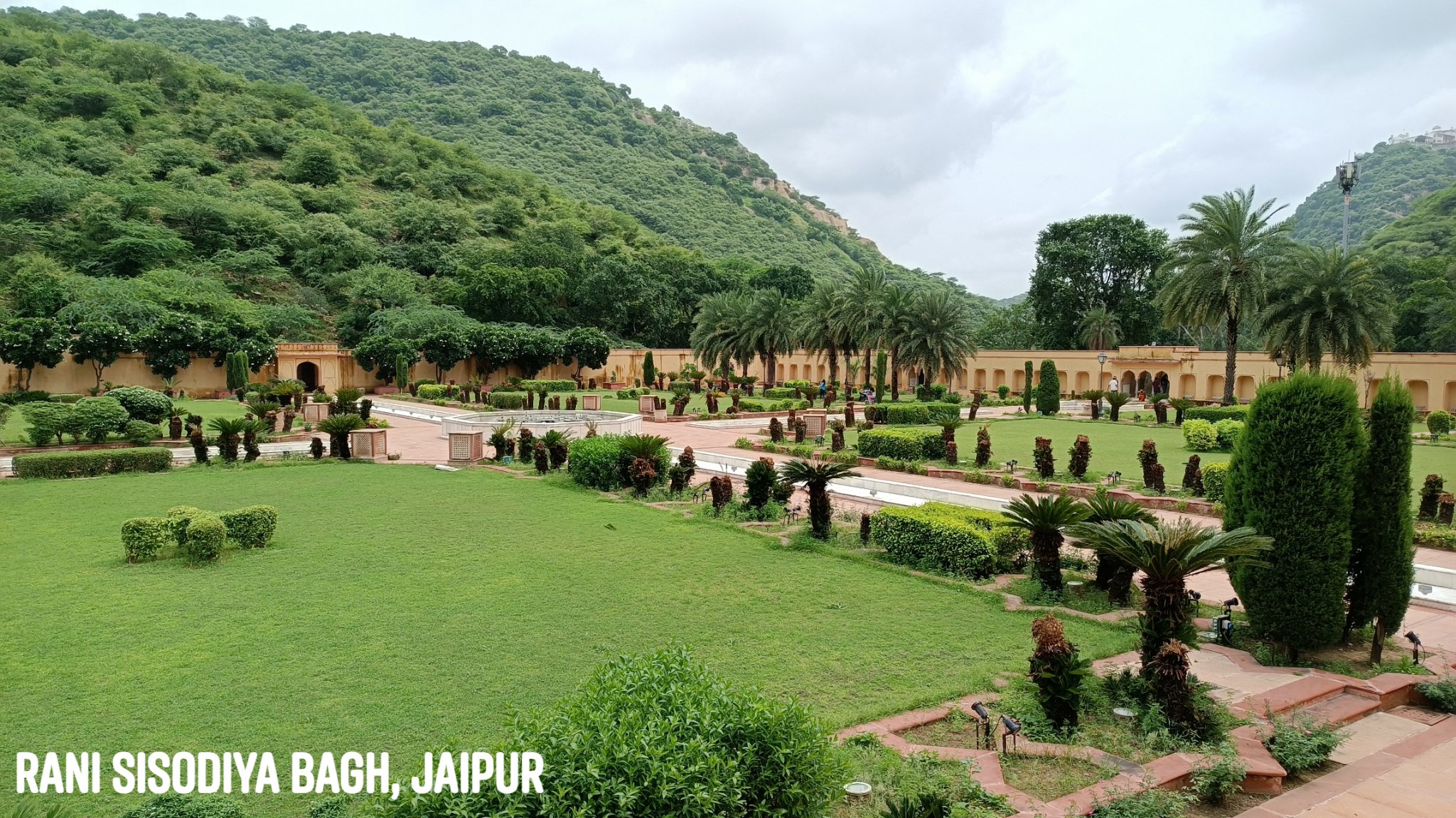
A hidden gem of a garden built by Sawai Jai Singh II for a princess of Udaipur, who agreed to marry him only on the condition that she be made the main queen of Jaipur.

Galta Ji

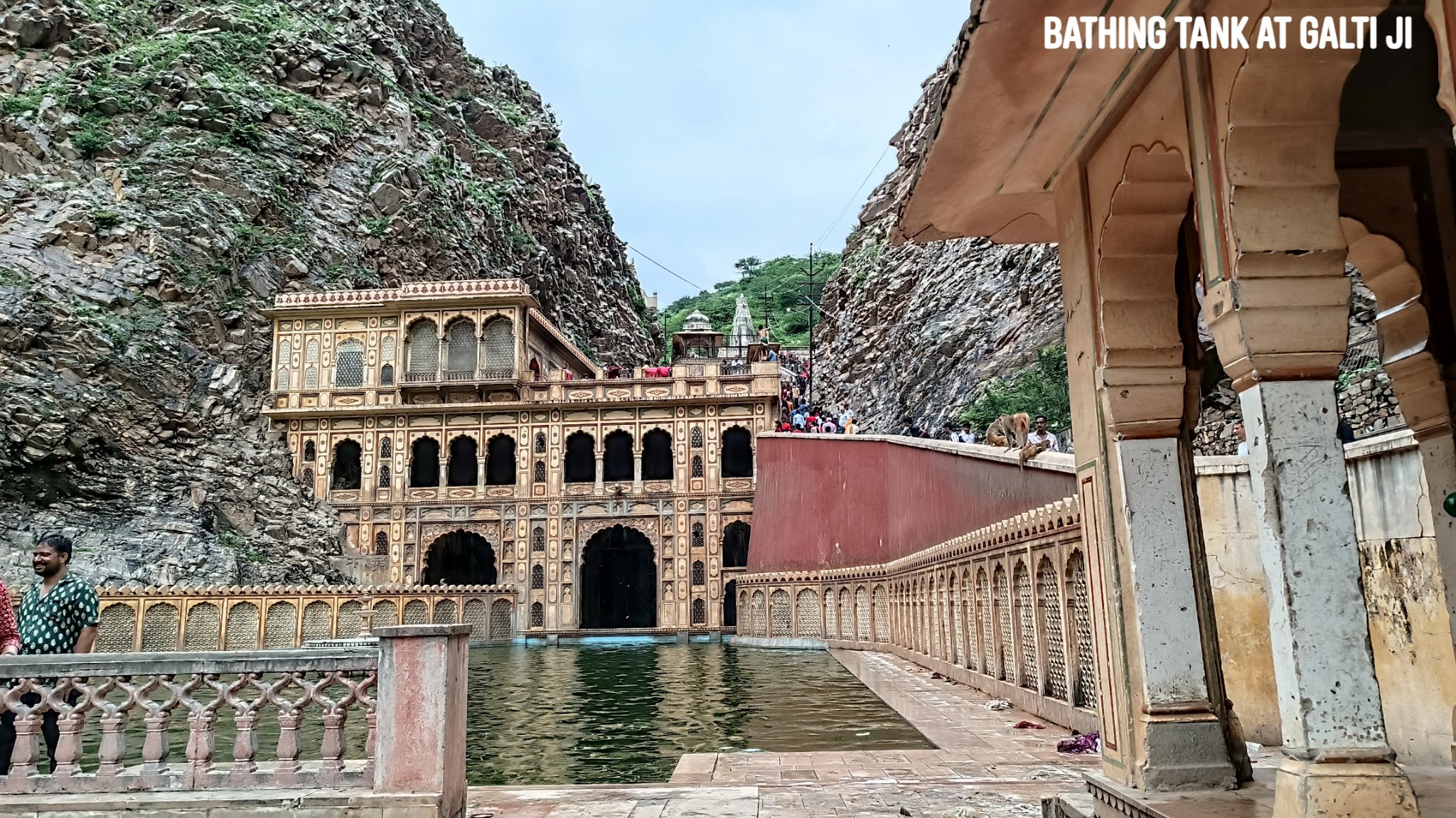
Home to a bathing tank fed by a perennial spring and a temple dedicated to a hermit named Galta ji, along with temples dedicated to Krishna and Ram. At the peak of the hill is a 350 year old Sun temple, reached after a hike of about 1.5km. The first rays of the Sun reaching Jaipur apparently fall on the idol in the temple. Views from the hill are outstanding.

Trip Summary
Day 1:
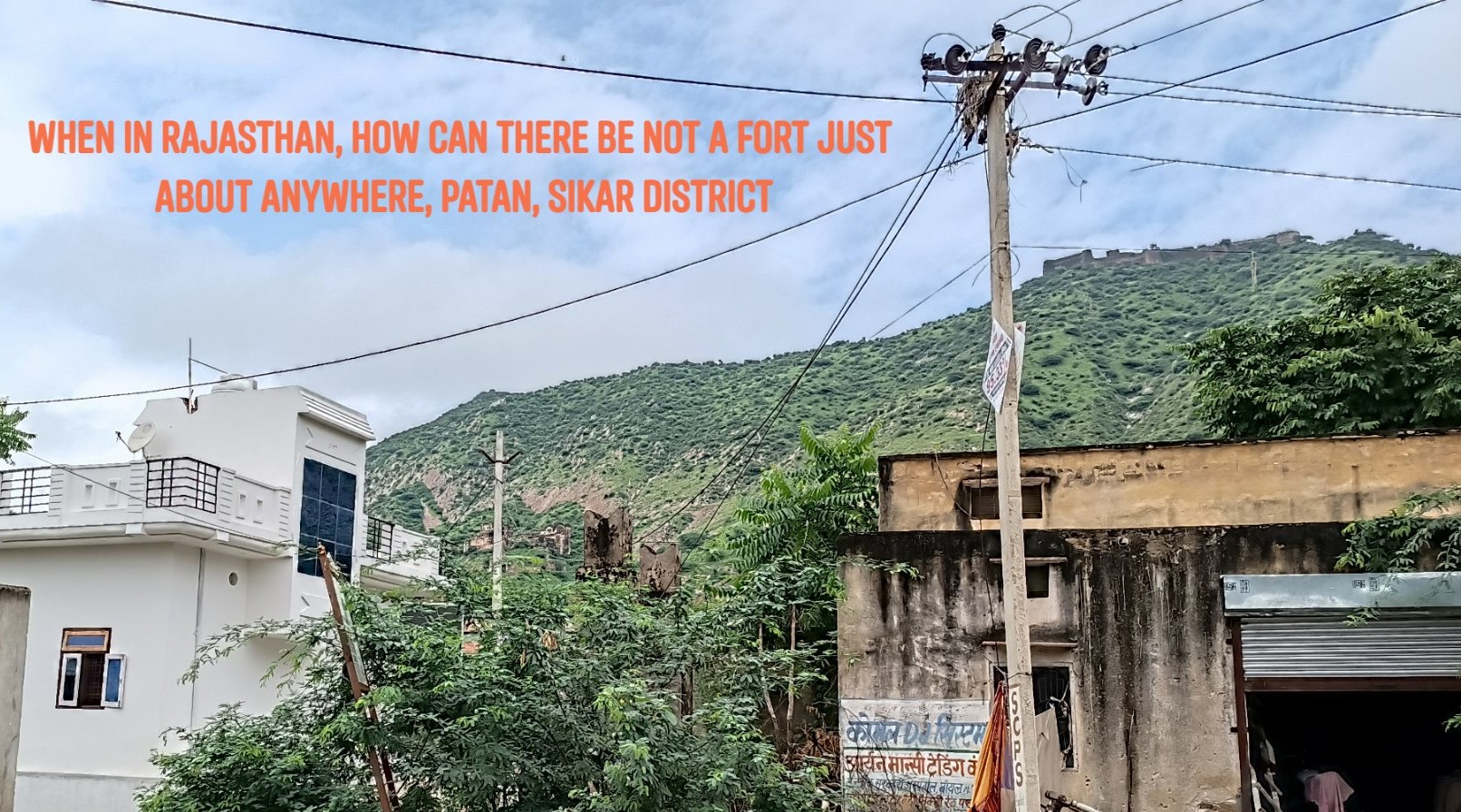
Gurgaon to Udaipurwati via Neem-ka-Thana & Patan -250 km, 6 hours
Udaipurwati to Lohargal – 15km, 30 min
Lohargal to Jaipur via Udaipurwati & Reengus – 160km, 3 hours

Day 2:
Jaipur sightseeing of Rani Sisodiya Bagh and Galtaji – 25km, 2 hours
Jaipur to Gurgaon – 230km, 4 hours

Total – 670km

Sun, Sand and Serendipity – A 2100km Road Trip through Kalibangan, Bikaner and Badoli

My little brother paid the motherland a visit after 2 years, and before the Indian summer set in with its full glory, the family decided to make it the first ever self-driven road trip for the family. So, off we set in late March, on a 6-day road trip with an itinerary so fluid that we only knew the first 3 places we planned to visit. Deciding to let the vagaries of chance sprinkle our journey with generous doses of surprise, we did not also book a hotel prior.

And boy, was it rewarding! With a mix of the famous and the little known (or even barely-frequented), this time we forayed through the desert to brush with history stretching back to 5000 years ago, in search of a lost river and a lost civilization, chanced upon desert lakes and desert wildlife, hobnobbed with human-like rats, and delved deep into a jungle on a temple chase while the sun was going down.

Hanumangarh

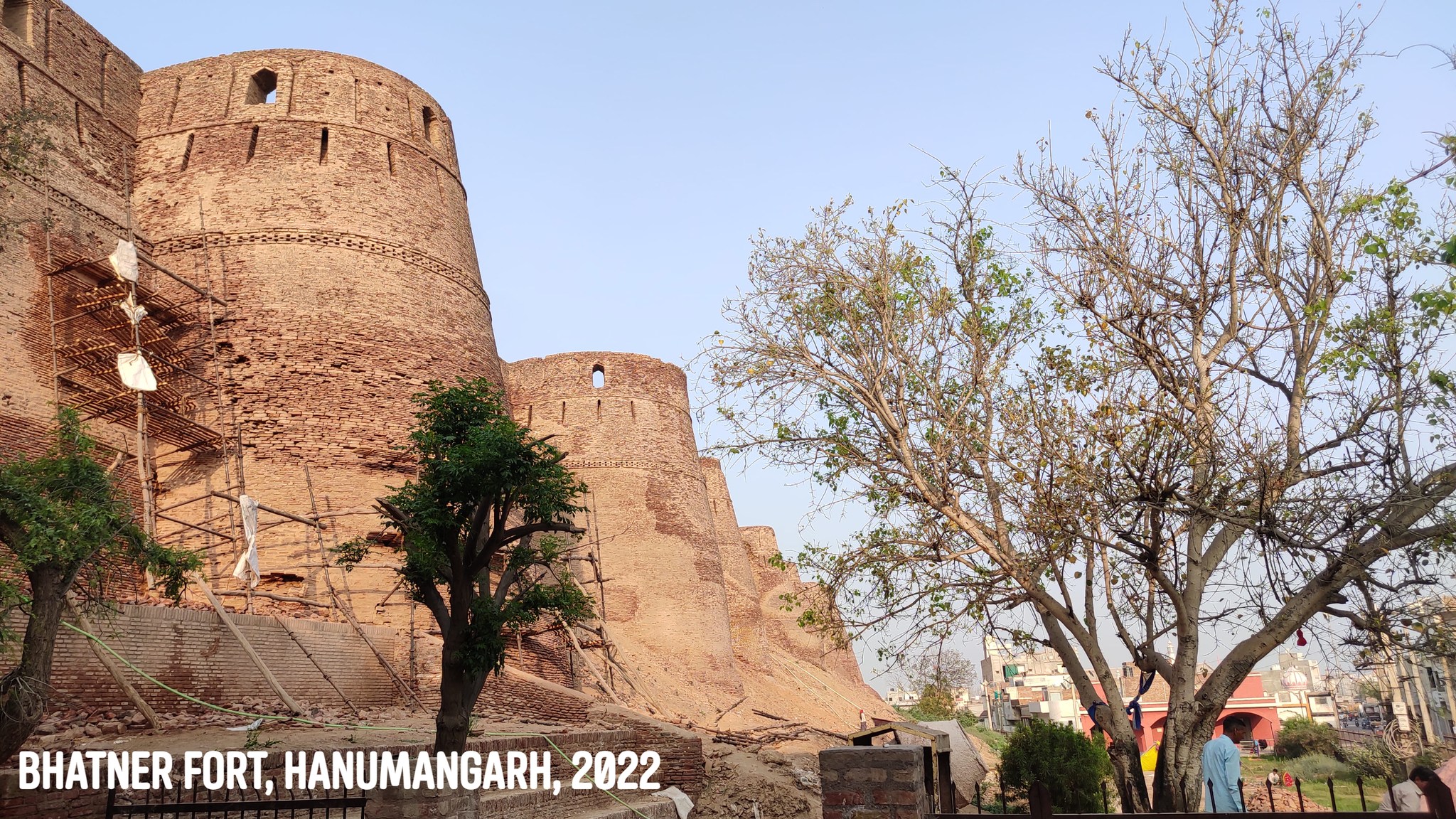
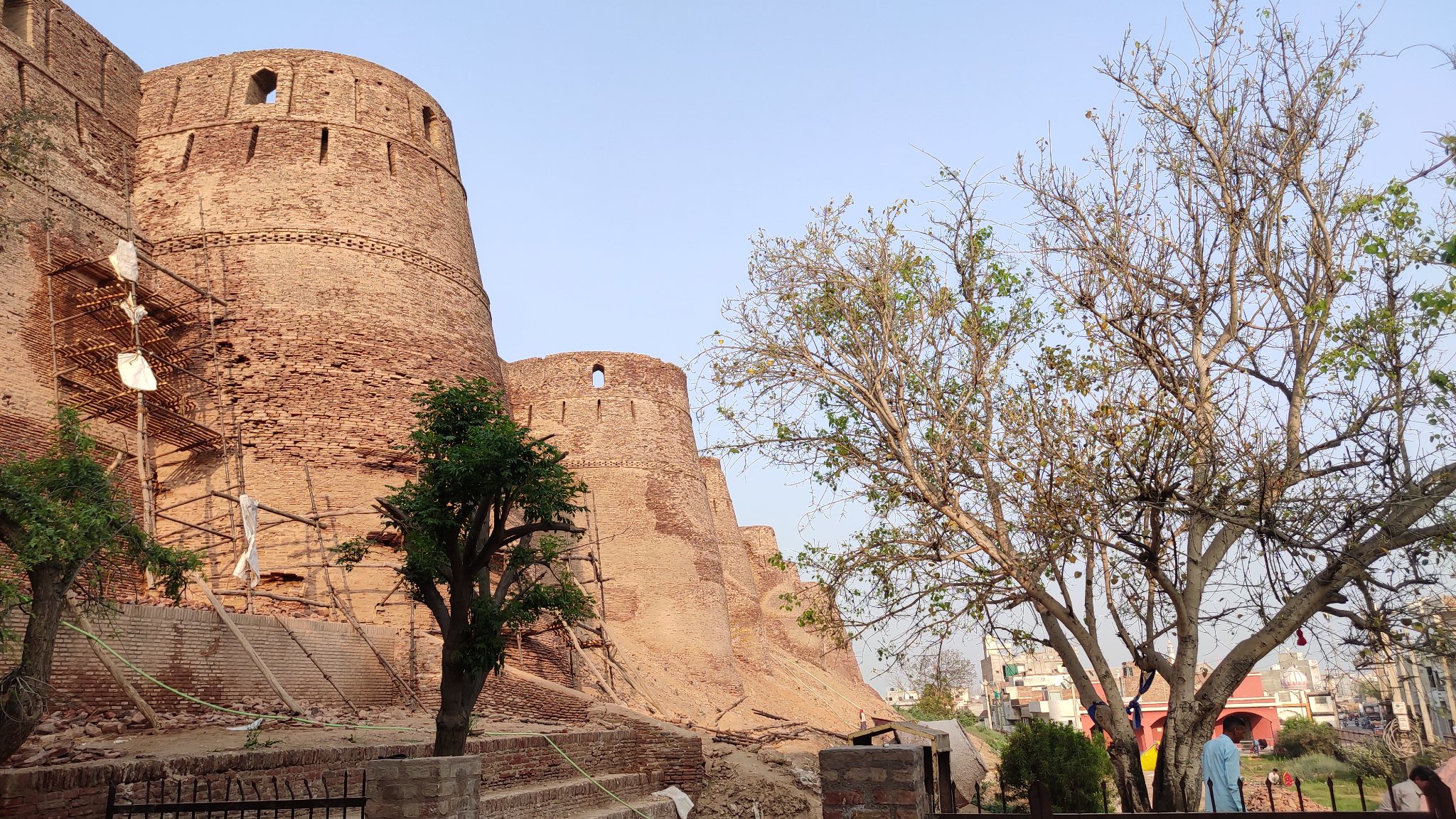
Our search of the mythical River Saraswati led us to the desert town of Hanumangarh, where we came upon the Bhatner fort, which dates its origin to the 2nd century AD. The old structures are now buried in mud, and the fort is being renovated.

Kalibangan

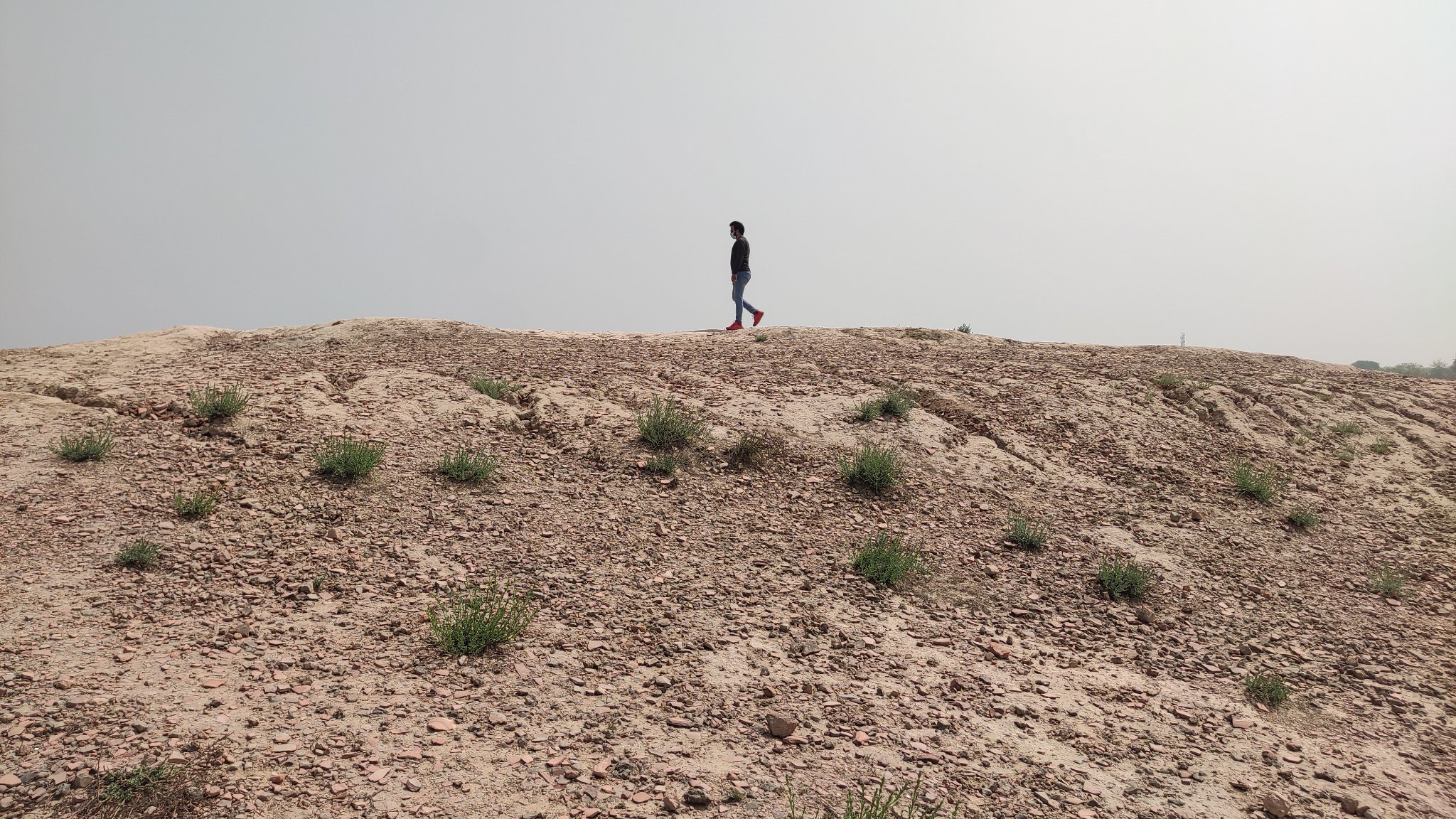
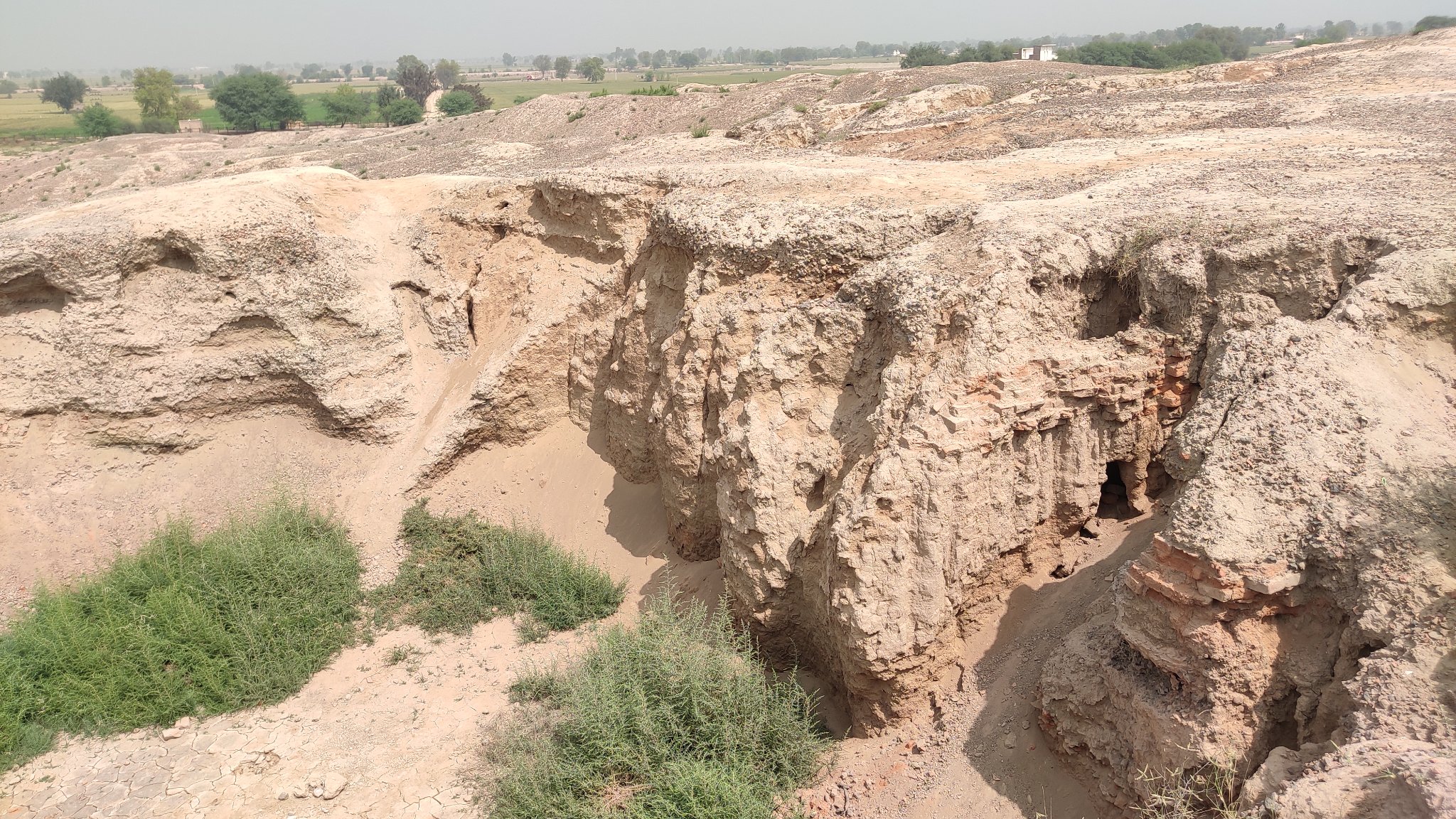
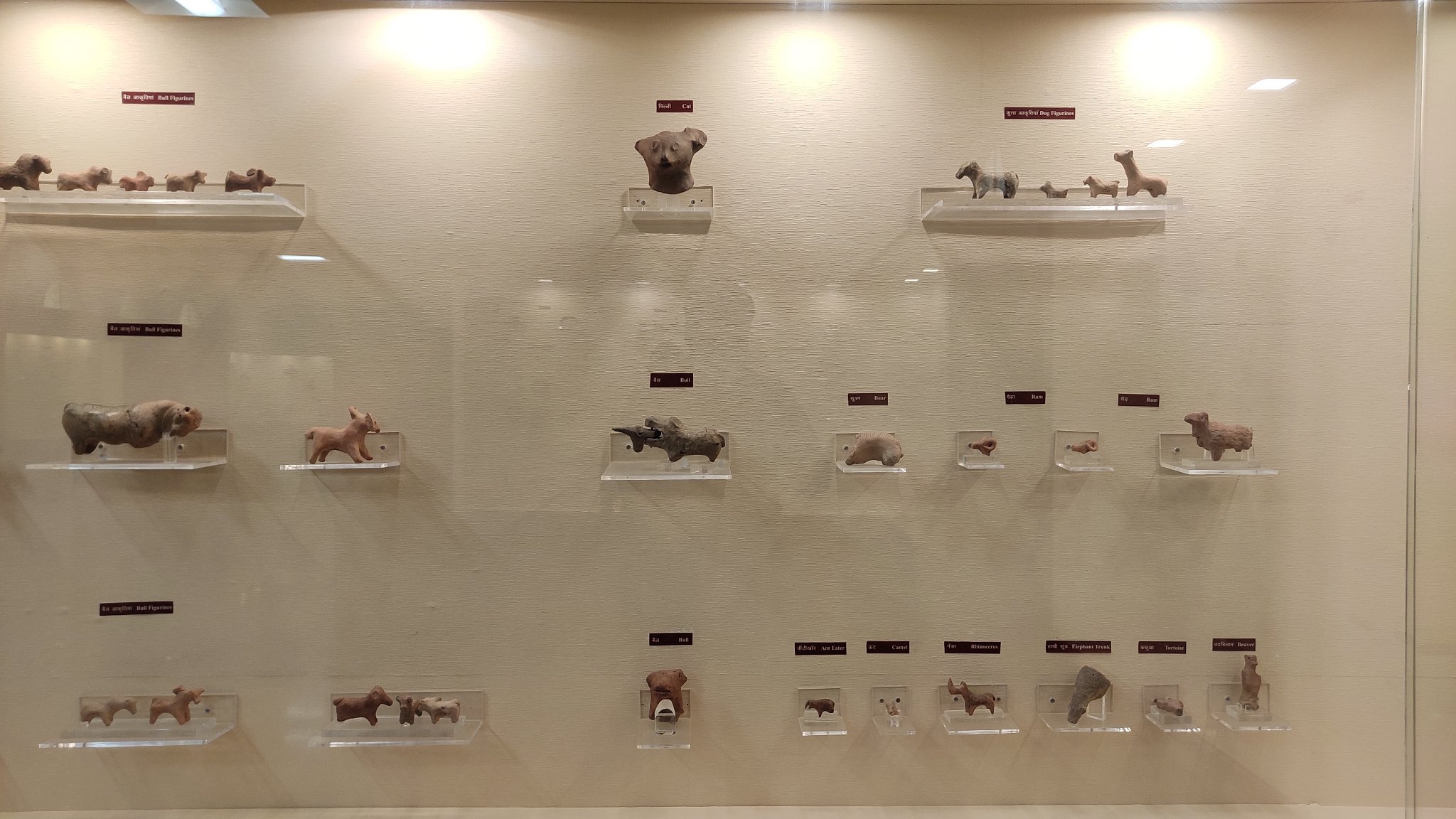
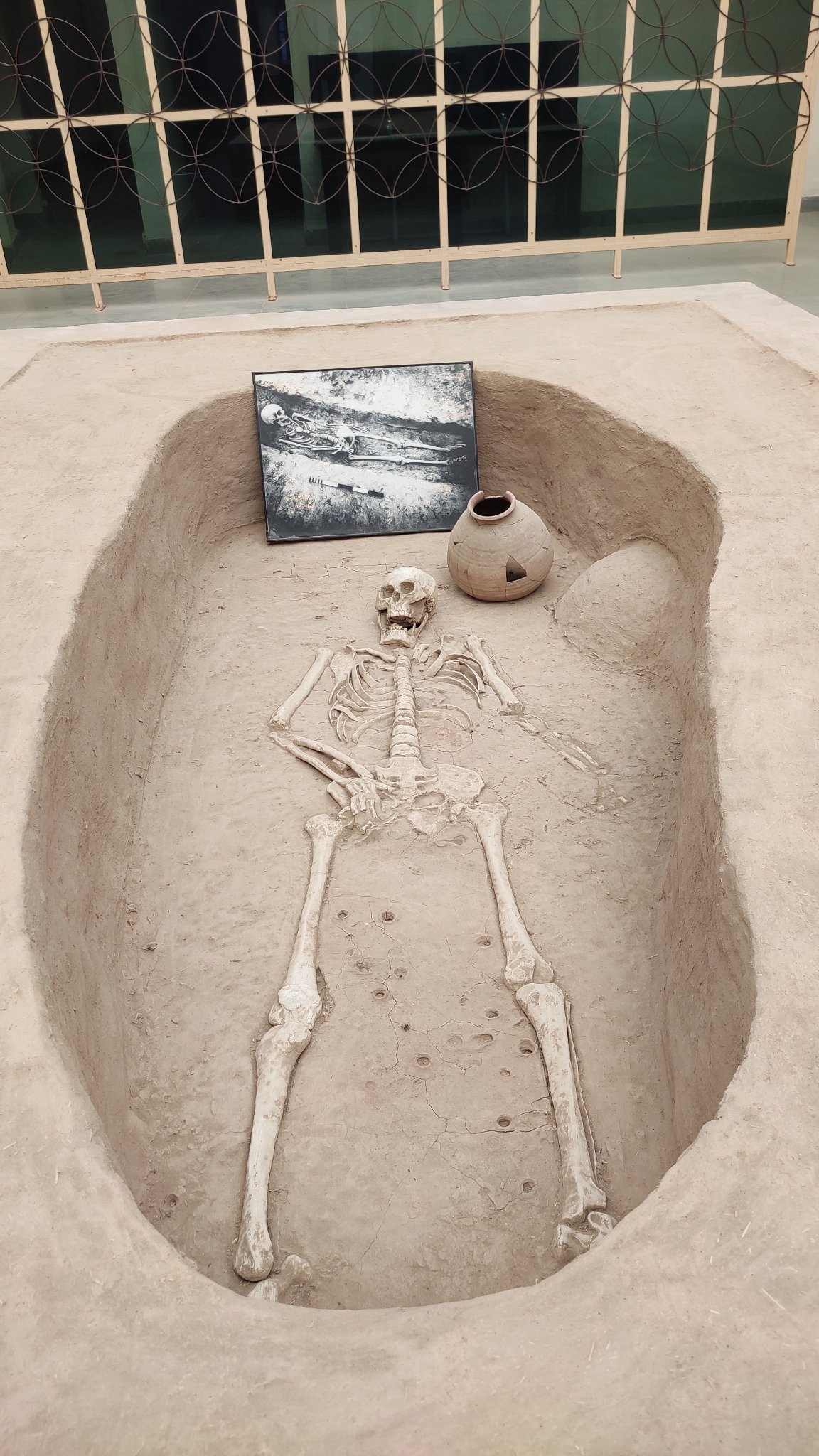
One of the earliest discovered and excavated Harappan sites, Kalibangan gave us a sneak peek into 5 millennia earlier. Sadly, the ruins are buried in mud, even the excavations have been covered up by the Archaeology Survey of India (ASI) to prevent further deterioration.

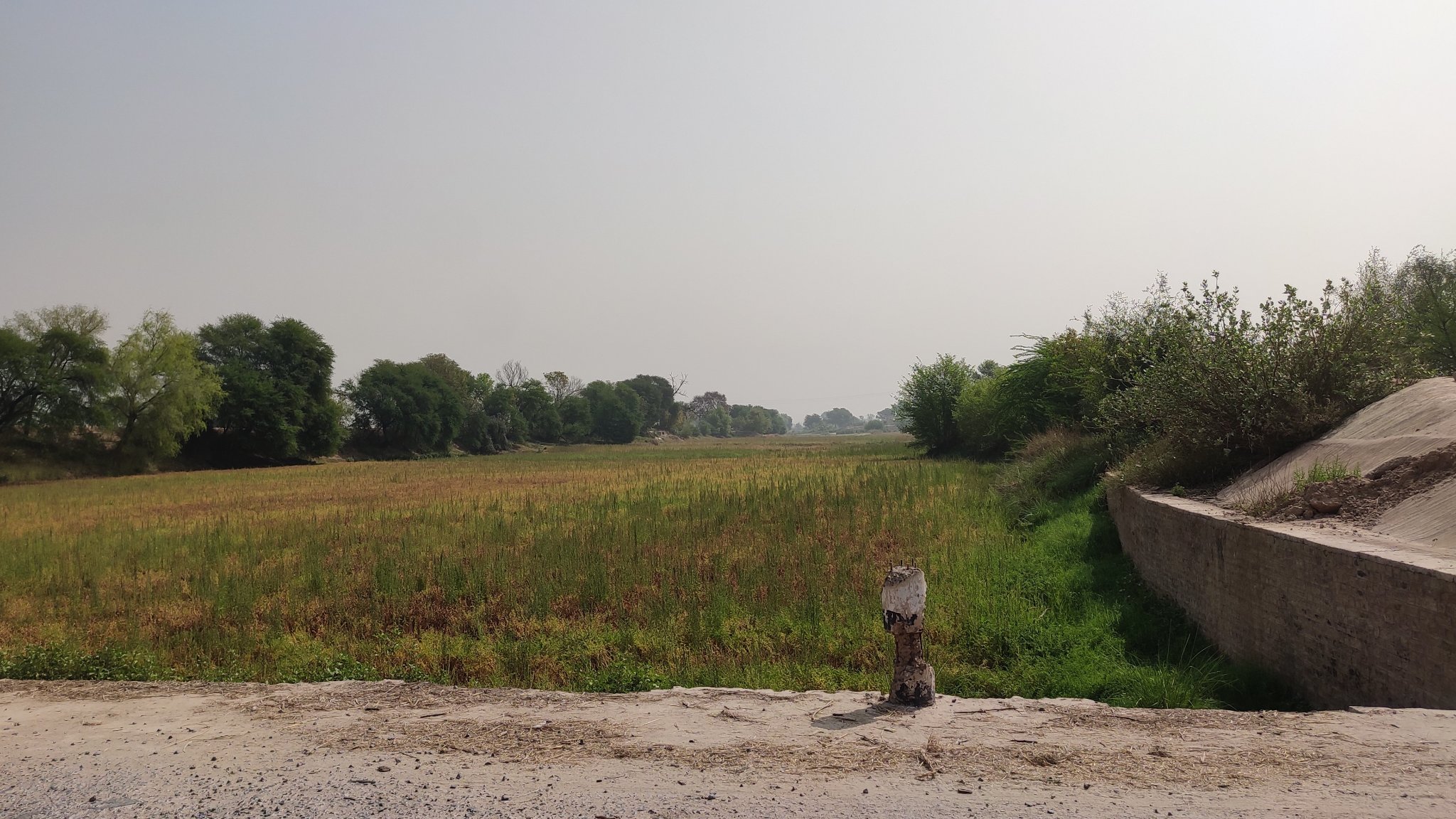
In the vicinity, we finally met the Ghaggar River, which is purported to be the Vedic Saraswati River – nothing more than a dried-up intermittent, almost obscure rivulet right now.

Badopal Lake

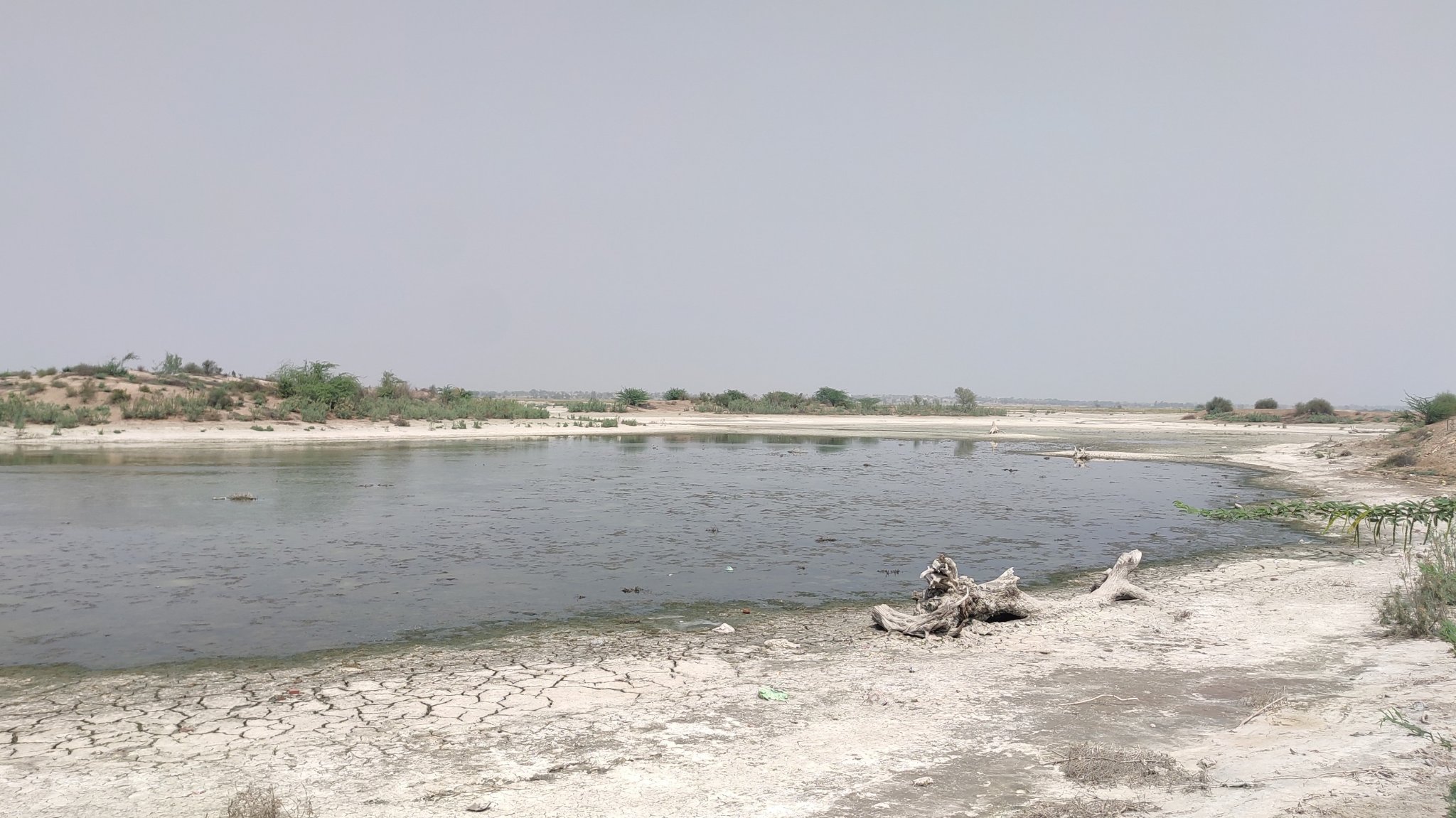
We took a slight detour through the desert hinterland to take a peek at the Badopal lake, a salt lake located beside the Badopal, an ancient mound, and part of the Rang Mahal culture.

Suratgarh

Another desert town midway between Hanumangarh and Bikaner, noted for its Thermal Power station and the air force base.

Lunkaransar

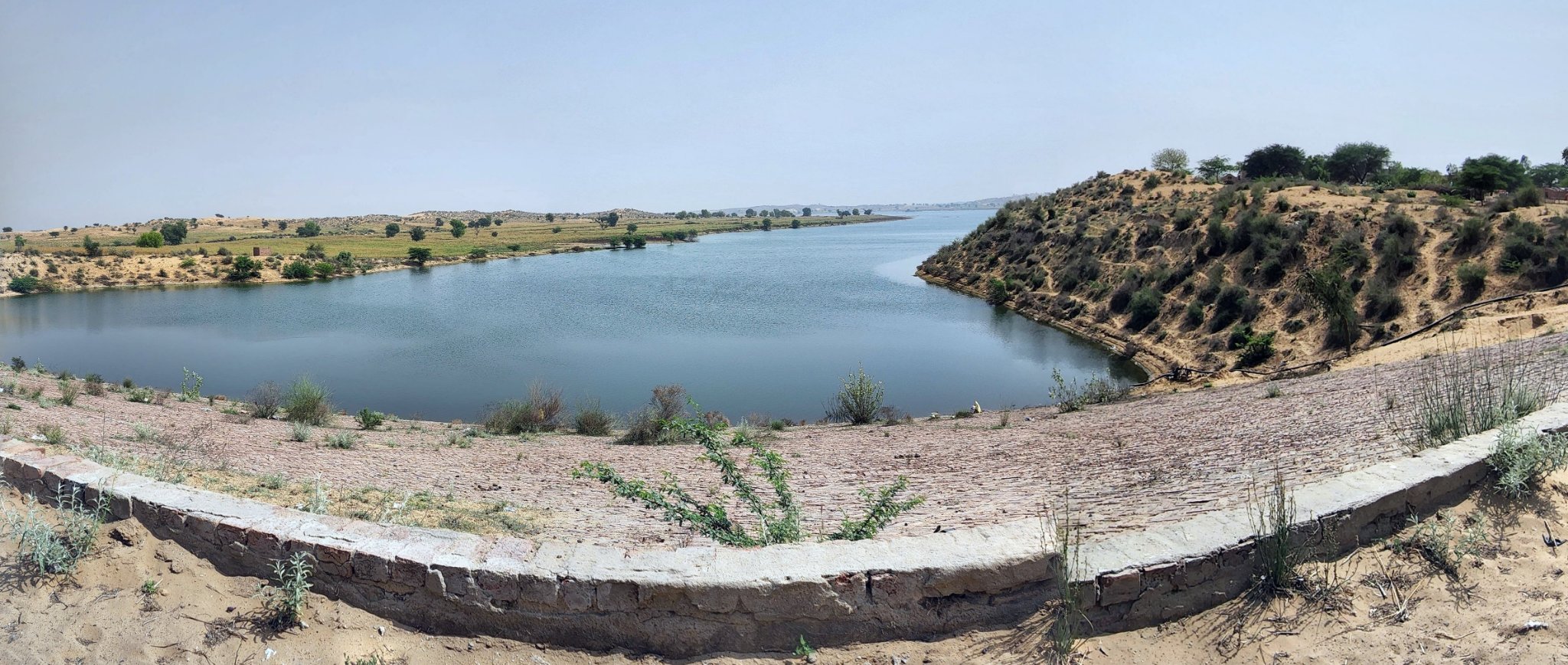
A fairly expansive salt-lake that is home to migratory birds, midway between Suratgarh and Bikaner

Bikaner

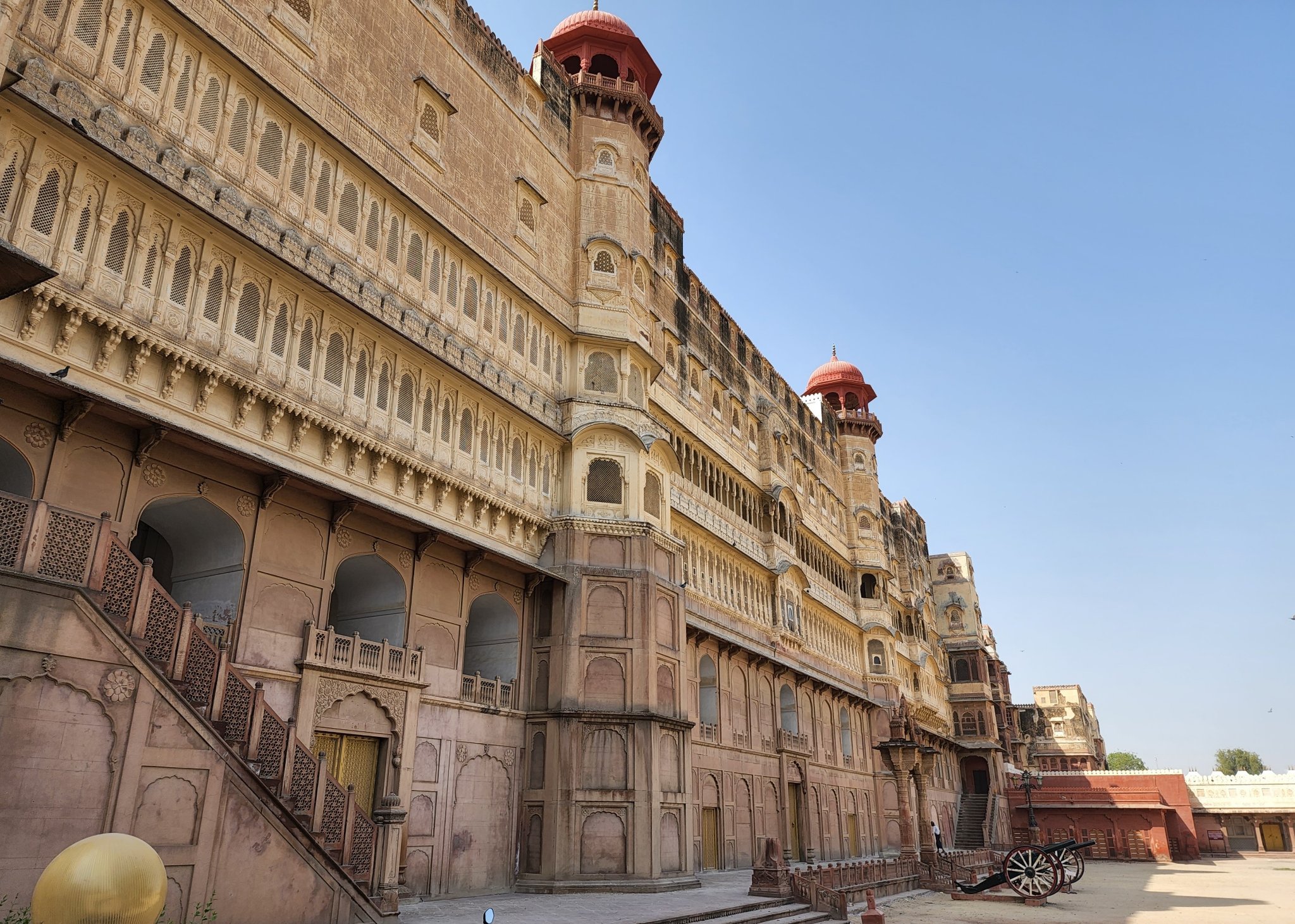
One of the major cities of Rajasthan, founded by Rao Bika, famous for Junagadh Fort and savory sweets and snacks

Deshnoke

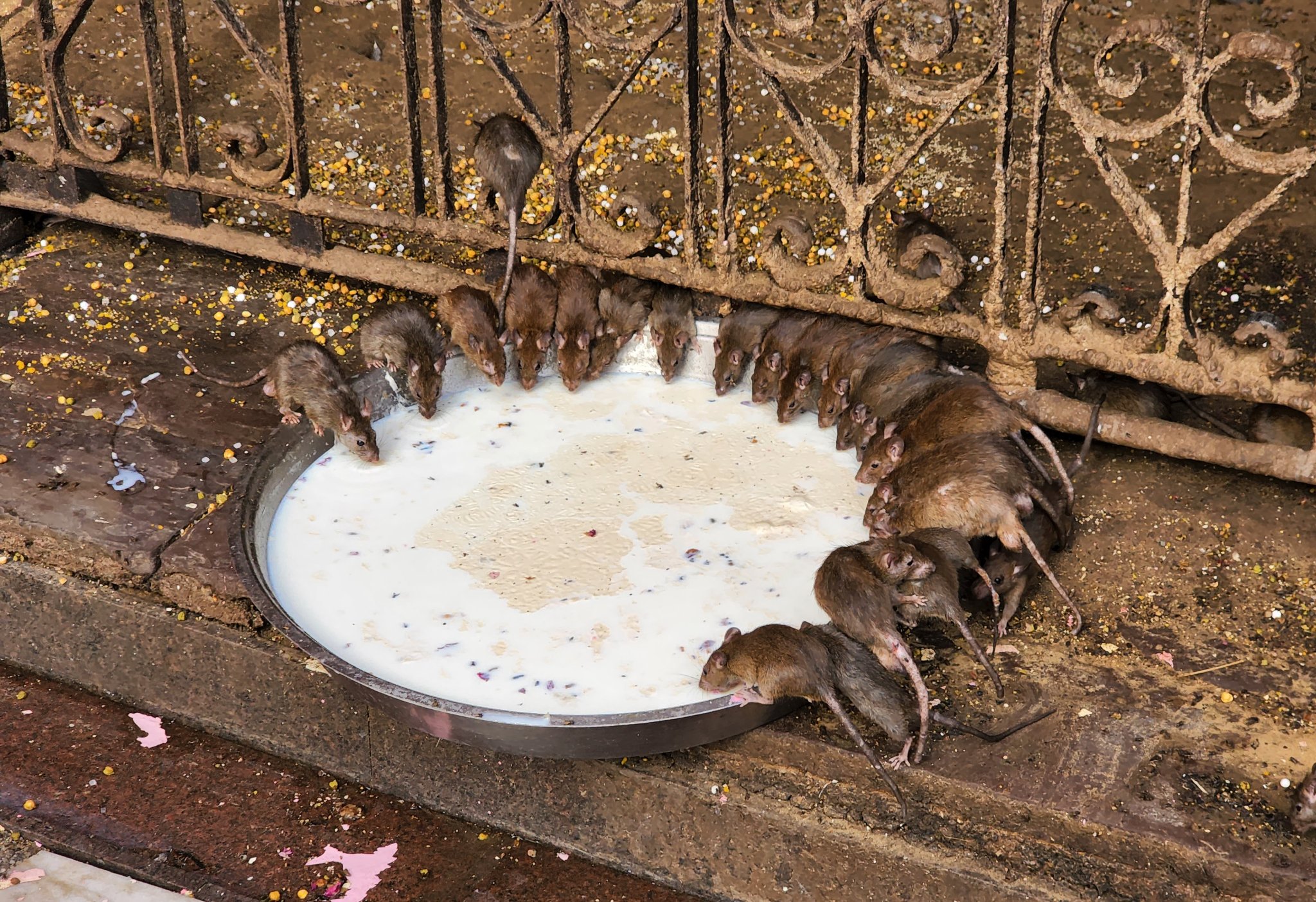
Home to the Karni Mata Temple, where rats, who are considered children of the Goddess, behave just as humans! Eating nibbled on by the rats is considered auspicious. Accidentally or deliberately killing a rat requires replacing it with one made of gold or silver as atonement.

Kolayat

The place where the Vedic Sage Kapil (Kapil Muni) is said to have shed his body. Home to a lake and temples on its bank.

Bundi

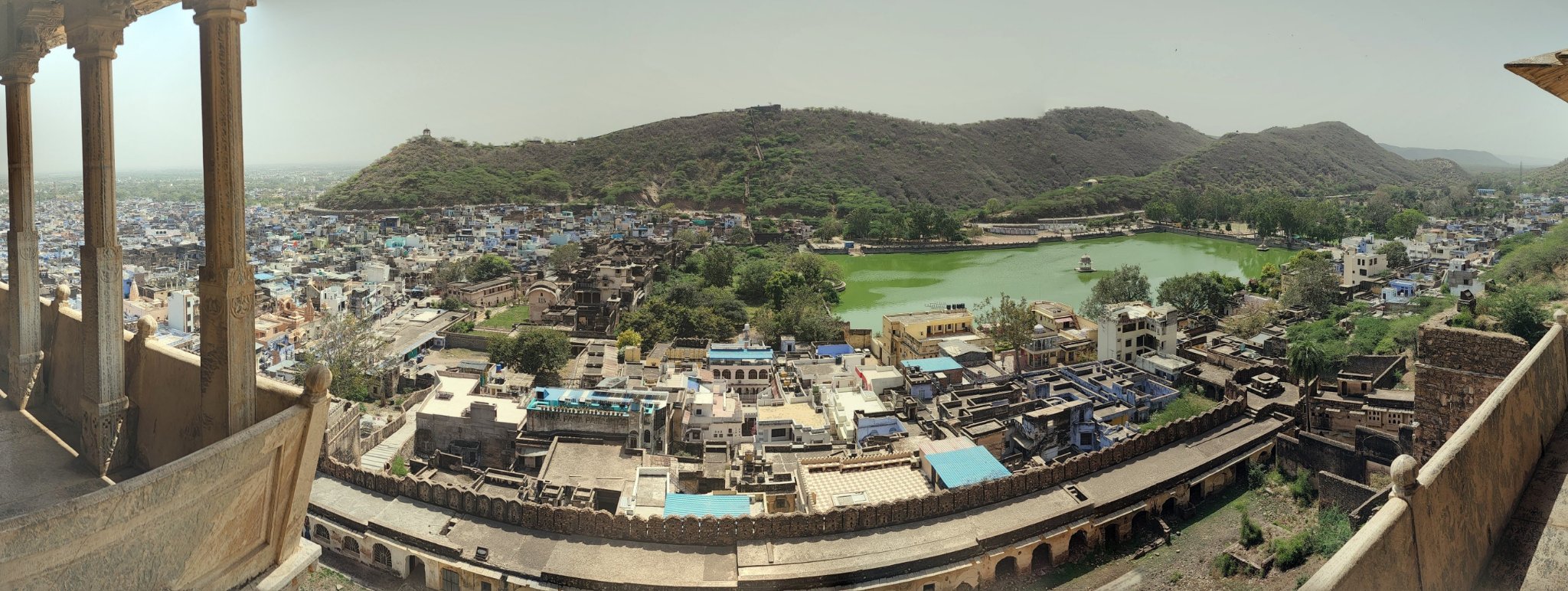
A quaint town nestled in the Aravallis, with an imposing hill-side palace overlooking a lake.

Badoli Temple Complex

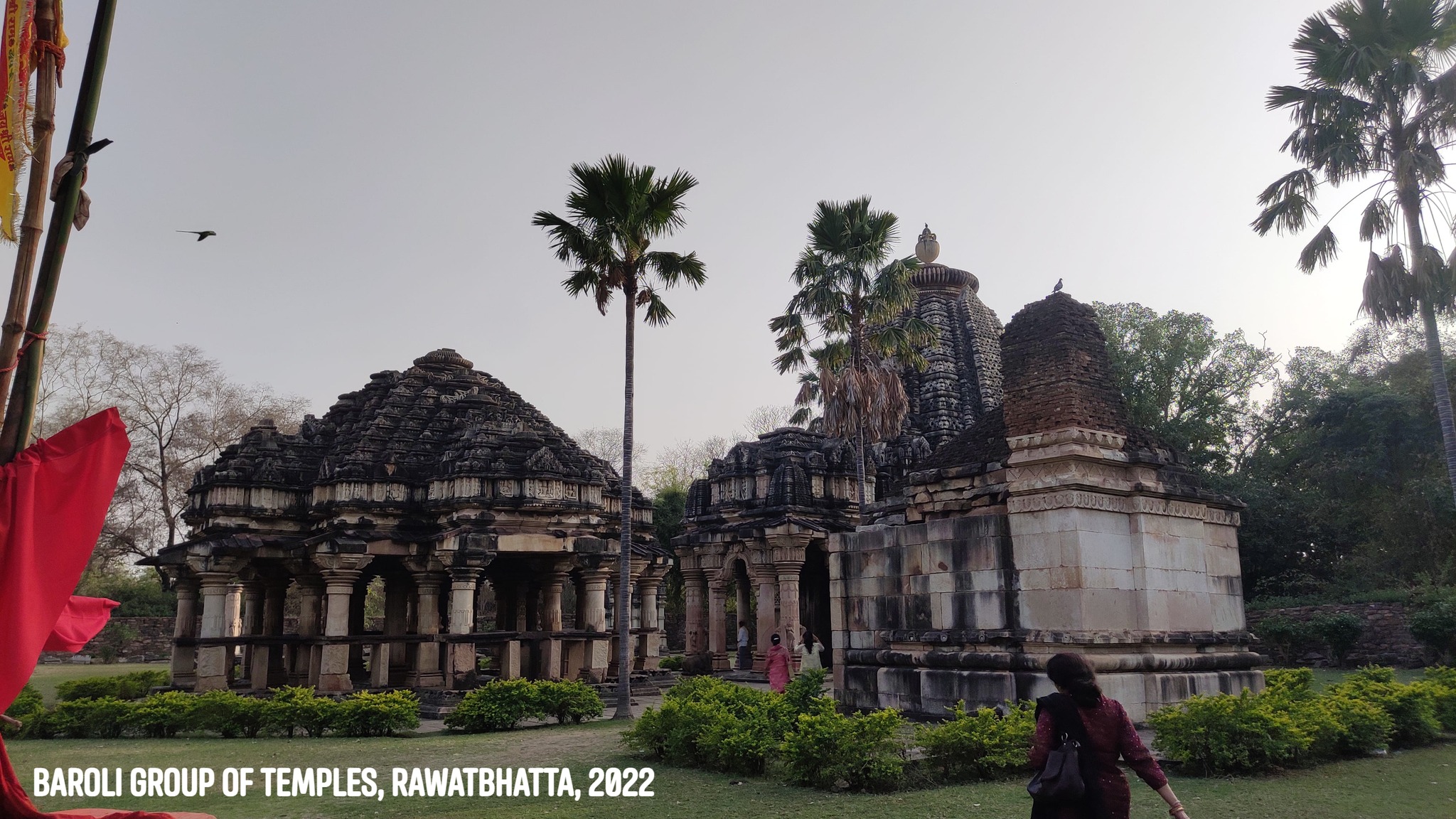
A 10th-11th century temple complex which crept into our plan by serendipity as we were short on time to visit the Gagron fort. The temples, dedicated to Shiva, Vishnu, Ganesha etc., were built by the Gurjara-Pratihara dynasty, and are described as one of the best representations of the temple. Situated on the banks of the Chambal just outside the village of Rawatbhata, it can be reached from Kota through winding roads cutting across hills and forest. As the sun was beginning to set, the ride through the forest was a race against time, and quite the adventure!

Ranthambore Fort

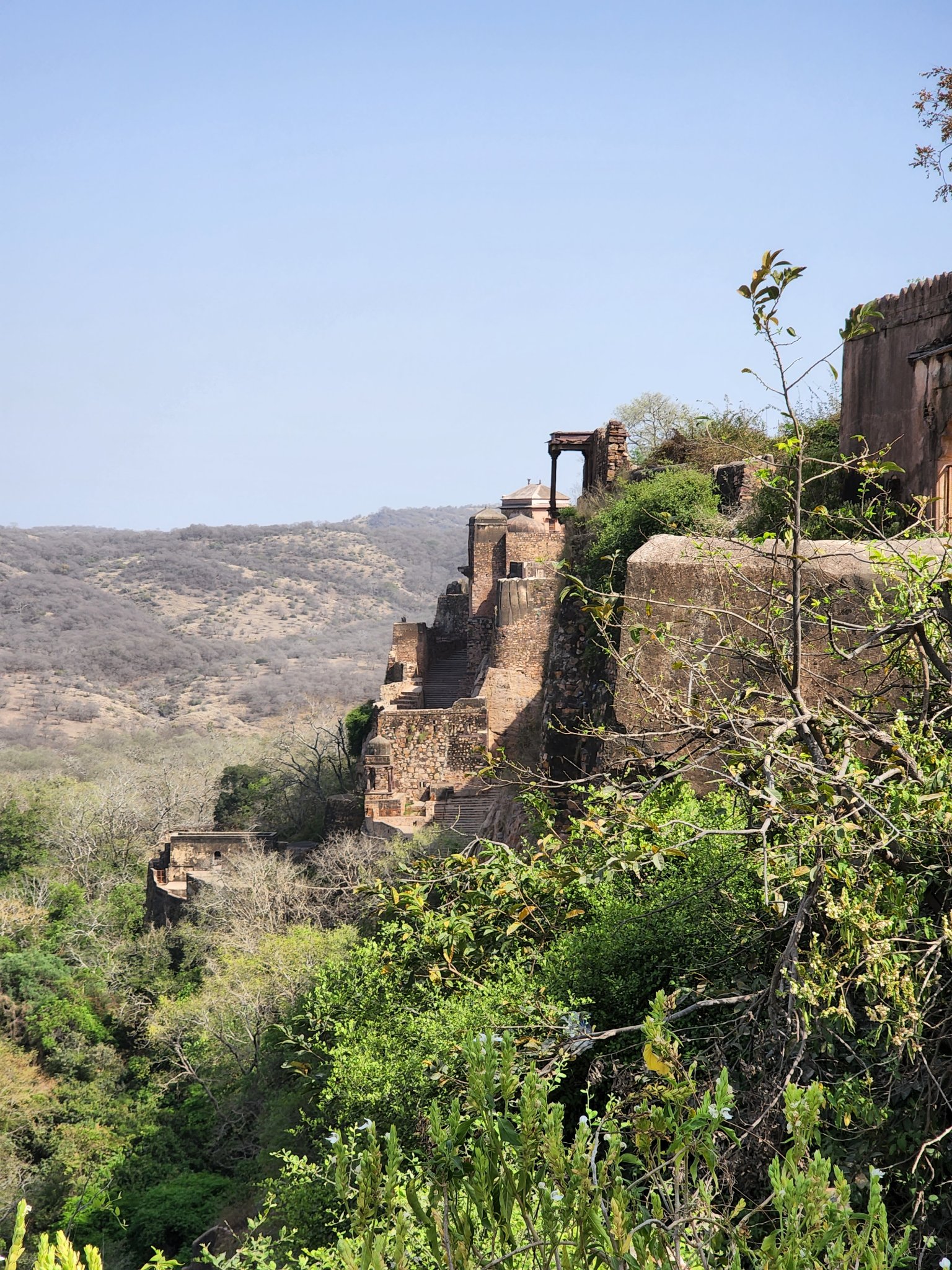
Rounding off the trip was the magnificent and legendary Ranthambore fort, situated on top of a hill right in the middle of the Ranthambore Tiger Sanctuary. The ride through the forest is memorable and so are the sights from atop the fort.

Trip Summary
Day 1:
Gurgaon to Hanumangarh via Sirsa (lunch break in Sirsa)
Saw Bhatner fort at Hanumangarh (overnight stay in Hanumangarh)

Day 2:

Hanumangarh to Kalibangan
Kalibangan to Suratgarh via Badopal (lunch break in Suratgarh)
Suratgarh to Bikaner via Lunkaransar (overnight stay in Bikaner)

Day 3:
Bikaner fort early morning (lunch at Bikaner after seeing the fort)
Bikaner to Deshnoke to Kolayat, and back to Bikaner (overnight stay in Baikaner)

Day 4:
Bikaner to Jaipur via Sikar (overnight stay in Jaipur)

Day 5:
Jaipur to Bundi
Bundi to Badoli Temple complex (Rawatbhatta)
Badoli to Kota (overnight stay in Kota)

Day 6:
Kota to Ranthambore
Ranthambore to Gurgaon via Dausa and Manoharpura

Jodhpur and Jaisalmer: A Family Expedition into the Thar

Ruminating over fond memories of my previous excursions to the Thar, I realized that it was time my family members also got a taste of the desert, and so materialized my family’s first tryst with the Thar – and my third – in the end of November 2019. We took the Mandore Express from Gurgaon railway station, where we had to execute the train boarding with rocket-science precision on account of the train stopping only for 2 minutes, and reached Jodhpur at 8 AM next morning.

Day 1: Jodhpur and Mandore

We checked in to the Om Heritage hotel that afforded an excellent view of the Mehrangarh fort from its rooftop. The plan for the day, drawn on the experience of my previous sole trip to Jodhpur, was set, and so, the first thing we did was hire for the whole day one of those large auto-rickshaws that could accommodate all five of us, and headed over to the Umaid Bhawan Palace. Our next stop after that was at Mandore Garden, the place that had me mesmerized in my previous trip to Jodhpur.

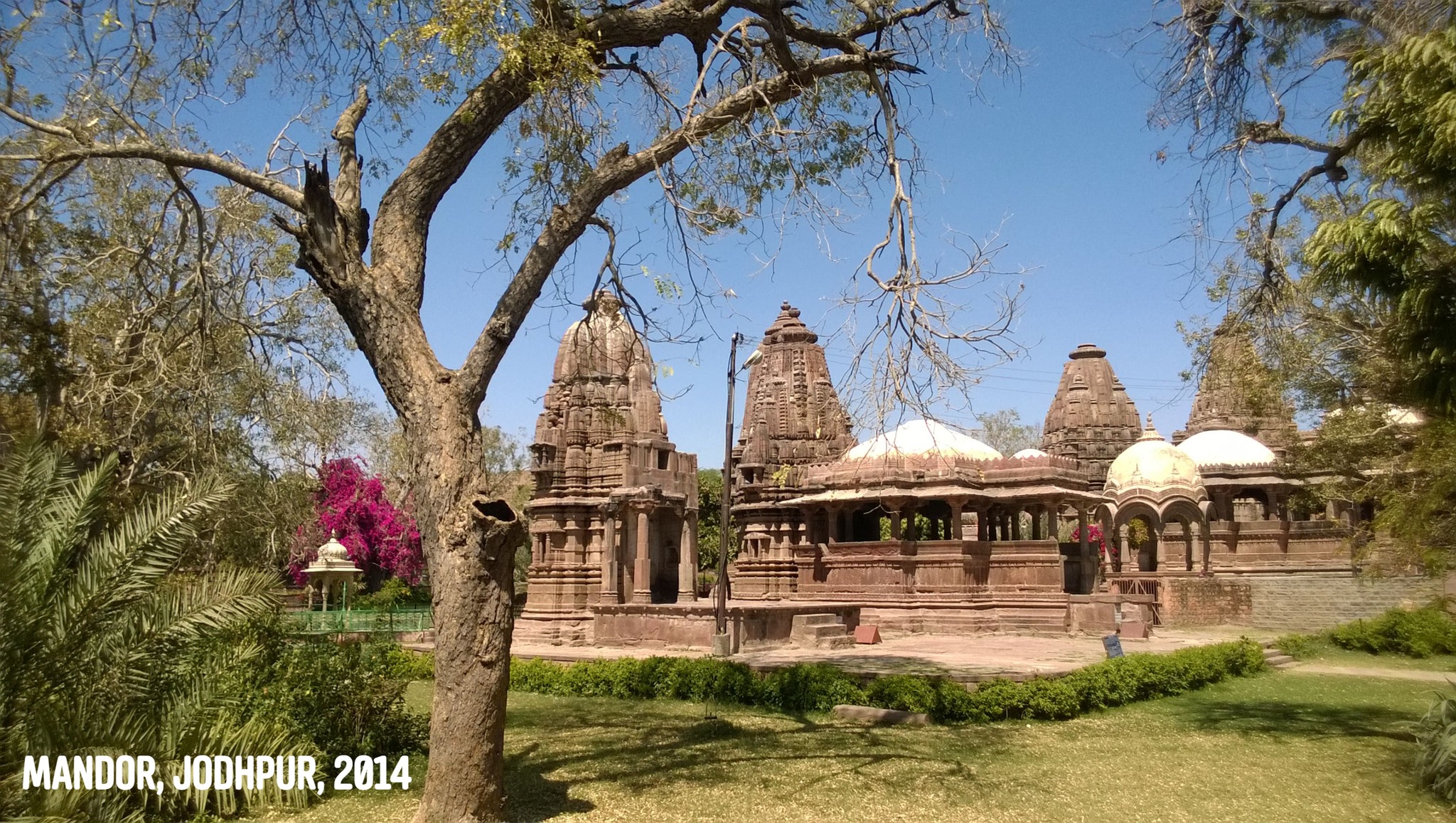
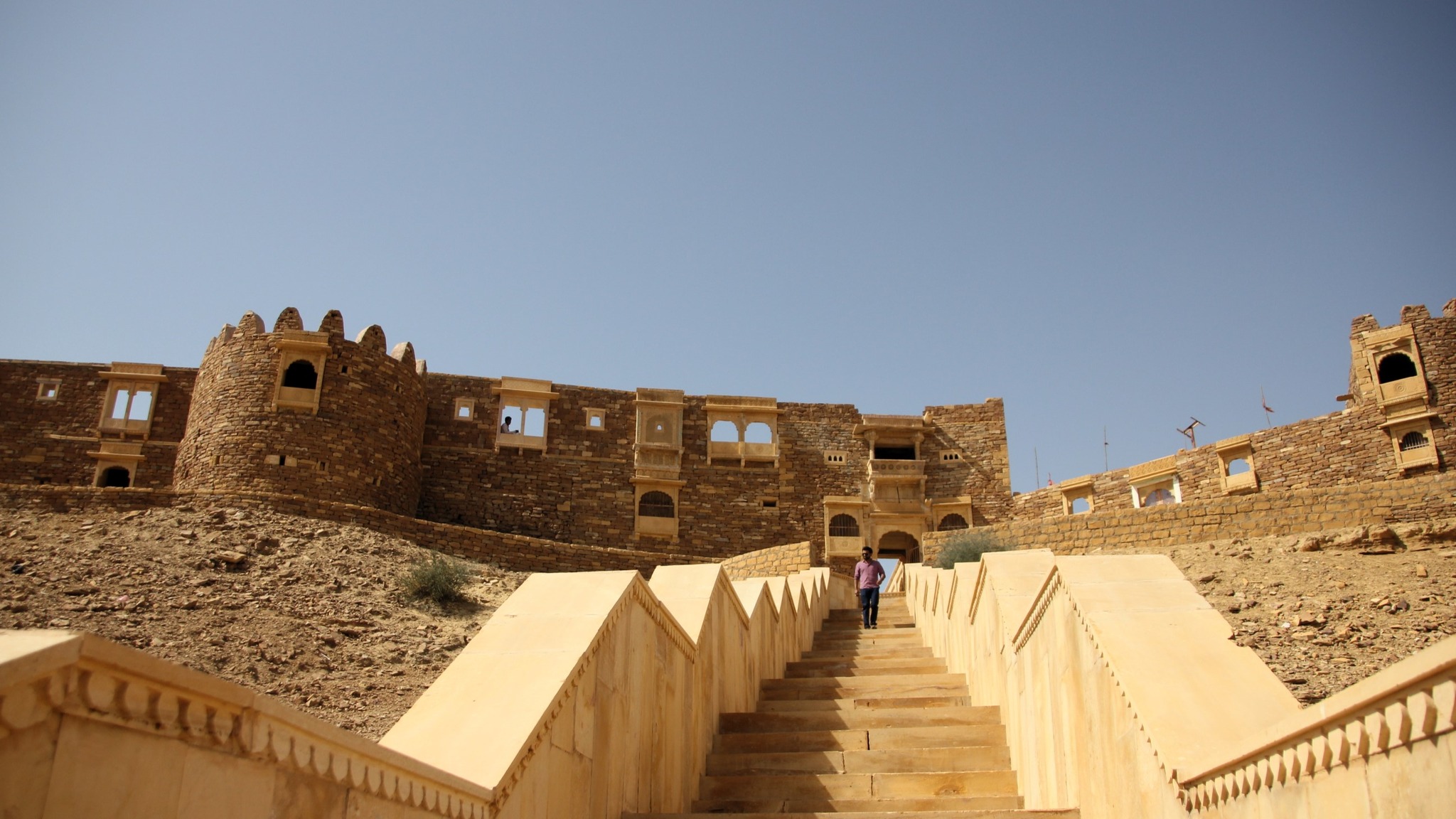
Mandore, the seat of the Gurjara-Pratiharas in the 6th century AD, later became the capital of the Rathores before Rao Jodha shifted to the newly-founded city of Jodhpur. At Mandore, we first walked through the lawns and saw some of the temples and royal cenotaphs, and then visited the Government Musuem. From there, walking up an incline, we crossed a dammed mini-reservoir, and reached the ruined Mandore fort located on the top of a hill, getting a panoramic view of Mandore. After an hour and half well spent, we had our lunch in Mandore, and proceeded to Jaswant Thada on our way to Mehrangarh Fort.

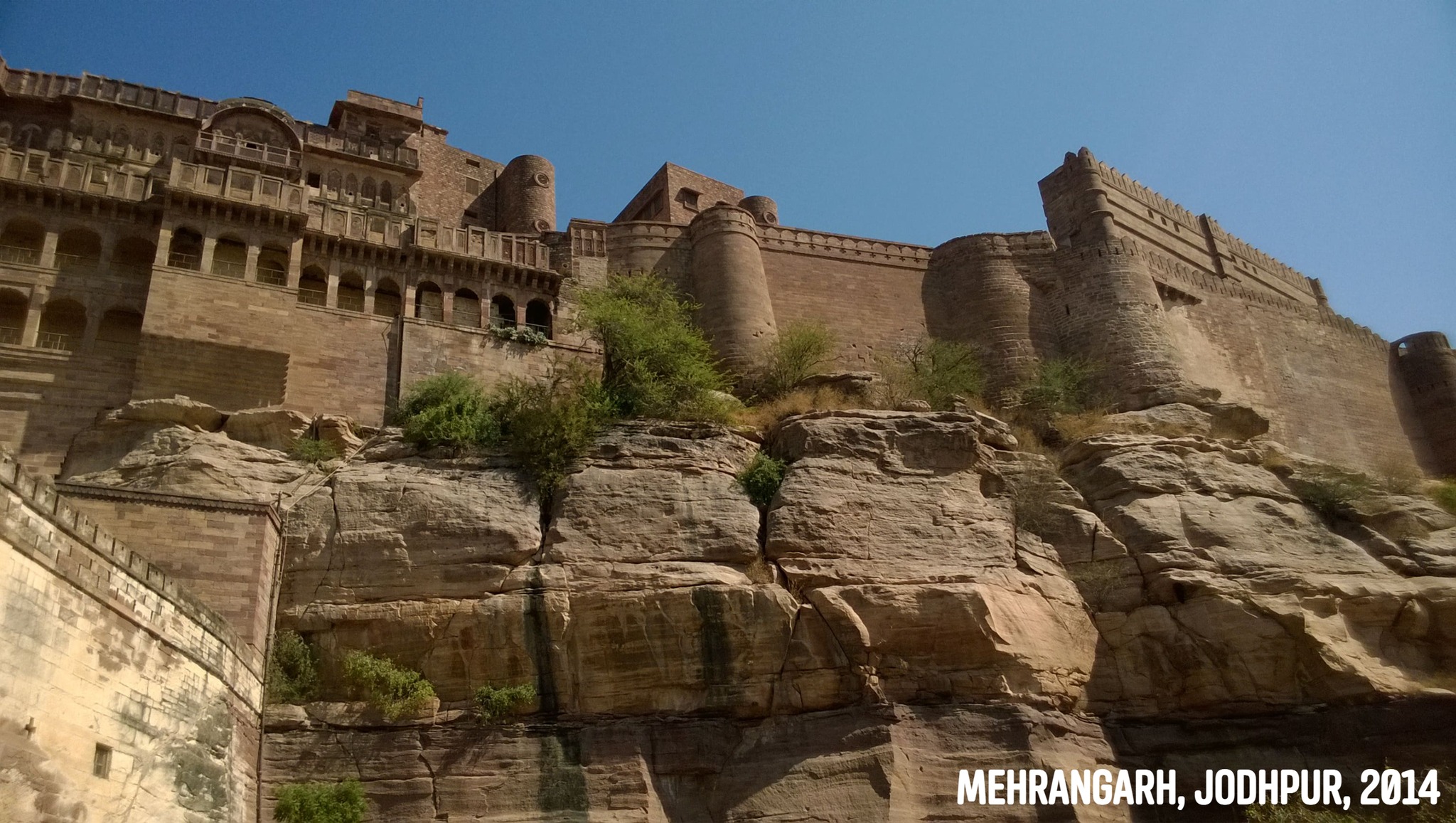
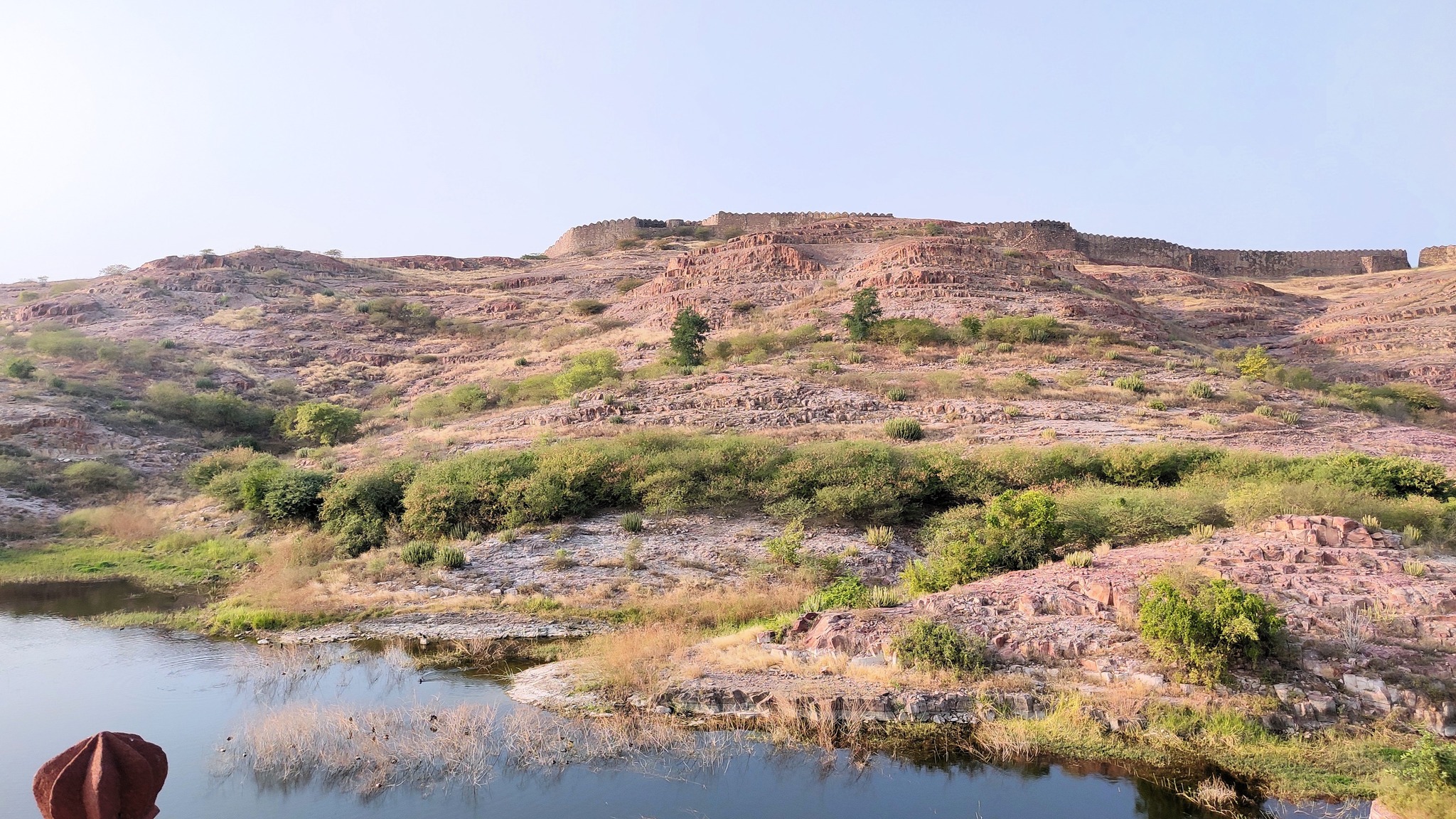
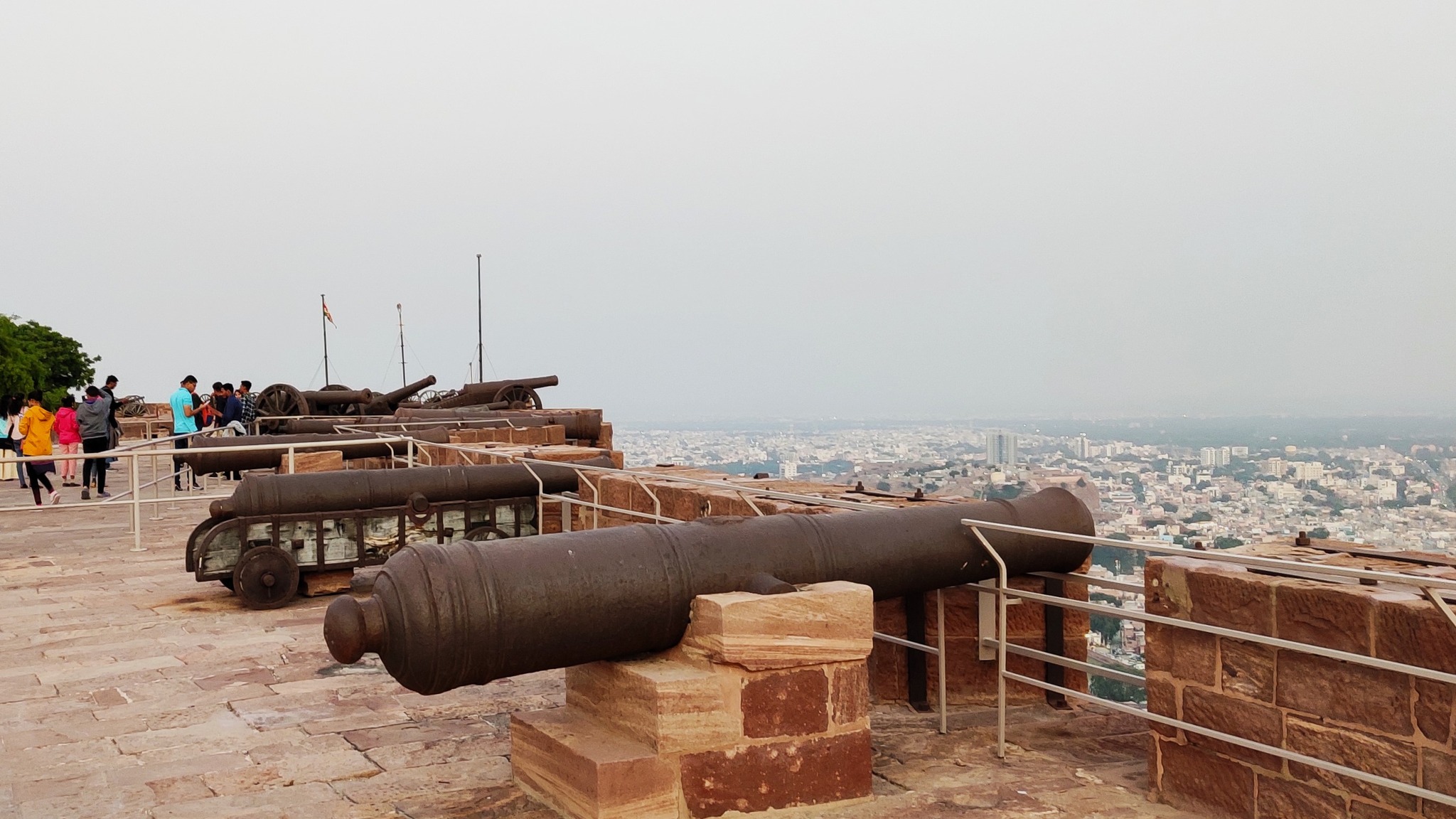
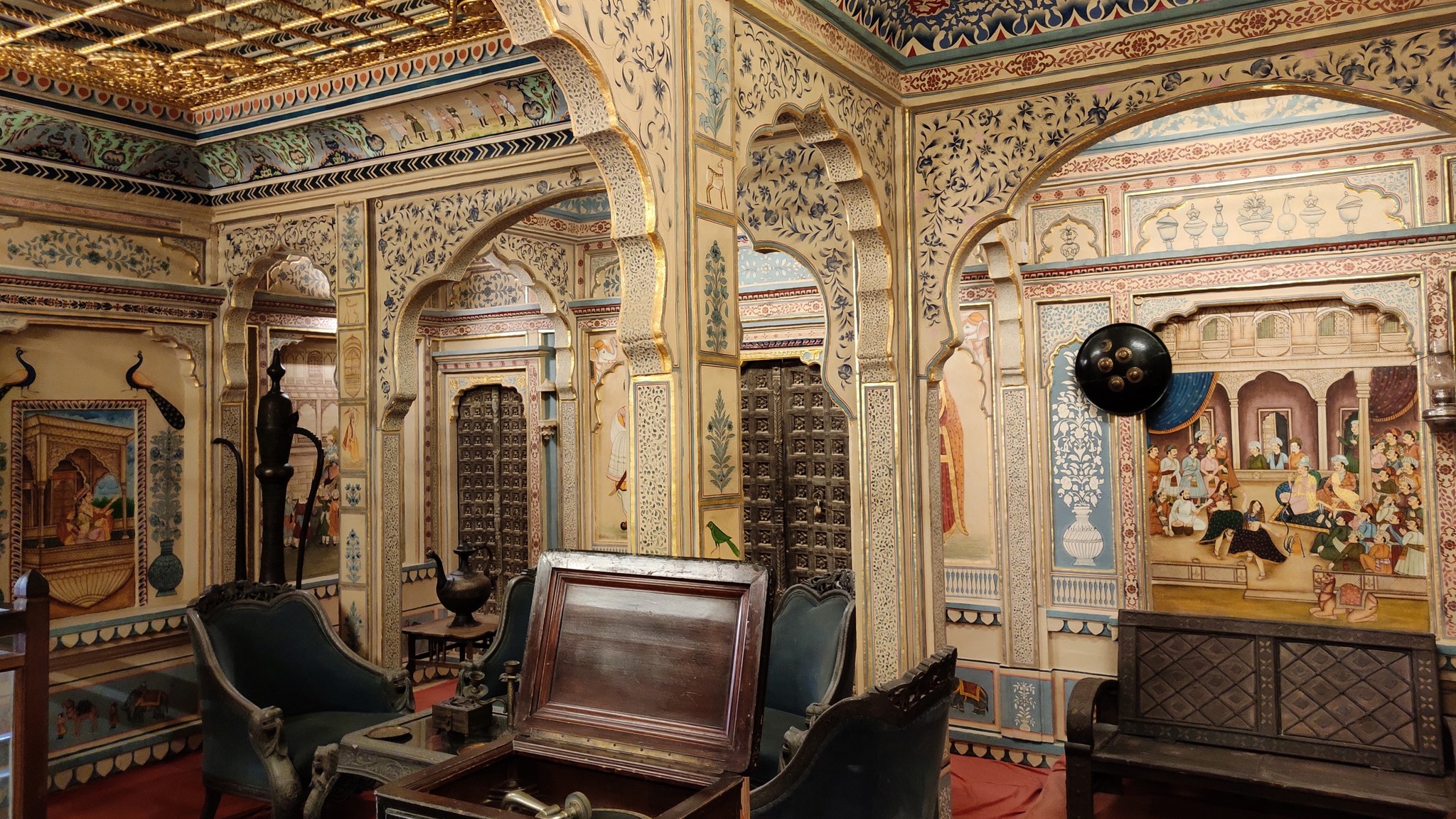
The Jaswant Thada itself is located on the top of a flat red-coloured rocky hill which is barren, only punctuated with water pools, and has the scenic backdrop of the Mehrangarh fort on one side. Next up was Mehrangarh fort, which we reached at 4.30 PM just in time before the gates closed for entry. Taking up a guided tour, we gawked at the imposing palaces and exquisitely done interiors, before ending the tour at the raised long platform lining the fort wall the end of the fort where the cannons stand. We were then back in the hotel to have dinner, and prepare for checking out next day to proceed to the next leg of our trip.

Day 2: Exploring Jaisalmer city

The next morning, we started at 8.30 AM by the Innova car we had booked for the remainder of the trip. We passed through Balesar, as the land became progressively arid, with it becoming more distinctively barren and sandy as we approached Pokhran. By 2 PM, we had reached Jaisalmer and checked in at Hotel Heritage House, a hotel modelled as a typical Jaisalmer-style haveli. After a quick lunch at Shree Jee Restaurant, we went to see Patwon ki Haveli, actually a cluster of five small havelis, of which the most famous is the one in the front called Kothari’s Patwa Haveli.

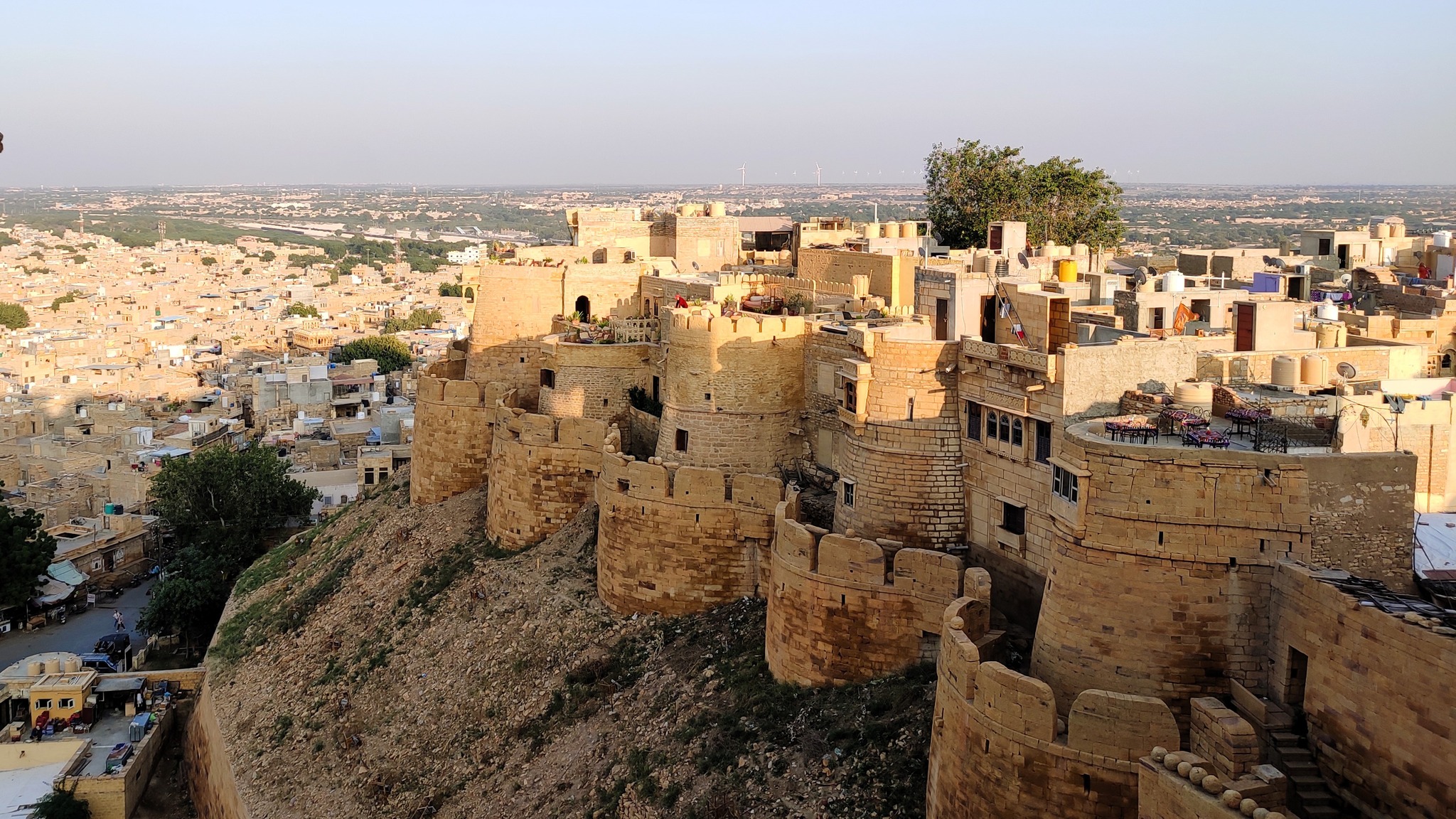
Patwon ki Haveli was constructed over 50 years, starting in 1805 AD commissioned by Guman Chand Patwa, a trader of jewelry and fine brocade. The haveli is typified by latticed balconies carved out of sandstone but seeming as if carved from wood, ornate wall paintings, exquisitely carved pillars, and extensive corridors and chambers. After seeing the haveli, we proceeded to Jaisalmer Fort. At Jaisalmer fort too, we took a guided tour through the main palaces, hearing stories of the past, getting transported to the times when these were inhabited by the royals.

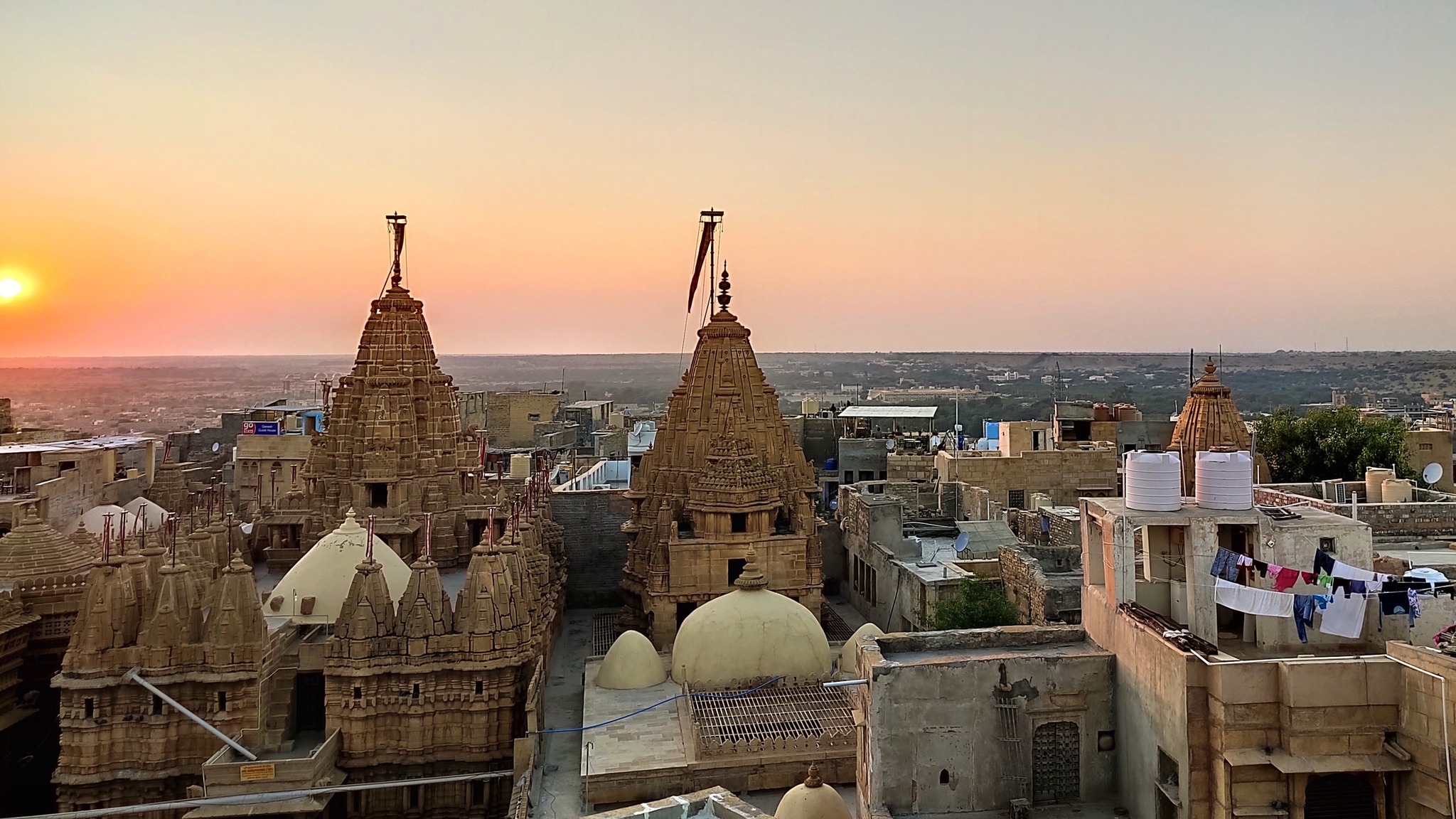
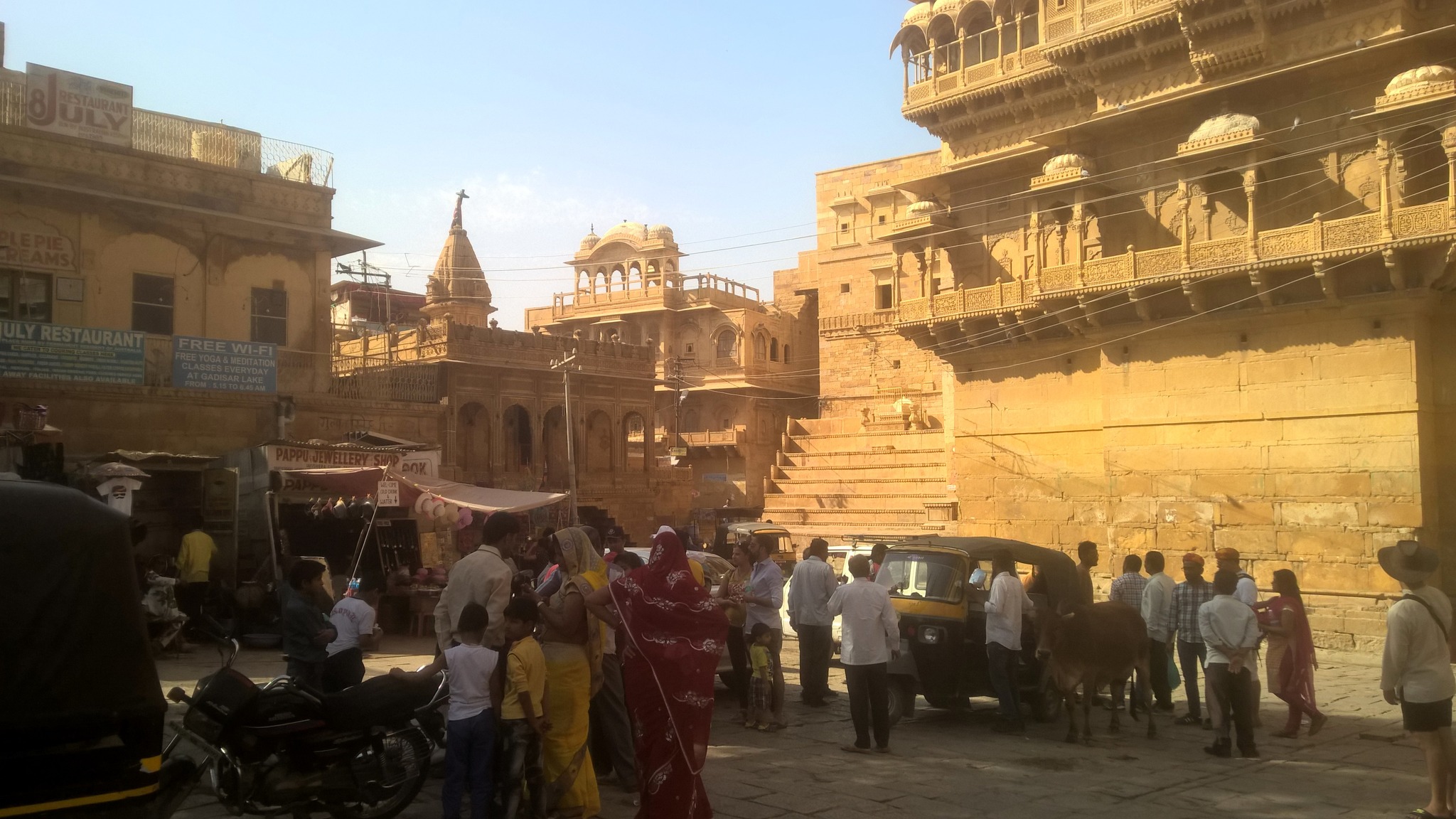
Later, we walked through the streets outside the palace, passing by and entering the street on the left side of the Lakshminathji temple. Just 100 metres in, we came upon the Baa ri Haveli, which we entered out of curiosity and were treated to interesting tidbits of the Rajasthani culture by way of of the artifacts on display, such as sculptures, furniture, toys, handicrafts etc. As we reached the terrace of the haveli, we saw the sun setting in the horizon marked by a long sandy ridge running in the distance outside the city limit, while twin spires of two temples stood in the foreground right in front of us.

Soon after, we had tea and snacks at a roof-top restaurant hugging the fort wall while enjoying views of the city and the barren landscape beyond it. Back in the hotel, we retired to bed after dinner in anticipation of our outstation trip from Jaisalmer the next day.

Day 3: Off to the BorderRanao, Tanot and Longewala

We started lazily next day, checking out of the hotel at around 11 AM and proceeded towards Tanot, stopping at places to get down to admire the desert landscape, and taking pictures of the landscape and of ourselves. By 1 PM, we reached the location that had left such a lasting impression in my mind the last time that it was the primary reason I was so excited about the trip, keen to show it to my family too. Yes, the place was Ranao, and it lived up to its promise and how!

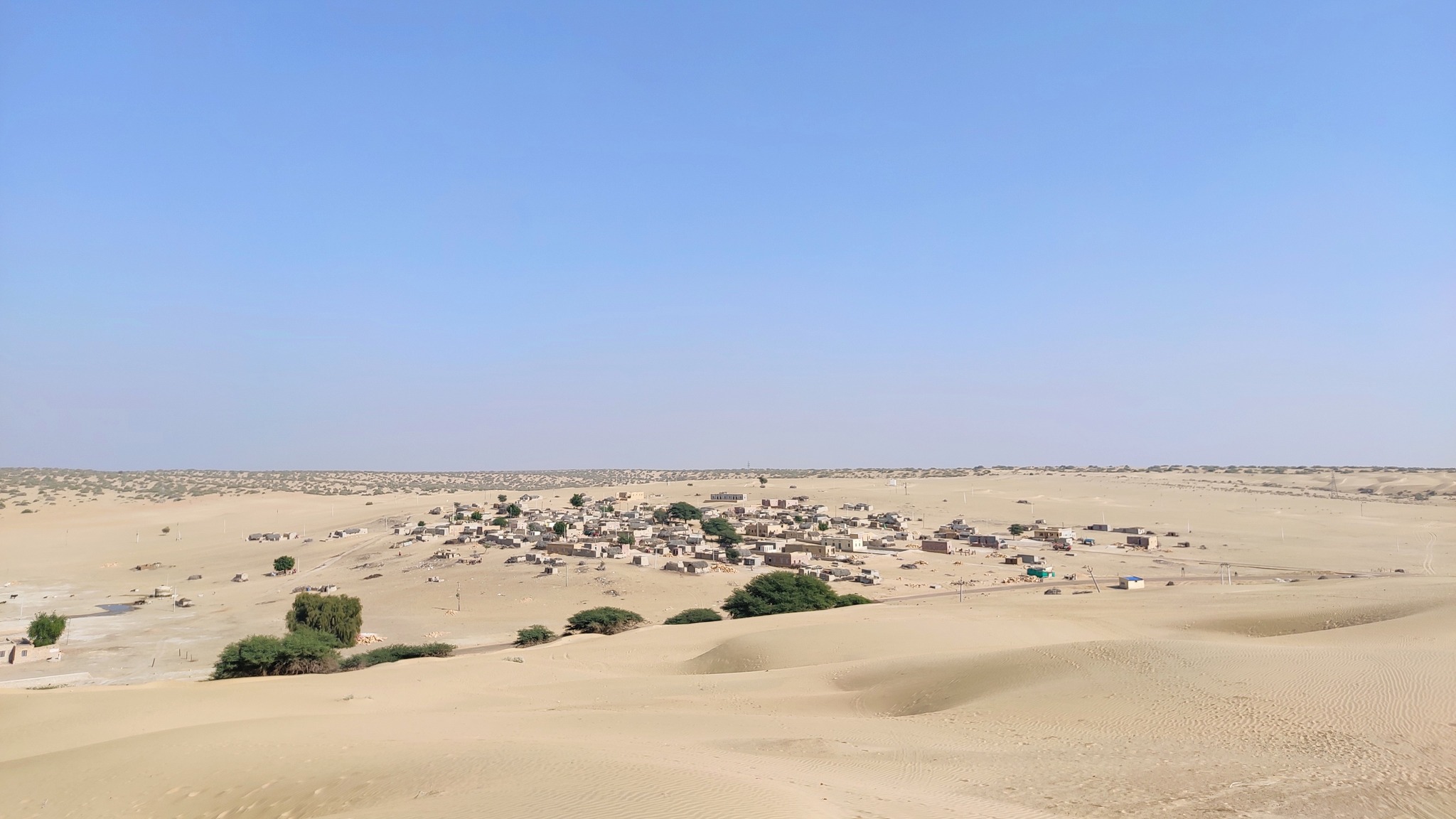
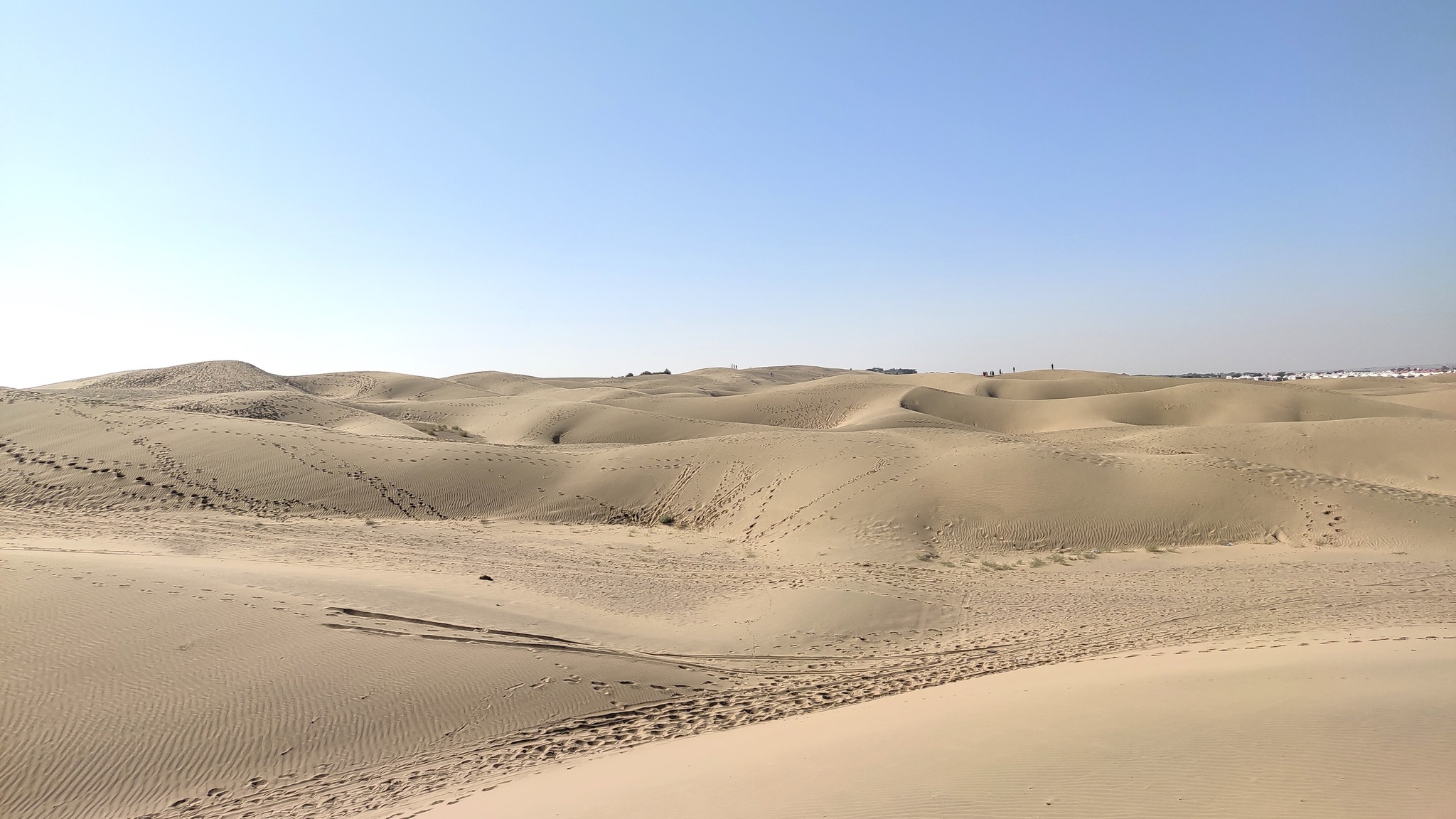
We got down at the decline before the road reached the lowermost point of the depressed stretch reminiscent of a river bed, and ventured into the sand dunes lying on the side of road, taking pictures. As we began to move on, and were almost reaching the bottom of the ‘bed’, we were hailed by a person standing beside a Bolero pick-up, who offered us a paid session of dune-bashing as well as a tour of the vestiges of the Indo-Pak war. We readily agreed, and were amply rewarded with an enriching experience as we wandered through the sands going up and down the dunes. Further, we checked out the numerous bunkers, and sat on the sands partaking of the views of the oceans of sand.

Finally, even though not content, in the interest of time, we left Ranao for Tanot which we reached by 3 PM. There, having a light meal, we proceeded to Longewala moving alongside the Pakistan border, reaching at 4 PM the War Memorial where we could spend just a little over half hour as evening was fast approaching. Thereafter, we headed back in the direction of Jaisalmer, reaching Sam Sand Dunes around 6.30 PM by when darkness had already fallen. We checked in to the Vinayak Desert camp, our stay for the night, where after seeing the folk art programme and a Rajasthani buffet, we went to sleep.

Day 4: Back to Jopdhpur through Osian

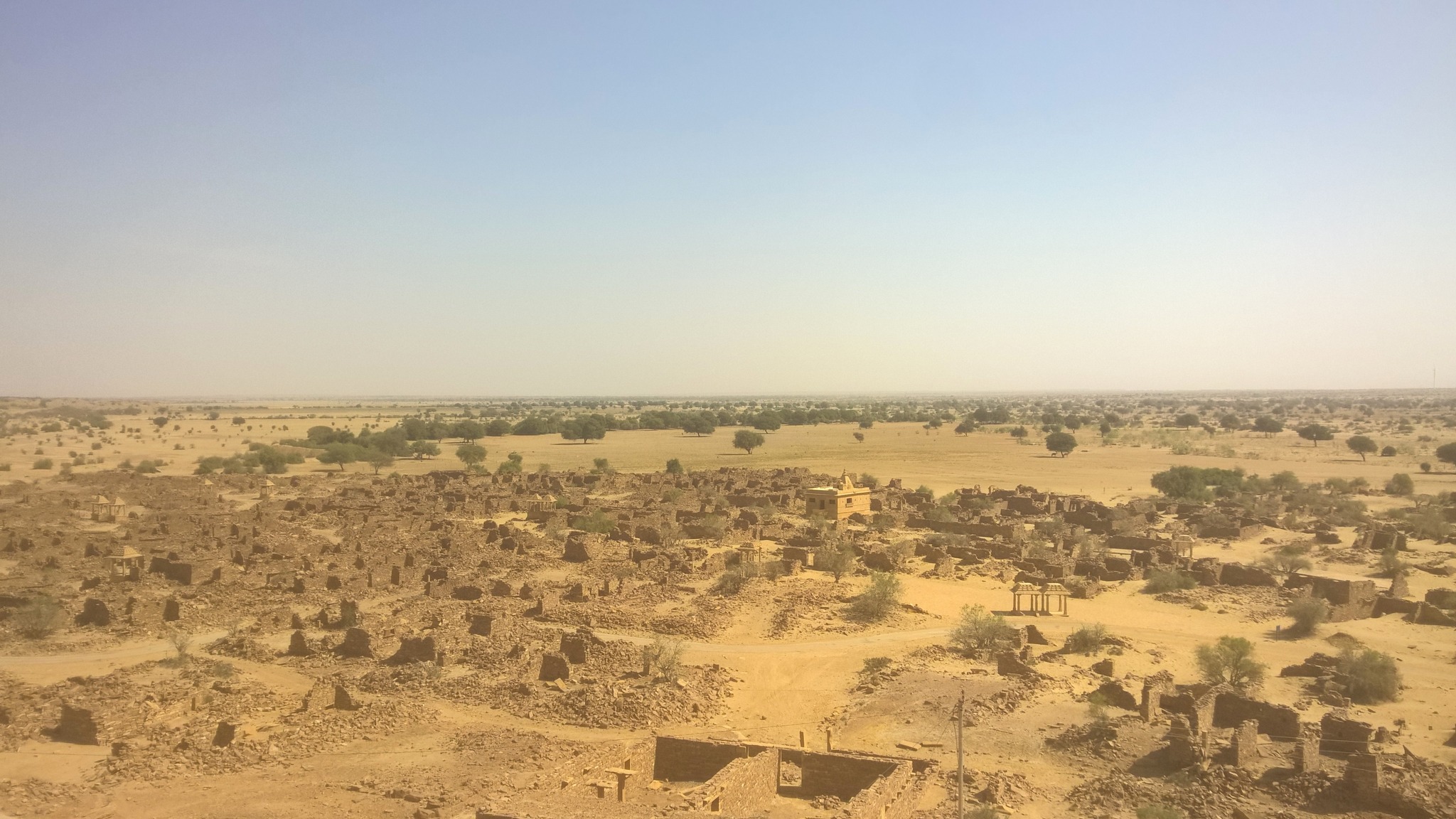
Early next morning, I woke up specifically to see sun rise from behind the sand dunes, barely catching the marvellous sight. A little later, we had breakfast, and then checking out from the camp around 10 AM, proceeded to do some camel-riding near the sand dunes. After that, we were headed to the last site of our Jaisalmer leg, the ruins of Kuldhara, which was as fascinating to me this time as it was the previous two times I was here. I was glad to see the family was enamoured too.

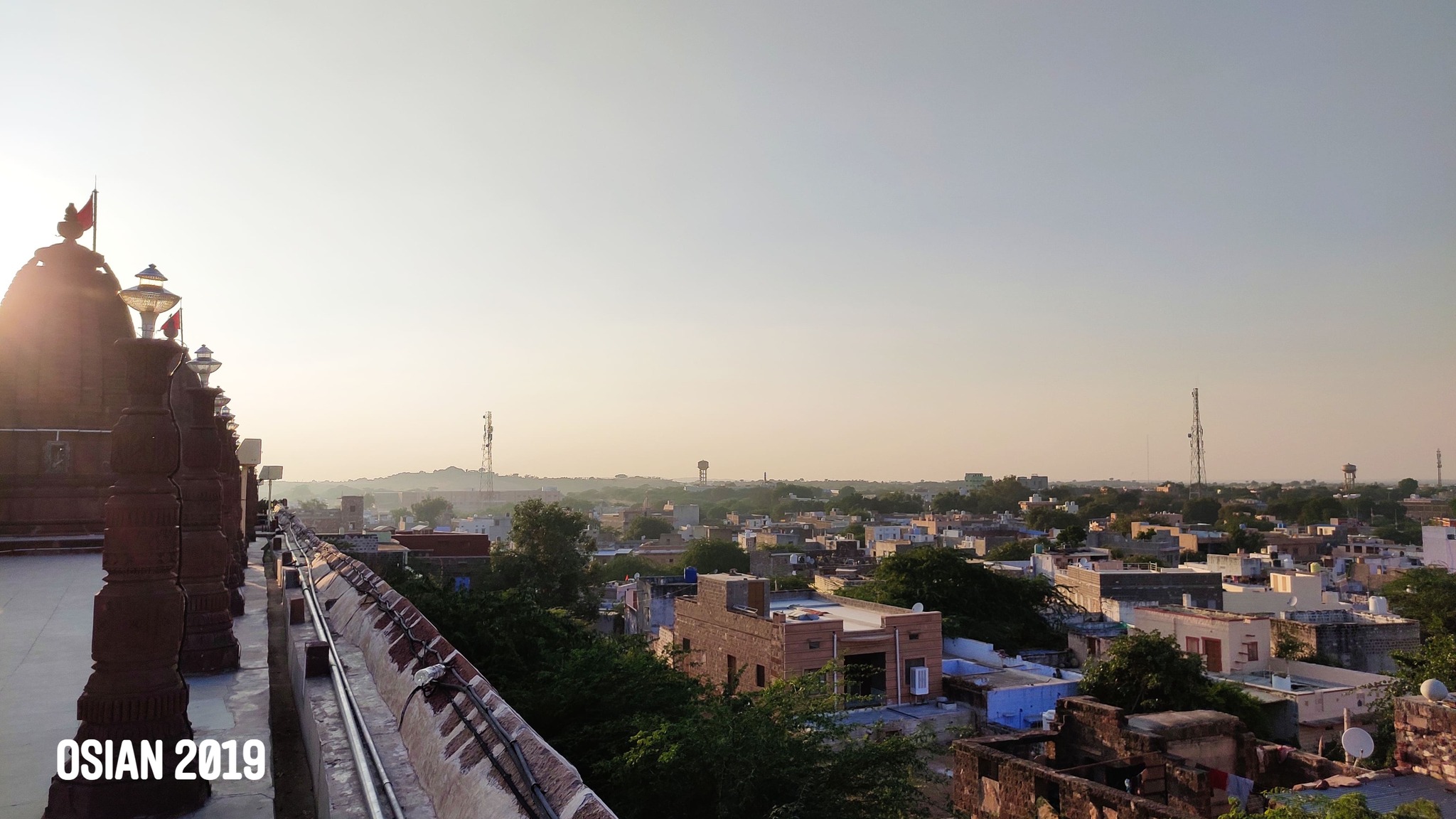
By 12, we were back again on the road headed back to Jodhpur, through a different route than the one we took for the outward leg from Jodhpur. Around 2.30 PM, we stopped at Phalodi to have lunch, and by 4.30 PM, we were at Osian. Osian, dubbed an oasis in the Thar, was a major religious centre of the Gurjara-Pratihara period dating from the 5th to 12th century AD, and had been a trading centre from well before that, at least from the Gupta period onwards. Today, the ruins of Jain and Hindu temples from that period stand witness to its glorious past. The Oswal community is said to have originated from Osian.

At Osian, we visited the Sachiya Mata temple – Sachiya Mata being the town deity, who as per Jain legend is the form of Chamunda that was turned vegeterian by Acharya Ratnaprabhasuri in 457 BCE. As a result, Sachiya Mata is worshipped also by Jains, and the temple itself has many Jain features. From the temple which is situated on a hillock affords a panoramic view of the landscape beyond the town, including the sand dunes located on the outskirts of the town. Apart from the Sachiya Mata temple, I managed to get a glimpse of a few other temples, including the ruins of the Harihara temple, Vishnu temple and Sun temple that were located on or in the vicinity of the main road.

By 5.30 PM, we had to leave Osian as it was getting dark and we had a train to catch from Jodhpur. We caught the 8.30 PM Mandore Express from Jodhpur and reached Gurgaon the next morning, still delirious from the memorable family expedition into the Thar desert.

Diwali in Mewar: Udaipur, Kumbhalgarh and Chittorgarh

Inspired by the experience of spending Diwali in the hills the previous year, I decided to spend the Diwali this year too at an interesting place. The place was not very hard to choose, as I had been planning to take my parents to Udaipur soon, and thought it would be wonderful to see Diwali over Lake Pichola.

Accordingly, a fortnight before Diwali, seeing a great deal for the day, for which most hotels were already booked or overpriced, I booked a room in Hotel Thamla Haveli that stands right on the bank of Lake Pichola exactly opposite the Gangaur Ghat. On the other hand, not getting tickets on the Chetak Express, the only train connecting Gurgaon and Udaipur, I improvised and booked tickets on a 2 PM train instead from Jaipur, which we would reach by bus.

Day 1: Off to Udaipur

On the day preceding Diwali, we reached our designated pick-up point at Rajiv Chowk around 6 AM, only to learn that we had left behind the food Mother had painstakingly cooked and packed for the journey. So, I rushed back home, which thankfully was only one-and-a-half kilometers from our bus-stop, to pick up the food, and was back in time to catch the bus.

Relishing the views of the Aravallis and the countryside on the way, we reached Jaipur at 12, catching the train to Udaipur as planned. This being a day train, we had the opportunity to see the landscape the railway line passed through, including the topography of areas around Ajmer, where I felt a strong pang of desire inside me to visit Ajmer sometime soon. We reached Udaipur around 9 PM and soon checked-in to a hotel near the railway station.

Day 2: Diwali in the City of Lakes

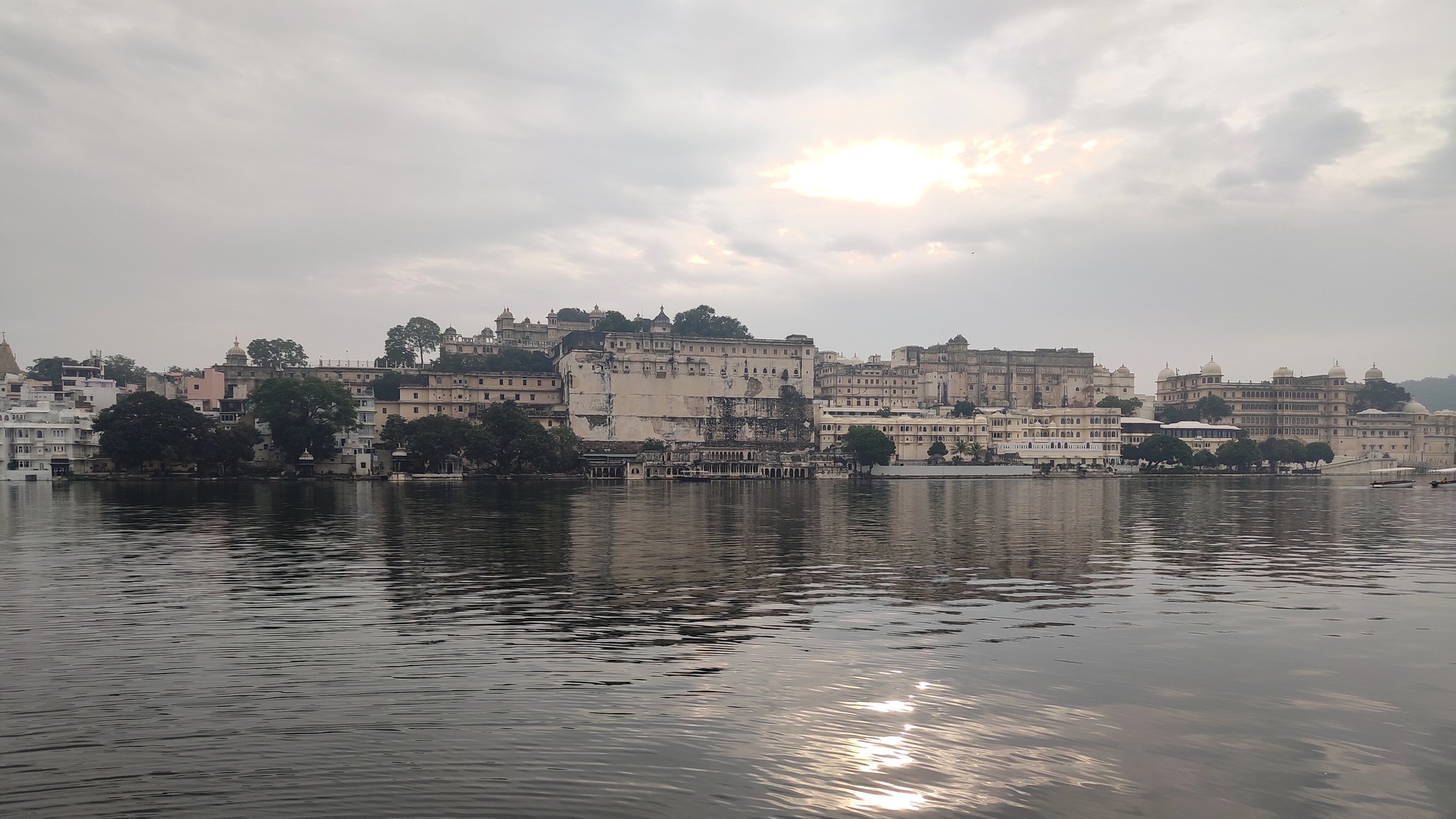
The next morning, i.e. on Diwali day, after breakfast, we checked out of the hotel and moved over to Thamla Haveli, checking-in around 11.30 AM. We were quite pleased to know that the window of our room opened to, and in fact, hung right over the Pichola lake – if you fell from the window, you drop right into the water! Then, we checked out Ambrai Ghat, which was only a 200 metre walk from our hotel and gave us an exhilarating view of the City Palace sitting across the Pichola Lake.

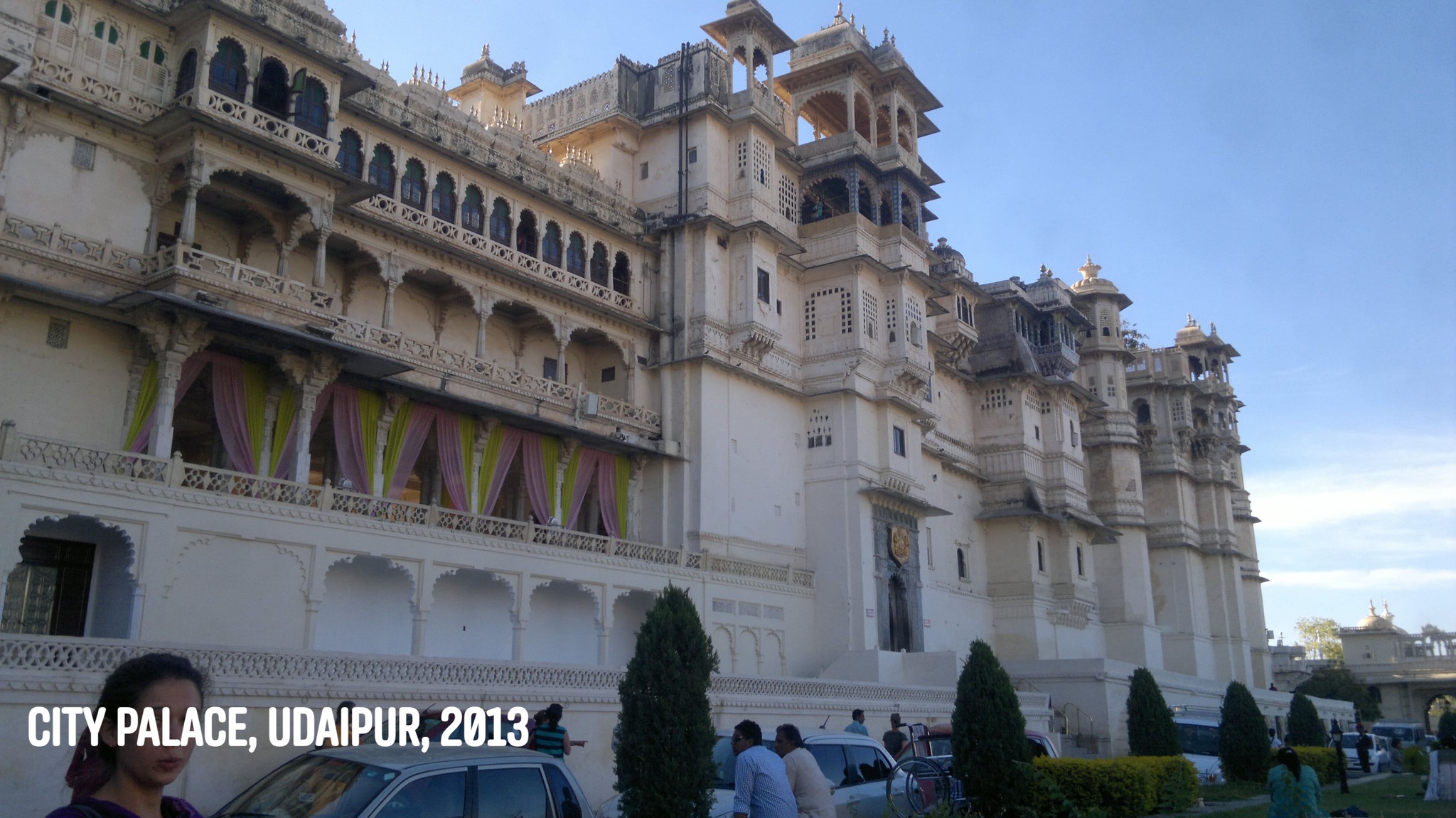
After that, we hired an autorickshaw to show us around Udaipur the whole day, and first proceeded to Sajjangarh Palace, a monsoon palace that stands on the top of a hill, overlooking the city and the Fatehsagar and Pichola lakes. From the terrace of the palace, we also got breathtaking views of the Aravallis. Descending from Sajjangarh Palace, we had lunch near Saheliyon ki Bari, an early 18th century garden, which we visited next. Next up was the City Palace, which I was seeing for the fourth time in as many visits. We ended the day by visiting the Jagadish temple, which stands right on the road that the Palace tour exits to.

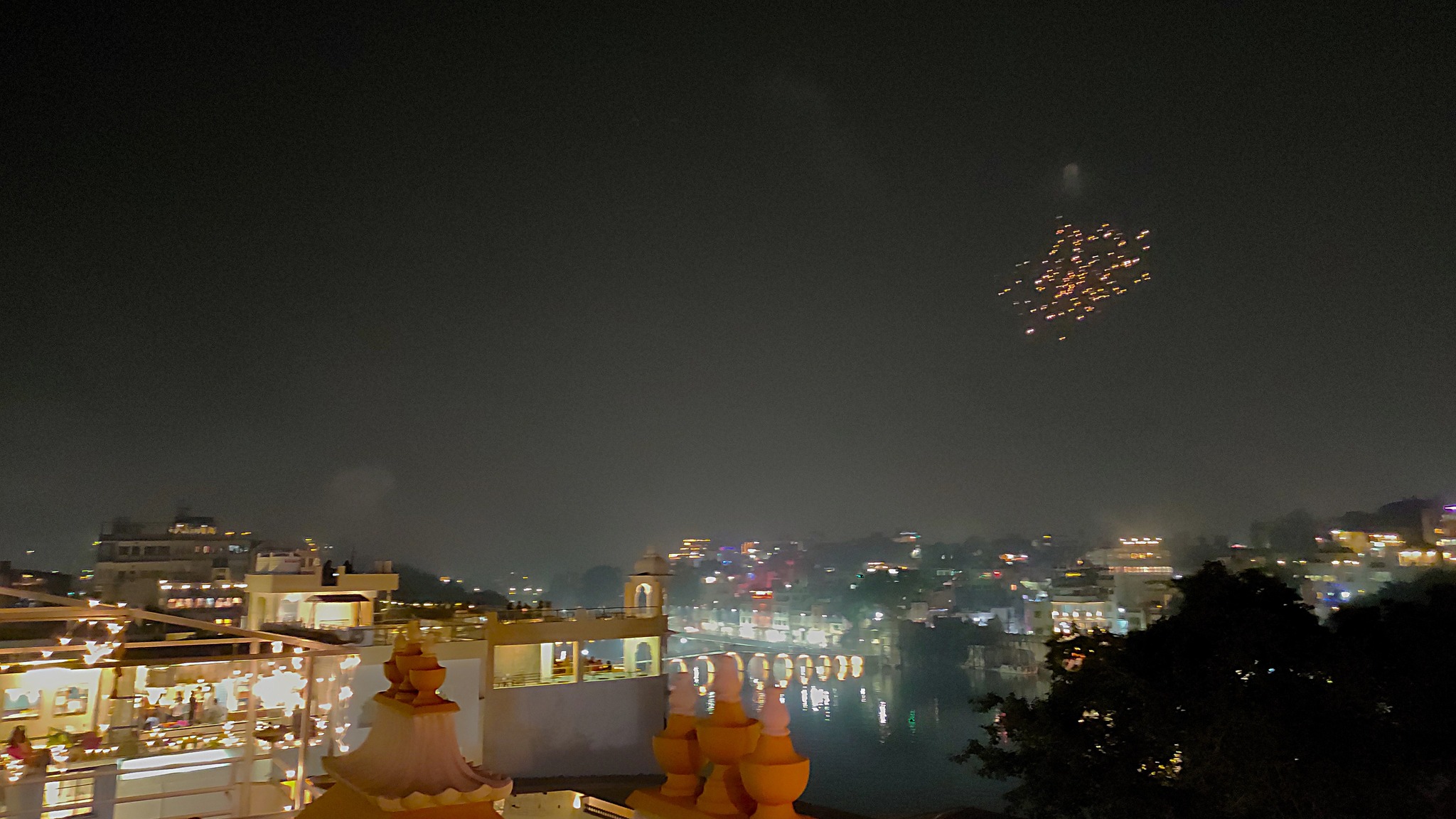
Back at the haveli, from our window we were treated to the electrifying sights that we had hoped to see – the fireworks going over the skyline across the lake, with their reflections sparkling over the lake’s surface. As we climbed to the rooftop restaurant for dinner, we were rewarded with even clearer views of the Diwali celebrations. We finally went to sleep, as Diwali celebrations drew to a close.

Day 3: An Excursion to Kumbhalgarh

The next morning at 7.30 AM, we walked to the Ambrai Ghat again and were mesmerized by the views of the city palace bathing in the morning sun. Soon after, I booked an outstation Ola cab after some struggle, to take us to Kumbhalgarh. Starting at 11 AM, we drove for about two hours, mostly through the Aravallis, to reach Kumbhalgarh fort which was taking forever to appear. However, given the scenic beauty on the road, the drive was not that boring after all.

This being our first ever visit to Kumbhalgarh, we took the guided tour savouring every nook and cranny of the palaces and every bit of information dished out by the guide. From the rooftop of the Badal Mahal, we beheld the most magnificent views of the Aravallis and the Marwar plains beyond. Before we realized it, we had already spent two hours.

Descending from the palace, after a quick light meal at one of the shanties located inside the fort premises, we checked out the Vedi temple, and other nearby temples, and capped off the fort visit with a walk along the famed fortress wall of Kumbhalgarh, from where one gets a clear view of the palaces sitting on the hilltop.

By now, it was already 4 PM, leaving us with little for the next stop on our itinerary, Ranakpur. In any case, any possibility of seeing Ranakpur was nipped in the bud shortly, when our cab driver refused point-blank to drive through the hills to the famous Jain temple, on account of the impending darkness, compounded by the fact that the temple closes by 5 PM anyway.

So, we had to leave Ranakpur for another day, another trip! Returning to Udaipur by 7 PM, we checked in to Broadway Hotel near Saheliyon ki Bari, and retired for the day after dinner.

Day 4: Exploring Nearabouts: Eklingji and Haldighati

The next day began with yet another struggle to obtain a confirmed booking for an Ola outstation cab, which I managed to get after attempting for about an hour. Given the dire circumstances, we had to leave out Nathdwara temple from the itinerary, opting instead to go to Eklingji. We finally managed to hit the road at around 10 AM, heading to and reaching Eklingji just in time for the darshan starting at 10.30 AM.

From the Eklingji temple, we proceeded to Sahasra Bahu temples at Nagda, a couple of kilometers away, which comprises a pair of 10th century Vishnu temples. The site seemed to be a popular spot for pre-wedding shoots. Thereon, we drove on to Haldighati Musuem, where we went through memorabilia related to Maharana Pratap, had our lunch, and proceeded to the Haldighati Pass. Turning back, we got down at Udaipur railway station , where we caught the 6:15 PM train to Chittaurgarh, reaching the latter after two hours.

Day 5: On to Chittorgarh

Next morning, I was back again at the place that I love most in Rajasthan – Chittorgarh, for the third time, but it still felt like I was coming here for the first time! We booked an auto-rickshaw whose driver doubled up as our guide, and took us around the fort area which in itself feels like a self-contained region, with a populated area on one side, and the remaining area covered with forests, including a deer sanctuary, and sprinkled with palaces, temples, towers and water tanks.

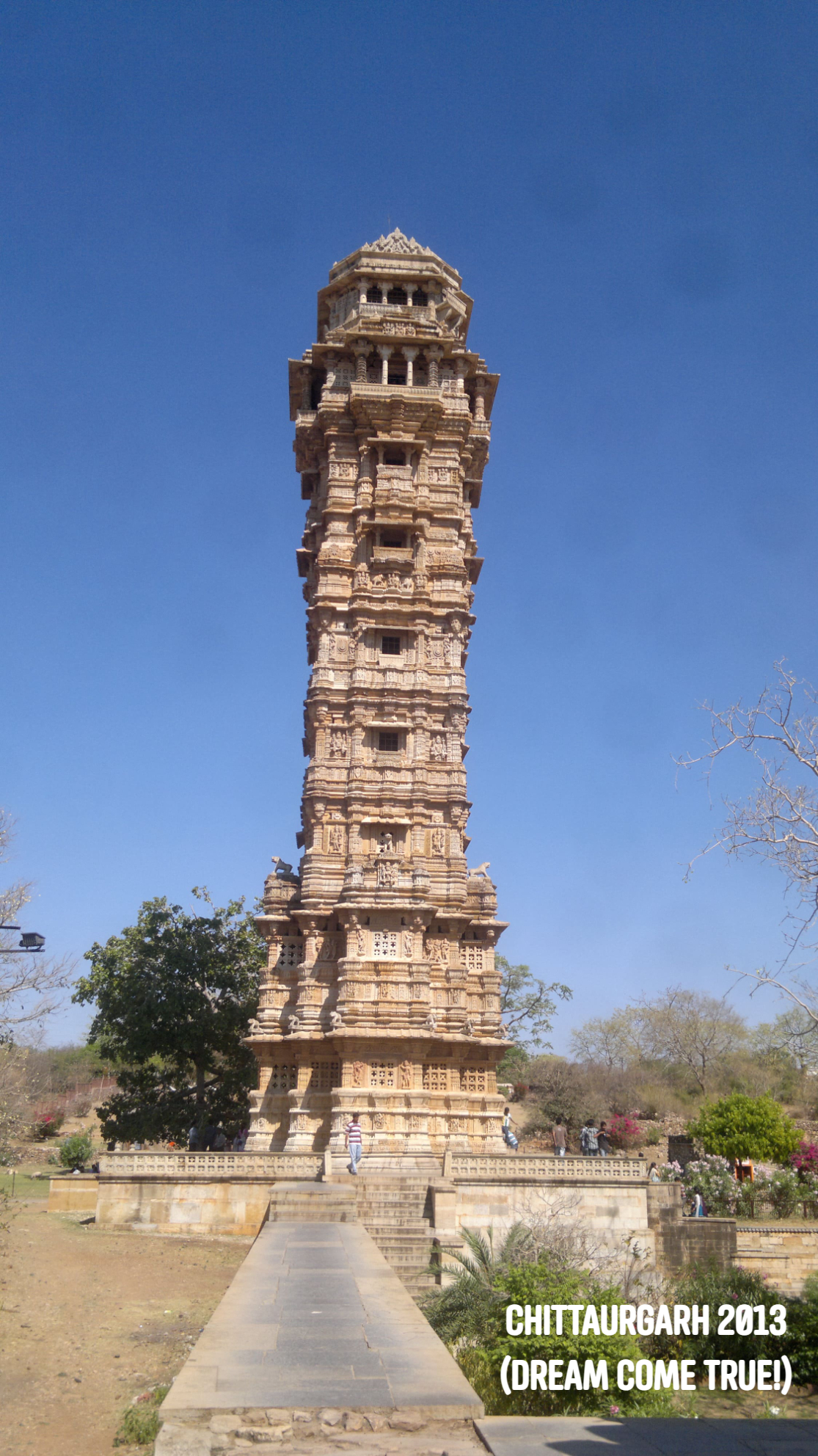
We started off with the Kubhashyam and Meera temples, then rode over to Vijaya Stambh, then saw the Jauhar kund and Samadhisvara temple. For there, we moved to the to Kalika Mata temple, and then Rani Padmini Palace. Then taking a wide curve, we switched to the other side of the hill, where we saw the fort’s main entrance gate, Suraj Pol, while also being treated to a breath-taking view of sparsely populated valley below. We then went over to a handicrafts shop, where we bought some scented silk fabric items.

By 1 PM, having completed one full round around the periphery of the fort, it was time leave, with a heavy heart, as far as I was concerned. Nevertheless, down in the city, we had a Rajasthani meal, and were in the railway station at 2.30 PM.

With part of our return train journey happening in daylight, we were again able to enjoy the interesting landscape, especially as we neared Bundi, where the railway line descended to the barren escarpment below. Then entering a tunnel, the train emerged out to amble along the edge of a reservoir on the other side of which ran the Aravallis. As we reached Kota, night had fallen, and when we opened our eyes early next morning, we were already approaching Gurgaon.

Hopscotch through Hadauti: Kota, Bundi and Jhalawar

In end-August, we planned a weekend excursion to the erstwhile Hadauti region, centred around present-day Kota. Taking the 3.35 PM Garib Rath from Delhi, we reached Kota by 8 PM, and promptly checked-in to a hotel.

The next day, we booked an outstation Ola taxi, and headed off to first see the Kota Garh Palace standing on the edge of a canyon on the Chambal river. With origins in the 13th century, the fortified palace served as the residence of the Raos and Maharaos, the rulers of the kingdom of Kota. The ground floor is converted into a musuem, while many of the palaces are open to the public – from one of the palaces, the Kota Barrage and Kota river are visible.

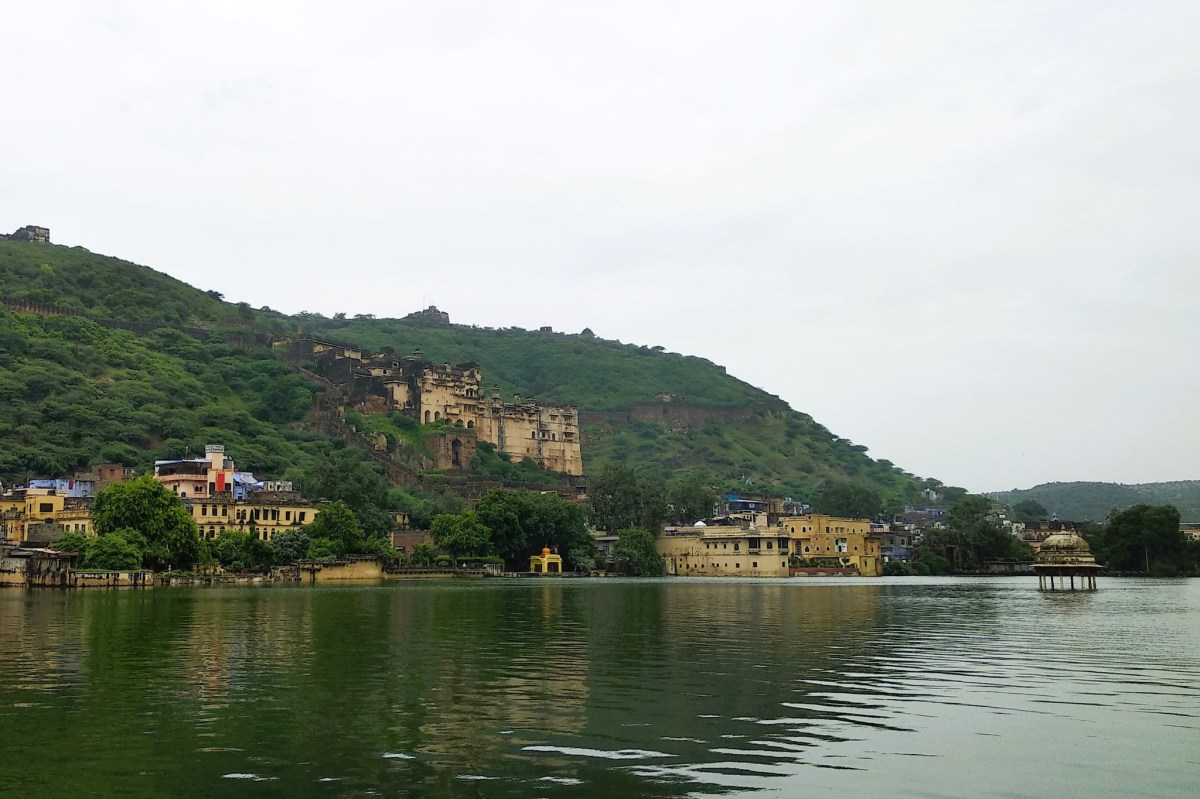
A little later, crossing the mighty Chambal river, and riding for some time, we passed through a tunnel in the Aravallis, and then climbed up a pass in the hills, before we saw a most fascinating sight of a yellow-coloured multi-storeyed structure with balconies, windows and domes etched at a height against the hillside, separated from the road by a large pond with a cenotaph in the centre.

Winding around the pond, we entered the narrow lane of the village located at the foothill, and then rode up a steep incline to reach the large front gate of the Bundi Garh Palace. Soon, we were inside the precincts of the fortified palace, climbing up the winding, steep stony path, admiring the tall walls of the palace hanging on the cliff. Then, we encountered a final tall arched gate that led us into the Garh Palace’s courtyard.

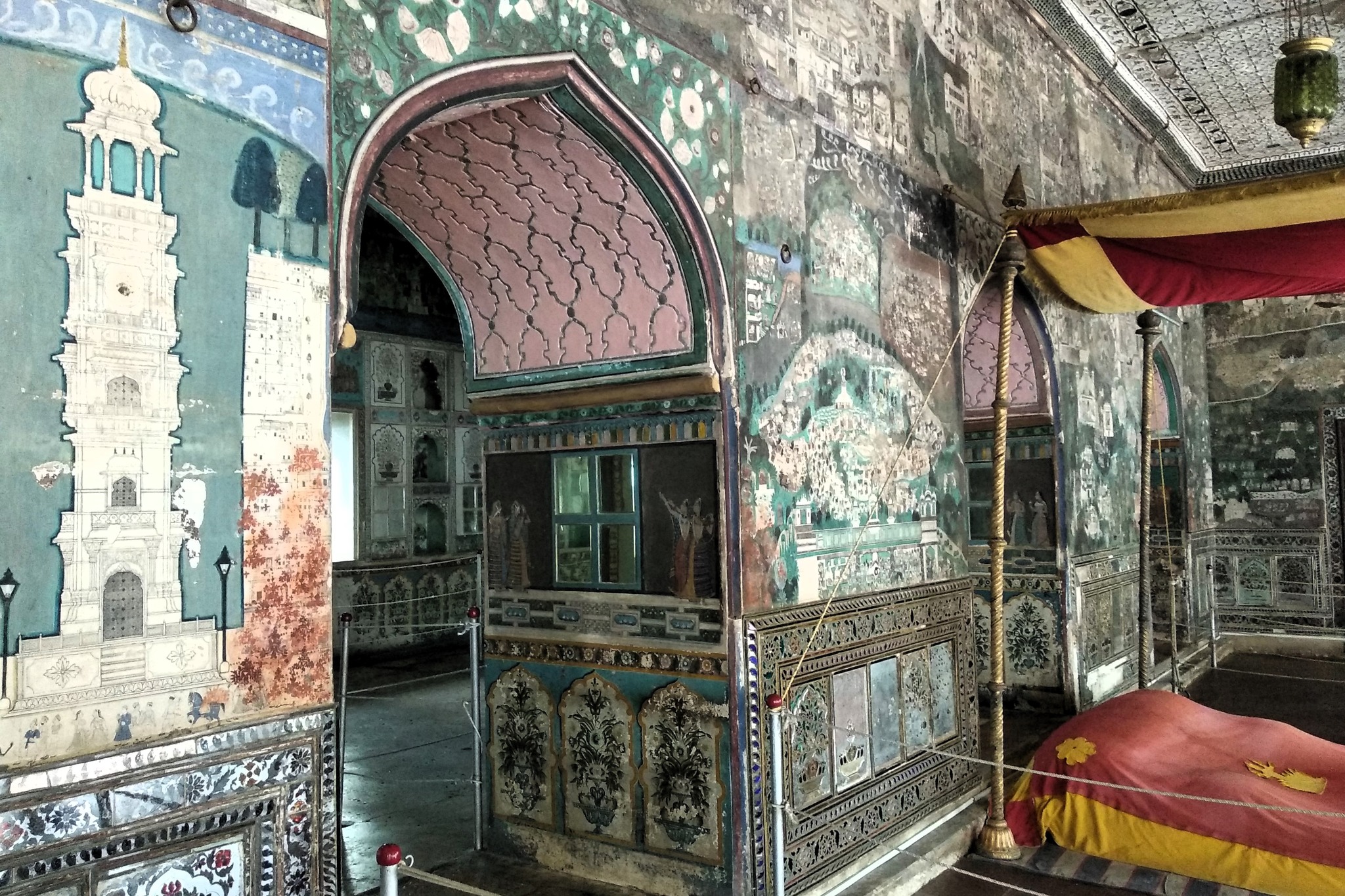
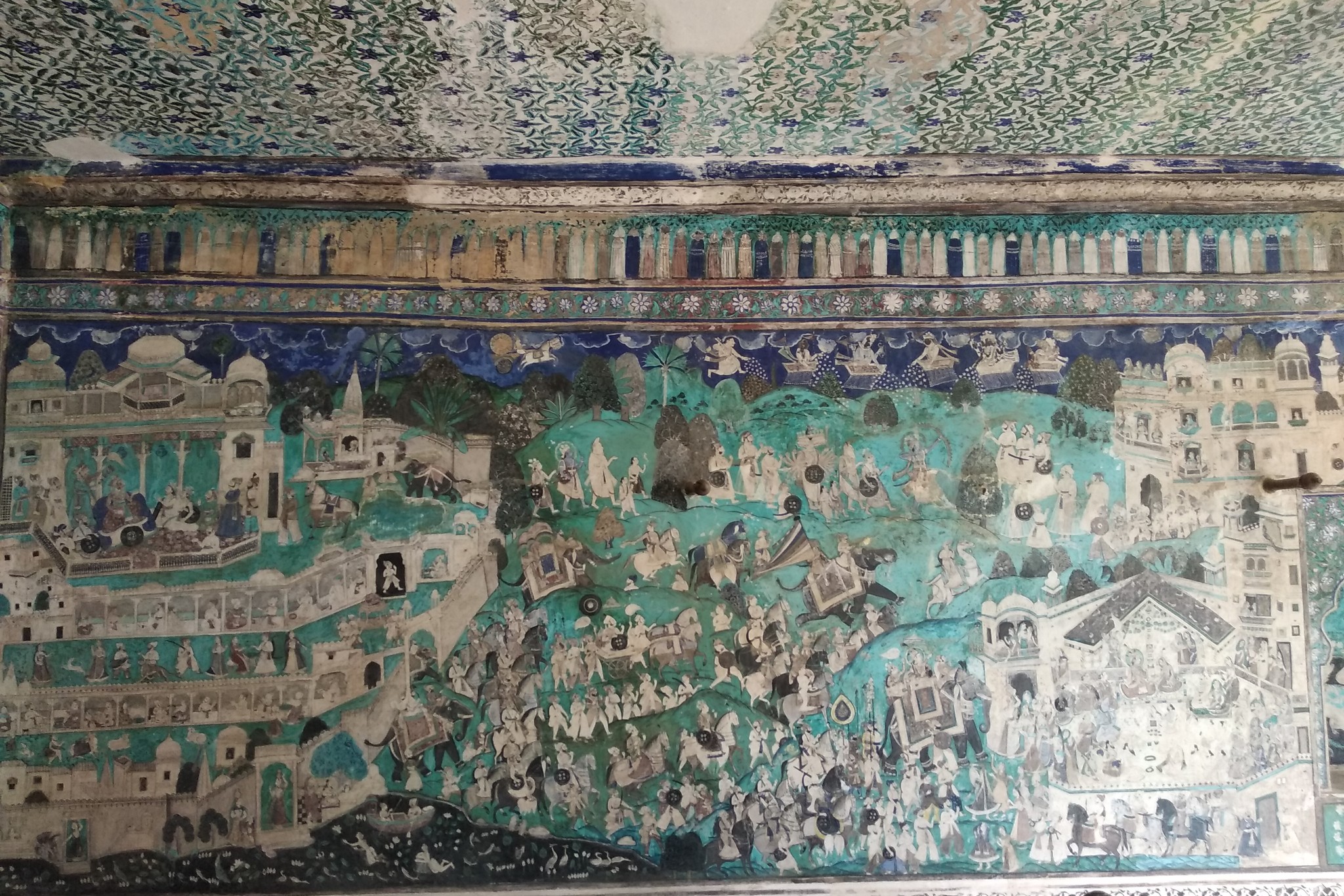
Inside the Garh Palace, we explored multiple storeys of the palace, climbing up the labyrinthine stairs, walked through the many halls and rooms, and reached the roof of the Badal Mahal which owing to it being at one of the highest points of the palace, afforded a panoramic view of the village and the pond nestled in the hills. We then walked to an adjacent structure, called Chitrasala, which houses numerous murals and frescoes.

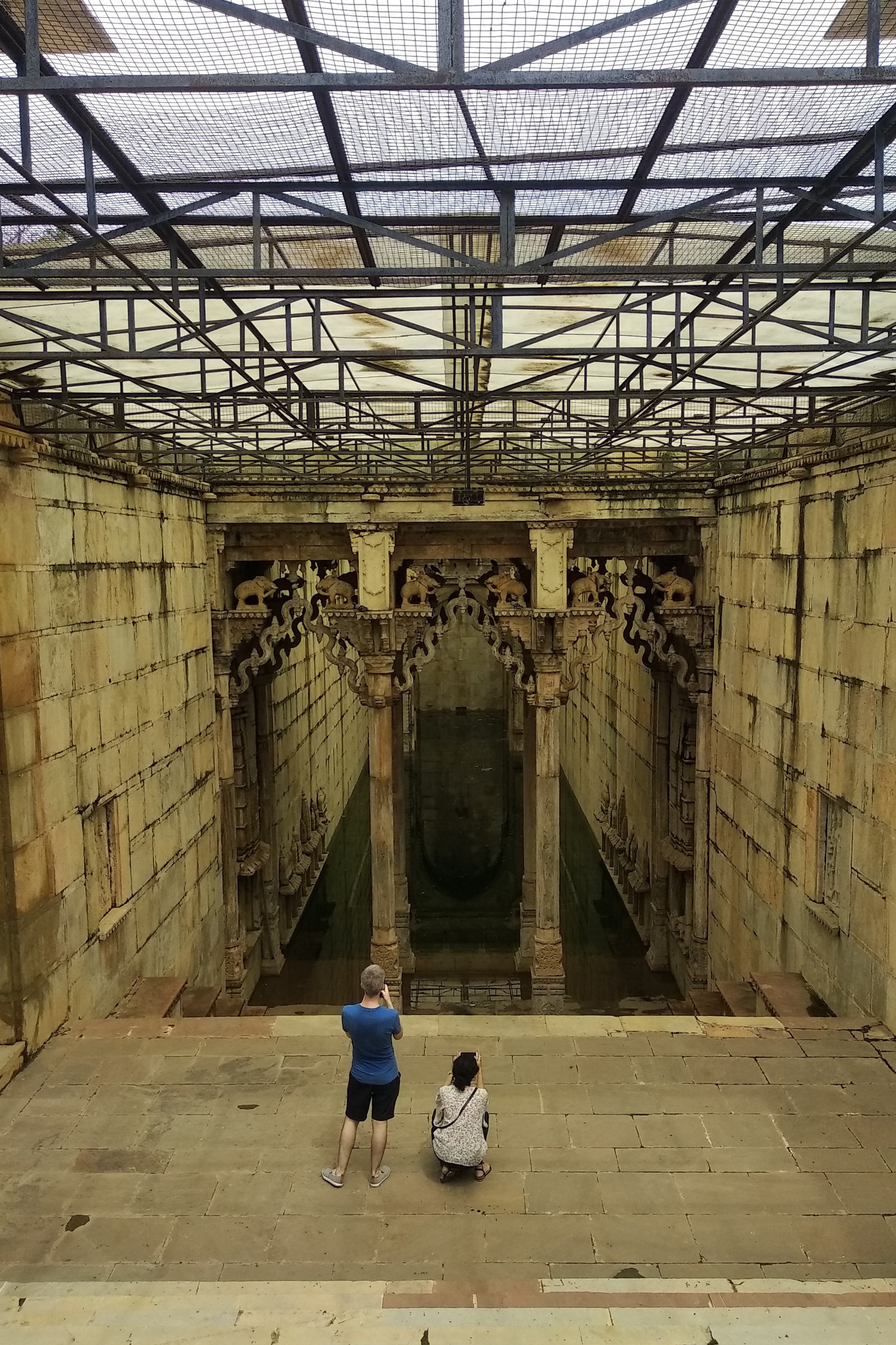
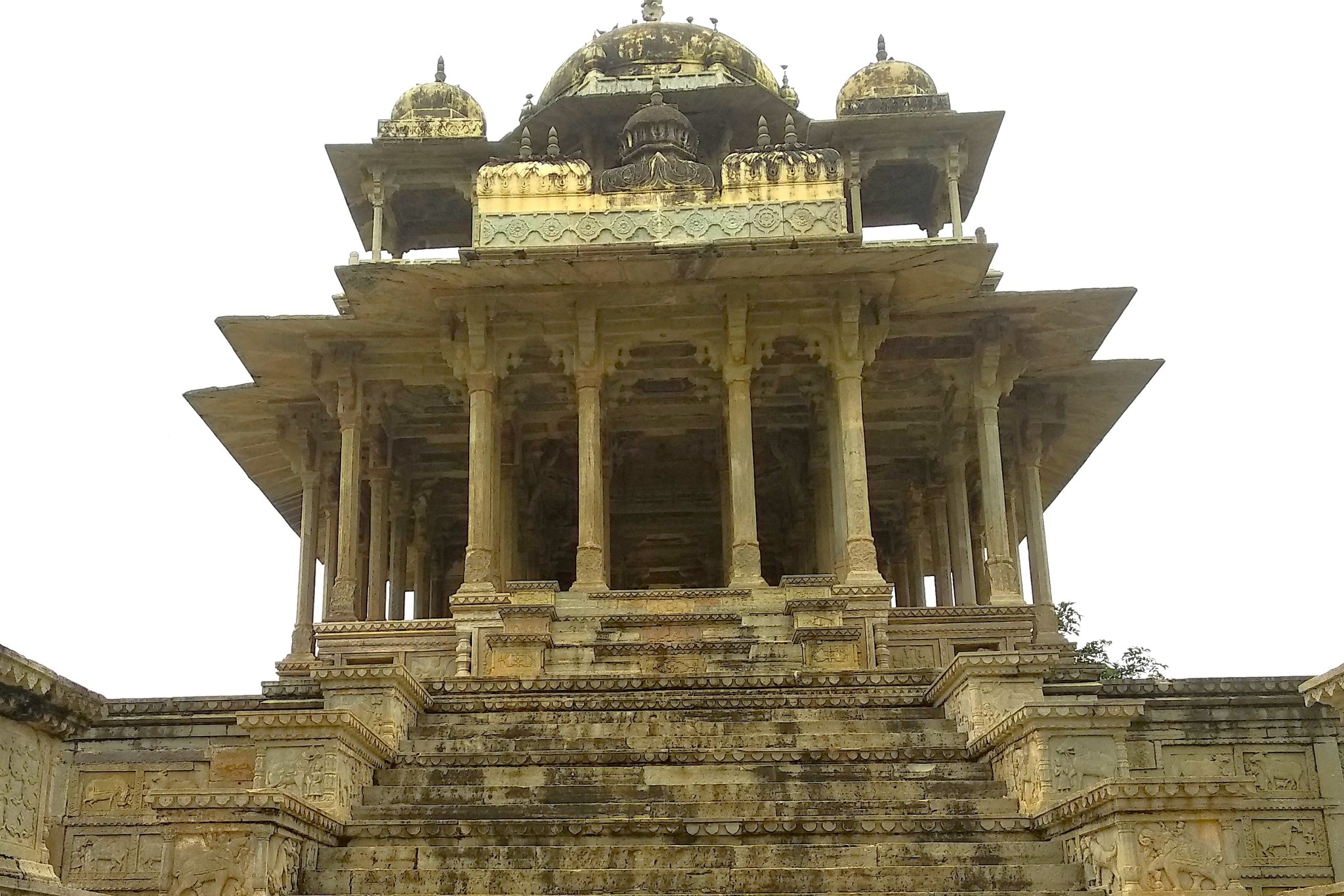
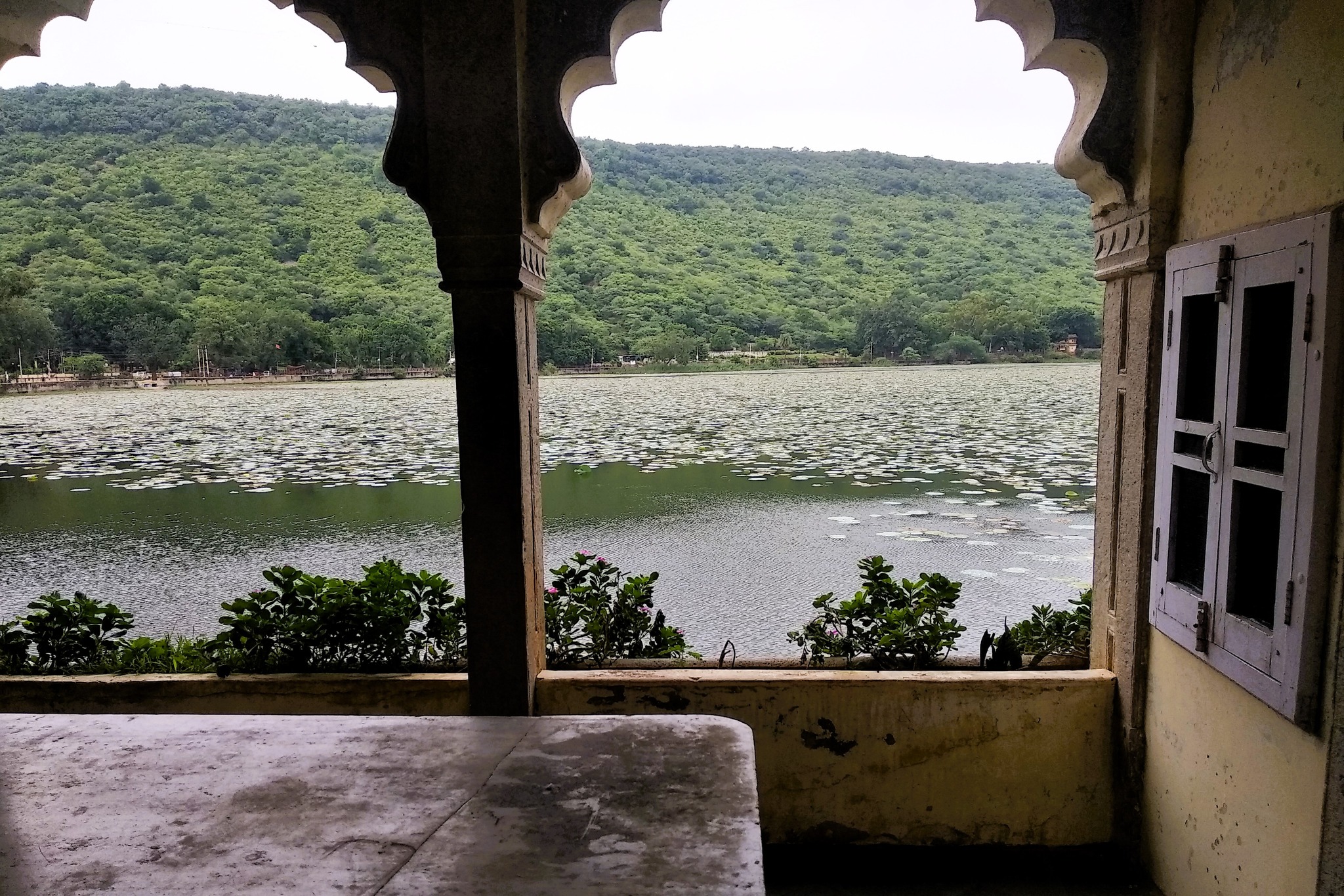
Following this, we made our way through the narrow village lanes to the more urban portion of the town, where we saw the Raniji ki Baori, a 17th century covered stepwell, that is 150 feet deep, and is fairly well-maintained and filled with water even now. Then, we proceeded to the Nawal Sagar lake, located on the outskirts, on the banks of which Rudyard Kipling spent some time in a modest but attractive bungalow. Afterwards, we saw the Chaurasi Khambon ki Chhatri or ’84-Pillared Cenotaph’, another 17th structure with a shivling at the centre of the space enclosed by the pillars.

The next day, we woke up to rain pattering on the parapet of our window. Still, in the light rain which was for the most part a drizzle, we proceeded to Jhalawar, hurtling across the Kota plateau, and then winding across the Mukundra Hills, in pursuit of Gagron fort. From Jhalawar town, we turned northwards passing through the countryside until we could see the fort in the distance.

Then we rolled down a slope, and came face-to-face with the Ahu river, overflowing due to the rains, completely submerging the low bridge that connects the side we were on to the hillock that the fort stands on. With no signs of the rain and river water abating, we turned back, disappointed. It being only noon yet, we figured we could somewhat compensate for the lost opportunity, by exploring some other nearby place – that place turned out to be Jhalrapatan.

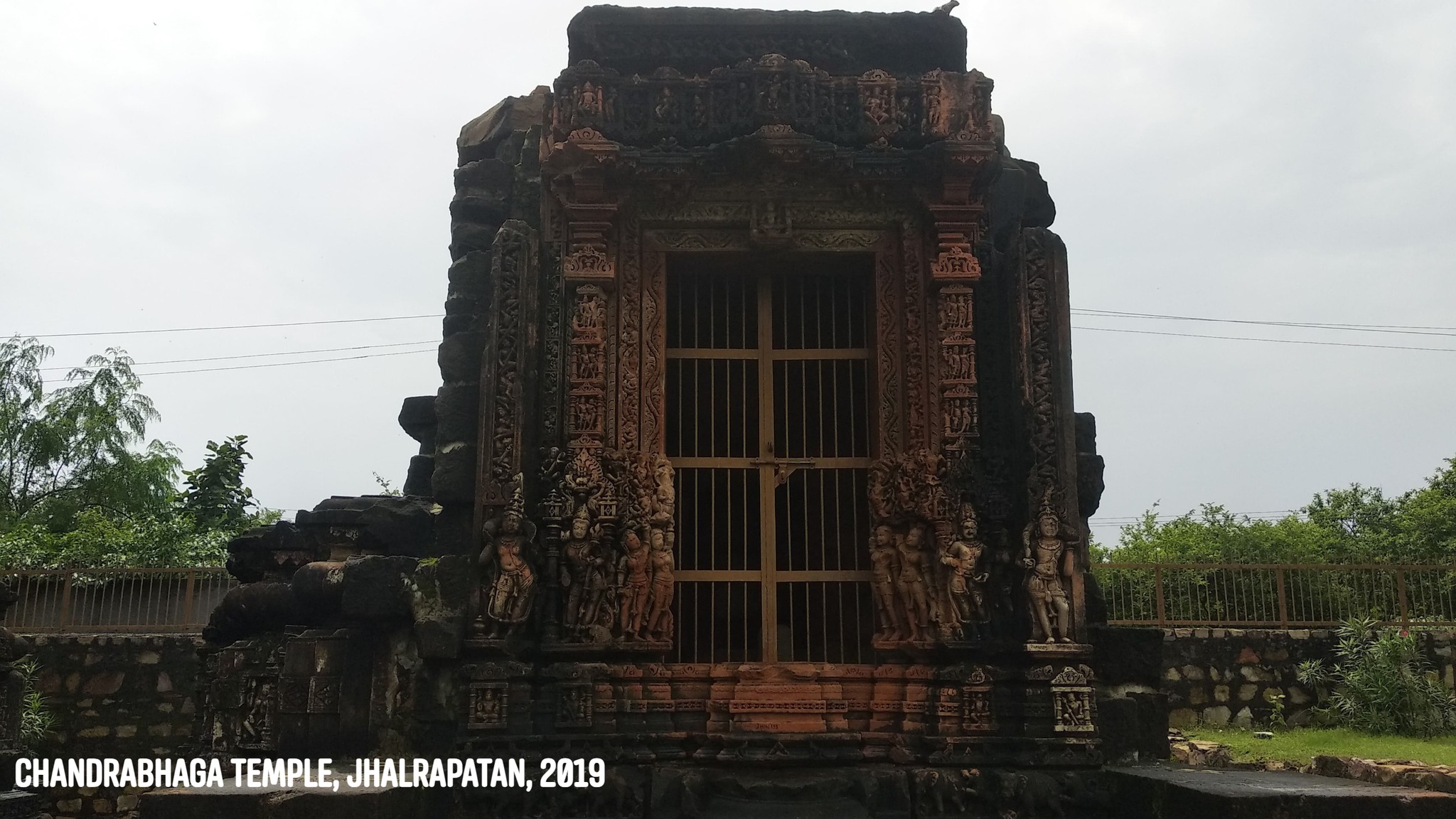
Within half-an-hour we were in Chandrabhaga and Chandramoleshwar temple complex with structures dating back to the 7th century, on the banks of the Chandrabhaga river that runs around Jahlrapatan town, and is also the site for the Chandrabhaga cattle fair held in November every year. Next, we saw the 10th century Surya (Sun) temple that is located in the middle of the town, and headed back to Kota.

We then took an overnight train to Delhi. If not for the rains preventing us from seeing the Gagron fort, the trip as a whole was satisfying, giving us a taste of the heritage and topography of the Hadauti region, making us want to come back again.

Tomfoolery in the Thar: Jaisalmer, Ranao and Bikaner

Prelude

With my B-school admission fast approaching, and my mobility improving 2.5 months into the recovery after my accident in Khajuraho, I decided to make one last big trip before I left Delhi for the year-long intensive course. So, my friend and colleague Amit and I took off to Jaisalmer by Ranikhet Express, which started around 10 AM from Delhi after a 6 hour delay. That did not put a dent to our itinerary though, since we reached Jaisalmer early the following morning instead of reaching the same night.

After a quick check-in at a motel just below the Jaisalmer fort and freshening up, we set out to have breakfast at a roof-top restaurant. And then, undecided on what to do next, we loitered around, first in search of a hostel, where Amit wanted to put up, while I dissuaded him from the same telling him that we were better off spending that money on an outstation trip, and camping out in the desert. Anyway, we still went to check out a Zostel property, ran into an old acquaintance of Amit and again got back to bickering about the next steps – the bone of contention being, whether we should first see Jaisalmer and then go outstation or do it vice versa.

Part 1: Off to the Border

The bickering was only the beginning of our shenanigans. Continuing to dawdle and finally agreeing upon a plan to go outstation first , we reached a lassi shop near the road leading into the Jaisalmer fort, where we were told we could get our lassis spiked with bhaang, an offer that my wise friend took up on. It tasted about the same, my friend reported while downing the drink, even as I found a cab driver and started negotiating with him for a two-day trip. Shortly, we were on the road leading to Tanot, on the border with Pakistan.

As soon as we left Jaisalmer town behind, we were looking at swathes of yellow with windmills standing tall in the distance. As we pushed deeper into the Thar desert, Amit kept tell me about how useless the lassi was, as it had no effect on him. Meanwhile, the density of vegetation kept decreasing and the distance between the occasional hamlet gradually increased.

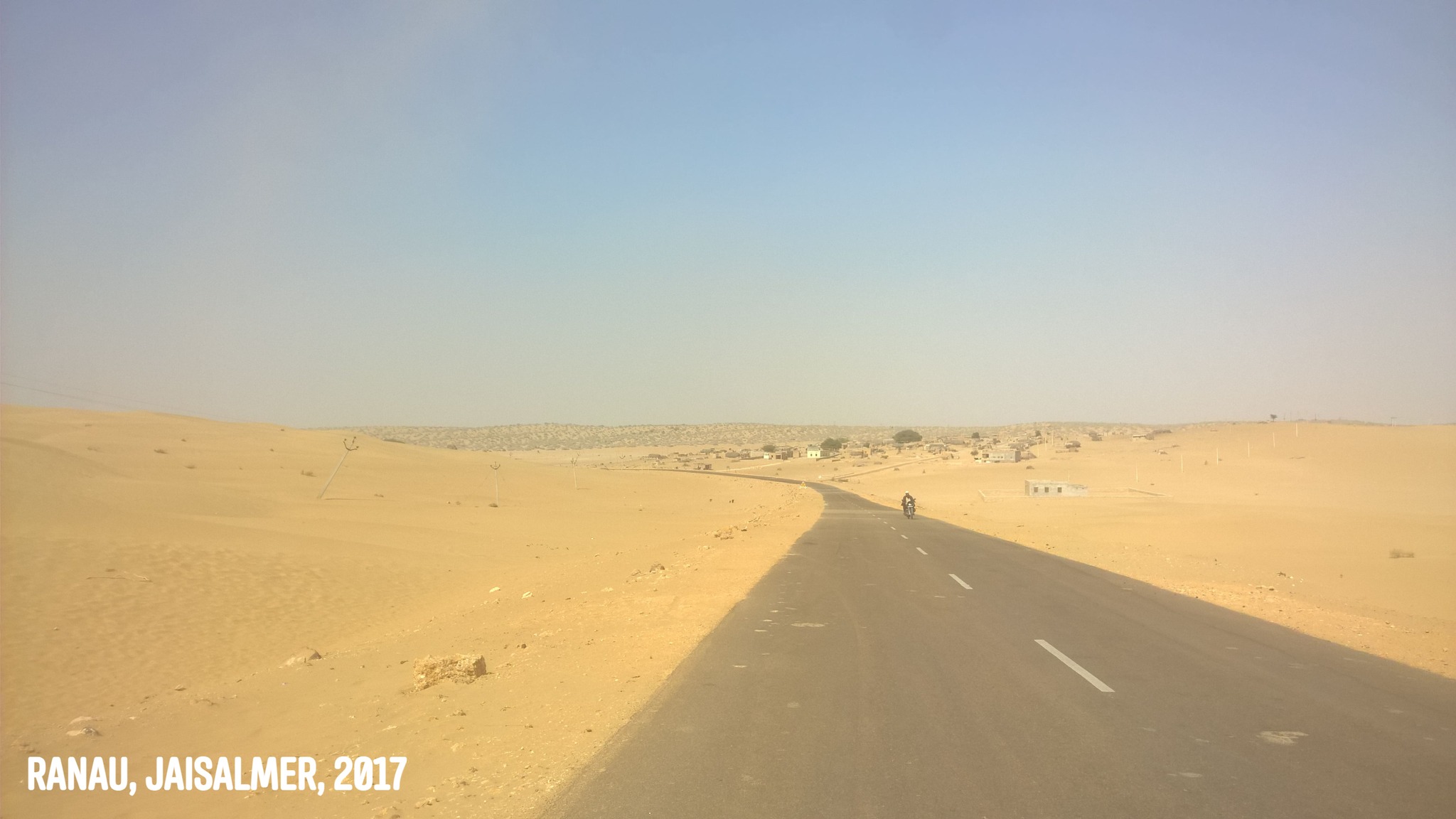
About an hour-and-half of driving deep into the desert, passing by expanses of sand dunes with smatterings of grass and shrub, we came upon a steep decline – ahead of us was a depression in the ground, stretching from one end to the other. It looked like the dried bed of a river – only the surface of the bed still looked indistinguishable from the higher ground all around – even as the road winded down the depression and rose again on the other side. There was no trace of vegetation, with only a handful of huts strewn around being the only habitation for as far as we could see of the other side of the ‘river bed’.

Google Maps told us that the place was called Ranao or Ranau, and it was quite a sight, prompting us to stop and stare. We got down, admiring and taking pictures of the landscape. By now, an air of whimsy was descending upon Amit, and he suggested we take staged ‘candid’ photographs of ourselves in the marvellous background, resulting in us whiling away time posing for self-timed clicks for the next half hour.

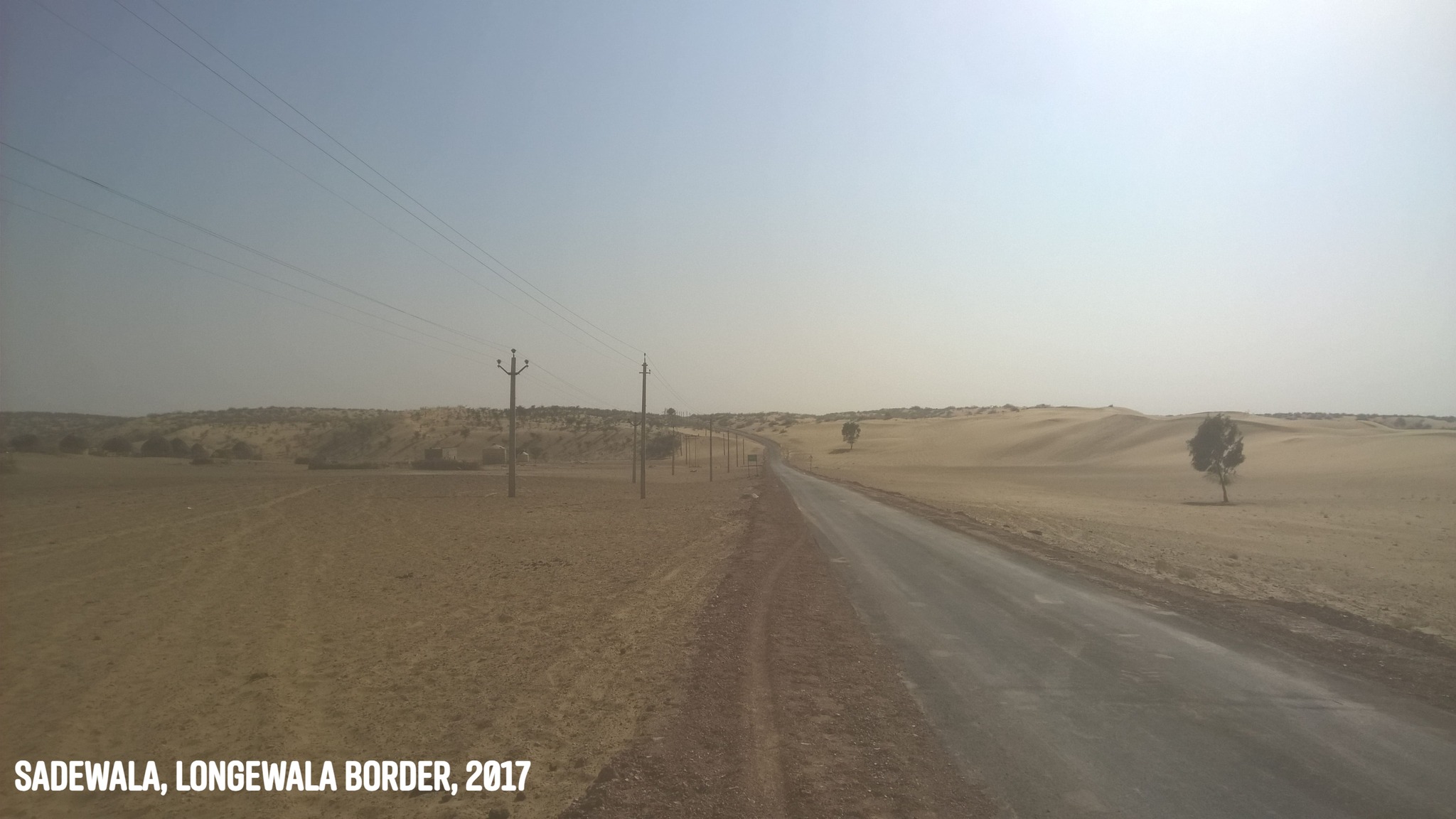
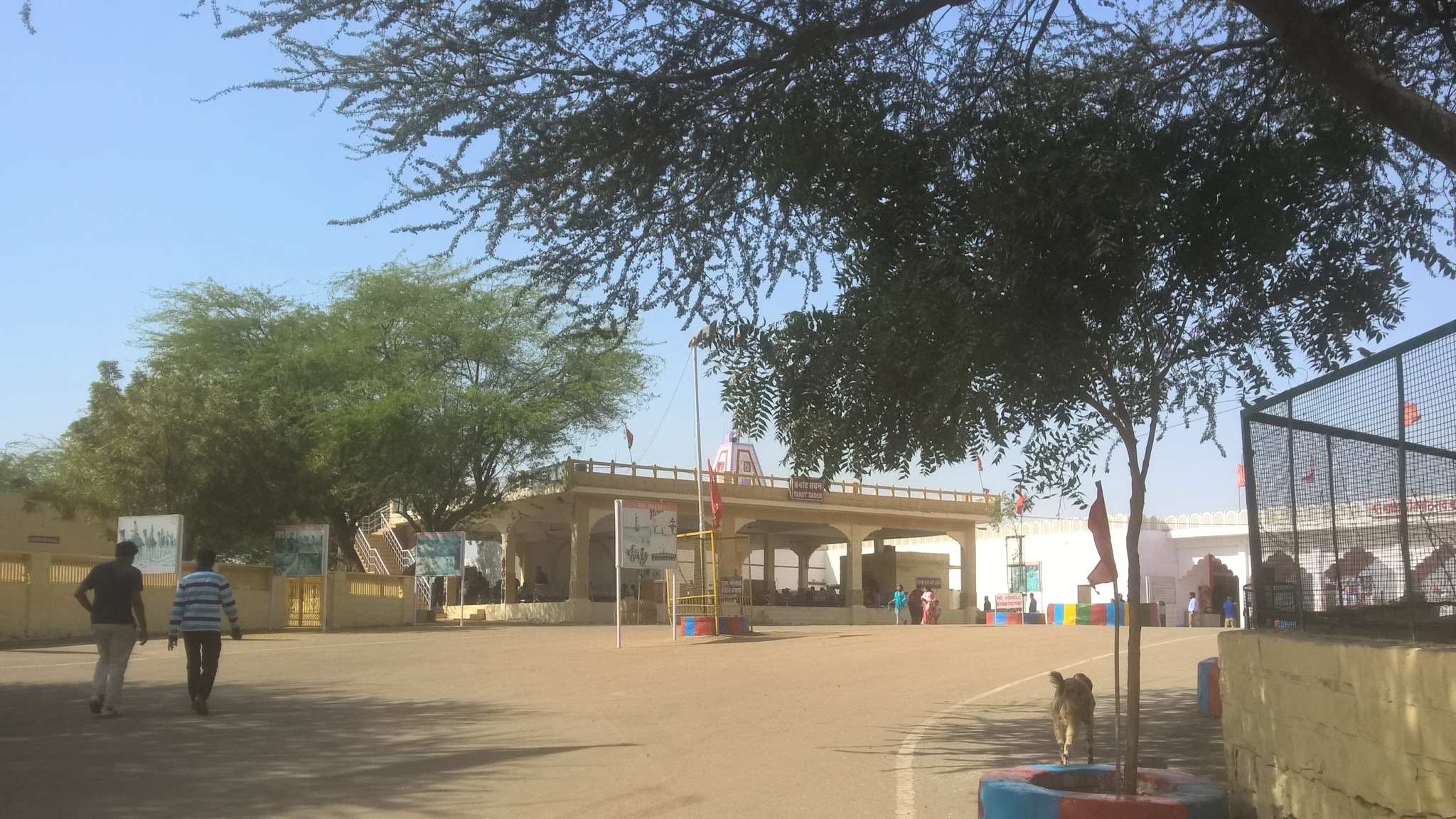
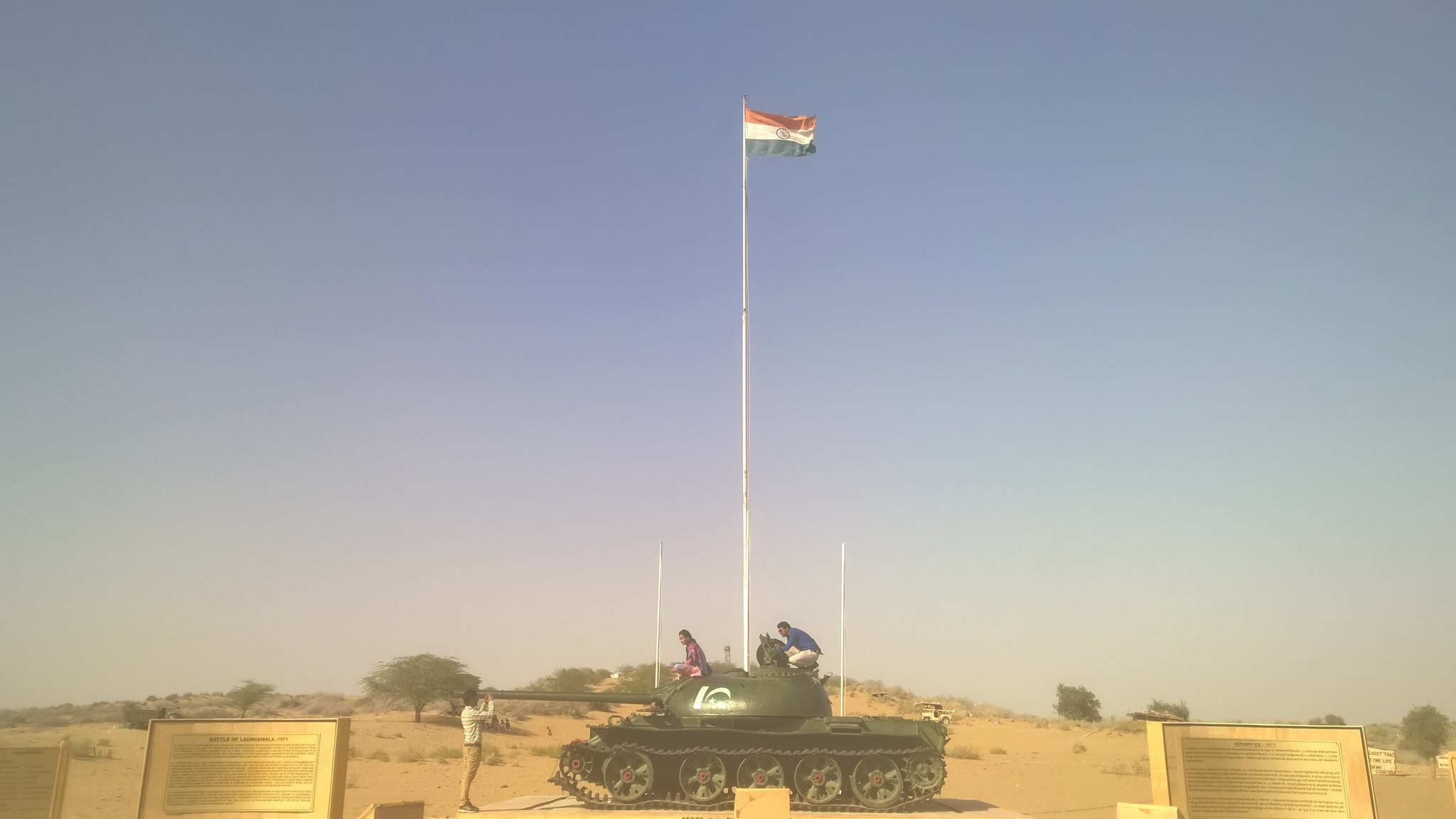
Moving on from Ranao, another half hour later, we were at Tanot, where Amit was washed over by a wave of religiosity and euphoria, forcing him to admit that the lassi was finally taking effect. Paying our respects at the Tanot Mata temple, we proceeded alongside the Pakistan border towards Longewala, through completely empty desert, with only electric poles with transmission lines, the narrow tarred road, our car and its passengers indicating the only traces of human existence. At Sadewala, midway to Longewala, we finally saw humans – a few kids, with whom we took a few pictures.About 45 minutes after leaving Tanot, we were at the Longewala War Memorial, where again under the spell of Amit’s exuberance, we clicked a host of zany pictures.

It was now already 4.30 PM – with the prospect of darkness descending soon, we decided to turn back in the direction of Jaisalmer. By 6 PM, we were at the Sam Sand Dunes, horsing around amidst the camels in the glare of the setting sun, for about an hour, after which we checked-in to the first desert tent-camp resort that our eyes fell on. Watching the folk-arts programme, and having dinner, we went off to sleep.

Part 2: Jaisalmer and Nearabouts

Actually, the title for this part should have been: Nearabouts of Jaisalmer and Jaisalmer, as we started the day 45 km away from Jaisalmer, at Sam. Although the effect of bhang on Amit had worn off, still taking some cues from the freedom it gave us, we did some more tomfoolery on the Sam sand dunes, and moved to the south, reaching the Desert National Park, which I had been forced to miss in my sole previous trip to Jaisalmer due to paucity of time.

The Desert National Park is a vast area of desert including a variety of topographical features, such as, sand flats, dunes, craggy rocks, and compact salt bottoms, straddling the Jaisalmer and Barmer districts. Earmarked by the government to preserve the unique and fragile ecosystem of the Thar, the park is home to species, including the monitor lizard, desert fox, Russell’s viper, and many migratory and resident birds, of which one of the most noteworthy is the Indian Bustard.

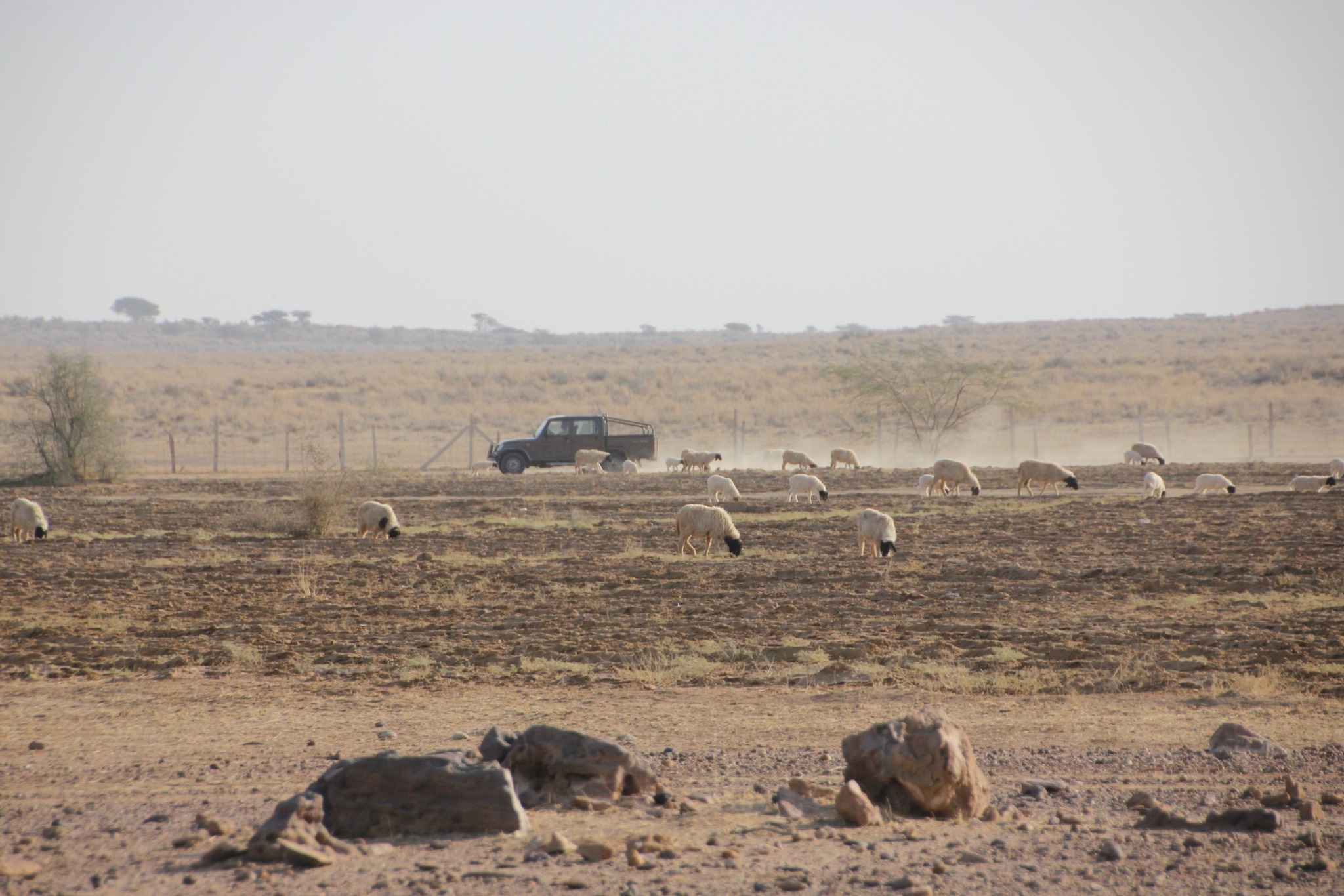
Nevertheless, from the little Park office located just some distance inside the park, we booked a safari, and spent more than an hour roving inside the park, taking pictures with a flock of sheep, and then spotting eagles, monitor lizards, and finally, an Indian Bustard. On the whole, the safari was easily one of the most memorable experiences of my life. For those on a leisurely trip to Jaisalmer and mildly interested in nature, the Desert National Park is highly recommended, in fact, a must-visit.

After the safari, we took an interior road that ran through the sands, then passed by craggy outcrops on which stood tall windmills, and more than an hour later, reached Khabha fort, a compact structure that stood like a lone sentinel on the edge of a low cliff in the middle of the desert. Down in the escarpment lay the stony ruins of an abandoned town, a sight similar to which we found in Kuldhara, which we reached half an hour later. Touted as a haunted village, Kuldhara does give off eerie vibes, more so in the sense of transporting you to a time gone by than anything else.

We then re-entered Jaisalmer, and headed off to the Jaisalmer fort, where we spent another hour walking through the corridors and halls in the palaces and the alleys along the fort wall. After that we headed off to Akal Wood Fossil park that lies about half hour south-east of Jaisalmer, which we reached around 5 PM. We trudged through the barren, desolate rocky land, coming across preserved fossilized wood dating back to more than 200 million years, then climbed on a flat hill, and surveyed the intriguing landscape.

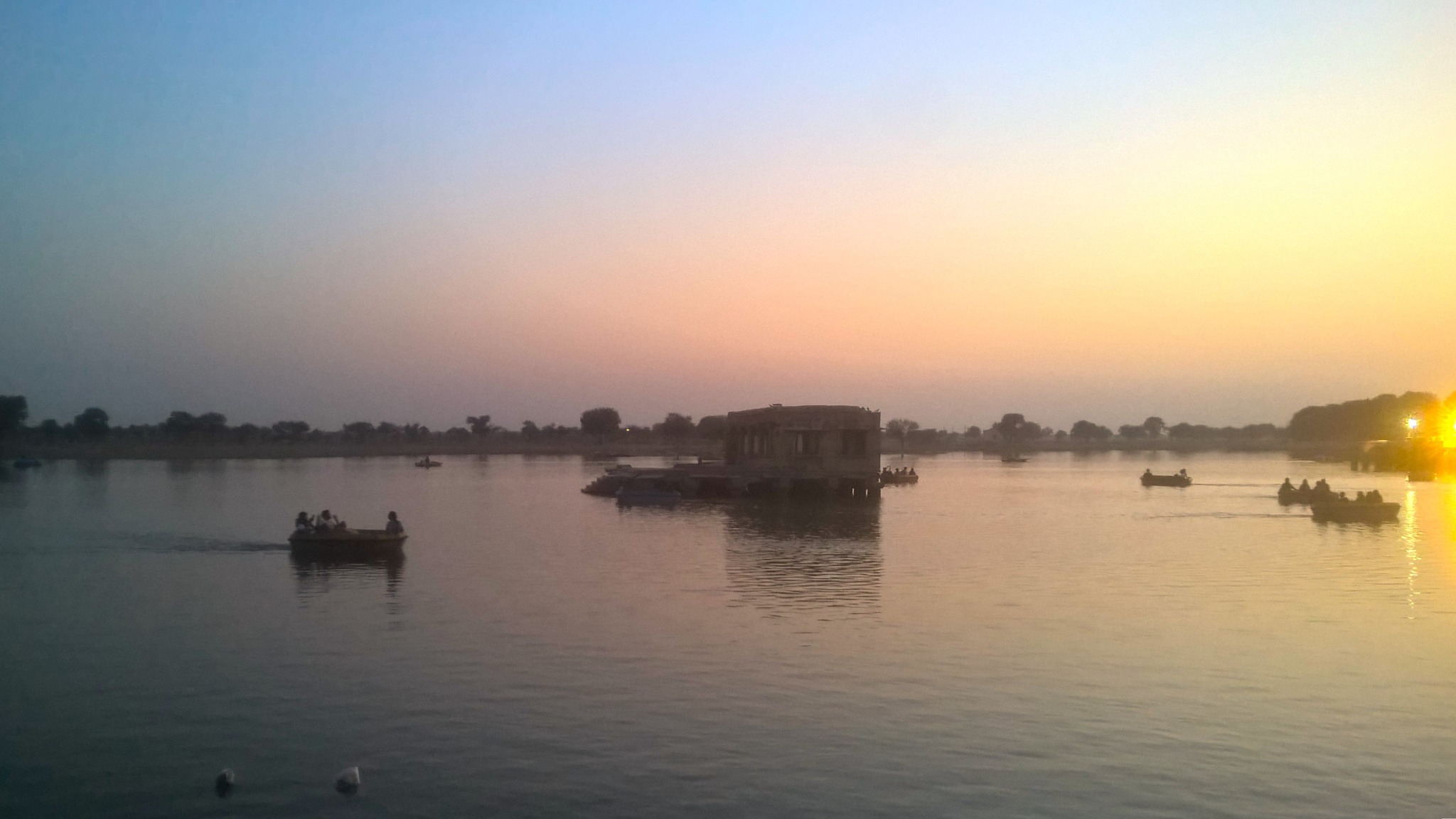
As it began to get dark, we headed back to Jaisalmer city, and bid adieu to the cab driver, who by then had become a partner in our shenanigans, at Gadisar Lake. Spending the twilight at the lake, we headed off to the railway station to catch the overnight Leelan Express train to Bikaner.

Part 3: Bikaner

Next morning, we got down at Bikaner railway station and checked-in to a hotel nearby. After resting a while, freshening up, and having breakfast, we hired an auto-rickshaw to take us around for the day, and were in Junagarh fort by noon.

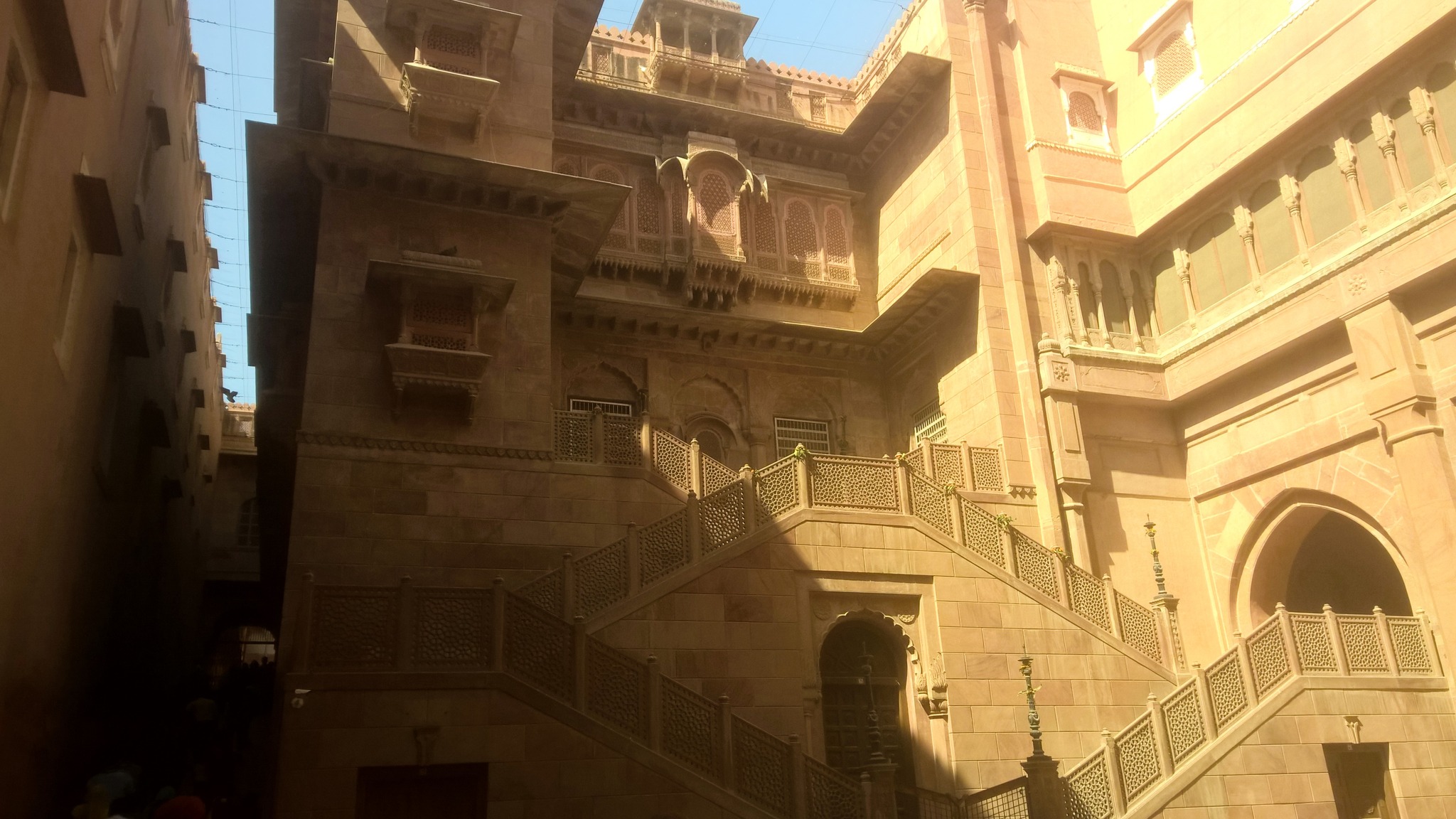
Bikaner city was founded Rao Bika in 1488 AD, after striking out on his own not wanting to inherit Jodhpur state from his father, despite being heir apparent to the throne. The Junagarh fort, itself was built from 1589 to 1594 AD by the sixth ruler of Bikaner, Raja Rai Singh. Earlier called Chintamani, the fort only got its present name in the early 20th century after the royal family moved to the nearby Lalgarh Palace, ‘Juna’ meaning ‘old’. The Junagarh fort is open to public as musuem, with many daily use items including furniture intact in their respective places in the rooms, giving a glimpse of how the royal family of Bikaner lived in the past.

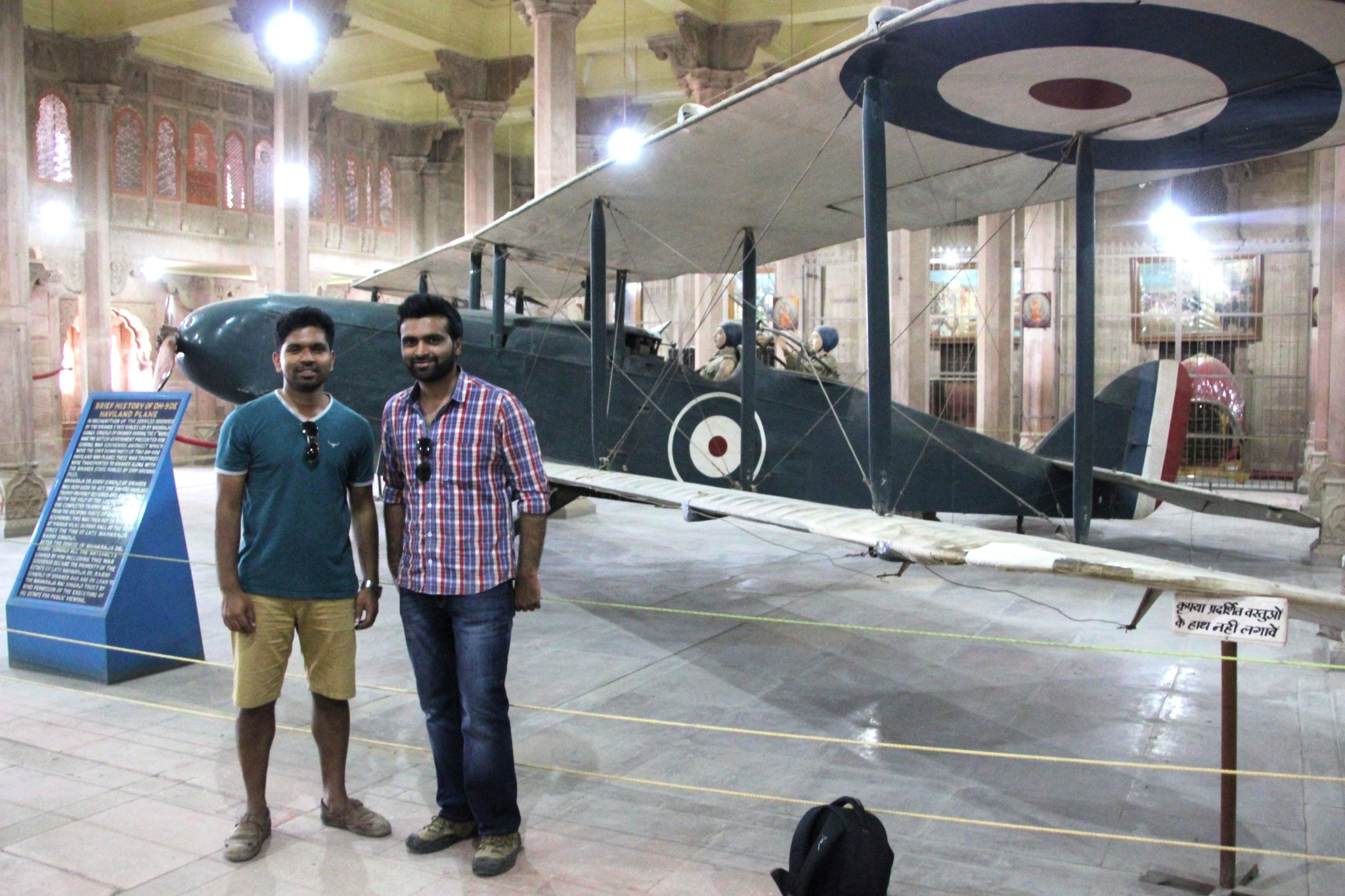
Walking through the various palaces, halls, hallways, corridors, flights of steps, terraces – every succeeding ruler progressively adding more structures and accommodations – we finally came upon a large section, which held in display a DH-9 De Havilland single-engine biplane that saw action in the First World War. This was installed by piecing together the parts from one of two such warplanes shot down in the First World War, which were gifted to Bikaner state in recognition of the 500-strong camel cavalry support provided by Maharaja Ganga Singh to the British Government in the war then-dubbed as the Imperial War.

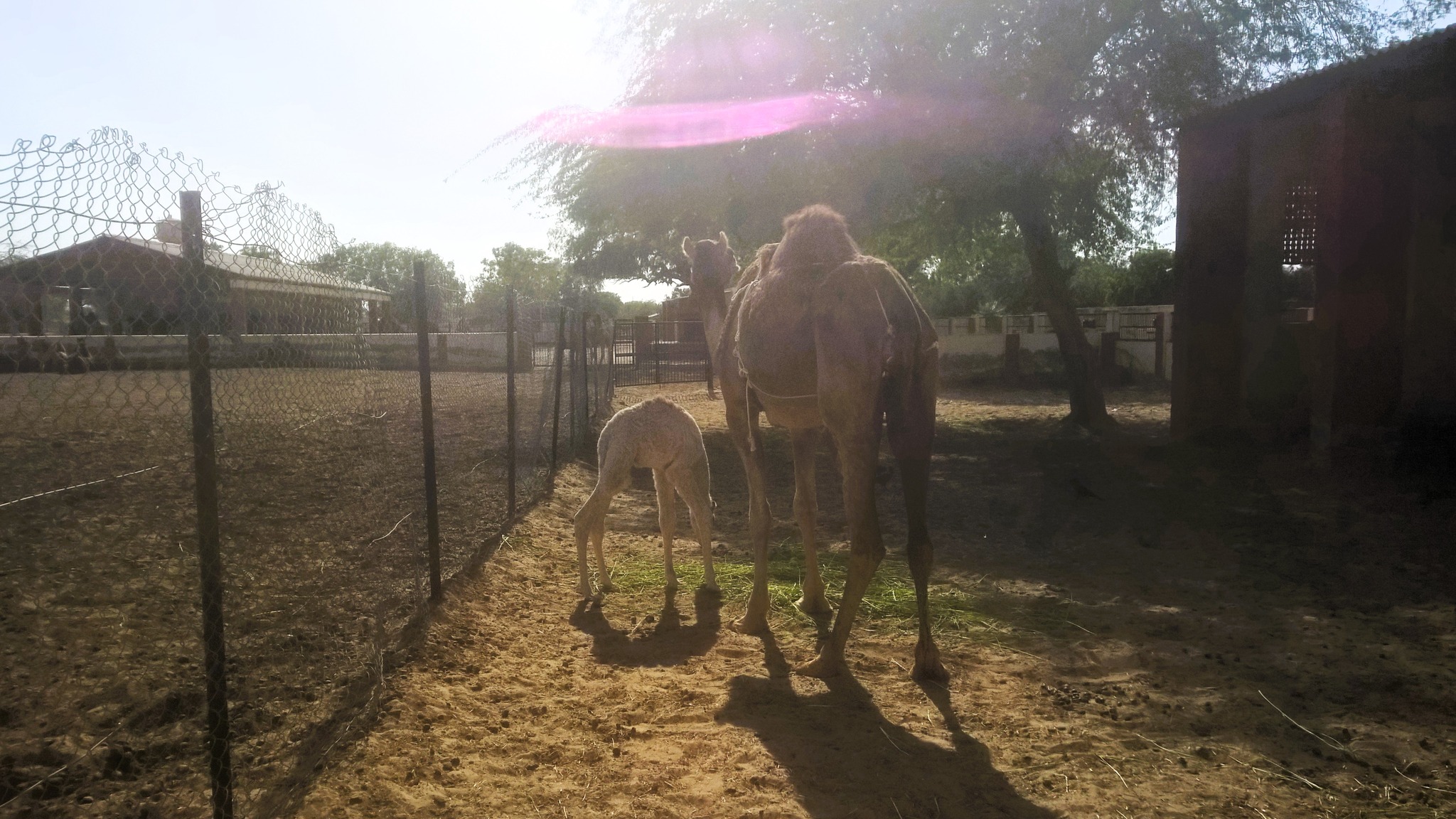
At around 2 PM, we left the fort, had lunch and reached the ICAR-National Research Centre on Camel lying on the outskirts of the city, where we learned about five breeds of camels, namely, Bikaneri, Jaisalmeri, Kachchi, Mewari and Jalori, and their respective lifecycles. We also learned how significant and integral the camel is to the human sustenance in the Thar – the camel is useful not while it is alive, but also after it dies, when its skin, fat and bones including teeth are turned into useful products, such as water bags, pouches, lighting oil, ornaments , decorative items etc.

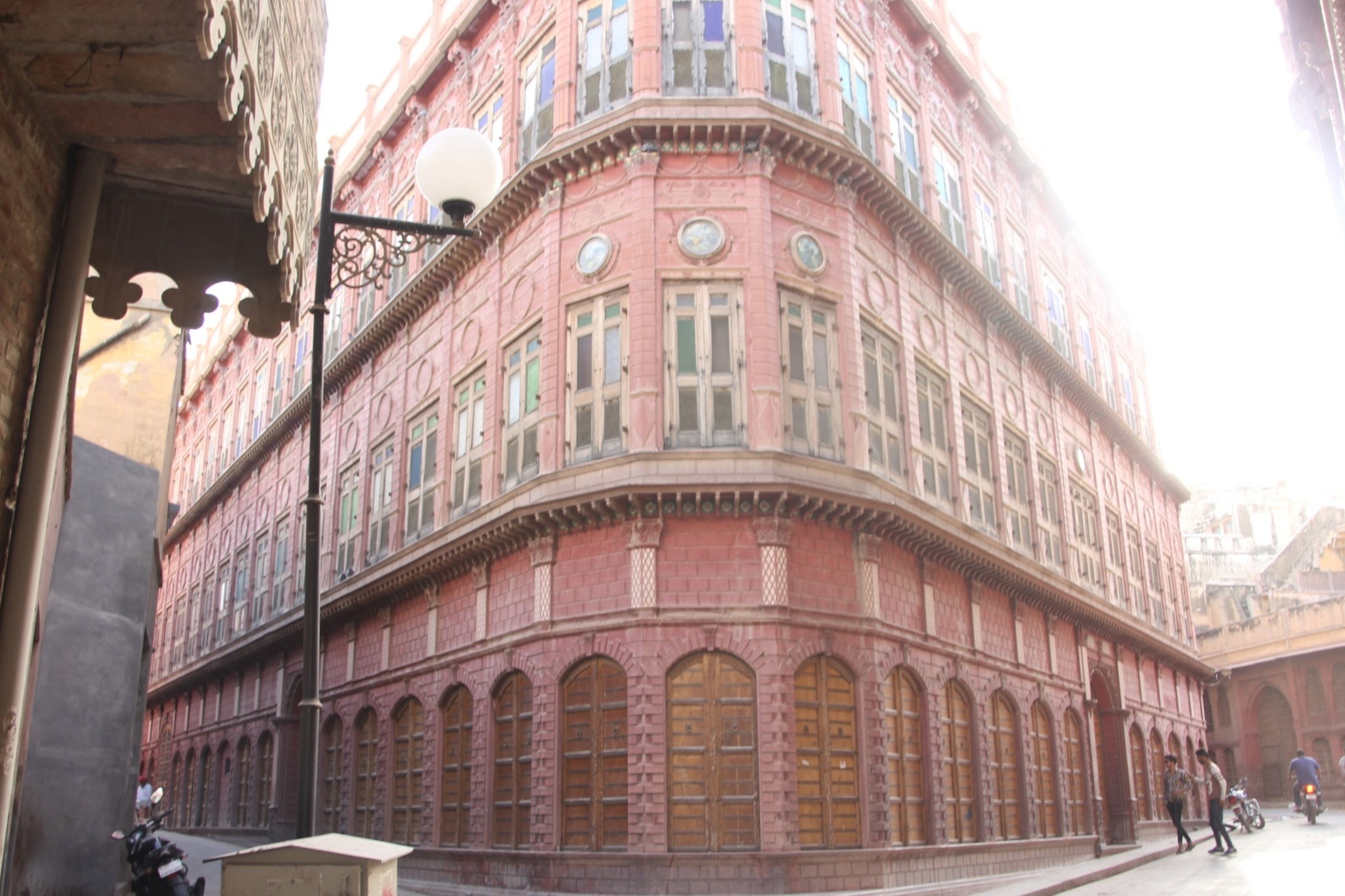
Around 4.30 PM, we reached the old part of Bikaner, where lie many havelis of merchants and royal ministers of the past, one of the most notable havelis being the Rampuria Haveli. Just behind the Rampuria Haveli is the Bhanwar Niwas, now turned into a hotel, which we took a short walking tour of by requesting the gateman. Then, walking through the narrow lanes, we came upon the 12th century Bhandasar Jain temple – dedicated to the the 5th Tirthankara Sumatinatha – notable for its beautiful leaf paintings, frescoes and ornamented mirror work.

At long last, we surveyed the Rajasthani snack shops, now run by descendants of the originators of traditional Bikaneri snacks, such as Bikaneri bhujia, lehsun sev, gathia etc, packets of which we picked up for family members back home. After dinner at one of the restaurants in the old town, we headed to railway station to catch the overnight train to Delhi, and were back in our office the next day.

Aravalli Archives: Alwar, Bhangarh and Sariska

For many years I had seen the name ‘Alwar’ – on other buses while I waited for the bus to Jaipur or on road signage on my many forays to Jaipur. I had even passed through Alwar on one occasion on a bus, and had memories of a city glaring under the sun against the backdrop of yellowish, intermittently green hills. Alwar, despite being three hours away from Delhi, gets overshadowed by the names of bigger places, but now in October 2016, since I had ticked the big names off my list, I turned my attention to Alwar. And am I glad that I did!

Part 1: Alwar Calling

My friend and I caught the bus at 8 AM from Dhaula Kuan, from where I had boarded the Rajasthan or Haryana Roadways buses headed to Jaipur on all of my previous Rajasthan solo trips. By noon, we were in Alwar, where we had lunch near the bus-stop, and gathered information about places and access modes in Alwar. The Bala Qila (Alwar fort), perched on the hill overlooking the city and clearly visible from where we stood, beckoned to us – it was a no-brainer as to where we should start our Alwar sight-seeing with.

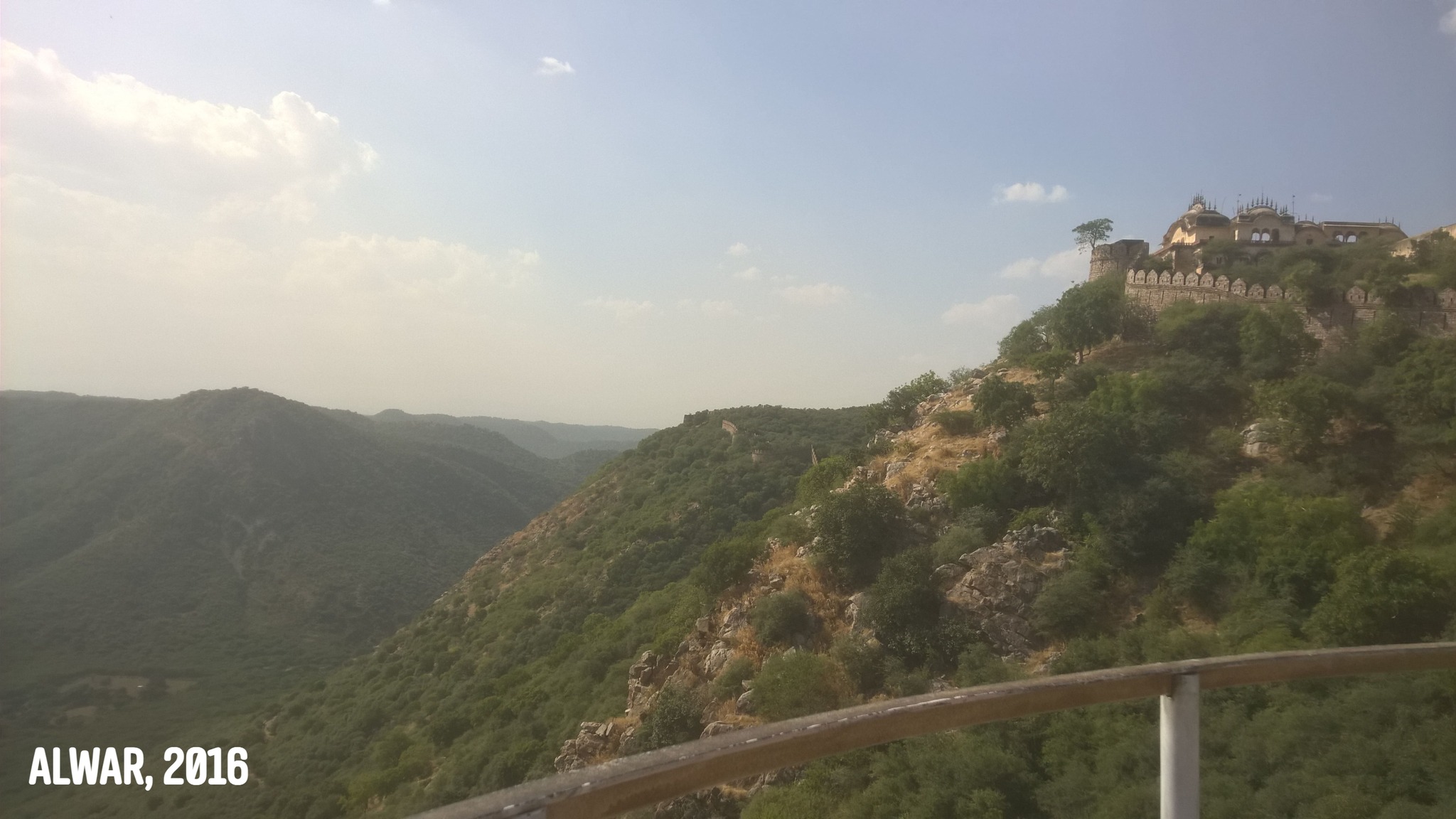
Hiring an auto-rickshaw, we headed off to Bala Qila, for which we took the fort road that winded around the side of the hill, passing through jungle, accompanied by a sharp drop into the valley on one side. We were pleasantly surprised by the size and condition of the main palace which was largely intact – the palace may not be the size of the palaces in the forts of Jaipur or Jodhpur, but the fort in itself was self-contained and seemed to possess every characteristic typical of a Rajasthani fort.

The origins of the fort date back to 928 AD, when it was built by Parmar Rajputs, however, it was resconstructed in 1521 AD by the Khanzada rulers who had wrested the fort from the Nikumbh Rajputs in 1492 AD. We explored the many floors of the palace and were smitten by the verdant vistas of the Aravallis from the arched windows of the palace. Later we walked on the fort wall towards a watching platform that provided a clear view of the city below.

Descending back to city at the foothills, we checked out the City Palace or Vinay Vilas Mahal, built in 1793 AD, with a part now converted to Museum and the other part housing government offices. The beautiful Moosi Maharani ki Chhatri, a cenotaph for Raja Bakhtawar Singh and his queen Moosi Rani, built in 1815 AD with marble roof and red sandstone pillars, stands adjacent to the City Palace, on the bank of water tank called Sagar Jalashay, which is fed by water flowing down the Aravallis at the foothills of which the tank lies.

Our next stop was the Siliserh lake, an artificial lake built in 1845 by Maharaja Vinay, nestled in the Aravallis, a little outside the city, providing a picturesque view of the rounded tops of the Arvallis kissing the sky. Enjoying the gentle breeze along with the views, we took a boat ride exploring the length and breadth of the lake. Thereon, we headed to the Jaisamand Lake, another artificial lake not very far from the Siliserh Lake but a little closer to the city, notable for a series of chhatris (cenotaphs).

Part 2: An Unplanned Extension

Our plan for the second day was to take a morning safari of the Sariska National Park that lies about 33 km from where we stayed. Waking up quite early in the morning, and starting around 5.30 AM, we walked about a kilometre to the main road leading to Sariska, hoping to get some sort of conveyance to Sariska. After about fifteen minutes of waiting, as the chances began to seem slim of us making it to Sariska in time for the safari, an autorickshaw driven by a Sardarji (a turbaned sikh man) drew alongside us . We negotiated a price for the half-day trip to Sariska and were soon headed to Sariska with renewed hope for the safari.

Passing through the road sliding up and down, curving ever so slightly to the right and the left, along the foothills the Aravallis, with the cool breeze hitting our faces, we soon encountered a narrow valley in the Aravallis which we crossed alongside a narrow river. In this stretch lies a place called Natni ka Bara, where a bridge stands connecting the main road to a white-coloured temple with a narrow tall spire on the other side of the river. In the early morning mist, the sight of the bridge and the temple standing in the middle of the valley was etched in my mind.

By 6.50 AM we were at the Safari Booking Office at entry gate of the Sariska National Park, where we were promptly denied entry because entry for the morning safari had already closed. We should have been there before 6.30 AM, they said, not relenting despite multiple requests, suggesting that we come back by or wait till 2.30 PM for the afternoon safari. As we were staring at a long wait, a safari guide who was hanging around suggested we do some more sightseeing instead of waiting, Bhangarh fort being his topmost recommendation.

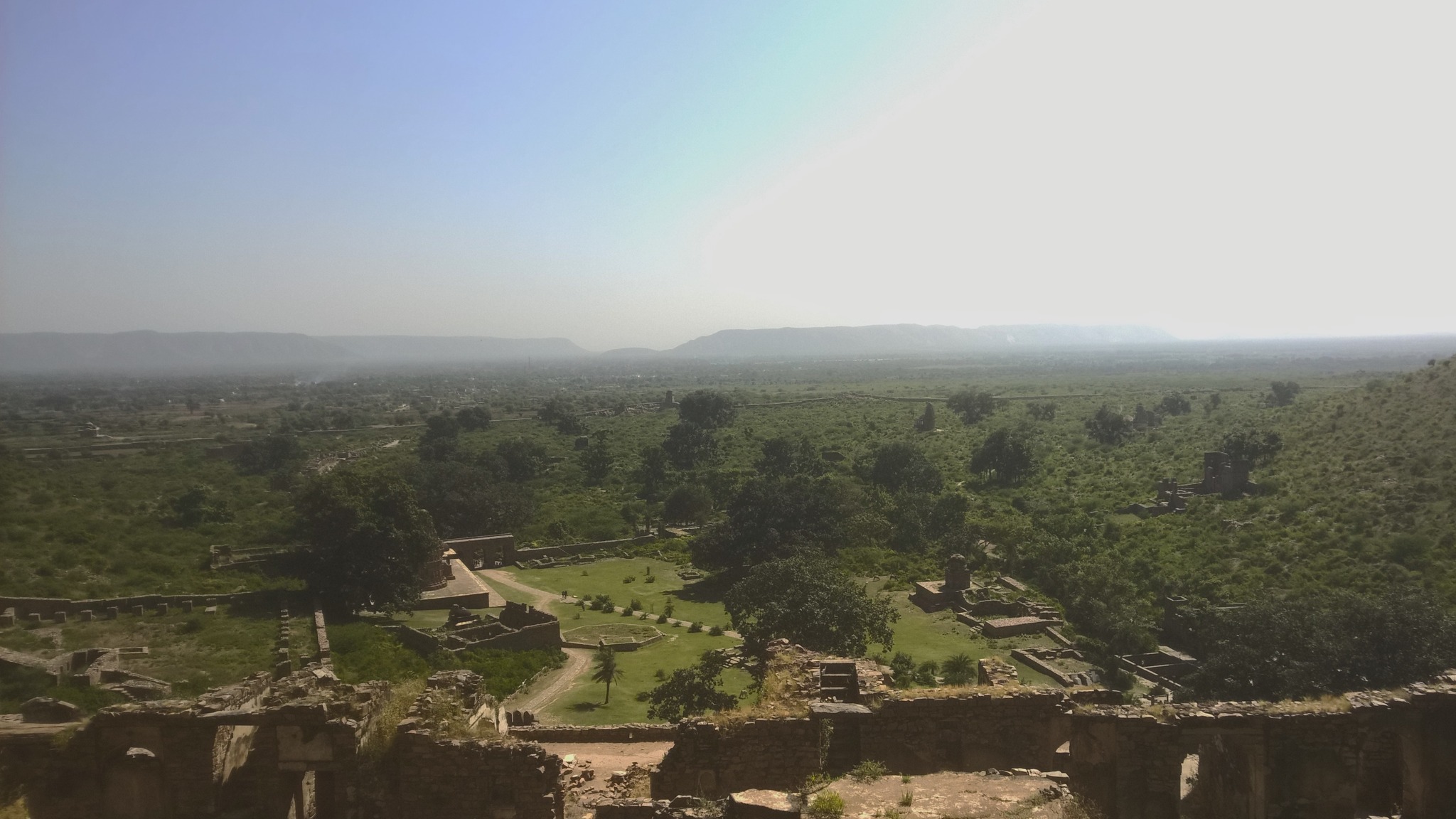
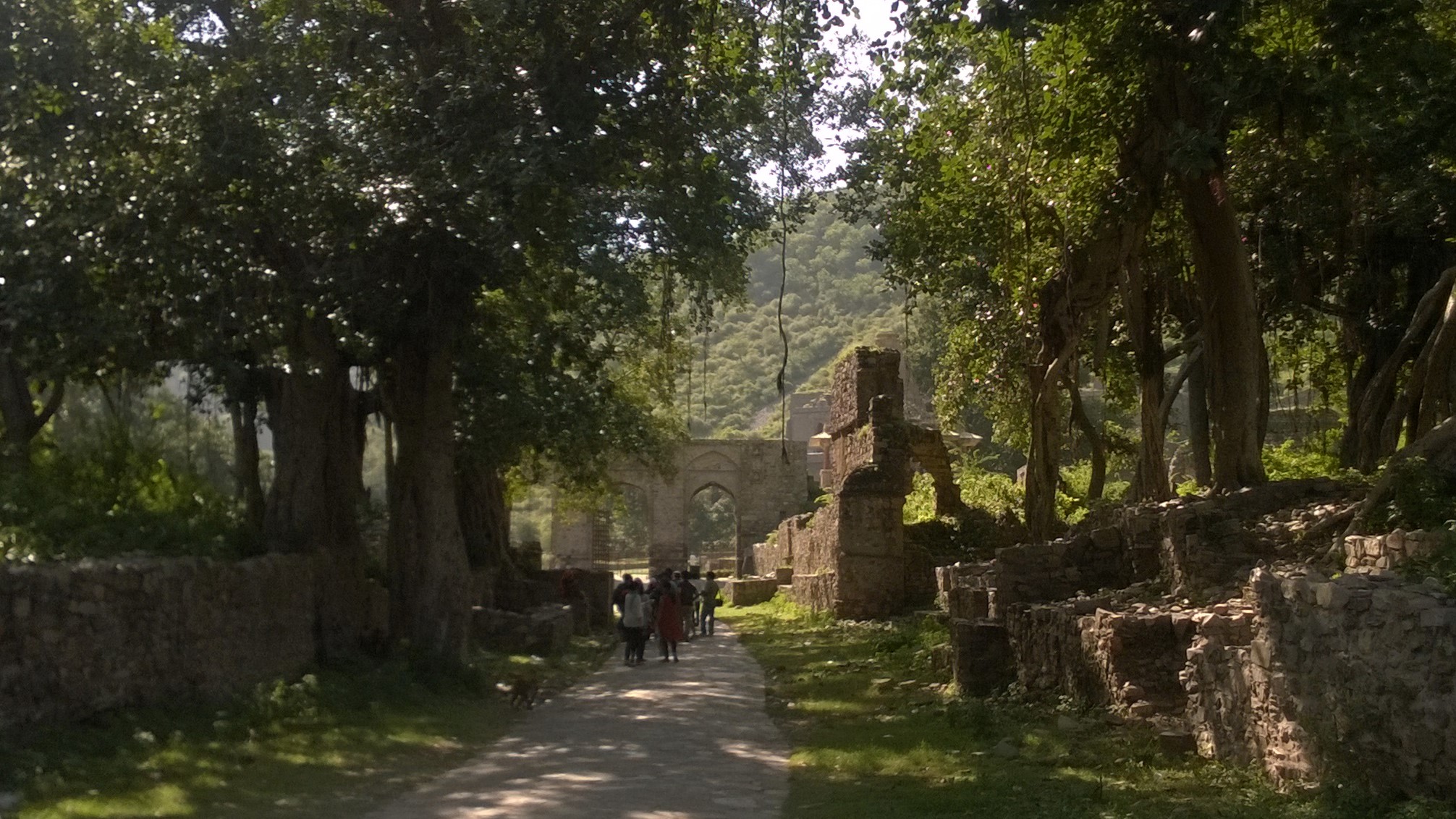
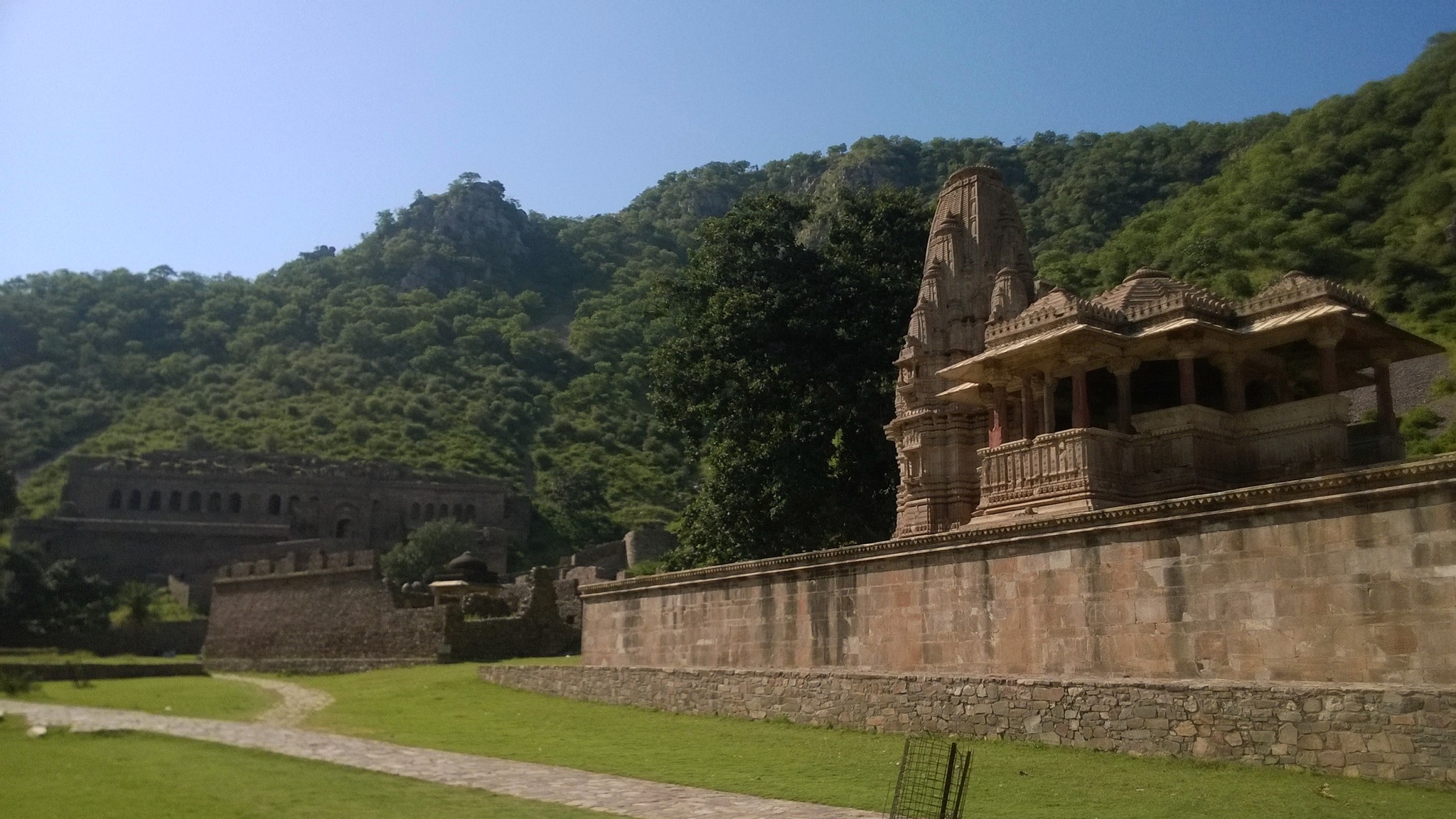
Now, I had already been to Bhangarh fort – touted as a haunted place – and retained very fond memories of the same, but my friend had not, and I would not mind visiting Bhangarh again just to relive the aura of eeriness I had felt on my earlier visit. We calculated that we should be back to the park gate well in time for the afternoon safari, as we had five hours in hand. However, our autorickshaw driver did not seem keen at all, because it would be a 100 km round trip for him. Nevertheless, the safari guide, on account of being a local convinced him to take the ride, sweetening the deal with extra money, of course.

By 7.30 AM, we were on our way to Bhangarh, in an autorickshaw, of all things! From there on, we never lost sight of the Aravallis, which alternated between running alongside us and sliding away only to return. We hoped to reach by 9 AM, if not for the second half of the route where the road was under construction sending billows of dust in all directions including inside the auto-rickshaw as the vehicle plodded through. Soon we passed through Ajabgarh, where abandoned houses flank the road at one end of the village. Just outside the village, a compact fort sits atop a hillock against the backdrop of taller hills, while the road winds around a lake, called Jai Sagar, filled with a cover of lotus and lilies. At long last, by 9.45 AM, we were in Bhangarh.

Part 3: All is Well That…

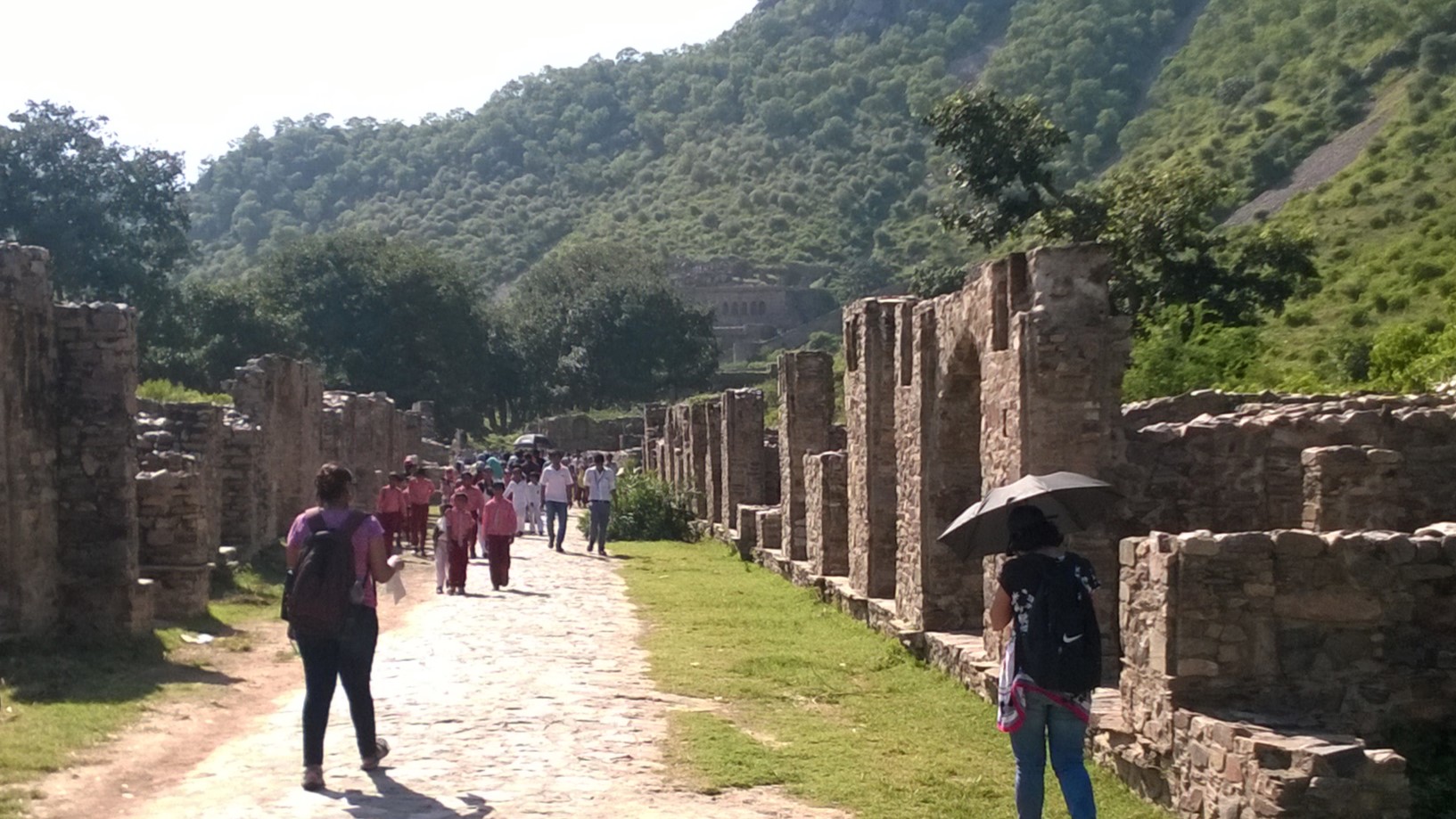
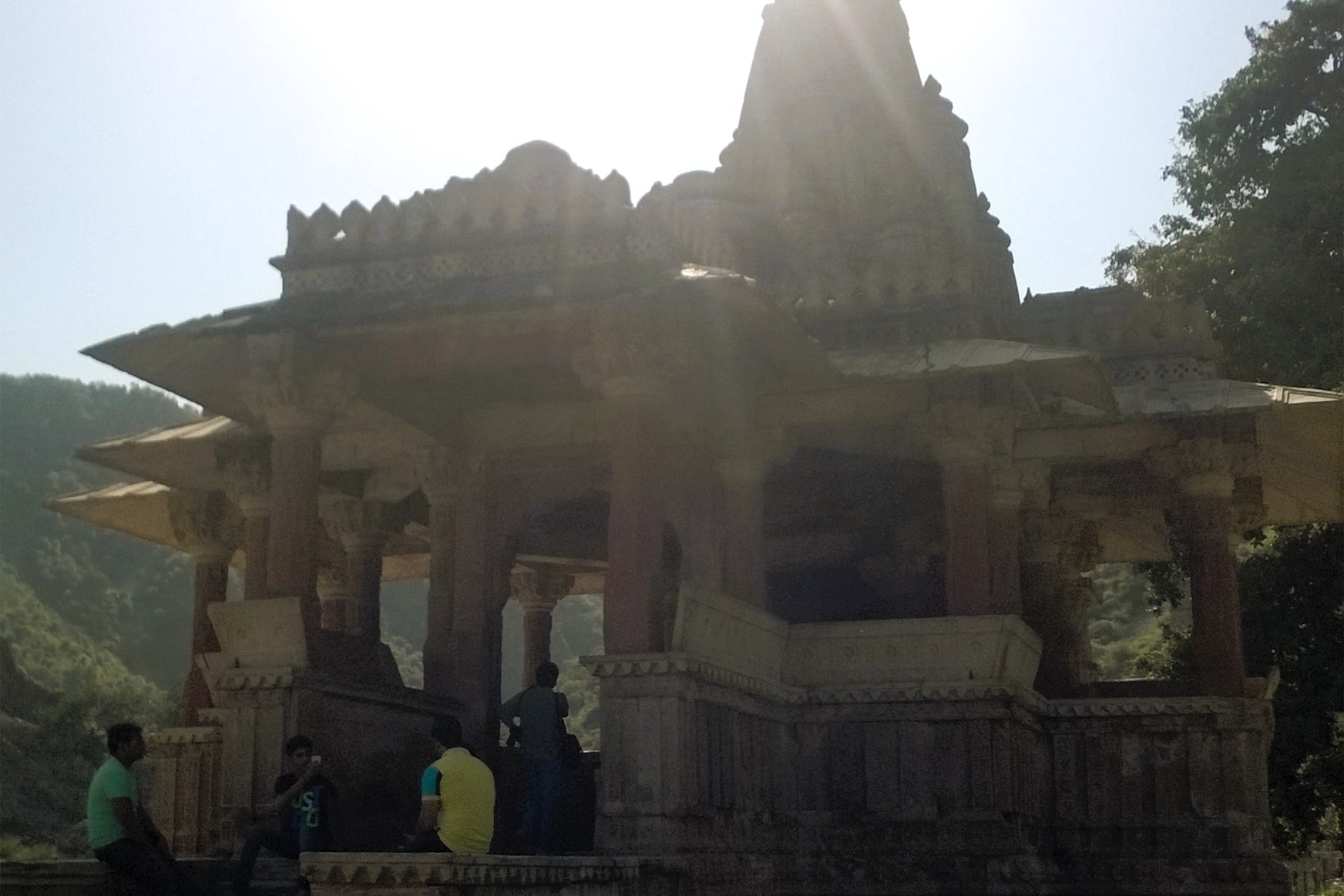
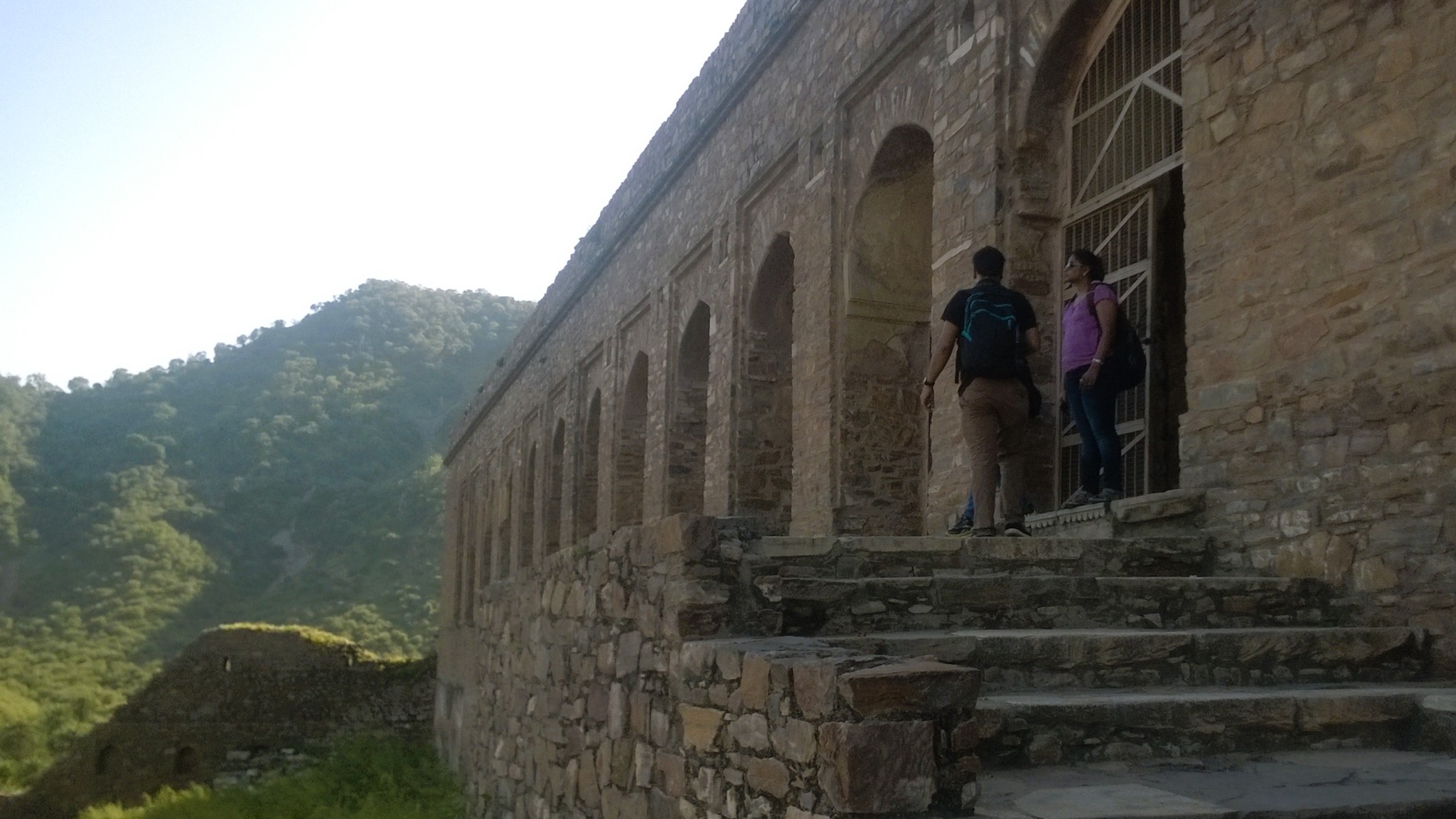
At Bhangarh, we began by exploring the ruined marketplace and residential area near the main entrance. Then walking further flanked by a series of ruined shops on both sides, through the stretch called the Jauhari Bazaar, and crossing a stream, we entered the fort enclosure where sprawling lawns, numerous temples and the main palace welcomed us. Walking through main palace gate, we approached the first layer of buildings having two wings in the form of long pillared hallways on either side of the passage. Both wings had indications of occult practices being conducted, further bolstering the sense of haunting around the place.

After enjoying the views of the Alwar district countryside accentuated by the Aravallis standing like long flattop platforms from the top of the existing structure of Bhangarh, we walked back to the parking lot, where the auto-rickshaw driver was waiting. After another two hours of riding through the dust clouds over the under-repair road, we were back at the Sariska National Park gate by 1.15 PM, where we were faced by the next challenge – finding 4 more co-passengers for the jeep safari, else we would be paying the fees for 6 passengers for the jeep. Luckily, we ran into a family of 3, consisting of another (!) Sardarji and his wife and kid – who readily agreed to share the ride with us.

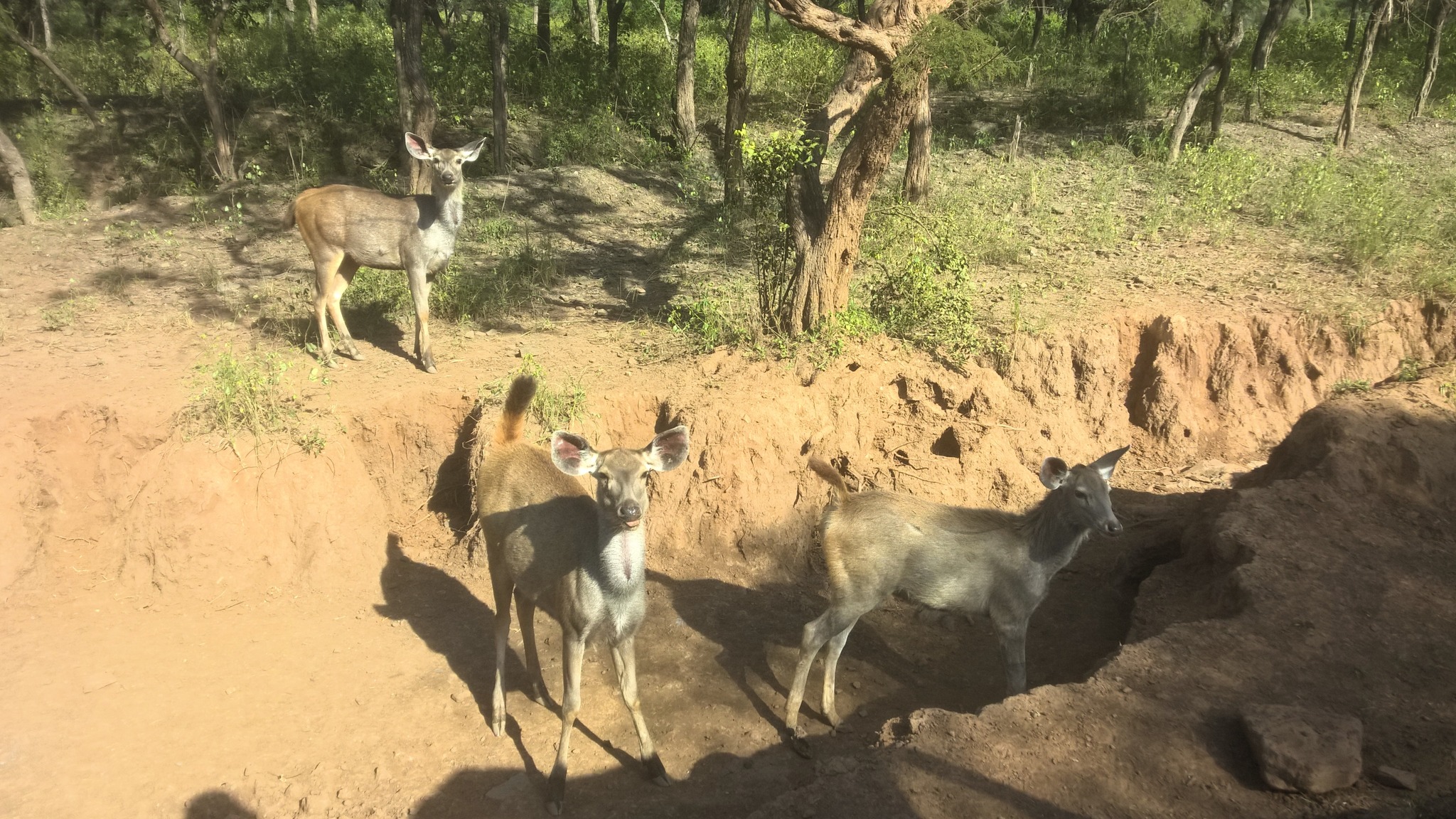
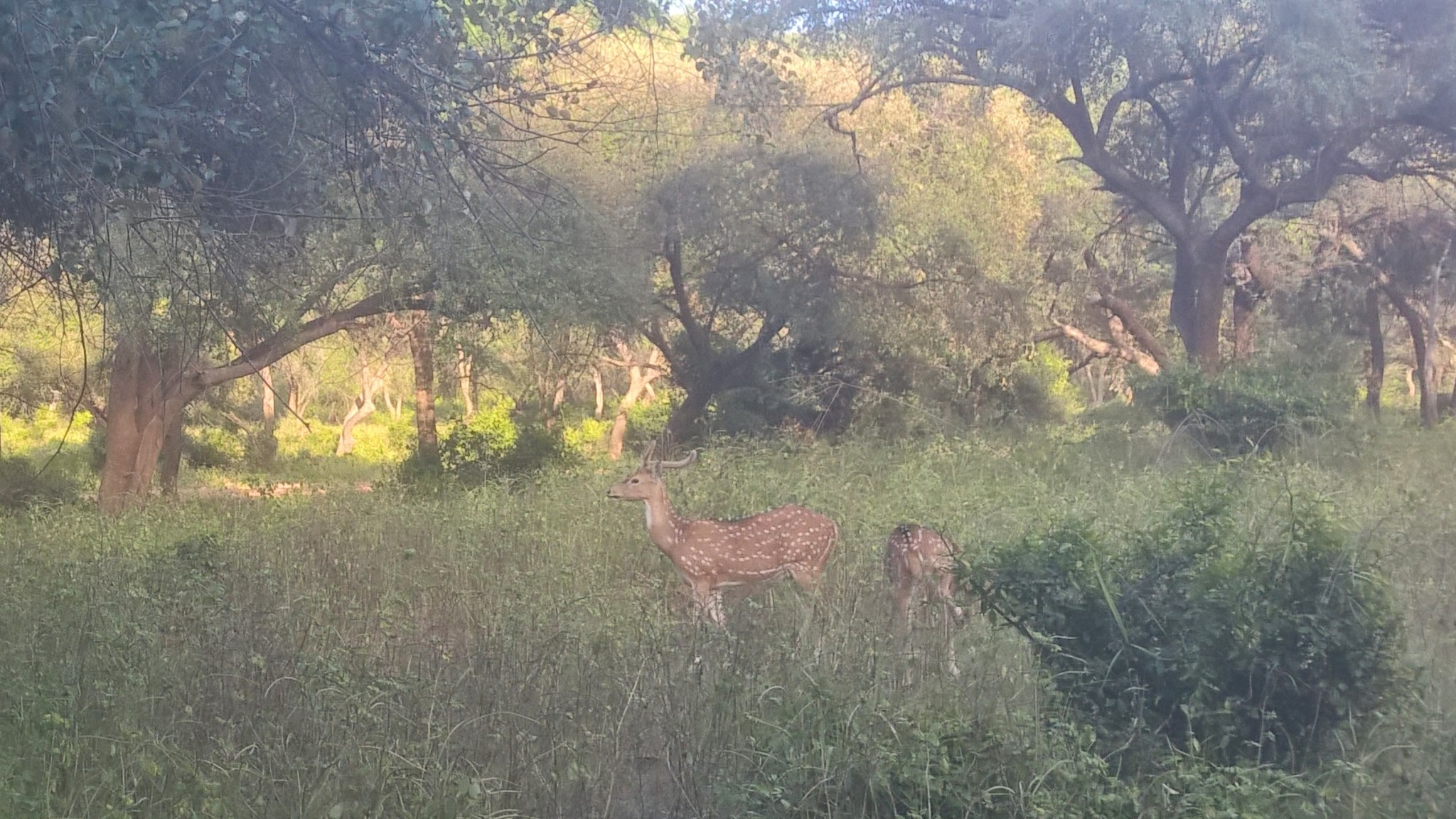
After a quick, light lunch at the canteen near the safari booking counter, we set out on the jeep safari on a trail that took us deep into the Sariska forest. We sighted sambhar, deer, peacocks and countless birds, complemented by thrilling sights of watering holes, and streams cutting through the jungle. Though we did not see a tiger, I would still count this as a very memorable safari in terms of the density of wildlife seen.

By 5 PM, we were back on our way to Alwar, with a thick layer of dust having settled on our bodies. When the sardarji finally dropped us off at the place where he had picked-up, he wore a long face, as he grappled with the sight of the coating of dust shrouding his auto-rickshaw – surely, he regretted having picked us up in the morning, and more so, for having agreed to the impromptu extension of the ride to Bhangarh. As if on cue, I handed him a couple hundred more rupees, hopping to alleviate his dejection.

Now, as we wandered around looking for conveyance to the bus station, we were approached by a couple who looked like students on separate two-wheelers. Lo and behold, it was another Sardarji (!), who along with his apparent girlfriend, offered us both a ride on their motorcycle and scooter respectively. By 8 PM, as we boarded the bus headed back to Delhi, it struck us that we had encountered the grace of good Samaritan Sardarjis every time we faced a difficult situation the whole day!

Post-script: My first trip to Bhangarh, September 2014

My first trip to Bhangarh happened by virtue of a day-long trip with a travel group called ROOTS. We had started around 6 AM from Delhi, passed through Sohna and then Alwar, and reached Bhangarh by 1 PM – a journey of almost 7 hours, a testament to the condition of roads that prevailed two years ago.

In any case, I had been awestruck by the atmosphere and ambience of the place, with the setting of the lawns and the fort etched at some height in the hillside seeming like a leaf out of a fairytale. When the tour of fort had ended, I found myself yearning more.

Leaving Bhangarh, we had then stopped by Ajabgarh, where we were intrigued by the sight of the abandoned houses lining up both the sides of the road for quite a stretch as we entered Ajabgarh village. Later, we had hiked up the hill to explore the compact fort even as darkness was falling. The hilltop also afforded a view of the expansive lake, called Jai Sagar, abounding in lotus and lilies, below by the roadside.

By then, it had already been 6.30 PM, with the twilight looming over the village, imparting it with an even eerier character. In the darkness, we had passed through the Aravallis with the moon smiling from behind the clouds, and the silhouettes of the hills accompanying us till we had crossed Sariska.

By 1 AM, we were back in Delhi, the journey turning out to be way longer than originally scheduled, but at the same time ending up being more memorable than I had ever expected.