Diwali in Mewar: Udaipur, Kumbhalgarh and Chittorgarh

Inspired by the experience of spending Diwali in the hills the previous year, I decided to spend the Diwali this year too at an interesting place. The place was not very hard to choose, as I had been planning to take my parents to Udaipur soon, and thought it would be wonderful to see Diwali over Lake Pichola.

Accordingly, a fortnight before Diwali, seeing a great deal for the day, for which most hotels were already booked or overpriced, I booked a room in Hotel Thamla Haveli that stands right on the bank of Lake Pichola exactly opposite the Gangaur Ghat. On the other hand, not getting tickets on the Chetak Express, the only train connecting Gurgaon and Udaipur, I improvised and booked tickets on a 2 PM train instead from Jaipur, which we would reach by bus.

Day 1: Off to Udaipur

On the day preceding Diwali, we reached our designated pick-up point at Rajiv Chowk around 6 AM, only to learn that we had left behind the food Mother had painstakingly cooked and packed for the journey. So, I rushed back home, which thankfully was only one-and-a-half kilometers from our bus-stop, to pick up the food, and was back in time to catch the bus.

Relishing the views of the Aravallis and the countryside on the way, we reached Jaipur at 12, catching the train to Udaipur as planned. This being a day train, we had the opportunity to see the landscape the railway line passed through, including the topography of areas around Ajmer, where I felt a strong pang of desire inside me to visit Ajmer sometime soon. We reached Udaipur around 9 PM and soon checked-in to a hotel near the railway station.

Day 2: Diwali in the City of Lakes

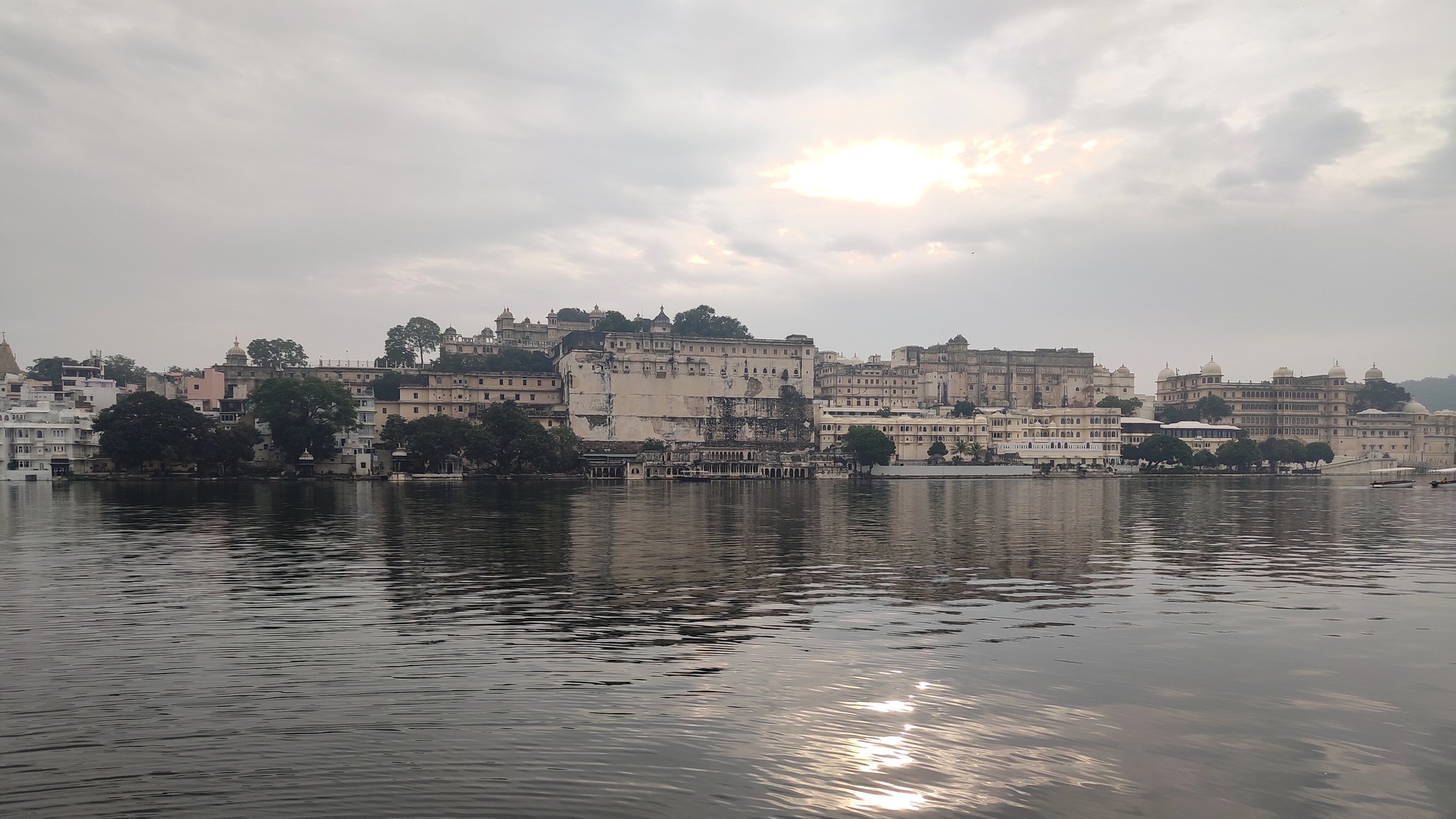
The next morning, i.e. on Diwali day, after breakfast, we checked out of the hotel and moved over to Thamla Haveli, checking-in around 11.30 AM. We were quite pleased to know that the window of our room opened to, and in fact, hung right over the Pichola lake – if you fell from the window, you drop right into the water! Then, we checked out Ambrai Ghat, which was only a 200 metre walk from our hotel and gave us an exhilarating view of the City Palace sitting across the Pichola Lake.
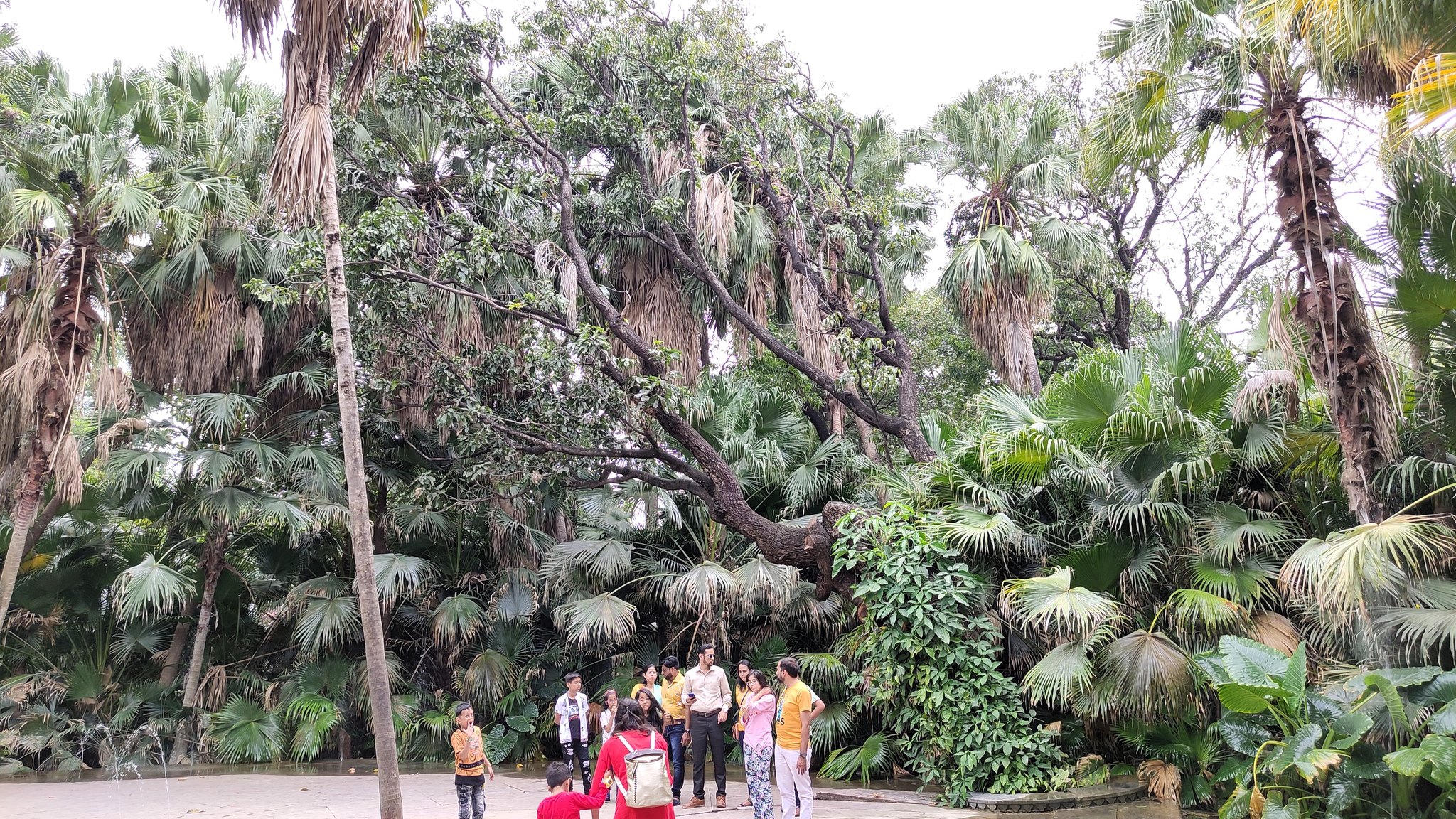
After that, we hired an autorickshaw to show us around Udaipur the whole day, and first proceeded to Sajjangarh Palace, a monsoon palace that stands on the top of a hill, overlooking the city and the Fatehsagar and Pichola lakes. From the terrace of the palace, we also got breathtaking views of the Aravallis. Descending from Sajjangarh Palace, we had lunch near Saheliyon ki Bari, an early 18th century garden, which we visited next. Next up was the City Palace, which I was seeing for the fourth time in as many visits. We ended the day by visiting the Jagadish temple, which stands right on the road that the Palace tour exits to.
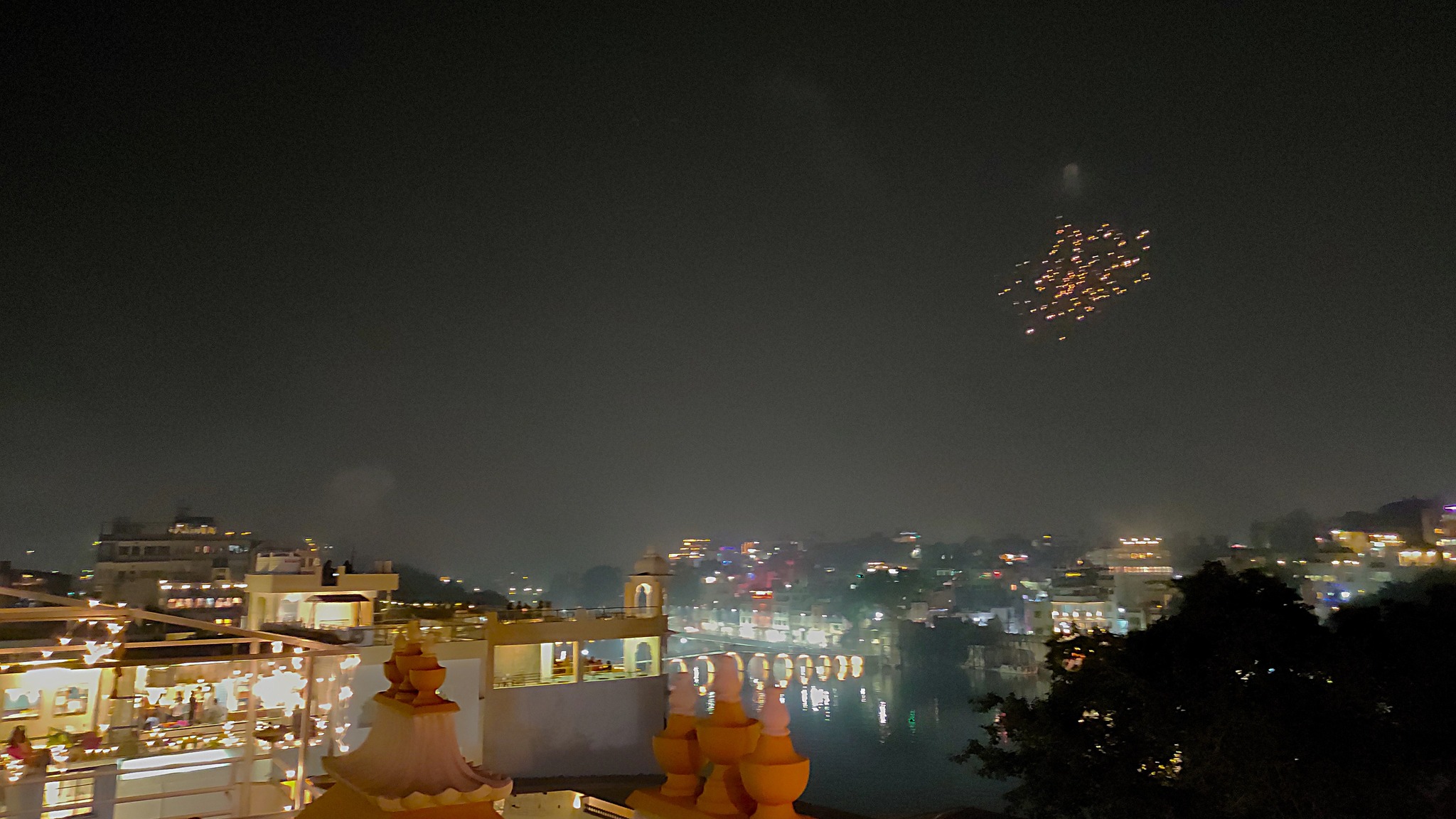
Back at the haveli, from our window we were treated to the electrifying sights that we had hoped to see – the fireworks going over the skyline across the lake, with their reflections sparkling over the lake’s surface. As we climbed to the rooftop restaurant for dinner, we were rewarded with even clearer views of the Diwali celebrations. We finally went to sleep, as Diwali celebrations drew to a close.
Day 3: An Excursion to Kumbhalgarh

The next morning at 7.30 AM, we walked to the Ambrai Ghat again and were mesmerized by the views of the city palace bathing in the morning sun. Soon after, I booked an outstation Ola cab after some struggle, to take us to Kumbhalgarh. Starting at 11 AM, we drove for about two hours, mostly through the Aravallis, to reach Kumbhalgarh fort which was taking forever to appear. However, given the scenic beauty on the road, the drive was not that boring after all.

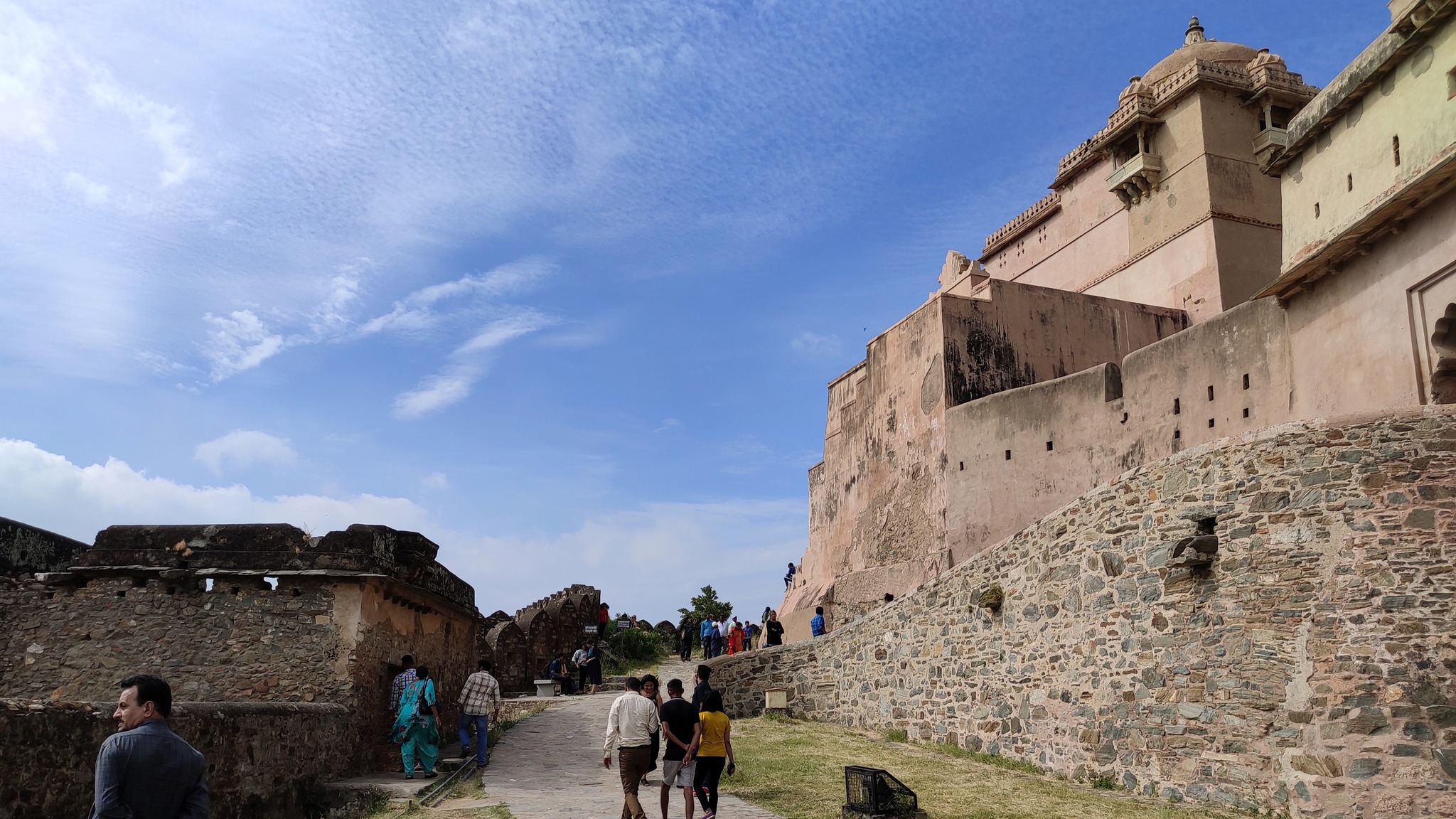
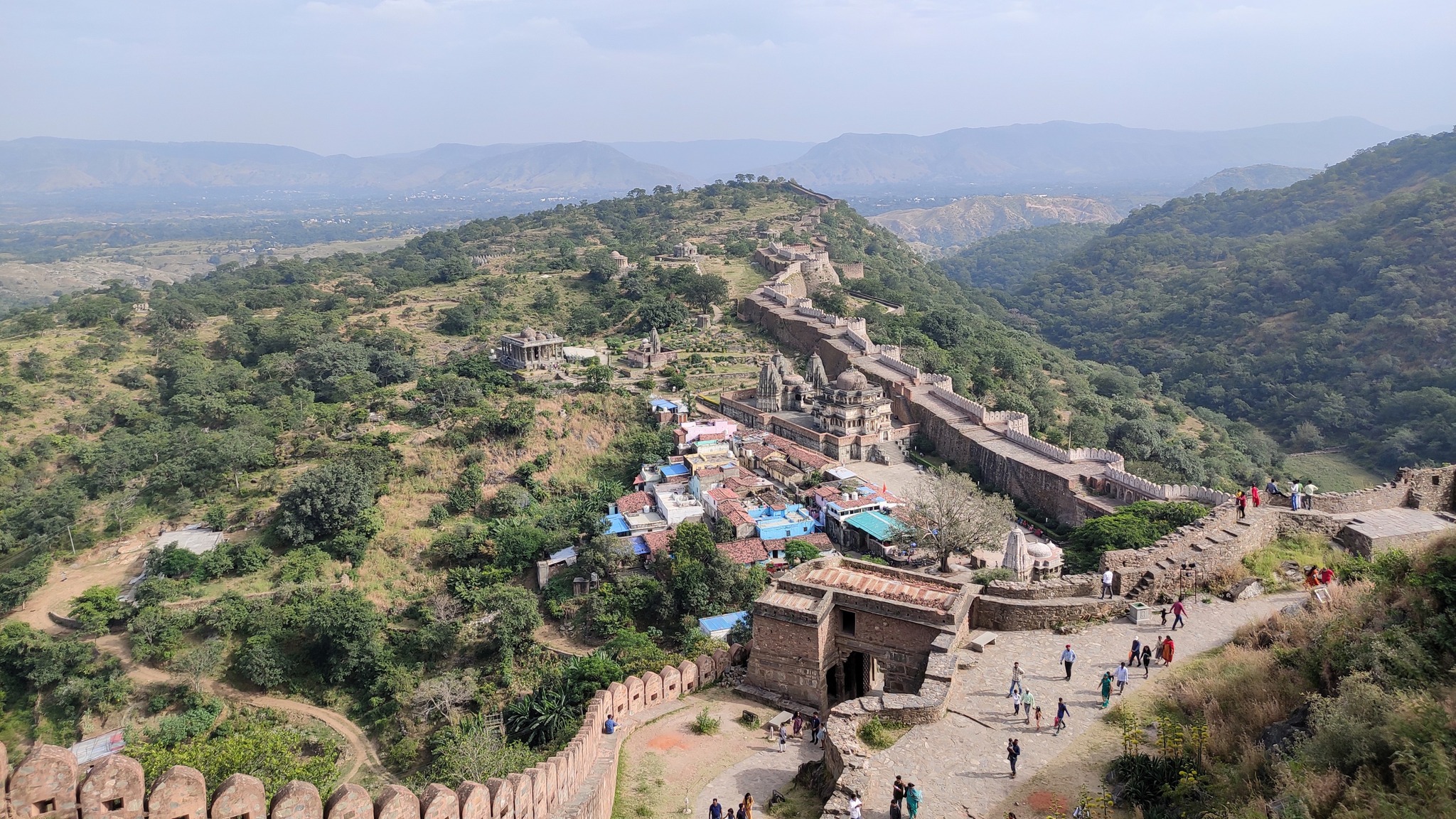
This being our first ever visit to Kumbhalgarh, we took the guided tour savouring every nook and cranny of the palaces and every bit of information dished out by the guide. From the rooftop of the Badal Mahal, we beheld the most magnificent views of the Aravallis and the Marwar plains beyond. Before we realized it, we had already spent two hours.

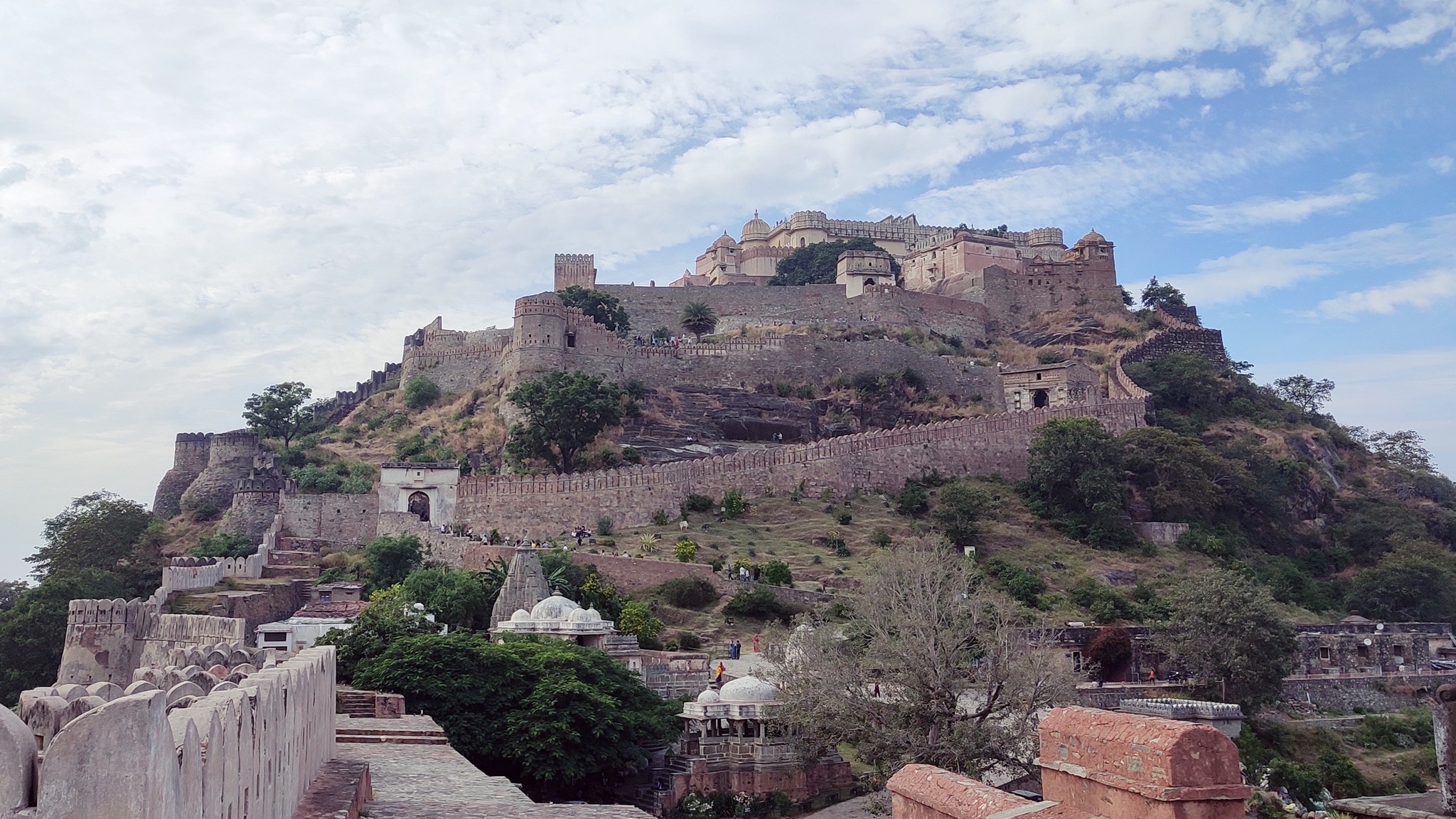
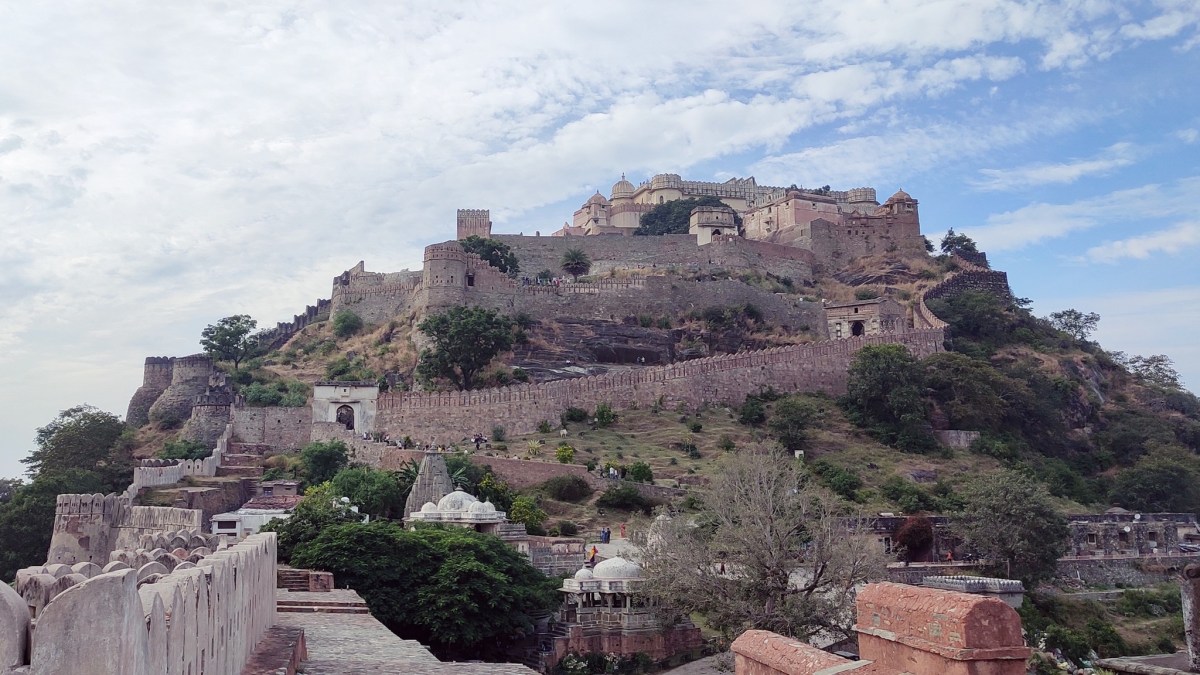
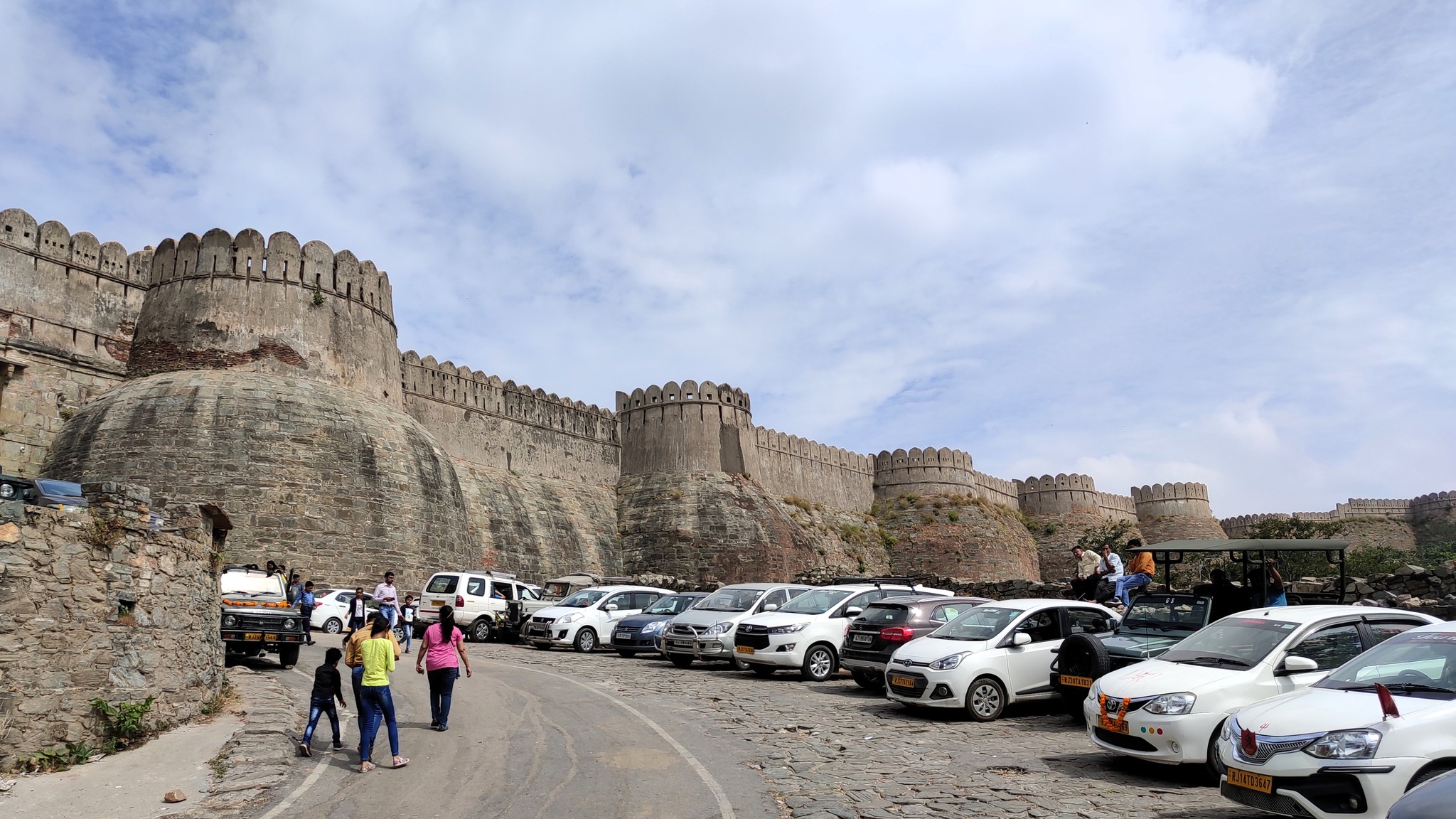
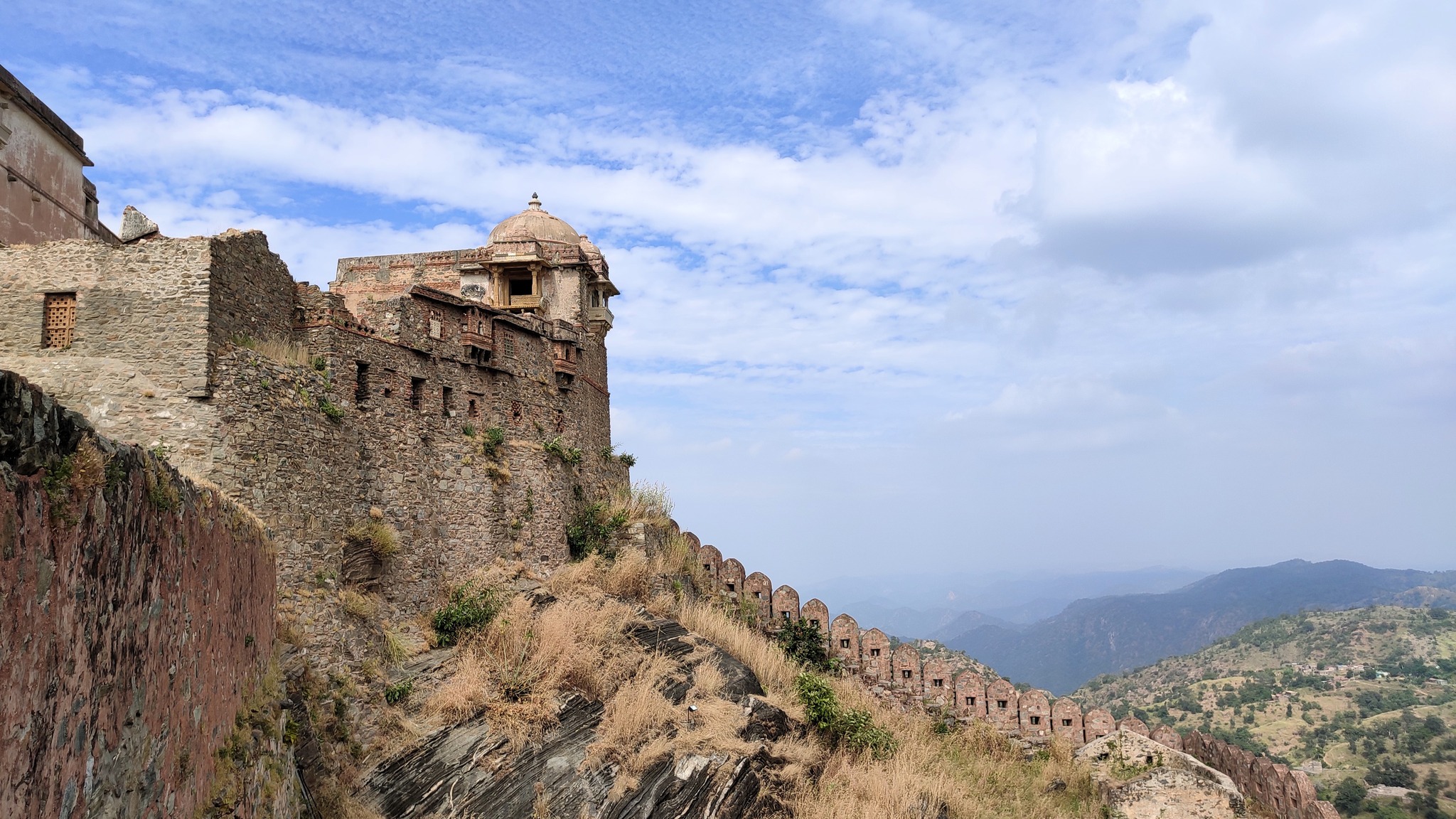
Descending from the palace, after a quick light meal at one of the shanties located inside the fort premises, we checked out the Vedi temple, and other nearby temples, and capped off the fort visit with a walk along the famed fortress wall of Kumbhalgarh, from where one gets a clear view of the palaces sitting on the hilltop.
By now, it was already 4 PM, leaving us with little for the next stop on our itinerary, Ranakpur. In any case, any possibility of seeing Ranakpur was nipped in the bud shortly, when our cab driver refused point-blank to drive through the hills to the famous Jain temple, on account of the impending darkness, compounded by the fact that the temple closes by 5 PM anyway.

So, we had to leave Ranakpur for another day, another trip! Returning to Udaipur by 7 PM, we checked in to Broadway Hotel near Saheliyon ki Bari, and retired for the day after dinner.

Day 4: Exploring Nearabouts: Eklingji and Haldighati

The next day began with yet another struggle to obtain a confirmed booking for an Ola outstation cab, which I managed to get after attempting for about an hour. Given the dire circumstances, we had to leave out Nathdwara temple from the itinerary, opting instead to go to Eklingji. We finally managed to hit the road at around 10 AM, heading to and reaching Eklingji just in time for the darshan starting at 10.30 AM.

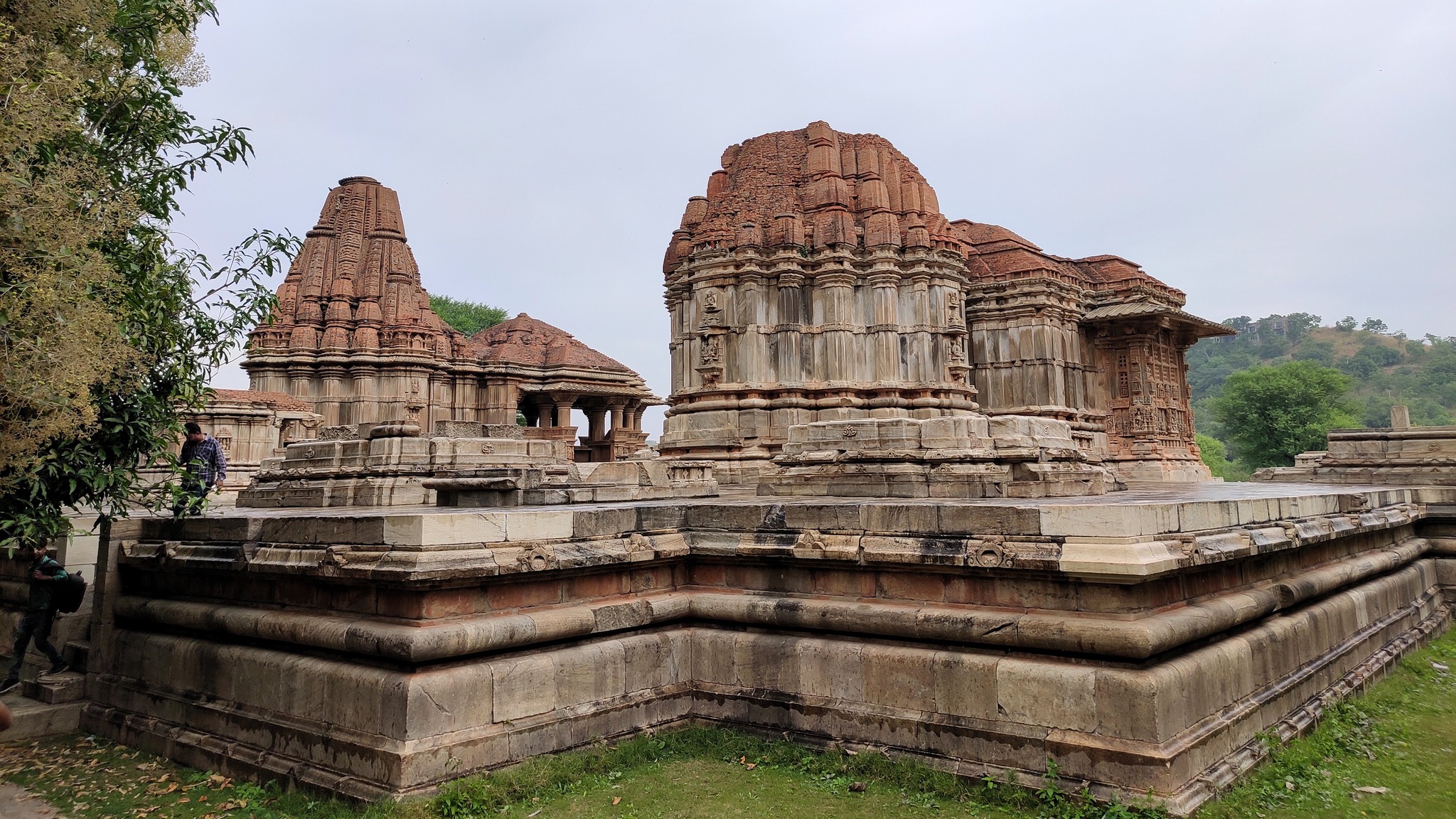
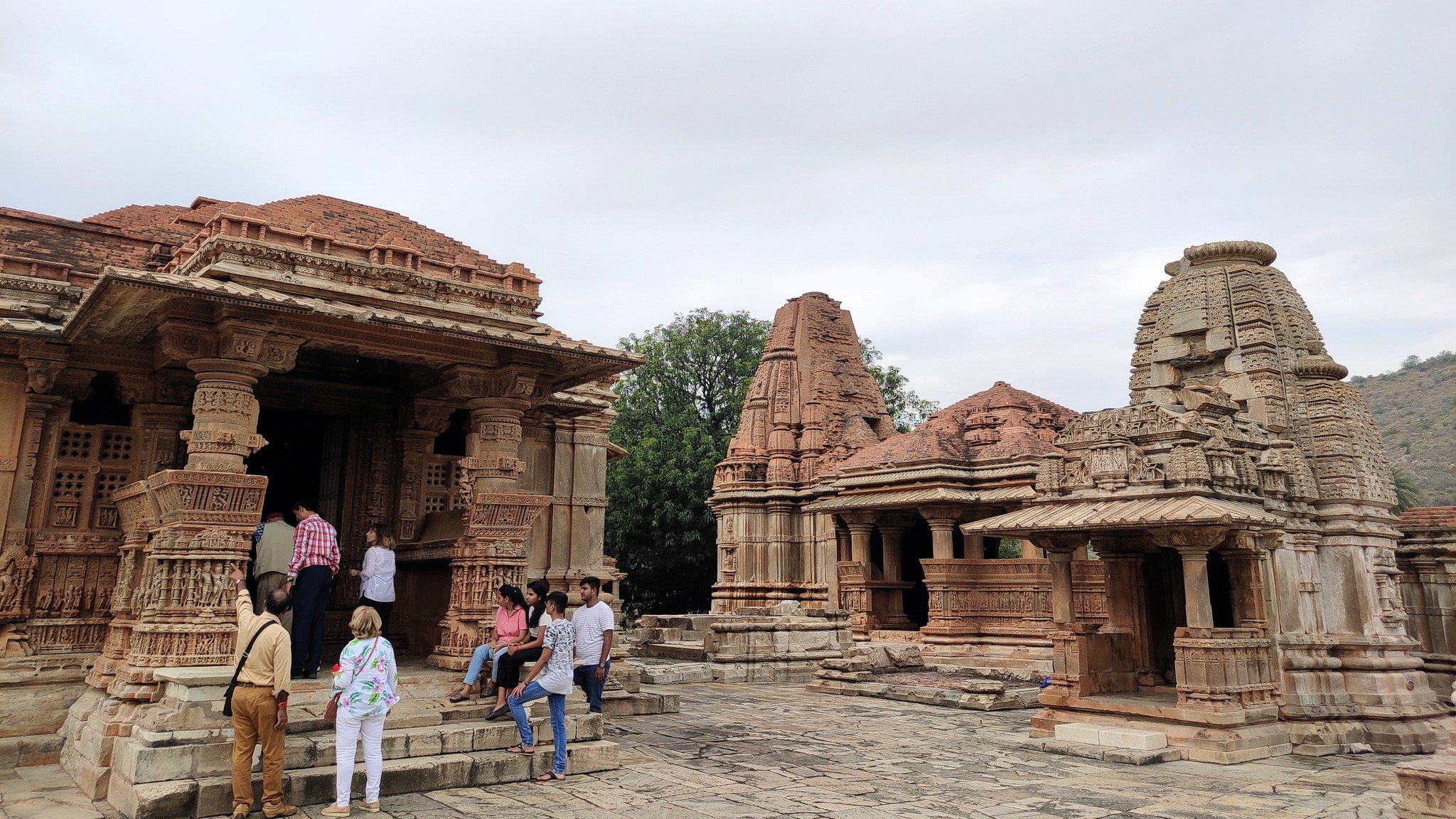
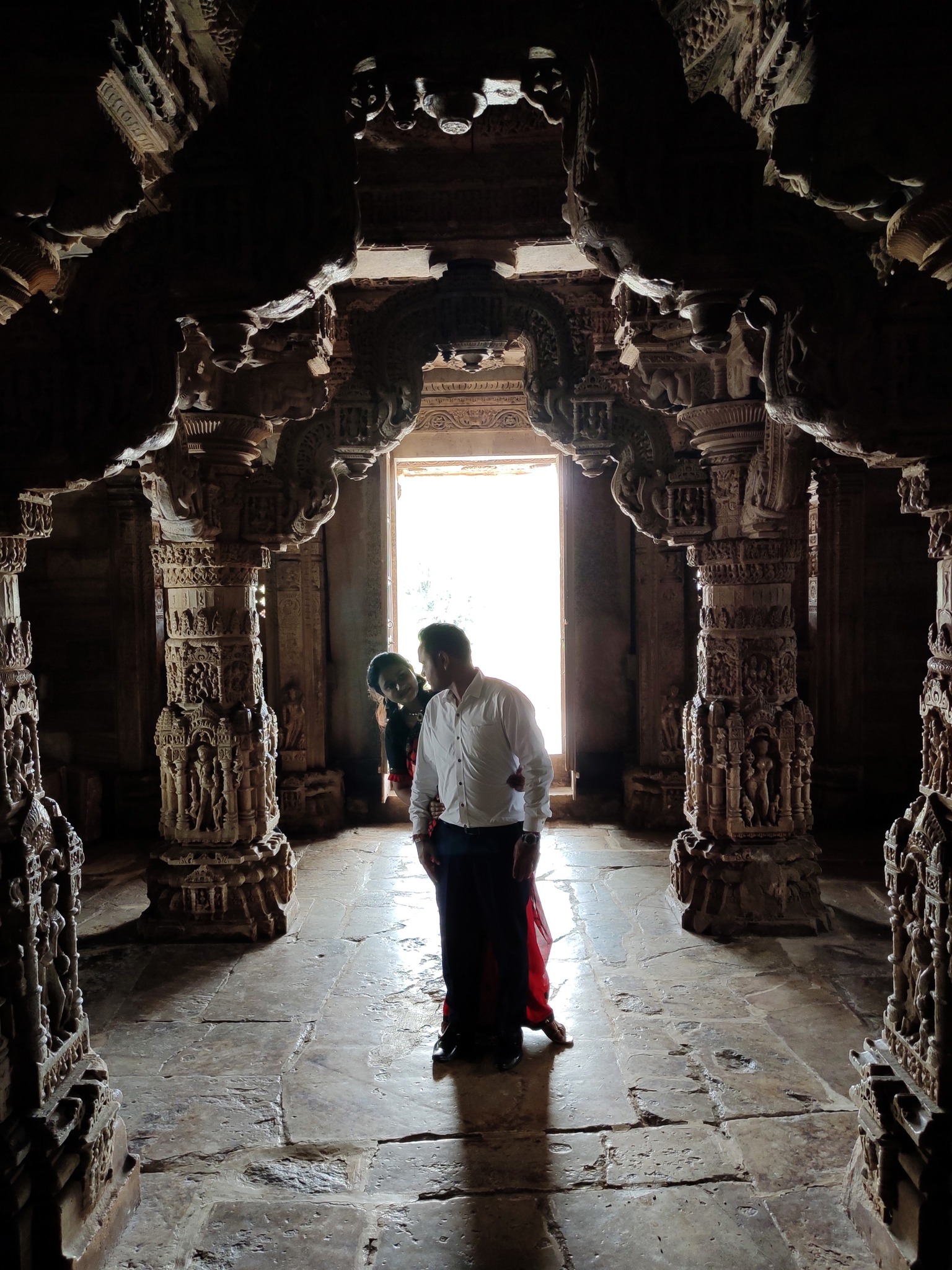
From the Eklingji temple, we proceeded to Sahasra Bahu temples at Nagda, a couple of kilometers away, which comprises a pair of 10th century Vishnu temples. The site seemed to be a popular spot for pre-wedding shoots. Thereon, we drove on to Haldighati Musuem, where we went through memorabilia related to Maharana Pratap, had our lunch, and proceeded to the Haldighati Pass. Turning back, we got down at Udaipur railway station , where we caught the 6:15 PM train to Chittaurgarh, reaching the latter after two hours.
Day 5: On to Chittorgarh

Next morning, I was back again at the place that I love most in Rajasthan – Chittorgarh, for the third time, but it still felt like I was coming here for the first time! We booked an auto-rickshaw whose driver doubled up as our guide, and took us around the fort area which in itself feels like a self-contained region, with a populated area on one side, and the remaining area covered with forests, including a deer sanctuary, and sprinkled with palaces, temples, towers and water tanks.

We started off with the Kubhashyam and Meera temples, then rode over to Vijaya Stambh, then saw the Jauhar kund and Samadhisvara temple. For there, we moved to the to Kalika Mata temple, and then Rani Padmini Palace. Then taking a wide curve, we switched to the other side of the hill, where we saw the fort’s main entrance gate, Suraj Pol, while also being treated to a breath-taking view of sparsely populated valley below. We then went over to a handicrafts shop, where we bought some scented silk fabric items.

By 1 PM, having completed one full round around the periphery of the fort, it was time leave, with a heavy heart, as far as I was concerned. Nevertheless, down in the city, we had a Rajasthani meal, and were in the railway station at 2.30 PM.
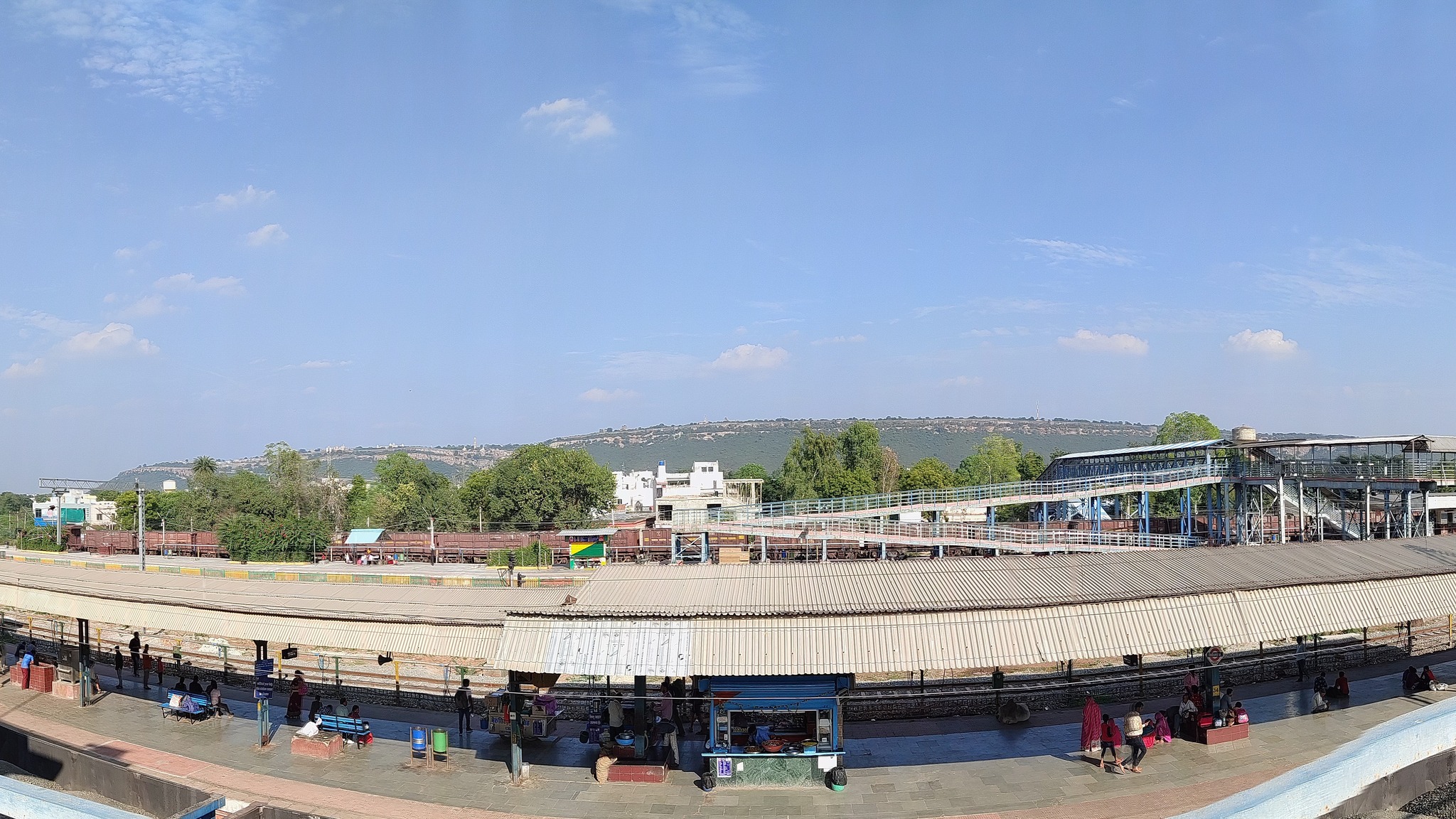
With part of our return train journey happening in daylight, we were again able to enjoy the interesting landscape, especially as we neared Bundi, where the railway line descended to the barren escarpment below. Then entering a tunnel, the train emerged out to amble along the edge of a reservoir on the other side of which ran the Aravallis. As we reached Kota, night had fallen, and when we opened our eyes early next morning, we were already approaching Gurgaon.
A Tale of Two Valleys: Kinnaur and Sangla

Part-1: Kinnaur Valley

Diwali this year afforded us with a very long weekend, and off we (my friend Abhijit, his friend Amiya, and I) set for Kinnaur Valley. We had booked overnight bus tickets till Shimla, and as the bus ascended the sharp turns with each passing minute, it was overtaken by a contagious wave of nausea. Even those who held their fort tight till the very end, had to give in – spurred by bouts of throwing up all around – to throwing up themselves.

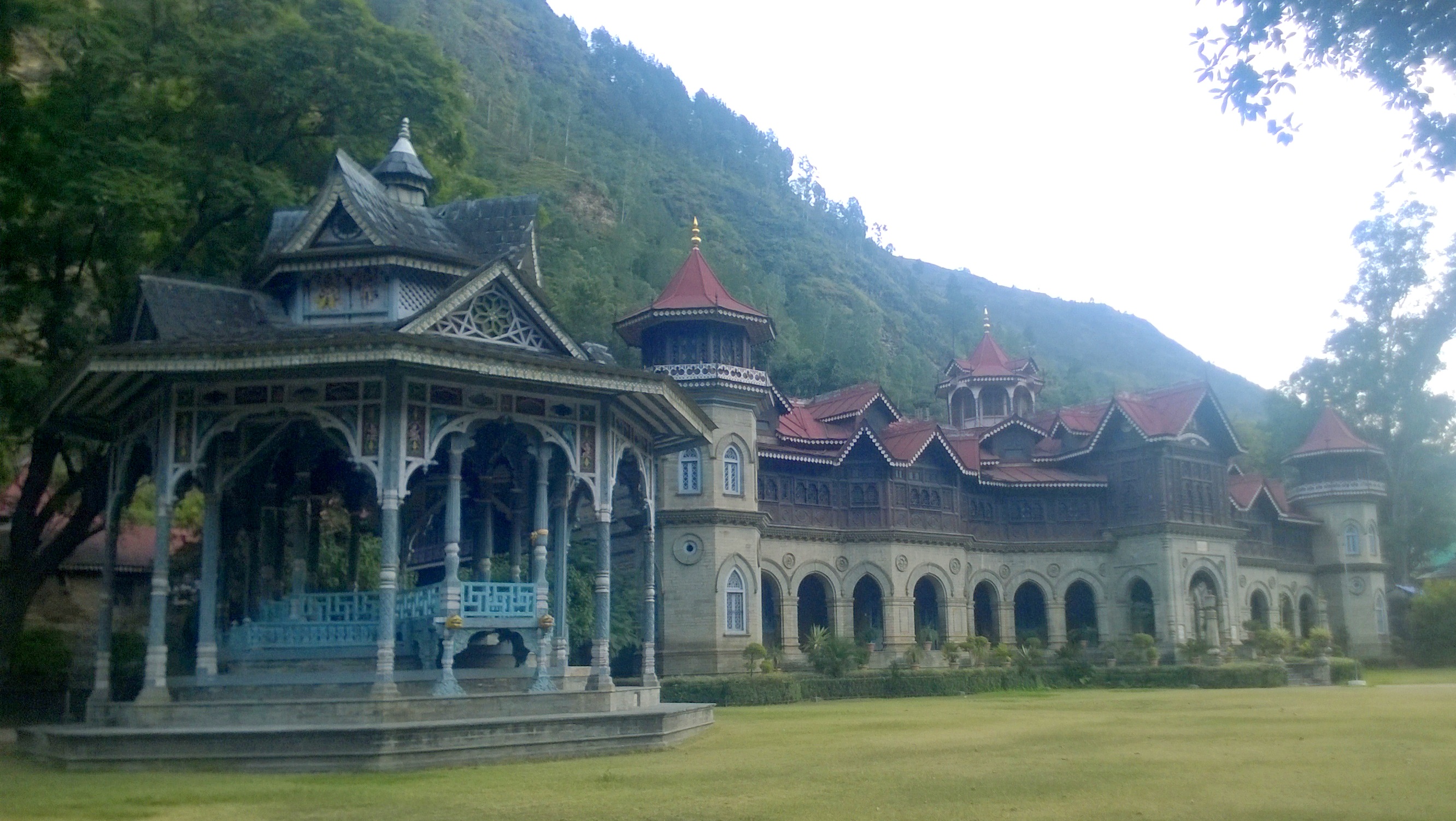
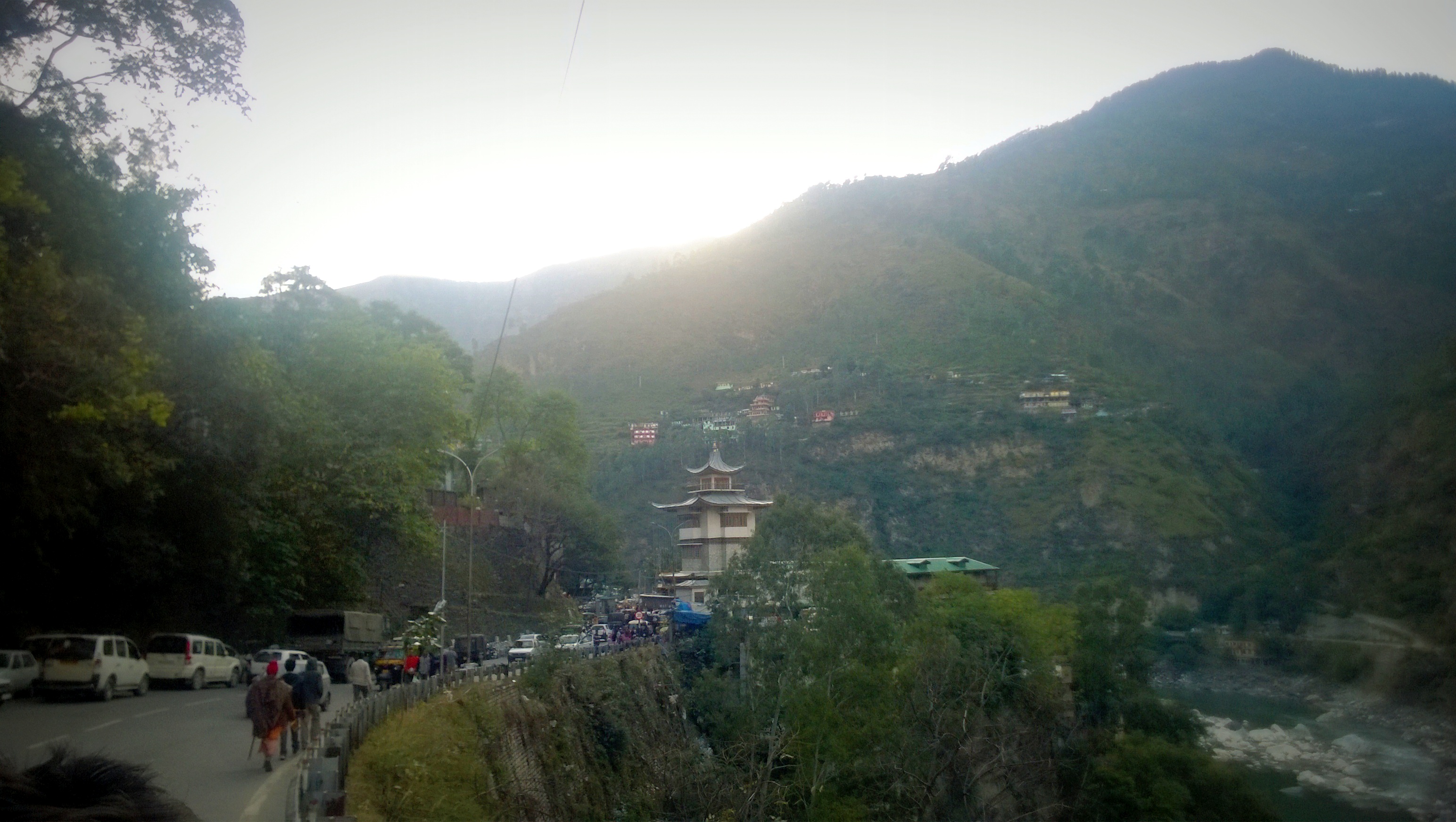
After a quick breakfast in Shimla, we hopped on to a state transport bus, even as a 12-hour journey remained before us. Accompanied by Pahadi Nati songs (of which the most memorable one was ‘Teri Paronthi Laga Radio‘), we finally reached Rampur-Busahr at 3PM, and soon got ourselves a room alongside the Satluj river. After a quick lunch, we stepped out to check out a Buddhist temple, the Rampur-Busahr bridge across the Satluj, and then, the King’s palace, where public access was allowed only till the lawns.

A monastery in Rampur-Bushahr, overlooking the Satluj
The royal palace of Rampur-Bushahr

It was Diwali after all, and so atop the hotel’s terrace, we looked in awe at the night sky, as the twinkling stars became indistinguishable from the showers emanating out of exploding fireworks. The mountain on the other side of the river looked as if it wore chains upon chains of sparkling diamonds. The temperature dropped to below 5 deg. C.

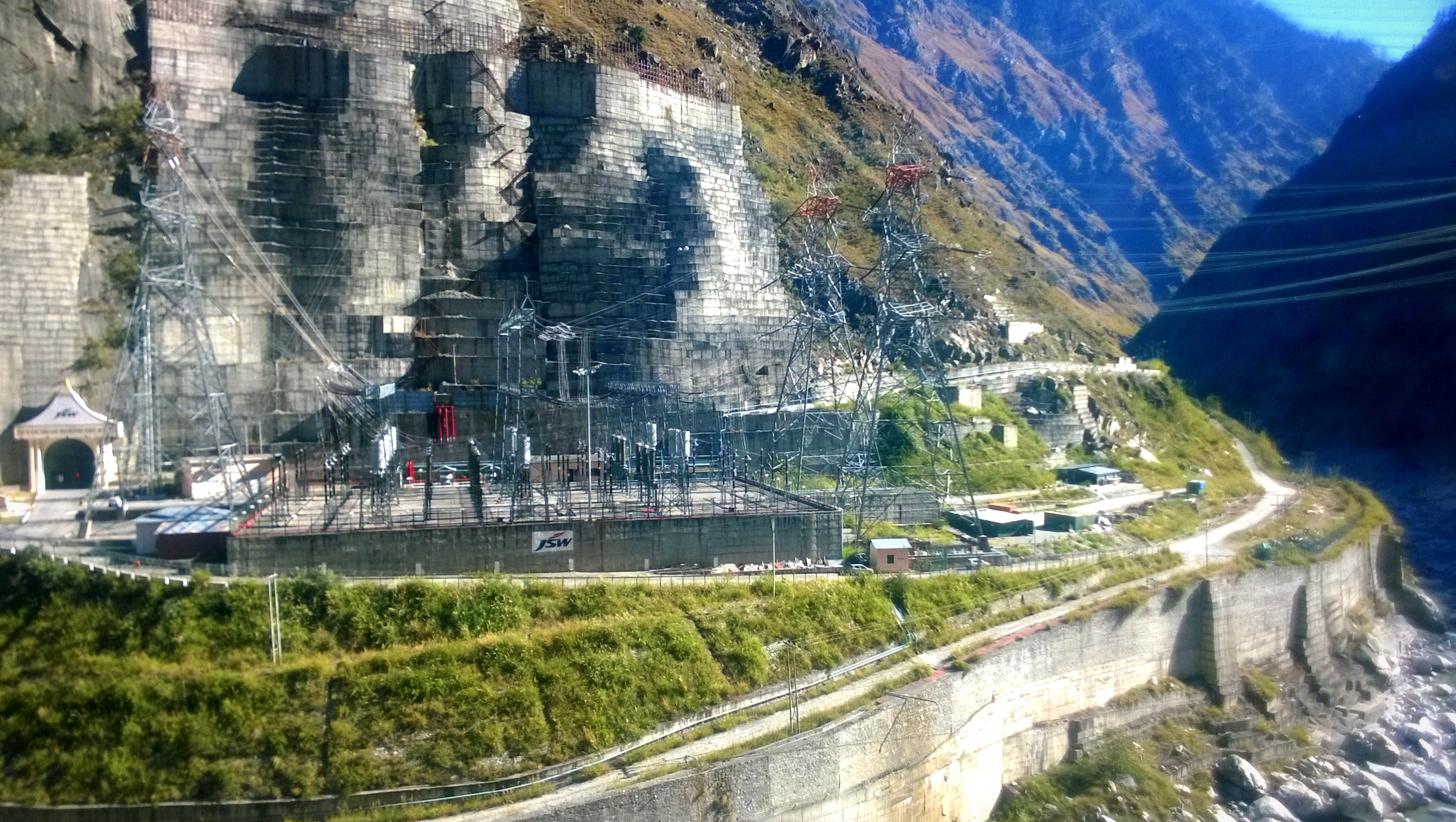
The next morning at 9am, we took a Himachal State Transport bus to Rekong Peo which was the gateway to the Kinnaur Valley. We hurtled alongside the Satluj for the longest time, with the mountains flanking us on both sides, treated to images of waterfalls streaking across the ridges on the opposite mountainside and the numerous hydro-projects. Before soon, we had passed through the famous hoop-like rock tunnel marking our entry to the Kinnaur Valley.

A hydel project on the Satluj

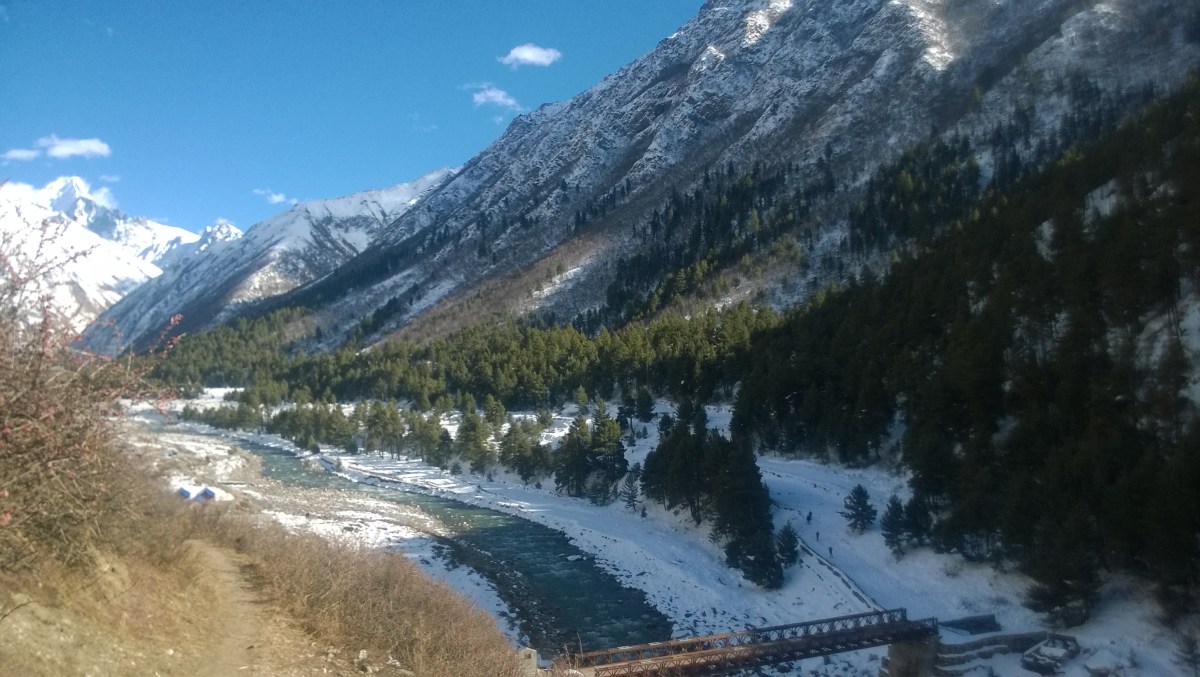
Shortly, we reached Karcham, the point where the Baspa river met the Satluj, and the road diverged, with one branch leading to Rekong Peo and further to Kaza, and the other leading to the Sangla Valley, where the well-regarded village of Chitkul, touted as the last Indian village, is situated. At this point, the snow-capped Kinnaur Kailash was already visible, standing there as if a stone’s throw away, but still unreachable even as we kept windingly moving in its direction.

Reaching Rekong Peo around 2 PM, our first step was to hail a lift from a personal vehicle going towards Kalpa, which is accessible by a 7km drive diverging from the road to Kaza. Getting down at Kalpa, we were immediately struck by the shining peak of the Kinnaur Kailash, which now seemed like a touching distance away. It being the shoulder season, we checked in at a throwaway price into a fascinating hotel in the form of a standalone Himachal-style bungalow located in the village centre, and chose a room with a clear view of the Kinnaur Kailash.

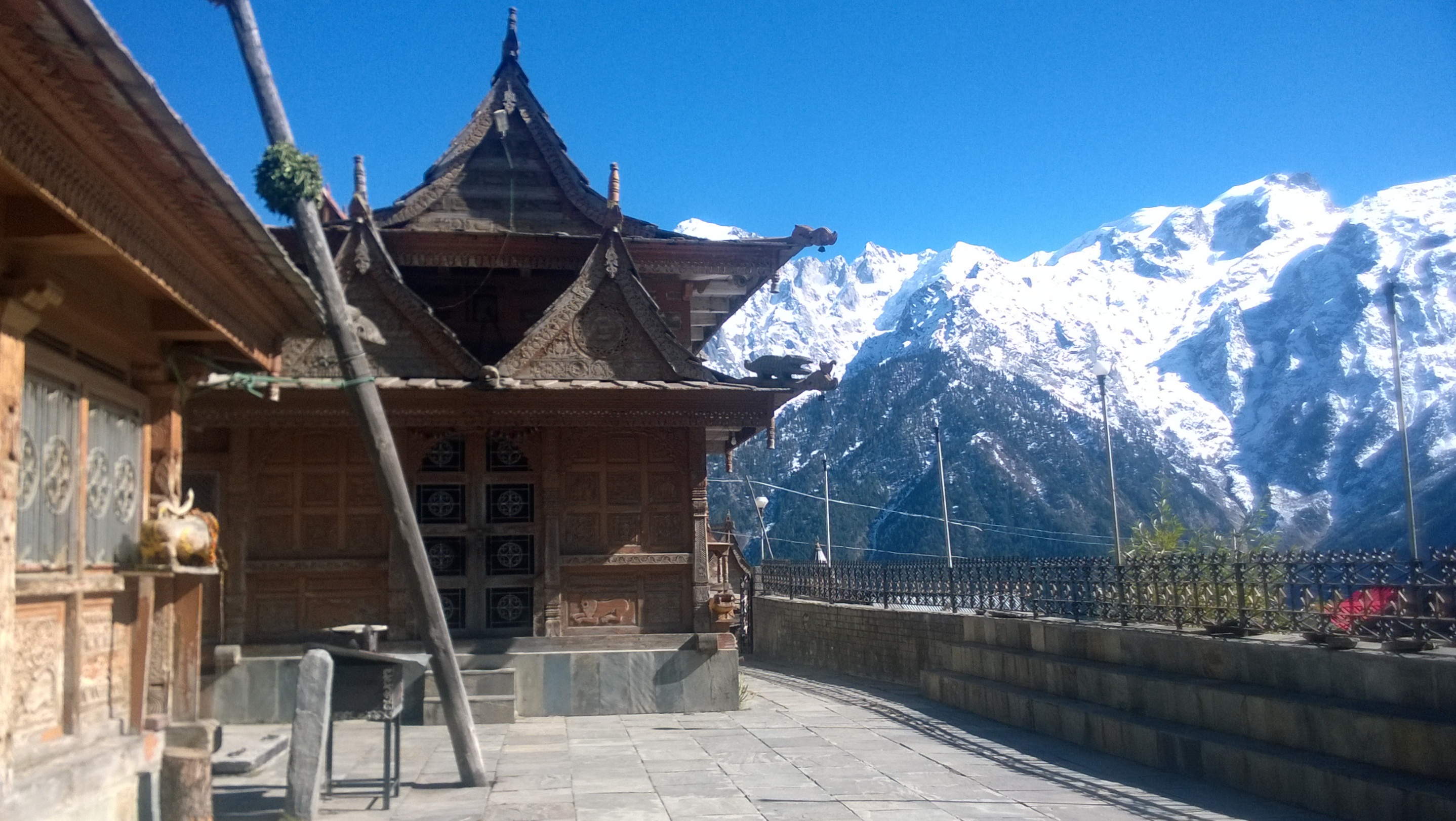
After a quick meal of thukpa at a roadside diner, we walked down the slope to the Kalpa monastery and the Chandika Devi temple. Exiting from there, we stopped to have tea at a homestay run by a 70-year old lady, who offered to make us a hot mutton curry dinner that night for a price. With the cold setting in, the prospect of hot piping food was enticing enough that we paid up the advance, and left for some further sight-seeing… or to put more precisely, aimless wandering.

The Chandika Devi temple with the Kinnaur Kailash in the backdrop

That’s when a local villager offered us a ride to Roghi. Little did we know that we would be subjected to one of the most dangerous roads that I have come across in my whole life: in fact, the Kalpa-Roghi road is cited to be one of the most dangerous roads in all of Asia! The road was as narrow as they came – suitable for barely two small car to pass through – with a vertical wall on one side, and a 500-feet vertical drop on the other, supplemented by a general dose of blind curves.

On the dreaded Kalpa-Roghi road, looking at the Kinnaur Kailash

We stopped at the famous ‘suicide-point’ on a platform jutting outwards into the Valley. The view of the Satluj lying as a shining silver ribbon several feet below, and the road winding around the corners on two opposite ends, with the Kinnaur Kailash standing like an imposing guard overlooking the whole set-up, was breath-taking. The villager took us to Roghi, and dropped us back at Kalpa, after which we explored the Apple orchards on foot, to while away time till dinner was readied by the old lady. The dinner, as it turned out, was delicious.

Walk through the Apple orchards of Kalpa

Part 2: Sangla Valley

The following morning, we were were stuck by decision paralysis – Abhijit wanted to see Chitkul which was quite a detour, while Amiya was keen to just return to Delhi. The quibbling went past 9 AM, the scheduled time of the sole morning bus to Chitkul, and it was time for me to adjudicate. My verdict: we would see Chitkul and leave for Delhi the same day.

Abhijit and Amiya looked at me incredulously, given there would be no public transport to Chitkul until later that evening. I told them I didn’t know how we would would do it, but there would be only one way to find out: we would get down at the fork in Karcham, where the road to Sangla Valley emanated – the point the River Baspa met the Satluj – and try our luck.

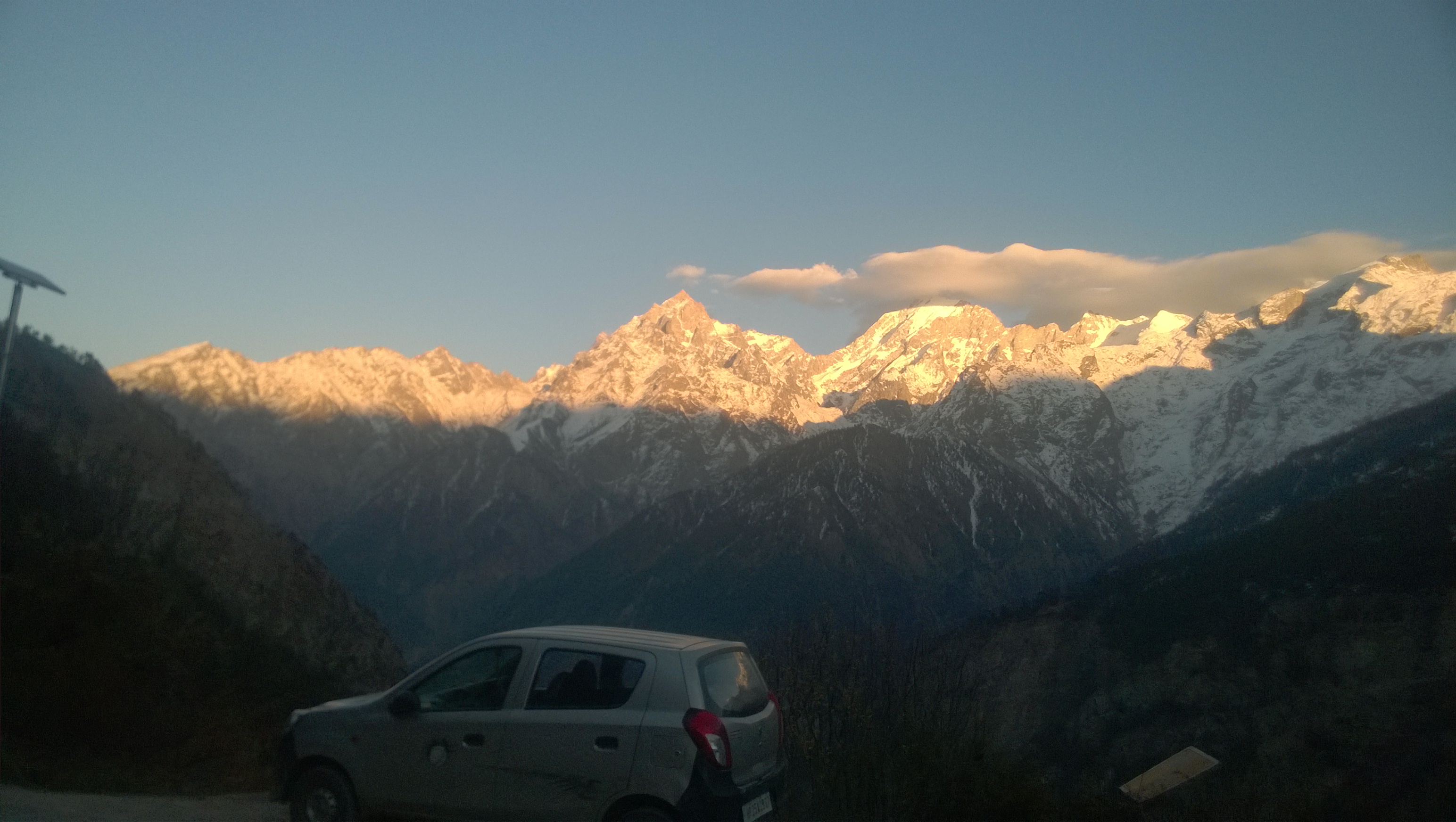
So checking out at 10AM, we hitched, yet another ride, down to Rekong Peo, and caught a bus headed to Rampur-Bushahr; got down at the fork in Karcham, as planned; and waited for a lift. Amiya was still sceptical – he would rather he was headed to Delhi – and Abhijit just sat there in quiet anticipation. After a couple of vehicles ignored our hailing sign, we were pleasantly surprised to find a middle-aged couple stop to give us a lift in their Alto. Stashing our luggage in the boot, the three of us squeezed ourselves into the rear row, and soon found ourselves negotiating another death-defying road.

At 11.30, the couple dropped us at the Sangla bus depot, where, upon a quick inquiry, we learnt that there was a bus to Chandigarh at 3.30 PM. So, we had 3 hours in hand to make a trip to Chitkul and back if we wanted to be on our way to Delhi the same day. With no public transport in sight, and the reliance on hitchhiking seeming undependable given the time constraints, hiring a cab seemed to be the only resort. Thus, following yet another round of disagreement, this one involving the budget, we bit the bullet, and hired a cab for Rs. 2000.

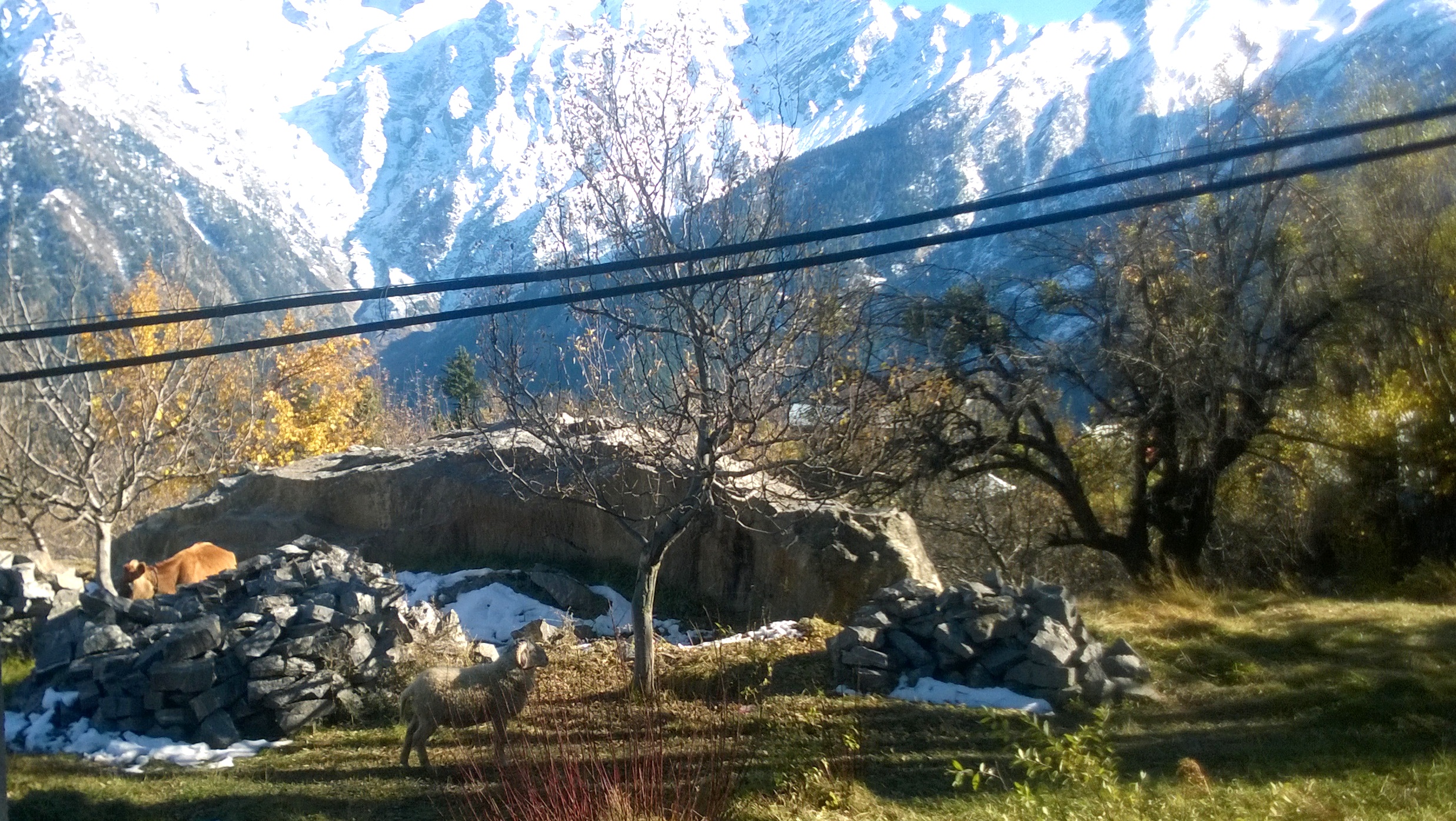
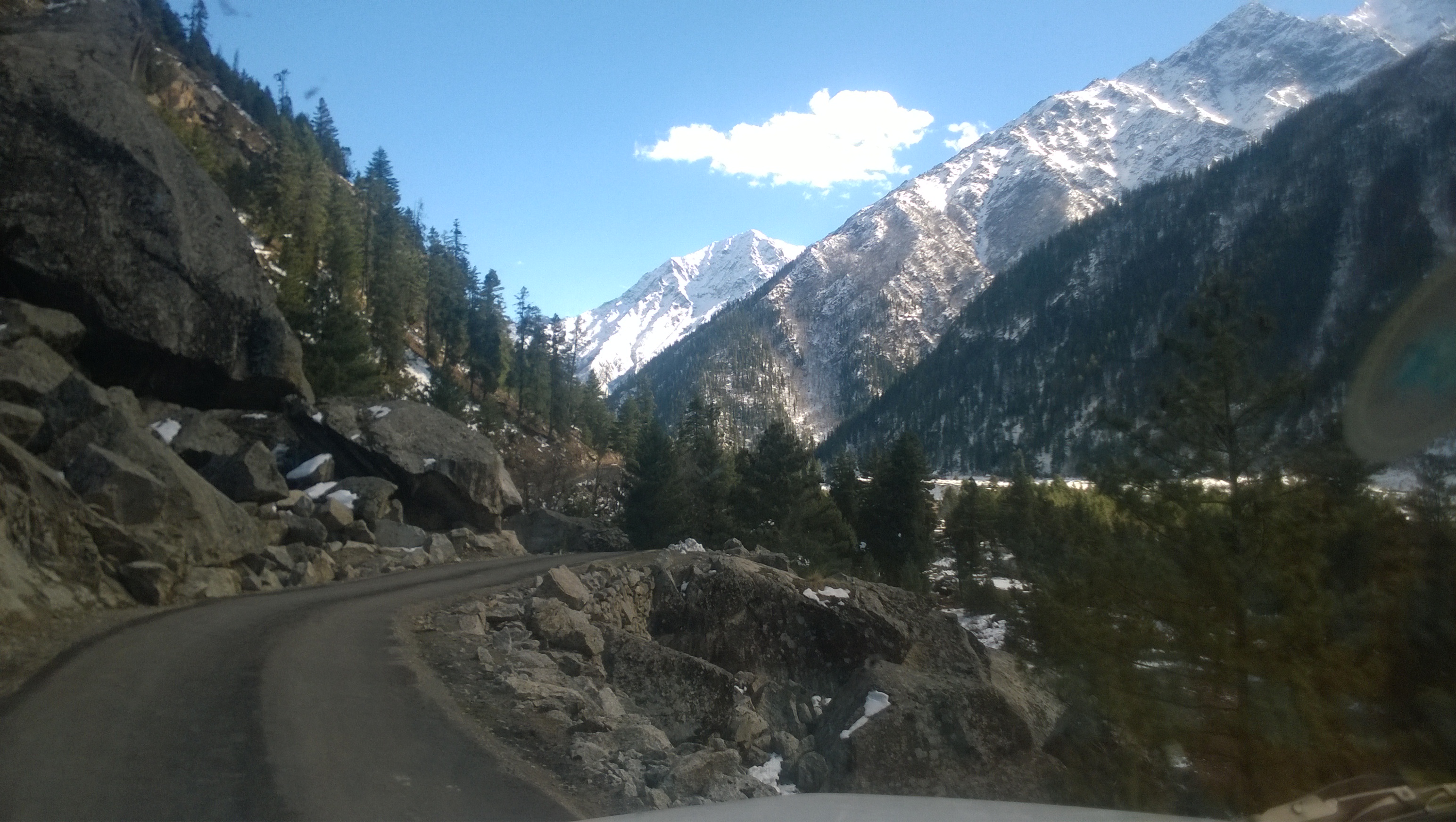
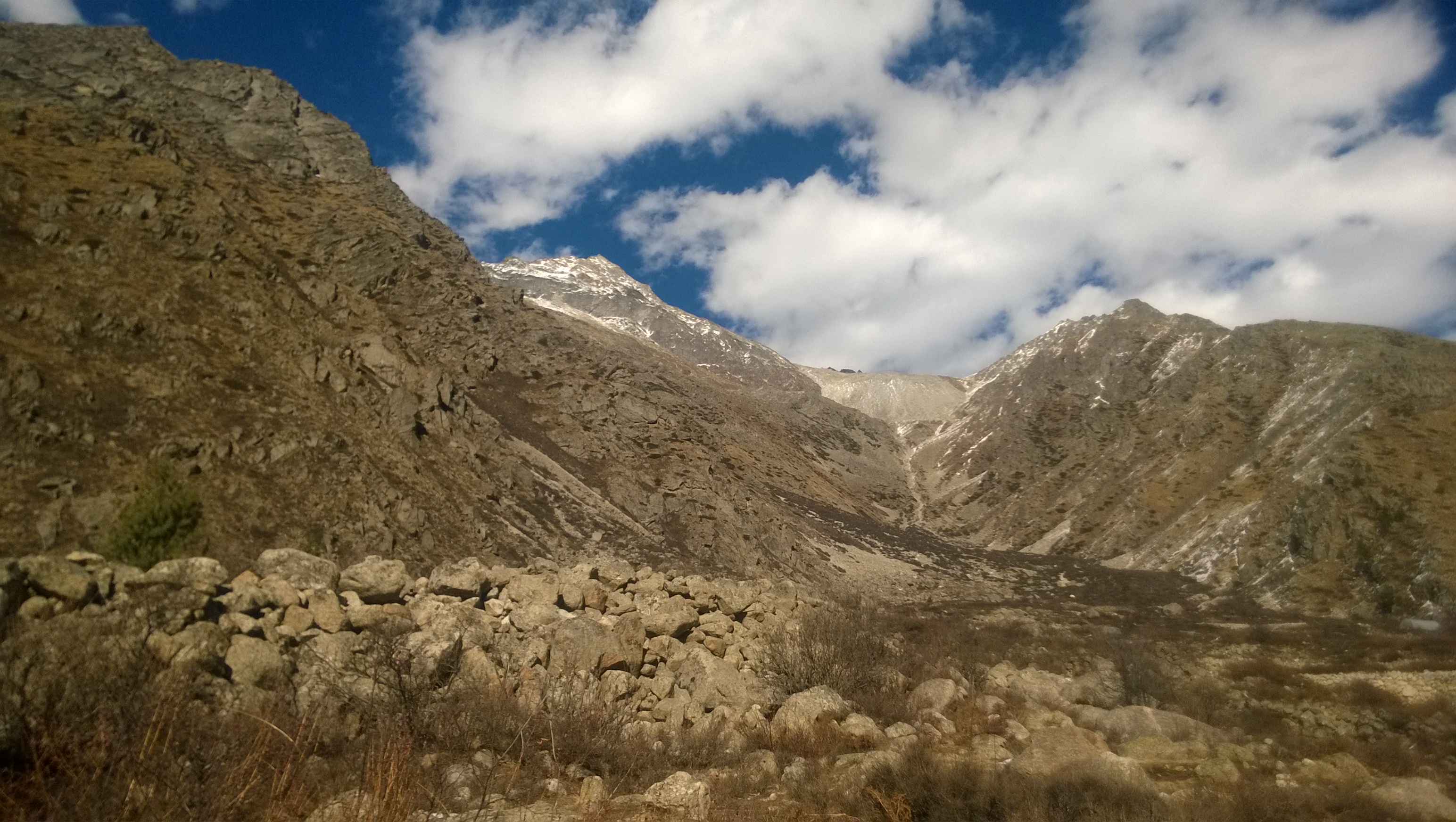
Soon, we were headed to Chitkul – with the road seeming less dangerous, since the Baspa Valley in this stretch is not very deep – marvelling at the sight of glaciers flowing down the mountainside into the River Baspa. We encountered a cute-looking waterfall on a stream with a bridge on which only 1 vehicle could pass at a time. The tarmac soon gave way to an unpaved road, even as the mountains on our side of the river soon turned brown with no vegetation, with their peaks topped with snow.

Sangla Valley enroute Chitkul

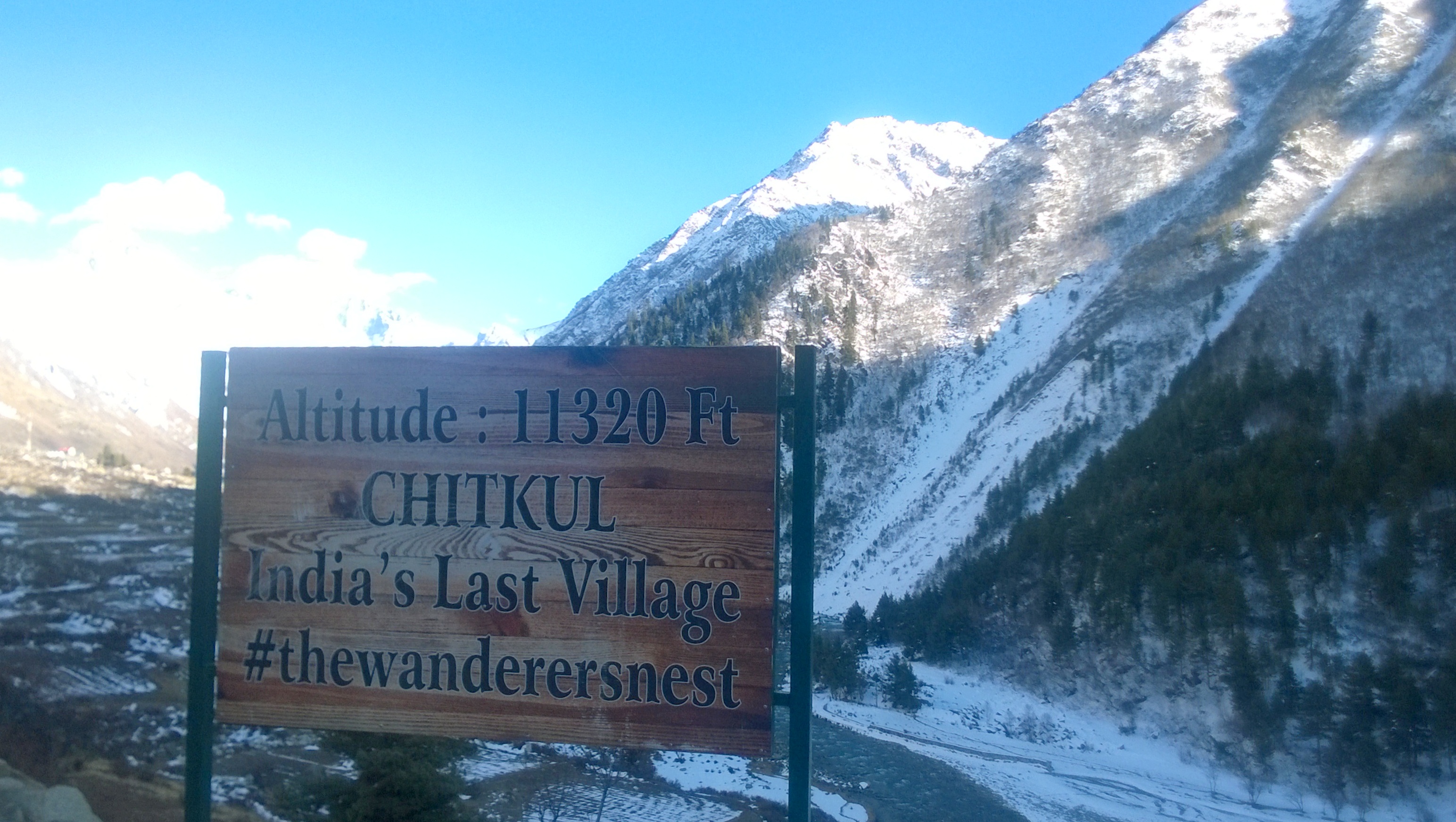
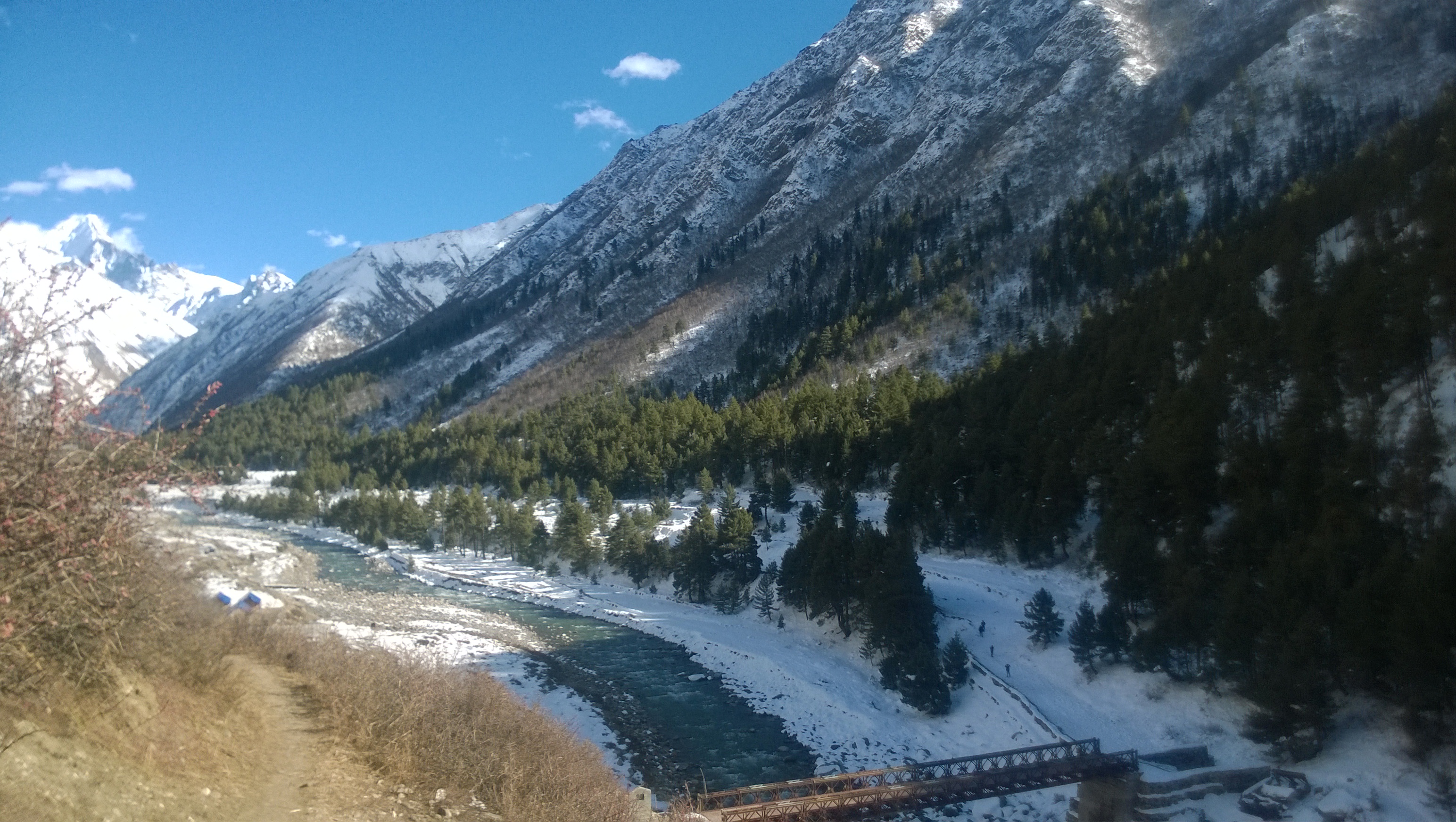
By 12.30, we were at Chitkul village, and we promptly trekked down to the bank of the Baspa, on the other side of which lay a cover of snow. Crossing the bridge over the Baspa, we were soon wading in the snow. There’s something about snow that awakens the child inside of man, and we were not immune to the same, evident from how we soon got down to making snow mortar and throwing them at each other. A pint-sized snowman followed soon after.

Signboard welcoming you to Chitkul
At Chitkul

But we had to be mindful of the time, so at around 1.30 PM, we clambered back on to the main road, had a quick lunch at a roadside eatery, and headed back to Sangla. At Sangla, we hopped onto the ordinary (non Air-conditioned) state transport bus as soon it arrived, and managed to get ourselves window seats, keeping in mind the long journey ahead. The joy of managing to get those seats, however, was tempered by the vomit stains on the window frame, and on the inner side of the bus’s wall, and on the floor…meaning, leaning against the bus’s wall was not an option.

Desertified mountain on one side of the valley

The bus started at its own sweet time, at around 5, and soon we were traversing the treacherous stretch of the road, with our seats located on the side of the bus facing the deep, deep valley below, and only a hair’s width separating us from the edge of the cliff. Luckily, as it was getting dark – and darkness falls rather quickly on the high mountains – we were spared the scary views of the bottom of the valley from our window seats.

After a dinner stop somewhere near Rampur-Bushahr, we fell asleep, waking up only once the higher temperatures of Punjab lashed at our faces. At Chandigarh the next morning, following a quick freshening up, we caught another state transport bus to Delhi. Amiya seemed exhausted by now, and could not wait to be back home, but Abhijit and I were not helping matters, as we ribbed him by humming the tune of ‘Teri Paronthi Laga Radio‘. Thankfully for Amiya, his misery ended at 2 PM when we finally reached Delhi.