Mandawa: Impressions from a First-time Visit

Eager to get away from the humdrum of our job, my colleague Amit and I, decided to make a weekend getaway to Jaipur.

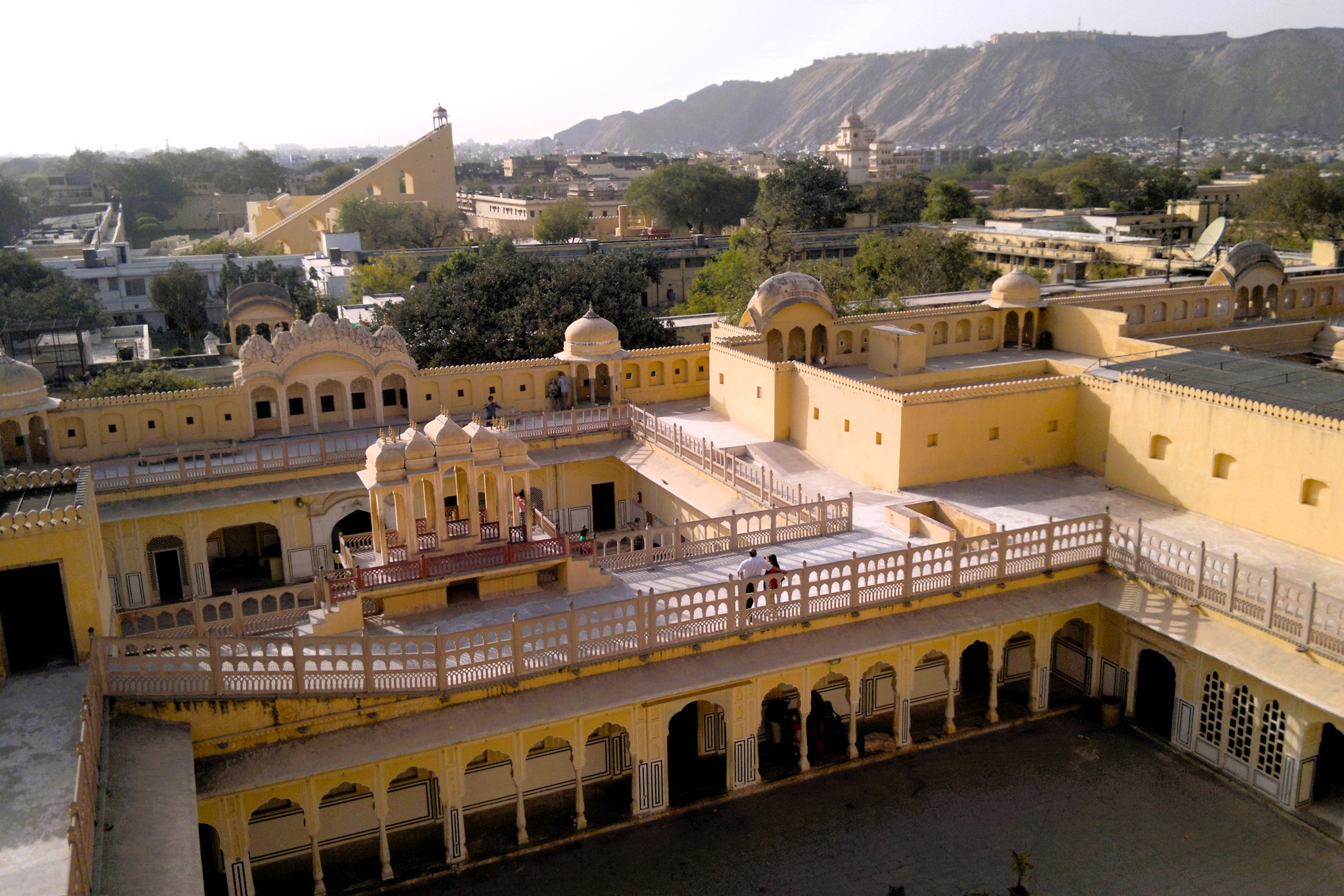
This being my third visit to Jaipur and Amit’s first, I drew from my previous experience, and we booked a day-long package with an auto-rickshaw driver, who took us to Hawa Mahal, Jantar Mantar, Amer fort, Jaigarh fort, and finally, to Nahargarh fort. Later, in the evening, we got a taste of Rajasthani culture and cuisine at Chokhi Dhani.
Now, where do we go to the next day? I really wanted to go to Sambhar Lake, but not able to find any information on how to reach there, we considered other places, which is when I remembered Mandawa, from two movies released a couple of years ago, namely, P.K. and Bajarangi Bhaijaan. It turned out Mandawa could be reached by public transport, complemented by a bit of local transport.

So, the next day at 8 AM, we set off by public road transport to Mukundgarh. As we passed Sikar, and then, Nawalgarh, I was fascinated by the set-ups of the towns – lying as disjointed clusters in the midst of the semi-arid landscape, with not much construction found along the road connecting the towns. The road cutting through each town was flanked on both sides by houses with their facades aligned, albeit in a jagged manner, with other houses on their respective side of the road. The houses, mostly painted yellow or white, wore an old world charm, transporting you to at least a hundred or more years back.

Getting down at Mukundgarh, we got around to looking for conveyance to Mandawa, when a strange-looking vehicle drew up alongside us. It was an auto-rickshaw which was decked up with fancy colourful decorations, with even more decorations on the inside, and covered with a canopy that formed a closed compartment! We were so intrigued that we hopped into the fanciful auto-rickshaw without even haggling.

As we advanced on the road to Mandawa, we saw the landscape gradually becoming more and more arid, and as we got nearer to Mandawa, we could see on both sides endless expanses of undulating sandy flats with a few sprinklings of low trees and shrub, even as villages each comprising just a handful of huts greeted us from time to time. Soon, we saw a bigger cluster of houses, and were welcomed by an arched gate on a wall that seemingly enclosed a town inside – Mandawa was here.

As we entered the gate, we were ushered in by two arrays of verandahs of the buildings abutting either side of the narrow road. Some buildings hosted shops, some others were residences, and some were merely the entrance to a larger building standing behind the front row.
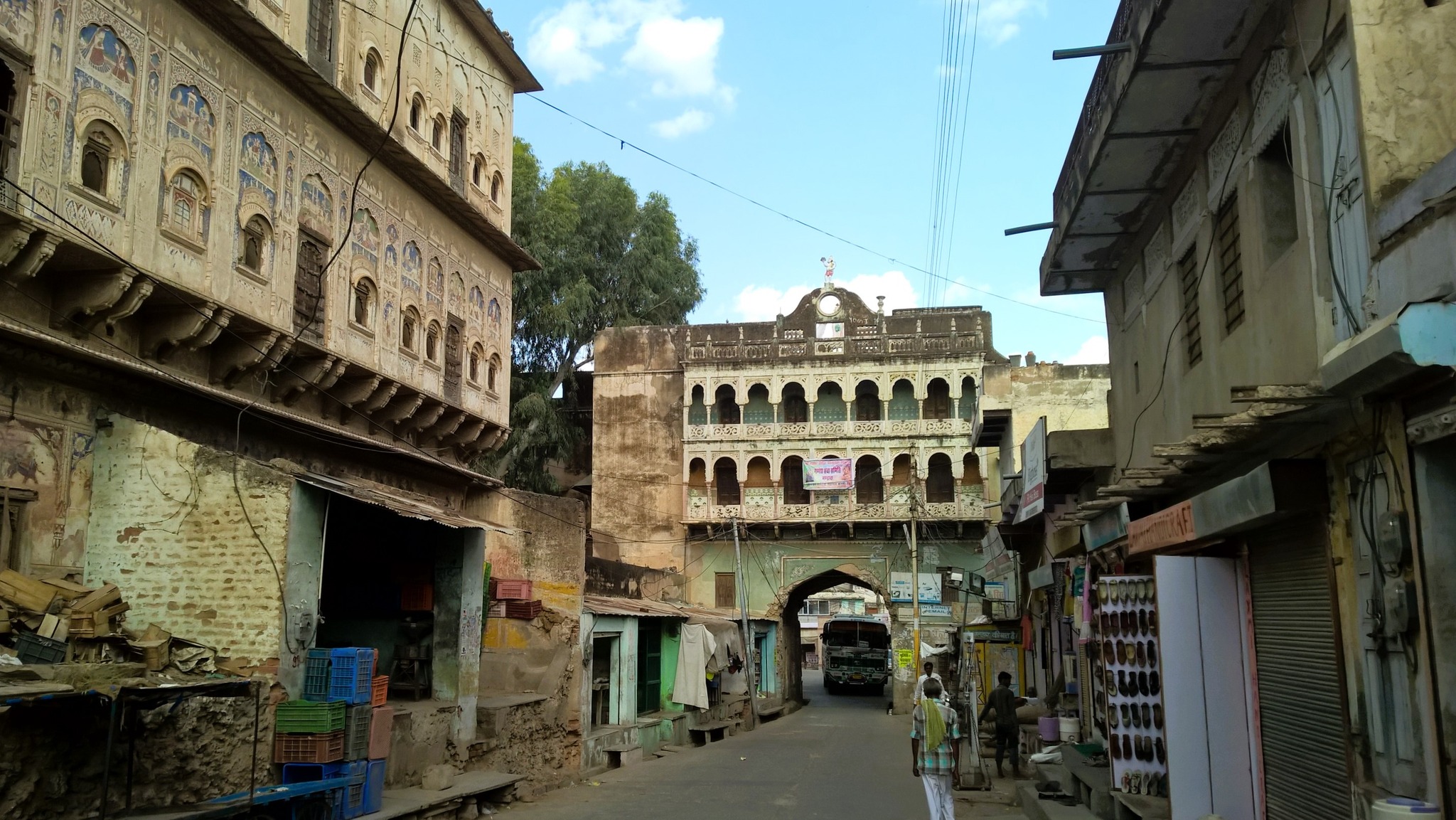
Before we could get a hang of the place, we entered a bylane that apparently led to the Mandawa castle, but failing to locate the gate, we kept walking, past many havelis, until we reached an open area somewhere adjacent to the castle. We saw a shanty serving Maggi instant noodles and tea, and decided to first fill our tummies, while scratching our heads as to how really to explore the place, in the absence of a guide or any prior knowledge.

This is when appeared a boy – someone we would later refer to as Chhutku – barely 8 years of age, with disheveled hair, dressed in crumpled, undersized clothes, who sensing we were the touristy types, offered to show us around, for a price, and kept insisting on it until we had finished our meal. Partly to humour him, and partly impressed with his enterprise at such an early age, we relented.

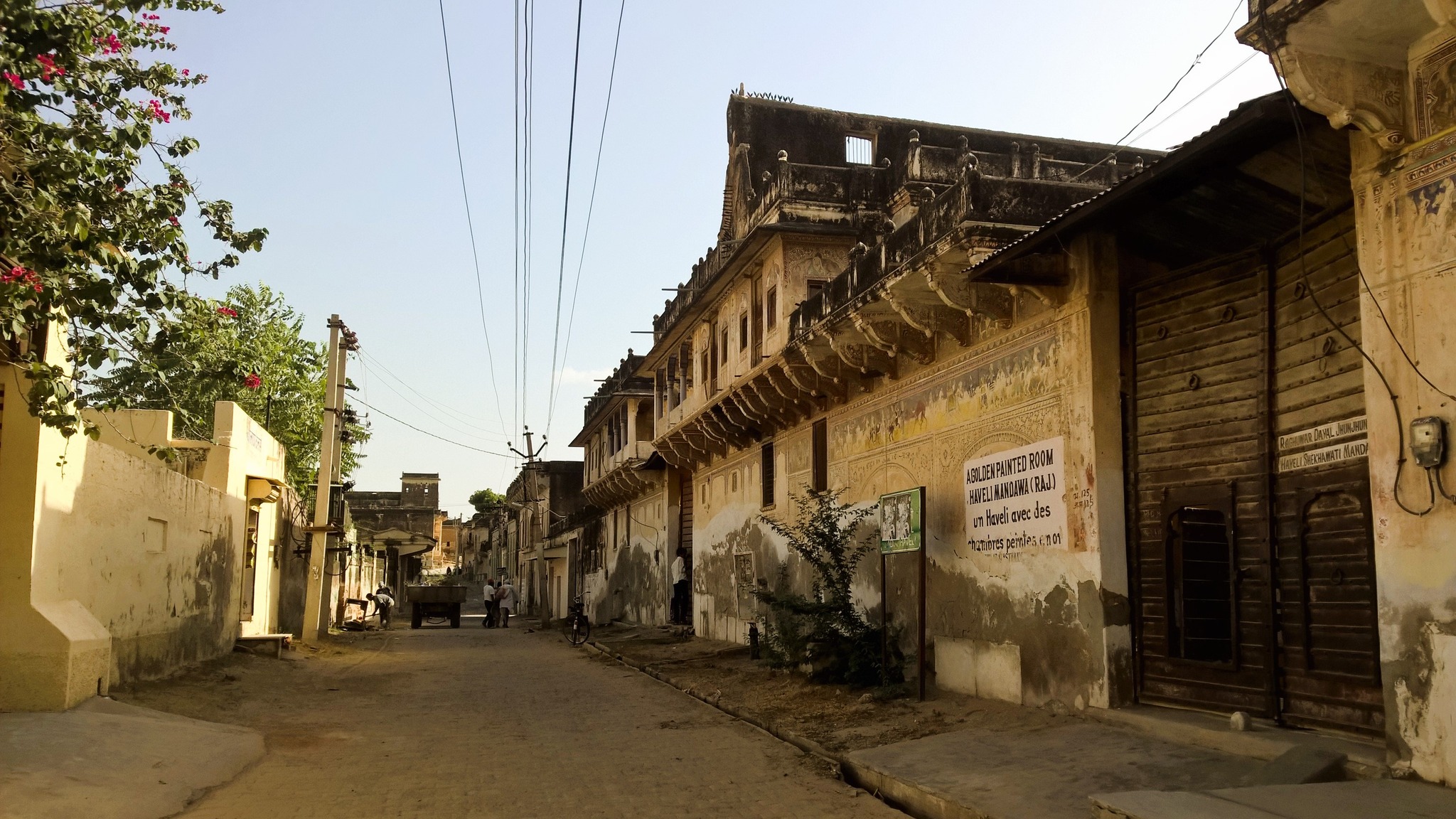
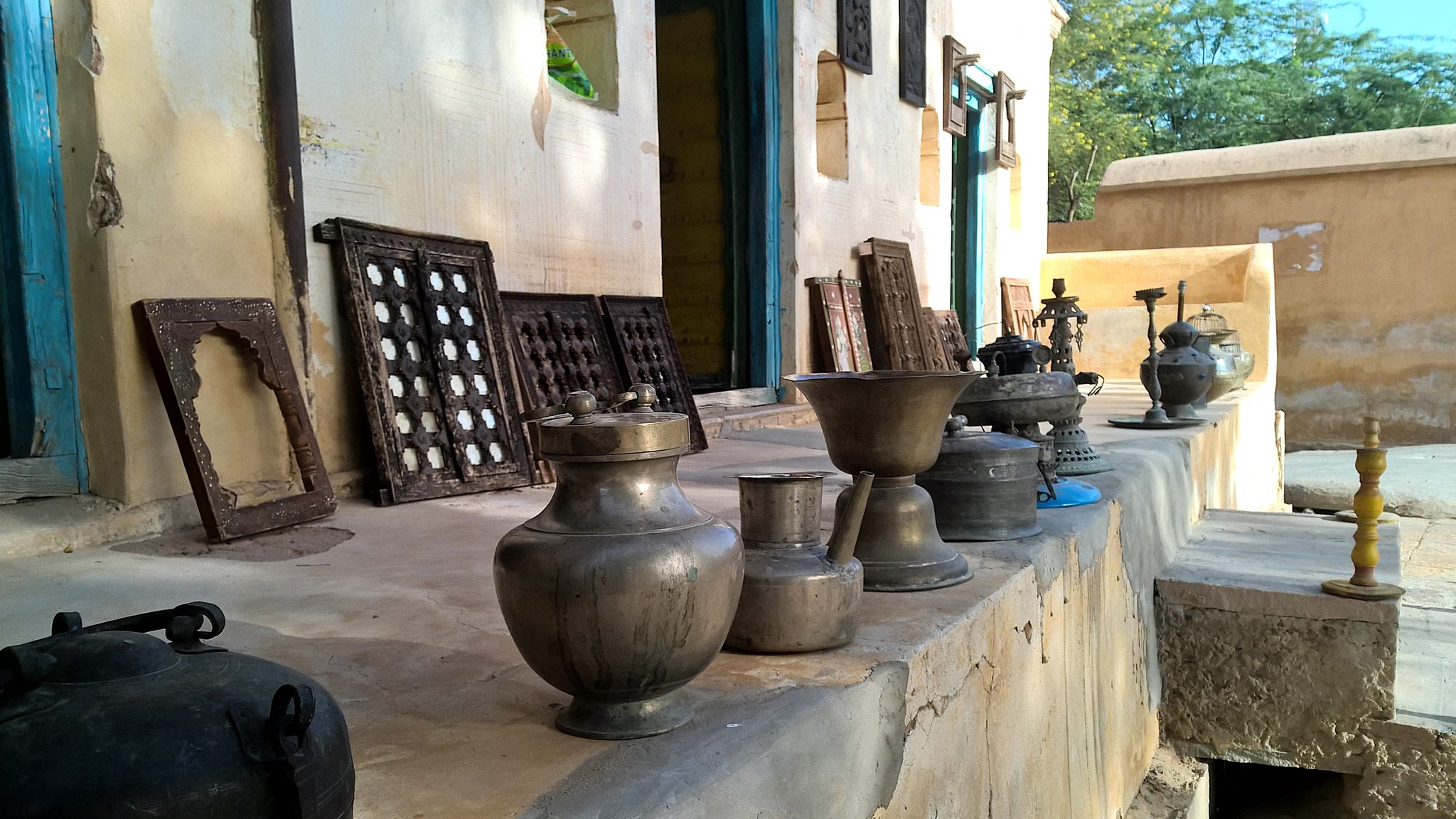
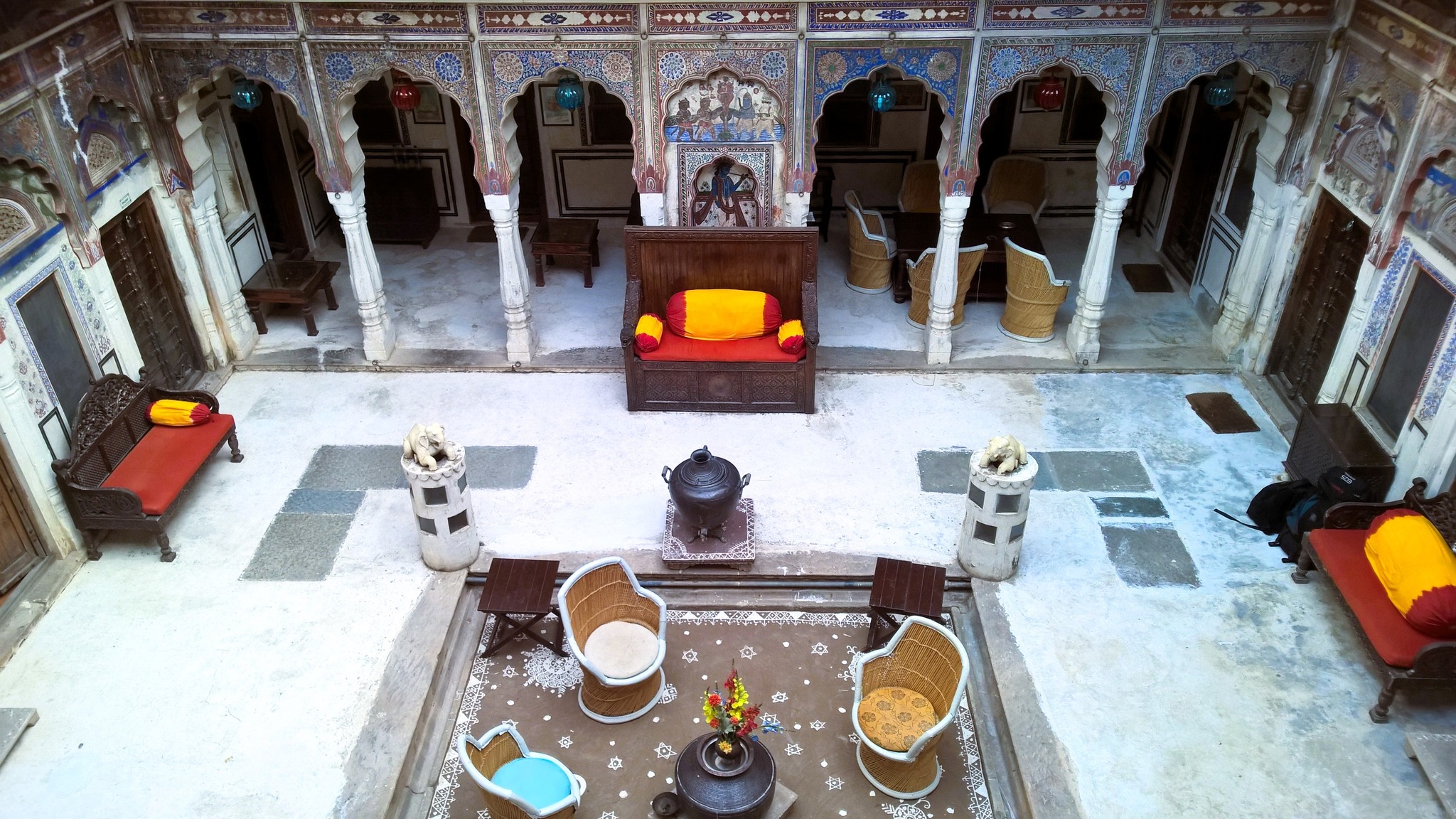
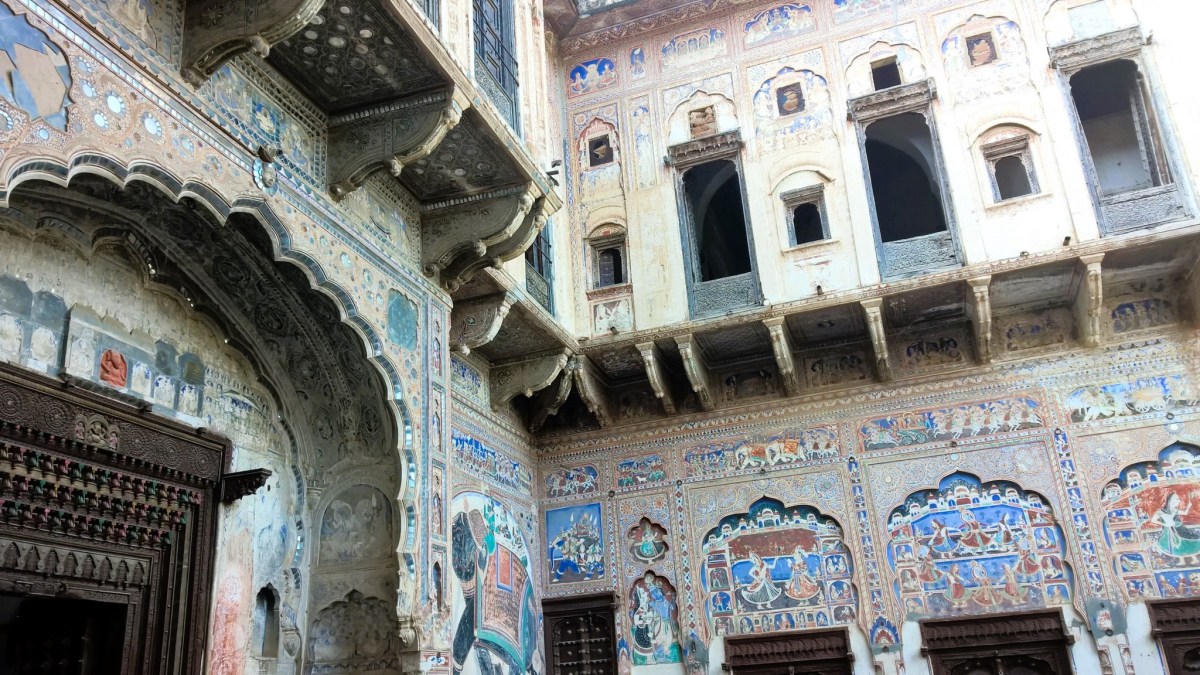
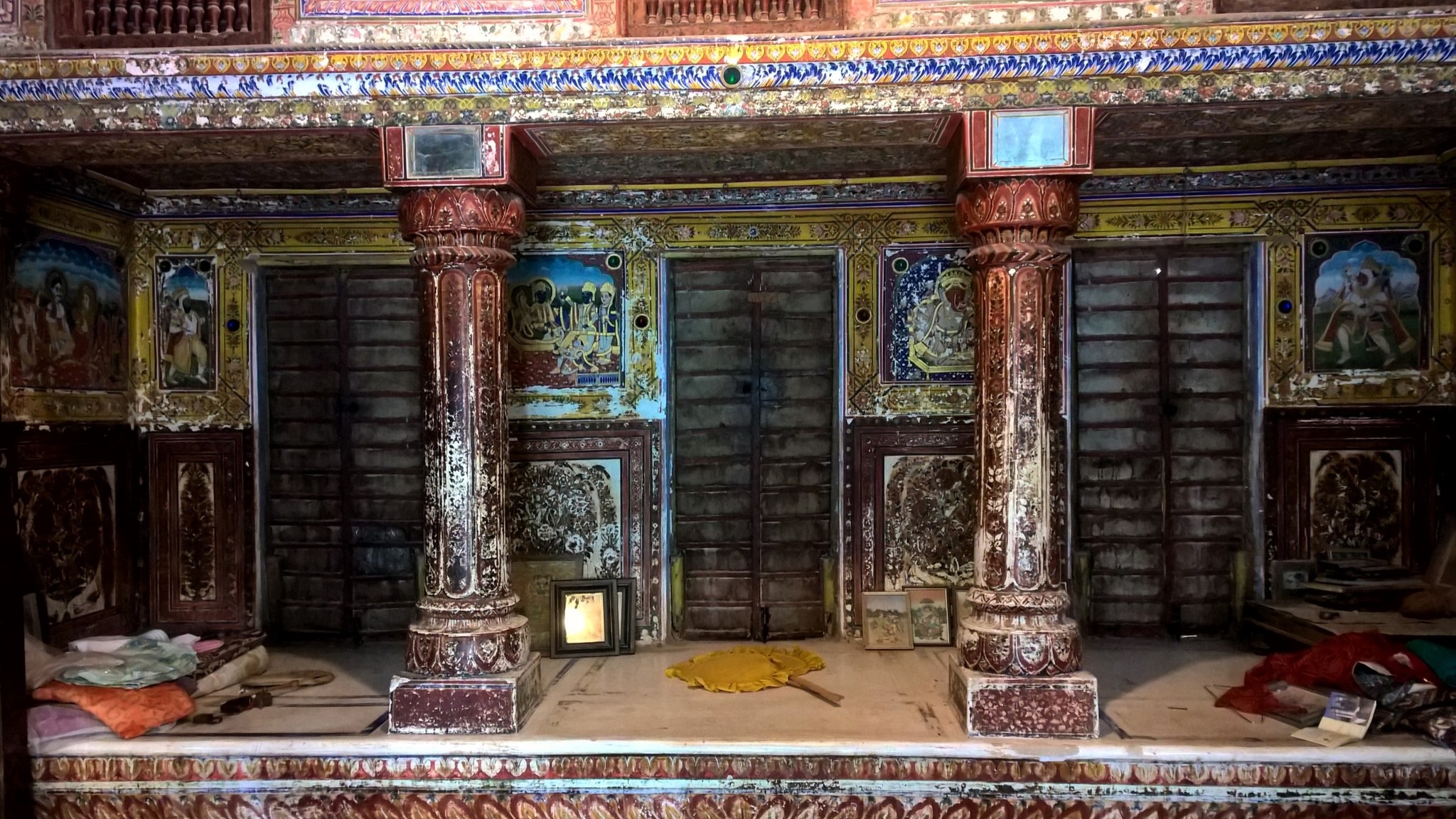
So, courtesy of Chhutku, we saw a handful of havelis, with their painted facades, part covering the balconies jutting out and peering over the street, and part forming the front wall proudly strutting their evocatively painted visages, all but weathered by time. One particular haveli, Jhunjhunwala Haveli, aptly nicknamed the Golden Haveli, houses a room with intricately painted golden-coloured decorations, along with artifacts from a time gone by – giving us a glimpse of the lives and times of the merchants that built and lived in the lavish residences.

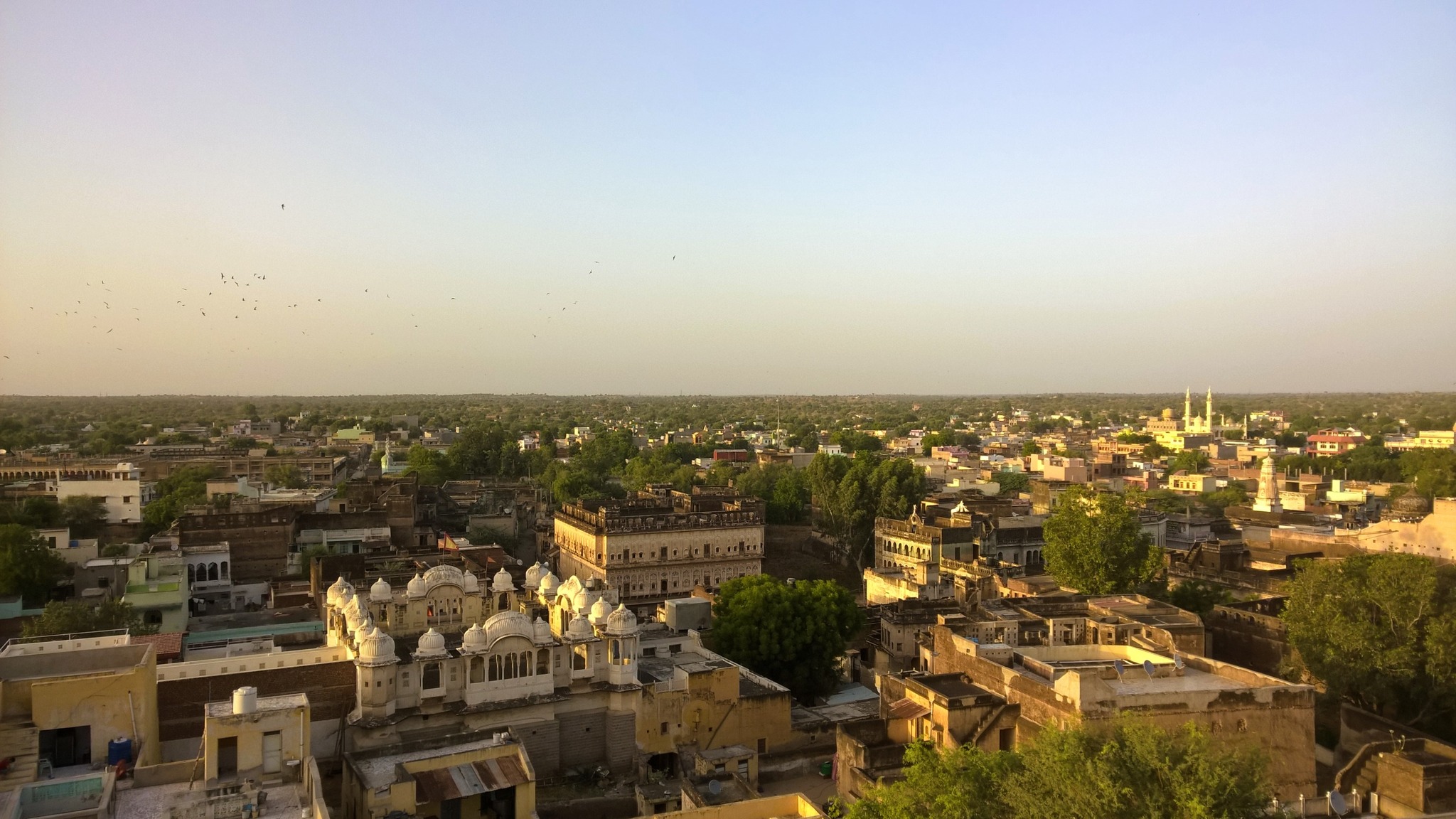
After the tour of the havelis, Chhutku bid us adieu at the Mandawa Castle, where we learnt the castle had long since been operating as a hotel, but was also open to tourists in lieu of a hefty fee. Nevertheless, we took the opportunity to see around the castle, get views of the town and the countryside from the rooftop, and take pictures around the sprawling swimming pool.

At long last, darkness fell, and it was time to confront the dilemma of whether to stay the night or return to Delhi – it was resolved when we learnt that there was a 10 PM public road transport bus running directly to Delhi. Following dinner at a Tripadvisor-recognized restaurant, we boarded the bus, still not having got a bearing of where exactly we were located with respect to Delhi.

By 5 o’clock in the morning though, when I opened my eyes as we entered Delhi, I was still hungover from the overwhelming and intriguing air of the quaint town that stood astride the trading routes of the past. Although located amidst the barrenness of the desert, the unique vantage point of the town in those times ensured that its mien and ambience remained anything but barren.

A Jaunt through Jaipur

March 2012. Spring was drawing to a close, and before the Delhi summer started knocking on the city’s doors, I decided, emboldened by first ever solo trip from the previous year, to set out on my next solo trip – my first ever trip to Rajasthan.

My fascination with Rajasthan had begun while growing up in Odisha through a myriad of stimuli – black-and-white pictures of the Hawa Mahal and Jantar Mantar in an English literature textbook, a travelogue of Bikaner and Jaisalmer in my Odia literature textbook, sketches of the Vijaya Stambh and the legend of Panna Dai of Chittaurgarh in Tinkle Magazine, images of Sambhar Lake and Dilwara Temples of Mount Abu in geography textbook, and so on. And now, close to three years after I had moved to Delhi, it was time to indulge the fascination and see in person what I had seen only in pictures. What better place than Jaipur, the city in Rajasthan nearest to Delhi, to begin the exploration with?

On the many occasions that I had passed through Dhaula Kuan, I had seen buses having Jaipur written on their boards waiting to pick passengers up, and had wondered as to when I would get a chance to board one of those. I had seen the same buses stopping at Iffco Chowk in Gurgaon very close to where I worked. And so on the evening of 23rd March 2o12, an evening that I remember very clearly, leaving the office at around 4.30 PM, I stood at Iffco Chowk, squinting through the fog of dust enveloping the area, for the next road transport bus headed to Jaipur. By 5.30 PM, I was on a bus, not seated by the window, but comfortable enough at the fourth row from the rear.

The bus kept moving through the suburbs of Gurgaon for a while, and then rose up a gentle slope through a jungle of shrub, and a while later passed through another wooded area that seamlessly melded into a barrage. These are the sights I remember from around the time of sunset and the twilight before darkness fell. The bus stopped at multiple places, interspersed with spells of zooming on the highway whenever possible, even as people alighted from, and new passengers boarded the bus. A air of Haryanvi and Rajasthani-flavoured Hindi hung inside the bus, while I sat in utter anticipation of my arrival in Jaipur.

Around 10, the city walls appeared and the bus passed an arched gate – Jaipur was here. Soon, I got down at the Sindhi Camp bus-stand, looking clueless, which was obviously picked up by an cycle-rickshaw puller, who accosted me proposing to take me to a hotel. Not knowing anything better, and given the time of day, I was soon on the rickshaw, when the rickshaw puller asked me if I would be interested in staying in a hotel that featured in a movie Chalo Dilli, released the previous year, to which I agreed. Thus, in half-an-hour I found myself inside a room with no window in Hotel Red Tomato Palace. Needless to say, thanks to the absence of ventilation, compounded by the excitement of seeing Jaipur the next day, I did not get a wink of sleep the whole night.

The whole night, questions swam in my mind – how would Jaipur city would look like? The GK book I read as a child addressed Jaipur as the Pink City – would Jaipur really look pink, and if it did, would be it because of the houses, or because of the soil or the skies? At long last, morning came, and I headed, with a foldable brochure on Jaipur sight-seeing in hand, to the bus-stand. As informed by the hotel receptionist, there is a system in place in Jaipur, whereby auto-rickshaw drivers offer fixed price package tours of Jaipur. Arriving at the bus-stand, I did not even have to try, as an autorickshaw driver promptly approached me with offers for many types of package tours – I chose a single day tour worth 700 rupees.

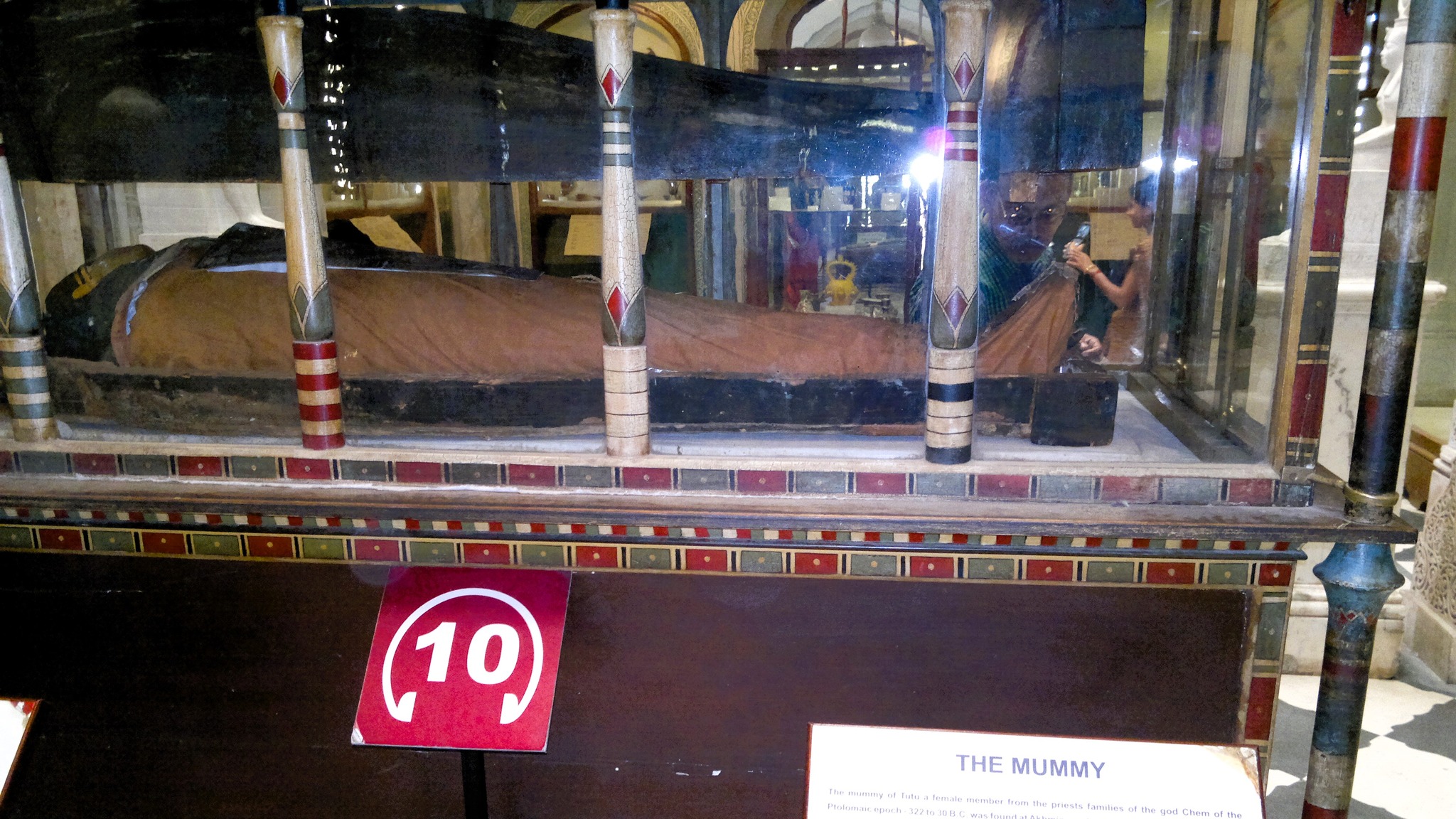
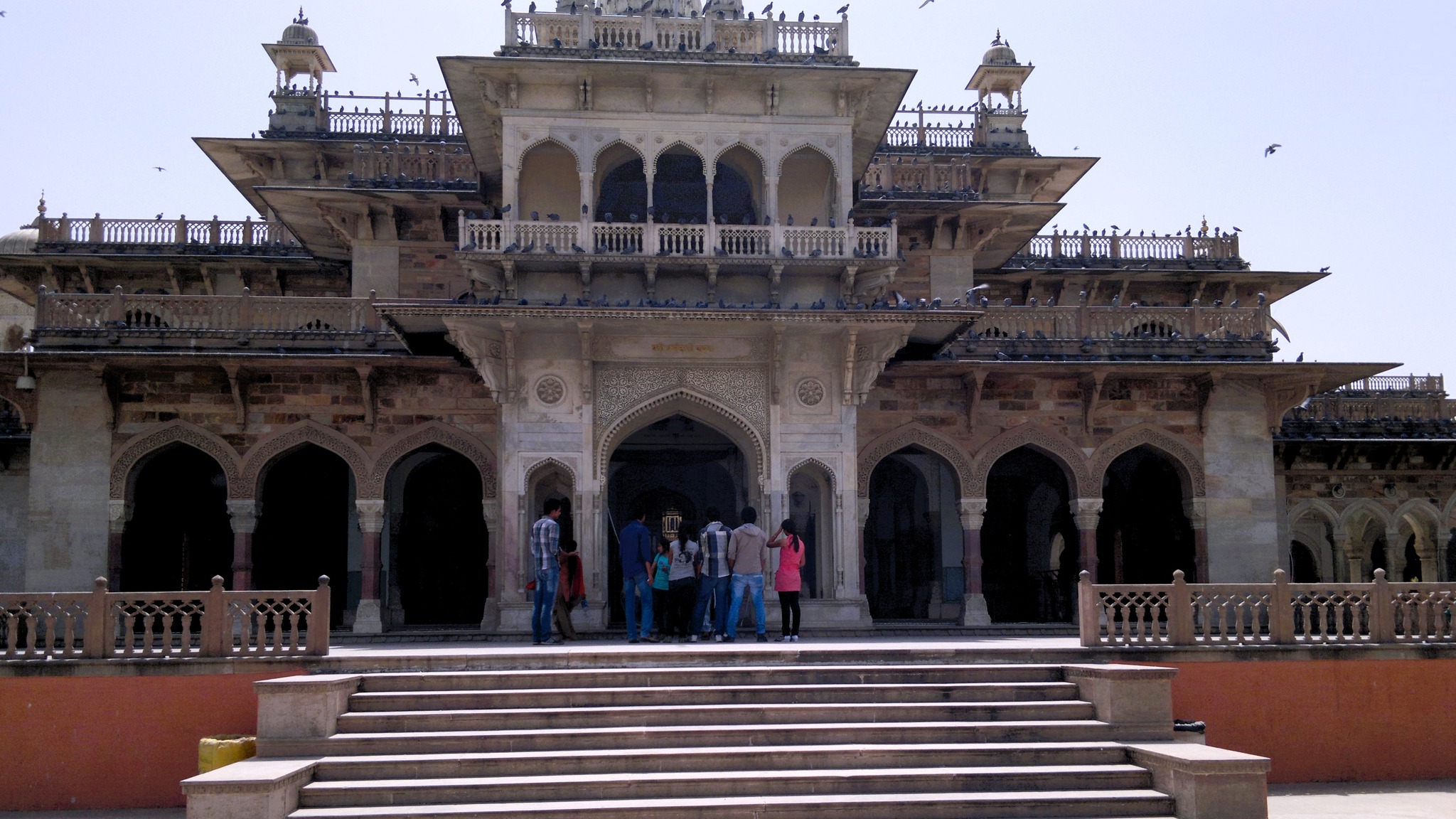
The tour started with the Jaipur Zoo, which I only agreed to keep in the package because I was curious to see what a zoo in a city with a desert in the vicinity, looked like. Sauntering through the zoo, I moved just across the road to Albert Hall Museum, the oldest museum in Rajasthan, where artifacts displayed also include those from Ancient India and Egypt, the highlight being an Egyptian Mummy. It was also at Albert Hall Museum where I learnt I could buy a single consolidated ticket that would allow entry to many of the monuments in Jaipur, including for Jantar Mantar, Amer Fort and Hawa Mahal. From there, as I moved towards Jantar Mantar, a site that had captured my imagination from when I was a kid, I first beheld the arrays of shops painted pink, explaining the epitaph of ‘the Pink City’.

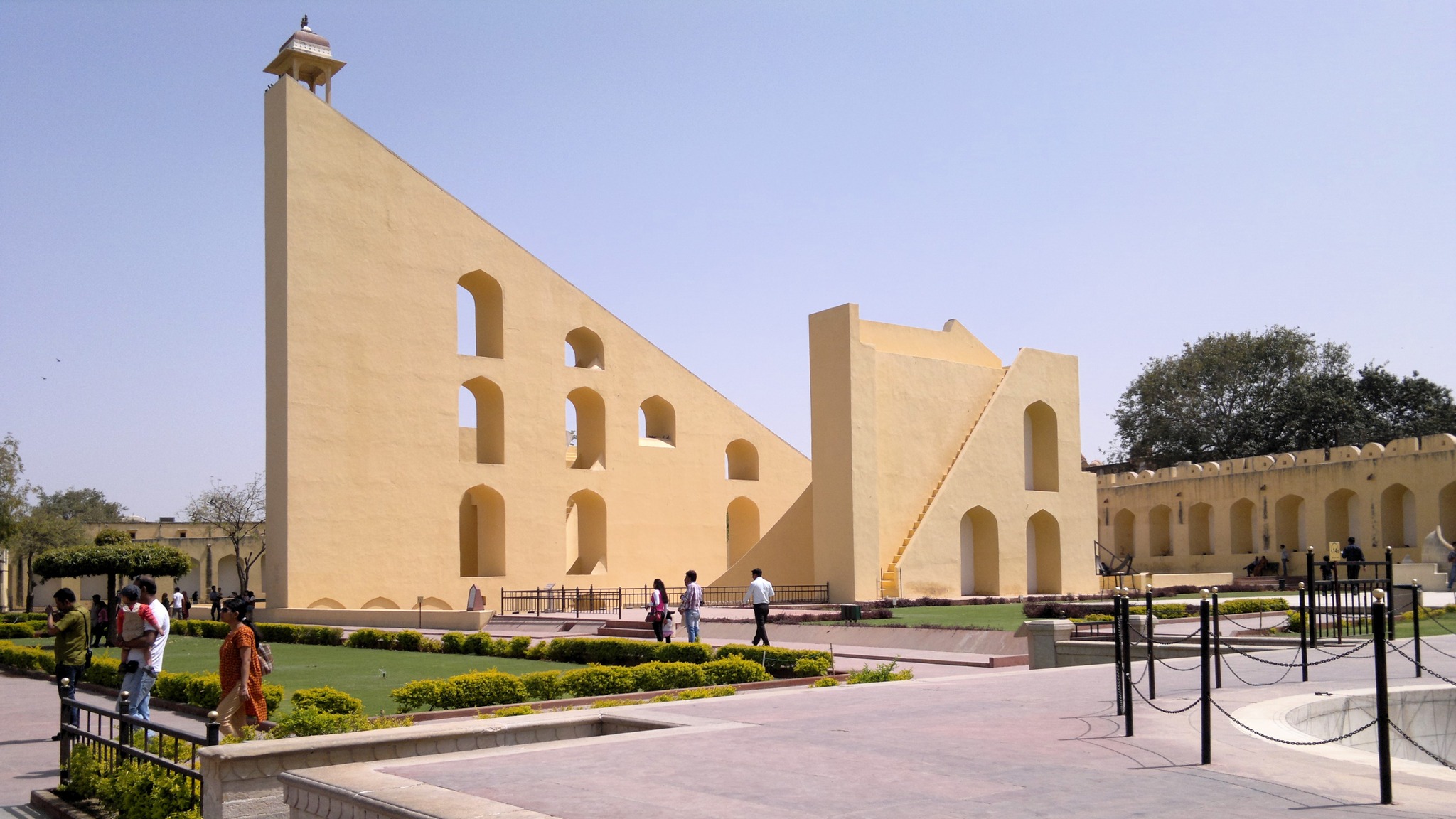
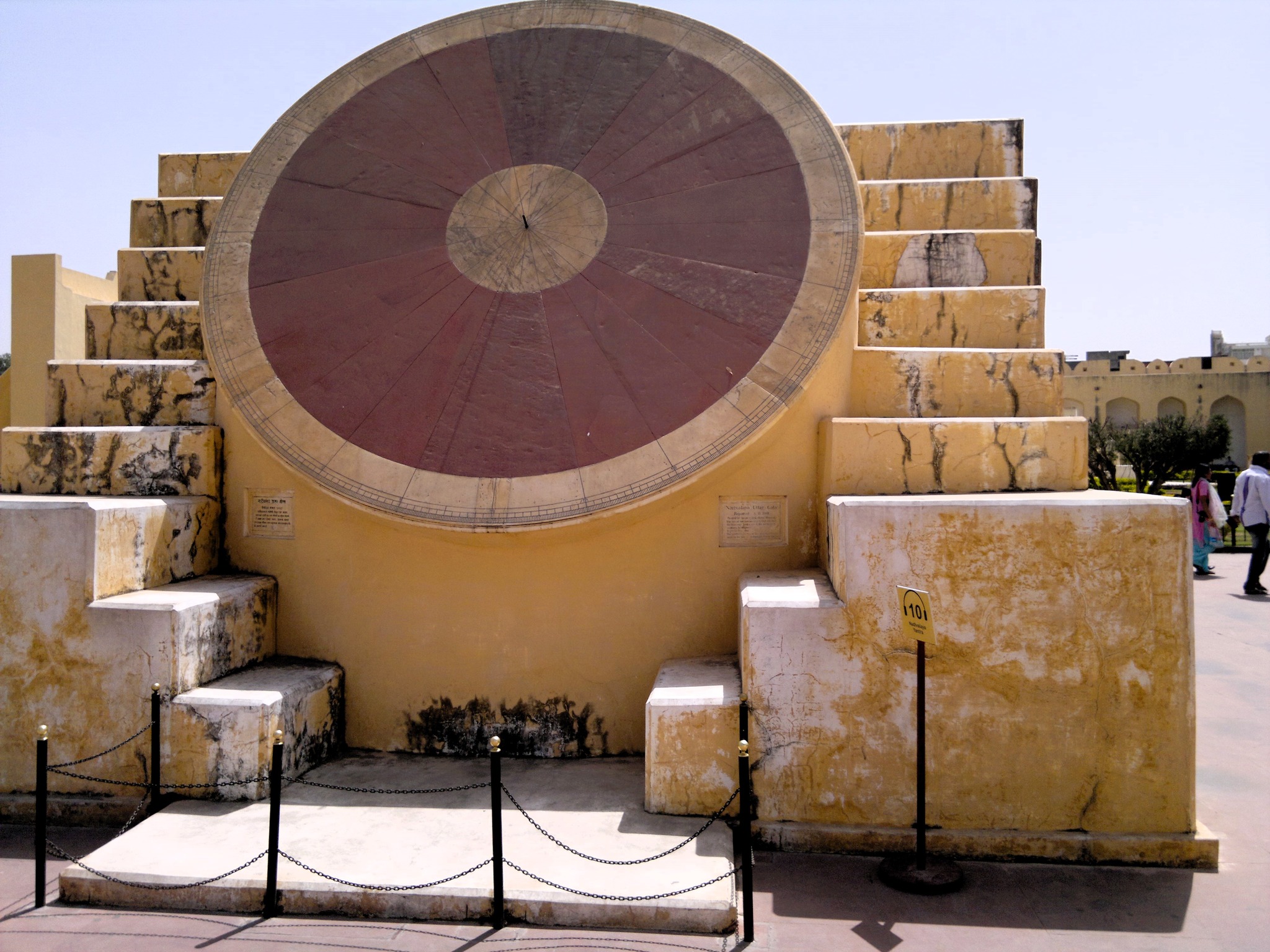
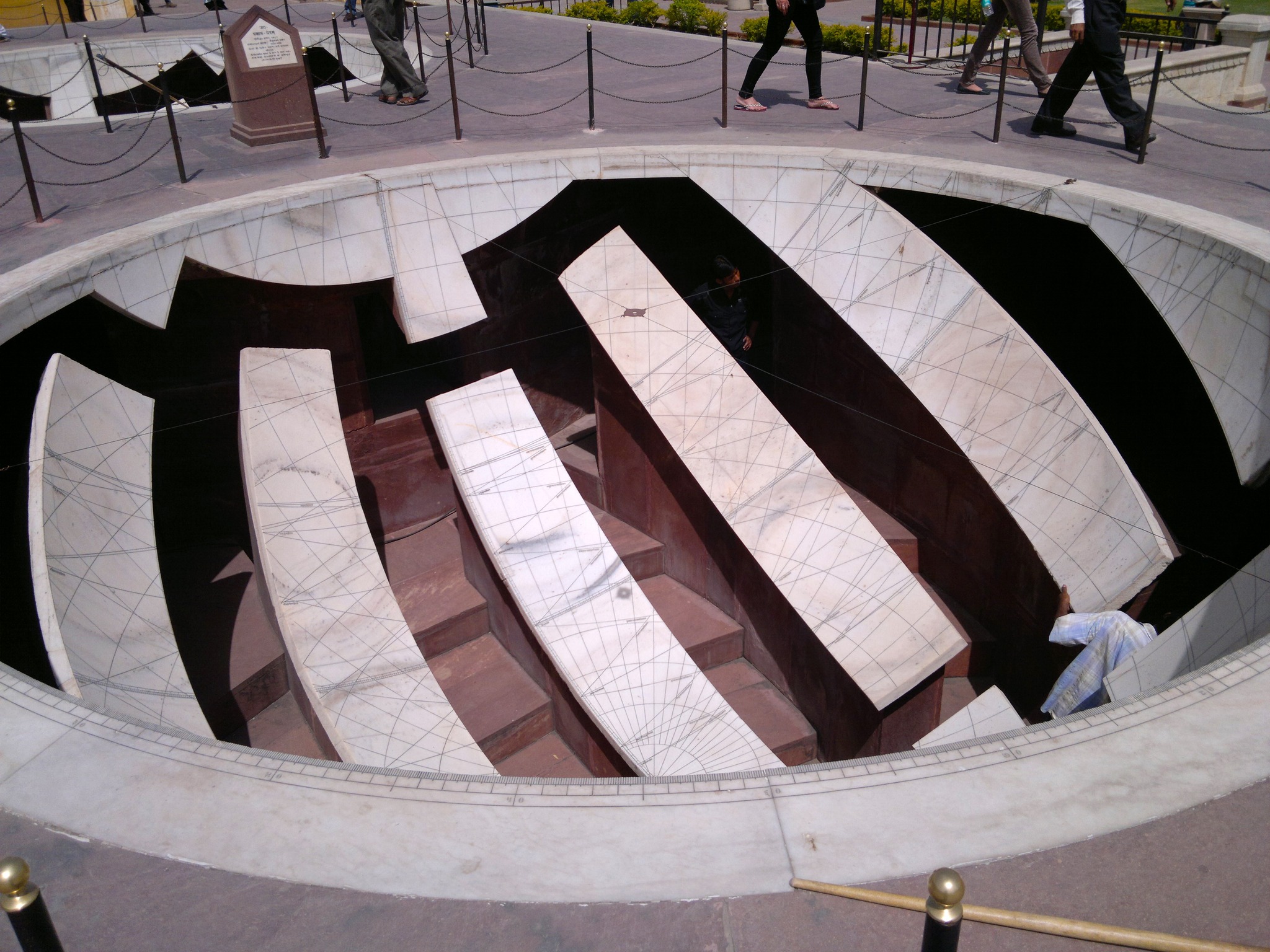
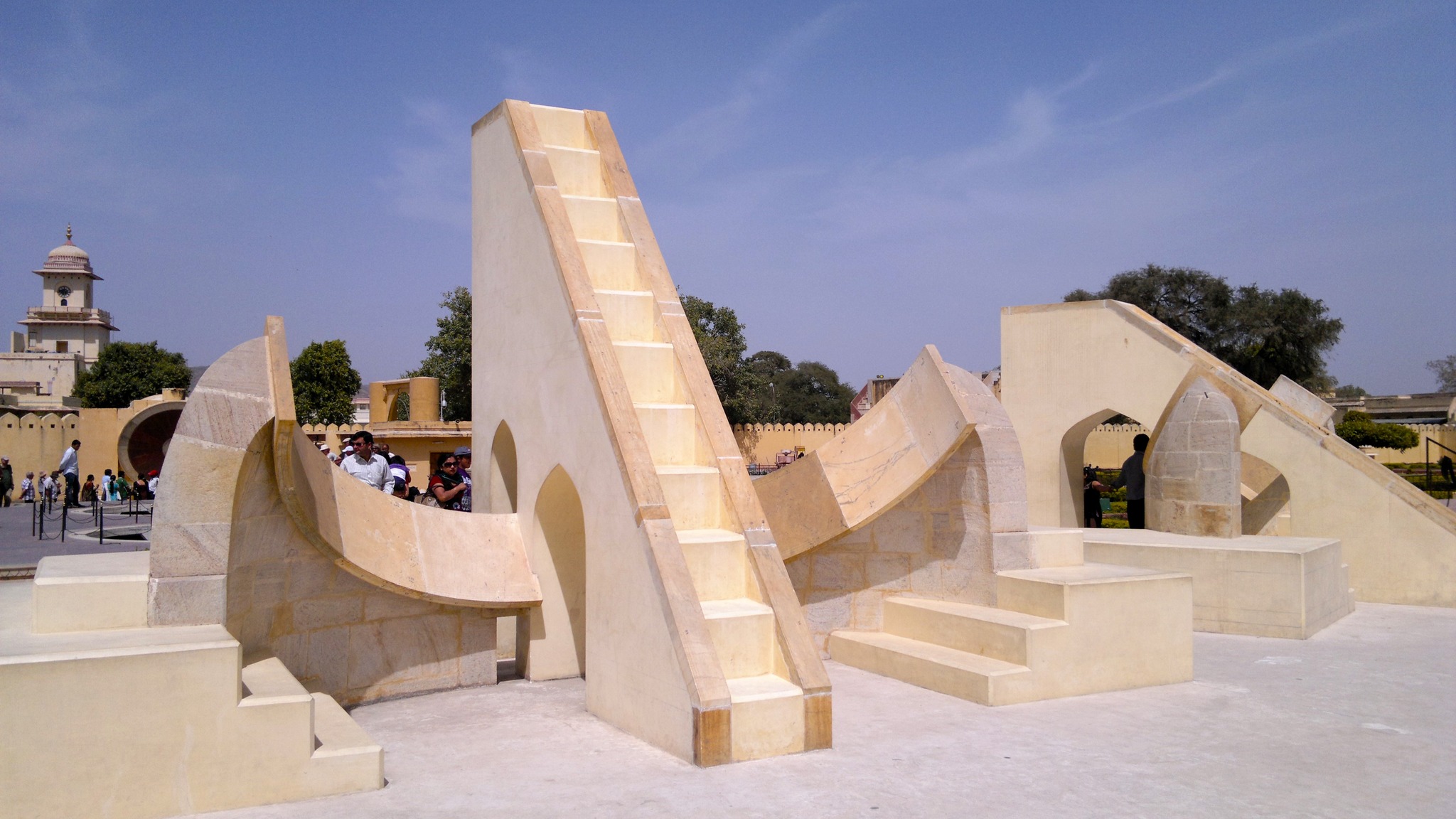
Built in between 1728 and 1734 by the avid astronomer king Sawai Jai Singh, the Jantar Mantar comprises 19 astronomical instruments built from stone and marble, that allow observation of astronomical positions with the naked eye. This, along with similar observatories later built at 5 other locations, including in Delhi and Ujjain, helped in more accurate calculation of celestial positions for the astronomical tables that were continuously used in India for over a century. After going through alternating periods of use and disuse, interspersed with some spells of restoration, including some during the British colonial rule, and a final restoration by 2006, it was designated a UNESCO World Heritage Site in 2010.

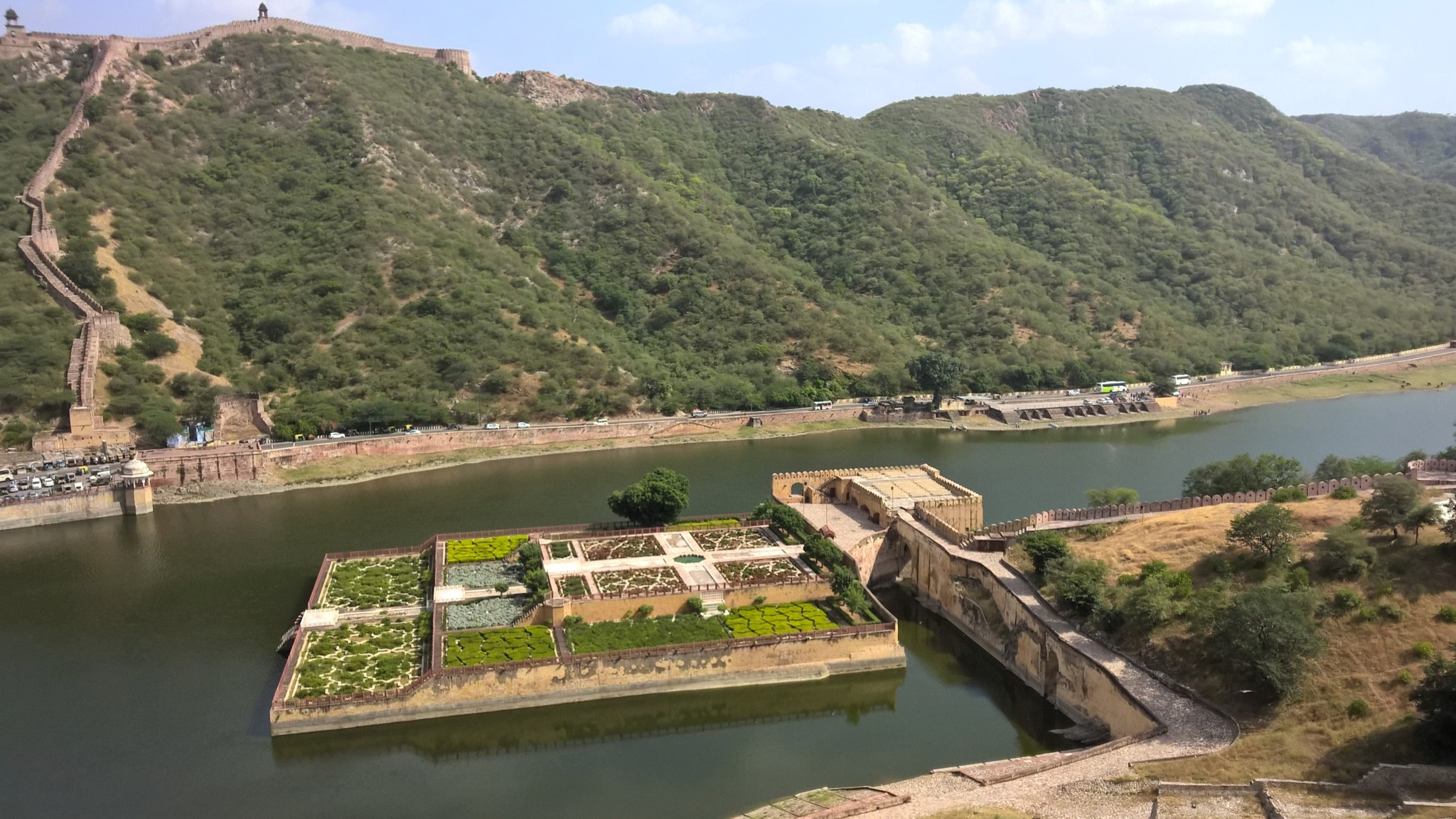
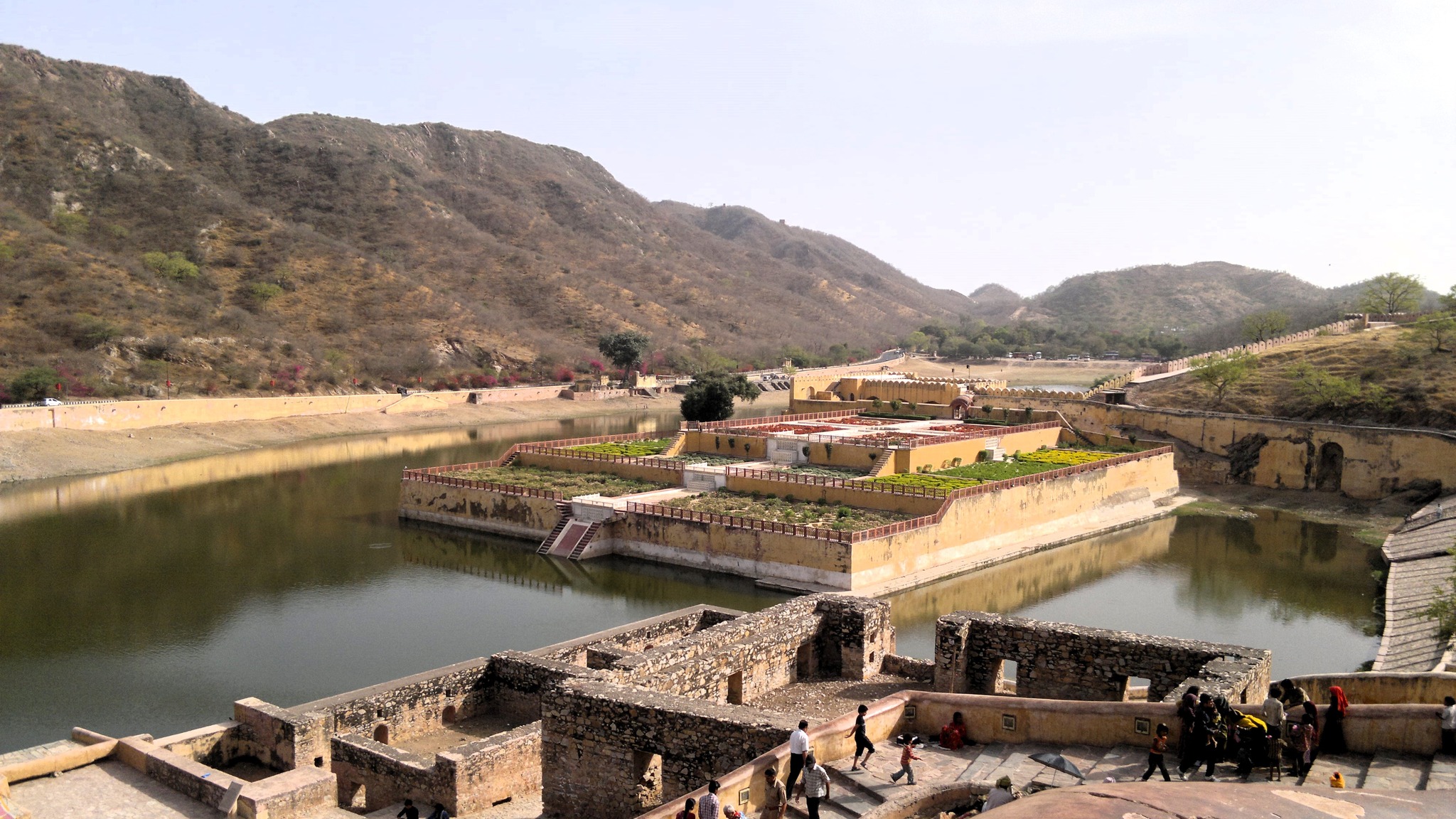
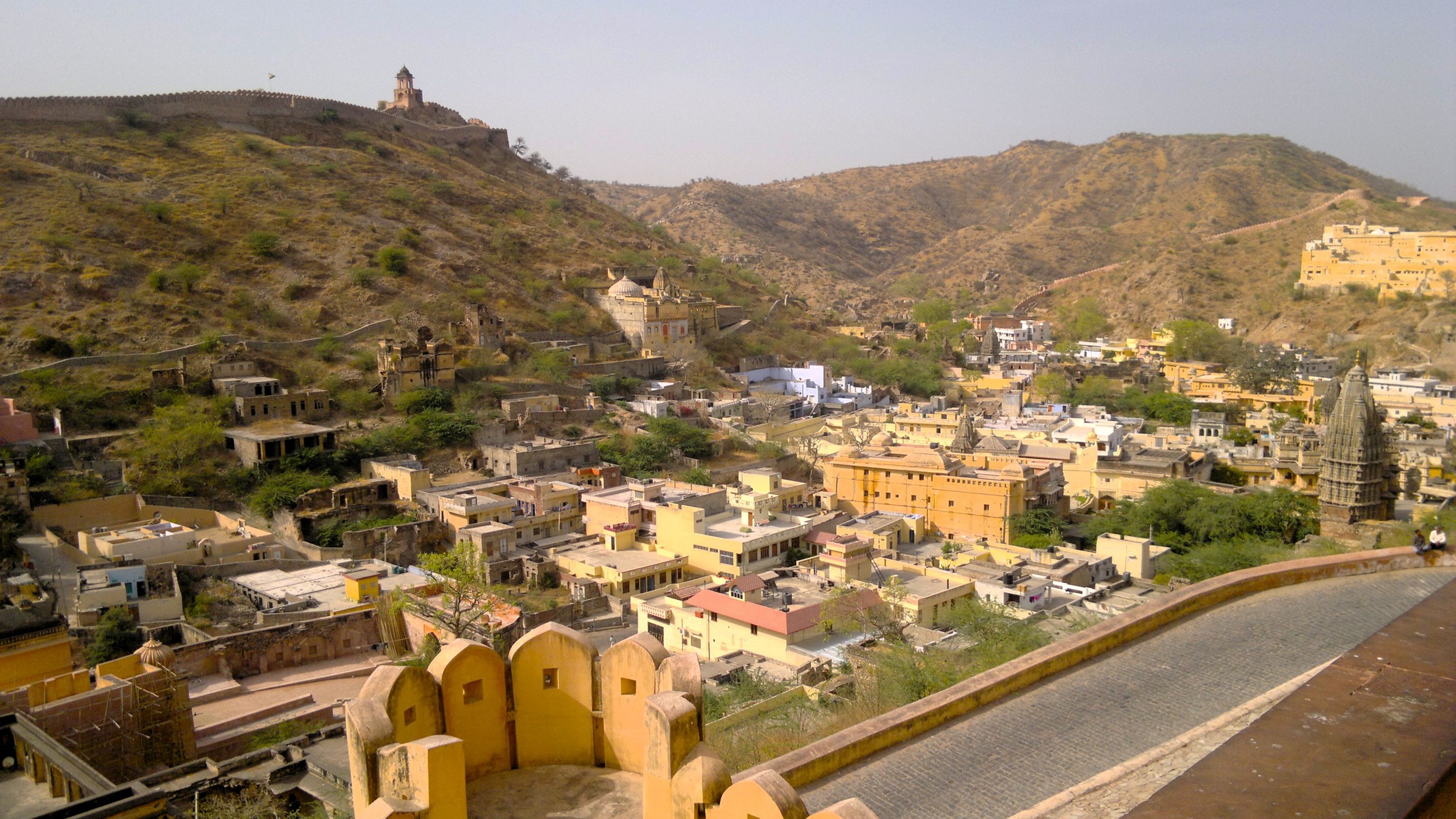
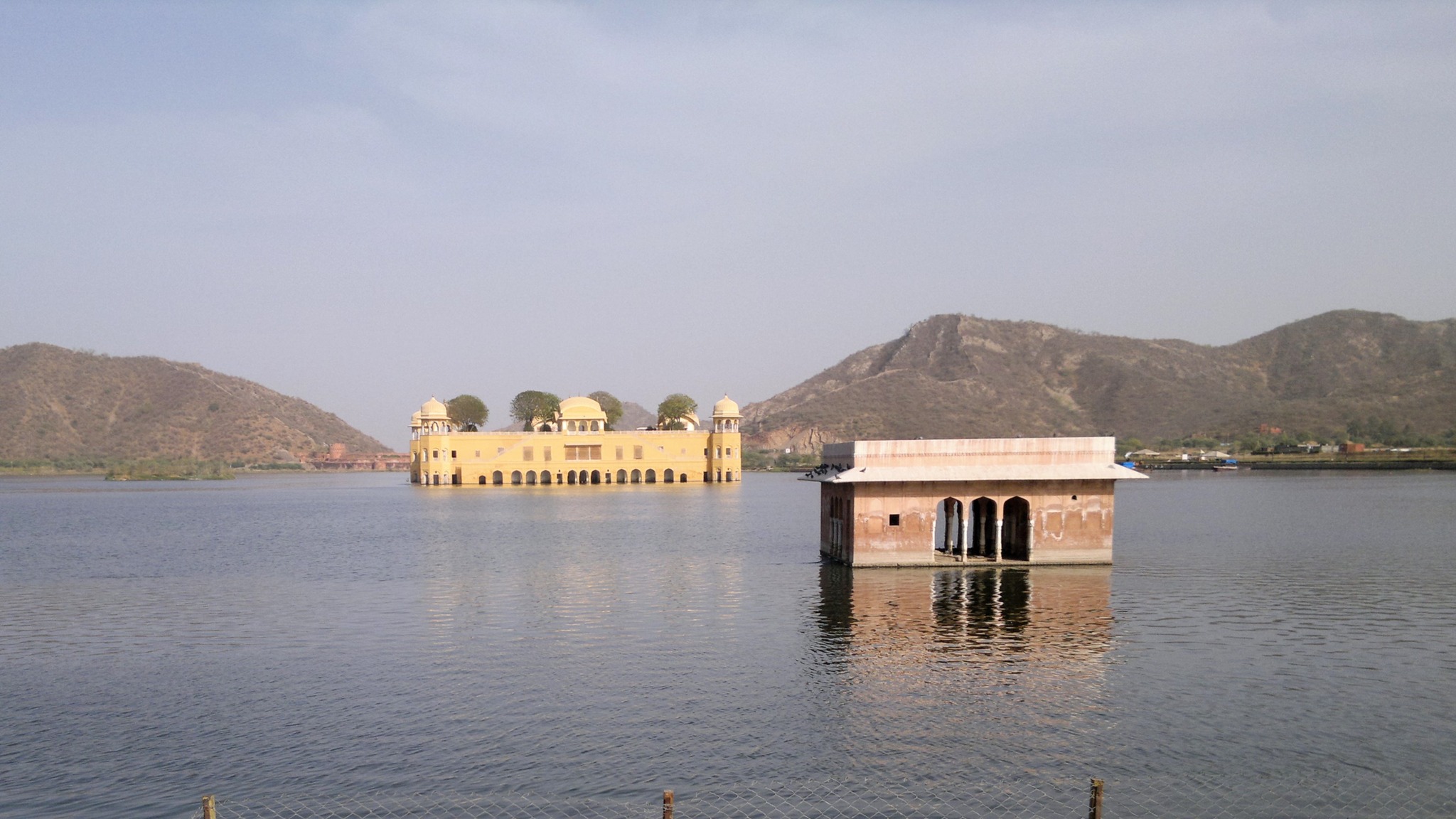
From Jantar Mantar, I moved through the street lined by pink-coloured shops through the Old City centre towards the hills that stood overlooking the city in the north. Soon, the autorickshaw passed by the expansive Man Sagar Lake, and climbed up the road that ran into the hill. A little up the hill, I stopped at Kanak Vrindavan, a beautiful garden with a temple, fountains, trees and chhatris, built by Sawai Jai Singh 275 years ago, where scenes of many movies, most notably, Lamhe, have been shot. Further, passing through a long stretch of the road cut through the hill and was lined with wood on both sides, the autorickshaw finally reached a wide section on the road, where countless vehicles were parked. Beside the section lay a lake with a spice garden in the middle, and above on the crest of the hill stood an imposing fort – Amer fort.

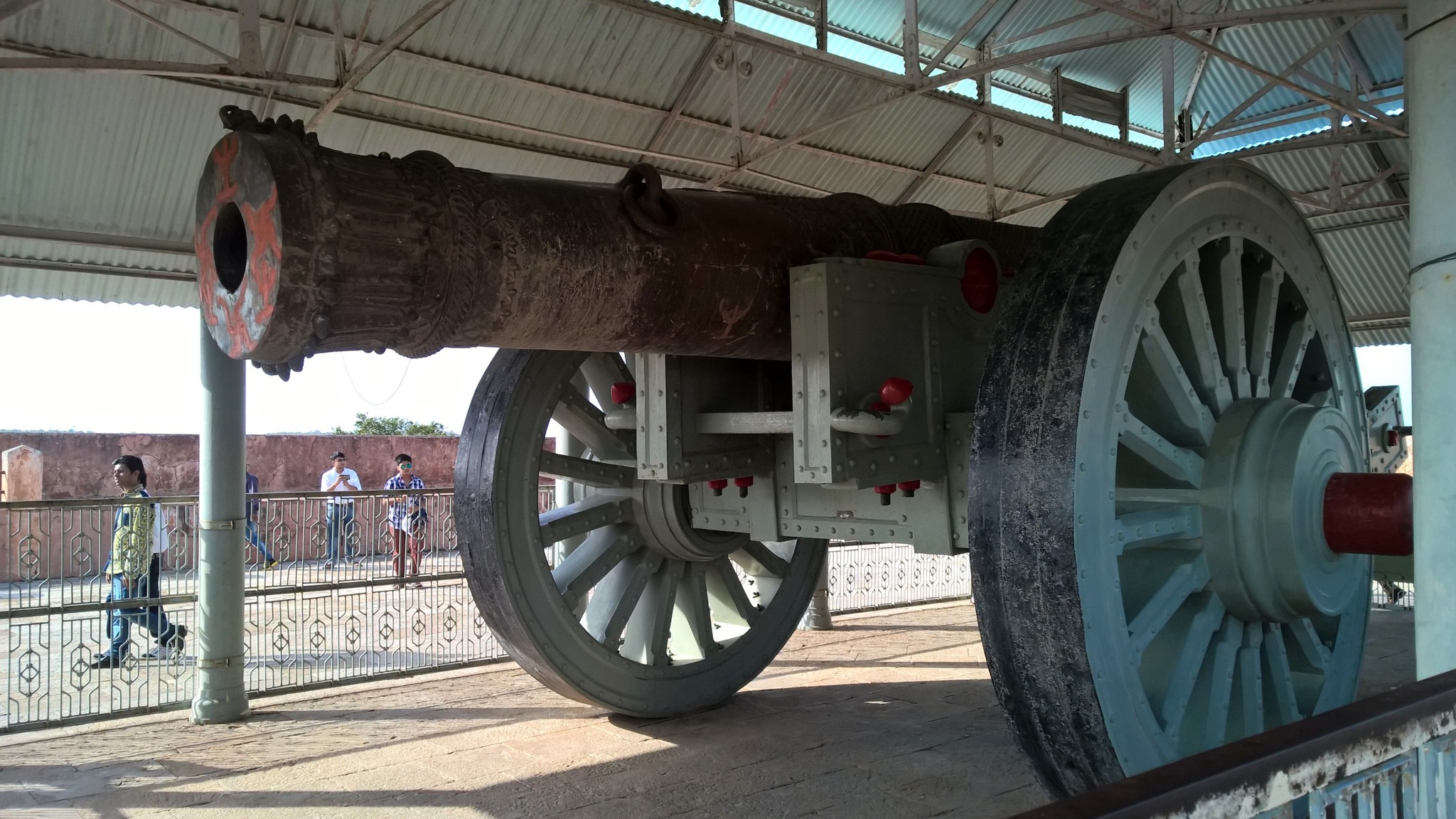
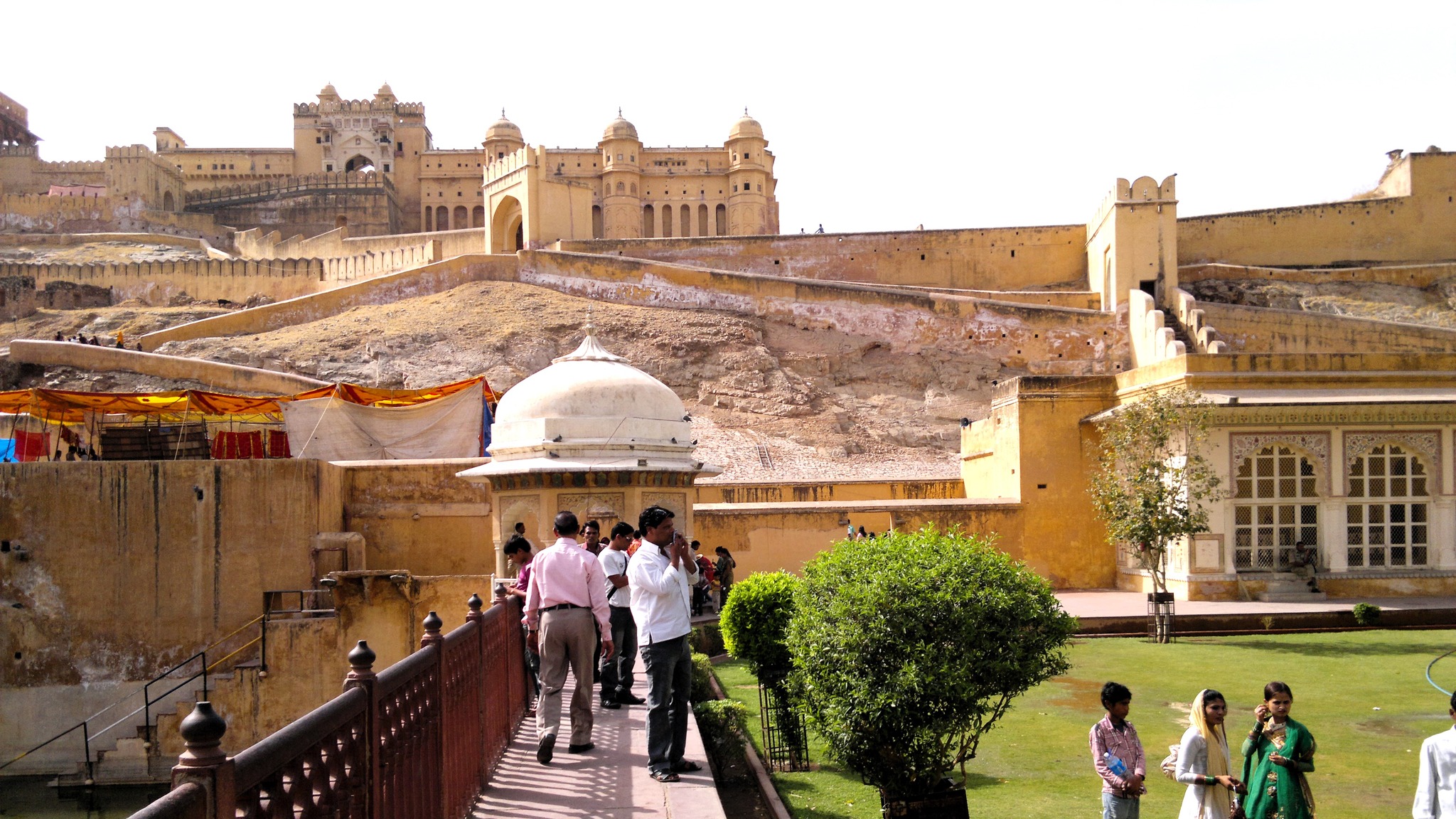
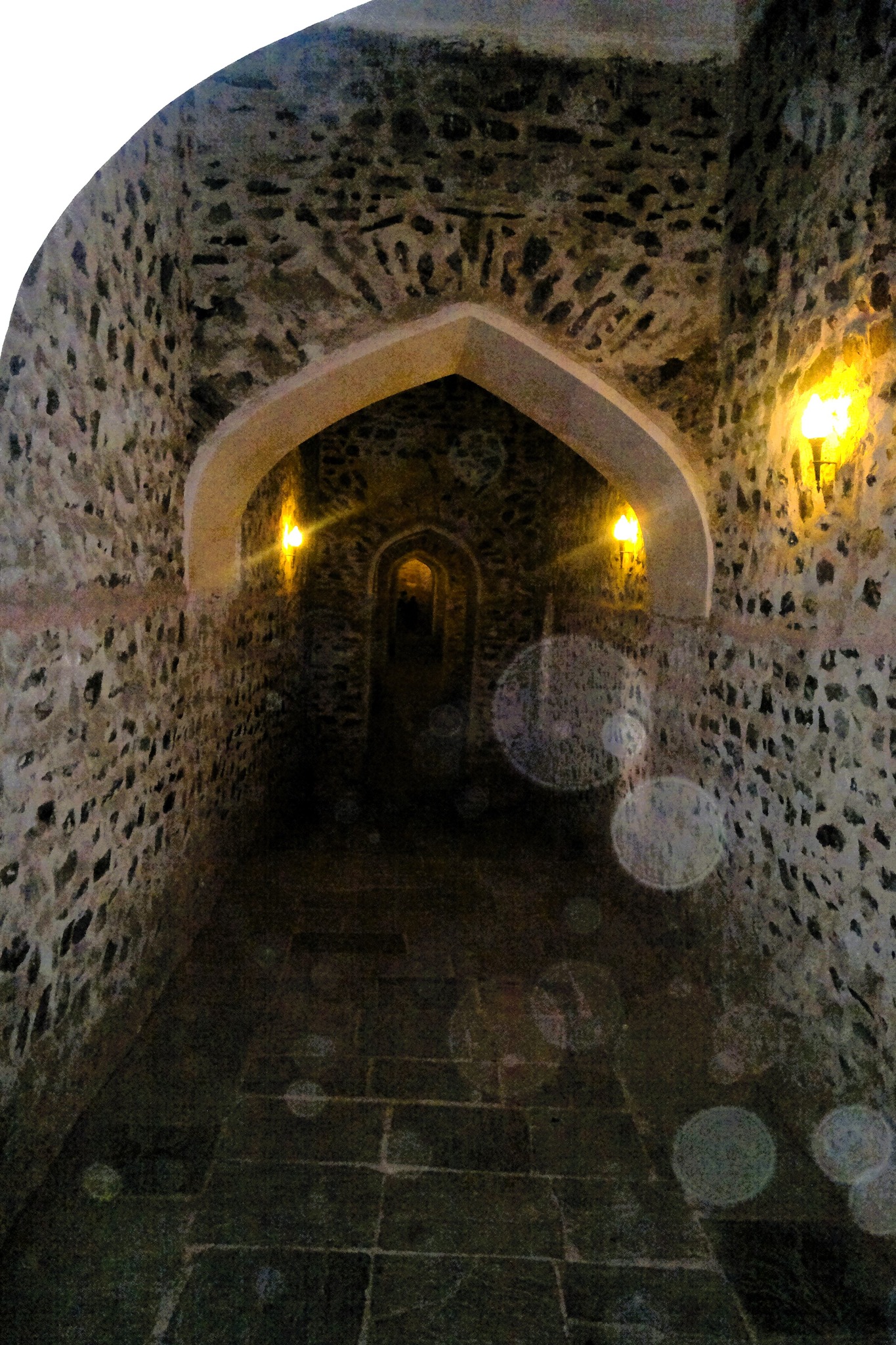
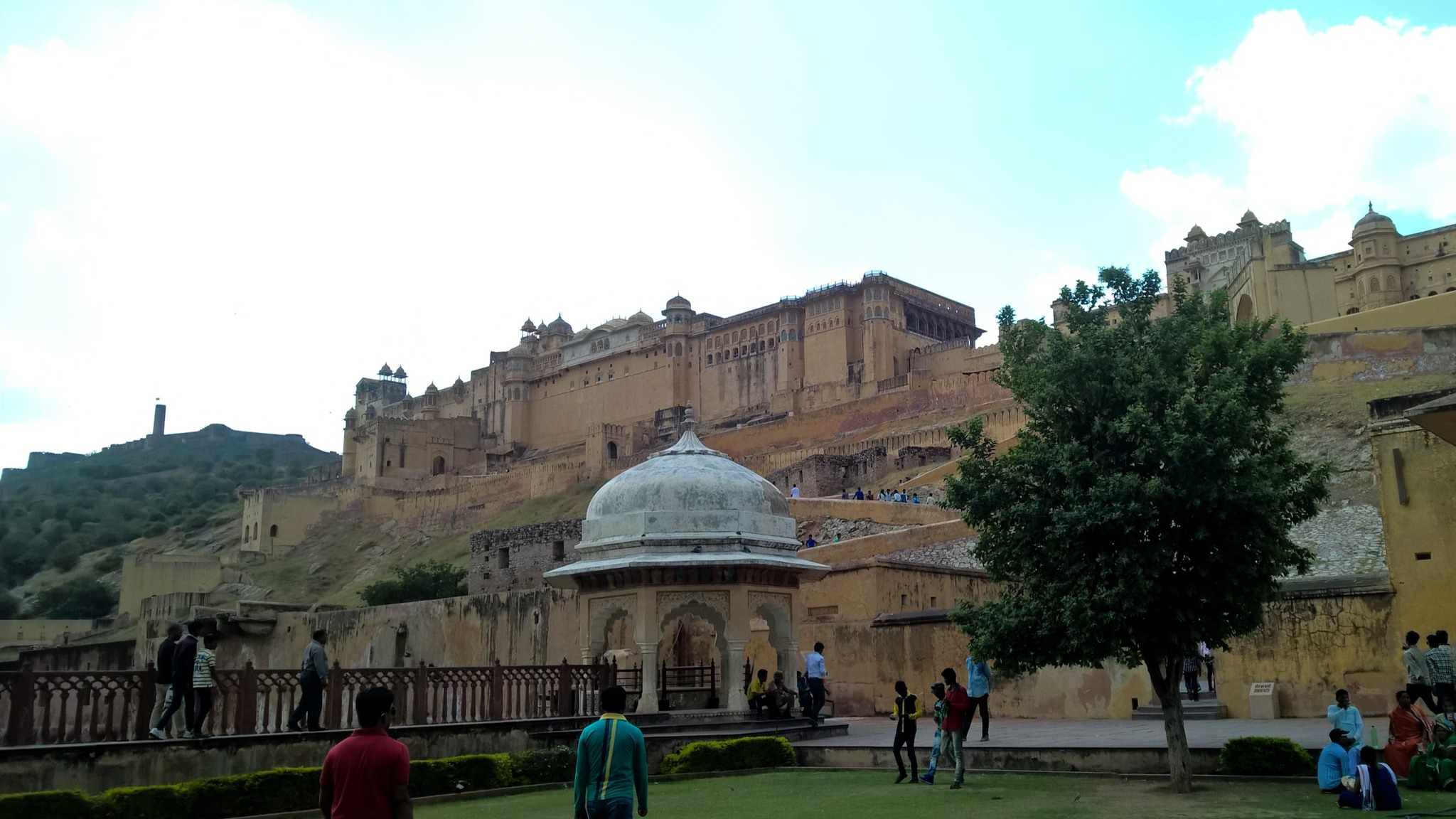
The Amer fort, built in 1592 AD by the Kachhwaha king Man Singh, became the mainstay of the ruling family of Amer or Dhundar state, which was ruled by the Kachhwahas since 1037 AD. Amer, the area ensconced in the Aravallis where the fort is located, was the capital of the Kachhwahas until 1727, when Sawai Jai Singh II built a fortified city called Jaipur at the foothills of the Aravallis. The fort itself was expanded by successive kings, and today consists of the six main sections, with the temple dedicated to Sila Devi, prominently standing in the first courtyard, a Diwan-i-aam or Public Audience Hall, many palaces including Sukh Mahal, Sheesh Mahal and that of Man Singh I. A tunnel, that runs partly subterranean, leads to Jai Garh fort, a military fortress situated at a nearby peak. Views of the landscape from the fort are breathtaking.

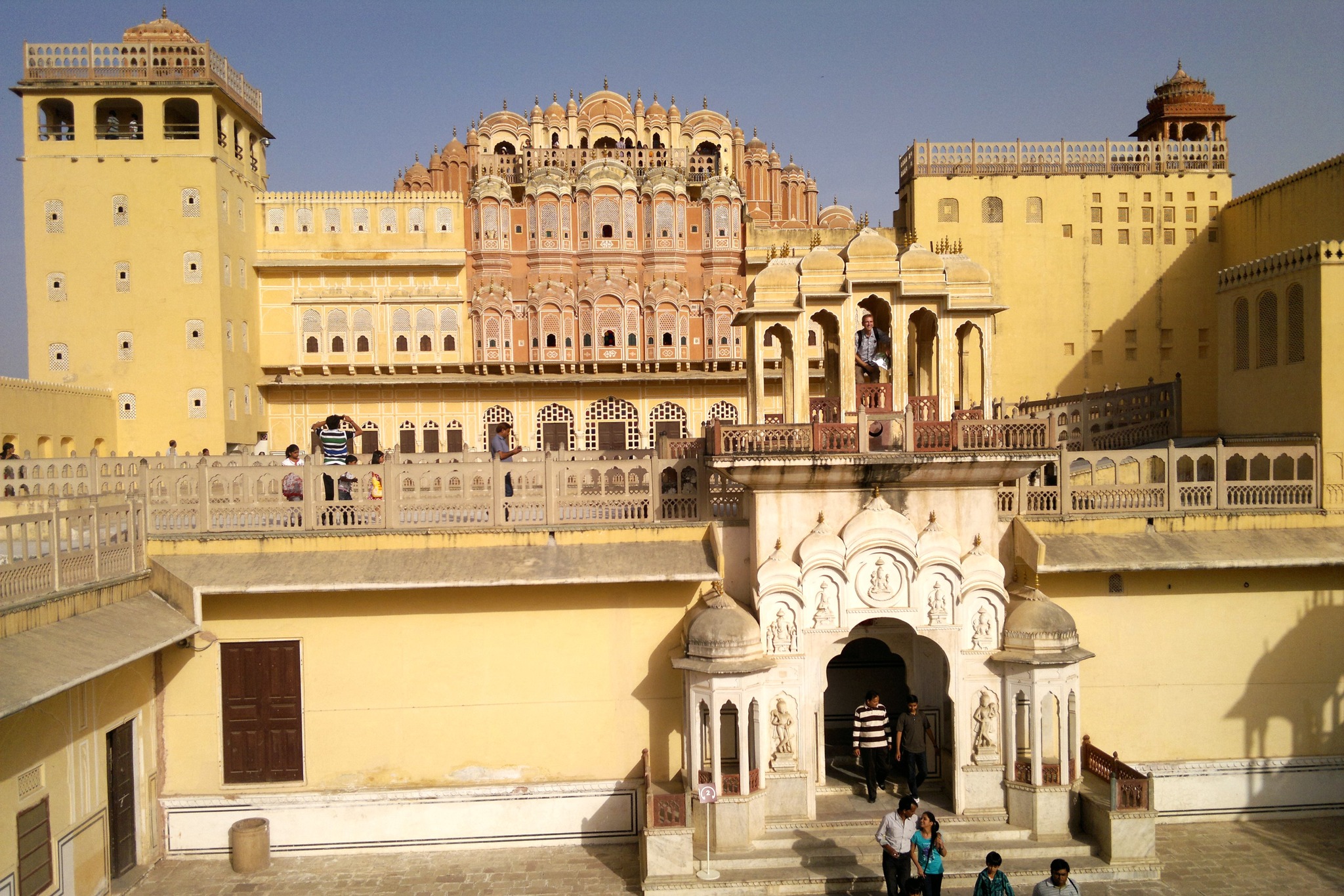
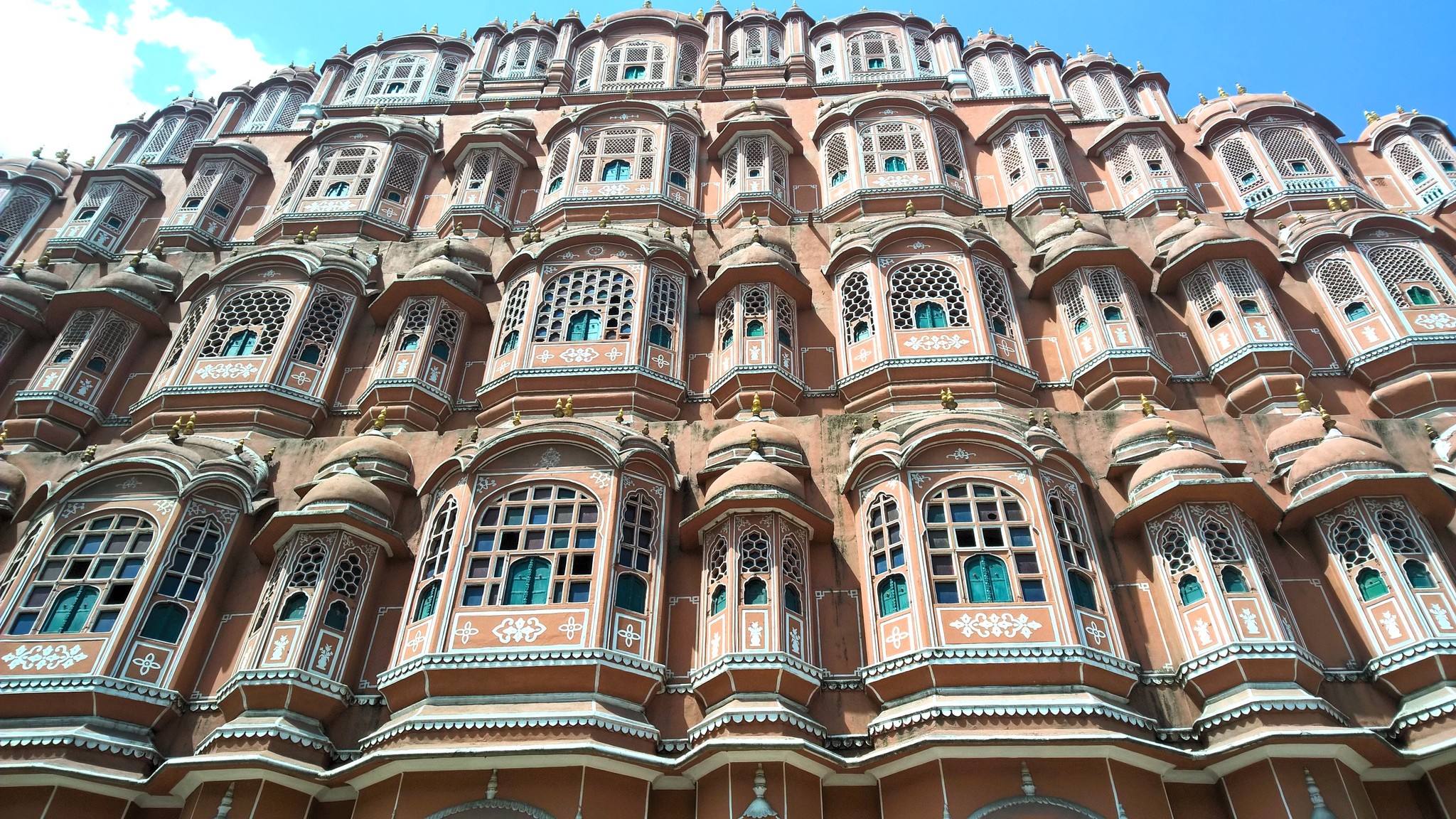
Now it already being 3.30 PM, I headed back towards the Old City centre, again stopping by the Man Sagar lake, and reaching the Hawa Mahal just in time before it closed for the day. Hawa Mahal, another structure that had fascinated me since my childhood, perhaps best typifies the character of the Old City, with its pink coloured facade. The palace, built in 1799 by Sawai Pratap Singh, the grandson of Jai Singh II, the founder of Jaipur, is unique because of the rows of latticed windows, small and big, with some decorated with coloured glasses, adorning the facade making the facade resemble a honeycomb. Walking through the multiple levels of the Hawa Mahal, I got excellent views of the city skyline as well as of the hills in the distance.

With the day drawing to a close, I bid adieu to the autorickshaw driver, and rested for a couple of hours in the hotel room. I pondered about what to do the next day, but soon started feeling a fever setting in – something that I had encountered on my first ever solo trip the previous year too. It may have been a combination of sleep deprivation and the day-long exposure to the sun, but I decided it was best to rest at my place in Delhi as opposed to in Jaipur. So, I checked out, had dinner, and caught an overnight bus to Delhi. Slipping in and out of consciousness, I was in Delhi the next morning, glad to get the whole Sunday to rest and recover from the fever.