In February 2019, my friend Abhijit & I picked up our backpacks and forayed into the Betwa and Chambal Valleys in search of some less-heralded archaeological treasures. Planned to be a quick weekend trip, we took an overnight train from Delhi, got down at Lalitpur and checked in into a hotel early in the morning. After gorging on a breakfast of the famous local dish poha, we took off by public transport across the Betwa river to the quaint little town of Chanderi which is tucked behind a hill range.
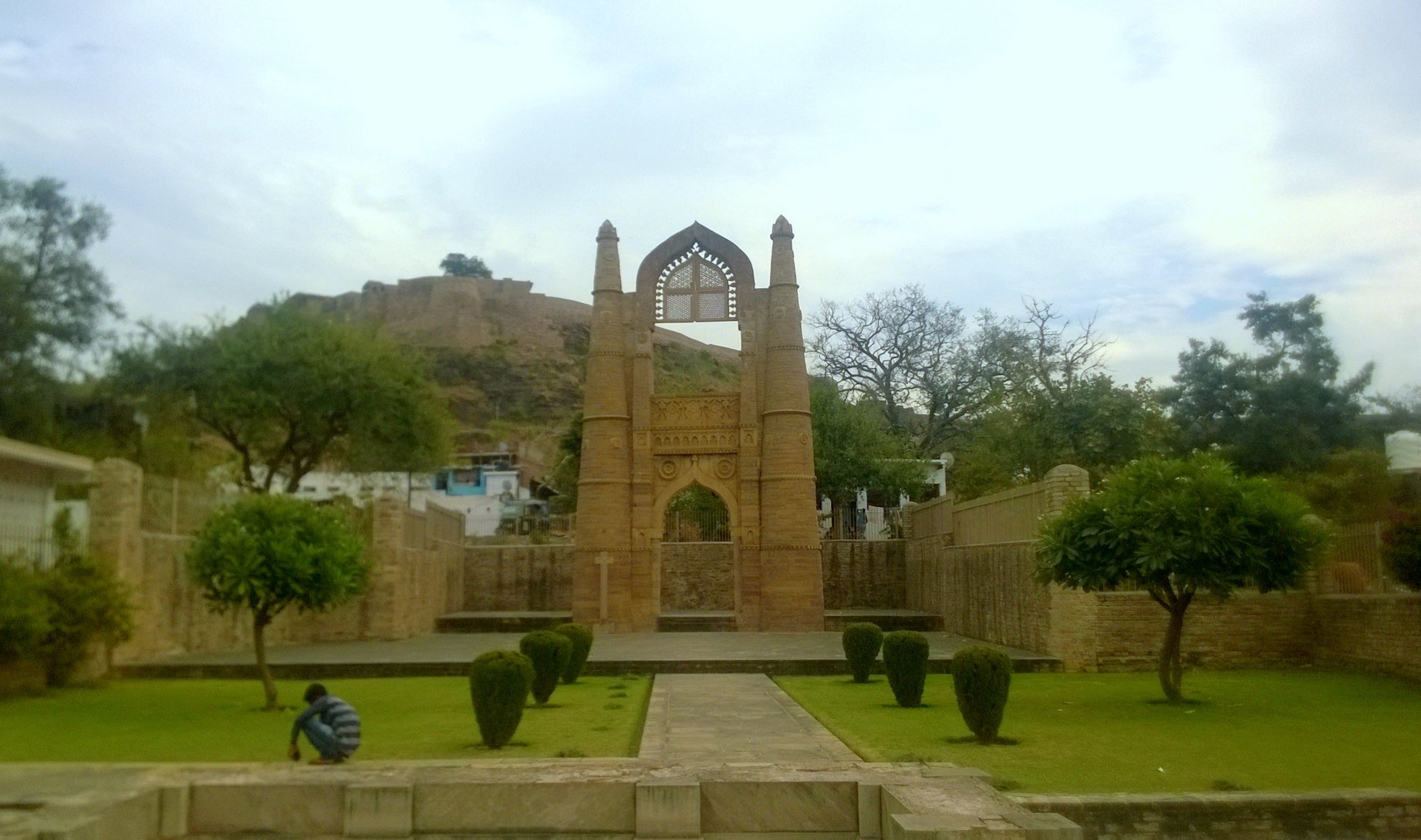
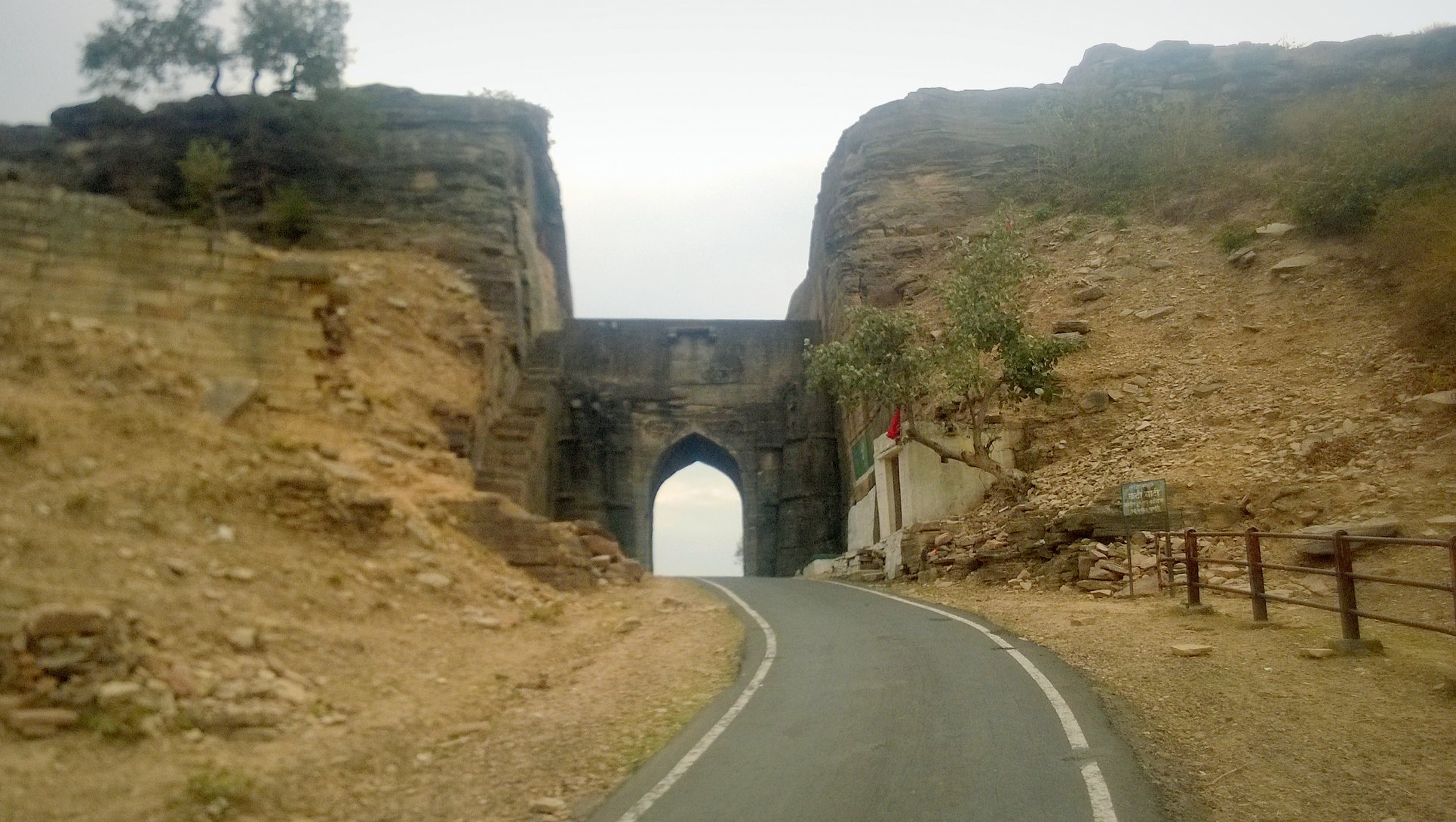
Chanderi, famed today for its sarees, was under the control of Bundela Rajputs of Orchha from the 16th century before it passed to the Gwalior Scindias, and then into British hands in 1844. It is home to a fort and a few other monuments, including Jain caves & Tirthankara sculptures and a Scindia haveli. Chanderi was most recently featured in the Hindi horror-comedy movie, ‘Stree‘. In fact, a beautiful gated hill pass featured towards the movie’s end is what had fascinated me about Chanderi in the first place.
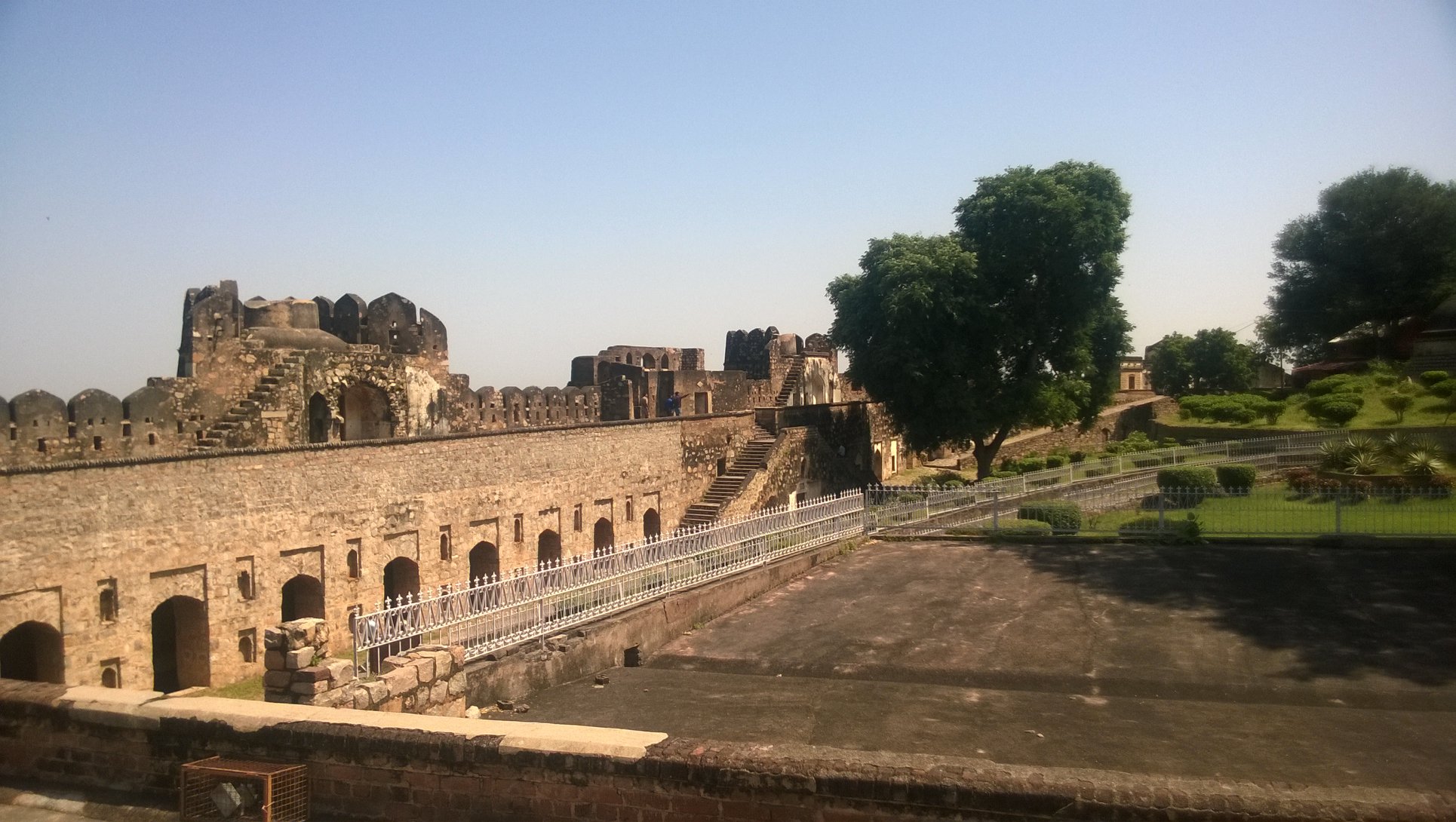
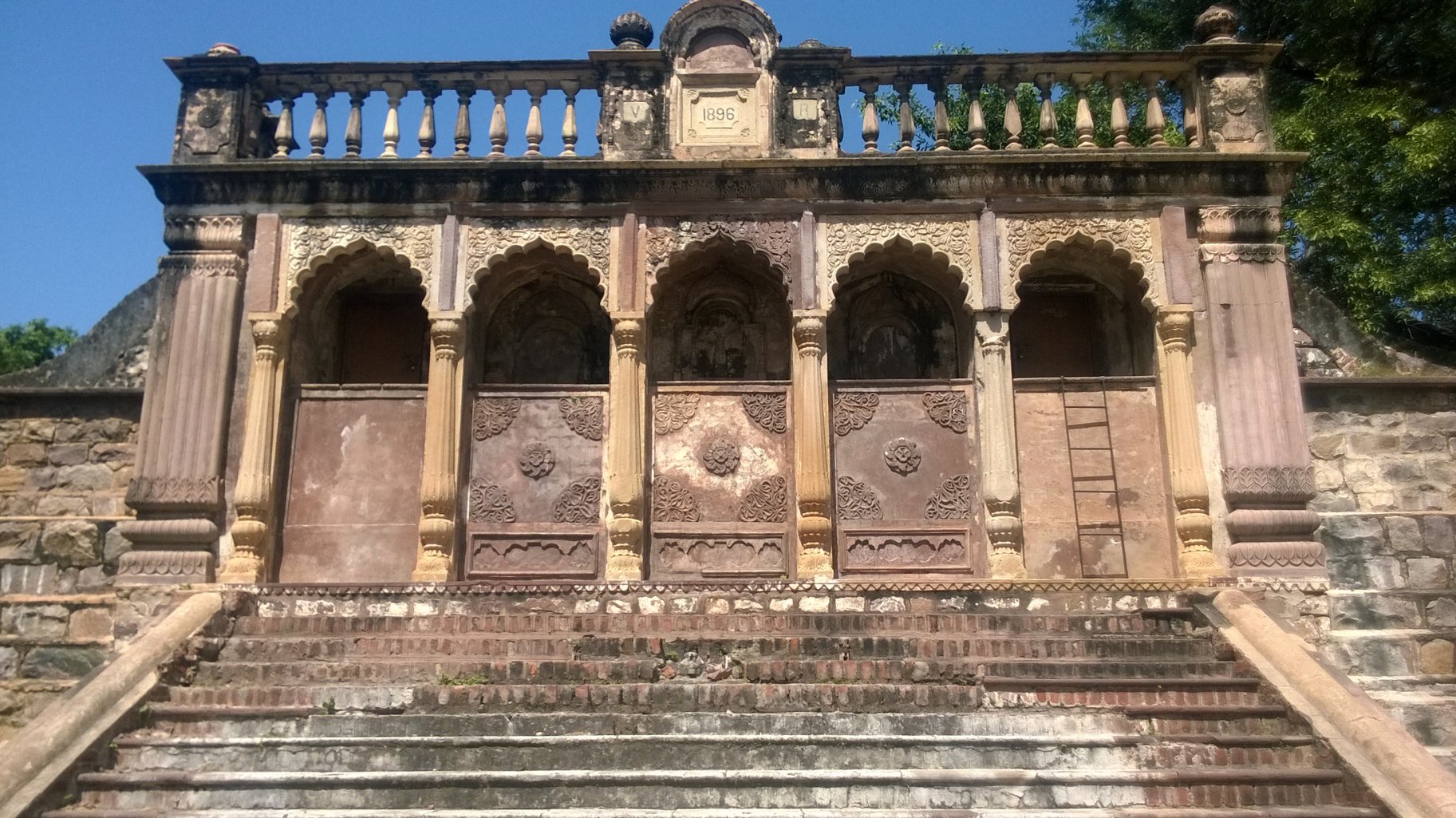
Entry to the Chanderi fortInteriors of the fortView of the Koshak MahalView of the fort from the Scindia HaveliAt the entry of the Badal MahalA Jain site inside Chanderi cityOne of the gates leading to Chanderi city. The last scene of the movie ‘Stree’ was shot here.
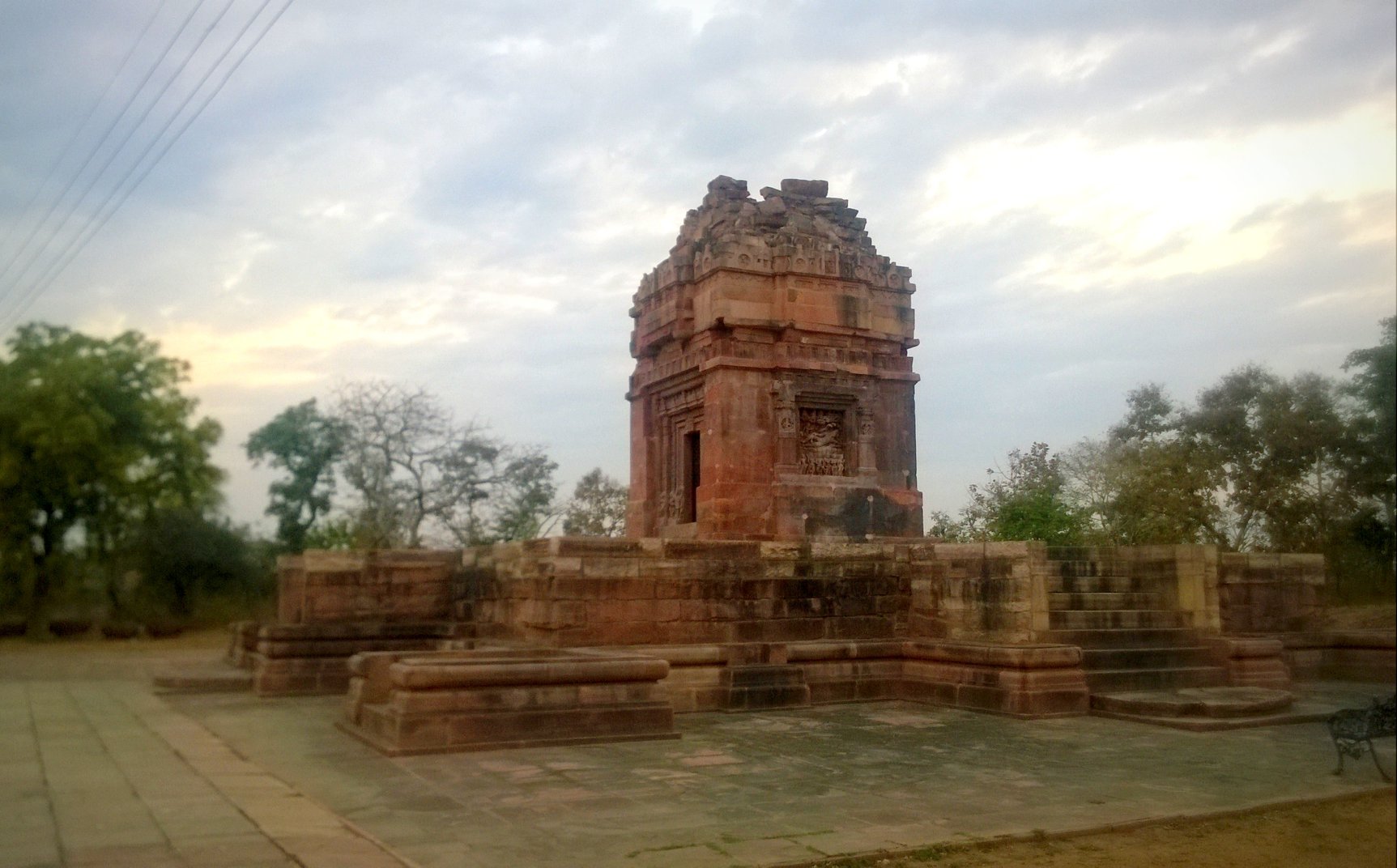
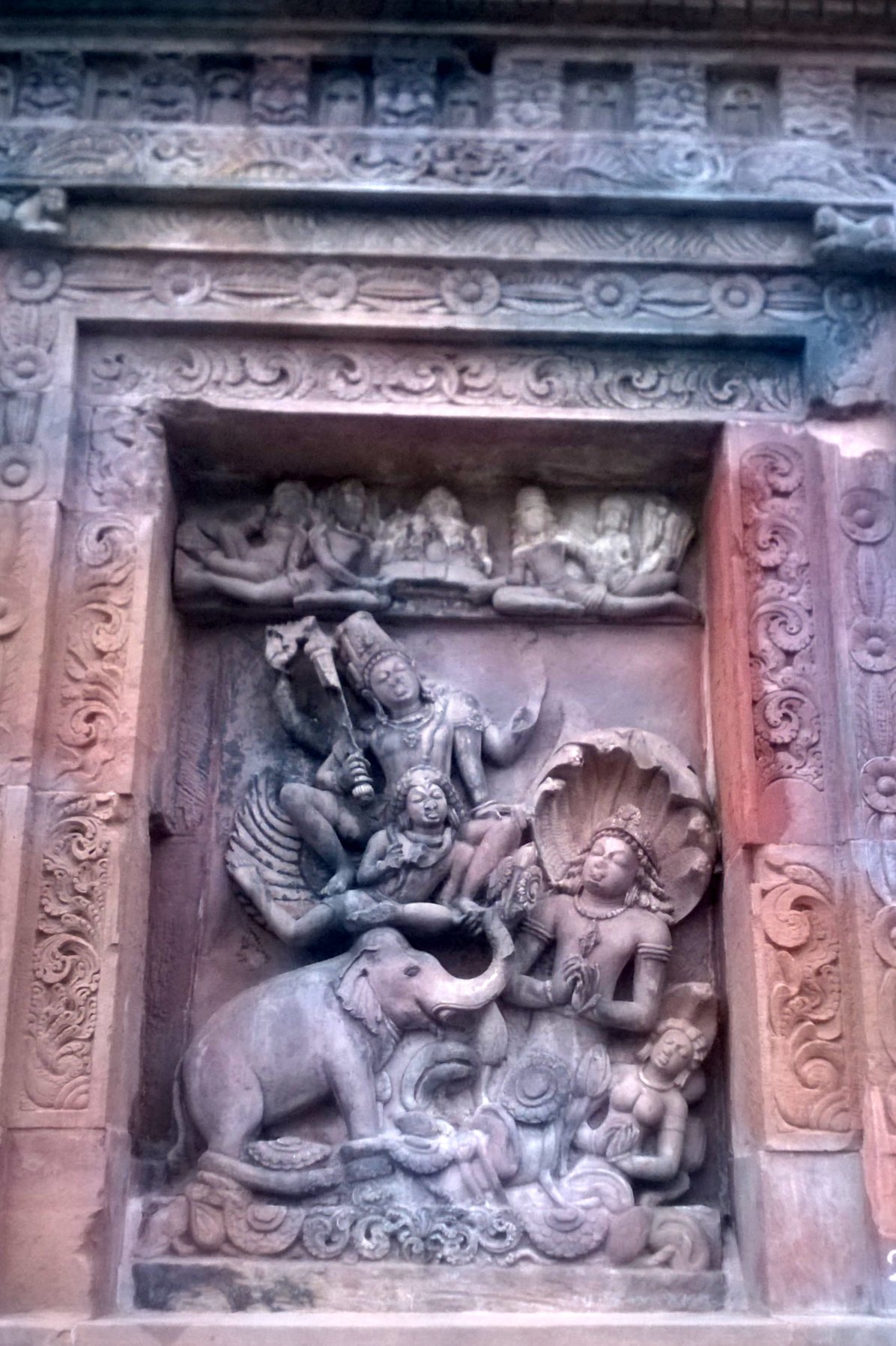
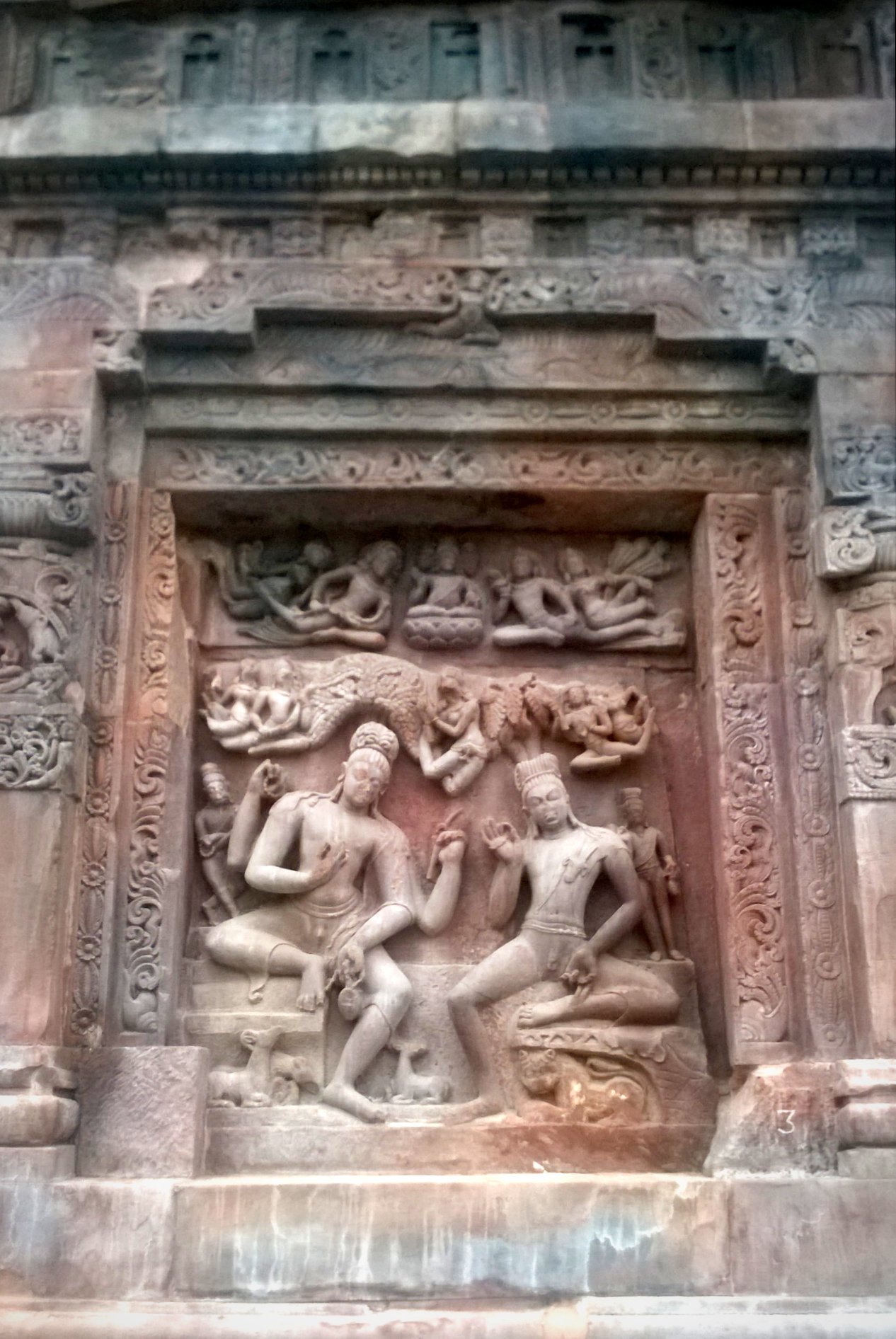
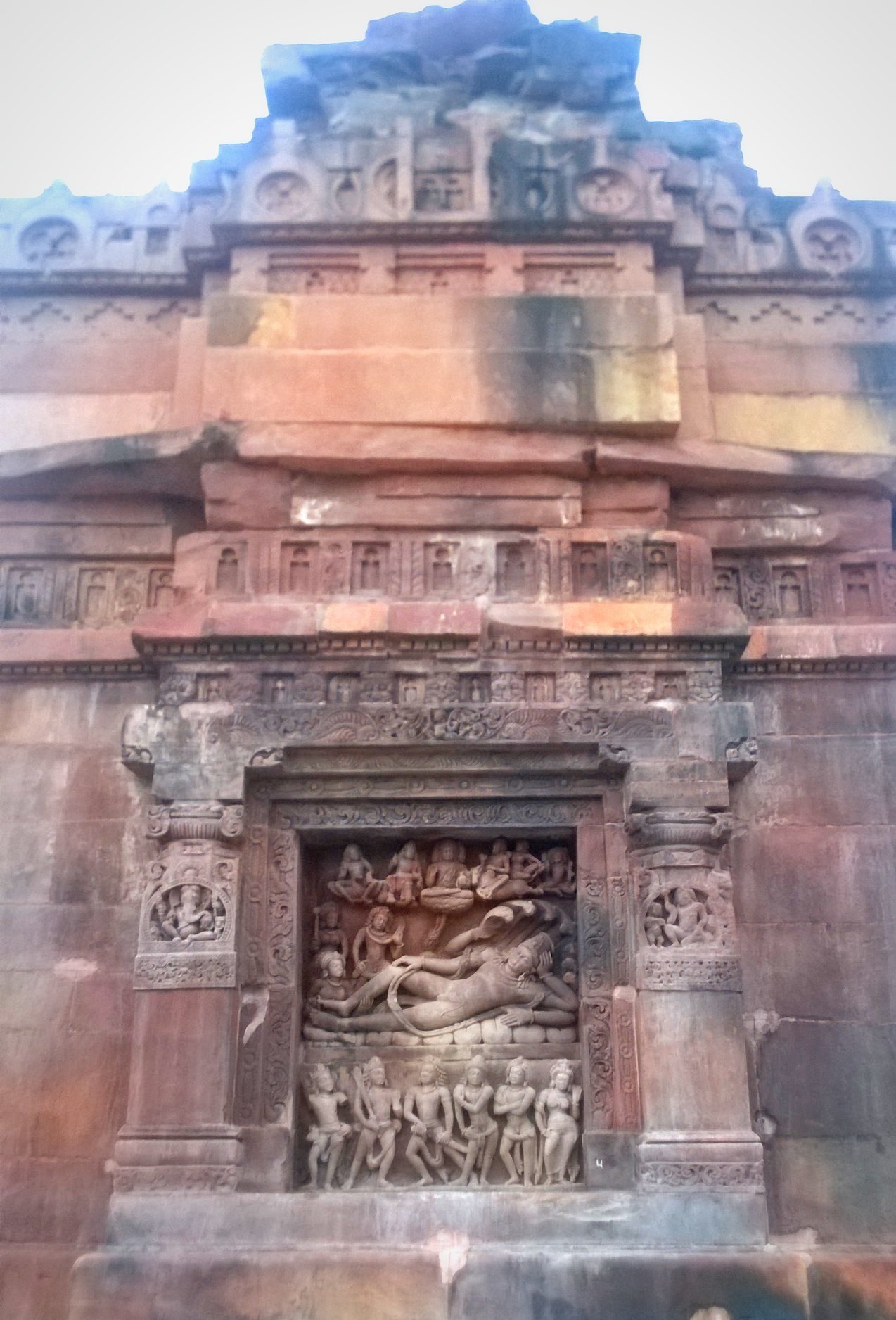
On our way back, with darkness fast approaching, we took a bold venture into the thick forests of Deogarh on the other side of Lalitpur, in pursuit of a 6th Century Vishnu Temple called Dashavatara (of the 10 incarnations of Vishnu) Temple. It was beyond sun-down, the closing time of most monuments, however, we still got to access the temple as the temple upkeep is not geared towards tourism – a truly unheralded site. As I perused the sculptures and the carvings on the Gupta period temple walls, I trembled with the knowledge that I stood in the vicinity of one of the oldest standing temples of India!
How the early 6th century Dashavatara temple at Deogarh, dedicated to Vishnu, looks like on an early February late eveningMotifs on the walls of the Dashavatara temple
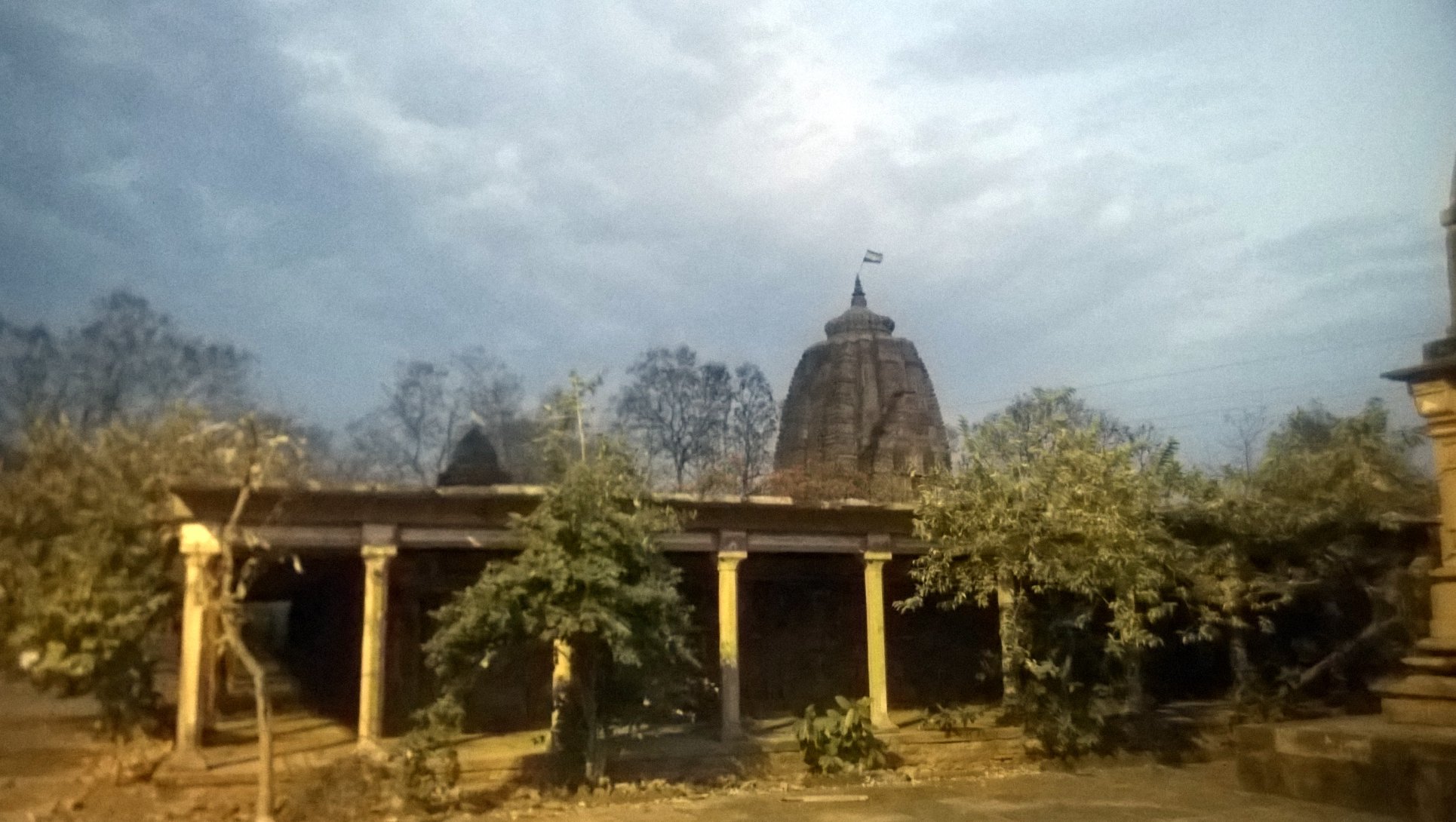
As we pushed ahead towards a 8th century Jain Temple Complex in the pitch darkness, the auto-rickshaw we were riding on was hailed by a couple of burly men, who asked to hitchhike to the Jain Temple. They claimed to be policemen and the auto-rickshaw driver had to relent. With our hearts in our mouths, we rode up a hillside to finally reach a well-illuminated temple complex, which was already closed. Fortunately, the men turned out to be who they claimed they were, and let us inside the Temple complex, as the sole visitors at 7pm on a deserted hilltop!
The Shantinath Jain temple complex, Deogarh, at 7PM – we were the only visitors in the darkness
The next morning, we learnt that our early morning train for Morena was running late by 5 hours, forcing us to improvise. So we ditched the train and took two buses back North towards Gwalior via Jhansi, racing against time. Getting down at Gwalior bus station, we approached an autorickshaw driver to ply us around for the whole day. The autorickshaw driver knew nothing about the places we were interested in, but he agreed immediately to the assignment when we pitched to him that it would be we who would show him around for a change! Now, who gets paid for being shown around?
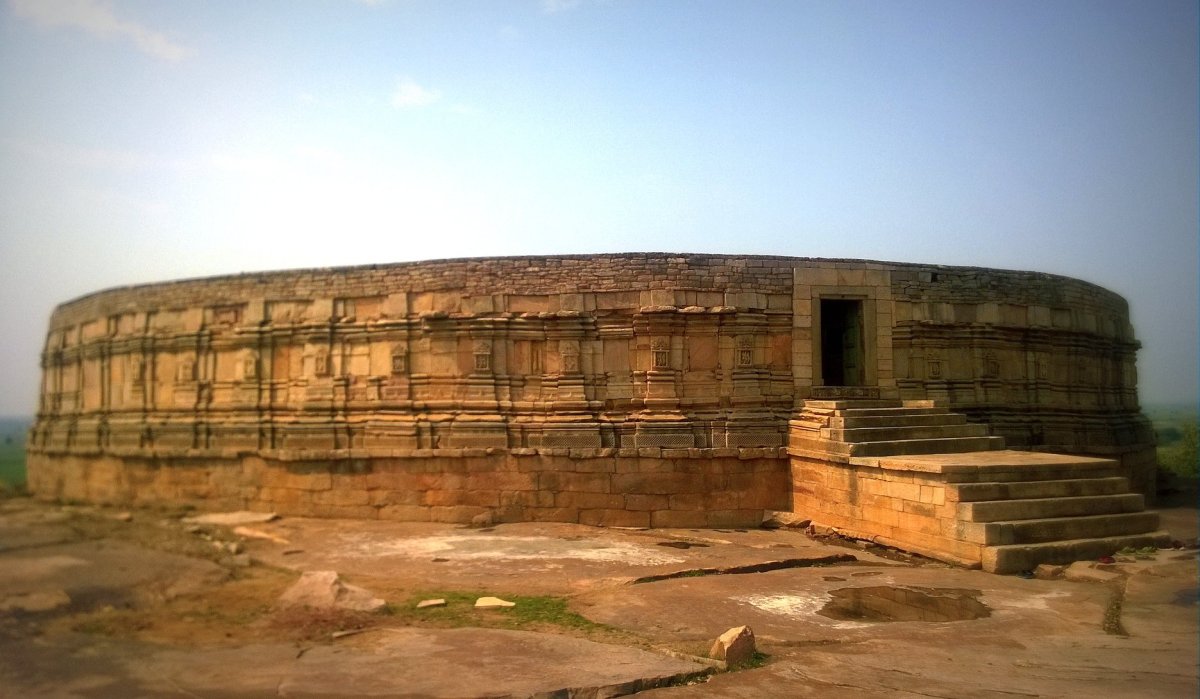
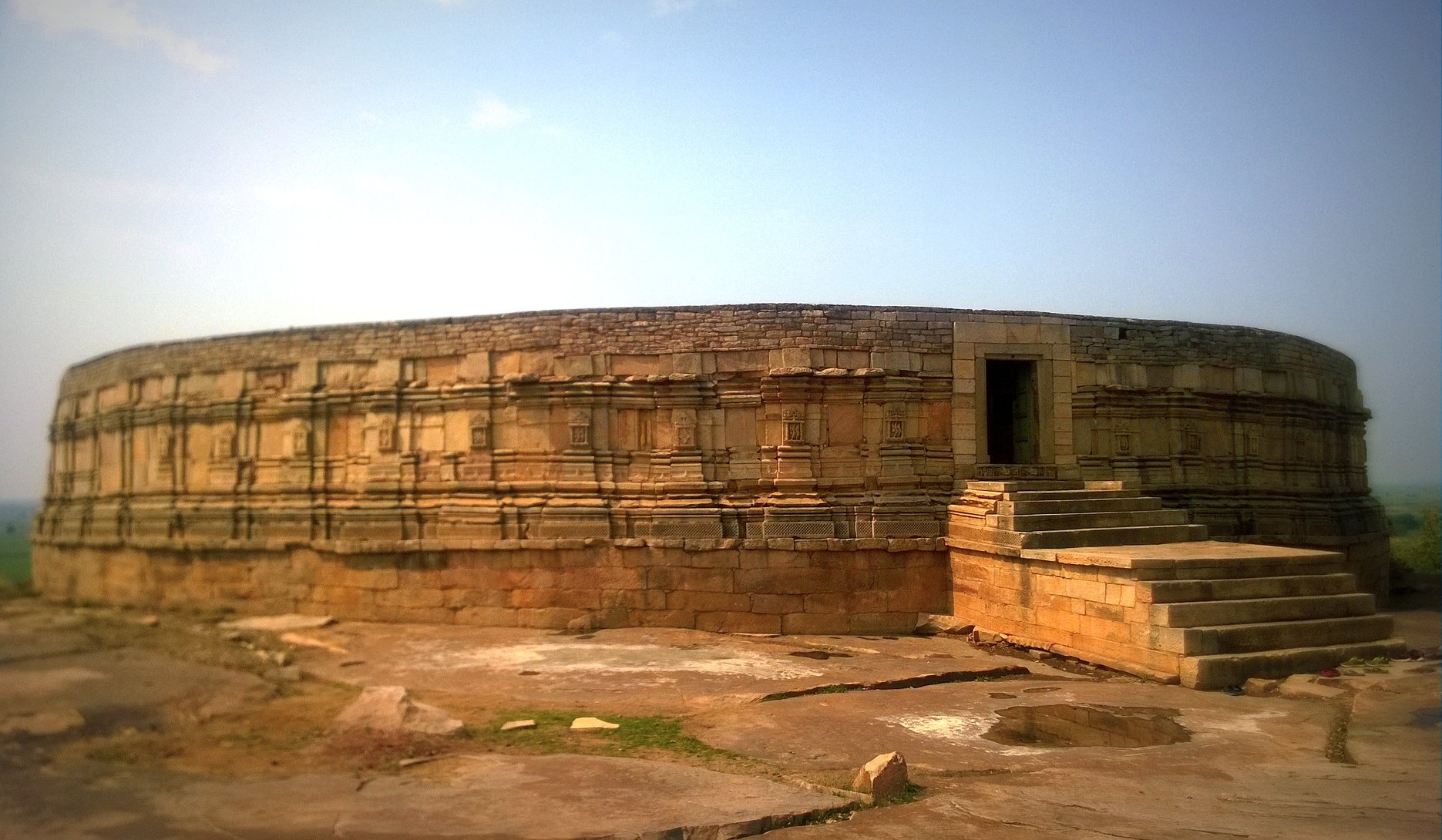
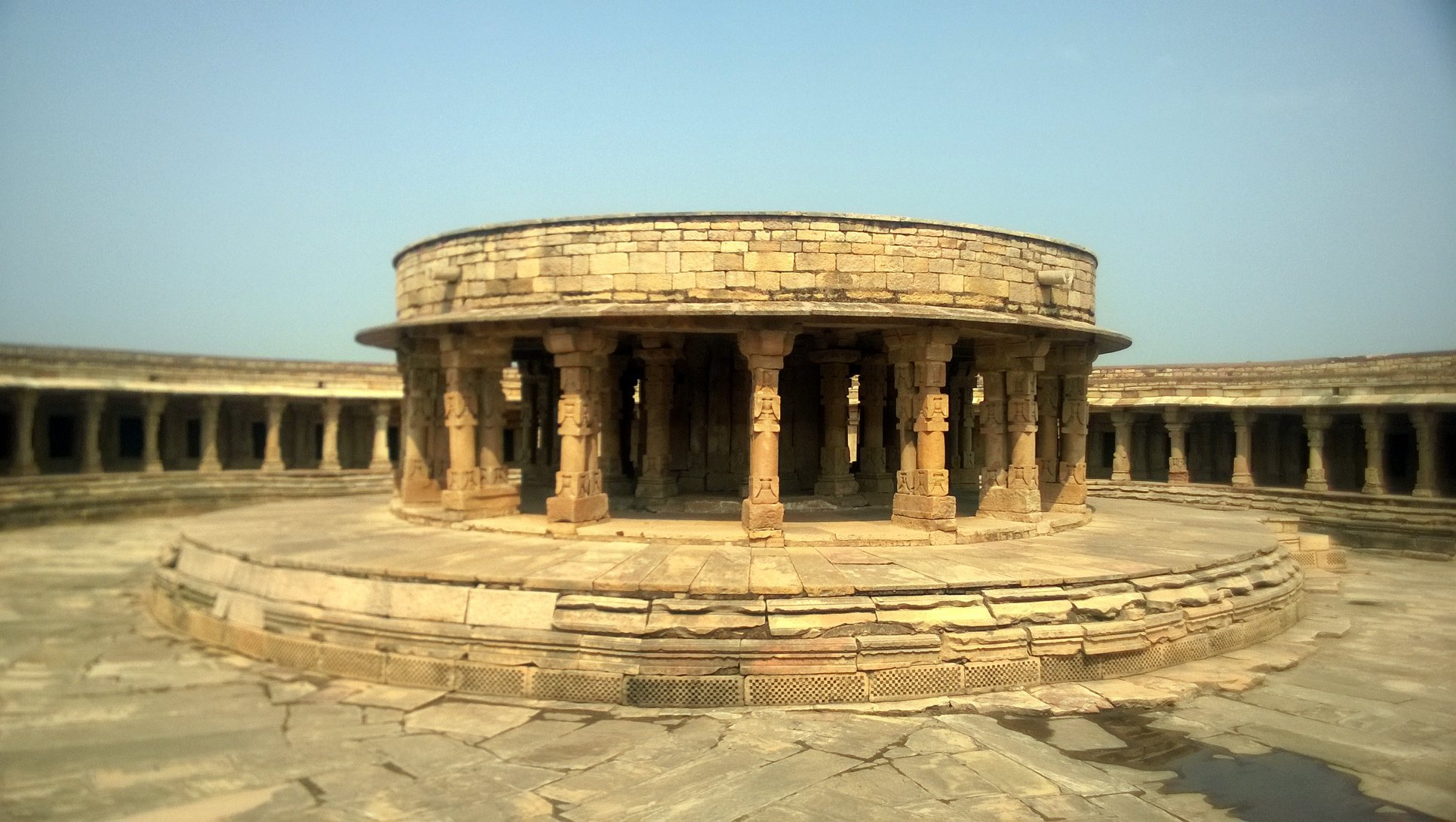
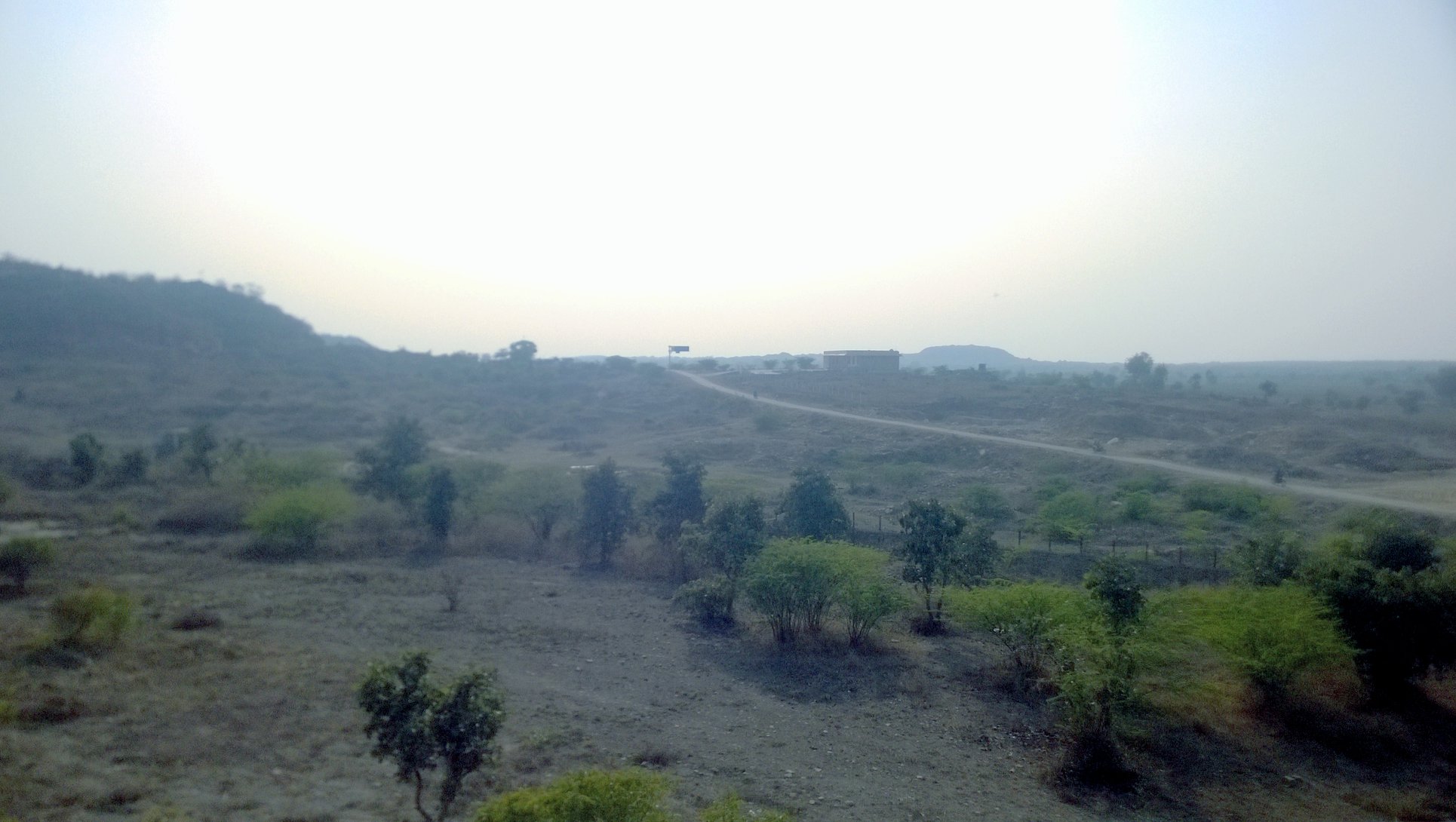
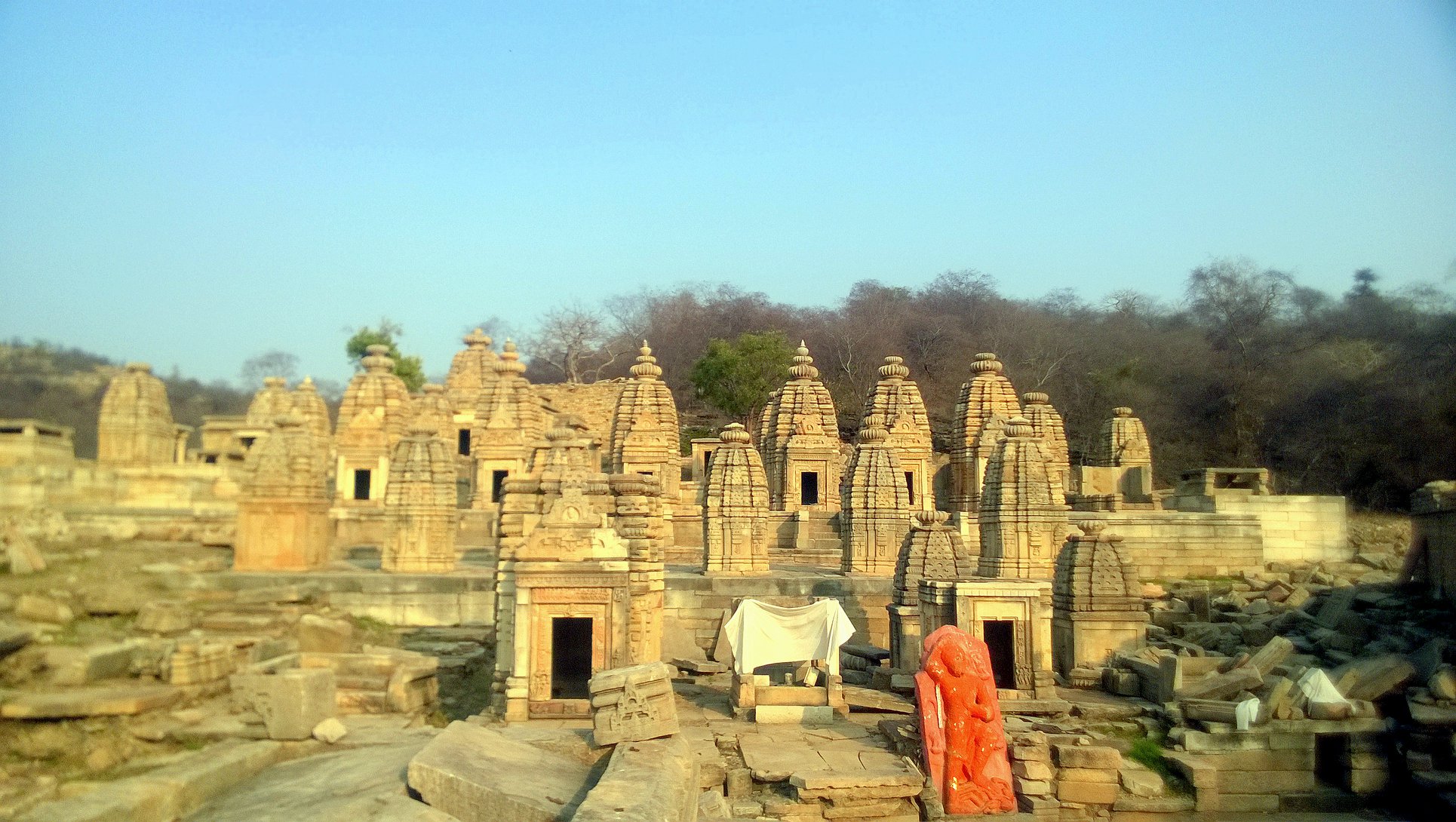
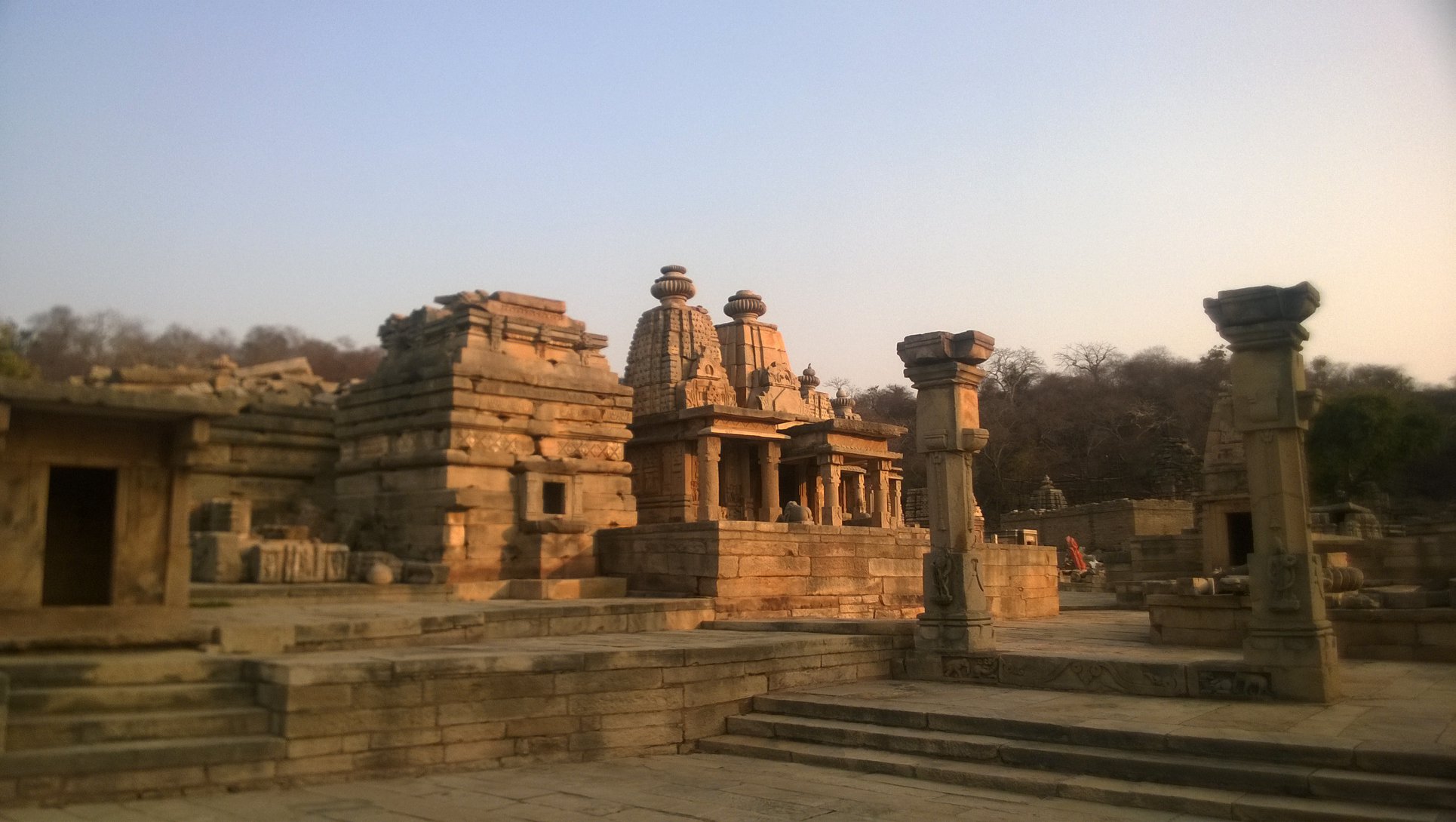
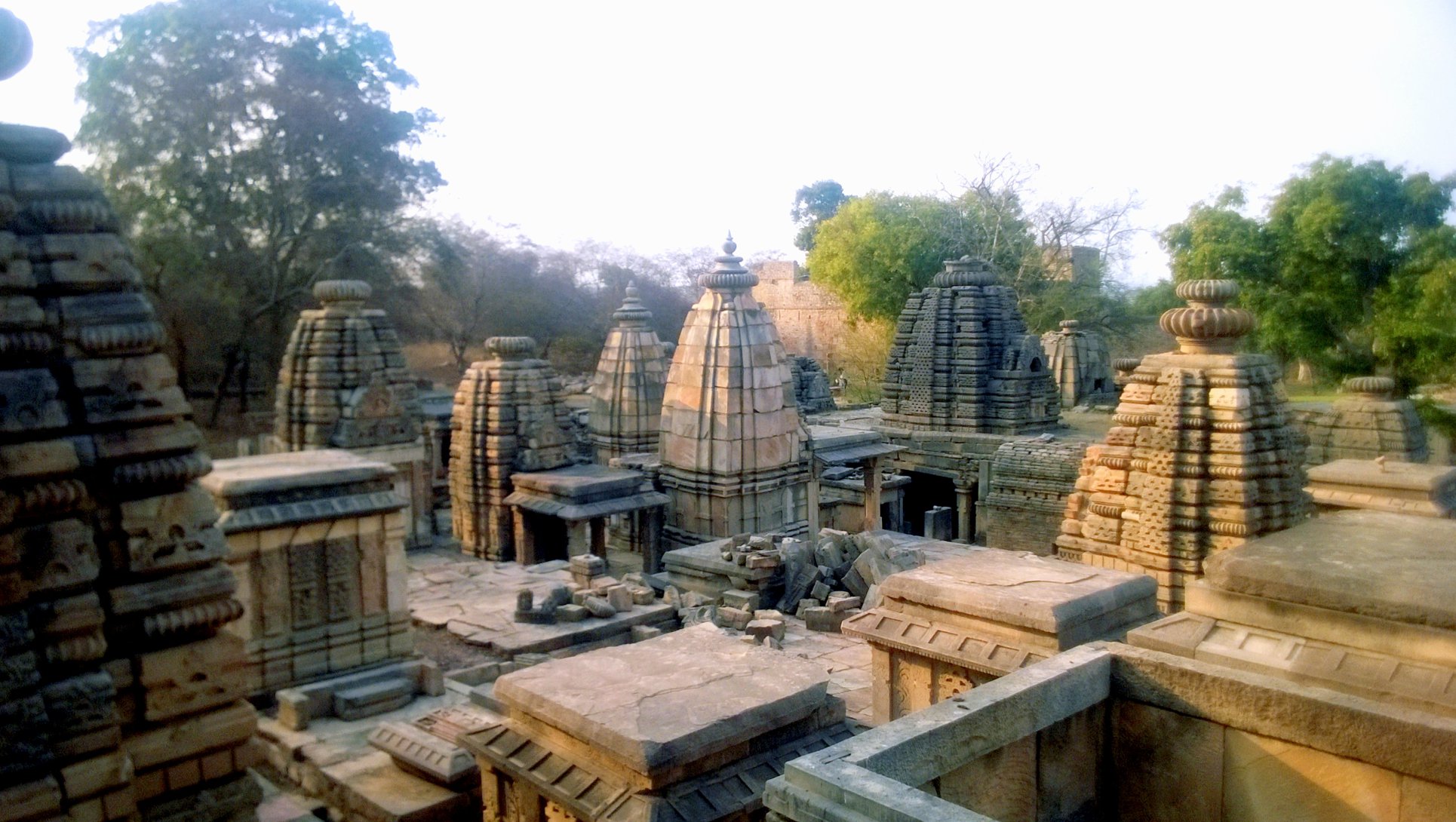
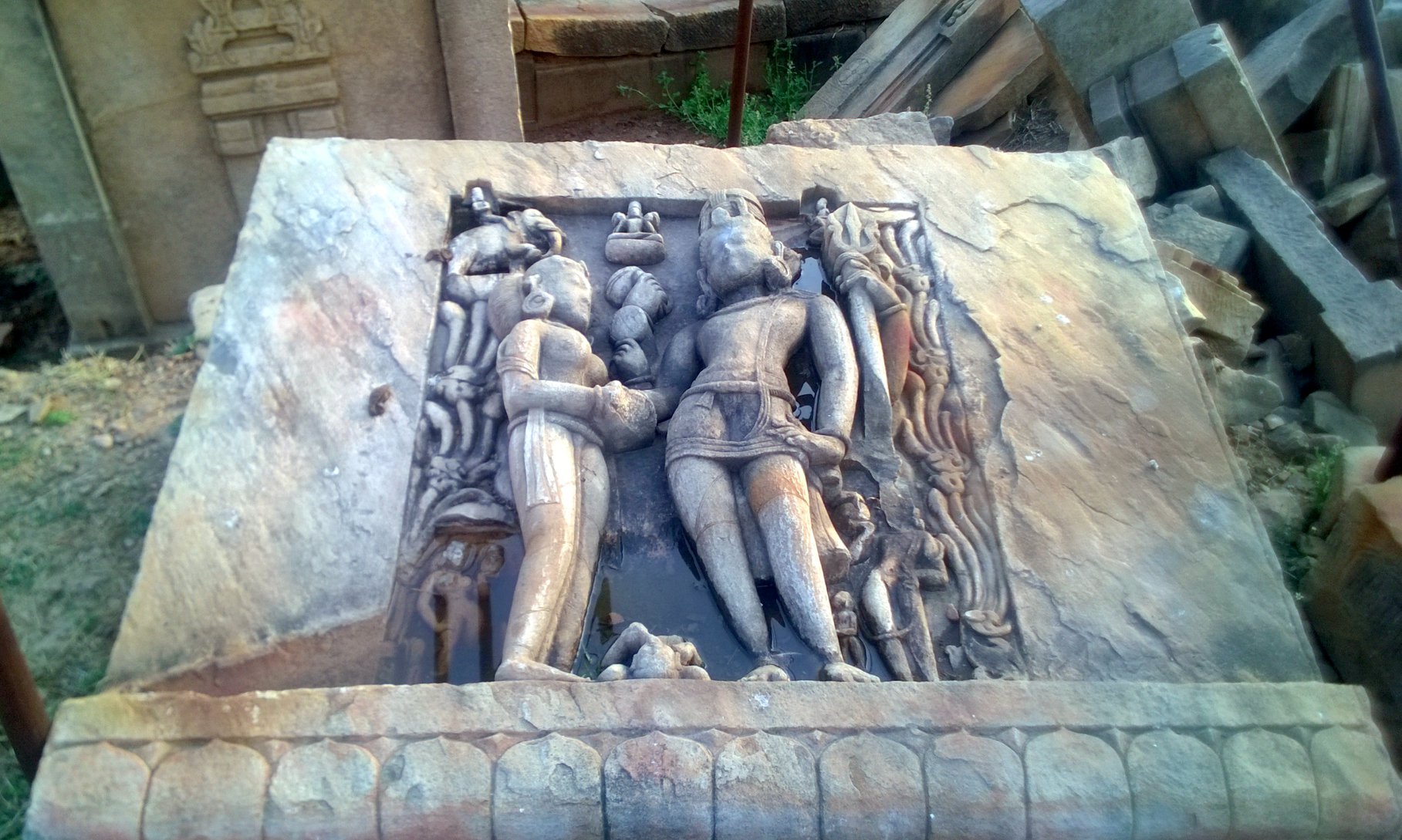
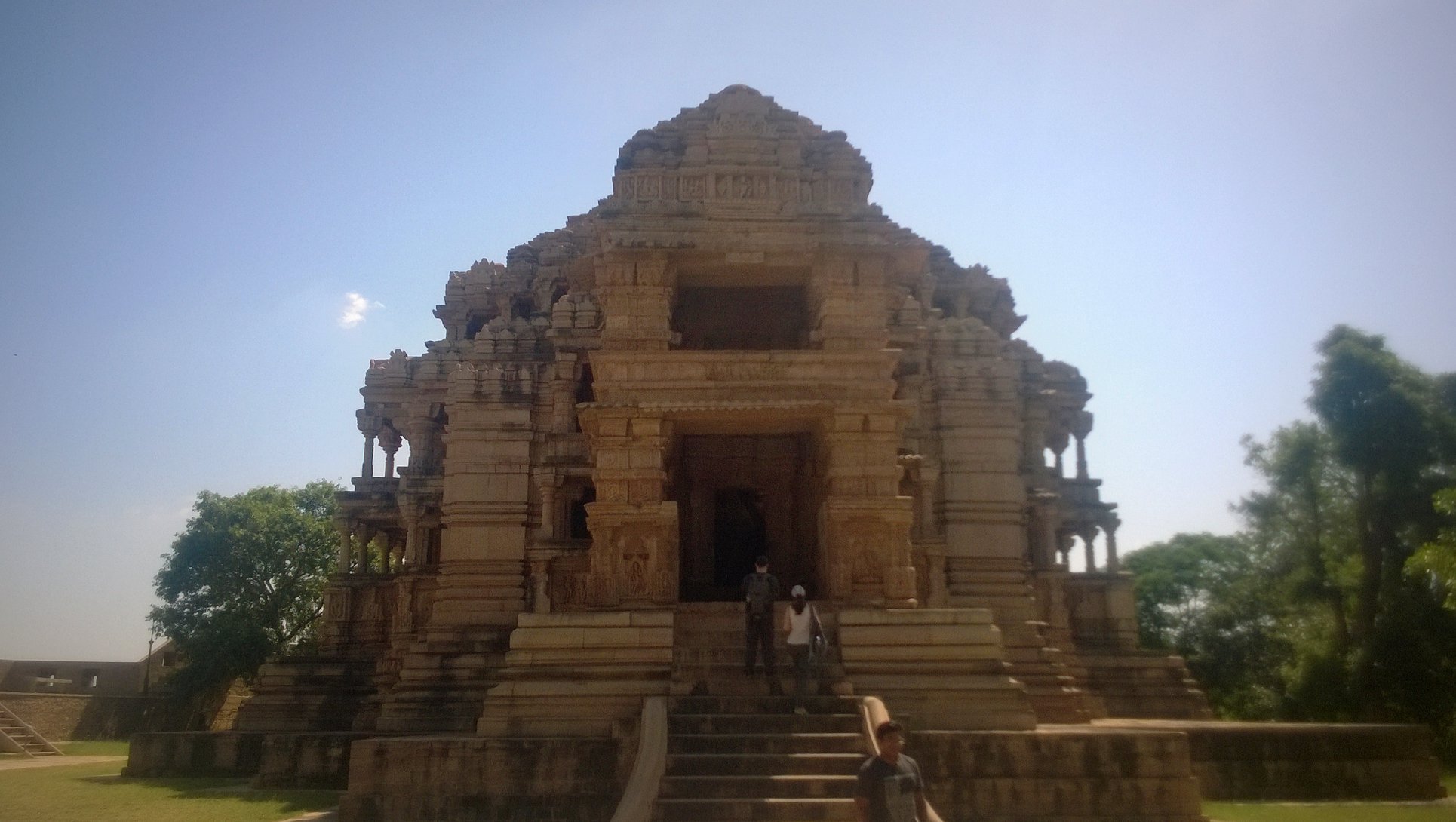
Soon, pulling away from the main road, we ventured into the Chambal Valley. Encountering the occasional shallow ravines and sparse vegetation. Our first stop was the mesmerizing circular Chausath (64) Yogini Temple atop a hill at Mitaoli, a 1 hour drive from Gwalior. 4 km away lies Garhi Padavali, a fort-like temple, our next stop. However, the most intriguing and spell-binding site lay another kilometre from there – the 8th to 10th century Bateshwar Temple Complex, which was only restored a few years ago, with the help of Chambal dacoits!
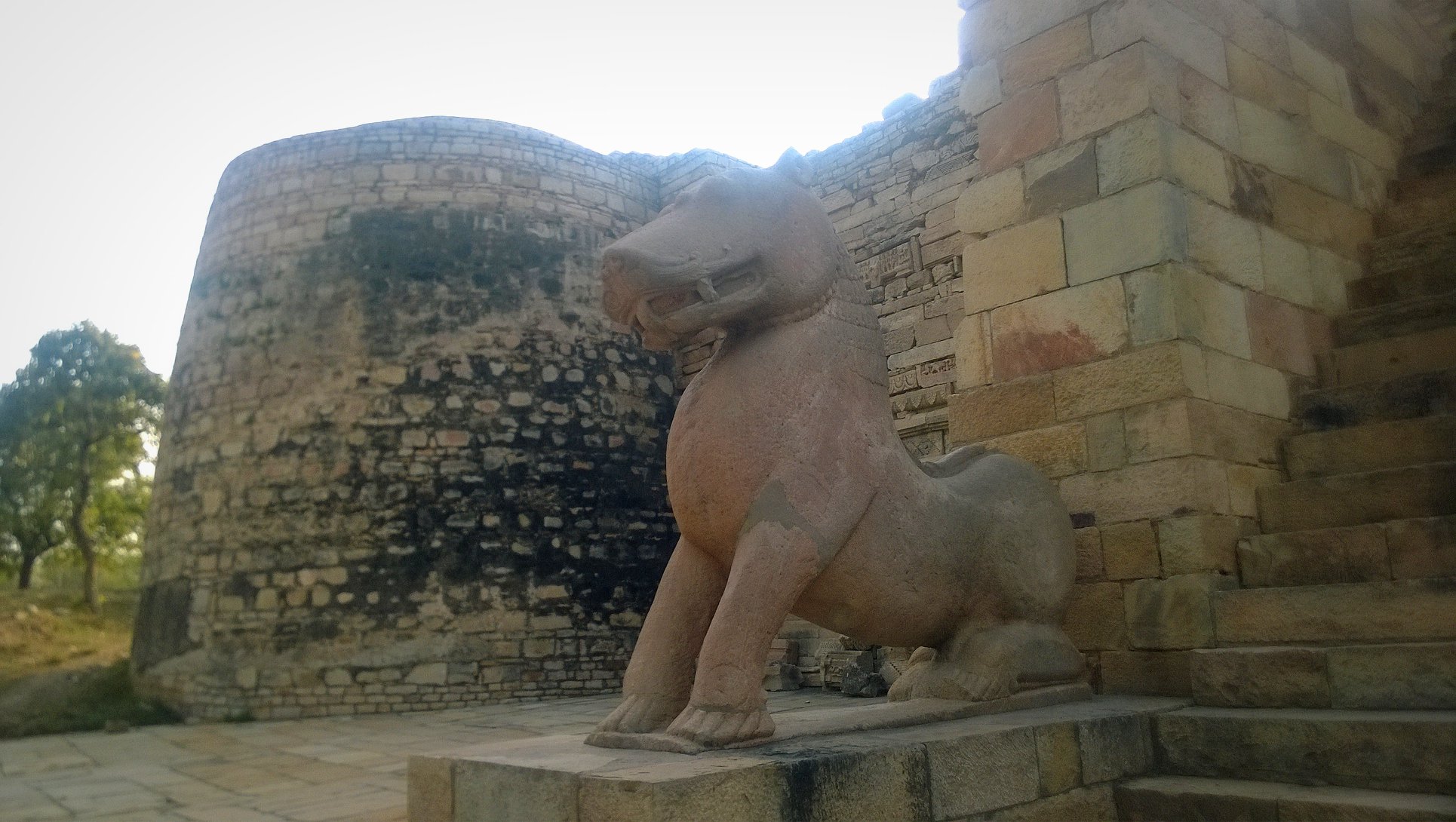
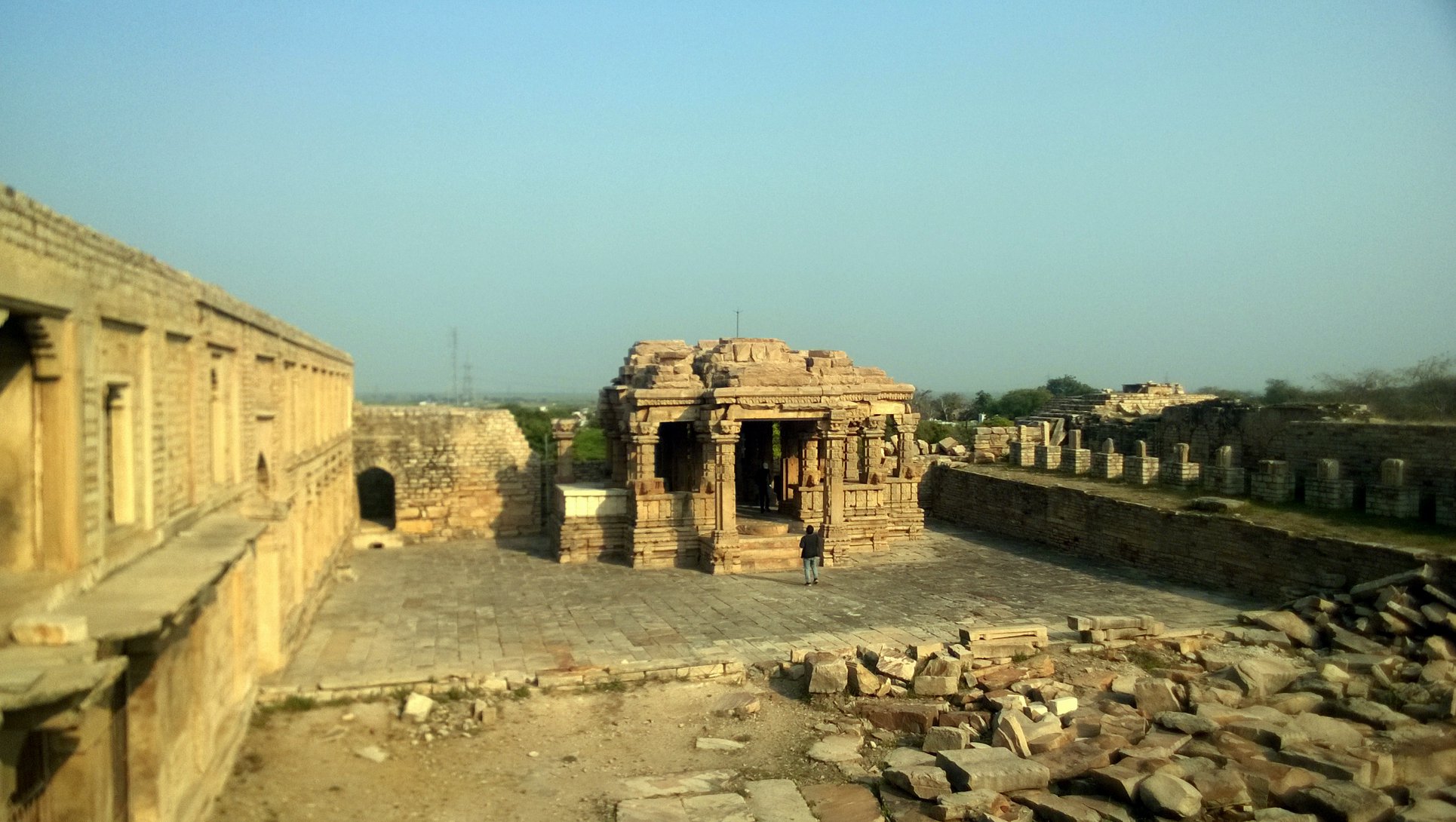
Glimpses of the 11th century Chausath Yogini Temple, Mitaoli, also known as Ekattarso Mahadeva Temple at Mitaoli, MorenaGlimpses of the Garhi Padavali temple at Padhavali, Morena
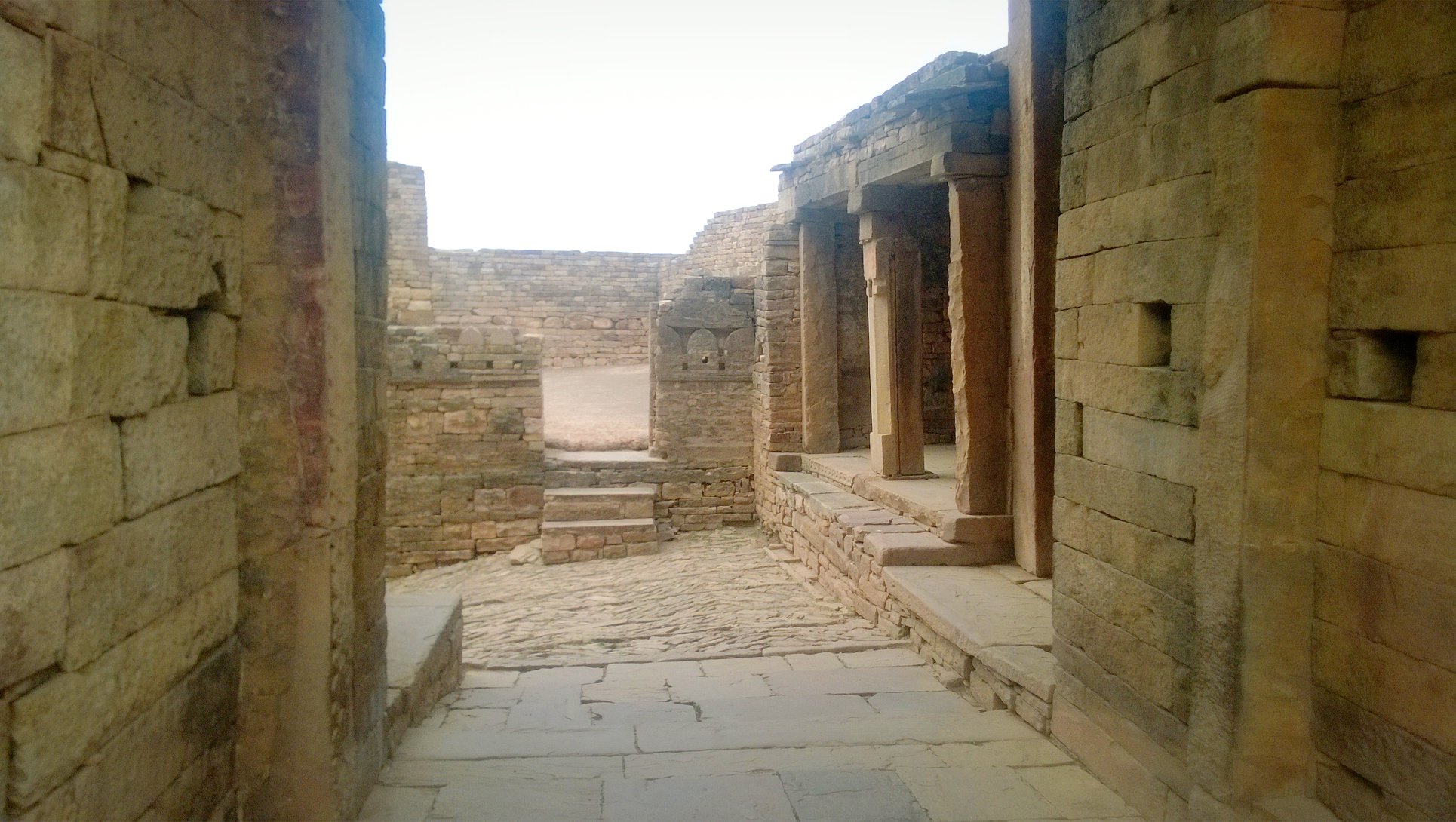
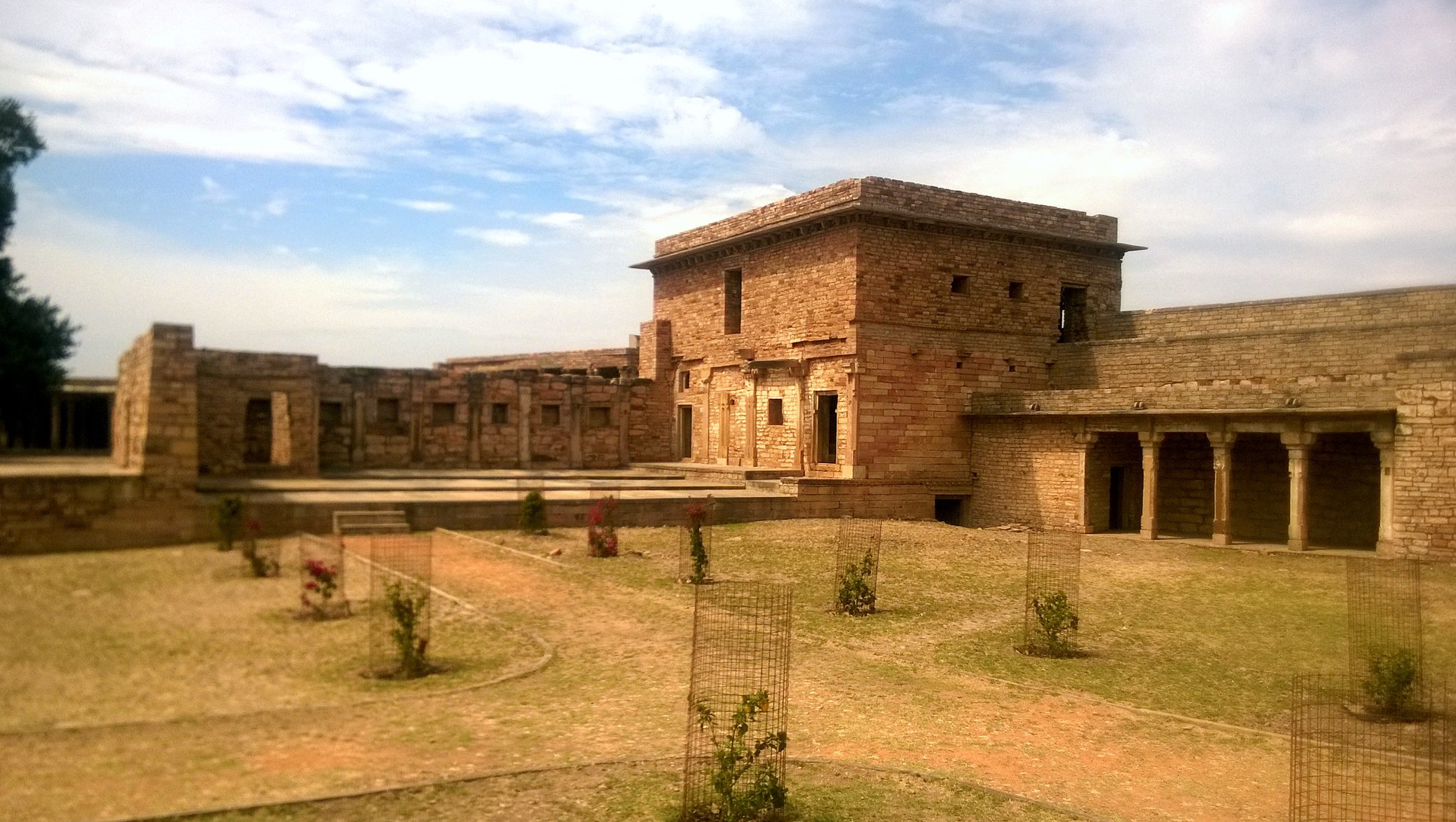
The Bateshwar temple complex lies protected in a cove in the hillside, and is accessed by turning around the hillside when coming from the Padavali site. The complex comprises more than a hundred small temples stacked in tiers, along with a couple of bigger temples and a water tank at the innermost end of the complex. Standing at the bottommost level of the complex, the tiered lines of temples is a sight to behold! The story of how the temples were restored is in itself a testament to the dedication to his craft, and perseverance of reputed archaeologist K.K.Mohammed, and to the magic of collaboration amidst disjointed forces in the face of forces of vested interests.
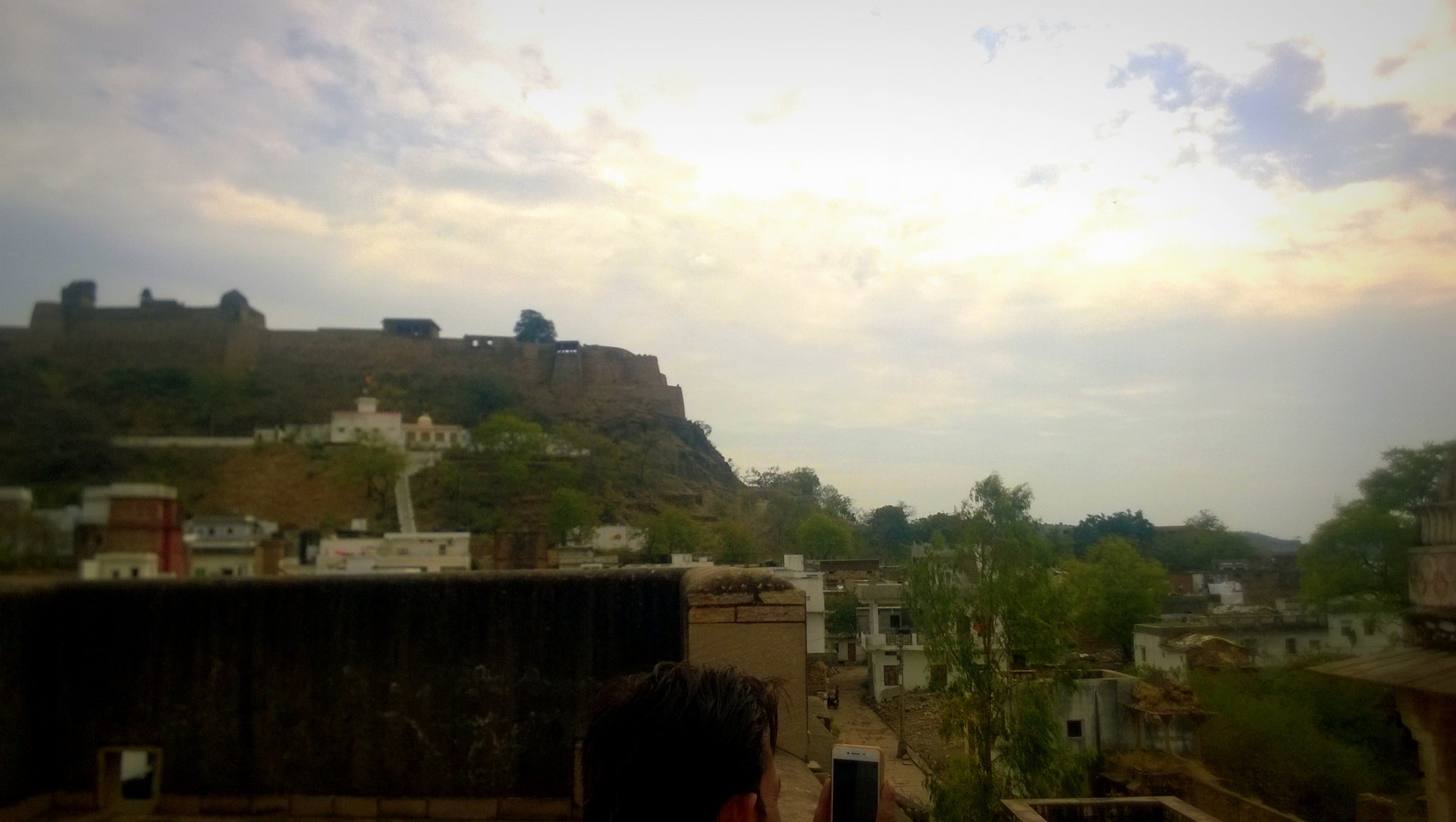
The road leading to the Bateshwar temple complex as seen from atop the fortress wall of the Garhi Padhavali templeView of the stacks of tiered temples inside the Bateshwar temple complex – the temples are mostly small and a testimony to syncretism of the three major traditions of the Shiva, Vishnu and Shakti within Hinduism.More glimpses of the Bateswhwar temple complex; the motif in the rightmost picture probably depicts Vishnu
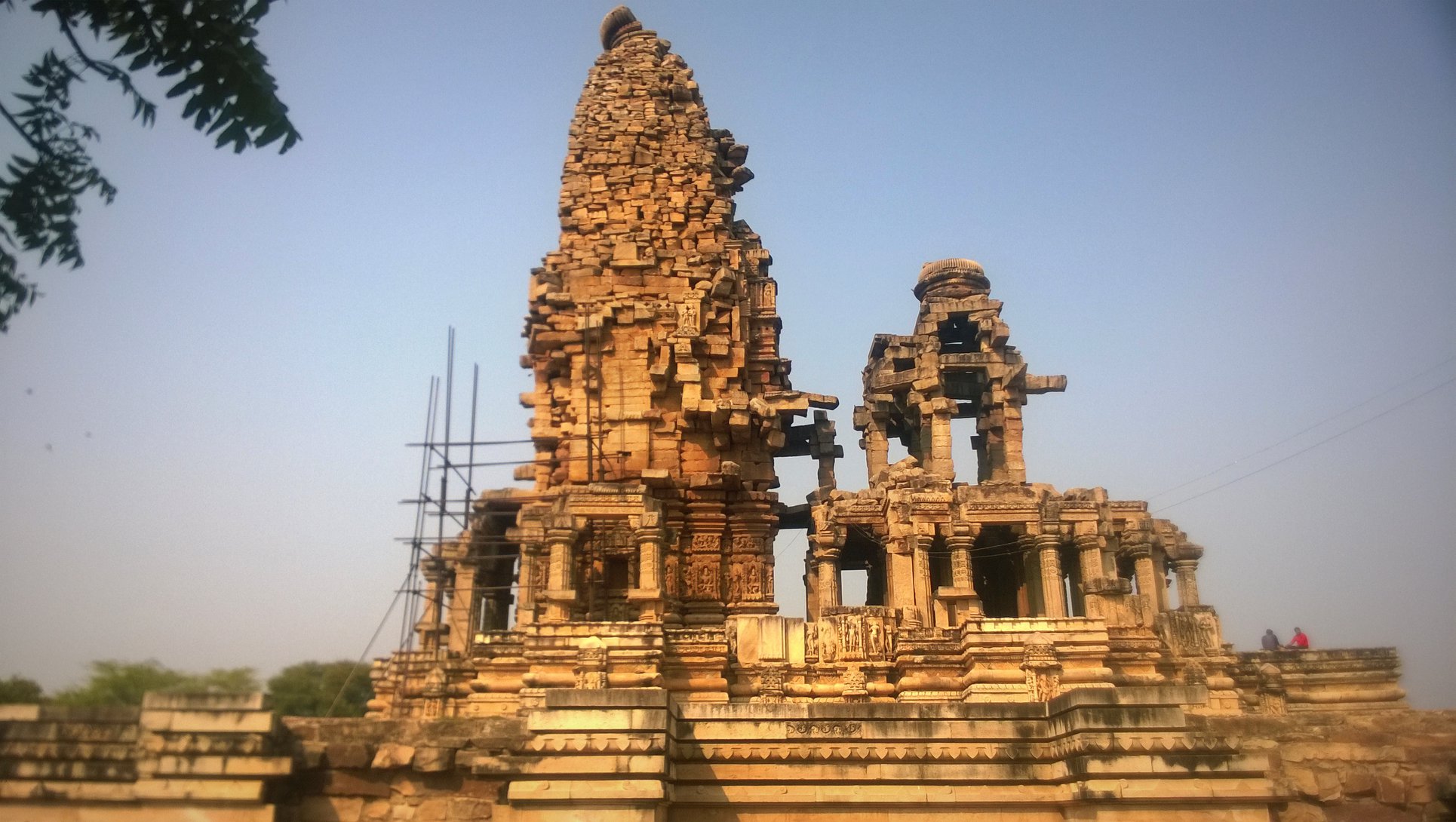
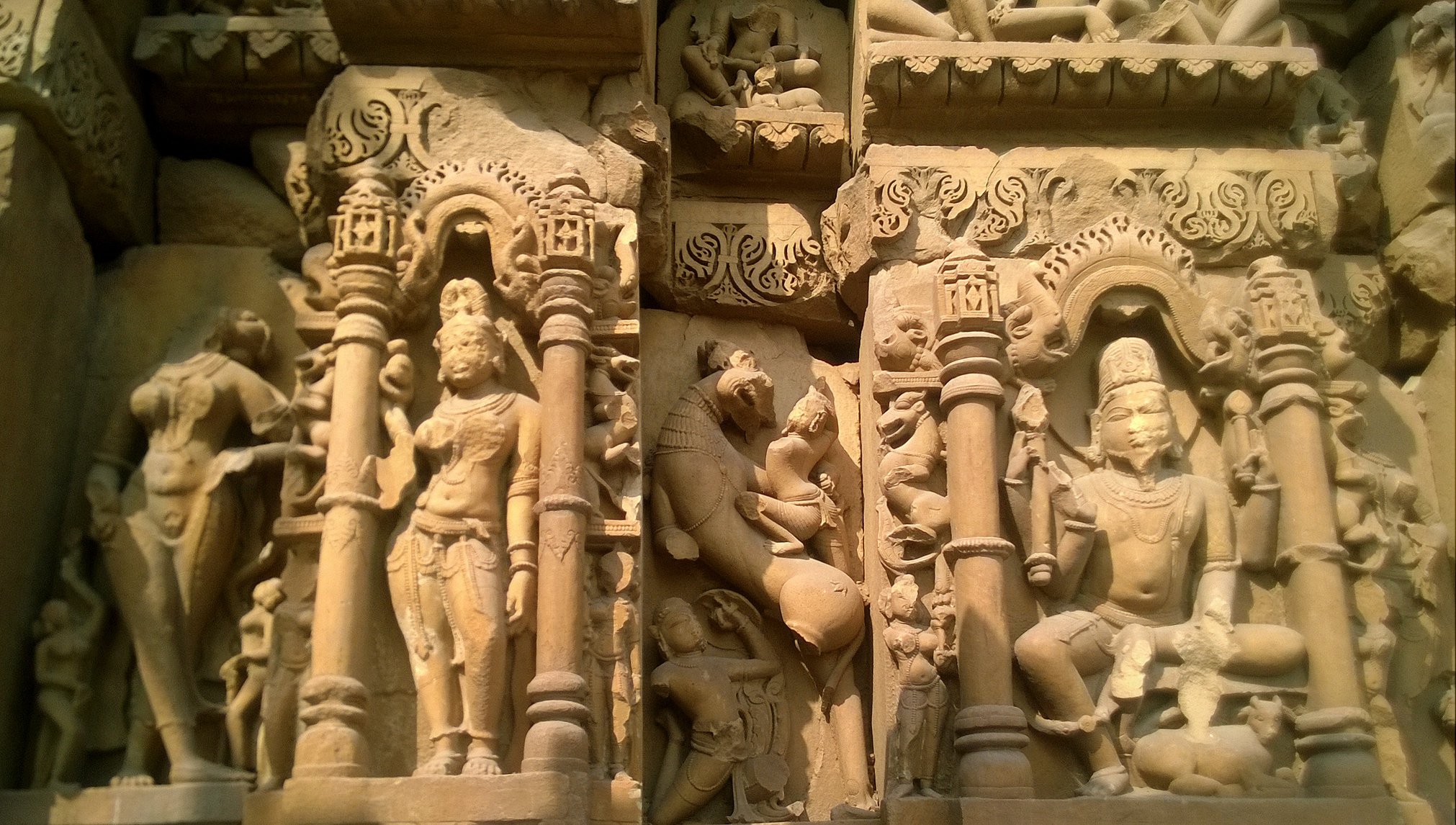
We rounded up the tour with the Kakanmath temple at Sihoniya, 20 km away from Padhavali. Built in the 11th century, the temple is decrepit, but the intricacy of the carvings on the walls are unmissable. After hovering around the site to our heart’s content, as we hurtled towards Gwalior in the autorickshaw through the Chambal ravines and ridges, with the billowing dust-clouds dispersed by the autorickshaw’s wheels bathing, and then clothing us with layers of dirt, I was reminded as to how easy it was for the sands of time to bury things into oblivion, and how, there is so much more from our past to uncover.
Glimpses of the 11th century Kakanmath temple at Sihoniya
Diwali this year afforded us with a very long weekend, and off we (my friend Abhijit, his friend Amiya, and I) set for Kinnaur Valley. We had booked overnight bus tickets till Shimla, and as the bus ascended the sharp turns with each passing minute, it was overtaken by a contagious wave of nausea. Even those who held their fort tight till the very end, had to give in – spurred by bouts of throwing up all around – to throwing up themselves.
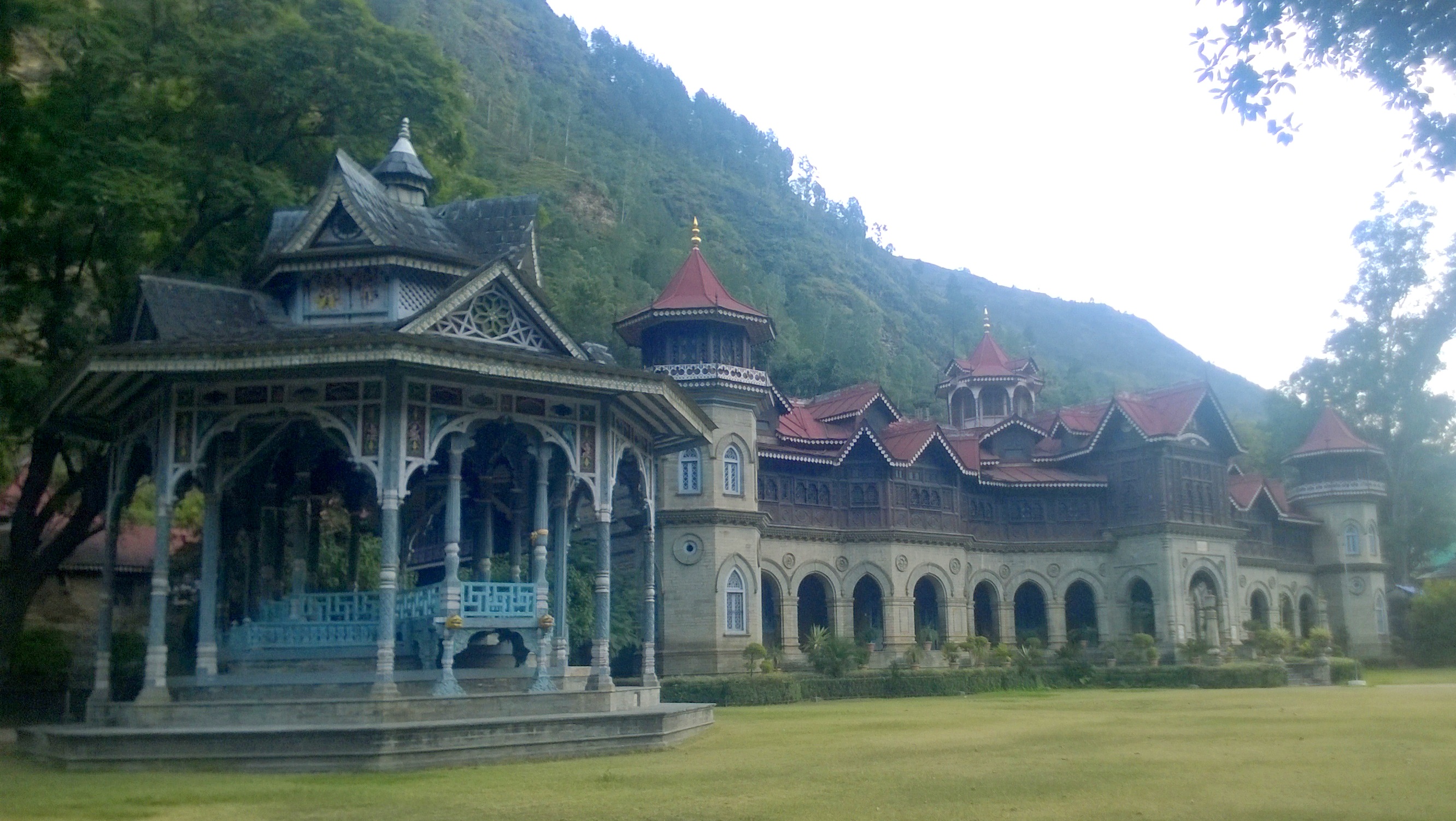
After a quick breakfast in Shimla, we hopped on to a state transport bus, even as a 12-hour journey remained before us. Accompanied by Pahadi Nati songs (of which the most memorable one was ‘Teri Paronthi Laga Radio‘), we finally reached Rampur-Busahr at 3PM, and soon got ourselves a room alongside the Satluj river. After a quick lunch, we stepped out to check out a Buddhist temple, the Rampur-Busahr bridge across the Satluj, and then, the King’s palace, where public access was allowed only till the lawns.
A monastery in Rampur-Bushahr, overlooking the SatlujThe royal palace of Rampur-Bushahr
It was Diwali after all, and so atop the hotel’s terrace, we looked in awe at the night sky, as the twinkling stars became indistinguishable from the showers emanating out of exploding fireworks. The mountain on the other side of the river looked as if it wore chains upon chains of sparkling diamonds. The temperature dropped to below 5 deg. C.
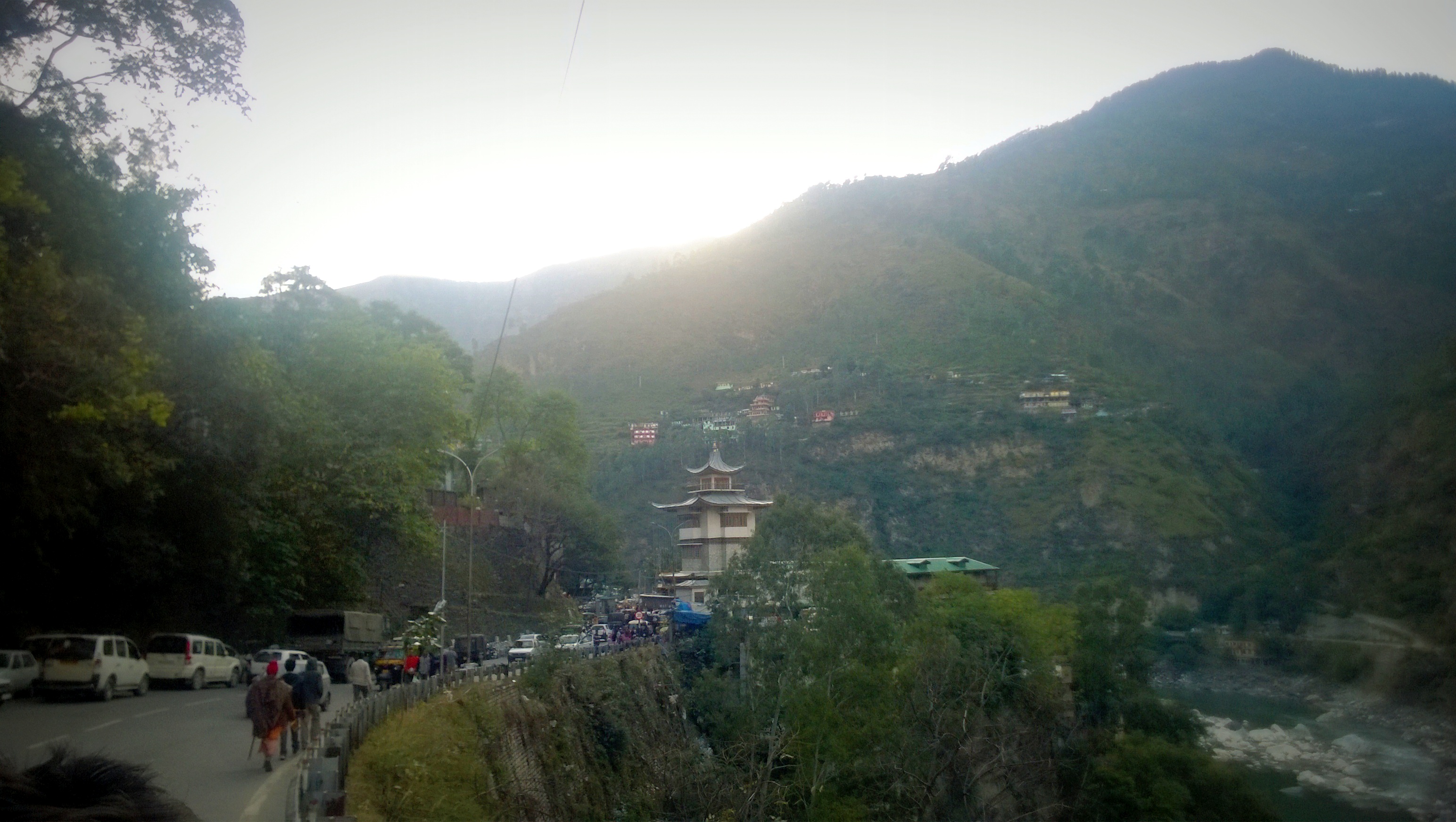
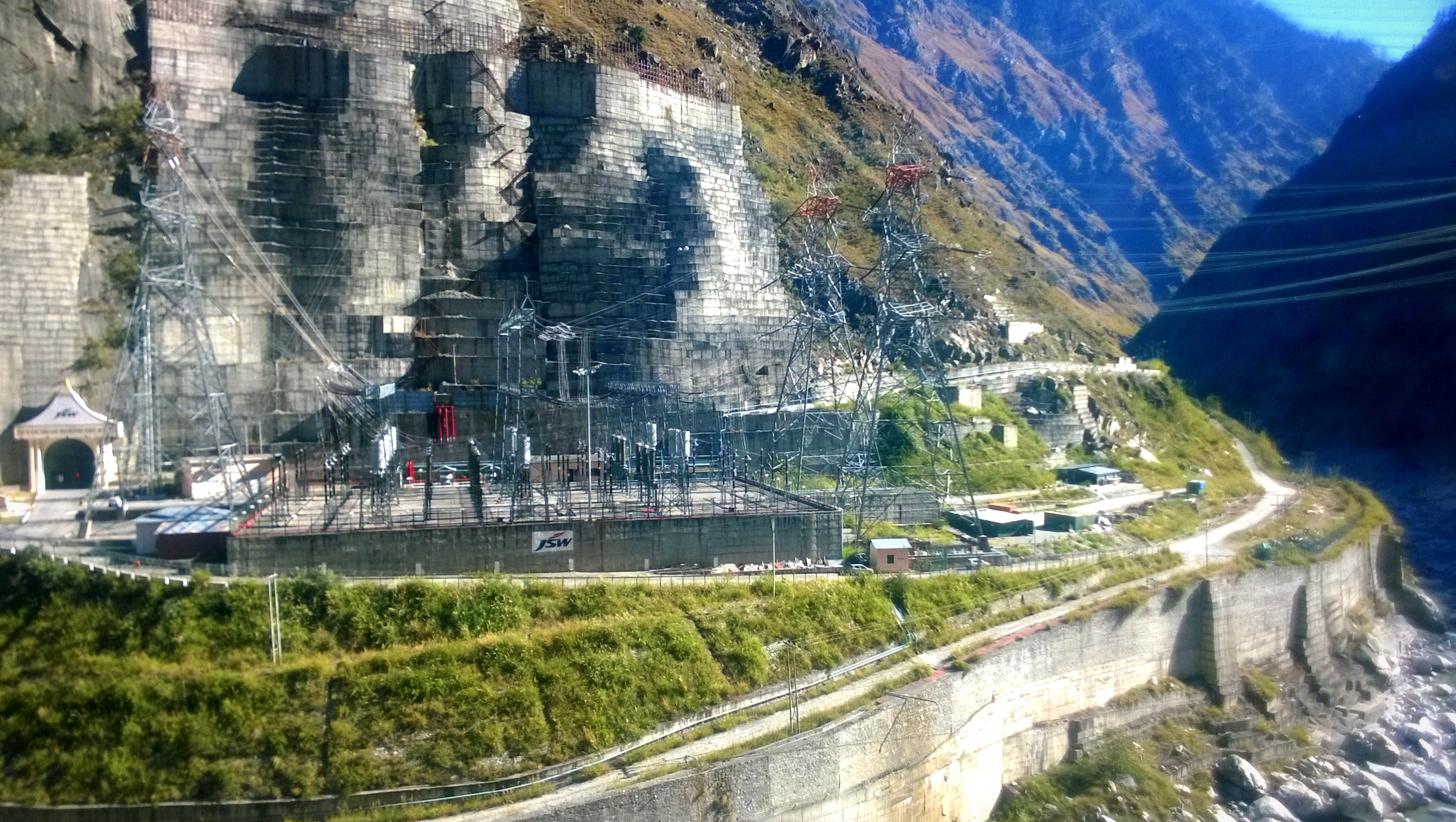
The next morning at 9am, we took a Himachal State Transport bus to Rekong Peo which was the gateway to the Kinnaur Valley. We hurtled alongside the Satluj for the longest time, with the mountains flanking us on both sides, treated to images of waterfalls streaking across the ridges on the opposite mountainside and the numerous hydro-projects. Before soon, we had passed through the famous hoop-like rock tunnel marking our entry to the Kinnaur Valley.
A hydel project on the Satluj
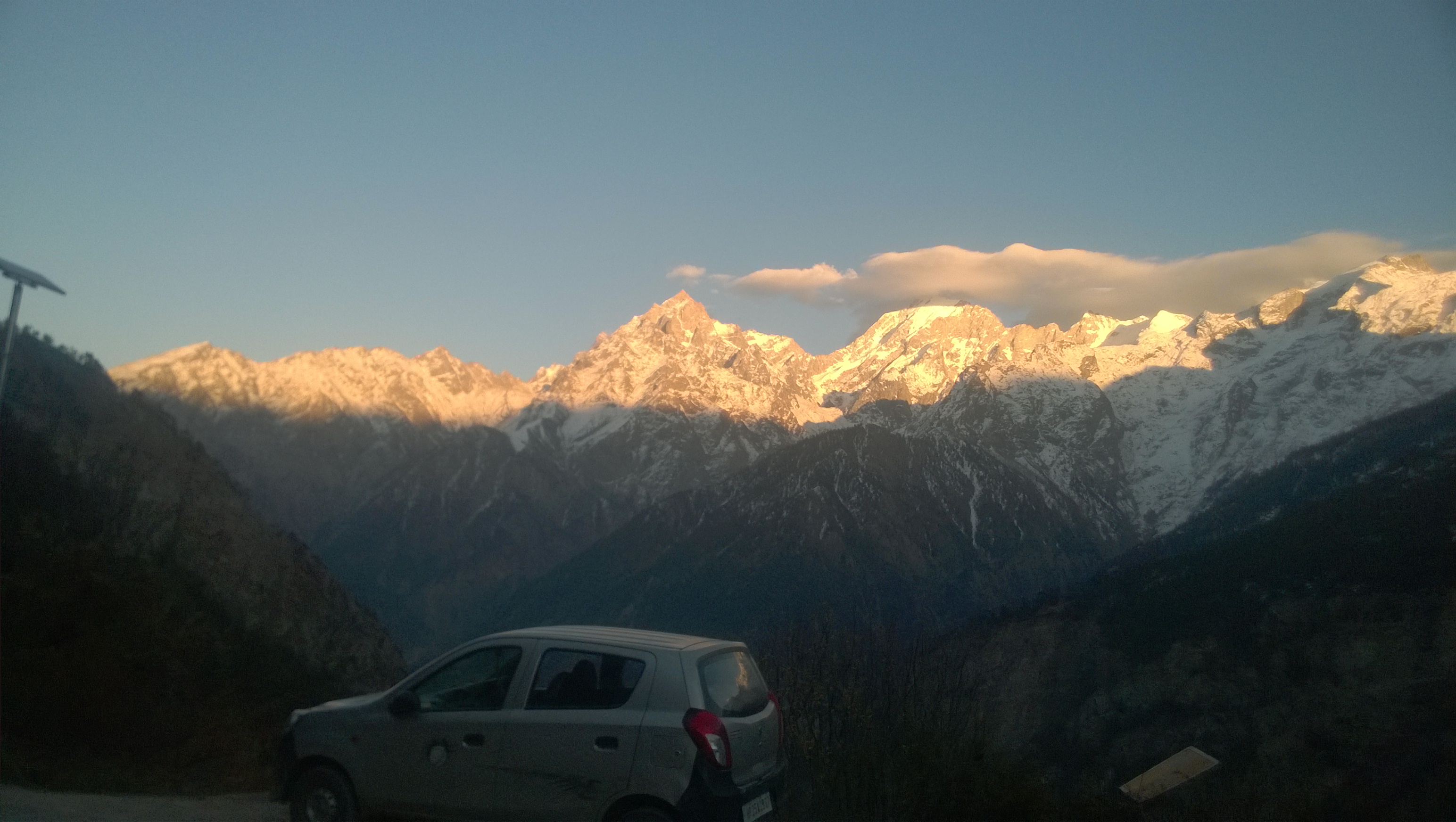
Shortly, we reached Karcham, the point where the Baspa river met the Satluj, and the road diverged, with one branch leading to Rekong Peo and further to Kaza, and the other leading to the Sangla Valley, where the well-regarded village of Chitkul, touted as the last Indian village, is situated. At this point, the snow-capped Kinnaur Kailash was already visible, standing there as if a stone’s throw away, but still unreachable even as we kept windingly moving in its direction.
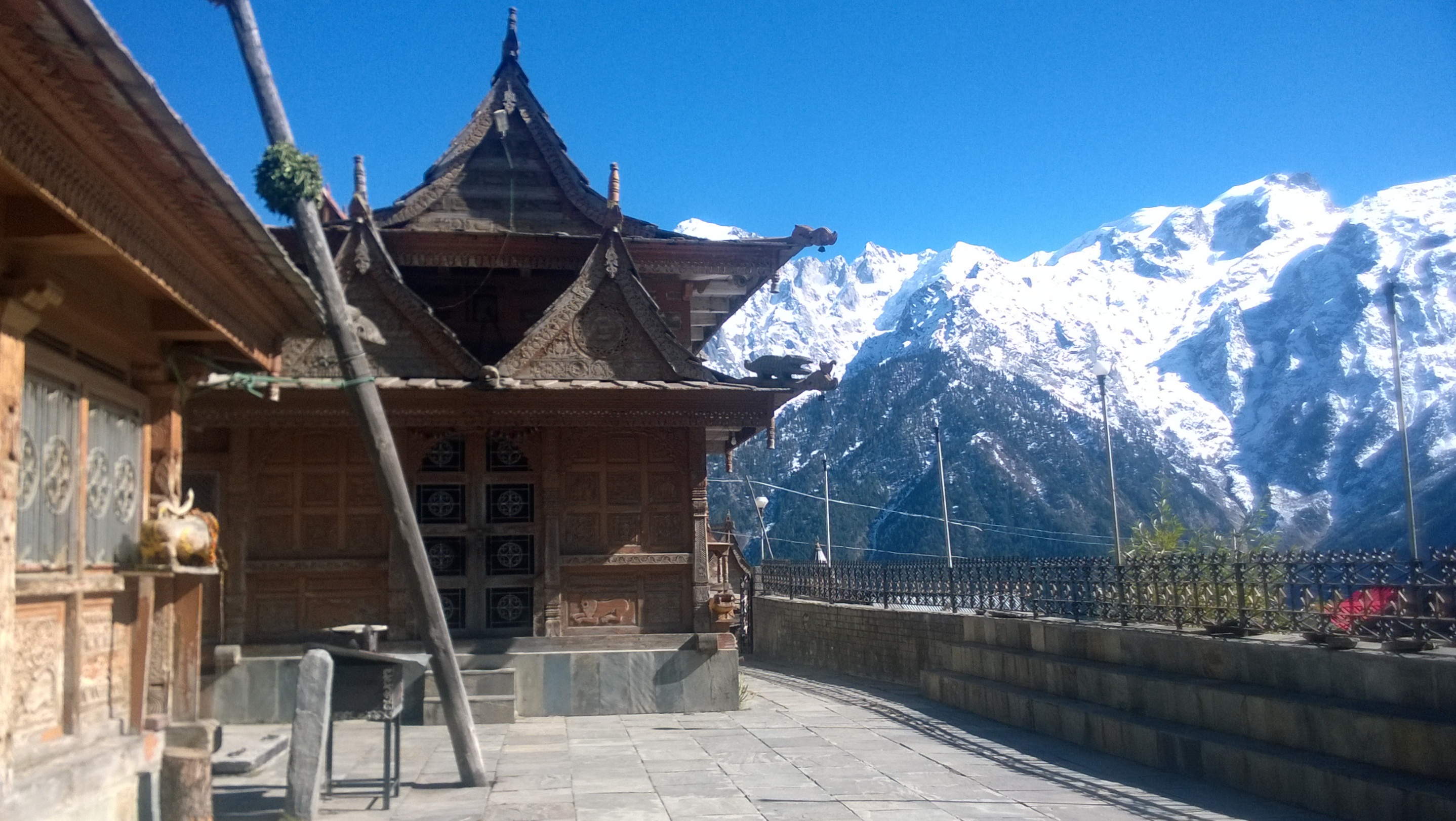
Reaching Rekong Peo around 2 PM, our first step was to hail a lift from a personal vehicle going towards Kalpa, which is accessible by a 7km drive diverging from the road to Kaza. Getting down at Kalpa, we were immediately struck by the shining peak of the Kinnaur Kailash, which now seemed like a touching distance away. It being the shoulder season, we checked in at a throwaway price into a fascinating hotel in the form of a standalone Himachal-style bungalow located in the village centre, and chose a room with a clear view of the Kinnaur Kailash.
After a quick meal of thukpa at a roadside diner, we walked down the slope to the Kalpa monastery and the Chandika Devi temple. Exiting from there, we stopped to have tea at a homestay run by a 70-year old lady, who offered to make us a hot mutton curry dinner that night for a price. With the cold setting in, the prospect of hot piping food was enticing enough that we paid up the advance, and left for some further sight-seeing… or to put more precisely, aimless wandering.
The Chandika Devi temple with the Kinnaur Kailash in the backdrop
That’s when a local villager offered us a ride to Roghi. Little did we know that we would be subjected to one of the most dangerous roads that I have come across in my whole life: in fact, the Kalpa-Roghi road is cited to be one of the most dangerous roads in all of Asia! The road was as narrow as they came – suitable for barely two small car to pass through – with a vertical wall on one side, and a 500-feet vertical drop on the other, supplemented by a general dose of blind curves.
On the dreaded Kalpa-Roghi road, looking at the Kinnaur Kailash
We stopped at the famous ‘suicide-point’ on a platform jutting outwards into the Valley. The view of the Satluj lying as a shining silver ribbon several feet below, and the road winding around the corners on two opposite ends, with the Kinnaur Kailash standing like an imposing guard overlooking the whole set-up, was breath-taking. The villager took us to Roghi, and dropped us back at Kalpa, after which we explored the Apple orchards on foot, to while away time till dinner was readied by the old lady. The dinner, as it turned out, was delicious.
Walk through the Apple orchards of Kalpa
Part 2: Sangla Valley
The following morning, we were were stuck by decision paralysis – Abhijit wanted to see Chitkul which was quite a detour, while Amiya was keen to just return to Delhi. The quibbling went past 9 AM, the scheduled time of the sole morning bus to Chitkul, and it was time for me to adjudicate. My verdict: we would see Chitkul and leave for Delhi the same day.
Abhijit and Amiya looked at me incredulously, given there would be no public transport to Chitkul until later that evening. I told them I didn’t know how we would would do it, but there would be only one way to find out: we would get down at the fork in Karcham, where the road to Sangla Valley emanated – the point the River Baspa met the Satluj – and try our luck.
So checking out at 10AM, we hitched, yet another ride, down to Rekong Peo, and caught a bus headed to Rampur-Bushahr; got down at the fork in Karcham, as planned; and waited for a lift. Amiya was still sceptical – he would rather he was headed to Delhi – and Abhijit just sat there in quiet anticipation. After a couple of vehicles ignored our hailing sign, we were pleasantly surprised to find a middle-aged couple stop to give us a lift in their Alto. Stashing our luggage in the boot, the three of us squeezed ourselves into the rear row, and soon found ourselves negotiating another death-defying road.
At 11.30, the couple dropped us at the Sangla bus depot, where, upon a quick inquiry, we learnt that there was a bus to Chandigarh at 3.30 PM. So, we had 3 hours in hand to make a trip to Chitkul and back if we wanted to be on our way to Delhi the same day. With no public transport in sight, and the reliance on hitchhiking seeming undependable given the time constraints, hiring a cab seemed to be the only resort. Thus, following yet another round of disagreement, this one involving the budget, we bit the bullet, and hired a cab for Rs. 2000.
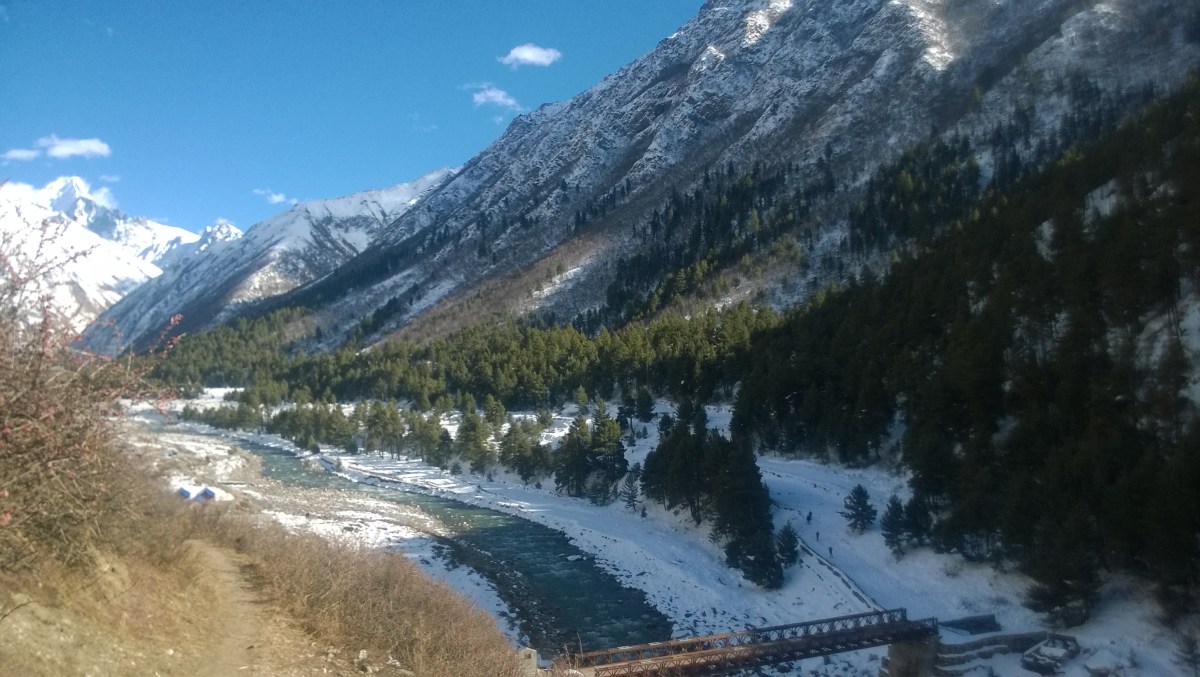
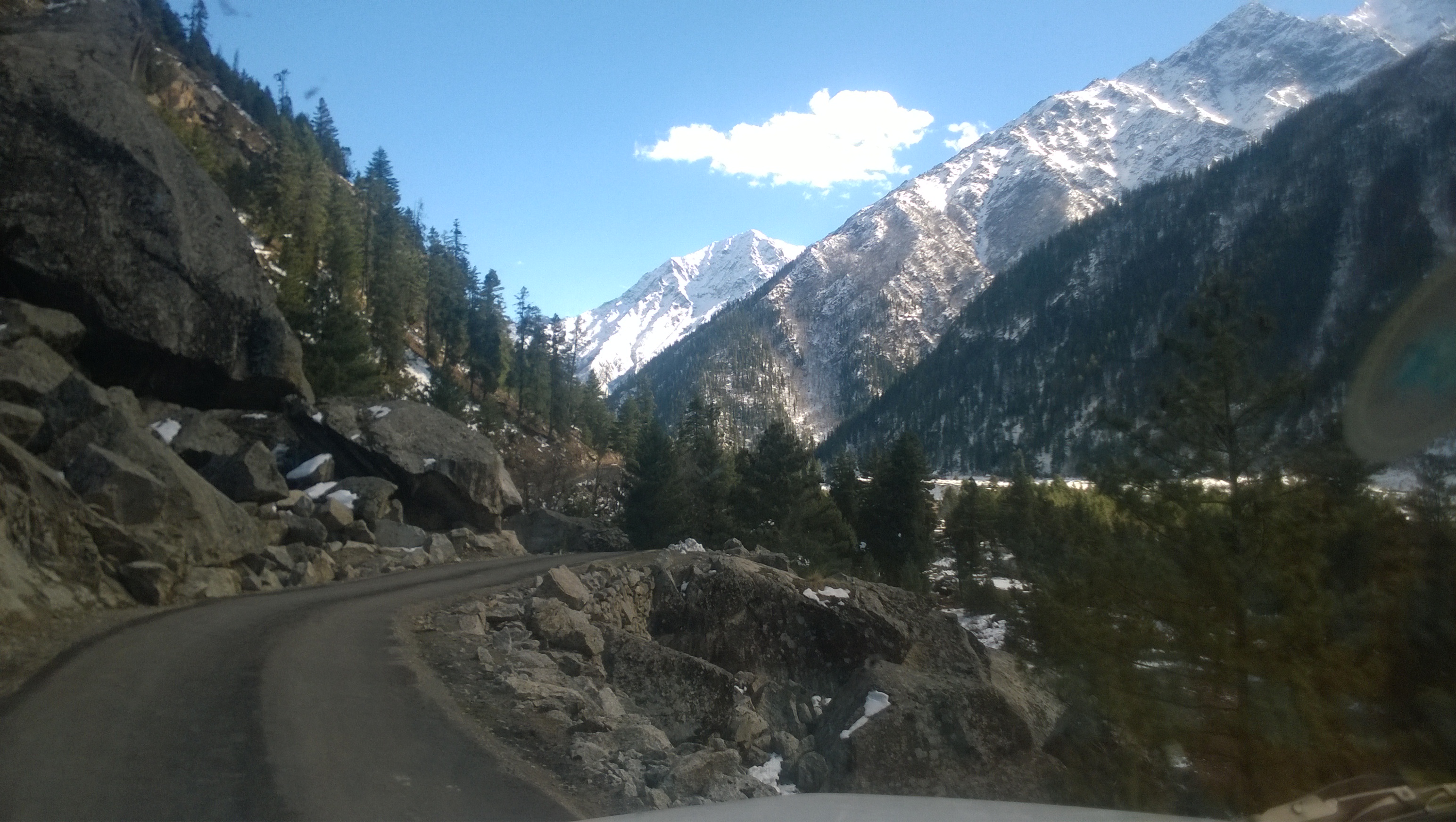
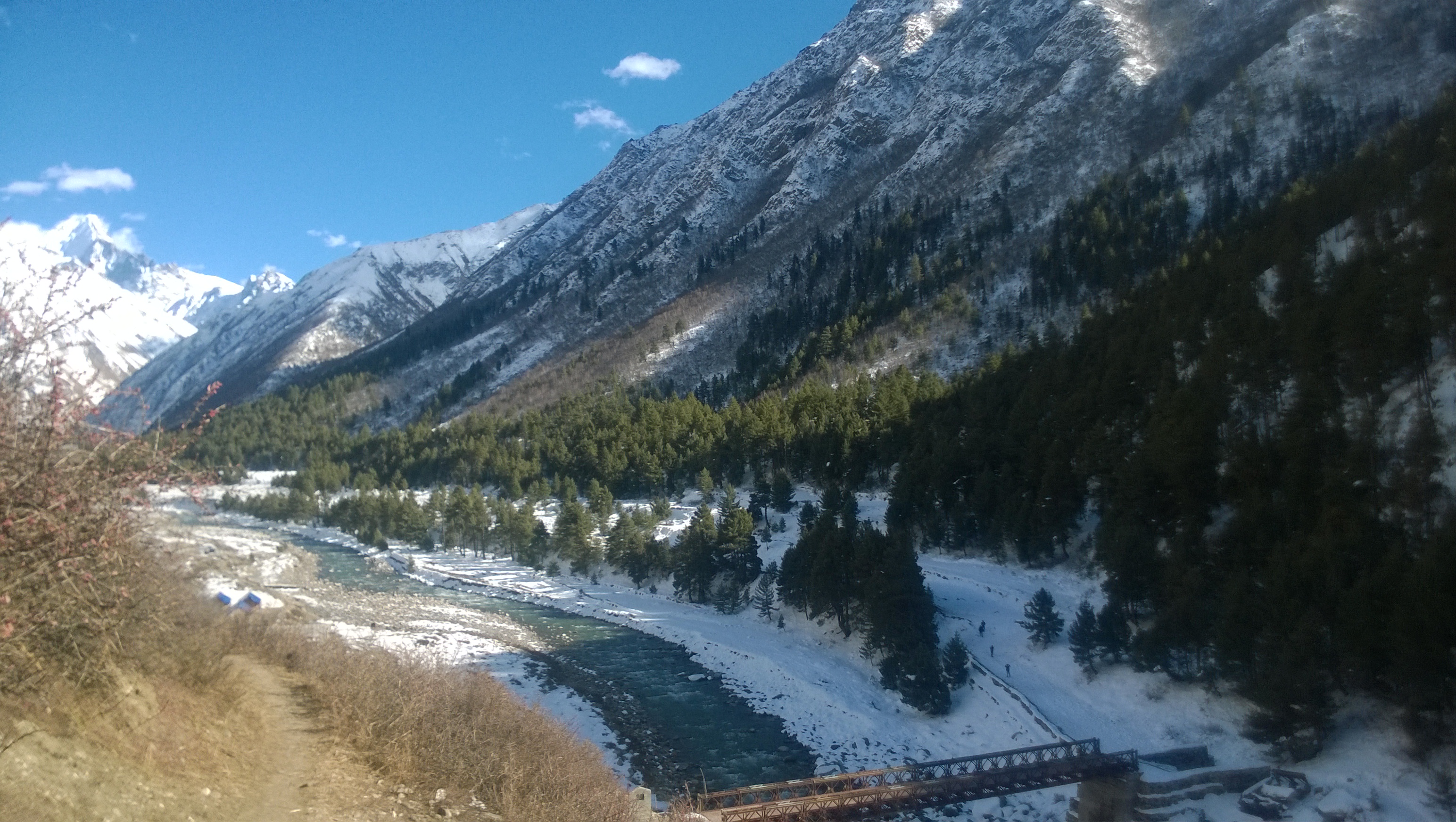
Soon, we were headed to Chitkul – with the road seeming less dangerous, since the Baspa Valley in this stretch is not very deep – marvelling at the sight of glaciers flowing down the mountainside into the River Baspa. We encountered a cute-looking waterfall on a stream with a bridge on which only 1 vehicle could pass at a time. The tarmac soon gave way to an unpaved road, even as the mountains on our side of the river soon turned brown with no vegetation, with their peaks topped with snow.
Sangla Valley enroute Chitkul
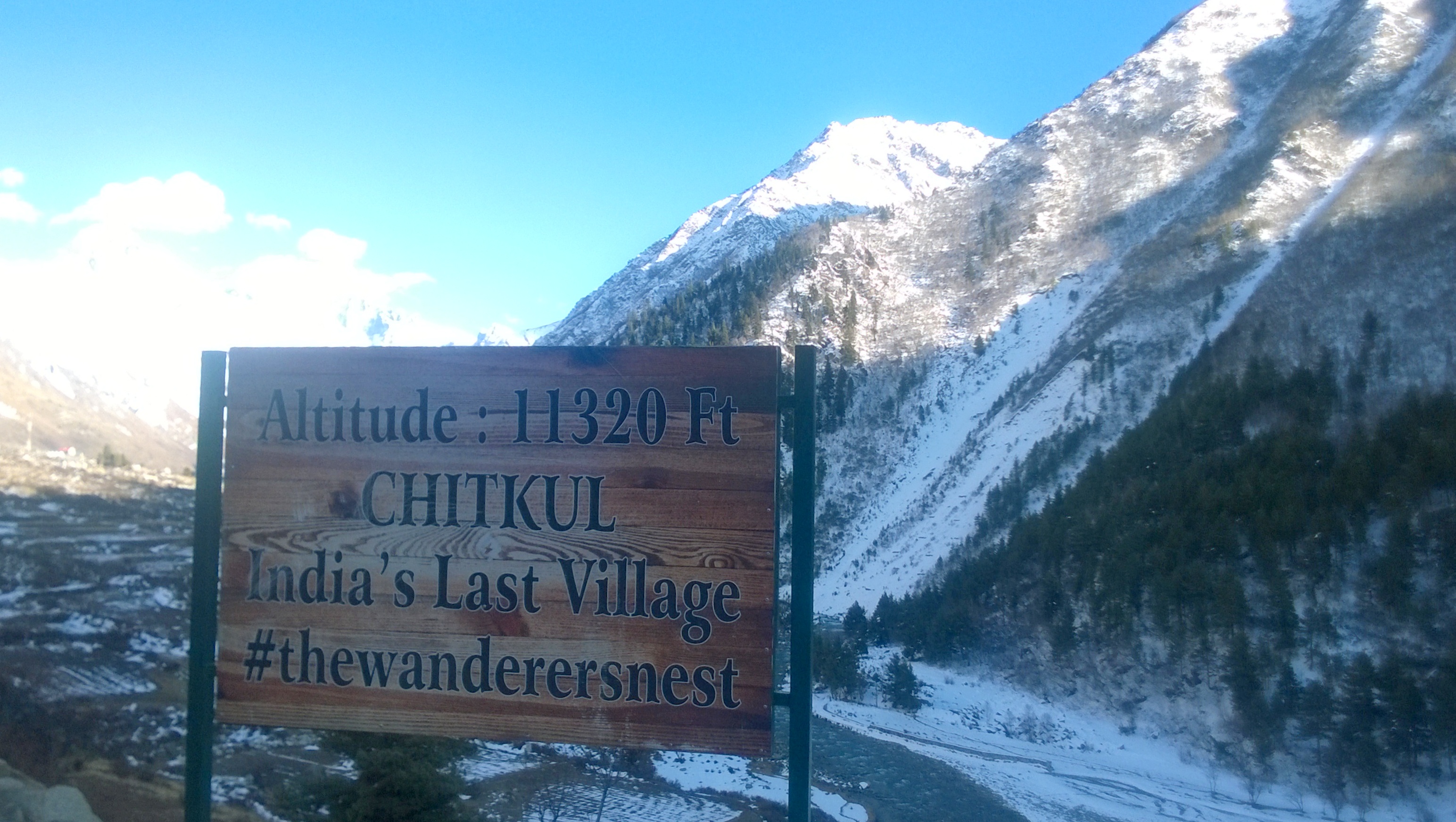
By 12.30, we were at Chitkul village, and we promptly trekked down to the bank of the Baspa, on the other side of which lay a cover of snow. Crossing the bridge over the Baspa, we were soon wading in the snow. There’s something about snow that awakens the child inside of man, and we were not immune to the same, evident from how we soon got down to making snow mortar and throwing them at each other. A pint-sized snowman followed soon after.
Signboard welcoming you to ChitkulAt Chitkul
But we had to be mindful of the time, so at around 1.30 PM, we clambered back on to the main road, had a quick lunch at a roadside eatery, and headed back to Sangla. At Sangla, we hopped onto the ordinary (non Air-conditioned) state transport bus as soon it arrived, and managed to get ourselves window seats, keeping in mind the long journey ahead. The joy of managing to get those seats, however, was tempered by the vomit stains on the window frame, and on the inner side of the bus’s wall, and on the floor…meaning, leaning against the bus’s wall was not an option.
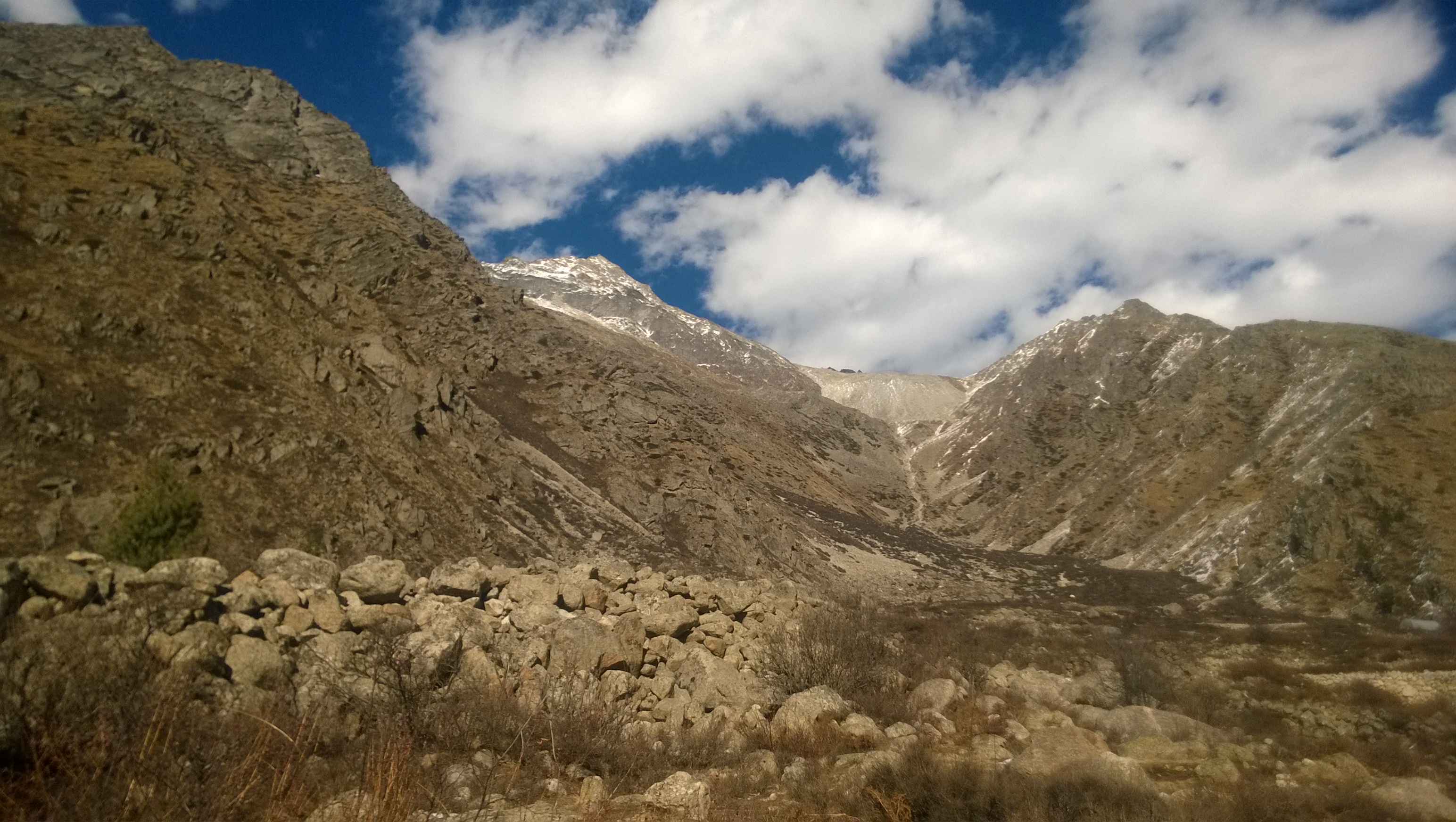
Desertified mountain on one side of the valley
The bus started at its own sweet time, at around 5, and soon we were traversing the treacherous stretch of the road, with our seats located on the side of the bus facing the deep, deep valley below, and only a hair’s width separating us from the edge of the cliff. Luckily, as it was getting dark – and darkness falls rather quickly on the high mountains – we were spared the scary views of the bottom of the valley from our window seats.
After a dinner stop somewhere near Rampur-Bushahr, we fell asleep, waking up only once the higher temperatures of Punjab lashed at our faces. At Chandigarh the next morning, following a quick freshening up, we caught another state transport bus to Delhi. Amiya seemed exhausted by now, and could not wait to be back home, but Abhijit and I were not helping matters, as we ribbed him by humming the tune of ‘Teri Paronthi Laga Radio‘. Thankfully for Amiya, his misery ended at 2 PM when we finally reached Delhi.
4-day marathon trail of 5 places: Gwalior-Datia-Jhansi-Orchha-Bandhavgarh
Just 3 months into my new job, my colleague Abhijit, who I had recently befriended, and I, decided to make full use of the last weekend of September, and impulsively booked overnight bus tickets to Gwalior, with no itinerary in place. I did have Orchha in mind, which we decided we could do by taking public transport to Jhansi from Gwalior, since Orchha lay just 15km away from Jhansi. I also hoped to see the monuments strewn around in Morena, near Gwalior, on the trip, and be back in Delhi by Monday morning.
Day 1: Gwalior
Getting down early morning at Gwalior, our first task was to find some lodging to freshen up. Soon, we were down in Naya Bazar to try out for breakfast kachoris which are quite the rage in Gwalior. While munching on the kachoris, Abhijit wondered if we could also visit Bandhavgarh National Park. While I had heard about Bandhavgarh before, a quick Google search revealed Bandhavgarh was over 500 km from Gwalior, with iffy public transport communication. Abhijit said, ‘Never mind’, and got back to snacking. I reconciled to the same, however, as is my wont, I could not stop thinking if there was the slightest chance we could work something out regarding Bandhavgarh.
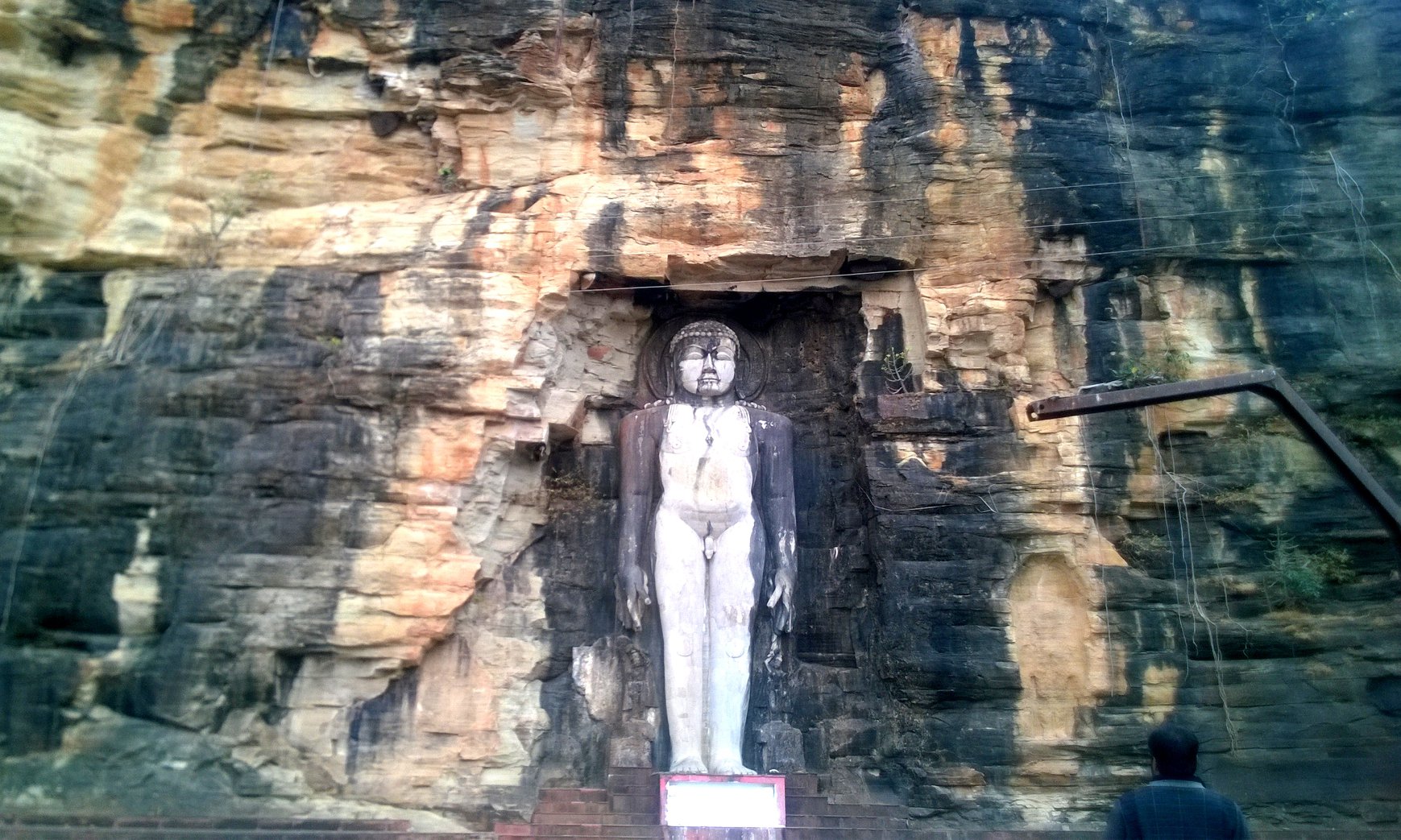
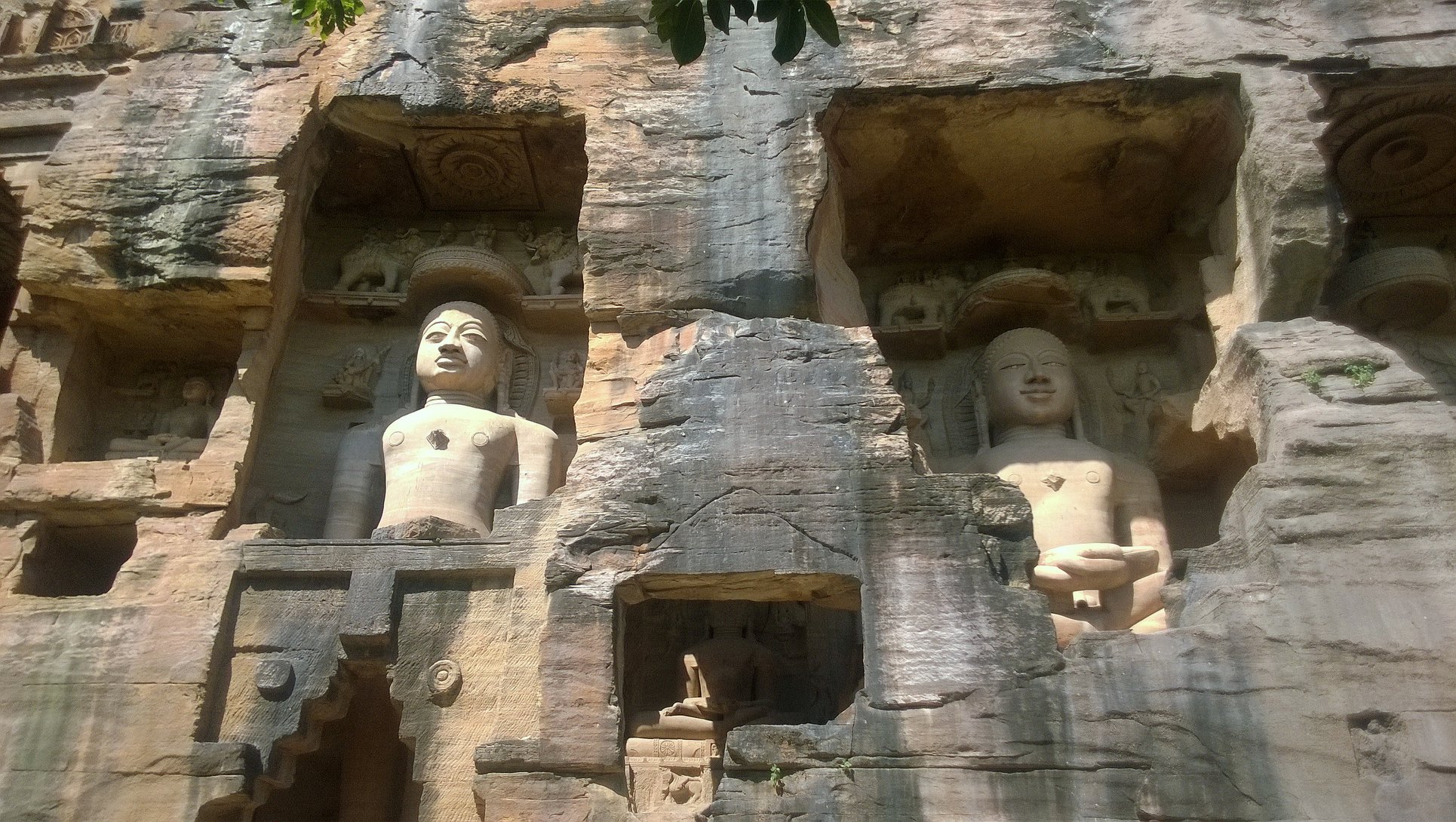
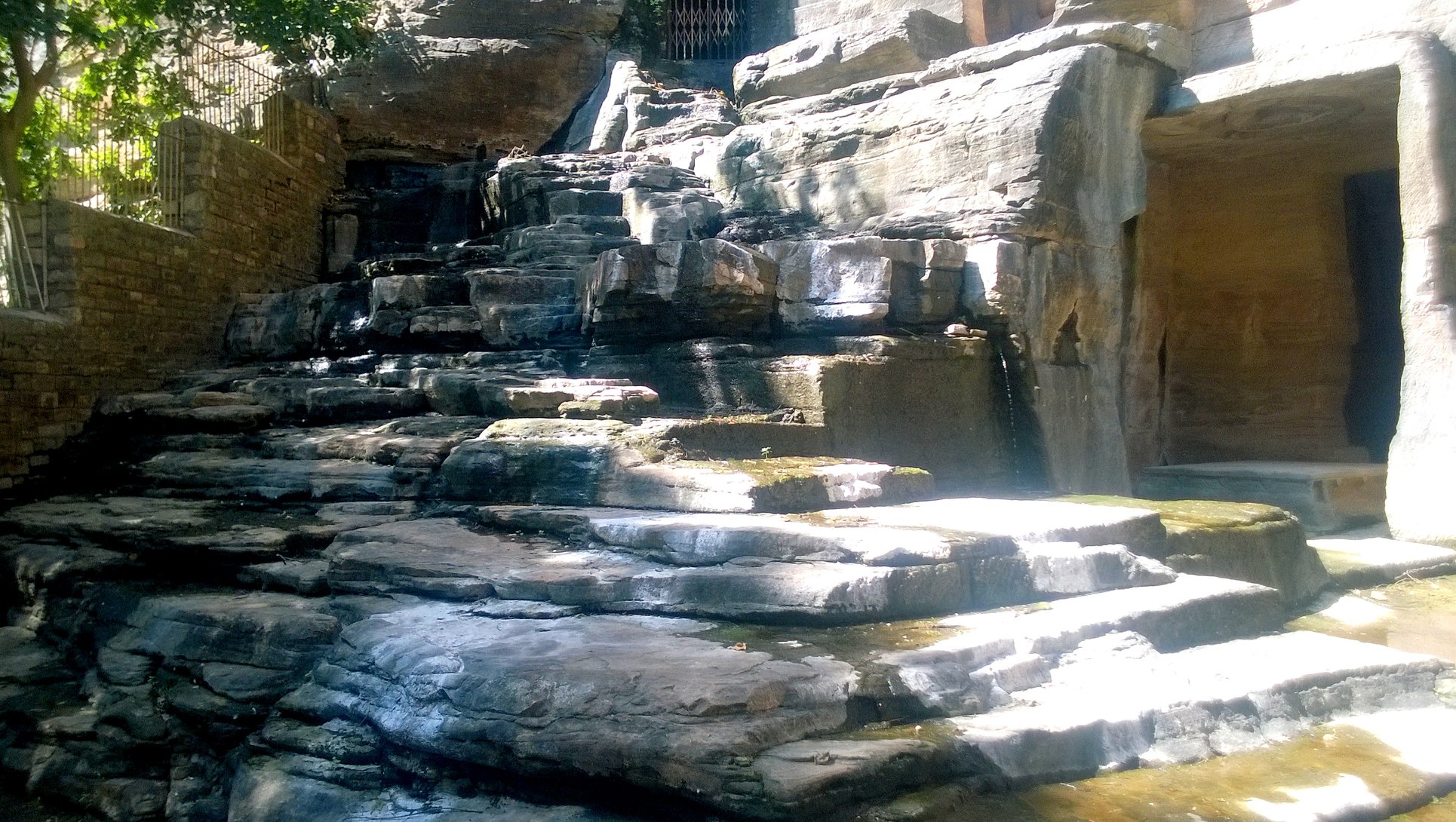
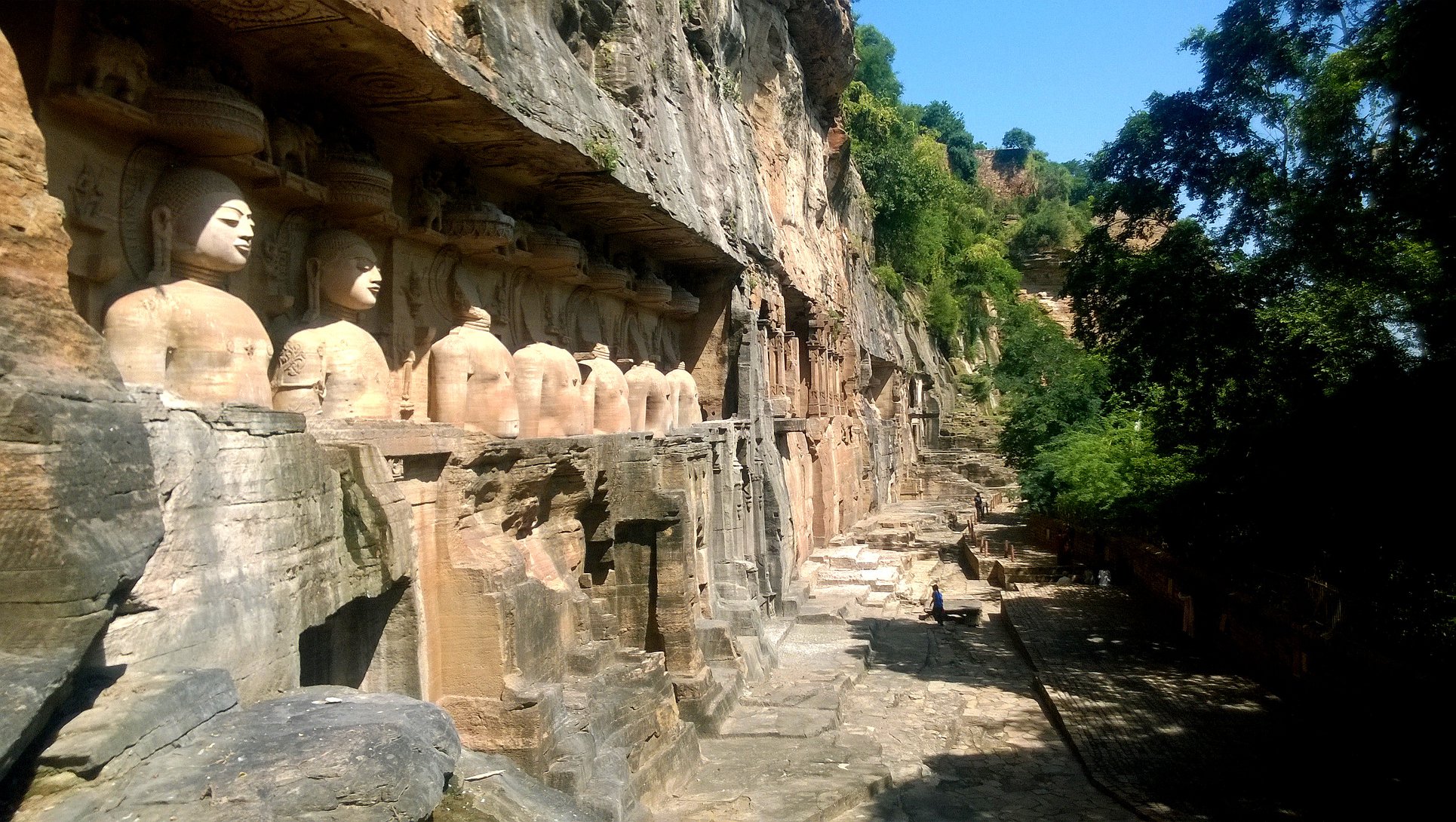
We then headed to Gopachal Parvat, where there exists groups of Jain sculptures depicting Tirthankaras in both standing as well as seating position, built in between 6th and 15th centuries. The caves themselves are accessed by walking along a stepped pathway cutting the lawns and garden maintained on the hillside. At the end of a series of statues, there is also a perennial spring emanating from the hillside. The foliage around makes it the ideal location for a peace-centred getaway from daily life.
A perennial spring at Gopachal Parvat
Glimpses of the Jain statues at Gopachal Parvat
Meanwhile, with my mind racing about Bandhavgarh, with the barest of discussions with Abhijit, I simply booked waitlisted tatkal tickets from Jhansi to Umaria, the nearest railway station to Bandhavgarh. And all this, while having no idea about what to do in Bandhavgarh regarding accommodation and the main attraction, the tiger safari, which I could see from the park’s website, was completely booked for the whole upcoming month! Anyway, this meant the end of my dream to see the monuments in Morena. Perhaps, I could compensate this by seeing the Sheshsaiya statue of Vishnu in Bandhavgarh?
Our next stop was the Gwalior fort which sits upon a elongated flat-top hill, and accessed by two paths. The autorickshaw driver dropped us at the bottom of the Kila (Fort) Gate road that approaches in the southwest side, the other road leading to Urvai gate can be used if one wishes to take their vehicle inside the fort premises. We clambered up the steep Fort road by foot, encountering first Jain caves on the mountainside, and then, the famed Chaturbhuj temple -a 9th century Shiva temple carved out of rockface, that lies on a bend on the road – noted for bearing the earliest known epigraphical evidence of ‘zero’ inscribed as the ‘0’ symbol on stone.
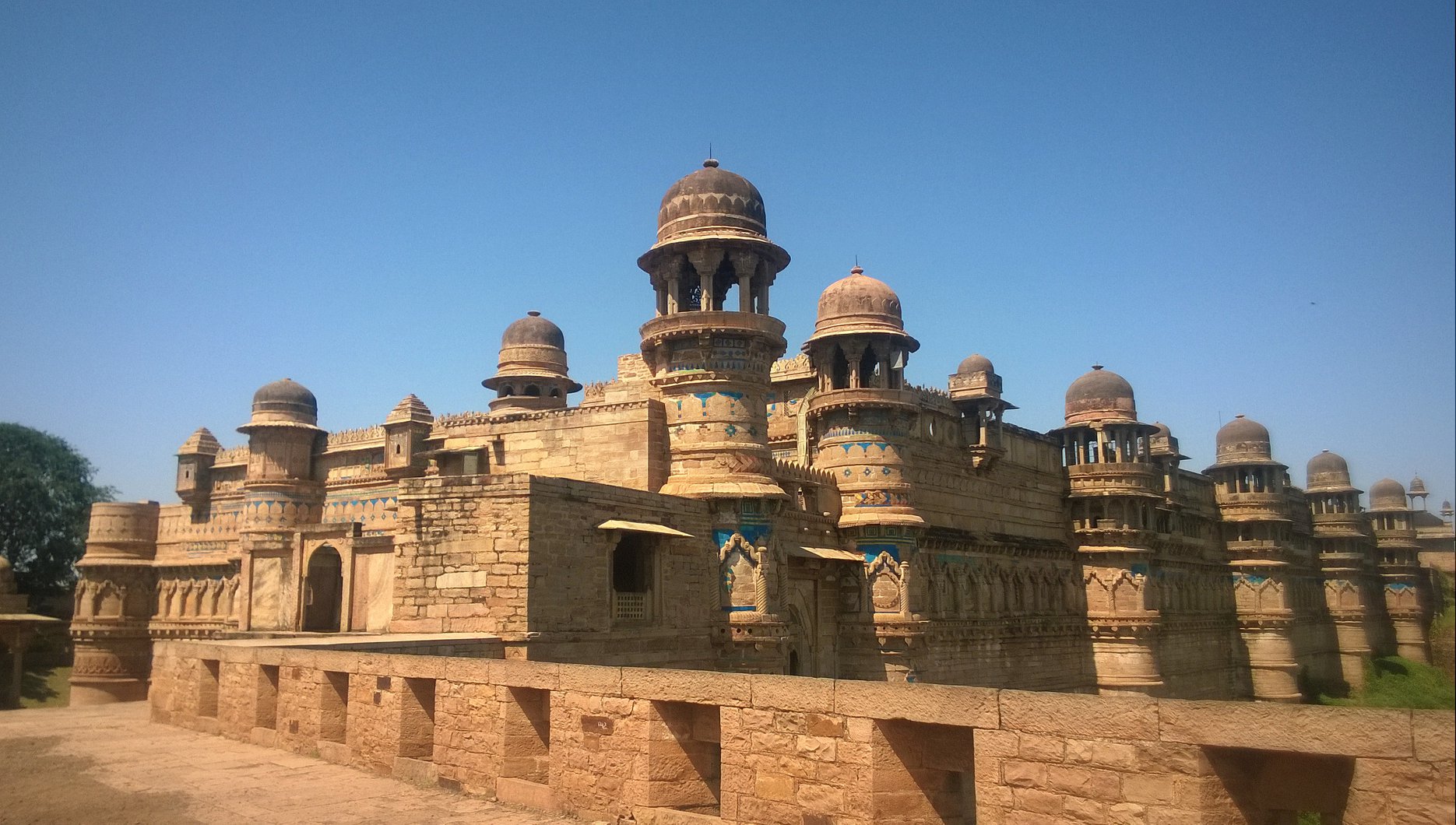
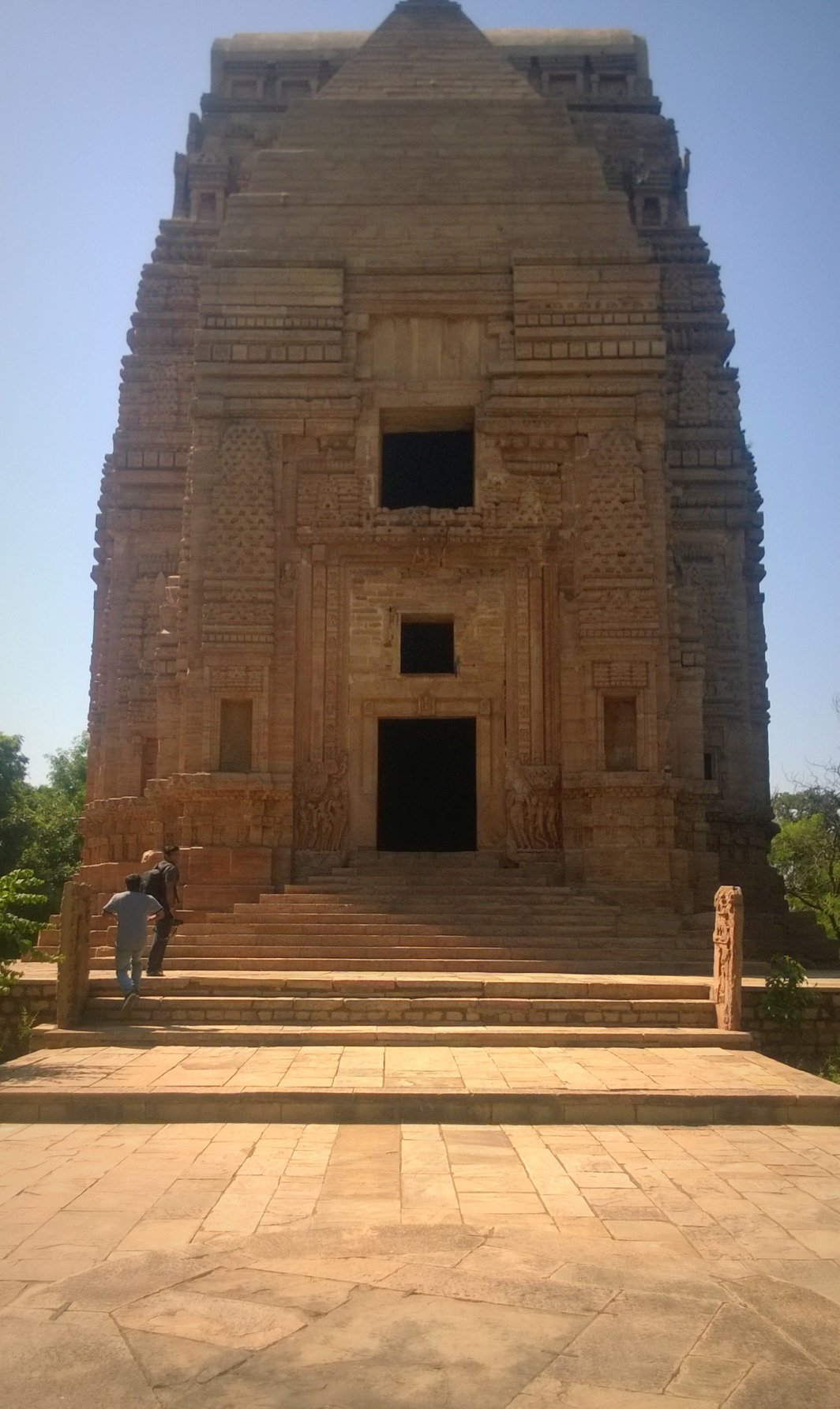
As we approached the gate leading to the main area enclosed by the massive walls, we finally got a glimpse of the iconic image of the blue coloured turreted wall extending into the distance. Once inside, we hired an electric rickshaw to take us around the major sightseeing points inside the fort. We first came upon the 11th century Sahastrabahu (also called the Saas-Bahu) temple, and then the 9th century Teli ka Mandir. Riding through the roads spread across the vast hilltop, criss-crossing each other many times, we got the feeling the fort premises themselves were akin to a fortified small town lying entirely on the hilltop.
Turrets in Gwalior fort
Chaturbhuj temple with one of the earliest mentions of ‘zero’Teli ka Mandir
Sahastrabahu (Saas-Bahu) temple
Back at the point where we had entered the main fort area, we hired a guide who walked us through the main palace called the Man (pronounced as Maan) Mandir Mahal, named after the reputed Tomar ruler Man Singh Tomar. We then walked further to the area behind the Man Mandir Palace, and saw the Jauhar tank, as well as the Jahangir Mahal. And then, on our way down from the fort along the Fort Road, we also took a peek into the Gurjari Mahal – that lies at the foot of the hill with the fort in the background – now turned into a museum containing many of the artifacts found inside the fort, and in and around Gwalior.
After a quick lunch, we then proceed by autorickshaw to the Tomb of Tansen – the favoured musician in Akbar’s court – which lies inside the compound enclosing the bigger Tomb of Muhammed Ghaus. This is where I made a point to call up my friend Priyam, who at that point happened to be living in Gwalior due to her civil servant husband’s posting. After a bit of admonishing from her for not having informed earlier, Abhijit and I were promptly invited over for dinner that night – it also happened to be her son’s birthday.
Tomb of Muhammed Ghouse
After resting for a while in the hotel, and then picking up a birthday gift, we were at Priyam’s place for some catching-up with both her and her husband Neeraj, accompanied by good food and beverages. This is where I mentioned in passing that we hoped to make it to Bandhavgarh: we had train tickets from Jhansi, but just didn’t know how we could get tiger safari bookings in such short notice. Priyam asked us not to worry, and following a few calls by Neeraj, assured us that our stay and safari for Bandhavgarh were sorted! They threw in an additional recommendation for good measure: a place called Datia, which lay midway between Gwalior and Jhansi, our stop for the next day.
Day 2: Datia, Jhansi and Orchha
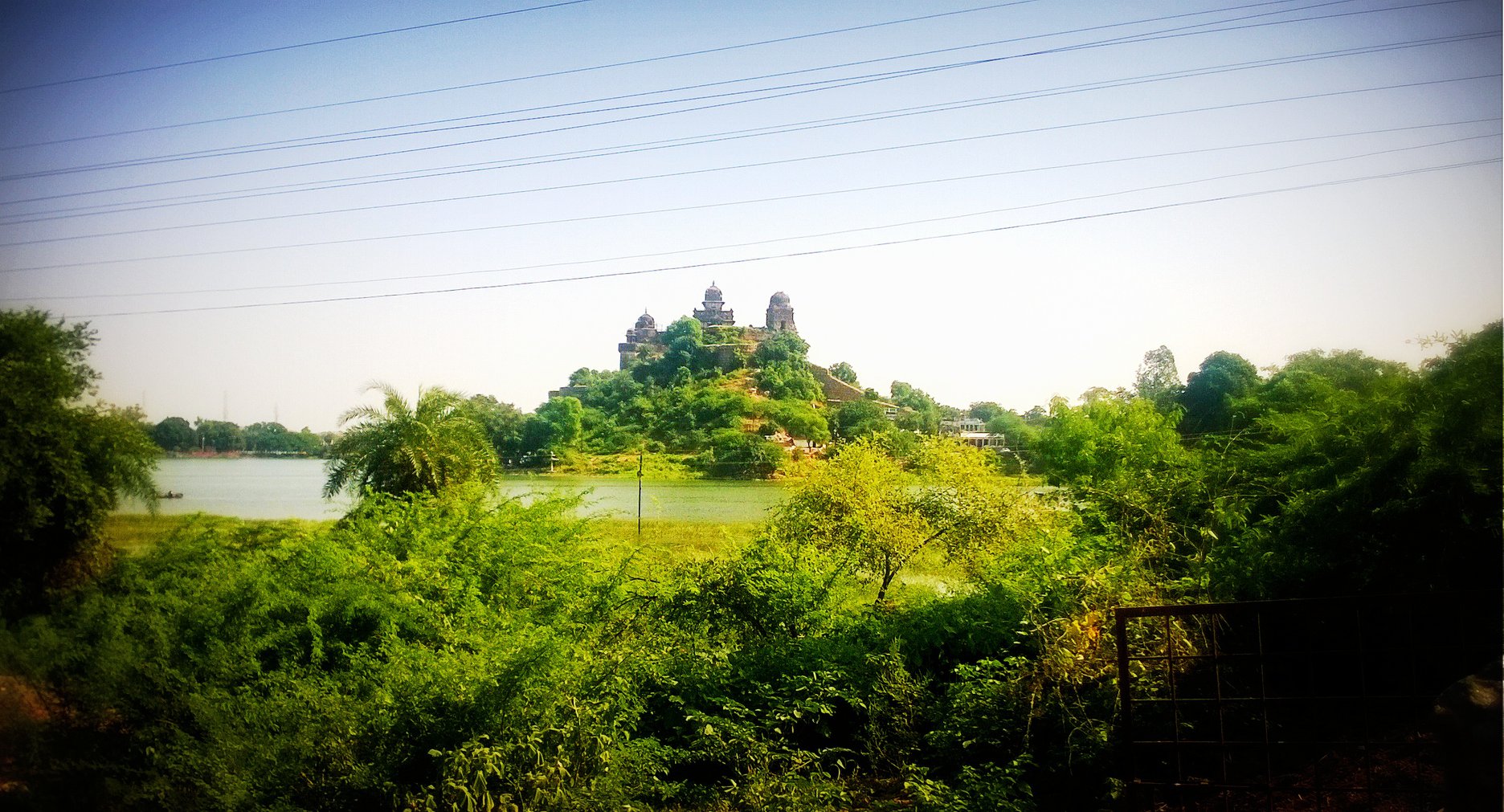
We started out by road transport at 7am on the second day, and some distance before Datia, we saw a cluster of white spires on the top of a hill- this, I came to know later, is a site called Sonagiri, bearing a Jain temple cluster. Then, just around 9 am, while we were on the outskirts of Datia, as surely as Priyam and her husband had said, we saw the palace sitting proudly on top of a low hill, right from the main road that bypasses Datia town. We got down at the Datia bus-stand and walked down the to the palace.
Datia (Bir Singh) Palace seen from the main road
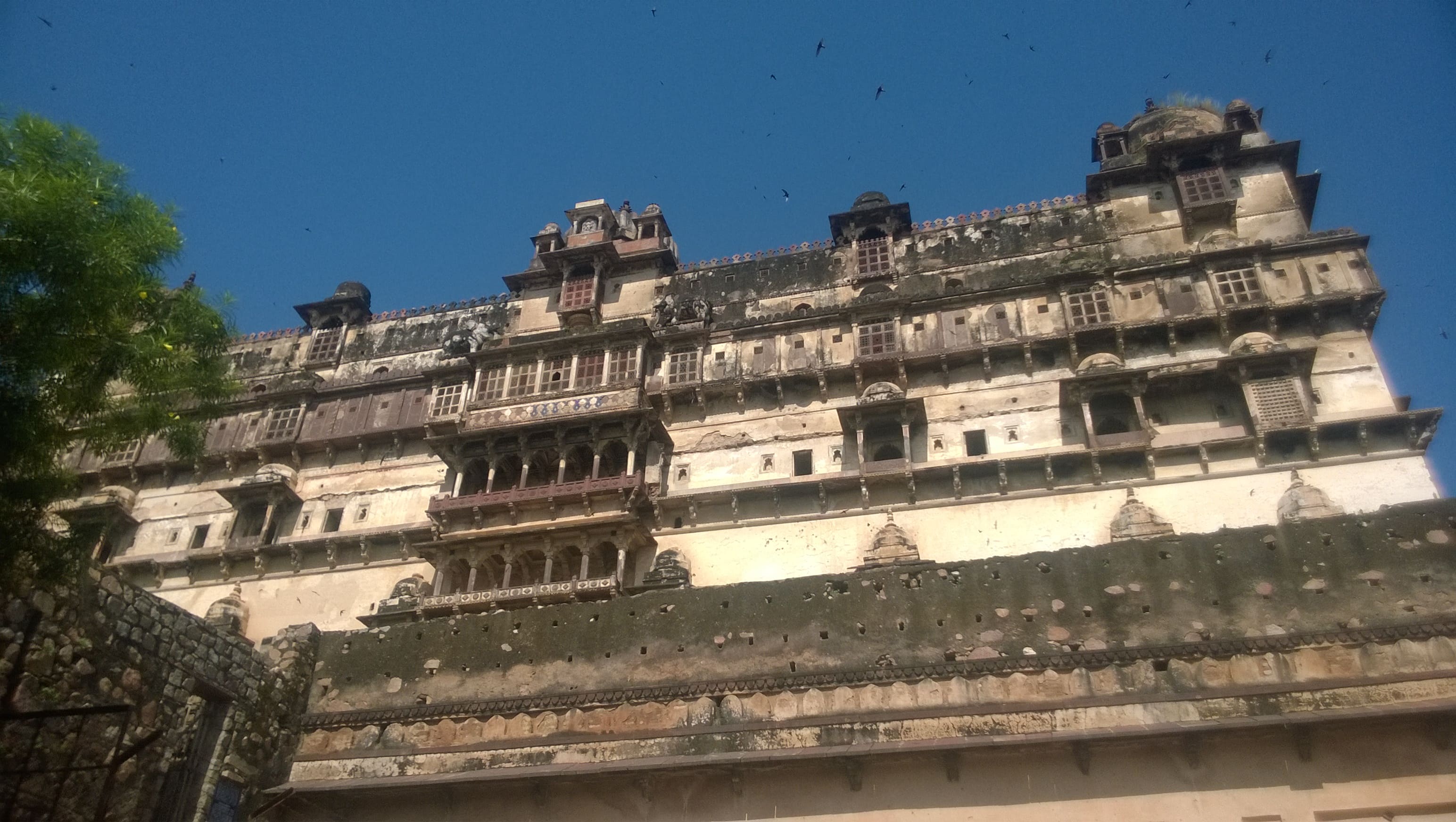
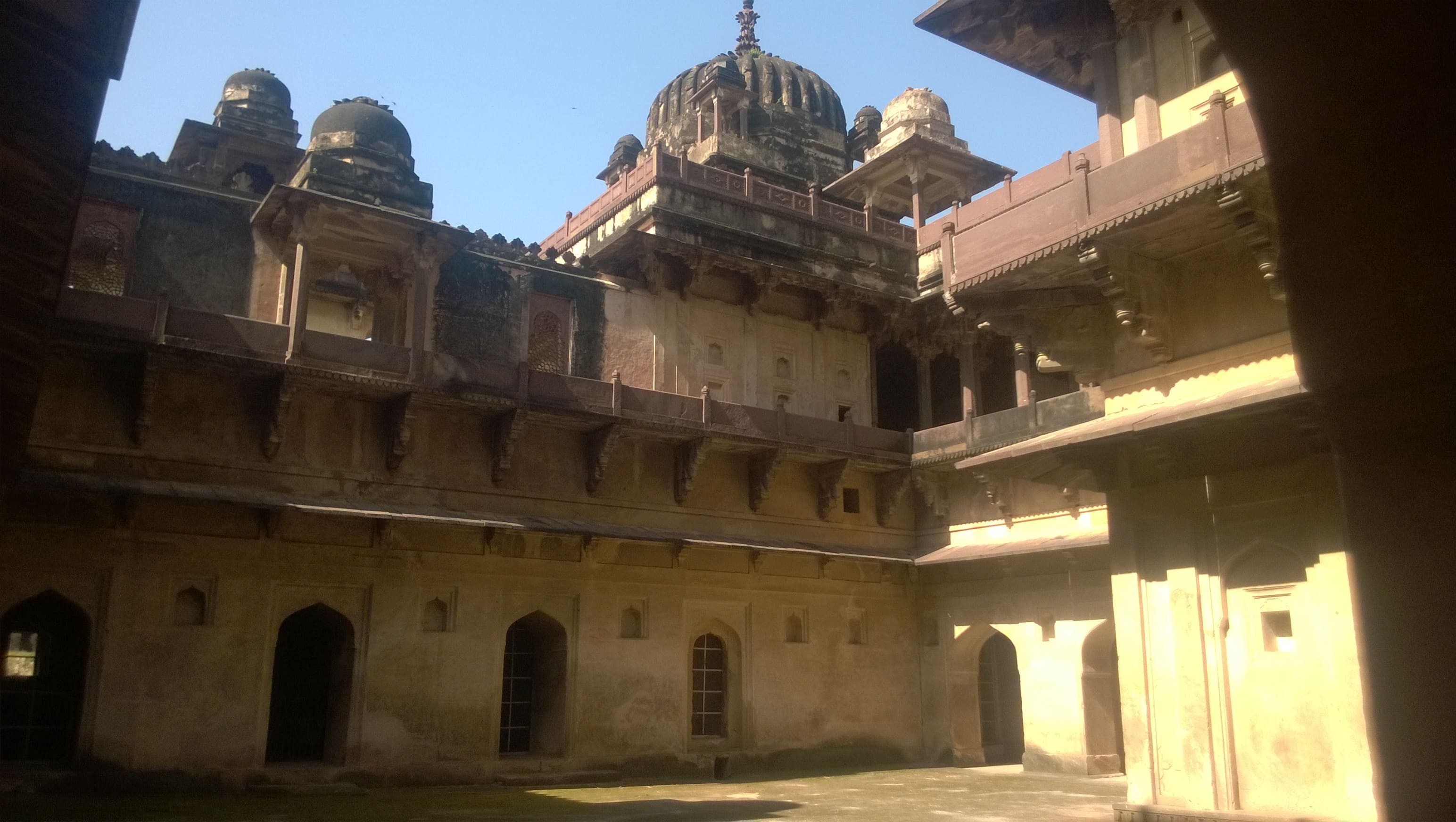
The 17th century palace, it turned out, is called the Bir Singh Palace, after its builder Bir Singh Deo, one of the most significant Bundela kings, who became a trusted acquaintance of Jahangir, and is also said to have built the Jhansi Fort. The 7-stroreyed palace itself is remarkably well constructed on a square plan, with symmetrically laid squared wings within the main square plan, each inner square having spacious rooms with overhanging balconies, interspersed with L-shaped large courtyards in the centre of the inner squares. It is easy to get lost inside the maze of stairs and pathways inside the palace.
Bir Singh PalaceA courtyard inside Bir Singh Palace
Heading back to the bus-stand, we took a bus to Jhansi, and soon found ourselves inside Jhansi fort by 11.30 AM. After seeing around the Jhansi fort, including the point where Rani Laxmi Bai along with her infant son is purported to have jumped off the fort on her horse to escape enemy forces, we hired an autorickshaw driver to take us to Orchha, which is 16km away. Soon, after a 40-minute ride through Jhansi’s streets, then through light jungle, then across a railway-line, and a tiny bridge, and a dusty track, we were in Orchha.
Glimpses of Jhansi Fort
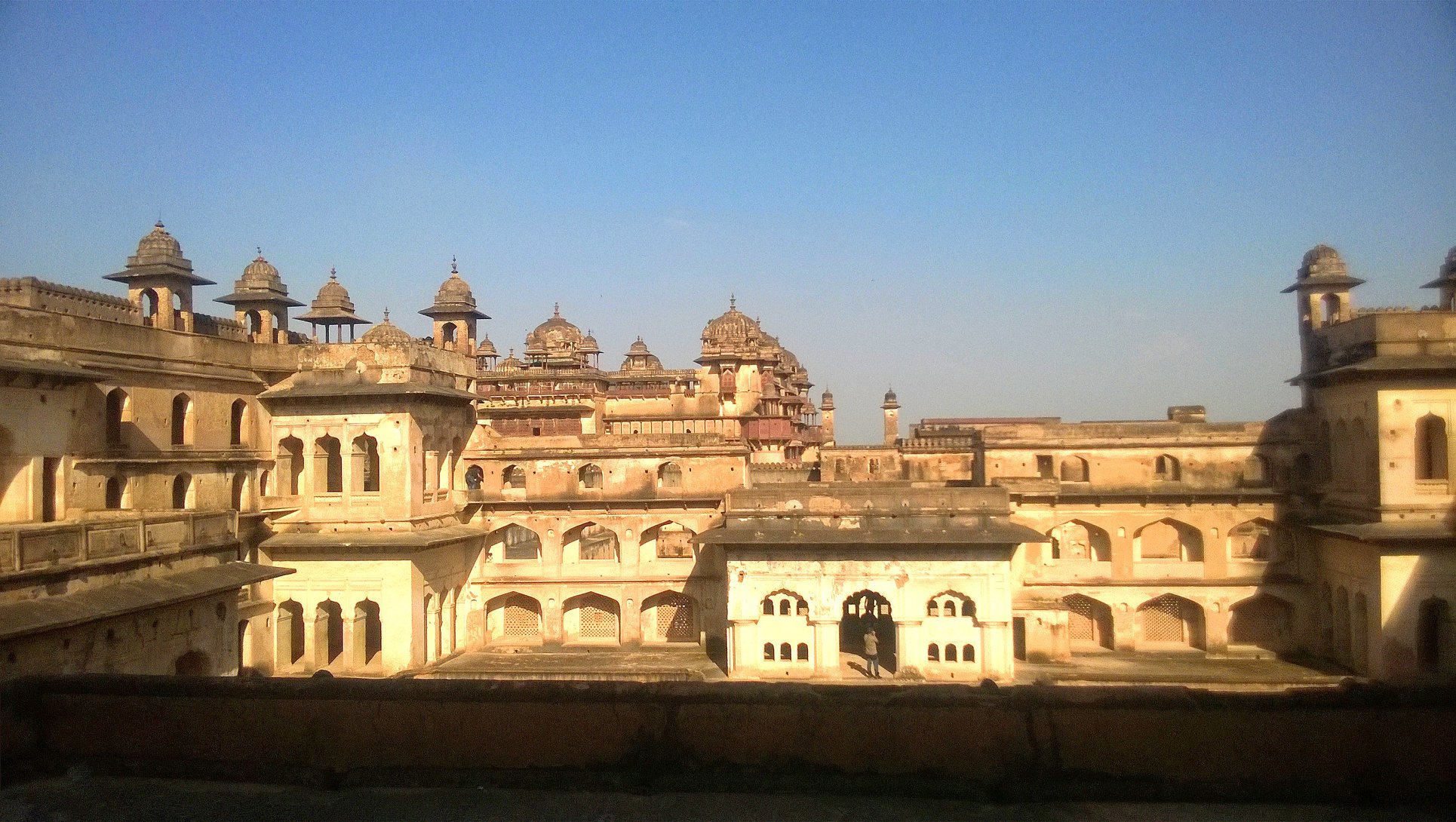
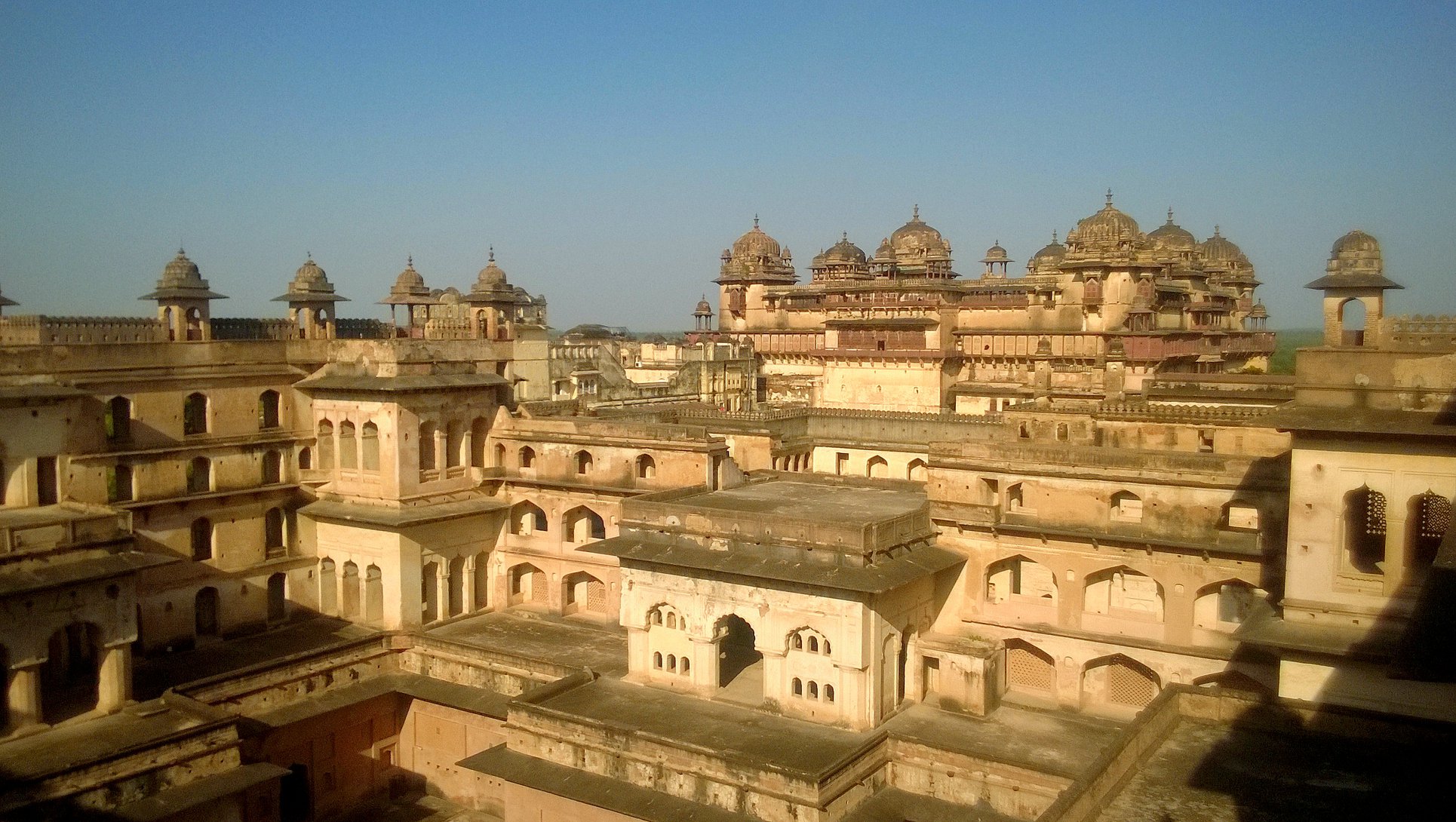
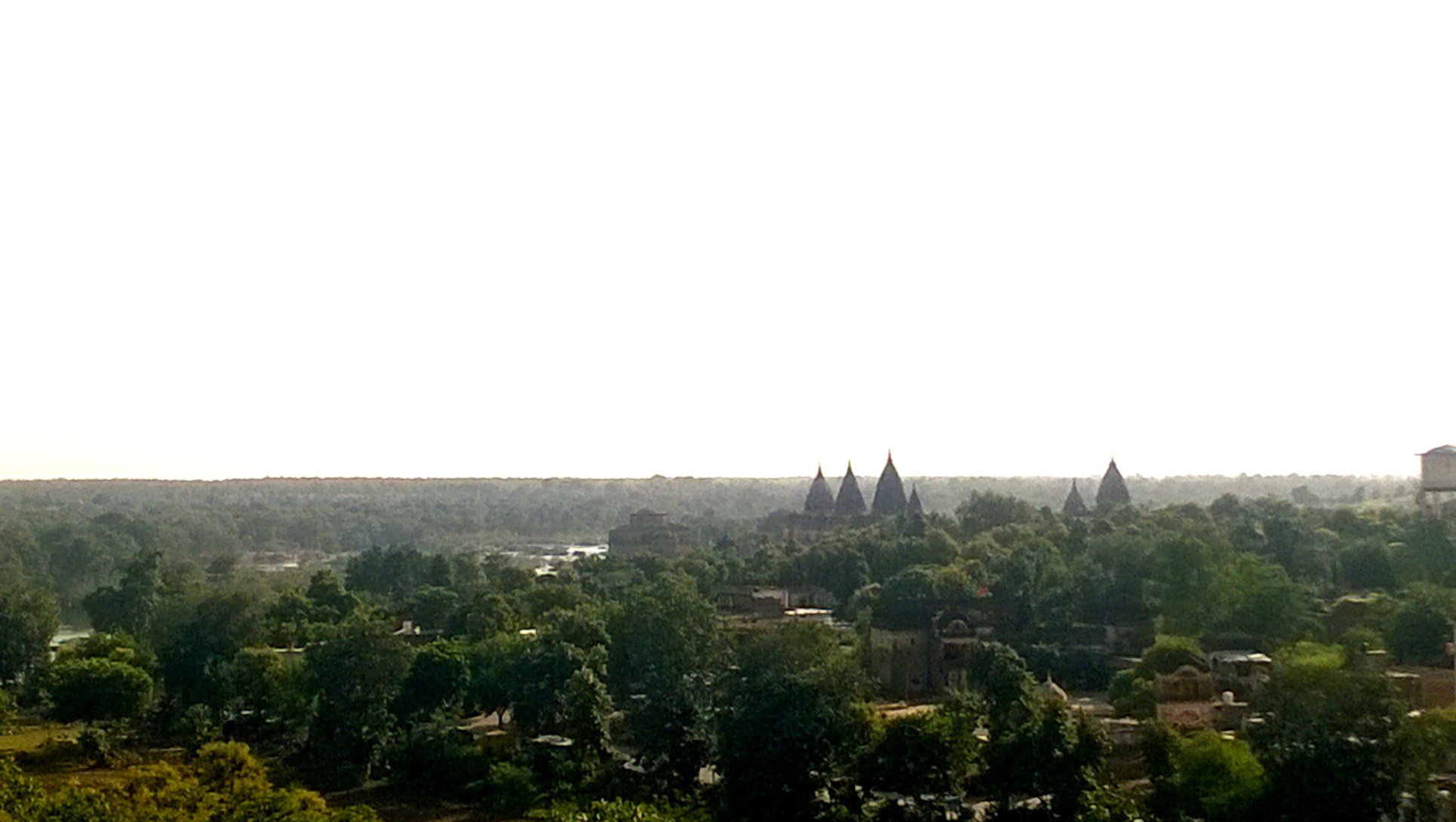
You could say the moment you stepped in Orchha that it was a special place! We were first enamoured by the sight of the Orchha Fort sitting at a height just across a channel of the Betwa river – in fact, the fort lies on the edge of a fairly large island on the Betwa river. Once inside the fort complex, we were further wowed by the near perfect 16th century palace Raja Mahal, built by Rudra Pratap Singh, the founder of Orchha. From an upper storey, we were treated to breathtaking sights of the town’s skyline as well as of the countryside. Just behind the Raja Mahal is the 17th century palace Jahangir Mahal, built by Bir Singh Deo to honour Mughal Emperor Jahangir’s first visit to Orchha.
Raja Mahal inside Orchha FortRaja Mahal inside Orchha Fort
View from a higher elevation inside Orchha fort
I must interject here to make a special mention of the place that we had lunch at before we went to the Orchha Fort. Open Sky Restaurant, run by a middle aged man and his son, is a quaint place with the eating space located on the first floor of a building standing right on the main road. It serves all sorts of items across multiple cuisines geared towards appealing to the western crowd, however, the dish that we ordered simply by chance and were completely blown away by is the Brinjal Tomato Mix Rice.
Our next stop was at the conspicuously imposing and utterly inviting 16th century Chaturbhuj temple, whose multiple spires are visible from all parts of the town. The temple sits on a very high platform and has multiple storeys above the level of the sanctum sanctorum dedicated to Lord Krishna and Radha. A man stood guard at the entrance of the staircase leading to the upper floors, charging us a 5o-rupee fee for entry to what was advertised as the Bhool-Bhulaiya (maze). The so-called ‘maze’ for all its worth did provide us with amazing views of the town and of the countryside.
View of Chaturbhuj temple from Orchha Fort
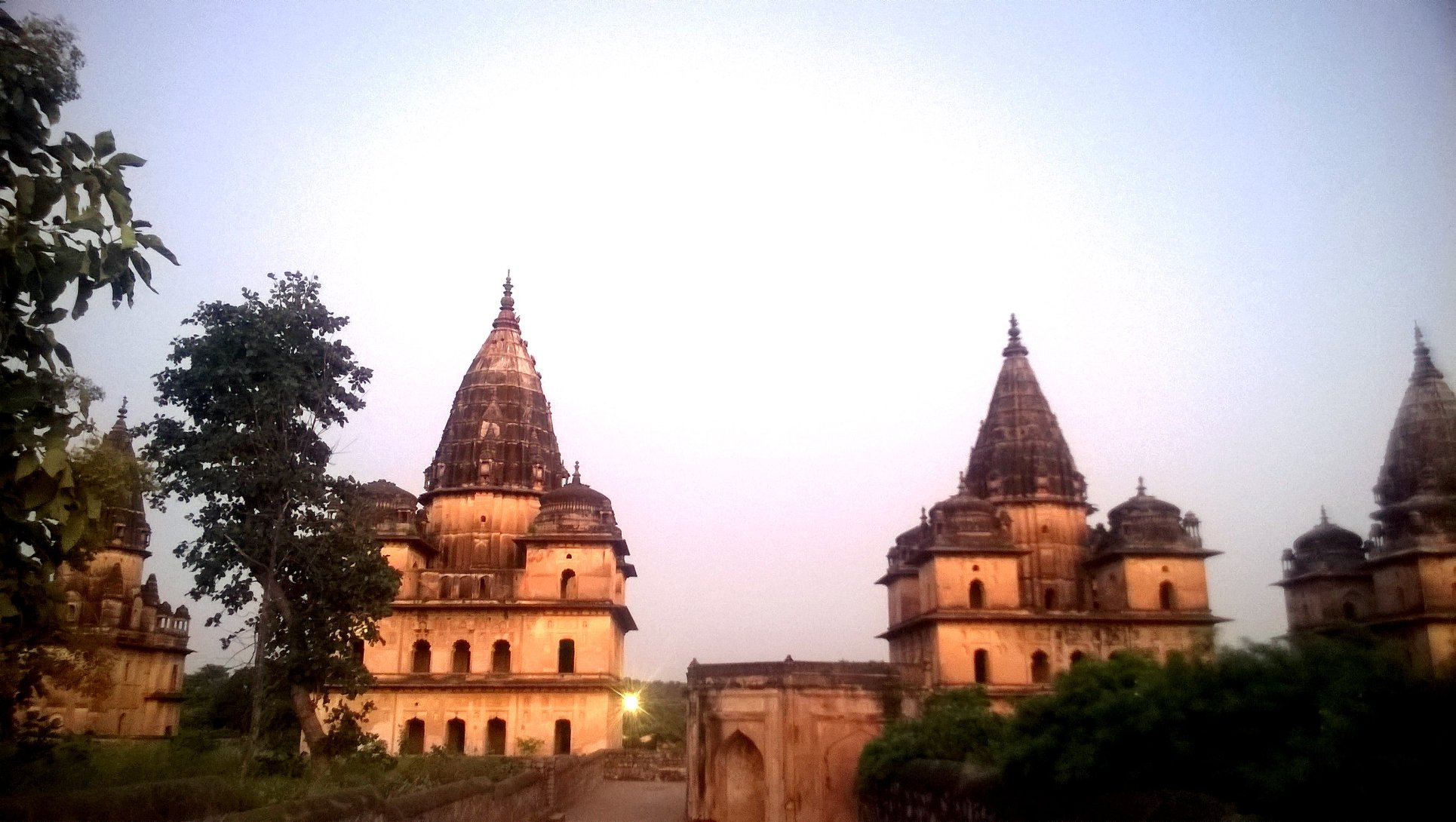
We then headed to the 17th century Laxmi Temple that sits a little farther from the town center on another low hill, and notable for the many frescoes on its inner walls and ceilings. With it now already being 5.30 PM, we headed down to the Royal Chhatris (cenotaphs) by the Betwa River. After spending some time by the riverside with the darkness already falling, and with the auto-rickshaw driver getting antsy about riding in the darkness, we headed back to Jhansi where after having a sumptuous dinner at the Jhansi Hotel, we reached the railway station to catch our 10.30 PM train to Umaria.
Royal Chhatris (cenotaphs) of Orchha
Day 3: Bandhavgarh
Getting down at 8AM in Umaria, our first task was to somehow reach Bandhavgarh by public transport before meeting up with Neeraj’s acquaintance, who then drove us in a Gypsy to a wonderful resort called Nature Heritage Resort. After checking in around 1o.30 AM, freshening up, and resting for a while, we made a tour of the beautiful resort. Then, following an early lunch, we headed out around 12.30 PM for the afternoon safari starting at 2 PM.
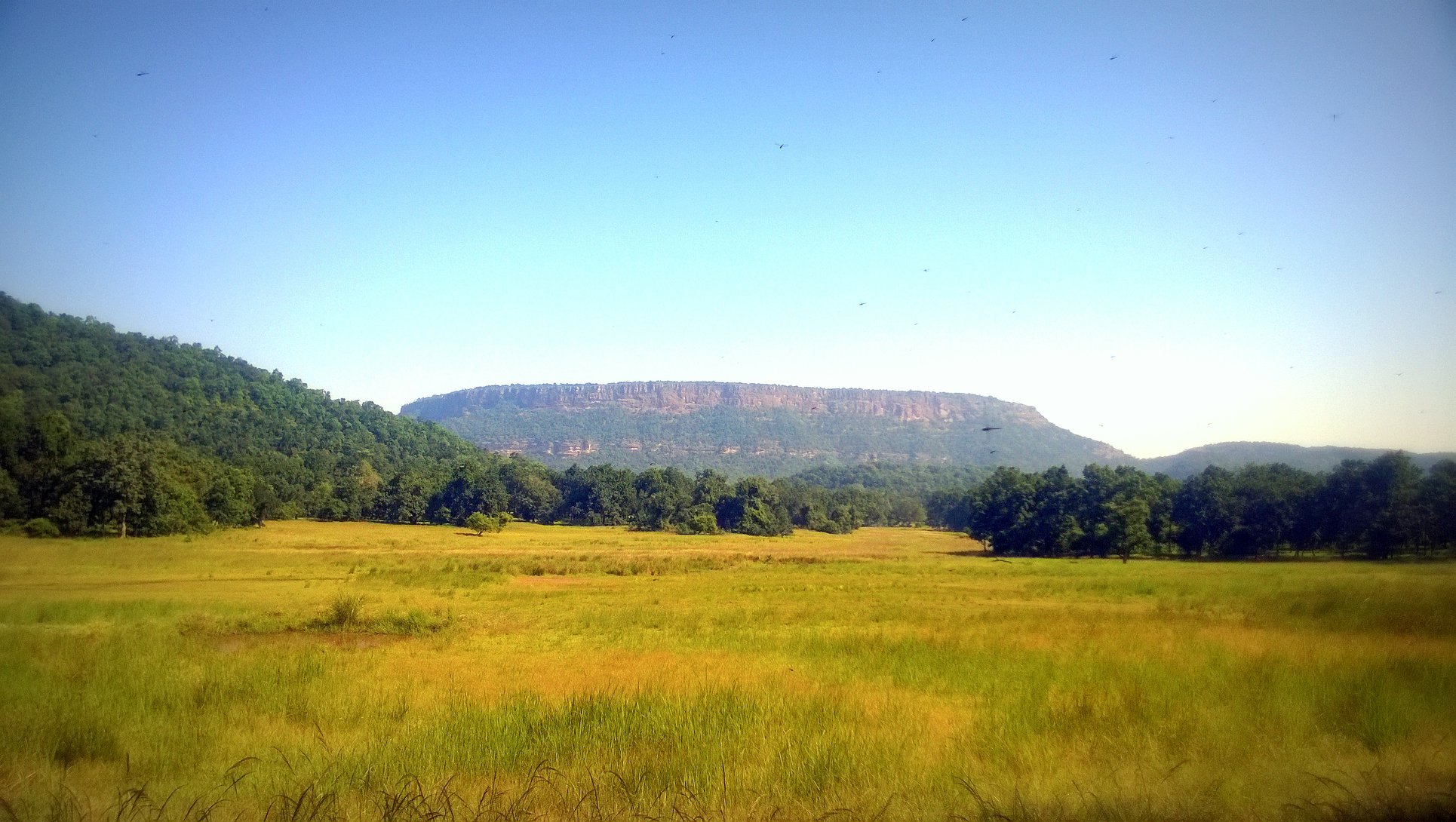
Thankfully, because of Neeraj’s prior calls, we were able to make a choice out of the 3 zones, namely Tala, Magdhi and Khitauli – Abhijit and I both chose Tala, for different reasons – for Abhijit, it was the relatively higher probability of tiger-sighting at Tala, and for me, the presence of the Seshsaiya statue! Luckily, we were able to share safari costs with another group – since, a gypsy could take up to 6 passengers in addition to the driver and the guide, and we were just two. And soon we were on the safari trail, where we first encountered the grasslands, then gradually making our way into denser foliage. In the distance stood the a long hill bearing the Bandhavgarh fort.
The Bandhavgarh fort stands on the flattop hill beyond the meadows
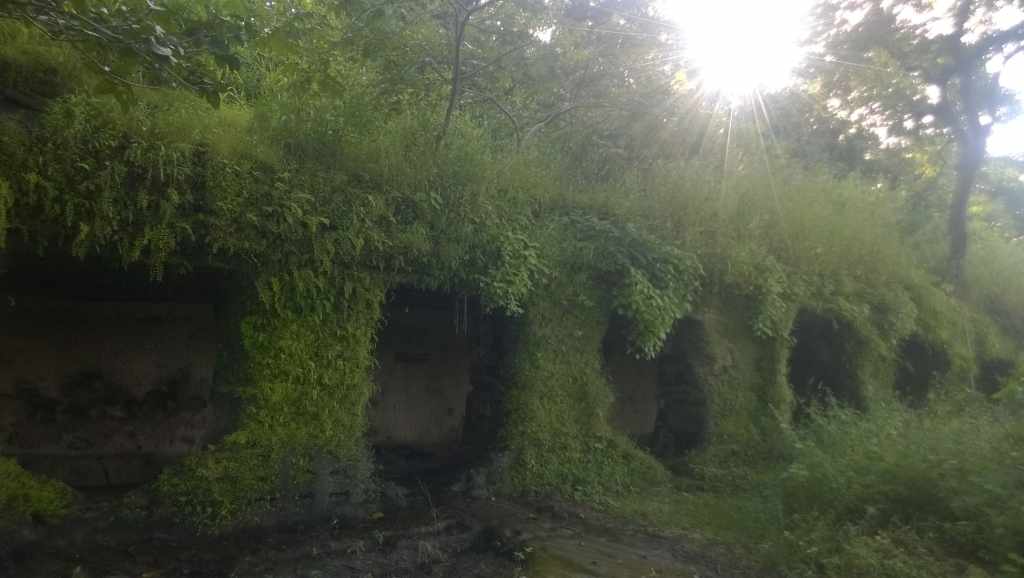
I kept reminding the guide about Seshsaiya to his bemusement, even as we stopped at points looking for traces left behind a tiger, sometimes leaving the main trail to go into nooks in search of the elusive tiger. One such narrow detour led us on an uphill path through the dense jungle, where first we encountered ancient structures with open rooms carved out of the hill-side. These supposedly served, in the distant past, as lodging for the visitors to Bandhavgarh. The guide looked at me with a smirk betraying the feeling that he was now going to grant my wish!
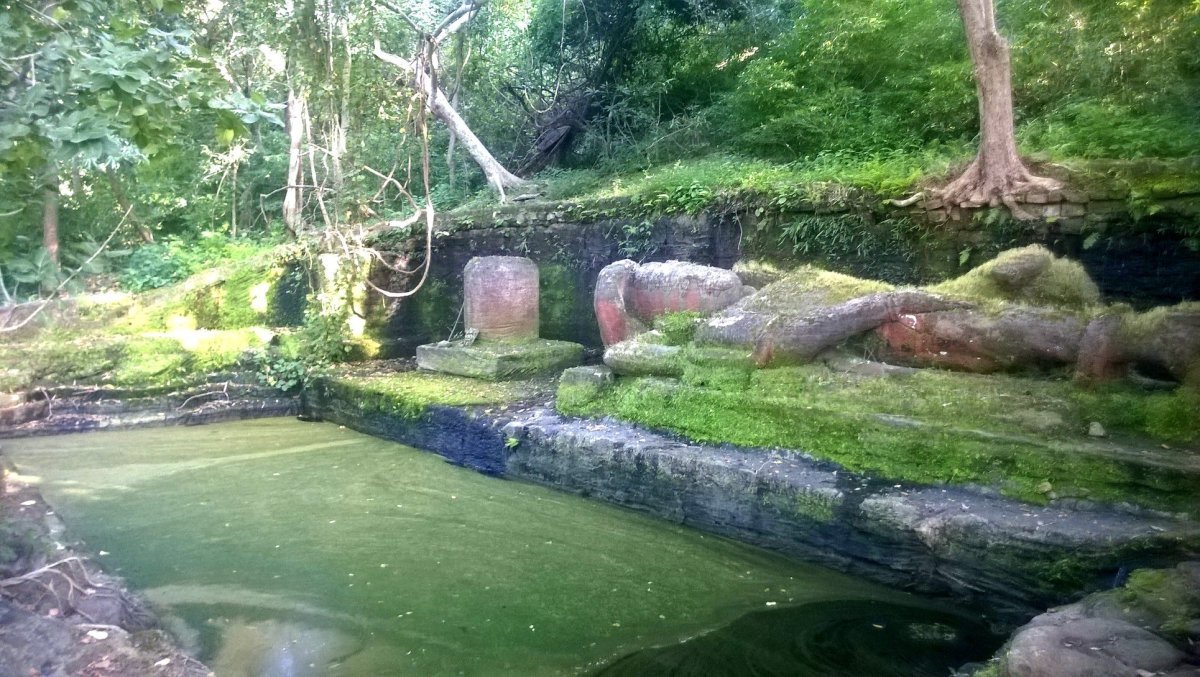
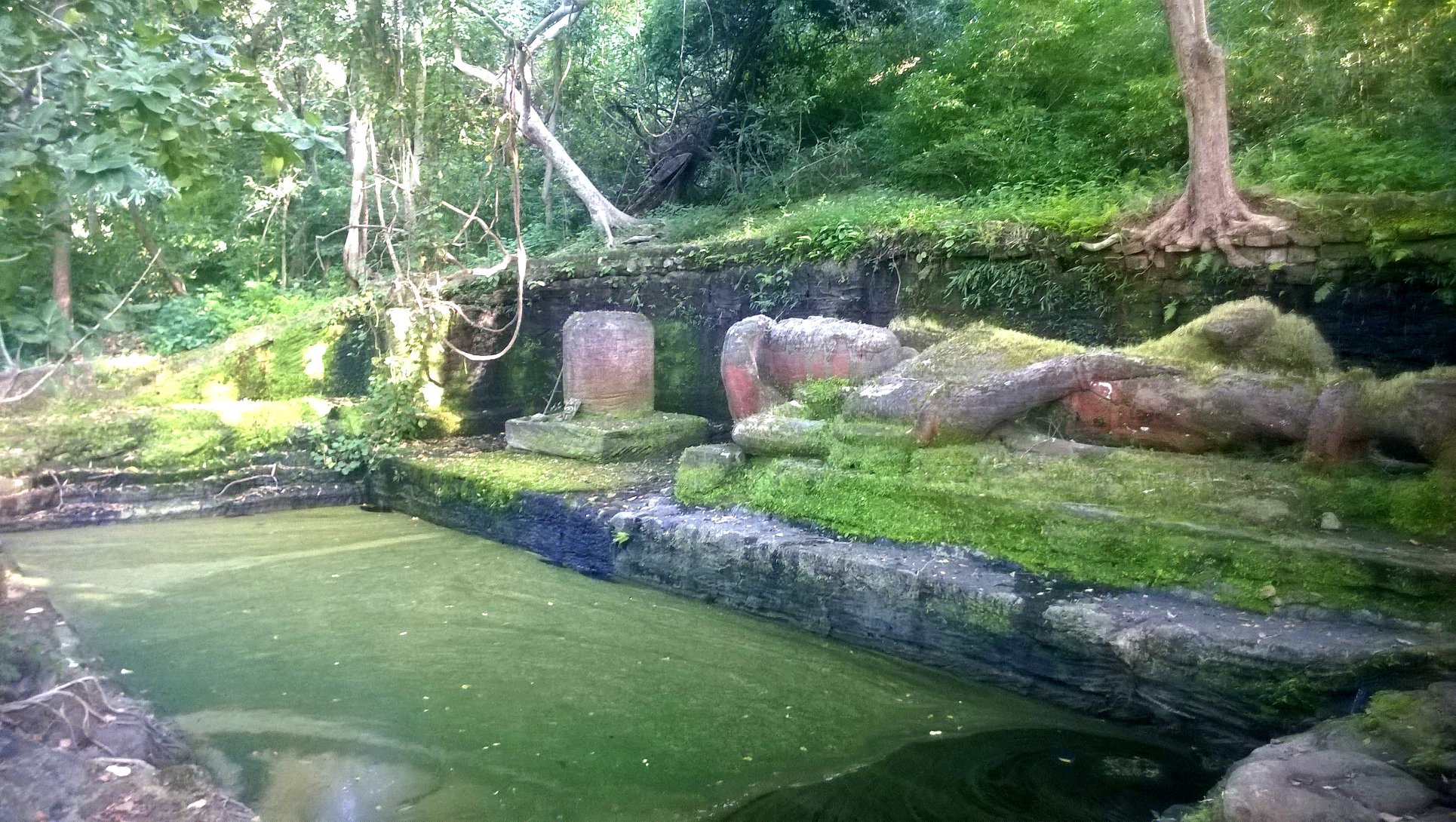
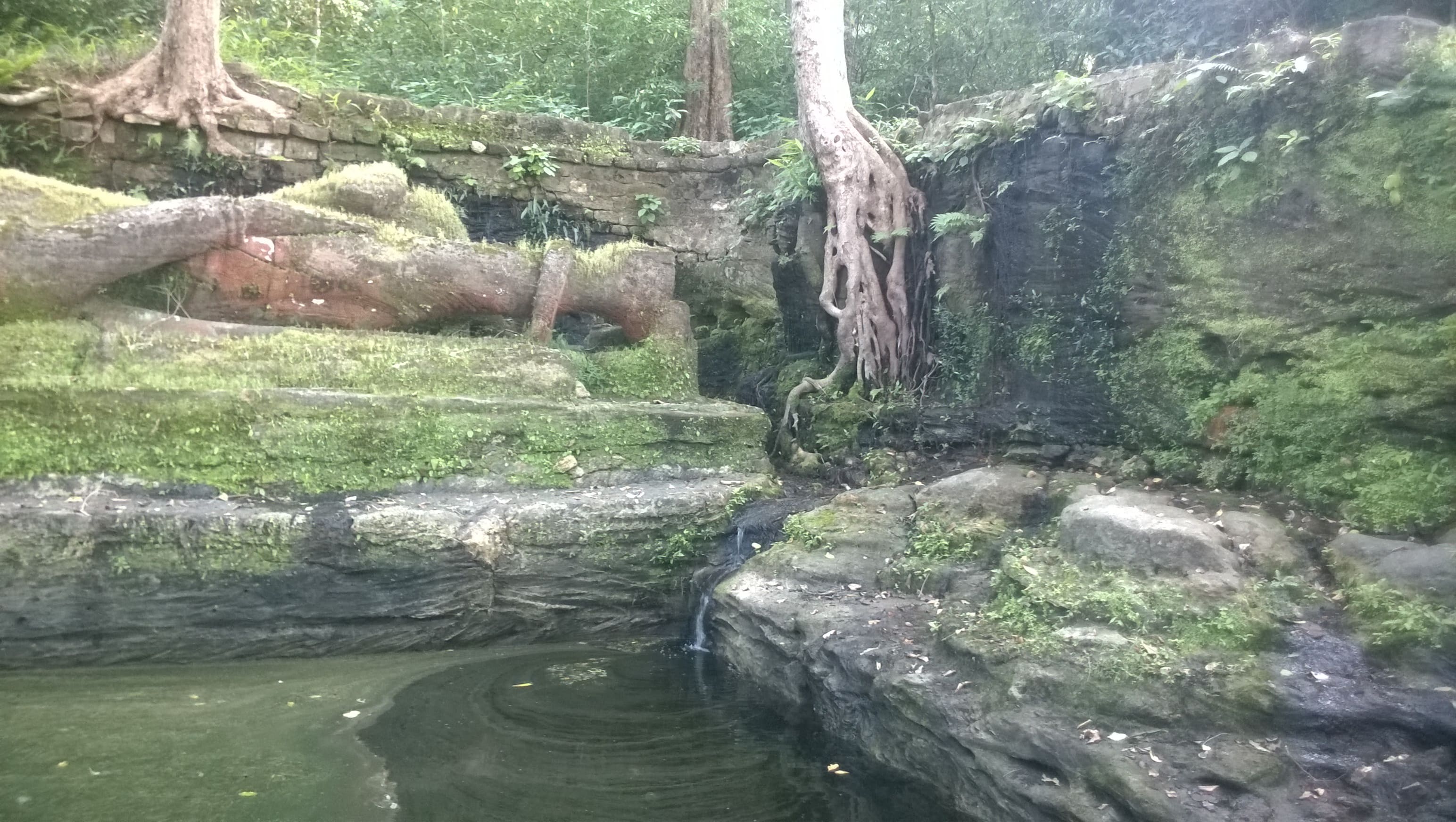
Soon, we came upon a fleet of stone steps leading to a ledge, where the guide beckoned us to get down and take a look. With anticipation writ large on my face, I climbed up the steps to the top, and there it was – the 10th century statue of Vishnu in sleeping position, dubbed the Seshsaiya! The moss-covered statue lay in its exquisite glory alongside the inner wall of a tank with the water level lying below the plinth on which the statue lay. Just above the head of Vishnu, lay Shiva in the form of a shivling, and beside the feet, at the corner of the tank, lay the statue of Brahma, now completely obscured by the thick roots of a banyan tree. Thus, the place was graced by all three forms of the divine trinity, the trimurti.
Seshsaiya (sleeping Vishnu) with Shiva
Representation of Brahma in the corner, with a spring flowing down
I was so enamoured of the place that I did not want to leave, imagining myself having many adventures around the place, perhaps discovering hidden treasures from inside the structures or protecting such treasures from evil treasure-hunters, à la Indian Jones . But we had to move on, as it was already 4 PM, and we had some ground to cover.
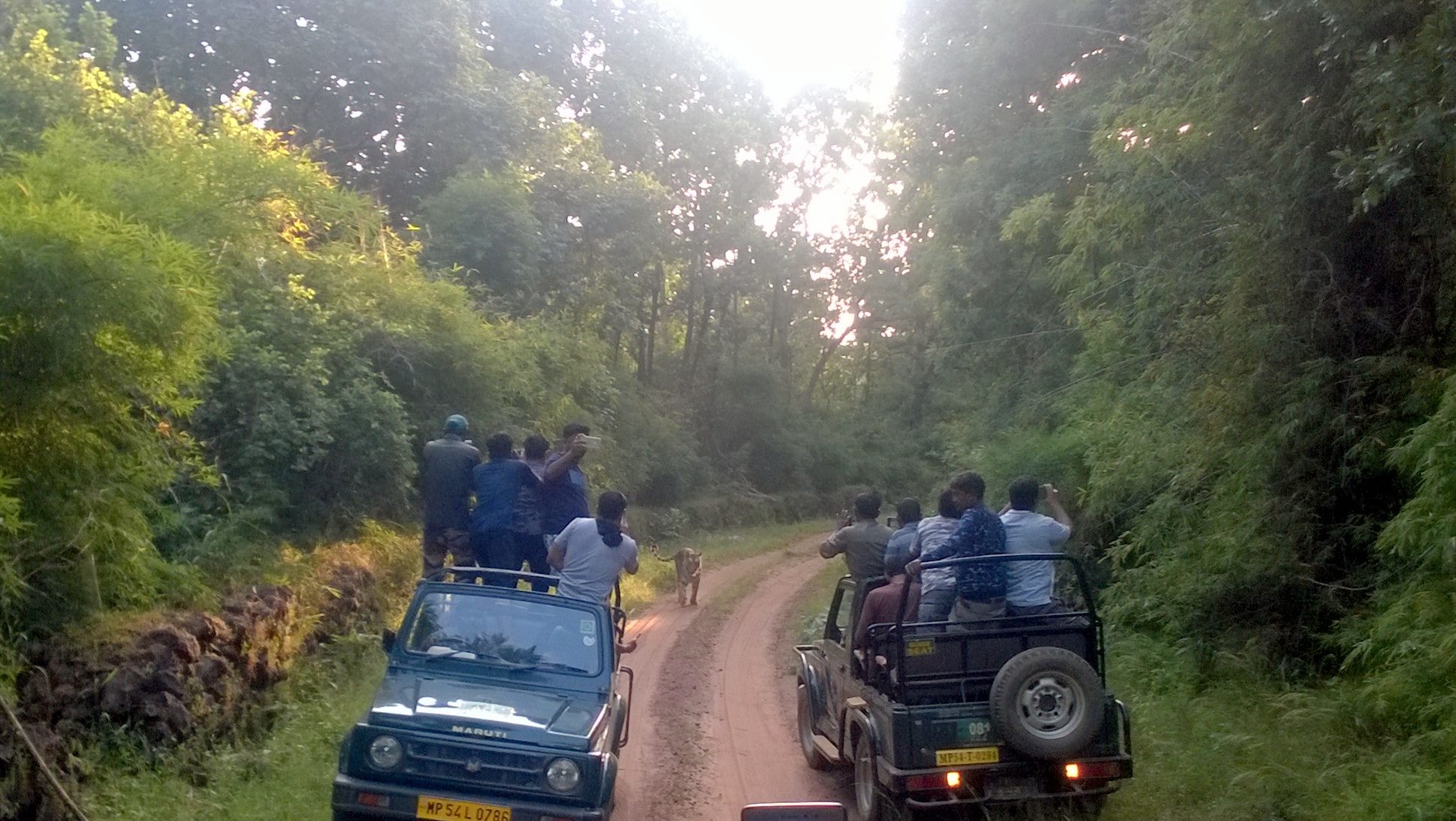
The tiger was elusive, even though we searched for it in the thickest parts of the jungle. Failing to spot one, we continued on the trail before we reached the buffer zone around 5 PM – where jungle and human habitation co-exist. Just as we were losing hope, we saw a group of Gypsies huddled in front of us. And there she was! A tigress burning bright in the rays of the sun setting just behind the tall trees, sauntering leisurely right in front of our very eyes! The excitement, not only in our Gypsy, but also in the other Gypsies was quite palpable.
Tiger, tiger burning bright!
Minor tragedy, major scare
With the tiger spotting behind us, it was now time to head back. And to make up time, the Gypsy driver drove like a maniac, racing against time, to make it outside the park by the scheduled closing time. As, we stepped out of the Gypsy, I was met with a shocking realization – my mobile phone was missing! It was not on the Gypsy either. I called my mobile phone using Abhijit’s phone, but expectedly, there was no response.
Frantically, I ran to other Gypsy drivers asking if they had found a phone matching my phone’s description, and then to the gatekeeper, asking for advice. The gatekeeper suggested we take another safari of the same trail the next day to check if my phone had fallen somewhere on the trail. Although, we had indeed planned another safari for the next morning, I would have rather we did a different zone, for novelty’s sake.
While I resigned to the fact that we would have to do the same trail next day, knowing quite well that looking for a mobile phone in a National Park would be akin to looking for a needle in a haystack, I attempted one last call to my mobile no. and – surprise, surprise ! – a man received the call. Apparently, the man had found it on the ground on the trail itself – he assured me that the phone was safe with him, and he could hand it over to me… in return for an inaam (reward). While I offered him Rs. 500, he quoted 1000 – grateful for the ‘miracle’ that had just happened, I agreed, and within half an hour, my phone was securely back in my hands. It would not be a lie if I said I had one of the most enjoyable meals that night.
Day 4: Bandhavgarh (continued)
Waking up at 5 AM for the morning safari, we picked up our packed breakfasts and were at the Park by 6 AM for the safari starting at 6.30 AM. With the mobile phone saga behind us, we had the luxury to choose a newer zone on this day – and we chose Khitauli.
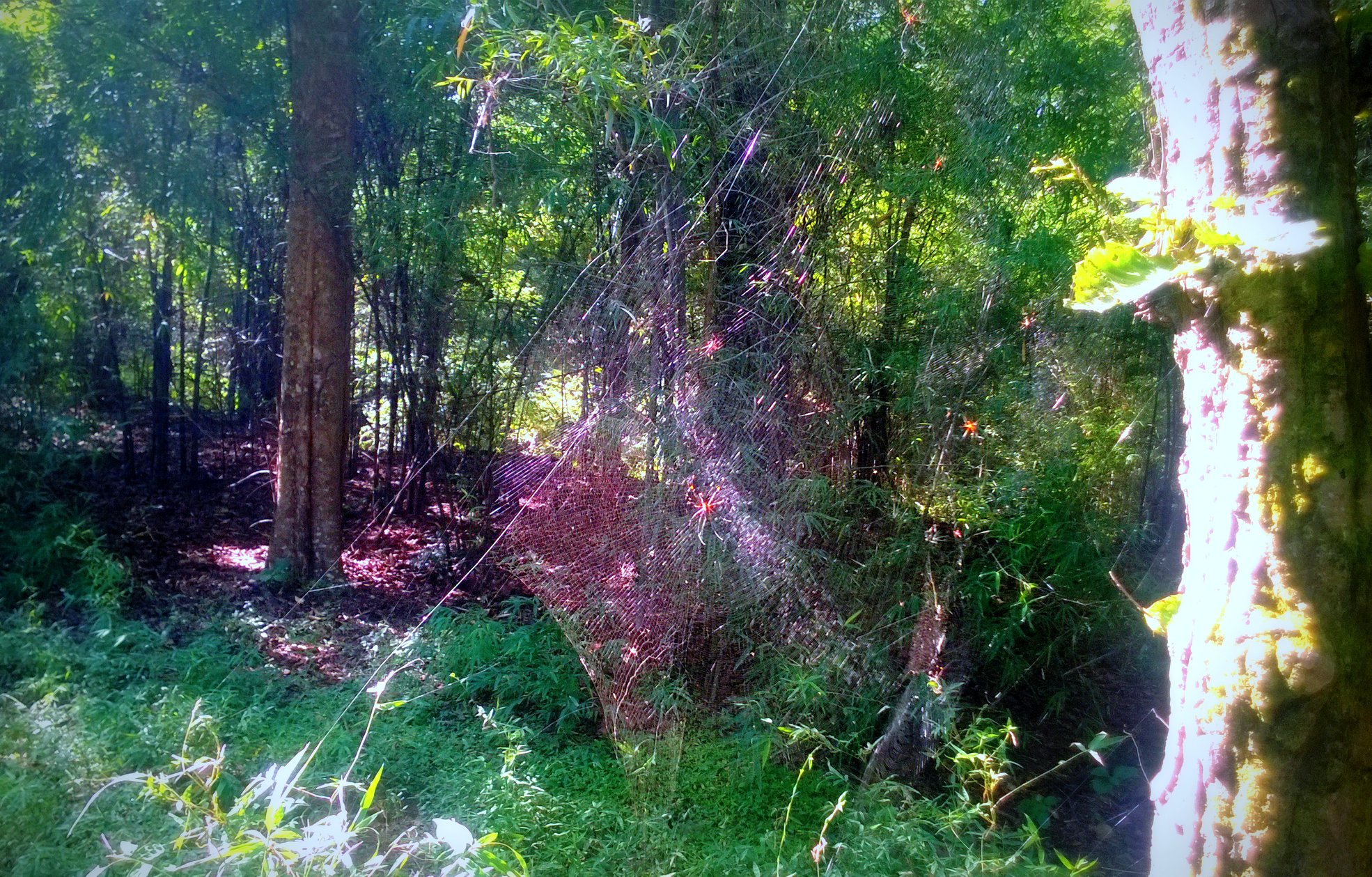
Soon, with the cool breeze blowing against our cheeks, and the mist caressing our hair, we perused the diverse fauna and flora inside the park. We came across giant spiders and their spider webs, myriads of birds, some deer… and leopard poo. Again, from across a patch of grassland, the flattop Bandhavgarh hill with the Bandhavgarh fort sitting atop it, stood there beckoning us, maybe not for this time, but for another time.
Humongous spider-web
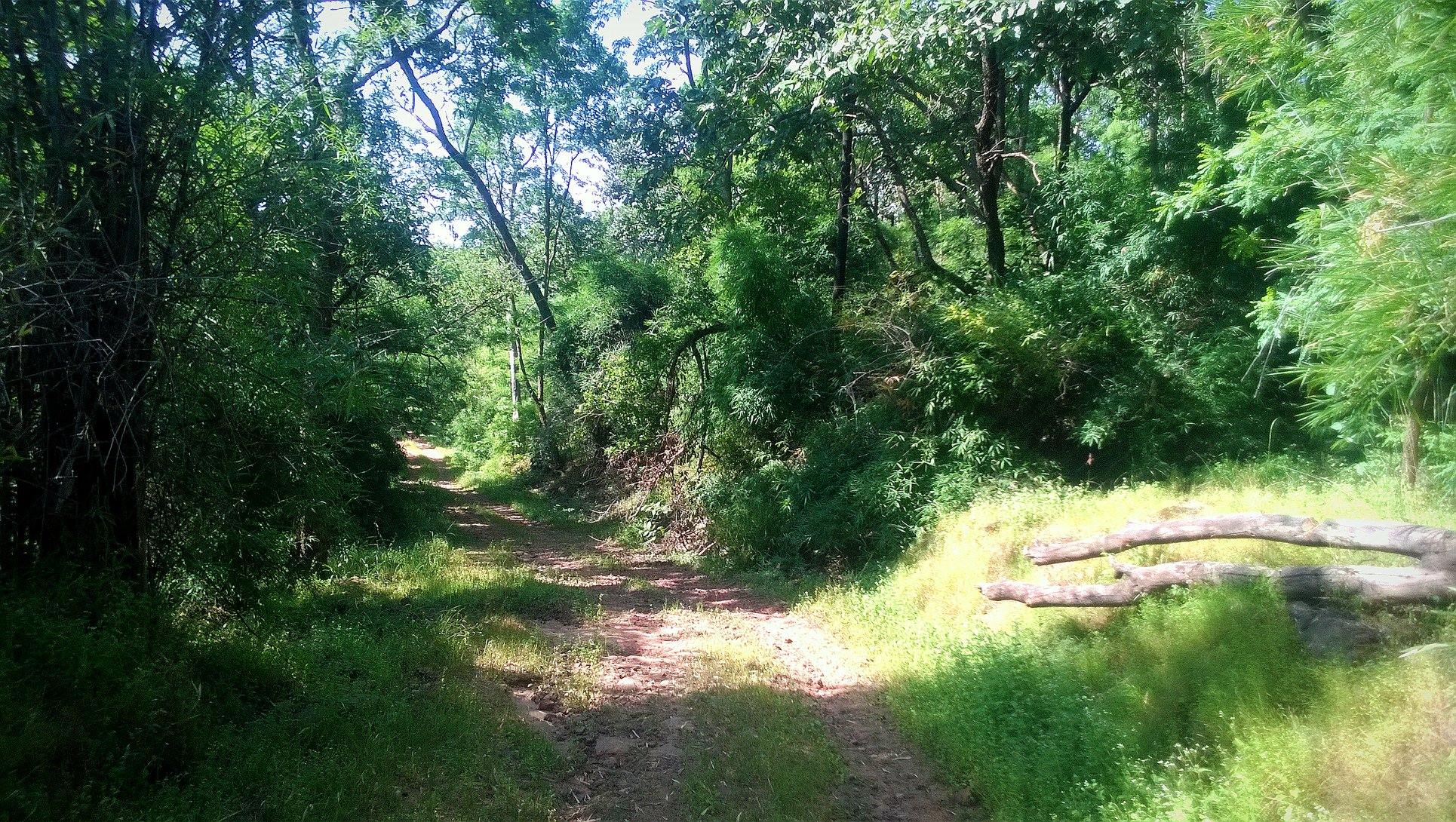
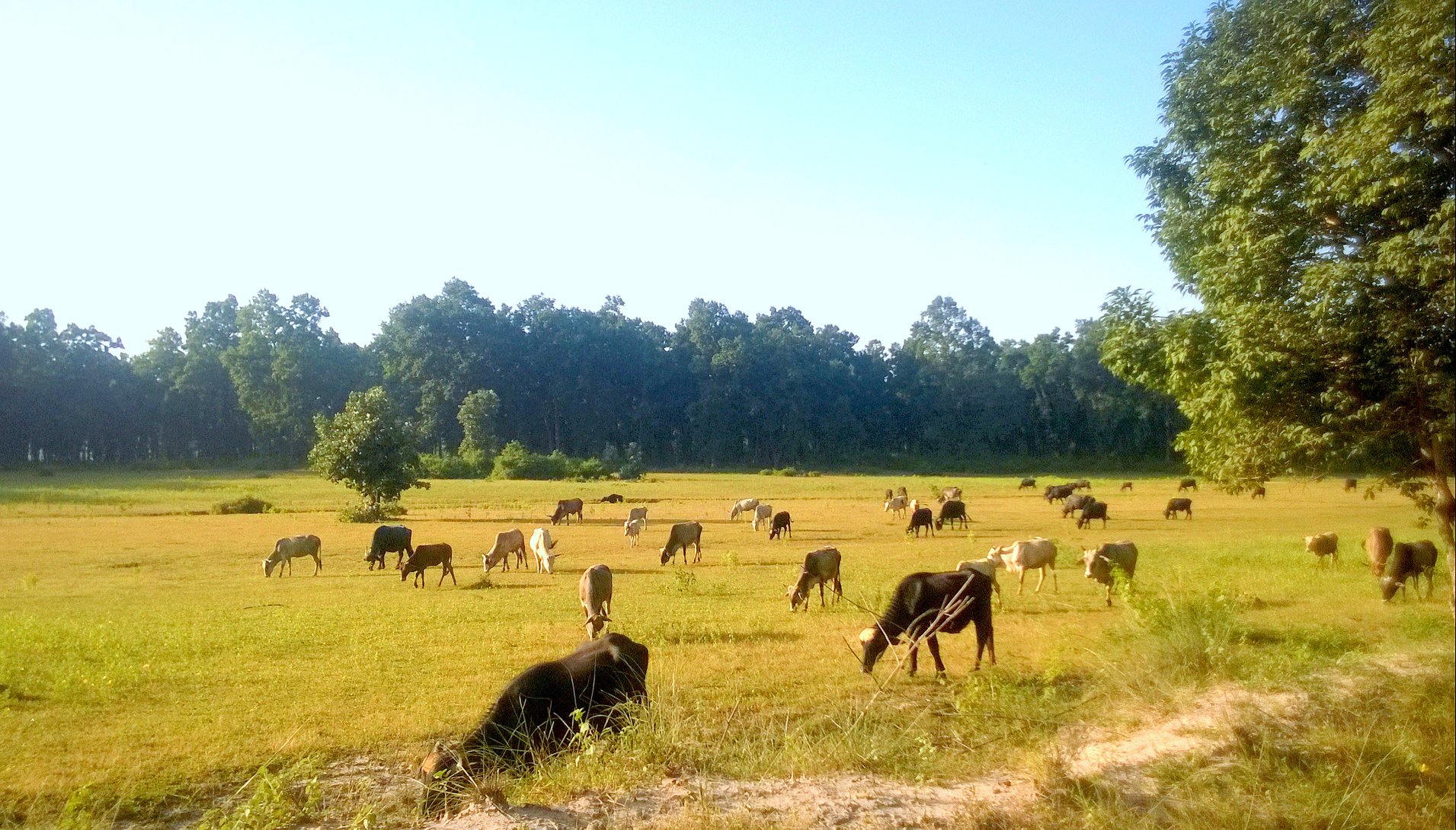
Forest trail in Khituali regionCows grazing in the buffer zone
However, neither a tiger nor a tigress was not to be found on this day. As the sun rose higher and temperatures increased, it was now time to retreat. Back in the resort, we had another laidback meal, and after resting for a while, were ready to check-out. The resort staff refused to accept fees for either the stay or the meals, due to which we decided to drop what we thought was the meal price in the tip-box. By 4.30 PM, we were back at Umaria railway station to catch our overnight train to Delhi. That night’s sleep was one of the most gratifying that I had ever had on a train.
Stranger! O Stranger! Did you not, First land upon, the fenced highway Of my heart, heavily guarded By my vows to not drive astray? But still I did, when you came by, And my life became runaway!
Didn’t you touch my life with fingers Of a sorceress casting her spells? And didn’t you soothe my burning aches, And send me mounting carousels? Oh though were those fleeting moments… The joy from them still deep here dwells!
When blissful joy some stranger gives, Should then she be a stranger still? Can she not be my journey-mate, And ride with me o’er plain and hill? And what travels those might have been, Had we travelled as Jack and Jill!
Murphy’s law’s reigned right from the start, But that ain’t reason why you can’t, Take a chance on me and find out If I could be the man you want. And on the way we shall both learn That you and I are strangers scant!
Wait fiery Sun, set no further, Don’t you know that she would rather Bask in your blaze than rest at night? Can you not fathom her delight? The glee she feels while you’re around, The smile that makes the world go round, The laughter this town talks about When her face lights up sans a doubt.
Wait fiery Sun, do not rise yet, For do you really want to regret? Don’t you know, while you were away, Late at night in her bed she lay, Dreaming up ways to bring you back Into the skies which the stars pack? Now look at her all wrapped up In bed, don’t you dare wake her up!
Wait fiery Sun, explain to me How and what it’s that you and she Share between you that others don’t- Like darkness and night, ties you both. I guess it’s the flame you both carry- You grace the day, on the contrary, In times when you forget to shine She could light up lives, even mine.
Born was a baby, blessed with a boon Bestowed ‘pon her by empyrean powers, From birth tied alike to both sun and moon, Her bed bestrewn with feathers and flowers; Watched over by Time who chose to stand still, Joined duly by the God of dreamless peace, Thrives she further ‘pon the Pixies’ goodwill – Who take all her cares and troubles on lease; Any which being, divine or otherwise, That dared disturbed her shall go asunder, Needless to say, lies welfare of the wise In steering clear of the dormant thunder; Freed of time and dream, for lifetime to keep, She’s got a boon – that of a baby’s sleep.
Far from the frenzied town are we here came- A shrine with love in its each artery, Me sat beside the most beautiful dame, Feeling a man that’s won the lottery; It’s true I am a man on a mountain, And you the peerless peak I pine to reach, If it means my blood shall form a fountain, Gladly will it the ground between us leach; I must be a man to the idea wed Maybe far before its time hath come, Yet, the dreams I see are that we both led Years five and fifteen and fifty and some; My vow’s been made, now’s left an unsaid line- Mine ring finger is yours – can yours be mine?
‘Tween loving and wanting, I vacillate, Wild as a pendulum, one merely drunk, With rhythm and time am I now profligate, Circling inside the clock’s restrictive trunk. My moods are now seasons – all in one day, The high tide and low, same and disparate; While my sane mind may keep ill thoughts at bay How long can my insane heart tolerate? I might as well be fish out of water, Free in the air, but still flailing about, Caged or freed, seems to no longer matter- The tug-o-war rages on bout aft’r bout; For wanting you is to my ethics throw, And loving you, then, is letting you go.
The king did send word o’er lands – high and flat If there be men fit for your acquaintance; Bedecked in braids of your beauty you sat- O Princess, you of the South West highlands, Have you the faintest idea of your charms? The keys your mien strikes in the hearts of men? Pour they in – princes, barons and gendarmes – Who shall your Highness choose of all these then? Bear in mind, your beauty is amplified By focus of mind and high skill of hand- Does the lore of personage so rarefied Not the stamp of perpetuity demand? Thence, quill in one hand, I submit a bard – Your hand in my other be my reward.








 The Timber Trawler