A Decade of Exploring Rajasthan: Jaipur 2012 AD to Jaipur 2022 AD

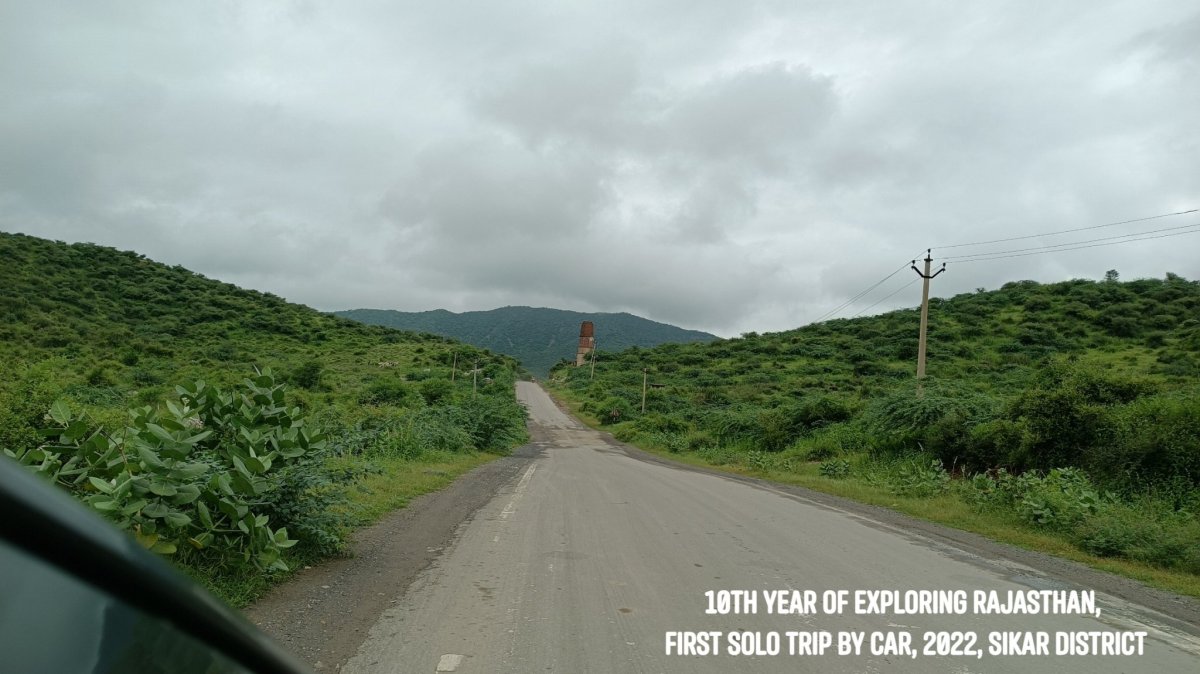
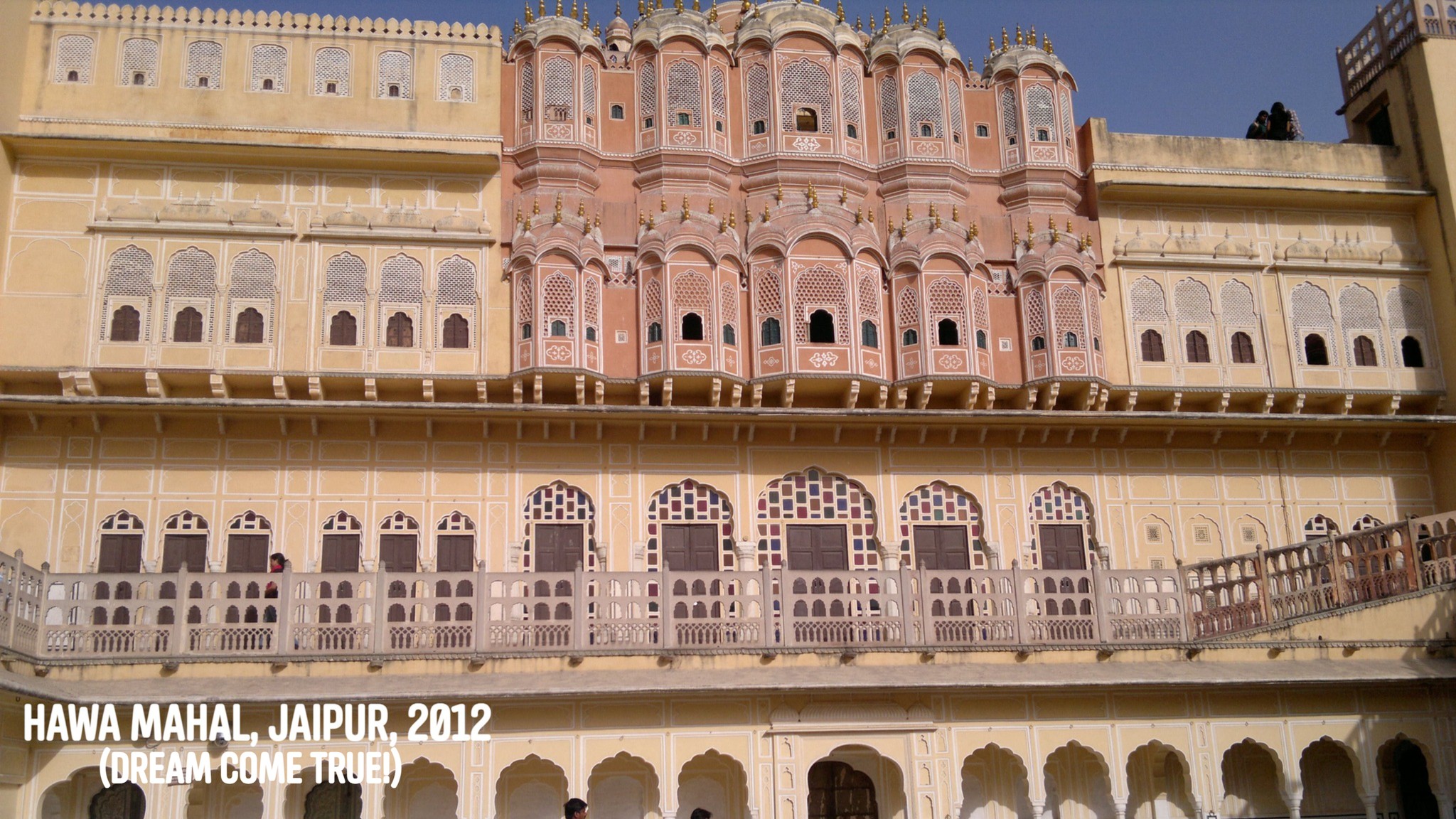
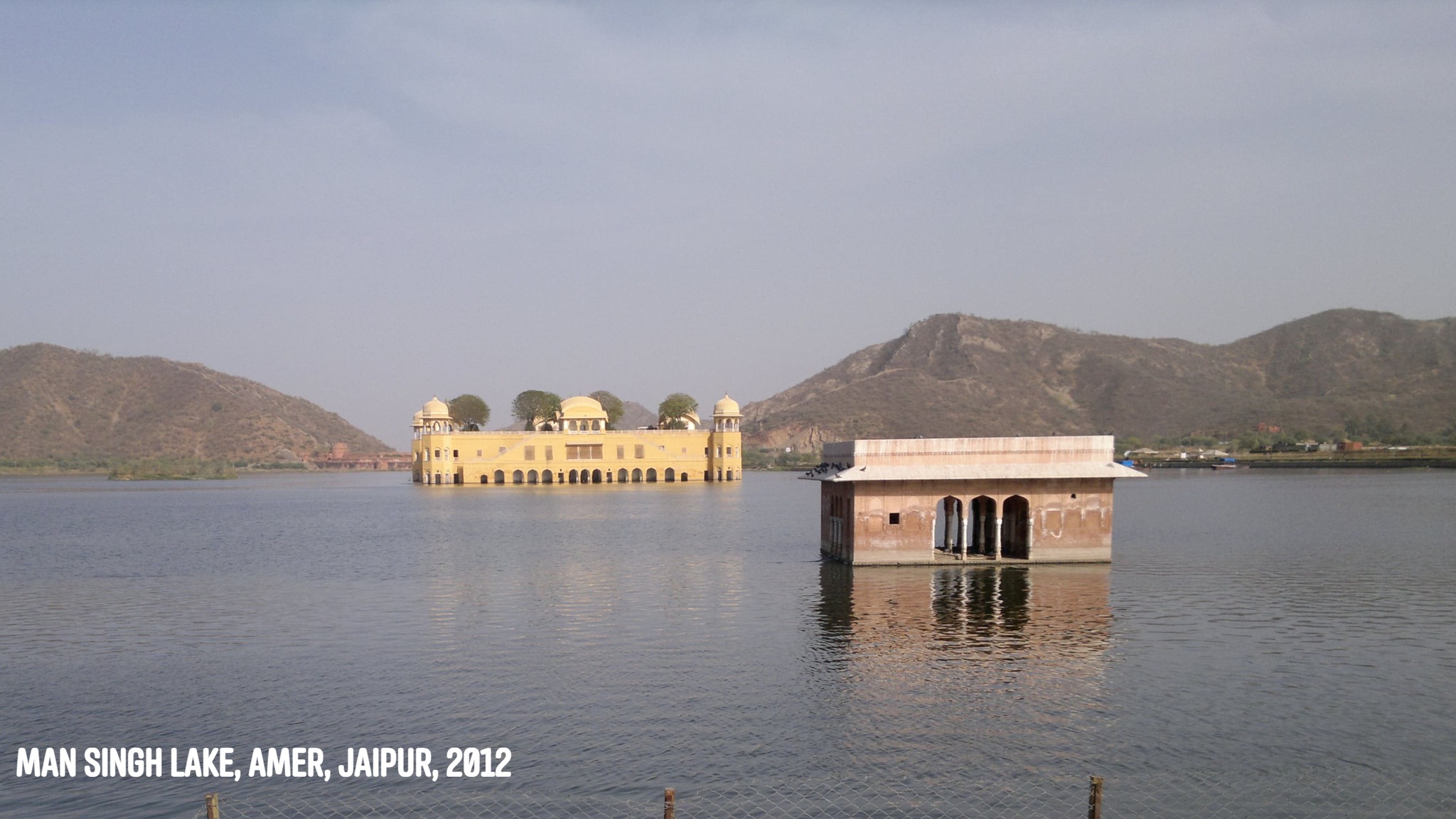
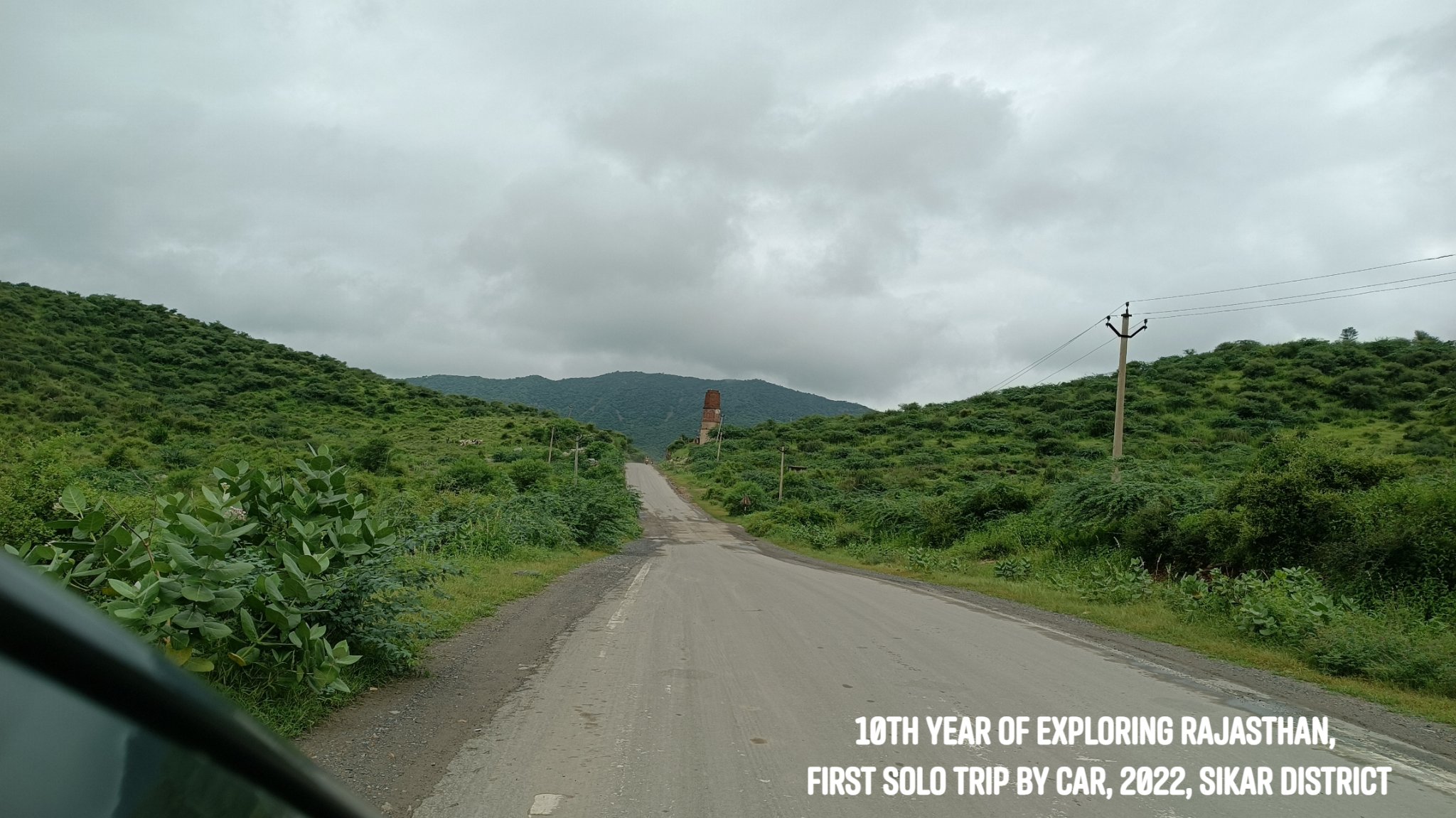
In April 2012, my first ever trip to Rajasthan was solo – by public transport, with the destination being Jaipur. In August 2022, I rounded off a decade of exploring Rajasthan by reprising the solo trip to Jaipur – only this time it was by driving on my own. A 700km self-driven solo adventure!

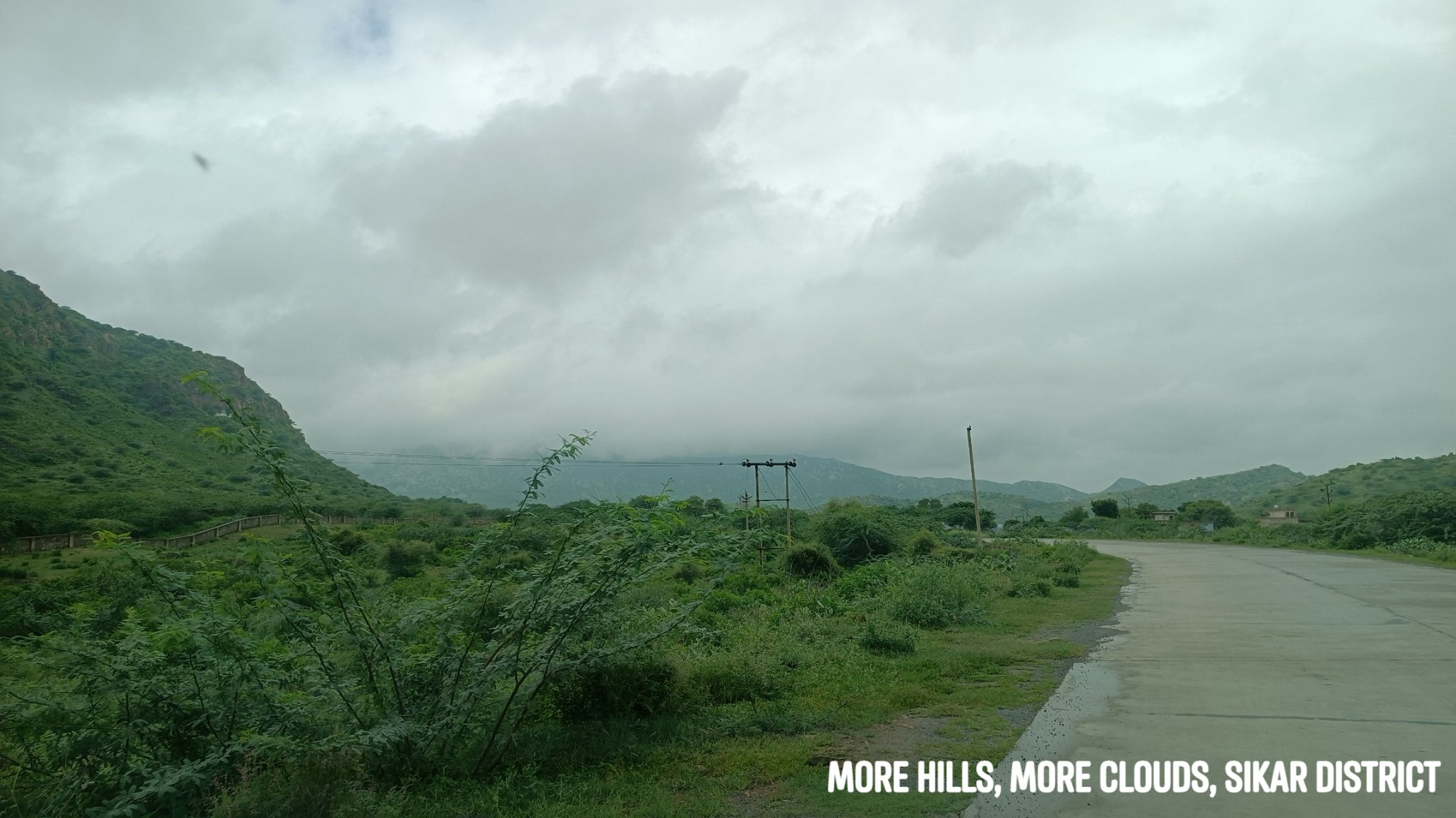
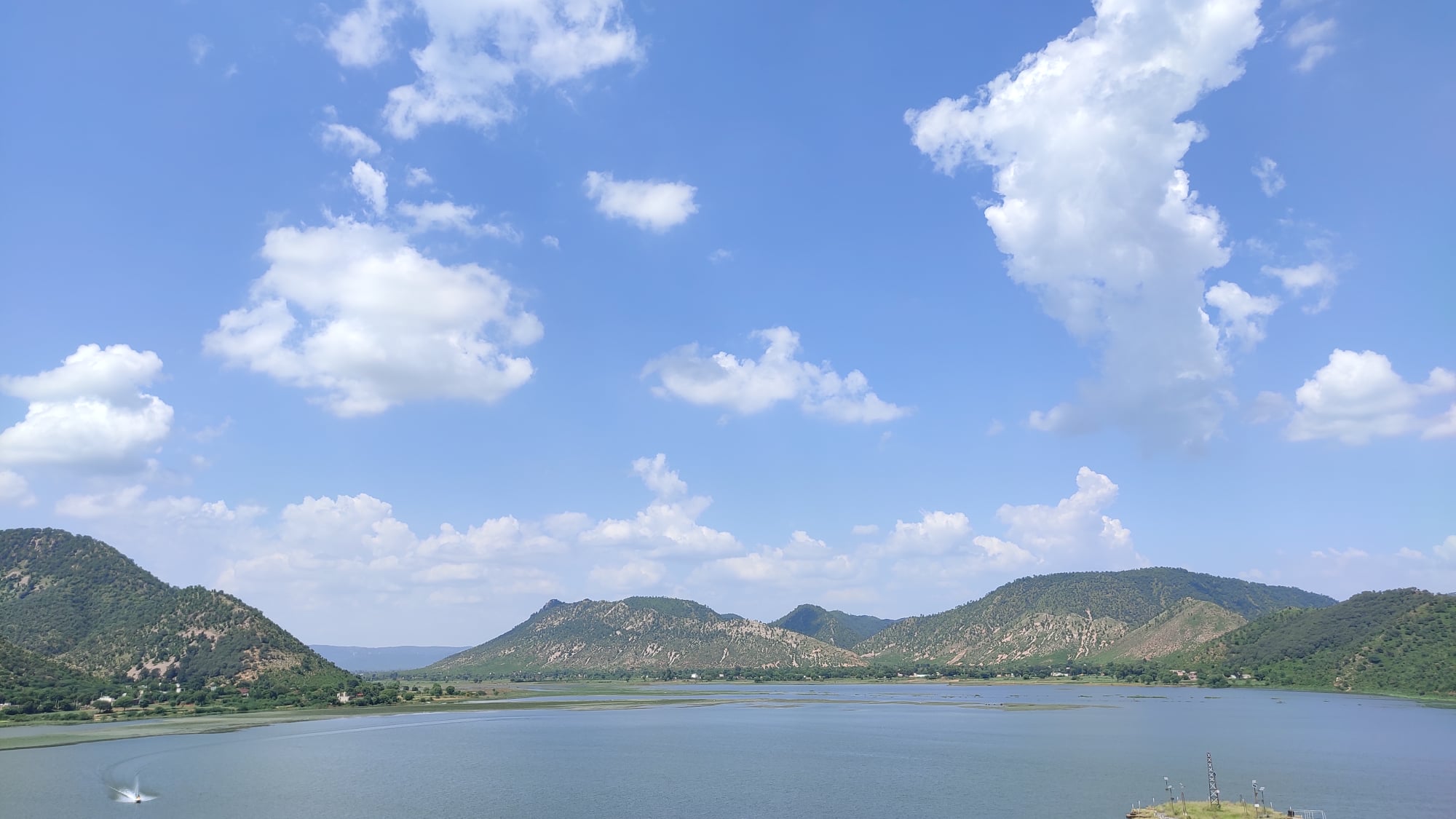
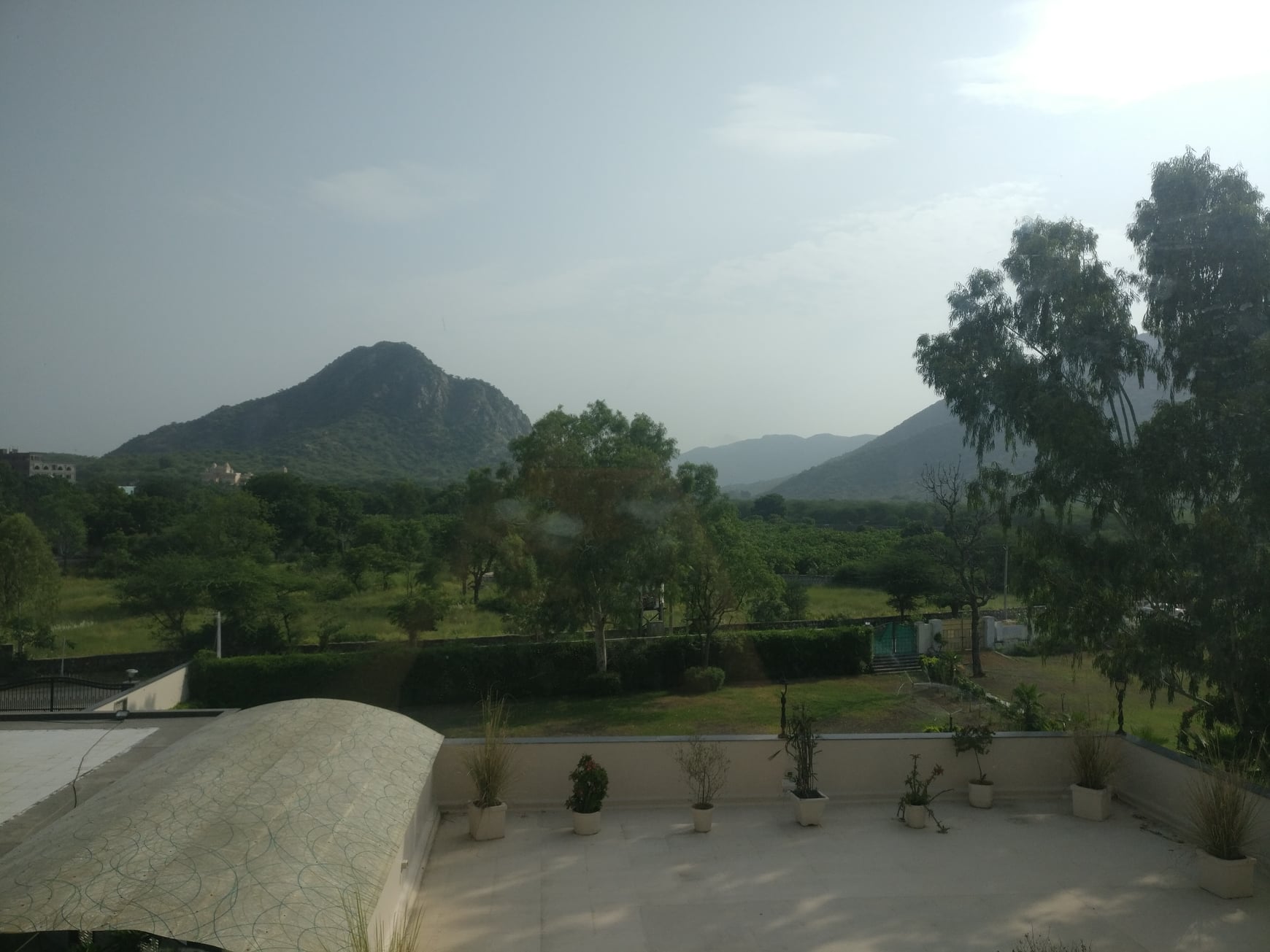
As always, it is rarely about the destination – and so off I went wandering through roads I had not trodden before, exploring a bit of the Aravallis in the Shekhawati region, while the sun and rain played hide and seek, and folds of hills lay in the distance in front and around me, their peaks crowned with fluffs of cloud.

I plead guilty to the charge of scooting off to Rajasthan every chance I get, even at the risk of inviting ridicule. ‘Why don’t you try out some other place this time – why not Himachal, Uttarakhand, UP?’, I have been asked. I say, some people love the mountains, some the beaches – as for me, I yearn most for the desert, the Aravallis, the forts…

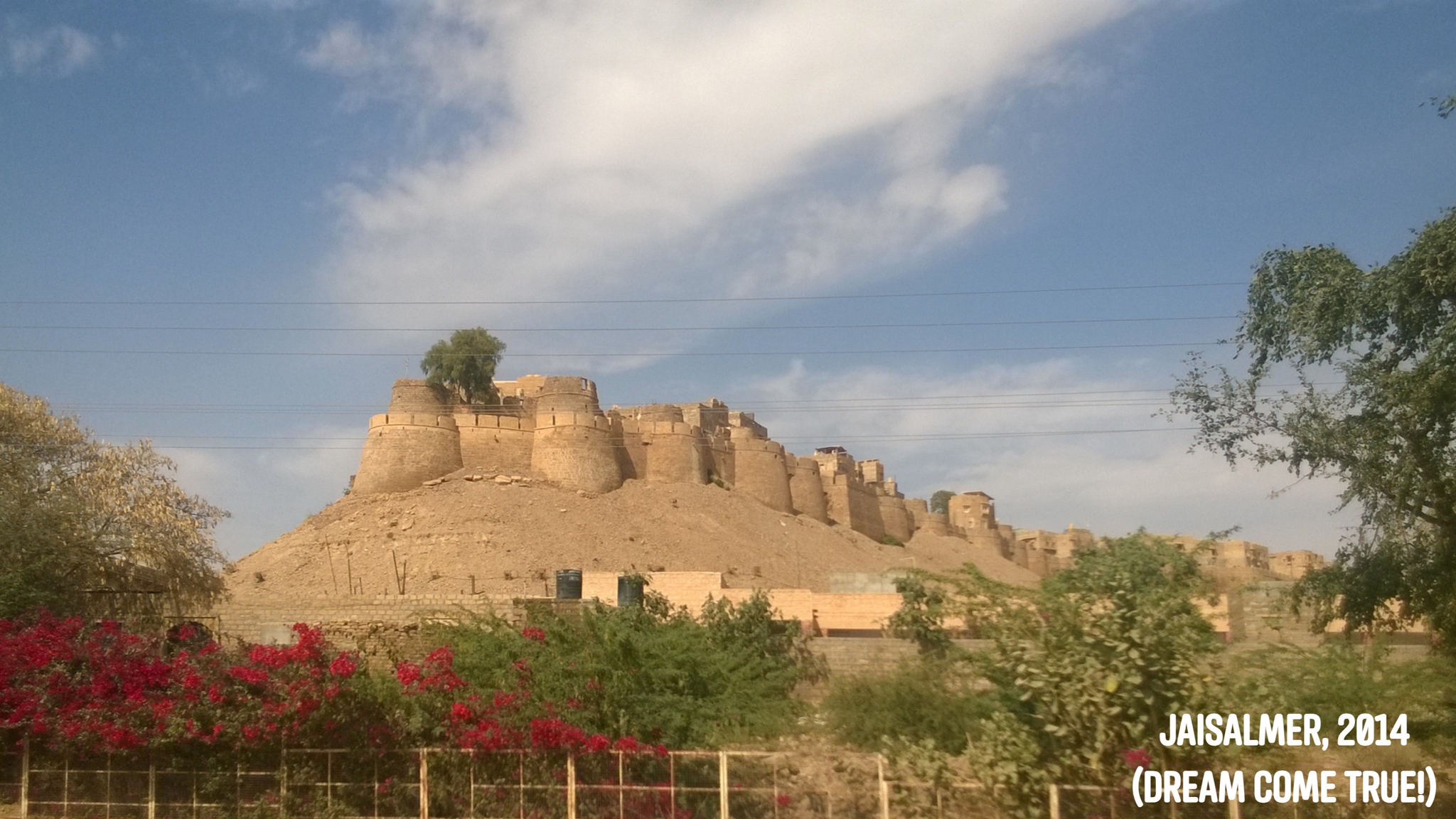
Growing up in Odisha, I had had a fascination with Rajasthan long since I could remember. In Grade 4 – the black-&-white picture of the Hawa Mahal in a textbook, and the mention of the Thar around Bikaner and Jaisalmer, images of the Vijay Stambh at Chittorgarh and the Dilwara temples at Mount Abu were imprinted in my head. A General Knowledge book addressed Jaipur as the Pink City, and Jodhpur as the Blue City. I always wondered looking at those black-and-white pictures how the cities might look like in real life in their famed hues.

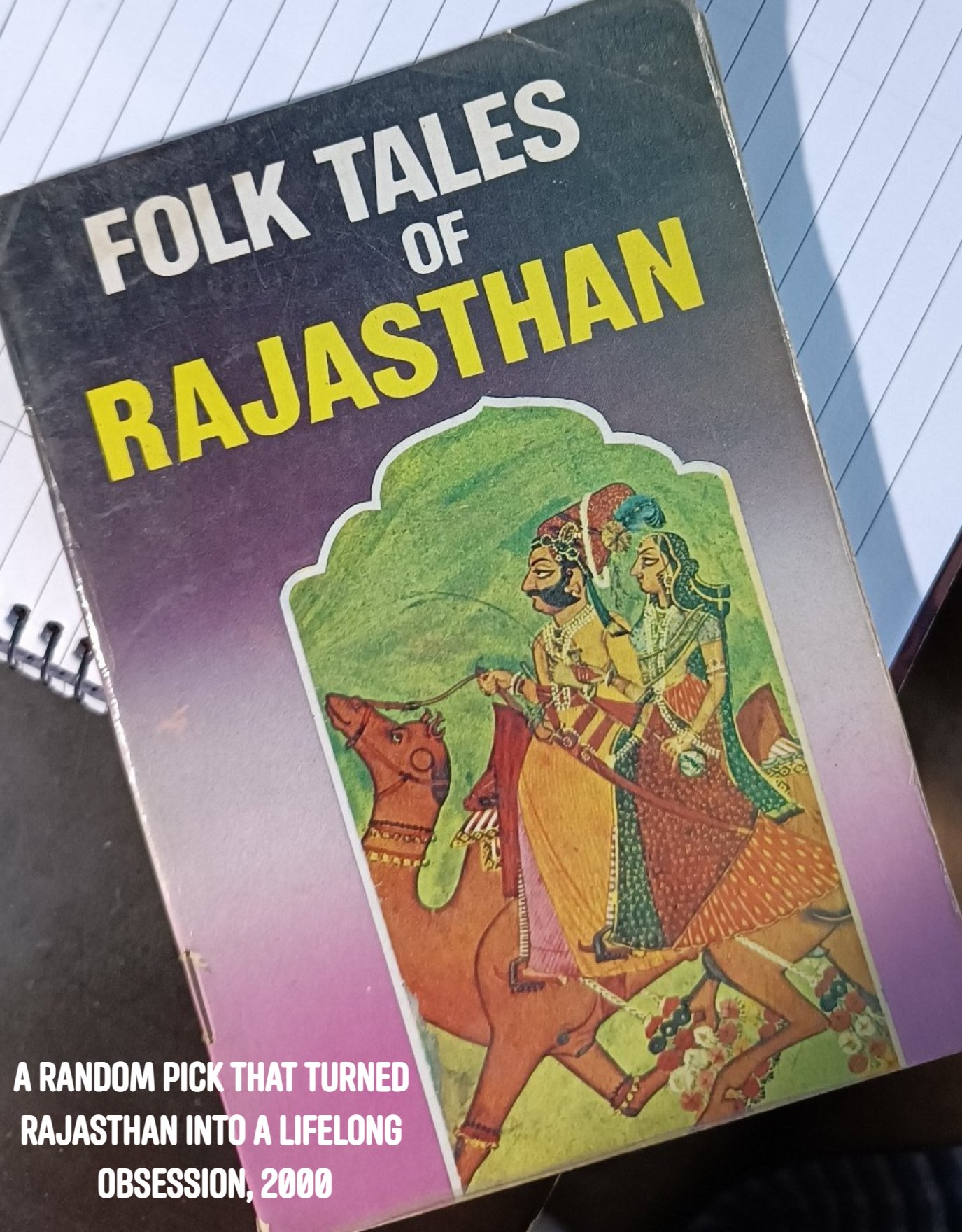
Some years later as we were embarking on a train journey, Dad let me pick up a thin paperback from the book stall on the railway station- it was called ‘Folk Tales of Rajasthan’. While on that train, in my mind, Rajasthan turned into a place of magic, of kings, bards & princesses, of Pabuji, star-crossed lovers & clever thieves, of camels & shifting sands…I was enamoured.

Rajasthan was always just too far away though, and little did I know I would later land up at the gateway to it – Delhi. Little did I know as time progressed, I would reside at a place, on the outskirts of Gurgaon, where I could simply lug a backpack on my back and in half an hour, be inside Rajasthan. Little did I know I would once also drive solo to Rajasthan…

***

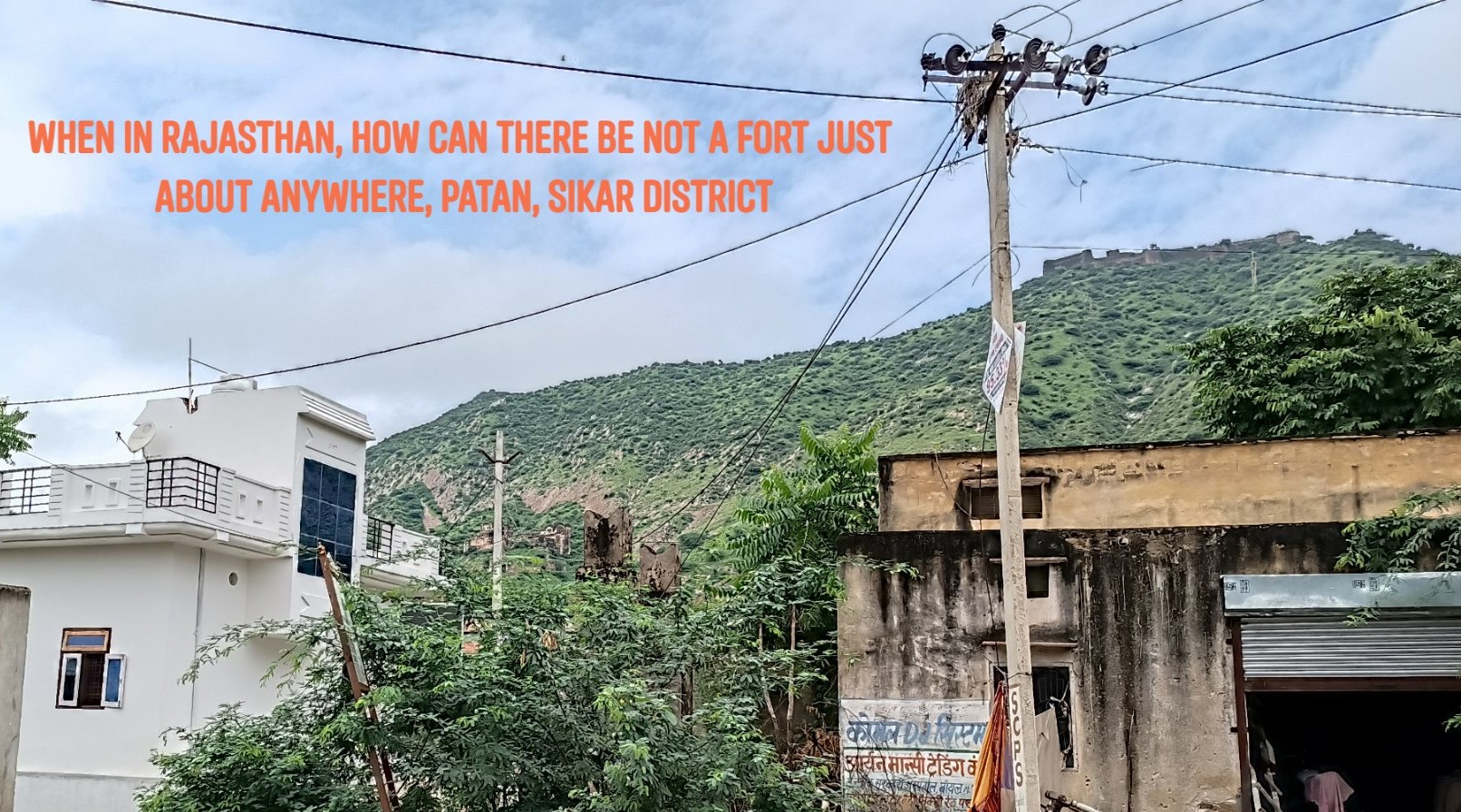
On this trip, instead of driving directly to Jaipur from Gurgaon, I took a detour midway, towards the north and drove through some of the most exotic sounding places – Kotputli, Neem ka Thana, Udaipurwati.

Udaipurwati

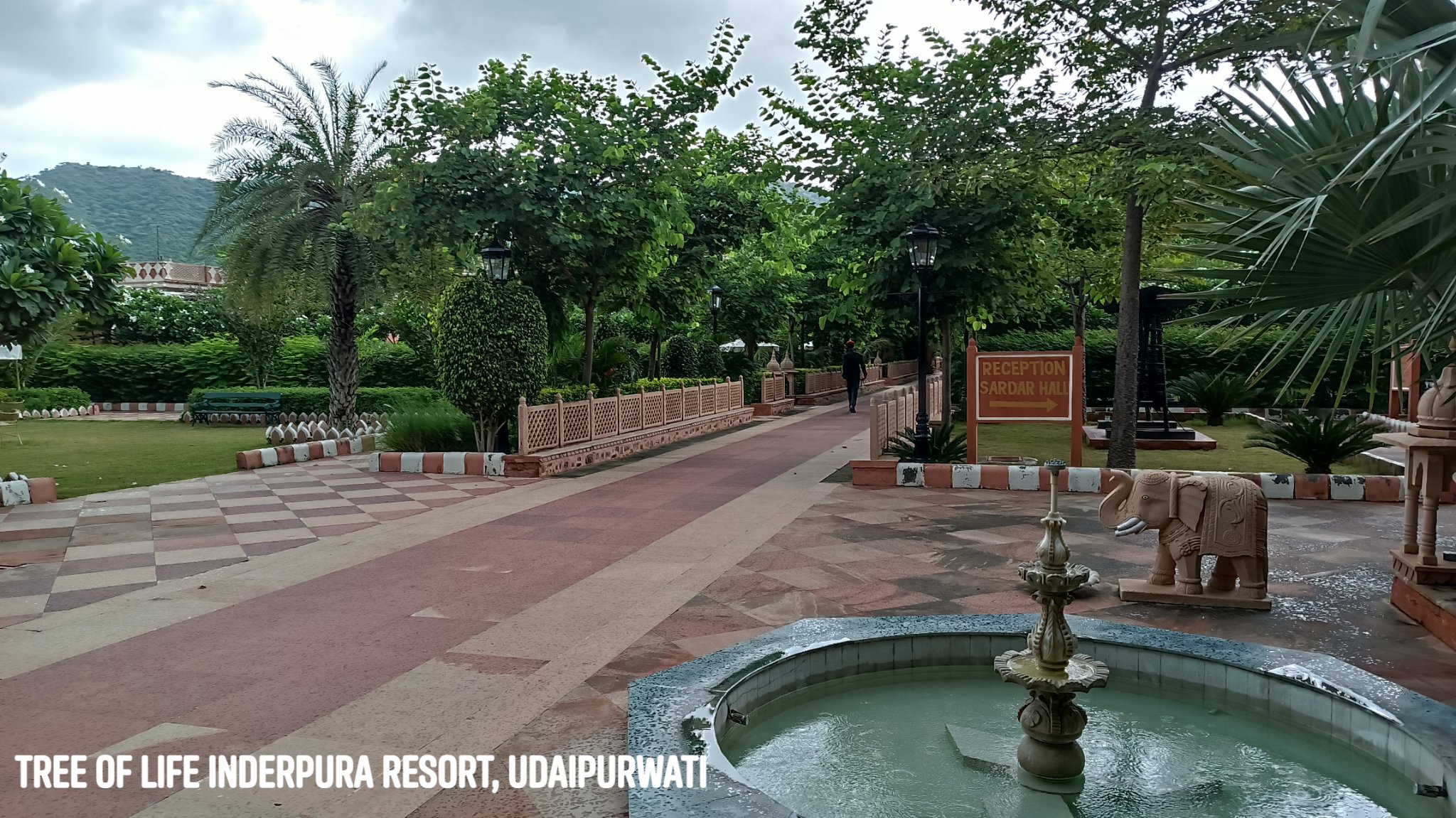
A quaint little town nestled within a gap in the Aravallis, is home to an excellent resort called The Tree of Life Inderpura.

Lohargal

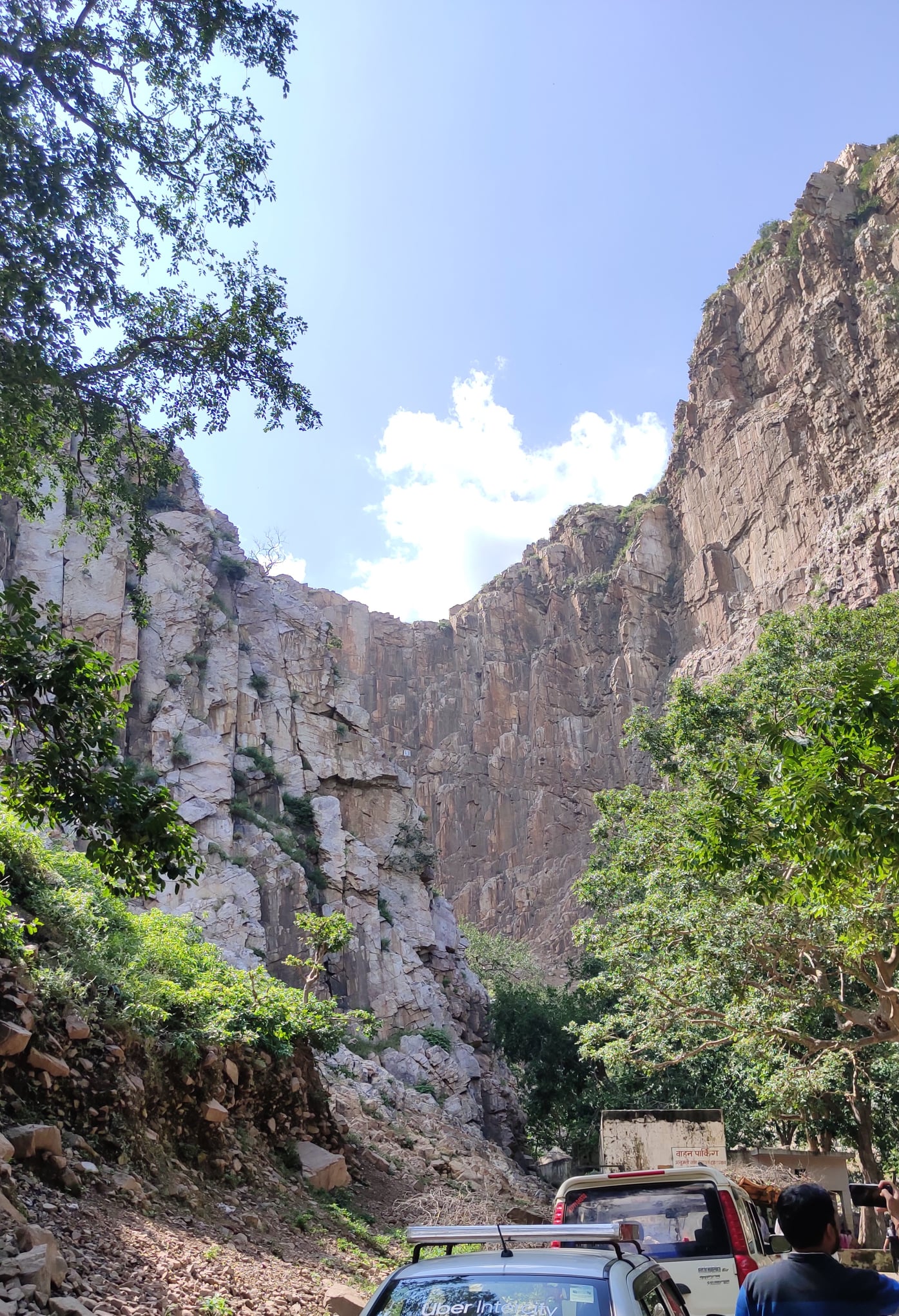
Near Udaipurwati, within a crevice in the hills is a holy spot with a natural spring feeding a bathing tank and ancient Sun Temple. According to myth, weapons and armour of a Pandava army that camped here after their victory, dissolved in the water, giving the place its name: Loha (Iron)+Gal (To melt).

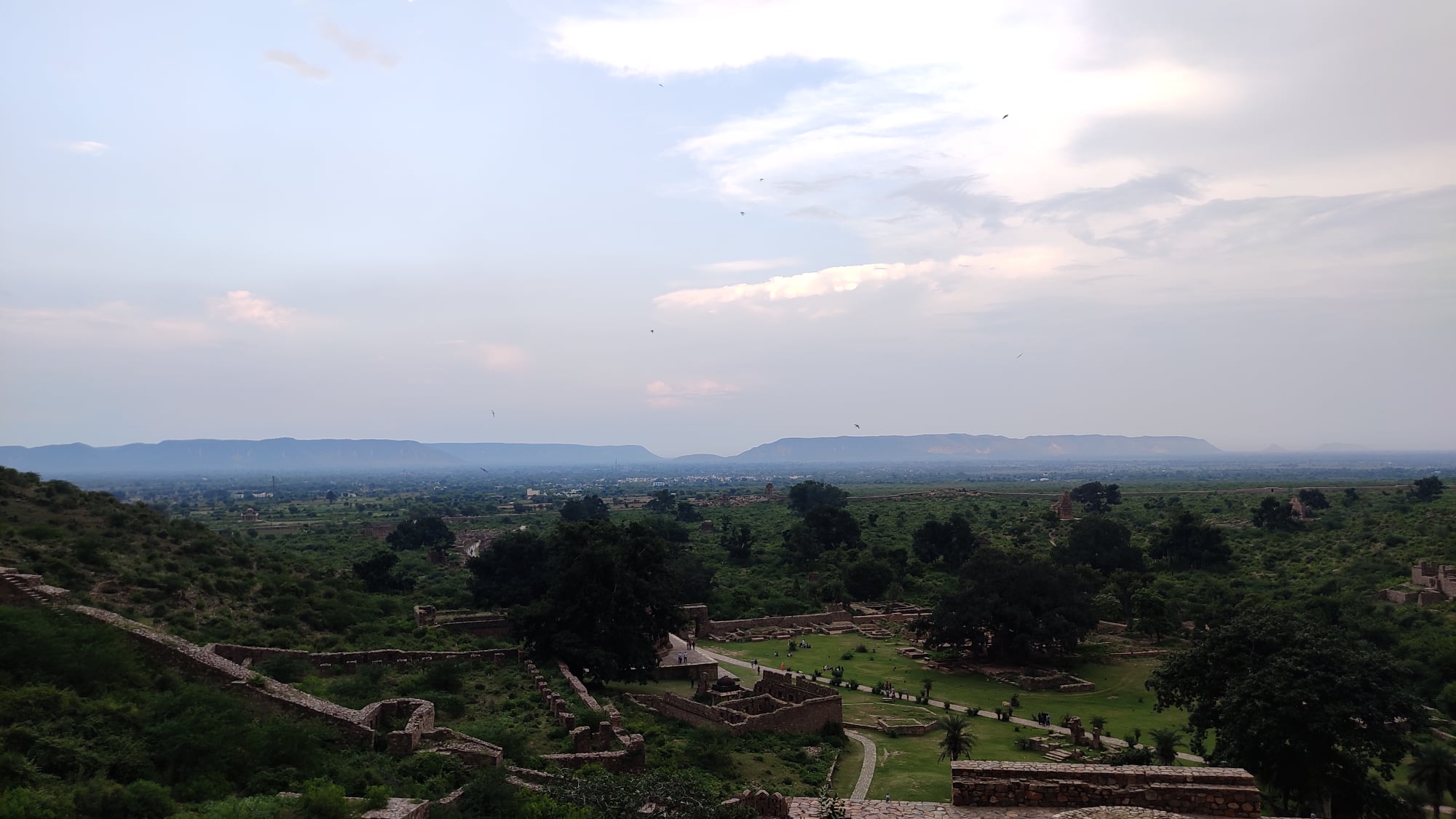
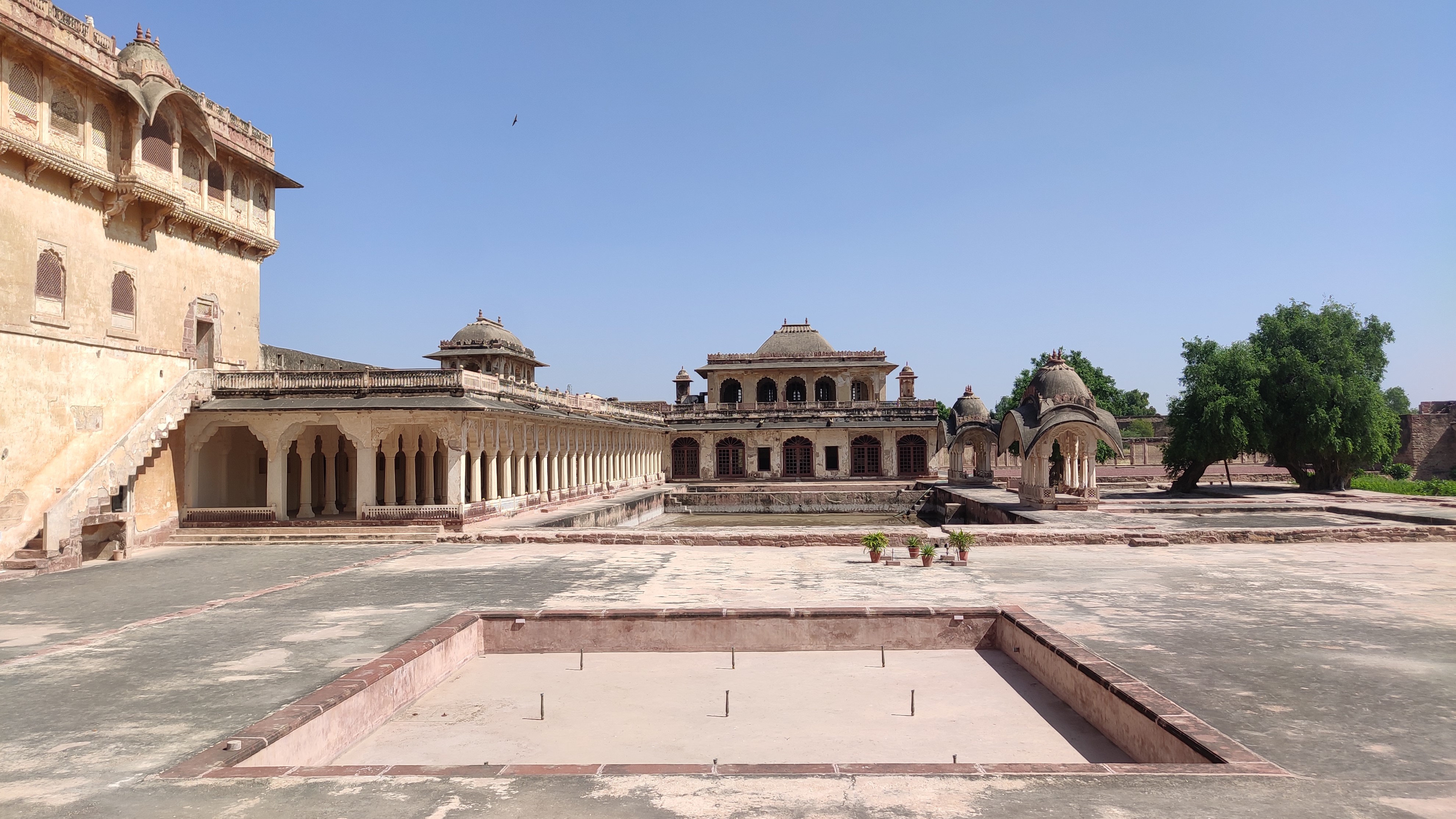
From thereon in Jaipur, I visited a couple of places that I had not seen before, both nestled in the Aravallis.

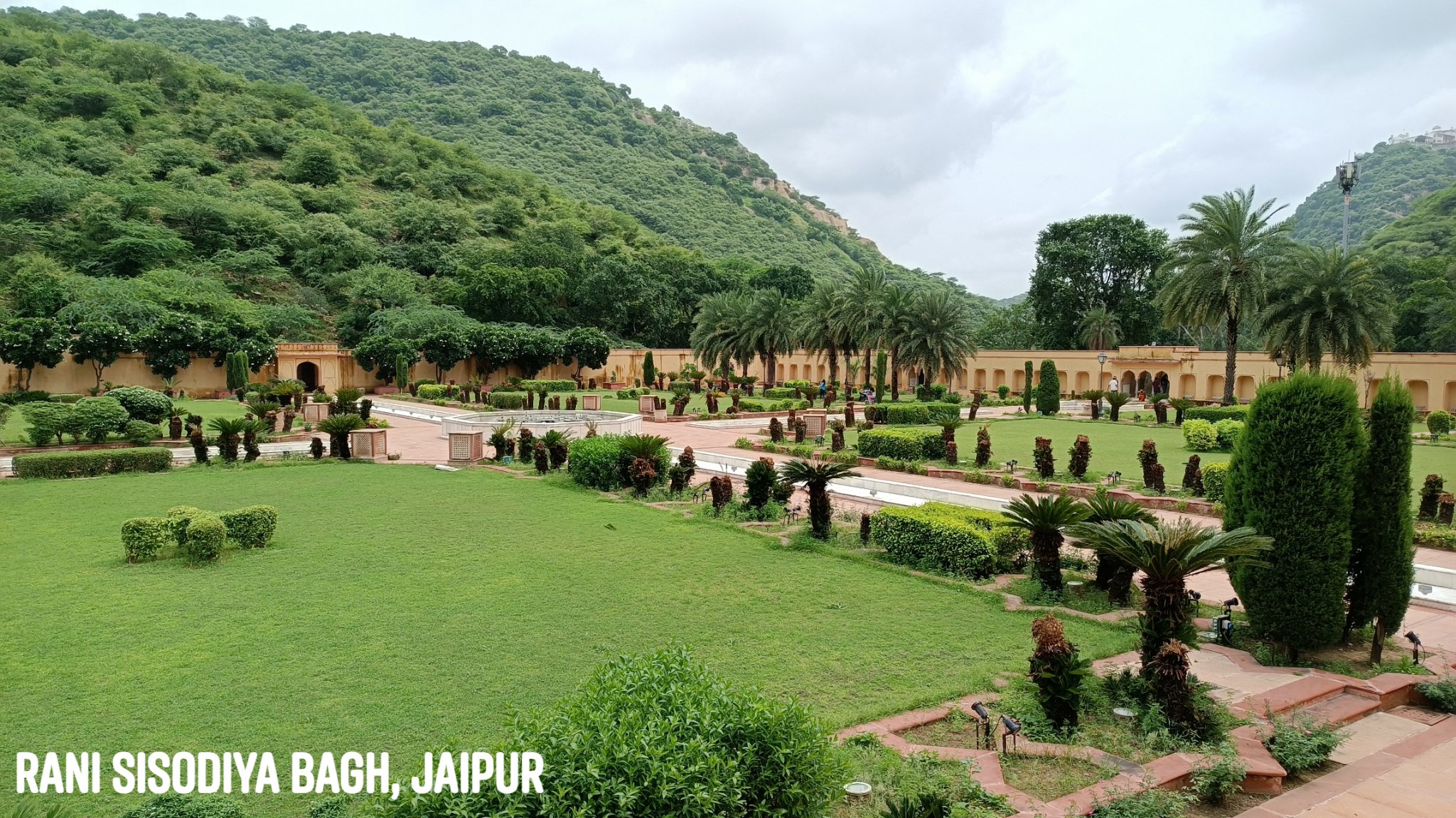
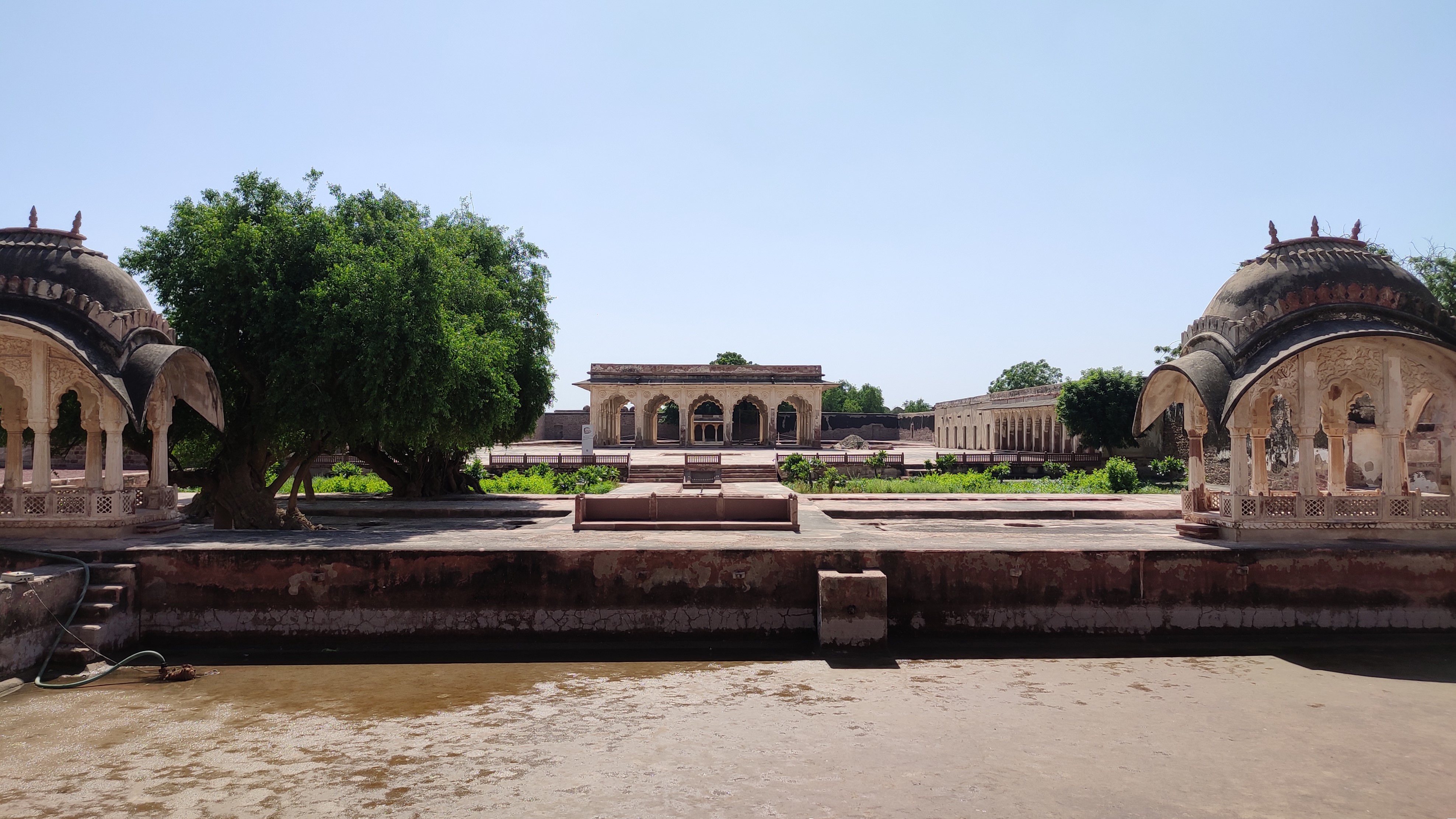
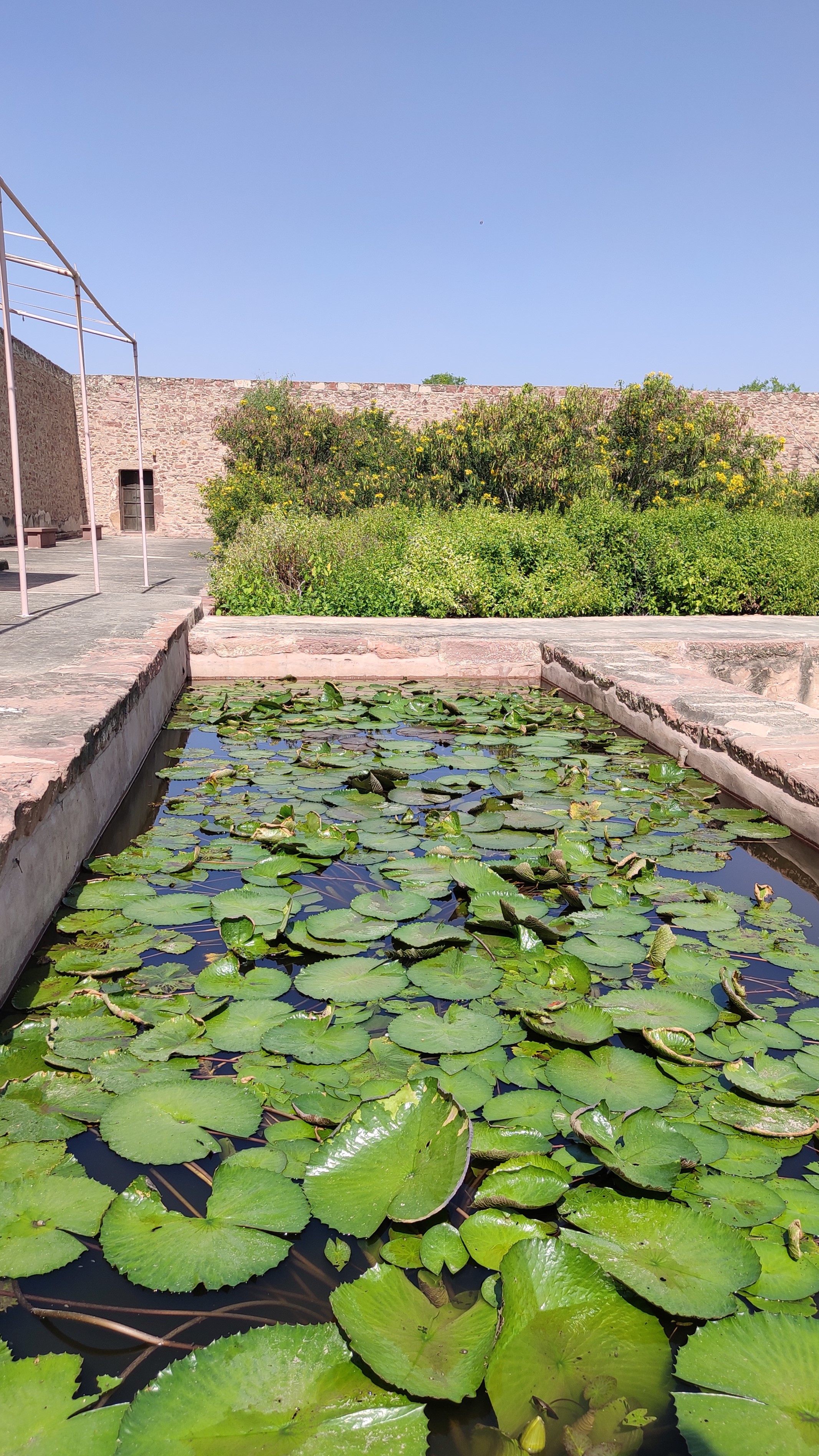
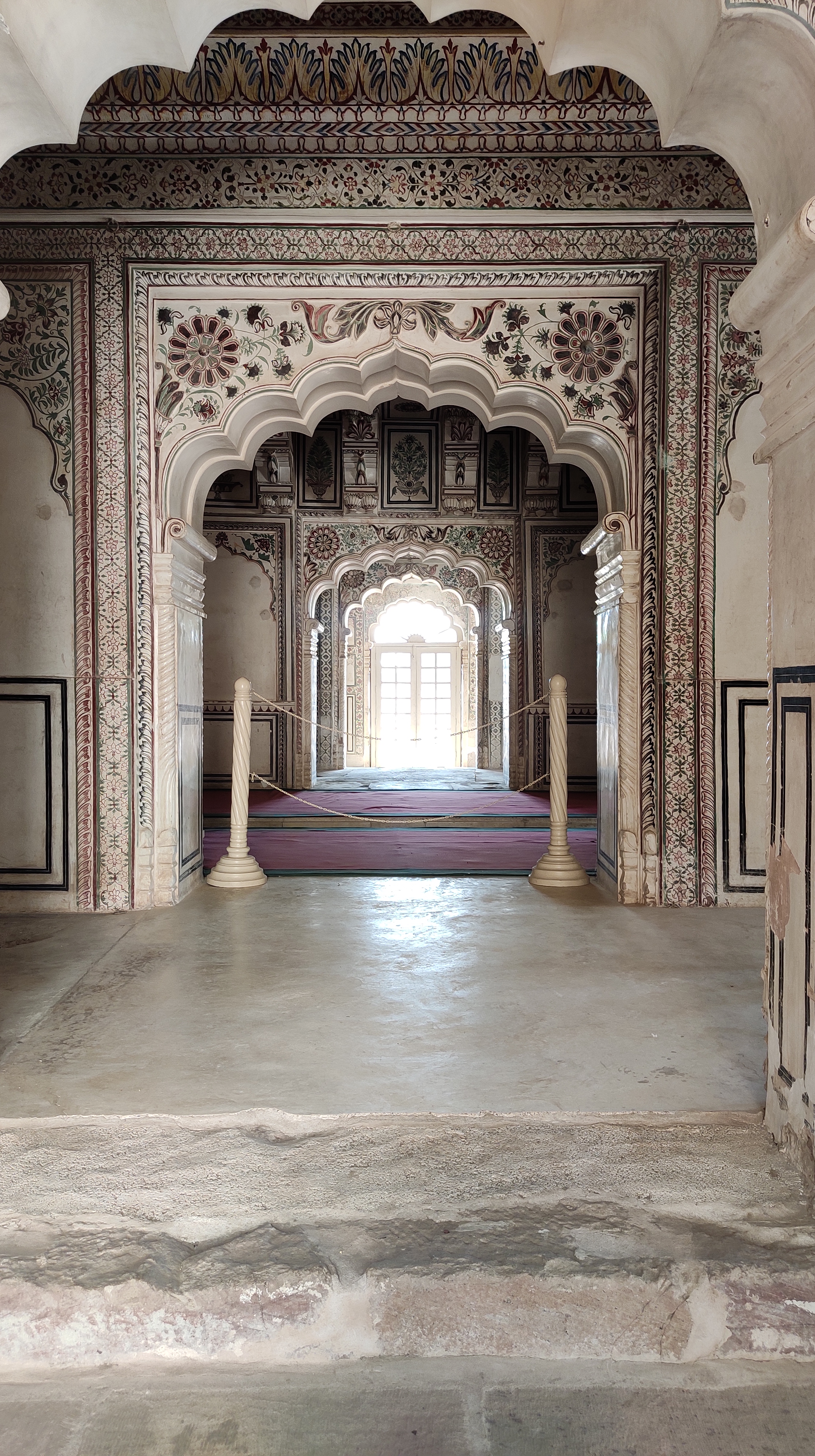
Rani Sisodiya Bagh

A hidden gem of a garden built by Sawai Jai Singh II for a princess of Udaipur, who agreed to marry him only on the condition that she be made the main queen of Jaipur.

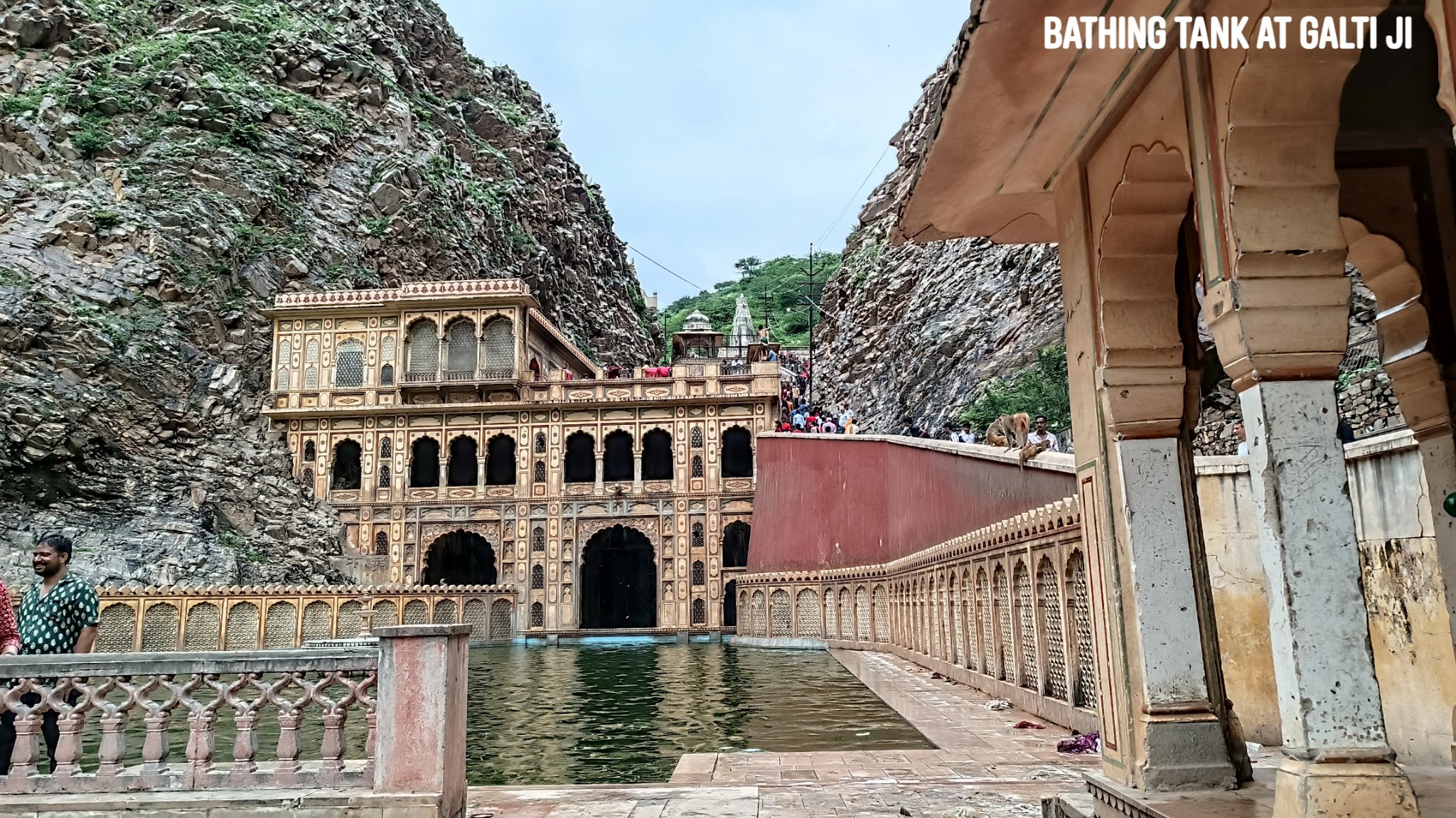
Galta Ji

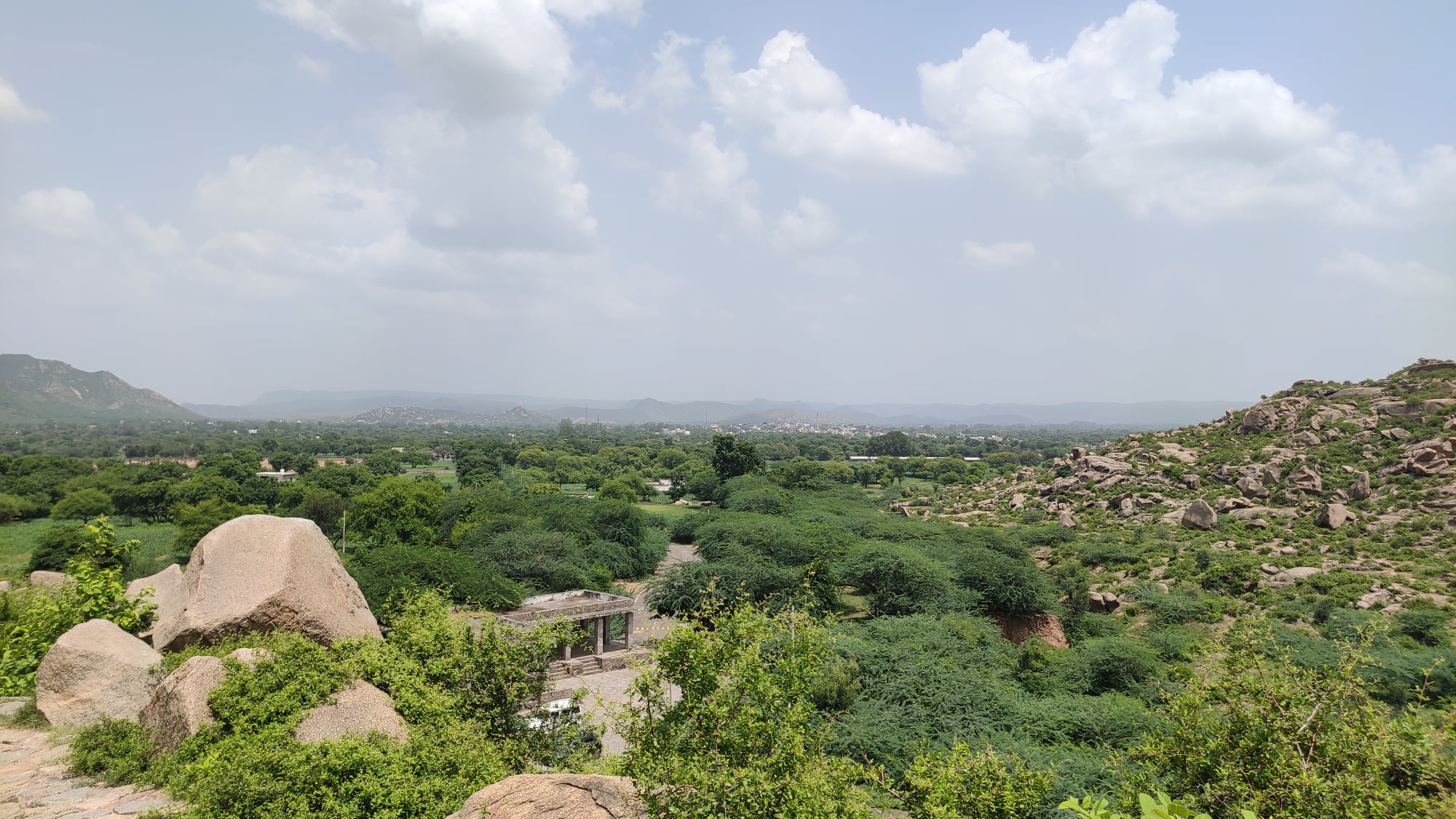
Home to a bathing tank fed by a perennial spring and a temple dedicated to a hermit named Galta ji, along with temples dedicated to Krishna and Ram. At the peak of the hill is a 350 year old Sun temple, reached after a hike of about 1.5km. The first rays of the Sun reaching Jaipur apparently fall on the idol in the temple. Views from the hill are outstanding.

Trip Summary
Day 1:
Gurgaon to Udaipurwati via Neem-ka-Thana & Patan -250 km, 6 hours
Udaipurwati to Lohargal – 15km, 30 min
Lohargal to Jaipur via Udaipurwati & Reengus – 160km, 3 hours

Day 2:
Jaipur sightseeing of Rani Sisodiya Bagh and Galtaji – 25km, 2 hours
Jaipur to Gurgaon – 230km, 4 hours

Total – 670km

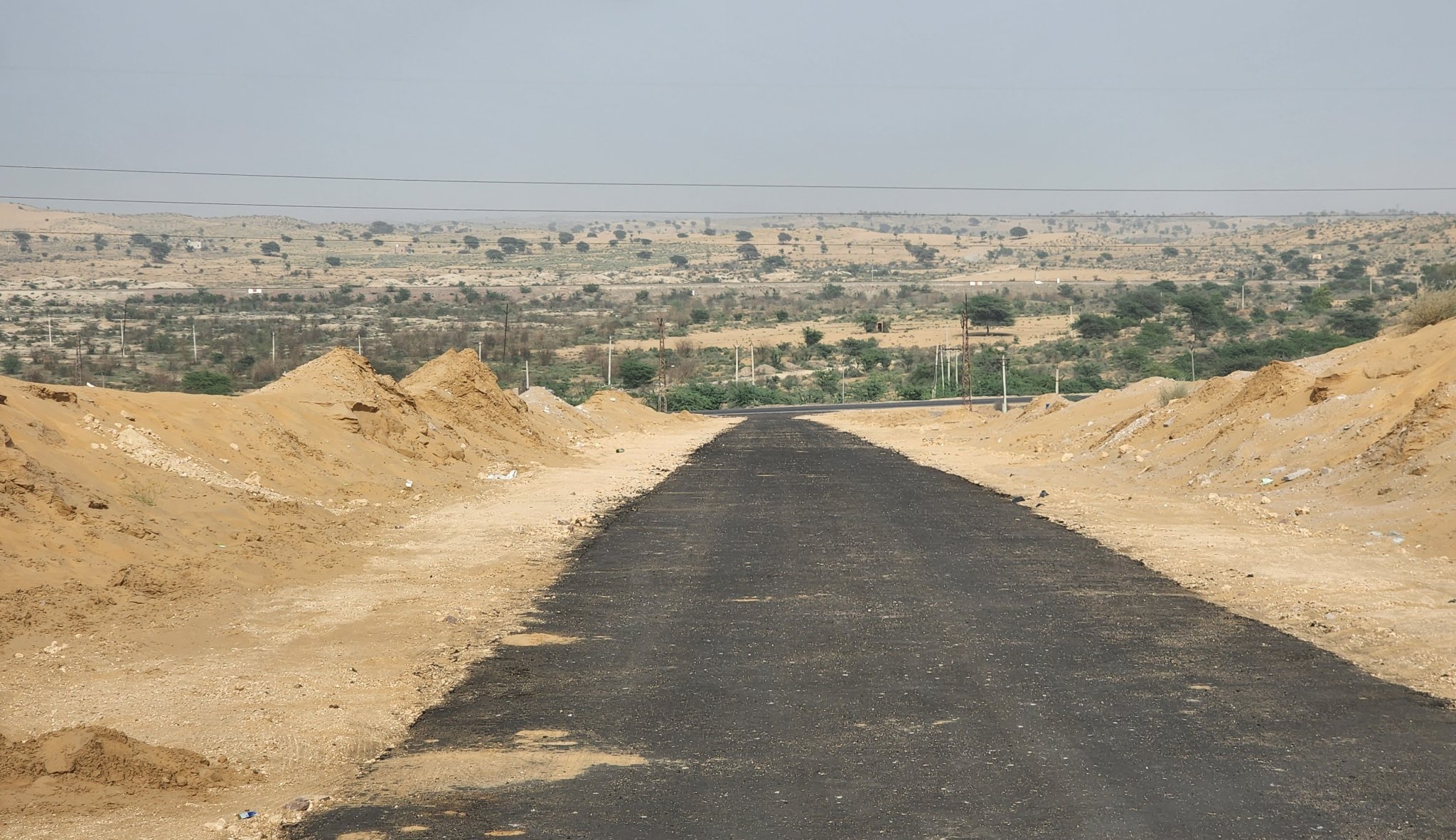
Sun, Sand and Serendipity – A 2100km Road Trip through Kalibangan, Bikaner and Badoli

My little brother paid the motherland a visit after 2 years, and before the Indian summer set in with its full glory, the family decided to make it the first ever self-driven road trip for the family. So, off we set in late March, on a 6-day road trip with an itinerary so fluid that we only knew the first 3 places we planned to visit. Deciding to let the vagaries of chance sprinkle our journey with generous doses of surprise, we did not also book a hotel prior.

And boy, was it rewarding! With a mix of the famous and the little known (or even barely-frequented), this time we forayed through the desert to brush with history stretching back to 5000 years ago, in search of a lost river and a lost civilization, chanced upon desert lakes and desert wildlife, hobnobbed with human-like rats, and delved deep into a jungle on a temple chase while the sun was going down.

Hanumangarh

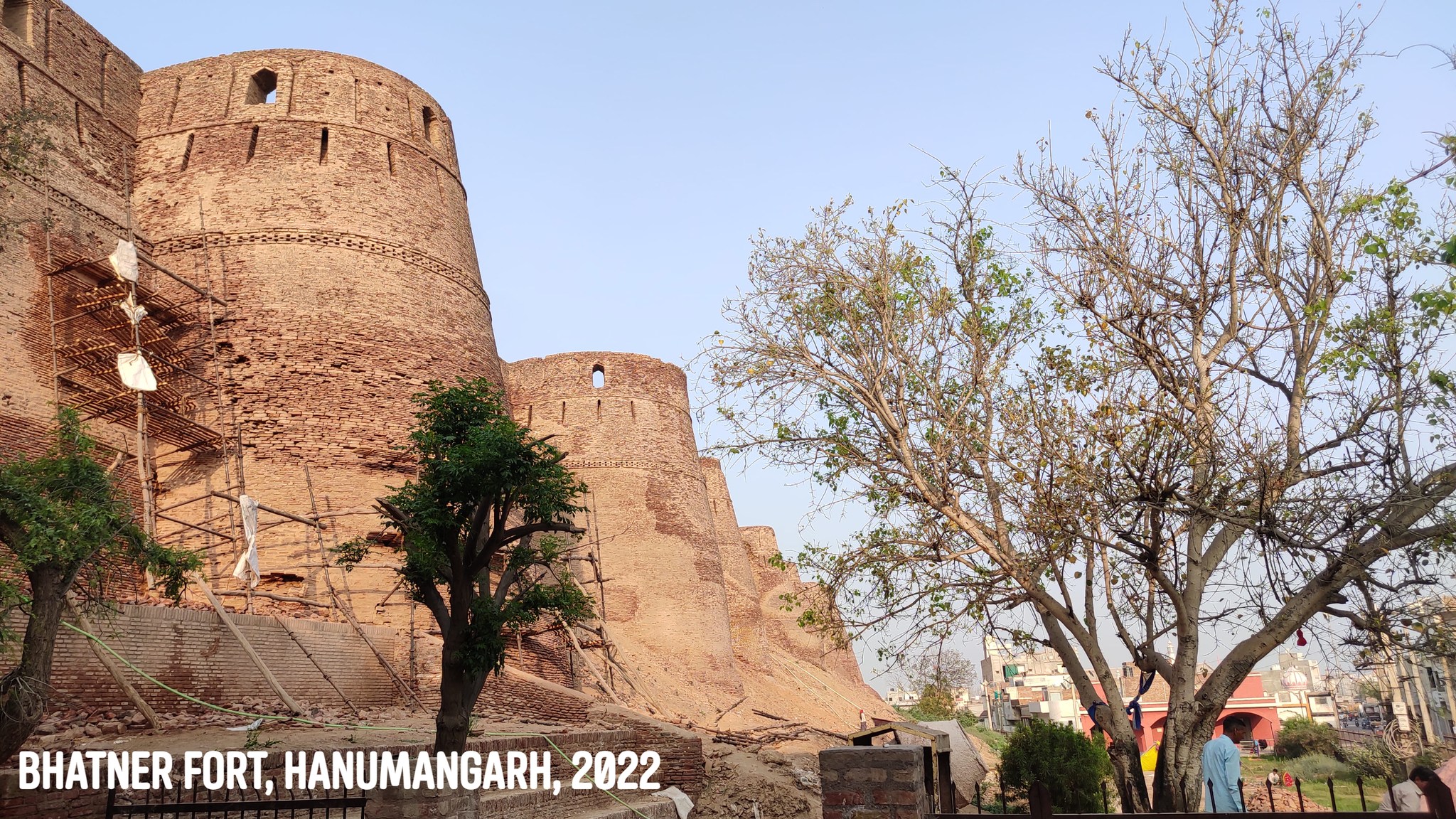
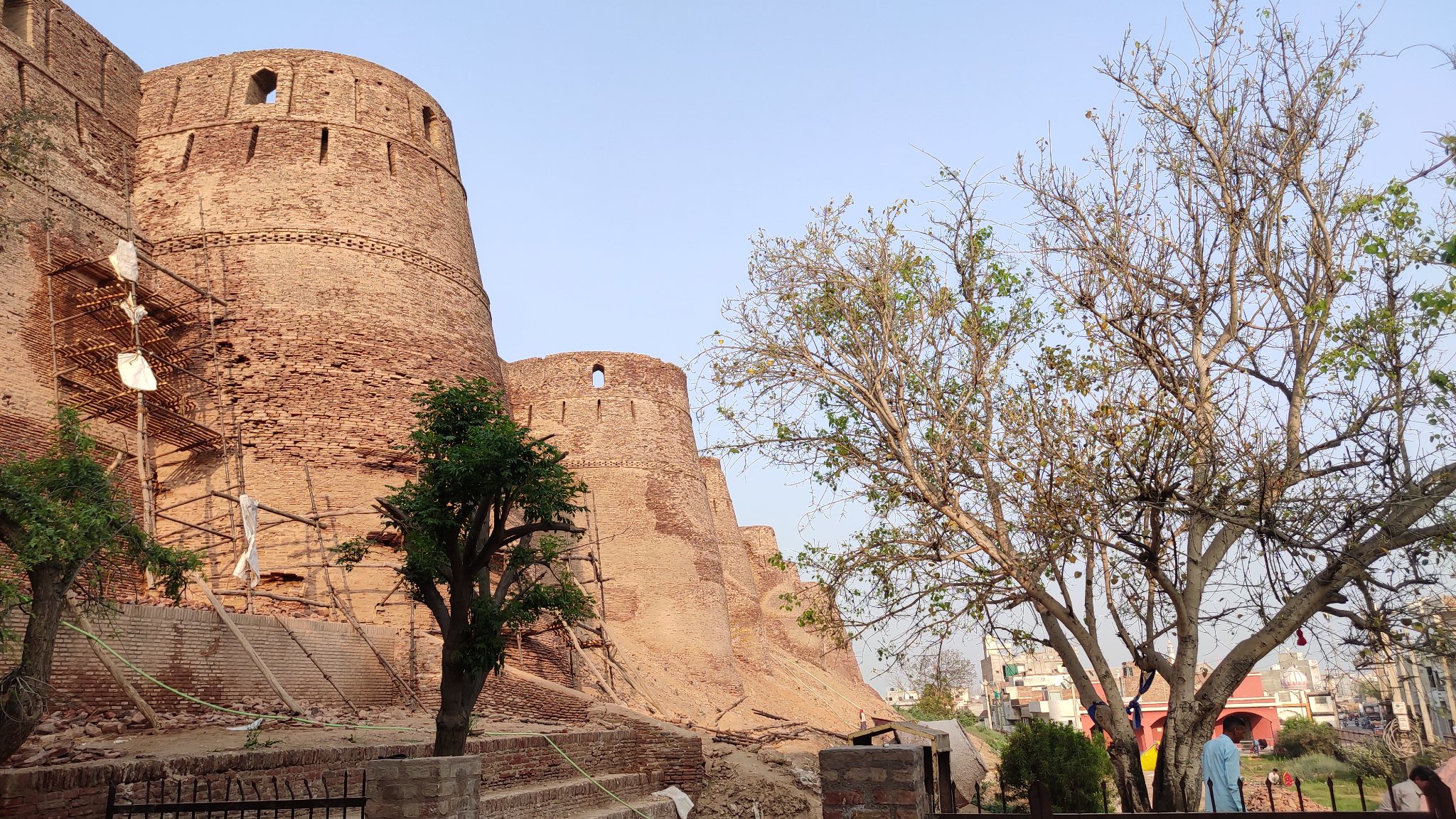
Our search of the mythical River Saraswati led us to the desert town of Hanumangarh, where we came upon the Bhatner fort, which dates its origin to the 2nd century AD. The old structures are now buried in mud, and the fort is being renovated.

Kalibangan

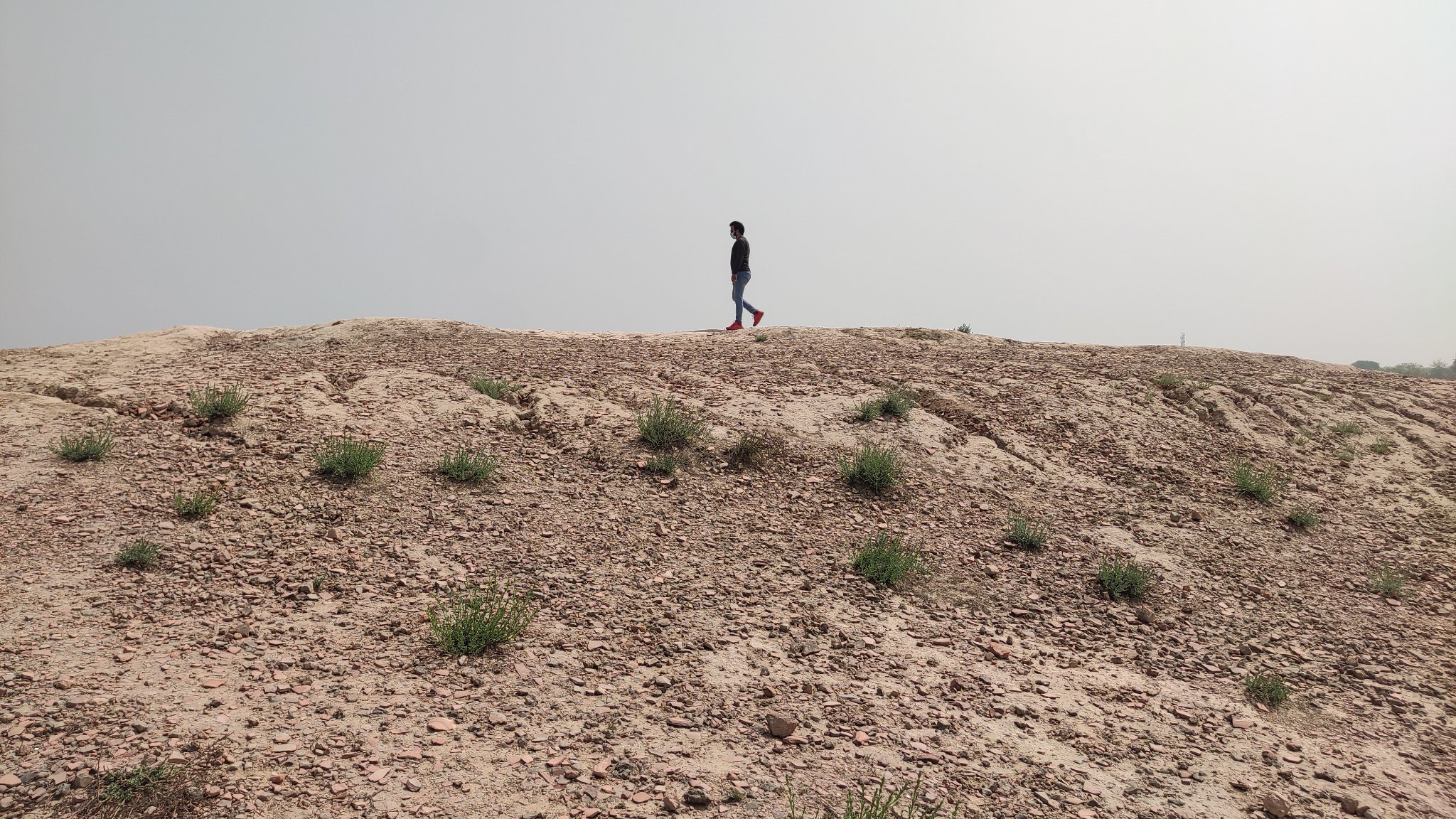
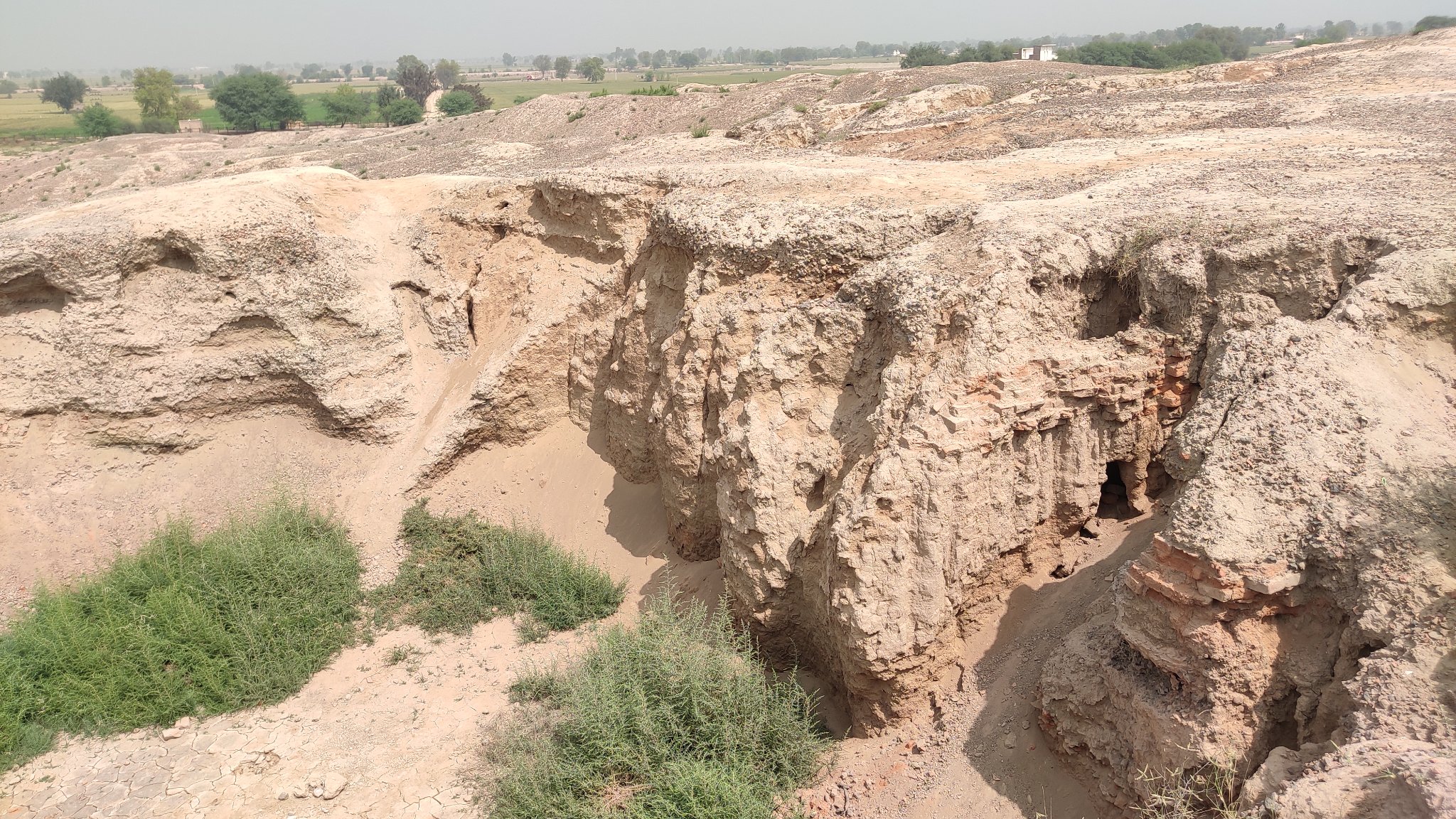
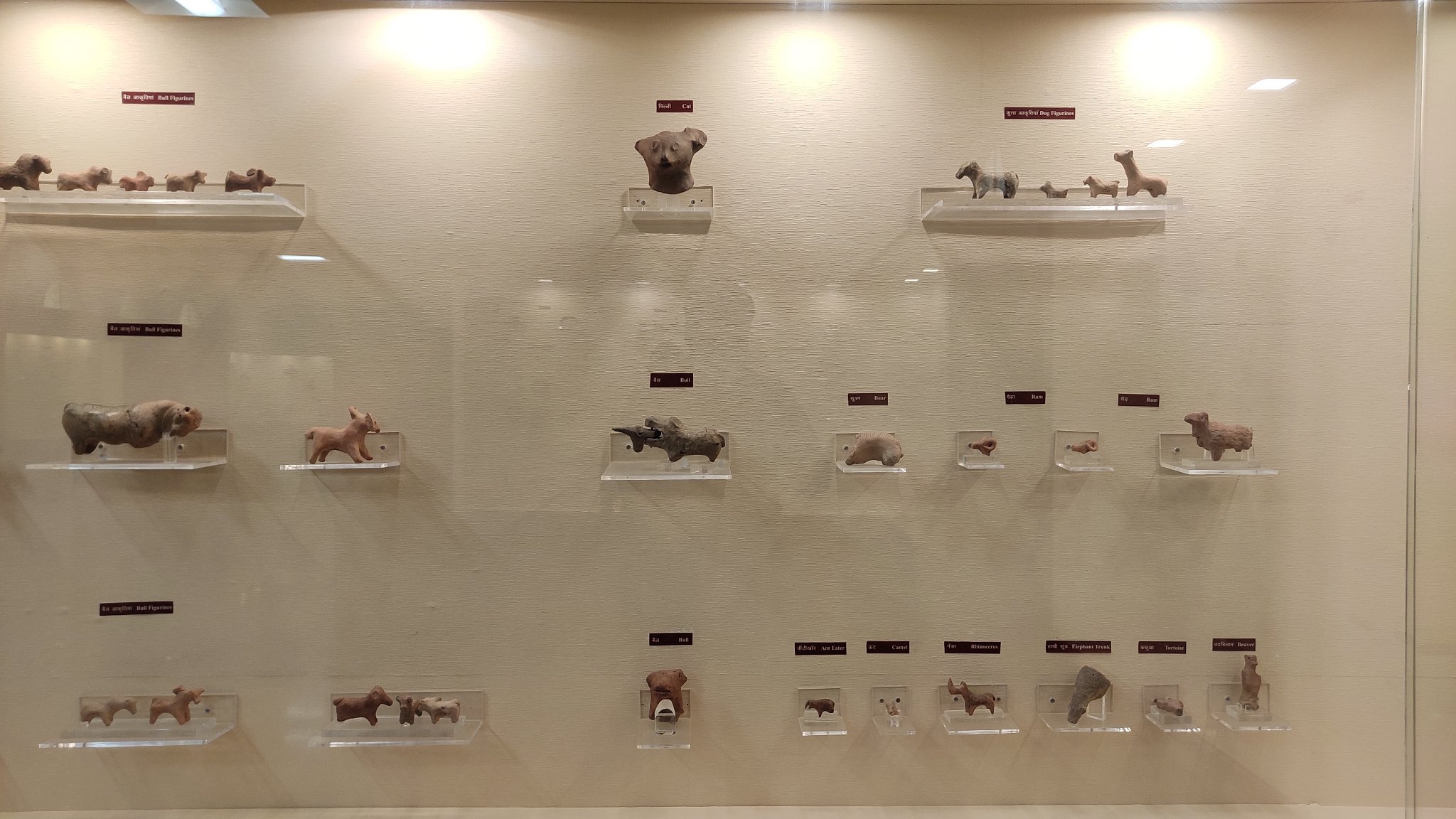
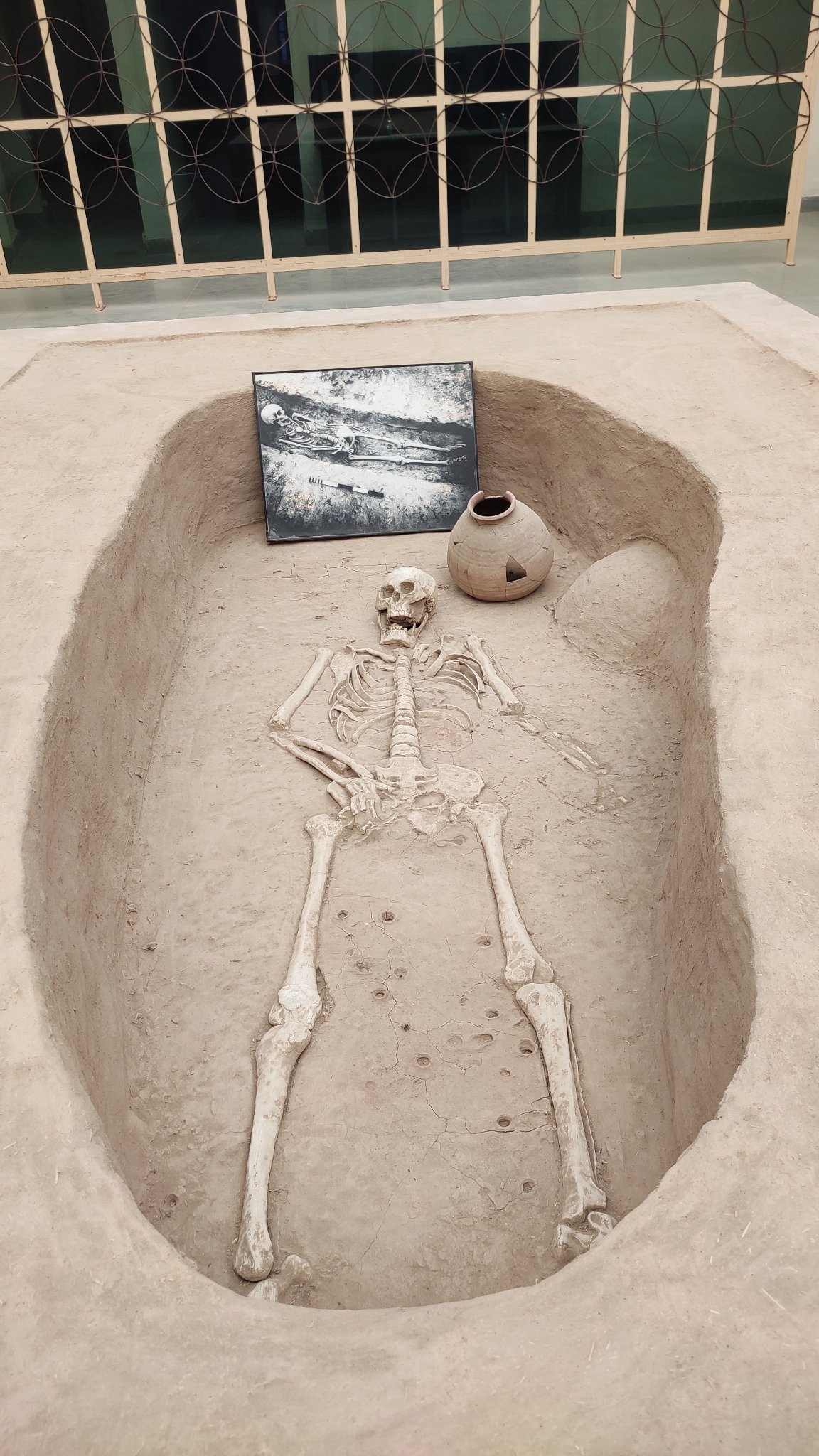
One of the earliest discovered and excavated Harappan sites, Kalibangan gave us a sneak peek into 5 millennia earlier. Sadly, the ruins are buried in mud, even the excavations have been covered up by the Archaeology Survey of India (ASI) to prevent further deterioration.

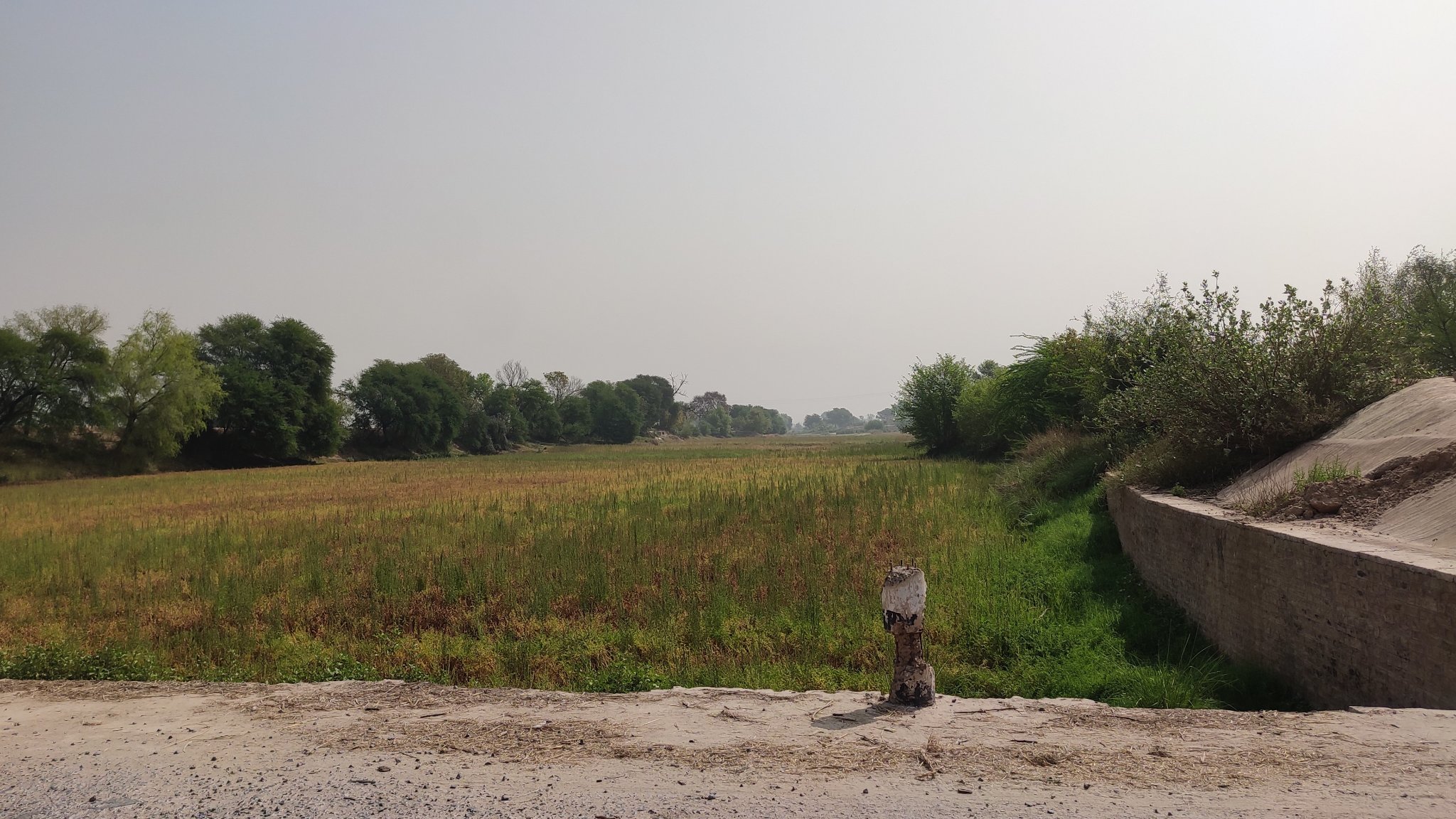
In the vicinity, we finally met the Ghaggar River, which is purported to be the Vedic Saraswati River – nothing more than a dried-up intermittent, almost obscure rivulet right now.

Badopal Lake

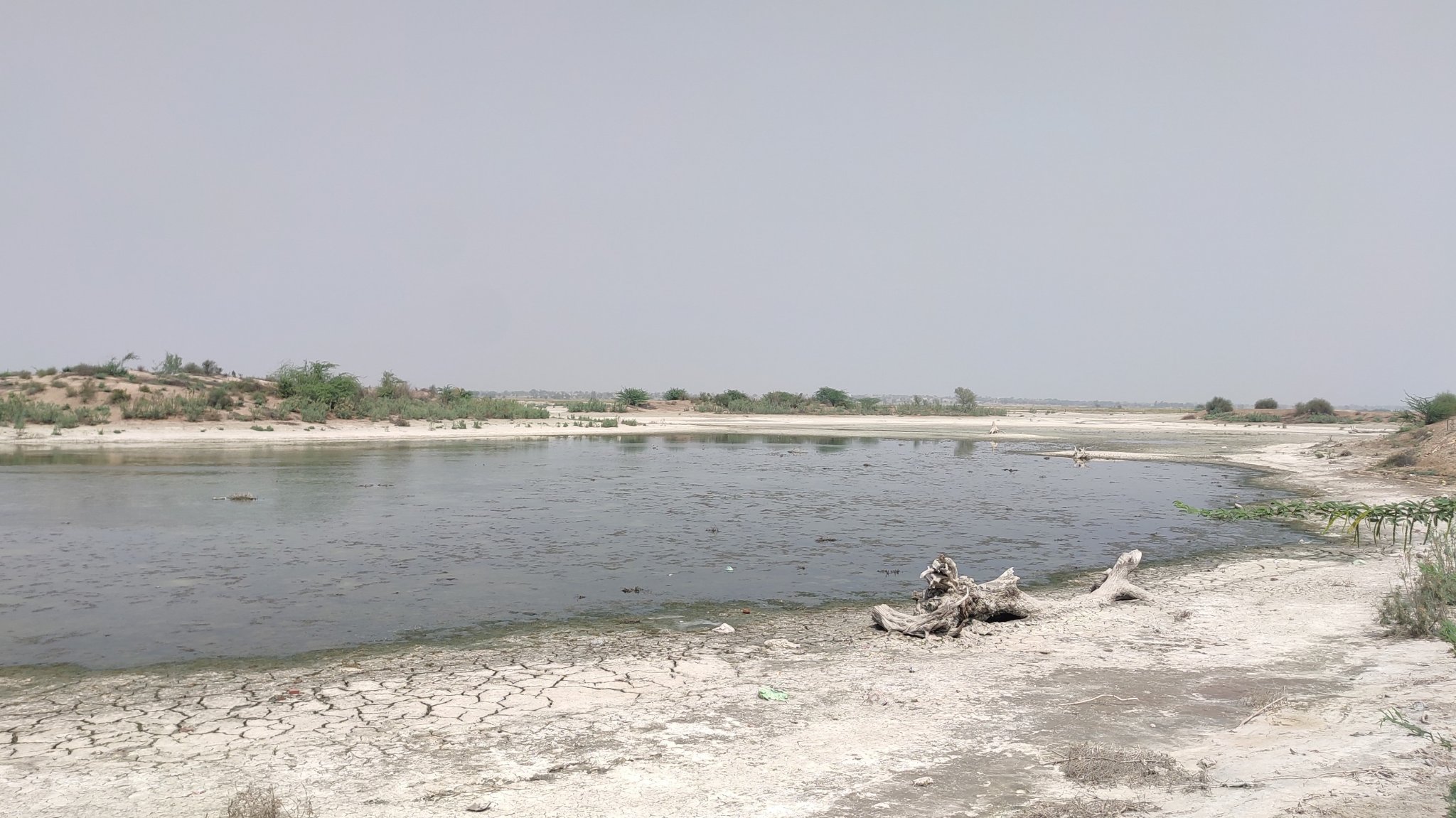
We took a slight detour through the desert hinterland to take a peek at the Badopal lake, a salt lake located beside the Badopal, an ancient mound, and part of the Rang Mahal culture.

Suratgarh

Another desert town midway between Hanumangarh and Bikaner, noted for its Thermal Power station and the air force base.

Lunkaransar

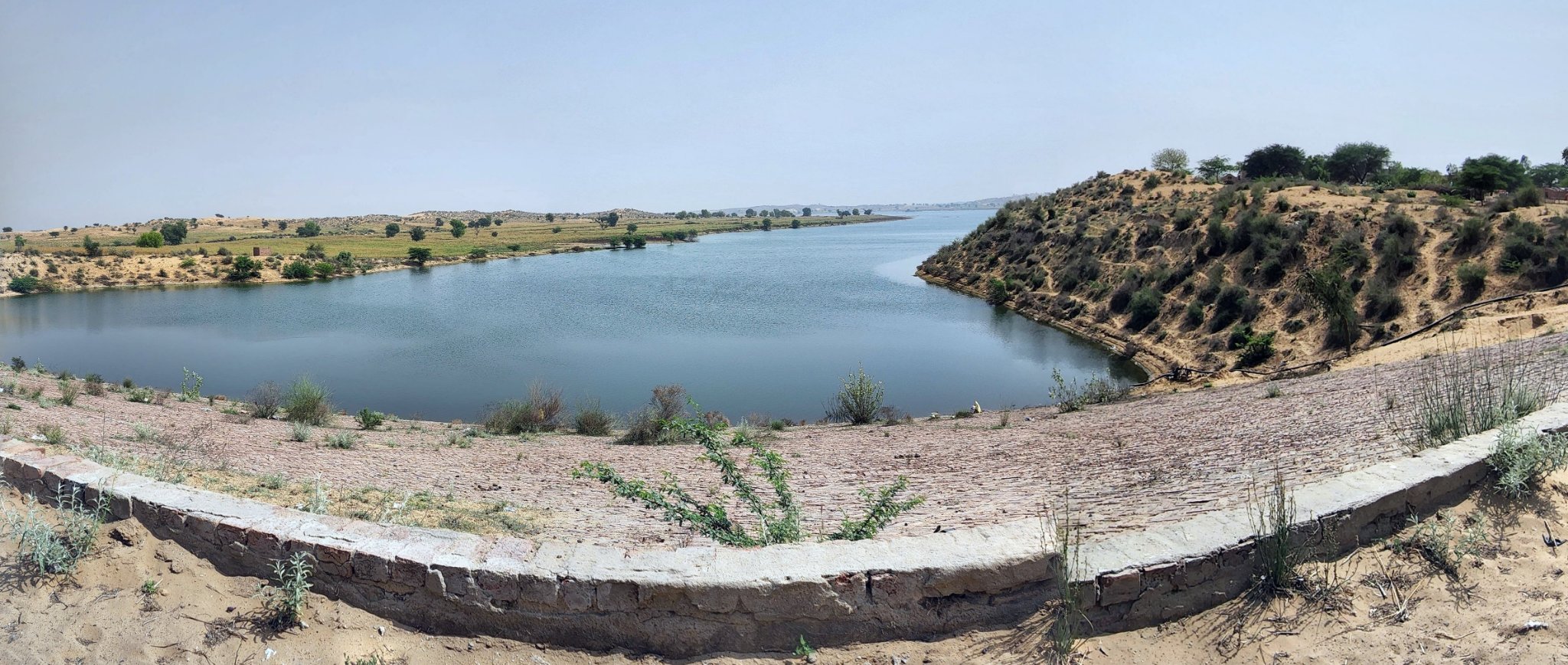
A fairly expansive salt-lake that is home to migratory birds, midway between Suratgarh and Bikaner

Bikaner

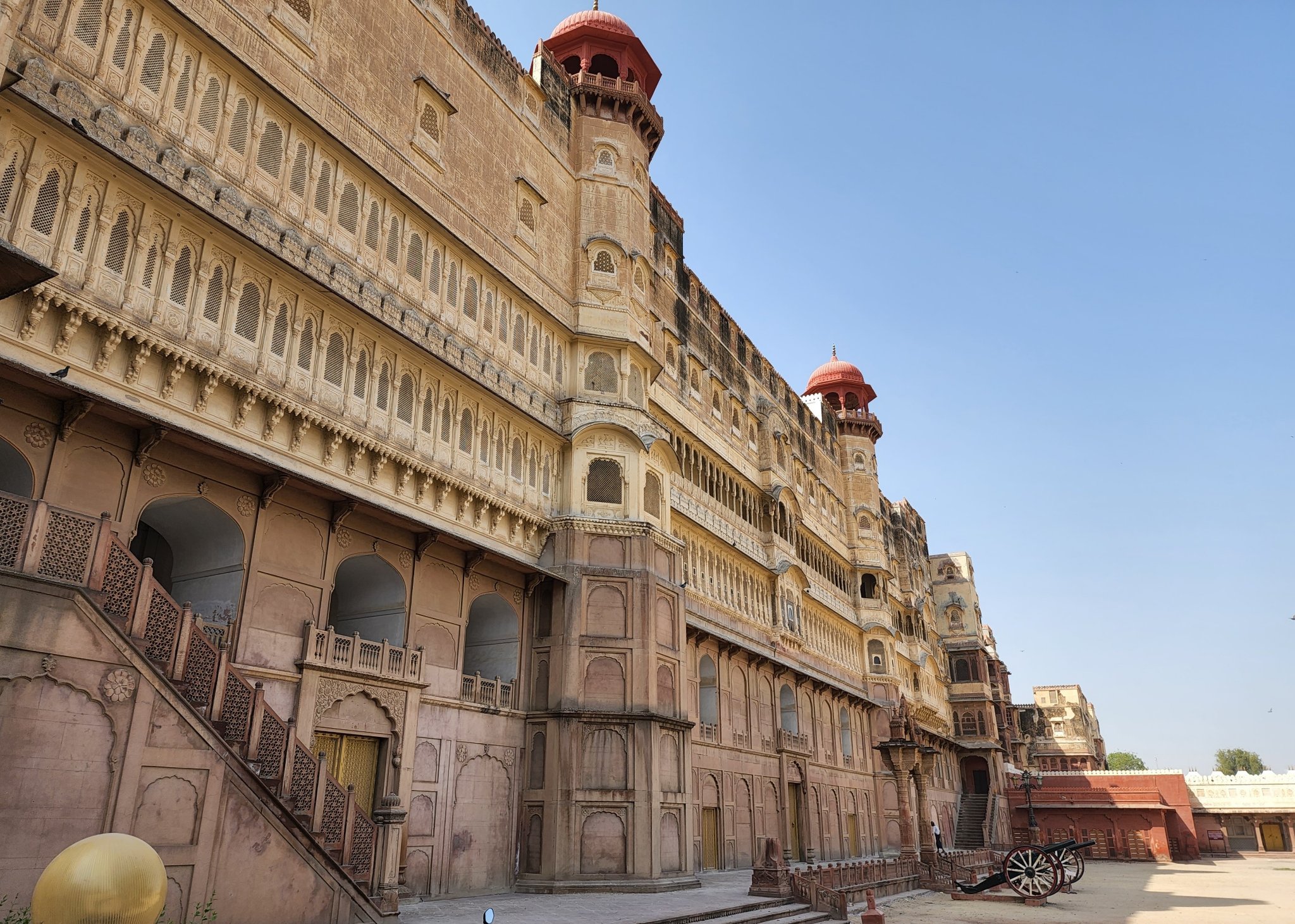
One of the major cities of Rajasthan, founded by Rao Bika, famous for Junagadh Fort and savory sweets and snacks

Deshnoke

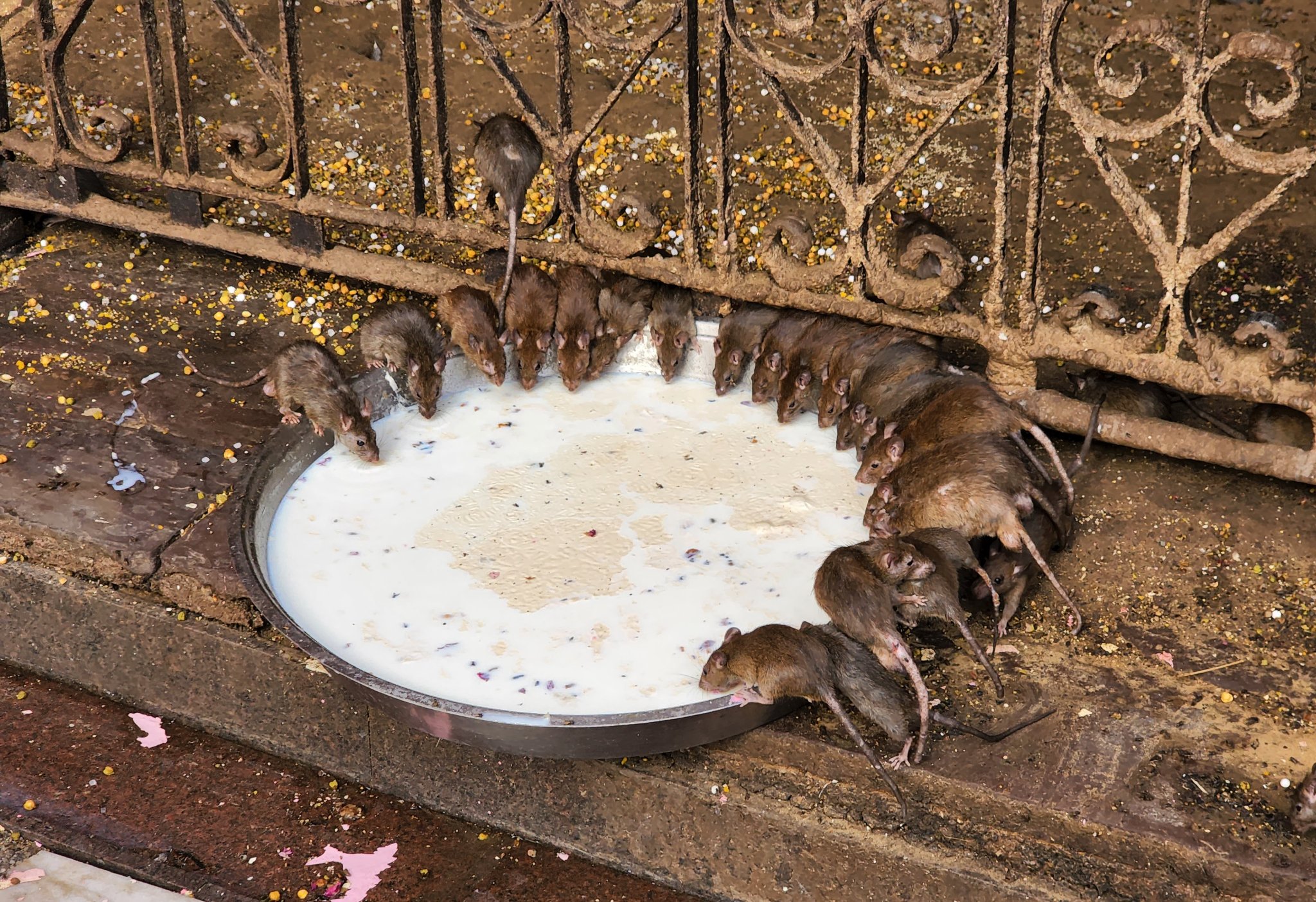
Home to the Karni Mata Temple, where rats, who are considered children of the Goddess, behave just as humans! Eating nibbled on by the rats is considered auspicious. Accidentally or deliberately killing a rat requires replacing it with one made of gold or silver as atonement.

Kolayat

The place where the Vedic Sage Kapil (Kapil Muni) is said to have shed his body. Home to a lake and temples on its bank.

Bundi

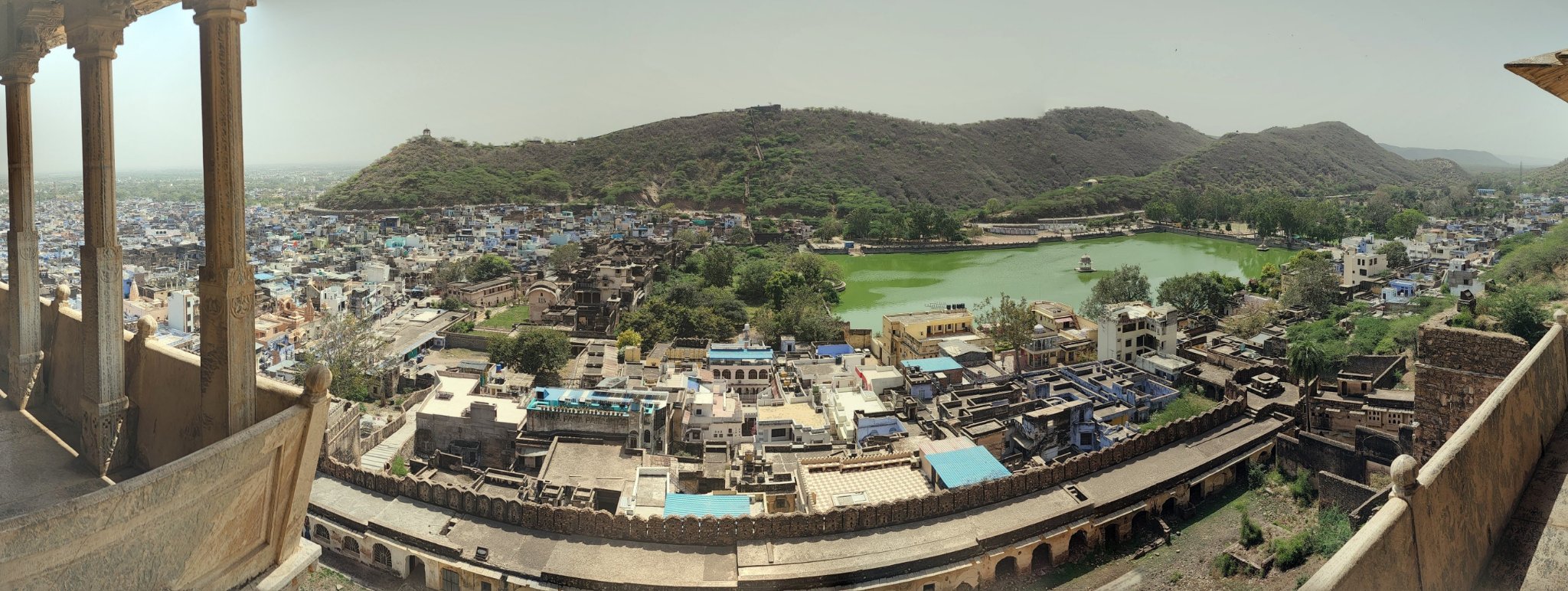
A quaint town nestled in the Aravallis, with an imposing hill-side palace overlooking a lake.

Badoli Temple Complex

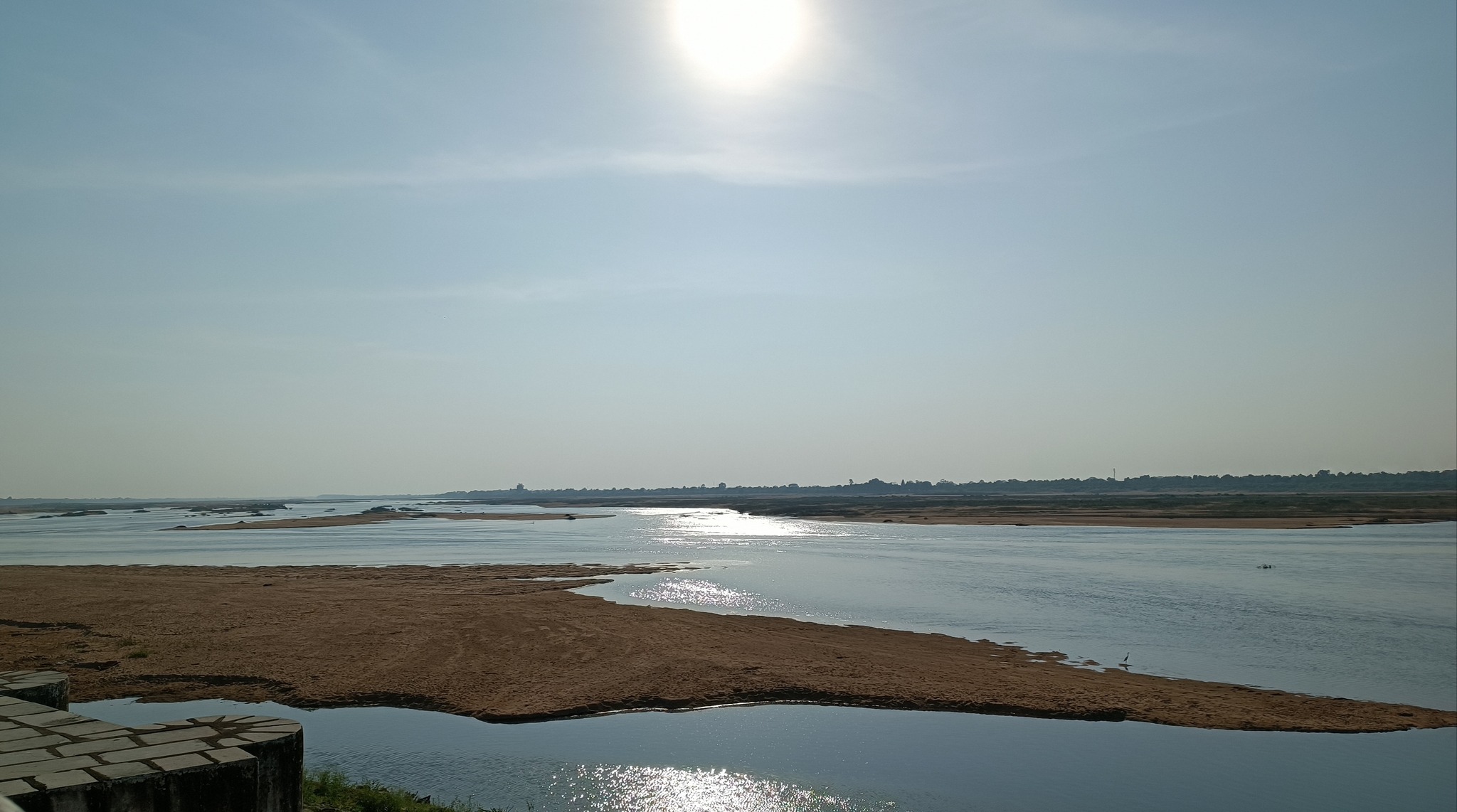
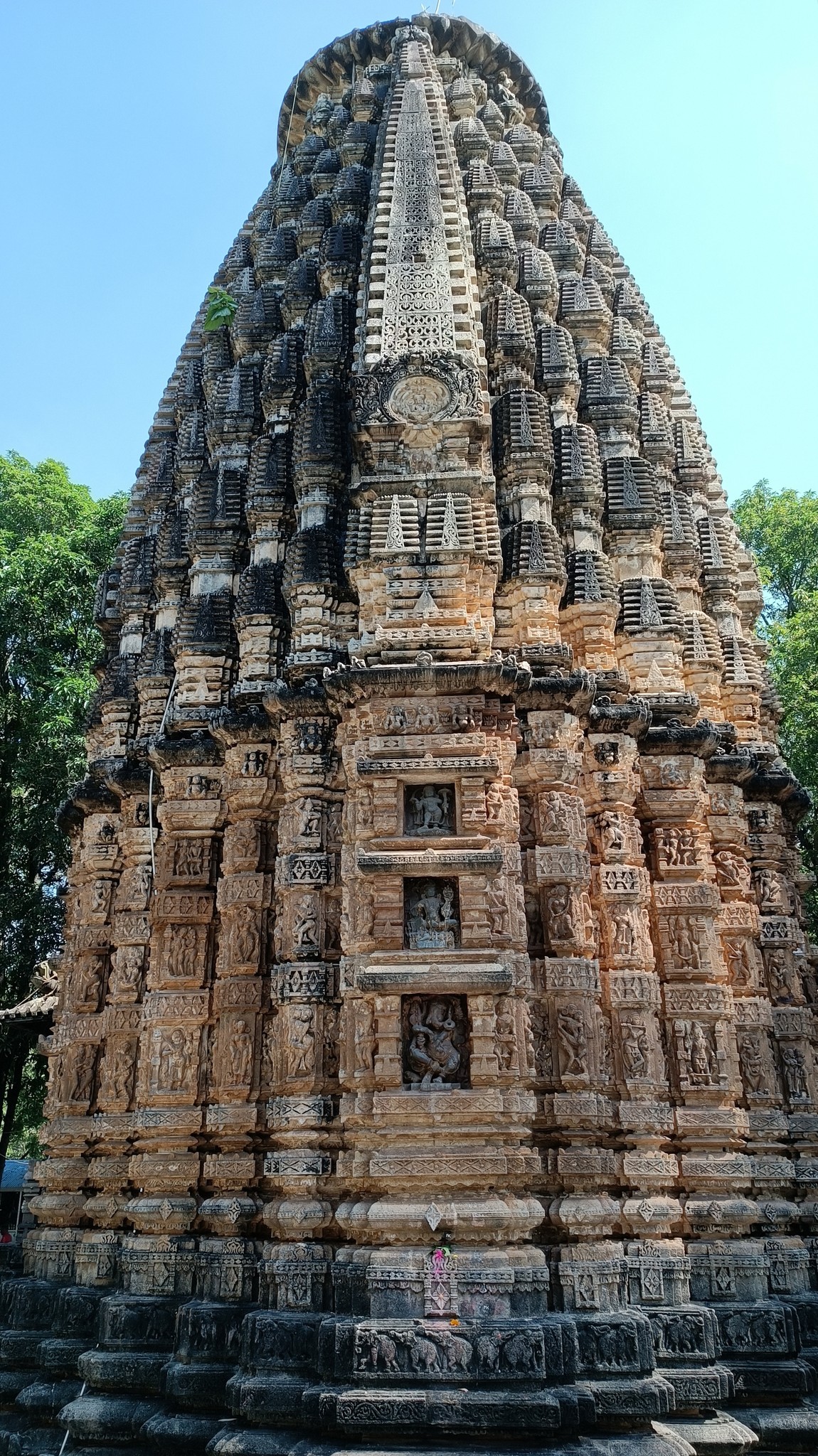
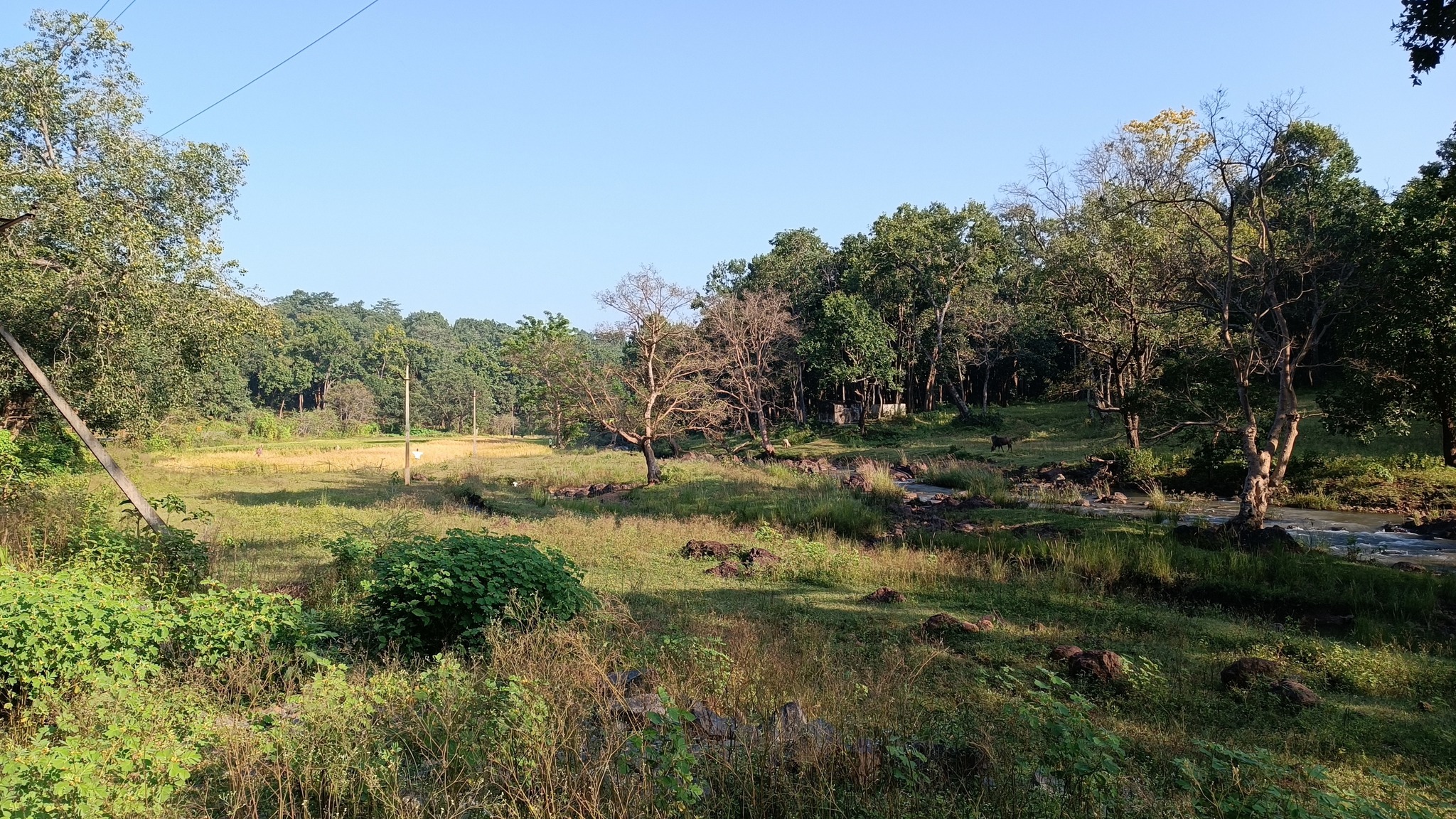
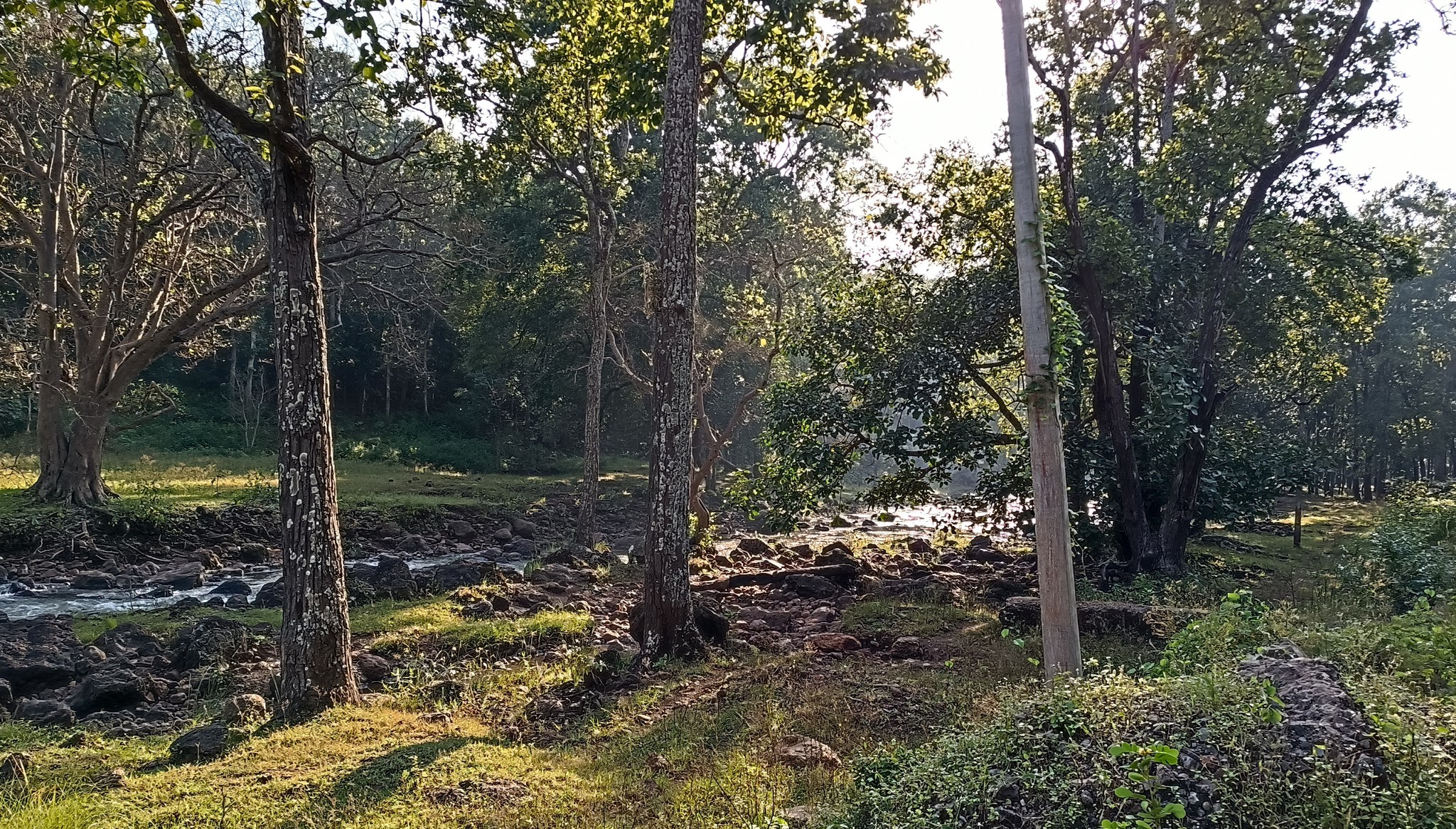
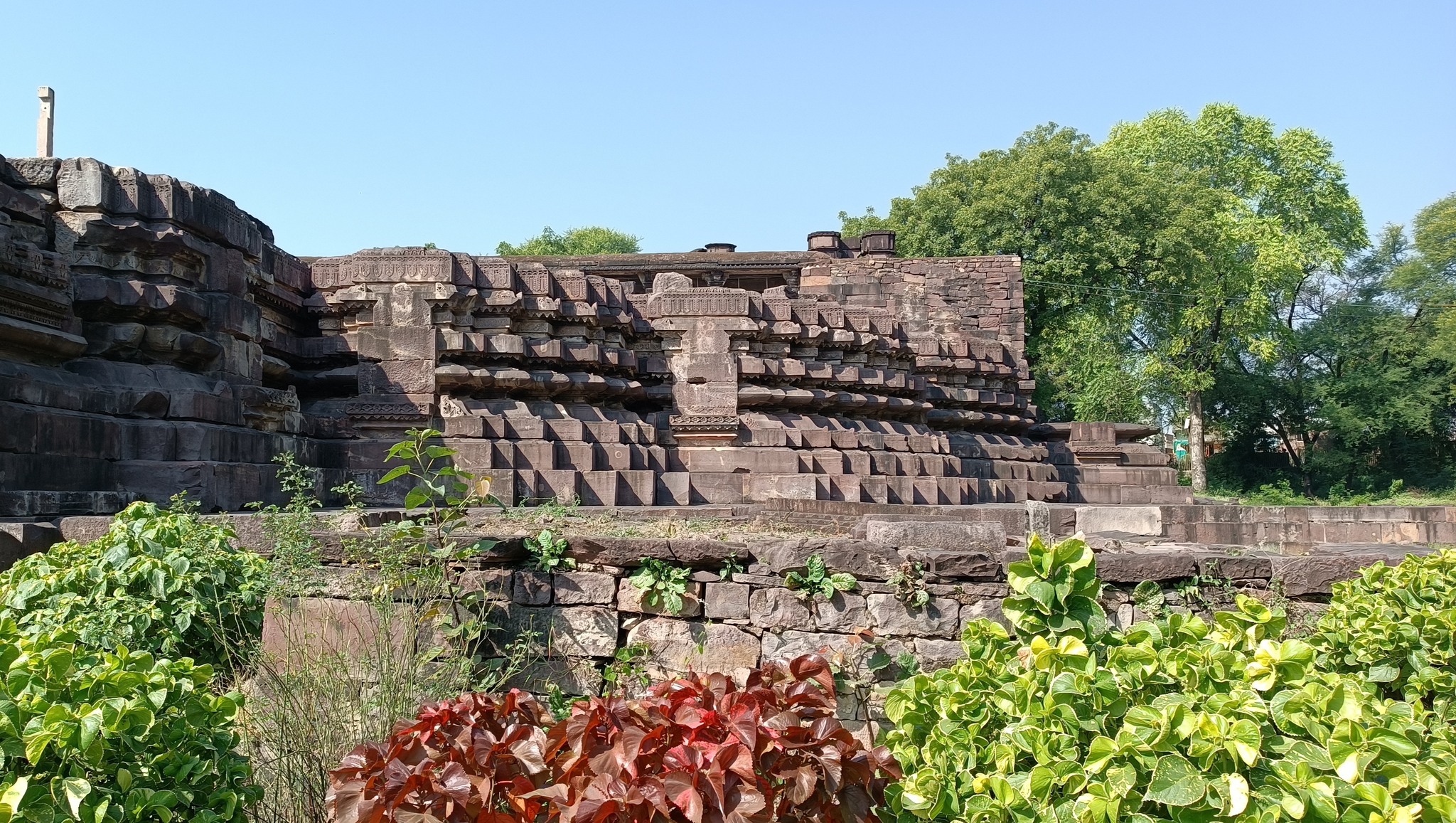
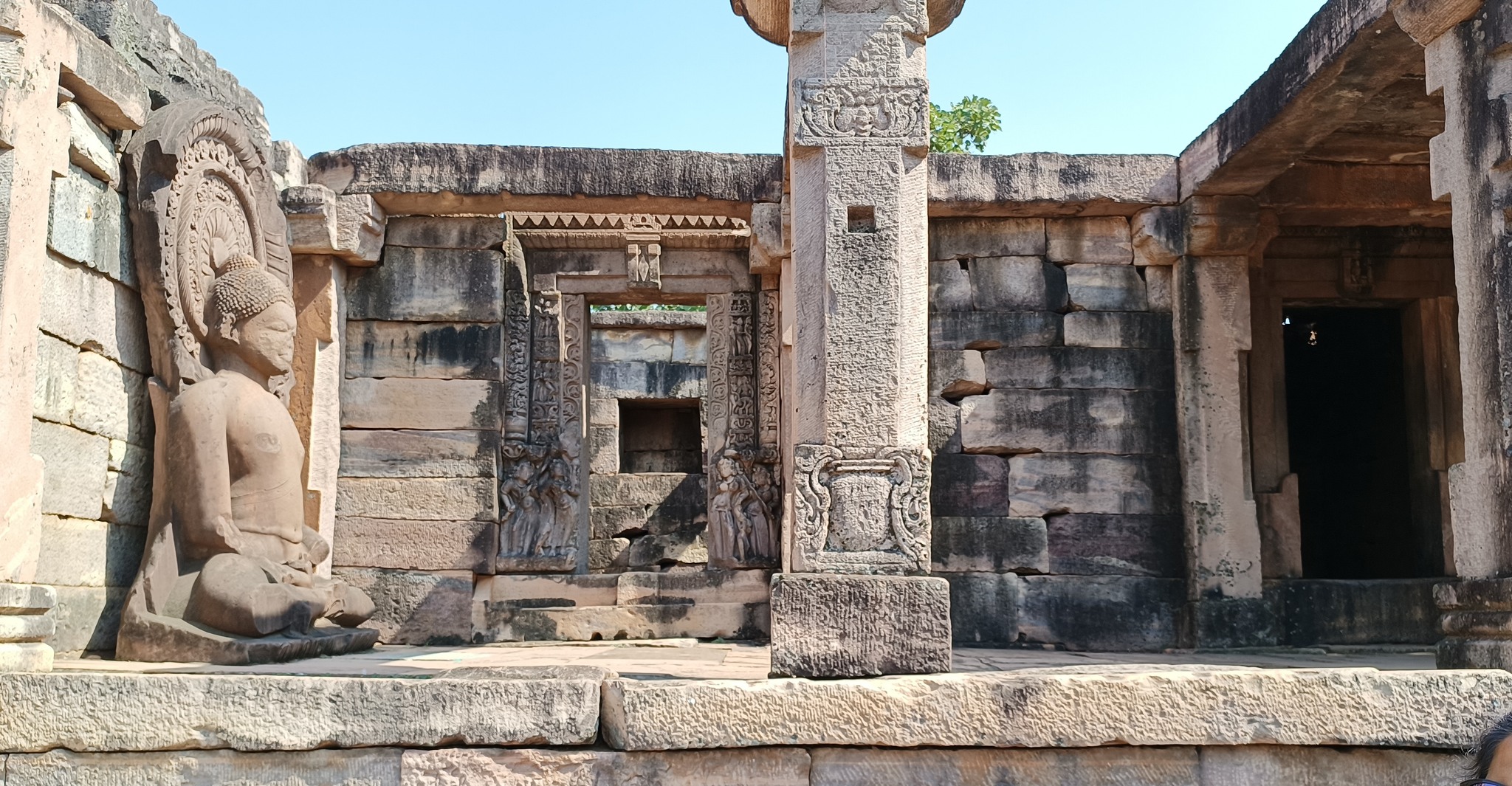
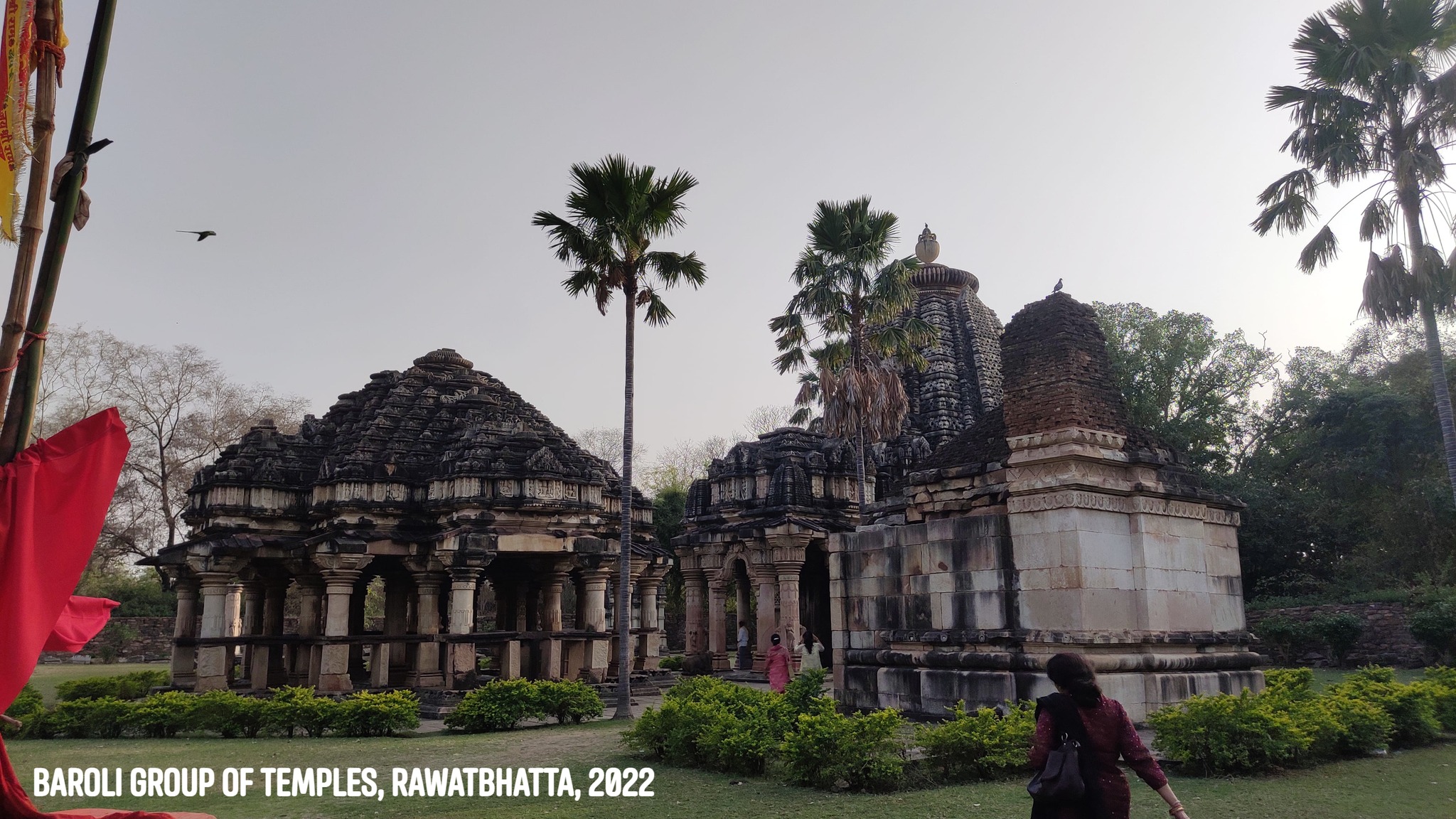
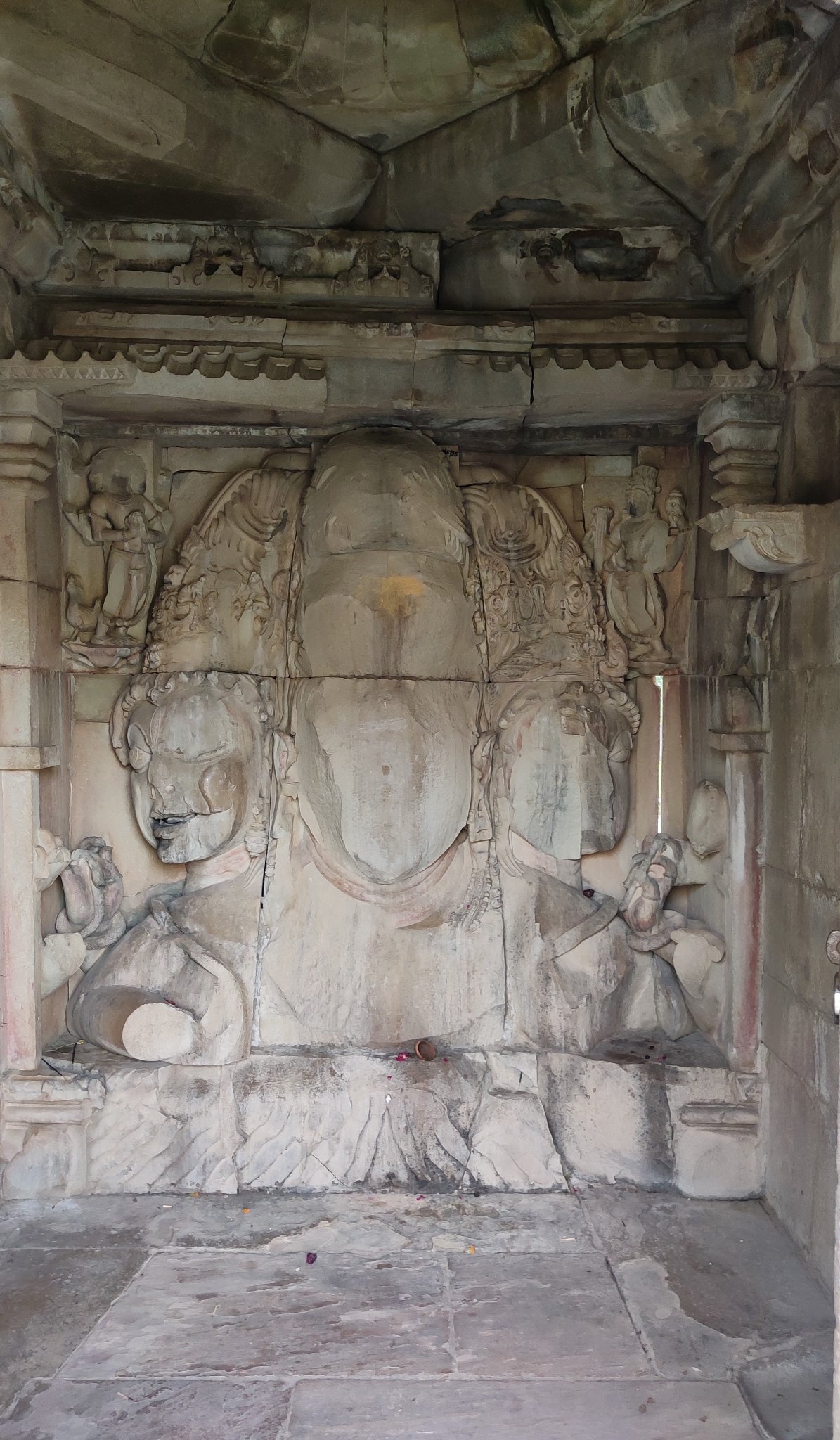
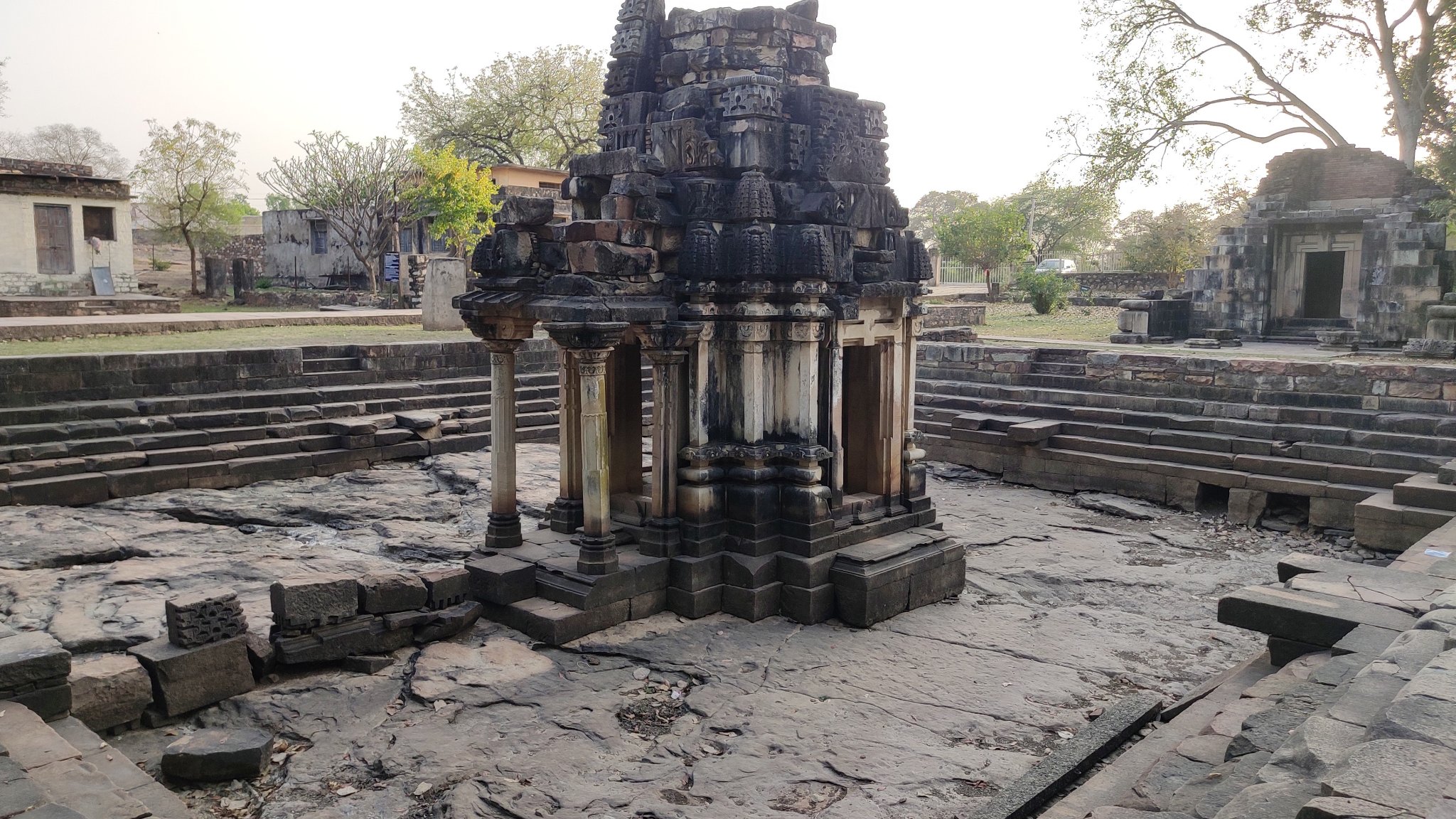
A 10th-11th century temple complex which crept into our plan by serendipity as we were short on time to visit the Gagron fort. The temples, dedicated to Shiva, Vishnu, Ganesha etc., were built by the Gurjara-Pratihara dynasty, and are described as one of the best representations of the temple. Situated on the banks of the Chambal just outside the village of Rawatbhata, it can be reached from Kota through winding roads cutting across hills and forest. As the sun was beginning to set, the ride through the forest was a race against time, and quite the adventure!

Ranthambore Fort

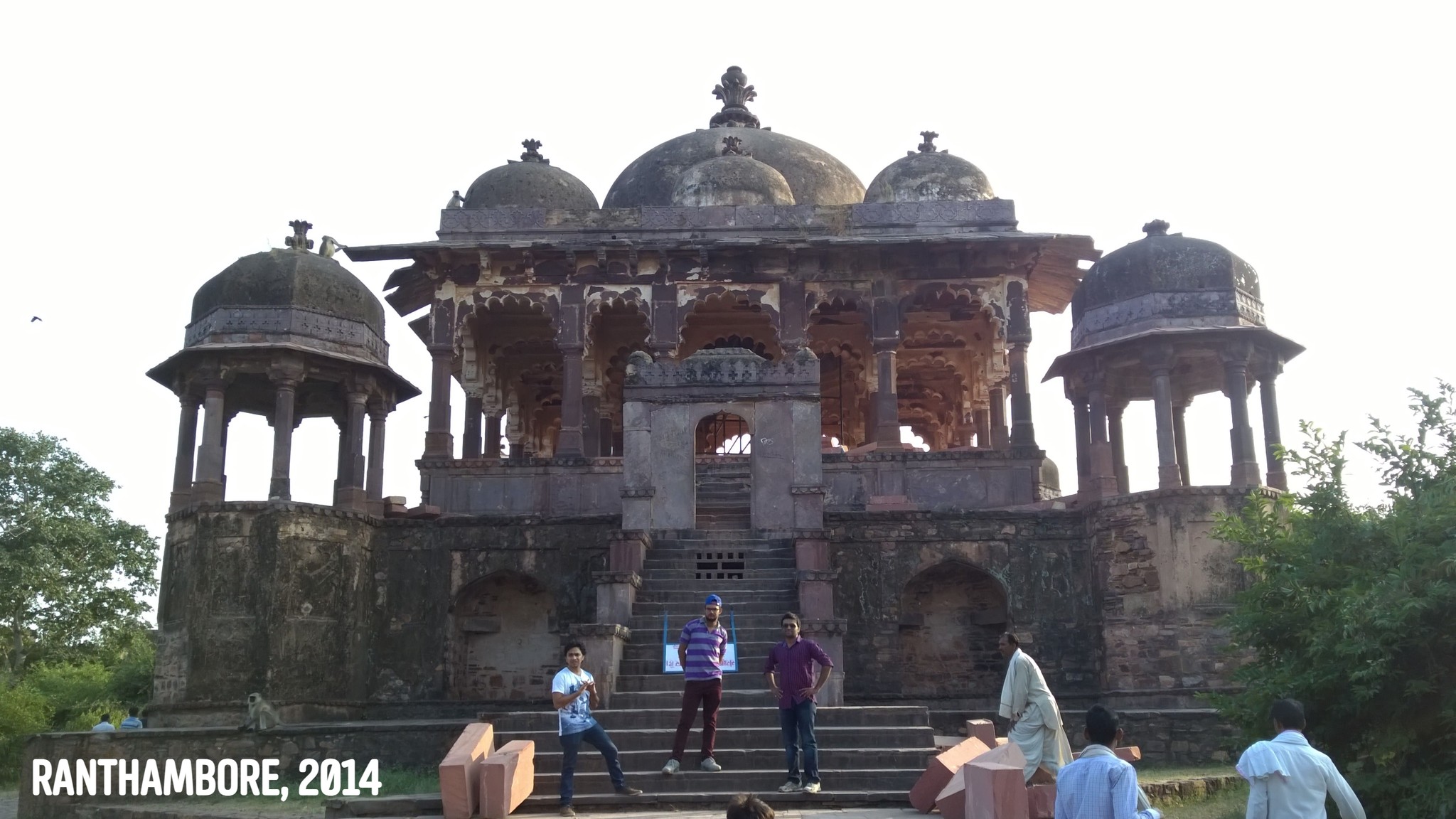
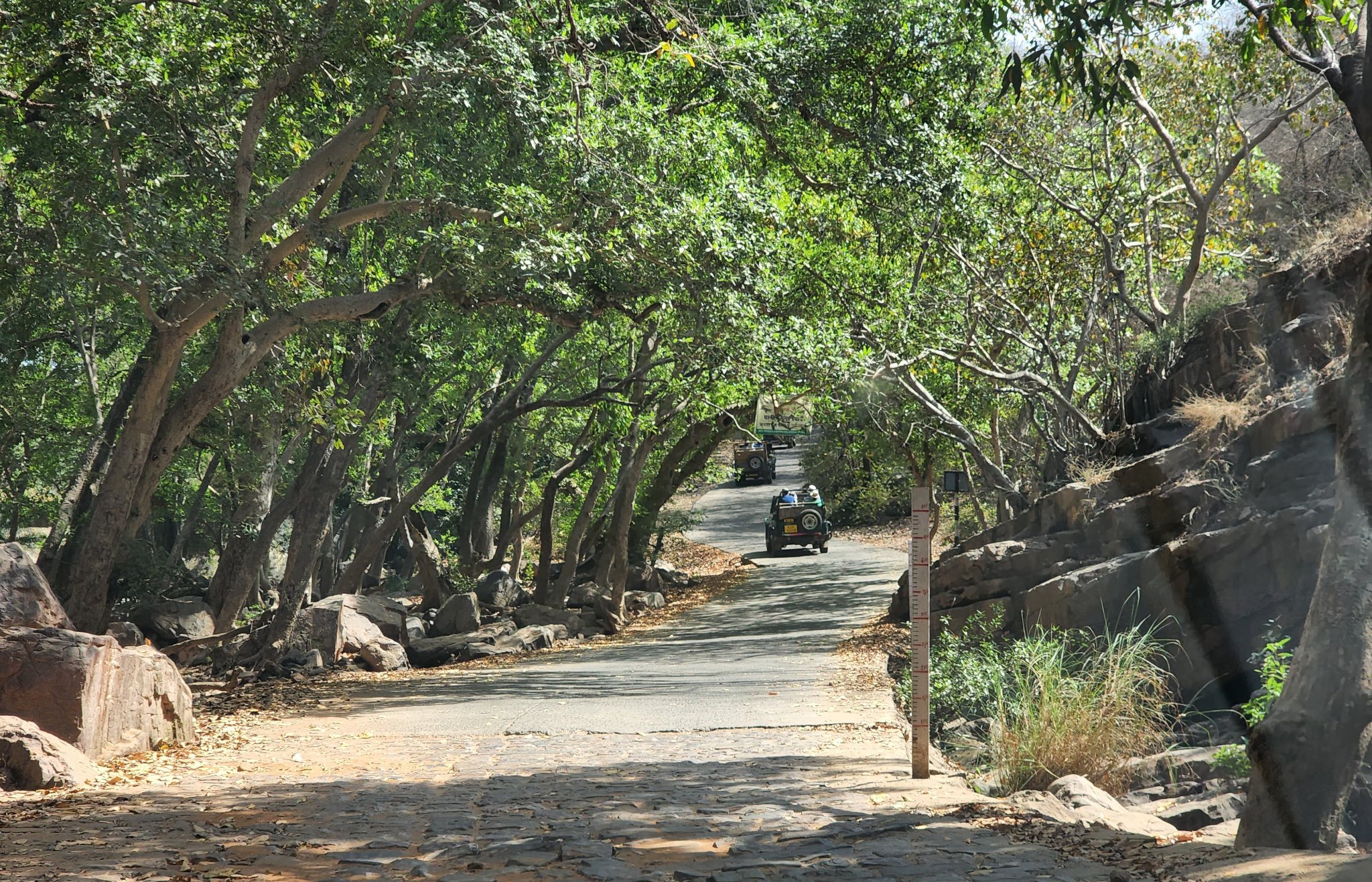
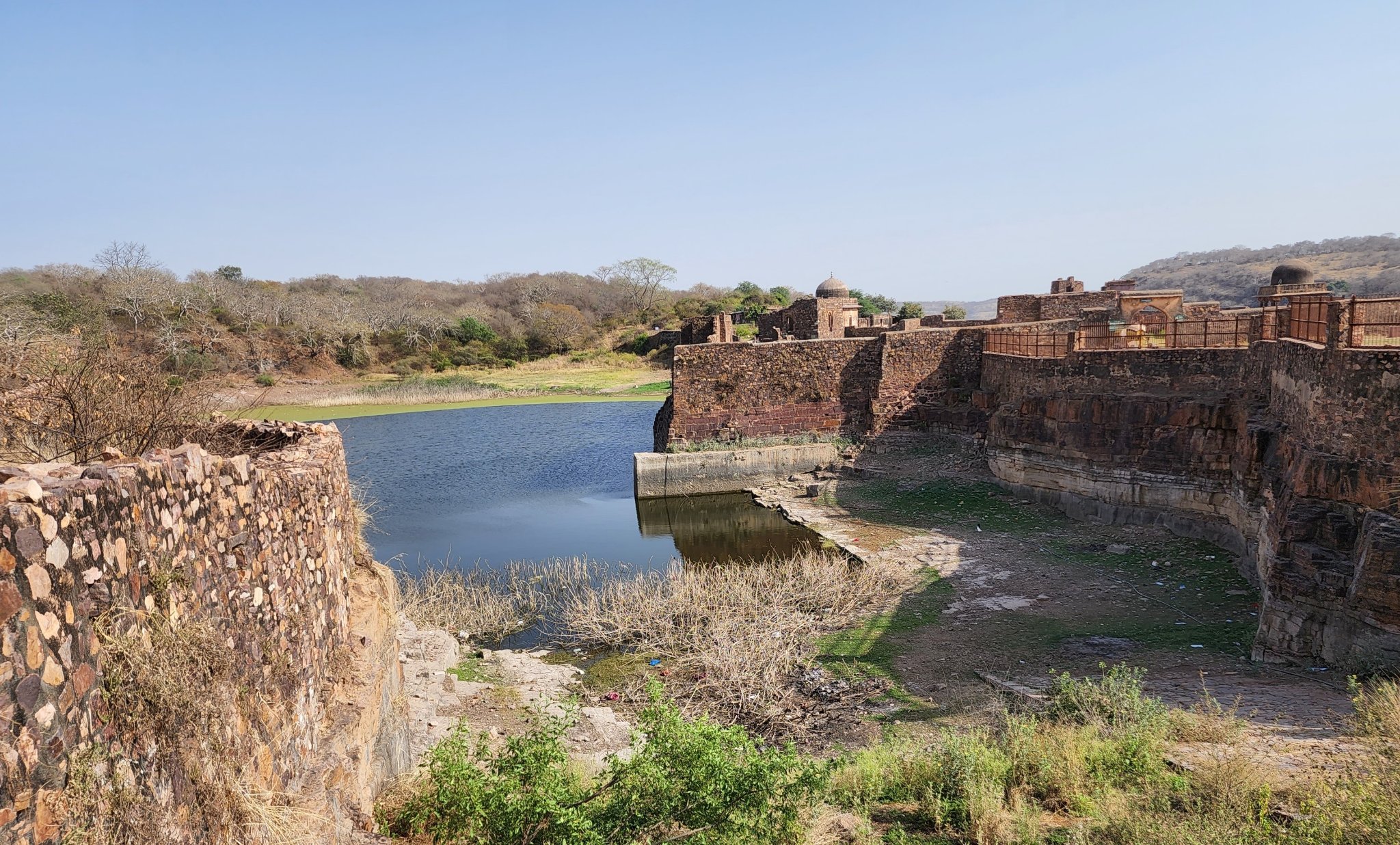
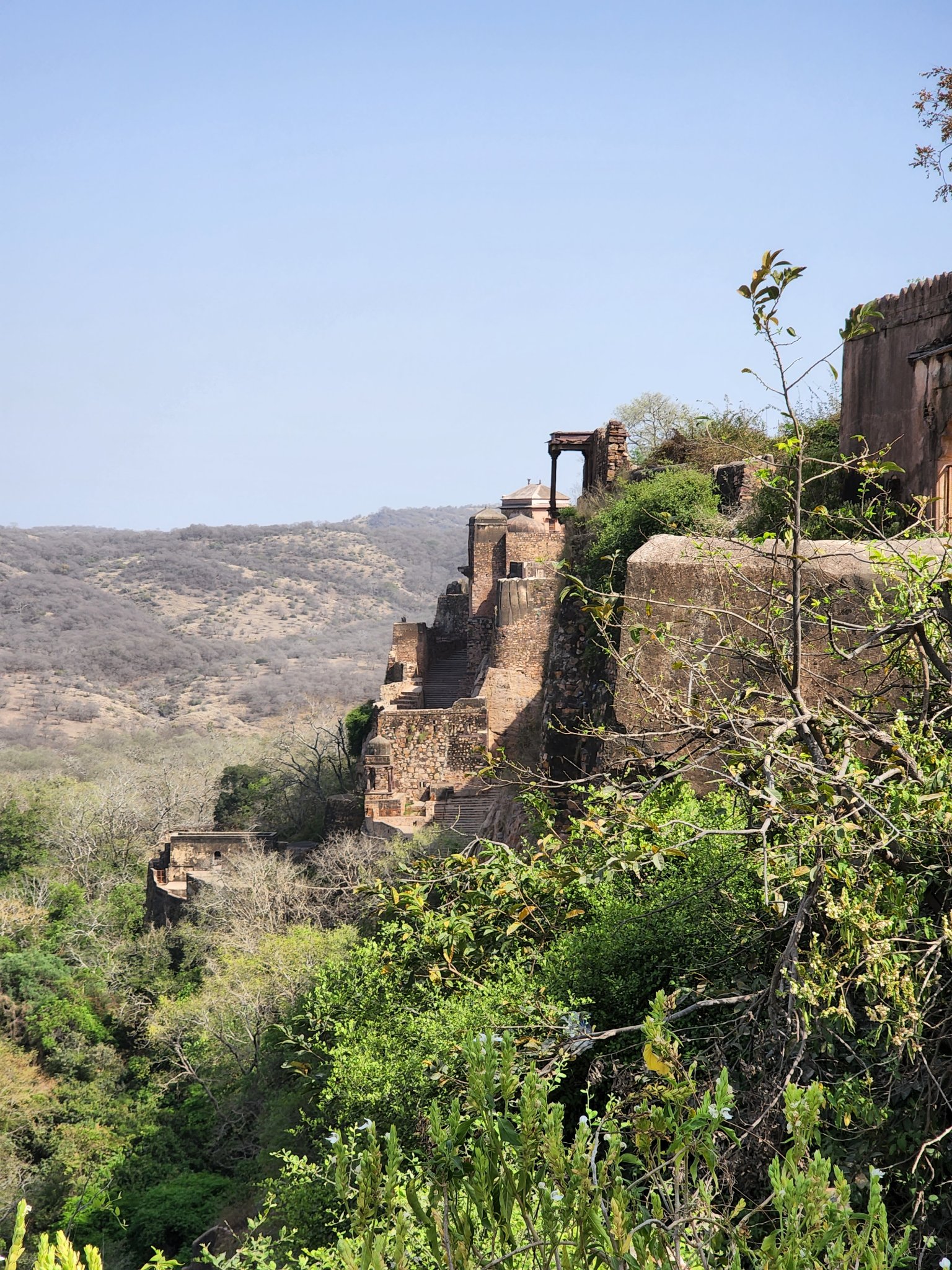
Rounding off the trip was the magnificent and legendary Ranthambore fort, situated on top of a hill right in the middle of the Ranthambore Tiger Sanctuary. The ride through the forest is memorable and so are the sights from atop the fort.

Trip Summary
Day 1:
Gurgaon to Hanumangarh via Sirsa (lunch break in Sirsa)
Saw Bhatner fort at Hanumangarh (overnight stay in Hanumangarh)

Day 2:

Hanumangarh to Kalibangan
Kalibangan to Suratgarh via Badopal (lunch break in Suratgarh)
Suratgarh to Bikaner via Lunkaransar (overnight stay in Bikaner)

Day 3:
Bikaner fort early morning (lunch at Bikaner after seeing the fort)
Bikaner to Deshnoke to Kolayat, and back to Bikaner (overnight stay in Baikaner)

Day 4:
Bikaner to Jaipur via Sikar (overnight stay in Jaipur)

Day 5:
Jaipur to Bundi
Bundi to Badoli Temple complex (Rawatbhatta)
Badoli to Kota (overnight stay in Kota)

Day 6:
Kota to Ranthambore
Ranthambore to Gurgaon via Dausa and Manoharpura

Charming Chilika: Mangalajodi and Satapada

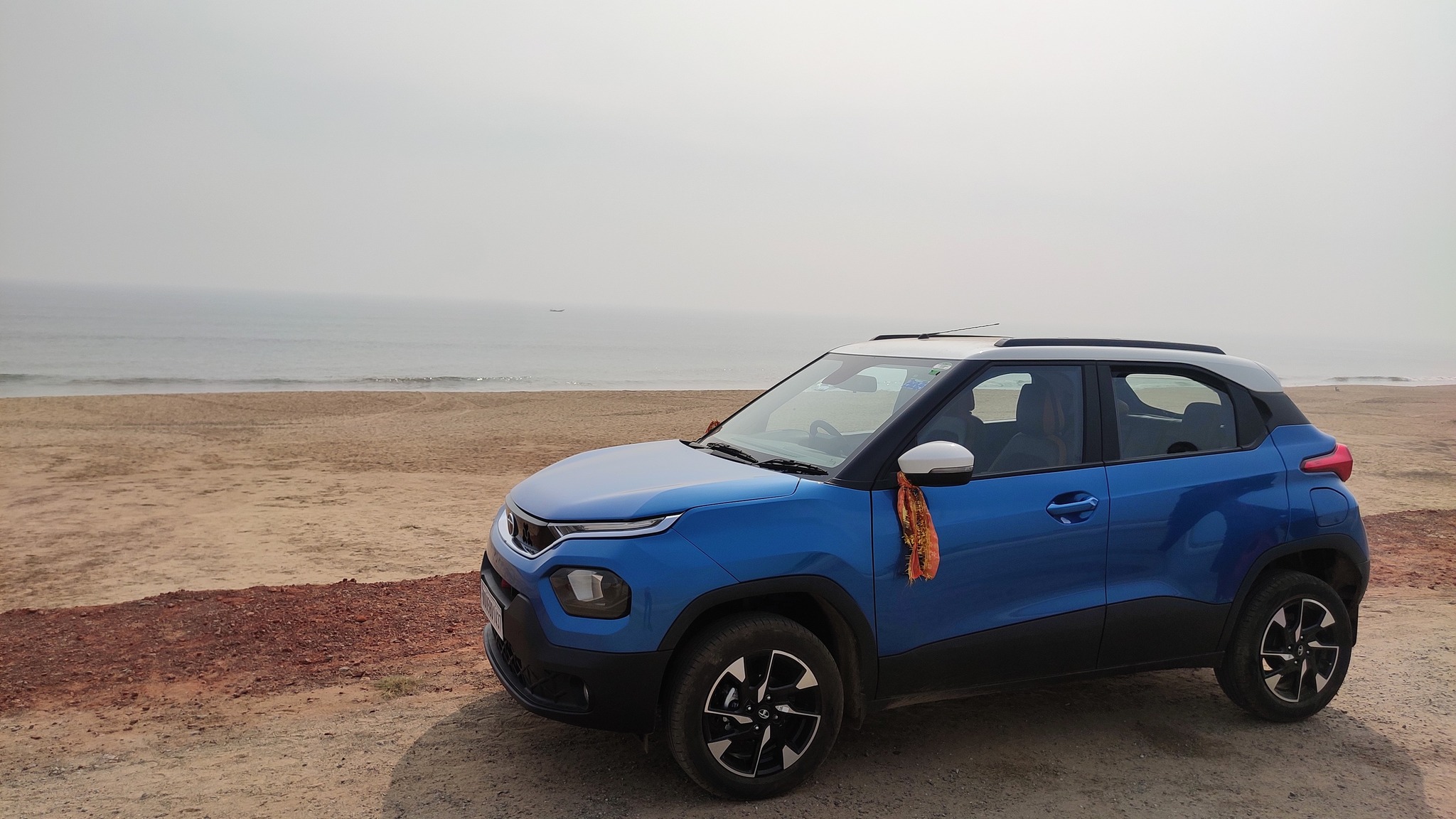
On 24th December 2021, we took the delivery of our car – the first in the family, in fact – in Bhubaneswar, and after offering our prayers, took off on our first ever road-trip in our own car, to the Chilika Lake, which is the largest brackish lagoon in the world. Chilika lake, in a distant past, was an important centre for trade and commerce and served as a shelter for ships sailing to South-East Asia.

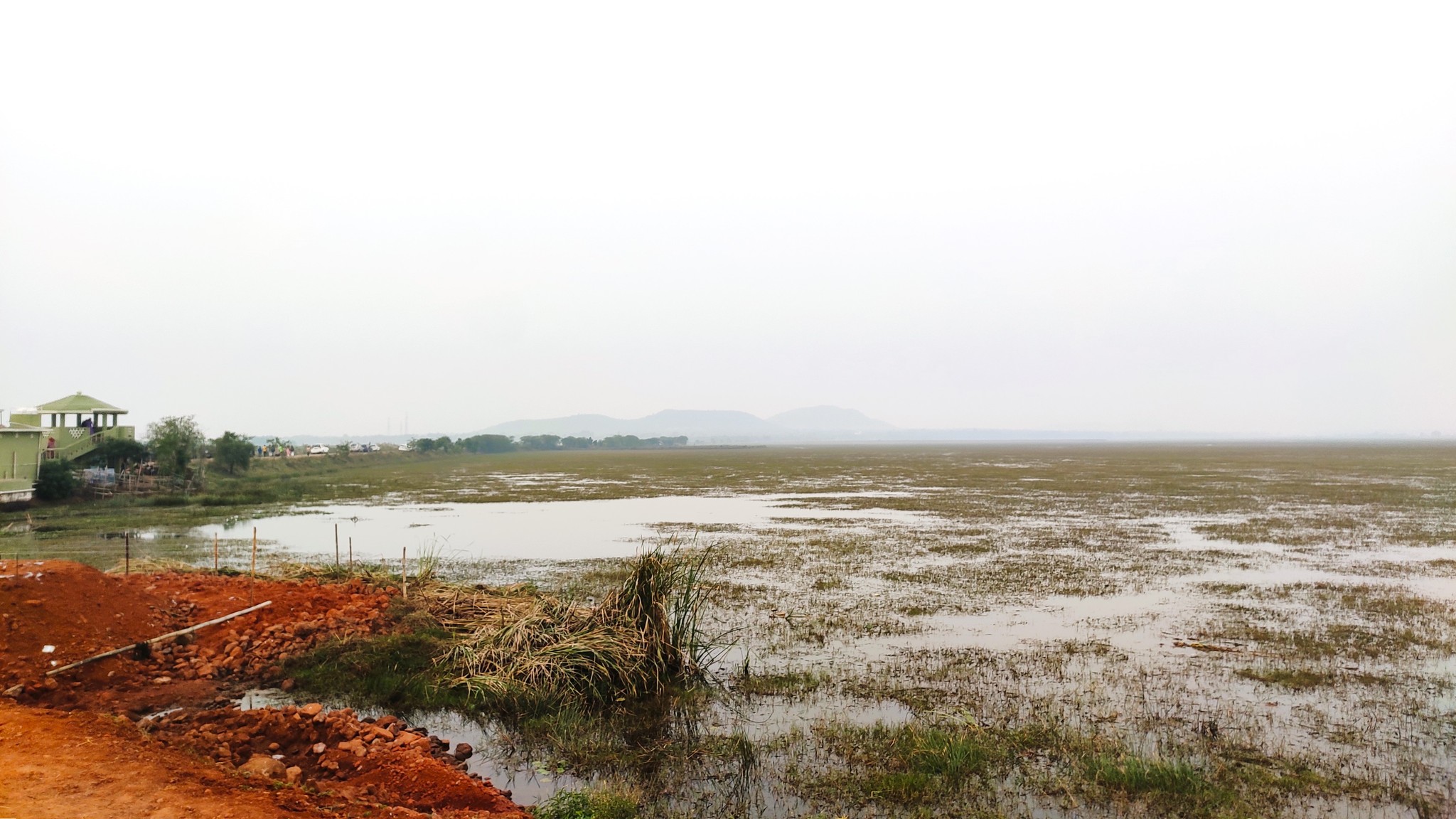
Today, the islands on the lake with their temples and natural beauty attract visitors, as also does its status as a ‘wetland of international status’ under the Ramsar convention. The lake serves as the largest wintering ground for migratory birds on the Indian sub-continent, with it hosting over 160 species of birds in the peak migratory season. At least two areas have been declared as bird sanctuaries – the Nalaban islands and the wetlands near Magalajodi village.

To celebrate the arrival of the new car in the family, we went to two different places in the Chilika lake area on consecutive days – Mangalajodi Bird Sanctuary and Satapada.

25th December 2021: Managalajodi

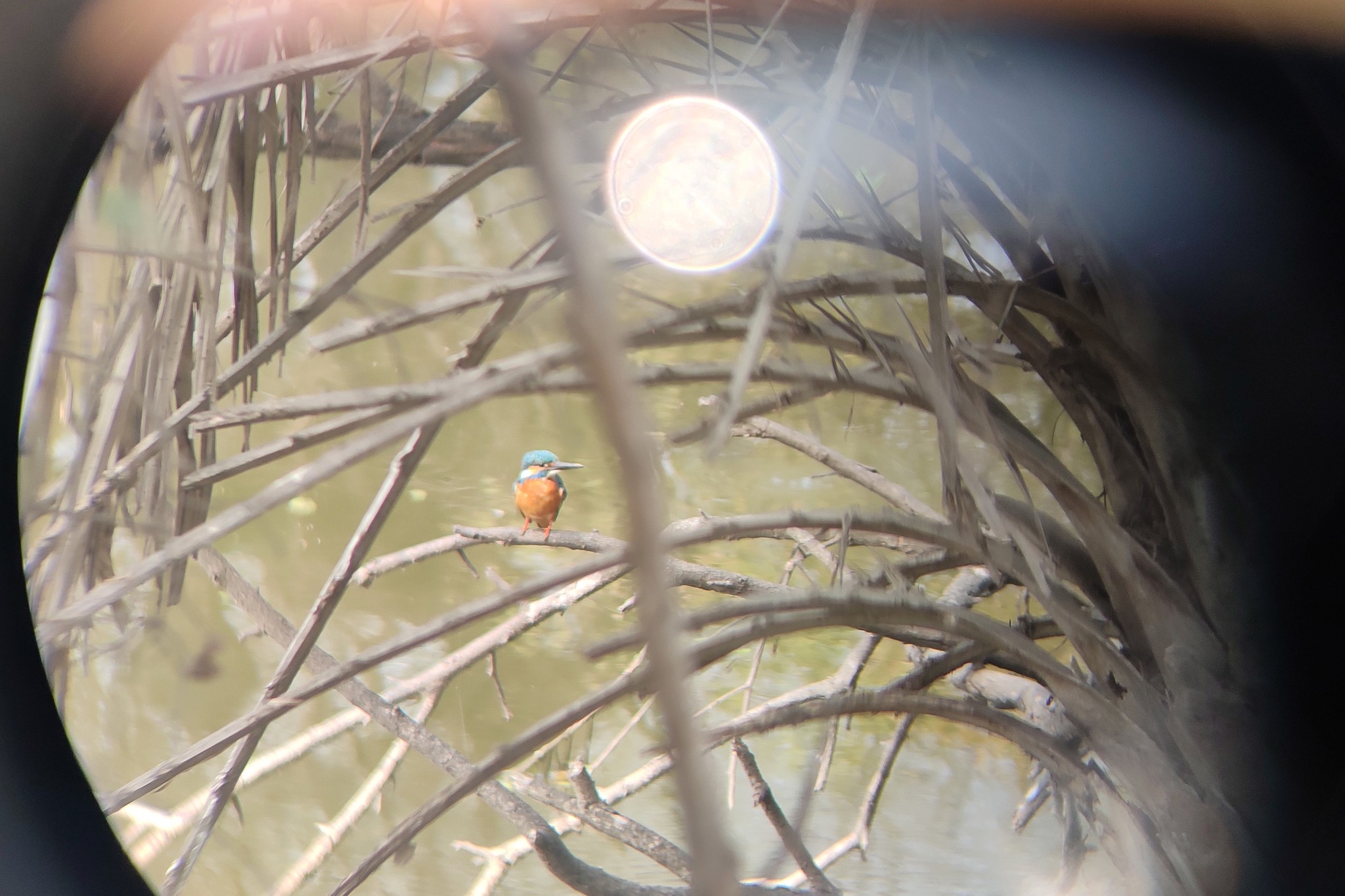
Tired from the car delivery process from the previous day, we started rather late, around 11 AM, and following lunch near Jatani, proceeded by the NH 16 till Tangi where we took a left turn, and pushed towards the coast. Crossing Mangalajodi village, as we entered the wetlands, we had to drive carefully on a meandering paved road built on an embankment that protruded into the wetlands on the periphery of the lake. Reaching the end of the road, we took a boat ride on the wetlands along with a guide who showed us numerous bird species, including, various types of egrets, ducks, cormorants, jacanas, swamphens and kingfishers.

26th December 2021: Satapada

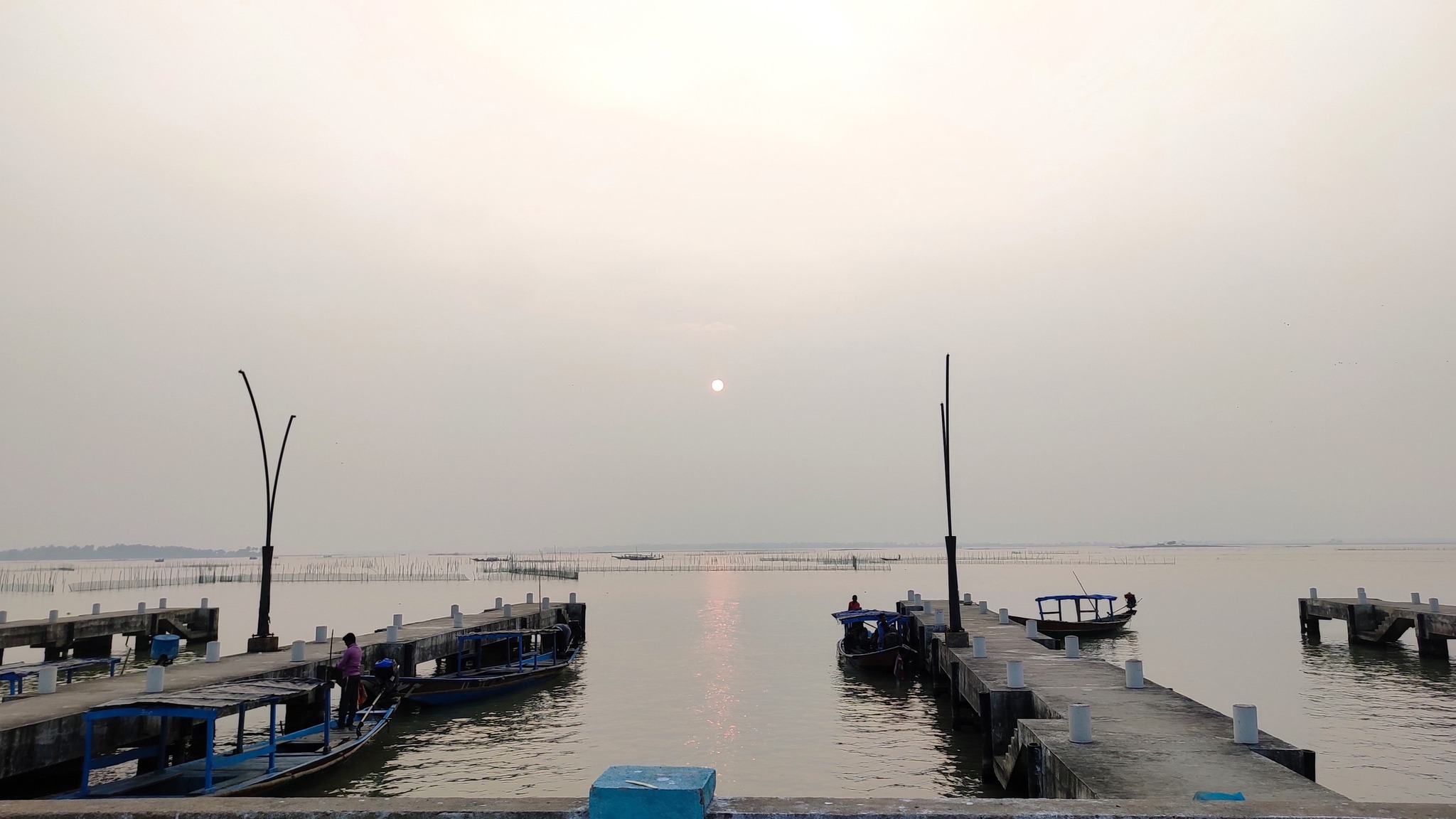
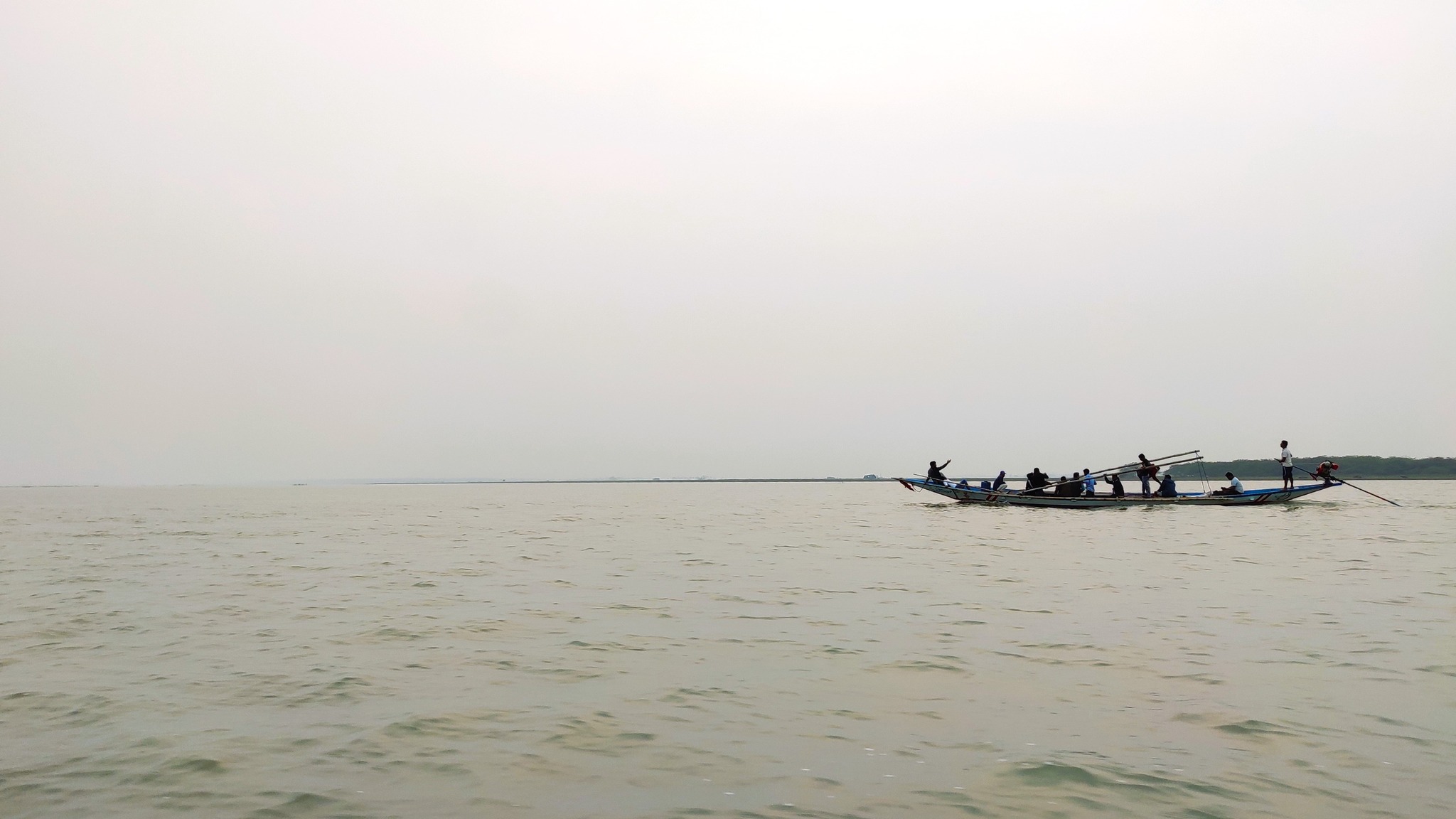
The next day, we started again from Bhubaneswar towards Satapada via Puri. Since we again started late, we were able to reach Satapada only around 4 PM. Satapada, name derived from a group of seven (sata) villages (pada), lies at the south-east cape of the Chilika Lake, very close to the place where the lake meets the Bay of Bengal, 50 km away from Puri. At Satapada, we took a boat ride of the lake proper, and managed to spot the Irrawady dolphins which abound in Chilika lake. The sunset was something to behold as well. Satapada also is heaven for pescetarians, especially for those interested in eating crabs.

Bharatpur, Fatehpur Sikri and Deeg: Impromptu Outings

February 2020: Bharatpur

Just before Covid-19 burst into public consciousness, blissfully unaware of the impending pandemic, Abhijit and I set out on an impromptu trip to Bharatpur. We took the 1:15 PM Jan Shatabdi Express from Nizamuddin, and were in Bharatpur by 3.45 PM.

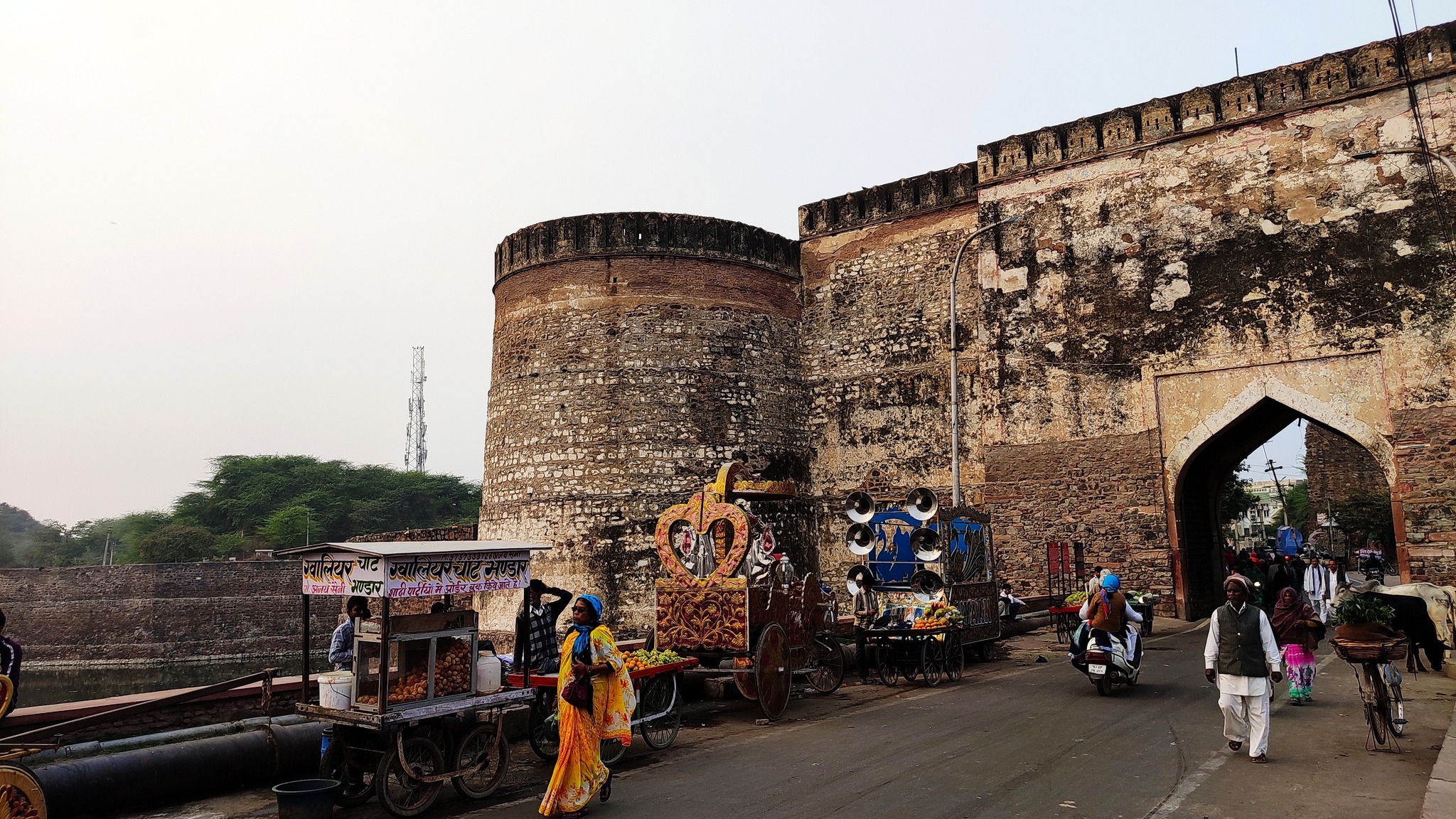
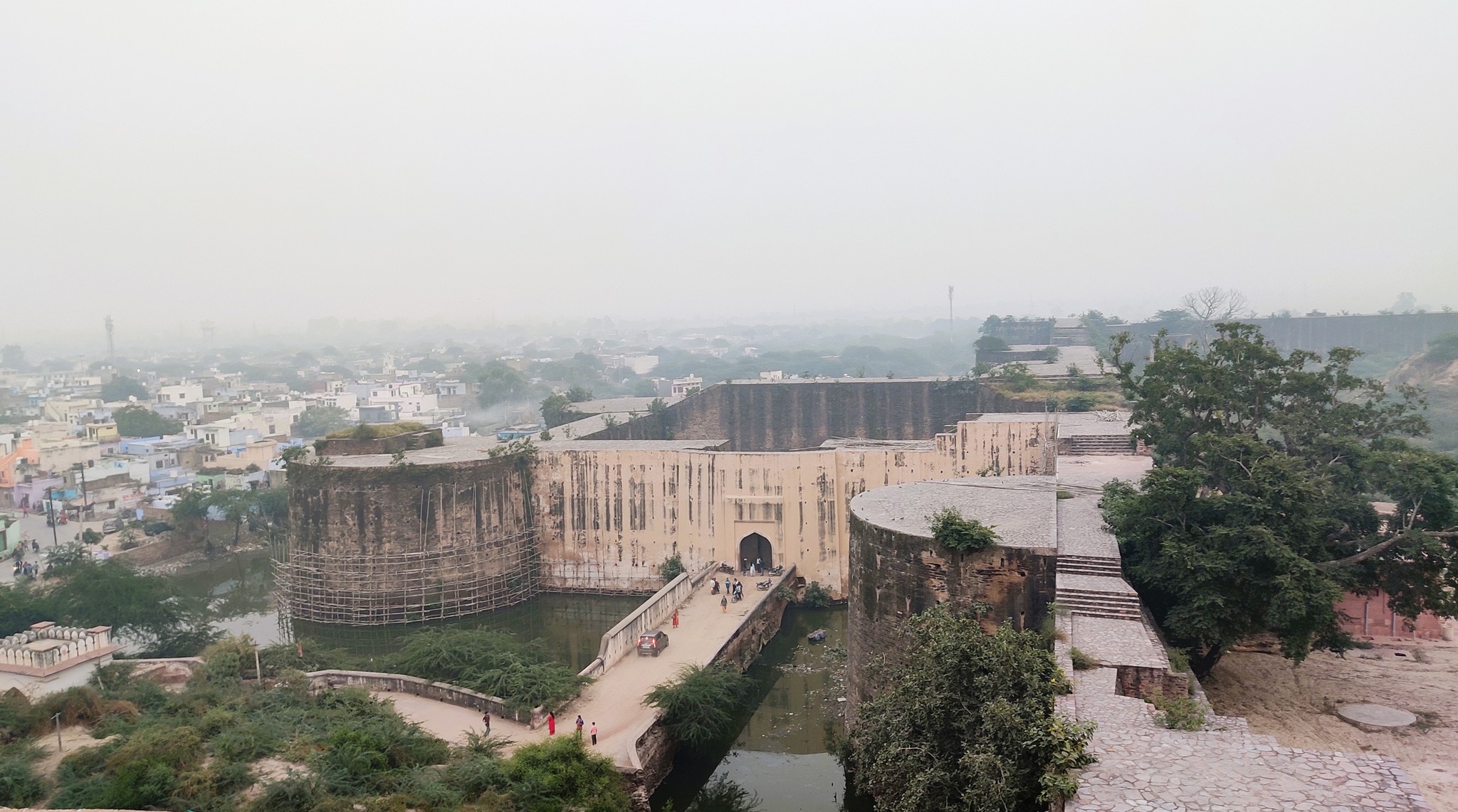
We took an autorickshaw to first see the Lohagarh fort located in the heart of the city. Crossing a moat that completely encircles the sturdy fort wall, we entered from the North Gate also known as the ‘Ashtadhatu’, literally, ‘eight metals’, gate. We then saw the Government Museum and the many historical structures attached to it, namely, Kachahri Kalan, Kamara Khas and Hamam (Persian Bath), followed by the Kishori Mahal, which was undergoing renovation, and the Surajmal memorial in front of it.

As darkness fell, we reached the road running in front of the Keoladeo Bird Sanctuary, along which lie numerous hotels and resorts, and booked a hotel room for the night.

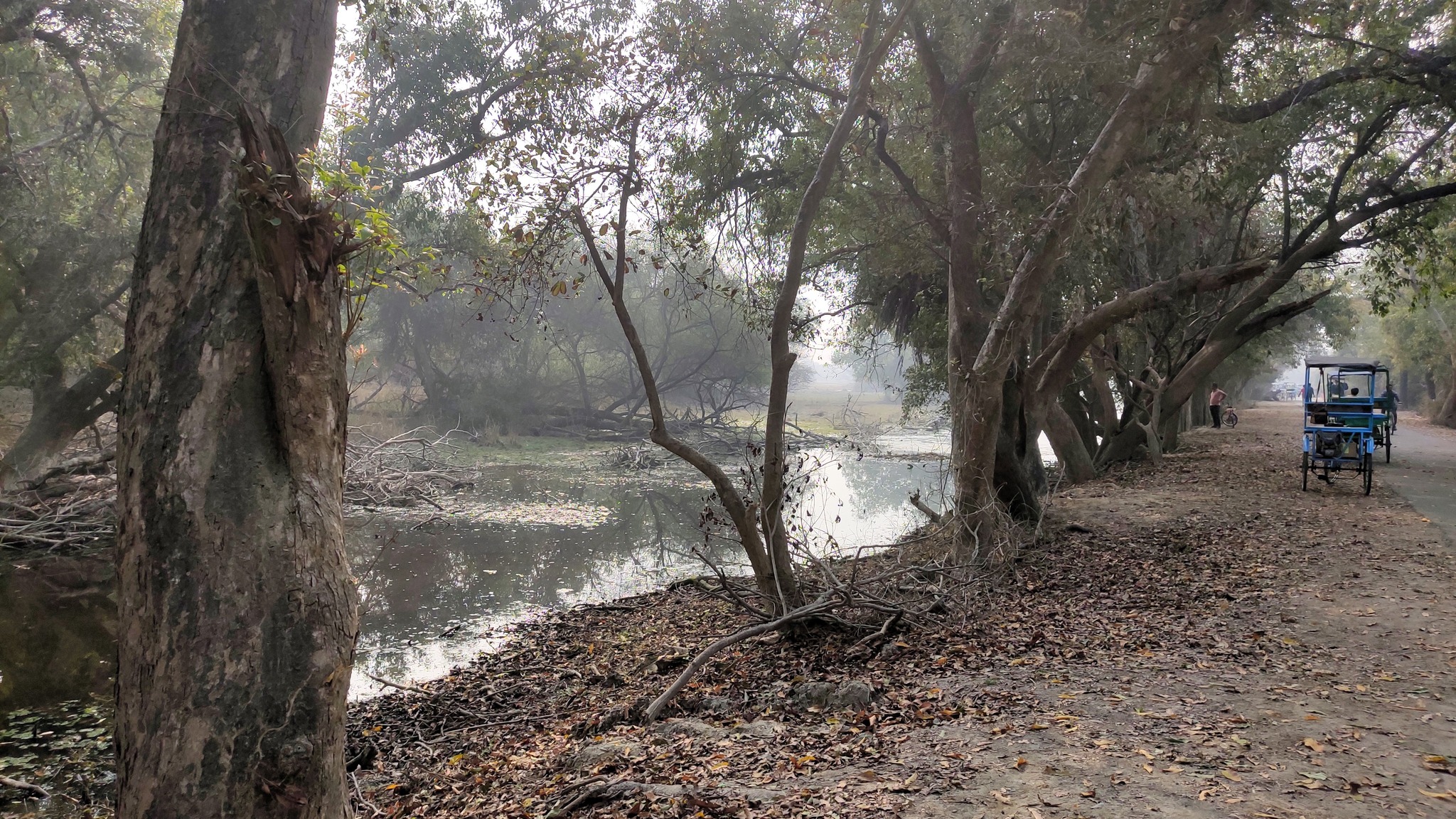
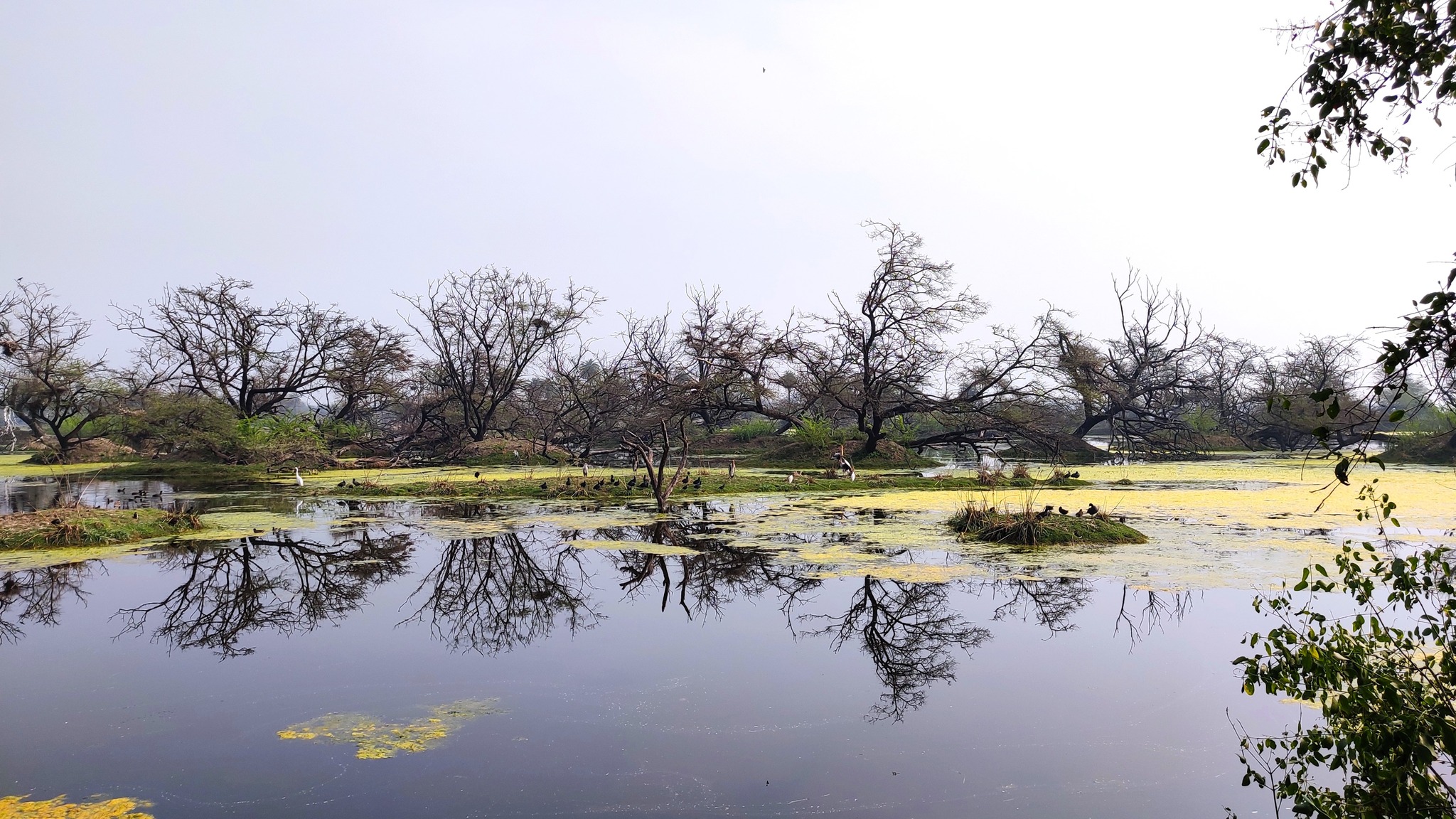
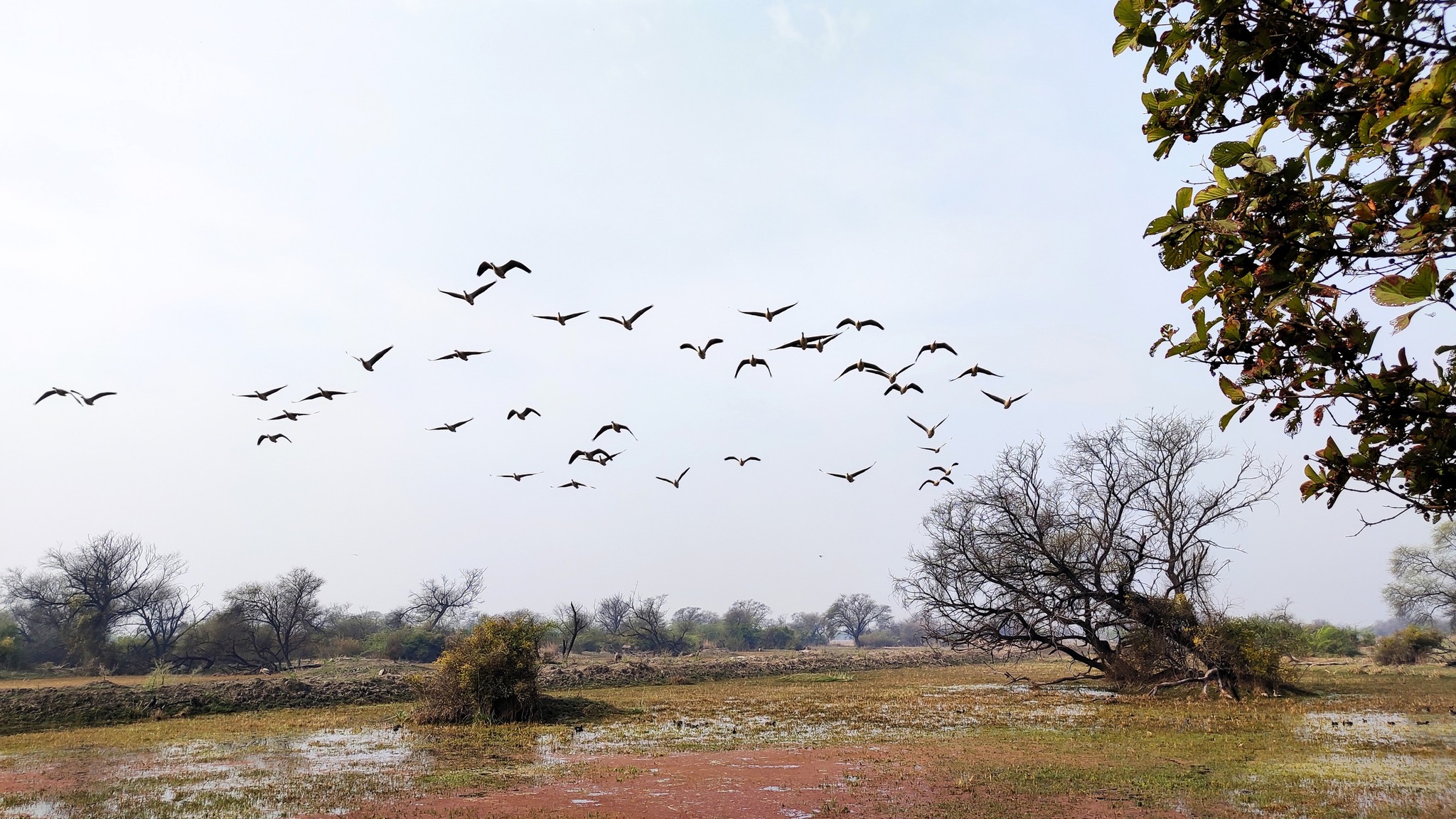
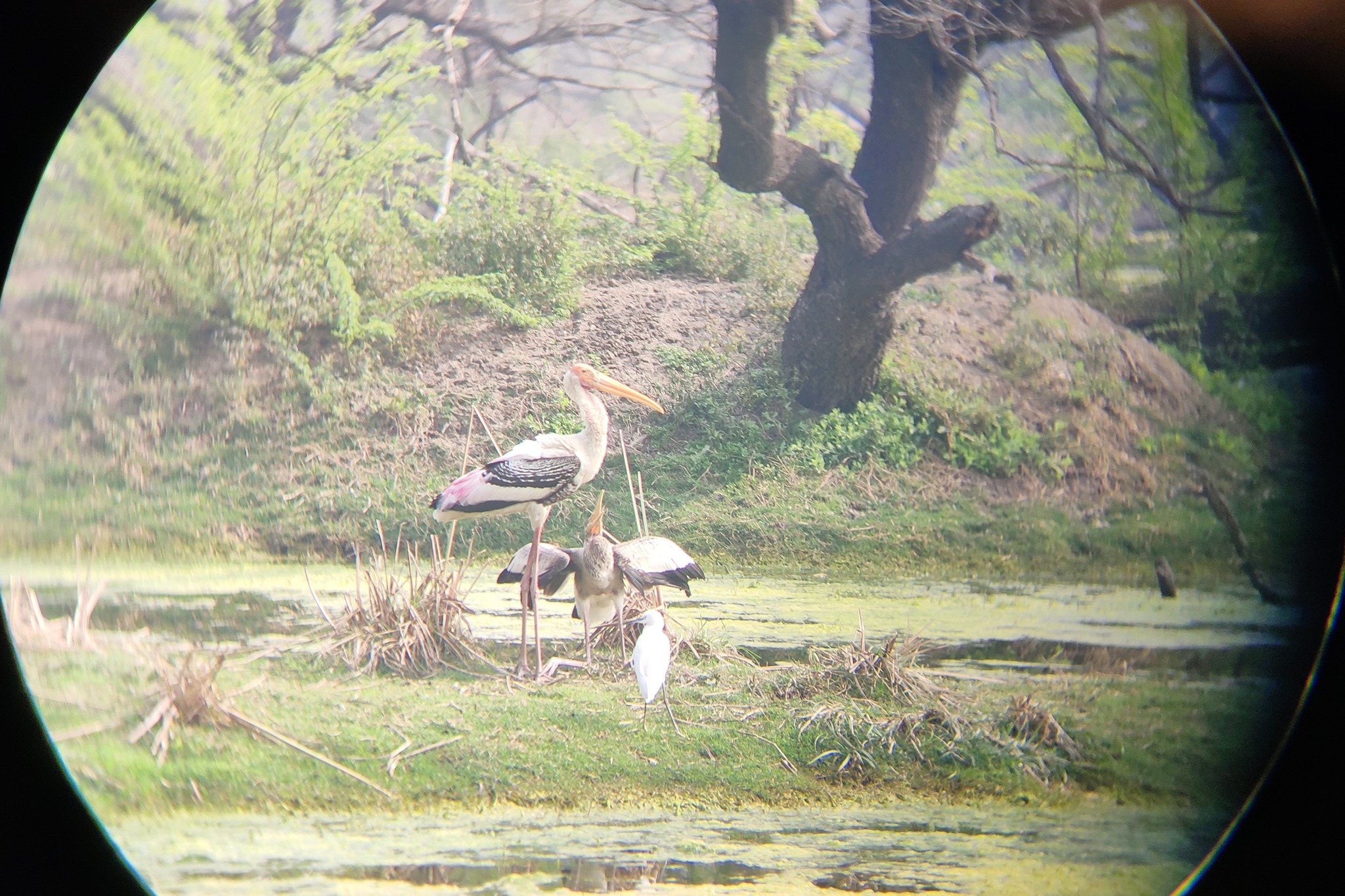
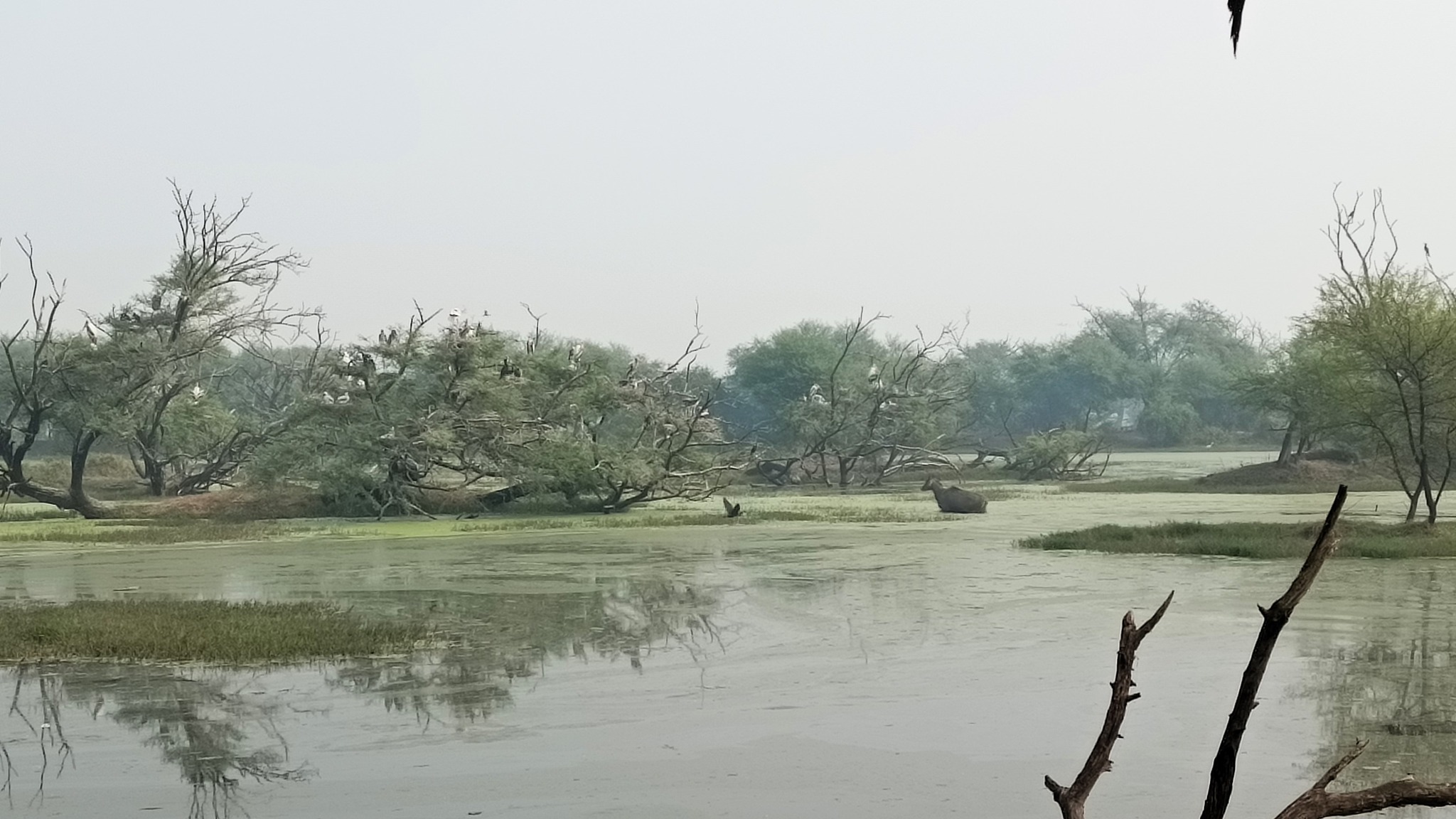
The next morning at 8 AM, we simply walked down to the Bird Sanctuary, rented out a couple of bicycles, and a pair of binoculars and hired the services of a guide. We spotted coots, herons, storks, egrets, snake birds, ibises, warblers, owls, sandpipers, jacanas, bulbuls, pheasants and many more – just wish I was a serious bird-watcher, sometimes.

By 12, we reached the end of the sanctuary, and turned back, eventually reaching the bus-stop at 2.30 PM. Catching a 3.30 bus to Delhi, we were back home by 8 PM. A month later, the lockdown commenced.

November 2021: Fatehpur Sikri and Deeg

One morning in November 2021, when we were still wearing masks due to Covid-19 but travel had resumed, Mother and I just decided to drive to Fatehpur Sikri. Starting at 9 AM, we took the KMP Expressway from Manesar, turning eastwards towards Palwal. At Palwal, we joined the Mathura Road highway, and were at Sikri by 11.30 AM.

On our Agra trip from a decade back, we had to forego seeing Fatehpur Sikri due to paucity of time, so it was good to finally see the fortified city, built by Akbar in a village that already existed. ASI excavations have revealed structures, including, housing, temples and commercial centres from long before Akbar made the city his capital, with archaeological evidence pointing towards settlement of the region since the Painted Grey Ware period.

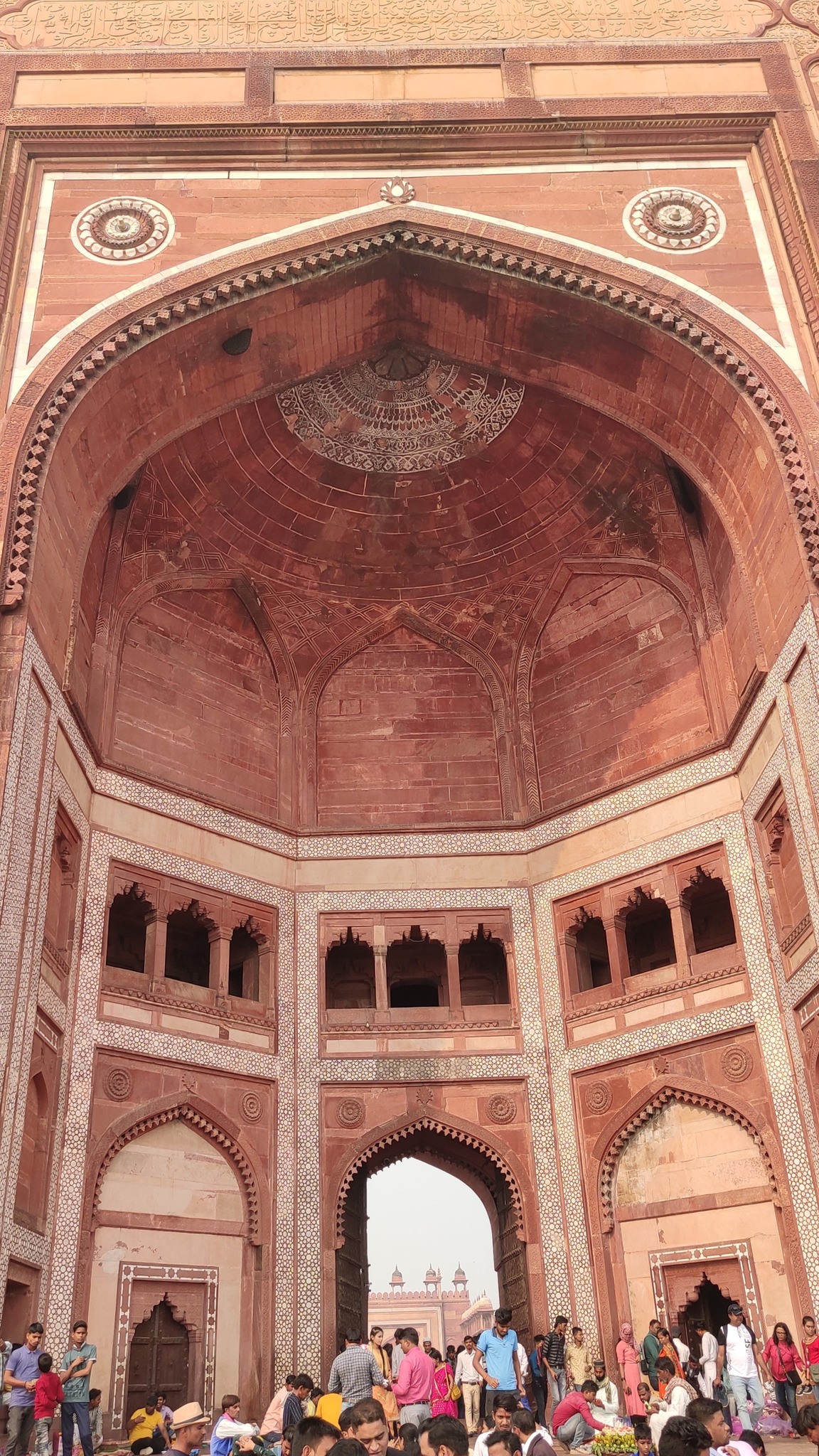
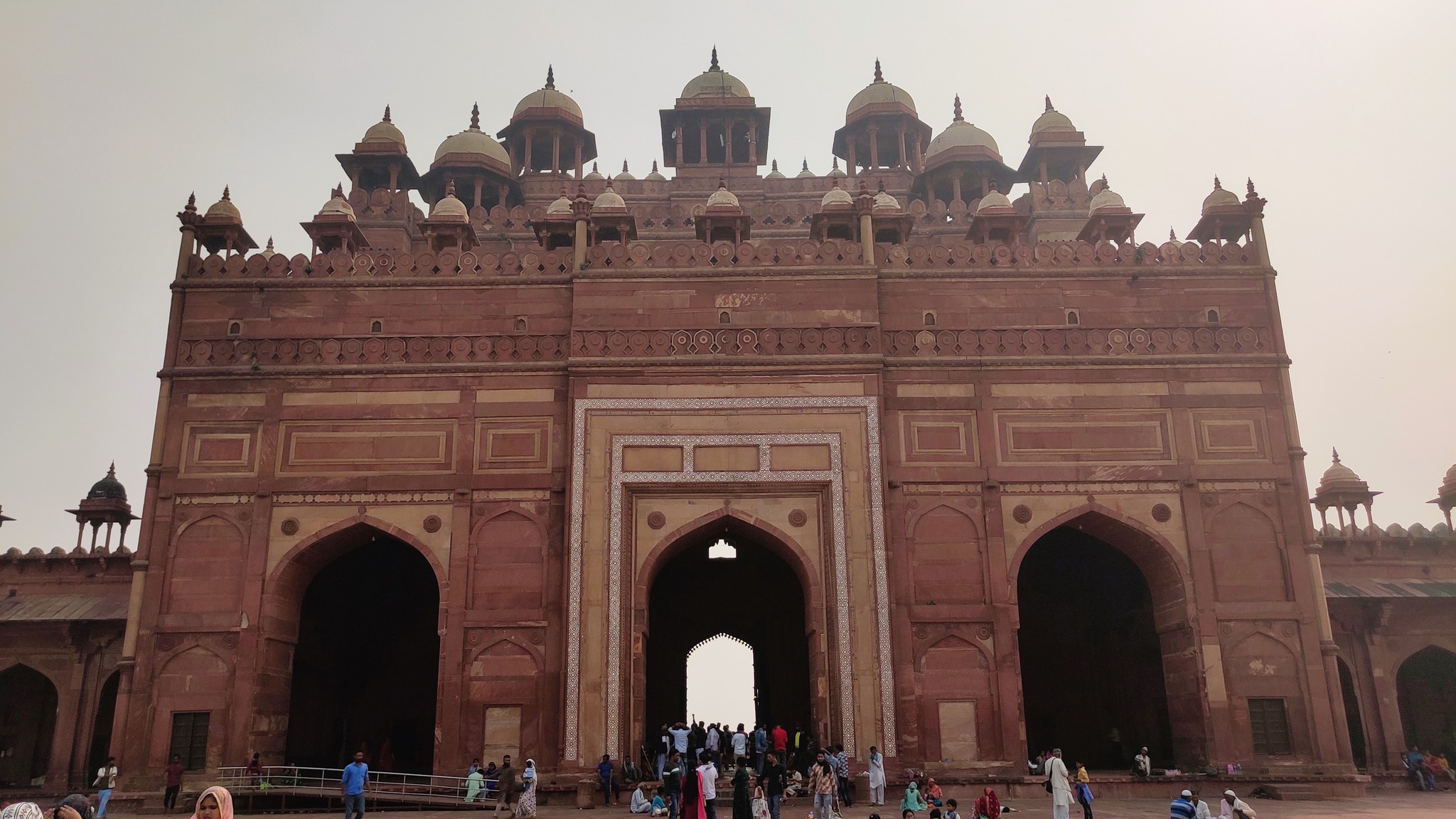
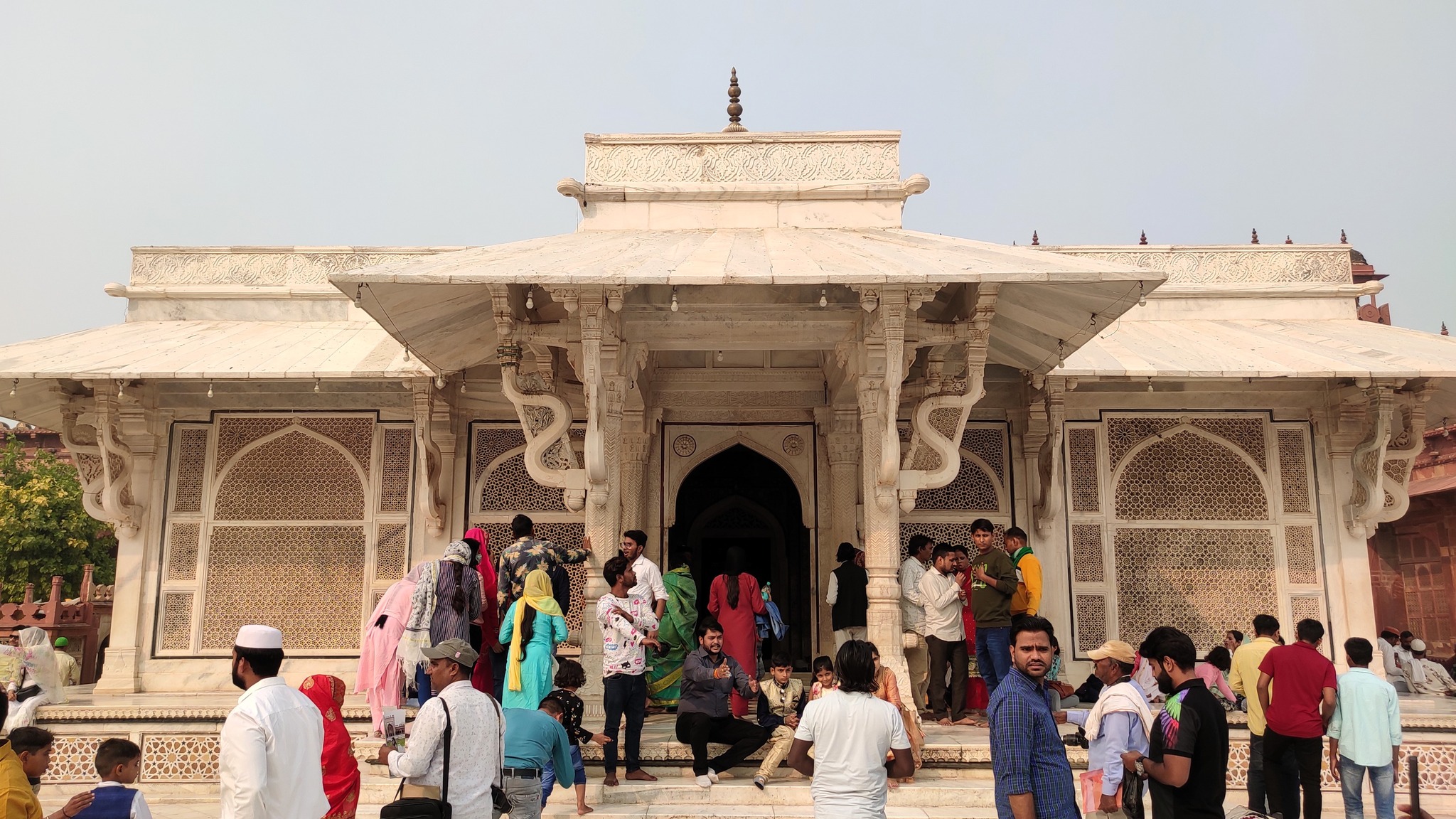
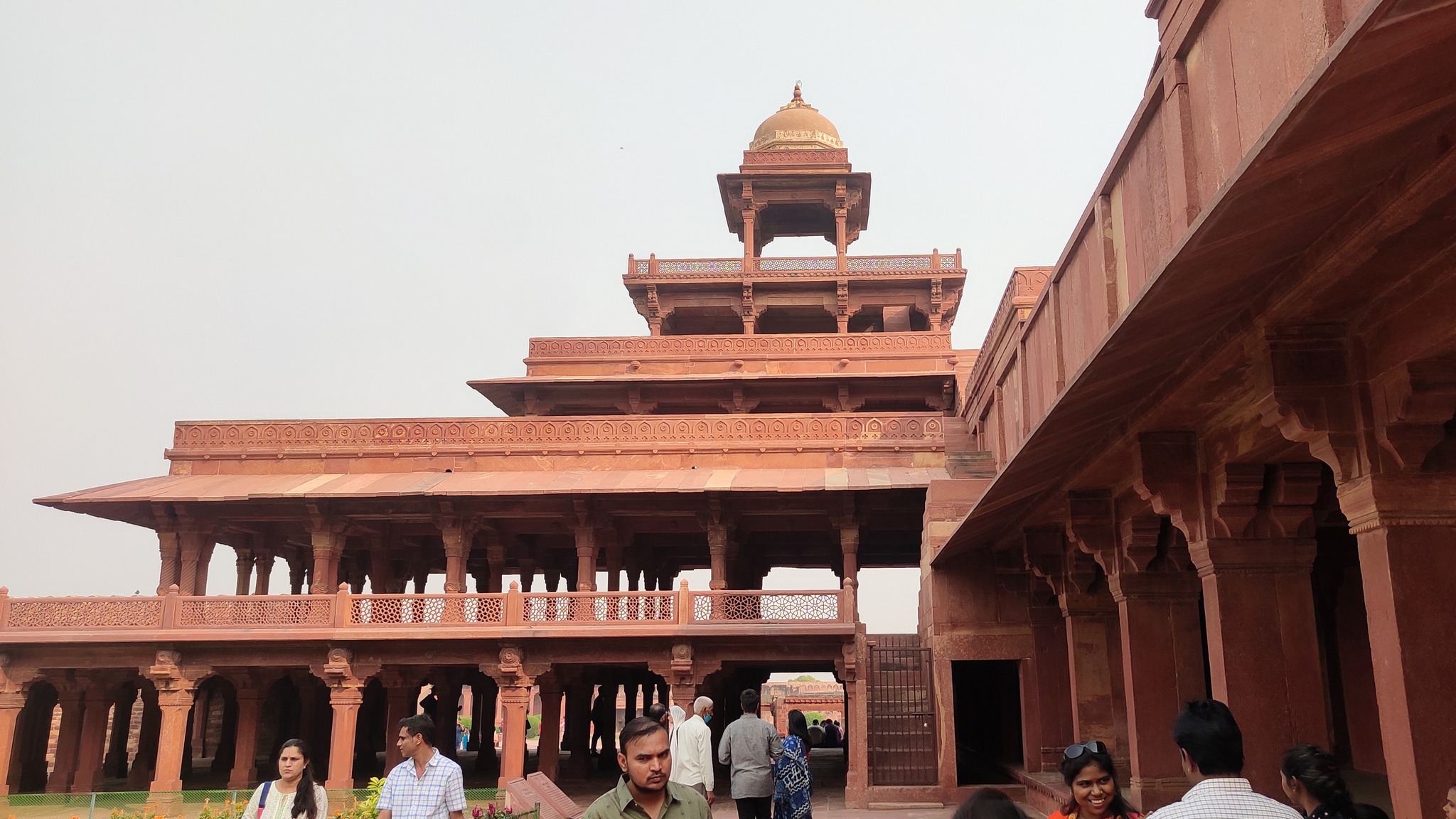
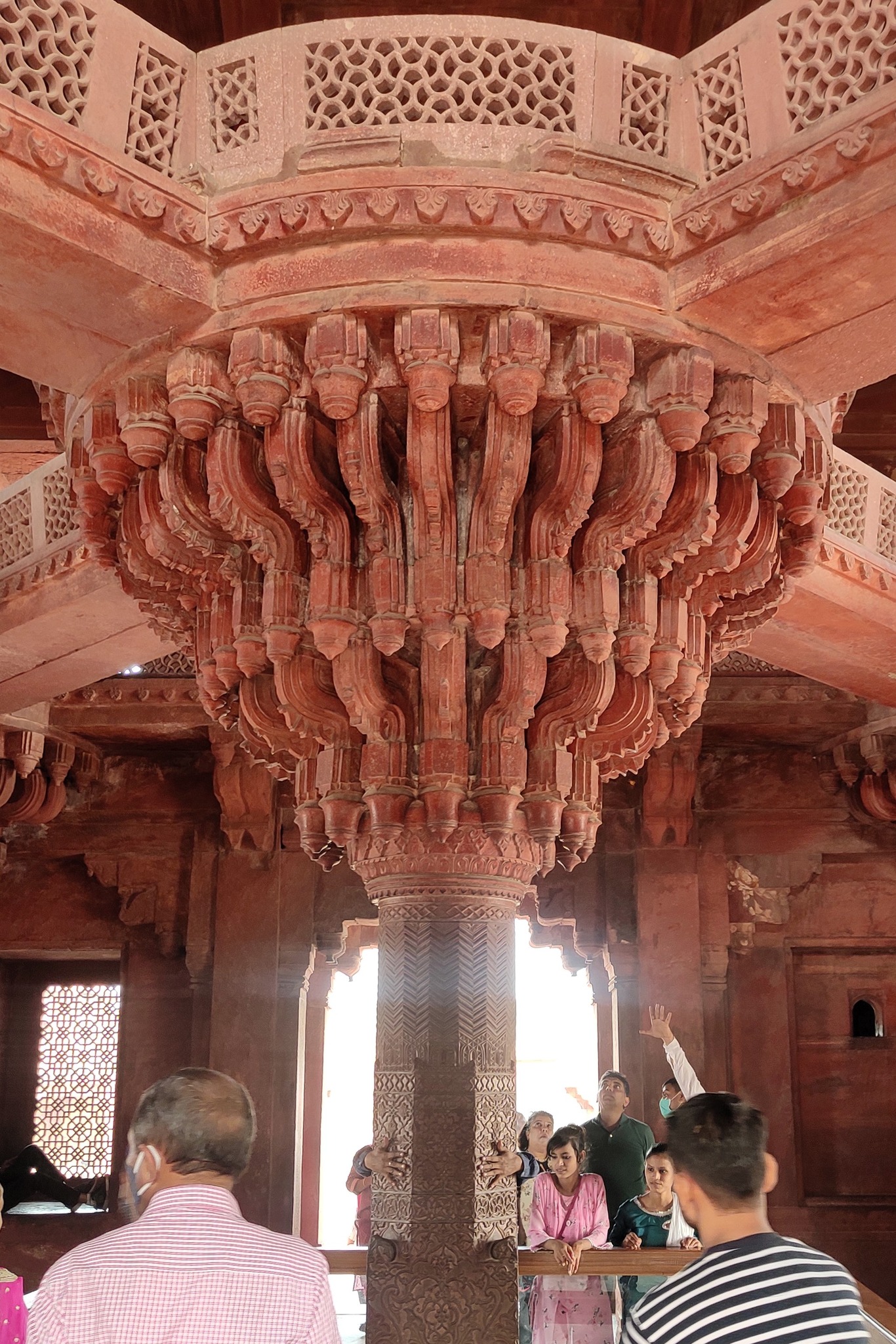
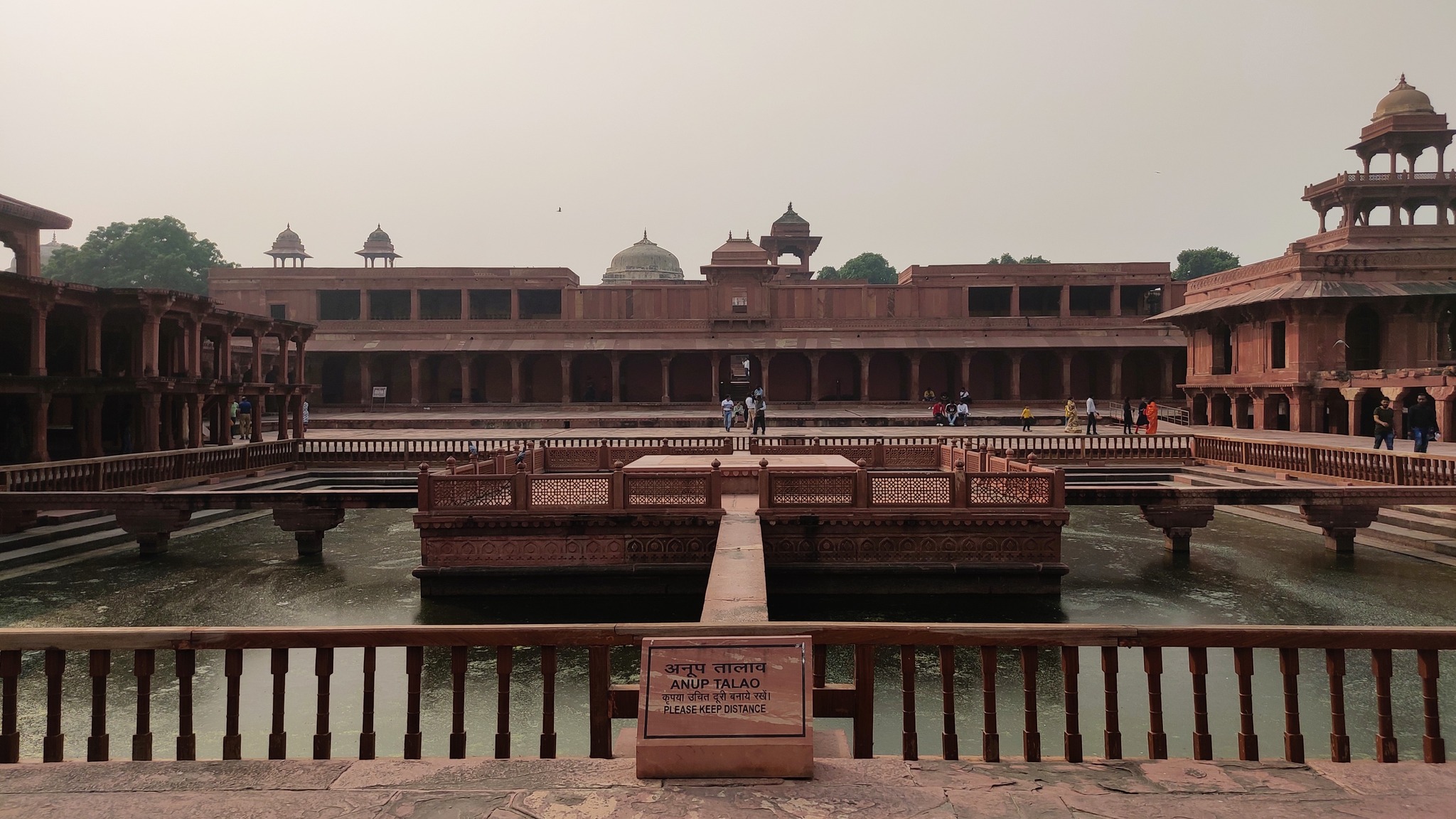
At Fatehpur Sikri, we saw the Buland Darwaza, Jama Masjid and the Tomb of Salim Chisti in the Jama Masjid Enclosure. Then moving over to the Fatehpur Sikri fort area, we saw the Diwan-i-Aam (Public Audience Hall), Diwan-i-Khas (Private Audience Hall), Ibadat Khana (House of Worship), Panch Mahal, Anup Talao etc.

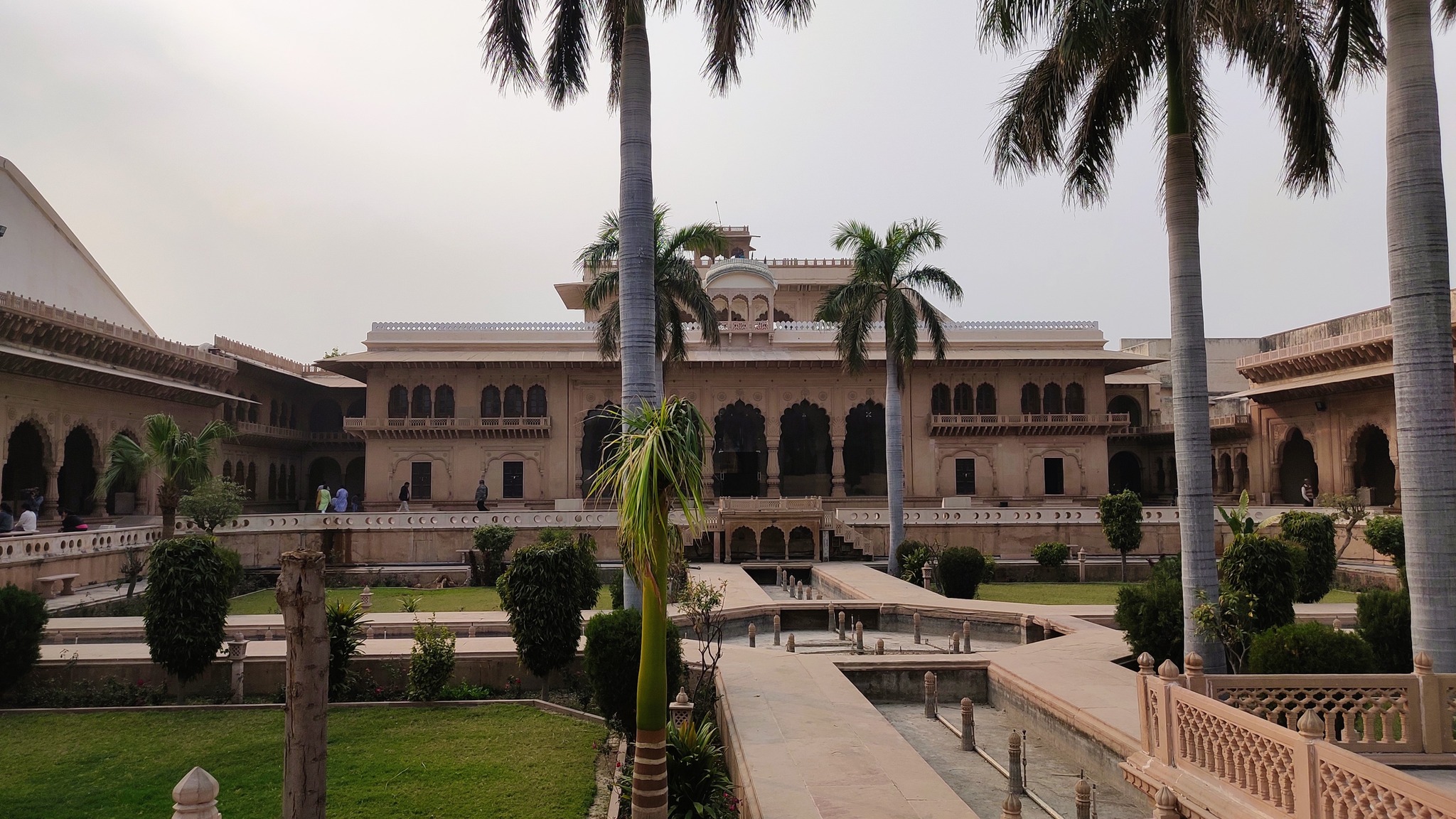
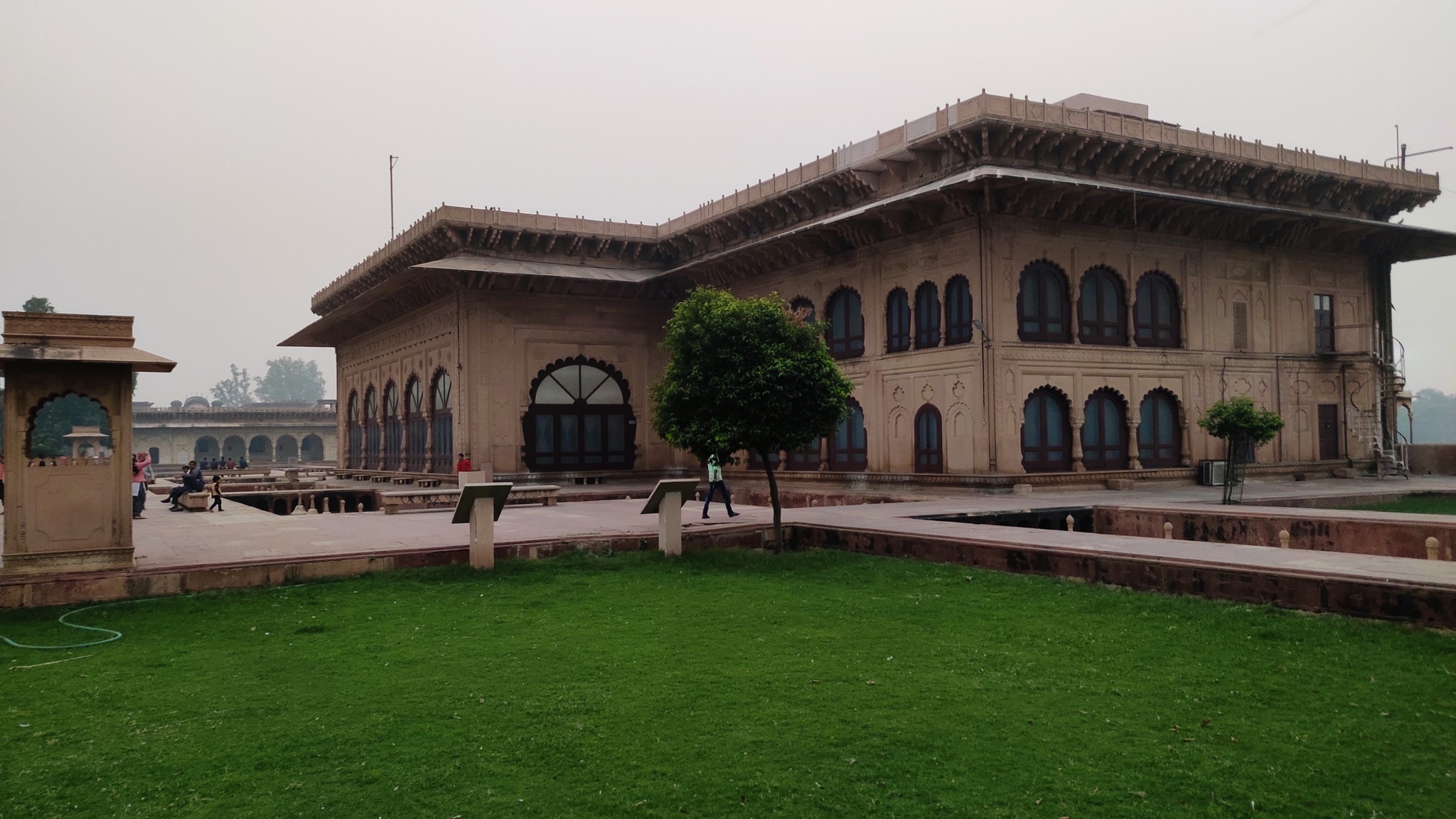
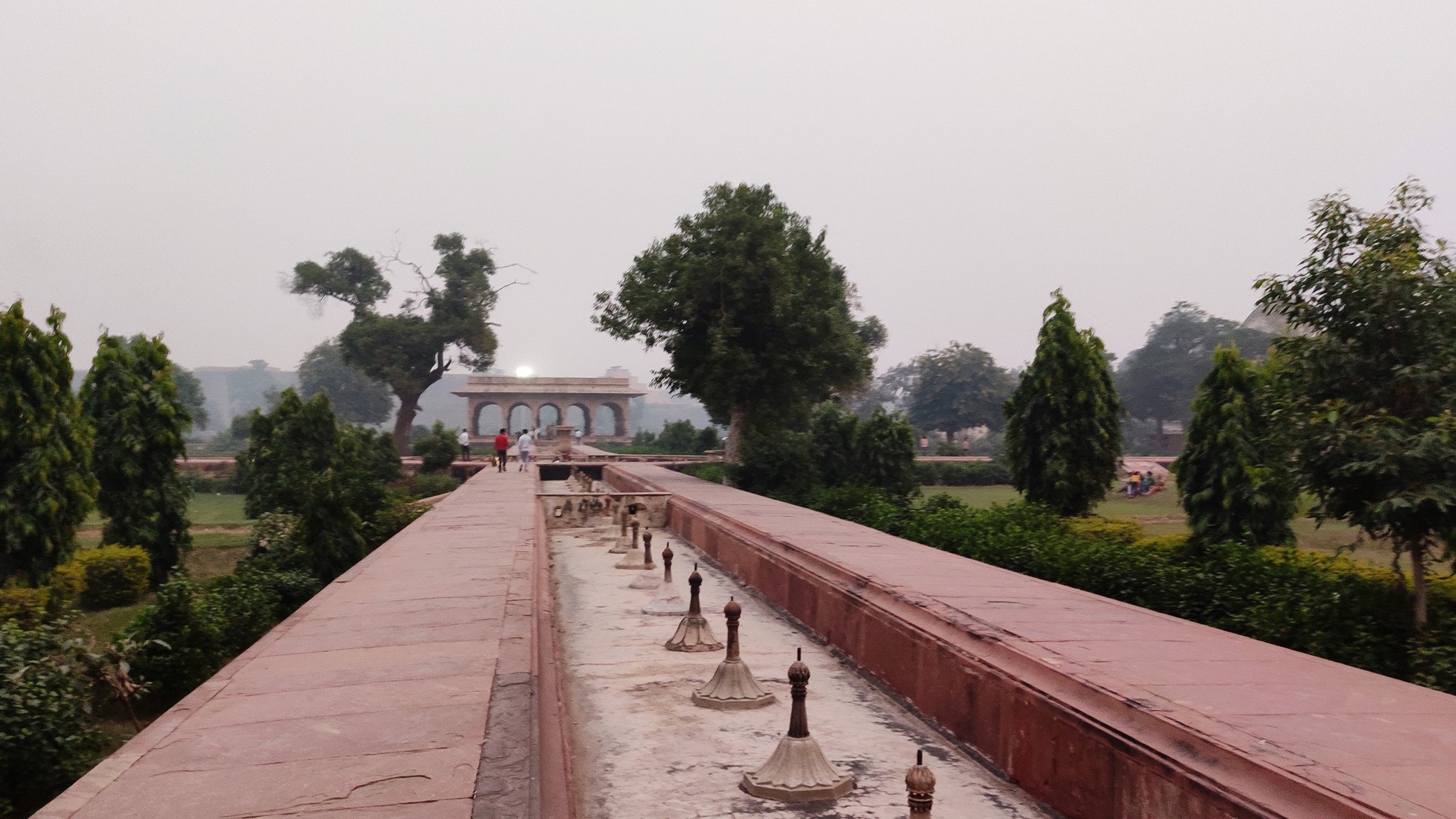
From Fatehpur Sikri, we drove to Deeg, reaching the Deeg Fort around 4 PM. From Deeg Fort, we proceeded to the Deeg Palace – also known as Jal Mahal, as it is surrounded by aesthetically manicured water bodies and gardens having 900 fountains – serving as the summer palace for rulers of Bharatpur. Deeg is 60 km from Fatehpur Sikri and 35 km north of Bharatpur.

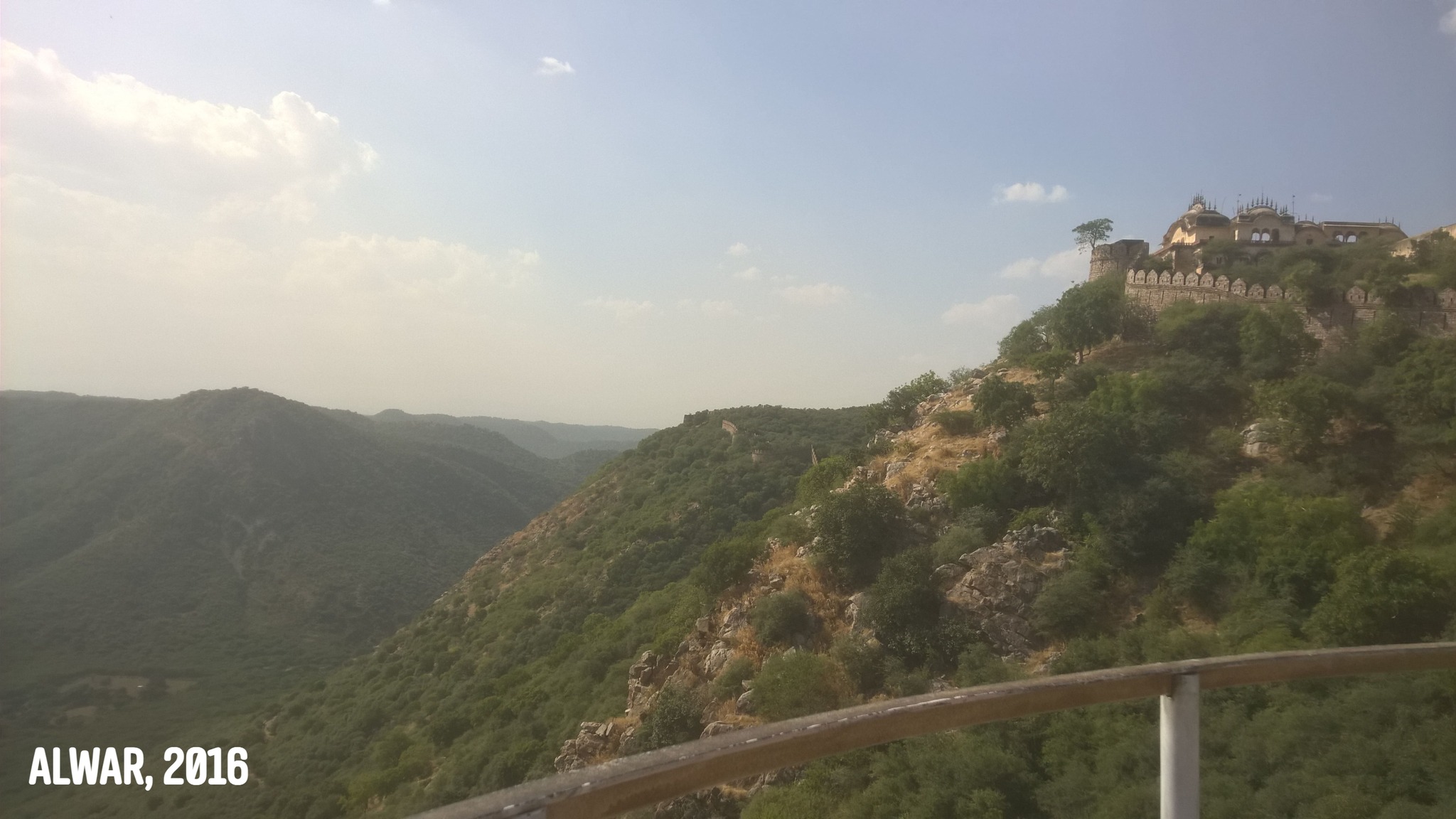
After sundown, in the dark, hurtling over some bad roads, we reached Alwar, to stay the night over. The next morning we drove up the Aravalli to check out the Bala Qila (Alwar fort), but learned that it was closed for renovation. Coaxing the gatekeeper, we managed to just get to the courtyard and climb up a roof to get a panoramic view of the lush green Aravallis.

After lunch, we went for a drive to the Sariska area, but at 4.30 PM turned back for Gurgaon, and were back home by 8 PM.

Update [December 2023]

November 2023: Khatoo, Abhaneri and Bharatpur

I would again visit Bharatpur in November 2023, this time with my parents, and as part of a longer impromptu journey. We first planned to visit Sariska Tiger Sanctuary, but upon reaching the Sariska gate, we learnt the sanctuary was closed for the day. Having a quick lunch, we decided to go to Bhartruhari temple located in the Sariska forest area.

Once we had seen the temple, we made a split-second decision to proceed to Khatoo, 150 km away, via Kushalgarh and Narayanpur. At Kushalgarh, I got down to check out a tiny fort perched on a hillock – a fort I had always spotted while going to Sariska from Alwar, and back.

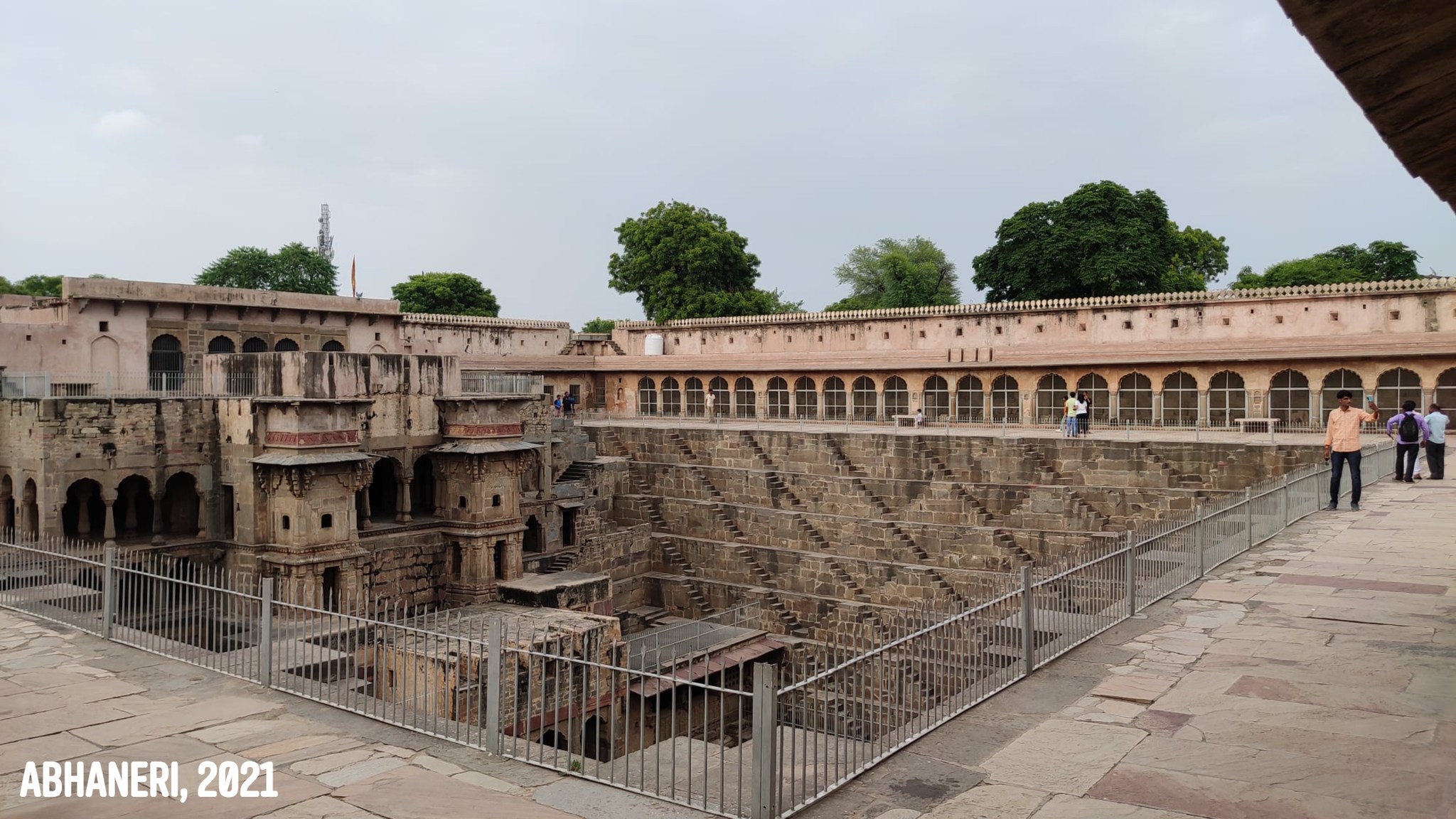
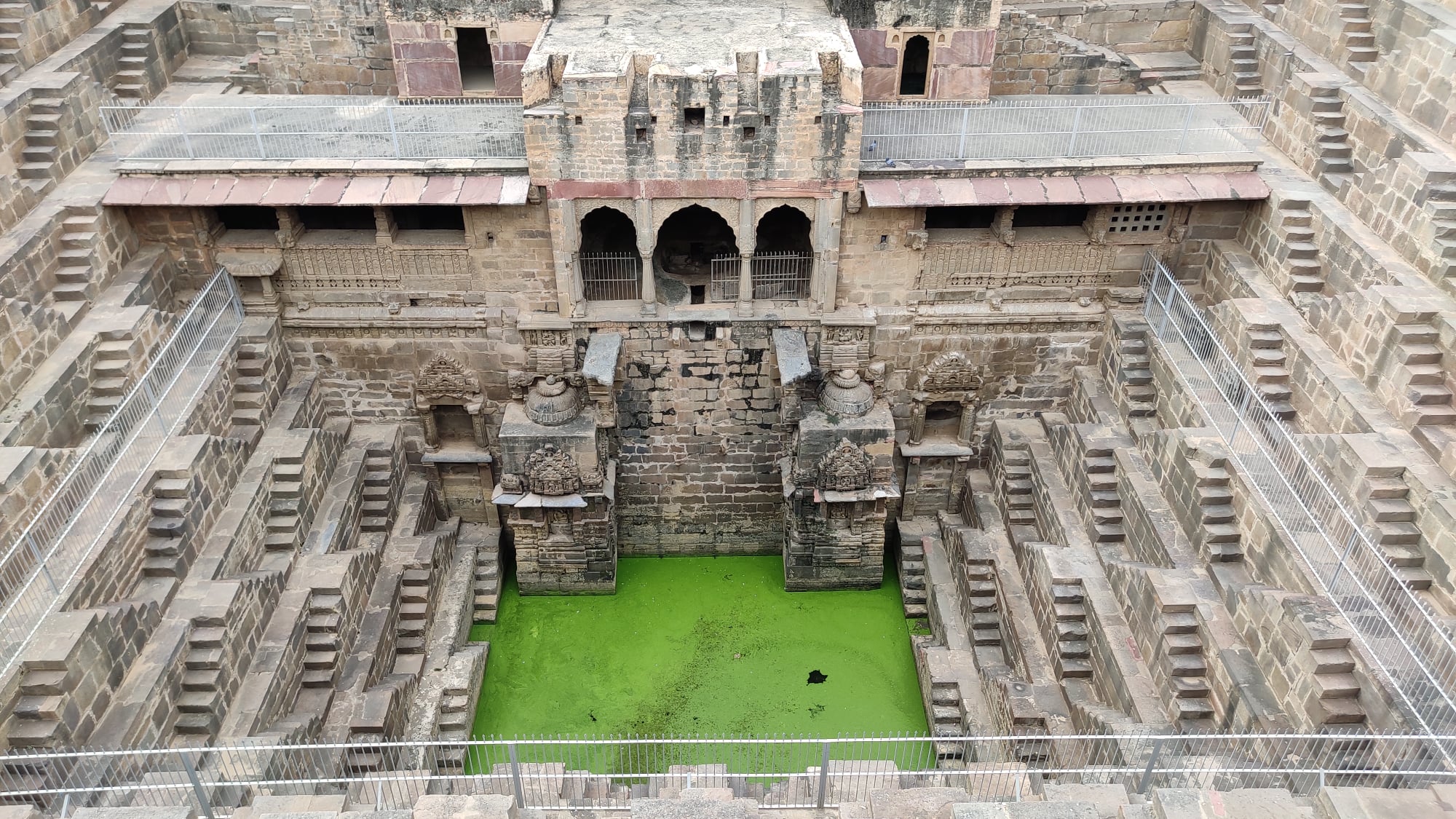
We reached Khatoo around 7 PM and managed to get a quick darshan of Khatoo Shyam ji. Having our dinner by 9.30 PM, we proceeded to Jaipur to stay the night over. The next morning, we drove to Abhaneri to see the Chand Baori stepwell, and then proceeded to Bayana, by when it was already 4.30 PM (read about my Bayana fort adventure here: Barely Bright and Bovine Encounters at Bayana Fort).

Starting from Bayana at 6 PM, we reached Bharatpur, an hour away, and checked-in to a hotel at 7.30 PM. The next day, we saw the Bharatpur Bird Sanctuary, and proceeded through Goverdhan to Vrindavan, where my parents wanted to spend a few days. I drove back to Gurgaon solo.

Exploring Rajasthan through the Eyes of a Solo Backpacker turned Car Driver

Learning to drive has been a boon.

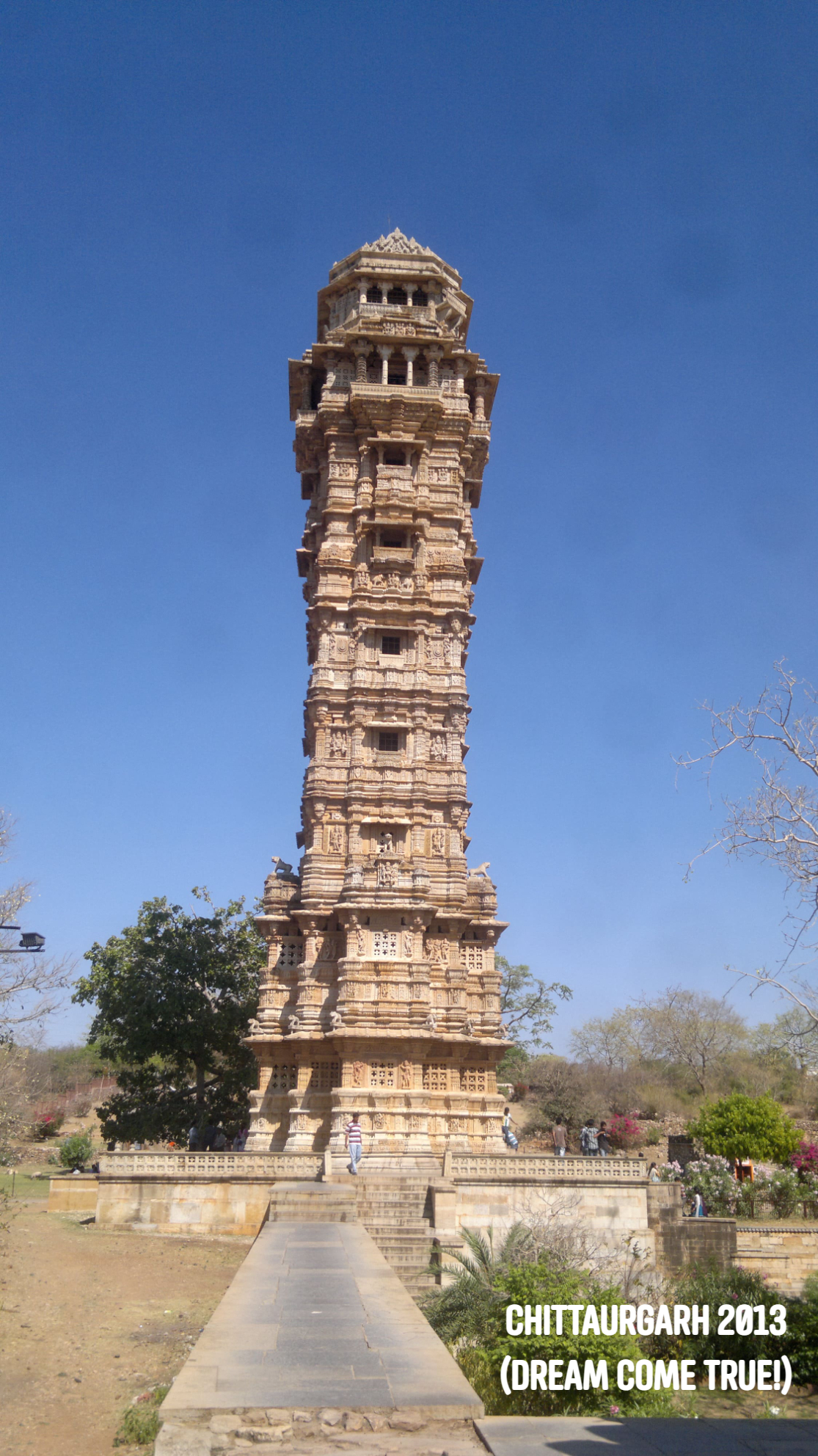
As a kid, I had been entranced by the pictures of sand dunes and forts in school textbooks and children’s magazines. One particular image from a Tinkle issue – a coloured sketch of the Vijaya Stambh at Chittorgarh fort had stuck in my mind, and in 2013, on one of my solo trips, I finally set foot on the Chittorgarh fort, and was absolutely spellbound by the location atop a table-top hill and the scale of the area bounded by its imposing walls. I have explored Rajasthan further, making it a point to explore at least one new place every year. Until before the pandemic struck, I had visited almost every major city of Rajasthan and then some.

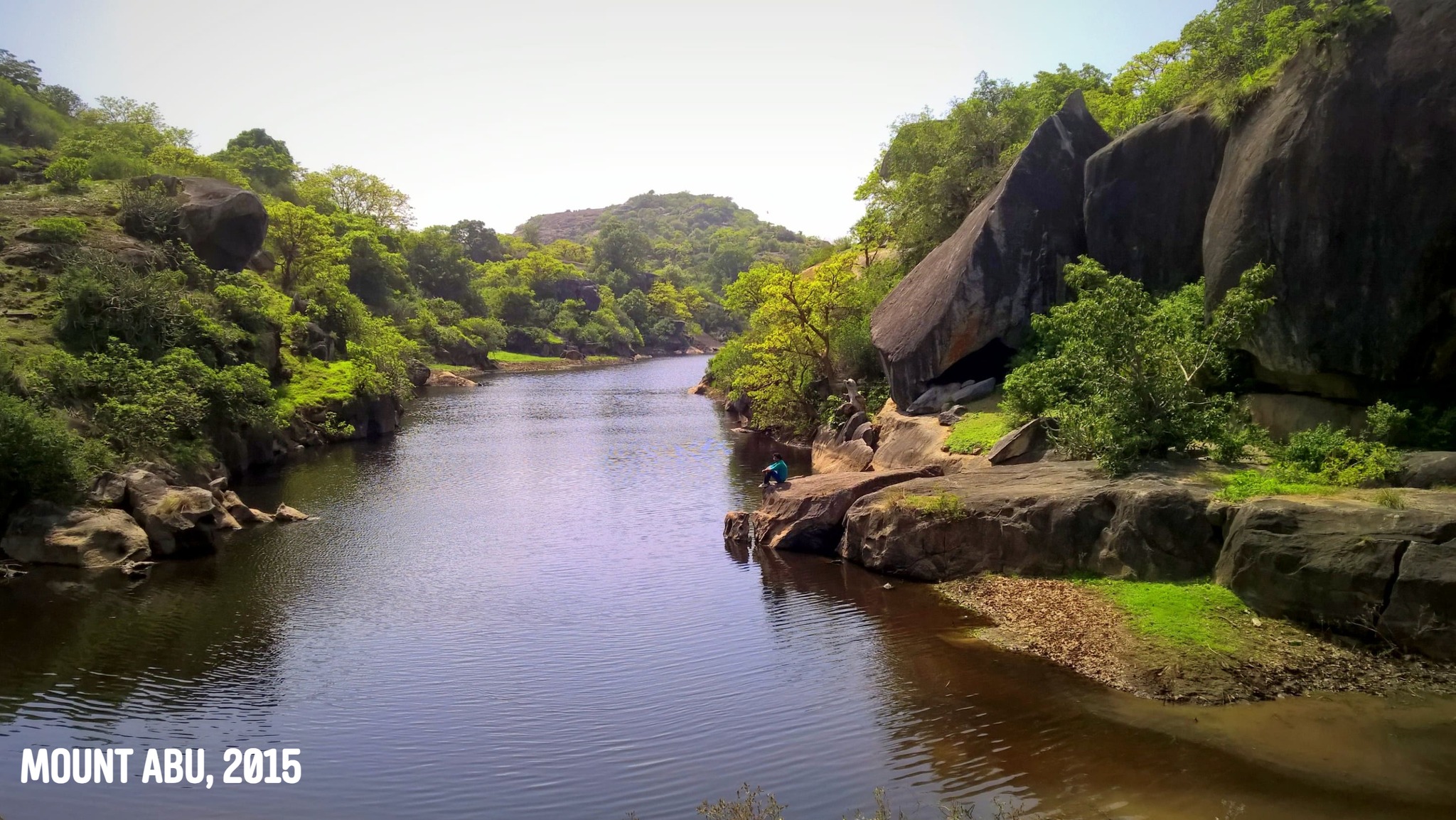
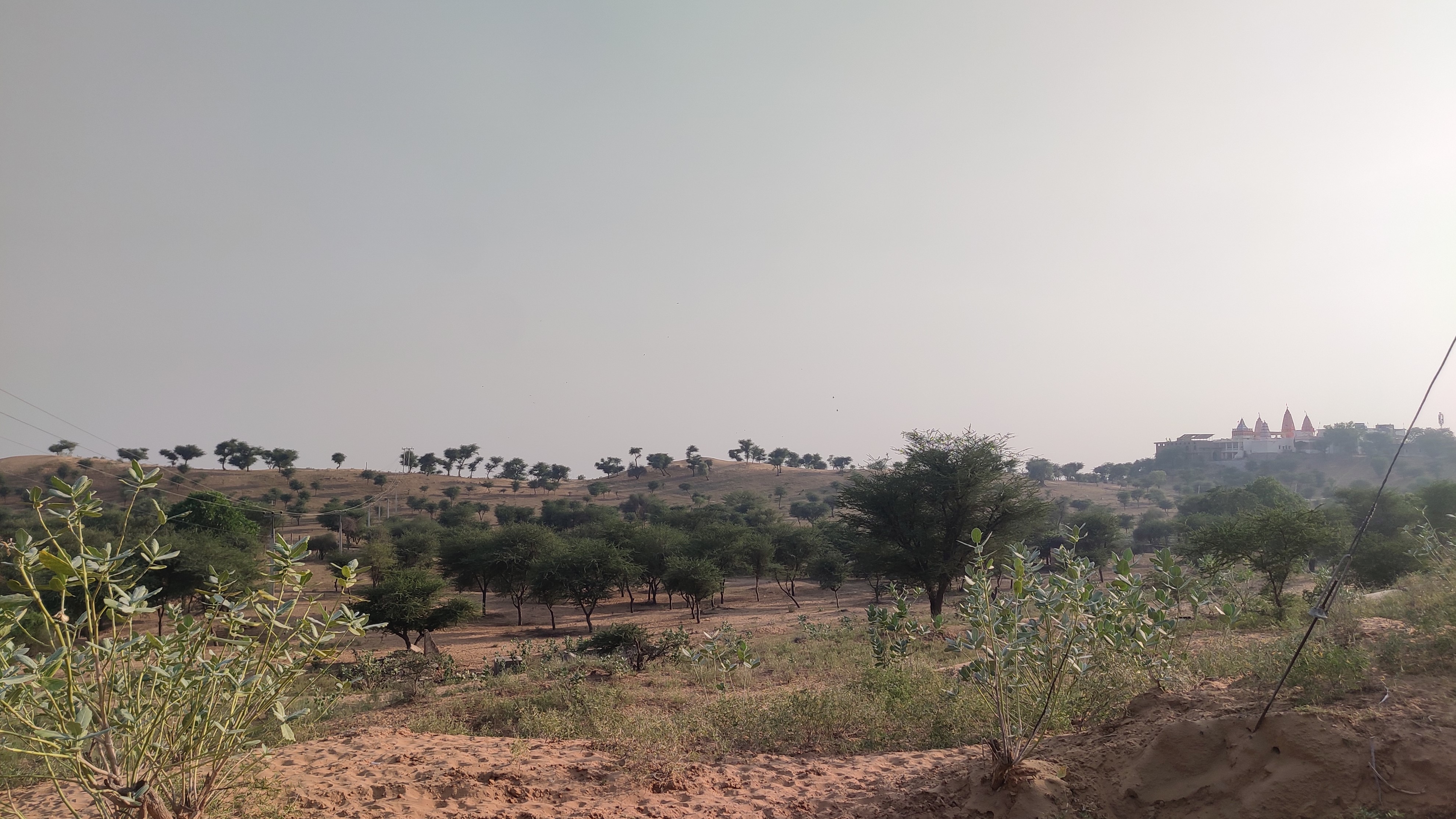
However, it has never been about the destination as far as Rajasthan is concerned. Looking through the State Roadways bus windows, or craning the neck out from cabs and fancily decked-up auto-rickshaws, I have often marvelled at the intriguing shifts in landscapes – straddled by the Aravallis intercepting you shortly after you have entered from the East, with its table-top ranges swishing across like stripes of a tiger, some covered in a rich green cloak, yet others balding with their denuding rocky surfaces exposed, flanked now by swathes of lush green agricultural land, now turning light brown or pink or yellow with short lean trees strewn around as if social-distancing since time immemorial, then slowly turning golden as the ground surface mutates into waves of sandy dunes of the Thar. Abandoned forts and fortress walls crown hill tops every few scores of kilometres. Further south near Mount Abu, the Aravallis look nothing short of a slice from the Western or Eastern Ghats.

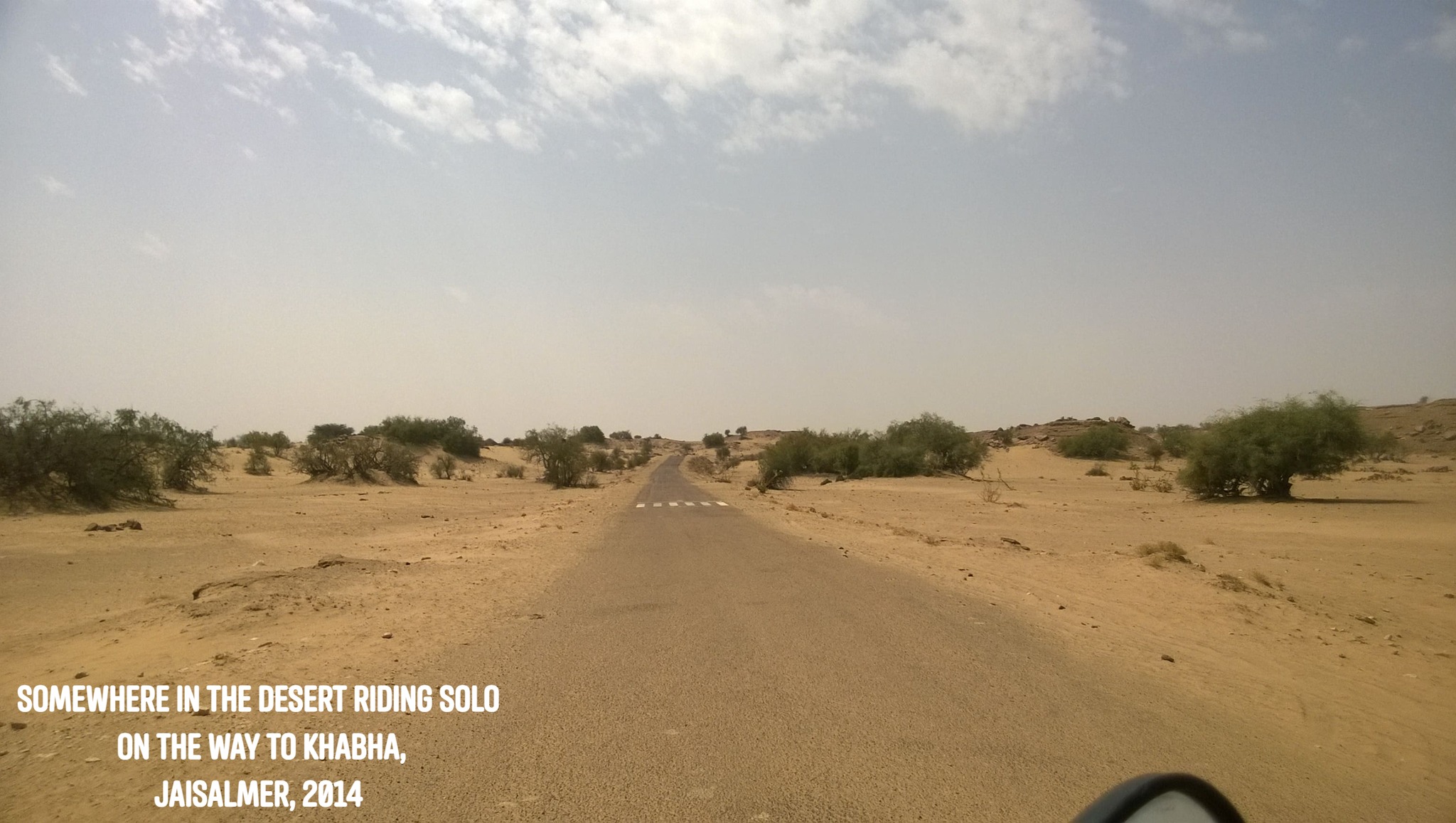
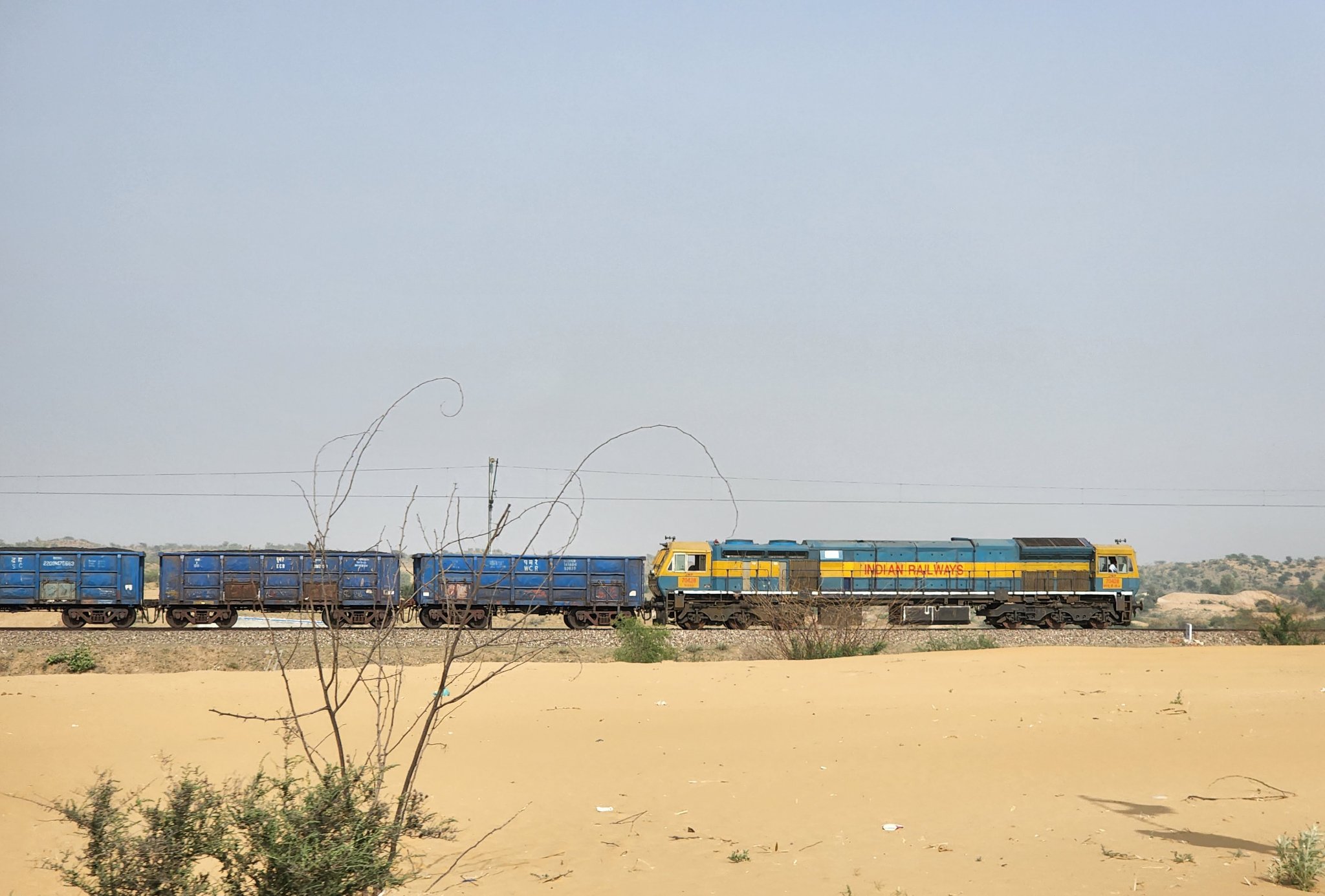
There is also a vast Salt Lake (Sambhar) somewhere at the edge of the desert in the heart of Rajasthan. Villages only turn up after long sprees of nothingness, and even then they are a collation of a handful of houses. Dried river channels cross your path occasionally, their sandy beds hinting at an older time of more abundance. Camels trundle along serenaded by their handlers, their upturned mouths betraying an indifference towards their dreary lives. Nomadic herders appear out of nowhere with flocks of little sheep and goats. Deeper in the desert, if you’re lucky, you may spot a monitor lizard or a hyena lurking amidst the shrubs.

In all of my trips prior to the pandemic, I have often been constrained by the mode of transport. There have been points or locations on the routes, which I have earmarked to return to later at my own leisure, since stopping by then was not an option. There have been roads emanating from the main roads that have often left me wondering as to where they led to. Now at 35, after learning to drive, I finally have the wherewithal to indulge in the fantasies that I harboured while travelling in my erstwhile cloistered fashion. This is an album to celebrate the many facets of the Rajasthan landscape that I have chanced upon on my most recent and some of my very first ever self-driving trips, which will hopefully be enriched with future trips.

Shekhawati and Nagaur: A Quick Getaway

With parents finally being able to visit Gurugram after the second wave of Covid-19 pandemic had receded, it was time to unwind with a weekend trip. We decided to check out relatively lesser-known places, hoping to beat any semblance of crowds. Previously, I had visited Mandawa, and enamoured by the scenery of the areas I had passed through to reach there, I had been longing to have a taste of the larger area surrounding Mandawa – Shekhawati. With our personal vehicle at our disposal, exploring Shekhwati would now be feasible.

Part 1: Shekhawati

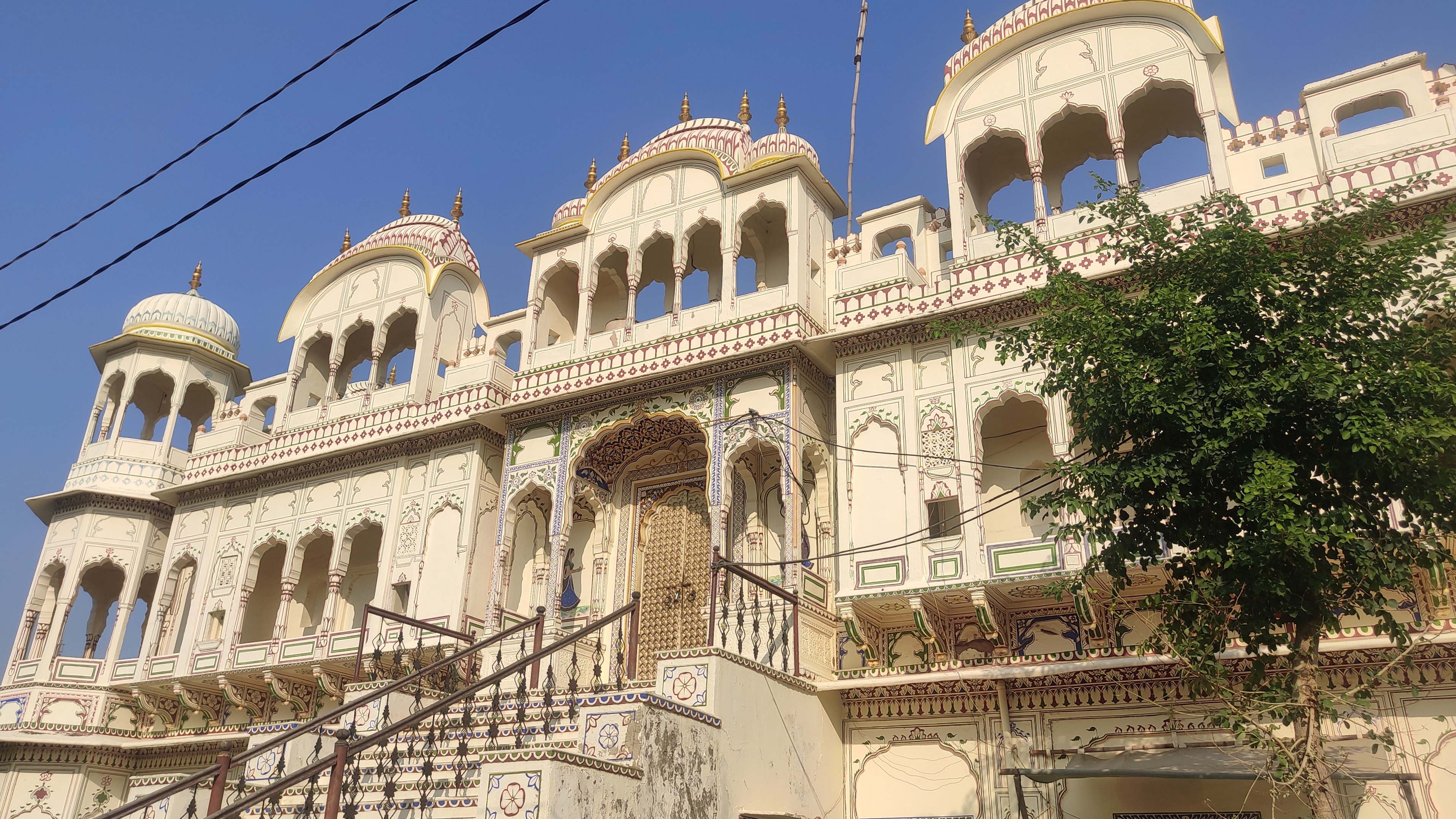
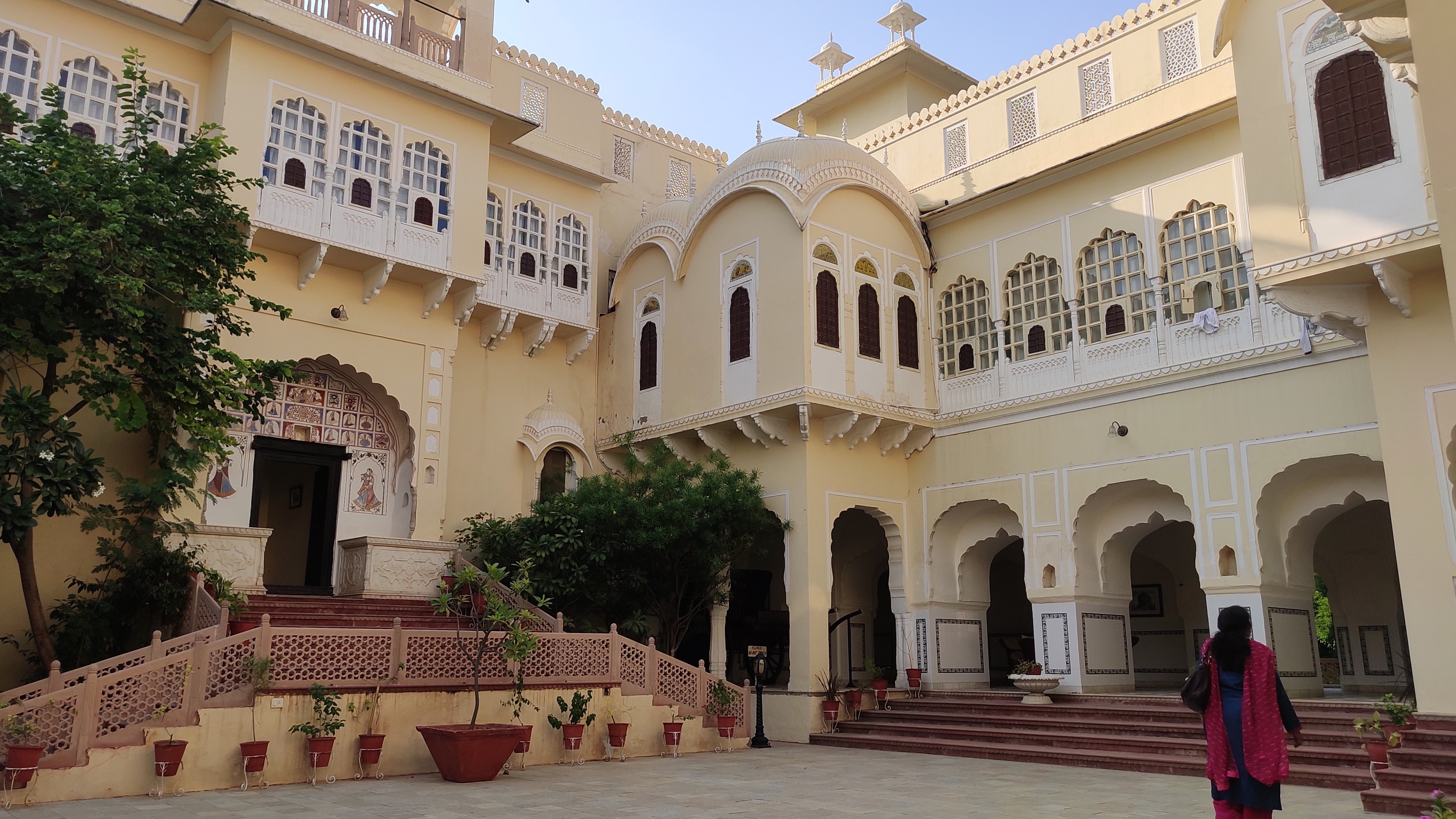
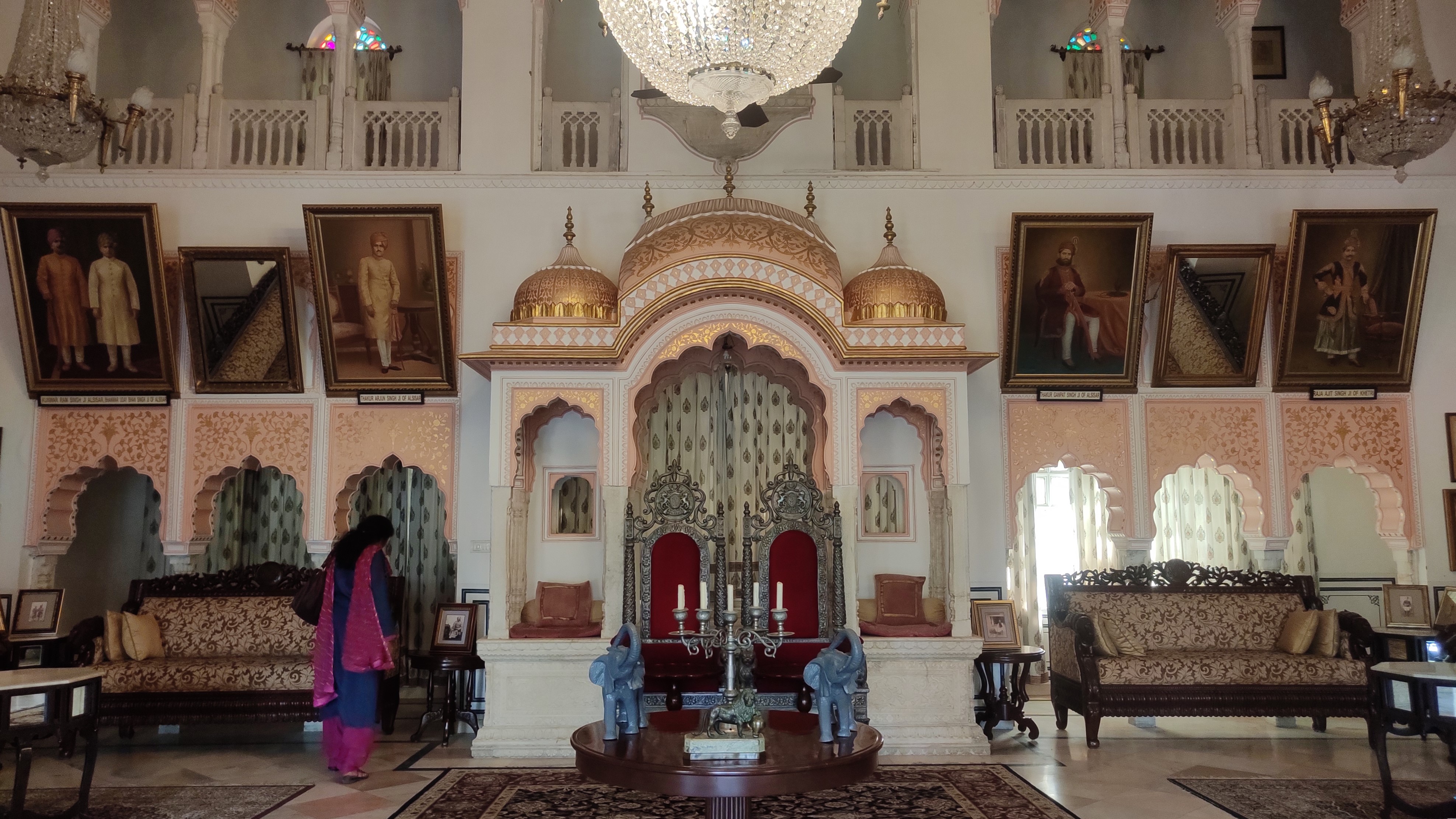
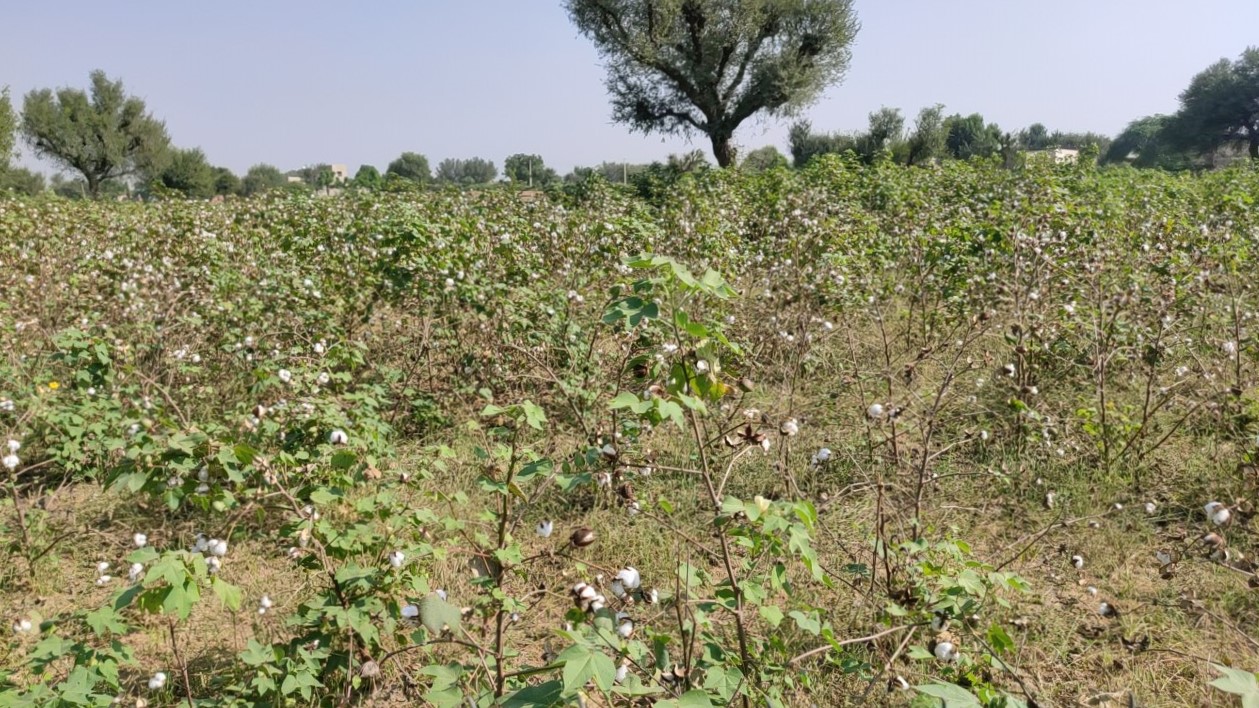
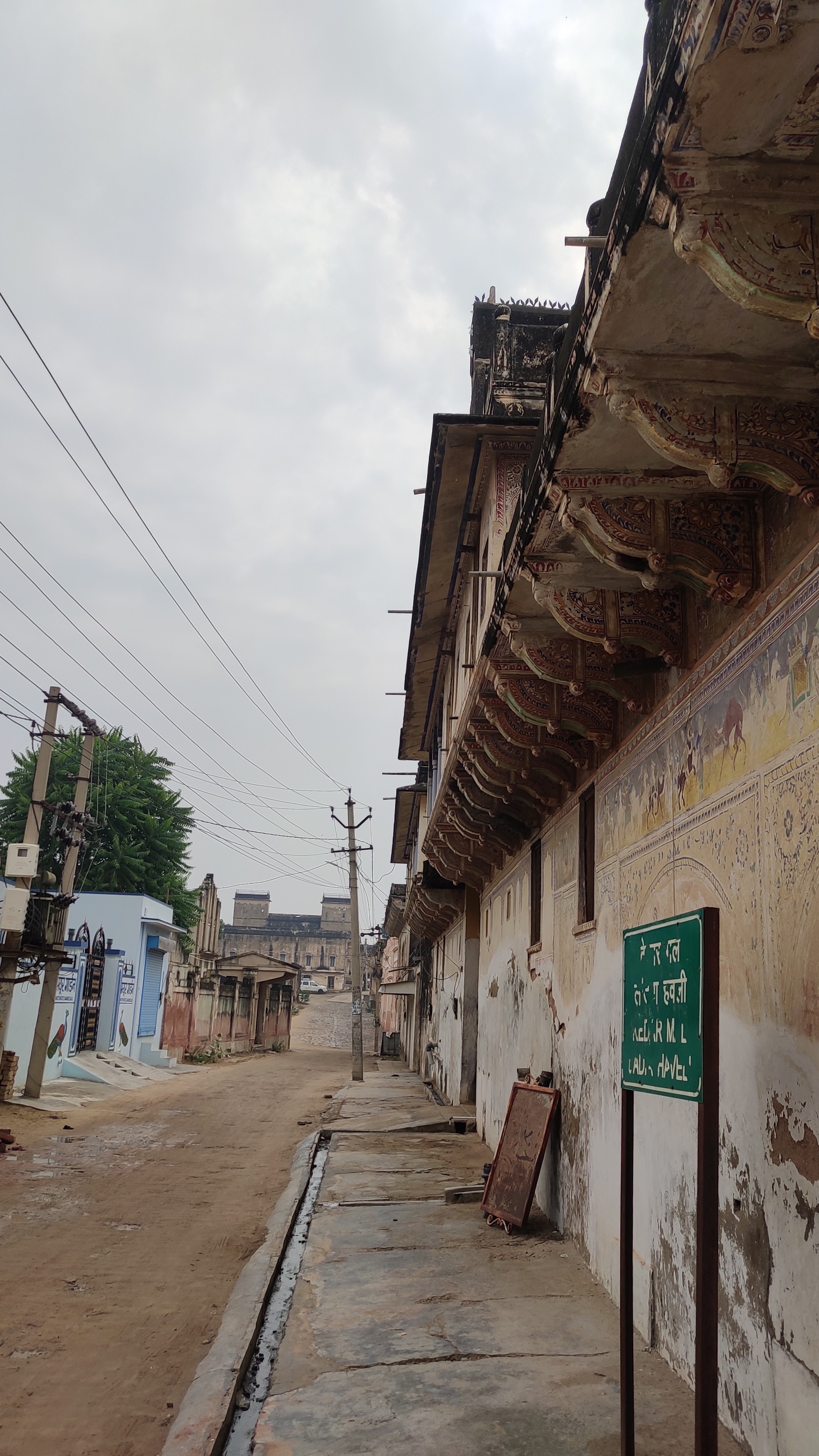
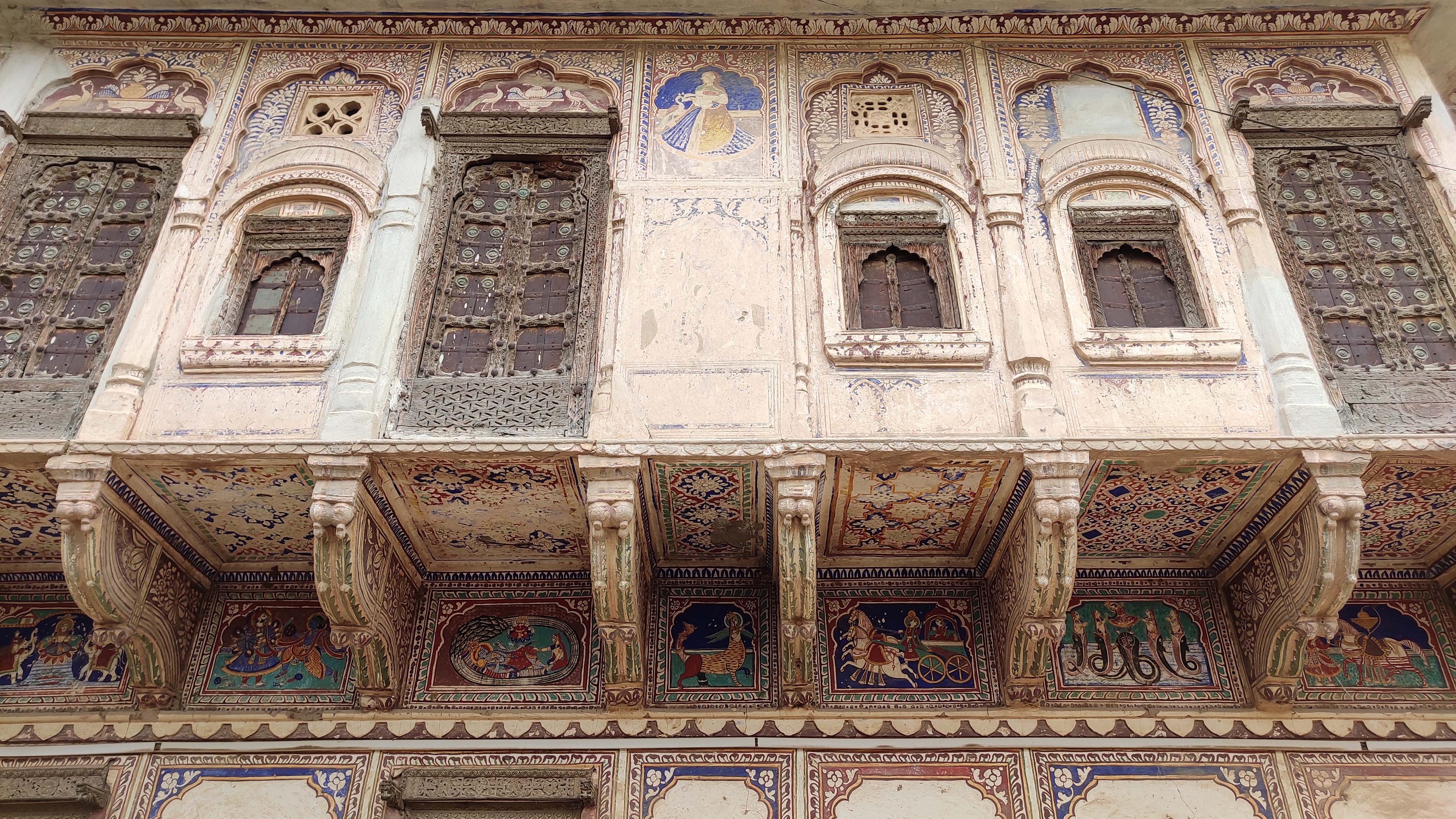
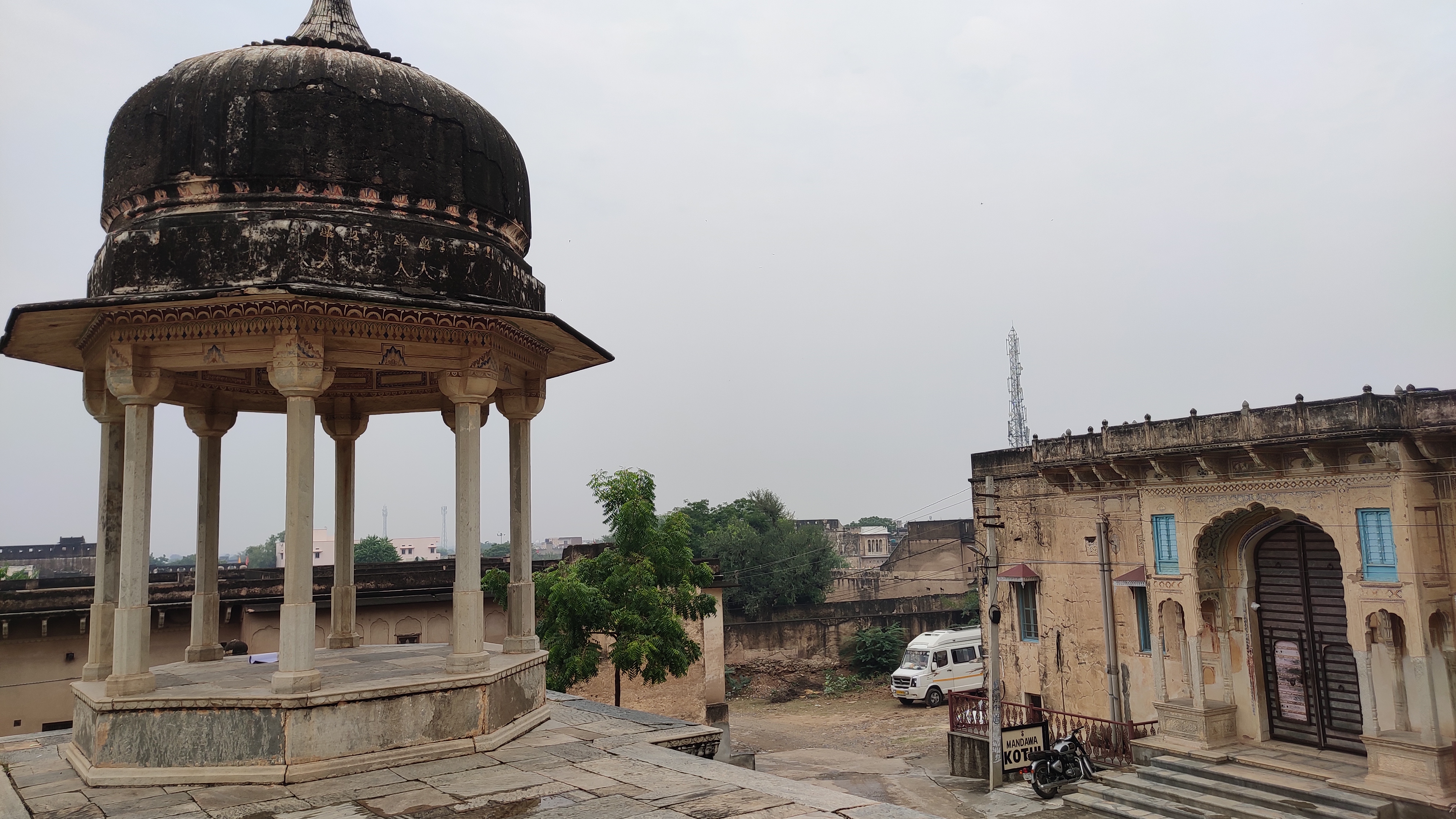
We kicked off our trip by first heading off to Pilani – which my father, on account of being an educator had wanted to see for a long time – via Loharu. After getting a glimpse of the BITS Pilani University, we proceeded to Alsisar, on a narrow arterial road that cut through cotton fields, and part-flat, part-undulating arid patches populated with khejri and babul trees. At Alsisar, cutting through the town on our way to Alsisar Mahal, we were immediately enchanted by the stately havelis sporting painted facades. A tour through Alsisar Mahal, a 18th century palace-turned-heritage hotel standing right in the middle of the town, transported us to a more wistful time.

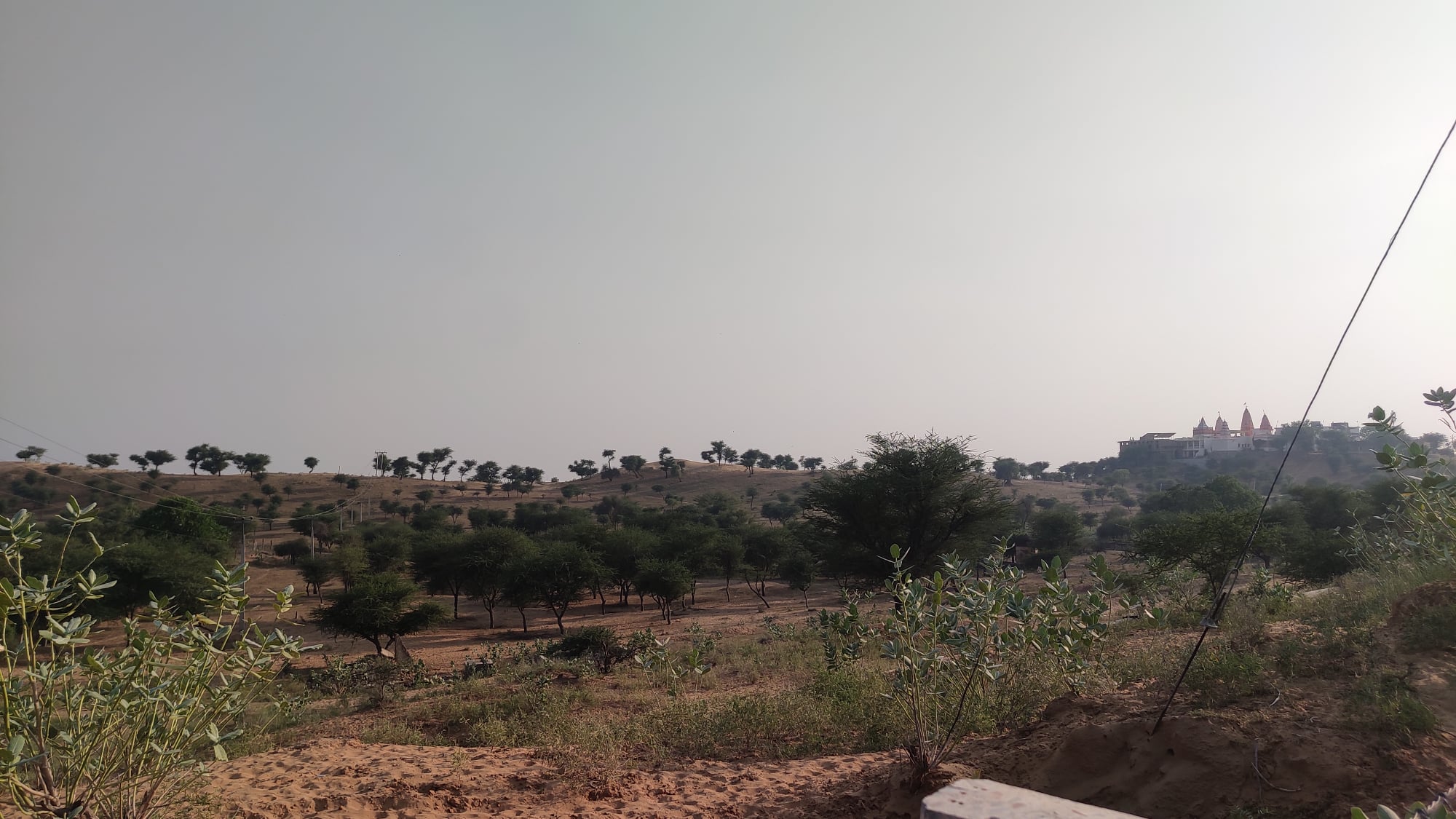
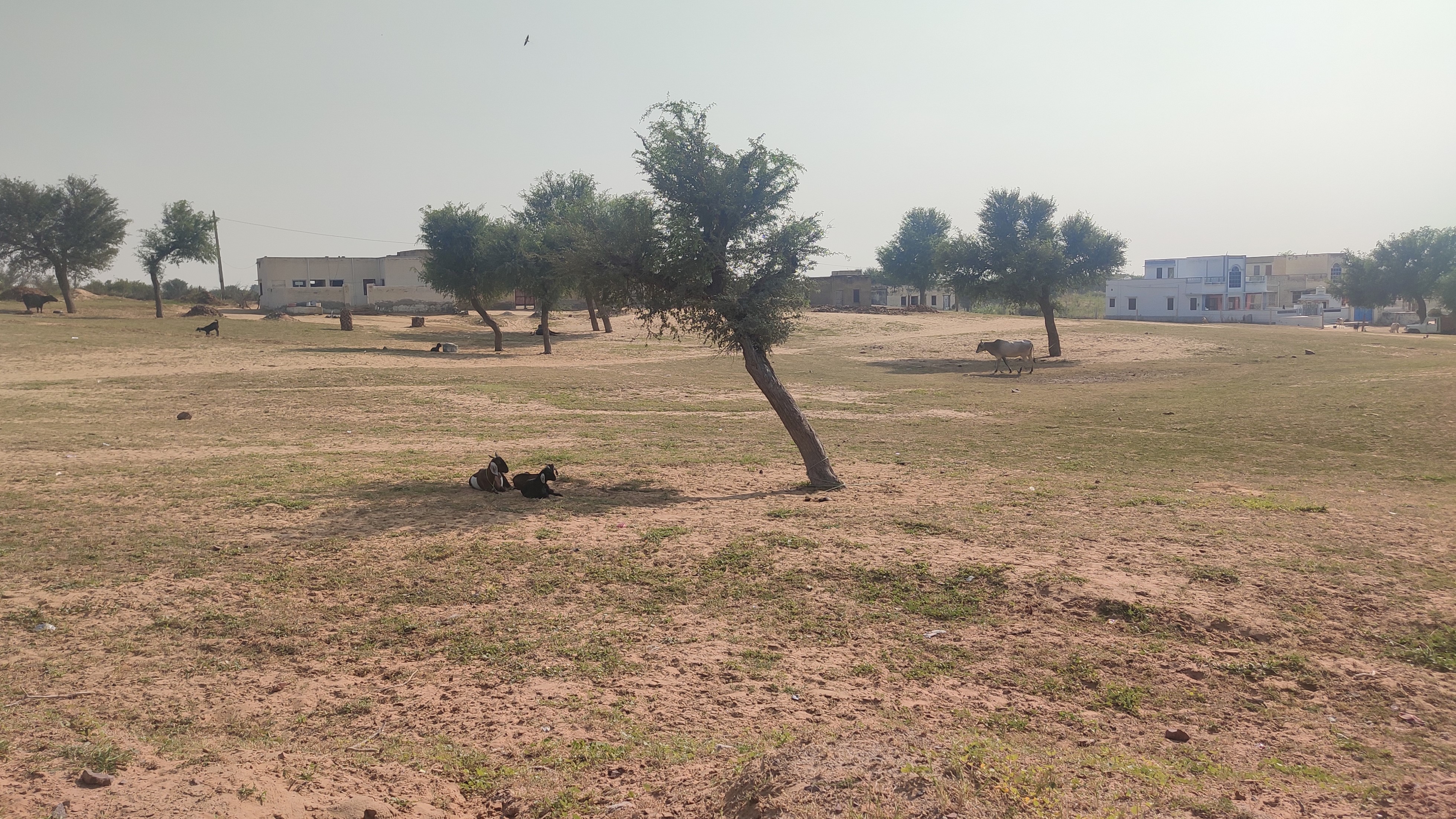
At this point, we did not have an itinerary for the rest of the day, the only objective being that we reach Mandawa by the end of the day. So, we then drove towards Malsisar, a twin town of Alsisar – it is said the towns are named after two sisters, Alsi and Malsi, respectively – and took a turn left towards Bissau just at the periphery of Malsisar. Now, as the cotton fields gave way to patches growing millet, with the landscape gradually turning more arid, cattle lounged about in the shade of the sparsely scattered trees. Soon, as we approached Bissau, dunes started appearing in the distance – we were at the edge of the Thar.

Our next stop was Churu, known as the gateway to the Thar and also one of the three largest towns of Shekhawati, the other two being Jhunjhunu and Sikar. Intent on seeing the Churu fort, we had to drive through the city centre, that was very busy on account of traffic on rather narrow roads, flanked by havelis on both sides. However, the fort not being open in the sense that tourists could visit, we concluded our Shekhwati sojourn for the day and started south towards Mandawa.

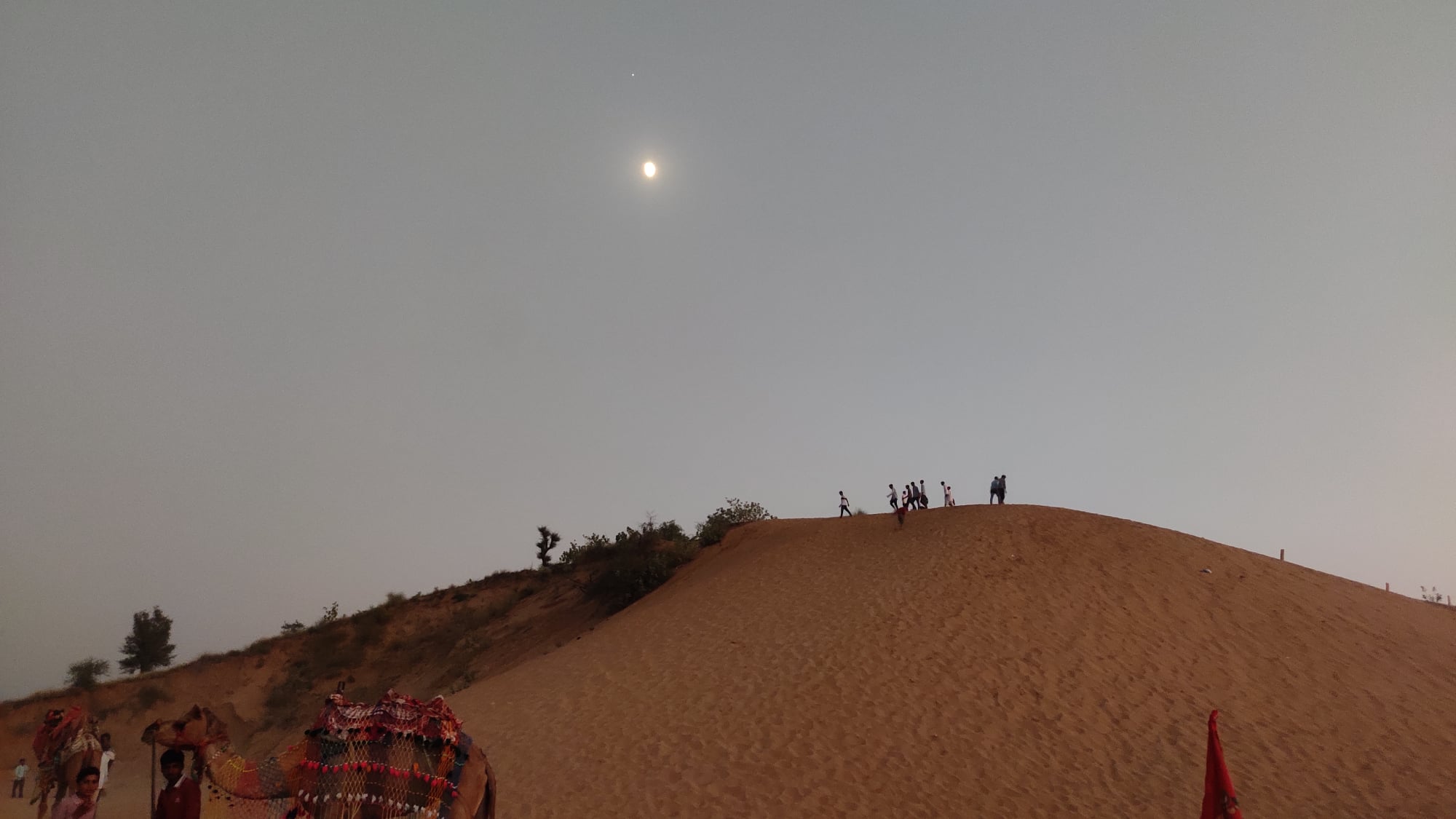
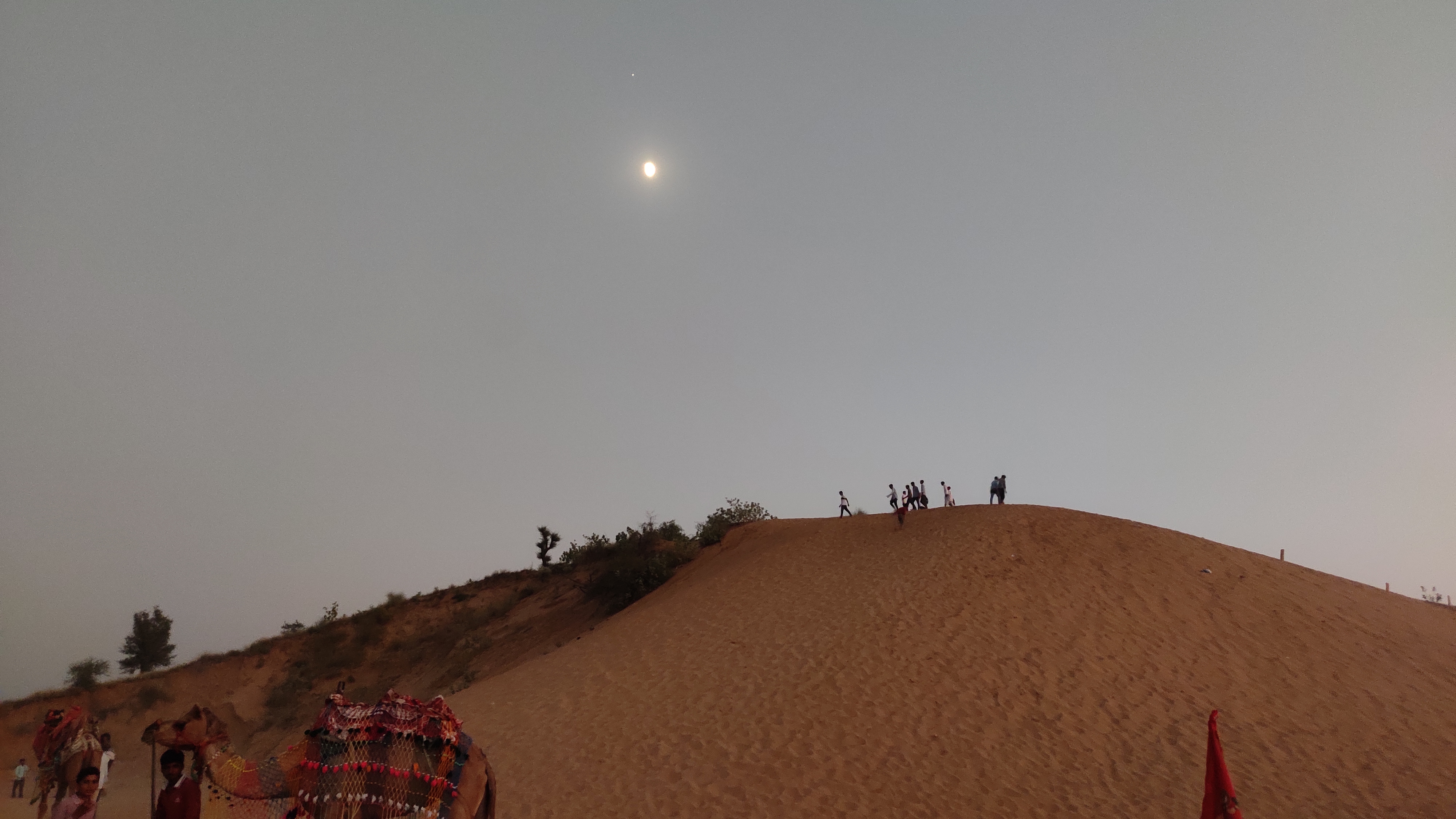
As evening fell and we approached Fatehpur, we passed by sand dunes shining in the moonlight, stopping at one particular sand dune where camel rides were being offered. Soon, passing through quite narrow lanes of Fatehpur, another town abounding in havelis, we reached Mandawa around 7.30pm and checked-in for the night at a fairly new haveli. The haveli, the receptionist told us, had recently played host to a crew that was in Mandawa for shooting an OTT series featuring Sonakshi Sinha (this series later turned out to be Dahaad). Following dinner at the rooftop on the haveli, we went off to sleep, as a day-long detour from Shekhawati awaited us the following day.

Part-2: Nagaur

The following day, after breakfast, we started off for Nagaur, a place that had been on my radar for a few years now. Once again passing through the haveli-laden, narrow lanes of Fatehpur, we headed west this time, straight into the Thar desert. As the the density of houses grew thinner, so did vehicular traffic, however, the traffic was supplanted with hordes of saffron-clad devotees walking by foot to some place that we did not know yet. In echoes of kawad yatra that happens in North India in July, trucks laden with similarly attired devotees, playing bass and disco-beat laden devotional songs too were headed in the same direction. We realized they were headed to the Salasar Balaji Temple once we crossed Salasar.

Beyond Salasar, as the two-lane highway winded through the arid, undulating land, we would be alternating between sights of crests of low sandy mounds rolling in the distance when riding a crest ourselves and the prospect of climbing up a pass between sandy mounds when passing through a trough. The cherry on top was the tarmac, smooth and devoid of a single pothole, making it a pleasure to drive on. Sparsely populated towns, that we mostly by-passed, greeted us on the highway, before we entered the throes of the conspicuously bigger city of Nagaur, and promptly navigated through, first the wider streets, and then the narrow lanes, on our way to the older part of the city.

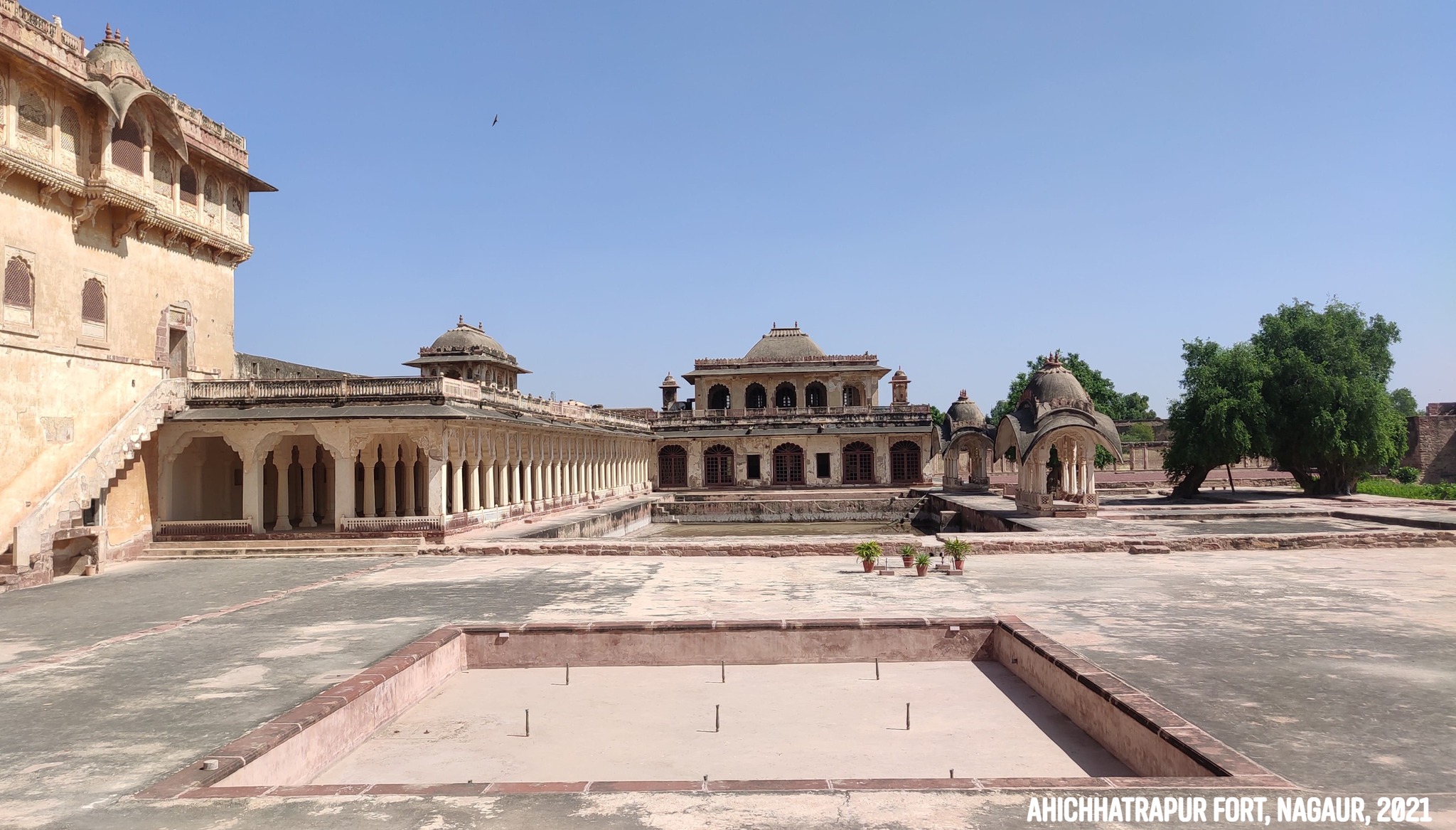
Being on the offbeat track, Nagaur is not heard of as often as the likes of Jaipur, Udaipur, Jodhpur, Jaisalmer etc., and yet turned out to be a pleasant surprise, what with a UNESCO site in the form of the Ahichhatrapur Fort or the Nagaur fort. Nagaur once served as an important stop on trade routes passing through the Thar desert. But it has had a chequered past ever since it encountered Ghanznavid invasions in the 9th-10th centuries. It kept changing hands and was fought for amidst bigger states placed around it, but its protectors fought equally hard to retain it.

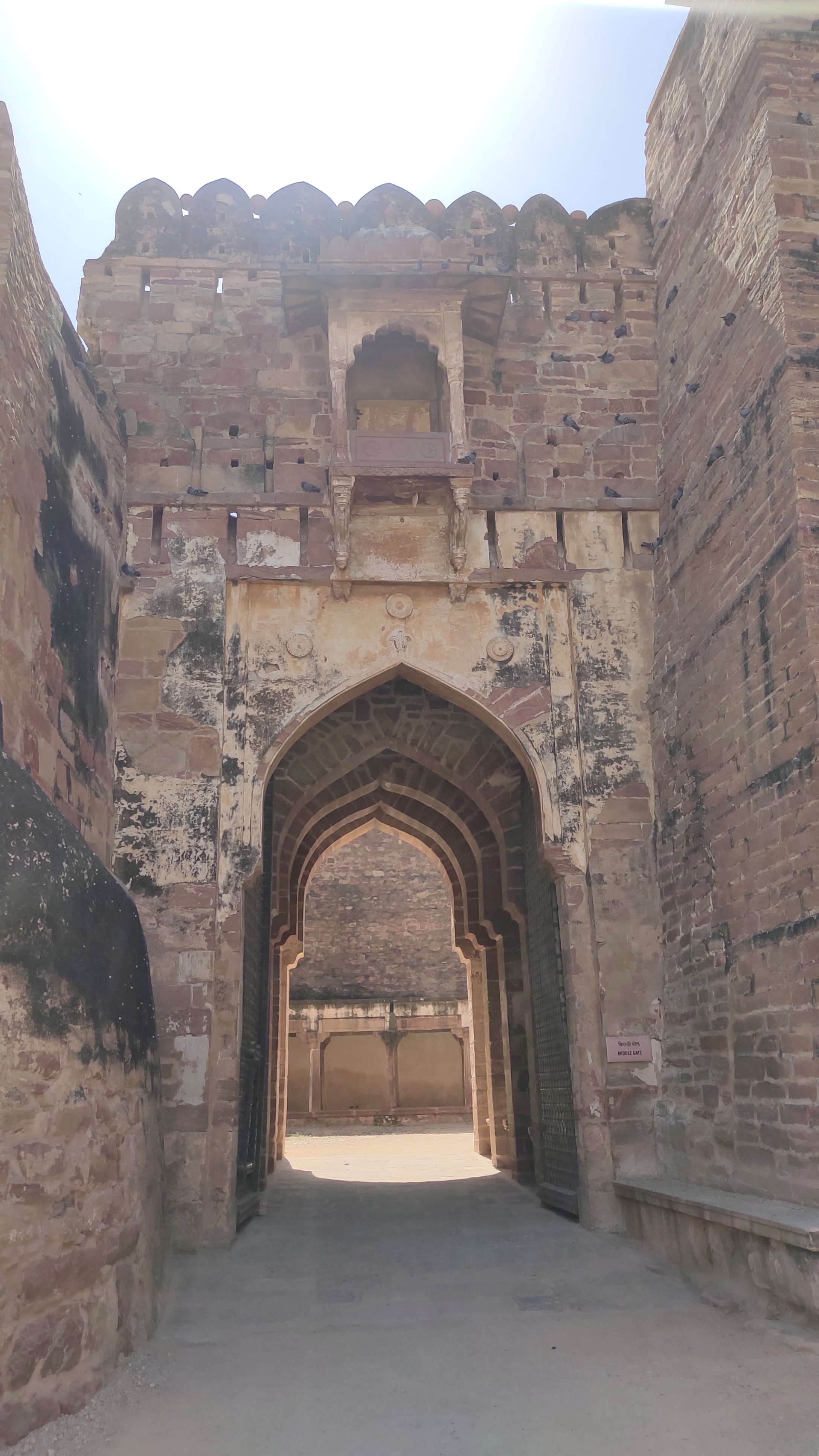
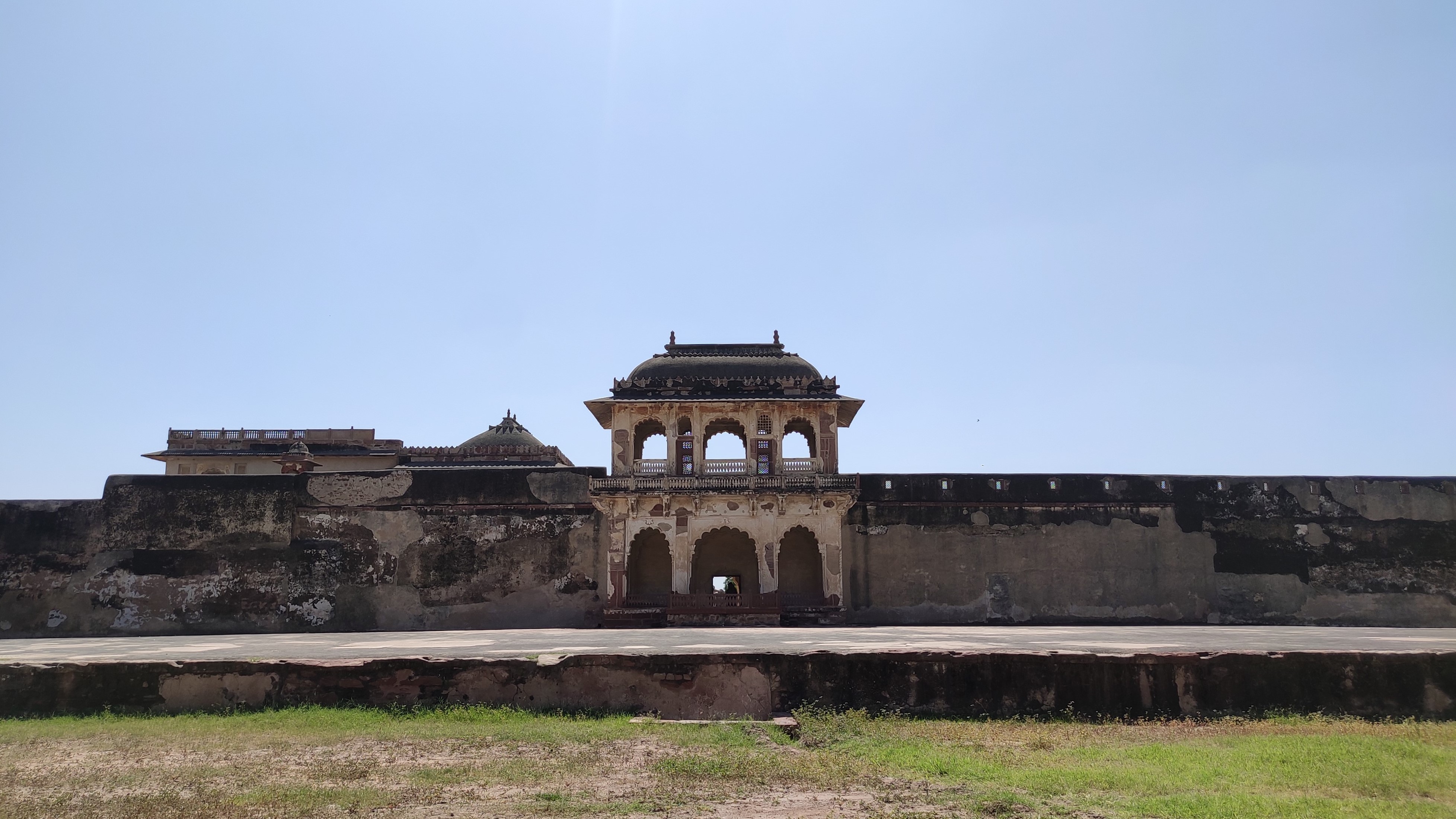
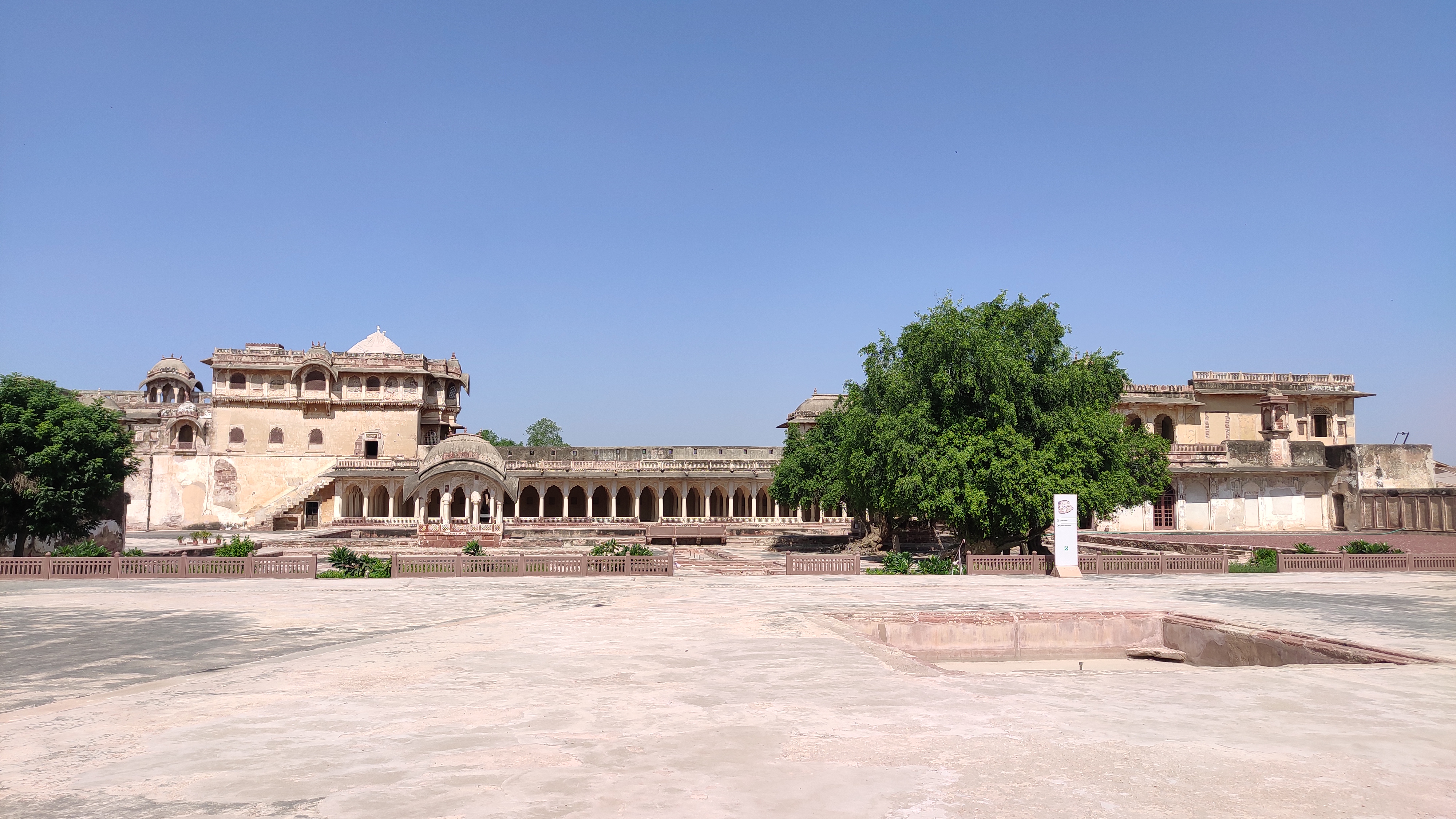
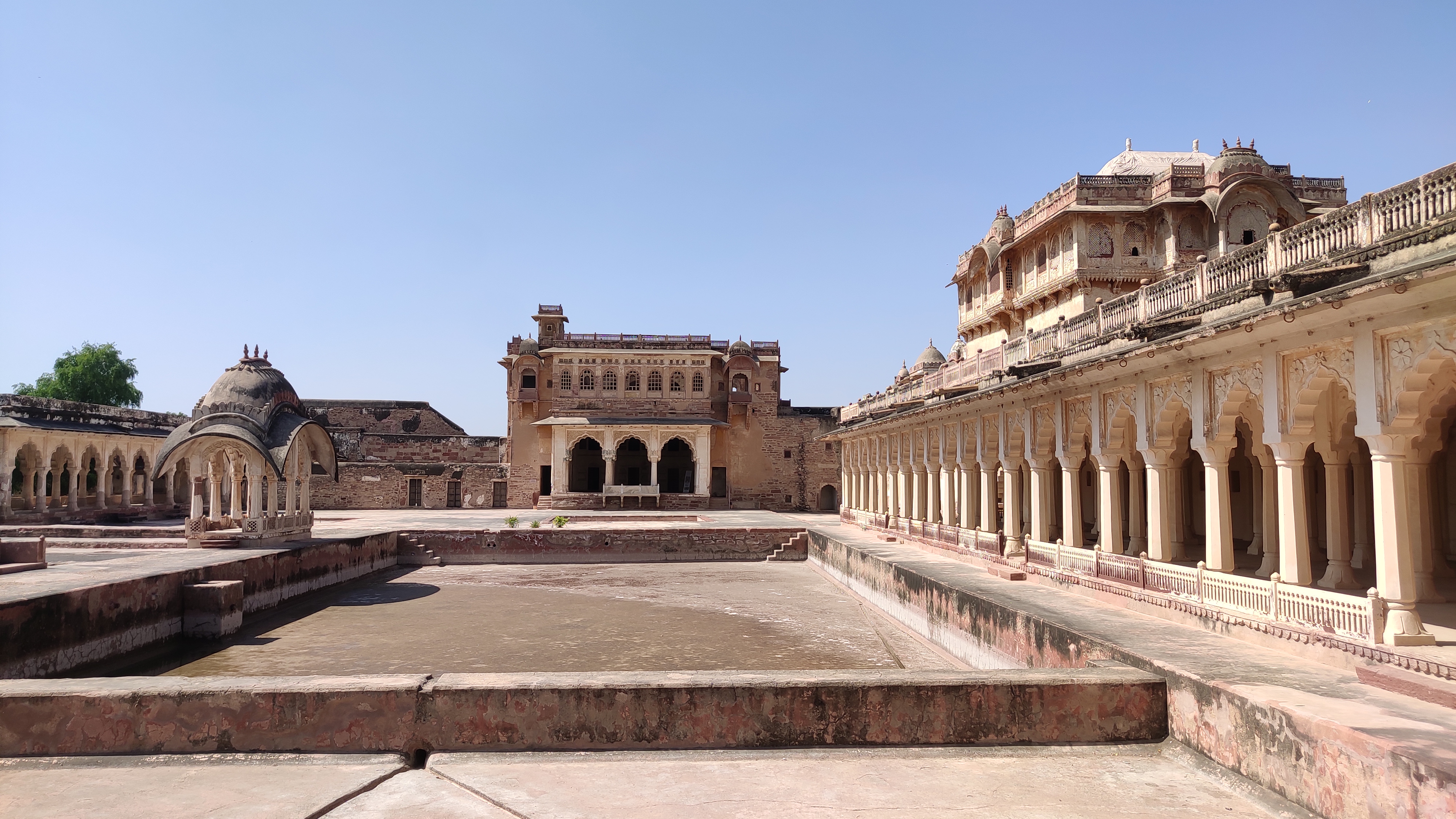
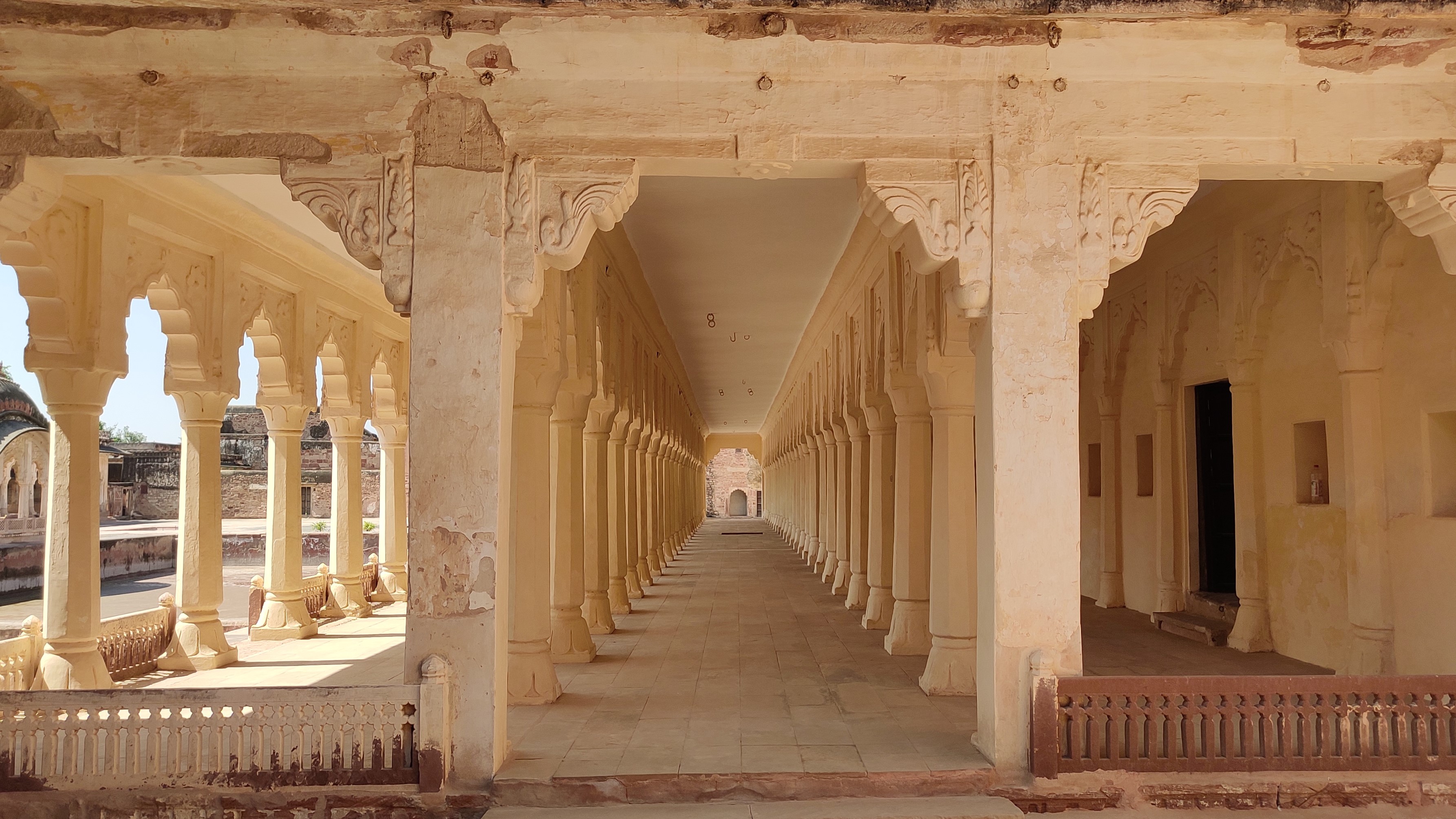
Inside the Ahichhatrapur fort, itself opulently built with a formidable fortification wall enclosure, we walked through the multiple palaces, namely, Sheesh Mahal, Deepak Mahal and the Hadi Rani Mahal, interspersed by large courtyards with lush gardens, placid pools and exquisite fountains. We lost ourselves in the corridors running from one arched-door to another, with the pillars sporting colourful motifs and the ceilings rife with frescoes. After spending almost 2 hours, being awed by the beautiful antiquities inside the fort, a different world in itself, we had our lunch around 2.30 pm and were back by 6 PM at Mandawa, where we checked into the 200-year-old Radhika Haveli.

Part 3: Mandawa

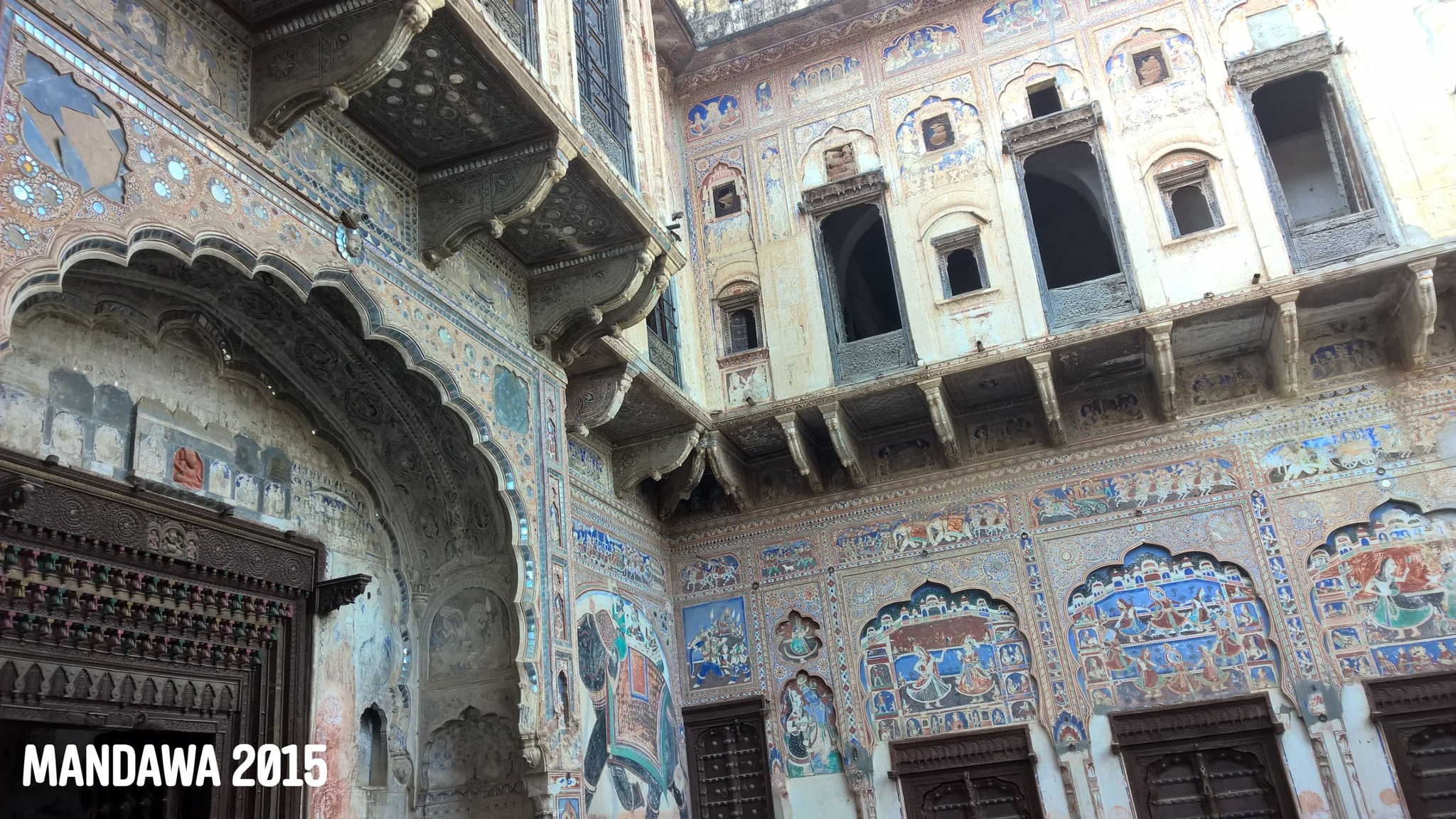
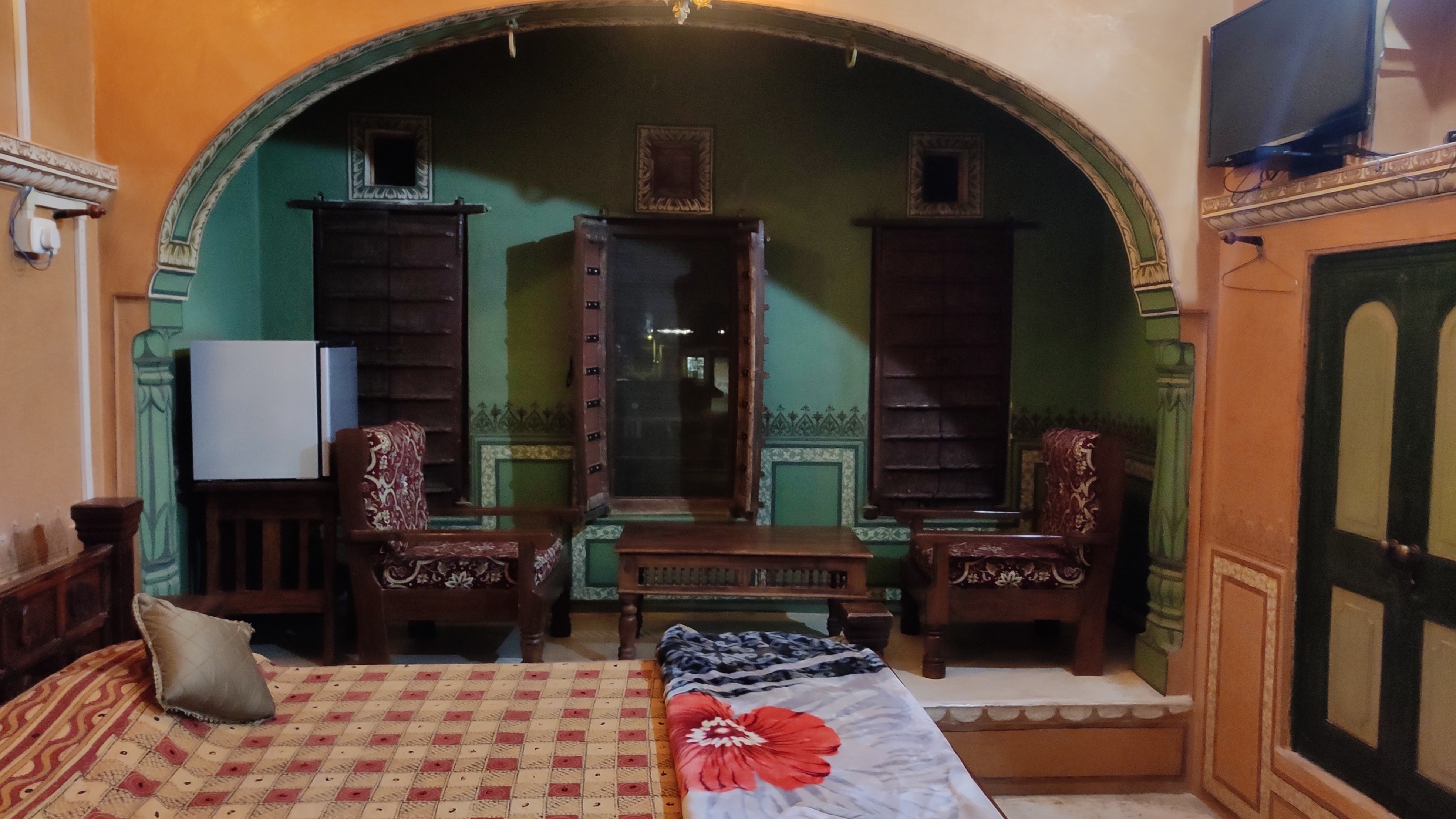
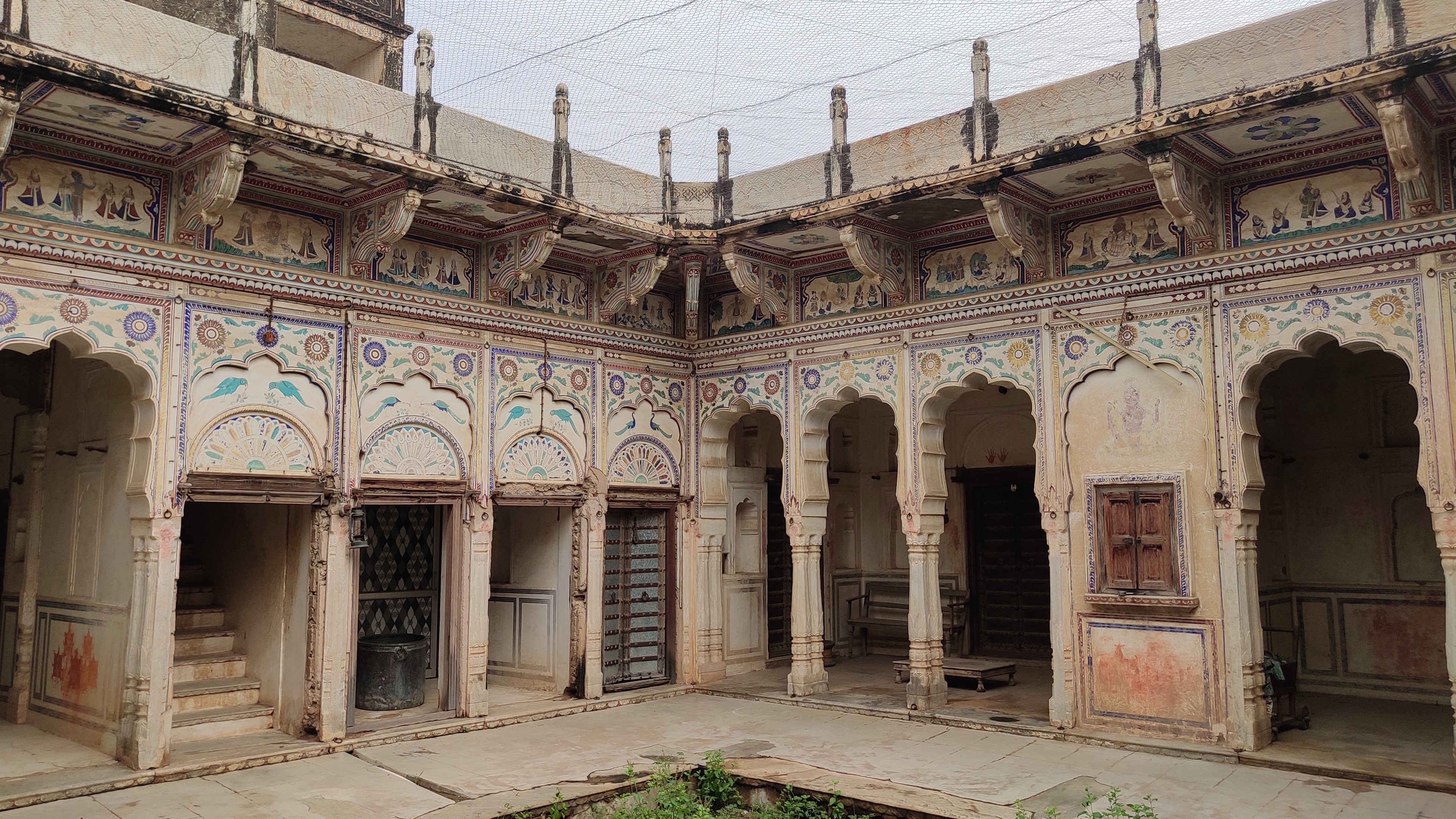
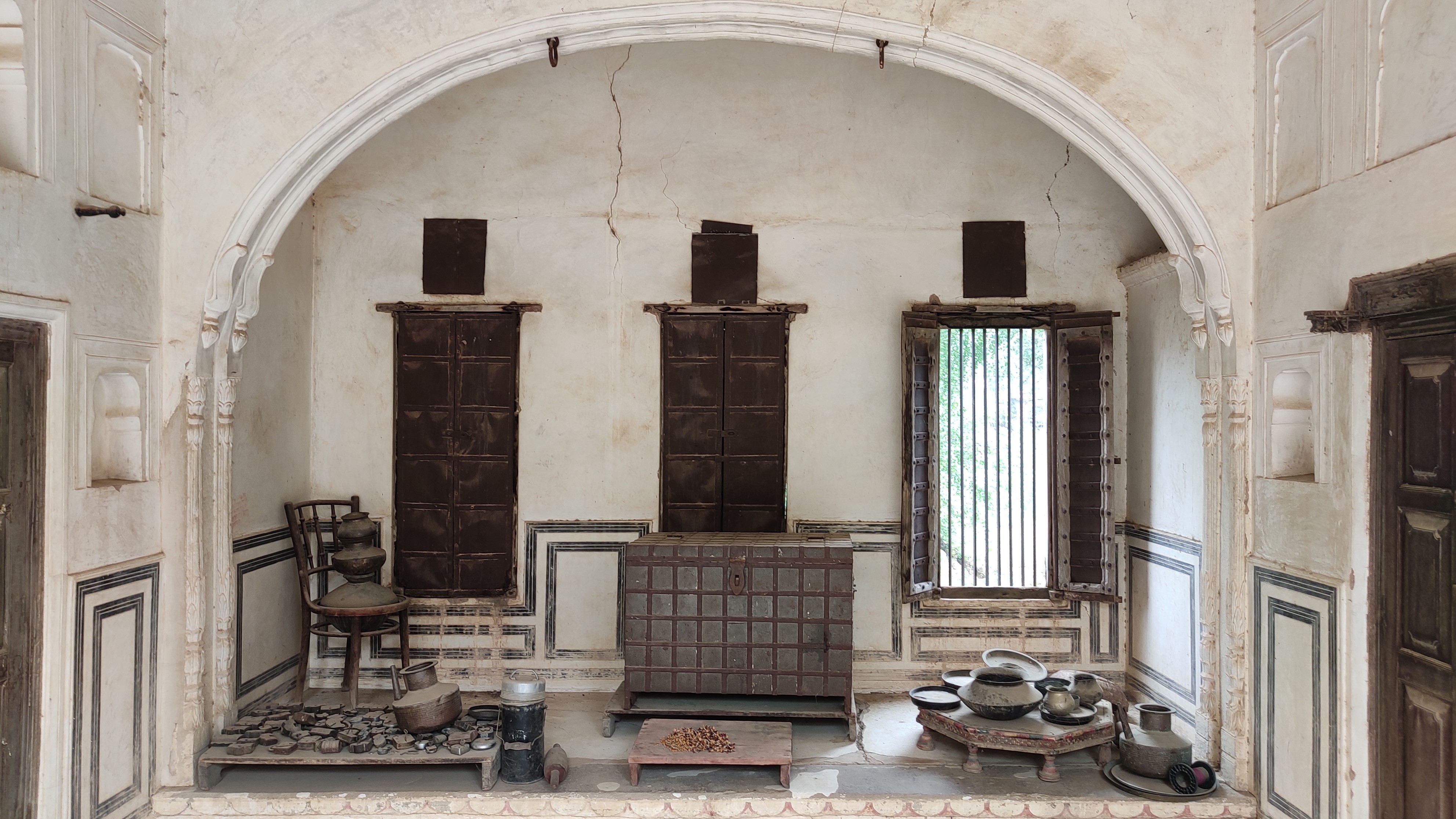
Radhika Haveli is a typical Shekhwati style haveli with a large courtyard in the middle of a rectangular-shaped two-storeyed living area. Rooms lie stacked one after another, ranging from sizes small to big, with old-style windows, with their painted and glazed wooden shutters, opening to the lane outside. We realised the floor of our room was two-tiered, with the higher tier, the narrower of the two, running by the side of the wall with the window. The old queen-bed lay between the cylindrical pillars holding up the ceiling, and a coffee table along with old-style chairs stood beside the window.

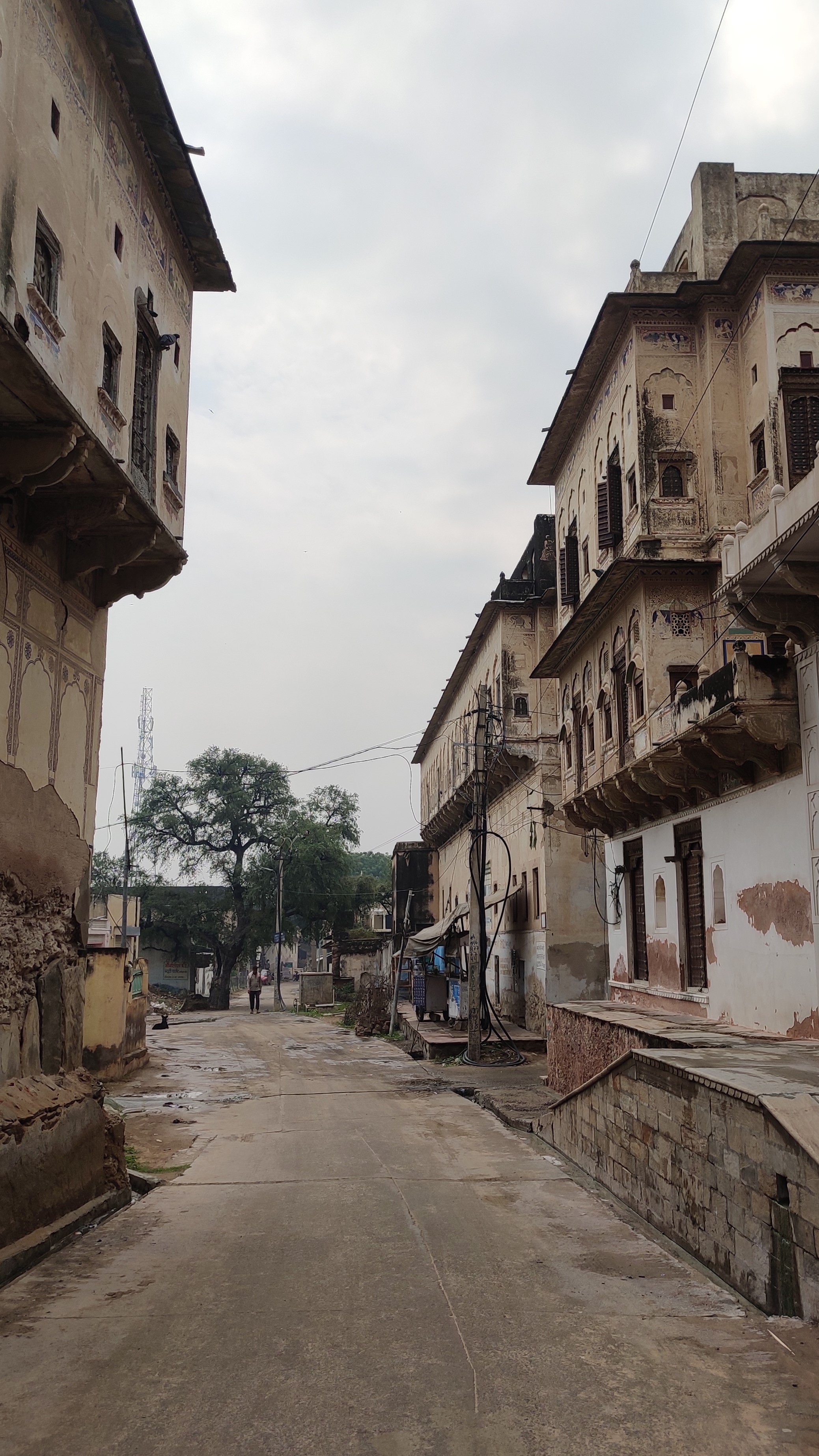
At around 8 PM, stepping out by foot in search of a pharmacy, we were immediately confronted by a desolate lane, which the faint streetlights did little to illuminate, prompting us to retreat and resume the search with our car. Back in the room, when we switched off the lights using the lever on the antique round-shaped bakelite base, we were engulfed by an atmosphere of eery quietude.

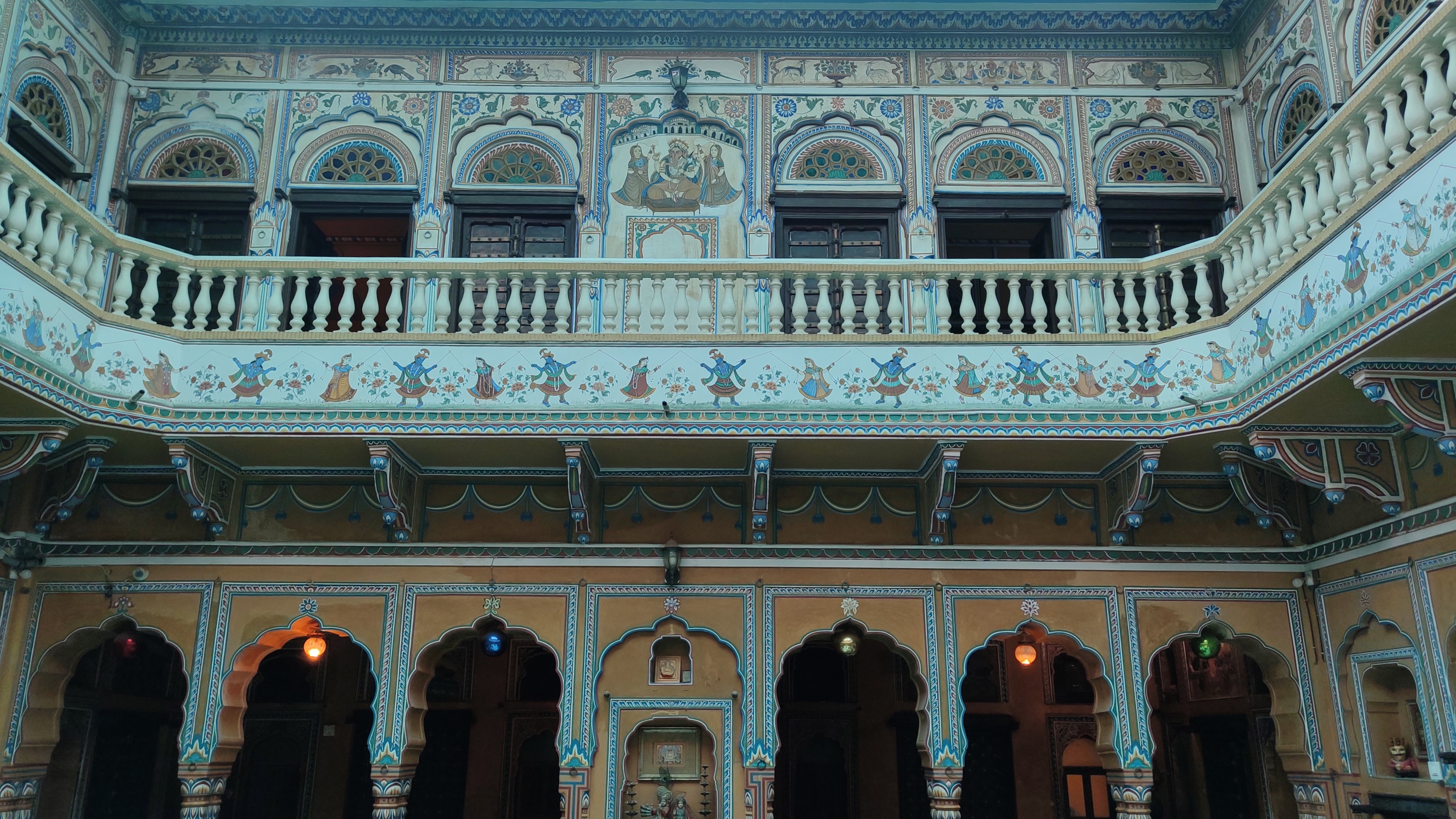
The next morning, the hosts at the Radhika Haveli pampered us with a complimentary sumptuous breakfast comprising poha, puri-sabzi, idli-sambhar, fruit, tea and coffee and were still flooding us with so more food, when we had to decline because we were beyond full. Thereon, through the maze of streets criss-crossing the agglomeration of painted havelis, we proceeded to do a tour of havelis, to name a few, Jhunjunwala haveli and Chokhani haveli, and spots where scenes of some famous movies, namely, P.K. and Bajarangi Bhaijaan, were shot.

Noon onwards, we immersed ourselves in appreciating and purchasing some of the local art and handicrafts, of which Mother was simply not getting enough of. By 2 PM, we were still not done, as the variety on offer was overwhelming, and Mother was having a hard time choosing, her misery ending when Father said, ‘why choose when you can take all!’ By 2.30 PM, with a six hour journey lying ahead of us, we had to bid adieu to Mandawa, with a heavy heart and unsatiated mind, and head back to Gurugram, reaching by 8 PM. The good thing about places that one leaves feeling pangs of ‘unfinished business’ is that one could always go back to those places.

Trip Summary

Day 1
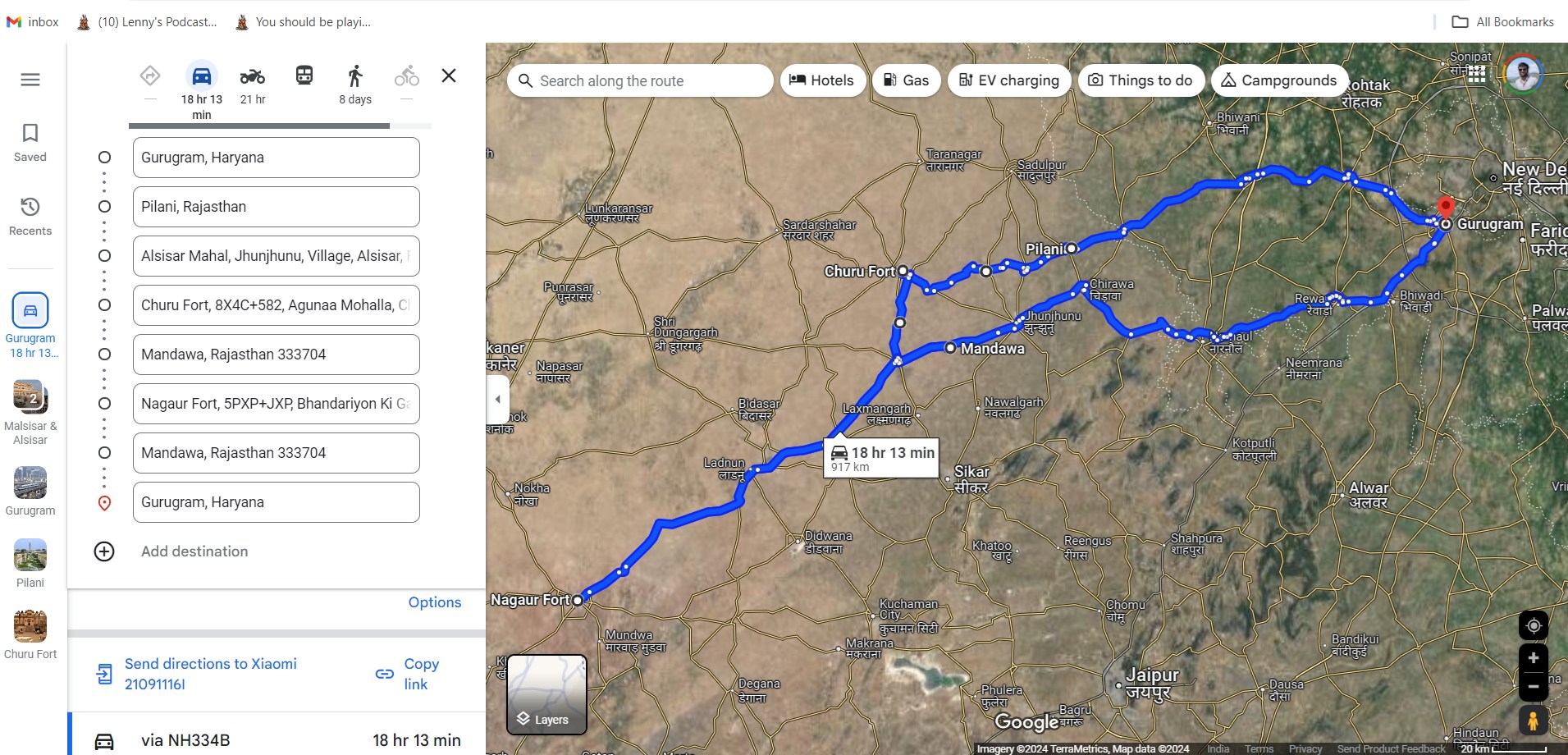
Gurugram to Mandawa via Pilani, Alsisar and Churu (320 km).
Overnight stay in Mandawa.

Day 2
Mandawa to Nagaur and back to Mandawa (370 km).
Overnight stay in Mandawa.

Day 3
Mandawa to Gurugram via Jhunjhunu (240 km).

Of Steps, a Stepwell and a Salt Lake: Bairat, Abhaneri and Sambhar

In August-end, a full month after the 2nd vaccine shot, we finally gathered the courage to venture out on a 1000+km road trip. It would also be my first ever 1000+km driving on my own, after having learnt driving a few months prior. Moving to the suburbs of Gurgaon has meant that I now live at the gateway to my most favourite area of this great country – Rajasthan (though it only ties with Odisha for my affection!). So, it was only natural that my first long drive be to places in Rajasthan that have been on my bucket list for ages now.

Beejak ki Pahadi, Bairat

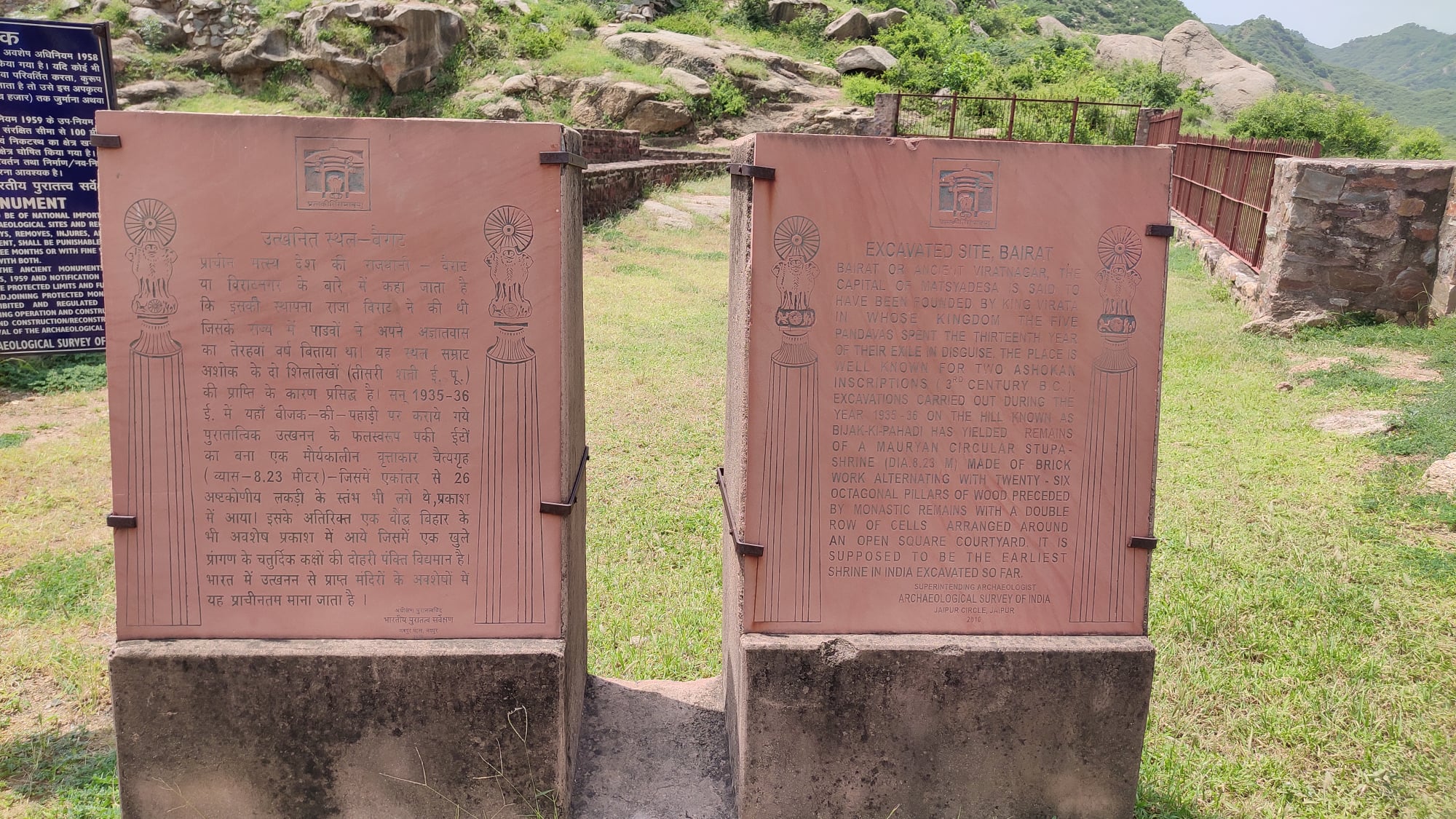
In a nook in the Aravallis, near a town called Bairat, are remains of a Buddhist Monastery of unknown antiquity, where Ashokan inscriptions from around 3rd century BC have been found. It can be reached by veering off the Delhi-Jaipur Expressway 70km before Jaipur on NH 248A, then taking a right turn onto a narrow road from Bairat town, and finally, taking a mix of long flight of steps and ramps to the top of a hill.

Bairat or erstwhile Viratnagar itself is said to have been founded by King Virata, in whose kingdom the five Pandavas (of Mahabharata) spent the thirteenth year of their exile in disguise. The site of the monastery affords a majestic view of the valley below and undulating hills on the horizon.

P.S.: I came to know later that this is one of the oldest places of worship that we have recorded history of in India .

Abhaneri

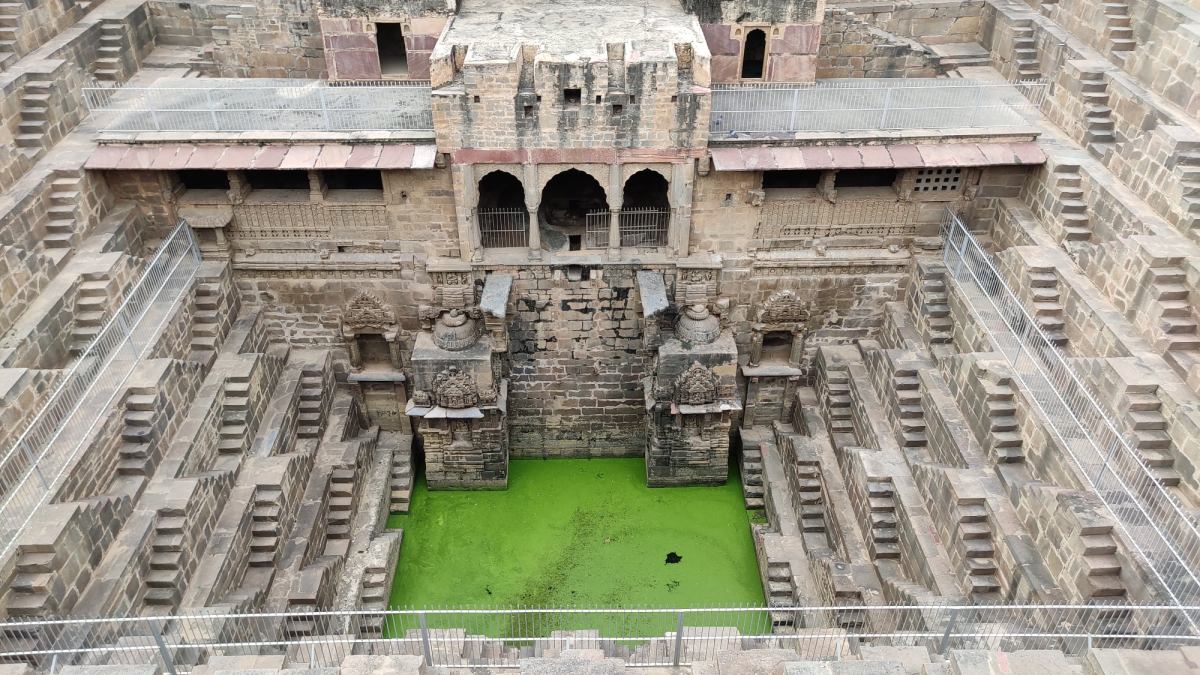
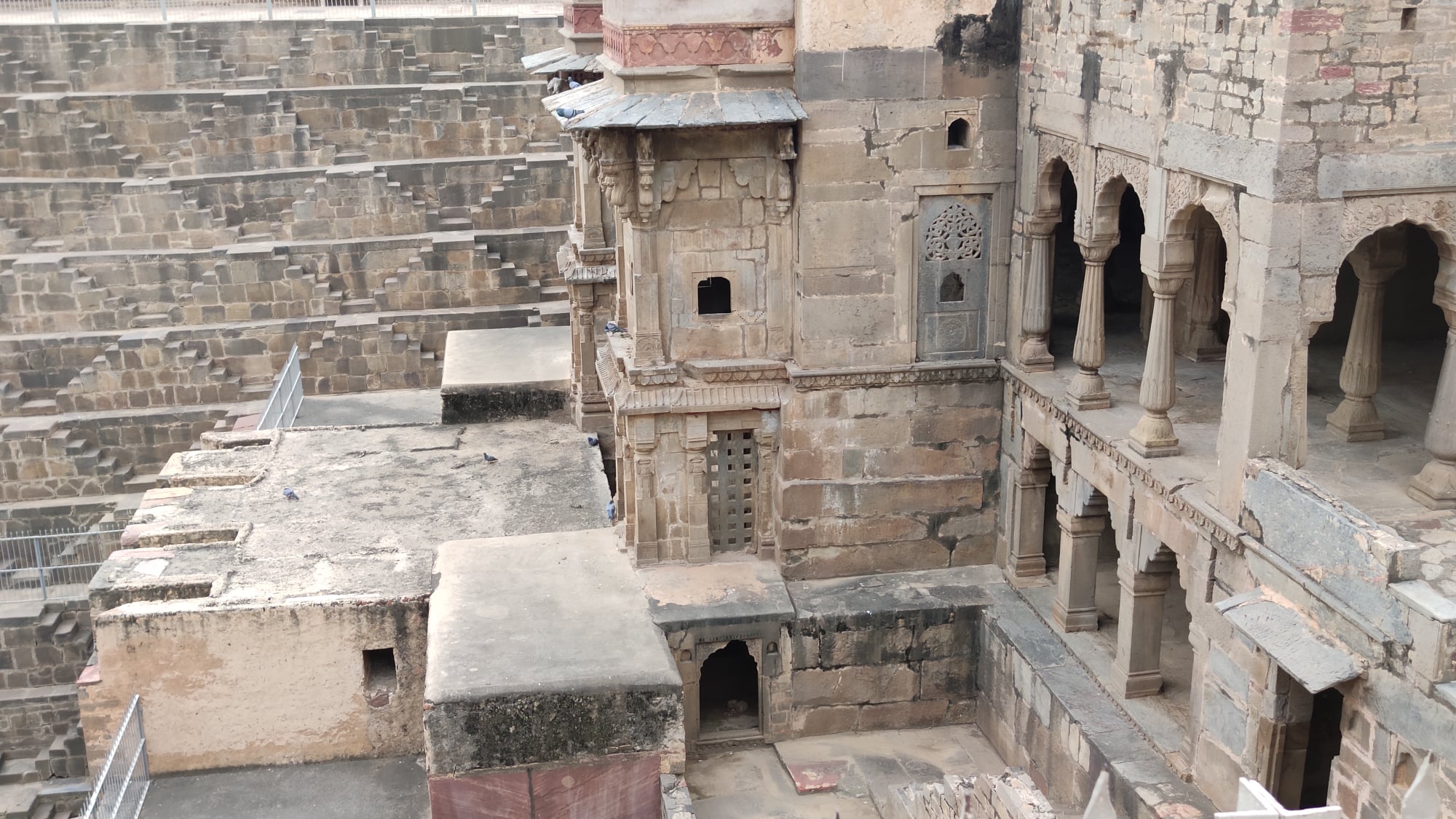
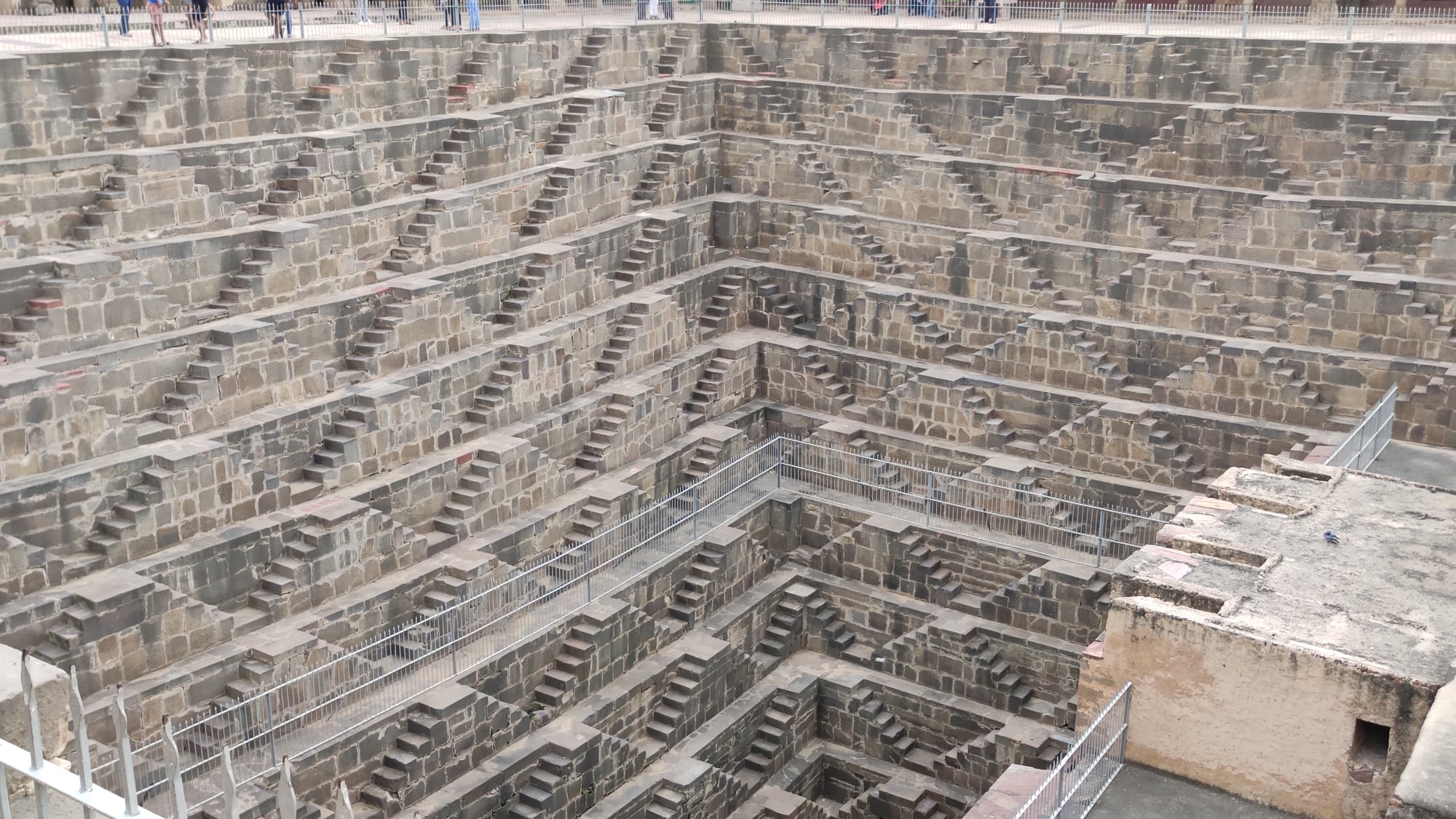
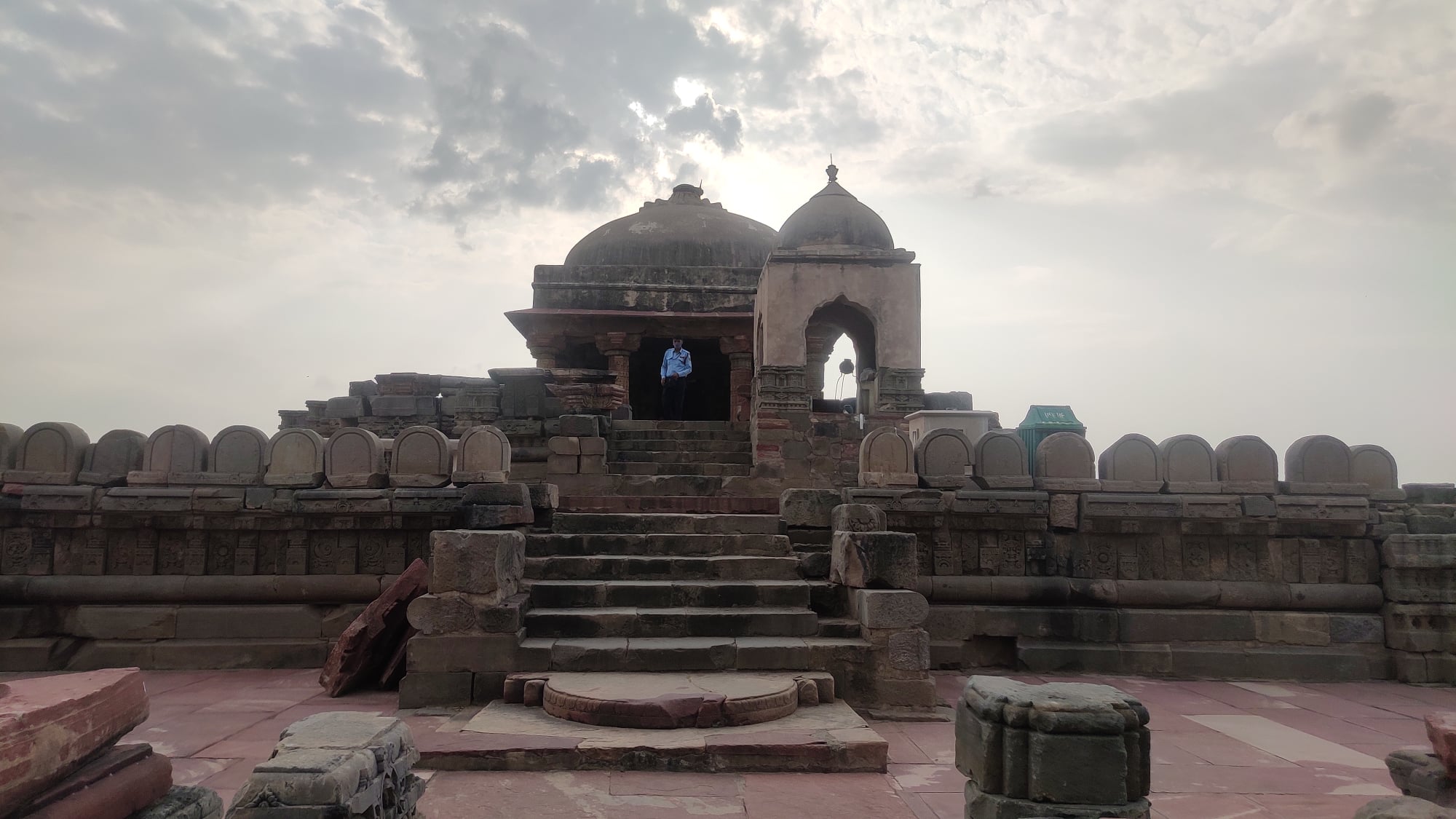
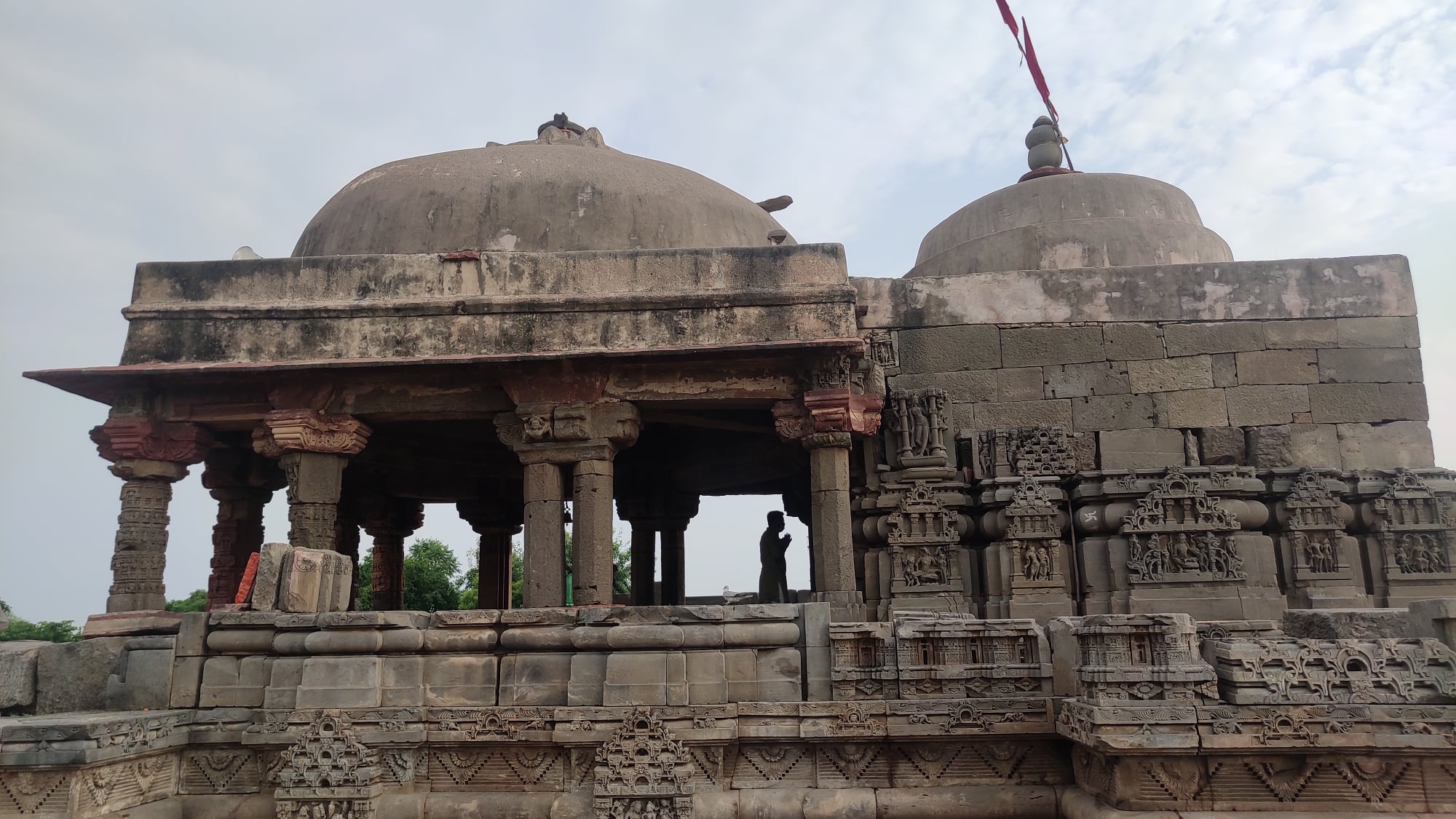
A quaint little village south of Alwar that is home to an exquisite stepwell, Chand Baori, an engineering marvel in its own right and a well regarded temple dedicated to Harshat Mata. Both of these monuments are said to be 1200 years old – the stepwell’s beauty is something that can only be grasped upon seeing for oneself.

Sambhar Lake

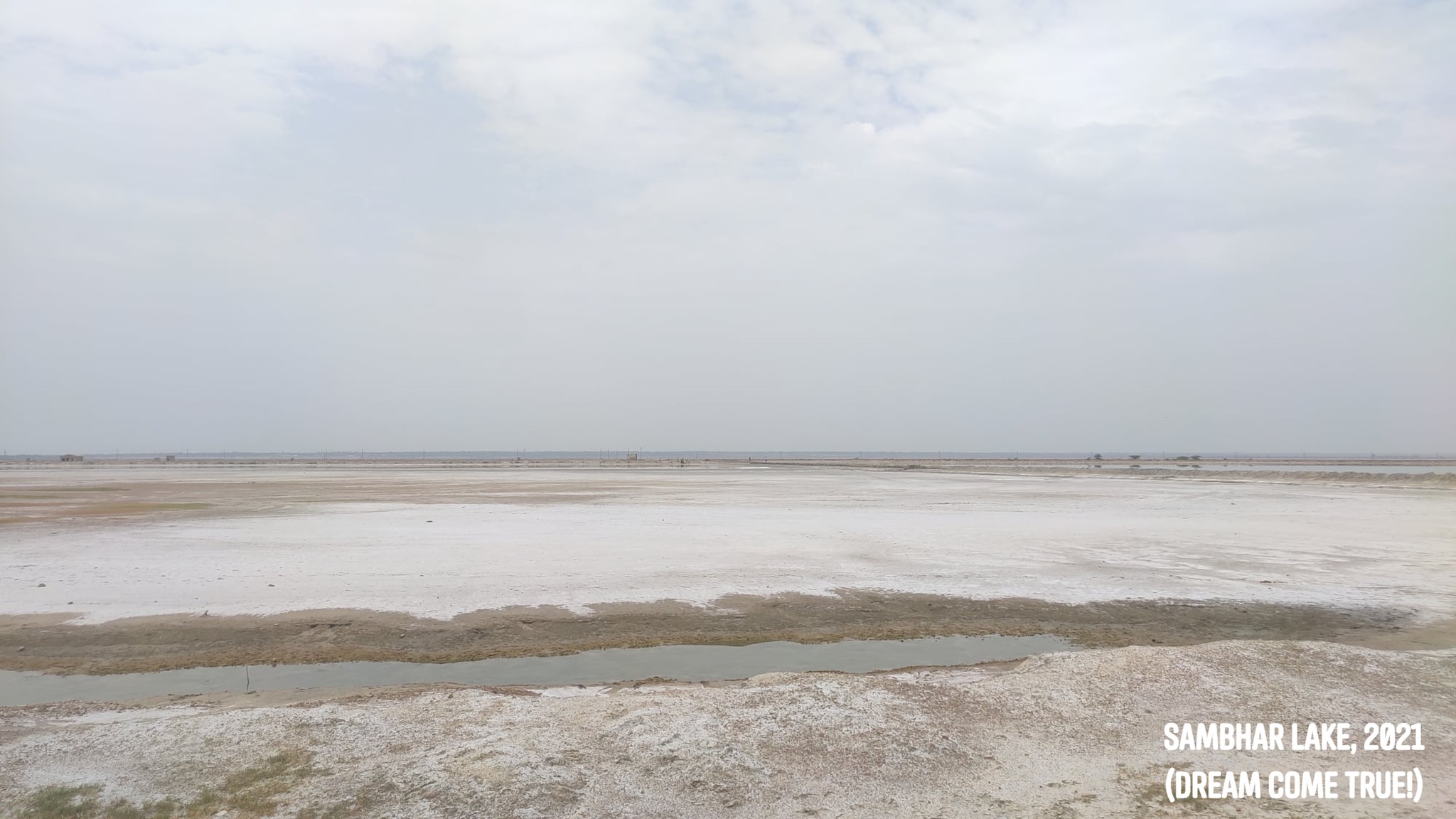
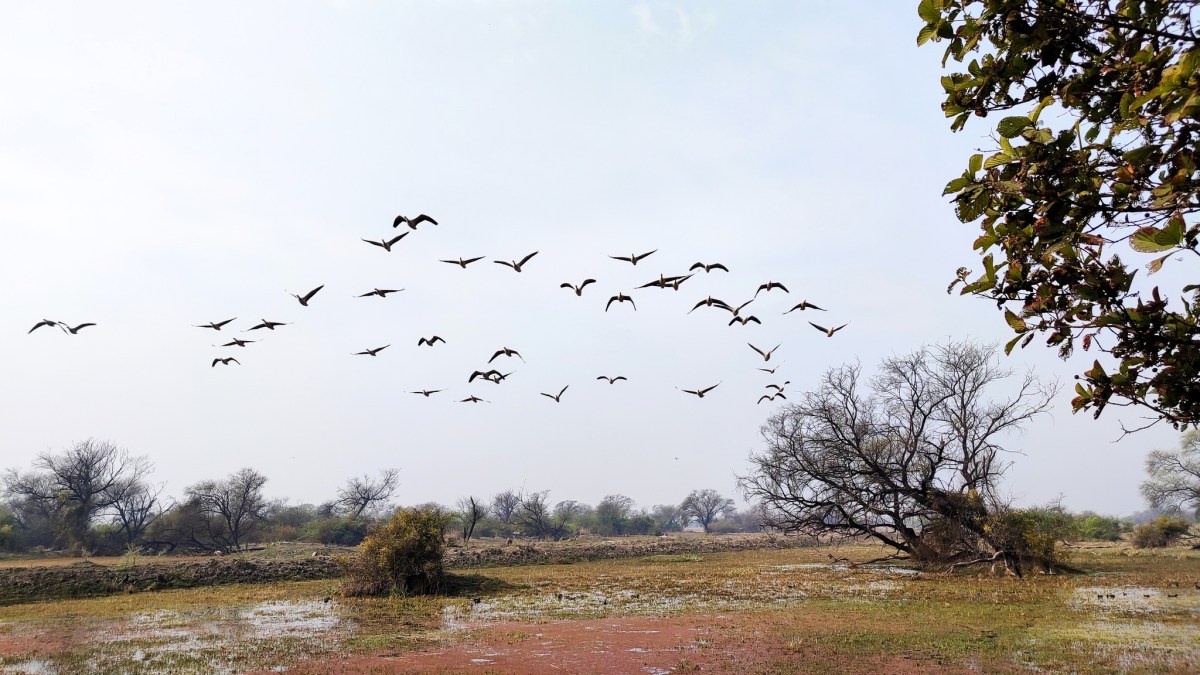
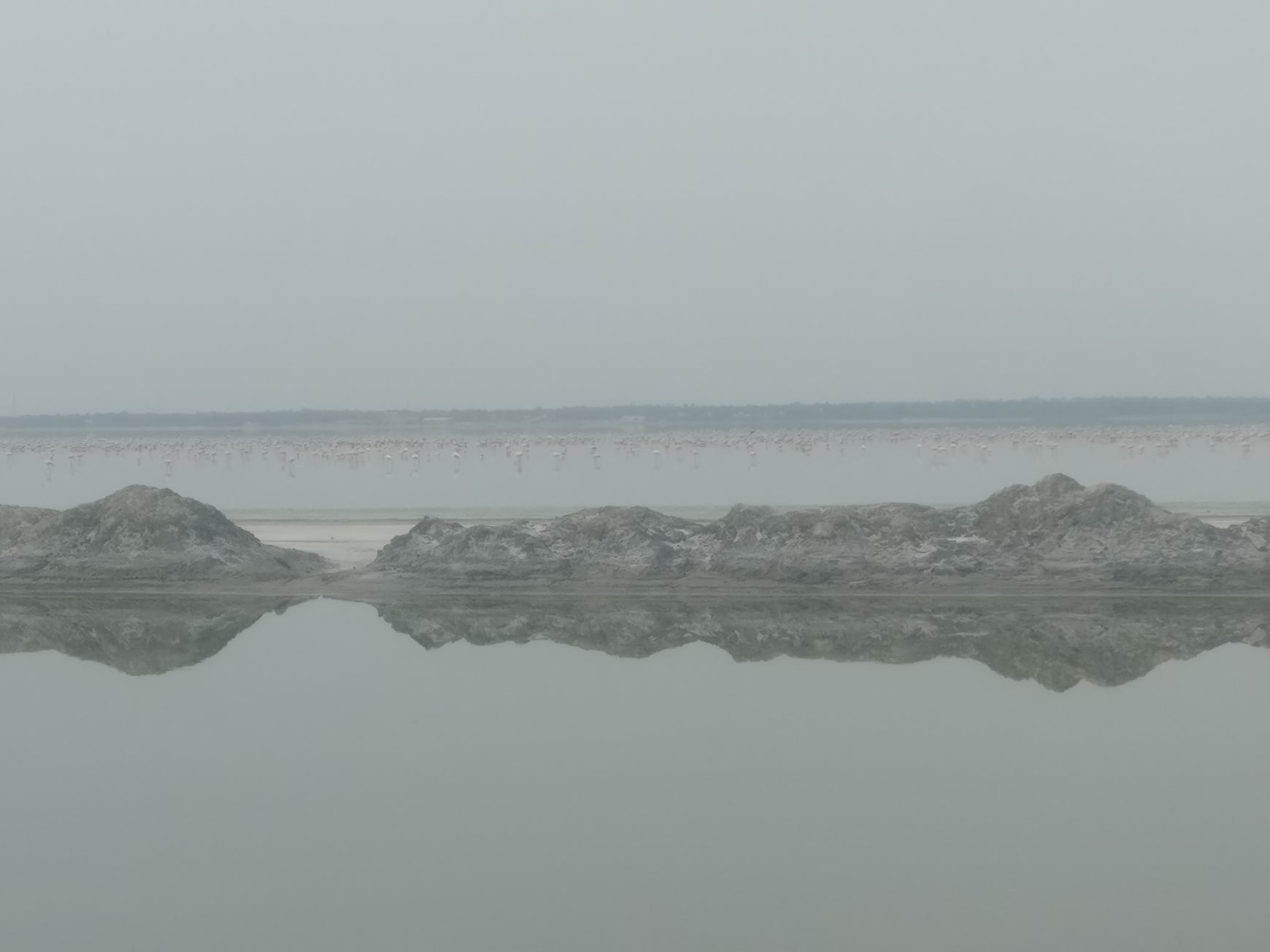
A place that had been on my wish list since I was a schoolboy – it contributes roughly 9% of India’s total salt production and plays host to migratory birds. With swathes of white stretching as far as the eye can see, one cannot be far off calling this a mini Rann-of-Kachh. I had heard that one could spot flamingos here, but nothing had prepared me for the sight of thousands and thousands of flamingos resembling a pink stripe stretching from one end to the other. Now, if only I had binoculars, or even a DSLR camera, at hand!

Pushkar

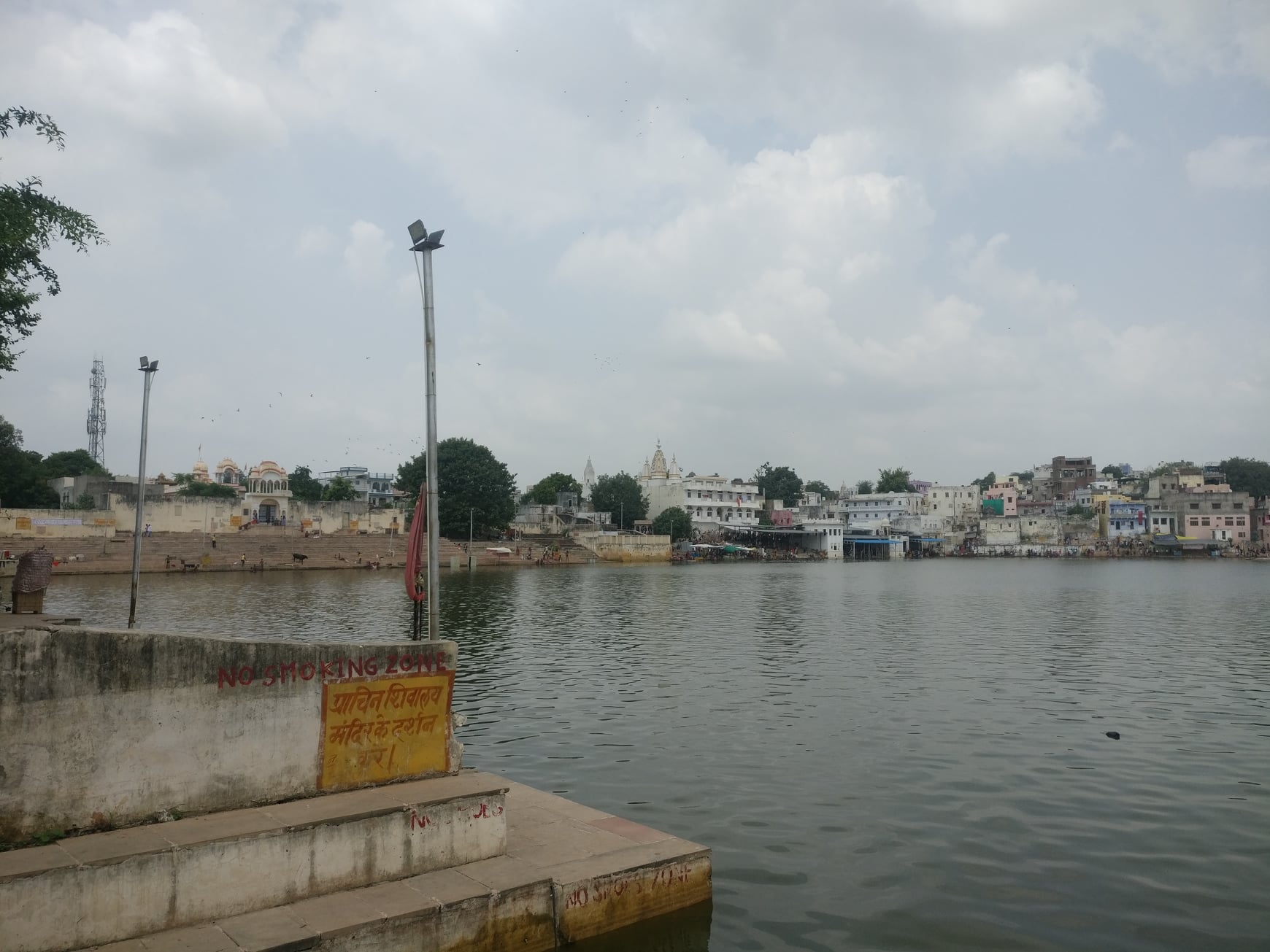
The holy city, according to legend, was the only place where Brahma would be worshipped as per Savitri’s curse (though a few more Brahma temples have cropped up elsewhere since). Also, as per legend, the Pushkar Lake was the source of the mythical Sarasvati river. Pushkar is nestled within the Aravallis, with amazing views of the hills against the clear skies. Another major attraction is the annual camel fair held here.

Ajmer

Separated from Pushkar by Aravallis and connected by a pass called the Pushkar Ghati, Ajmer is home to Dargah Ajmer Sharif and a gargantuan lake. Unfortunately, we could not visit any place in Ajmer.

Kishangarh

The capital of a former princely state of the same name, home to an elegant looking fort, which unfortunately is not open to tourists, and the vast Gundolav lake reminiscent of the lakes of Udaipur. Just outside the city is a National Geological Monument dedicated to Nepheline Syenite, traces of which dating back to 1590 million years to 1910 million years can be found.

Trip Summary

Day 1
Gurgaon to Beejak Ki Pahari – 165 km, 4 hours
Beejak ki Pahari to Abhaneri – 120 km, 3 hours
Abhaneri to Ajmer – 250 km, 4 hours

Day 2
Ajmer to Sambhar Lake – 100km, 2.5 hours
Sambhar Lake to Pushkar – 105 km, 2.5 hours

Day 3
Pushkar to Kishangarh – 40km, 1 hour
Kishangarh to Gurgaon – 360km, 8 hours

Total – 1140km

How to reach Beejak ki Pahadi
No public transport available, so you will have to use your private transportation (personal vehicle or cab). It is a 5 hour drive from Delhi, 2 hour drive from Jaipur.

How to reach Sambhar Lake
While there is a handful of trains from Jaipur to Sambhar Lake railway station, the timings may not be suitable for a day trip. Moreover, seeing around Sambhar Lake area after getting down from the Sambhar Lake station might be a hassle due to paucity of local transport options. In the absence of public transport, you would want to either use your personal vehicle or cab. It is a 1.5 hour drive from Jaipur.

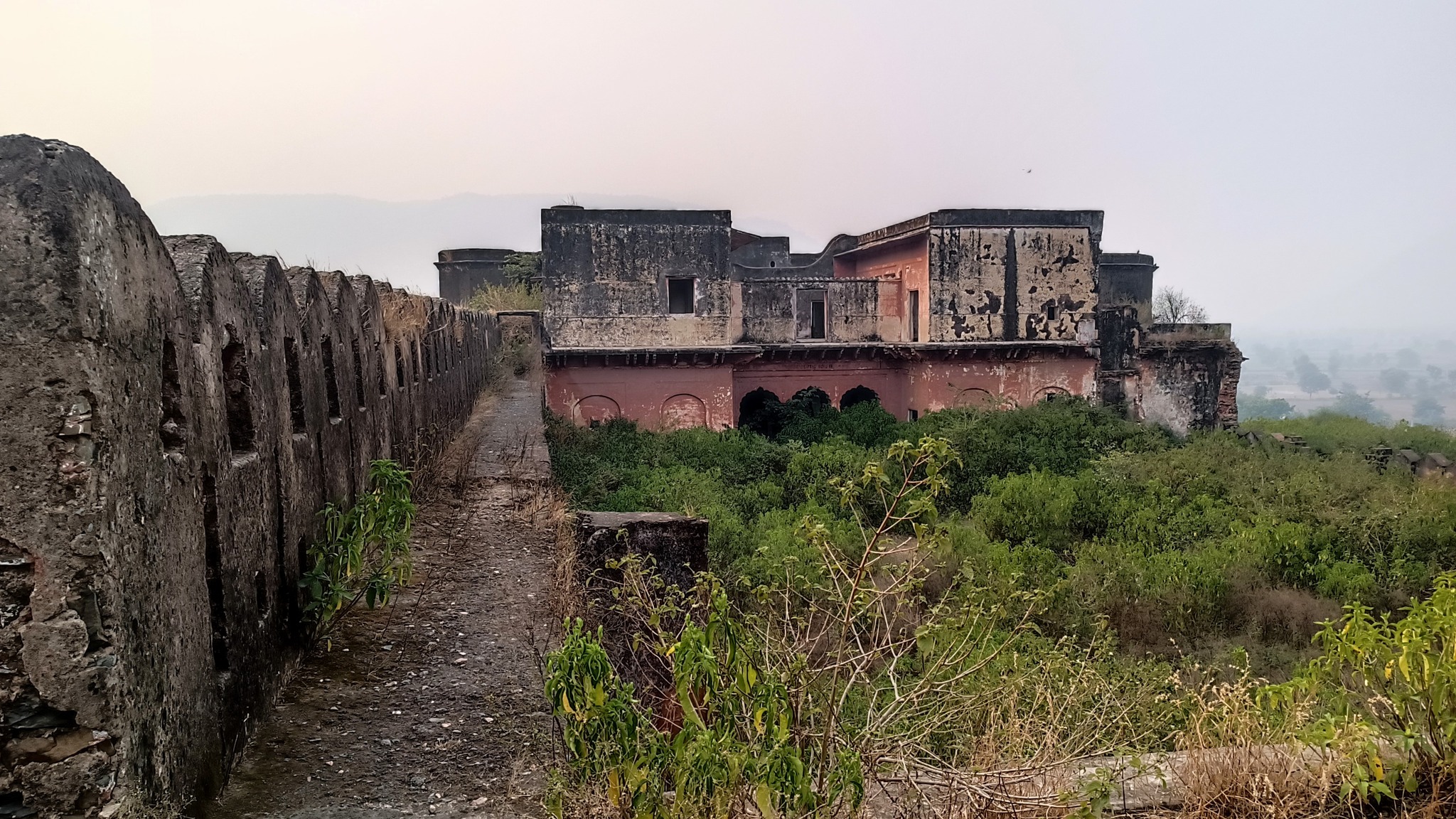
Adventure in the Aravalli: Indor Fort, Mewat

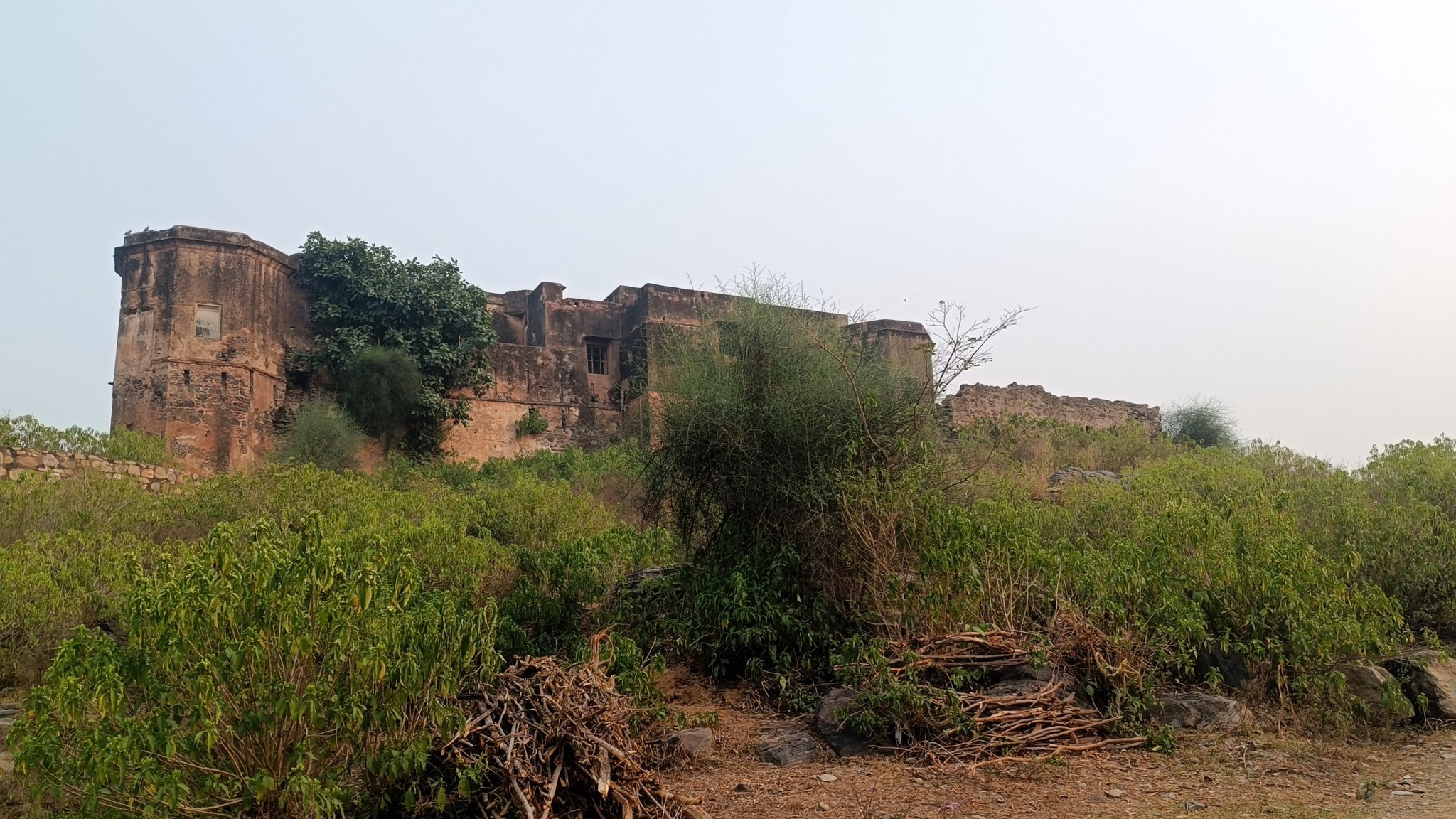
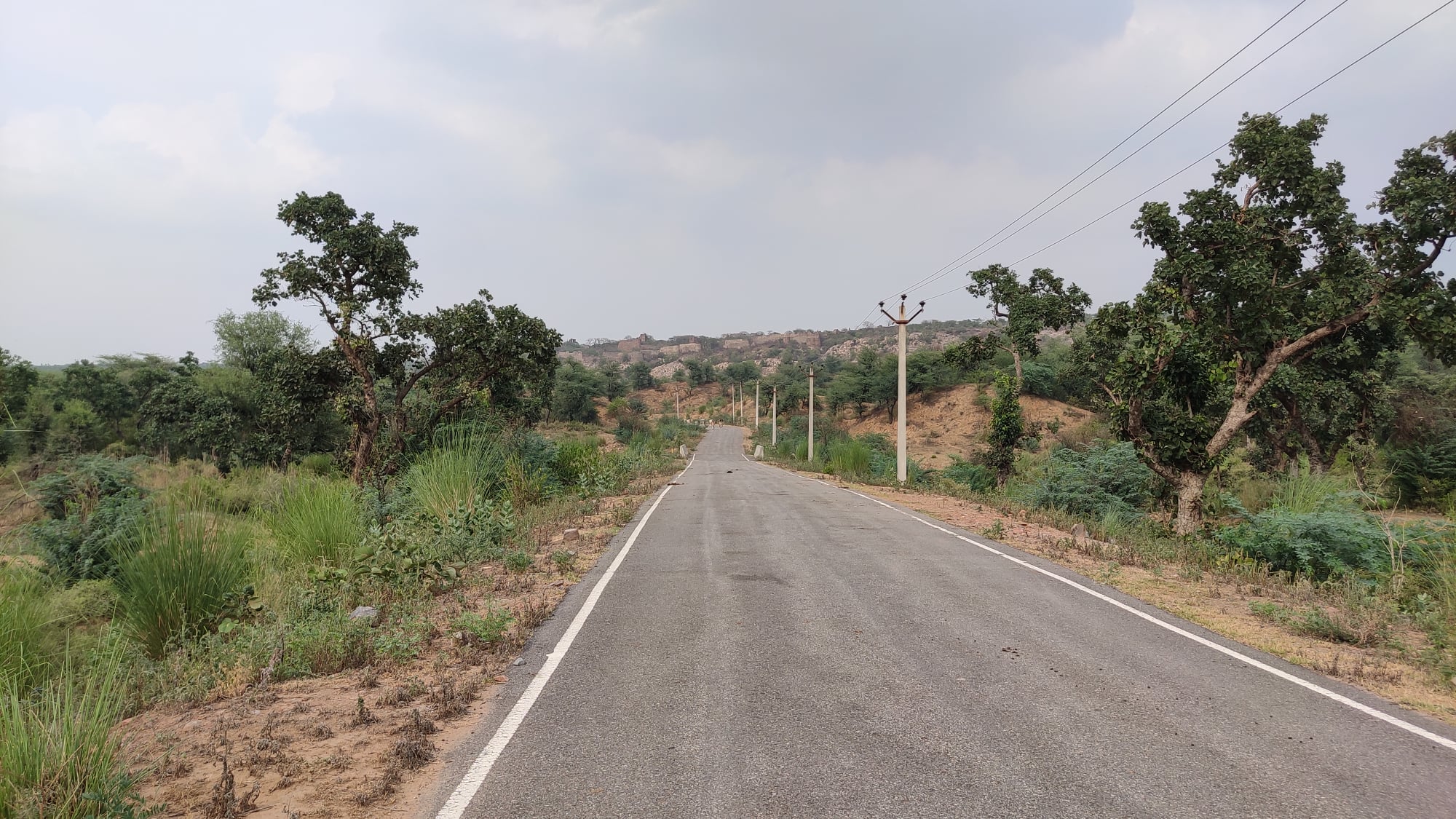
Ever since I moved to the suburbs of Gurgaon amidst the work-from-home regime, I have suddenly been presented with immense possibilities for indulging my wanderlust. On one recent weekend afternoon, I set out on my scooter in pursuit of a place called Rundh Indor which seemed on Google Maps to be home to a fort. Nestled in a cove of the low-lying Aravallis on the Haryana-Rajasthan border, Indor is a non-descript village, accessible by a narrow road that is flanked by the Aravallis on both sides beyond strips of agricultural land and a hamlet or two. The area is not so remote as it is sparsely populated.

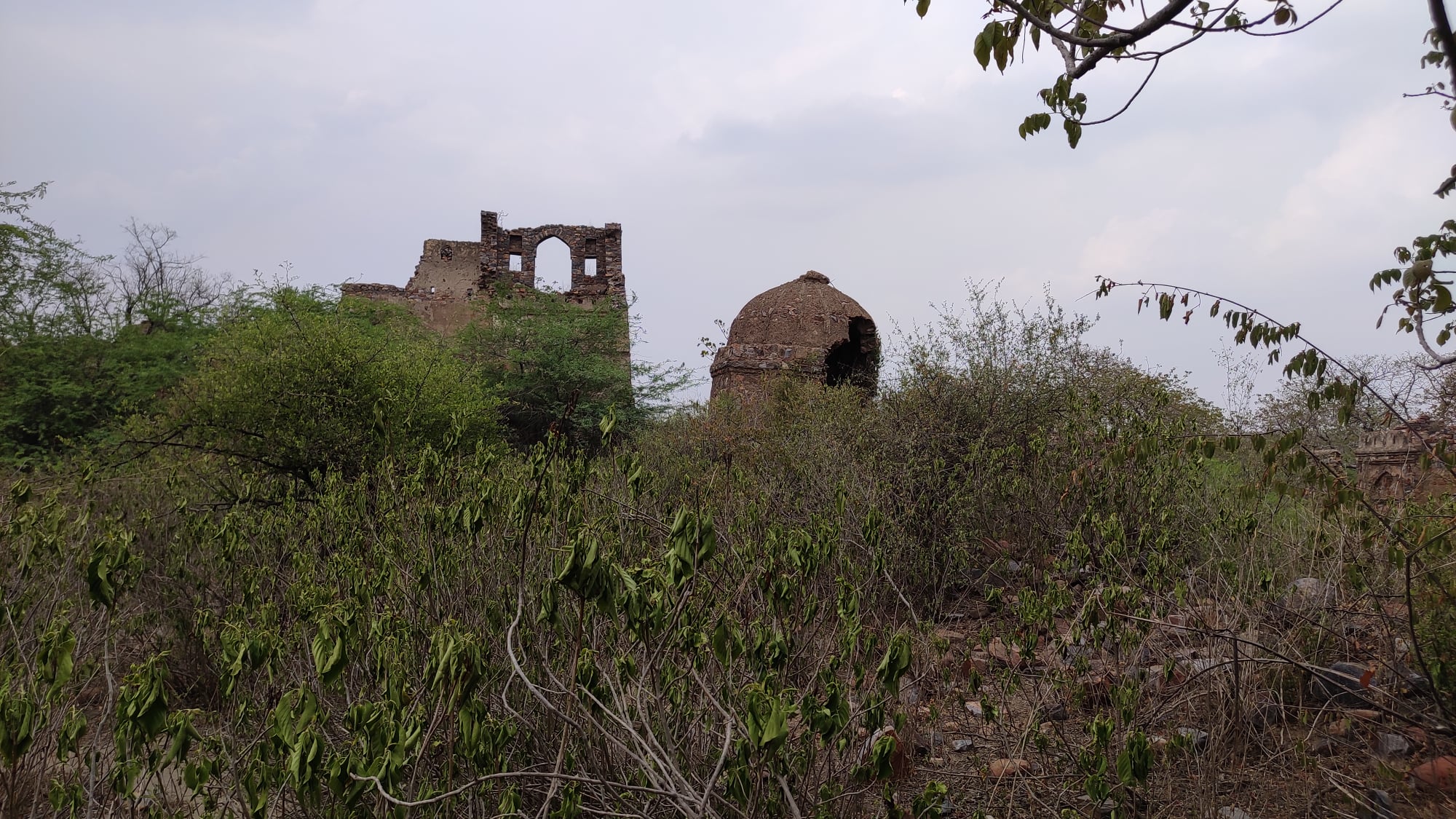
Once at Indor, from the road, I could see a long fortress wall and the domes of a few structures stretching across the left-side Aravalli hills. Tantalising as it seemed, I still did not think of accessing the fort till I came across a rubbled track that looked like the approach road to the fort. After some dawdling, I finally gathered the courage to ride up the approach road till I came upon the base of the hill, where a young duo was contemplating accessing the fort themselves. In what was already quite a desolate location, my only chance at setting foot in the fort now hinged on me joining forces with a couple of rank strangers!

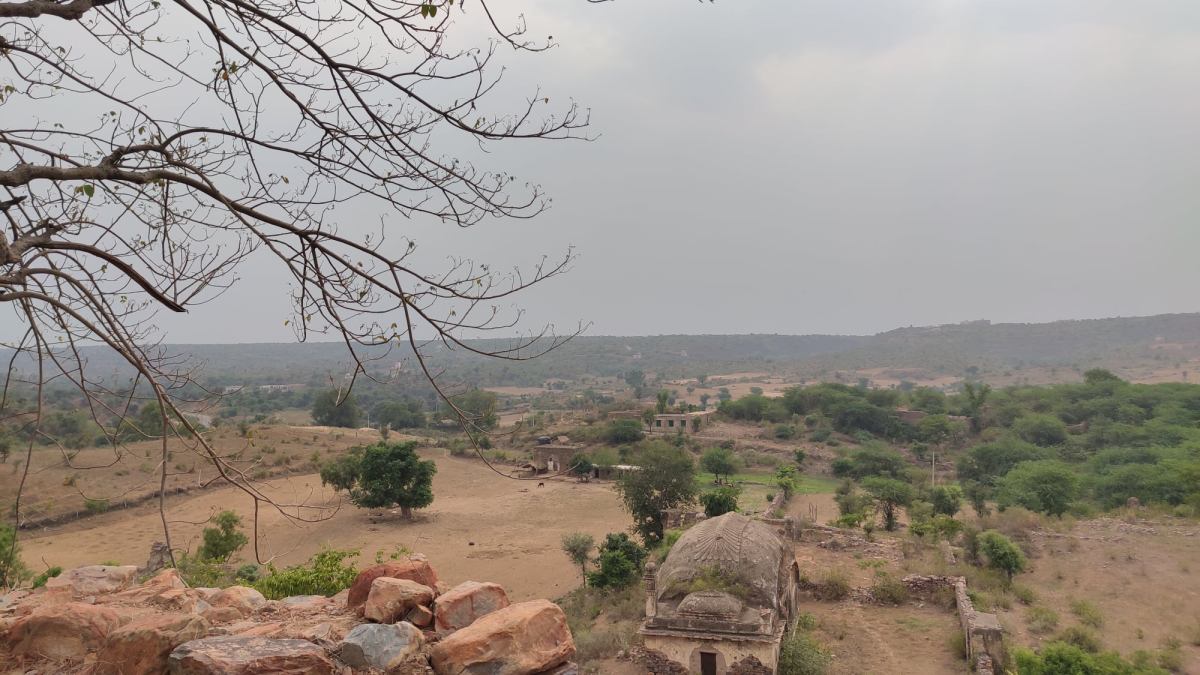
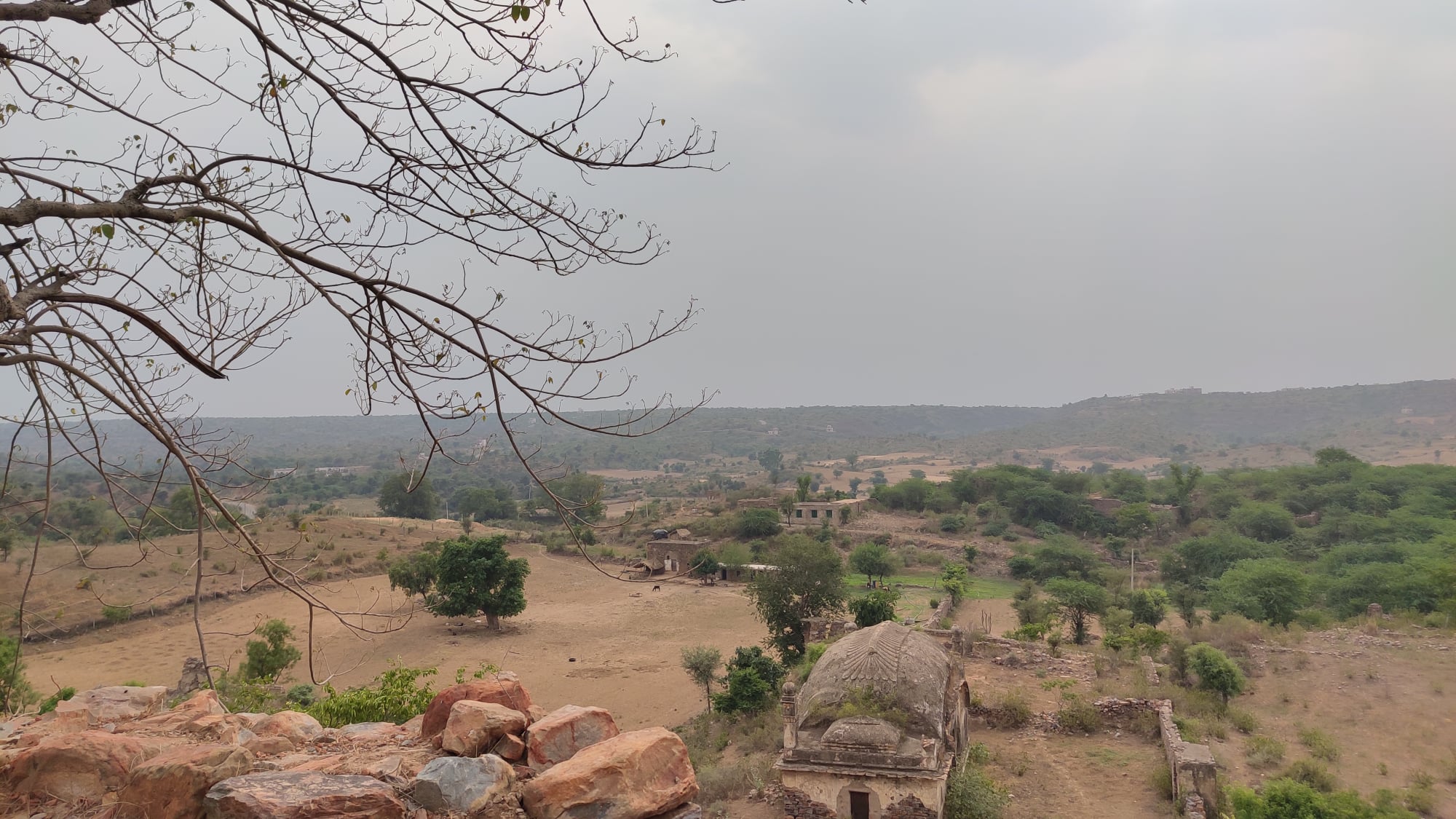
View of the Aravalli from the fort

Wary of any untoward incident, I followed the duo on the trek uphill using goat tracks. Once atop the fortress wall, the vastness of the fort immediately dawned upon us. Sprawling across at least one or two square kilometres of the hillside were disparate structures – palace-like havelis interspersed with domes and grand arched gateways – all in dilapidated condition and swamped in typical Aravalli vegetation. And nary a living being in sight! We waded through the thick jungle from structure to structure, with the fear of snakes, wild animals and miscreants writ large on our faces. However, the fear was amply compensated by a breathtaking sight of the Aravallis stretching endlessly on the opposite side of the fort.

It was only when the sunlight began to dim that we realized it was already 5.30pm and we had advanced a long way into the fort area. Turning, we were confronted with tracing an uncharted path back just like our way up. Luckily, climbing atop a crumbling wall gave us a clear line of sight to the place where our scooters were parked. Treating the direction as sort of a North star, we trekked down the hillside until we reached a huge depression – our final hurdle. The fortress wall swerving around the depression was broken, making access through it precarious too. Crawling over the broken portion of the wall, we were finally outside the fort precincts. Within minutes, we were back riding on the way home even as the sun set behind the Aravallis.

The Lifeguard

That December day was going rather well. The weather had been very enabling, understanding, even – threatening now and then to pour, but holding back lest it should be branded spoilsport.  Mother and Brother, both having agreed to an impromptu exploration of the Prachi Valley earlier that morning, appeared to be enjoying themselves too. There remained only one more temple to see. But it was now late afternoon, and before us, in echoes of Frost’s words, there lay two roads that diverged in the verdant coastland. One led to the temple, the other to Astaranga, literally, ‘of sunset colours’, a coastal town with an adjunct beach named Jahania.

Driving through the Prachi catchment area, we passed through hamlets and the occasional small town, interspersed among the lush paddy fields and the couple of rivulets and canals intersecting our path. Groups of coconut trees stood watch over betel-nut groves, and paddocks with haystacks, and roofs of the hut-like stalls and restaurants dotting the entries and the exits of the villages. Whenever the languorous clouds allowed, the sun would peer through the cracks, supplanted by the azure sky where the sun was absent. 

The day had begun with the hope of making rendezvous with the eponymous river sometime in the afternoon, while trailing vestiges of heritage, as far as we could, along its course to the sea. My hastily assembled itinerary had ensured that we touched almost every pre-medieval temple worth seeing. There may have been a few tucked away in the interiors, and I may have been tempted, as is my wont, to veer off course, wading into uncharted territory. And yet that day I restrained myself – no adventure was worth scaring Mother and Brother so much that they dared not risk a trip with me in the future.

Stopping at several temples, defined by their intricately carved proud spires, built sometime between the 7th and 13th centuries AD, we had finally happened upon the mystical river, where our heightened anticipation had been met with a chastening modesty. Mother and I bemoaned how the current fate of the river coincided closely with the fortunes of our great land Kalinga which the copious waters must once have fed and drained, while Brother, who may or may not have agreed with our assessment,  gazed unfazed at the coastal scenery outside.

With such topics dominating our conversation, we had reached the fork in the road. Between one more temple that would be another grim reminder of our diminished stature in the world, and a beach that could afford us a break from that grimness, the choice was easy to make. Thereon, my decision to not stop at Kakatpur – where the revered Mother Goddess Mangalaa is worshipped in yet another ancient temple – invited Mother’s ominous remonstration, “It is never good to invoke thoughts of visiting a Devi’s abode and giving it a deliberate miss.” Mother’s words resonated enough that I promised her we would stop on our way back.

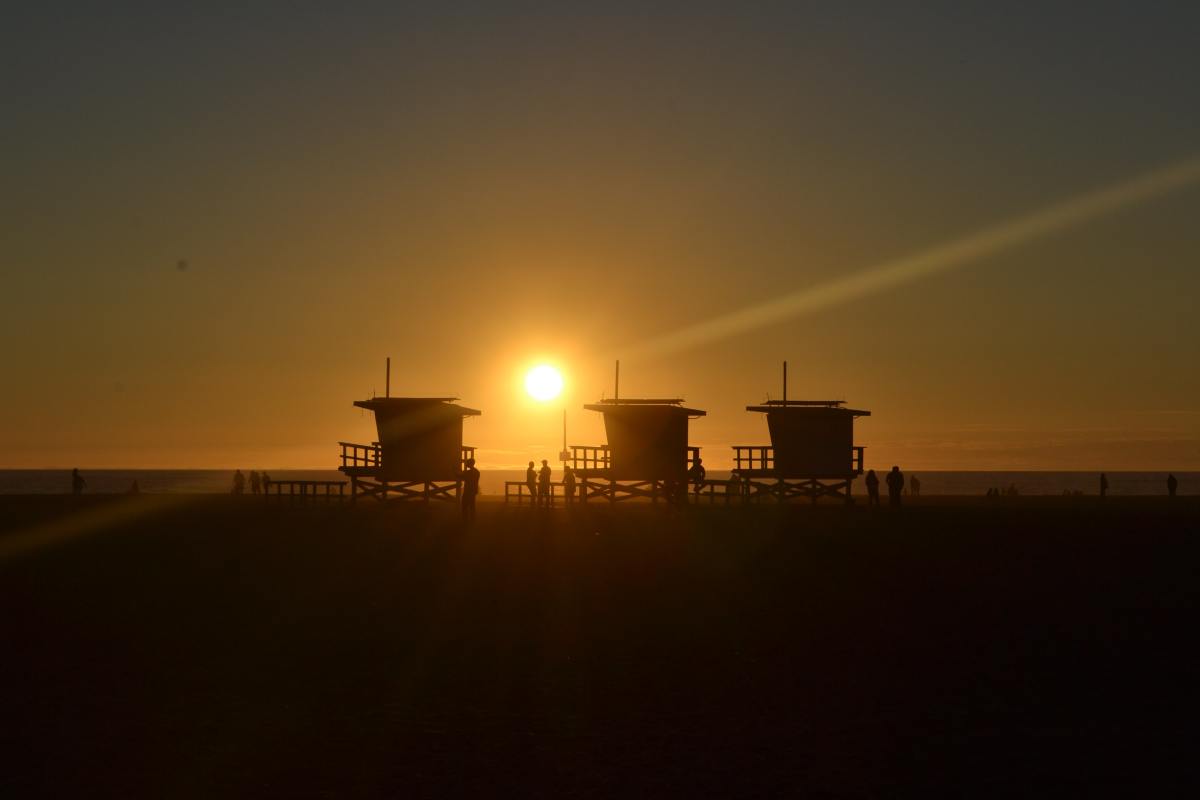
Traversing a landscape taken increasingly over by larger clusters of coconut trees, and swathes of fishing ponds, we rolled downwards towards the sea on the Jahania road, flanked by trees and electric poles. Shortly, we found ourselves at the entrance to the beach, with the sun still high, and the threat of rain, having all but disappeared. Ahead stood a thicket of tall casuarina trees as if forming a curtain that when drawn aside would reveal a sight of the sea. Passing by the numerous make-shift stalls selling ice-cream, soft drinks, paan, snacks, hats and the like, underneath the shade of the casuarinas on hard land, we finally descended upon the nearly-white sands a few feet below, with the prospect writ large on our brow of seeing with our own eyes what the ‘sunset colours’ looked like.

Groups of people, old and young alike, frolicked on the beach. The ambience, however, reverberated with the jeers and profanities emanating from a particular group of college-going boys and girls. Mother remarked, “Such unruly youth these days!” Not contesting what she said, Brother led her up the coast where greater quietude was assured, and I followed suit. Mother dipped her feet in the approaching waters, observing the foot imprints left behind by the receding waters. Brother and I, reminiscing our childhood days, chased the springly water crabs that emerged from tiny pits in the sand and disappeared back into them when shadowed. Then, for moments in between, we stared at the steamers and the ships and the trawlers floating on the horizon, wondering what they were up to and what life felt like on them.

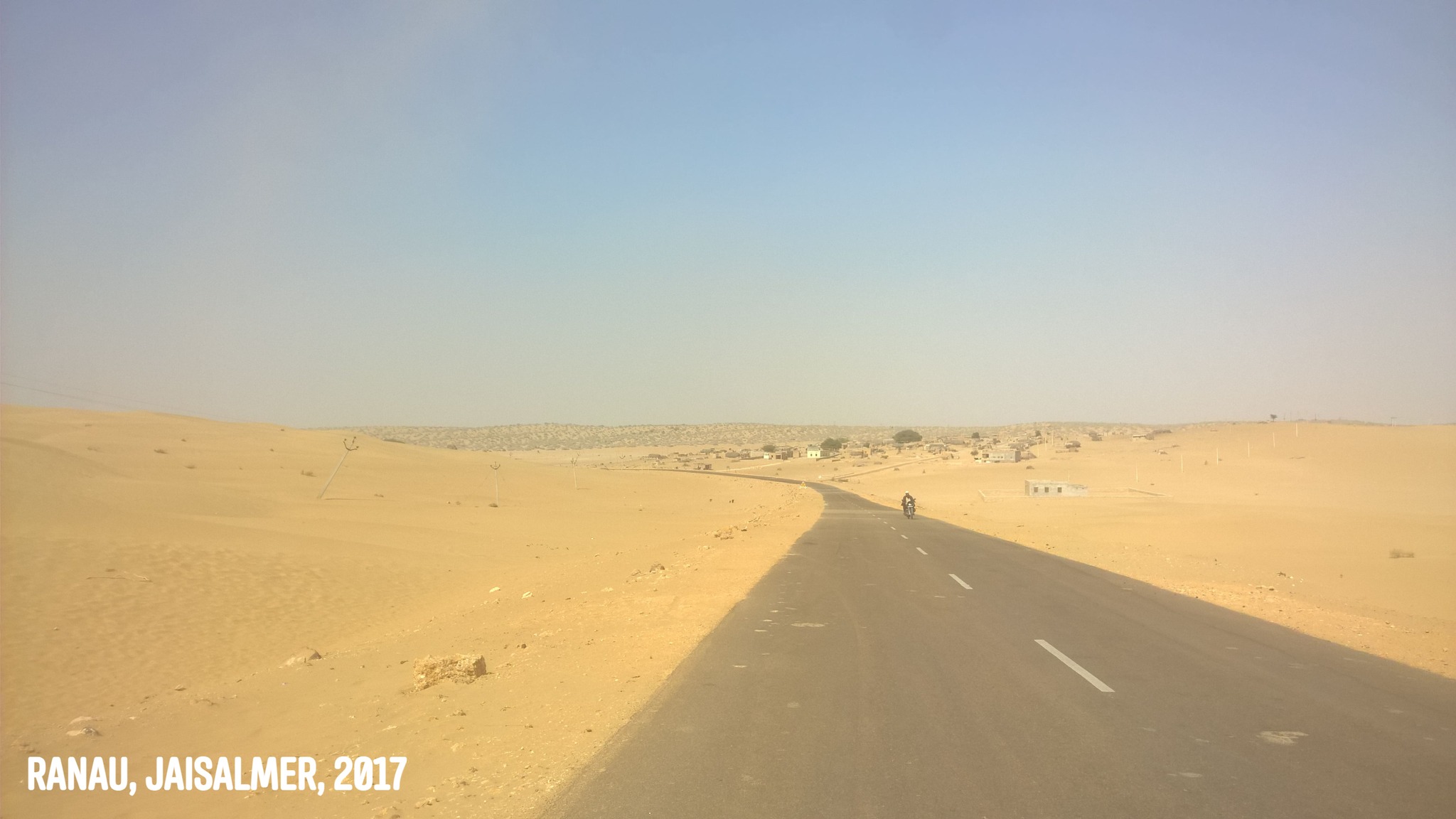
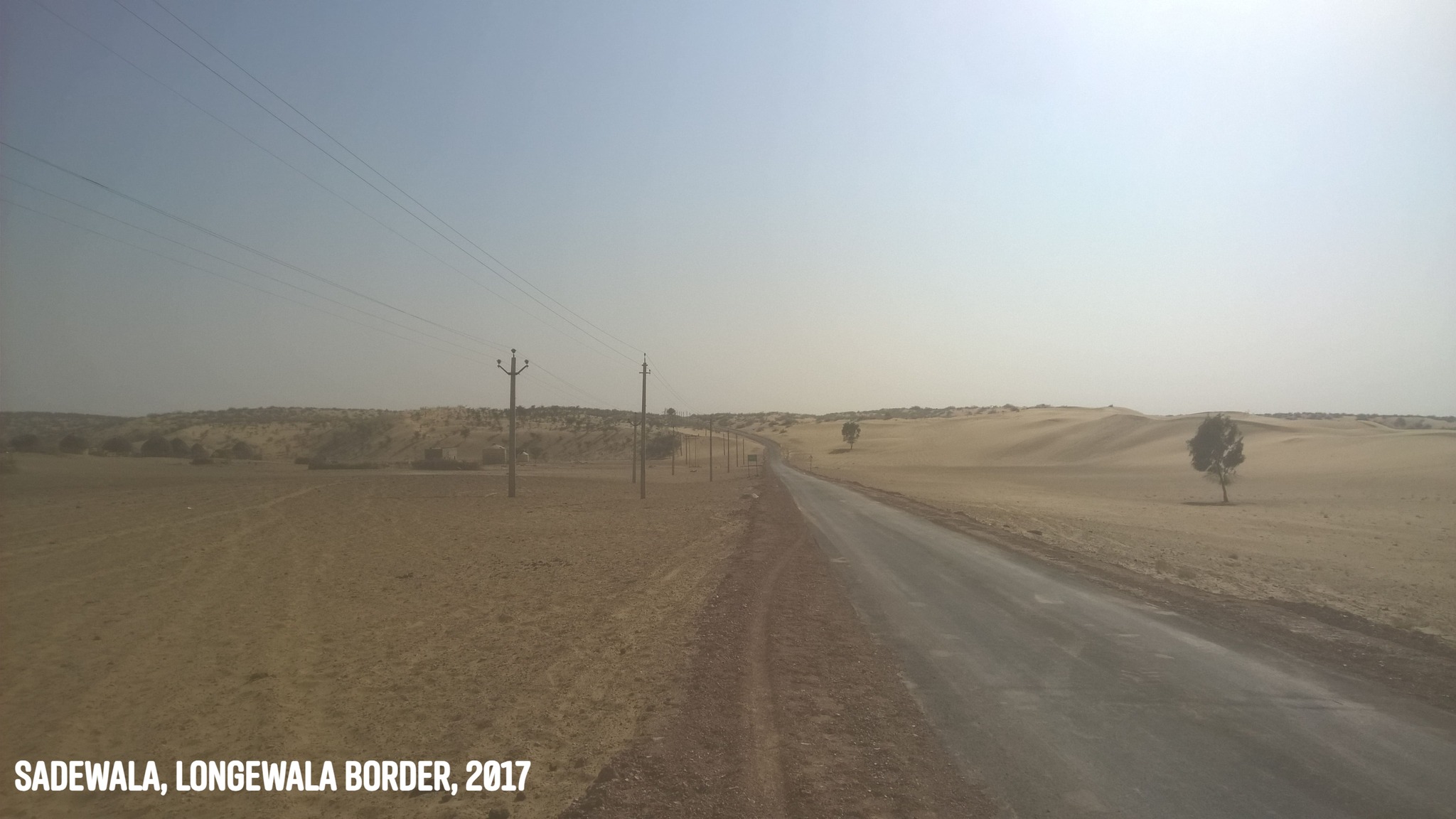
Even as Mother continued her therapeutic tryst with the playful waters, Brother and I turned our attention to the mini sand-dunes covered with thick shrubs lying towards higher ground but well in front of the column of casuarinas. Reminded of the dunes at Ranau in the Thar where we had visited earlier that month, we proceeded towards the dunes, hoping to relive some of the desert experience. Turning around a few minutes later, we caught Mother staring intently at the busier section of the beach, where the crowd had become more dense than when we had left it behind.

“Look at those kids hooting so hard – are those two having a competition or something?”, Mother said, pointing at a couple of figures bobbing up and down in the waters way off the coast. One of them was frantically waving both his hands. Brother furrowed his brow trying to infer the situation, and wondered, “Are these the same kids who were creating a ruckus?” Mother replied, “Yes, those trouble-makers.” The three of us stood ruminating over the sight in front of us, for about a minute, while the crowd seemed to be transfixed on those two seemingly competing figures.

“But why are those guys not approaching the beach, why are they moving away instead – is it a competition about who could go farther into the waters?”, I asked. Meanwhile, more people came down from the entrance to join the swelling crowd. One of the bobbing figures continued waving his hands. That is when it occurred to me, “Are those kids drowning?” Mother’s expression of disgust at the kids’ behaviour suddenly turned to one of panic, “Oh my god, baba, they are indeed drowning!” As if on cue, the swelling crowd seemed to stumble upon the same epiphany that we had just had, and immediately transformed into an island of commotion.

The three of us headed down nearer to the crowd, where the tension was now palpable. “They have been swept away, swept away!”, screamed a man, “Dheera bhai is trapped, save him, save him!”, shouted a girl, “Oh my god, oh my god, oh my god!”, wept another. The crowd moved like a shapeshifting amoeboid closer to the waters. Mother started hyperventilating, Brother looked helplessly at the scenes unfolding, while clasping Mother’s arm hard in a bid to soothe her. “But why is no one calling a lifeguard?”, I wondered aloud, “In fact, where is the lifeguard?” 

The sun was now preparing to set, and the crowd had grown hysteric. It was clear the majority of the crowd comprised tourists, and the ones that were calmer were doubtlessly locals – they had seen too many such incidents before to be surprised. Nonetheless, neither the tourists, nor the locals seemed inclined towards any sort of samaritanism. And it got my blood to boil. I sprung to action, lamenting, “How on earth could people be this indifferent! Why is no one stepping forward to help?” 

I sprinted up to the apparent locals, thundering, “Where is the lifeguard? Where is the lifeguard? What are we doing to save those guys?”

“Which lifeguard?”, quipped the cotton candy seller in Odia laced with a heavy local accent. 

“The one who is supposed to save drowning people?”, I asked incredulously, as the din around me continued. 

“Who cares about lifeguards here, sir?”, he replied, shrugging, with his trademark enunciation, “We have asked the police to look into it and they don’t take it seriously either.” 

I was flabbergasted and inquired, “Still,there must be someone who does the saving when required?” 

An old man standing behind the cotton candy seller interjected with a similarly accented Odia, “Tiyu is required!” 

“Tiyu is the name?!”, I asked in confirmation. “Tiyu indeed.”, the man nodded.

So I slipped off my shoes and off I scampered away from the crowd of whom I had scant hopes, in the direction of the stalls at the beach entrance, screaming my lungs out, “Where’s Tiyu?! Where’s Tiyu?! Where’s Tiyu?!” On the way I encountered a couple of hefty middle-heighted young men with sinewy arms, running in the direction opposite to mine, towards the crowd, and I repeated, “Where’s Tiyu?” “If you have not found Tiyu yet on the beach, then Tiyu should be in one of those stalls.”, said one of them.

I shouldered on, overcoming the push-back from the sands below, with singular focus brought on by the adrenaline rush. I clambered up the incline leading to the stalls on the harder ground, and soon went about from stall to stall frenziedly crying, “Where’s Tiyu? Where’s Tiyu?” A stall keeper, seemingly the only one who had not deserted his stall for a glimpse of the action, replied, “I don’t know. If you have not found Tiyu yet on the beach, then Tiyu may be back at the town.” 

I scanned the entire stretch of the stalls, but to no avail. Distraught at my inability to procure help for the poor kids back in the sea, I walked back heavy-footed towards the scene of action, dreading the knowledge of the outcome of the event taking place against the backdrop of the ‘sunset colours’. 

As I approached the crowd, I noticed far out at sea four men flailing their arms and dragging a long cord at the end of which were tied two other men, while the crowd cheered them on with words of encouragement. The four men kept flailing on and on, drawing a few meters closer, then floating a few meters back, while slowly drifting laterally up the coast. The cheering crowd moved in lockstep, determined not to give up on the unheralded lifeguards. As the men drew closer, I realized two of them were the ones I had run into in my search of Tiyu. Before long, I had reunited with Mother and Brother who were now ensconced in the crowd. 

After twenty minutes, seeming like an eternity, the ‘lifeguards’ along with the rescued boys were back on the beach. The rescuers walked off shaking the sand off their skin-hugging drenched clothes, even as the crowd thronged to the spot where the boys lay, in an apparent bid to chastise them for their foolish deeds. Still, an air of relief permeated the whole crowd. I spotted the two locals I had learnt of Tiyu from and approached them, grinning, “So Tiyu was not required after all?” “Why not? It did the saving, didn’t it?”, replied the old man in his typical accented Odia, pointing at the long thick brown-coloured plastic tube lying side-winded on the sand. 

© 2020 Asiman Panda

Visitations

Uncle Owl with wizened head
Stared long and hard with abyss eyes,
Dark ’twas – the hour of the dead,
As dew dripped below fireflies,
Quiet answered to crickets’ cries.

Creak of a door broke it all,
Mist quivered to yellowy gleams-
Leaves rustled beneath the footfall,
That slid along the earthy seams,
Clambering up the wooden beams.

Uncle Owl with abyss eyes
Spied stoic as a stone each night
What the night’s forces did reprise,
Without fail, to moans of delight
And chuckles bursting from inside.

‘Tis been the story all along,
The strange visitations meanwhile,
Have turned his hair grey since long,
But what transpires in truth inside
Has left him none the less senile.

One gunshot ended it all,
Uncle Owl fell limp to the ground;
There he lay right at the footfall,
With frozen image on eyes round-
Of baby to Mother firmly bound.

©Asiman Panda 2010