Blog Posts

Truth

Truth is not seen, but revealed, it is said,
To the Chosen One, to where he is led –
And that it’s passed to the world he shall see,
Ergo, does this onus fall upon me.

As I have been decreed, truth I shall say –
She’s fresh as dew to the first morning ray,
Perched on her lofty seat atop a leaf
In all things pristine, inspiring belief.

Never mind, her friend is a constant frown
Straddling her face like a luminous crown,
Yet when she takes it down once in a while,
Like truth, so is revealed her lustrous smile.

Under oath now, I shall dare vouch for this –
That smile is one the gods too best not miss:
Risen brow, lips arched as the crescent moon,
Eyes as stars, teeth as the sun at high noon.

Juniper-like she exudes the picture
Of the flawless candidness of Nature
Seeming delightful, from no matter where –
Her every state is a breath of fresh air.

All said and done, she is one of a kind,
Perfect of the body, pure of the mind,
Bathed doubtless by the fountain of youth –
And that, my dear, is nothing but the truth.

©Asiman Panda 2017

An Architect’s Compass

Word’s gone around, and the pictures confirm
That you’ve been prone to looking long and firm, 
Into the distance, over land and sea- 
You’ve been using your creativity. 

Some day you will stumble upon a place 
And by instinct, you’ll marvel at its grace, 
And, with creased brow and pursed lips, maybe, 
Begin to etch it for posterity. 

Now you may look at the horizon, 
And know North from where the Sun’s arisen, 
Or simply from the app on your phone, 
(And that’s only if you’d already known!) 

But what when the clouds start playing spoilsport, 
And your phone’s charge is dangerously short? 
You’re just sketching away sans direction- 
You know, that’s incomplete information. 

Fret not, for now you have this secret tool- 
Sailors have used to new seas and lands rule; 
So come rain or snow, or man-made mishap, 
You just get going at a finger’s snap. 

©Asiman Panda 2017

Ranthambore and Chittorgarh: Wedding Shenanigans

November 2014: Ranthambore

In November 2014, my then-colleagues and I committed to attending our colleague’s wedding near Dausa. So, we took the opportunity to see Ranthambore, and had our tickets booked for Sawai Madhopur in the 7 PM Mewar Express. I took the day off from work and decided to go watch the movie Interstellar in the afternoon – I reckoned I could just go pick my stuff from Safdarjung Enclave, where I lived, after the movie and be able to make it in time to reach the Nizamuddin railway station to catch the train.

But by the time the movie finished, it was already 5 PM, and I figured halfway to my place, going back to pick my baggage was out of the question – so, I made an instant decision to simply head straight to the railway station, in the only clothes I was wearing and without my eye-glasses, although I had my contacts on. Anyway, as soon as I boarded the train – I became the butt of my colleagues’ jokes… but I wasn’t going to miss a good opportunity to travel with my colleagues-cum-friends for the world. Getting down at Sawai Madhopur at midnight, we checked-in at a resort.

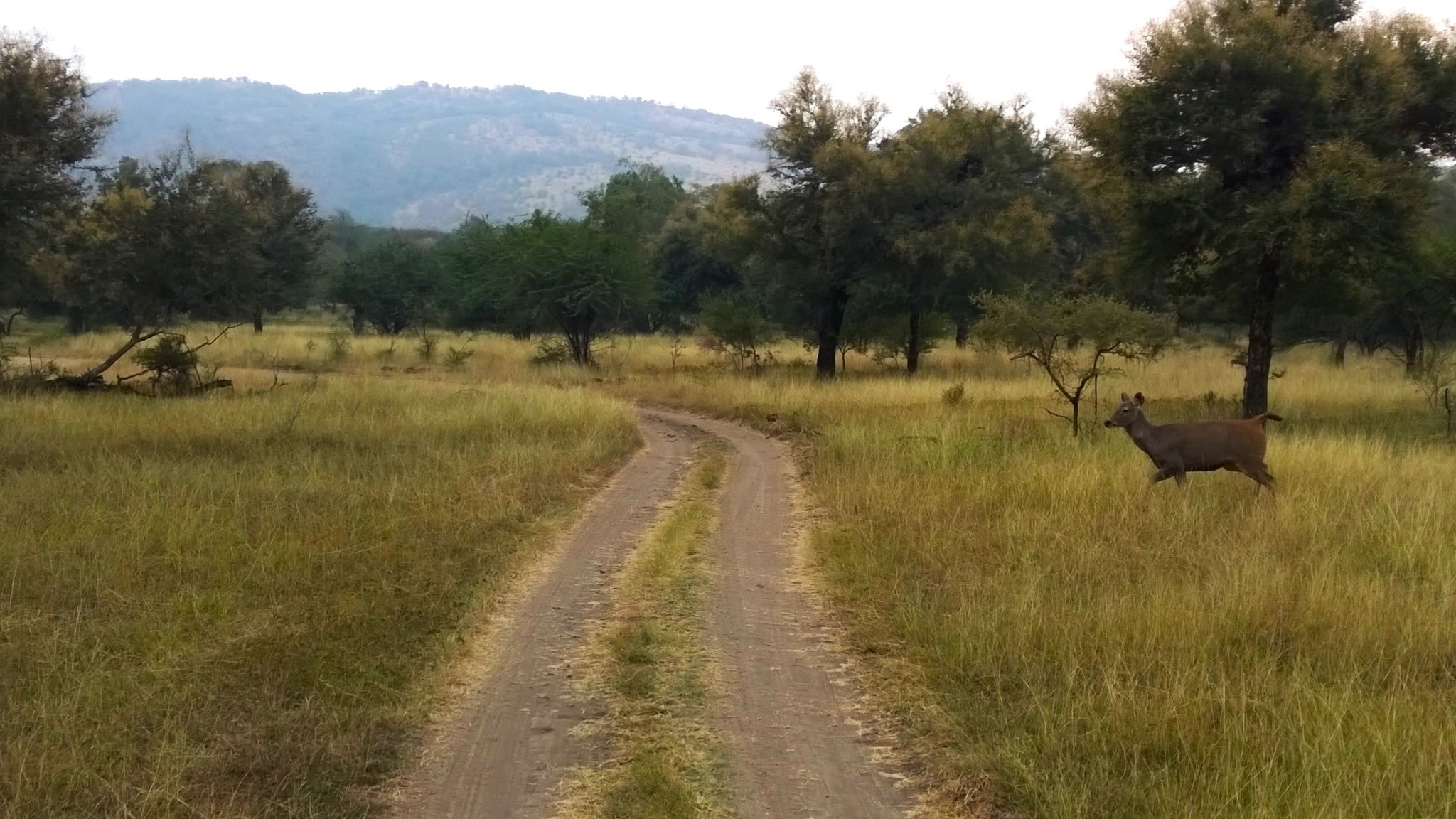
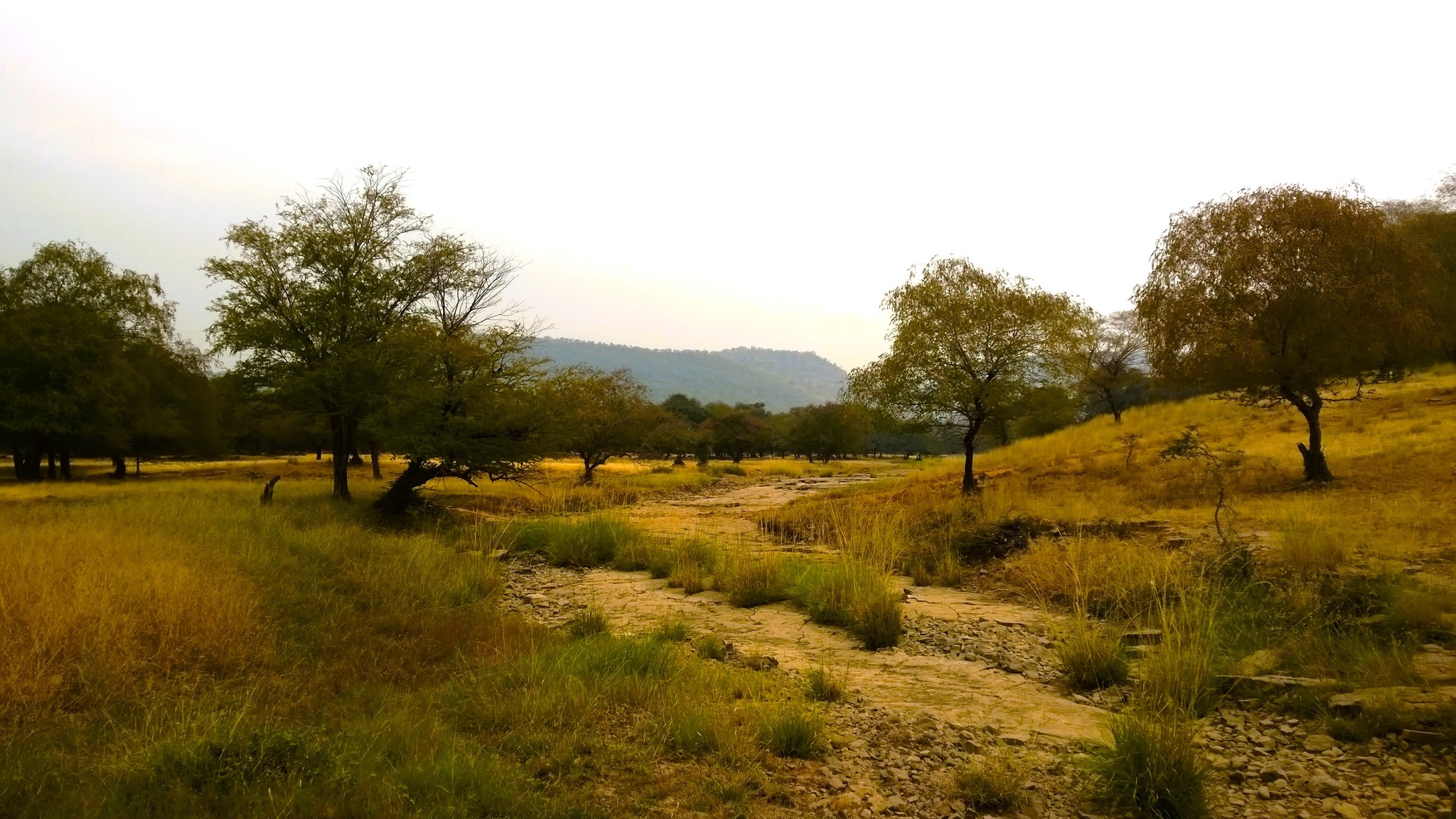
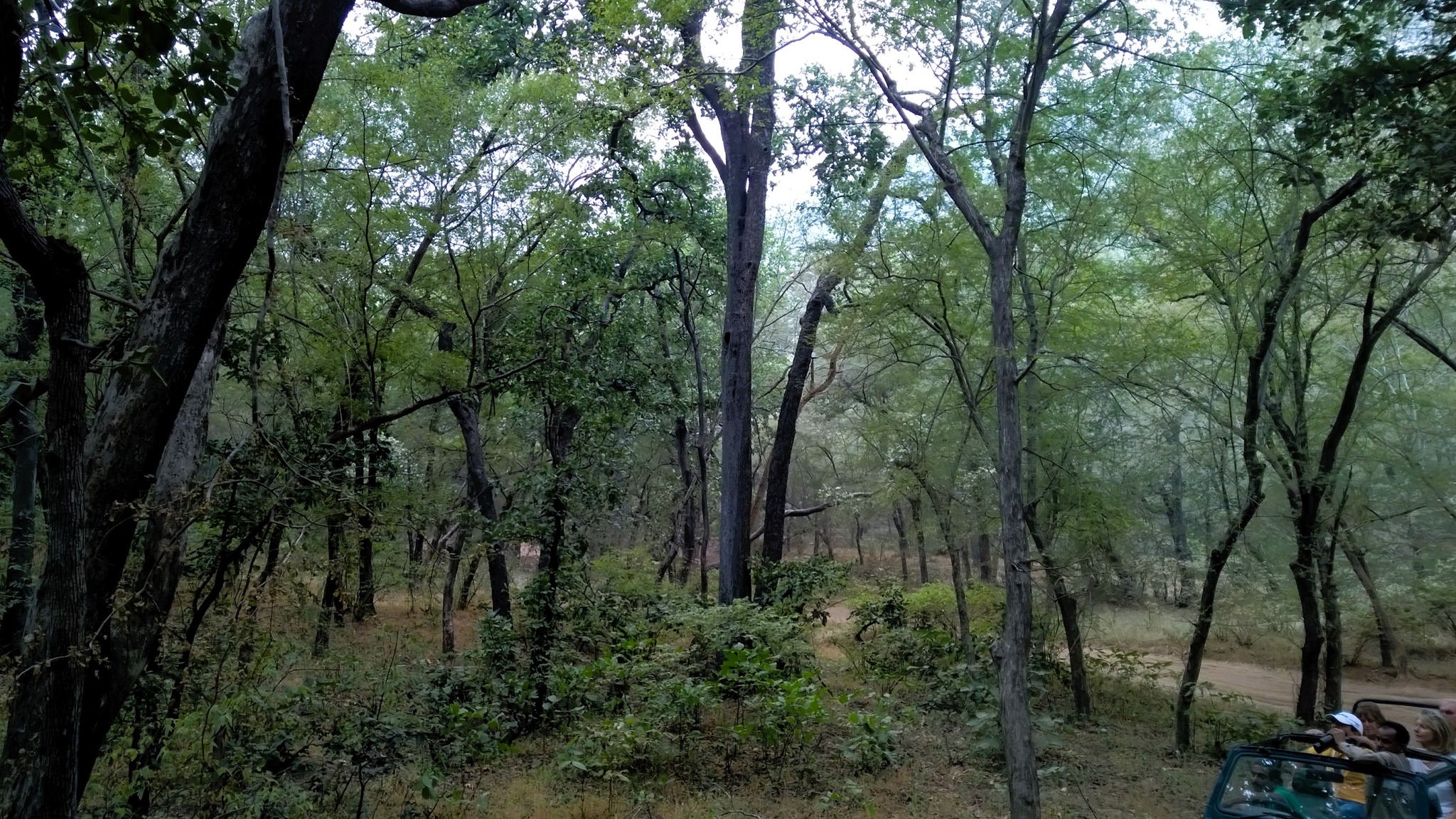
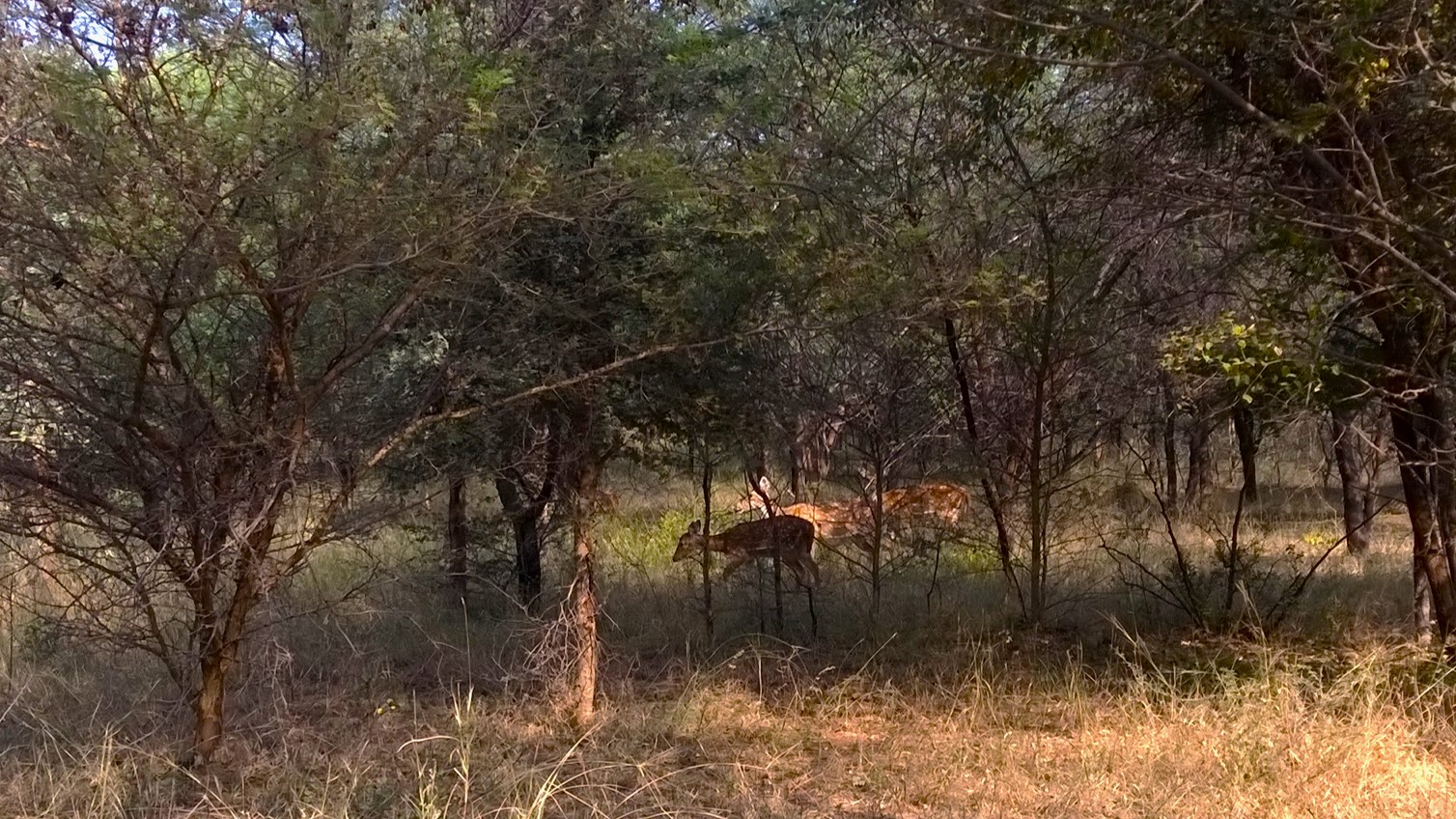
The next morning, after we had fun in the pool, we took off to the local market, where I bought myself a change of house-wear, and a bottle of liquid for my contacts, with which also came a free lens case. With that and lunch done, we headed to the Ranthambore Tiger Sanctuary for an afternoon safari. Making our way through the grasslands, and later, the dense jungle, in pursuit of the tiger, we passed by dried streams with pebbled beds and watering holes, and saw nilgai, sambhar and numerous birds, but no tiger.

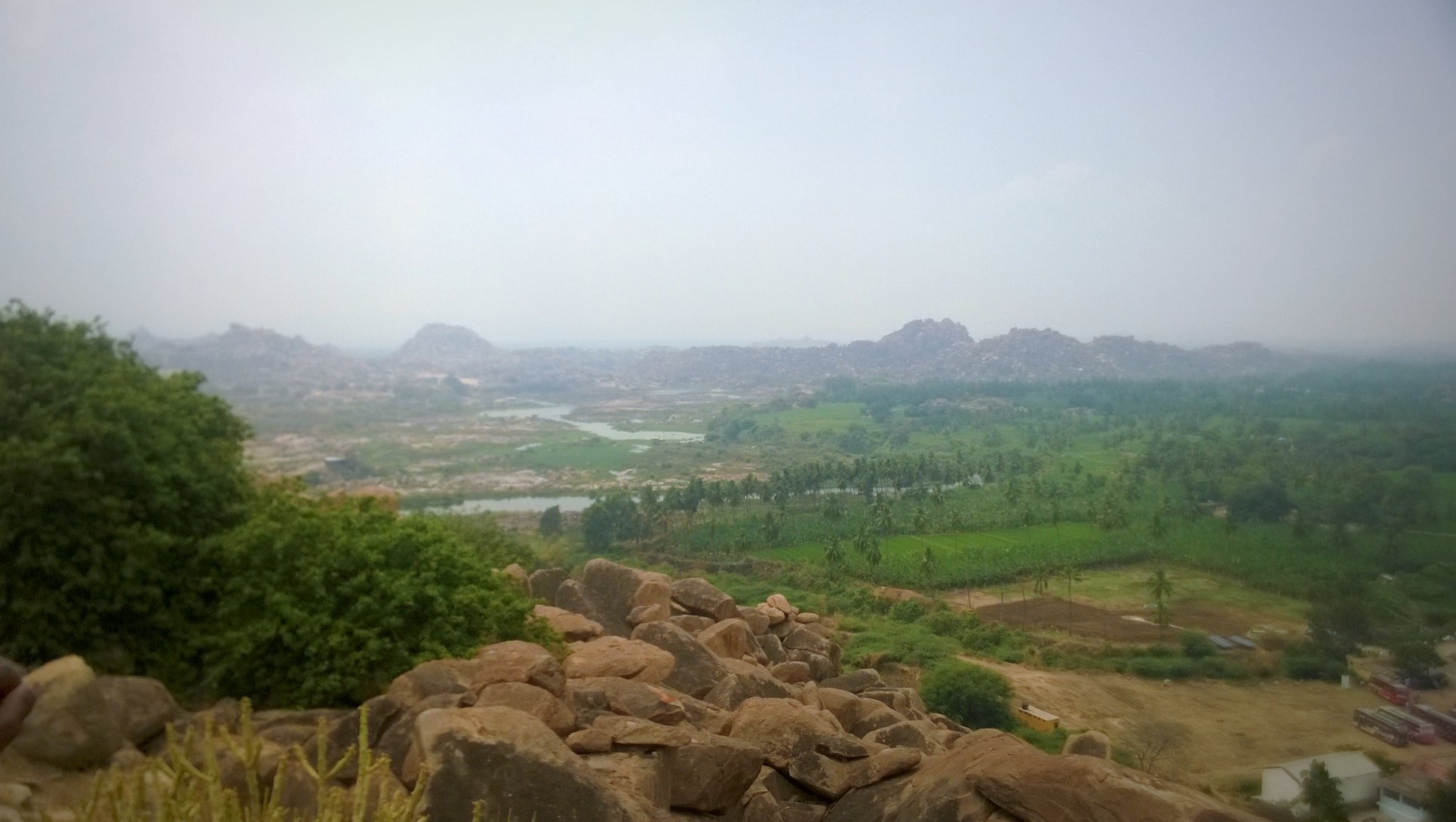
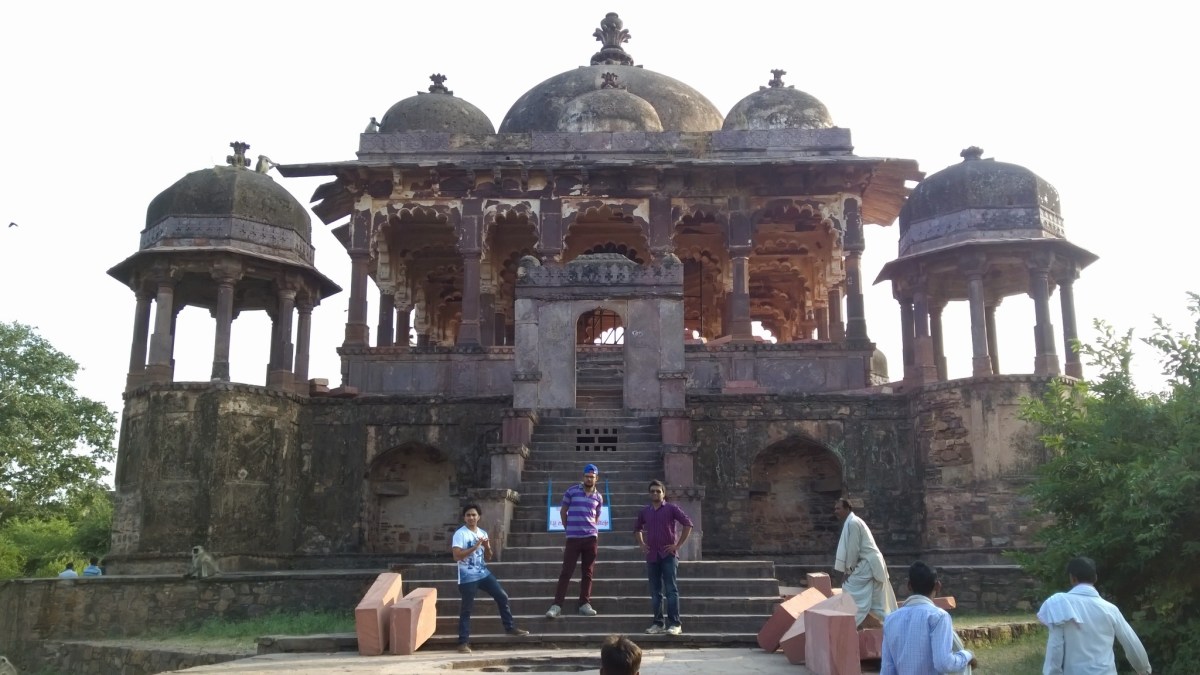
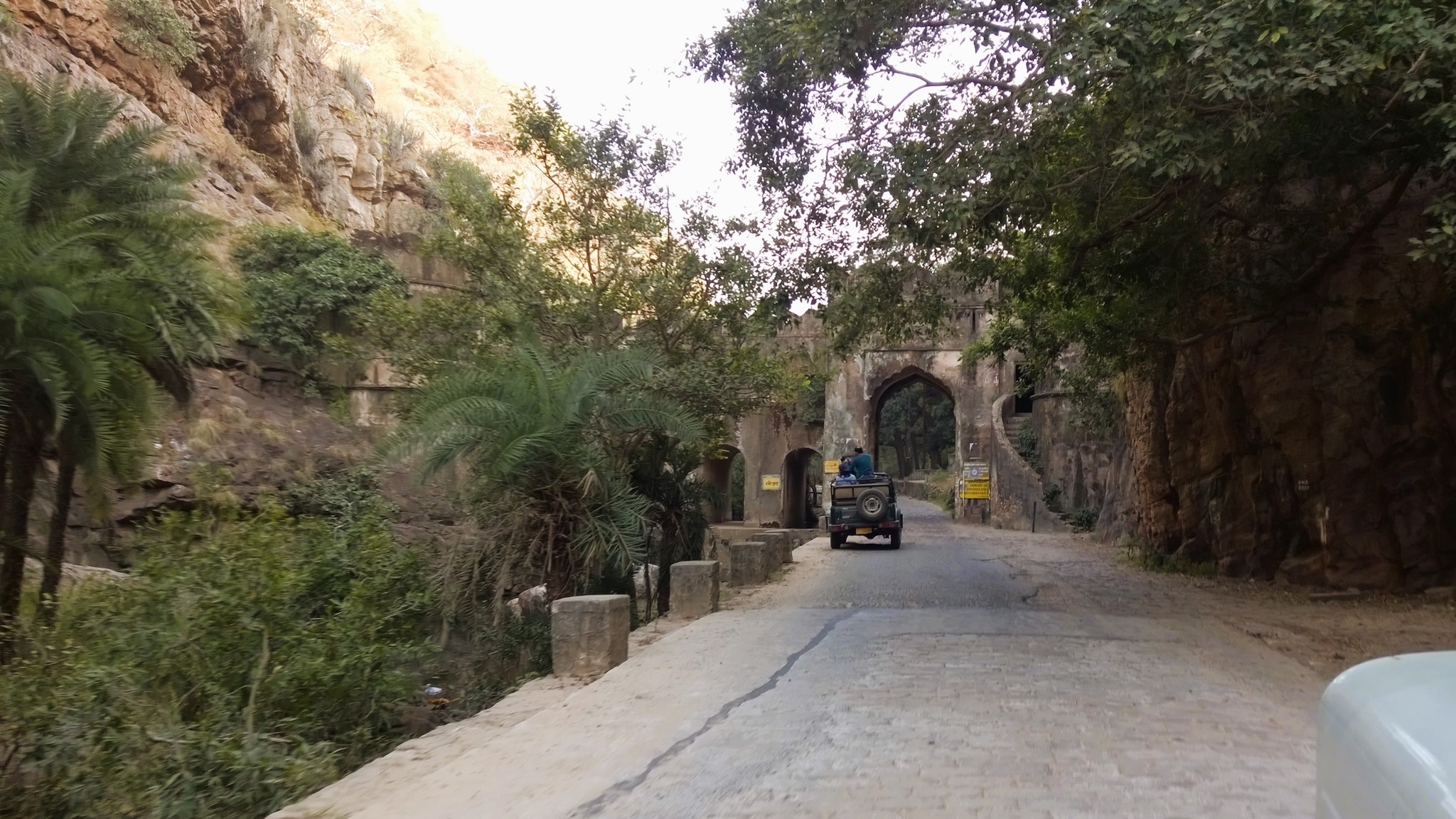
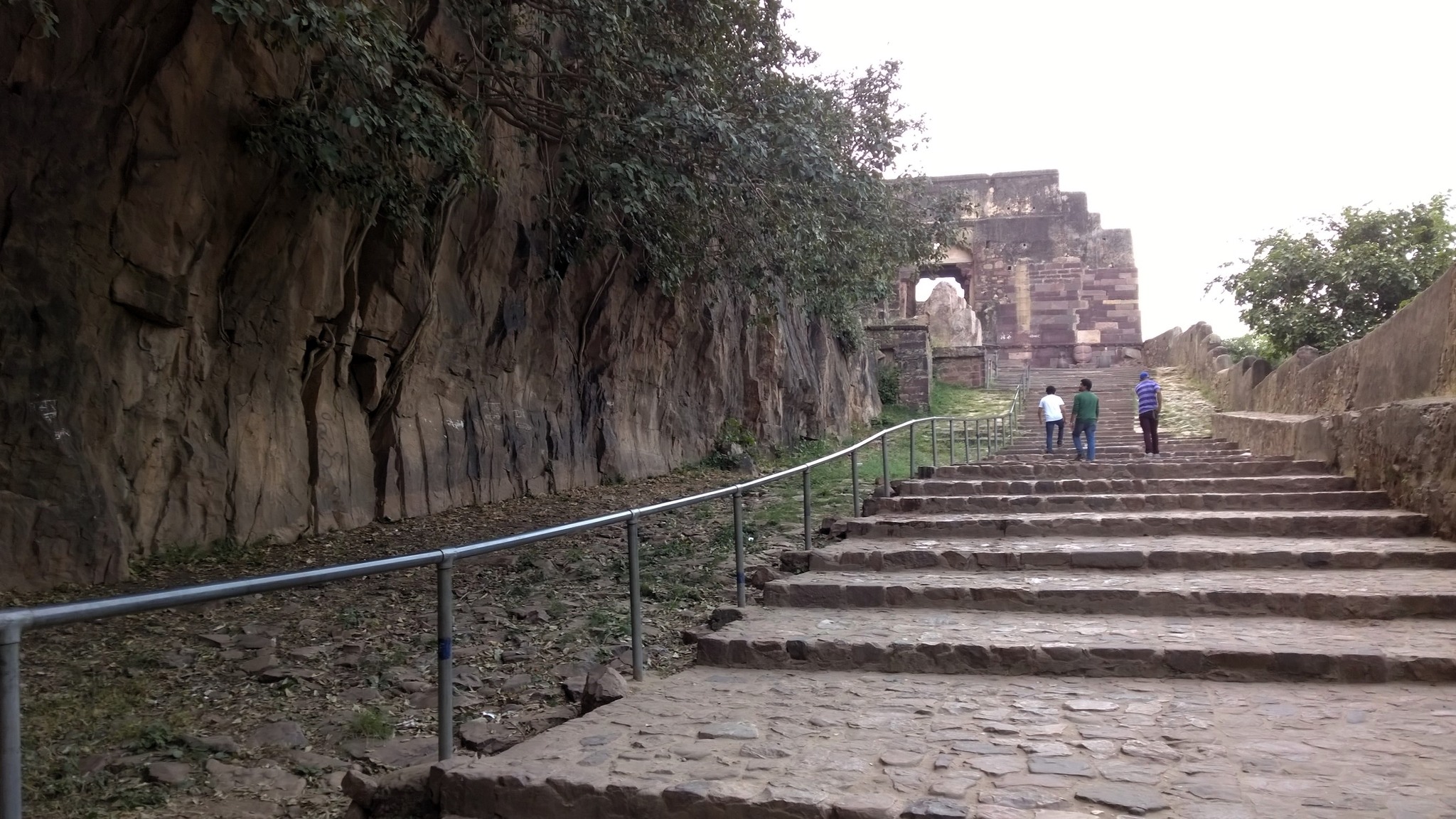
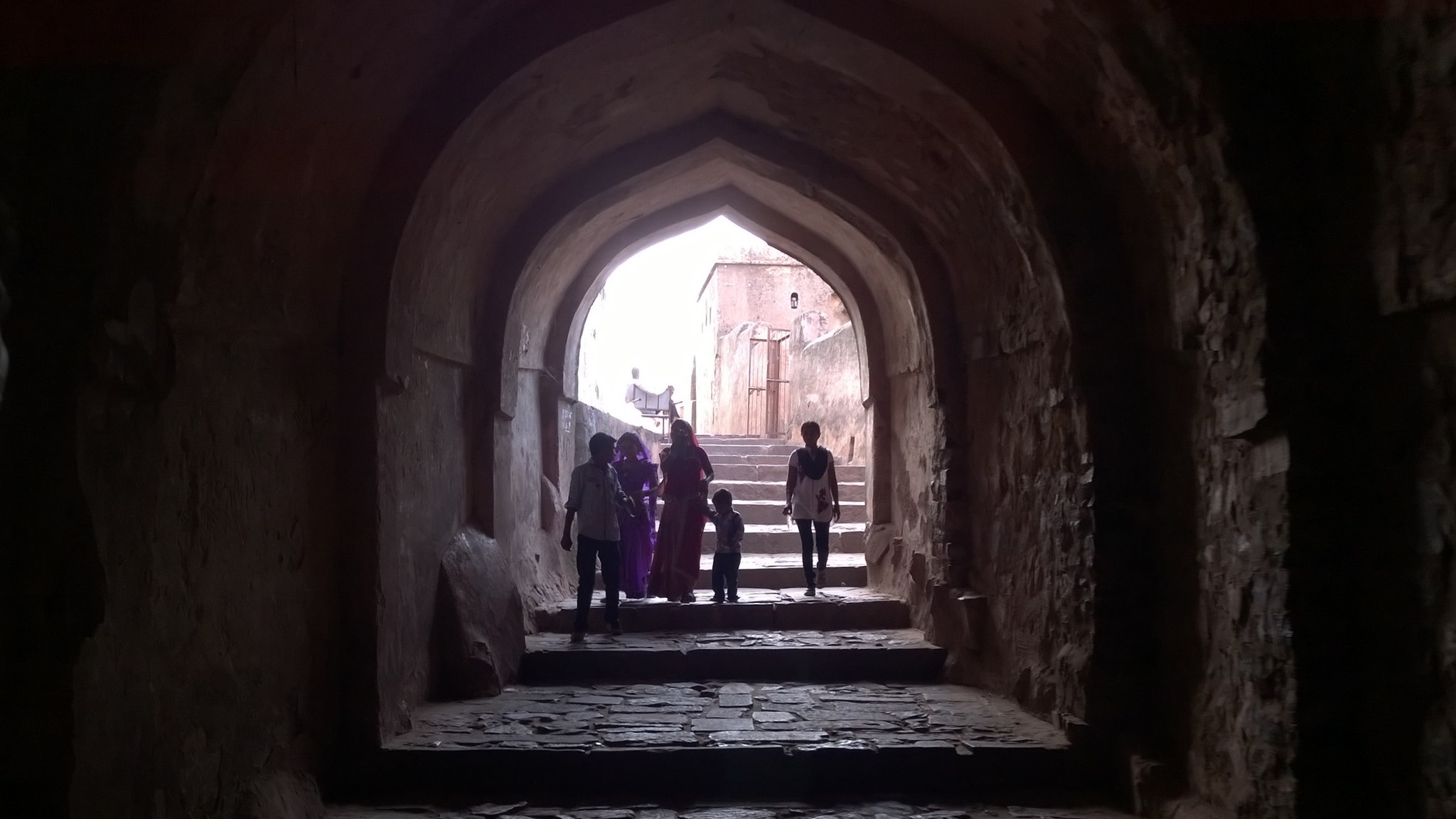
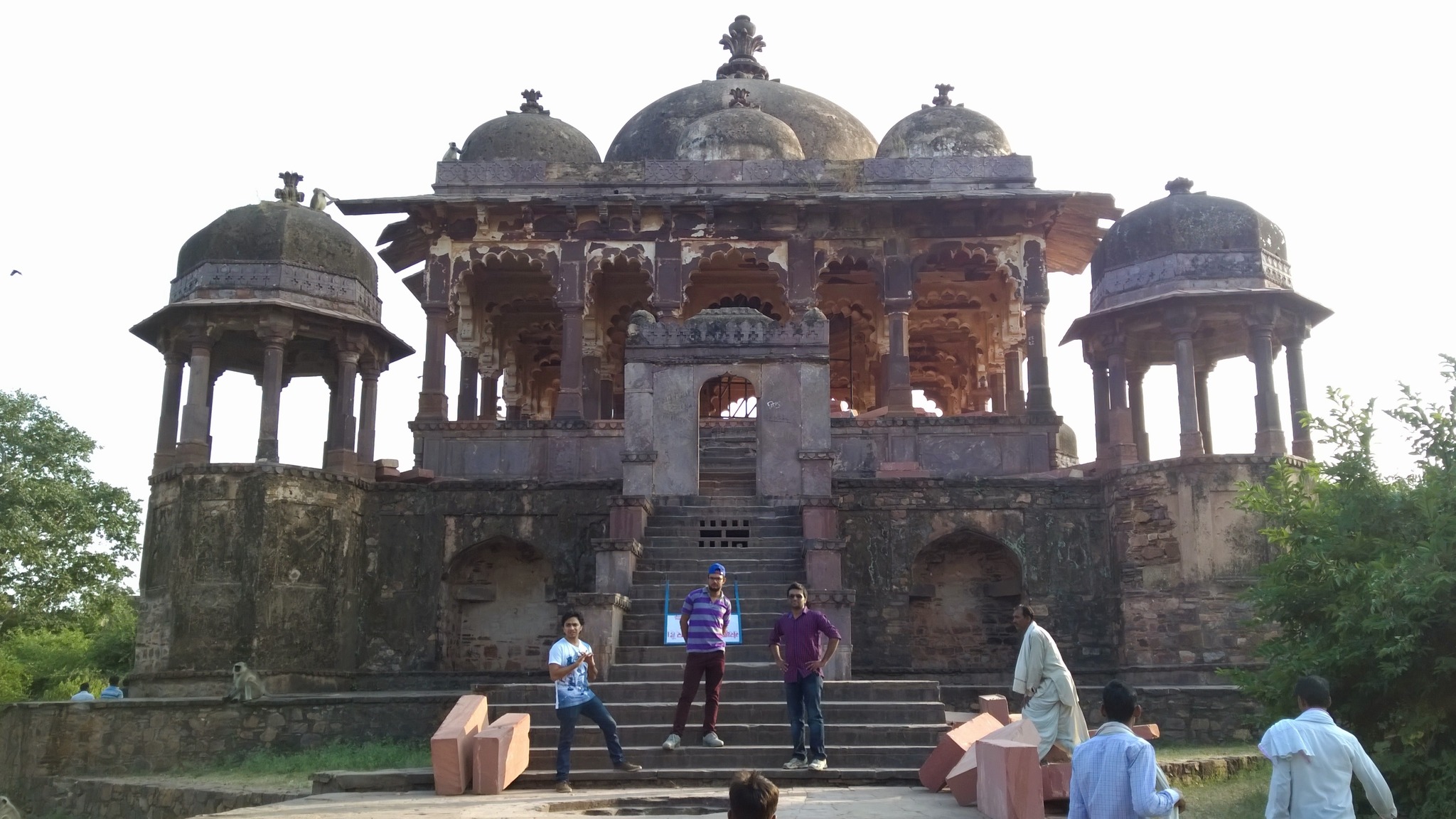
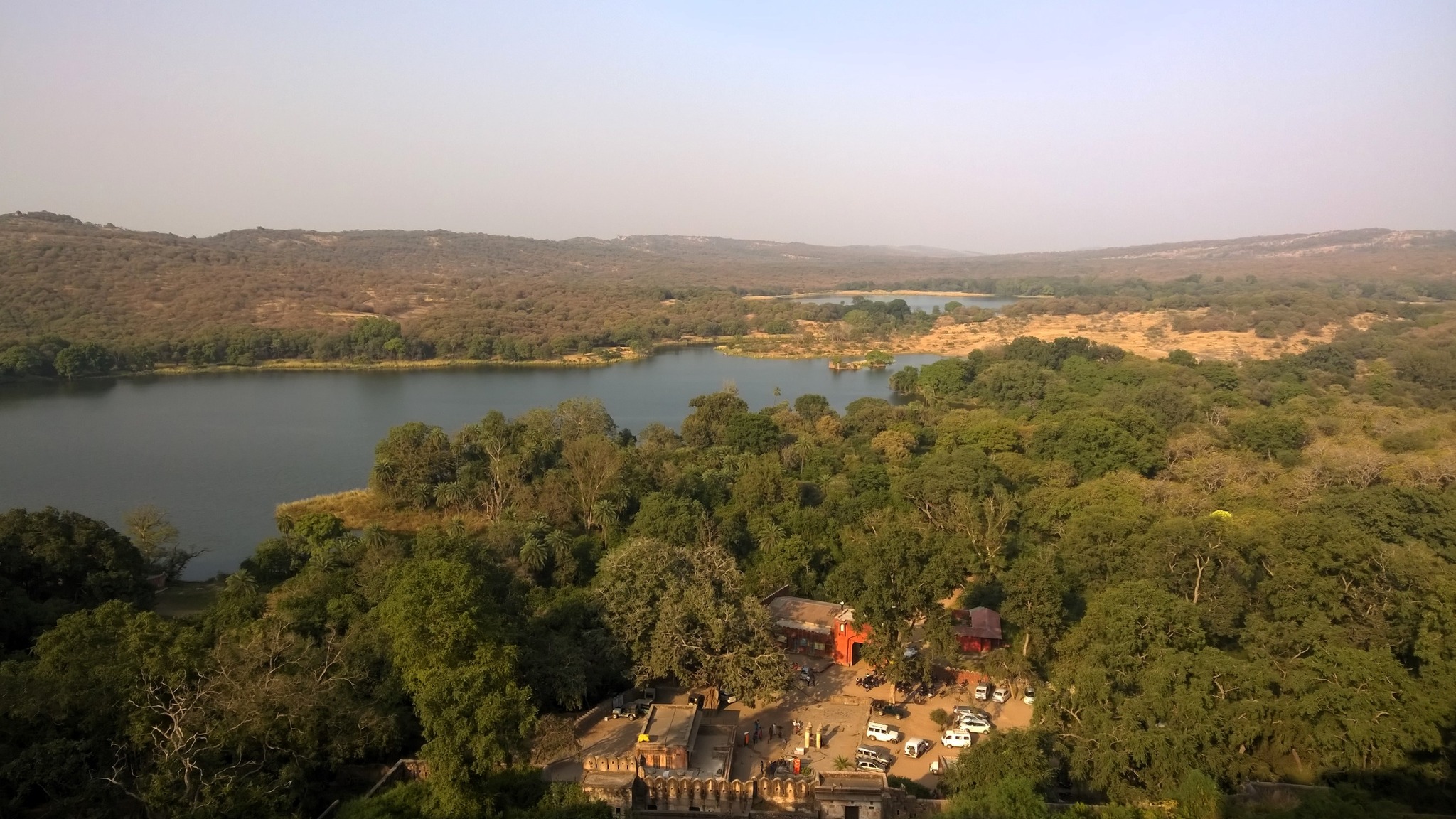
At noon the next day, we set off for the trip to the Ranthambore fort deep in the Ranthambore forest. The ride uphill on the winding road through dense forest, with a stream running alongside, supplemented by sighting of deer and birds, made the ride memorable. By 2.30 pm, we were inside the fort, and one of first things we did was taking in views of the hillside and the valley from the many rooms on the fort wall. Then we trekked our way to see the numerous palaces, a 32-pillared cenotaph, a pond called Rani Kund and the adjunct Dargah, The Lakshmi Narayan temple, the Kali temple, and then passing by the big bathing tank, we reached the Annapurna temple and ended the tour with a visit to the Trinetra Ganesh temple that lies at the end of the fort.

By now, we had spent close to 3 hours, without realizing how quickly time had passed. When we rushed back to the entrance of the fort, we realized there was no public transport left to take us back to town! However, courtesy of an offer from a good Samaritan truck driver, we hopped inside the canopy-covered semi-trailer of his truck. As the truck rolled down the potholed uneven road in the darkness, with us getting thrown around like drums, we laughed and at the same time, prayed that we reach the foothill safely, which we did by 6.30 PM.

Next morning, we left at 6 AM for another safari, this time it was the morning version, at the Ranthambore Tiger Sanctuary. With the early winter morning chill still hanging in the air, we saw deer, nilgais, sambhar, peacocks, and a host of jungle birds, but still no tiger. At 2 PM, we proceeded to Batodi, the groom’s native place, and accompanied the groom to Kothin, near Dausa, where he was getting married, reaching there by 7 PM. After the wedding, we caught a 3 AM train from Bandikui back to Delhi.

July 2014: Chittorgarh

The precursor to the aforementioned Ranthambore trip was actually another wedding-centred trip, that I had been on with the same group of colleagues, to Chittorgarh in July, that too on my birthday!

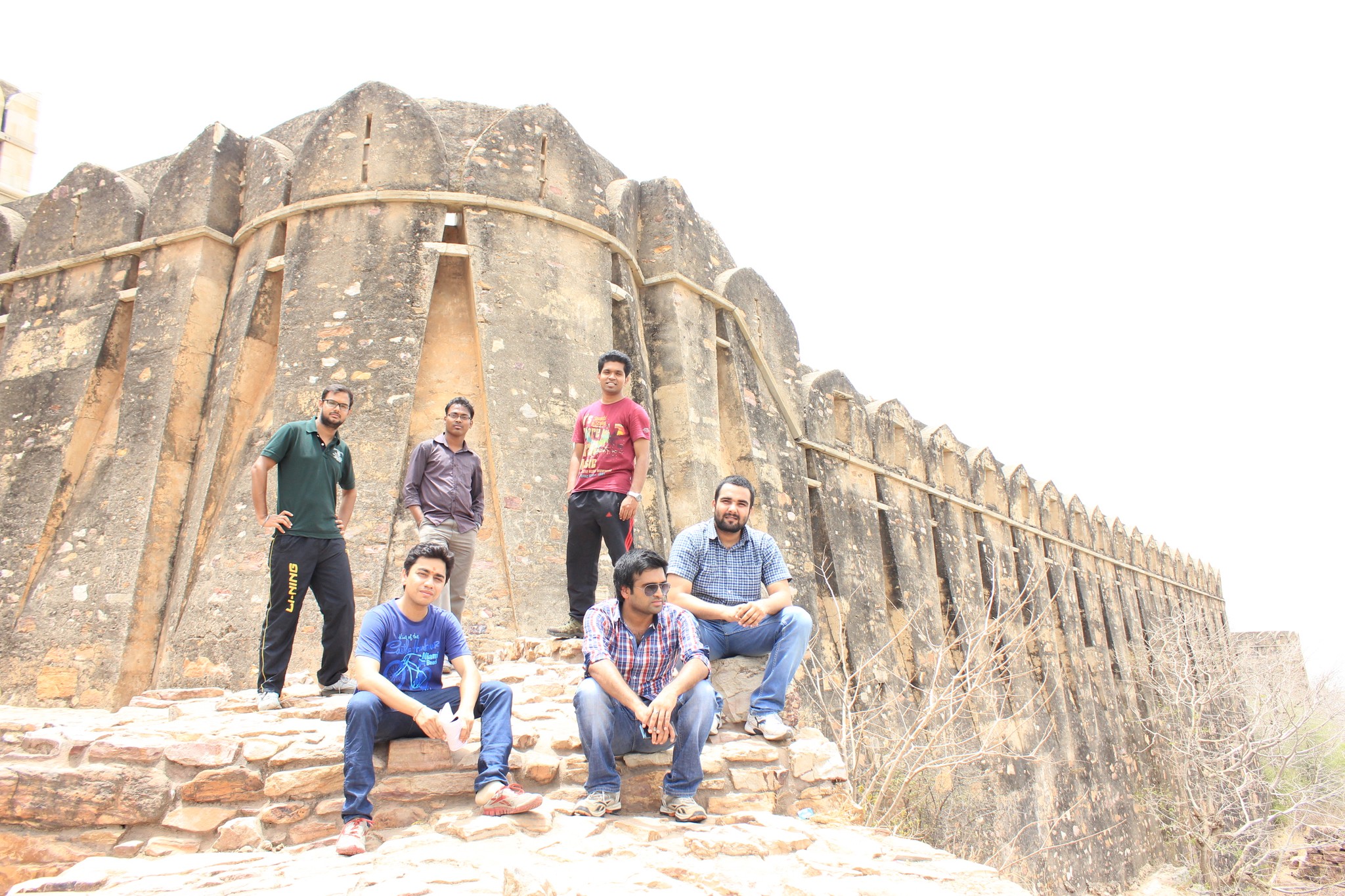
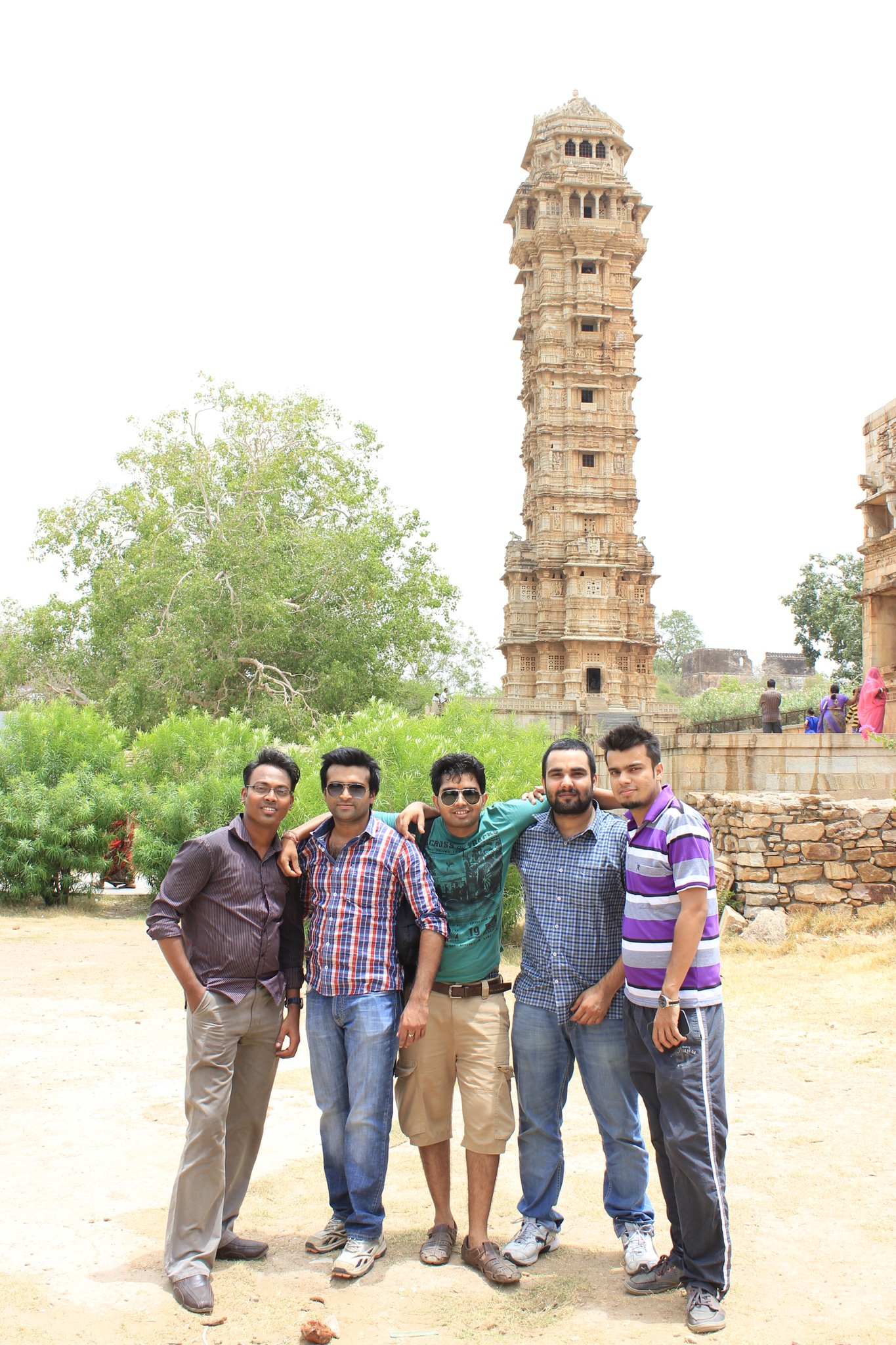
Taking the 7 PM Mewar Express from Nizamuddin, we had reached Chittorgarh early next morning. Freshening up, we had set off at 9 AM, squeezed inside an autorickshaw, to see Chittorgarh fort. So, somehow on my 28th birthday, I had wound up in my most favorite place, the second time in two years!

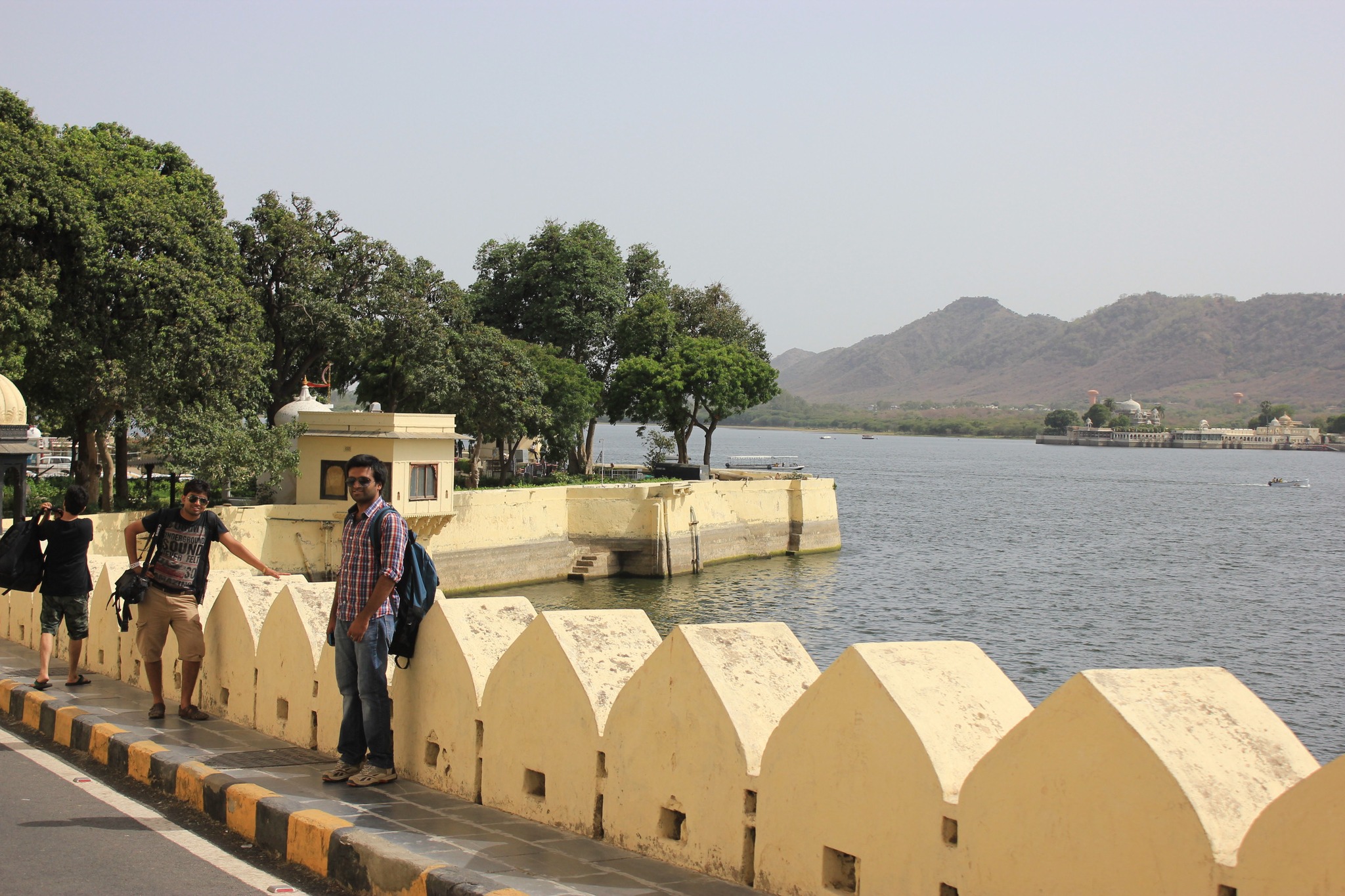
Attending our colleague’s wedding that night, we had proceeded to Udaipur the next day, where we saw the City Palace and the Maharana Pratap Memorial overlooking the Fateh Sagar Lake. Later in the evening, we caught the Mewar Express again and reached Delhi the next morning.

While I had primarily been a solo traveller up to that point, I realized I could enjoy myself in a group trip too, with the right set of people – the people in these journeys might be ex-colleagues now, but ones I truly cherish as friends, and would give anything to be able to re-live those times.

Tomfoolery in the Thar: Jaisalmer, Ranao and Bikaner

Prelude

With my B-school admission fast approaching, and my mobility improving 2.5 months into the recovery after my accident in Khajuraho, I decided to make one last big trip before I left Delhi for the year-long intensive course. So, my friend and colleague Amit and I took off to Jaisalmer by Ranikhet Express, which started around 10 AM from Delhi after a 6 hour delay. That did not put a dent to our itinerary though, since we reached Jaisalmer early the following morning instead of reaching the same night.

After a quick check-in at a motel just below the Jaisalmer fort and freshening up, we set out to have breakfast at a roof-top restaurant. And then, undecided on what to do next, we loitered around, first in search of a hostel, where Amit wanted to put up, while I dissuaded him from the same telling him that we were better off spending that money on an outstation trip, and camping out in the desert. Anyway, we still went to check out a Zostel property, ran into an old acquaintance of Amit and again got back to bickering about the next steps – the bone of contention being, whether we should first see Jaisalmer and then go outstation or do it vice versa.

Part 1: Off to the Border

The bickering was only the beginning of our shenanigans. Continuing to dawdle and finally agreeing upon a plan to go outstation first , we reached a lassi shop near the road leading into the Jaisalmer fort, where we were told we could get our lassis spiked with bhaang, an offer that my wise friend took up on. It tasted about the same, my friend reported while downing the drink, even as I found a cab driver and started negotiating with him for a two-day trip. Shortly, we were on the road leading to Tanot, on the border with Pakistan.

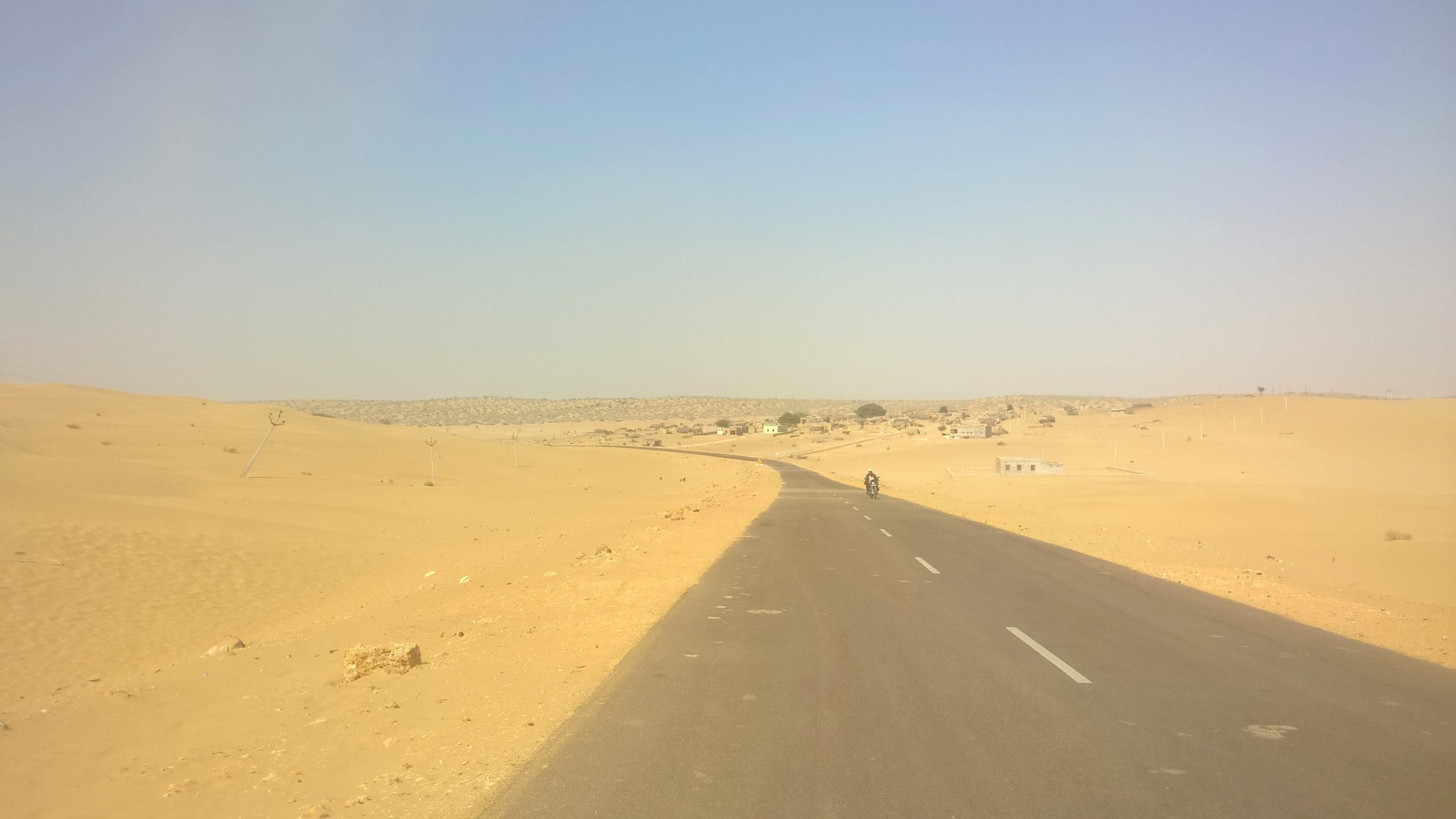
As soon as we left Jaisalmer town behind, we were looking at swathes of yellow with windmills standing tall in the distance. As we pushed deeper into the Thar desert, Amit kept tell me about how useless the lassi was, as it had no effect on him. Meanwhile, the density of vegetation kept decreasing and the distance between the occasional hamlet gradually increased.

About an hour-and-half of driving deep into the desert, passing by expanses of sand dunes with smatterings of grass and shrub, we came upon a steep decline – ahead of us was a depression in the ground, stretching from one end to the other. It looked like the dried bed of a river – only the surface of the bed still looked indistinguishable from the higher ground all around – even as the road winded down the depression and rose again on the other side. There was no trace of vegetation, with only a handful of huts strewn around being the only habitation for as far as we could see of the other side of the ‘river bed’.

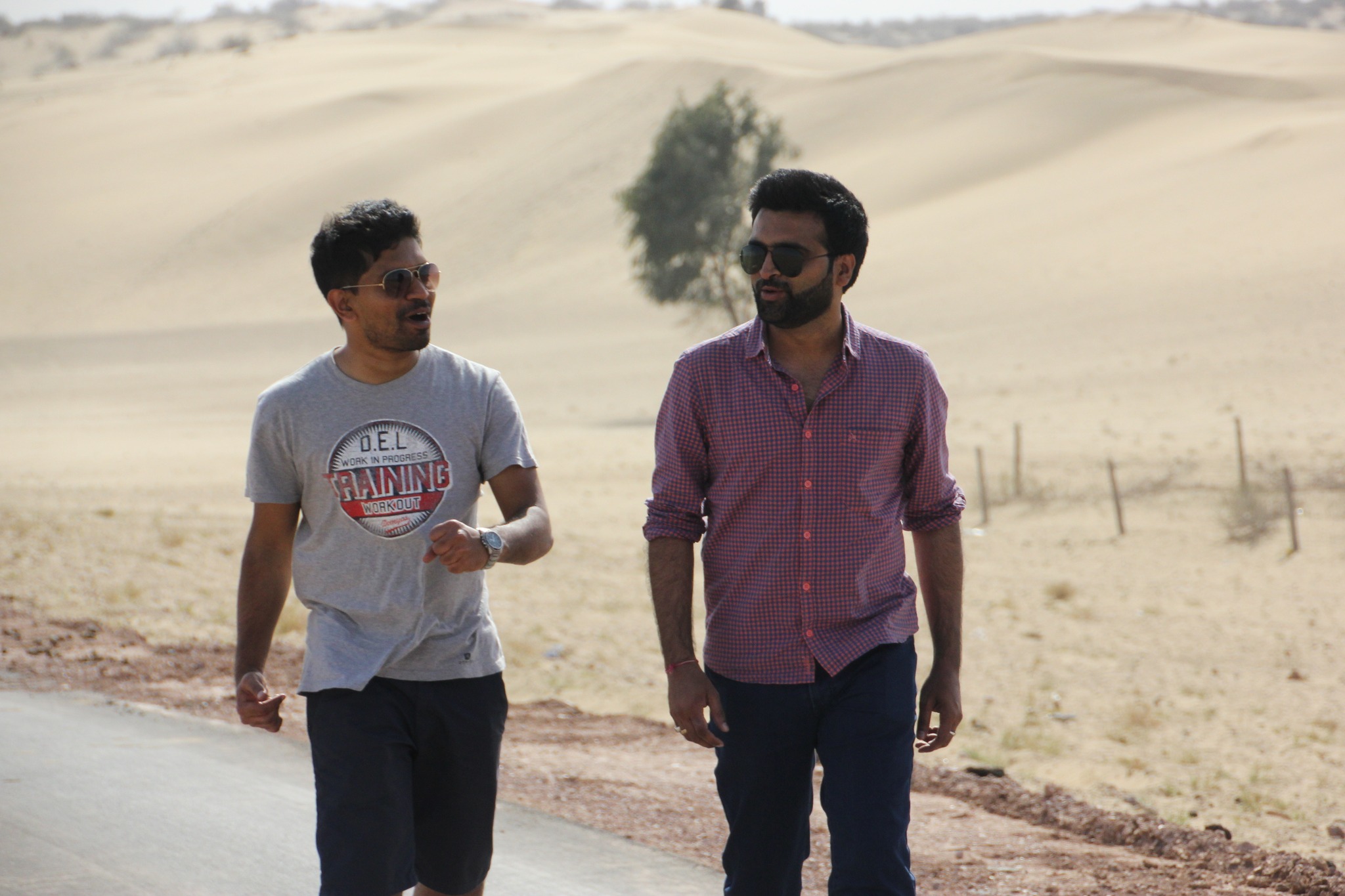
Google Maps told us that the place was called Ranao or Ranau, and it was quite a sight, prompting us to stop and stare. We got down, admiring and taking pictures of the landscape. By now, an air of whimsy was descending upon Amit, and he suggested we take staged ‘candid’ photographs of ourselves in the marvellous background, resulting in us whiling away time posing for self-timed clicks for the next half hour.

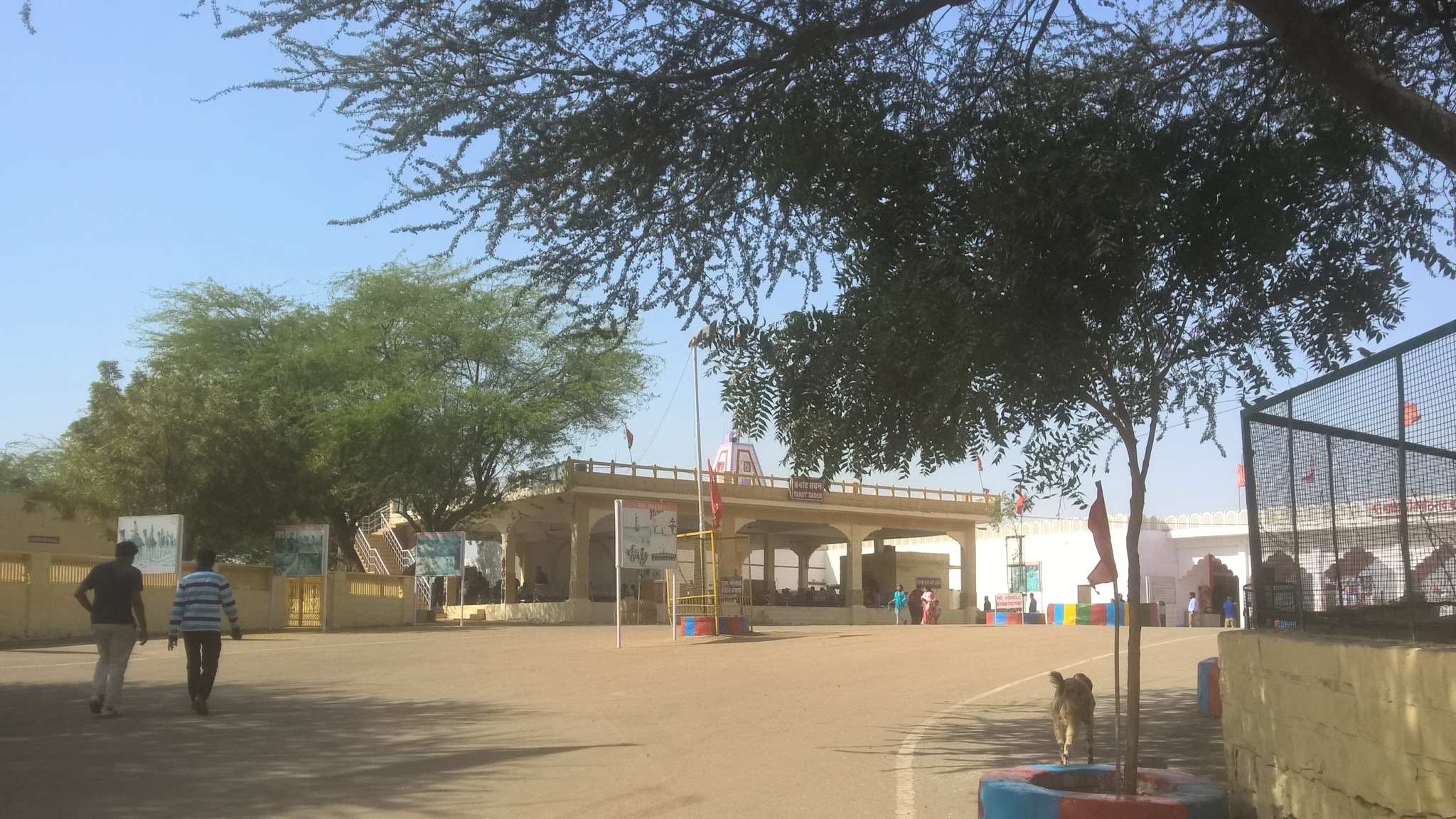
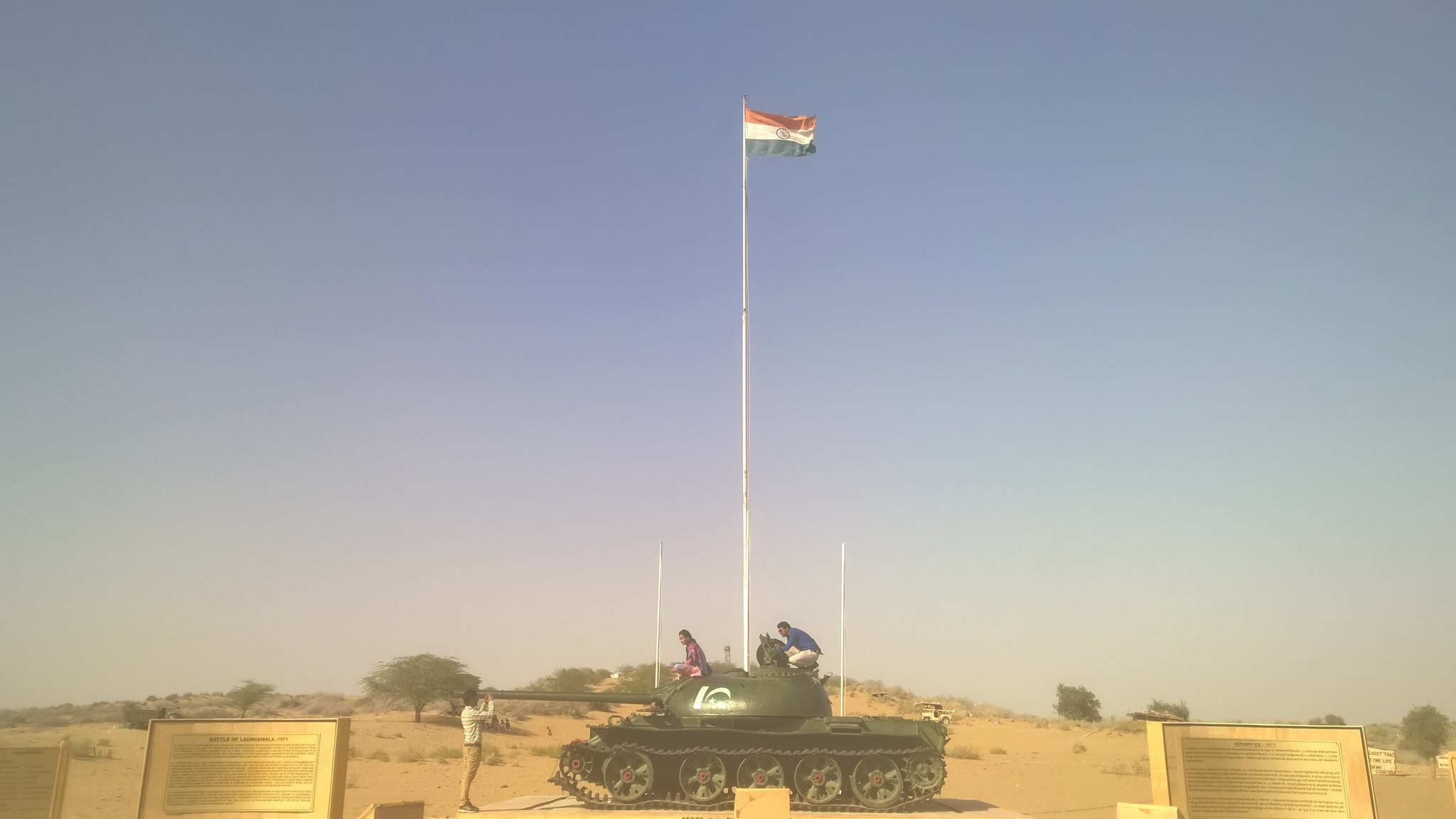
Moving on from Ranao, another half hour later, we were at Tanot, where Amit was washed over by a wave of religiosity and euphoria, forcing him to admit that the lassi was finally taking effect. Paying our respects at the Tanot Mata temple, we proceeded alongside the Pakistan border towards Longewala, through completely empty desert, with only electric poles with transmission lines, the narrow tarred road, our car and its passengers indicating the only traces of human existence. At Sadewala, midway to Longewala, we finally saw humans – a few kids, with whom we took a few pictures.About 45 minutes after leaving Tanot, we were at the Longewala War Memorial, where again under the spell of Amit’s exuberance, we clicked a host of zany pictures.

It was now already 4.30 PM – with the prospect of darkness descending soon, we decided to turn back in the direction of Jaisalmer. By 6 PM, we were at the Sam Sand Dunes, horsing around amidst the camels in the glare of the setting sun, for about an hour, after which we checked-in to the first desert tent-camp resort that our eyes fell on. Watching the folk-arts programme, and having dinner, we went off to sleep.

Part 2: Jaisalmer and Nearabouts

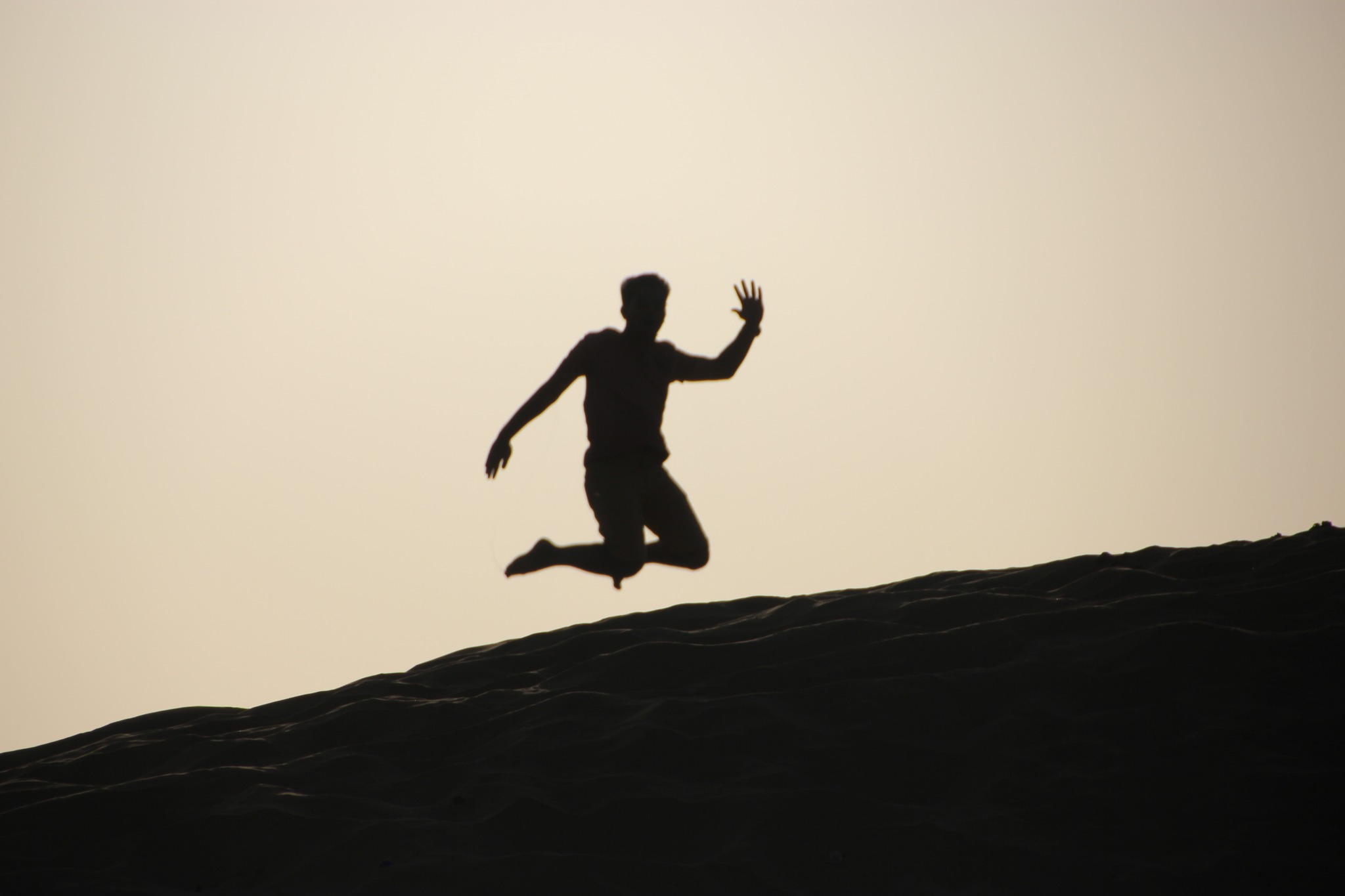
Actually, the title for this part should have been: Nearabouts of Jaisalmer and Jaisalmer, as we started the day 45 km away from Jaisalmer, at Sam. Although the effect of bhang on Amit had worn off, still taking some cues from the freedom it gave us, we did some more tomfoolery on the Sam sand dunes, and moved to the south, reaching the Desert National Park, which I had been forced to miss in my sole previous trip to Jaisalmer due to paucity of time.

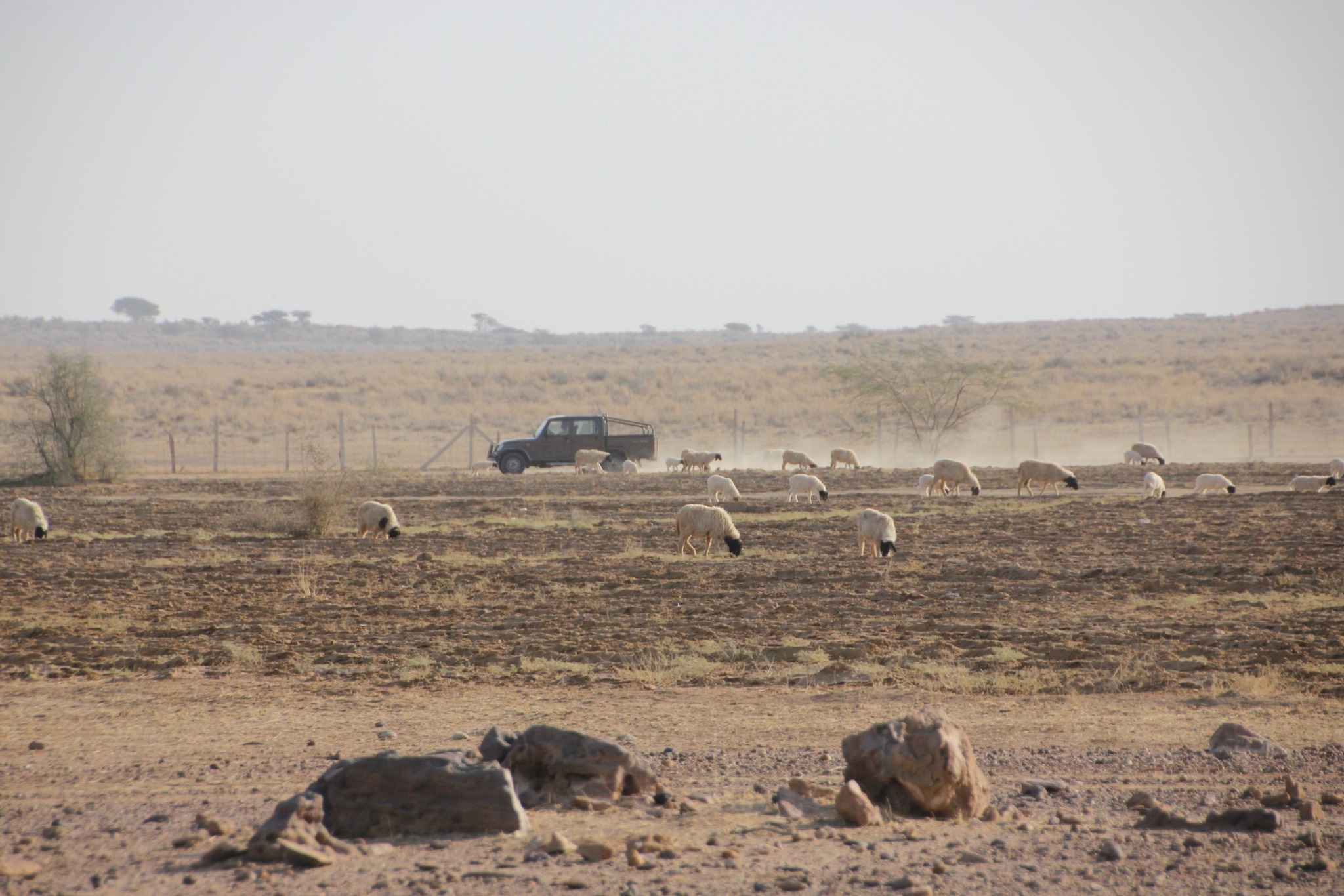
The Desert National Park is a vast area of desert including a variety of topographical features, such as, sand flats, dunes, craggy rocks, and compact salt bottoms, straddling the Jaisalmer and Barmer districts. Earmarked by the government to preserve the unique and fragile ecosystem of the Thar, the park is home to species, including the monitor lizard, desert fox, Russell’s viper, and many migratory and resident birds, of which one of the most noteworthy is the Indian Bustard.

Nevertheless, from the little Park office located just some distance inside the park, we booked a safari, and spent more than an hour roving inside the park, taking pictures with a flock of sheep, and then spotting eagles, monitor lizards, and finally, an Indian Bustard. On the whole, the safari was easily one of the most memorable experiences of my life. For those on a leisurely trip to Jaisalmer and mildly interested in nature, the Desert National Park is highly recommended, in fact, a must-visit.

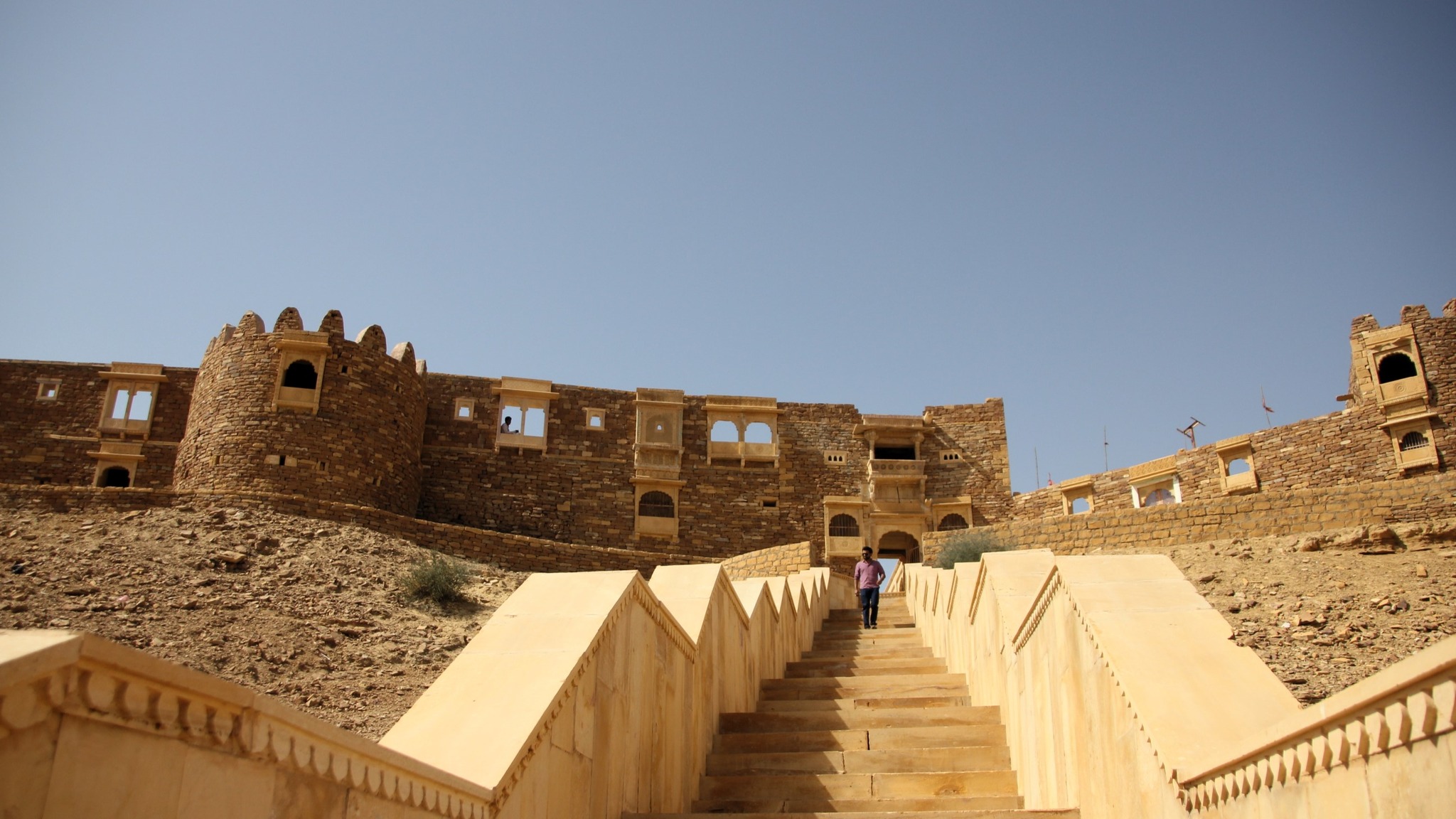
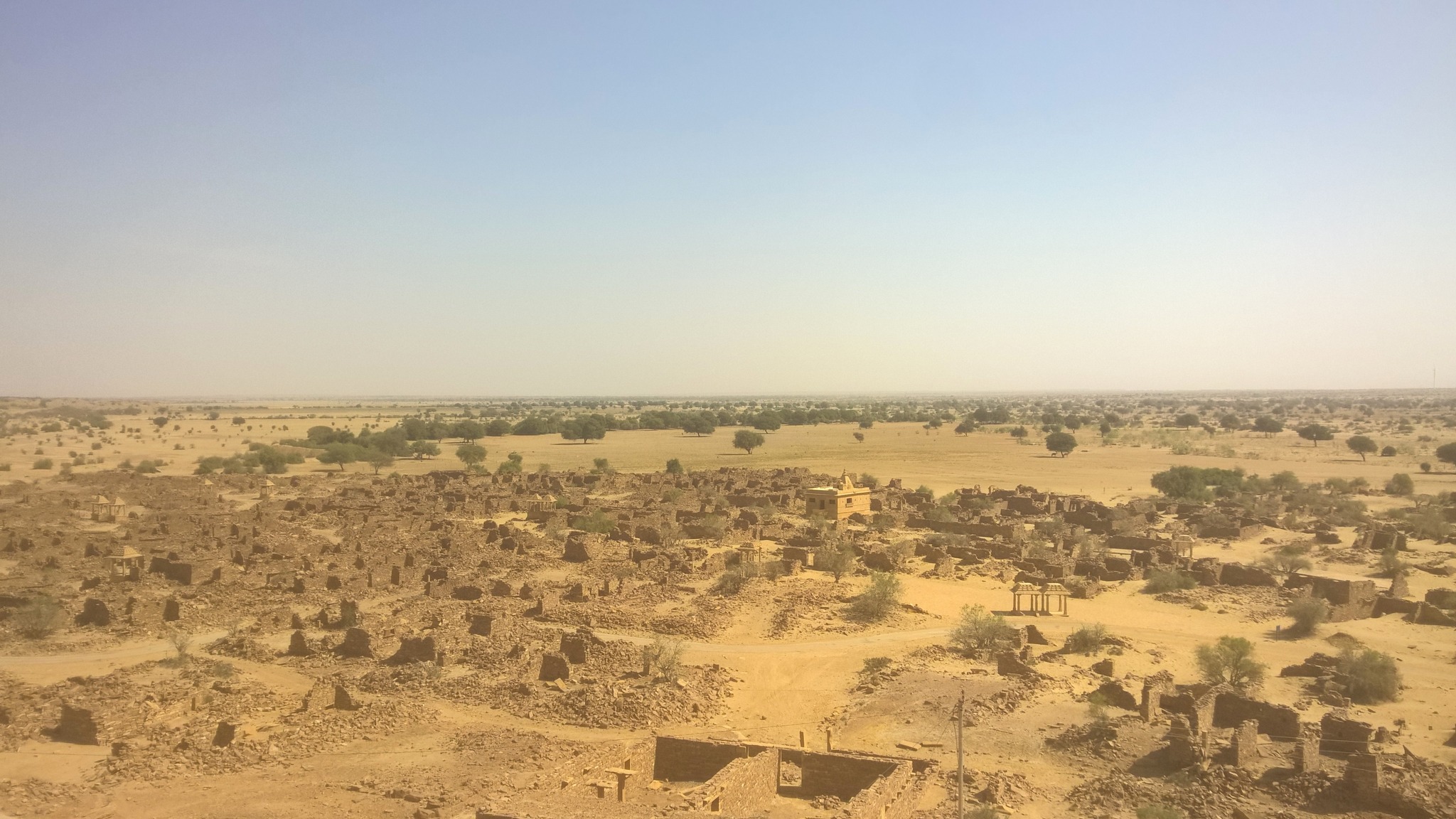
After the safari, we took an interior road that ran through the sands, then passed by craggy outcrops on which stood tall windmills, and more than an hour later, reached Khabha fort, a compact structure that stood like a lone sentinel on the edge of a low cliff in the middle of the desert. Down in the escarpment lay the stony ruins of an abandoned town, a sight similar to which we found in Kuldhara, which we reached half an hour later. Touted as a haunted village, Kuldhara does give off eerie vibes, more so in the sense of transporting you to a time gone by than anything else.

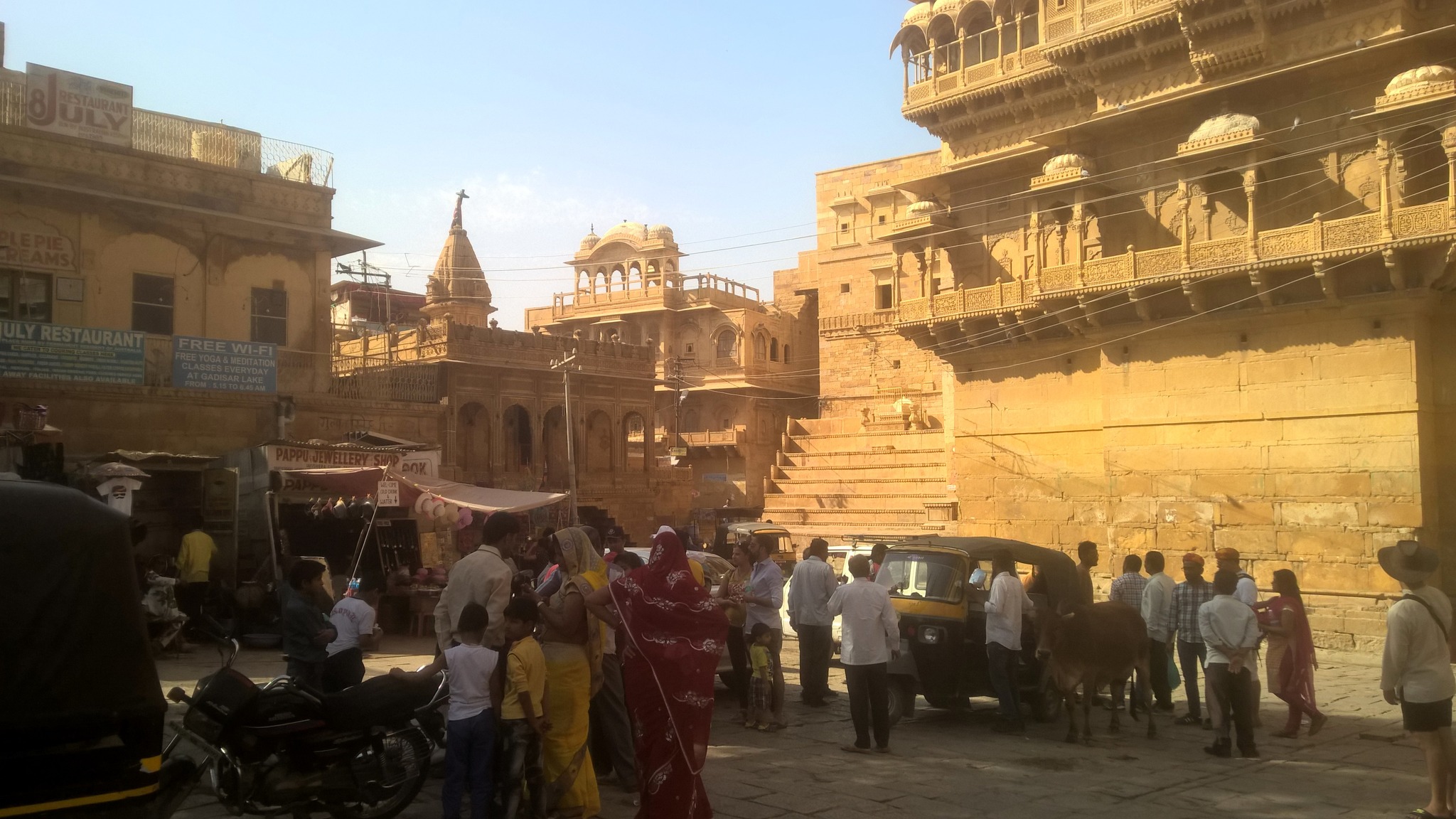
We then re-entered Jaisalmer, and headed off to the Jaisalmer fort, where we spent another hour walking through the corridors and halls in the palaces and the alleys along the fort wall. After that we headed off to Akal Wood Fossil park that lies about half hour south-east of Jaisalmer, which we reached around 5 PM. We trudged through the barren, desolate rocky land, coming across preserved fossilized wood dating back to more than 200 million years, then climbed on a flat hill, and surveyed the intriguing landscape.

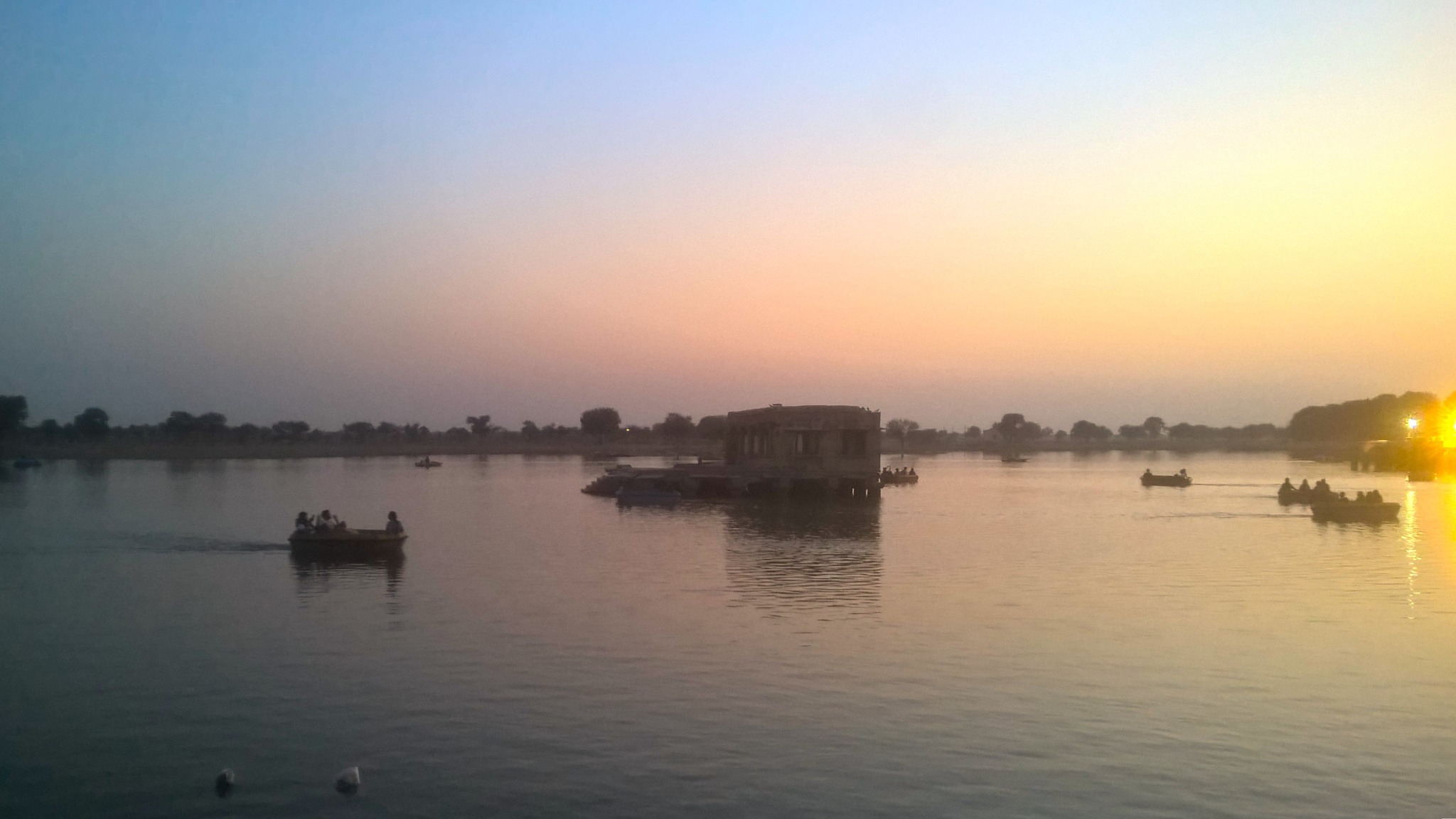
As it began to get dark, we headed back to Jaisalmer city, and bid adieu to the cab driver, who by then had become a partner in our shenanigans, at Gadisar Lake. Spending the twilight at the lake, we headed off to the railway station to catch the overnight Leelan Express train to Bikaner.

Part 3: Bikaner

Next morning, we got down at Bikaner railway station and checked-in to a hotel nearby. After resting a while, freshening up, and having breakfast, we hired an auto-rickshaw to take us around for the day, and were in Junagarh fort by noon.

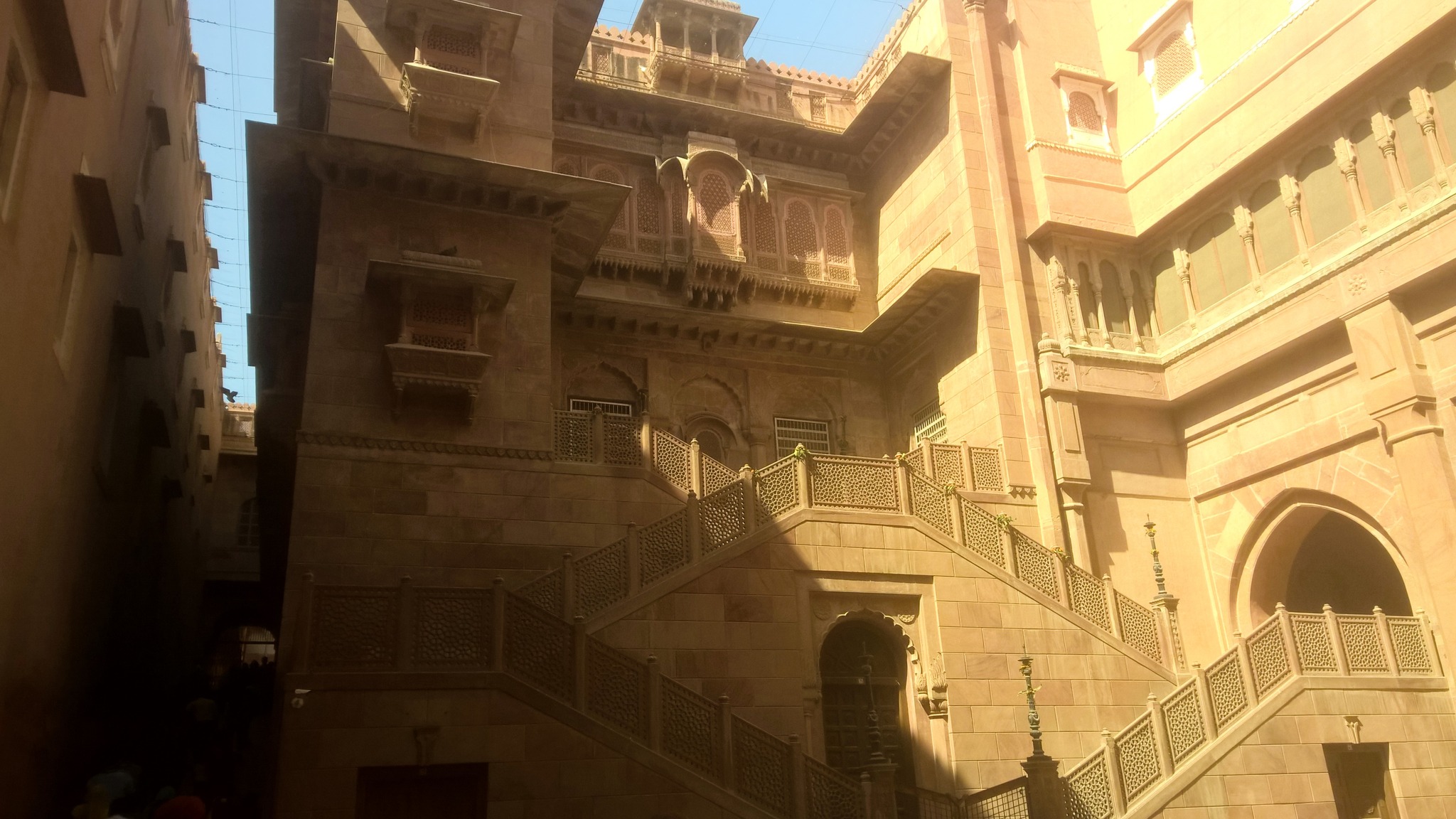
Bikaner city was founded Rao Bika in 1488 AD, after striking out on his own not wanting to inherit Jodhpur state from his father, despite being heir apparent to the throne. The Junagarh fort, itself was built from 1589 to 1594 AD by the sixth ruler of Bikaner, Raja Rai Singh. Earlier called Chintamani, the fort only got its present name in the early 20th century after the royal family moved to the nearby Lalgarh Palace, ‘Juna’ meaning ‘old’. The Junagarh fort is open to public as musuem, with many daily use items including furniture intact in their respective places in the rooms, giving a glimpse of how the royal family of Bikaner lived in the past.

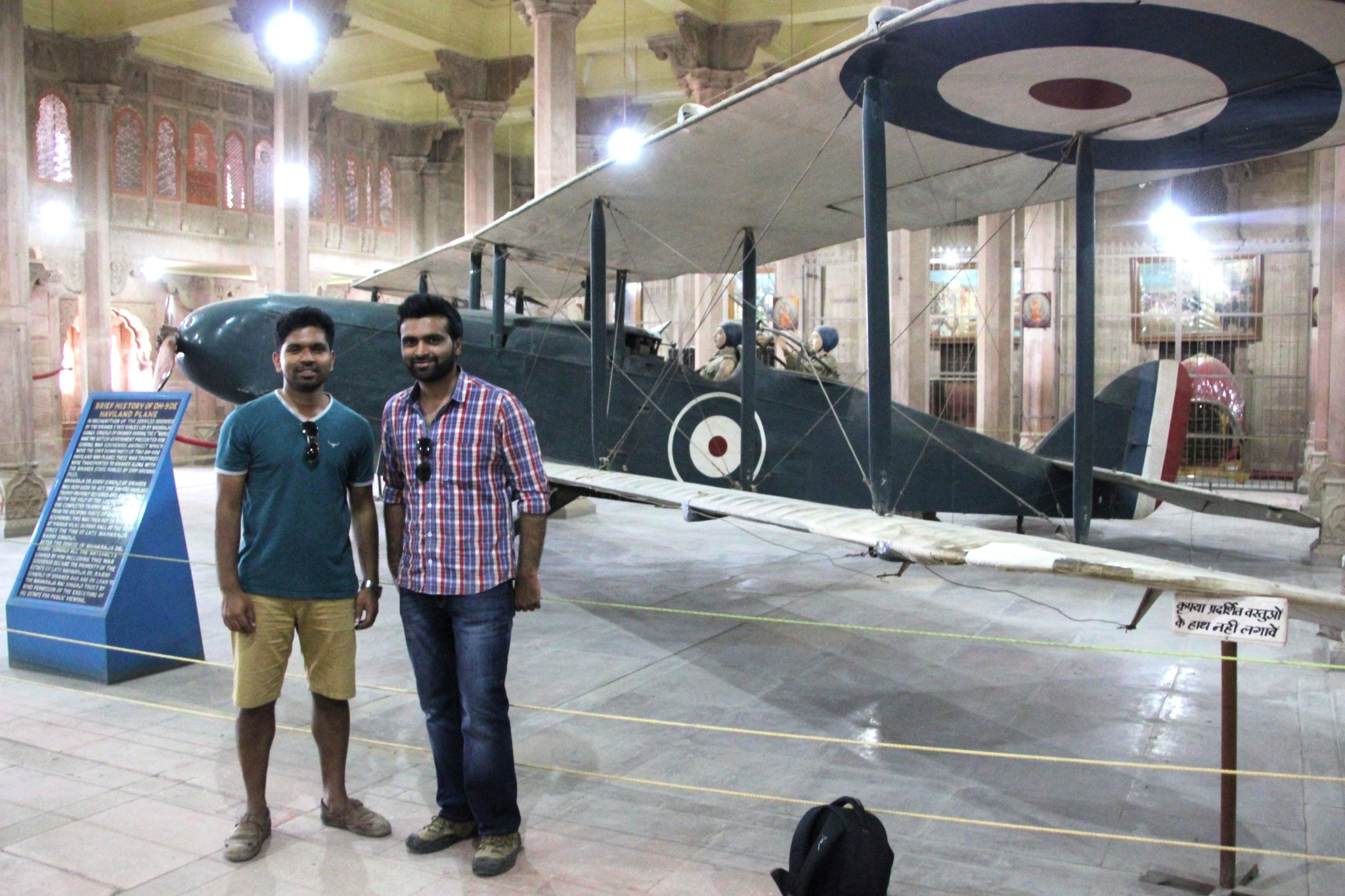
Walking through the various palaces, halls, hallways, corridors, flights of steps, terraces – every succeeding ruler progressively adding more structures and accommodations – we finally came upon a large section, which held in display a DH-9 De Havilland single-engine biplane that saw action in the First World War. This was installed by piecing together the parts from one of two such warplanes shot down in the First World War, which were gifted to Bikaner state in recognition of the 500-strong camel cavalry support provided by Maharaja Ganga Singh to the British Government in the war then-dubbed as the Imperial War.

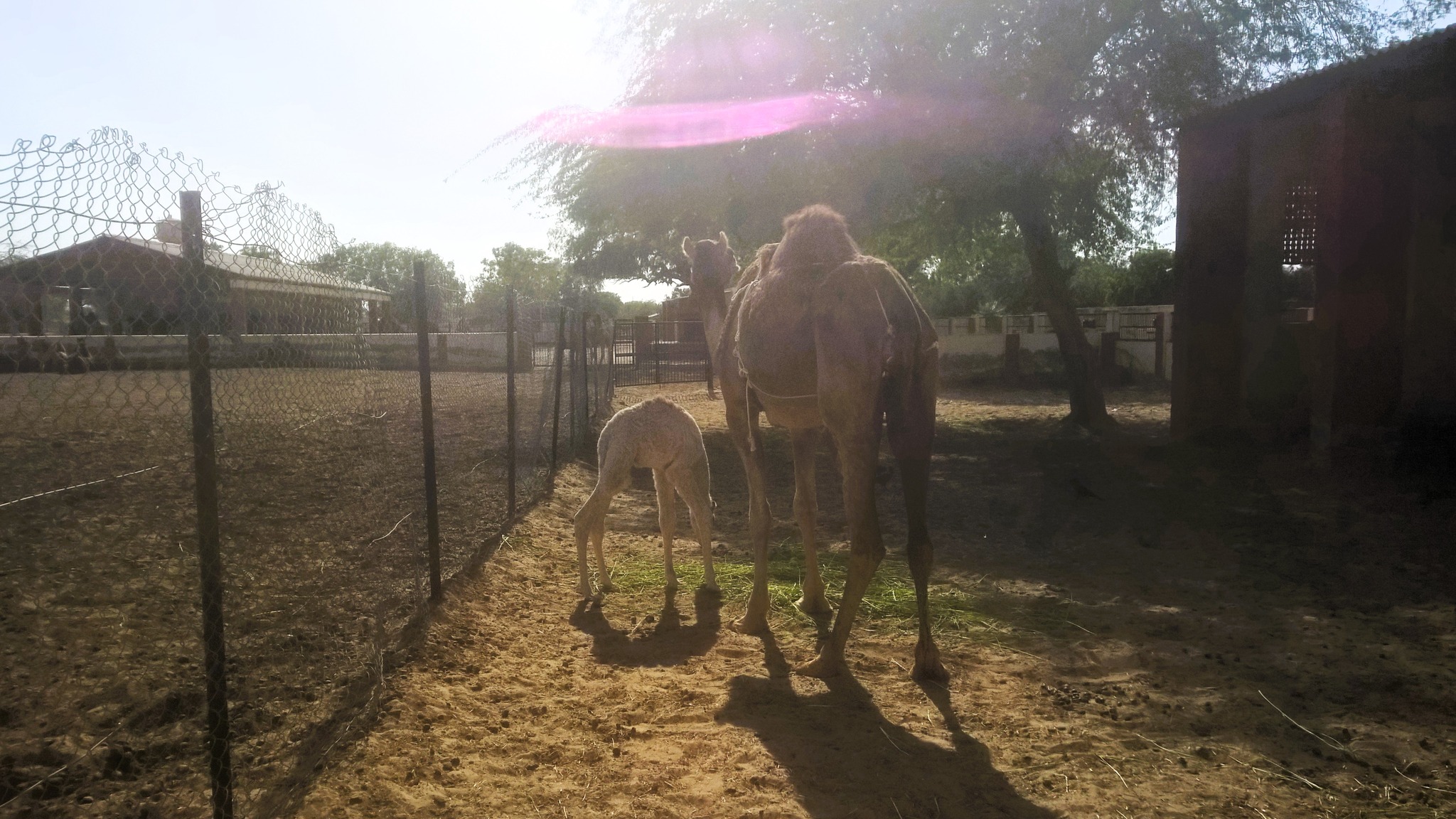
At around 2 PM, we left the fort, had lunch and reached the ICAR-National Research Centre on Camel lying on the outskirts of the city, where we learned about five breeds of camels, namely, Bikaneri, Jaisalmeri, Kachchi, Mewari and Jalori, and their respective lifecycles. We also learned how significant and integral the camel is to the human sustenance in the Thar – the camel is useful not while it is alive, but also after it dies, when its skin, fat and bones including teeth are turned into useful products, such as water bags, pouches, lighting oil, ornaments , decorative items etc.

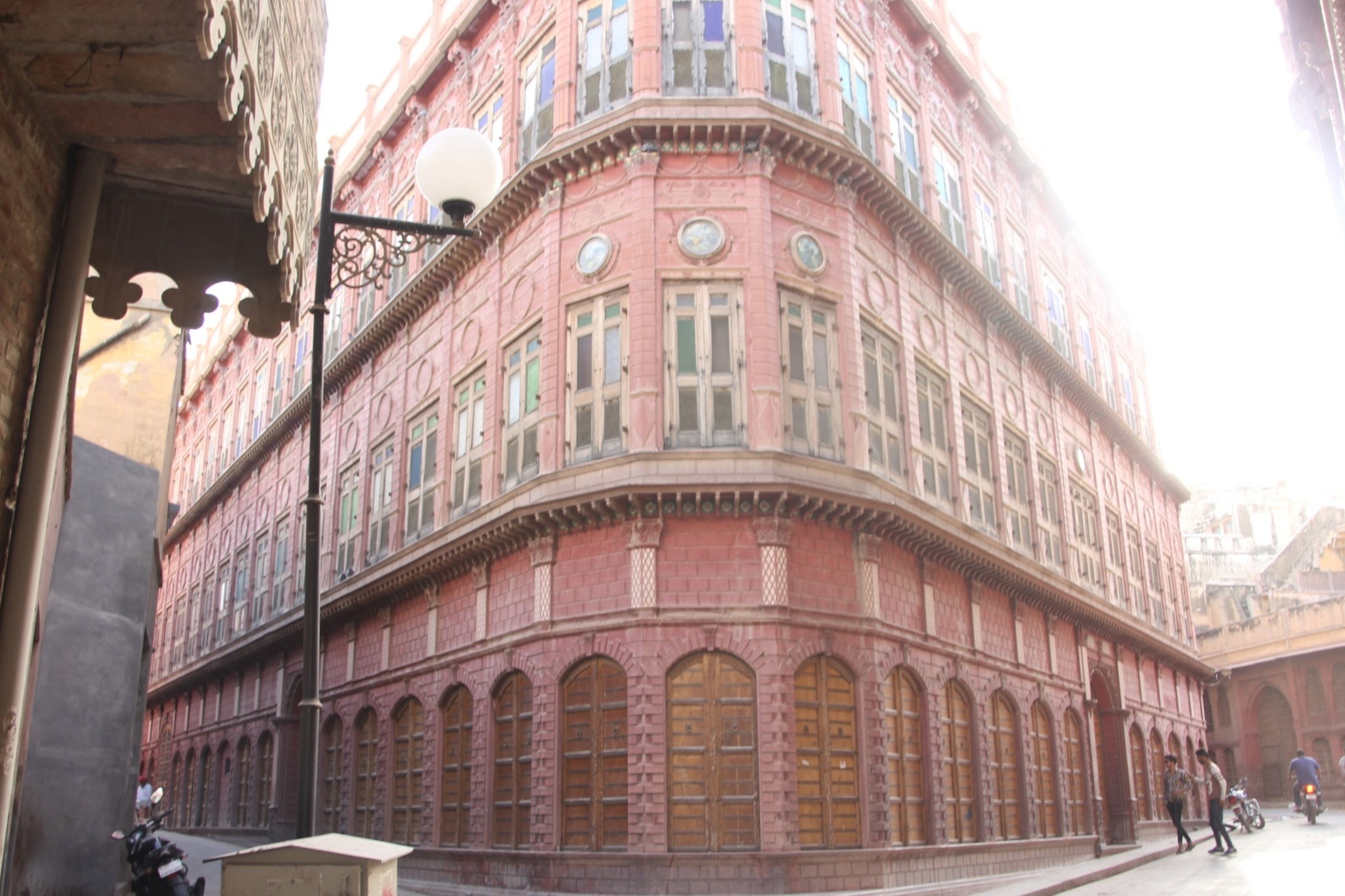
Around 4.30 PM, we reached the old part of Bikaner, where lie many havelis of merchants and royal ministers of the past, one of the most notable havelis being the Rampuria Haveli. Just behind the Rampuria Haveli is the Bhanwar Niwas, now turned into a hotel, which we took a short walking tour of by requesting the gateman. Then, walking through the narrow lanes, we came upon the 12th century Bhandasar Jain temple – dedicated to the the 5th Tirthankara Sumatinatha – notable for its beautiful leaf paintings, frescoes and ornamented mirror work.

At long last, we surveyed the Rajasthani snack shops, now run by descendants of the originators of traditional Bikaneri snacks, such as Bikaneri bhujia, lehsun sev, gathia etc, packets of which we picked up for family members back home. After dinner at one of the restaurants in the old town, we headed to railway station to catch the overnight train to Delhi, and were back in our office the next day.
Khajuraho: A Personal Odyssey

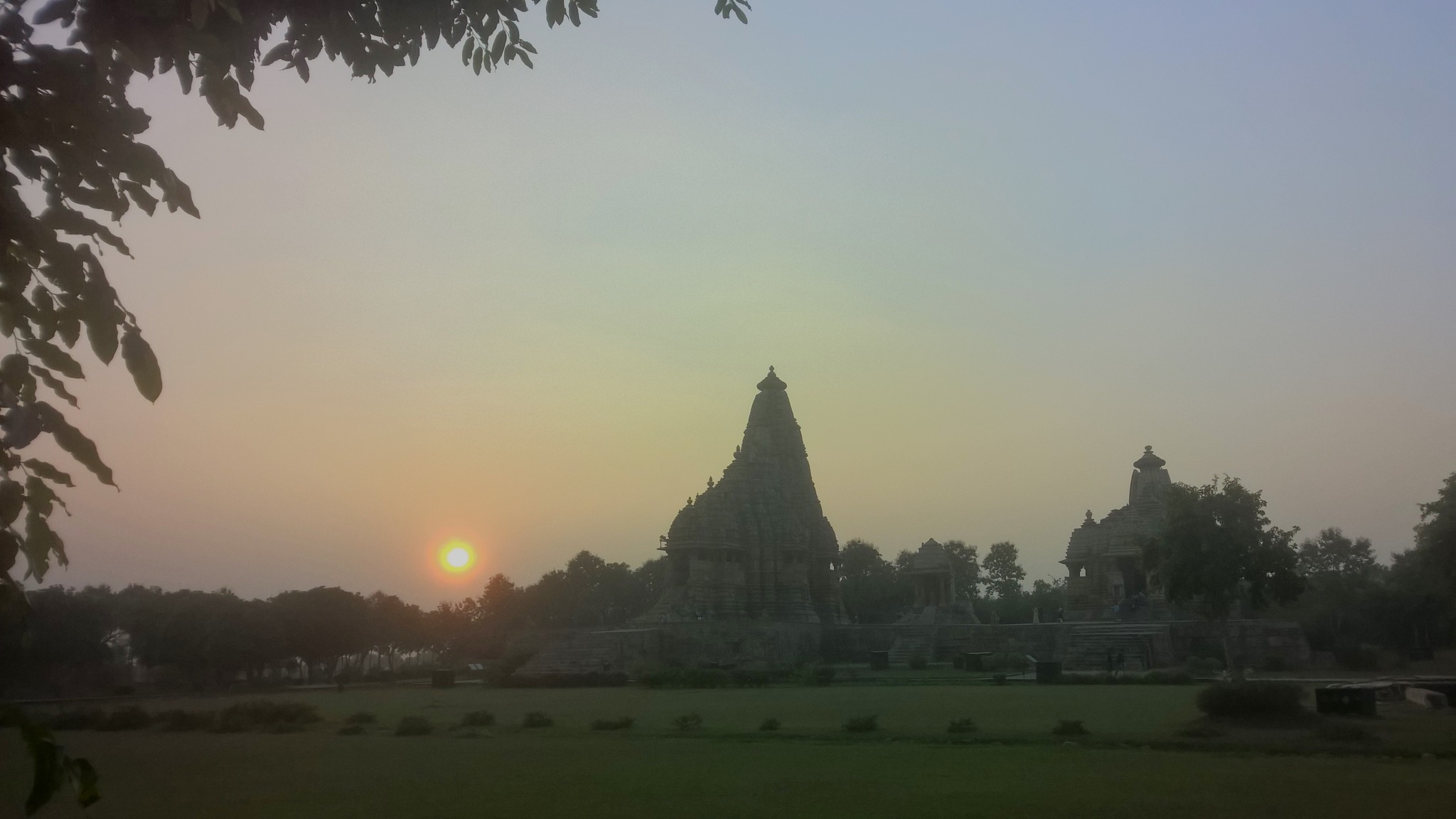
For more than 15 years, I harboured a longing to see Khajuraho, a dreamy place that I had read about in my school history textbooks, whose mention and descriptions conjured up images of a culturally rich and advanced town bustling with activity in the middle of dense forests.

In December 2016, as I awaited the admission results for the B-school I had applied for, and to keep myself preoccupied to counter anxiety on the exact date the results would be coming out, I scheduled a three-day solo trip to Khajuraho as below:
Day 0: Take overnight train from Delhi to Khajuraho
Day 1: See the temples of Khajuraho
Day 2: See Raneh Falls and Panna Sanctuary, and proceed to Jhansi later in the day
Day 3: See Orchha, and take the evening train from Jhansi and reach Delhi by midnight

But, as Robert Burns said, “The best-laid plans of mice and men often go awry.” Consider the ensuing circumstances I describe below.

With intense anticipation as I reached the Nizamuddin Railway station for the train scheduled at 8 PM, I learned that the train would start with a 6 hour delay, starting eventually at 3 AM. Then, due to intense fog, the train got further delayed, and finally reached Khajuraho at 6 PM, 12 hours late!

With a complete day wiped off from my itinerary, I improvised. I would proceed with the original plan for Day 2, i.e. see the Raneh Falls and the Panna sanctuary, and cram the temple visit in the later half of the day. I would then leave for Jhansi and Orchha early the following morning. Accordingly, on Day 2, I got up earlier than my routine, had an early breakfast, promptly rented out a scooter, fueled it up, then put on the rented helmet, took a glance at the tourist map given to me by the hotel receptionist, and set off for Raneh Falls by 9 AM.

I never got to Raneh Falls though. About two kilometres after taking a right turn for Raneh, with still 13 km to go, and 7 km from Khajuraho, I encountered a patch of sand that had spilt over to the curving road, and I applied my brakes, immediately telling myself, “Uh-oh, you shouldn’t have done that!” The next thing I remembered was my helmet hitting with a thud on a surface, and me lying on the ground. I stood up, but there was no strength in my knee, causing me to fall back on the ground, even as locals gathered around me.

The locals surveyed the damage both I and my scooter had incurred, and reckoned that both were probably fine, but that I most certainly needed some medical attention. They asked an auto-rickshaw driver who had stopped by, to take me to a nearby public health clinic, whereas another local inquiring of me as to where I had put up, offered to deliver the scooter at the hotel.

Shortly, I was on my way to the clinic on the auto-rickshaw, with the pain kicking in as the adrenaline wore off, making me realize that I had a deep cut in my right palm, a wide bruise on my left elbow almost exposing the bone, and a feeling of limpness and burgeoning swelling around my left knee. The doctor strapped a knee cap on my left leg, cleaned up and bandaged my wounds, gave me a shot of painkiller, and prescribed a ton of medicines. Thankfully, there was no fracture, and it seemed to be a case of soft tissue injury, the extent and nature of which were not immediately clear.

By 12.30 PM, I was back in the hotel – and so was the scooter – and laid down, soothed by the effect of the painkiller. Nevertheless, I was not going to be bogged down by this setback, given that I had waited 15 years to visit this place, and so around 4 PM, I set out to see the Western Group of temples which was just a stone’s throw away.
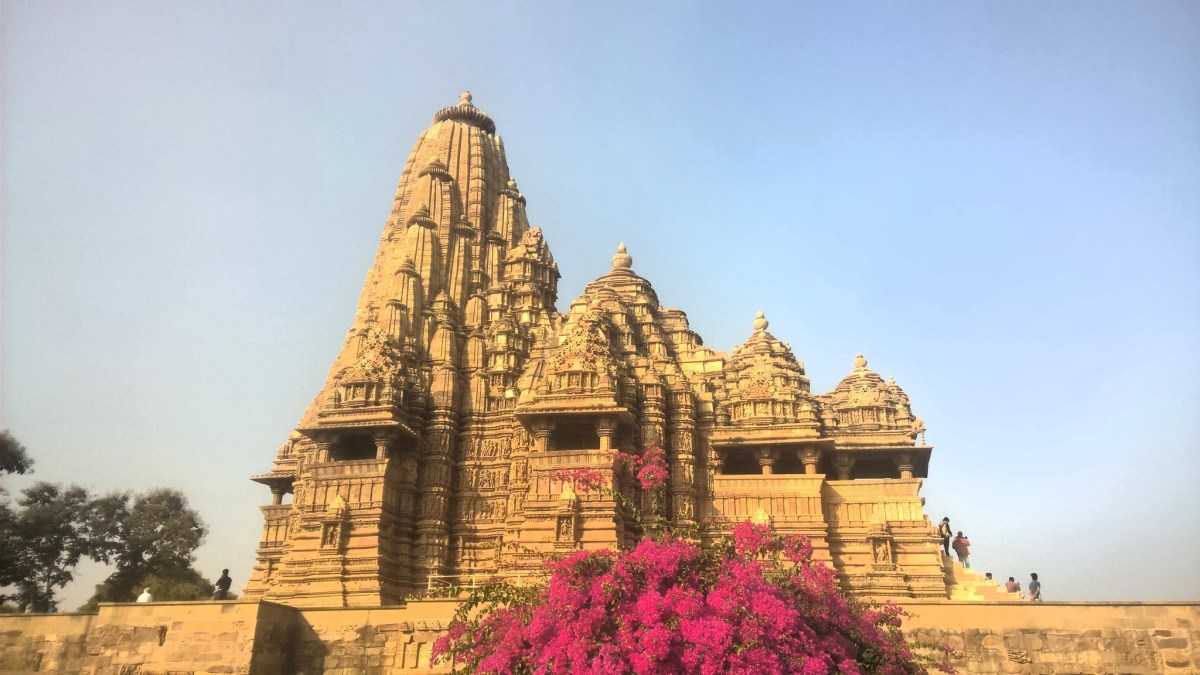
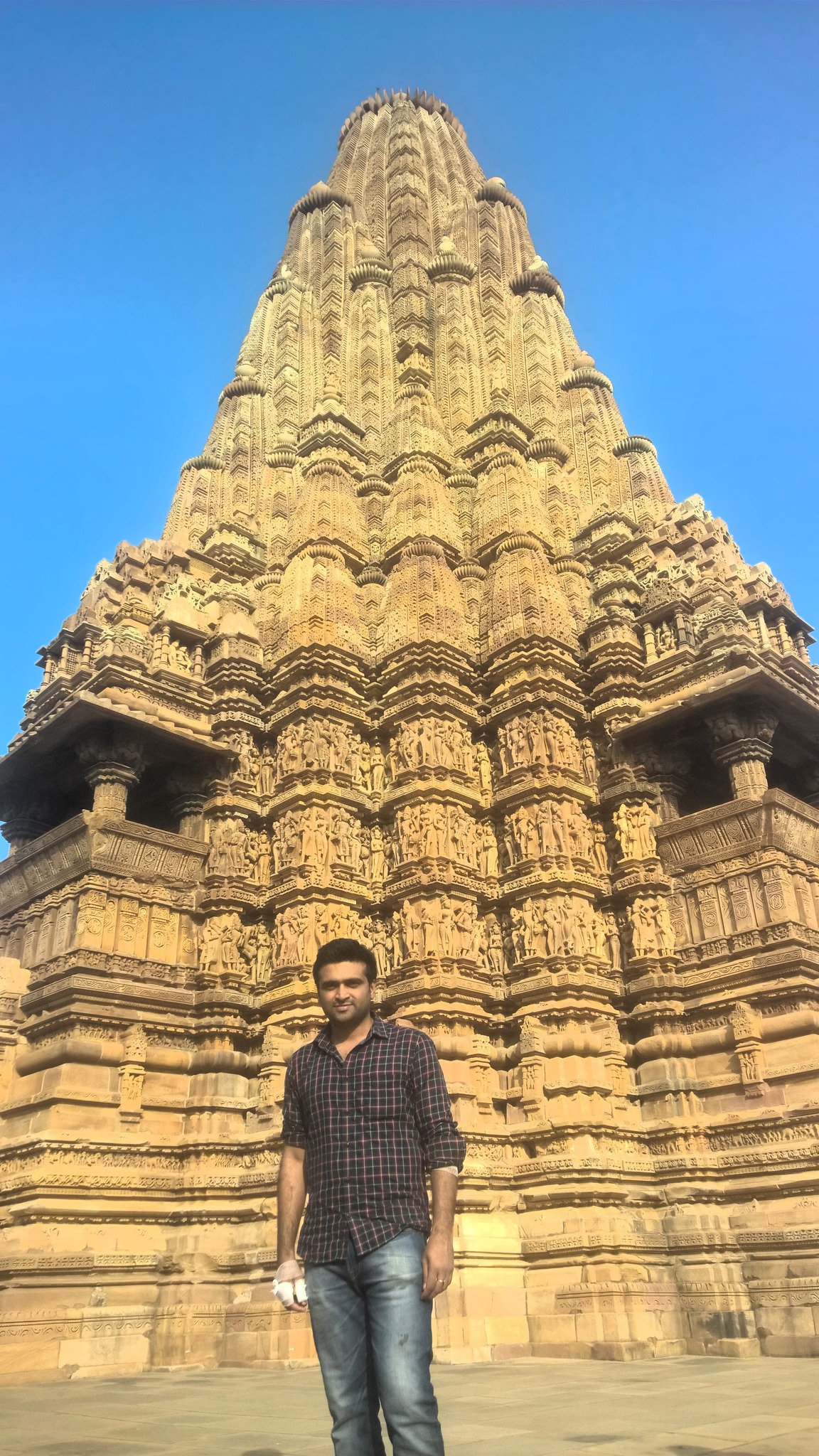
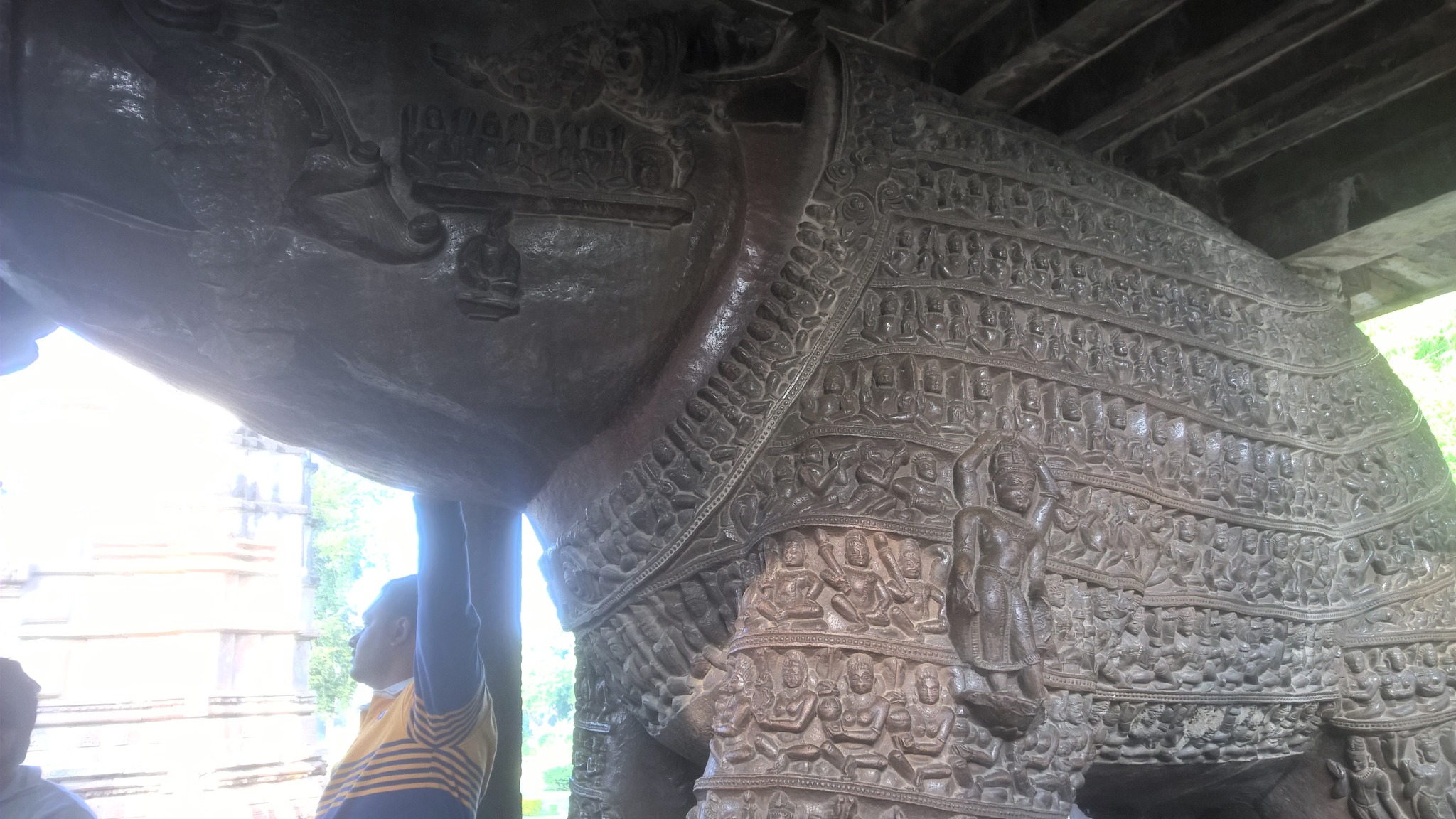
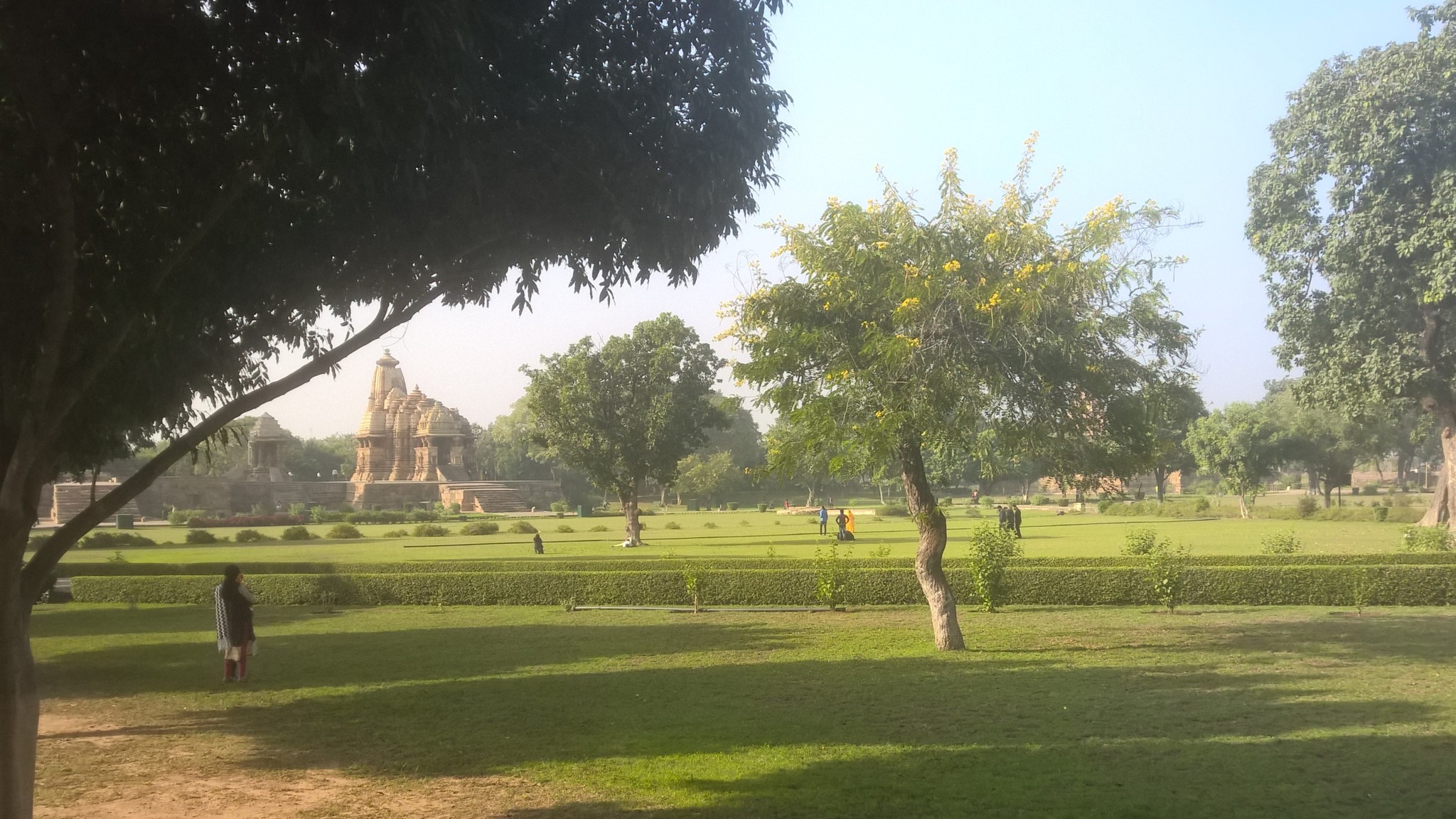
Soon inside the premises of the temple complex and absorbed by a tourist guide into a larger group, I was hobbling across the sprawling lawns and staggering from temple to temple, lumbering up and down the high platforms, taking photographs of the exquisite sculptures and carvings on the temple walls, even as the pain kept stabbing through the shroud of the painkiller. Hanging around for the amazing Light-and-Sound show that is conducted every evening, I was finally back at the hotel, where I had to take another round of painkiller to counter the intense pain.
Now it was clear that the improvised plan for Day 3 was off the plate, and my only objective for the day would be to reach the Jhansi Railway station well in time to catch the train. So, on Day 3, after taking my medicines following breakfast, I was dropped at the bus-stand by a generous local, where I was told I should change buses at Chhatarpur. In the bus itself, the bus conductor, looking at my condition, gave me a place to sit even though the bus was filled to the brim.

At Chhatarpur, I limped from the bus I was in to another, where I got a decent seat by the window, and was soon headed to Jhansi. The road to Jhansi seemed unusually long, what with my injuries giving me rather gentle reminders about their existence, and the looming B-school admission result prompting me to frequently check my email inbox, but mainly because reconstruction on long stretches of the road hampered the bus’s progress.

With the bus permeated by clouds of dirt as we neared Jhansi, I saw an email from the B-school. With the pounding in my heart instantly notching to many gears higher, I opened the email to read that I had been accepted – talk about a silver lining!

In Jhansi, as I got down the bus, I realized for the first time that something was seriously off in my knee, when I felt a bit of wobbling between the femur and tibia – most likely, the result of a torn ligament. Later, aboard the Shatabdi Express which itself had arrived an hour late, with the pain setting back in again as the painkillers wore off, I realized I had forgotten my medicines at the hotel!

Getting down at Delhi, I hailed a cab, and picked up a new stock of the prescribed medicines on my way home, and slowly clambered up the three flights of stairs to my place on the third floor, one step at a time, virtually dragging along my near-lifeless but excruciatingly painful left leg. Back in my bed, I contemplated my next course of action, as I stared at a long path to recovery, amidst the workload at the office, medical consultations and the upcoming B-school admission.

Aravalli Archives: Alwar, Bhangarh and Sariska

For many years I had seen the name ‘Alwar’ – on other buses while I waited for the bus to Jaipur or on road signage on my many forays to Jaipur. I had even passed through Alwar on one occasion on a bus, and had memories of a city glaring under the sun against the backdrop of yellowish, intermittently green hills. Alwar, despite being three hours away from Delhi, gets overshadowed by the names of bigger places, but now in October 2016, since I had ticked the big names off my list, I turned my attention to Alwar. And am I glad that I did!

Part 1: Alwar Calling

My friend and I caught the bus at 8 AM from Dhaula Kuan, from where I had boarded the Rajasthan or Haryana Roadways buses headed to Jaipur on all of my previous Rajasthan solo trips. By noon, we were in Alwar, where we had lunch near the bus-stop, and gathered information about places and access modes in Alwar. The Bala Qila (Alwar fort), perched on the hill overlooking the city and clearly visible from where we stood, beckoned to us – it was a no-brainer as to where we should start our Alwar sight-seeing with.

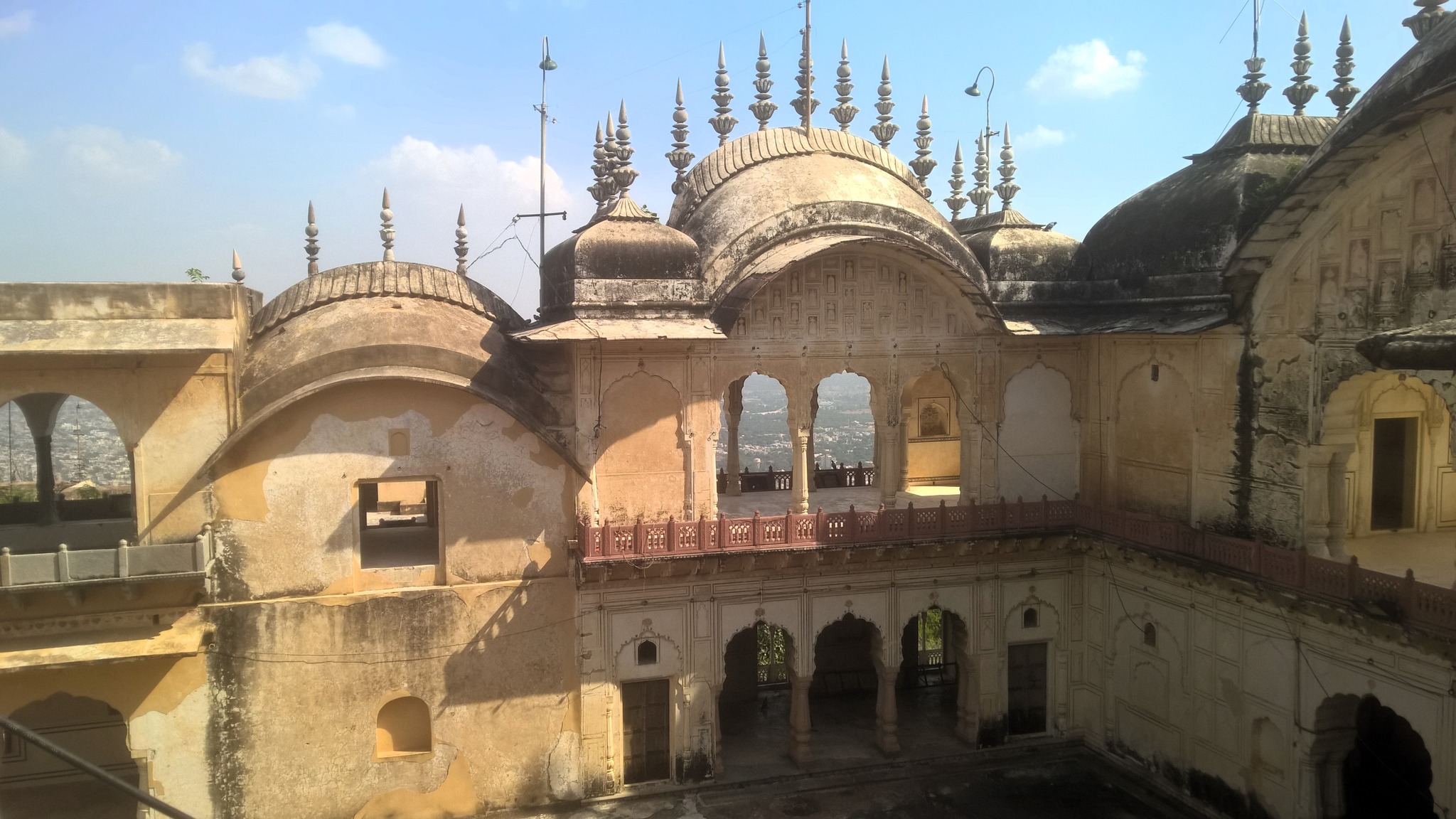
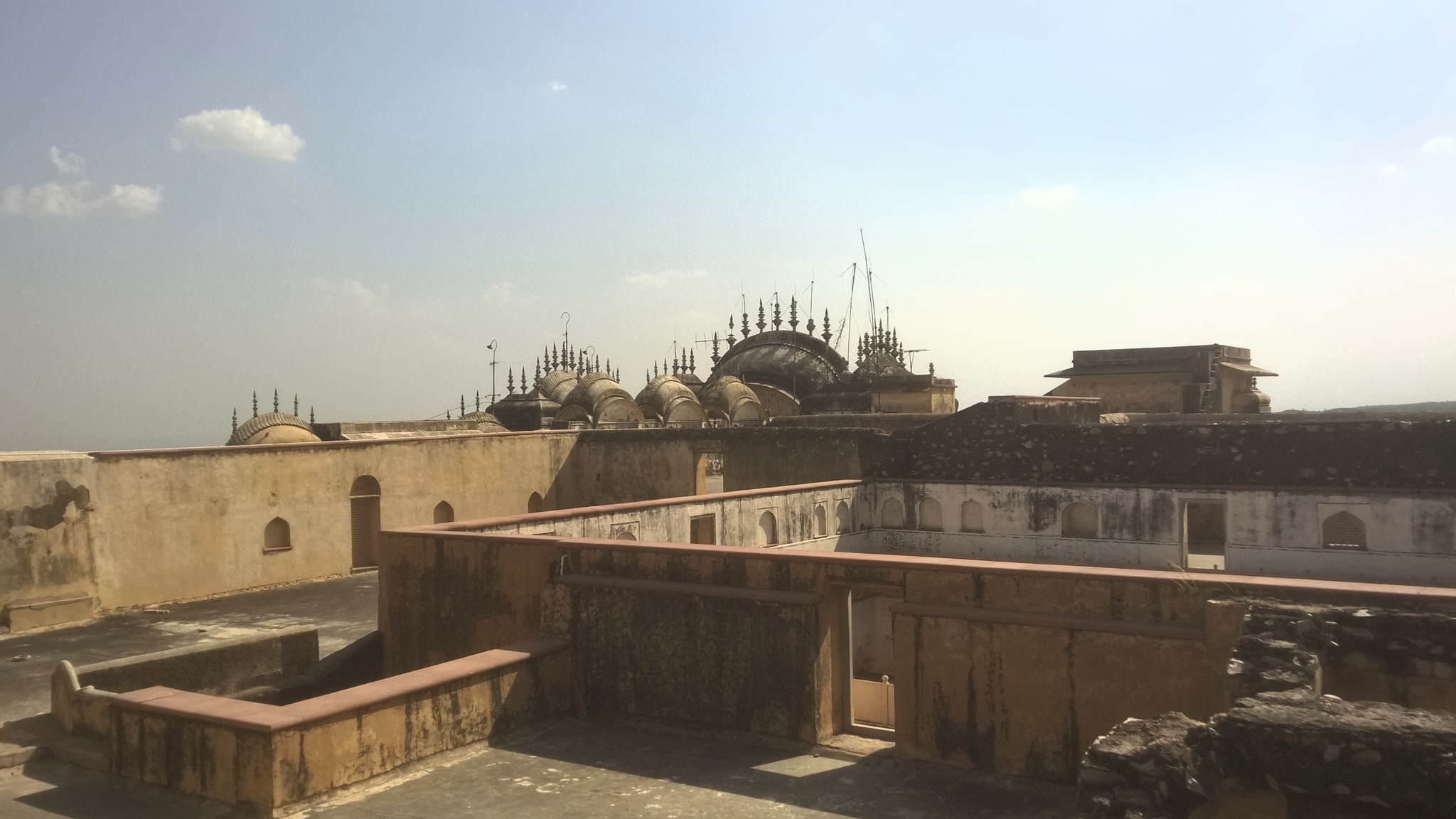
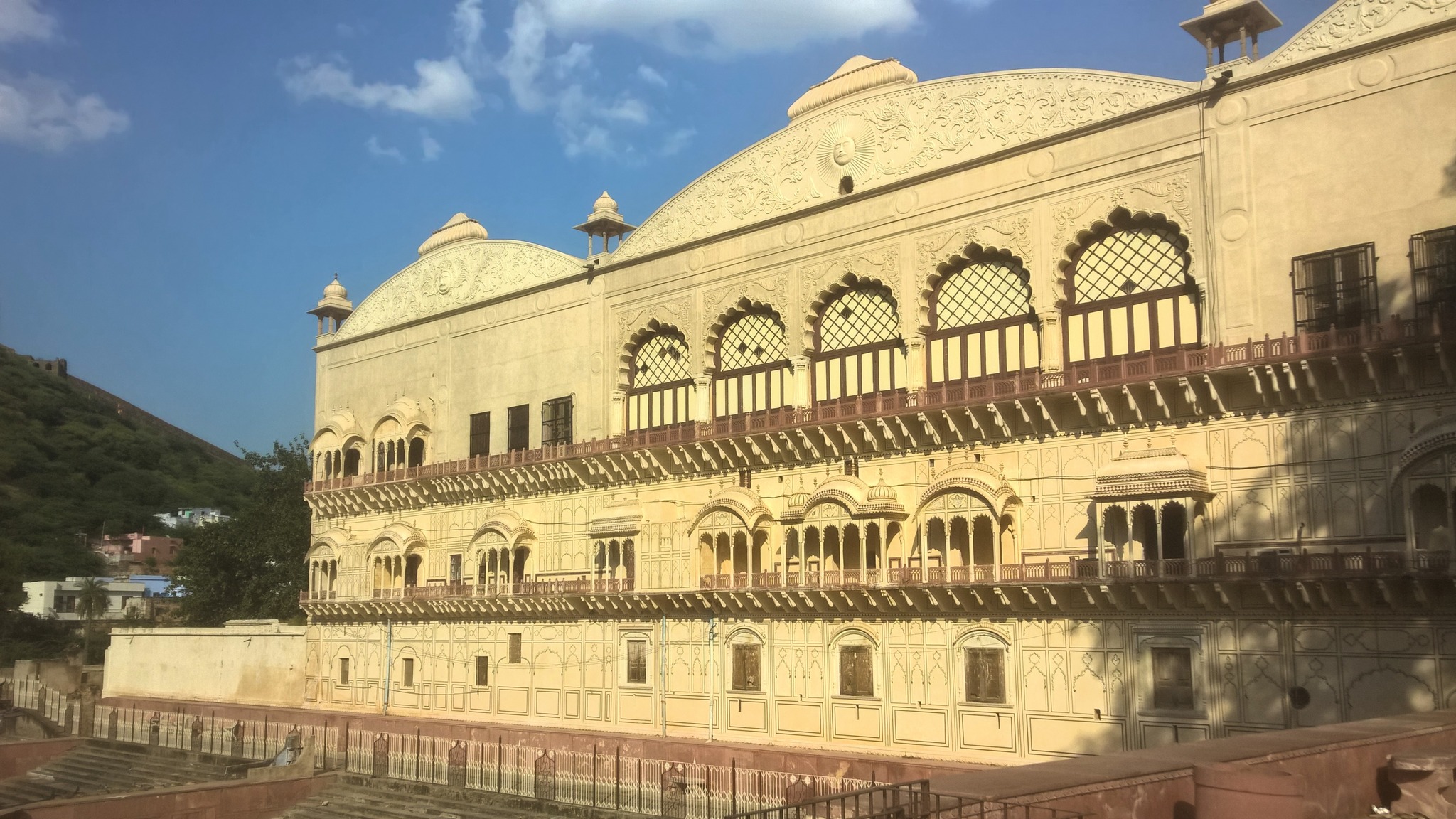
Hiring an auto-rickshaw, we headed off to Bala Qila, for which we took the fort road that winded around the side of the hill, passing through jungle, accompanied by a sharp drop into the valley on one side. We were pleasantly surprised by the size and condition of the main palace which was largely intact – the palace may not be the size of the palaces in the forts of Jaipur or Jodhpur, but the fort in itself was self-contained and seemed to possess every characteristic typical of a Rajasthani fort.

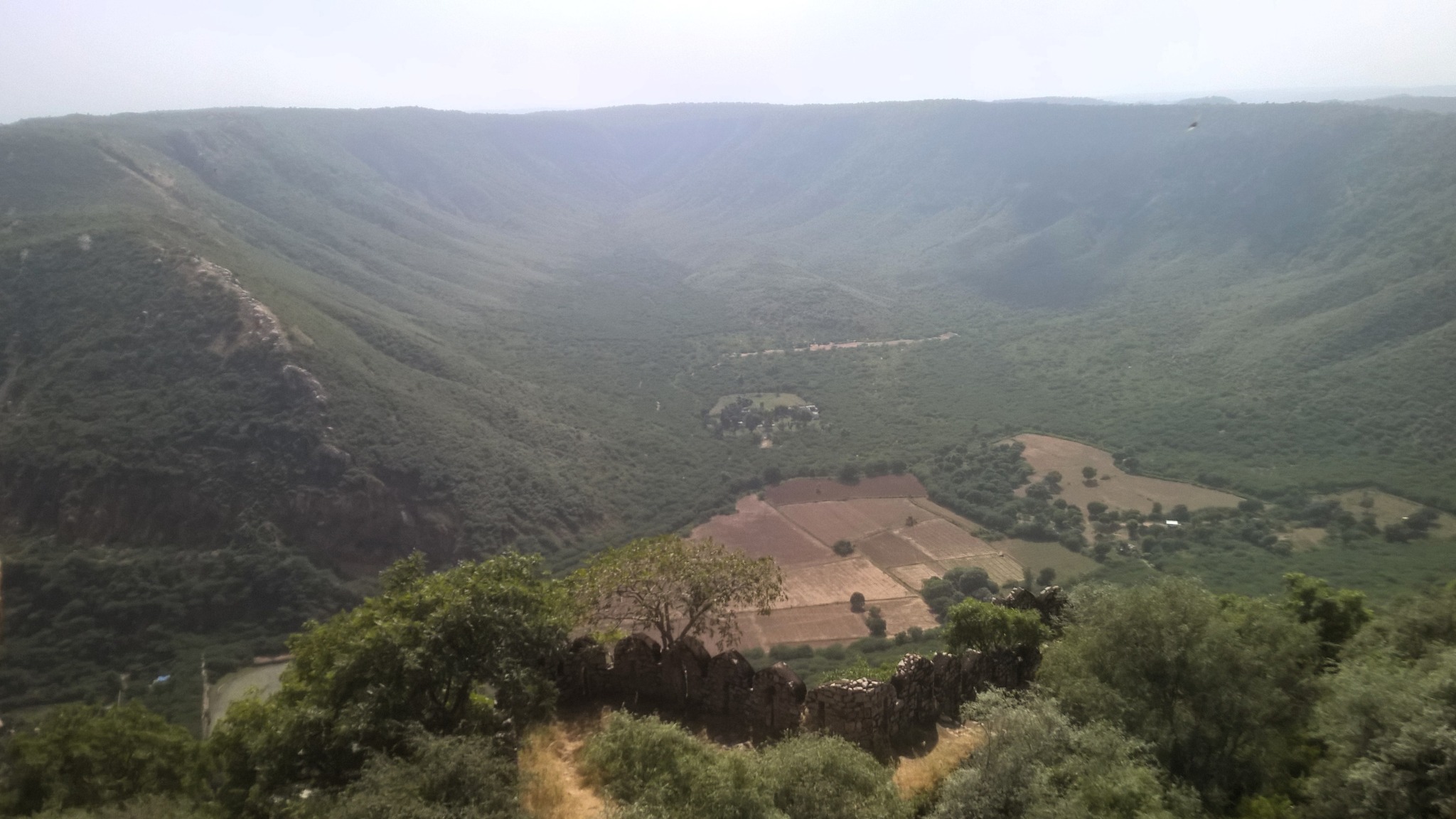
The origins of the fort date back to 928 AD, when it was built by Parmar Rajputs, however, it was resconstructed in 1521 AD by the Khanzada rulers who had wrested the fort from the Nikumbh Rajputs in 1492 AD. We explored the many floors of the palace and were smitten by the verdant vistas of the Aravallis from the arched windows of the palace. Later we walked on the fort wall towards a watching platform that provided a clear view of the city below.

Descending back to city at the foothills, we checked out the City Palace or Vinay Vilas Mahal, built in 1793 AD, with a part now converted to Museum and the other part housing government offices. The beautiful Moosi Maharani ki Chhatri, a cenotaph for Raja Bakhtawar Singh and his queen Moosi Rani, built in 1815 AD with marble roof and red sandstone pillars, stands adjacent to the City Palace, on the bank of water tank called Sagar Jalashay, which is fed by water flowing down the Aravallis at the foothills of which the tank lies.

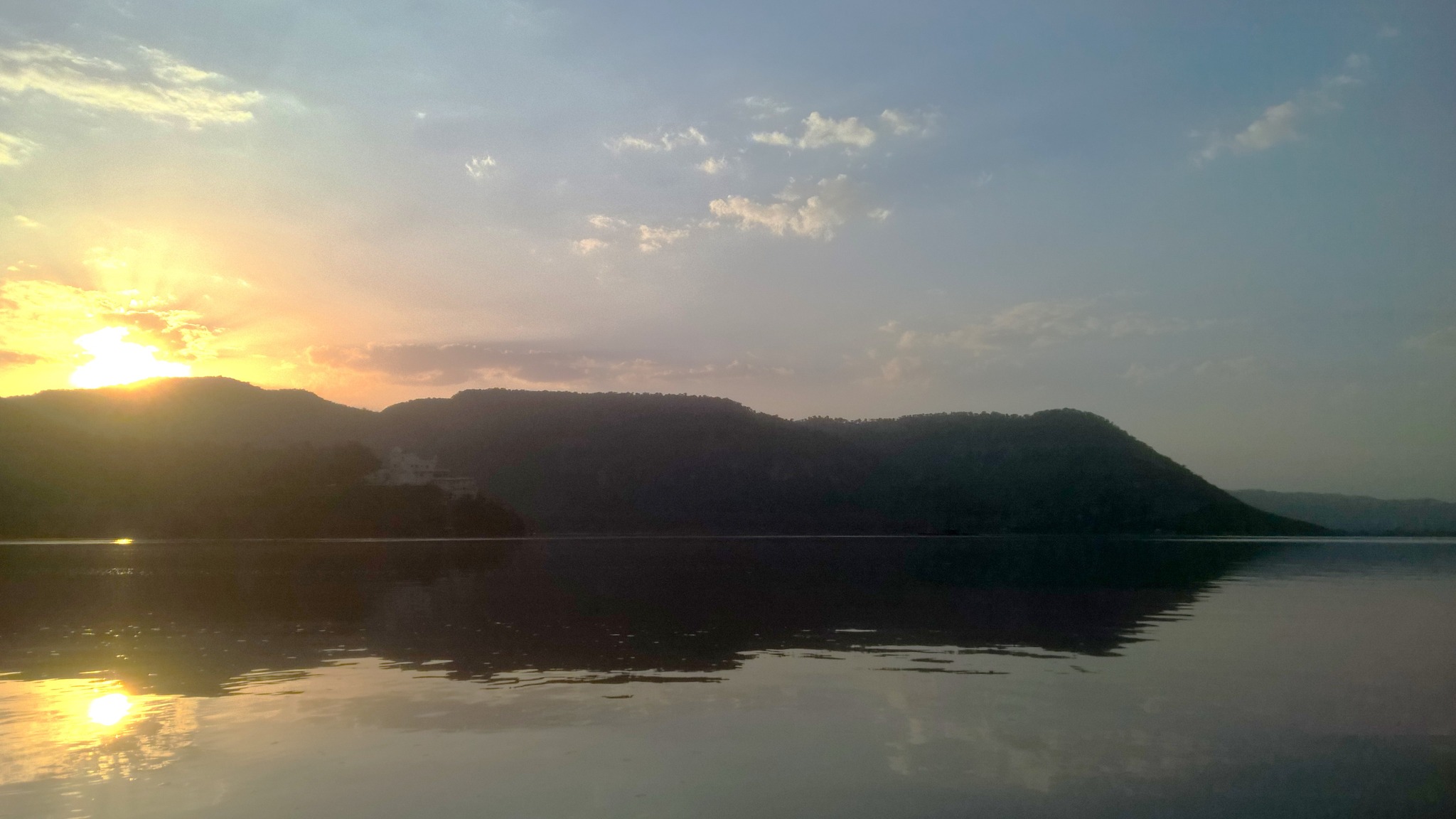
Our next stop was the Siliserh lake, an artificial lake built in 1845 by Maharaja Vinay, nestled in the Aravallis, a little outside the city, providing a picturesque view of the rounded tops of the Arvallis kissing the sky. Enjoying the gentle breeze along with the views, we took a boat ride exploring the length and breadth of the lake. Thereon, we headed to the Jaisamand Lake, another artificial lake not very far from the Siliserh Lake but a little closer to the city, notable for a series of chhatris (cenotaphs).

Part 2: An Unplanned Extension

Our plan for the second day was to take a morning safari of the Sariska National Park that lies about 33 km from where we stayed. Waking up quite early in the morning, and starting around 5.30 AM, we walked about a kilometre to the main road leading to Sariska, hoping to get some sort of conveyance to Sariska. After about fifteen minutes of waiting, as the chances began to seem slim of us making it to Sariska in time for the safari, an autorickshaw driven by a Sardarji (a turbaned sikh man) drew alongside us . We negotiated a price for the half-day trip to Sariska and were soon headed to Sariska with renewed hope for the safari.

Passing through the road sliding up and down, curving ever so slightly to the right and the left, along the foothills the Aravallis, with the cool breeze hitting our faces, we soon encountered a narrow valley in the Aravallis which we crossed alongside a narrow river. In this stretch lies a place called Natni ka Bara, where a bridge stands connecting the main road to a white-coloured temple with a narrow tall spire on the other side of the river. In the early morning mist, the sight of the bridge and the temple standing in the middle of the valley was etched in my mind.

By 6.50 AM we were at the Safari Booking Office at entry gate of the Sariska National Park, where we were promptly denied entry because entry for the morning safari had already closed. We should have been there before 6.30 AM, they said, not relenting despite multiple requests, suggesting that we come back by or wait till 2.30 PM for the afternoon safari. As we were staring at a long wait, a safari guide who was hanging around suggested we do some more sightseeing instead of waiting, Bhangarh fort being his topmost recommendation.

Now, I had already been to Bhangarh fort – touted as a haunted place – and retained very fond memories of the same, but my friend had not, and I would not mind visiting Bhangarh again just to relive the aura of eeriness I had felt on my earlier visit. We calculated that we should be back to the park gate well in time for the afternoon safari, as we had five hours in hand. However, our autorickshaw driver did not seem keen at all, because it would be a 100 km round trip for him. Nevertheless, the safari guide, on account of being a local convinced him to take the ride, sweetening the deal with extra money, of course.

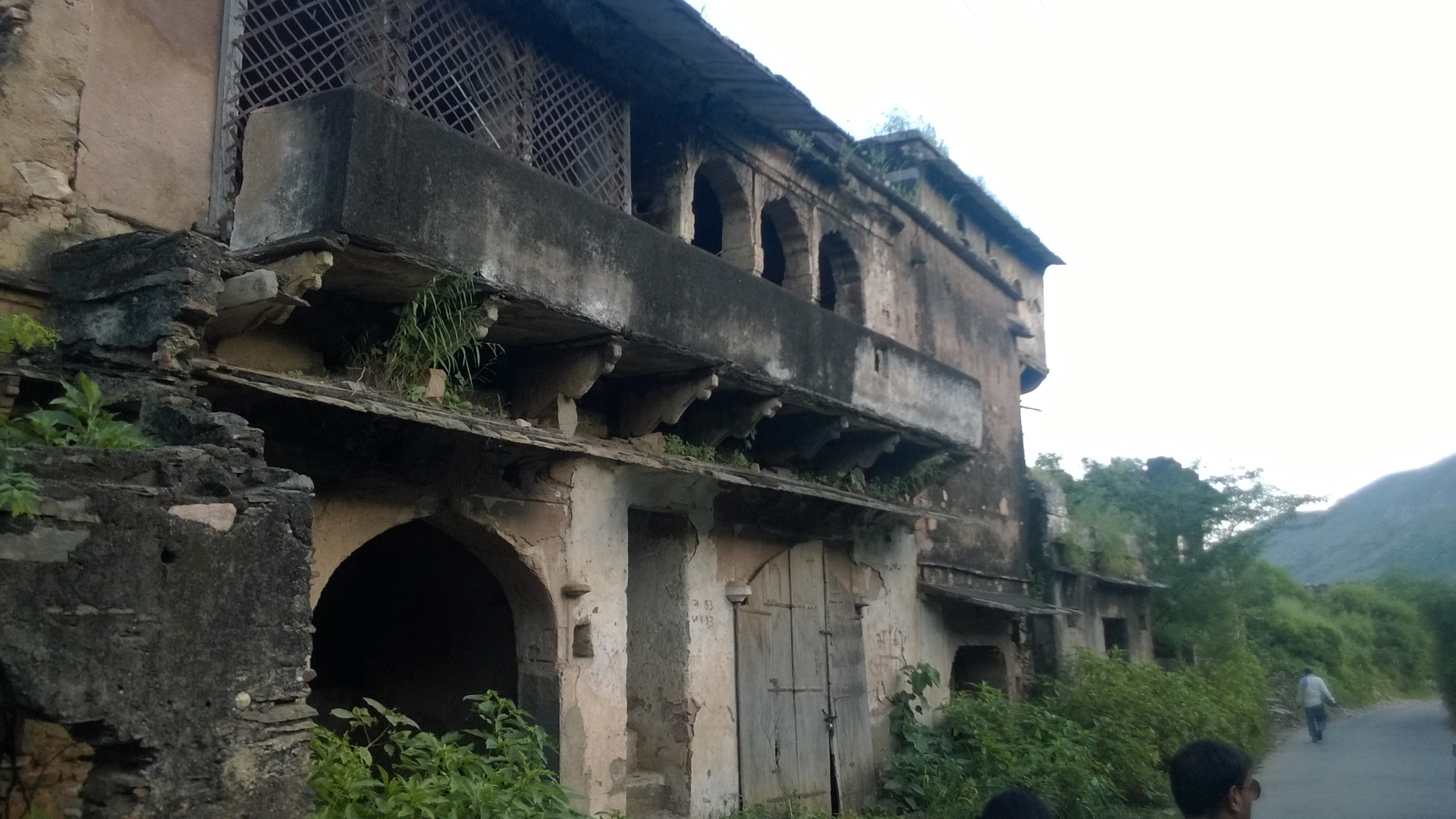
By 7.30 AM, we were on our way to Bhangarh, in an autorickshaw, of all things! From there on, we never lost sight of the Aravallis, which alternated between running alongside us and sliding away only to return. We hoped to reach by 9 AM, if not for the second half of the route where the road was under construction sending billows of dust in all directions including inside the auto-rickshaw as the vehicle plodded through. Soon we passed through Ajabgarh, where abandoned houses flank the road at one end of the village. Just outside the village, a compact fort sits atop a hillock against the backdrop of taller hills, while the road winds around a lake, called Jai Sagar, filled with a cover of lotus and lilies. At long last, by 9.45 AM, we were in Bhangarh.

Part 3: All is Well That…

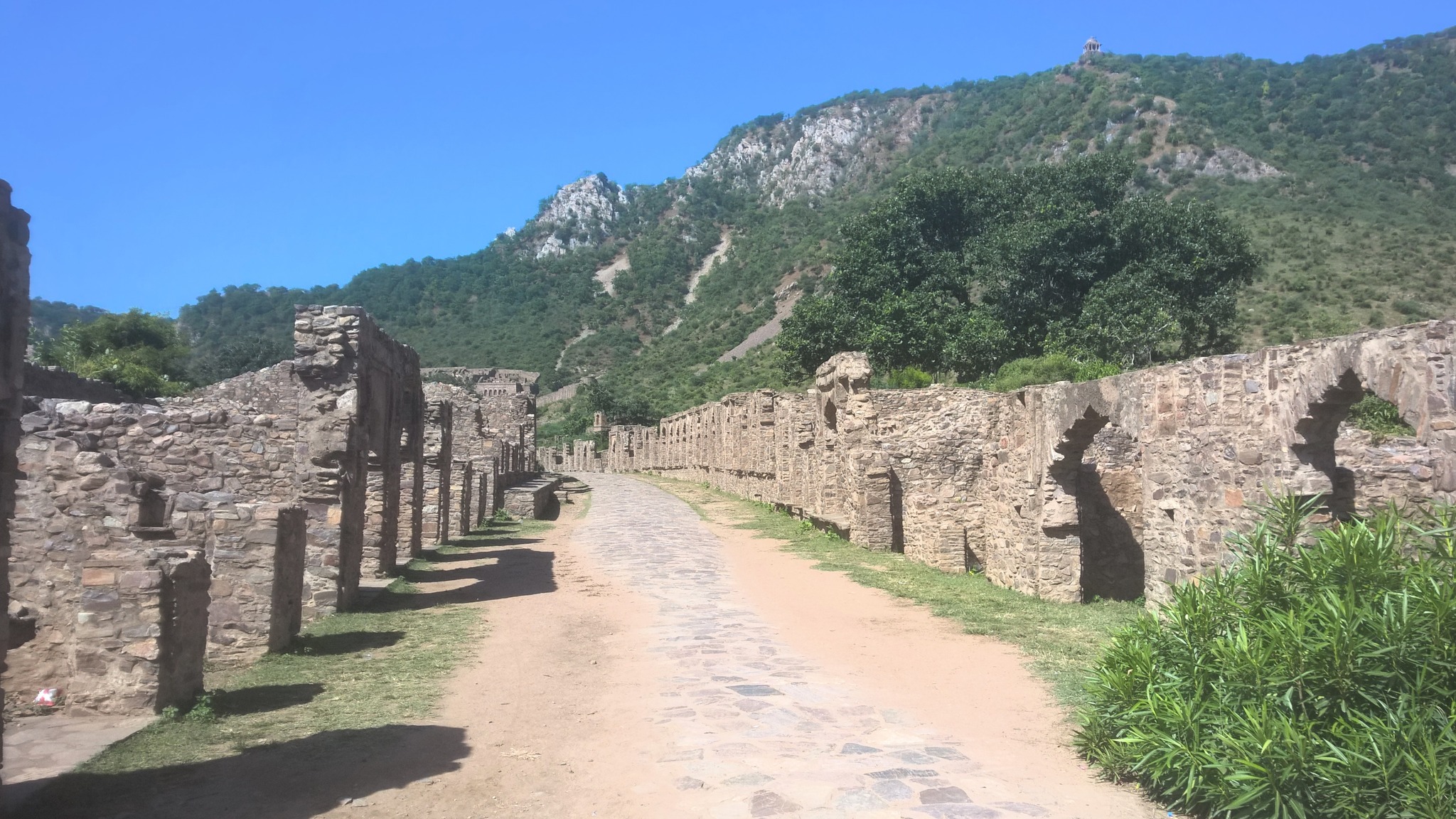
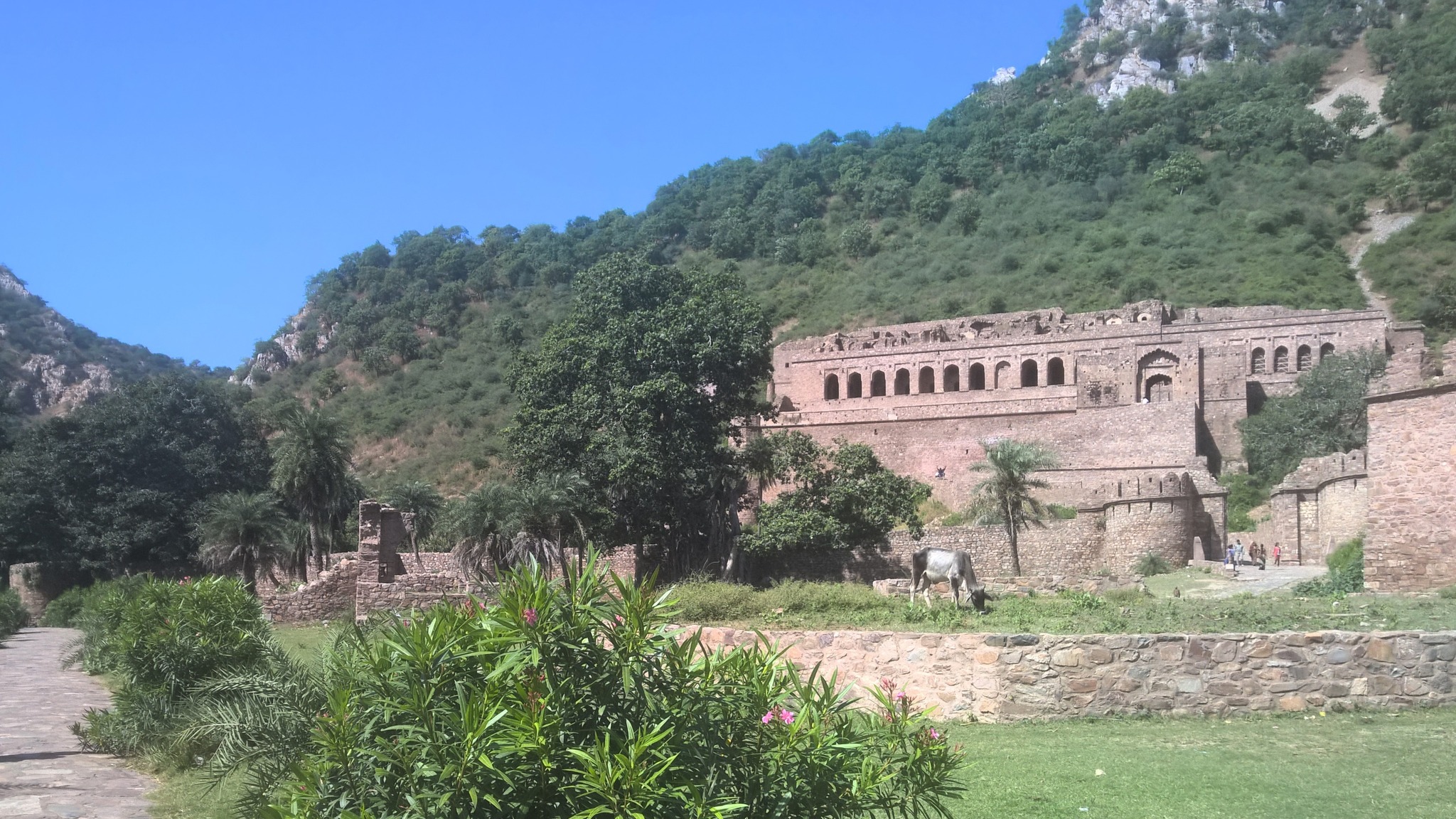
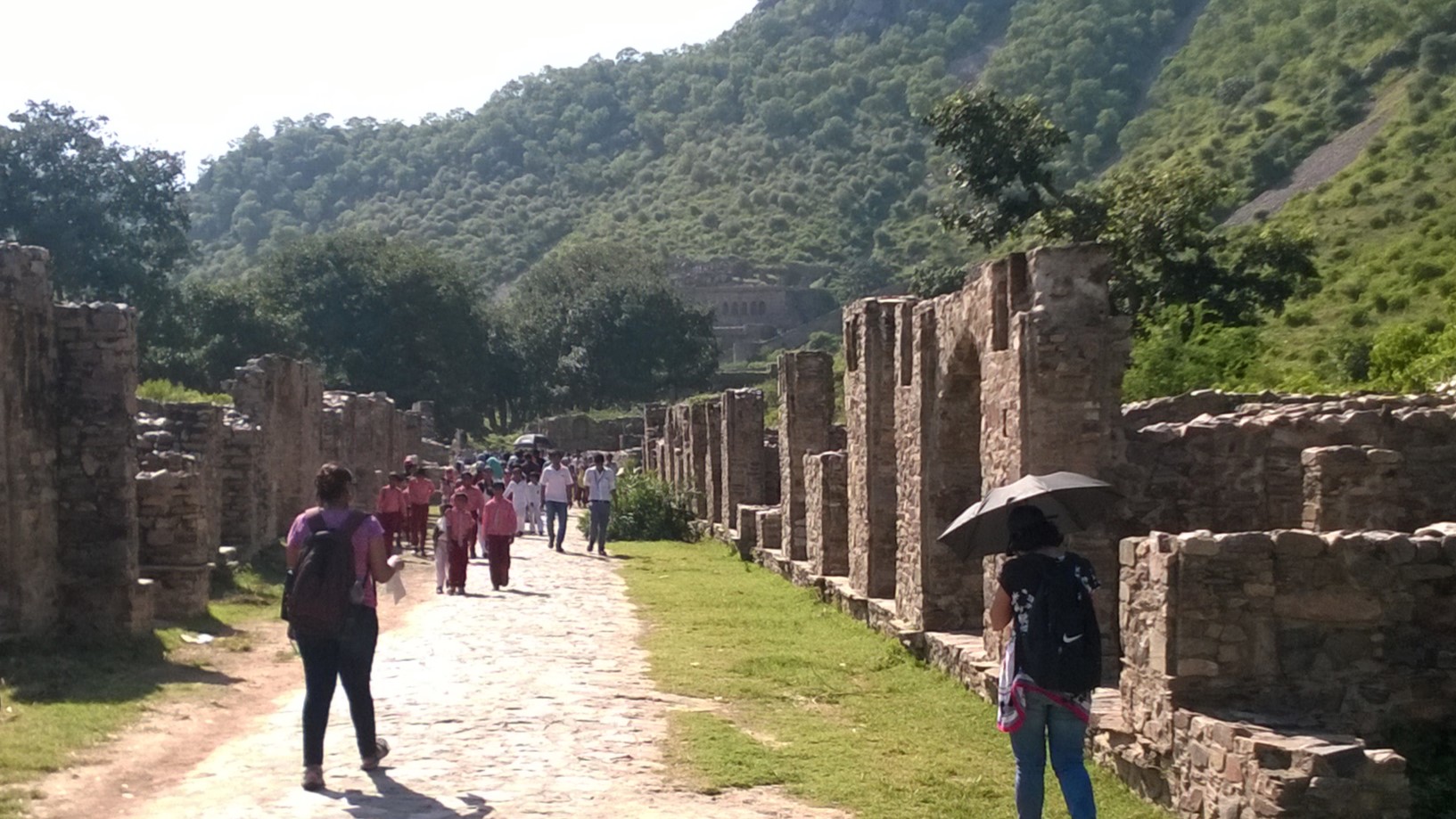
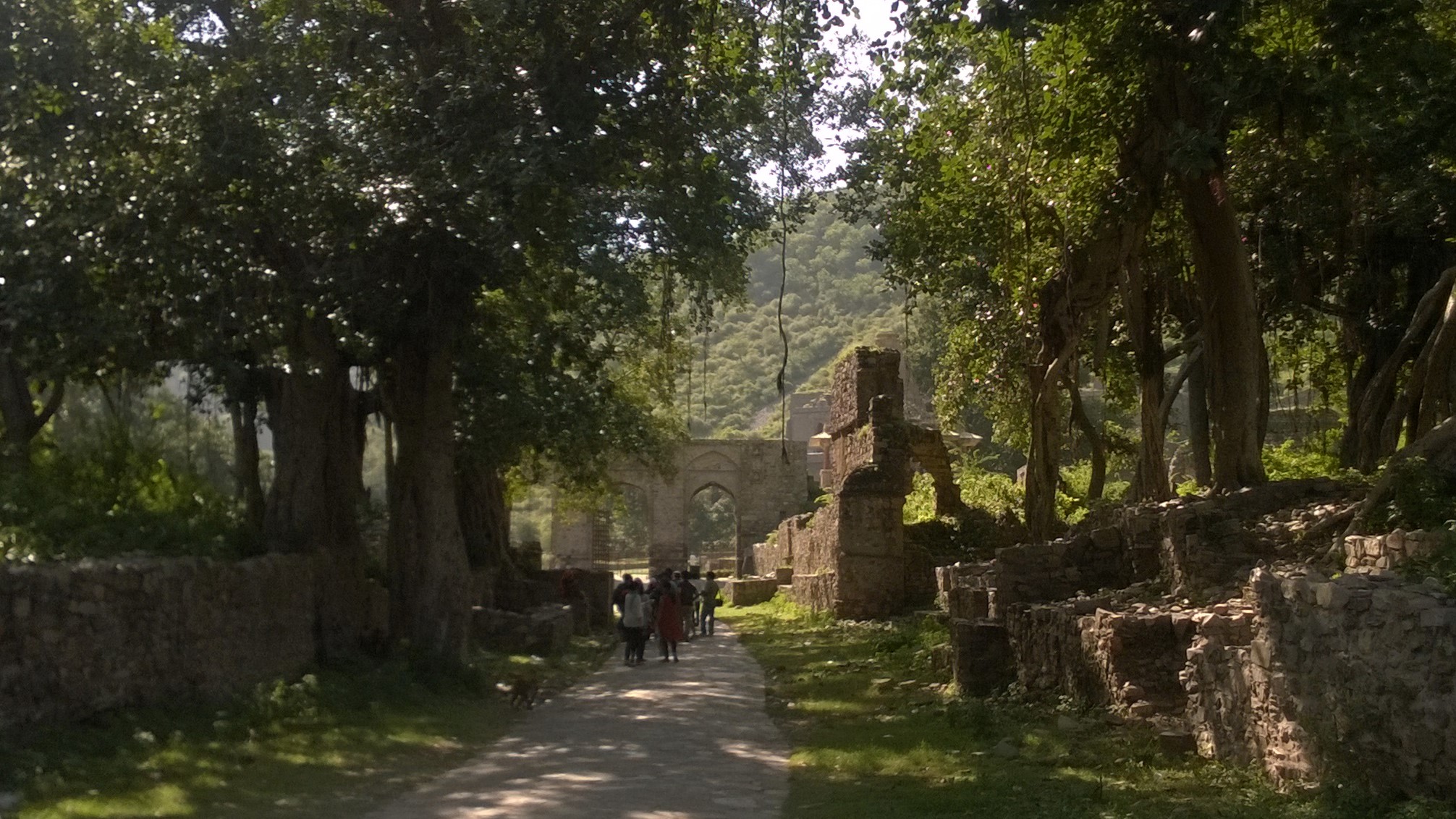
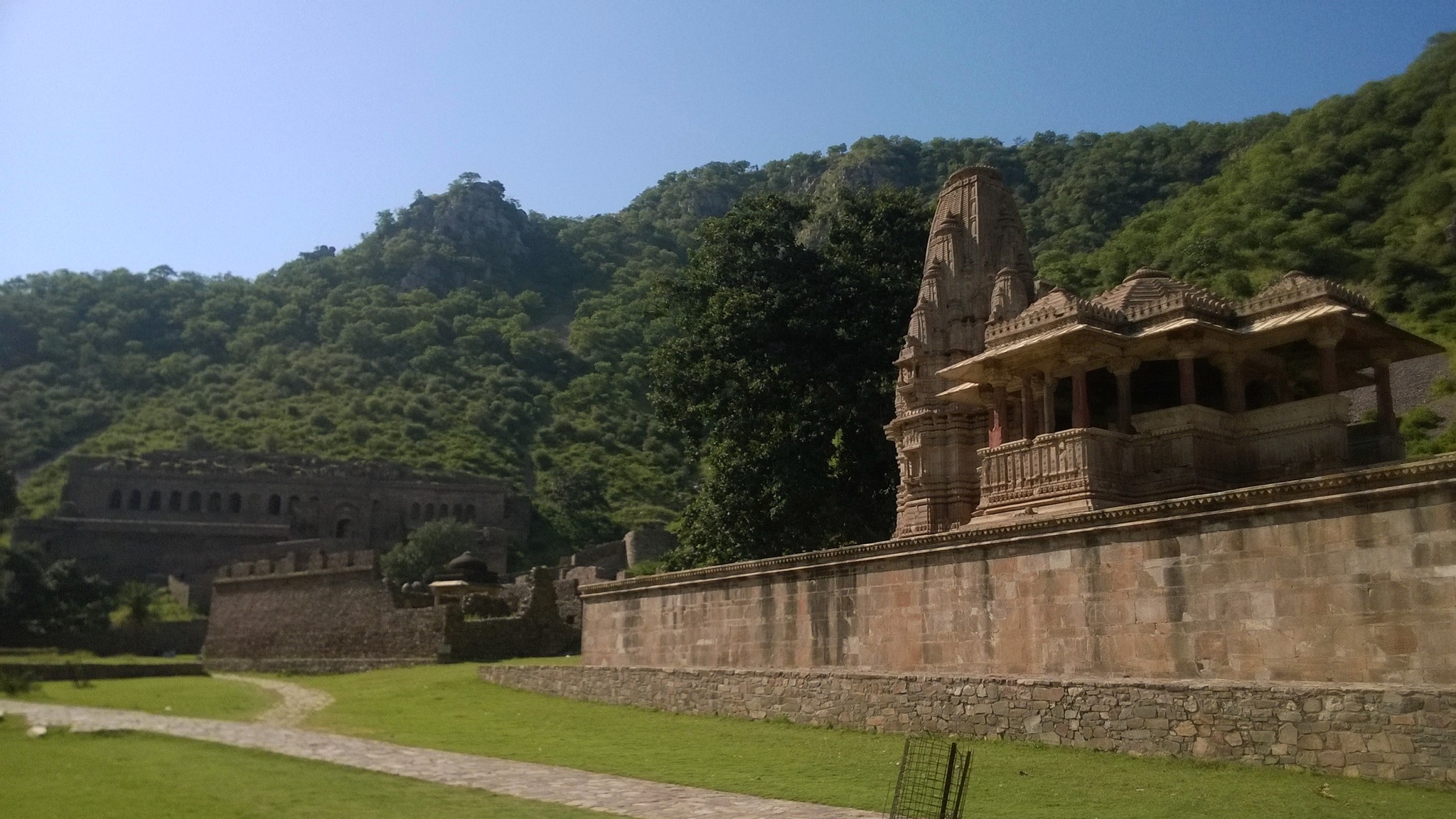
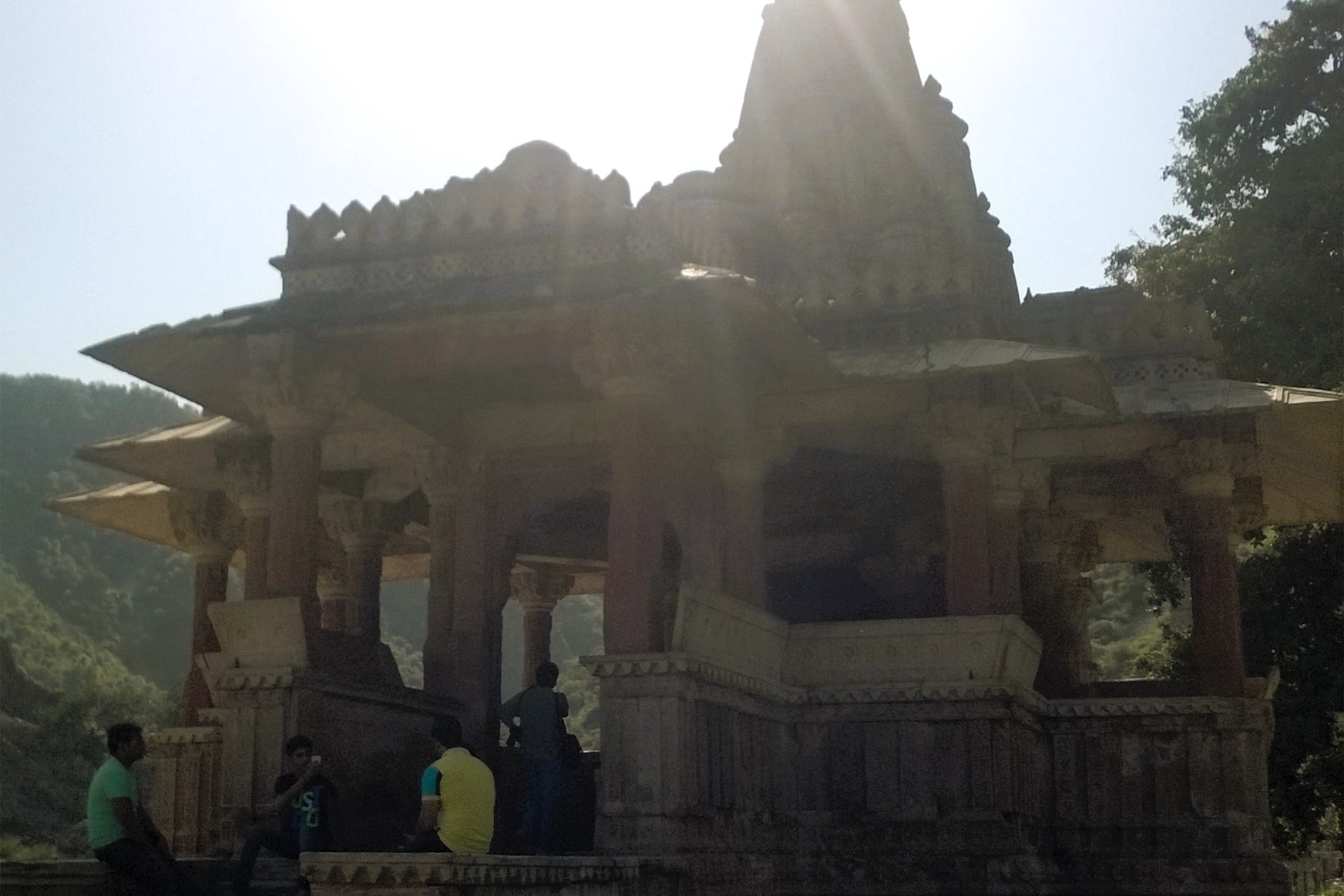
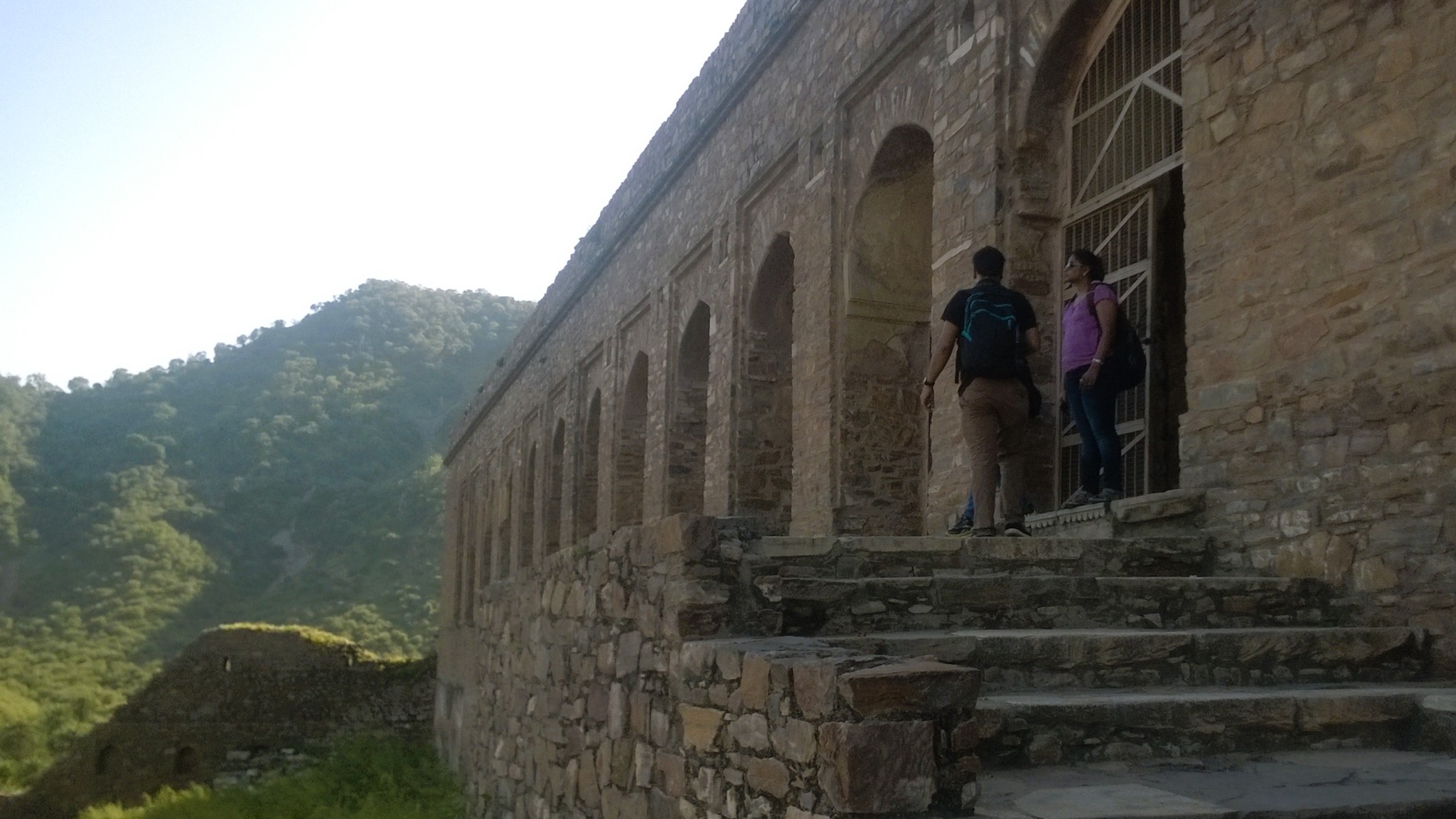
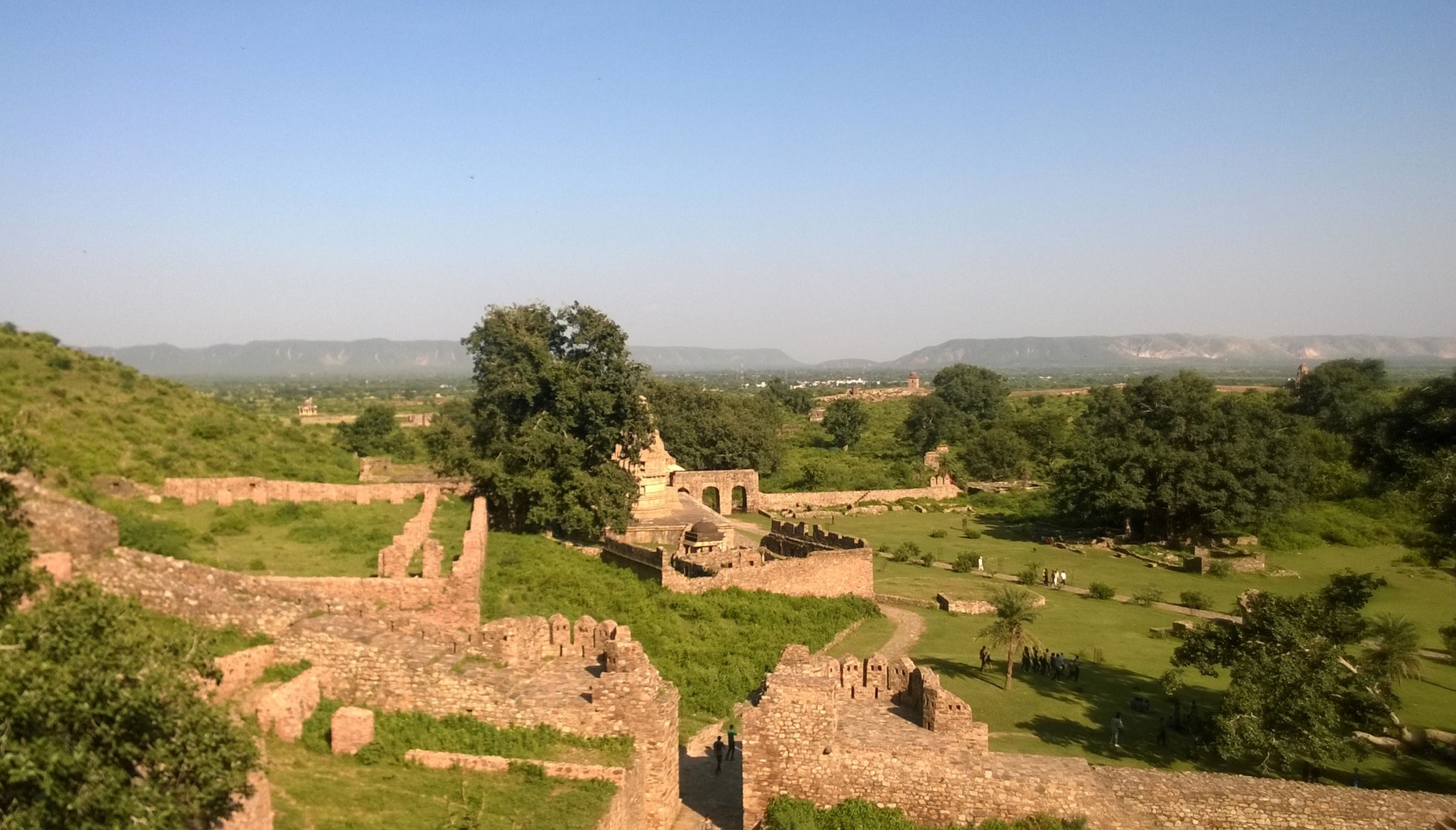
At Bhangarh, we began by exploring the ruined marketplace and residential area near the main entrance. Then walking further flanked by a series of ruined shops on both sides, through the stretch called the Jauhari Bazaar, and crossing a stream, we entered the fort enclosure where sprawling lawns, numerous temples and the main palace welcomed us. Walking through main palace gate, we approached the first layer of buildings having two wings in the form of long pillared hallways on either side of the passage. Both wings had indications of occult practices being conducted, further bolstering the sense of haunting around the place.

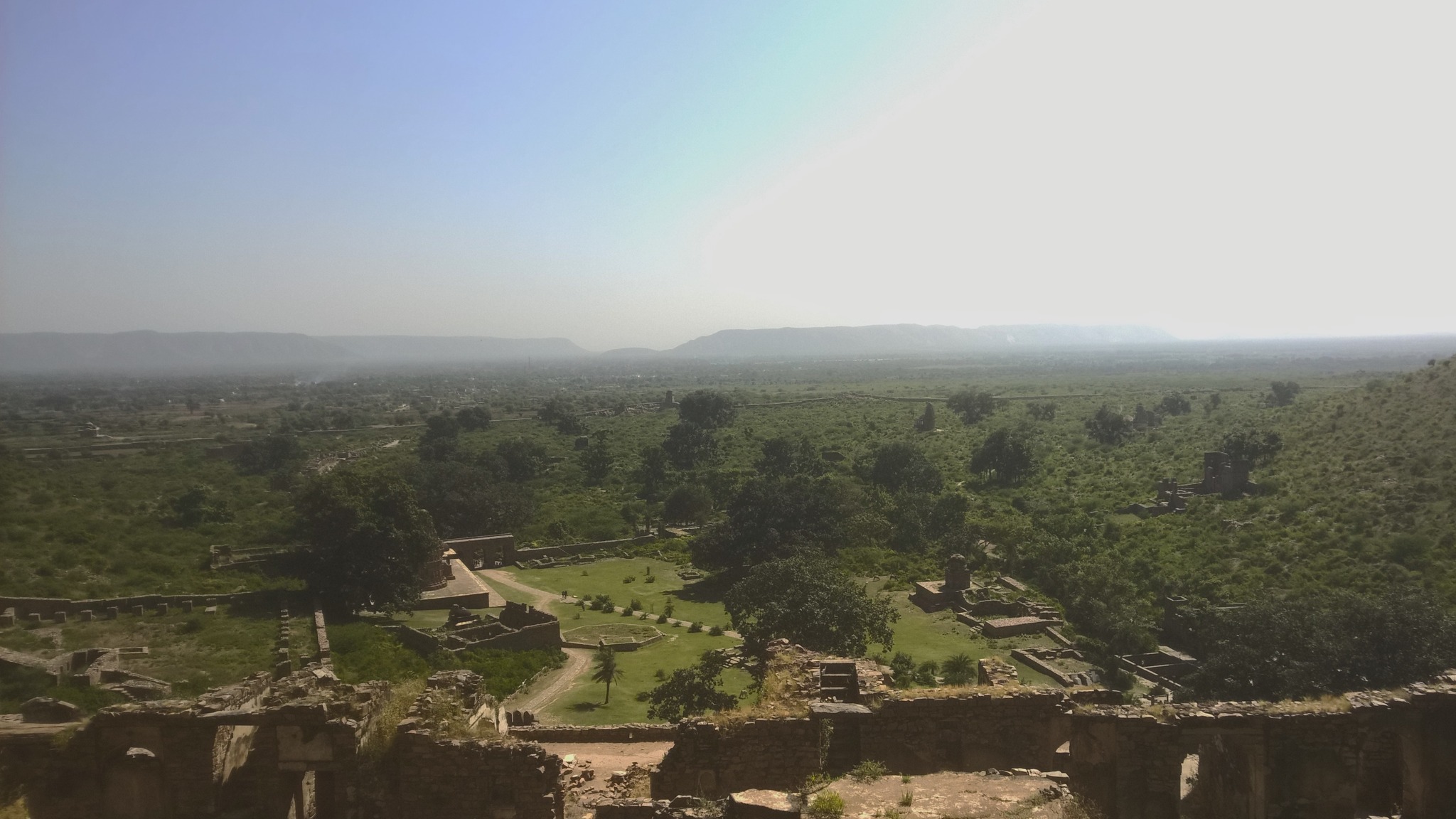
After enjoying the views of the Alwar district countryside accentuated by the Aravallis standing like long flattop platforms from the top of the existing structure of Bhangarh, we walked back to the parking lot, where the auto-rickshaw driver was waiting. After another two hours of riding through the dust clouds over the under-repair road, we were back at the Sariska National Park gate by 1.15 PM, where we were faced by the next challenge – finding 4 more co-passengers for the jeep safari, else we would be paying the fees for 6 passengers for the jeep. Luckily, we ran into a family of 3, consisting of another (!) Sardarji and his wife and kid – who readily agreed to share the ride with us.

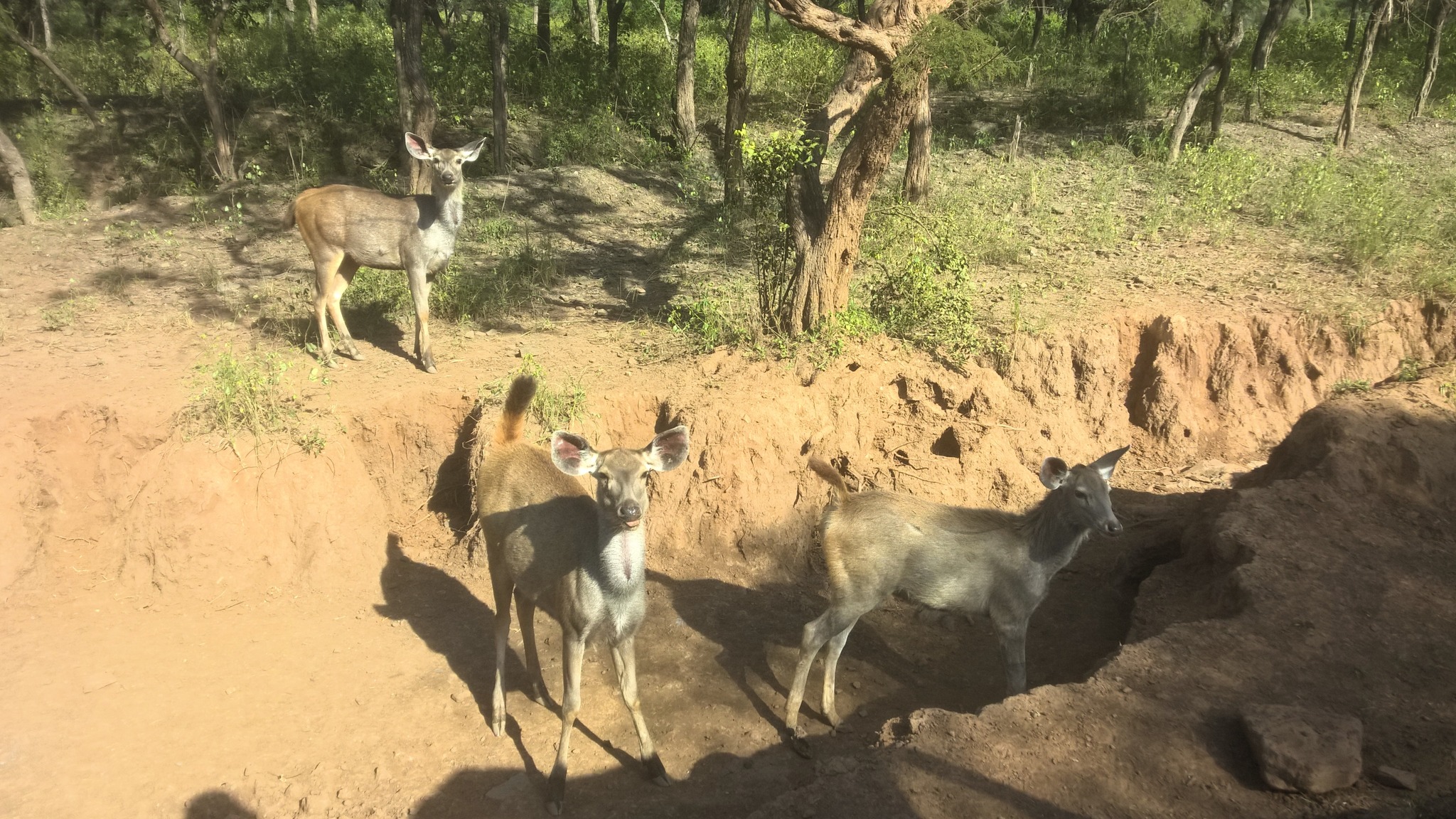
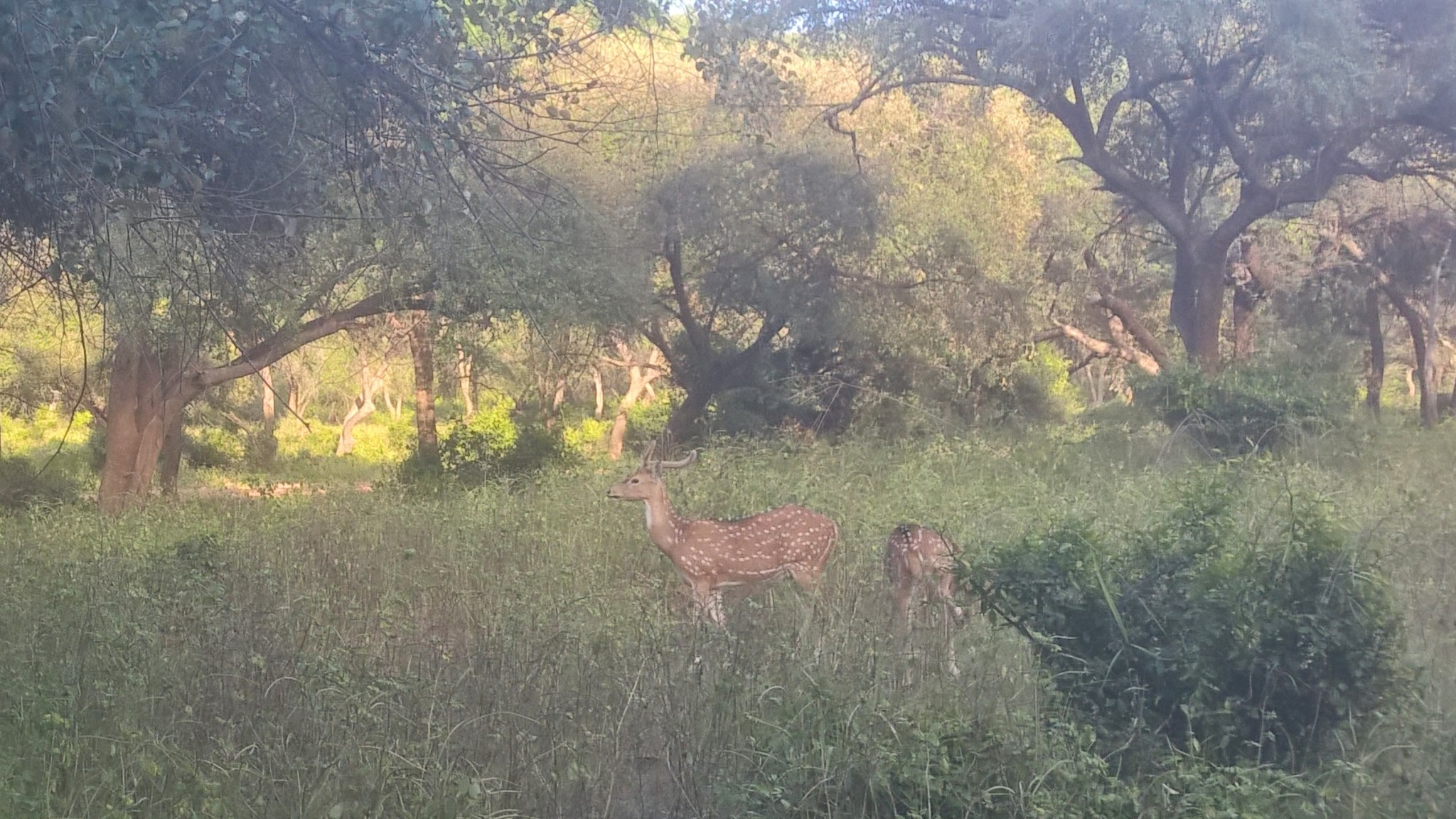
After a quick, light lunch at the canteen near the safari booking counter, we set out on the jeep safari on a trail that took us deep into the Sariska forest. We sighted sambhar, deer, peacocks and countless birds, complemented by thrilling sights of watering holes, and streams cutting through the jungle. Though we did not see a tiger, I would still count this as a very memorable safari in terms of the density of wildlife seen.

By 5 PM, we were back on our way to Alwar, with a thick layer of dust having settled on our bodies. When the sardarji finally dropped us off at the place where he had picked-up, he wore a long face, as he grappled with the sight of the coating of dust shrouding his auto-rickshaw – surely, he regretted having picked us up in the morning, and more so, for having agreed to the impromptu extension of the ride to Bhangarh. As if on cue, I handed him a couple hundred more rupees, hopping to alleviate his dejection.

Now, as we wandered around looking for conveyance to the bus station, we were approached by a couple who looked like students on separate two-wheelers. Lo and behold, it was another Sardarji (!), who along with his apparent girlfriend, offered us both a ride on their motorcycle and scooter respectively. By 8 PM, as we boarded the bus headed back to Delhi, it struck us that we had encountered the grace of good Samaritan Sardarjis every time we faced a difficult situation the whole day!

Post-script: My first trip to Bhangarh, September 2014

My first trip to Bhangarh happened by virtue of a day-long trip with a travel group called ROOTS. We had started around 6 AM from Delhi, passed through Sohna and then Alwar, and reached Bhangarh by 1 PM – a journey of almost 7 hours, a testament to the condition of roads that prevailed two years ago.

In any case, I had been awestruck by the atmosphere and ambience of the place, with the setting of the lawns and the fort etched at some height in the hillside seeming like a leaf out of a fairytale. When the tour of fort had ended, I found myself yearning more.

Leaving Bhangarh, we had then stopped by Ajabgarh, where we were intrigued by the sight of the abandoned houses lining up both the sides of the road for quite a stretch as we entered Ajabgarh village. Later, we had hiked up the hill to explore the compact fort even as darkness was falling. The hilltop also afforded a view of the expansive lake, called Jai Sagar, abounding in lotus and lilies, below by the roadside.

By then, it had already been 6.30 PM, with the twilight looming over the village, imparting it with an even eerier character. In the darkness, we had passed through the Aravallis with the moon smiling from behind the clouds, and the silhouettes of the hills accompanying us till we had crossed Sariska.

By 1 AM, we were back in Delhi, the journey turning out to be way longer than originally scheduled, but at the same time ending up being more memorable than I had ever expected.

There Will Be

Then there will be the heavy feeling again,
One that’s born out of the strangest pain,
Not like the one mighty blow of a sword,
But the sting of many a hurtful word;
I’m sure everyone’s had a taste of that
At some point of time in a life come what.
I hate to say – you are no exception,
How will you, then contain this emotion?

Then there will be compassion all around-
Your callous mind will respond to its sound,
Arising from its deep slumber of eons,
Liberating from your heart the pigeons,
Trapped, and fluttering their wings in vain,
‘Cause you would rather keep them in chains,
When all you need is unfasten and see,
Someone out there willing to catch ’em free.

The pall will then lift from your cloudy mind;
The Sun will shine and leave the rain behind;
The wind will bring the smell of the flowers,
That someone’s been tending over the years;
Ask yourself, how that time might never come?
It will dawn upon you some time here from-
When the ice thaws, a soft corner for me,
Somewhere remote in your heart, there will be.

©Asiman Panda 2009

Fire and Water

Fire and Water once met on the hedge-
Fire flared, Water hissed, to acknowledge
Fire’s to Water what snake’s to snake-catcher,
But they could still keep what’s most to matter.
 
Fire and Water played delicate games-
Burning and quenching amidst the flames;
The Contest played even for most the while,
For one winning would make It all futile.
 
Water soon loathed Fire’s searing heat,
While his stock drained, lightening his feet;
Before long, he refused to play further,
Grew his indifference, cloaking his torture.
 
So Fire then grew three-fold in fiery,
And Water slinked away entirely-
Fire beat about like a ghost possessed,
Water pondered what kept Fire obsessed…


Water wouldn’t know even if he froze
That all Fire craves is Water’s approach,
For the burning throughout soul and body
Can only quench in Water’s custody.
 
©Asiman Panda 2010

South-Bound

Mischievous waves of the perennial spring,
‘Tween thy currents am I dispos’d to dream
Of deeps as Marianna Trench may seem,
The heady scents their musky innards bring;
Blown South-bound ‘gainst the steadfast Sirocco
‘Low the mountains, will I trudge fertile plains,
Then forage the fabled thick-shrubb’d terrains
Nestling the marshy gorge of Morocco…
The forbearance of my eager members
Is match’d only by the thirst in my throat,
Which in mixing of downpours and embers,
Sizzles and soars right ‘tween toe and finger-
When o’er conquest of the South I will gloat
The joys of my travails shall still linger.

©Asiman Panda 2010

Paper-Boat

Little by little, you extract my blood
Into countless vials that wildly flood
The air that I breathe, sights that my eyes read,
You make it hard while you leave me to bleed.
 
Moment by moment, you walk no closer,
But farther, and why? is one big poser.
For all I see, I’m not blind to omit
Sly that you are, you’re forever at it.
 
Draught after draught, leaves pile upon the earth,
Life is a war until death from the birth,
While I strive so my soul shall be free
You make this fight tougher than tough can be.
 
Drop by drop, do the lakes and the rivers swell,
So does my heart (wherein secured you dwell),
With tiny drops of manna you donate
To make my earthly existence ornate.
 
Night after night, memories sweep my sleep,
Bringing the touch of lips for me to keep
Caged right here, and captived there like you said,
In your closed fists, and my heart and my head.
 
Tugs and tiffs later, our love only grows,
Strong like the stream after the hurdles flows,
And rocks the paper-boat with you and me –
Know our boat will drift strong even at sea.

©Asiman Panda 2010