
With parents finally being able to visit Gurugram after the second wave of Covid-19 pandemic had receded, it was time to unwind with a weekend trip. We decided to check out relatively lesser-known places, hoping to beat any semblance of crowds. Previously, I had visited Mandawa, and enamoured by the scenery of the areas I had passed through to reach there, I had been longing to have a taste of the larger area surrounding Mandawa – Shekhawati. With our personal vehicle at our disposal, exploring Shekhwati would now be feasible.
Part 1: Shekhawati
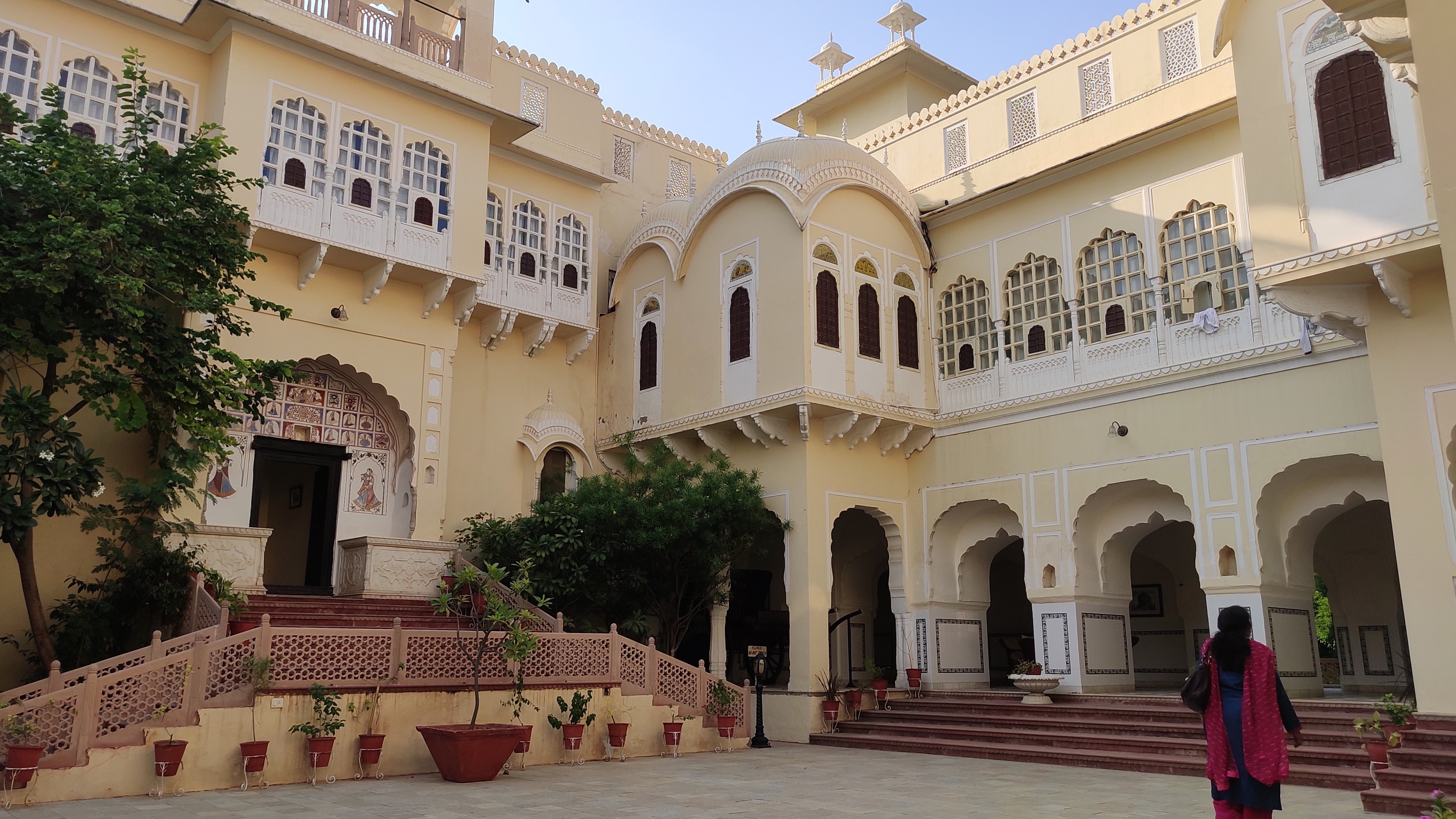
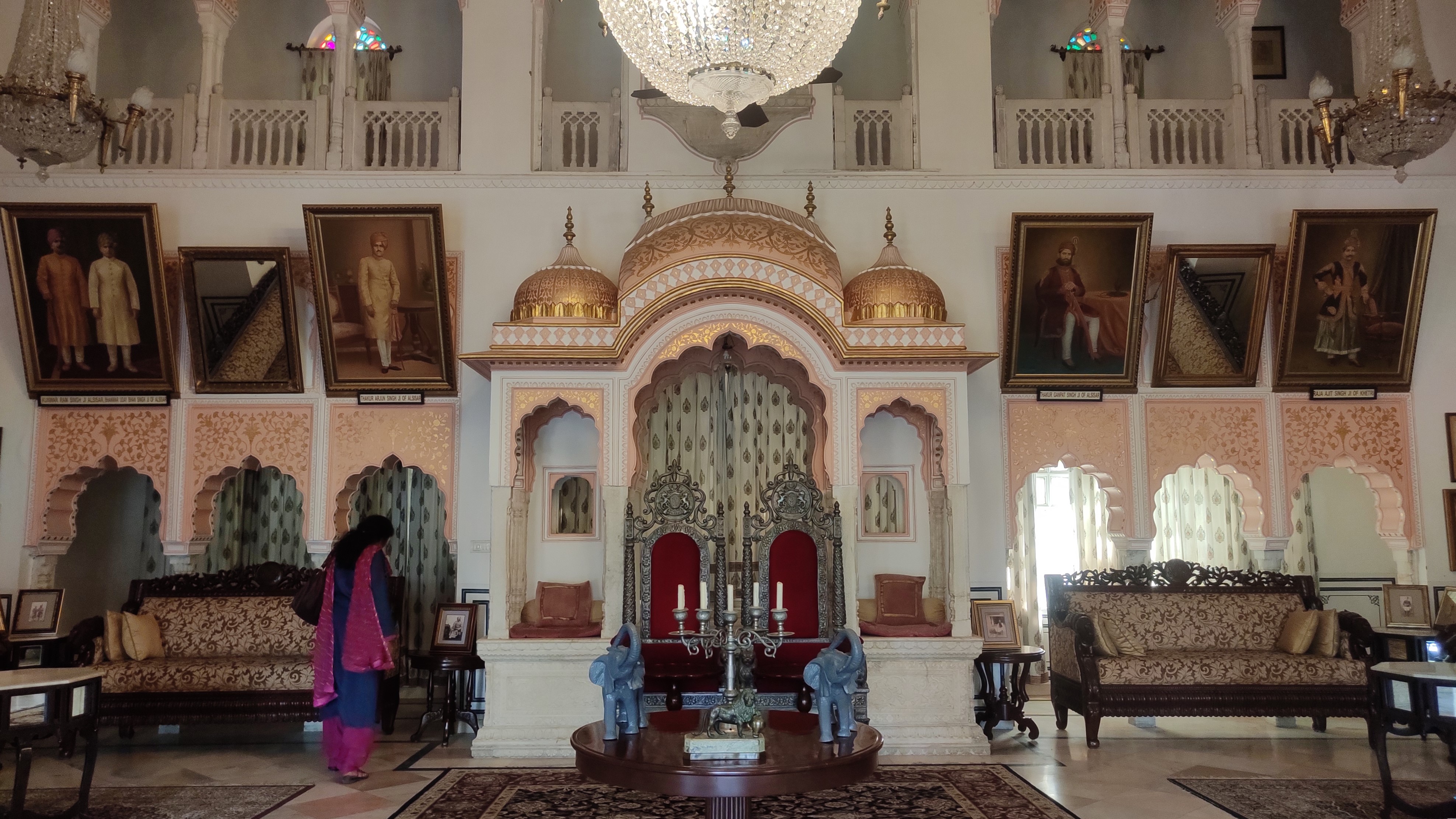
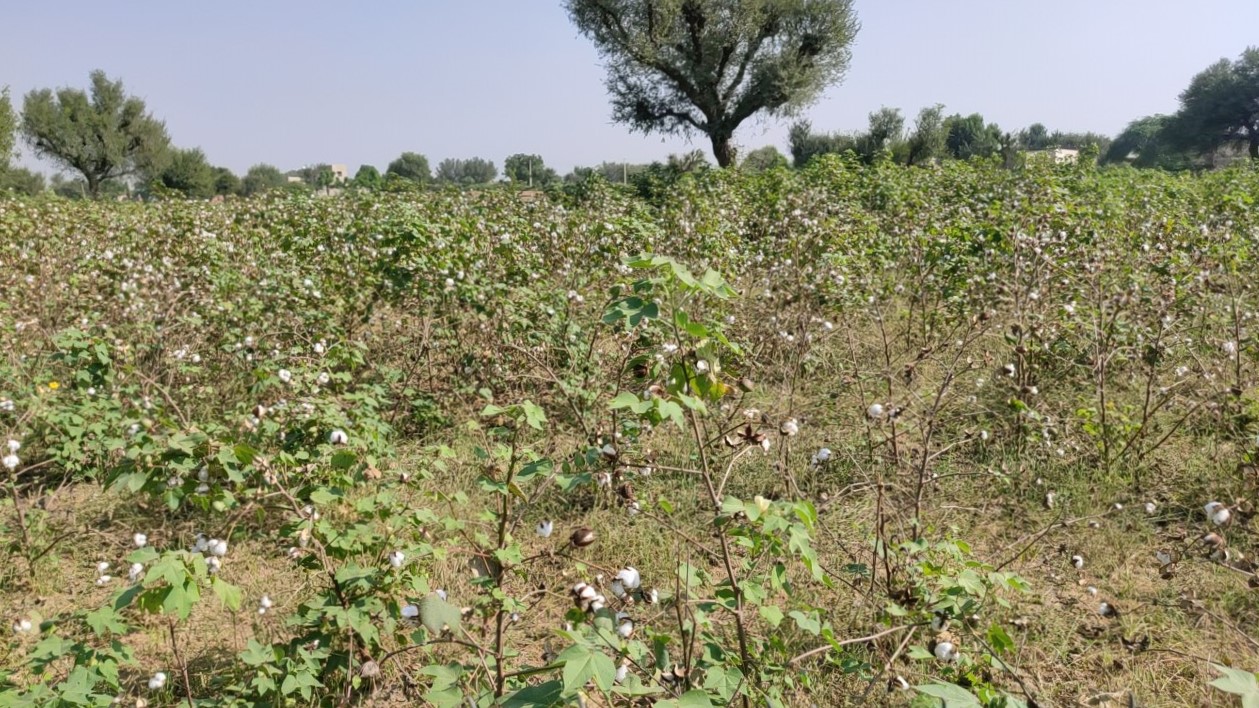
We kicked off our trip by first heading off to Pilani – which my father, on account of being an educator had wanted to see for a long time – via Loharu. After getting a glimpse of the BITS Pilani University, we proceeded to Alsisar, on a narrow arterial road that cut through cotton fields, and part-flat, part-undulating arid patches populated with khejri and babul trees. At Alsisar, cutting through the town on our way to Alsisar Mahal, we were immediately enchanted by the stately havelis sporting painted facades. A tour through Alsisar Mahal, a 18th century palace-turned-heritage hotel standing right in the middle of the town, transported us to a more wistful time.
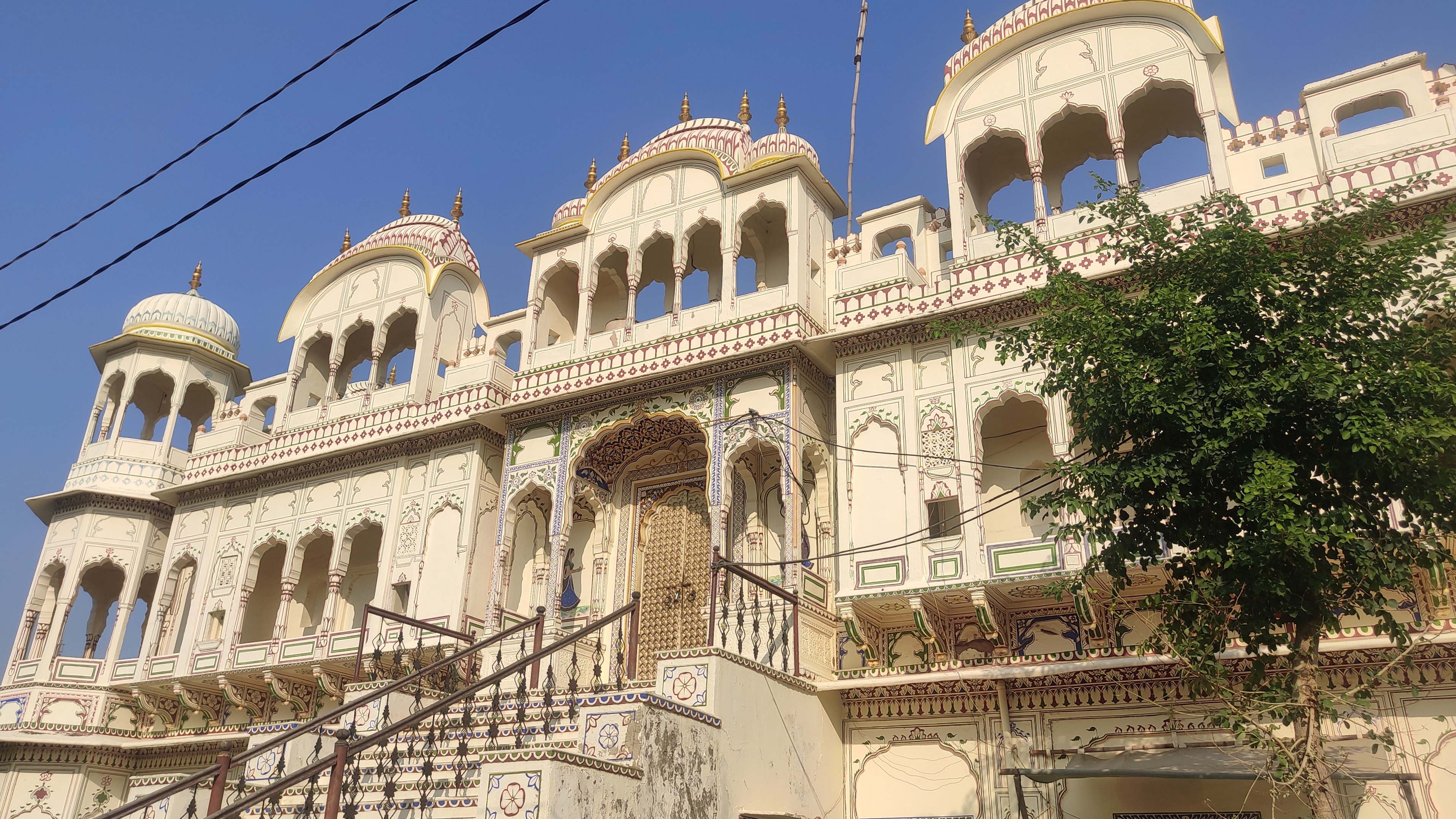

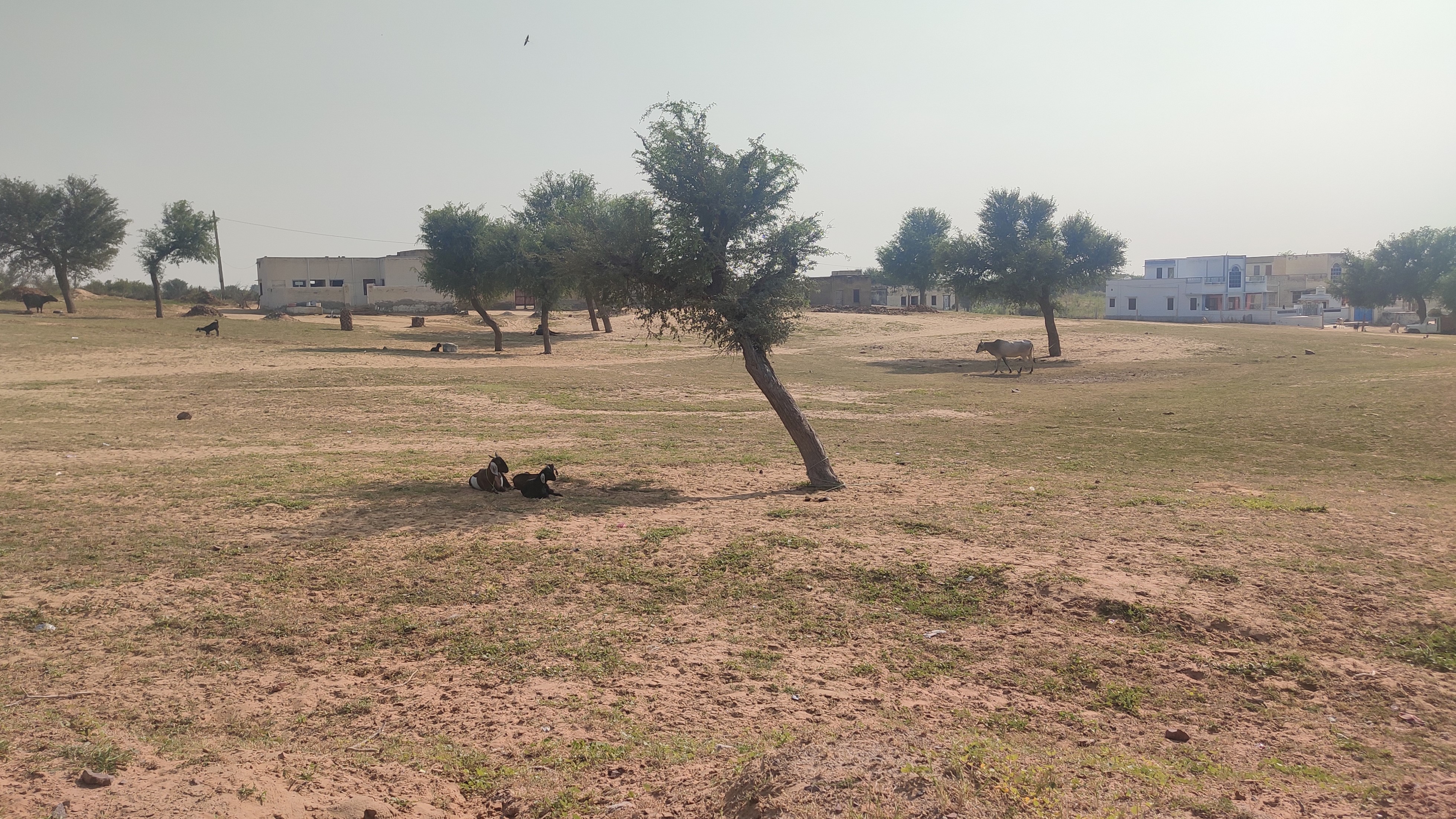
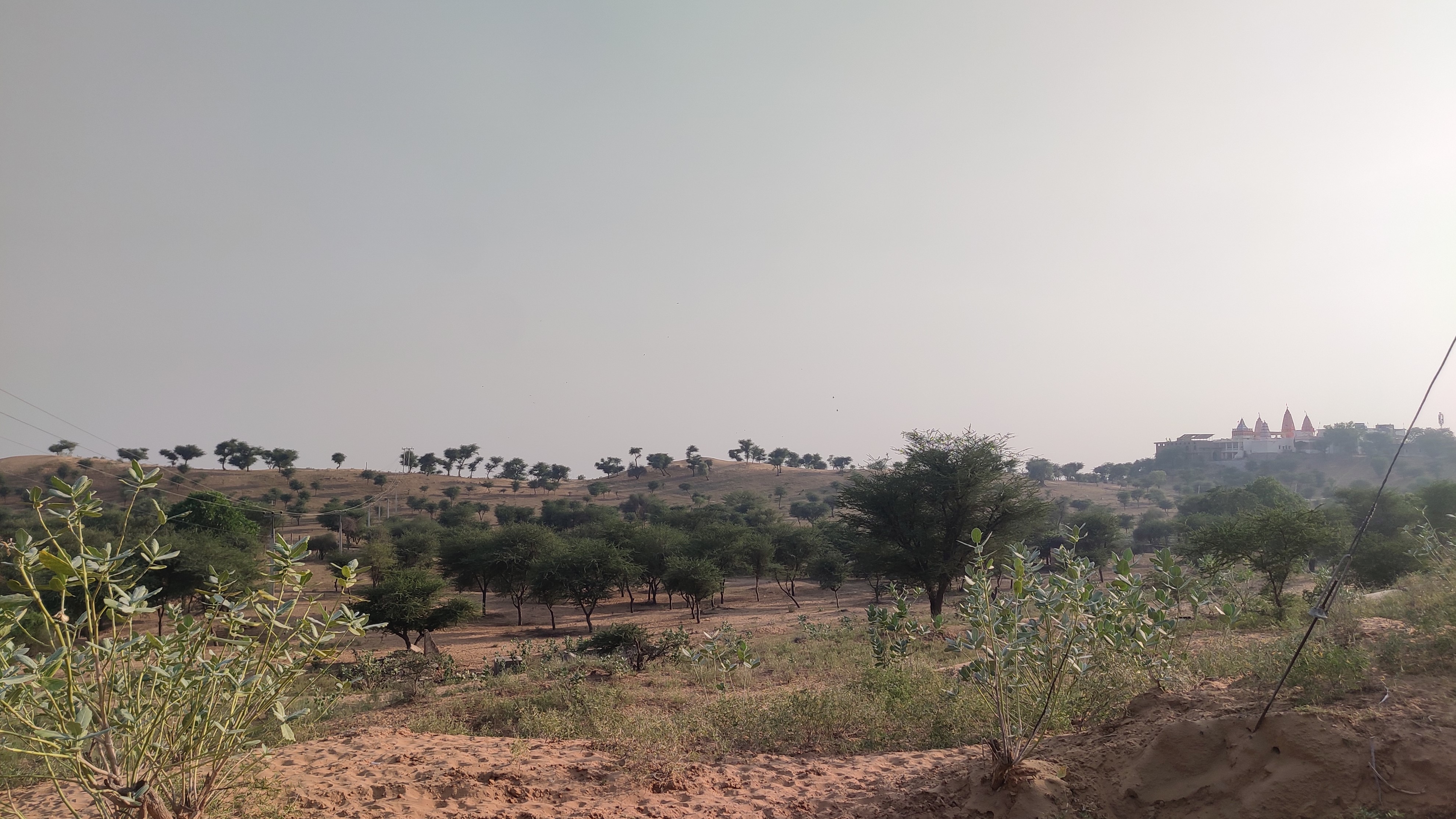
At this point, we did not have an itinerary for the rest of the day, the only objective being that we reach Mandawa by the end of the day. So, we then drove towards Malsisar, a twin town of Alsisar – it is said the towns are named after two sisters, Alsi and Malsi, respectively – and took a turn left towards Bissau just at the periphery of Malsisar. Now, as the cotton fields gave way to patches growing millet, with the landscape gradually turning more arid, cattle lounged about in the shade of the sparsely scattered trees. Soon, as we approached Bissau, dunes started appearing in the distance – we were at the edge of the Thar.
Our next stop was Churu, known as the gateway to the Thar and also one of the three largest towns of Shekhawati, the other two being Jhunjhunu and Sikar. Intent on seeing the Churu fort, we had to drive through the city centre, that was very busy on account of traffic on rather narrow roads, flanked by havelis on both sides. However, the fort not being open in the sense that tourists could visit, we concluded our Shekhwati sojourn for the day and started south towards Mandawa.
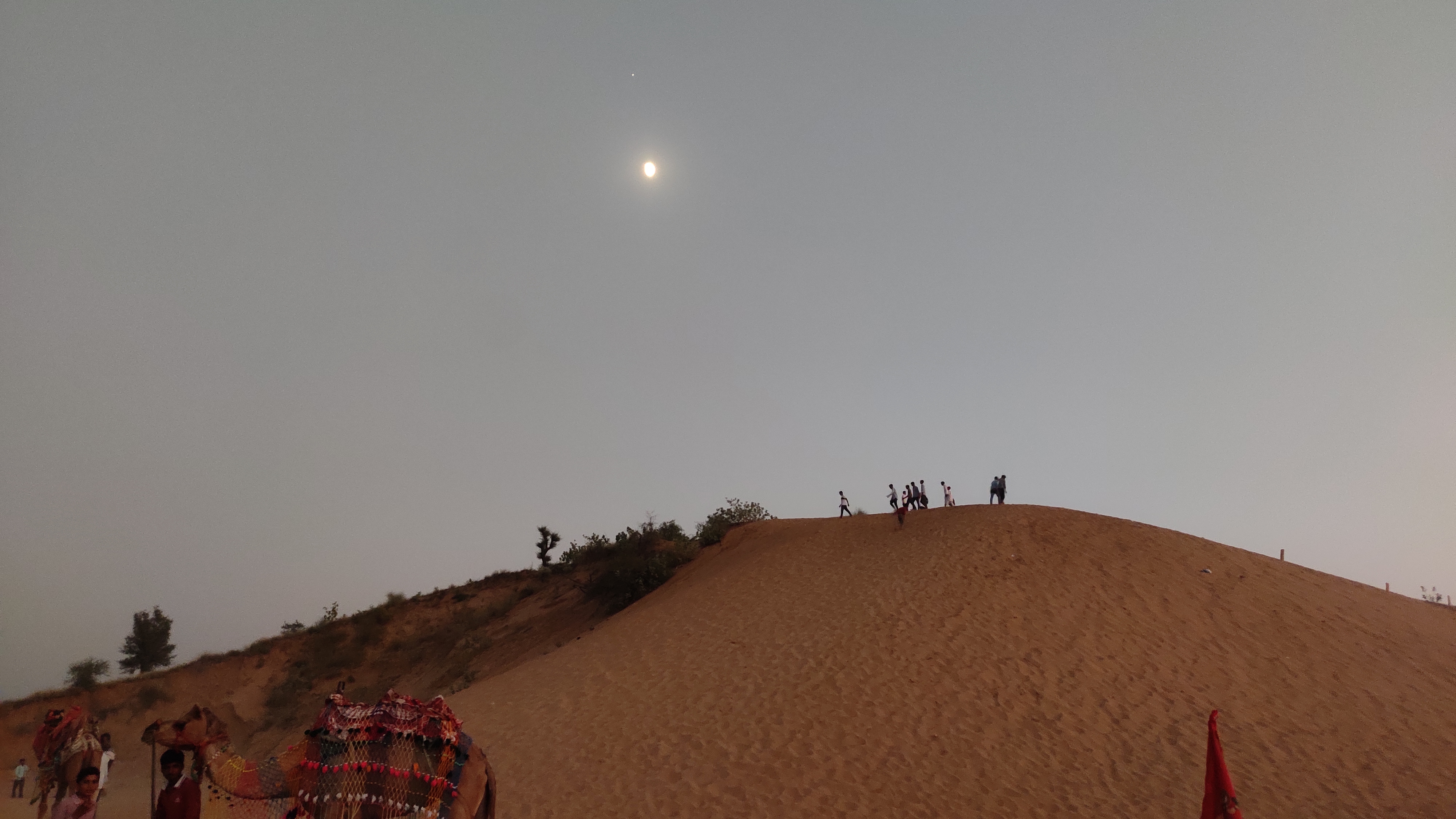
As evening fell and we approached Fatehpur, we passed by sand dunes shining in the moonlight, stopping at one particular sand dune where camel rides were being offered. Soon, passing through quite narrow lanes of Fatehpur, another town abounding in havelis, we reached Mandawa around 7.30pm and checked-in for the night at a fairly new haveli. The haveli, the receptionist told us, had recently played host to a crew that was in Mandawa for shooting an OTT series featuring Sonakshi Sinha (this series later turned out to be Dahaad). Following dinner at the rooftop on the haveli, we went off to sleep, as a day-long detour from Shekhawati awaited us the following day.

Part-2: Nagaur
The following day, after breakfast, we started off for Nagaur, a place that had been on my radar for a few years now. Once again passing through the haveli-laden, narrow lanes of Fatehpur, we headed west this time, straight into the Thar desert. As the the density of houses grew thinner, so did vehicular traffic, however, the traffic was supplanted with hordes of saffron-clad devotees walking by foot to some place that we did not know yet. In echoes of kawad yatra that happens in North India in July, trucks laden with similarly attired devotees, playing bass and disco-beat laden devotional songs too were headed in the same direction. We realized they were headed to the Salasar Balaji Temple once we crossed Salasar.
Beyond Salasar, as the two-lane highway winded through the arid, undulating land, we would be alternating between sights of crests of low sandy mounds rolling in the distance when riding a crest ourselves and the prospect of climbing up a pass between sandy mounds when passing through a trough. The cherry on top was the tarmac, smooth and devoid of a single pothole, making it a pleasure to drive on. Sparsely populated towns, that we mostly by-passed, greeted us on the highway, before we entered the throes of the conspicuously bigger city of Nagaur, and promptly navigated through, first the wider streets, and then the narrow lanes, on our way to the older part of the city.
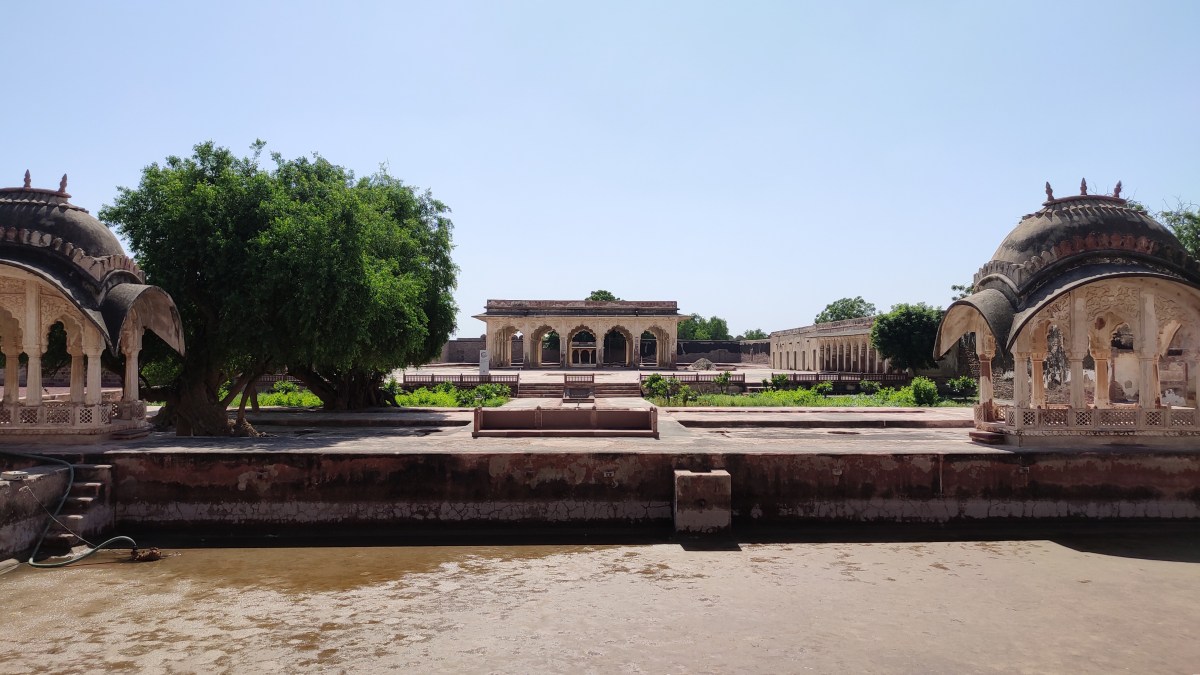
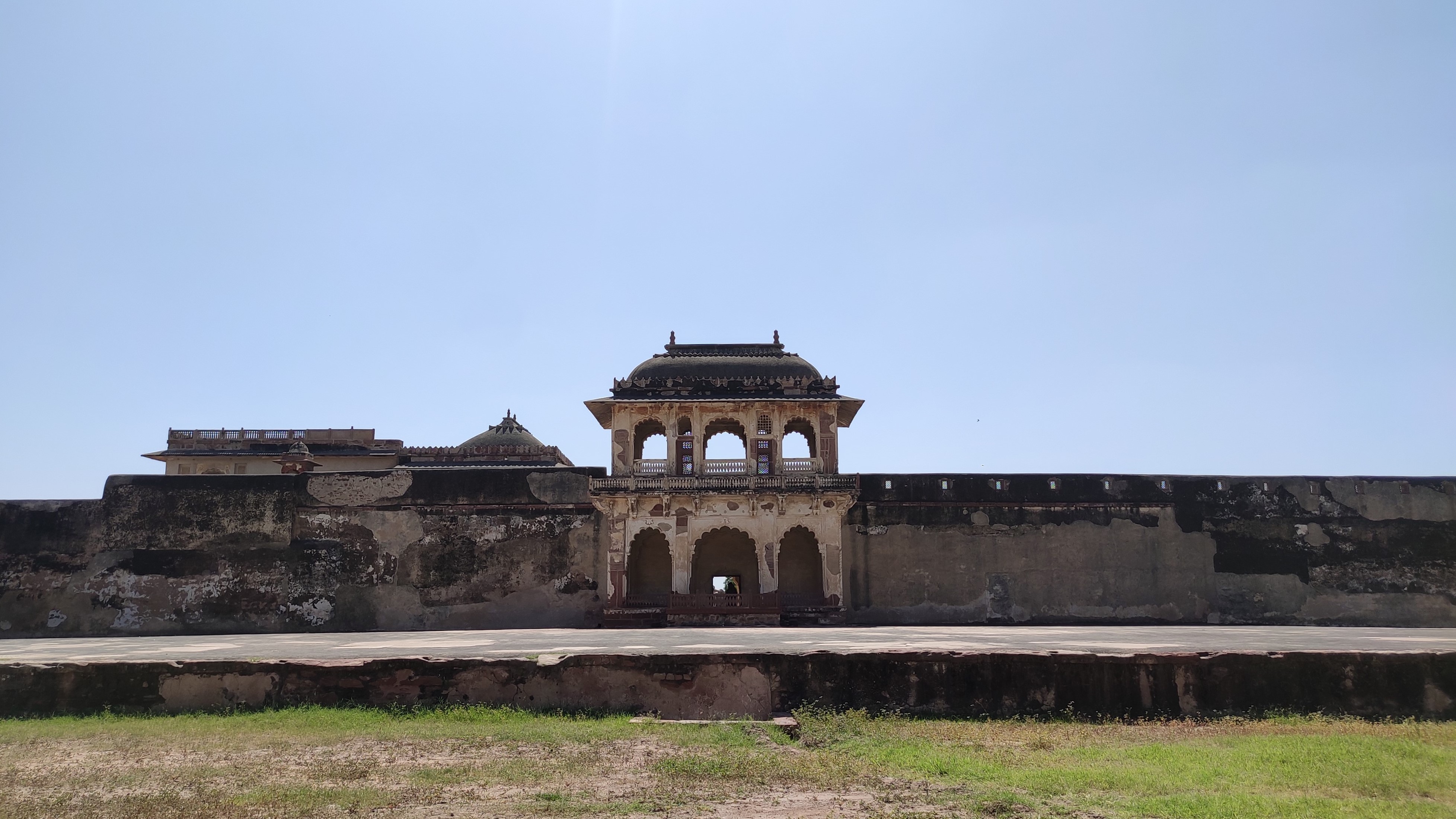
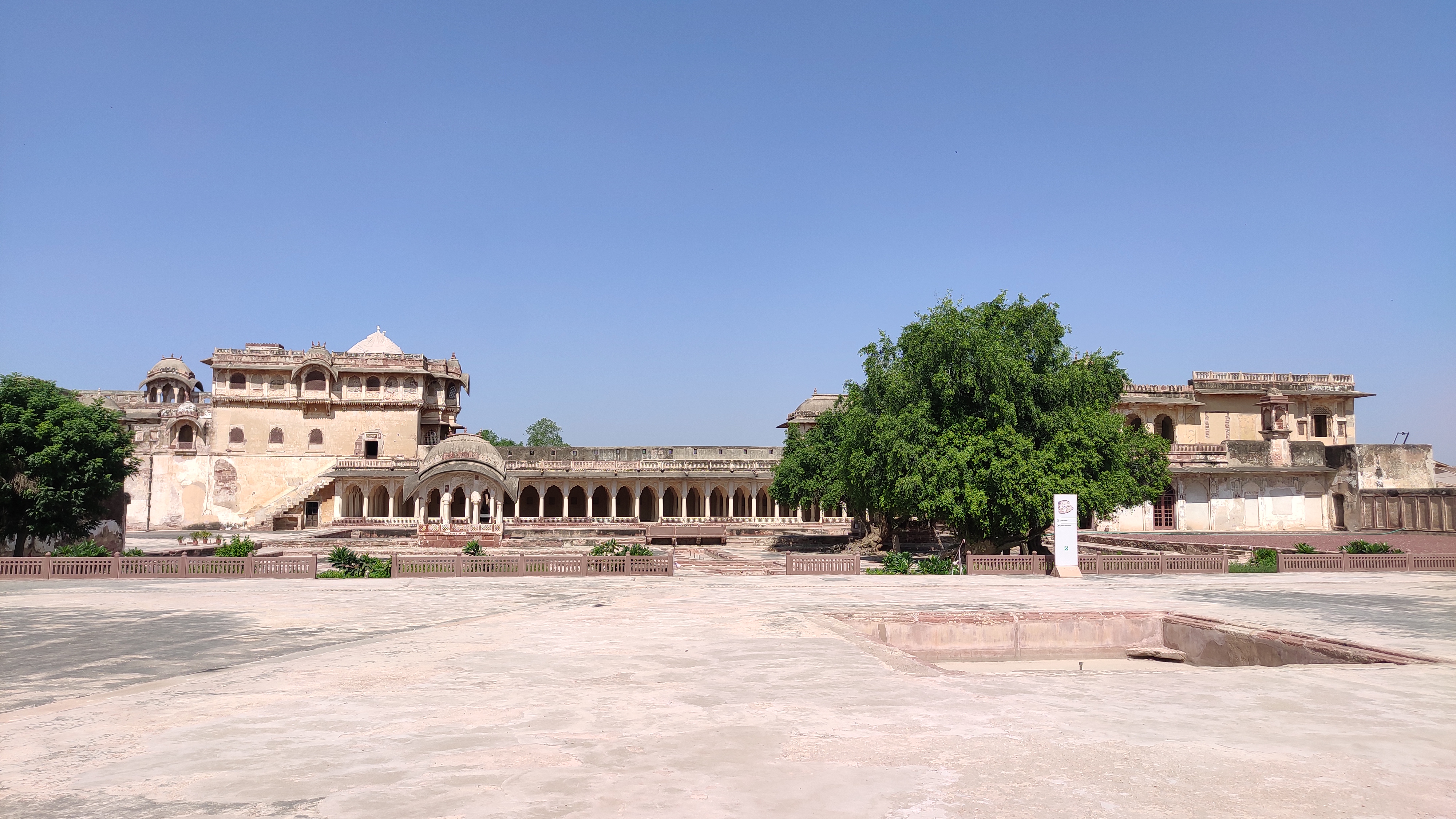
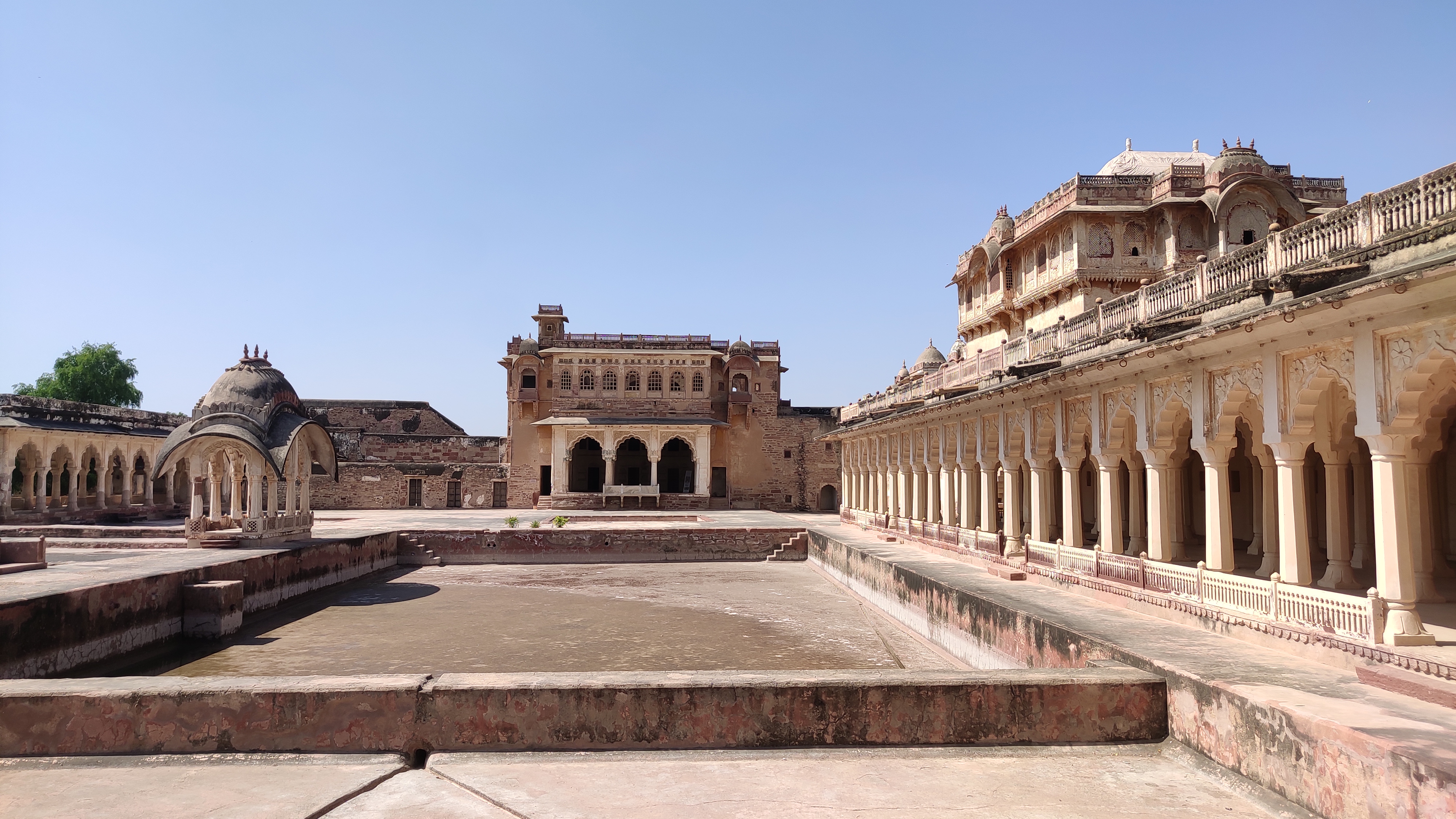
Being on the offbeat track, Nagaur is not heard of as often as the likes of Jaipur, Udaipur, Jodhpur, Jaisalmer etc., and yet turned out to be a pleasant surprise, what with a UNESCO site in the form of the Ahichhatrapur Fort or the Nagaur fort. Nagaur once served as an important stop on trade routes passing through the Thar desert. But it has had a chequered past ever since it encountered Ghanznavid invasions in the 9th-10th centuries. It kept changing hands and was fought for amidst bigger states placed around it, but its protectors fought equally hard to retain it.
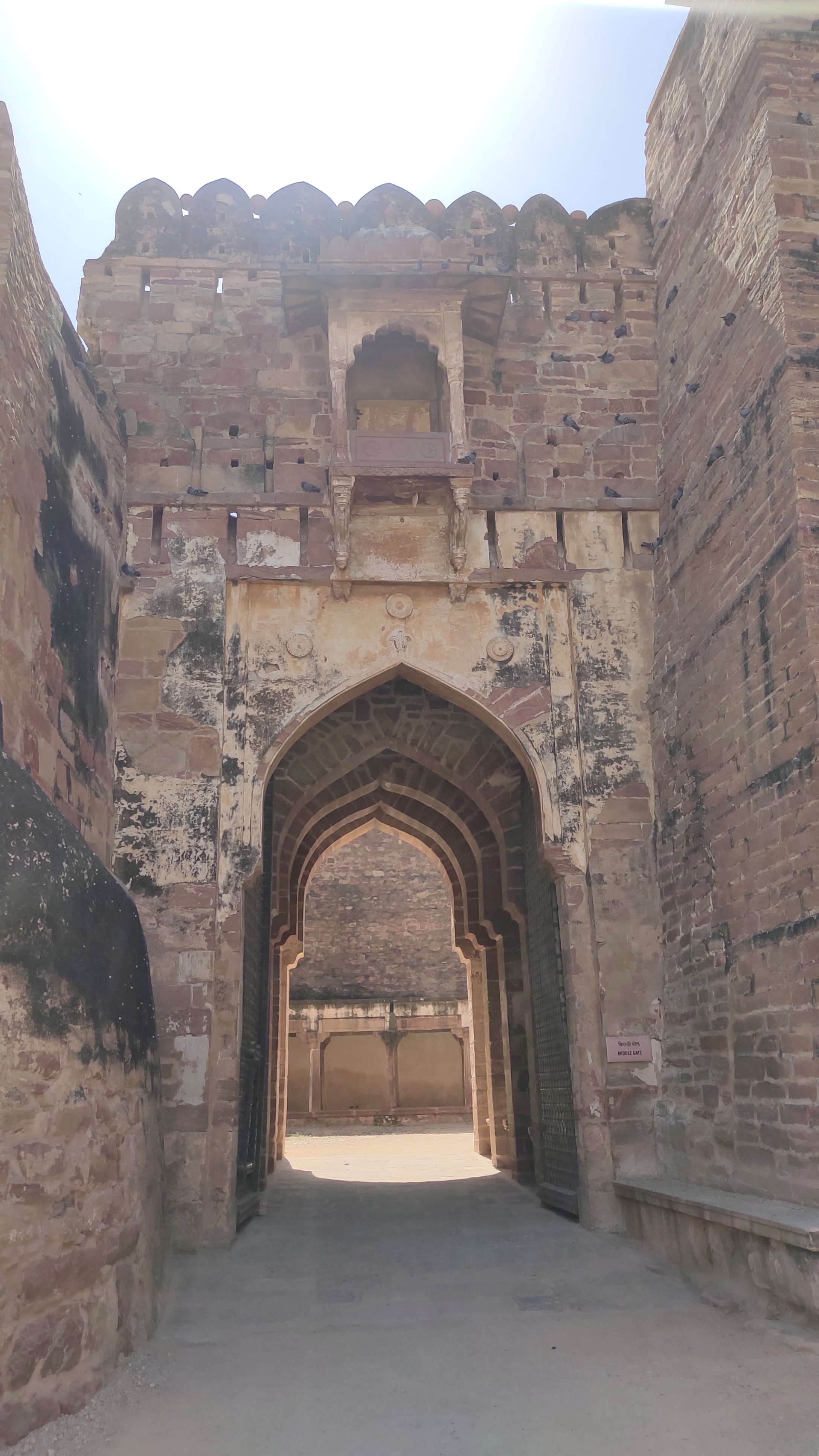
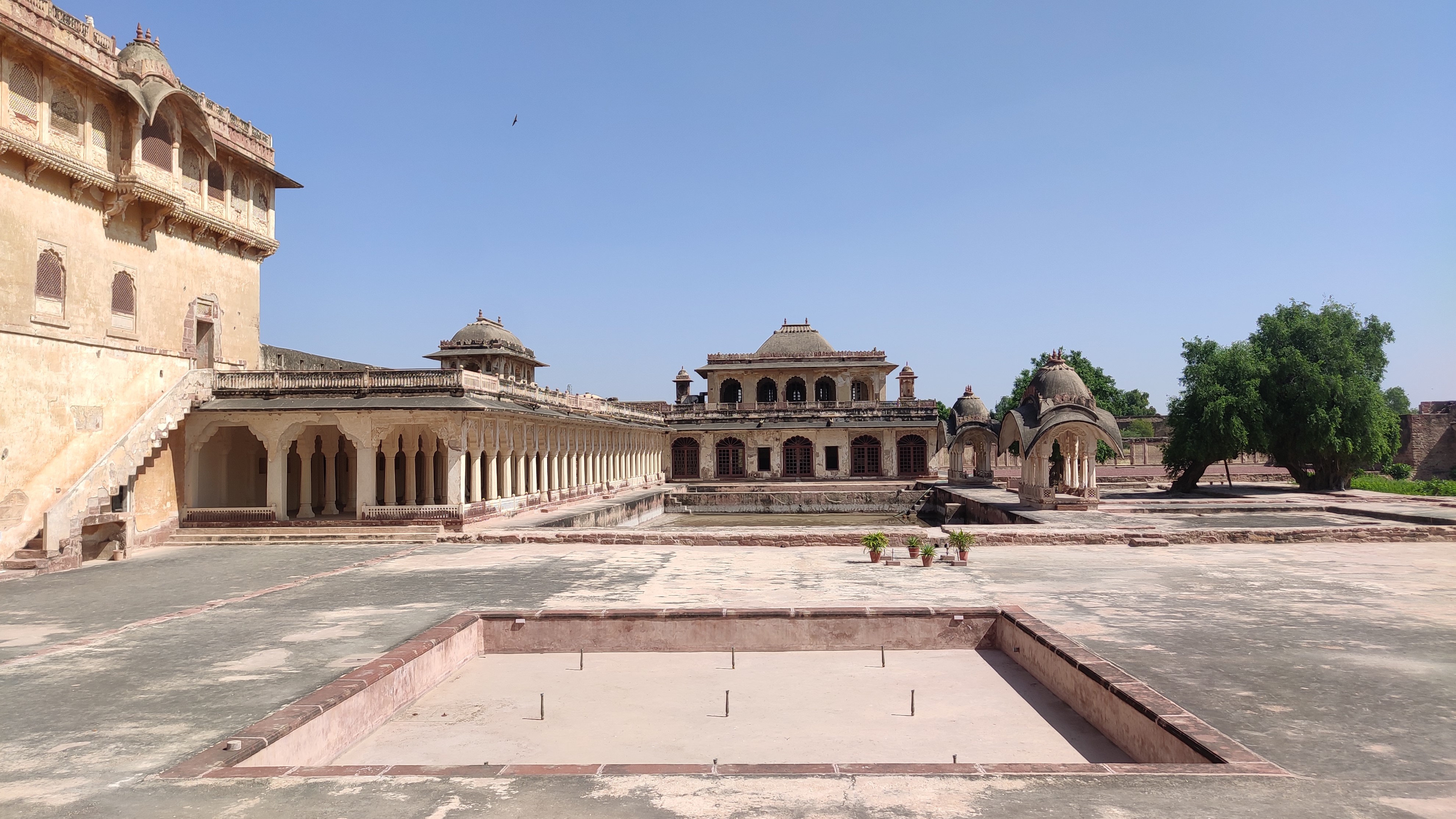
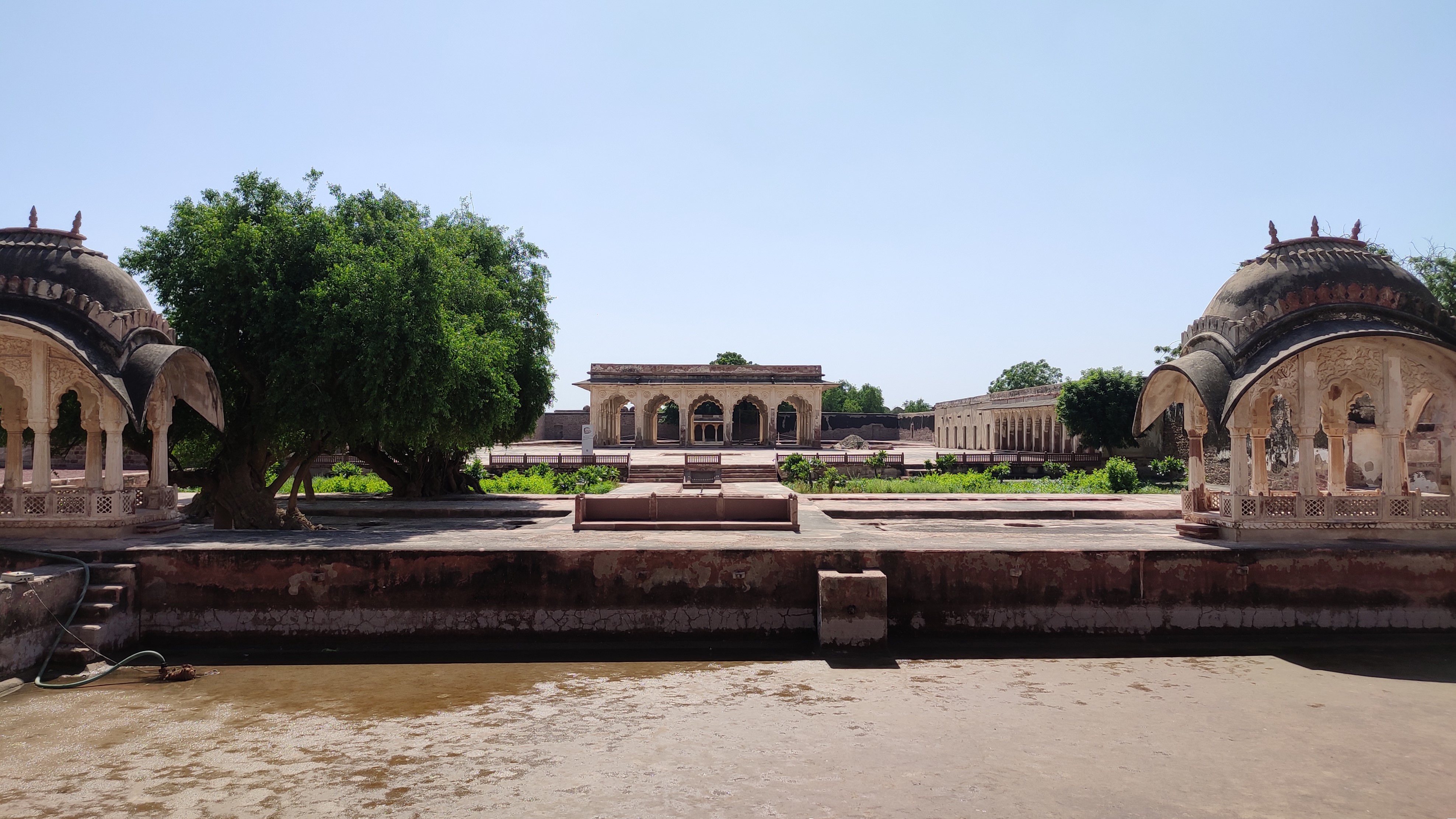
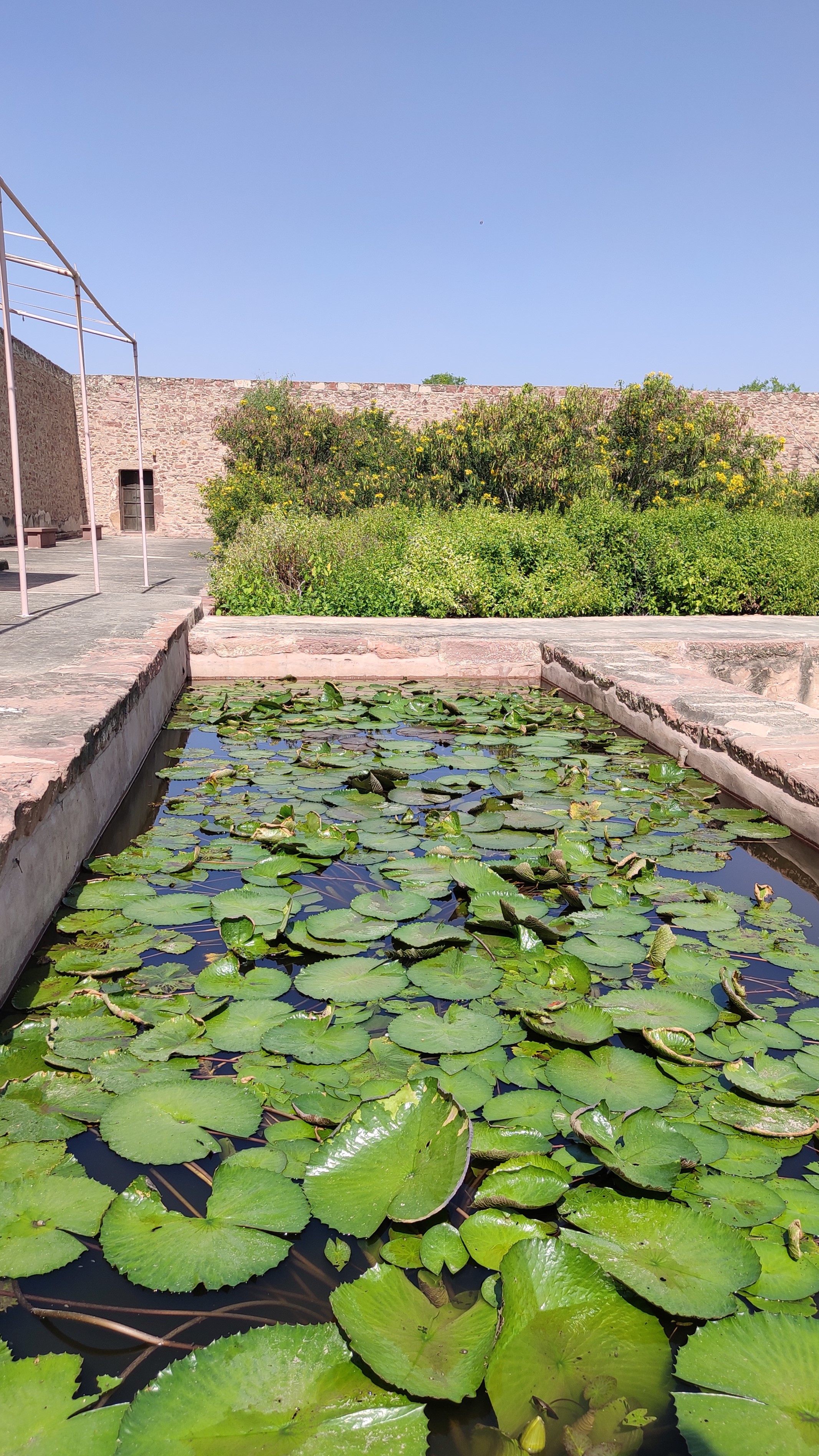
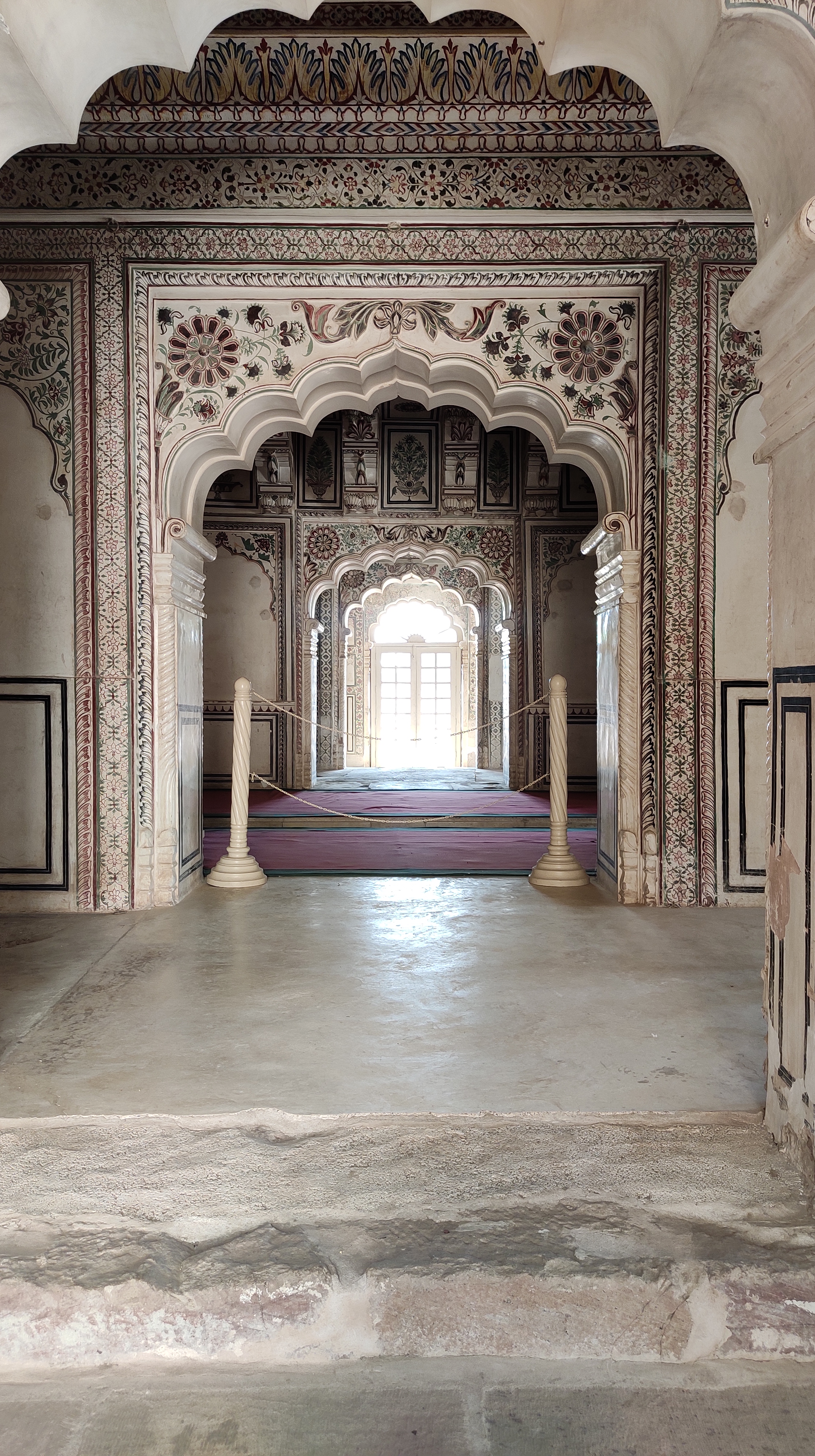
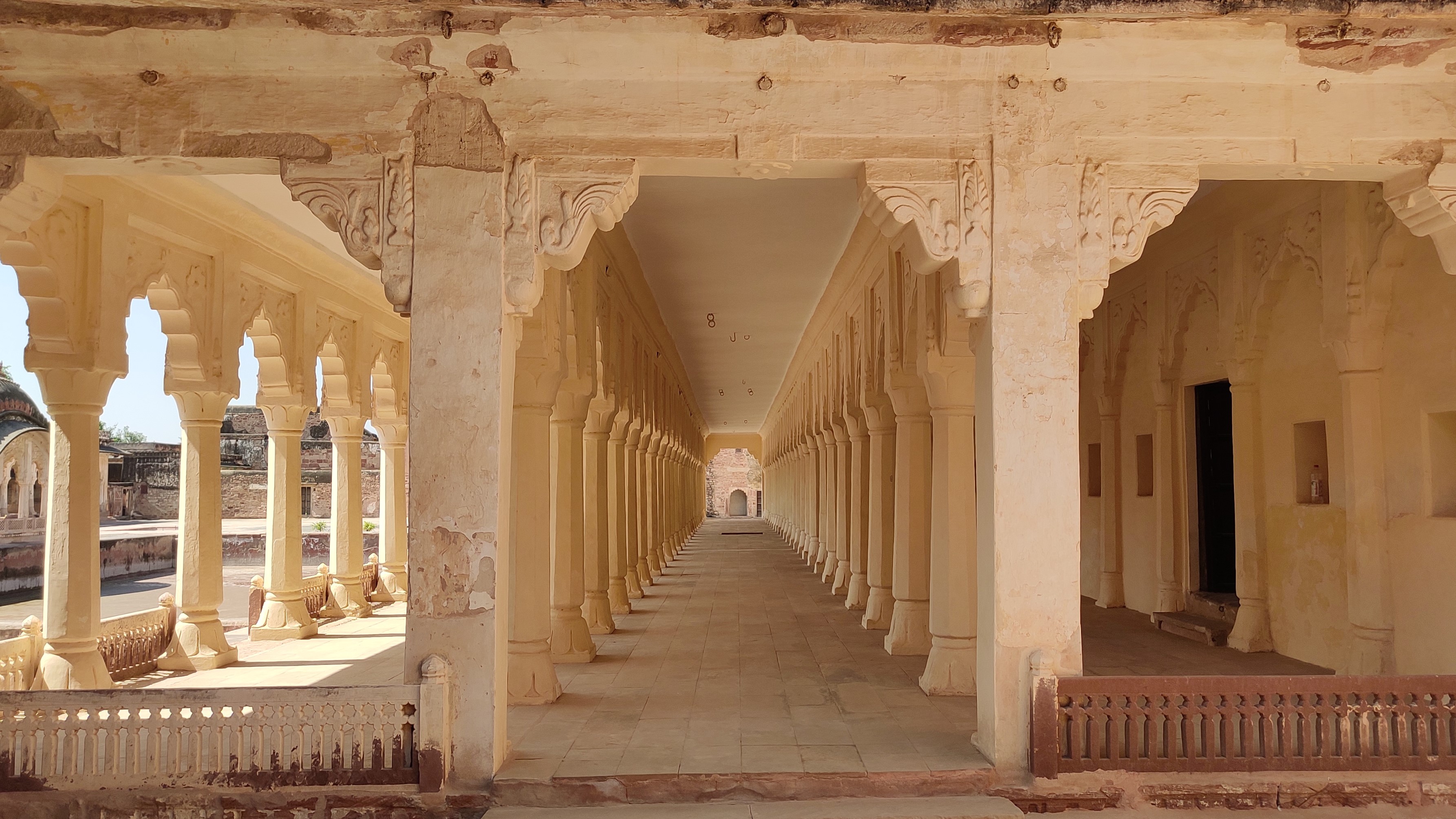
Inside the Ahichhatrapur fort, itself opulently built with a formidable fortification wall enclosure, we walked through the multiple palaces, namely, Sheesh Mahal, Deepak Mahal and the Hadi Rani Mahal, interspersed by large courtyards with lush gardens, placid pools and exquisite fountains. We lost ourselves in the corridors running from one arched-door to another, with the pillars sporting colourful motifs and the ceilings rife with frescoes. After spending almost 2 hours, being awed by the beautiful antiquities inside the fort, a different world in itself, we had our lunch around 2.30 pm and were back by 6 PM at Mandawa, where we checked into the 200-year-old Radhika Haveli.


Part 3: Mandawa
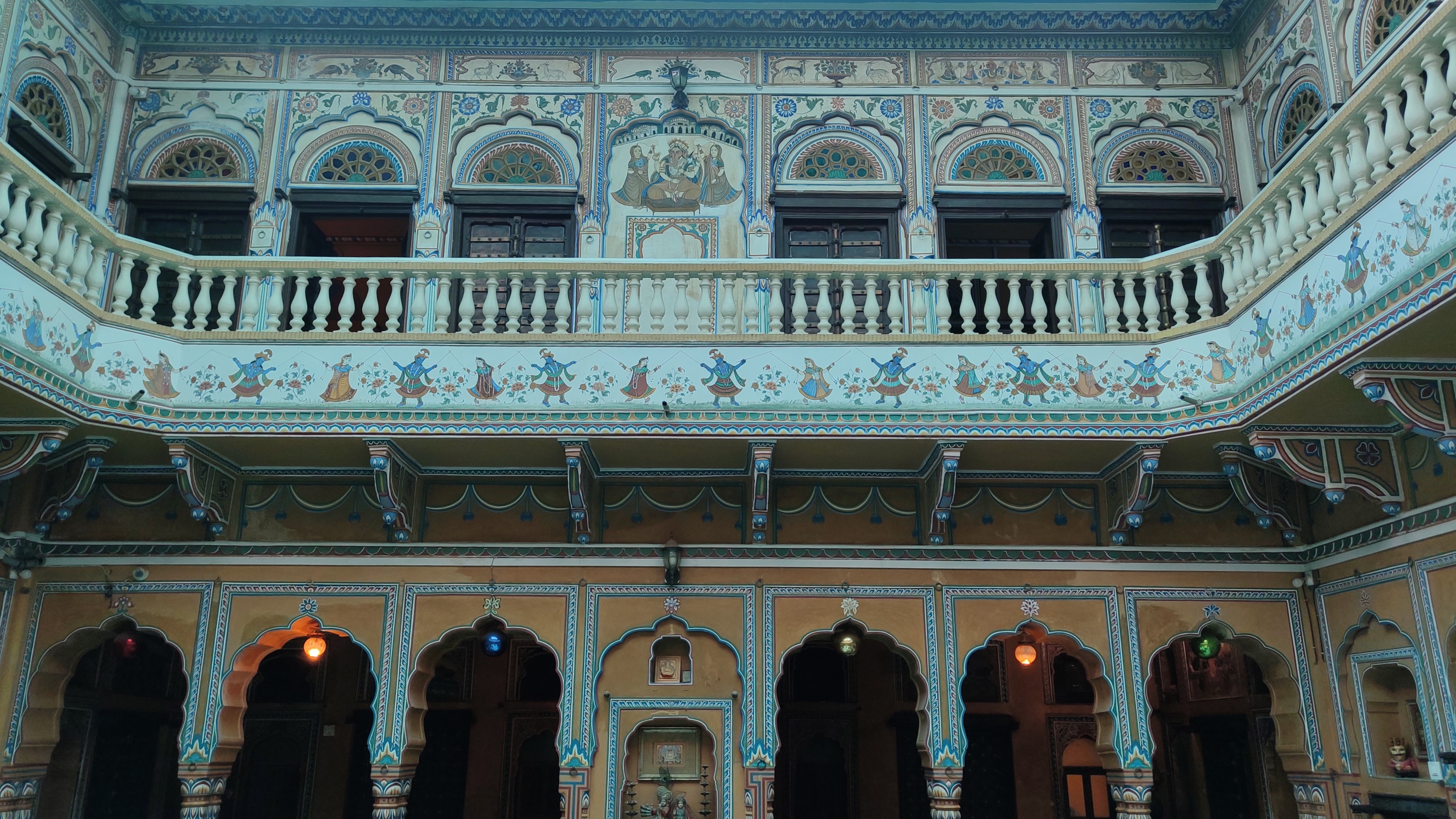
Radhika Haveli is a typical Shekhwati style haveli with a large courtyard in the middle of a rectangular-shaped two-storeyed living area. Rooms lie stacked one after another, ranging from sizes small to big, with old-style windows, with their painted and glazed wooden shutters, opening to the lane outside. We realised the floor of our room was two-tiered, with the higher tier, the narrower of the two, running by the side of the wall with the window. The old queen-bed lay between the cylindrical pillars holding up the ceiling, and a coffee table along with old-style chairs stood beside the window.
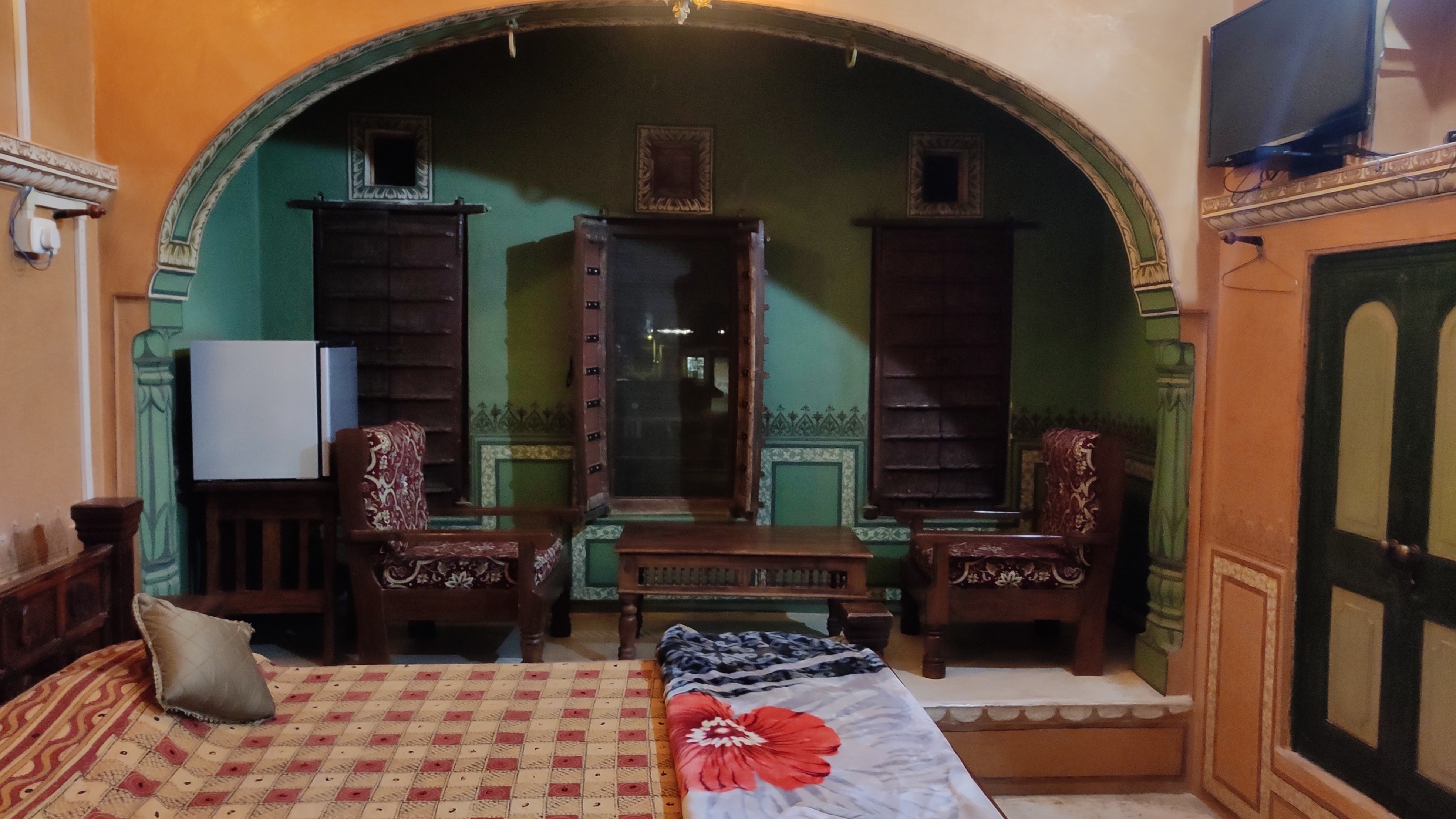
At around 8 PM, stepping out by foot in search of a pharmacy, we were immediately confronted by a desolate lane, which the faint streetlights did little to illuminate, prompting us to retreat and resume the search with our car. Back in the room, when we switched off the lights using the lever on the antique round-shaped bakelite base, we were engulfed by an atmosphere of eery quietude.
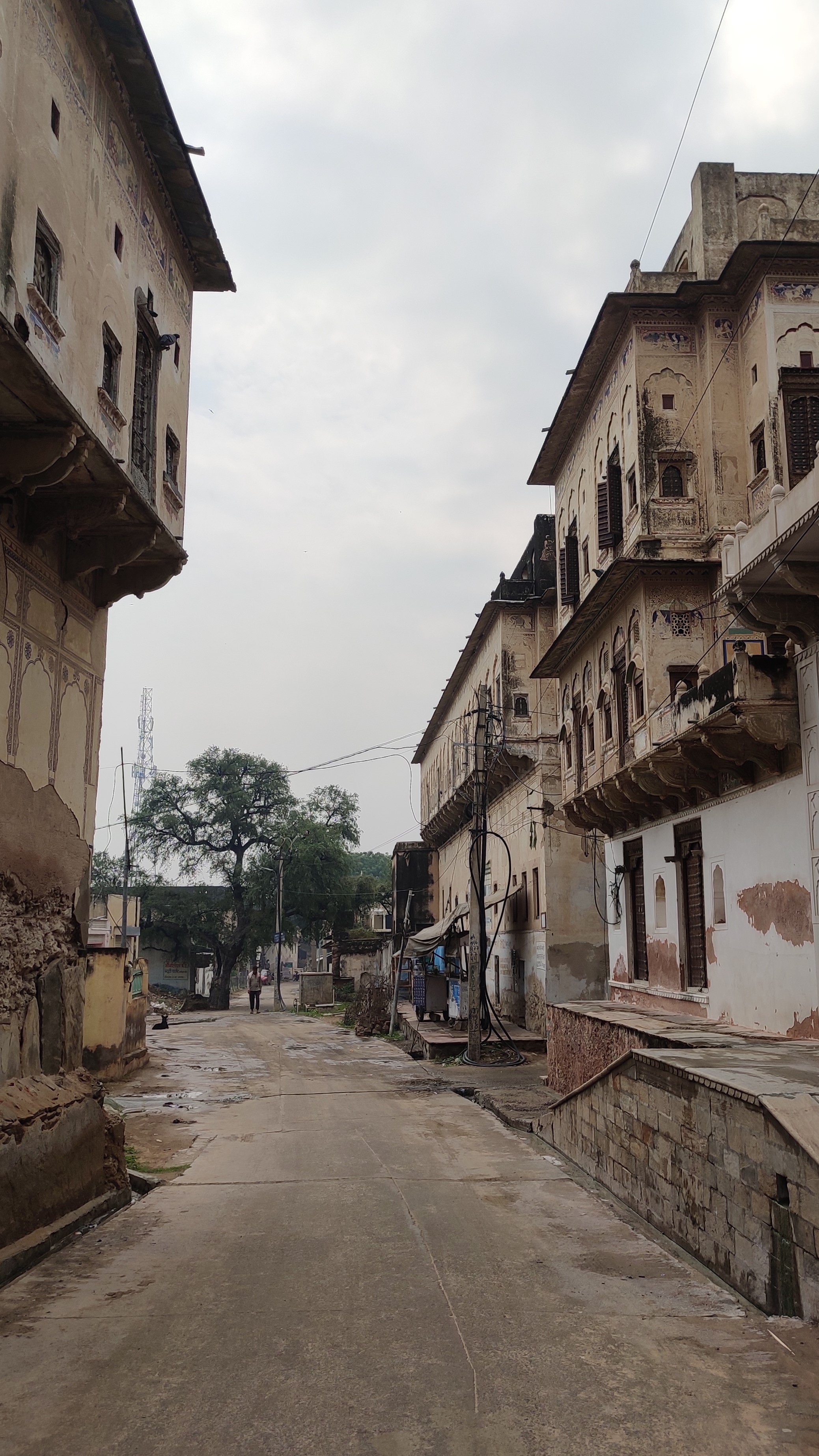
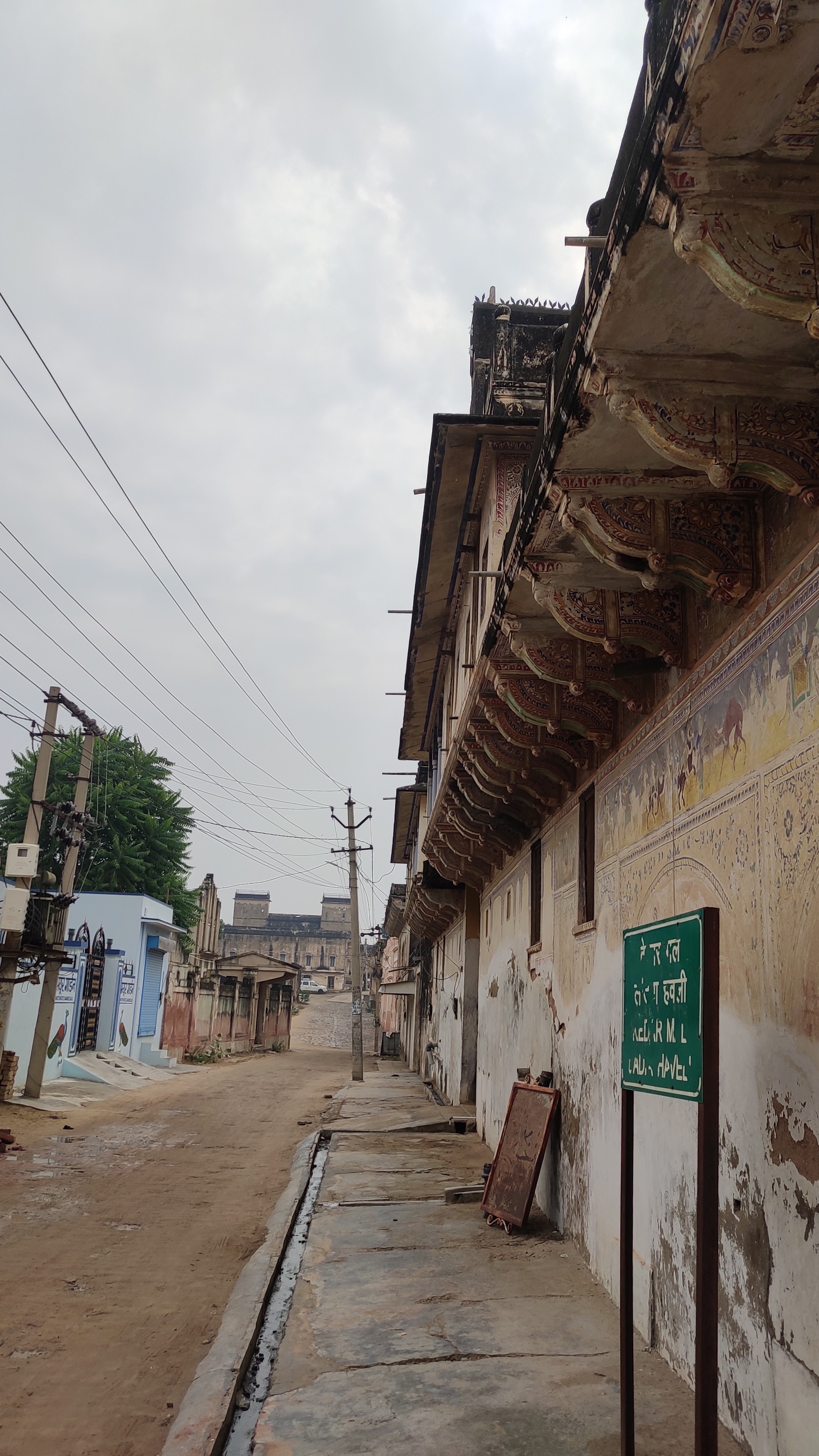
The next morning, the hosts at the Radhika Haveli pampered us with a complimentary sumptuous breakfast comprising poha, puri-sabzi, idli-sambhar, fruit, tea and coffee and were still flooding us with so more food, when we had to decline because we were beyond full. Thereon, through the maze of streets criss-crossing the agglomeration of painted havelis, we proceeded to do a tour of havelis, to name a few, Jhunjunwala haveli and Chokhani haveli, and spots where scenes of some famous movies, namely, P.K. and Bajarangi Bhaijaan, were shot.
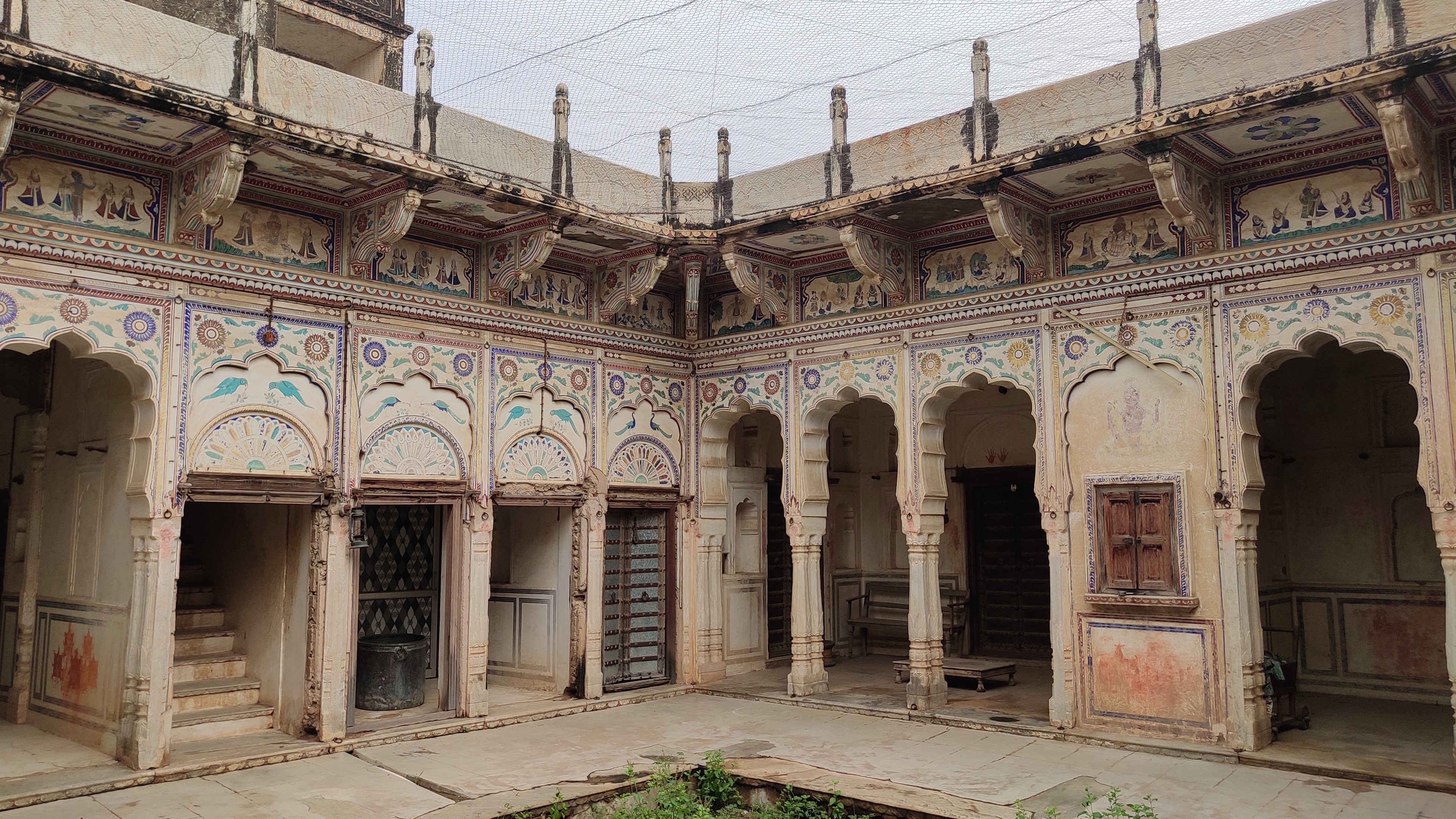
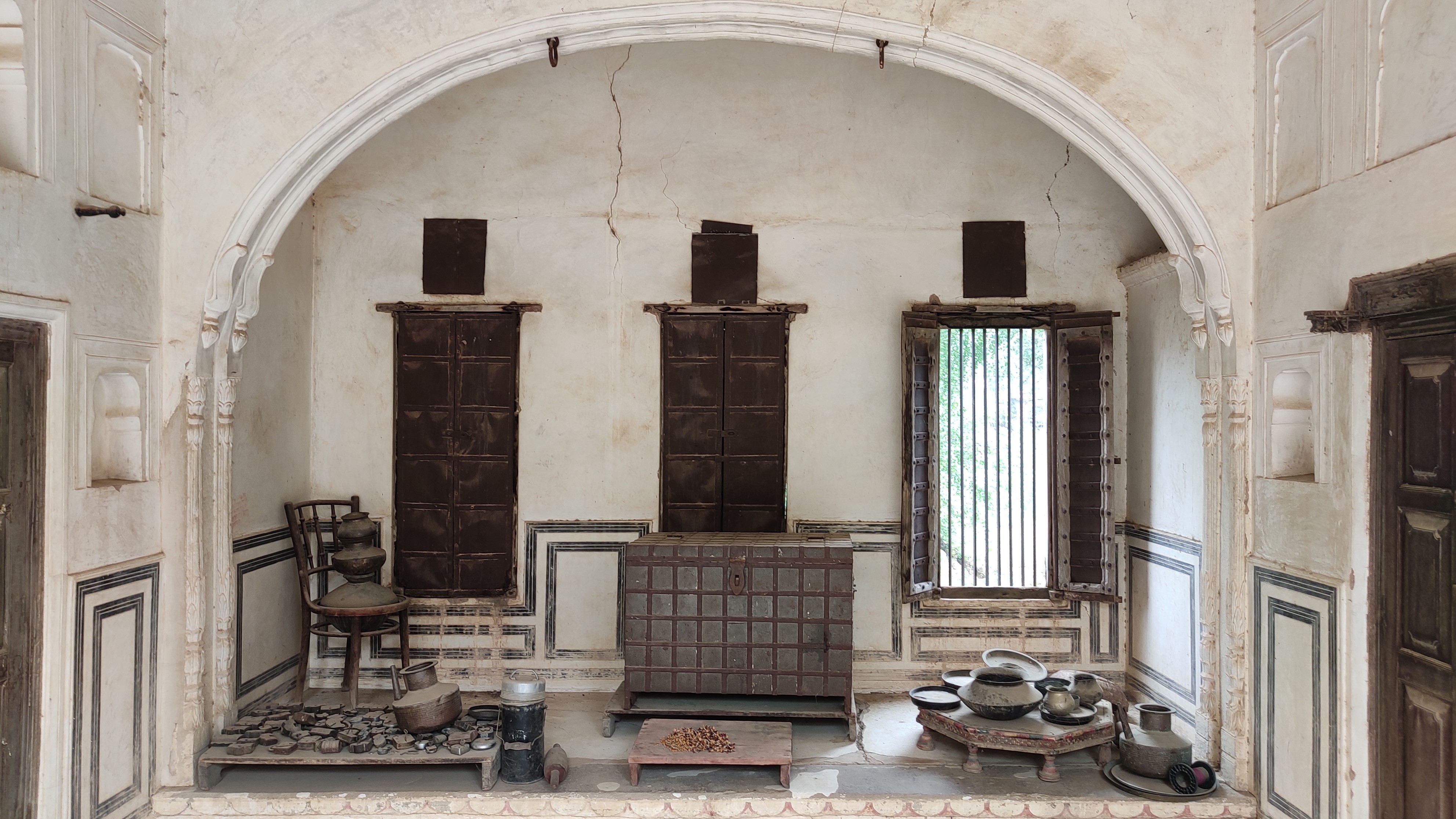
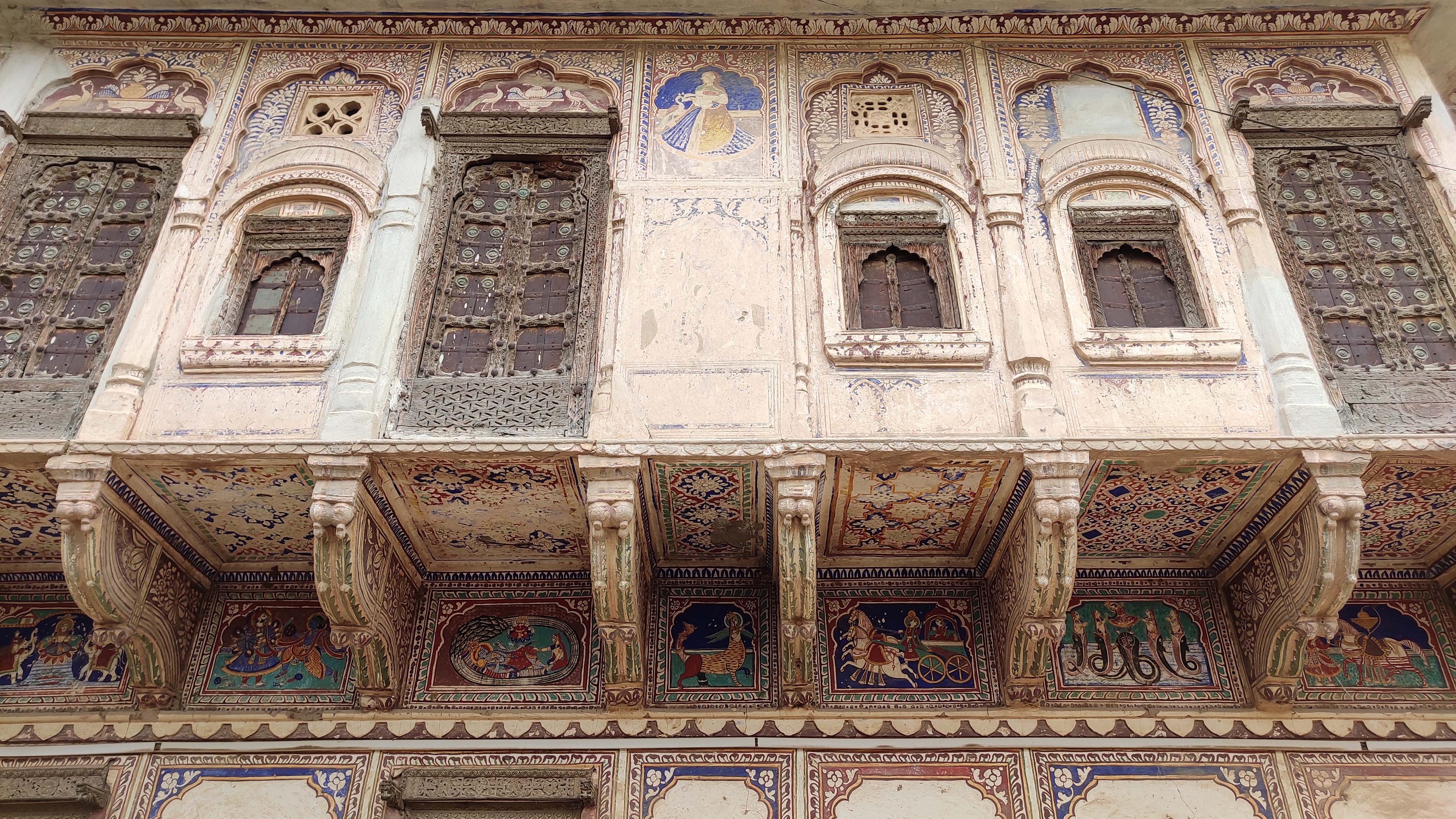
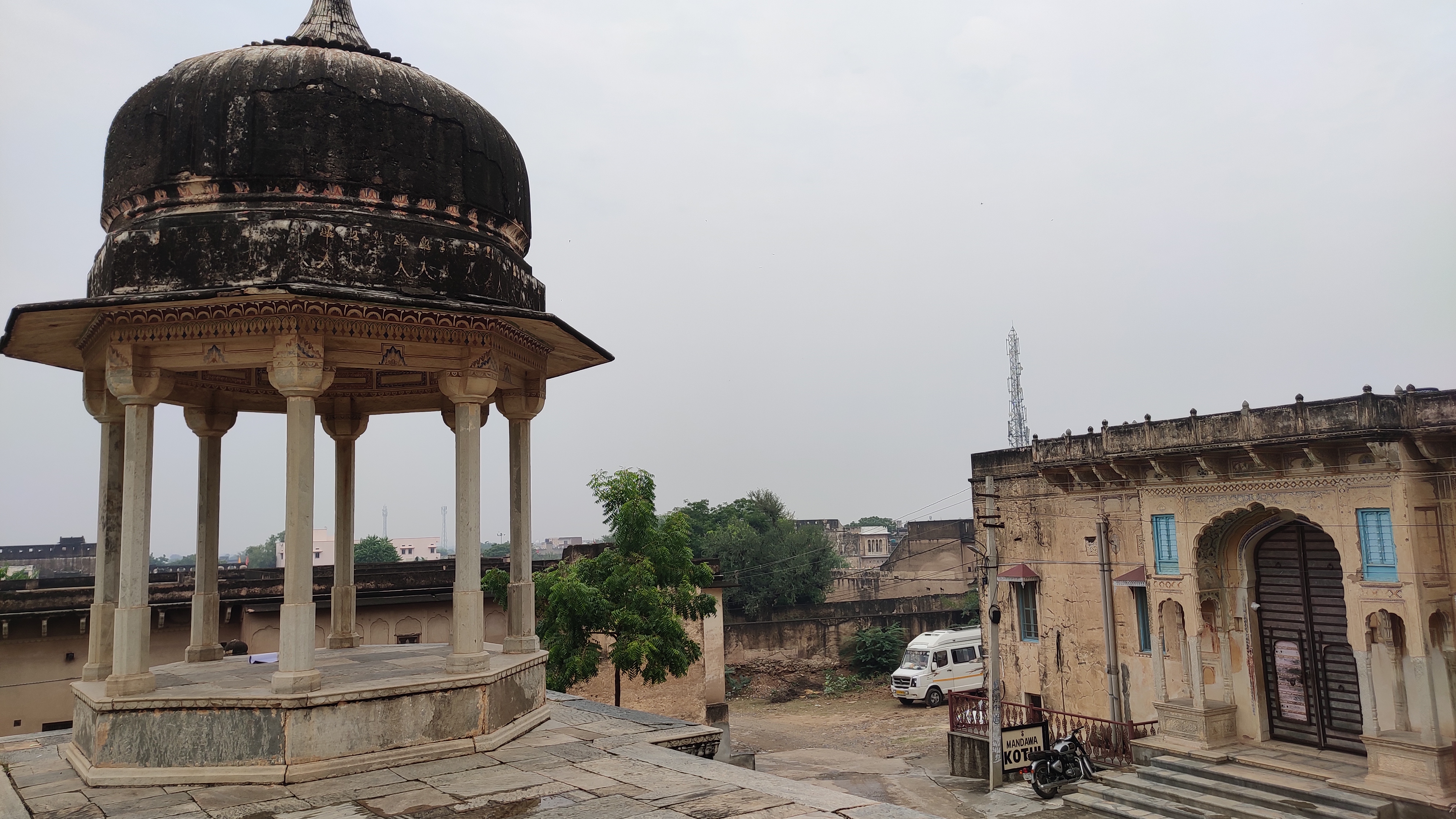

Noon onwards, we immersed ourselves in appreciating and purchasing some of the local art and handicrafts, of which Mother was simply not getting enough of. By 2 PM, we were still not done, as the variety on offer was overwhelming, and Mother was having a hard time choosing, her misery ending when Father said, ‘why choose when you can take all!’ By 2.30 PM, with a six hour journey lying ahead of us, we had to bid adieu to Mandawa, with a heavy heart and unsatiated mind, and head back to Gurugram, reaching by 8 PM. The good thing about places that one leaves feeling pangs of ‘unfinished business’ is that one could always go back to those places.
Trip Summary
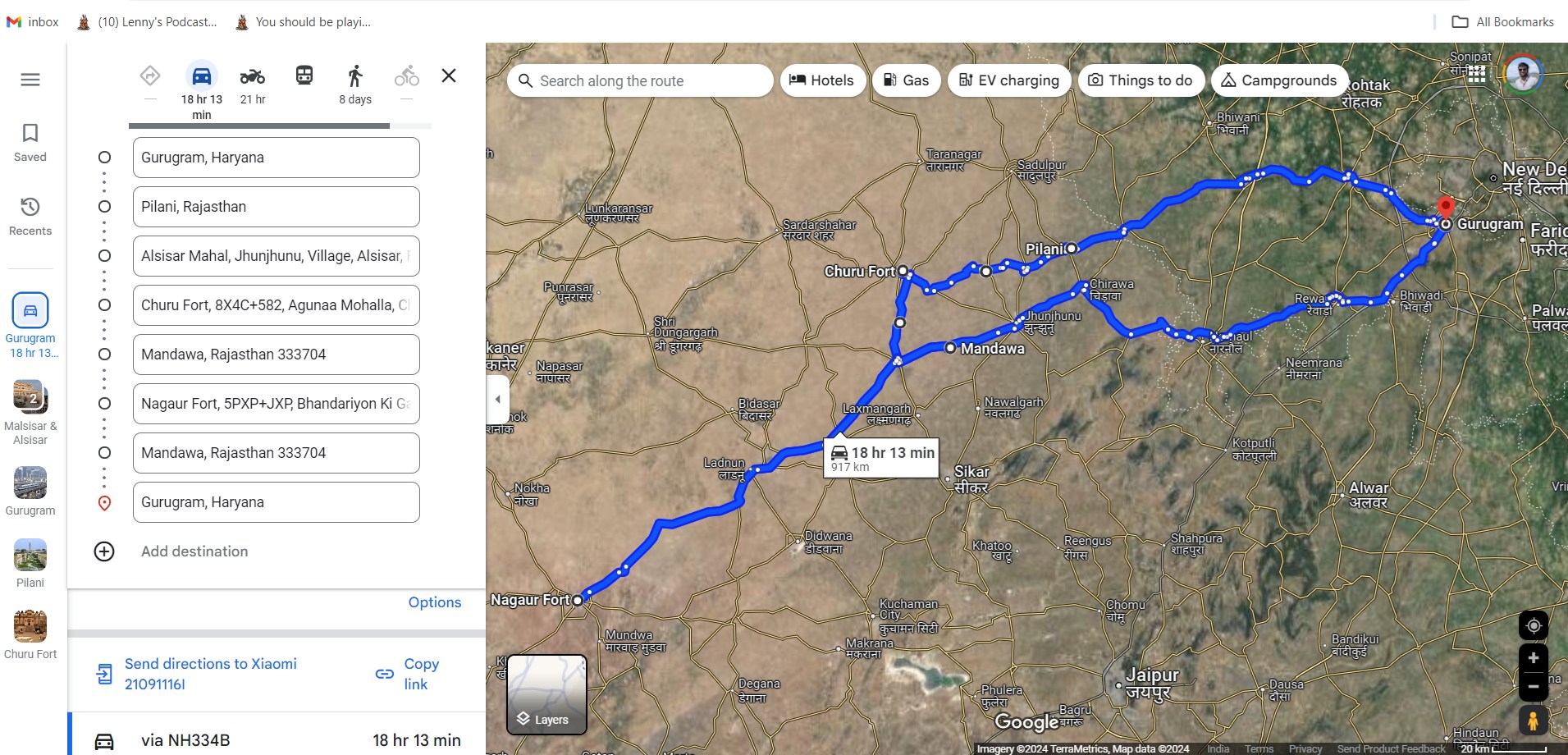
Day 1
Gurugram to Mandawa via Pilani, Alsisar and Churu (320 km).
Overnight stay in Mandawa.
Day 2
Mandawa to Nagaur and back to Mandawa (370 km).
Overnight stay in Mandawa.
Day 3
Mandawa to Gurugram via Jhunjhunu (240 km).





 The Timber Trawler