Just in time for Christmas, the family set off on another ‘hidden gem’ heritage trail inside Odisha. This time we explored the Diamond triangle comprising three hill-based Buddhist hot-spots which flourished between 7th and 13th Century AD, namely Lalitgiri, Ratnagiri and Udayagiri.
The three locations set in low but sparsely populated hillsides or hilltops prove without doubt to be the most idyllic backdrop for a life of material detachment and quiet contemplation for the Buddhist monks. Consistent with Kalinga’s nature of acceptance and tolerance of all religious and spiritual dispositions, these spots display the syncretism of both the Mahayana and Hinayana schools of Buddhism.
Lalitgiri
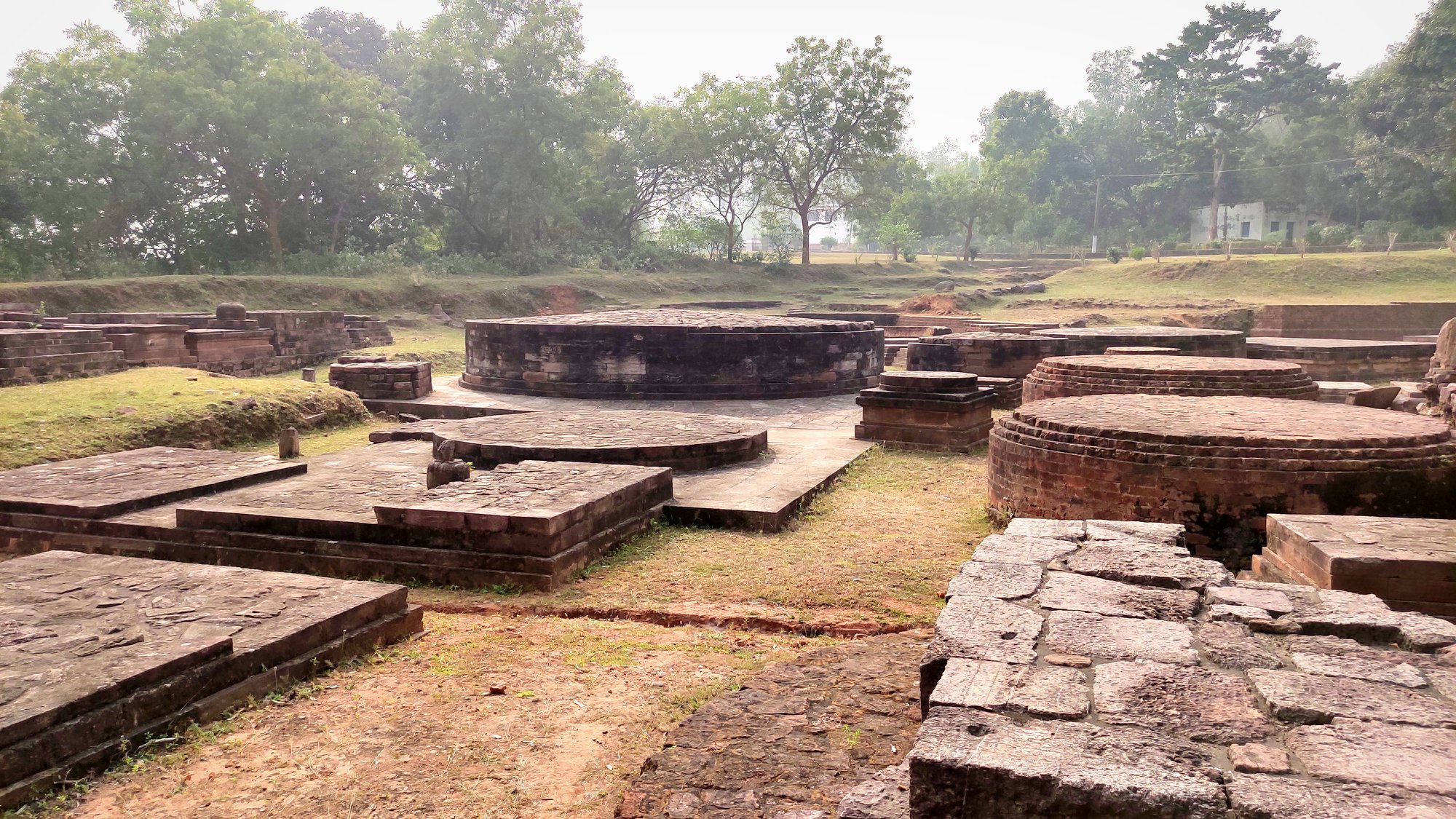
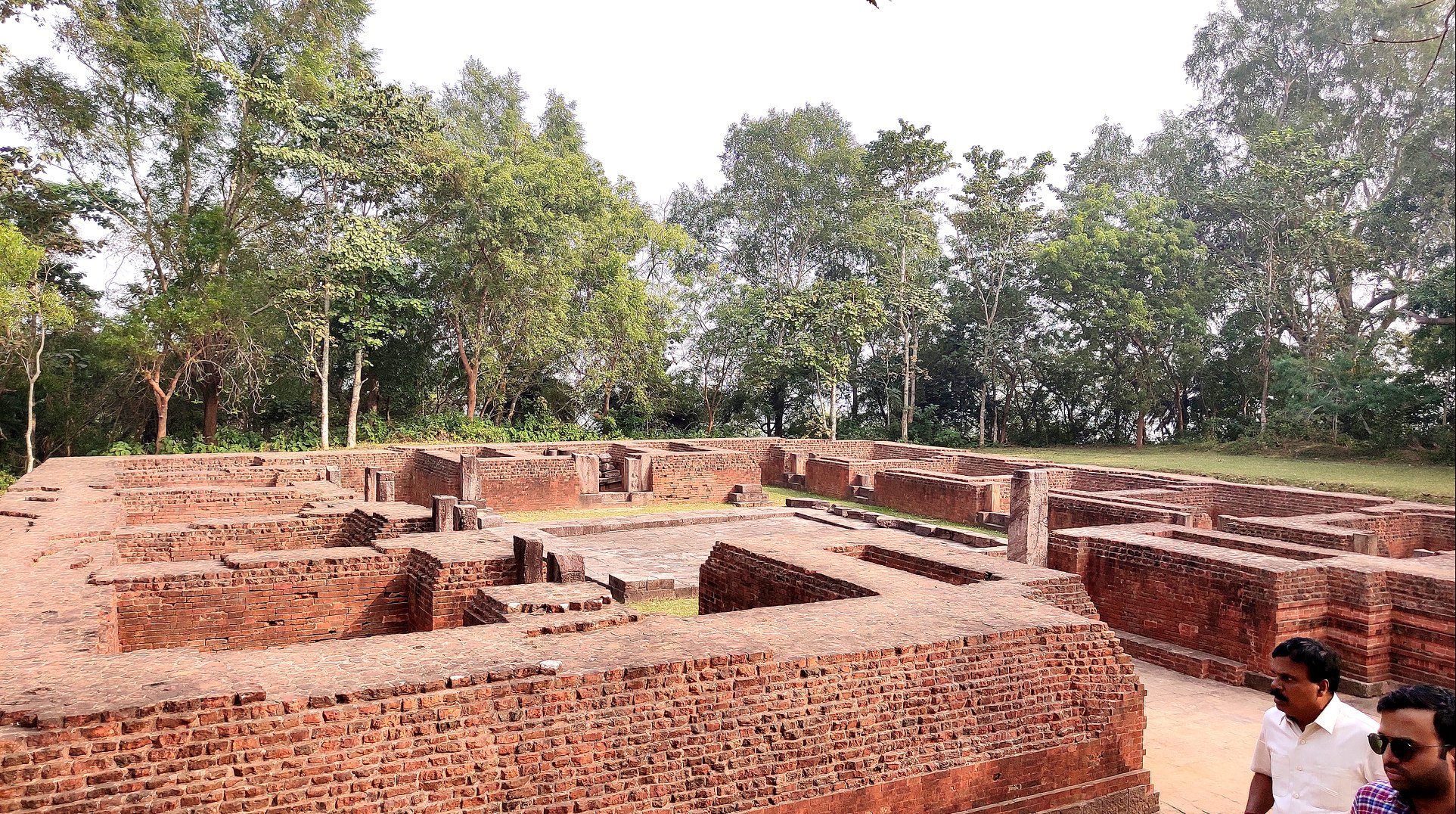
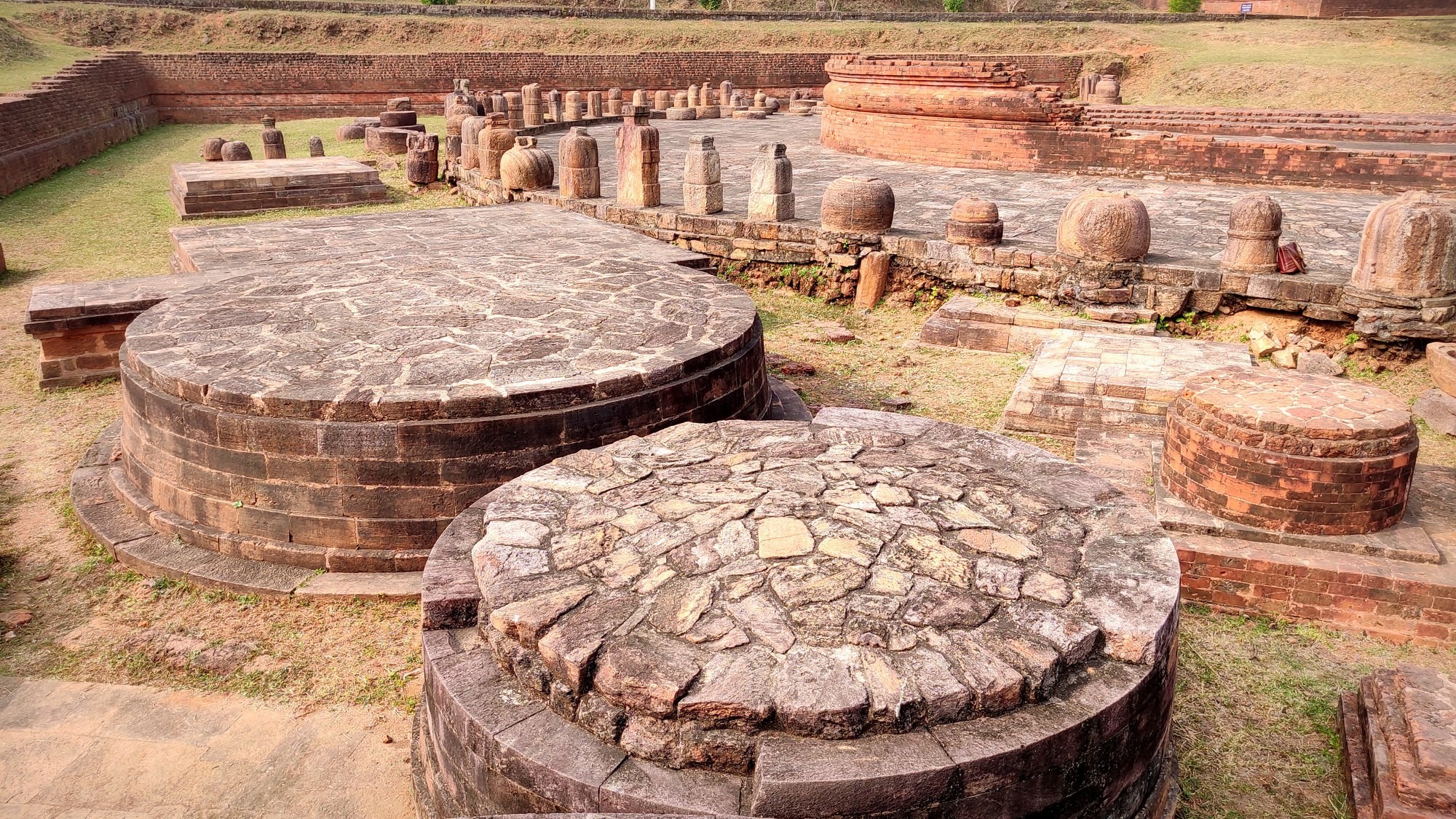
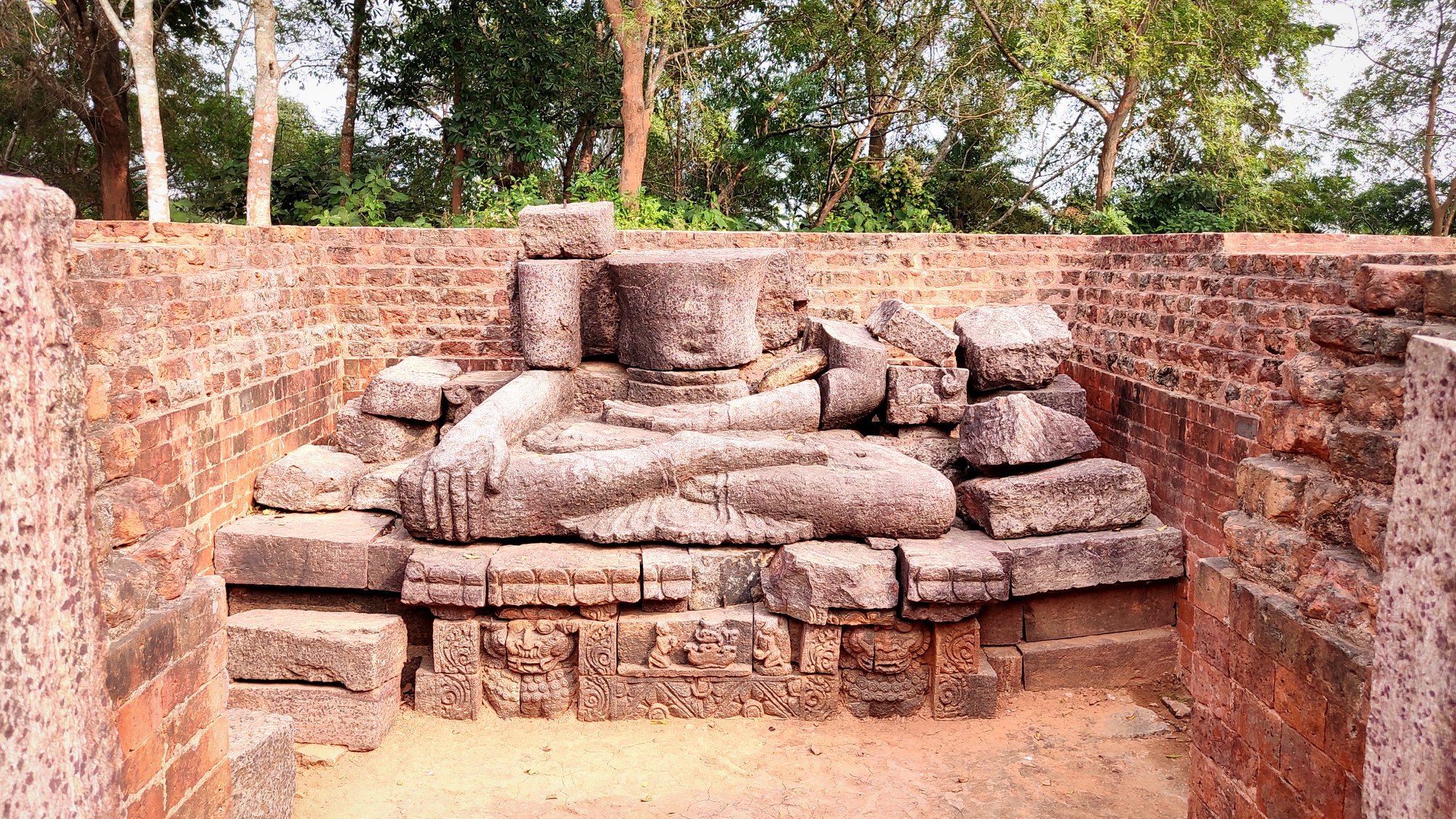
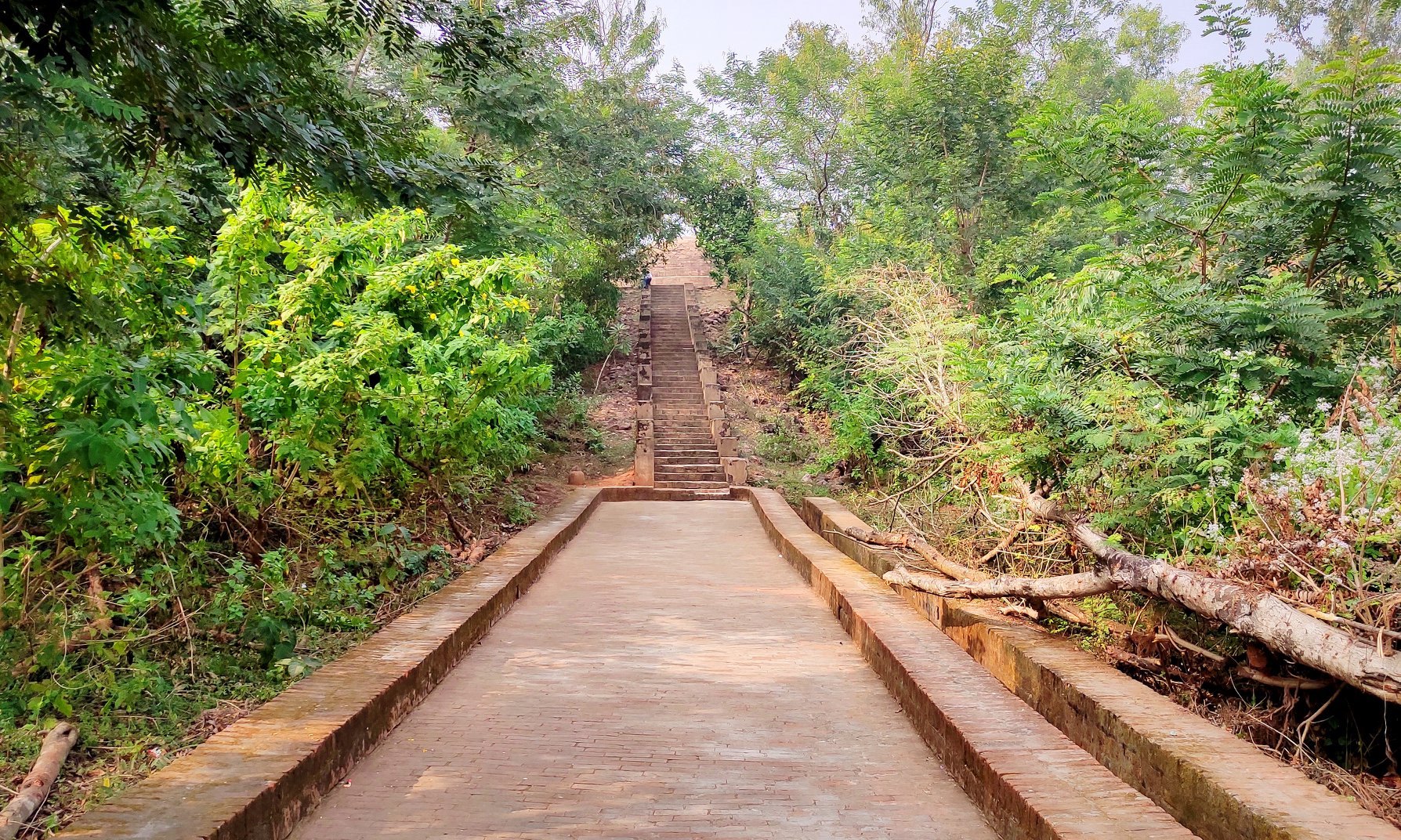
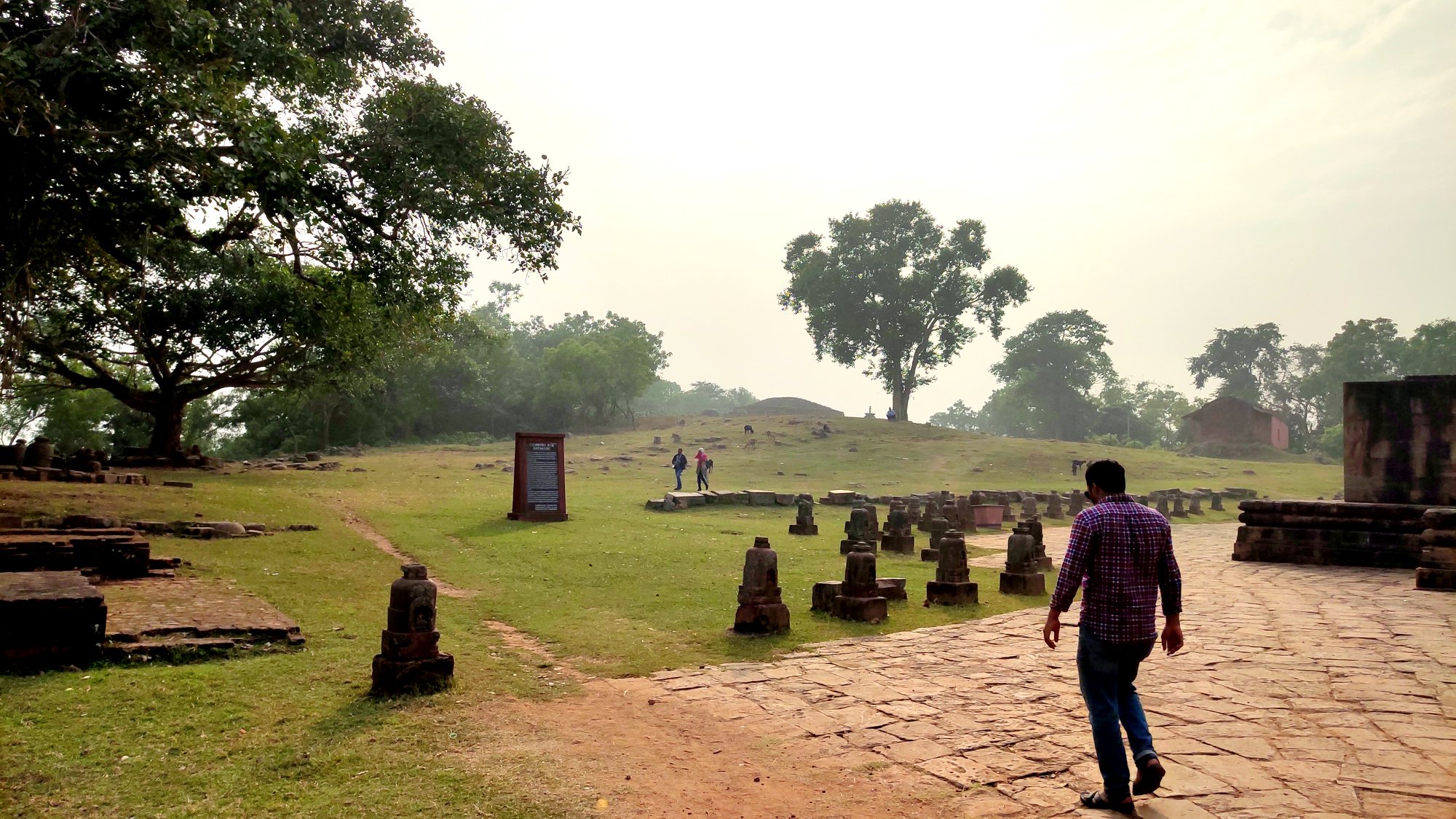
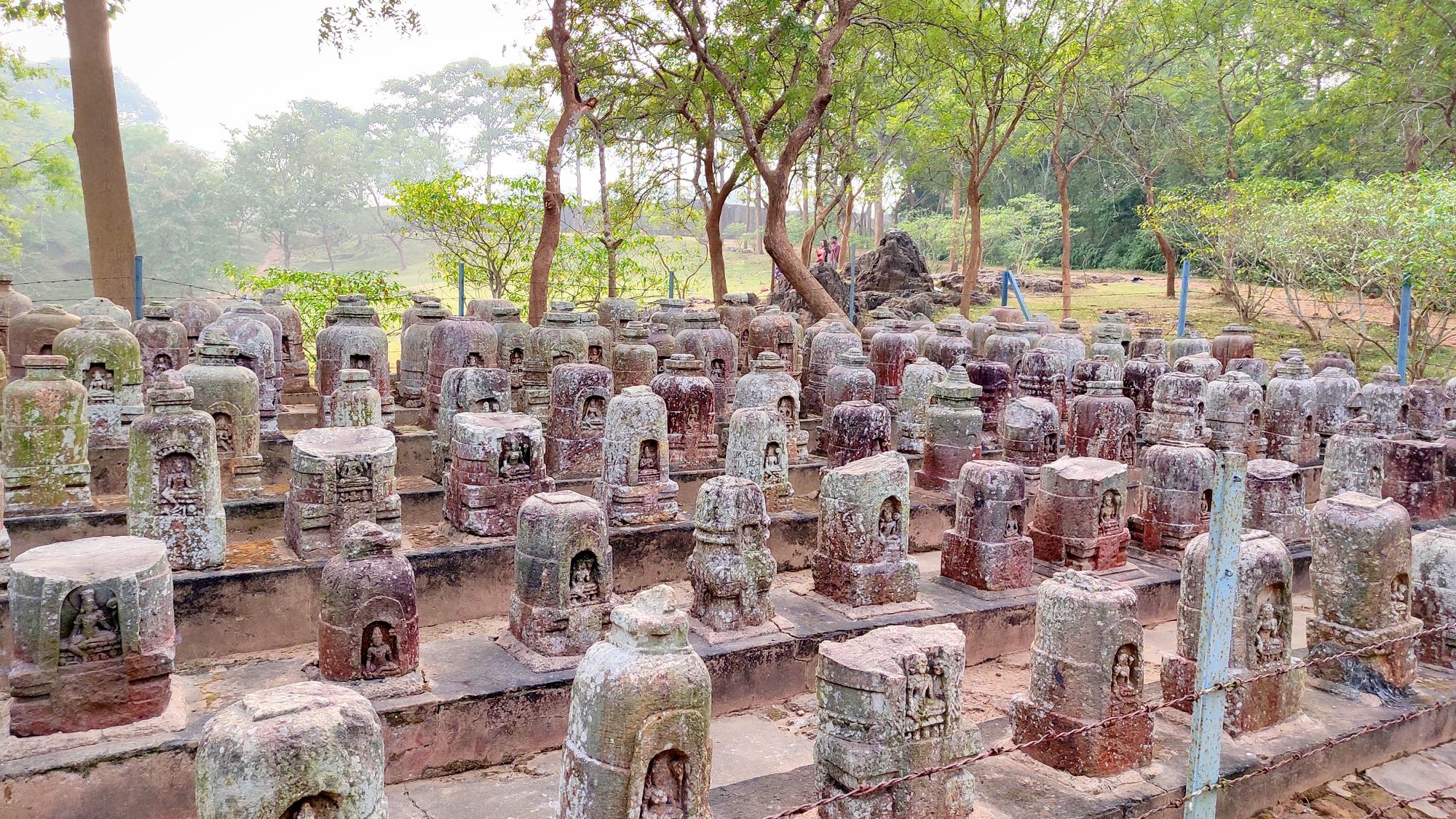
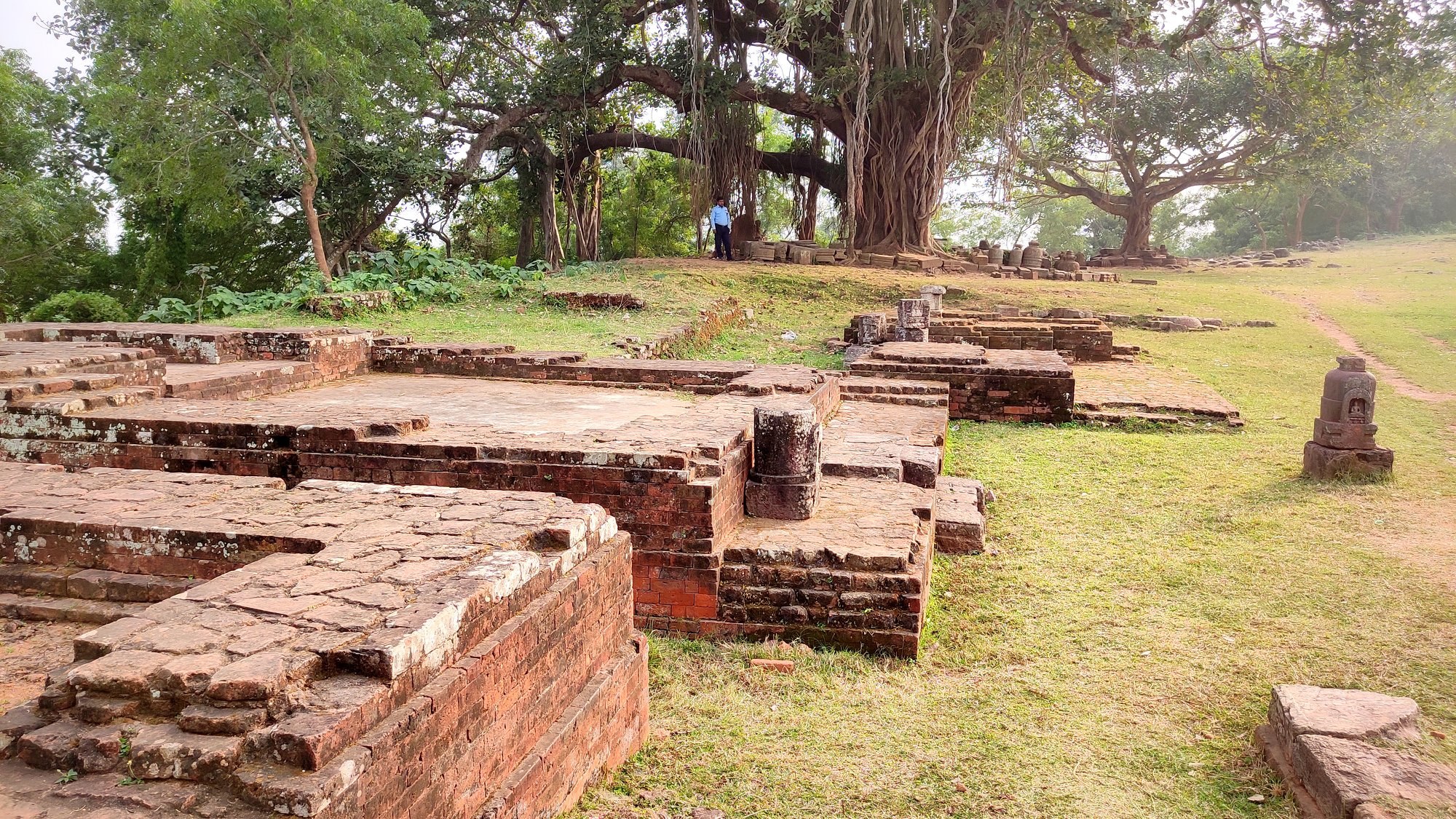
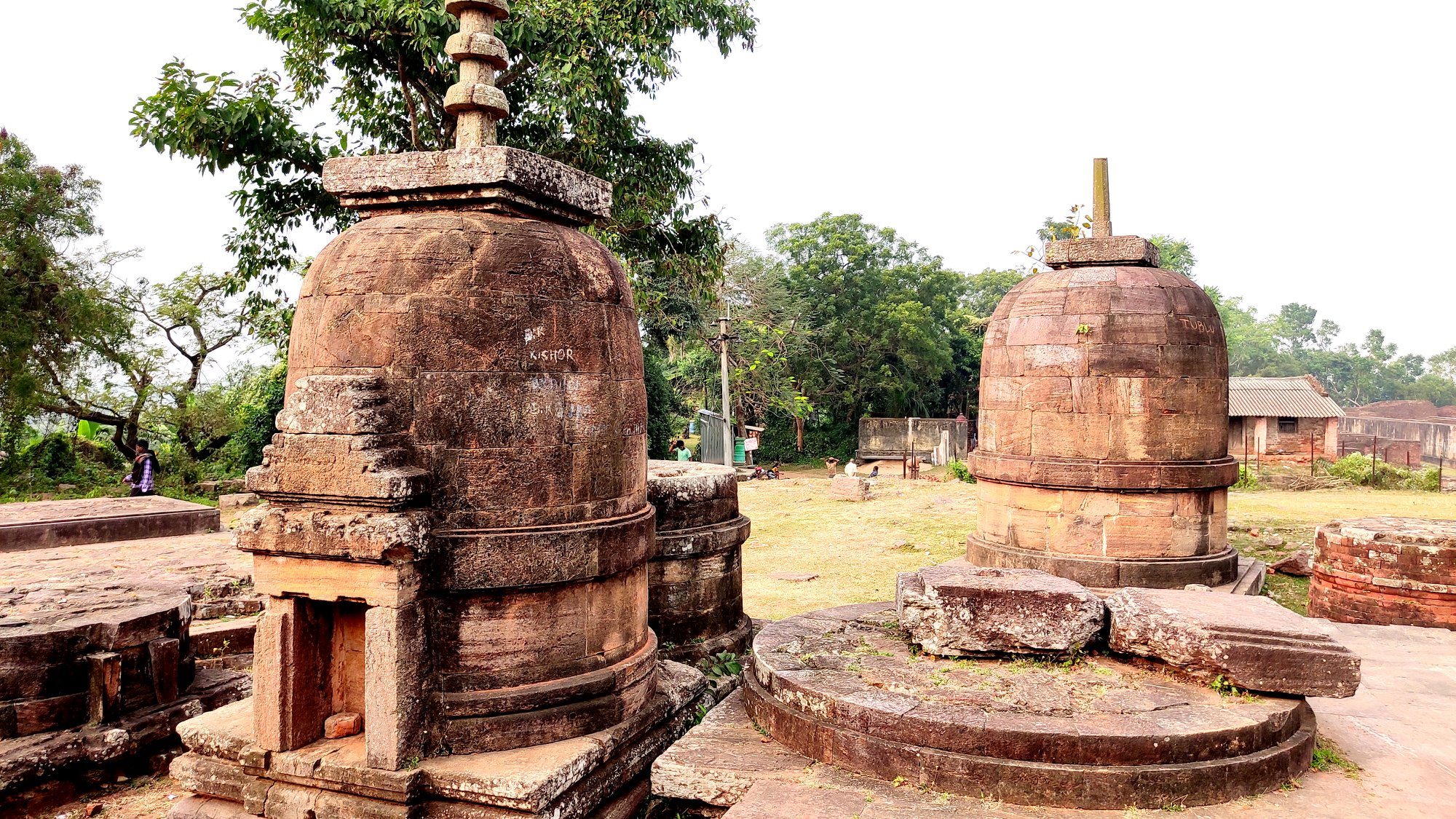
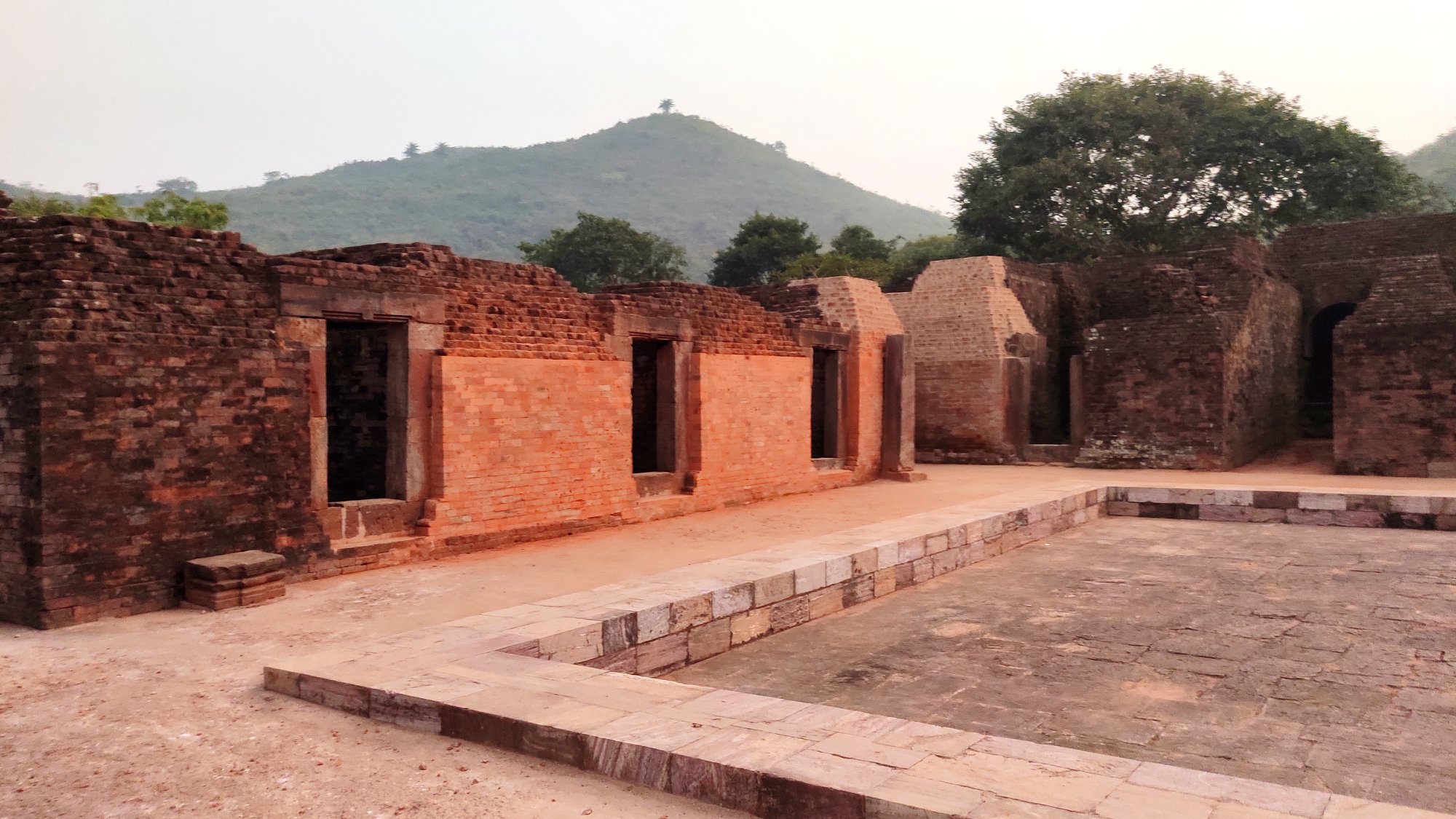
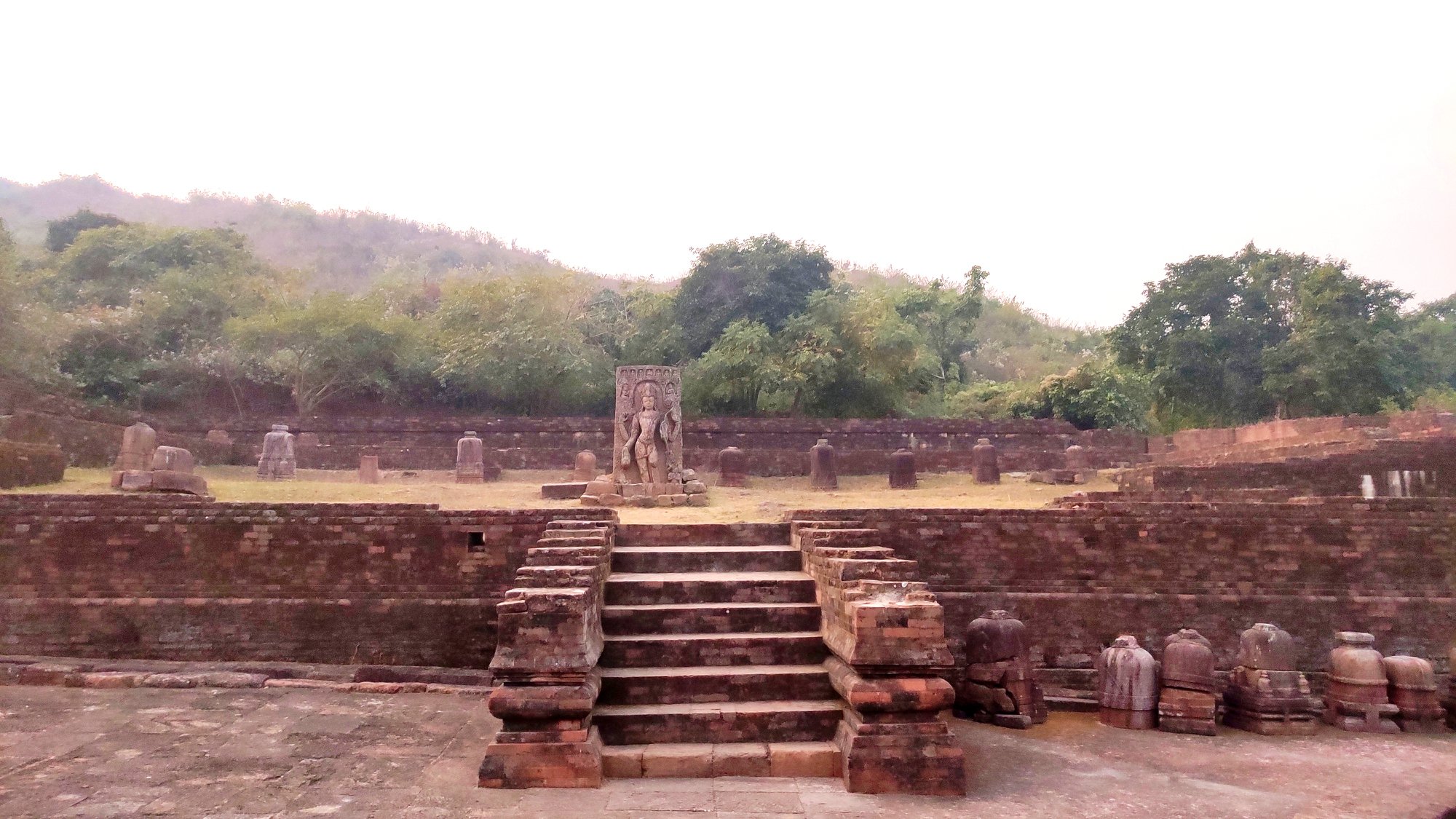
Starting off at around 9AM from Bhubaneswar, we first reached Lalitgiri around 11 AM via the Chandikhol-Paradeep road. After a walk up the hill on the wide metalled road, we first came upon the Archaeological museum which we deferred for seeing on our return from the trail. Walking further, we came upon multiple structures: Viharas (monasteries) in ruins – the monasteries dating from 9th to 11th century contained rooms, a chamber for holding a Buddha status – and a 6th-7th century Chaityagriha (prayer hall) with a stupa in the middle and several votive stupas strewn around.
Glimpses of the many monuments and surroundings at Lalitgiri
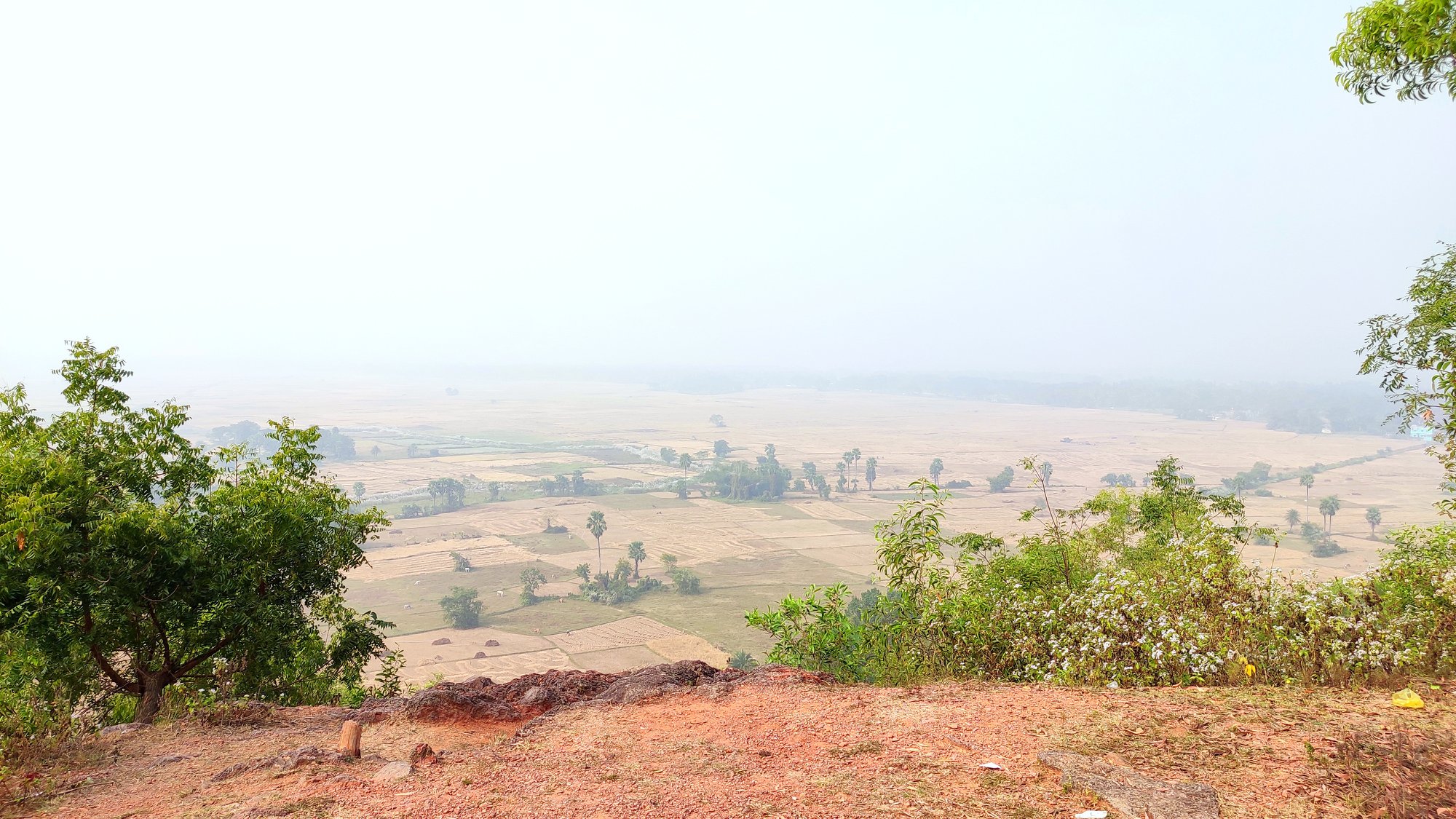
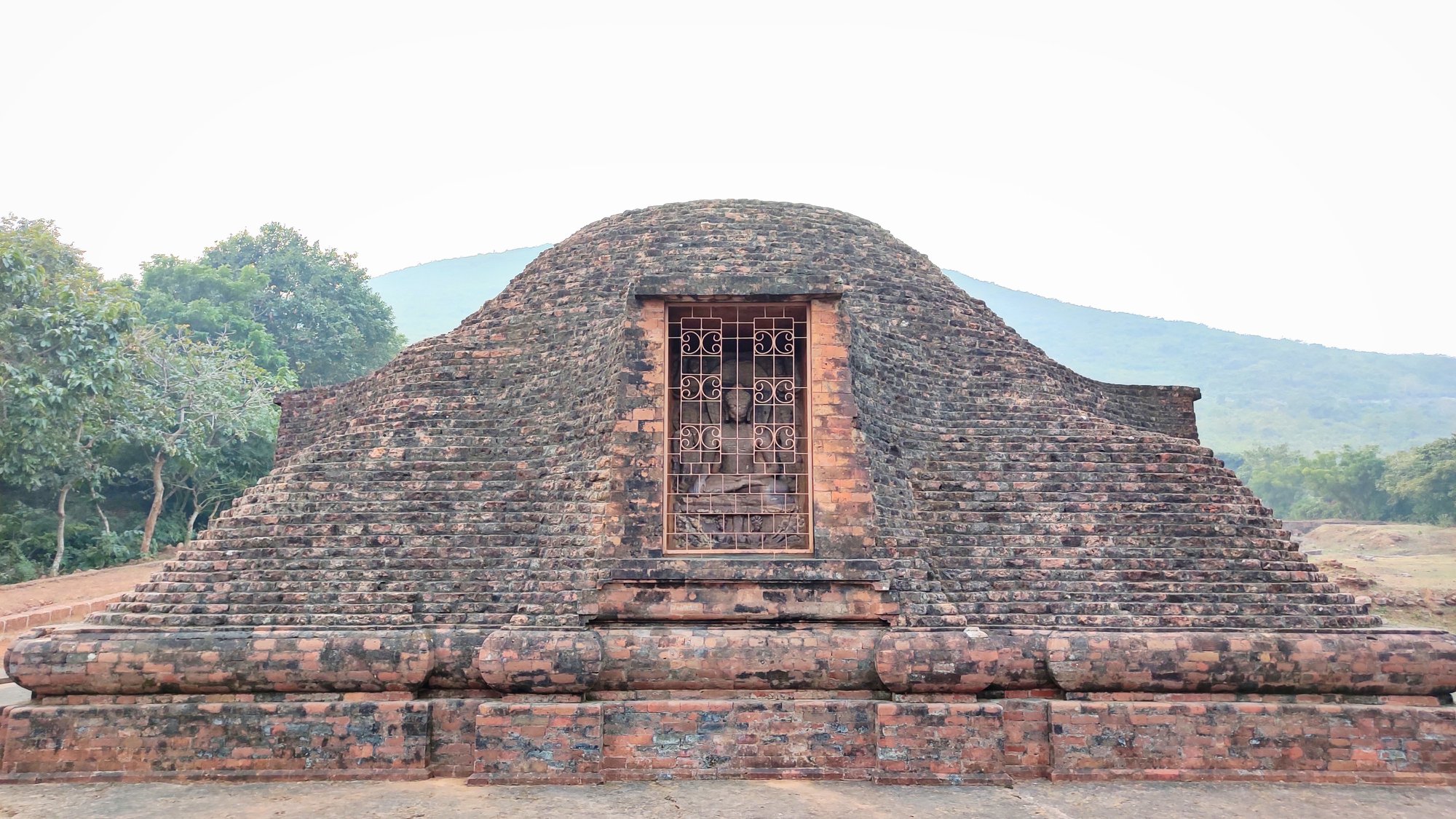
At the furthest end of the trail, atop another small hill, lay a lone relatively larger stupa, where two rare stone caskets containing relics of Buddha were found. The casket, made of khondalite, itself housed three smaller concentric caskets made of steatite, silver and gold respectively, with the innermost gold casket contain a piece of Buddha’s bone. These relics as well as well multiple sculptures, including those of the Buddha and Tara, are now displayed at the museum. All told, Buddhism is said to have prevailed at this site right from the post Mauryan period, i.e. 3nd century BC to 13th century AD.
Approach to main stupaView of countryside from beside stupa
The main stupa where Buddha’s relics were found
Ratnagiri
Leaving Lalitgiri around 12.30 PM, we crossed the Brahmani river and reached Ratnagiri around 1.30 PM. Ratnagiri looked unique due to fact that the road to the monasteries and stupa lay in a pass between two crests of the hill, flanked on both sides with neatly manicured lawns. Here, we decided to first see the museum, where many relics and artifacts found at the site are displayed. However, what interested me more was the additional information displayed in various sections about the history of the evolution and dissemination of Buddhism and of other Buddhist sites in India.
Approaching the Ratnagiri hill
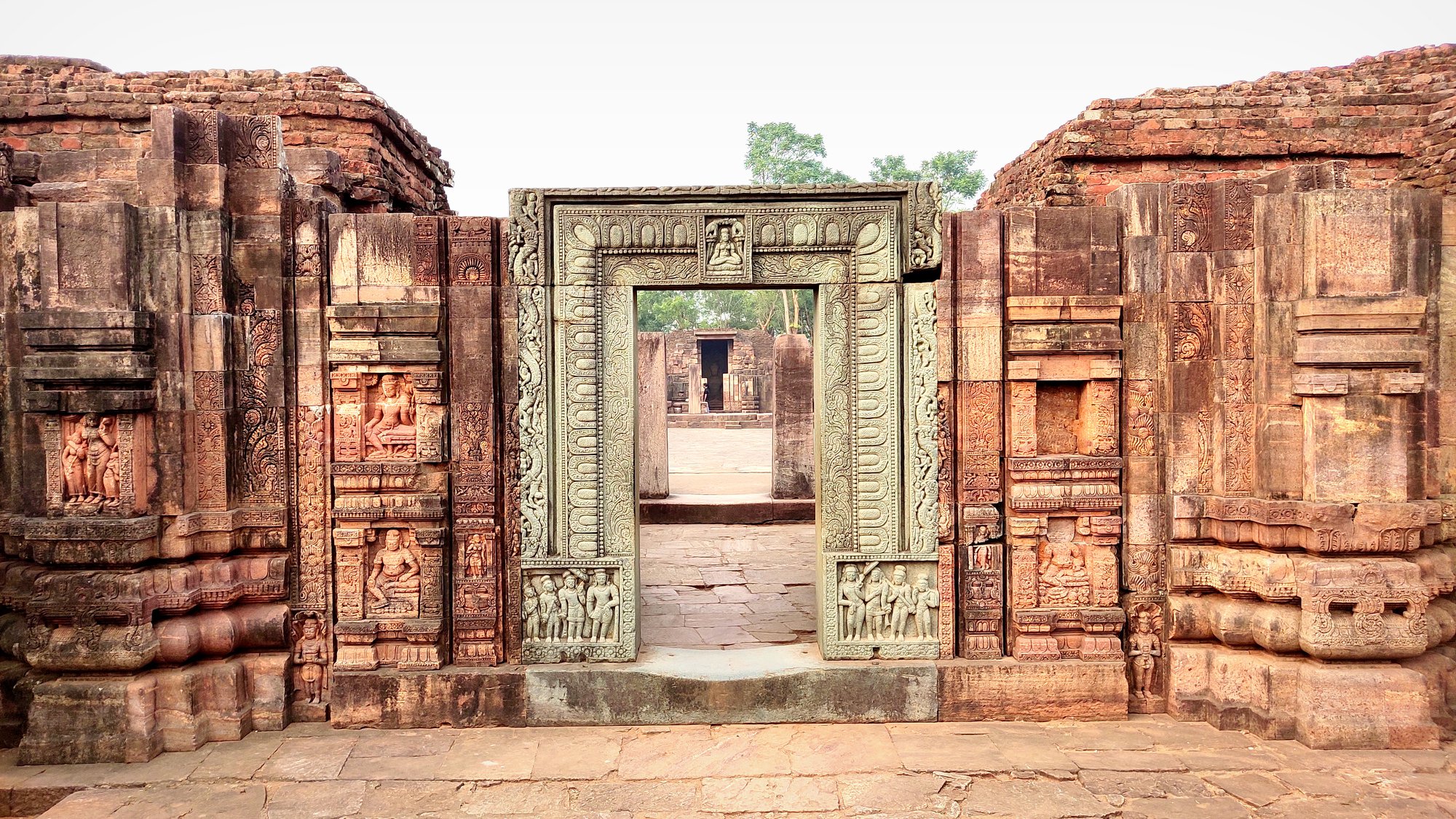
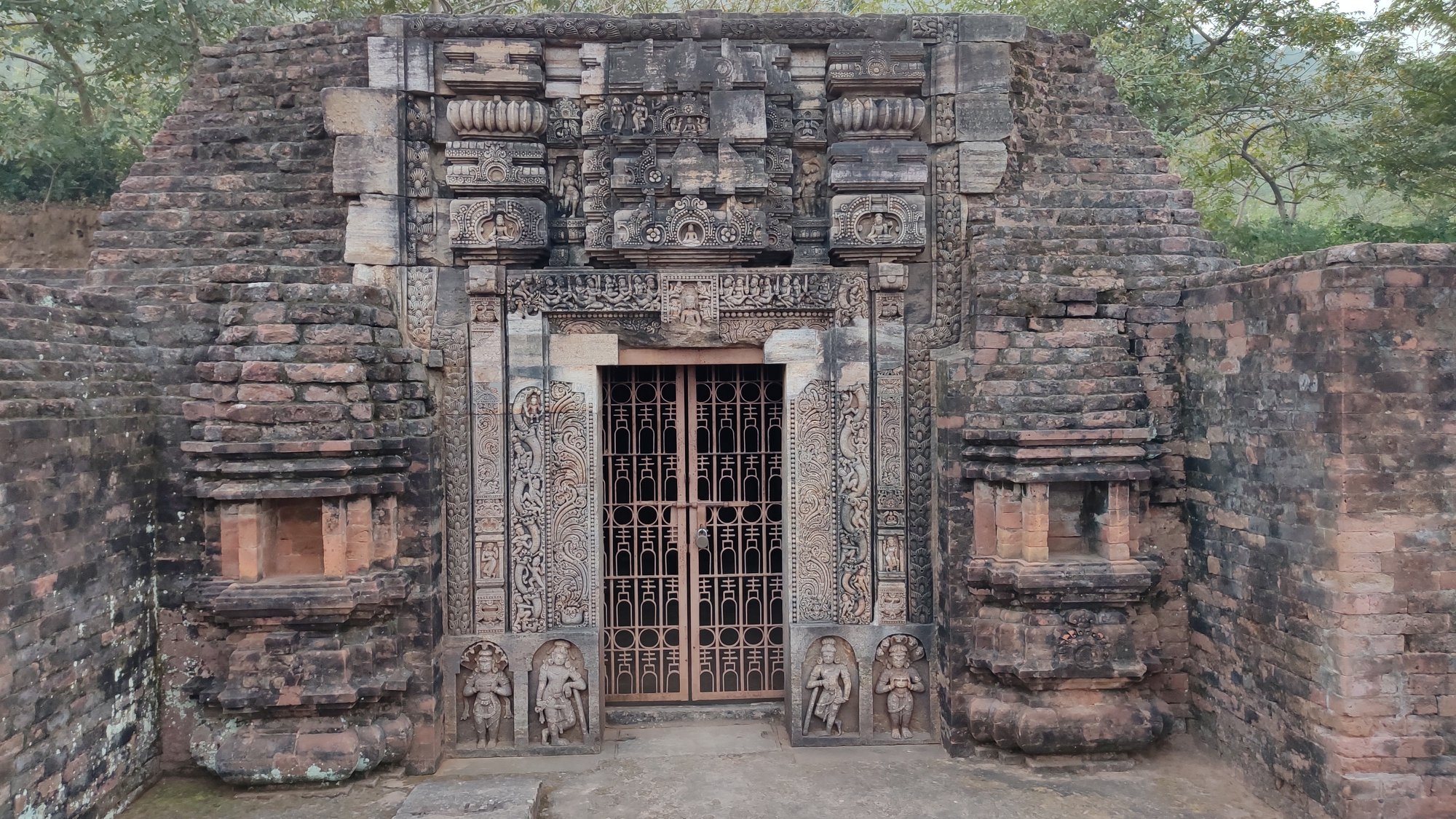
The exquisite entrance of a monastery at Ratnagiri
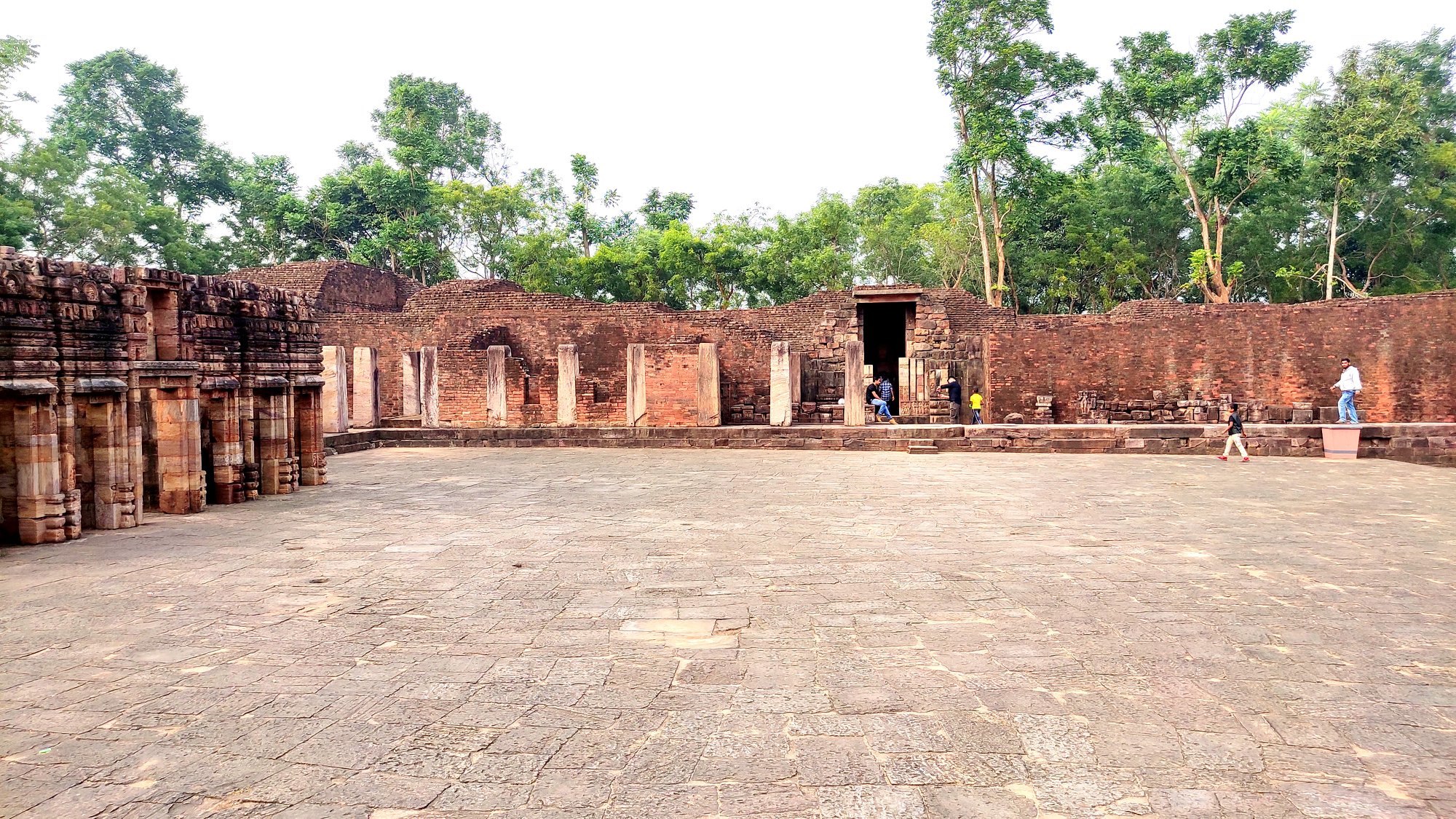
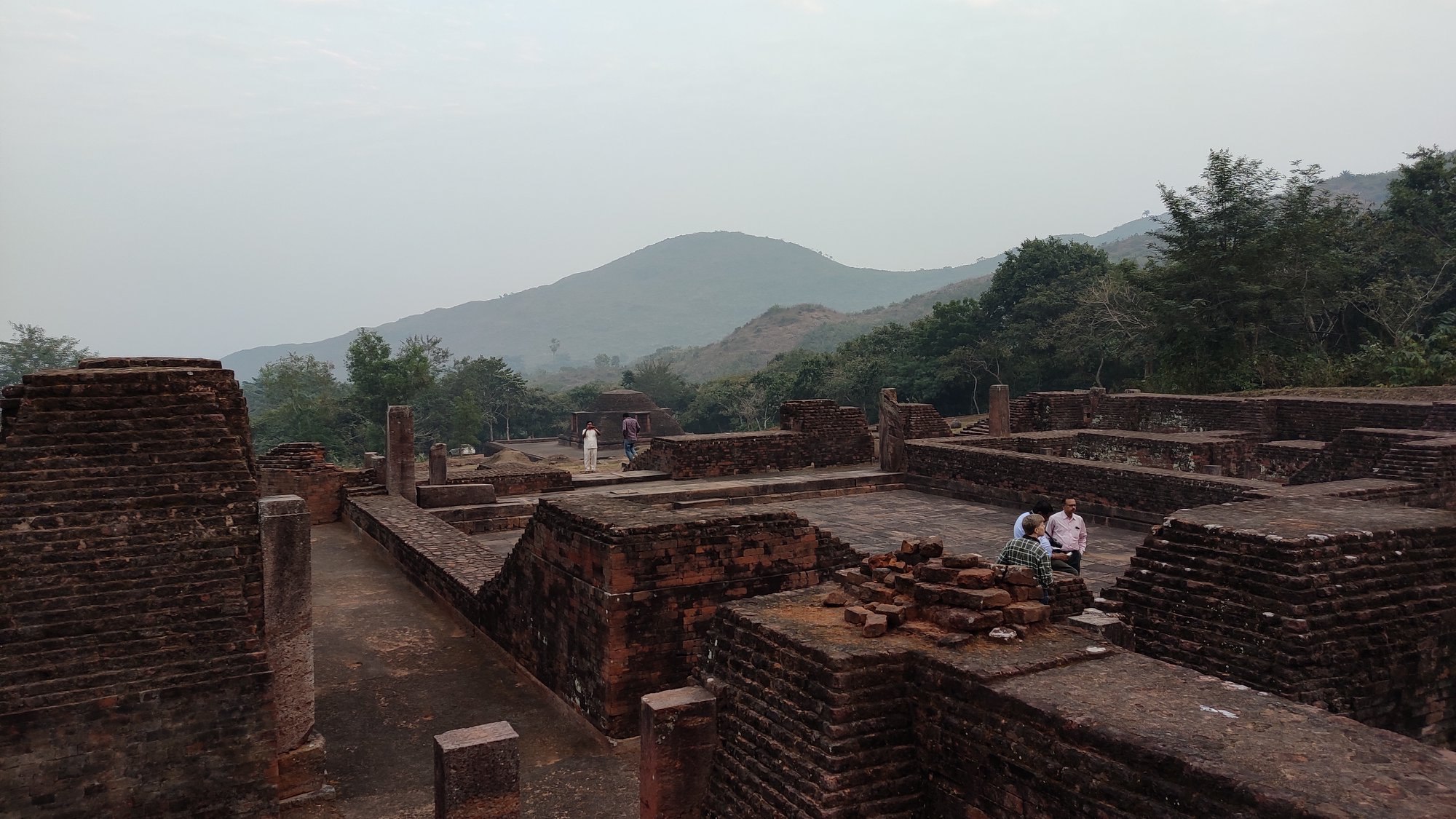
Inside the monasteryInside the monsateryGlimpses of monuments and surroundings at Ratnagiri
Walking up the hill, we were wowed by the iconic elaborately carved stone doorway at the entrance of the largest of the 3 monasteries, which could be dated to the 8th century. This monastery has a large courtyard with rooms surrounding the same, and a shrine for the statue of Buddha, at the wall farthest opposite from the main entrance. Besides this monastery, there are 2 smaller monasteries, and a 9th century stupa, surrounded by smaller votive stupas. Beyond all these structures, is the Mahakal Temple, built over an earlier stupa, and recently relocated to its current location by the ASI.
Udaygiri
After a light meal in lieu of lunch, we crossed the Brahmani river yet again and reached Udaygiri around 4PM. Udaygiri seems, out of the three sites, to be the site with the least attention paid to maintenance. The two monasteries are far-flung not only from each other but also from the entry gate, and can be accessed after walking quite a bit through jungle. Here too the monasteries with statues of Buddha, lay in ruins.
Glimpses of the many monuments and surroundings at Udaygiri
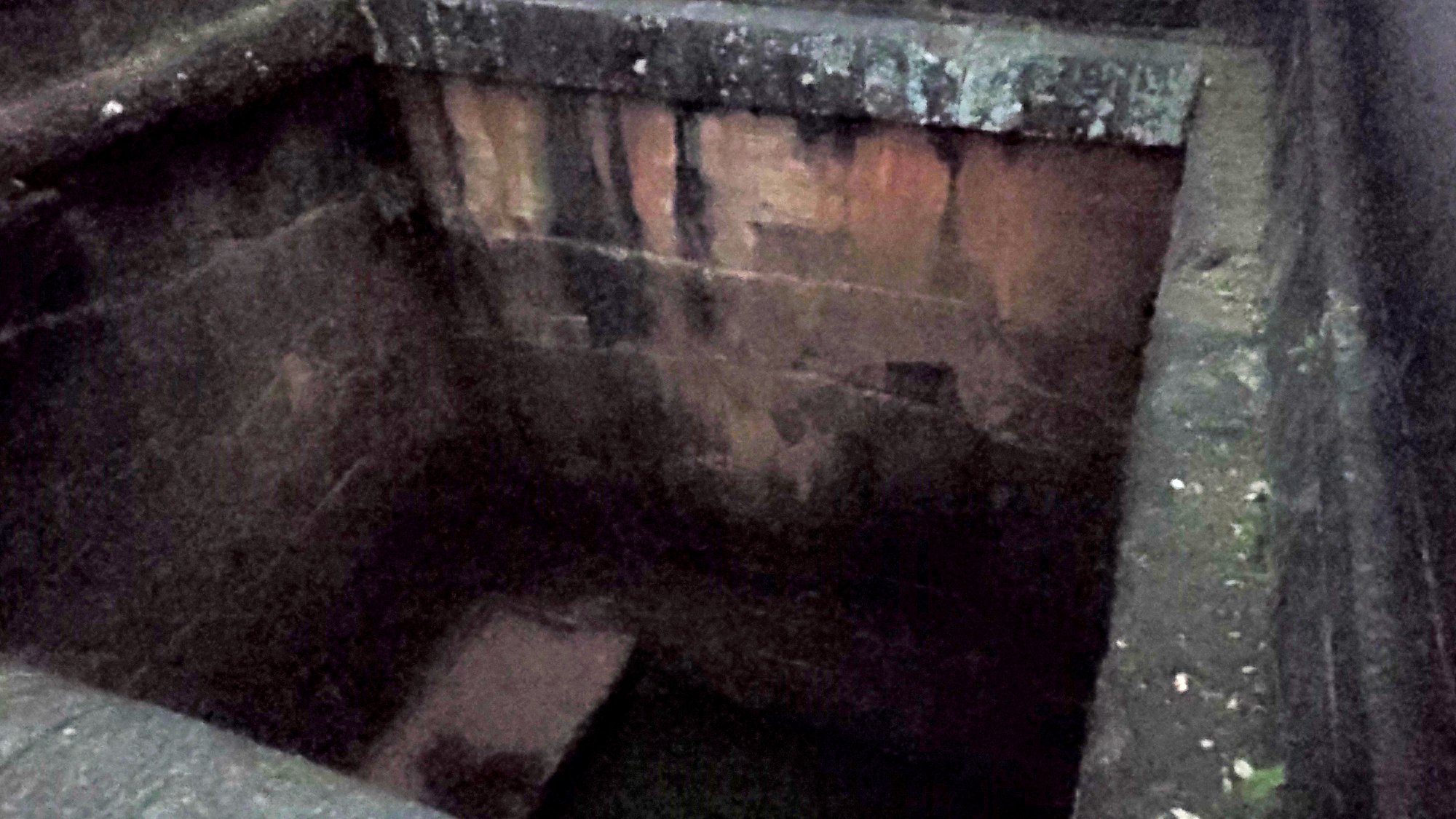
Adjunct to one of the monasteries, lies a chaityagriha with the main stupa, with several smaller stupas surrounding it – the stupas are dated between 1st and 12th centuries. Several stupas, including votive ones stand beside the other monastery too. Of note is a stepped well near the second monastery, the depth of which we could not gauge because it was already dark.
Votive stupasA well
Walking back through the forest as darkness falls
By now, it was already 5 PM, and given that it was peak winter, we were faced with the prospect of walking back through the jungle in pitch dark. Nevertheless, what is a family that does not bravely maneuver difficult paths! So, using our mobile phones are torches, we navigated our way through the narrow path cutting through the forest, making the least of sounds lest we attract undue attention from the wildlife. By 5.3o PM, we were back at the entrance, and were soon headed back to Bhubaneswar, after successfully completing the day-long Diamond Triangle trip.
Despite spending the first half of my life in Odisha, it was only last weekend that I finally got the chance to trace the pearls of heritage hidden along an innocuous but highly-fabled river, reduced now to a rivulet, called Prachi.
Centuries ago, the Prachi river along with its valley, was host to a flourishing civilization that not only prospered on trade with Southeast Asia (Bali, Indonesia etc.) thanks to its ‘sadhaba’ (sailor) sons but also reveled in art & architecture of the highest order, being home to some of the most skilled artisans & sculptors. At the same time, the region was also a melting pot for the seamless chronological prevalence of Jainism, Buddhism, Shaivism, Shaktism & Vaishnavism leading to a syncretic religious fervour.
Some accounts date the region’s earliest artifacts to even before the Indus Valley Civilization. Yet the currently standing vestiges of the civilization dotted along the valley afford us a peek only into the period from 7th century AD to the 15th century AD. Nevertheless, these bear fine witness to the cultural richness of the erstwhile Kalinga, being some of the finest representatives of the distinctive Kalingan temple architectural style.
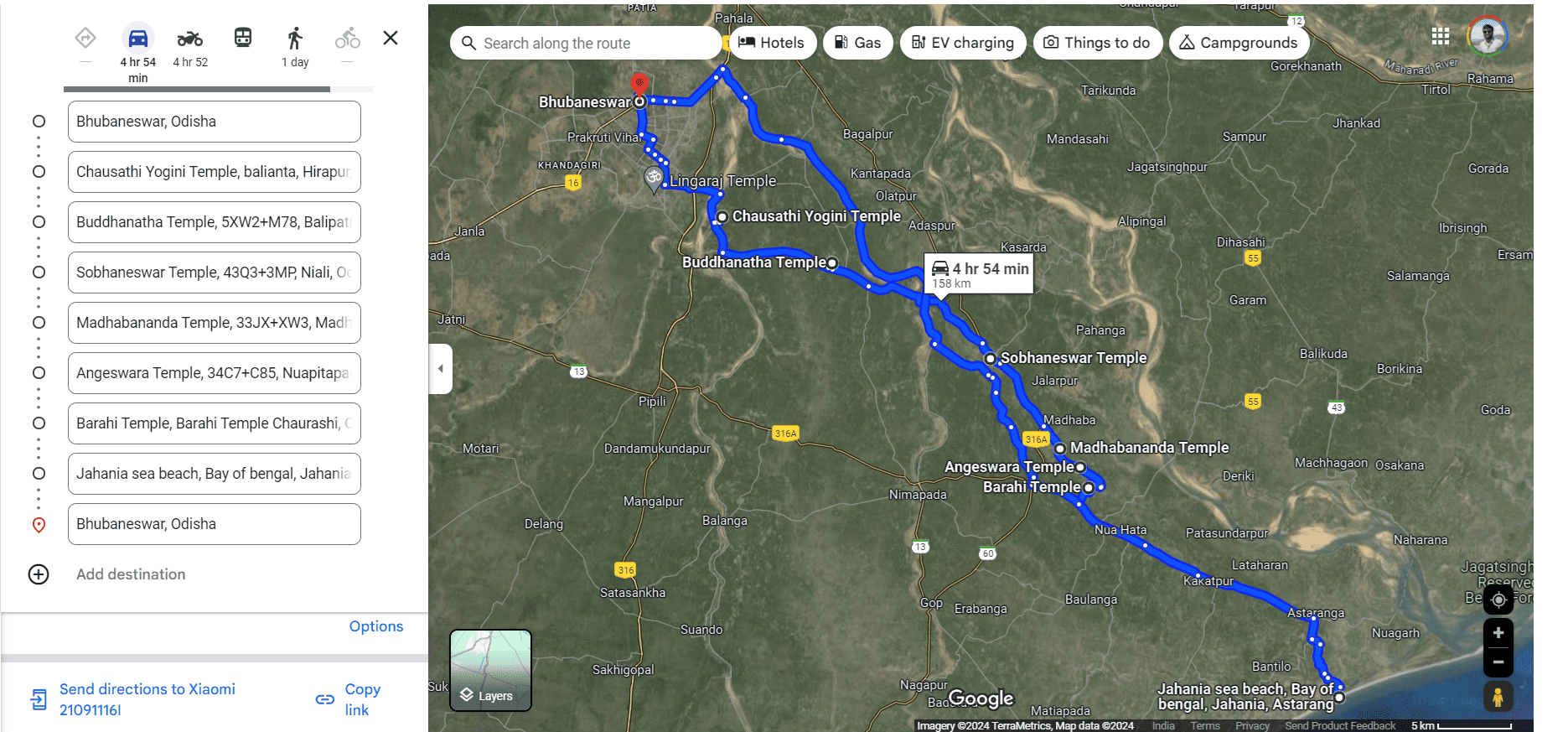
Trail on this trip covered the following places: Chausathi Yogini Temple (Hirapur, Bhubaneswar), Buddhanath Temple (Garedipanchan, Balipatna), Sobhaneswara Temple (Niali), Madhabananda Temple (Niali), Angeswara Temple (Pitapada), Varahi Devi Temple (Chaurashi), Mangala Temple (Kakatpur) and Jahania Beach (Astaranga).
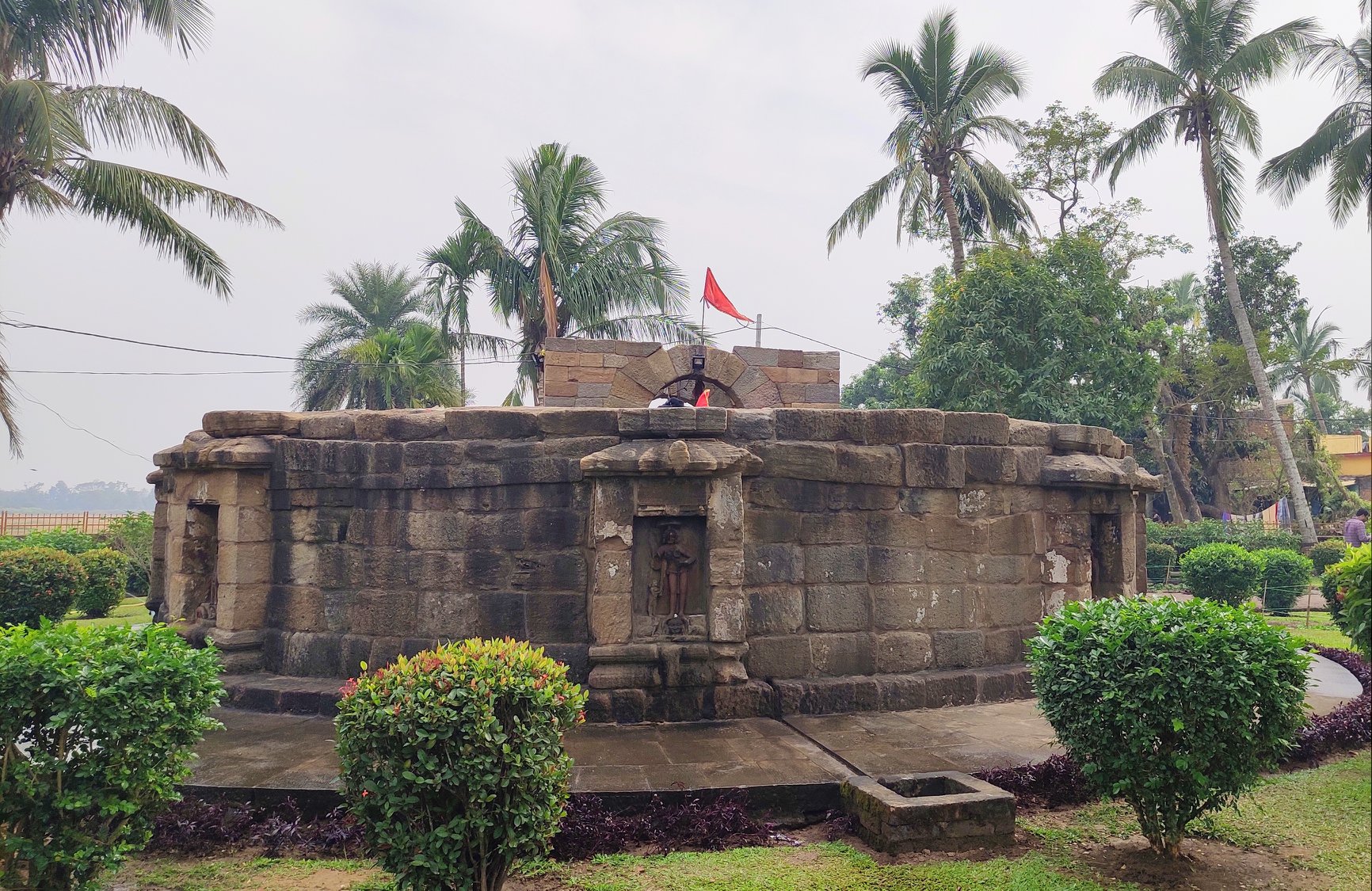
We first stopped at the 9th century AD Chausathi (64) Jogini Temple, the tantric temple built in circular fashion, at Hirapur just at the outskirts of Bhubaneswar. The legend behind the temple, according to priests, goes: Goddess Durga took the form of 64 demi-goddesses in order to defeat a demon. After the fight, the 64 goddesses (Joginis) asked Durga to commemorate them in the form of a temple structure. Accordingly, 56 idols line the inner walls of the structure with the remaining 8 carved on the 8 sides of a central square platform (altar).
(left) Chausathi (64) Jogini Temple. 9th Cent. AD. (right) Idols lining the inner side of the wall
Next stop was Buddhanath Temple, an 12th Cent. AD. Shiva Temple, located in Garedi Panchana, 11km from Hirapur . The temple is said to be built on tantric principles, and was apparently also a Buddhist monastery at some point of time.
(left) The Buddhanath Temple (right) Example of Kalingan stone art on the walls of Buddhanath temple.
15km further away, lies the Sobhaneswara Temple, another 12th Cent. AD, temple at Niali, of which only the lower half survives from the original structure, with the upper half being restored by later kings. Consequently, the lower half provides another demonstration of the intricate stone art of Kalingan artisans.
Glimpses of the intricate stone art of Kalingan artisans on the Shobhaneswara temple walls.
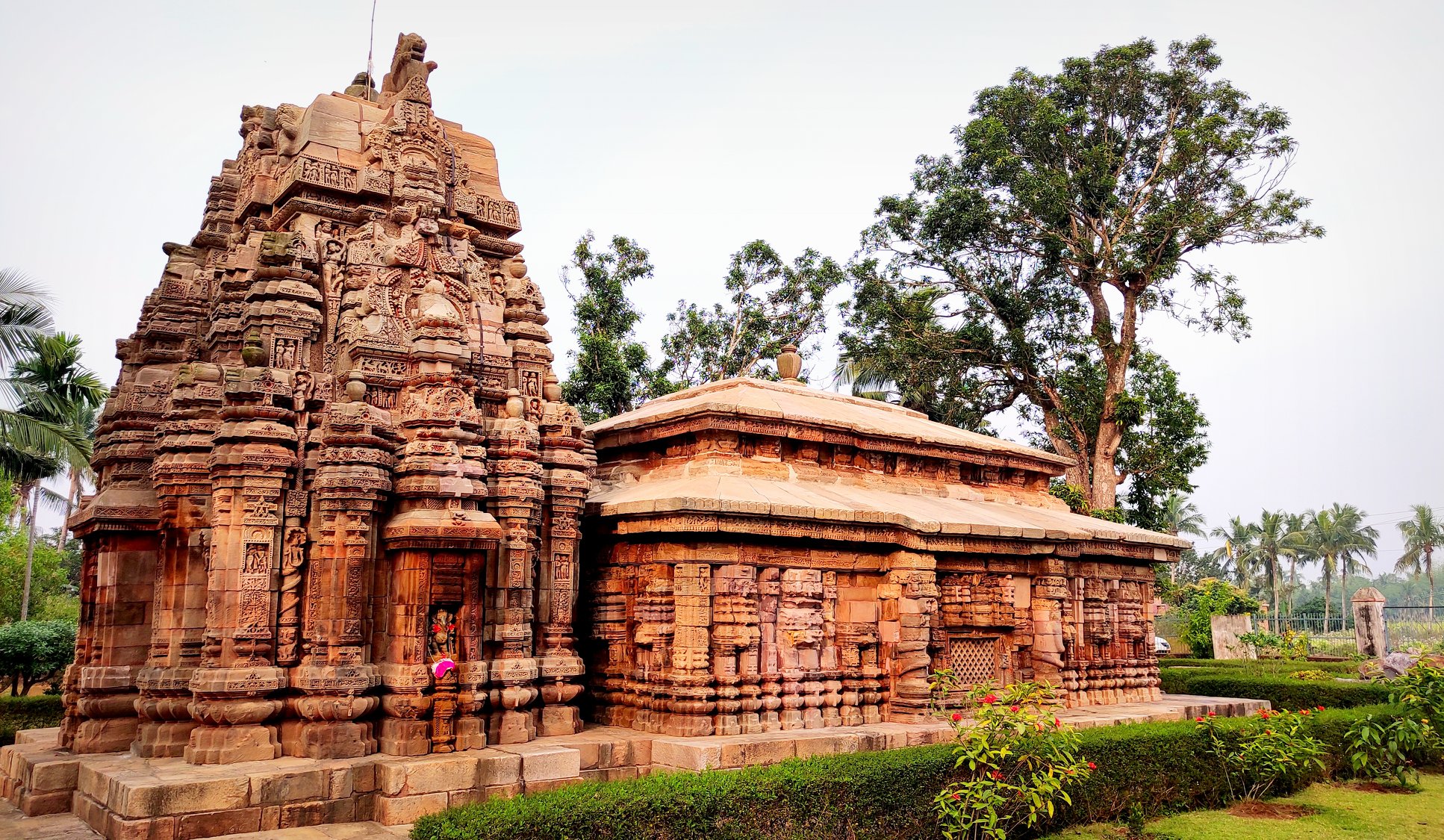
Next stop was the Madhabanada Temple, built in the 13th Cent. AD, located at Madhaba. Said to commemorate Madhaba (Krishna) located near the site where Jayadeva, the author of the famed Geeta Gobinda, is purported to have worshipped Madhaba.
Madhabanada Temple. 13th Cent. AD. Said to commemorate Madhaba (Krishna) located near the site where Jayadeva, the author of the famed Geeta Gobinda, is said to have worshipped Madhaba.
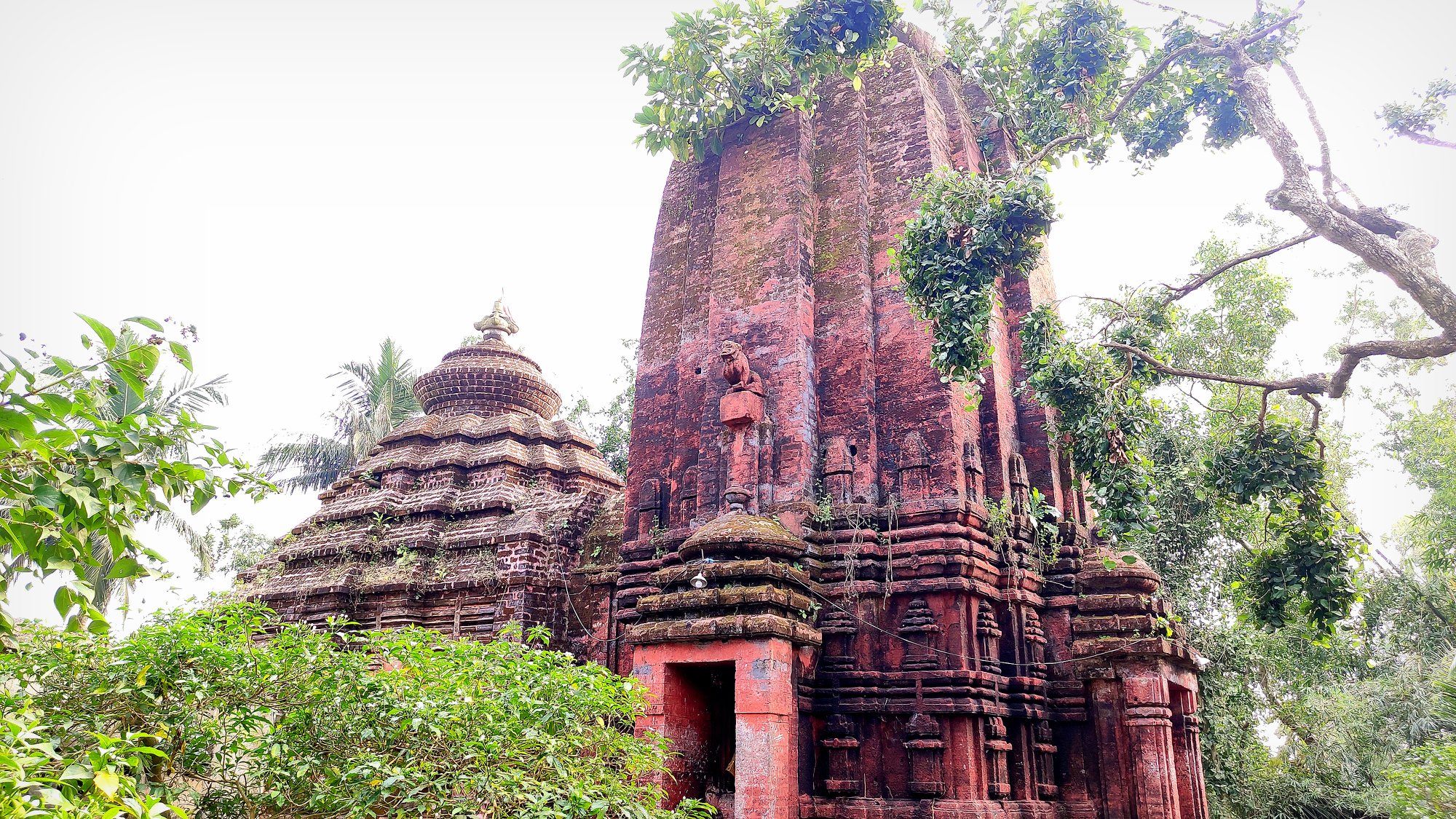
Just a couple of km away, lies the Angeswara Temple, a 10th Cent. AD. Shiva temple, which is probably one of the few surviving brick structures from the era.
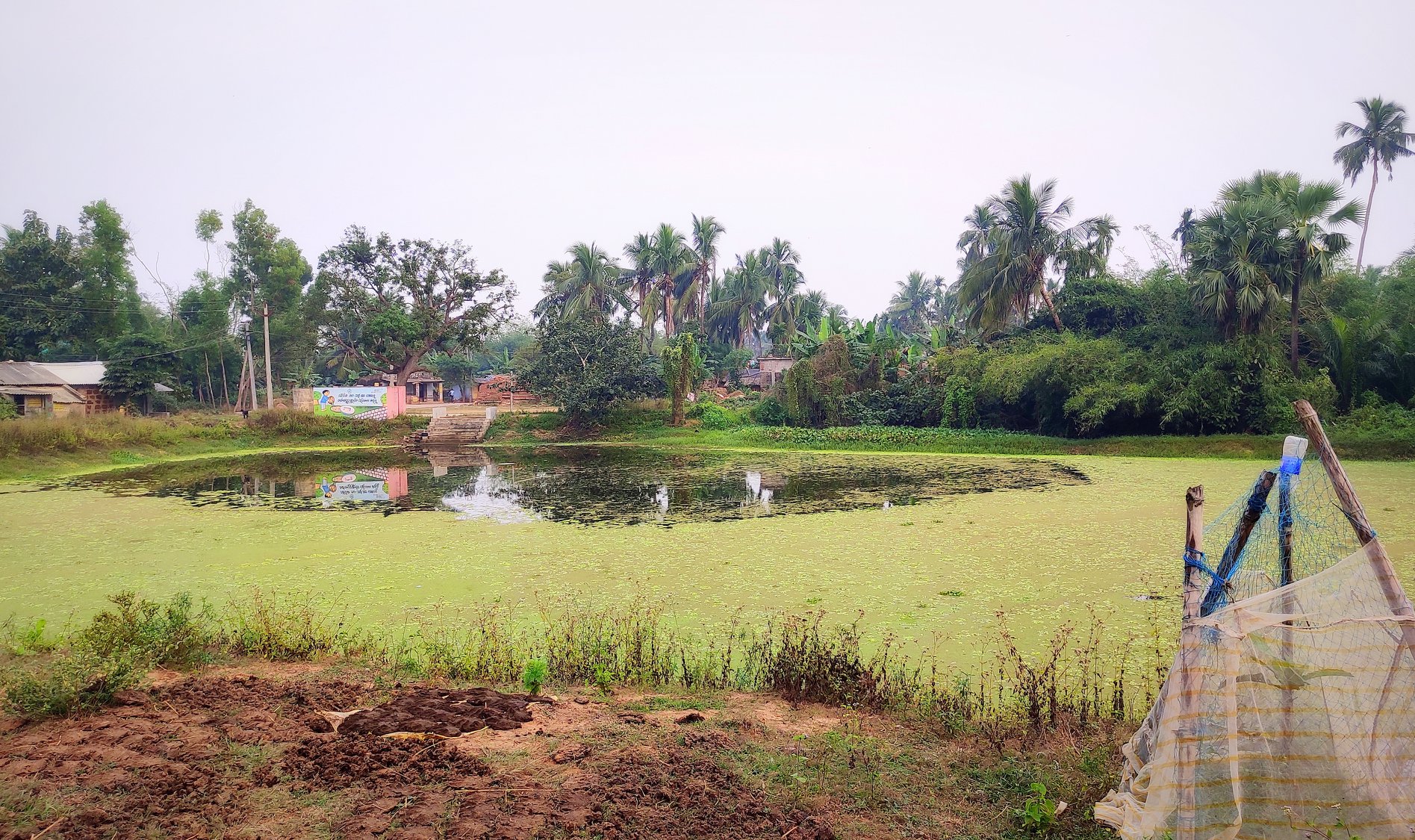
(left) Angeswara temple (right) A snapshot of the Prachi Valley countryside landscape outside the temple, not very far from the sea either.
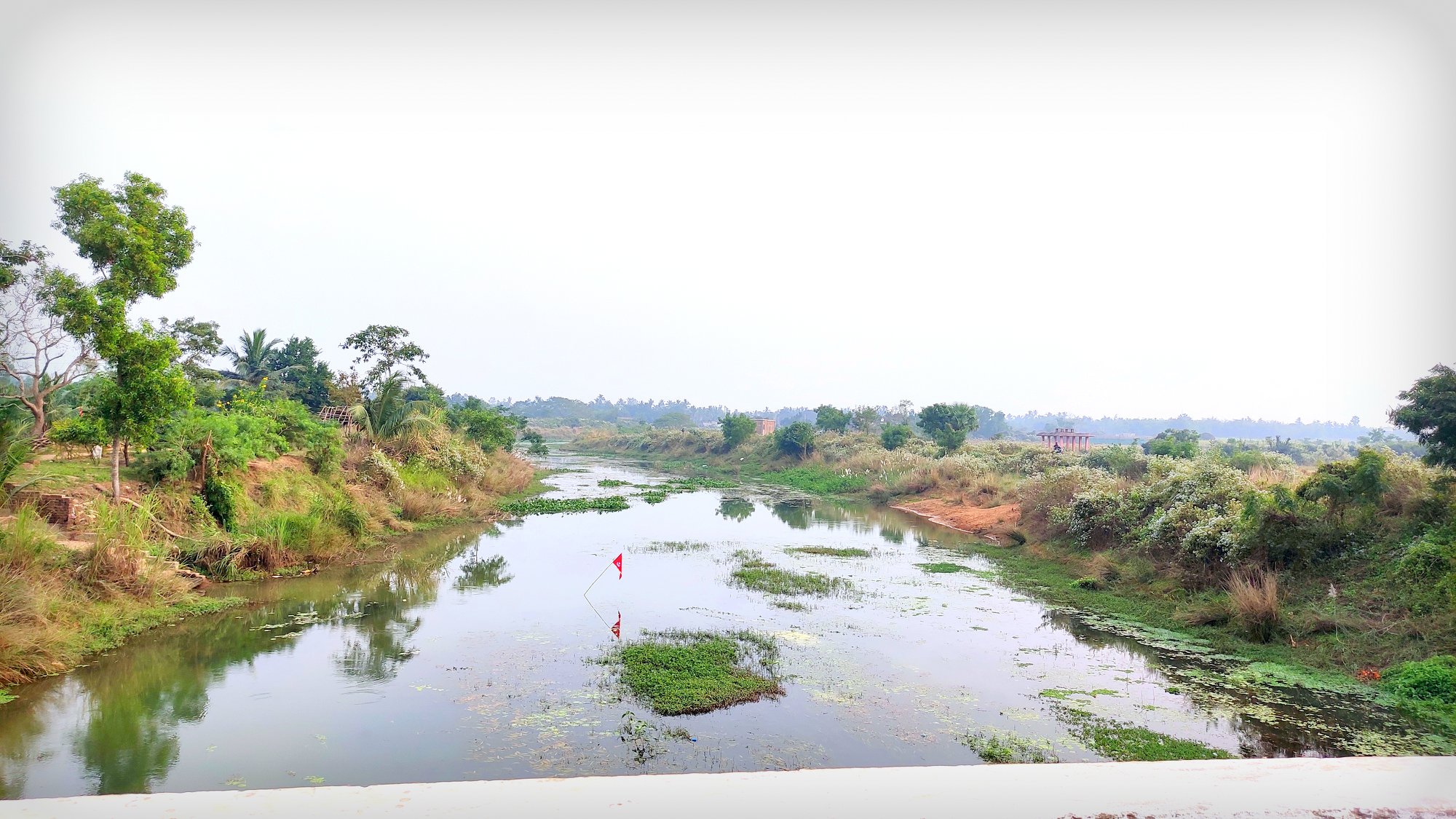
As we proceeded from Angeswara, we finally made rendezvous with the river whose valley we were exploring – the Prachi river today is a pale shadow of the splendour attributed to in historical records.
A glimpse of the sacred Prachi river, now almost reduced to a trickle.
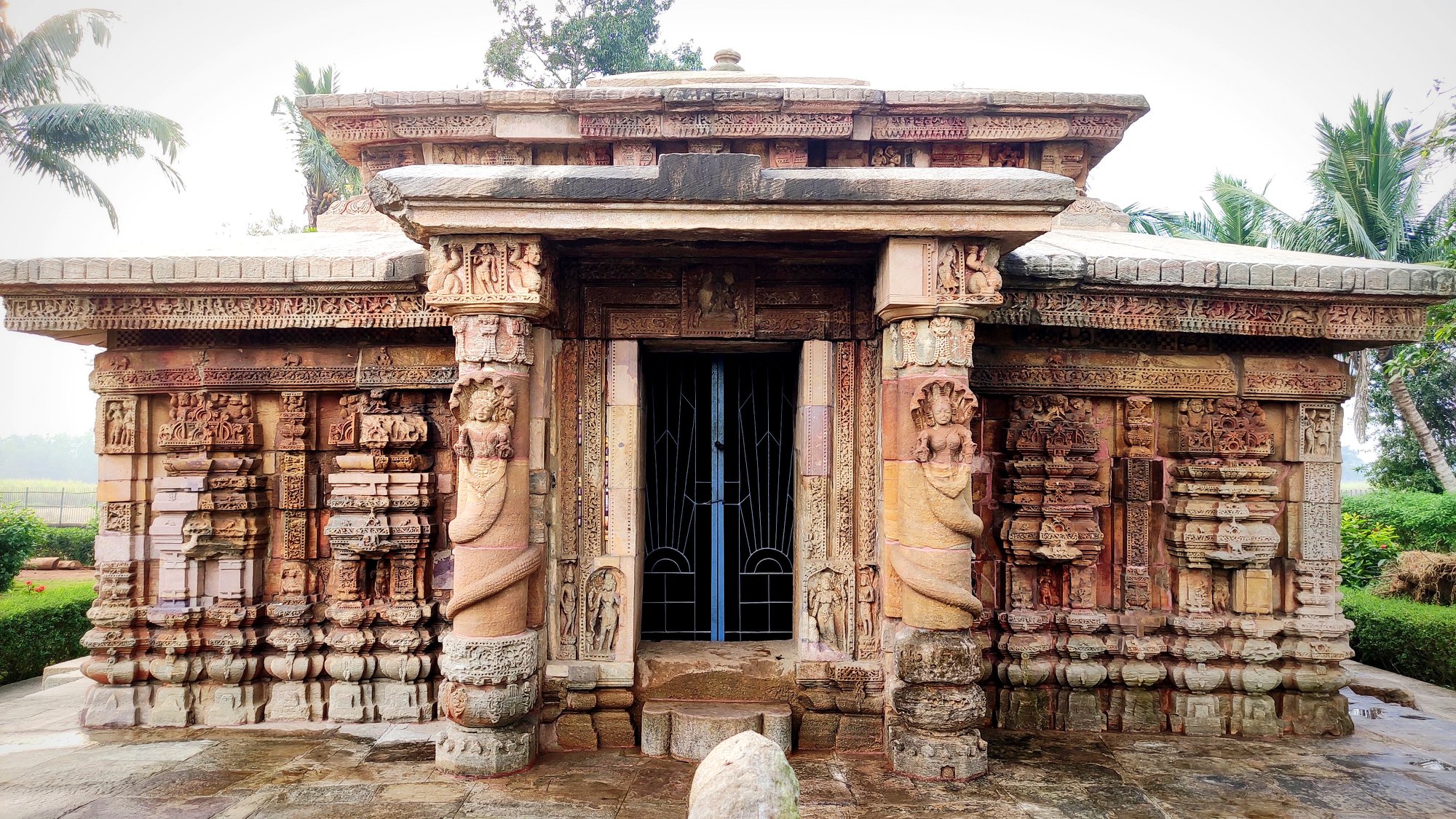
4 km further from the Angeswara temple, is the Barahi temple, a 10th Cent. AD temple dedicated to Maa Barahi, the shakti form of Baraha, the boar-form of Lord Vishnu’s incarnations. This temple incorporates Khakra style, a variation of of Kalingan temple architecture, reminiscent of Mahabalipuram temples.
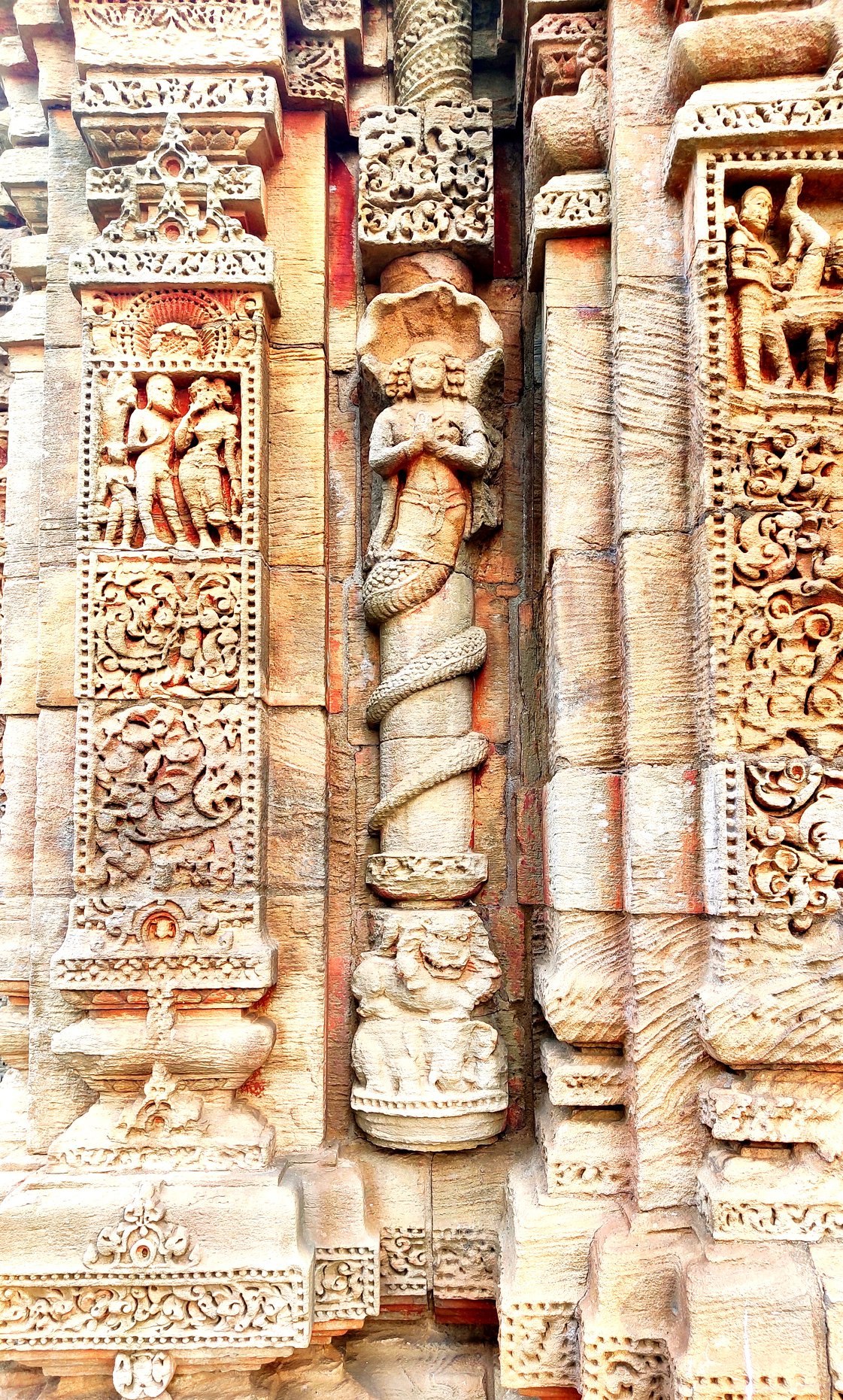
(left) Barahi Devi Temple (right) Front view of the Varahi Devi templeA motif on the Varahi Devi Temple wall representing ‘Adisesa’ – hooded serpent shielding upper body of human with folded hands and lower body of a serpent on the columns and pillars
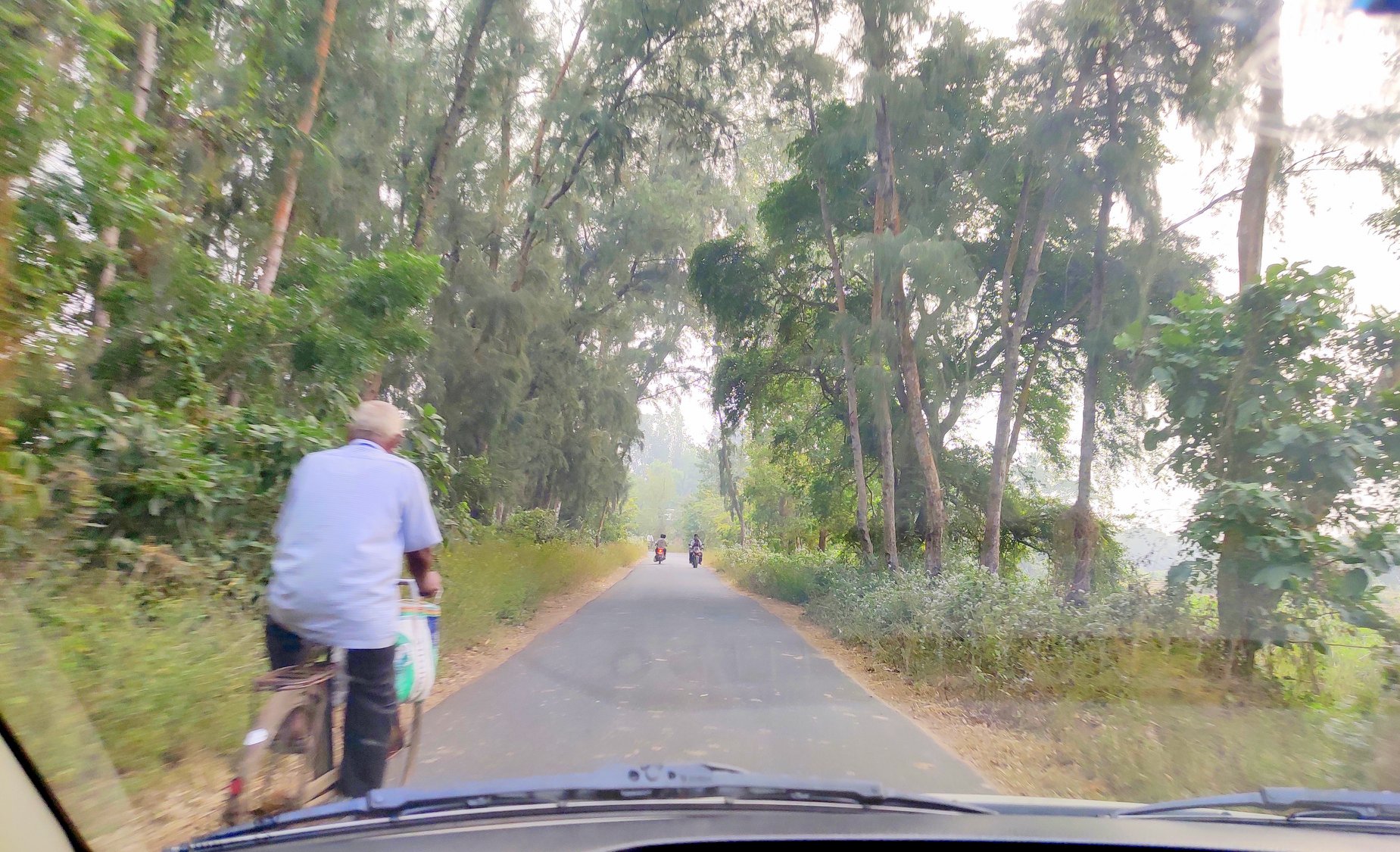
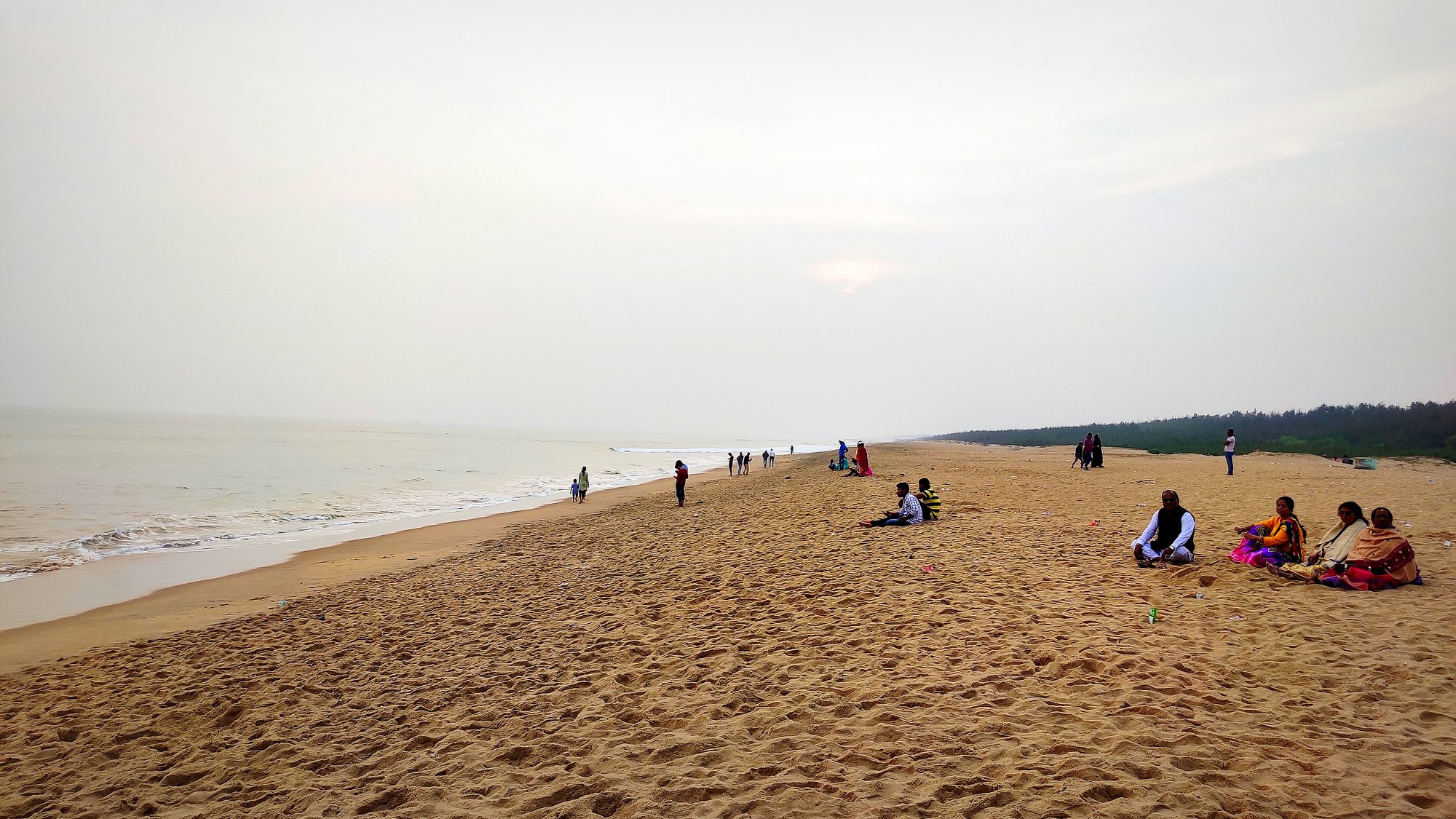
Moving on from Barahi, we reached a crossroads at Charichhak, and were faced with two choices – take a right turn and see a few more monuments from the Prachi Valley or take a left, to the sea. With the evening about to descend, we chose the road leading to Astaranga, which has an adjunct beach at Jahania. Astaranga, literally, of the seven colours, seemed to be a fitting finale for this trip, as it sat upon the mighty Kalinga Sea, which the Kalingan sons traversed to spread the Kalingan glory far and wide.
(left) Road leading to Jahania beach from Astaranga town. (right) Jahania beach
How to reach You have to invariably take private transport and follow Google maps, since many of these sites are not on a major road. Alternatively, you could join some of the day-long heritage walks organized from Bhubaneswar by a few heritage enthusiasts.
Ruminating over fond memories of my previous excursions to the Thar, I realized that it was time my family members also got a taste of the desert, and so materialized my family’s first tryst with the Thar – and my third – in the end of November 2019. We took the Mandore Express from Gurgaon railway station, where we had to execute the train boarding with rocket-science precision on account of the train stopping only for 2 minutes, and reached Jodhpur at 8 AM next morning.
Day 1: Jodhpur and Mandore
We checked in to the Om Heritage hotel that afforded an excellent view of the Mehrangarh fort from its rooftop. The plan for the day, drawn on the experience of my previous sole trip to Jodhpur, was set, and so, the first thing we did was hire for the whole day one of those large auto-rickshaws that could accommodate all five of us, and headed over to the Umaid Bhawan Palace. Our next stop after that was at Mandore Garden, the place that had me mesmerized in my previous trip to Jodhpur.
Mandore, the seat of the Gurjara-Pratiharas in the 6th century AD, later became the capital of the Rathores before Rao Jodha shifted to the newly-founded city of Jodhpur. At Mandore, we first walked through the lawns and saw some of the temples and royal cenotaphs, and then visited the Government Musuem. From there, walking up an incline, we crossed a dammed mini-reservoir, and reached the ruined Mandore fort located on the top of a hill, getting a panoramic view of Mandore. After an hour and half well spent, we had our lunch in Mandore, and proceeded to Jaswant Thada on our way to Mehrangarh Fort.
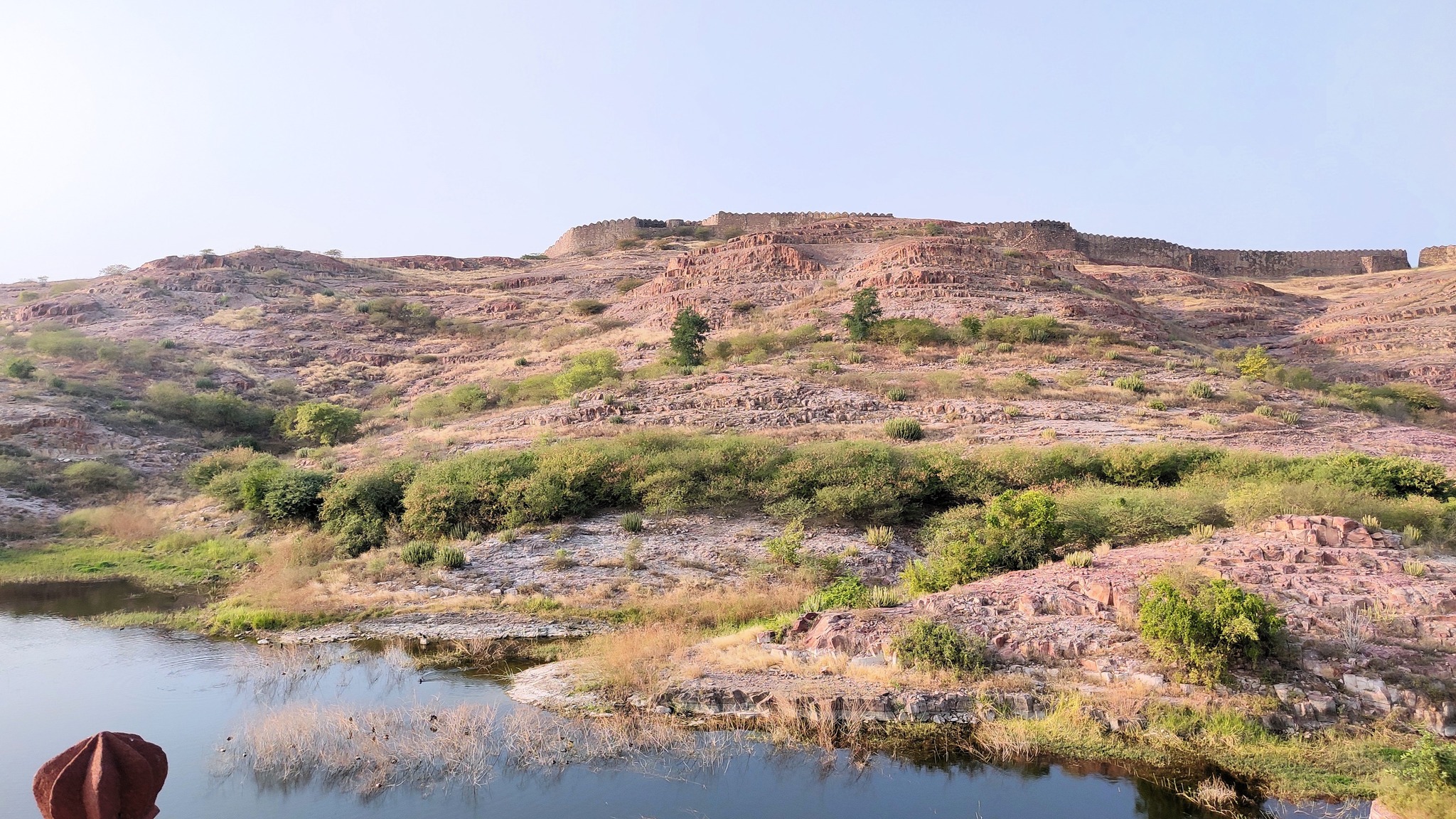
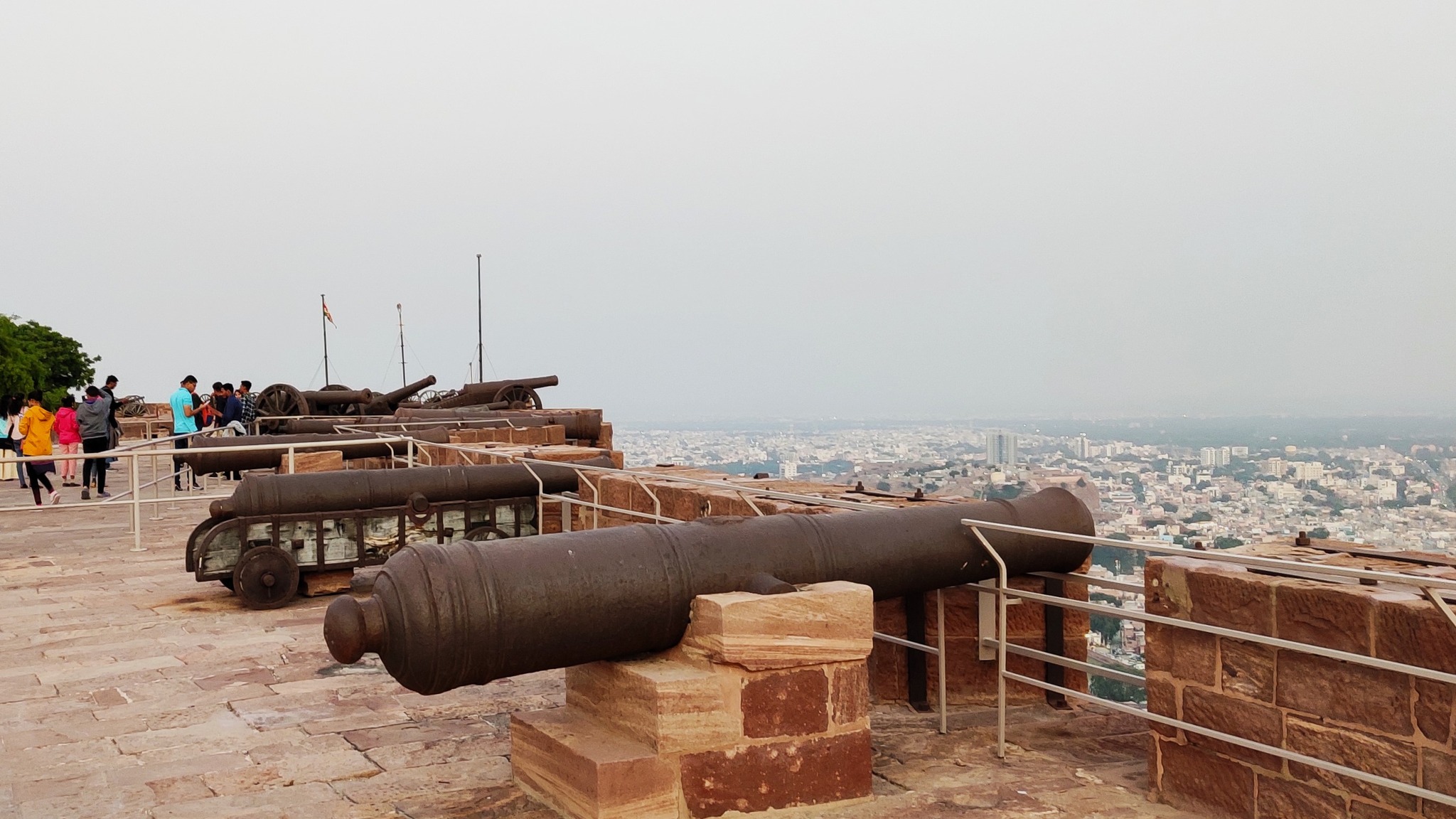
The Jaswant Thada itself is located on the top of a flat red-coloured rocky hill which is barren, only punctuated with water pools, and has the scenic backdrop of the Mehrangarh fort on one side. Next up was Mehrangarh fort, which we reached at 4.30 PM just in time before the gates closed for entry. Taking up a guided tour, we gawked at the imposing palaces and exquisitely done interiors, before ending the tour at the raised long platform lining the fort wall the end of the fort where the cannons stand. We were then back in the hotel to have dinner, and prepare for checking out next day to proceed to the next leg of our trip.
Mehrangarh fort as seen from the rooftop of Om Heritage Hotel
At Mandore Garden, on the outskirts of JodhpurLandscape around Jaswant Thada, JodhpurPalace in Mehrangarh fort, JodhpurCannons at Mehrangarh fort, Jodhpur
Day 2: Exploring Jaisalmer city
The next morning, we started at 8.30 AM by the Innova car we had booked for the remainder of the trip. We passed through Balesar, as the land became progressively arid, with it becoming more distinctively barren and sandy as we approached Pokhran. By 2 PM, we had reached Jaisalmer and checked in at Hotel Heritage House, a hotel modelled as a typical Jaisalmer-style haveli. After a quick lunch at Shree Jee Restaurant, we went to see Patwon ki Haveli, actually a cluster of five small havelis, of which the most famous is the one in the front called Kothari’s Patwa Haveli.
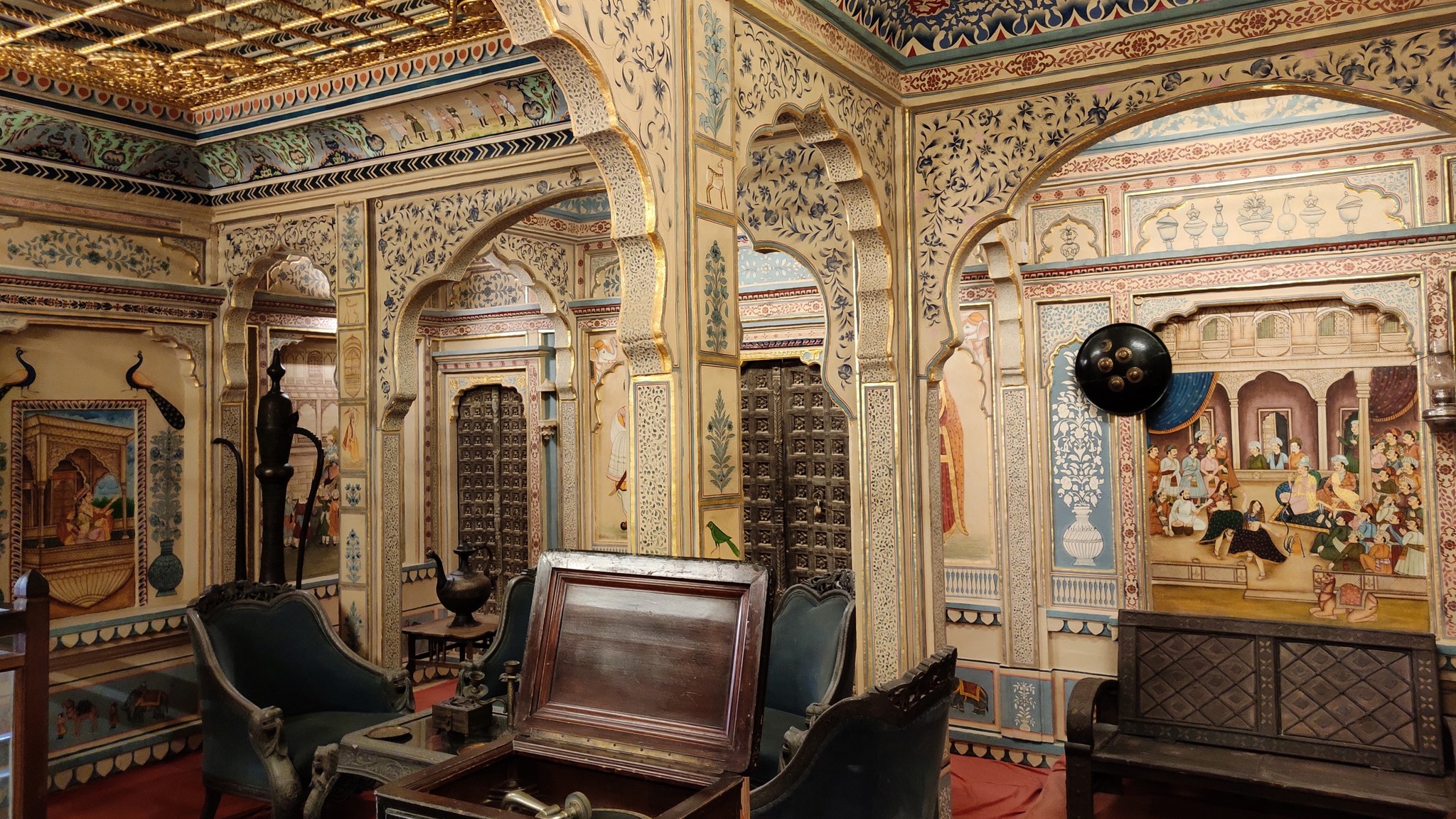
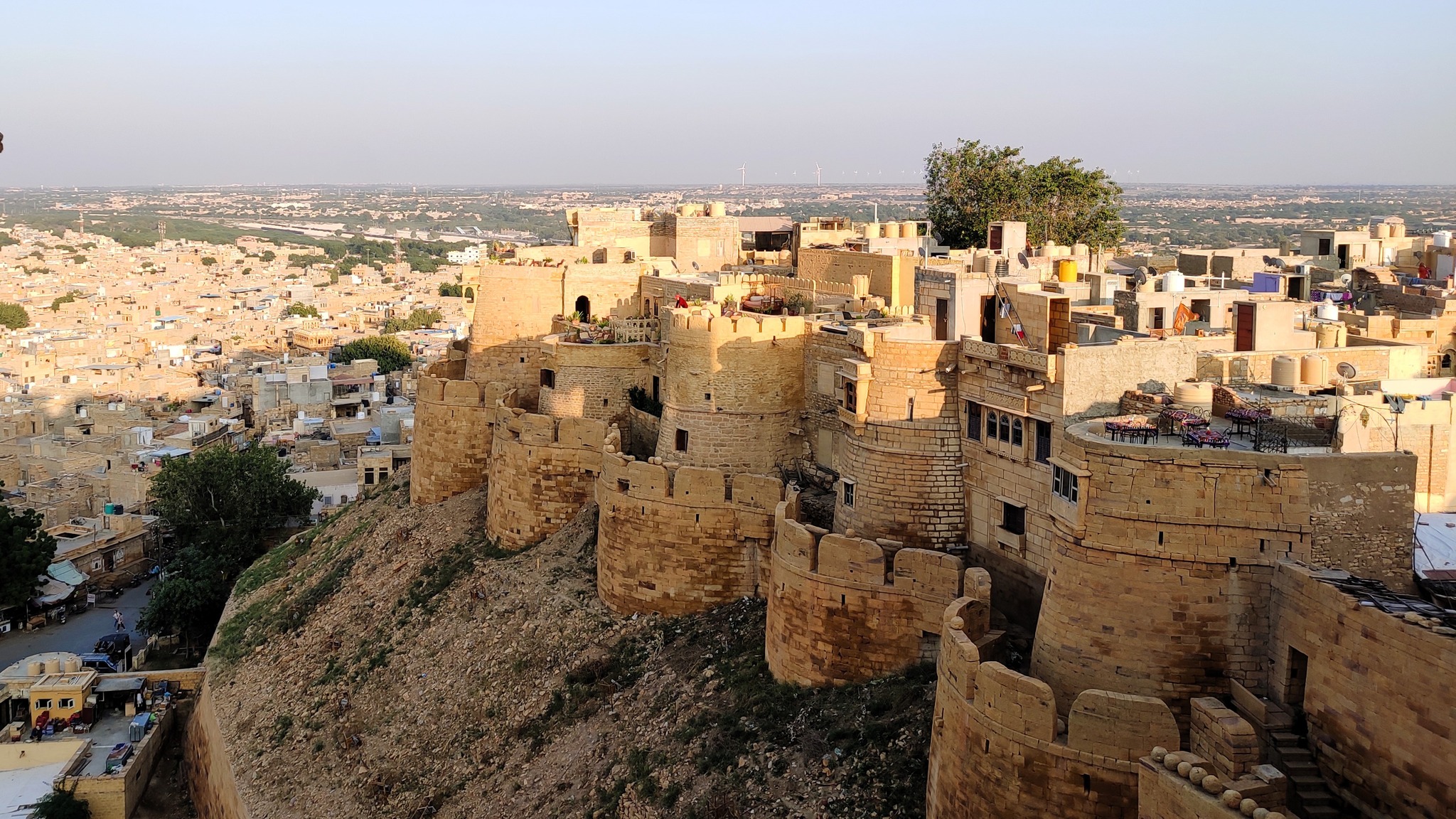
Patwon ki Haveli was constructed over 50 years, starting in 1805 AD commissioned by Guman Chand Patwa, a trader of jewelry and fine brocade. The haveli is typified by latticed balconies carved out of sandstone but seeming as if carved from wood, ornate wall paintings, exquisitely carved pillars, and extensive corridors and chambers. After seeing the haveli, we proceeded to Jaisalmer Fort. At Jaisalmer fort too, we took a guided tour through the main palaces, hearing stories of the past, getting transported to the times when these were inhabited by the royals.
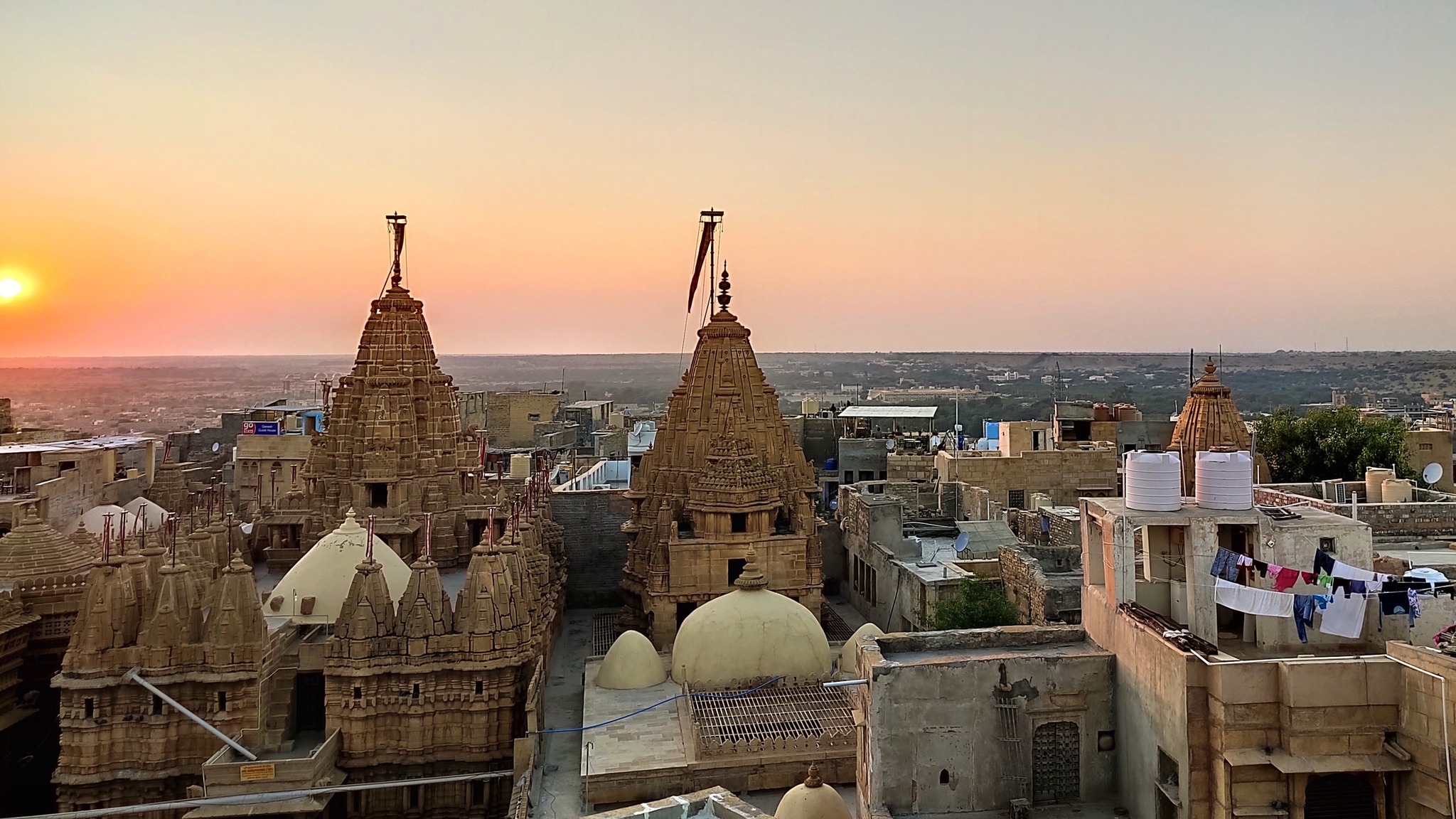
Later, we walked through the streets outside the palace, passing by and entering the street on the left side of the Lakshminathji temple. Just 100 metres in, we came upon the Baa ri Haveli, which we entered out of curiosity and were treated to interesting tidbits of the Rajasthani culture by way of of the artifacts on display, such as sculptures, furniture, toys, handicrafts etc. As we reached the terrace of the haveli, we saw the sun setting in the horizon marked by a long sandy ridge running in the distance outside the city limit, while twin spires of two temples stood in the foreground right in front of us.
An ornately decorated and painted hall in the Patwon ka Haveli, Jaisalmer
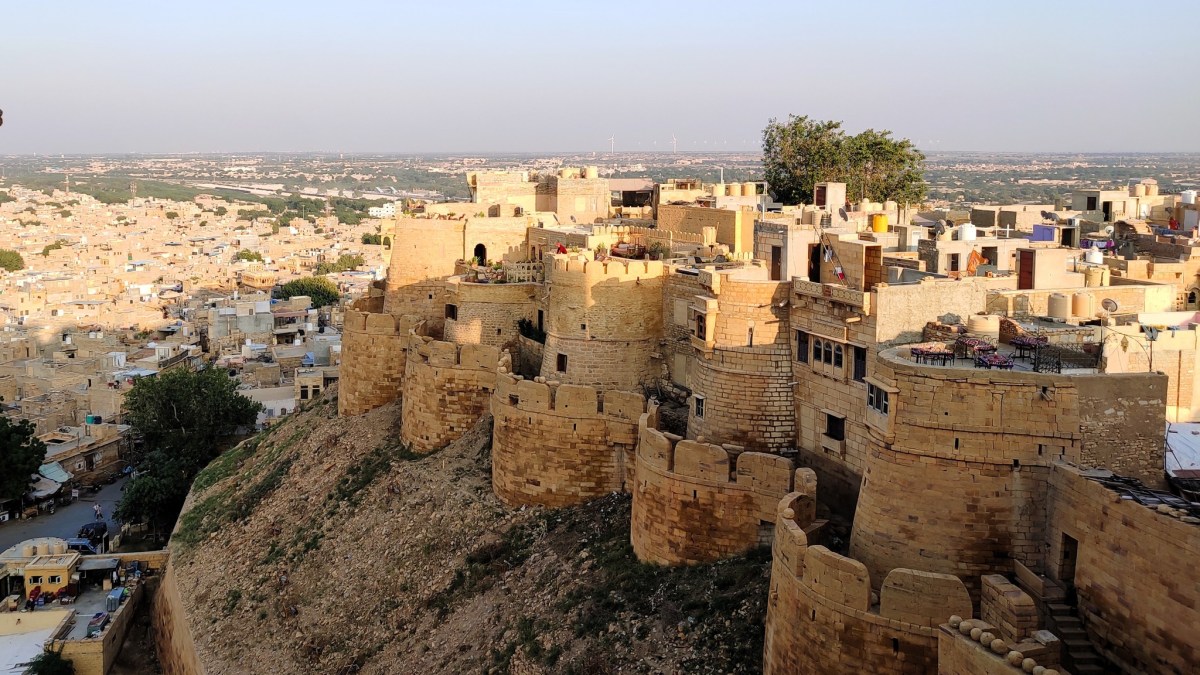
View of fort walls from the balcony of a palace in the Jaisalmer fort
Sunset view from Baa ri Haveli, Jaisalmer fort
Soon after, we had tea and snacks at a roof-top restaurant hugging the fort wall while enjoying views of the city and the barren landscape beyond it. Back in the hotel, we retired to bed after dinner in anticipation of our outstation trip from Jaisalmer the next day.
Day 3: Off to the Border – Ranao, Tanot and Longewala
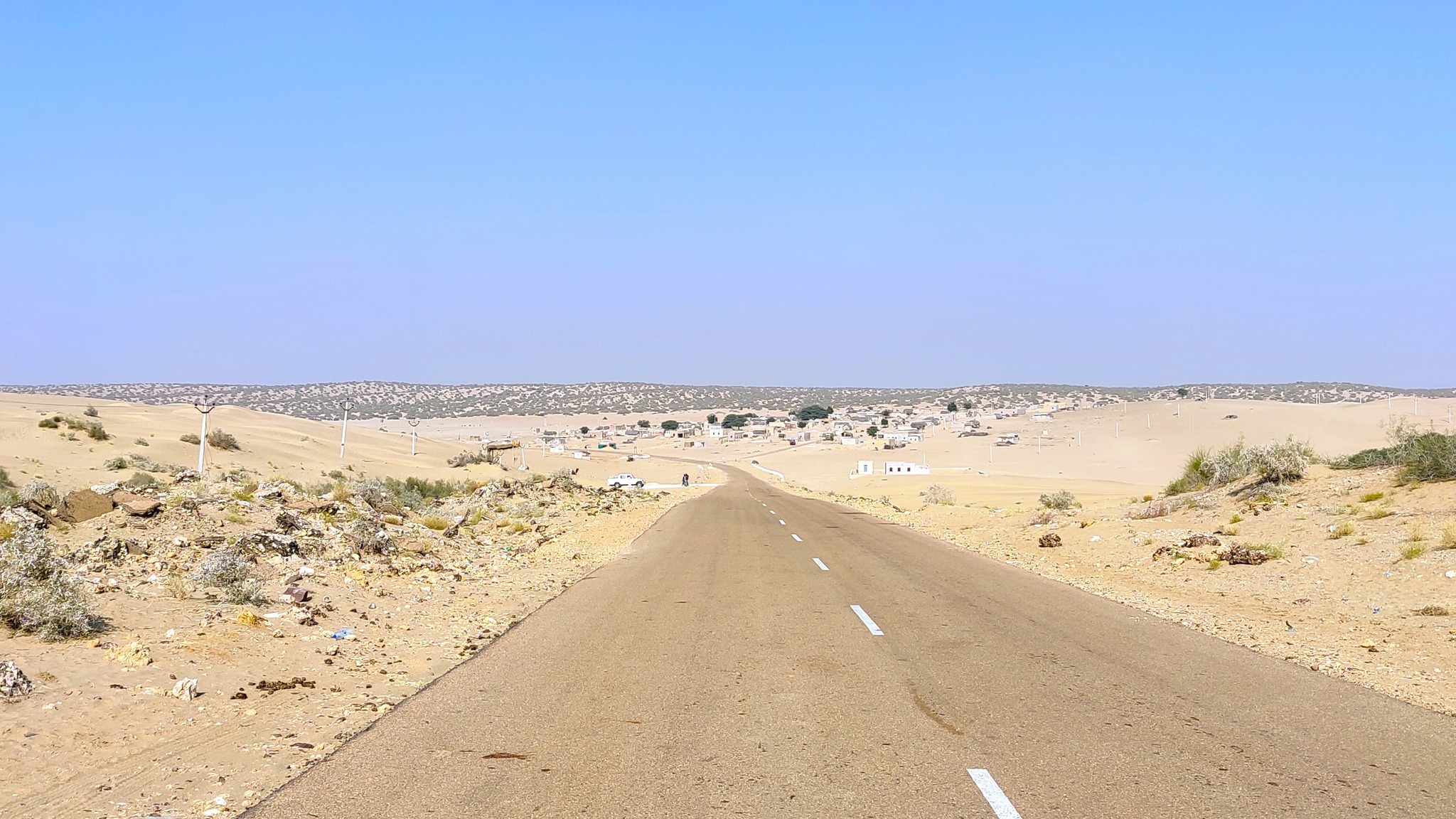
We started lazily next day, checking out of the hotel at around 11 AM and proceeded towards Tanot, stopping at places to get down to admire the desert landscape, and taking pictures of the landscape and of ourselves. By 1 PM, we reached the location that had left such a lasting impression in my mind the last time that it was the primary reason I was so excited about the trip, keen to show it to my family too. Yes, the place was Ranao, and it lived up to its promise and how!
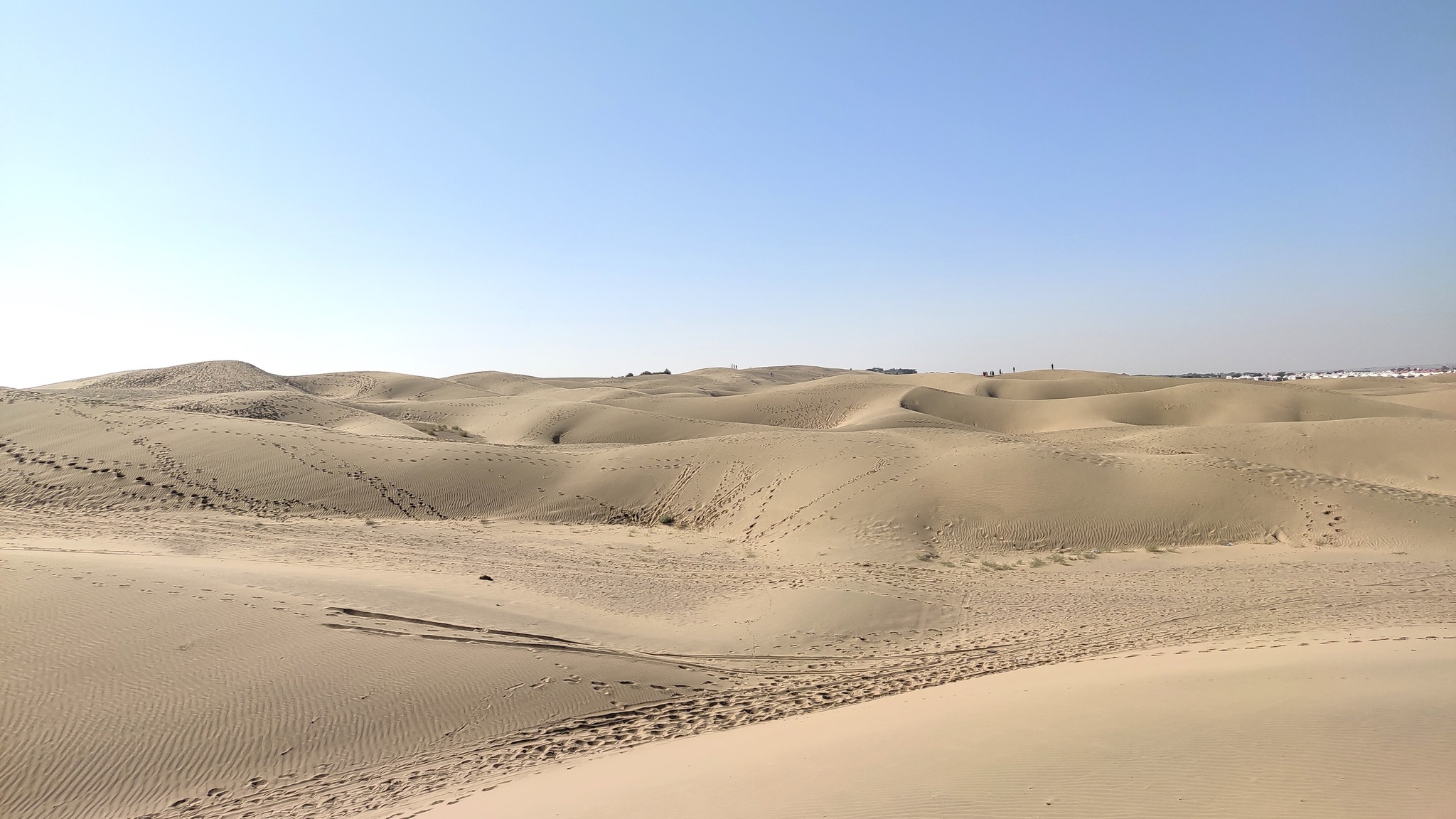
We got down at the decline before the road reached the lowermost point of the depressed stretch reminiscent of a river bed, and ventured into the sand dunes lying on the side of road, taking pictures. As we began to move on, and were almost reaching the bottom of the ‘bed’, we were hailed by a person standing beside a Bolero pick-up, who offered us a paid session of dune-bashing as well as a tour of the vestiges of the Indo-Pak war. We readily agreed, and were amply rewarded with an enriching experience as we wandered through the sands going up and down the dunes. Further, we checked out the numerous bunkers, and sat on the sands partaking of the views of the oceans of sand.
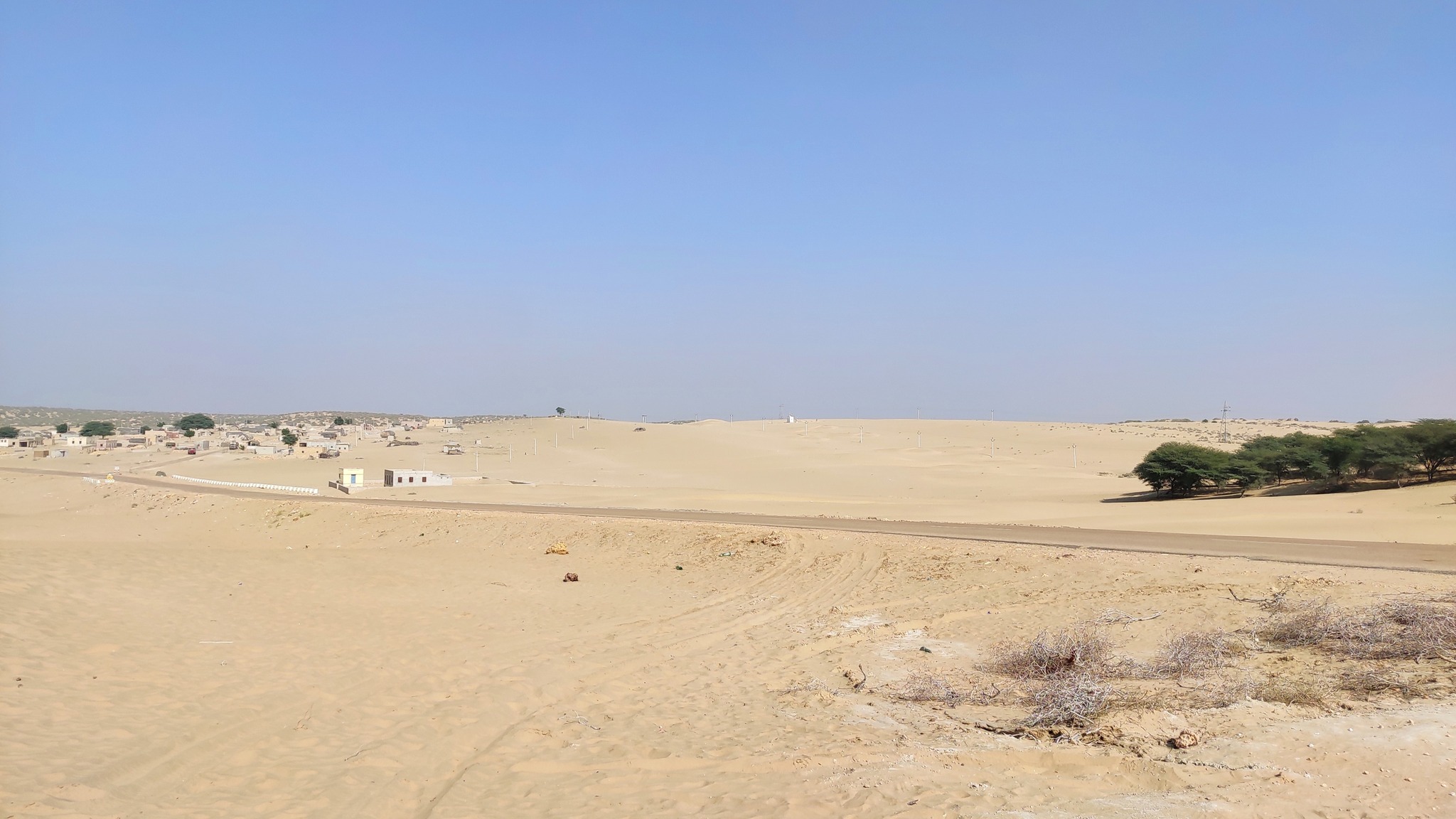
Ranao village lies in the dried ‘river bed’
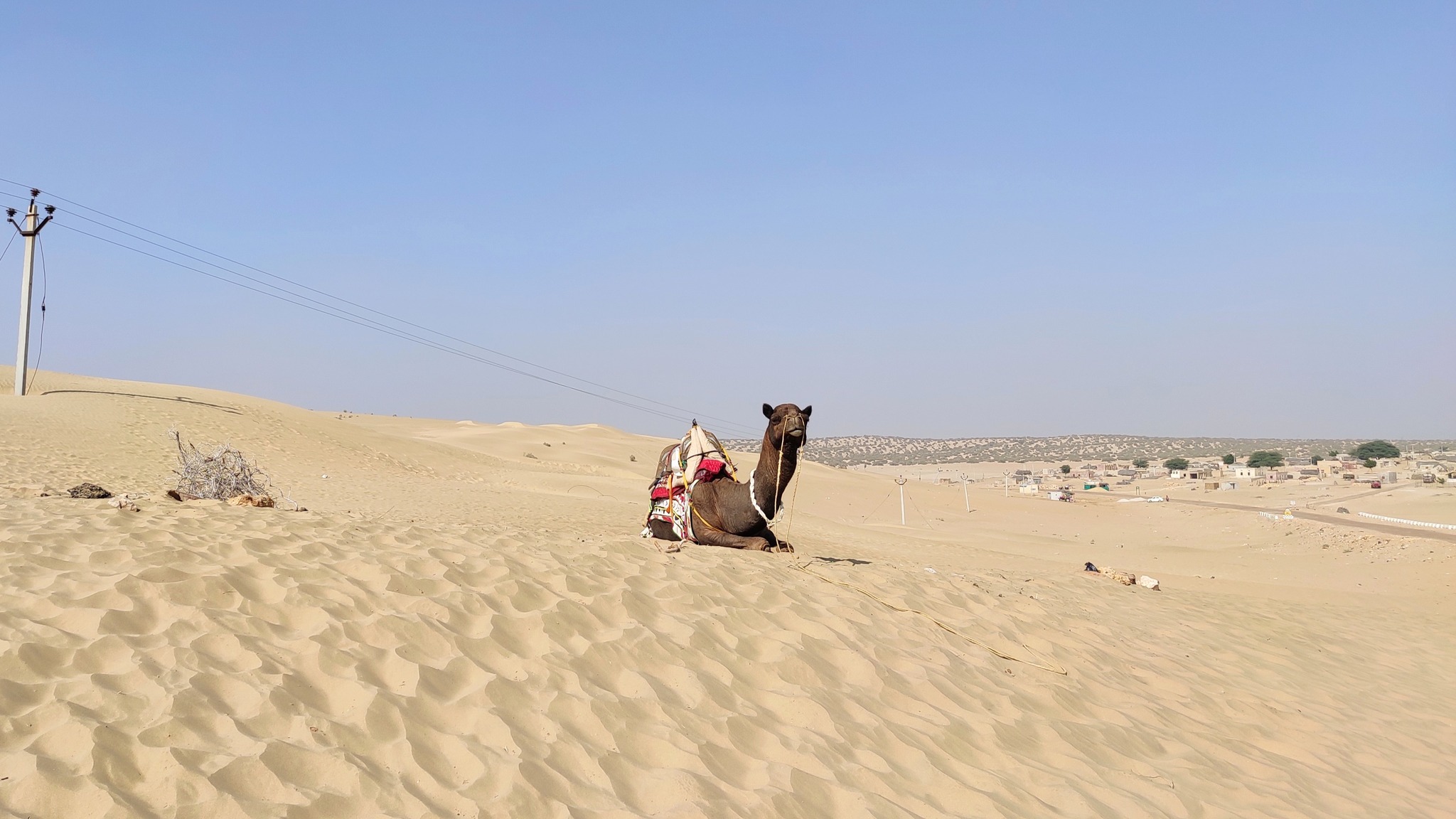
A camel lounges about at RanaoA little further in the sand dunes
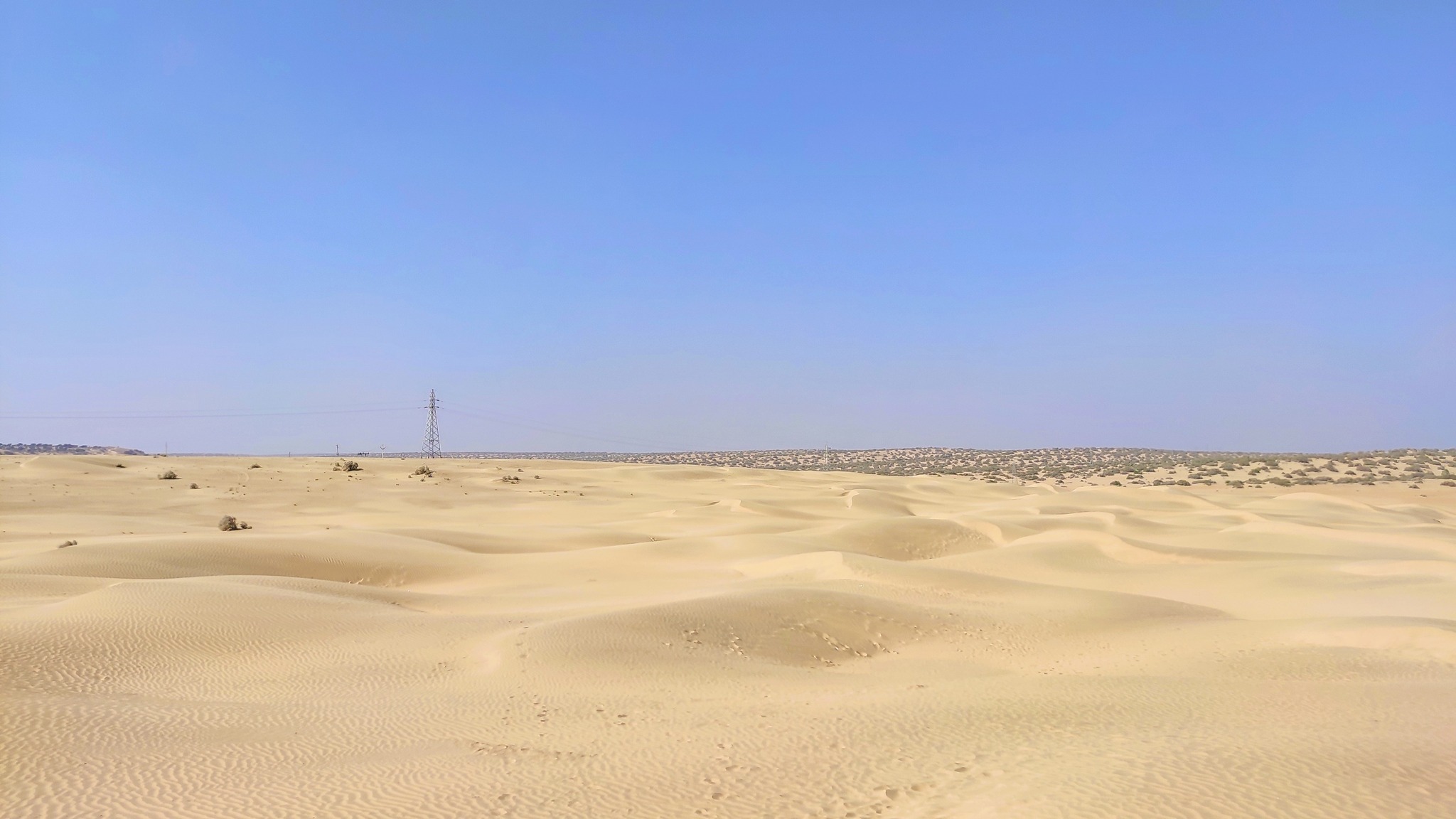
Deep in the sand dunes area in Ranao
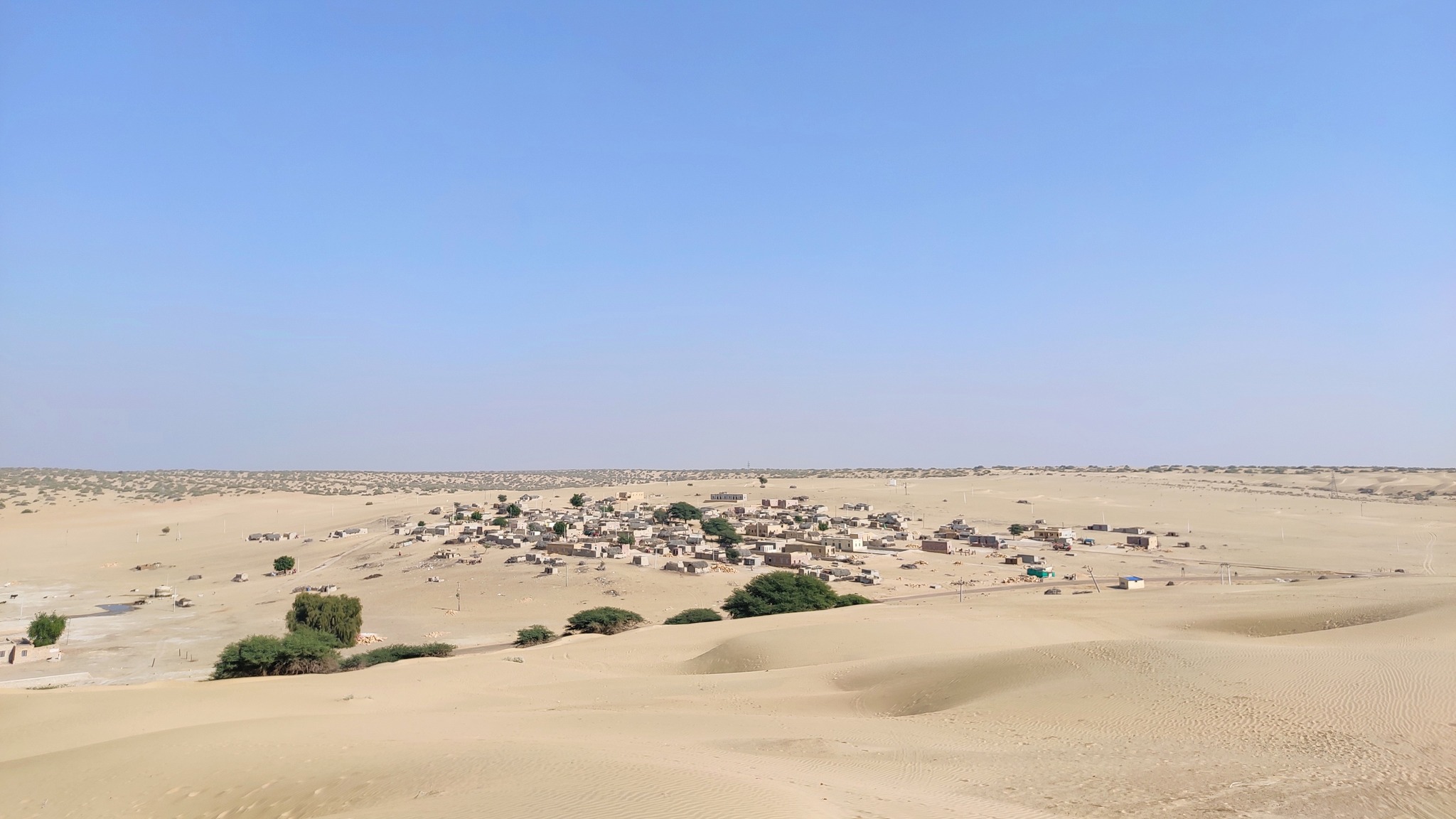
A view of Ranao village from another point on the ocean of sand dunes surrounding it
Finally, even though not content, in the interest of time, we left Ranao for Tanot which we reached by 3 PM. There, having a light meal, we proceeded to Longewala moving alongside the Pakistan border, reaching at 4 PM the War Memorial where we could spend just a little over half hour as evening was fast approaching. Thereafter, we headed back in the direction of Jaisalmer, reaching Sam Sand Dunes around 6.30 PM by when darkness had already fallen. We checked in to the Vinayak Desert camp, our stay for the night, where after seeing the folk art programme and a Rajasthani buffet, we went to sleep.
Day 4: Back to Jopdhpur through Osian
Early next morning, I woke up specifically to see sun rise from behind the sand dunes, barely catching the marvellous sight. A little later, we had breakfast, and then checking out from the camp around 10 AM, proceeded to do some camel-riding near the sand dunes. After that, we were headed to the last site of our Jaisalmer leg, the ruins of Kuldhara, which was as fascinating to me this time as it was the previous two times I was here. I was glad to see the family was enamoured too.
Sunrise as seen from the Desert camp at Sam Sand Dunes
Morning at the Sam Sand Dunes
View of the ruined village from a restored building in Kuldhara
By 12, we were back again on the road headed back to Jodhpur, through a different route than the one we took for the outward leg from Jodhpur. Around 2.30 PM, we stopped at Phalodi to have lunch, and by 4.30 PM, we were at Osian. Osian, dubbed an oasis in the Thar, was a major religious centre of the Gurjara-Pratihara period dating from the 5th to 12th century AD, and had been a trading centre from well before that, at least from the Gupta period onwards. Today, the ruins of Jain and Hindu temples from that period stand witness to its glorious past. The Oswal community is said to have originated from Osian.
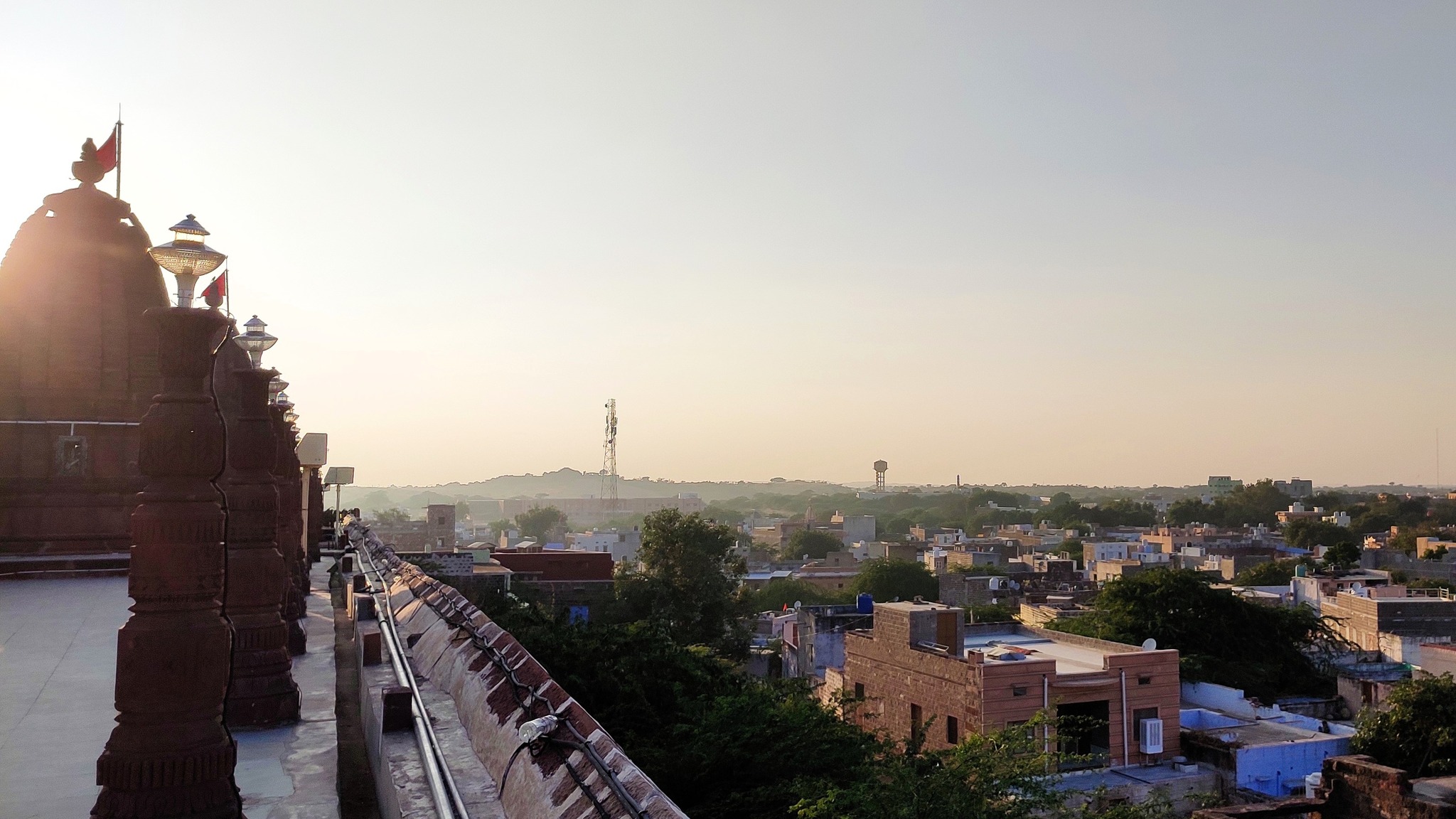
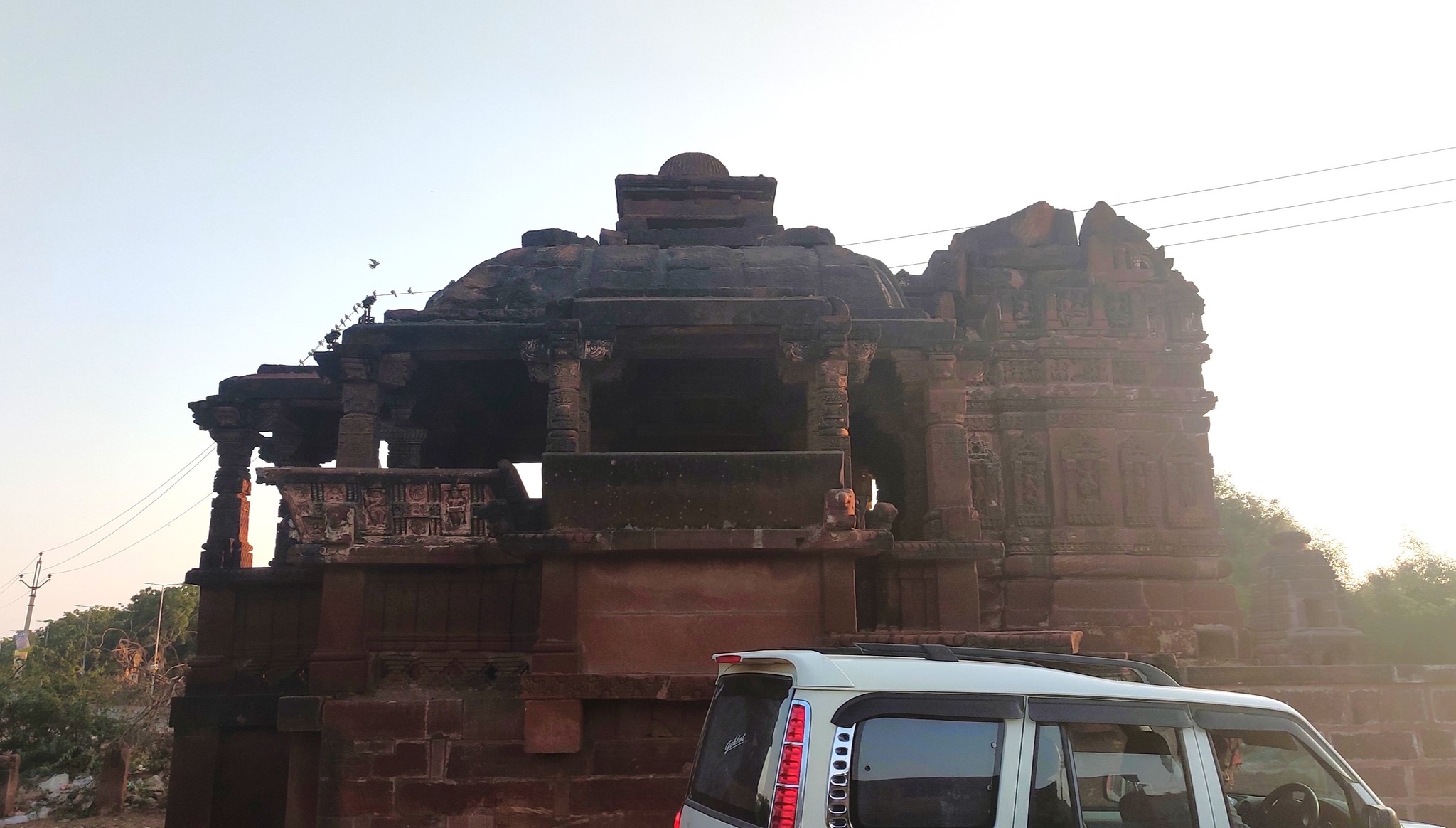
At Osian, we visited the Sachiya Mata temple – Sachiya Mata being the town deity, who as per Jain legend is the form of Chamunda that was turned vegeterian by Acharya Ratnaprabhasuri in 457 BCE. As a result, Sachiya Mata is worshipped also by Jains, and the temple itself has many Jain features. From the temple which is situated on a hillock affords a panoramic view of the landscape beyond the town, including the sand dunes located on the outskirts of the town. Apart from the Sachiya Mata temple, I managed to get a glimpse of a few other temples, including the ruins of the Harihara temple, Vishnu temple and Sun temple that were located on or in the vicinity of the main road.
View of Osian town and beyond from Sachiya Mata temple premise
A ruined temple in OsianA ruined temple in Osian
By 5.30 PM, we had to leave Osian as it was getting dark and we had a train to catch from Jodhpur. We caught the 8.30 PM Mandore Express from Jodhpur and reached Gurgaon the next morning, still delirious from the memorable family expedition into the Thar desert.




















 The Timber Trawler