
With just three weeks remaining for my post-graduate course in Hyderabad to complete, I decided to head for a quick weekend trip to a place that had been on my bucket list for a long time – Hampi. So, I took an overnight bus from Hyderabad and was in Hampi by 8.30 AM. After checking in at Clark’s Inn, I went about hiking around Hampi – the capital of the legendary Vijayanagara empire – taking a walk through the annals of history.
Hampi is identified with Kiskindhya of the Ramayana, where Bali and Sugriva, the vanara brothers lived. Anjanadri Hill near Hampi is believed by locals to be the birthplace of Hanuman. Hampi is also called as Pampakshetra because of Pampa, an old name for the Tungabhadra River, which runs through the area. Hampi is also said to be the village of Pampa Devi, another name of goddess Parvati, Shiva’s wife. Another explanation is that Hampi became a place where five faces of Shiva (Paramesvarasya Panchamukhnam), namely, Virupaksha, Jambunatha, Somesvara, Vanibhadresvara and Kinnaresvara, began to be worshipped in the form of Panchalingas (five lingas).
Highlights of the trip are below:
Day 1
Vitthala Temple and Market complex
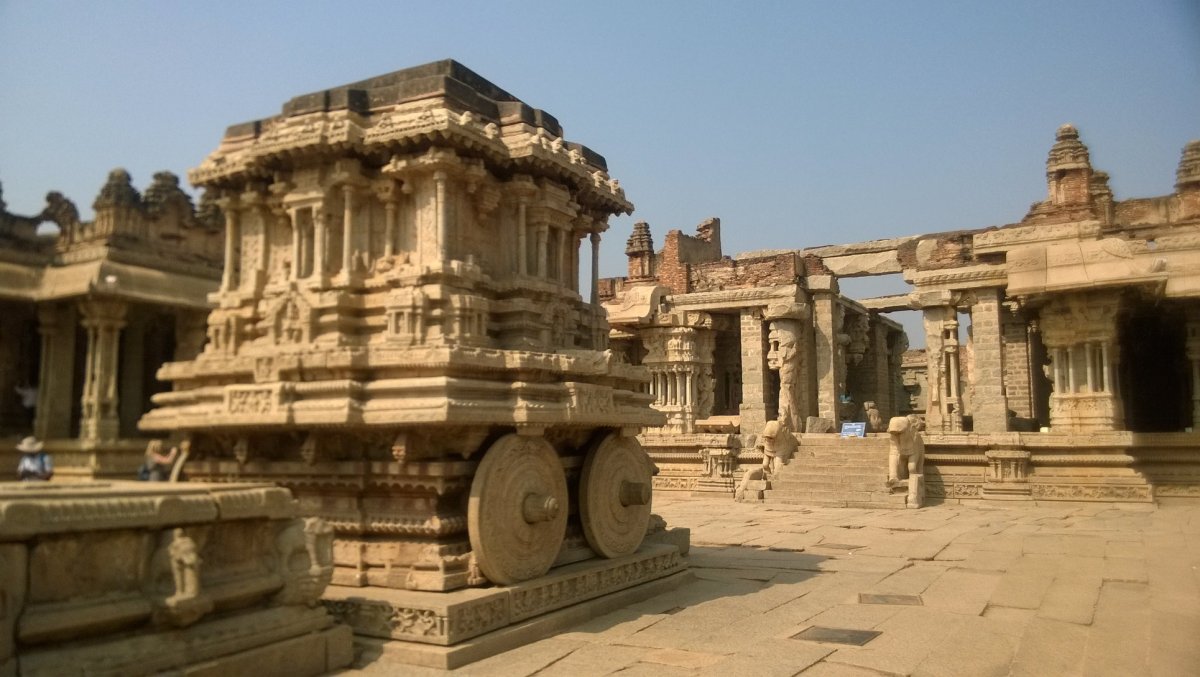
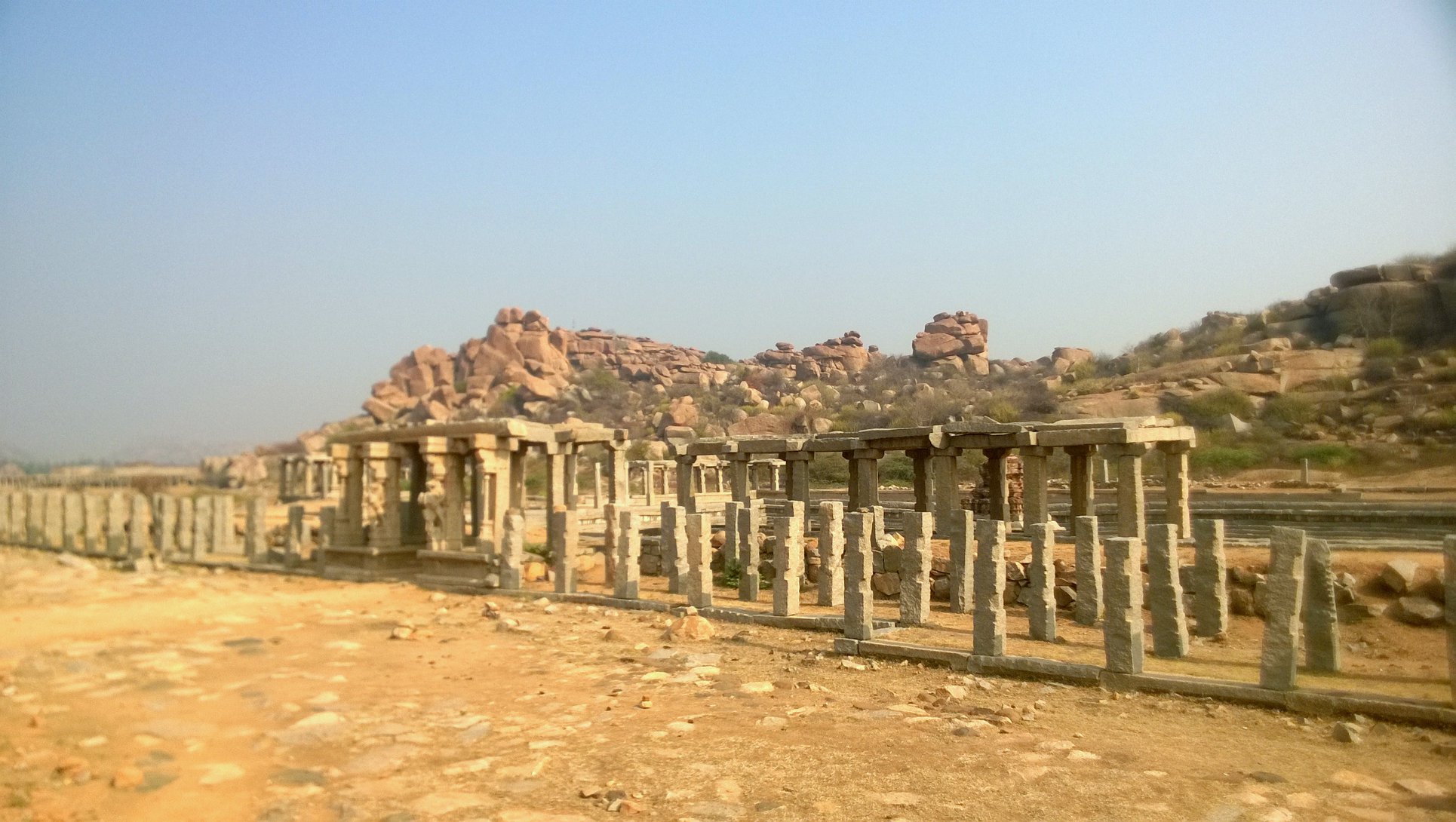
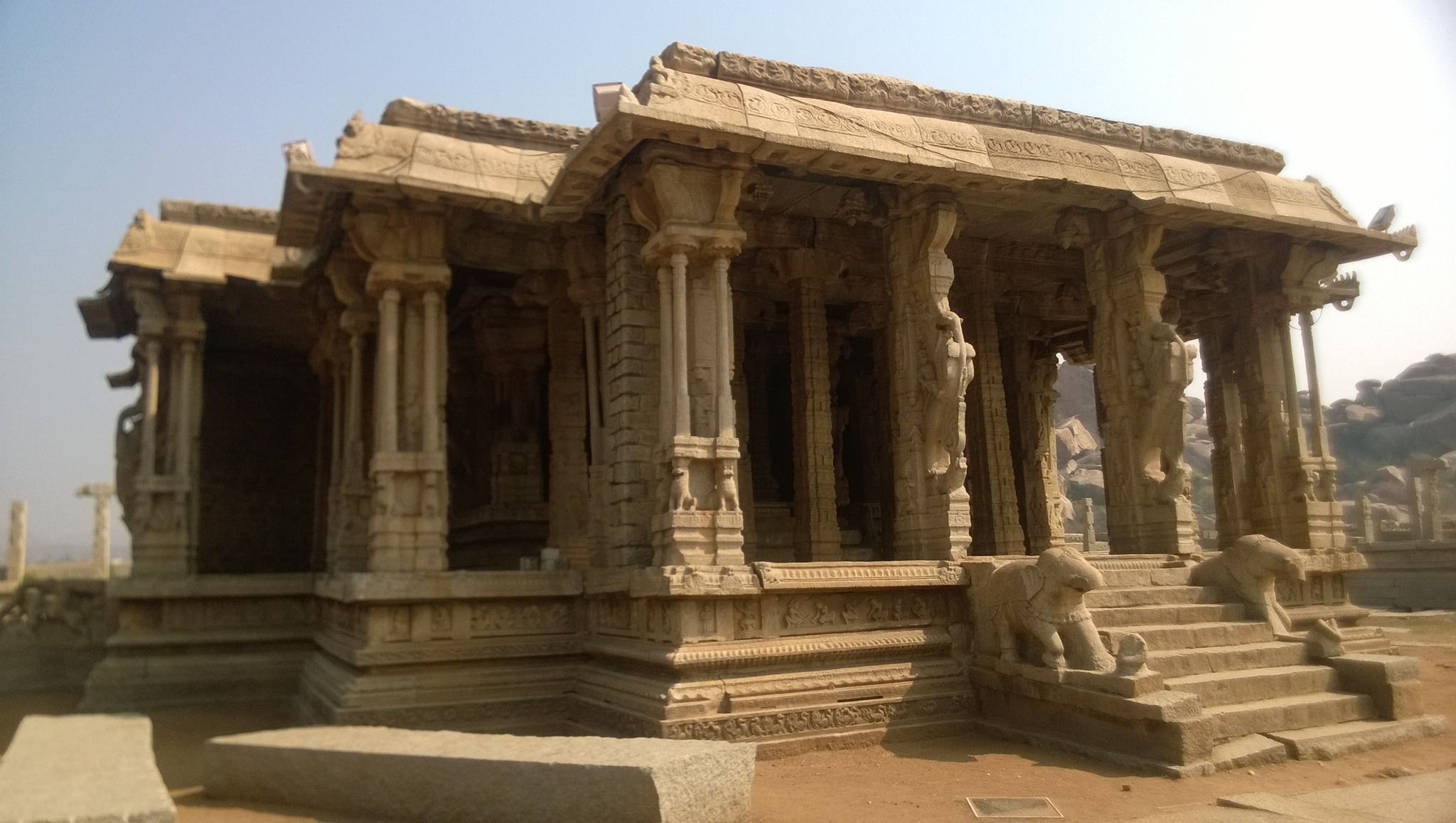
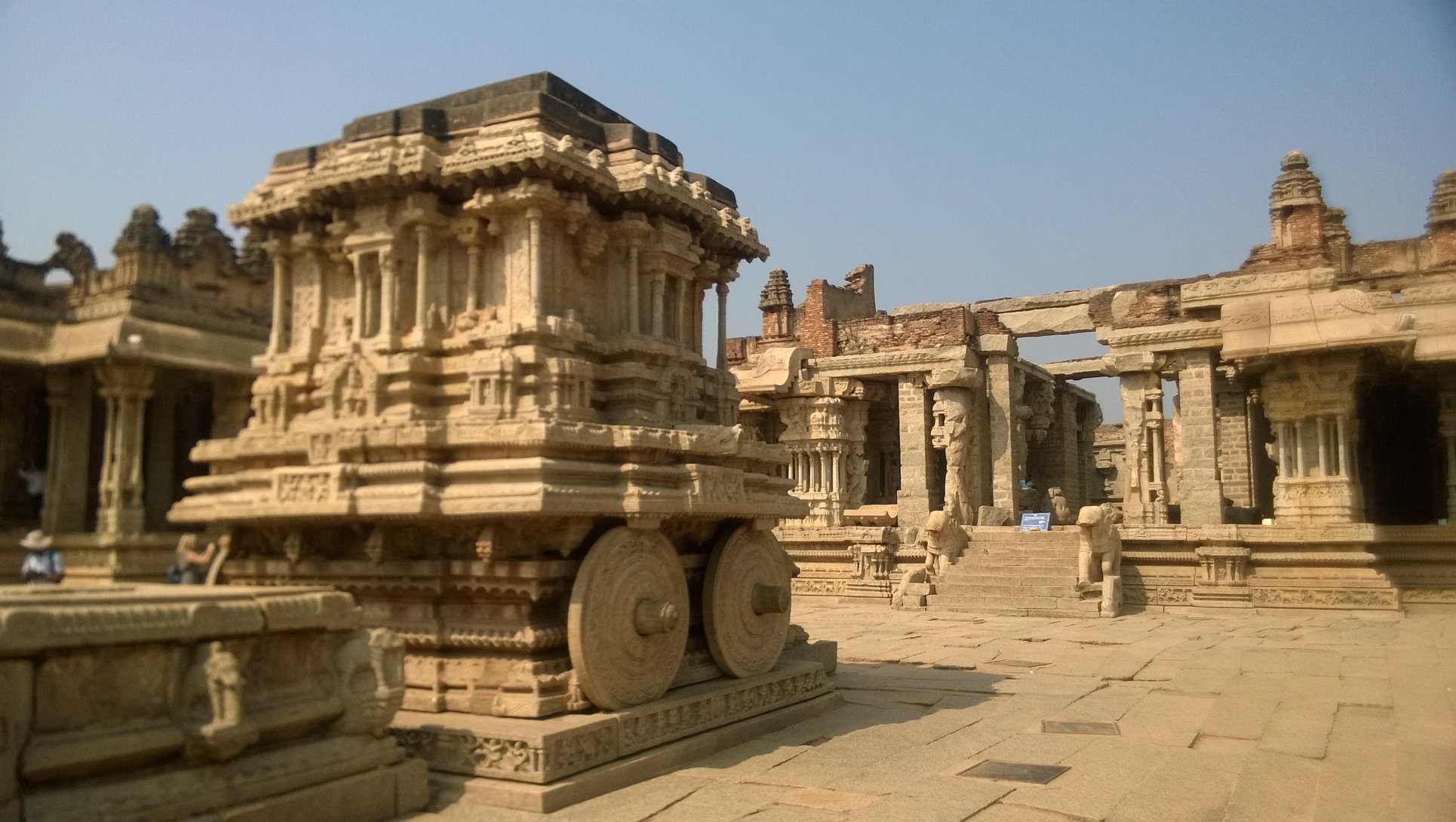
The 15th century temple, construction of which was started by Devaraya II and continued during the reign of Krishnadevaraya and later kings, is famous of the musical pillars and the stone chariot placed in front of the main temple structure. The carvings and sculptures on the temple and all structures around it, is a testament to the high workmanship achieved by the artists of Hampi.The long straight boulevard leading to the temple complex is flanked on both sides by long continuous lintels supported by a series of pillars – these structures once contained shops. Behind one of the shopping arcade is a pond.

The Royal Enclosure
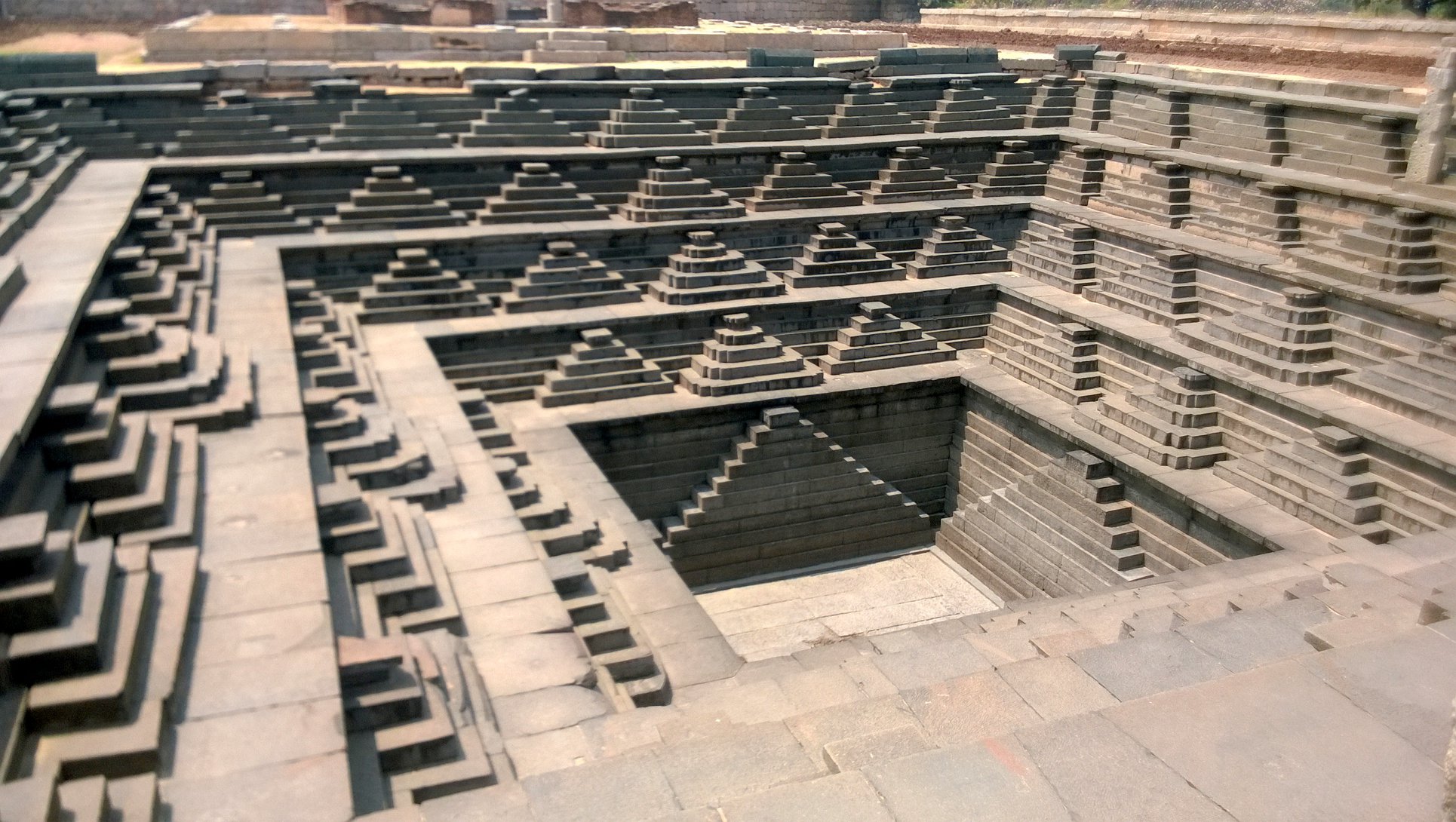
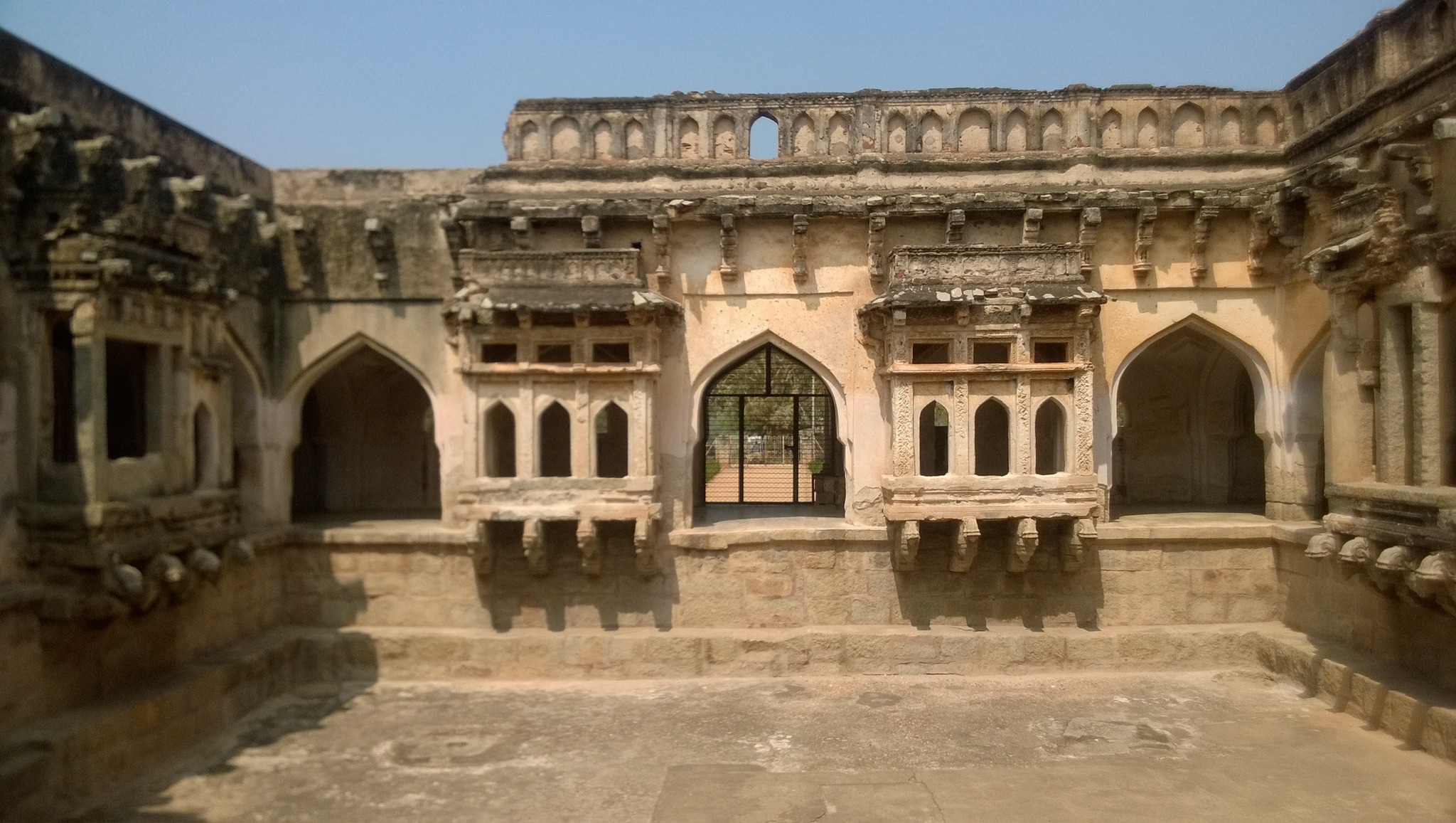
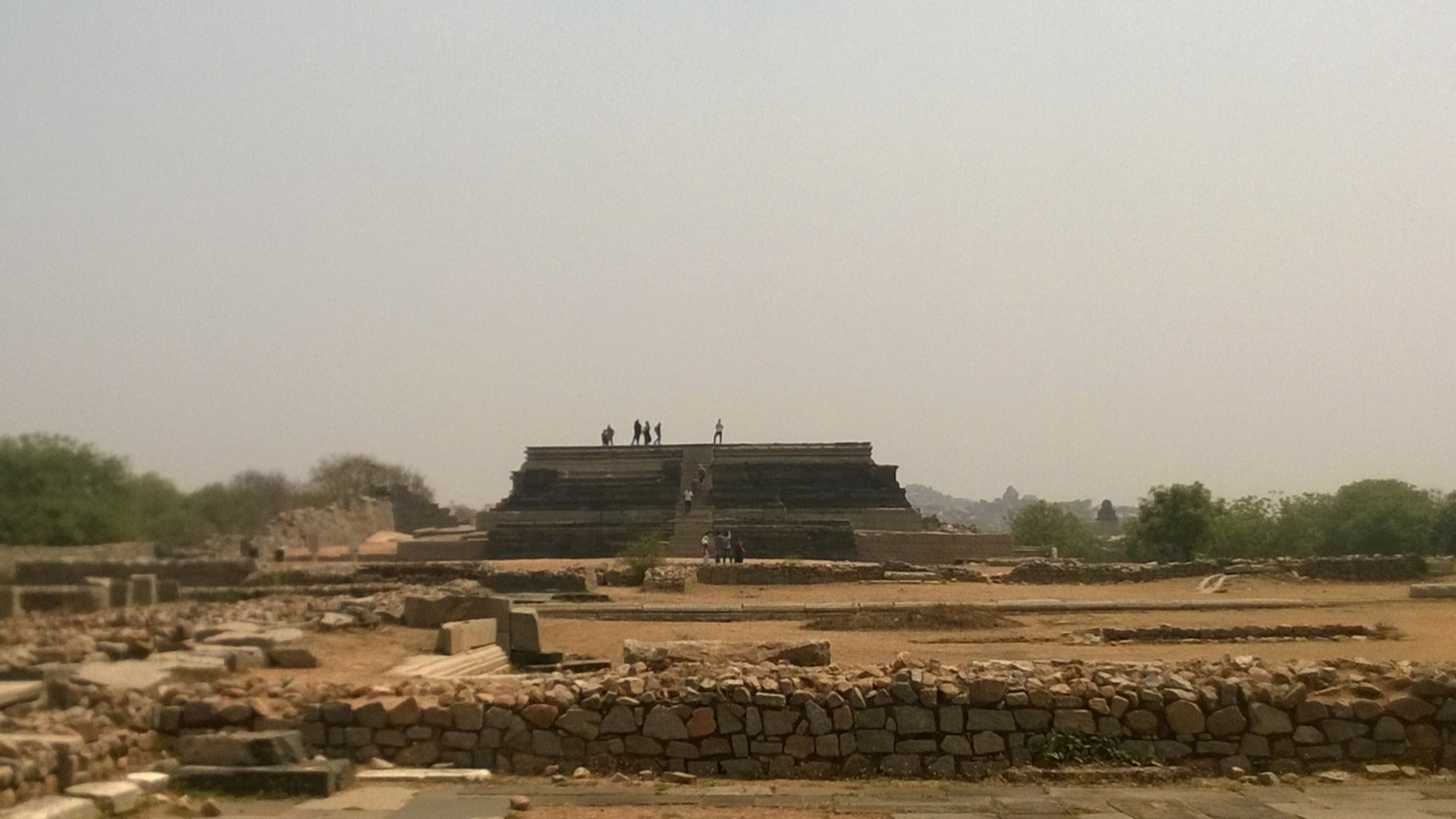
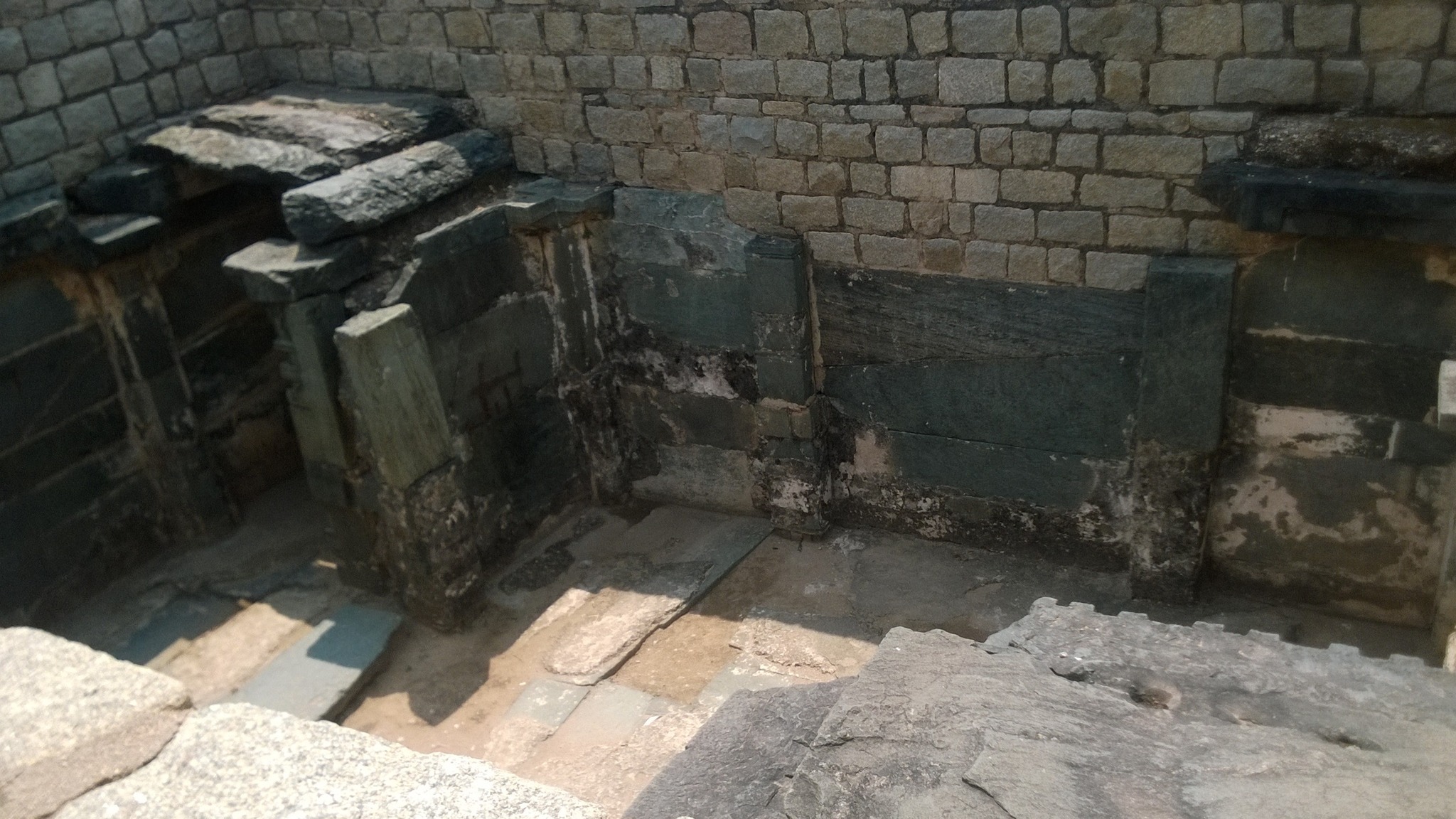
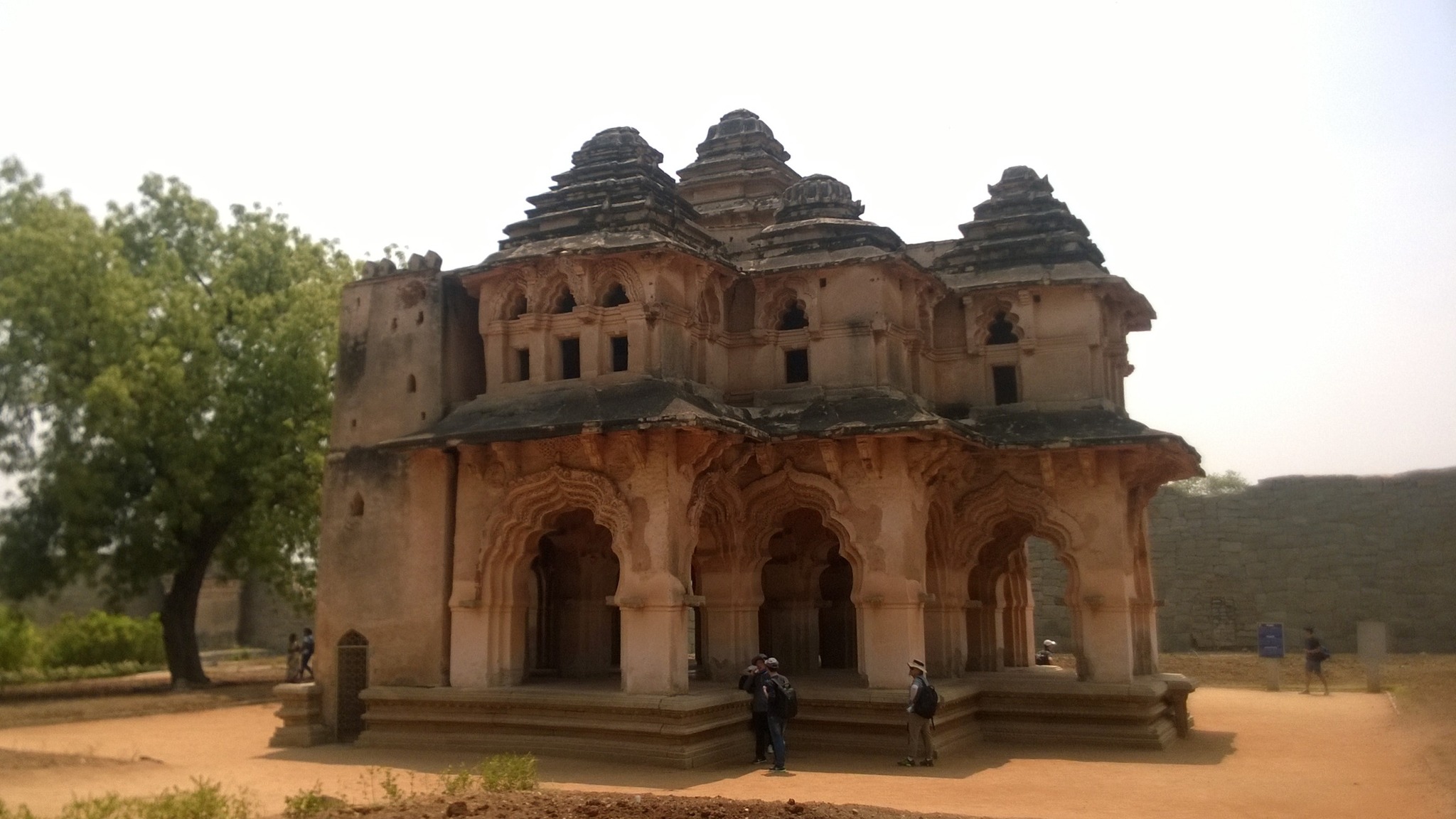
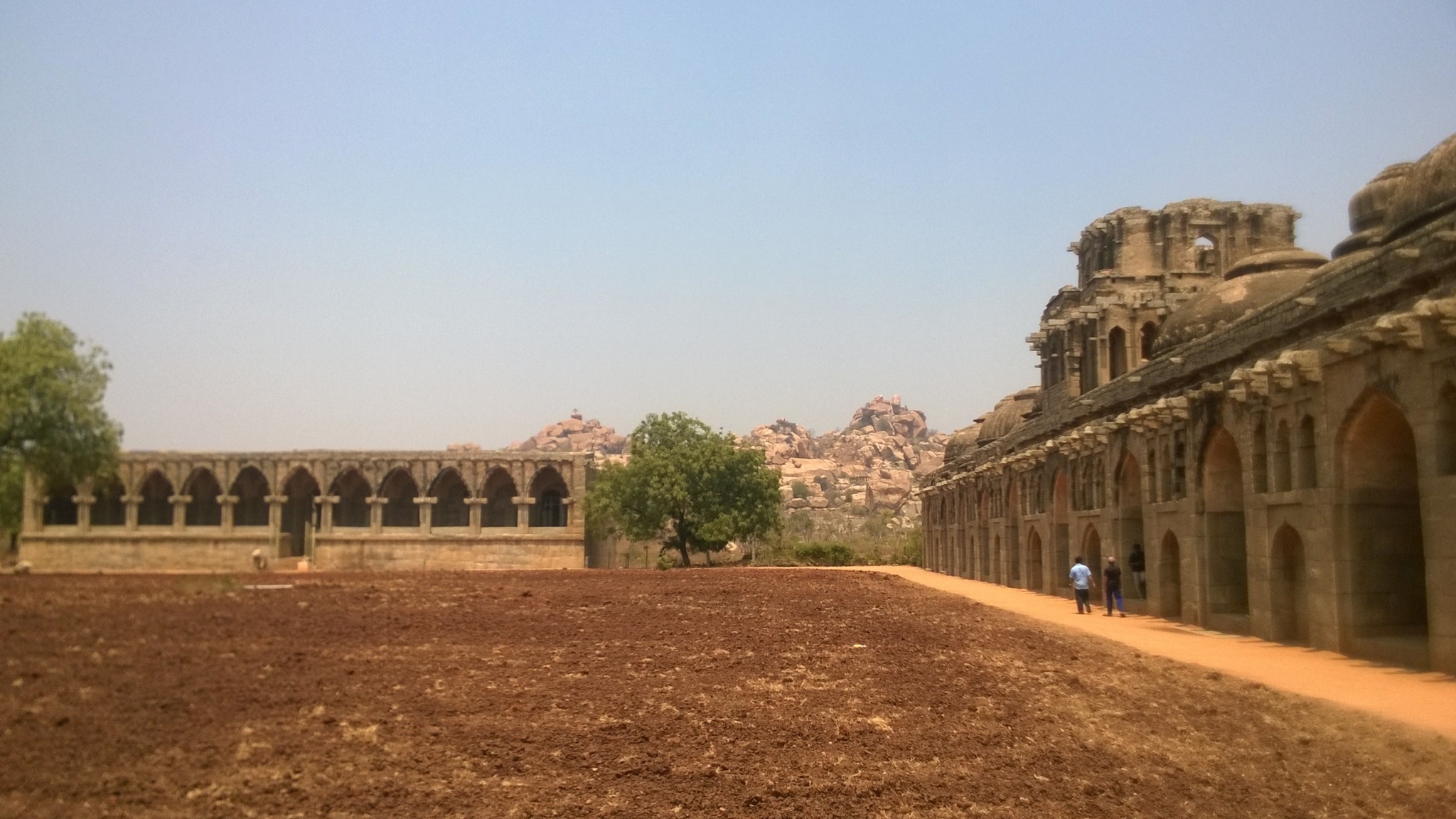
The Royal Enclosure is the area where the royal family lived and administerefdfrom. The major highlights of the area include a stepped tank called the Pushakarini Kola, a platform for conducting ceremonies called the Mahanavami Dibba, an ornate bath complex called the Queen’s bath, a hall purported to be for the King’s public audience, and a labyrinthine building with secret underground chambers. A little farther from the above mentioned structures are a structure of unknown antiquity and purpose called the Lotus Mahal that employs an Indo-Islamic style of architecture, and the elephant stables.
A series of notable temples/shrines
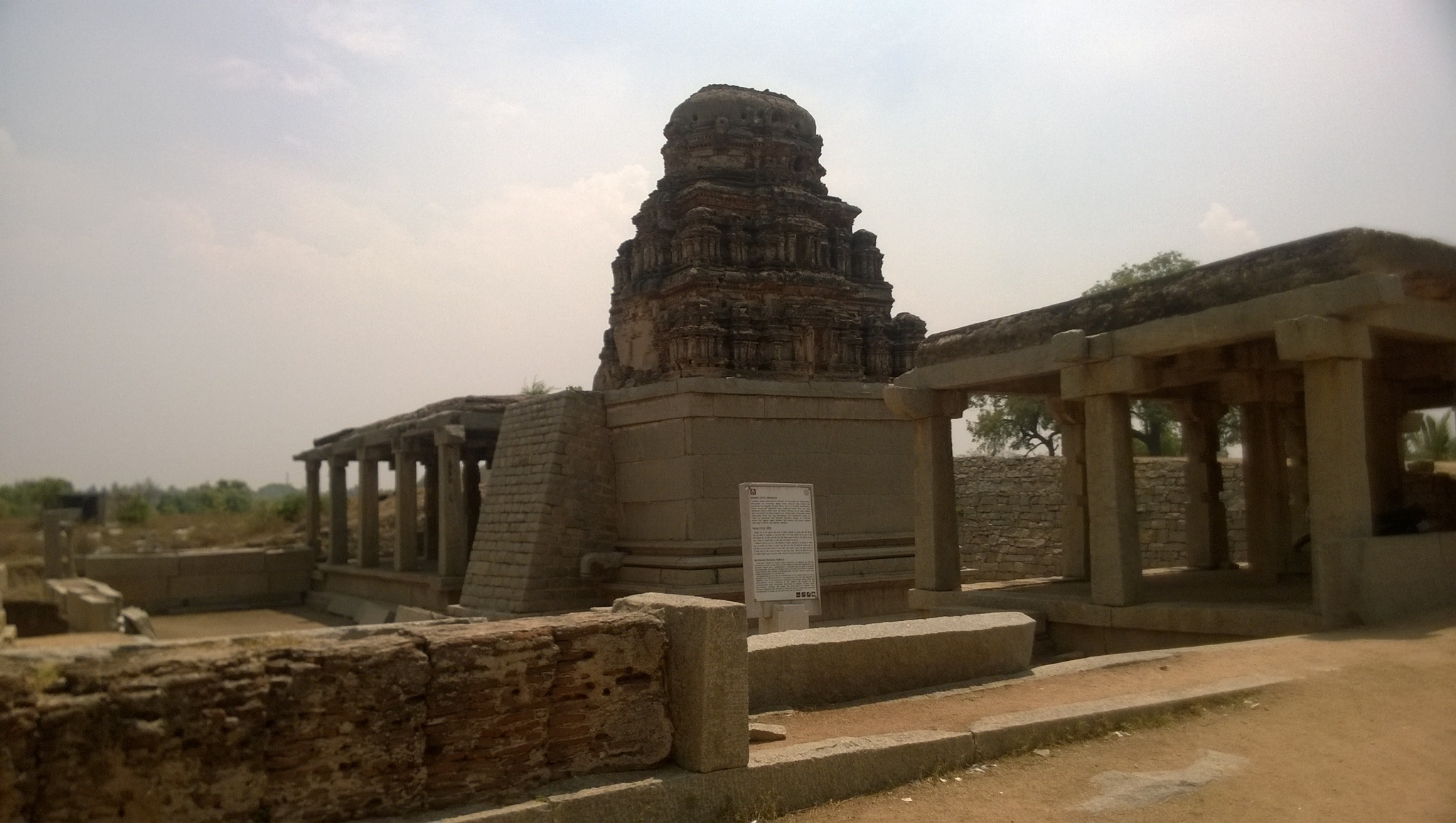
Further on the trail, were a series of temples and shrines, namely,
Madhaba (Ranga) temple, temple built in 1545 AD exclusively for holding concerts of dance, vocal and instrumental music;
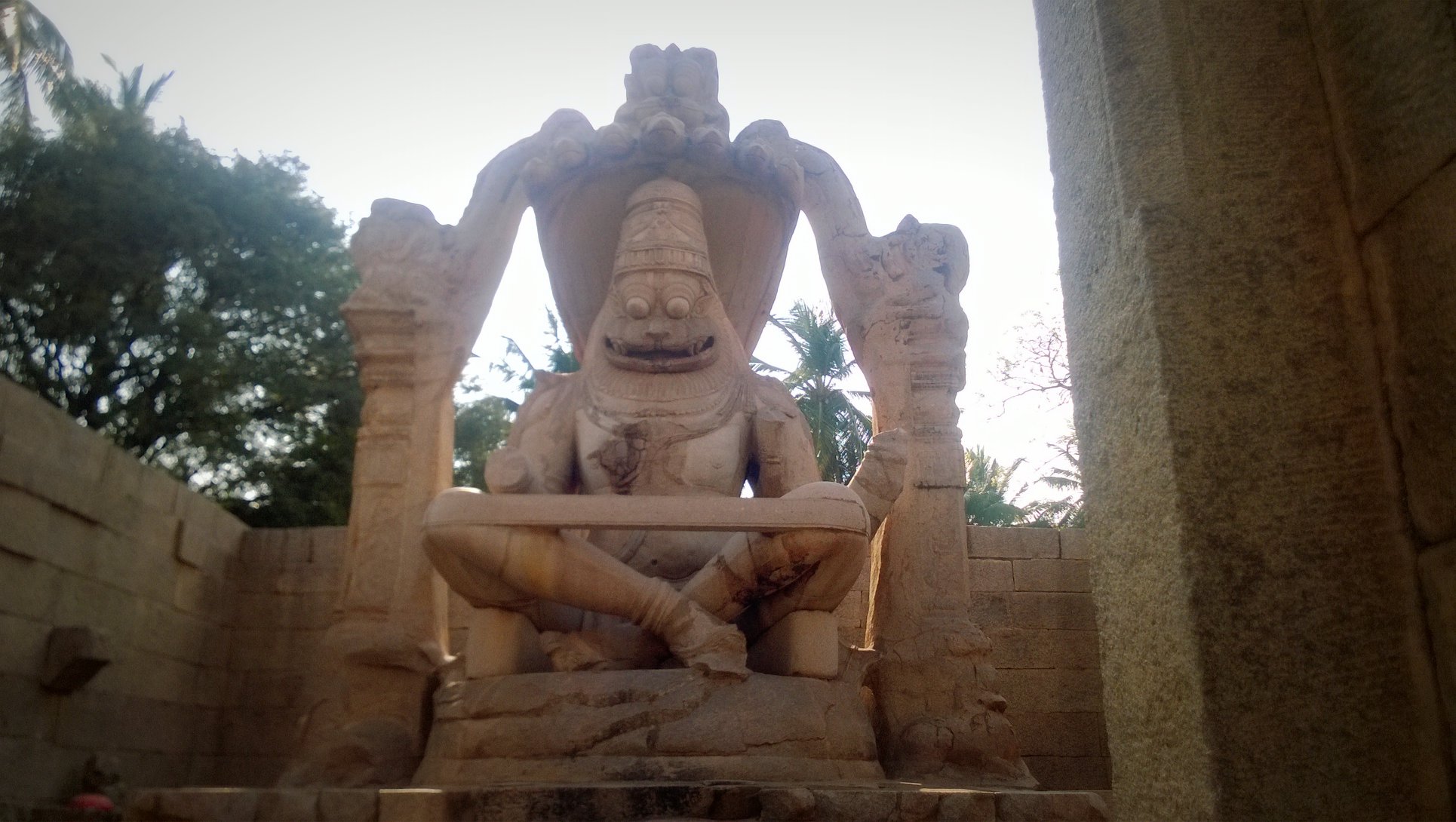
Shri Lakshmi Narsimha temple, built in 1528 AD, houses a fearsome monolithic 6.7 meter statue of Lord Narasimha;
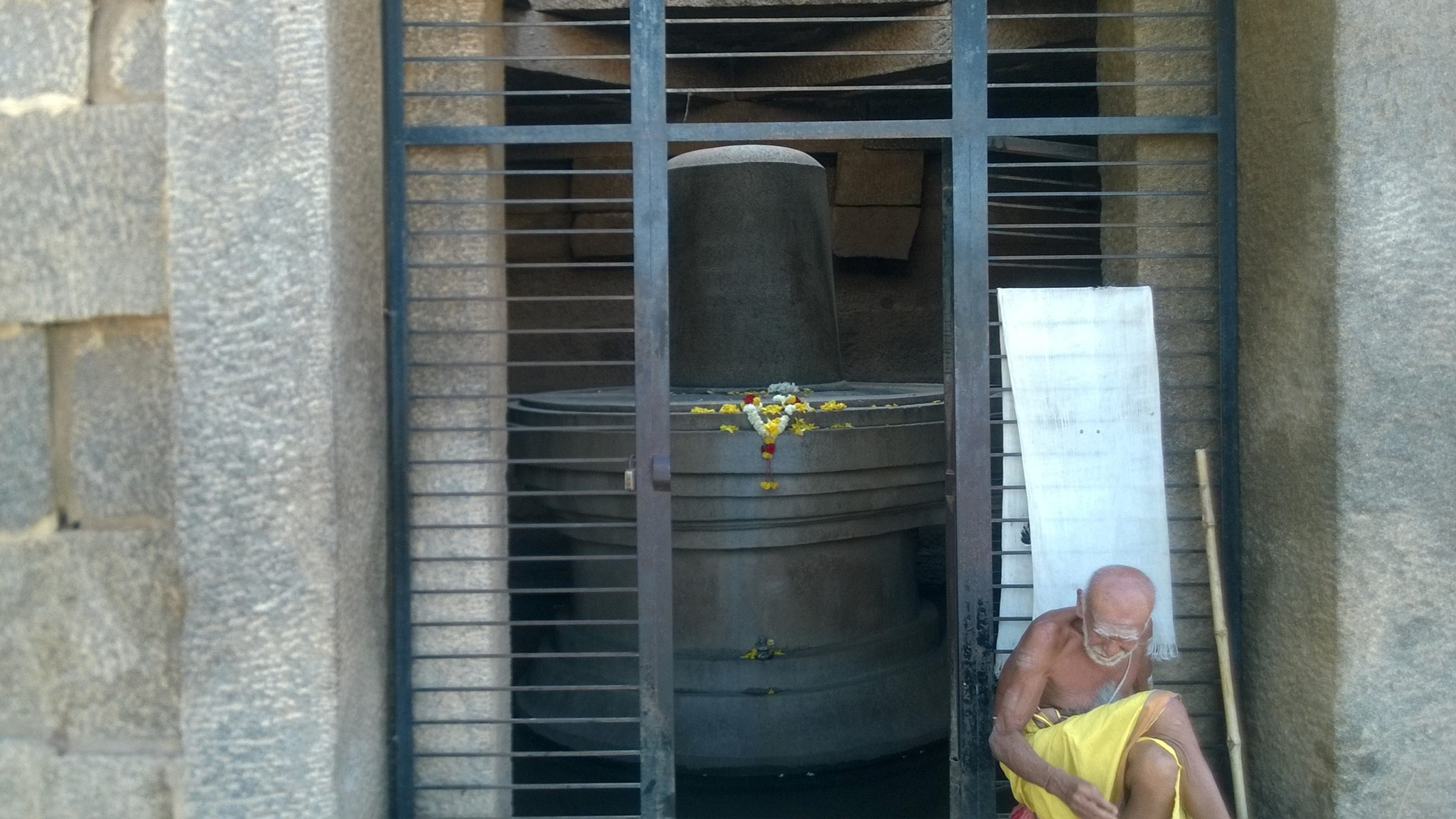
Shree Badavilinga Gudi – a near-3 meter high shivlinga, whose lower part remains in water drawn from the Tungabhadra river, throughout the year;
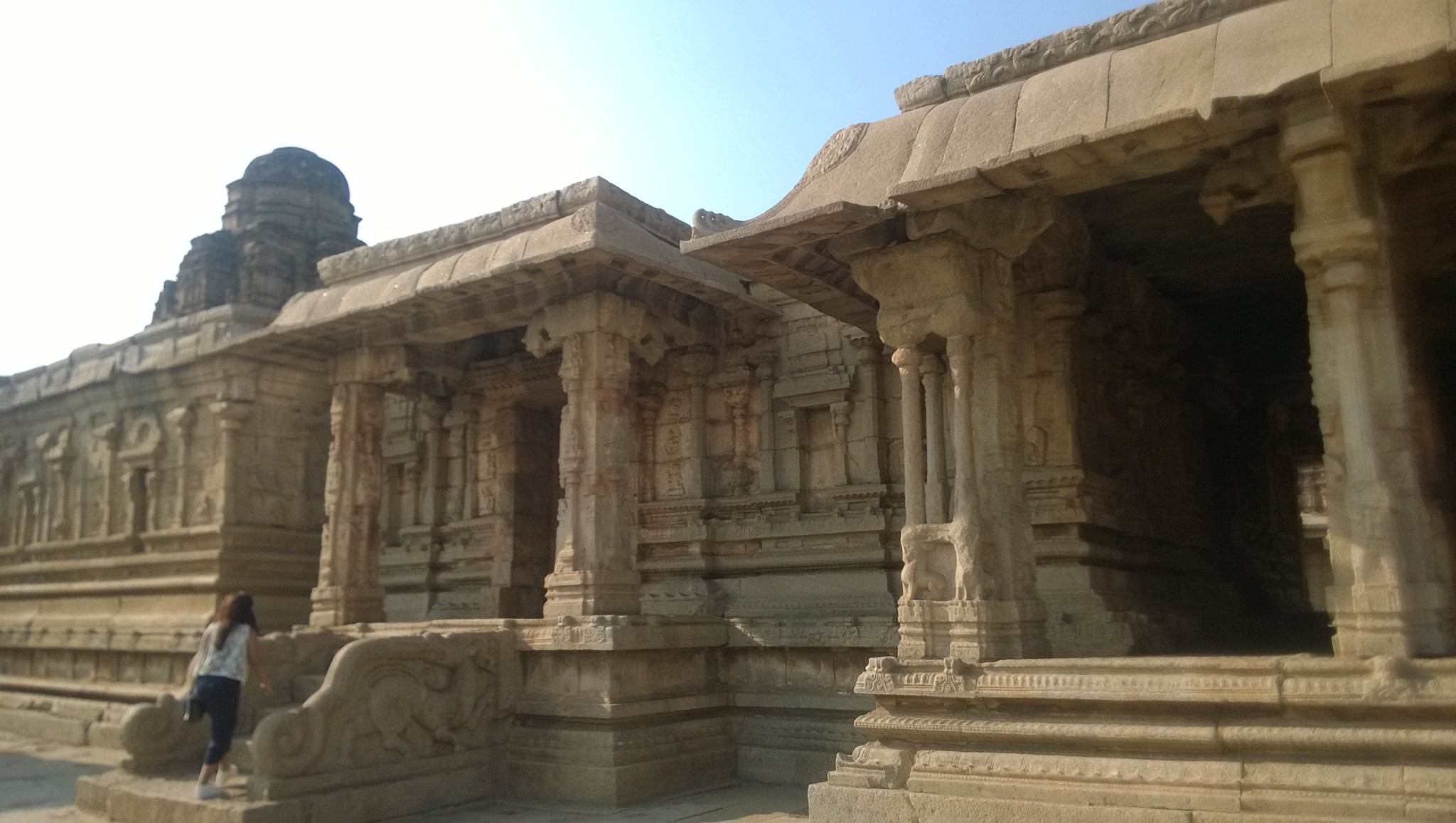
Krishnawamy temple, an ornate temple built by Krishnadevaraya in 1513 AD, with a Balakrishna image sourced from Odisha;
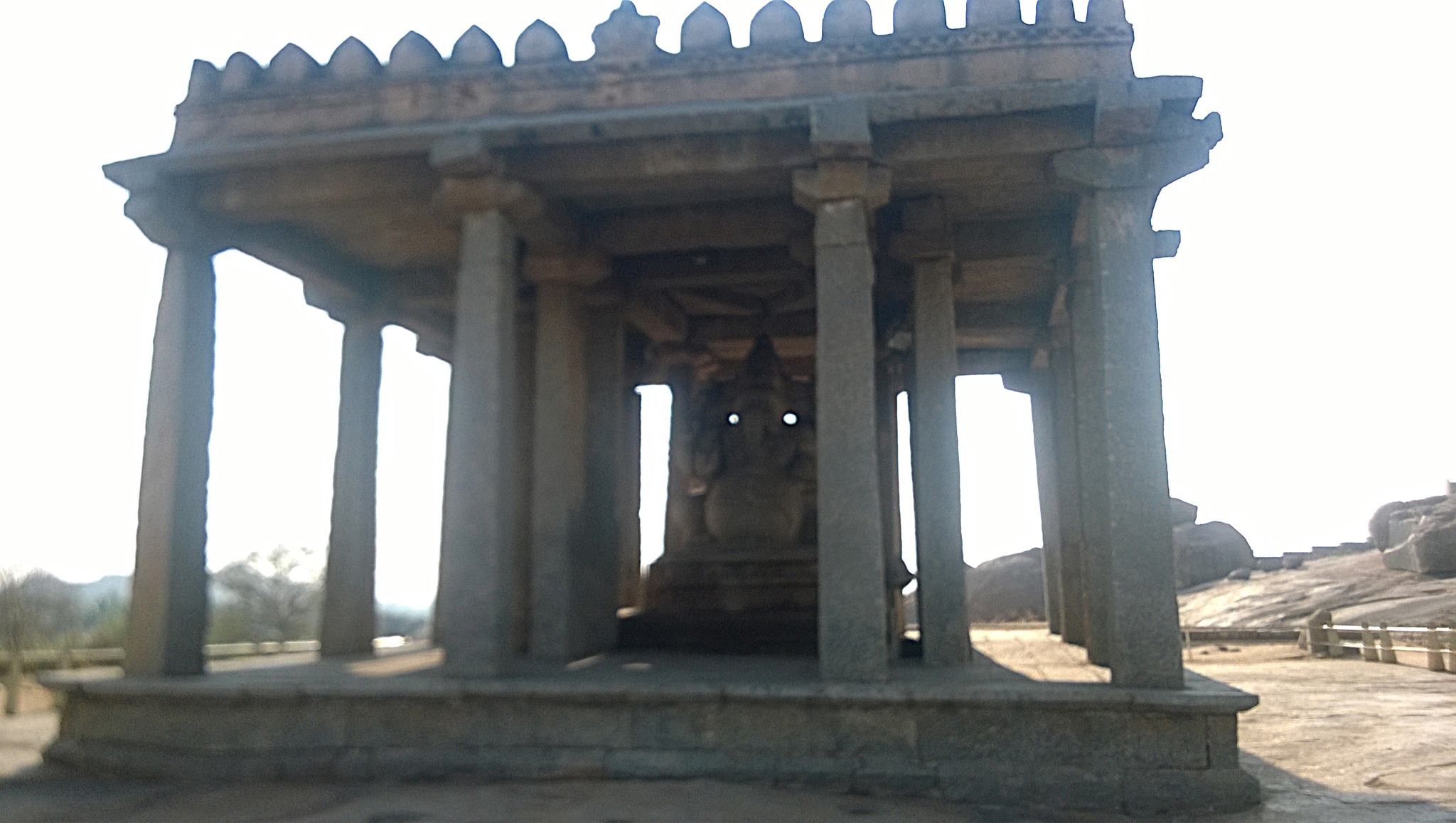
Saasivekaalu Ganesha a 2.4 meter 16th century monolithic four-armed idol of Lord Ganesha
Hemakuta Group of Monuments
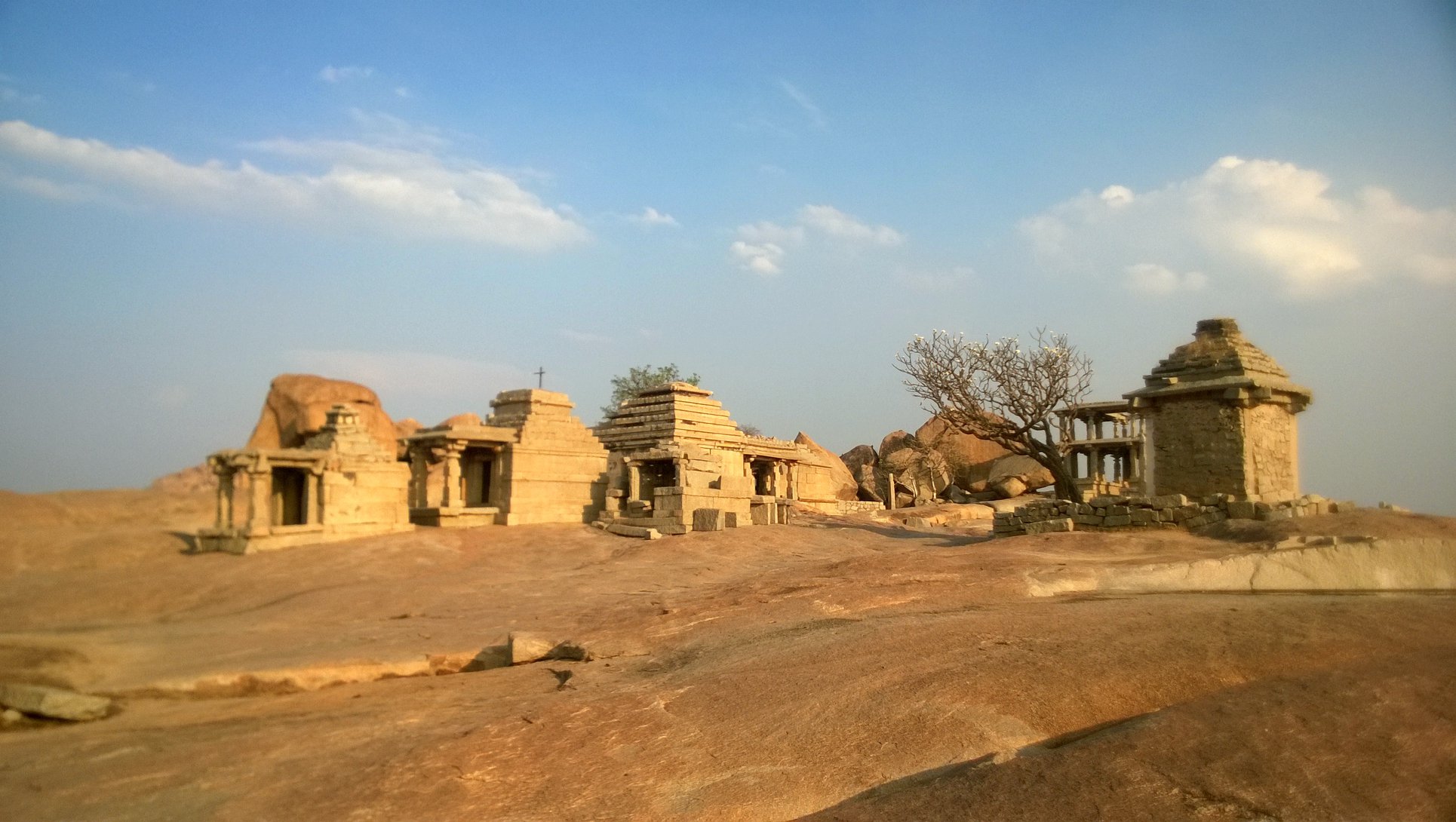
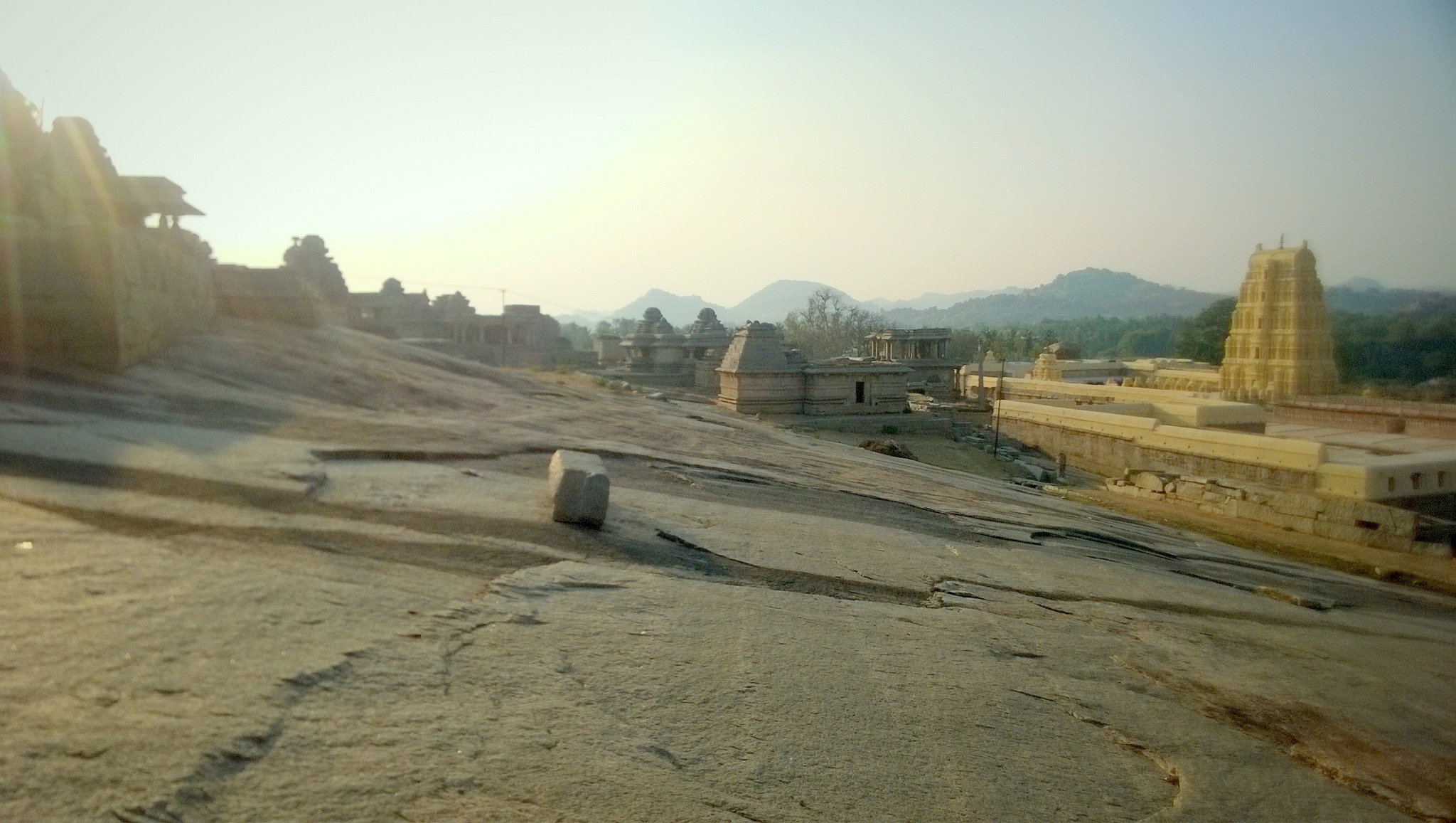
Walking a little further up the Ganesha idol, there is a bald hillock, upon which stands a cluster of temples – about 30 in number – of varying shapes and sizes, and datable between 9th and 16th century AD. Legend says Shiva was meditating on the Hemakuta hillock at the time the gods wanted Parvati to marry Shiva, and sent Manmatha, the god of love, to distract him. Infuriated, Shiva opened his third eye, thereby burning down Manmatha, and also melting down stones and boulders causing them to collected as pool called the Manmatha Honda at the foothills. Hemakuta hill affords a nice view of the sunset as well as of the Virupaksha temple and the Tungabhadra river.
Virupaksha temple complex
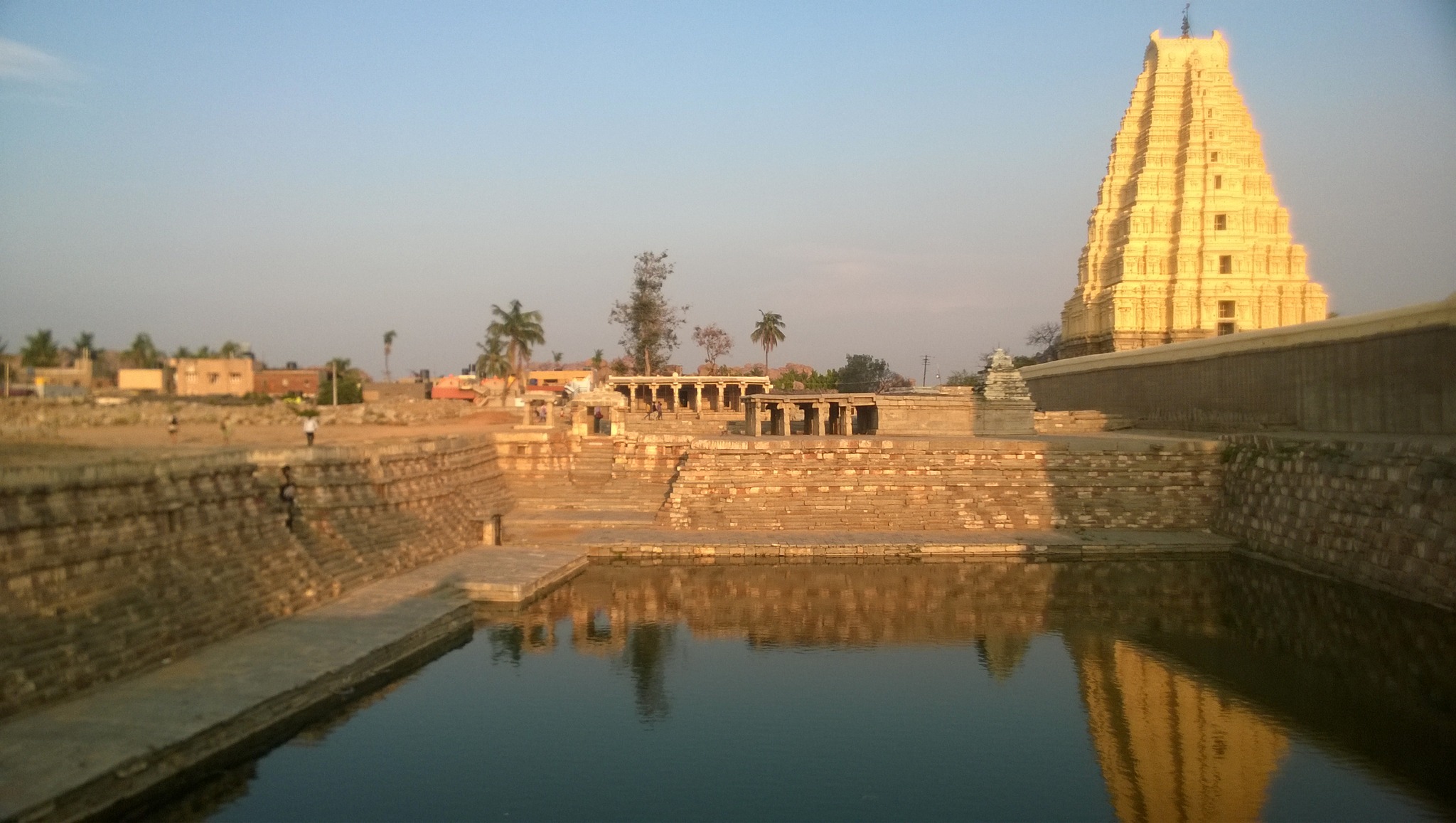
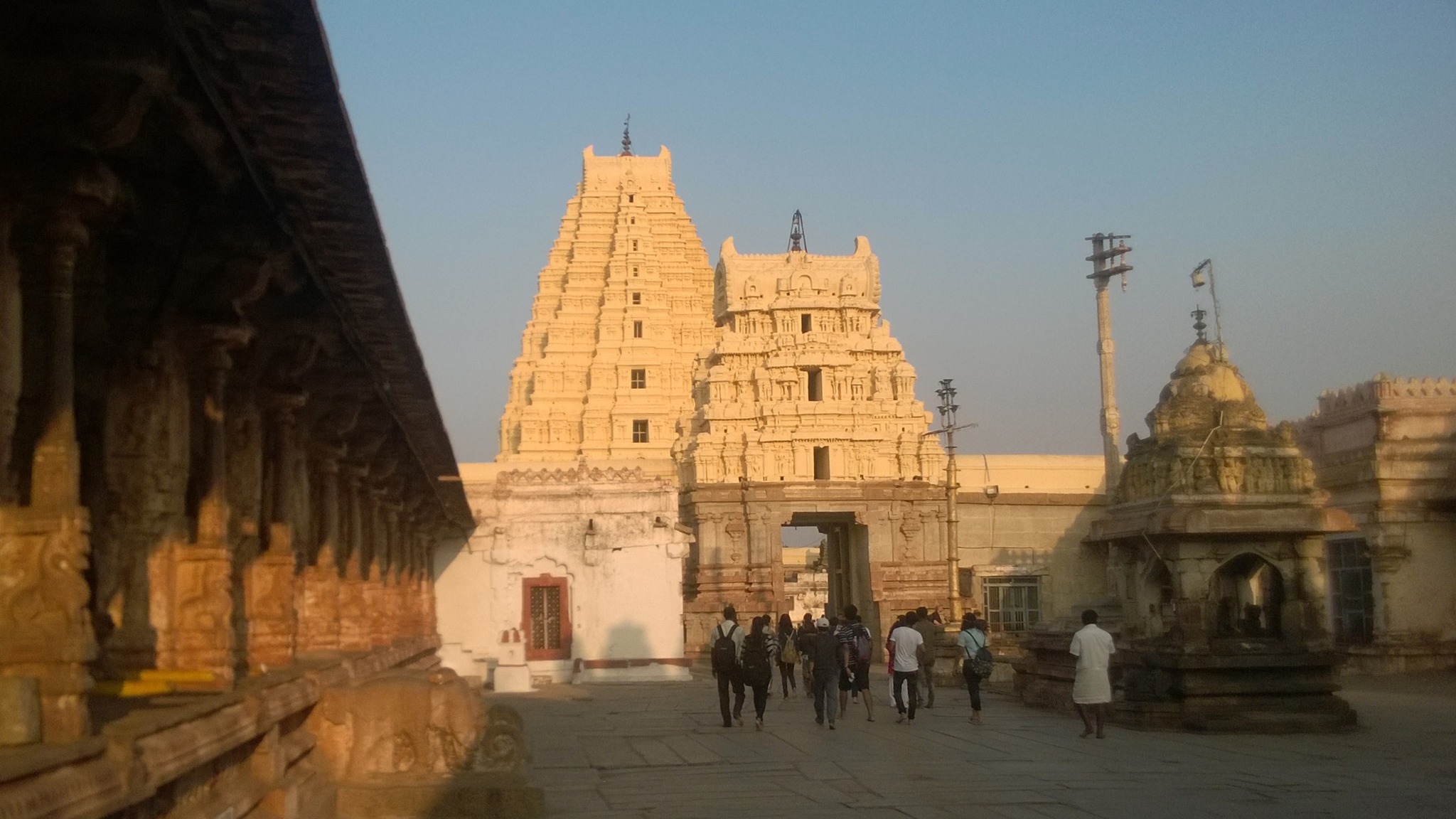
Descending the hillock from the other side, one reaches the Virupaksha temple that was expanded into its current imposing form in the first half of the 16th century. Standing on the bank of the Tungabhadra river, the temple complex has two large courtyards with numerous subsidiary shrines. The humongous main sanctum houses Virupaksha, a benign form of Shiva shorn of anger, the tutelary deity of the Vijanagara kings. The temple is most sacred of all sites in Hampi, and puja rituals are unfailingly performed in accordance with norms laid down by sage Sri Vidyaranya, beginning with drawing water from the Tungabhdara, considered equivalent to the holy Ganga.
Matanga Hill
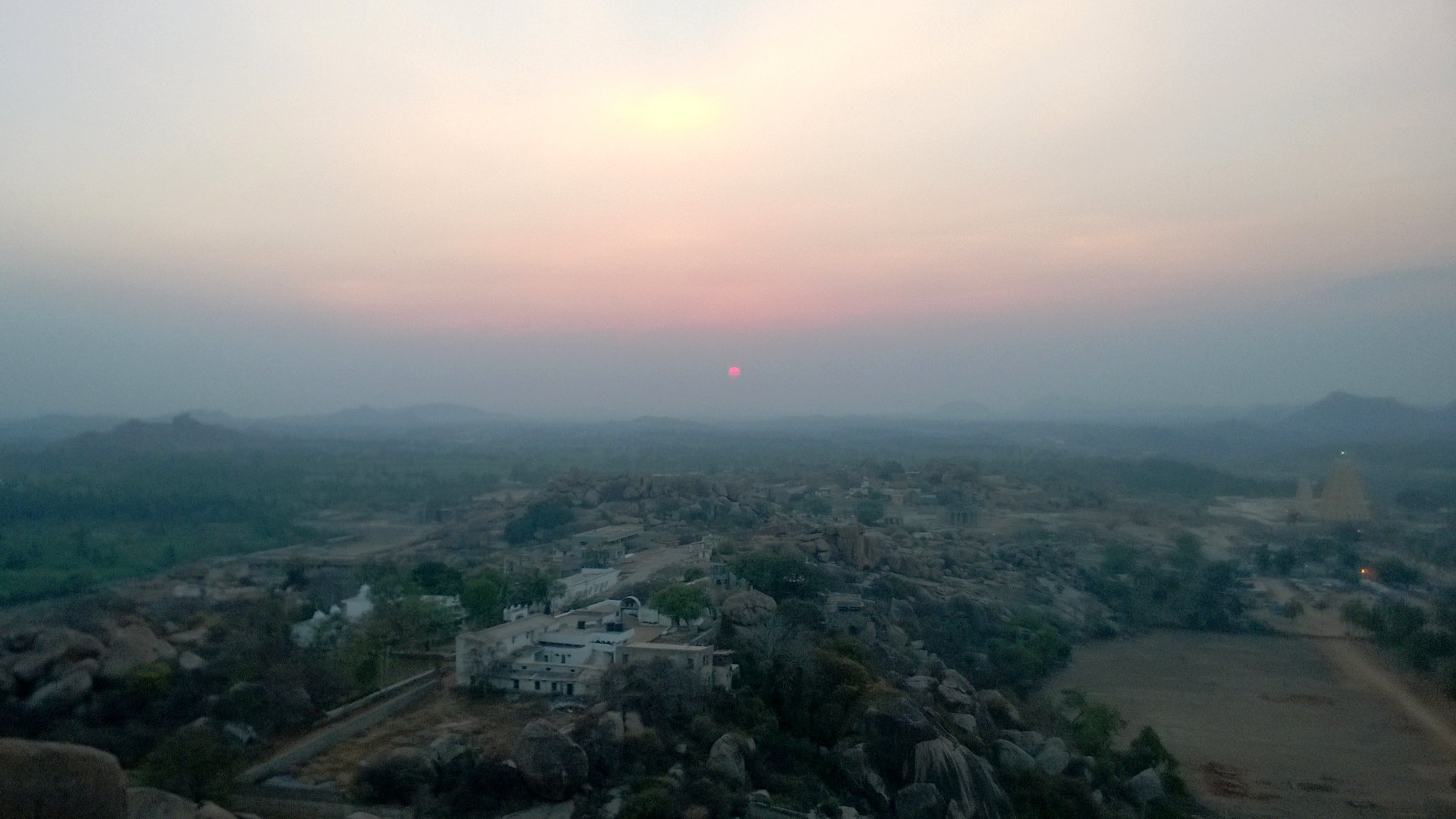
Finally, to close off the day, I hiked up the Matanga Hill, stopping many times to catch my breath before being treated from the hilltop to a breath-taking view of the sun setting with the crimson sky in the backdrop.
Day 2
Virupapuragade or Hippie Island
The next morning, I went back near the Virupaksha temple complex, since adjacent to the temple complex lay the Ferry Point, that facilitates transport to Virupapuragade, a granite outcrop in on the Tungabhadra river. It acquired the nickname Hippie Island on account of providing an atmosphere for relaxation by virtue of the many shacks and cafes serving all sorts of cuisine accompanied by music, both live and recorded, and also abounds in shops selling souvenirs. This is also where one could rent scooters and bikes, which is what I did.
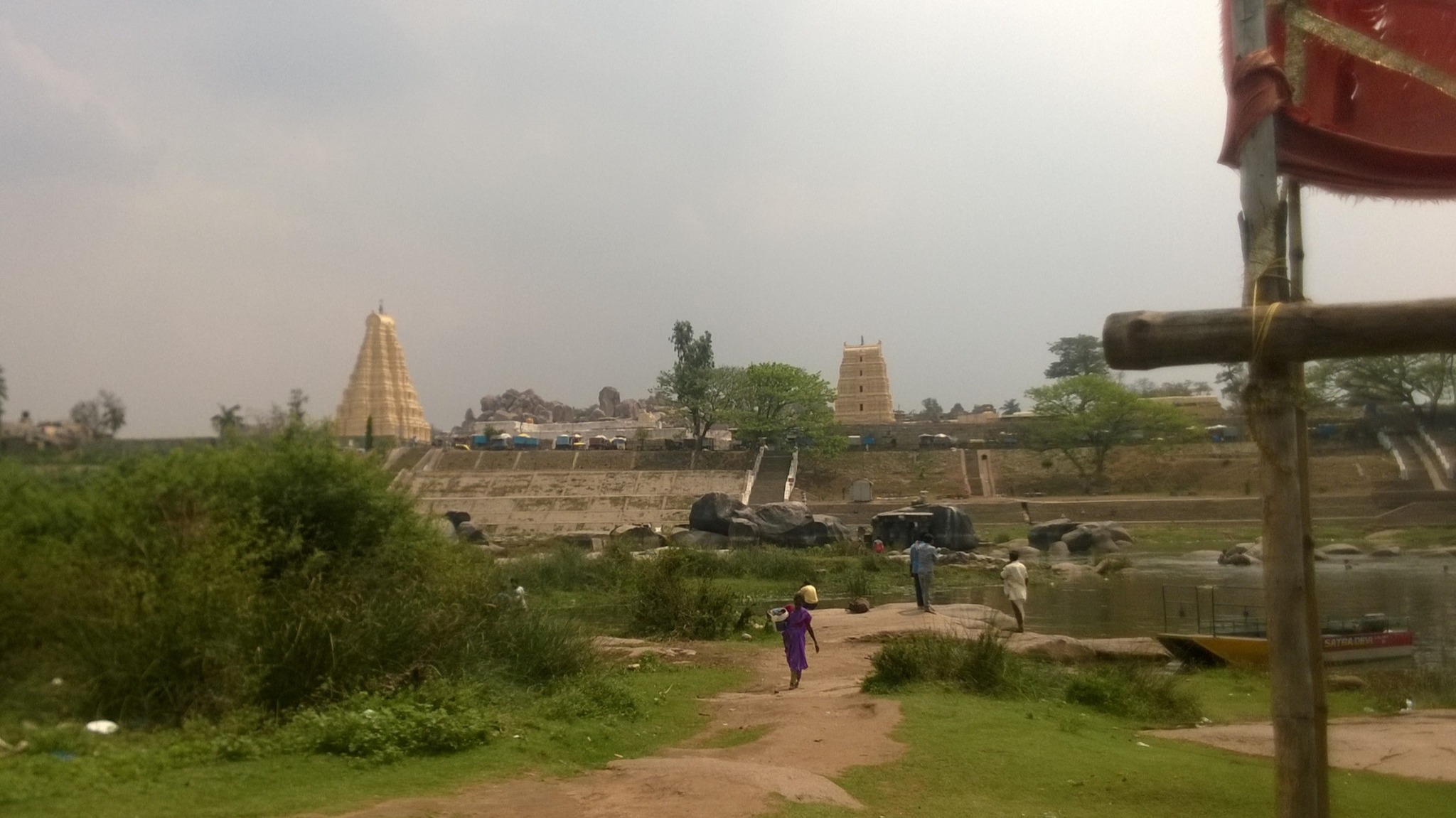
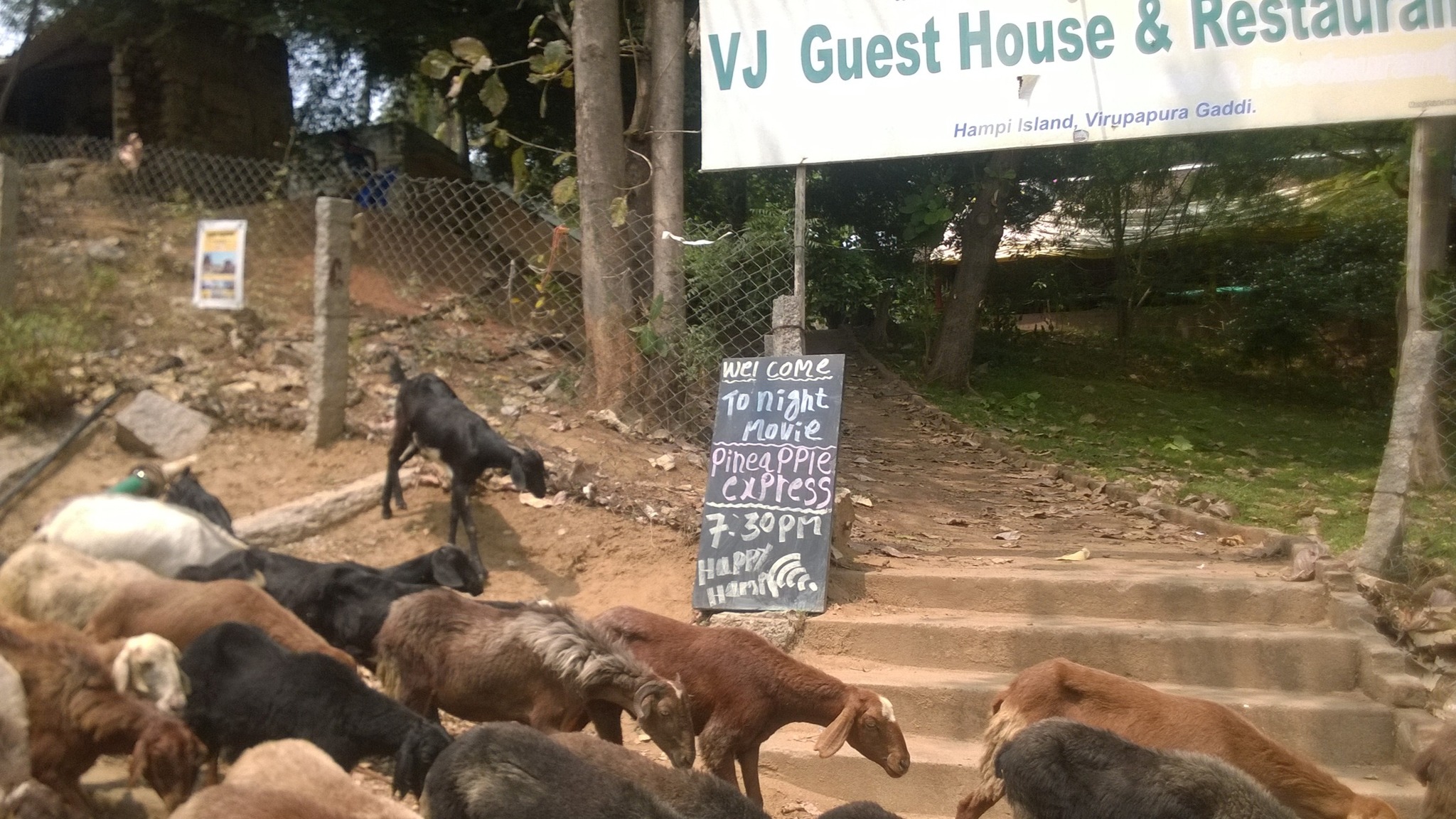
Thankfully, the channel separating the island from the other bank of the Tungabhadra, is shallow or virtually, non-existent, and the low connecting road runs parallel to an ancient aqueduct that now lies in ruins.

Sanapur Lake
On the rented scooter, I proceeded to Sanapur Lake, about 5 km north-east of Hippie Island, on a road winding through paddy fields and barren hills, until I reached a bend that curved around a boulder hill and took me across a dam to a coracle point.
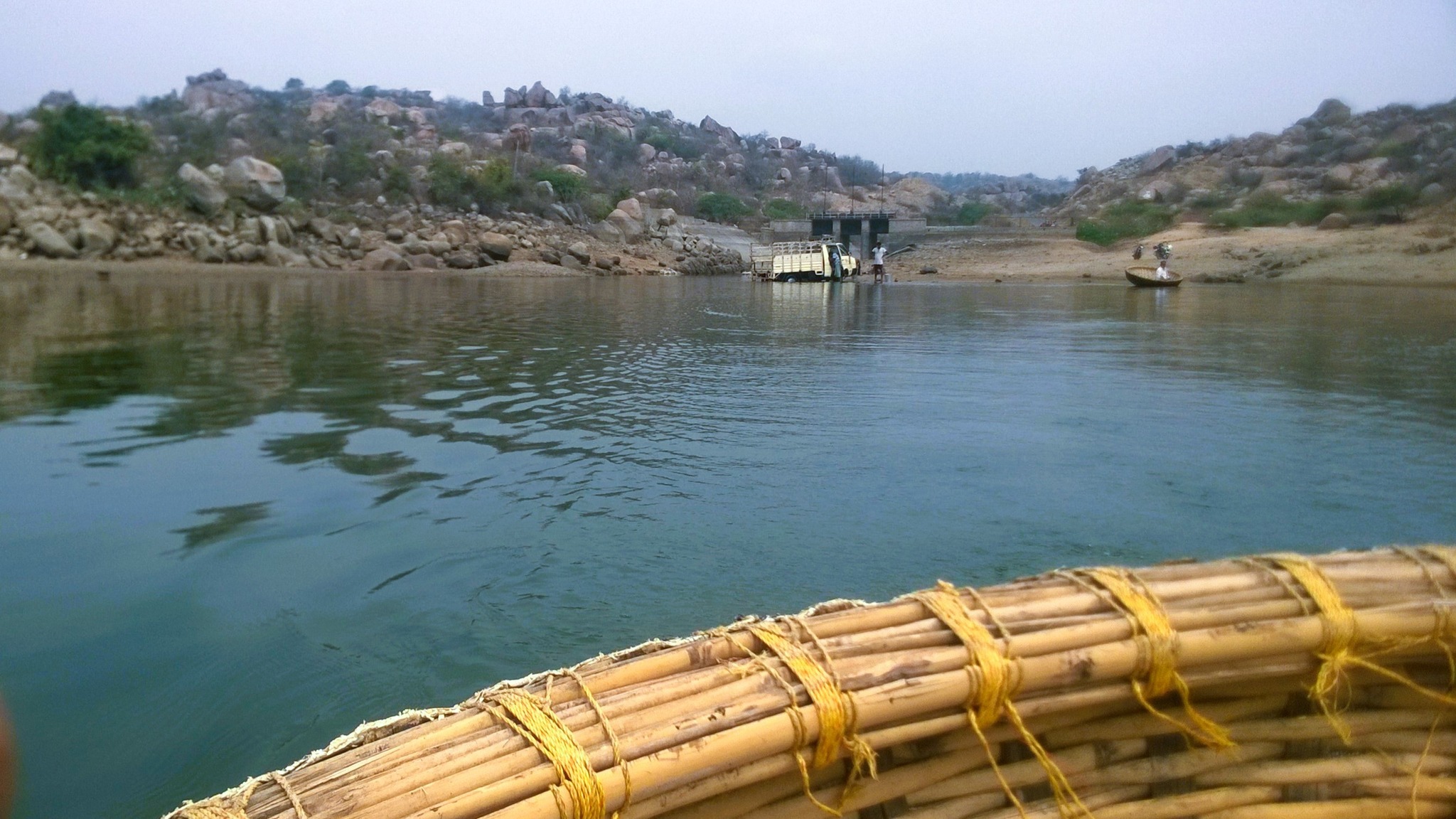
After a peaceful coracle ride, as I was setting off for my next stop, the scooter refused to budge. Despite the spotty mobile network, I somehow managed to call the rent-a-bike shop-owner, and thankfully, got a replacement scooter, delivered to me within 30 minutes.
Anegundi
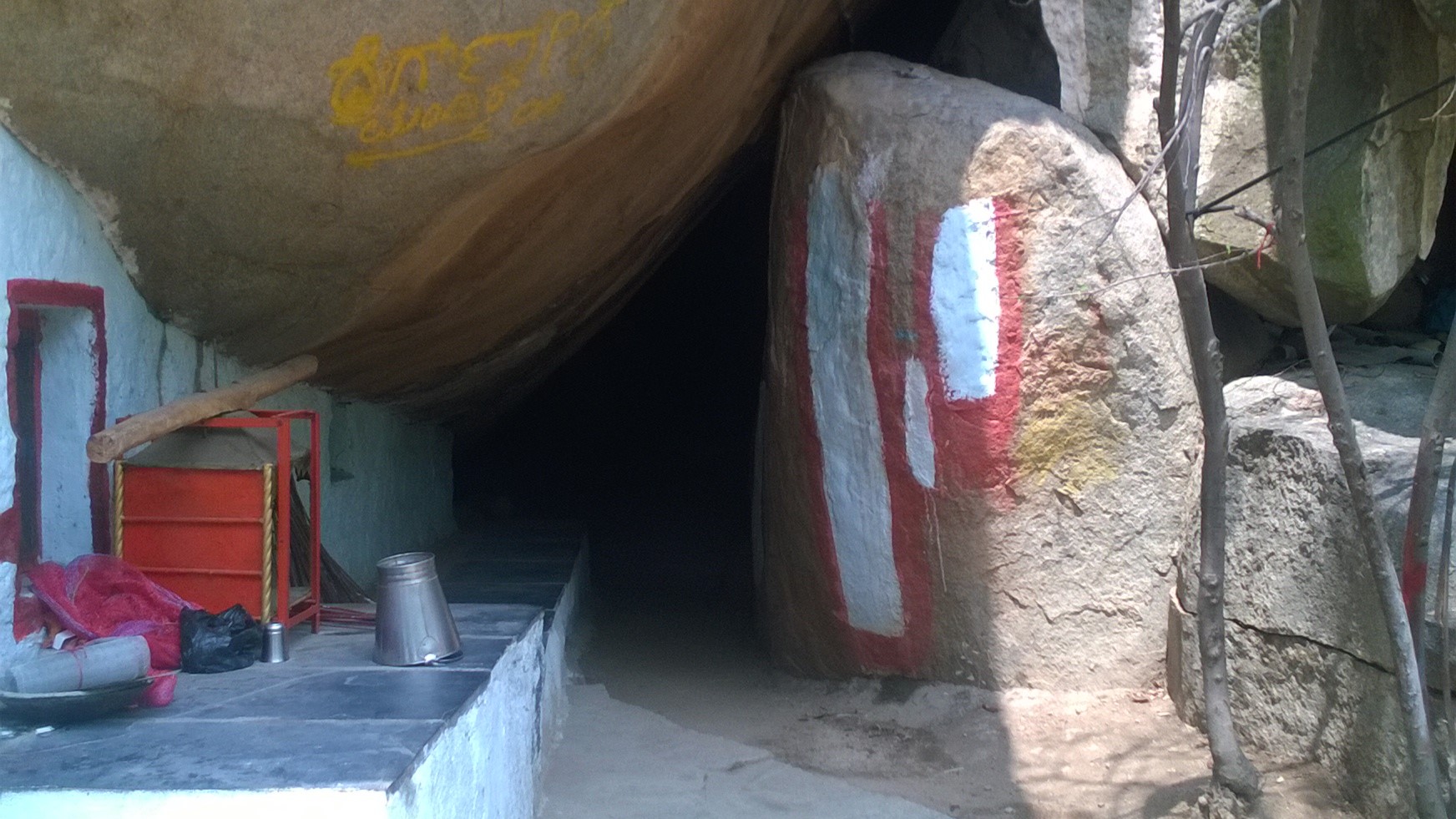
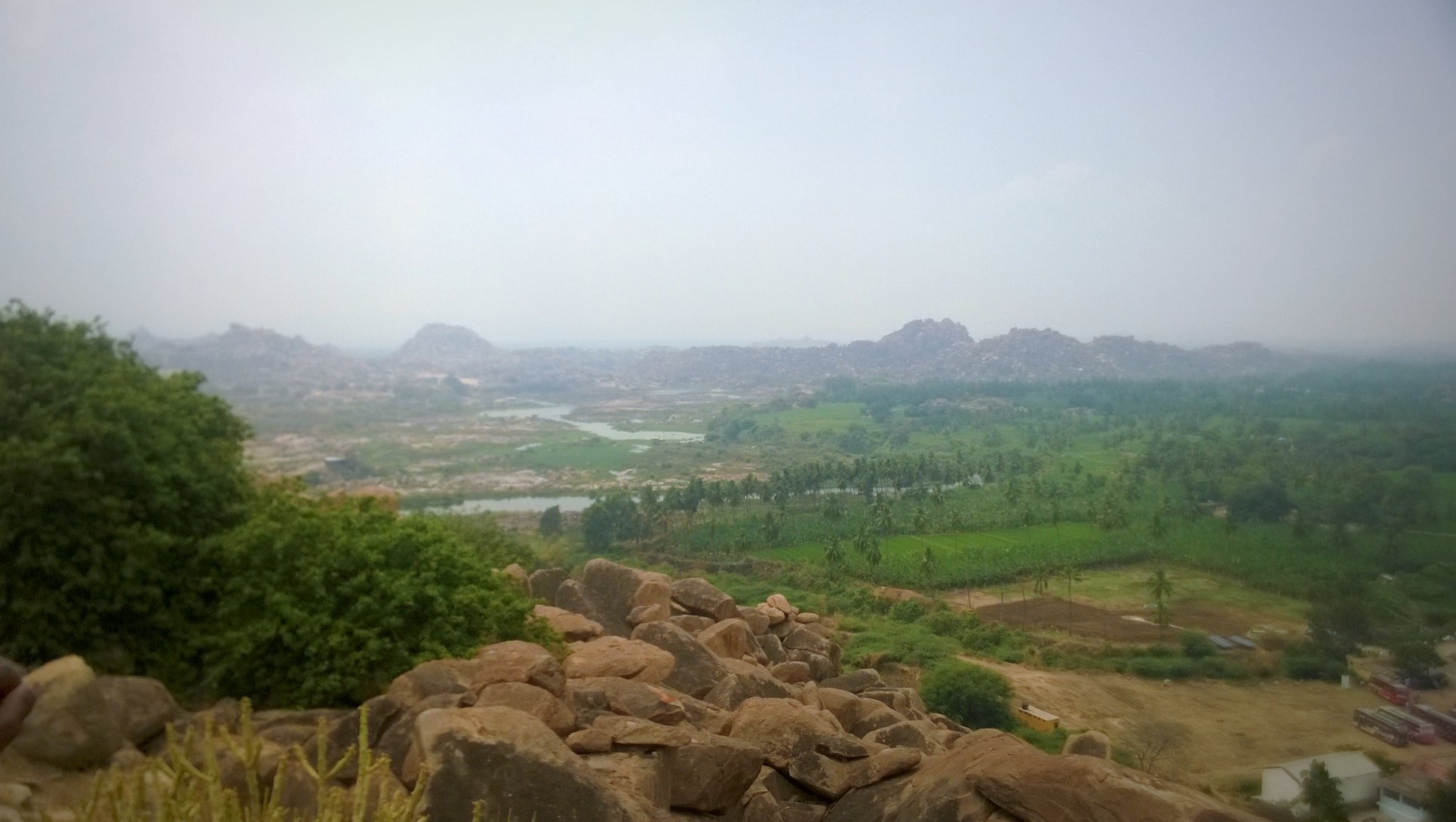
Racing against time, I rode, again flanked by barren boulder hills, paddy fields and water bodies, 8 km alongside the Tungabhadra river to Anegundi, where a hike up the hill leads to the Anegundi fort. Entering the fort premises, after a short hike, is a cave that legend identifies as the place where the vanara king Bali lived. Further hiking up, I reached the top of the fort, wherefrom I got a panoramic view of the countryside replete with boulder-hills, paddy fields, and the boulder-strewn Tungabhadra.
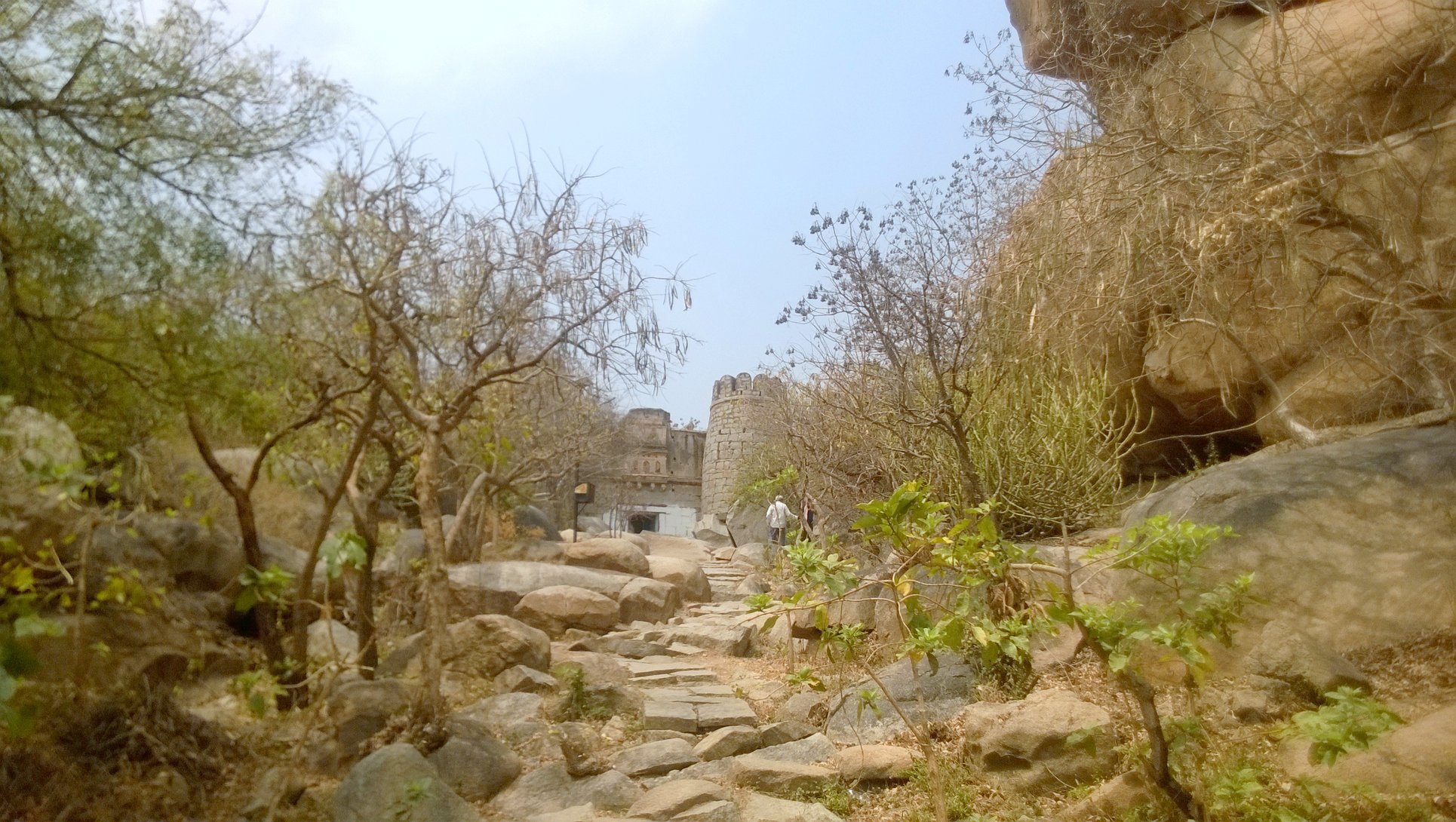
By 2 PM, back on Hippie Island, I returned the scooter, and following a lunch, I boarded a 4PM bus for Hyderabad, with the hope that I would return to Hampi someday.
 The Timber Trawler