Eager to get away from the humdrum of our job, my colleague Amit and I, decided to make a weekend getaway to Jaipur.
This being my third visit to Jaipur and Amit’s first, I drew from my previous experience, and we booked a day-long package with an auto-rickshaw driver, who took us to Hawa Mahal, Jantar Mantar, Amer fort, Jaigarh fort, and finally, to Nahargarh fort. Later, in the evening, we got a taste of Rajasthani culture and cuisine at Chokhi Dhani.
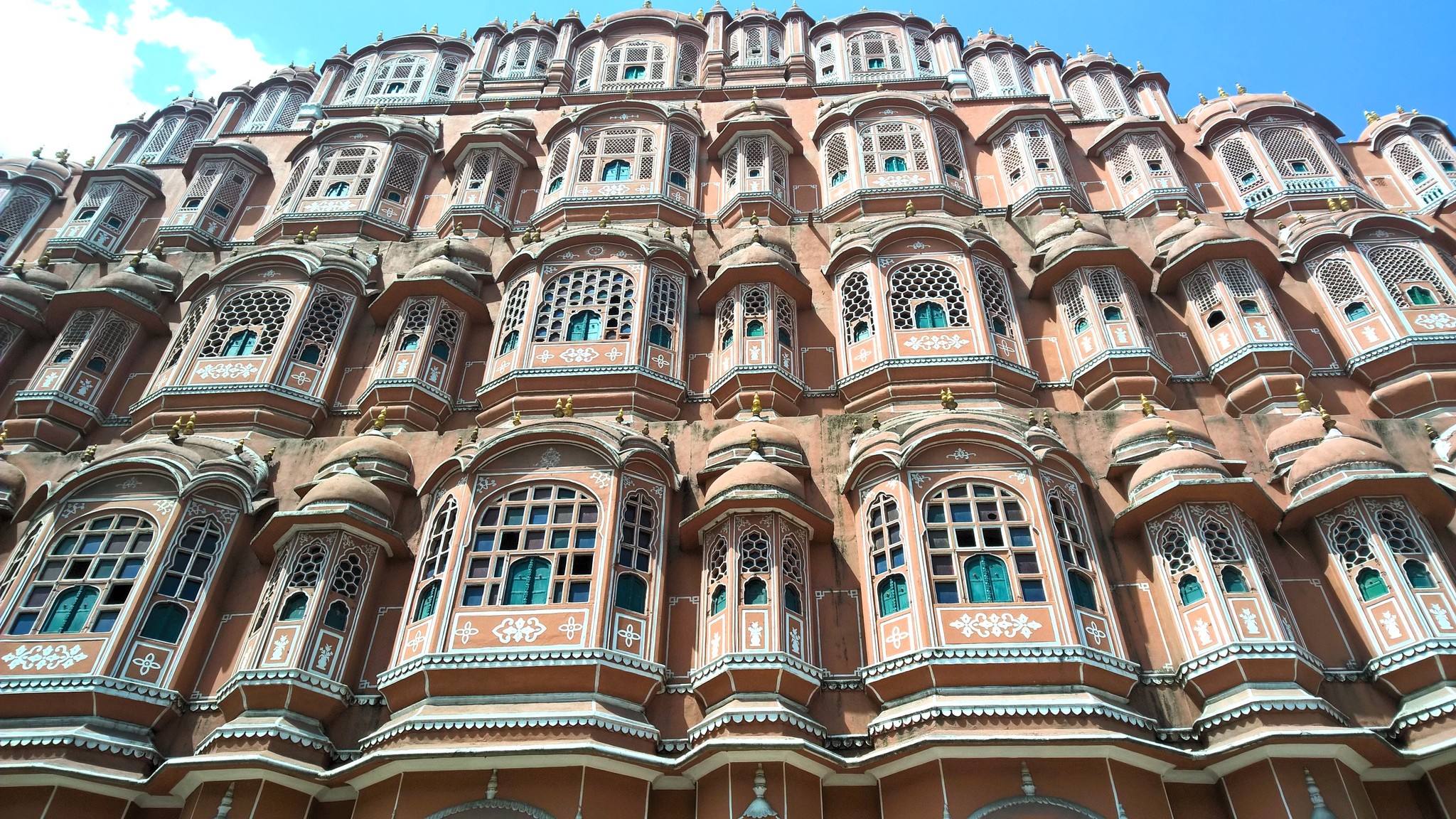
Hawa Mahal, Jaipur
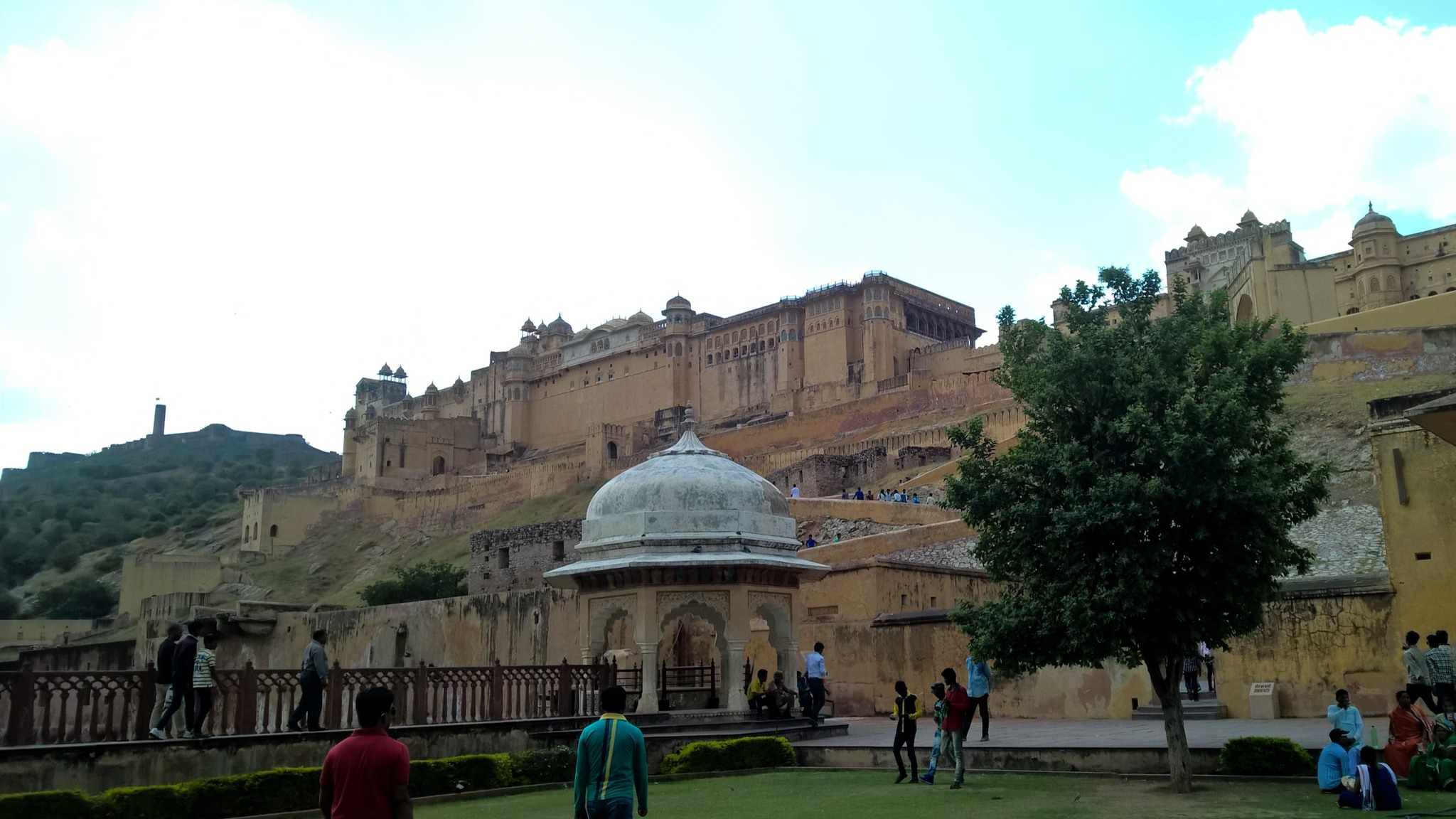
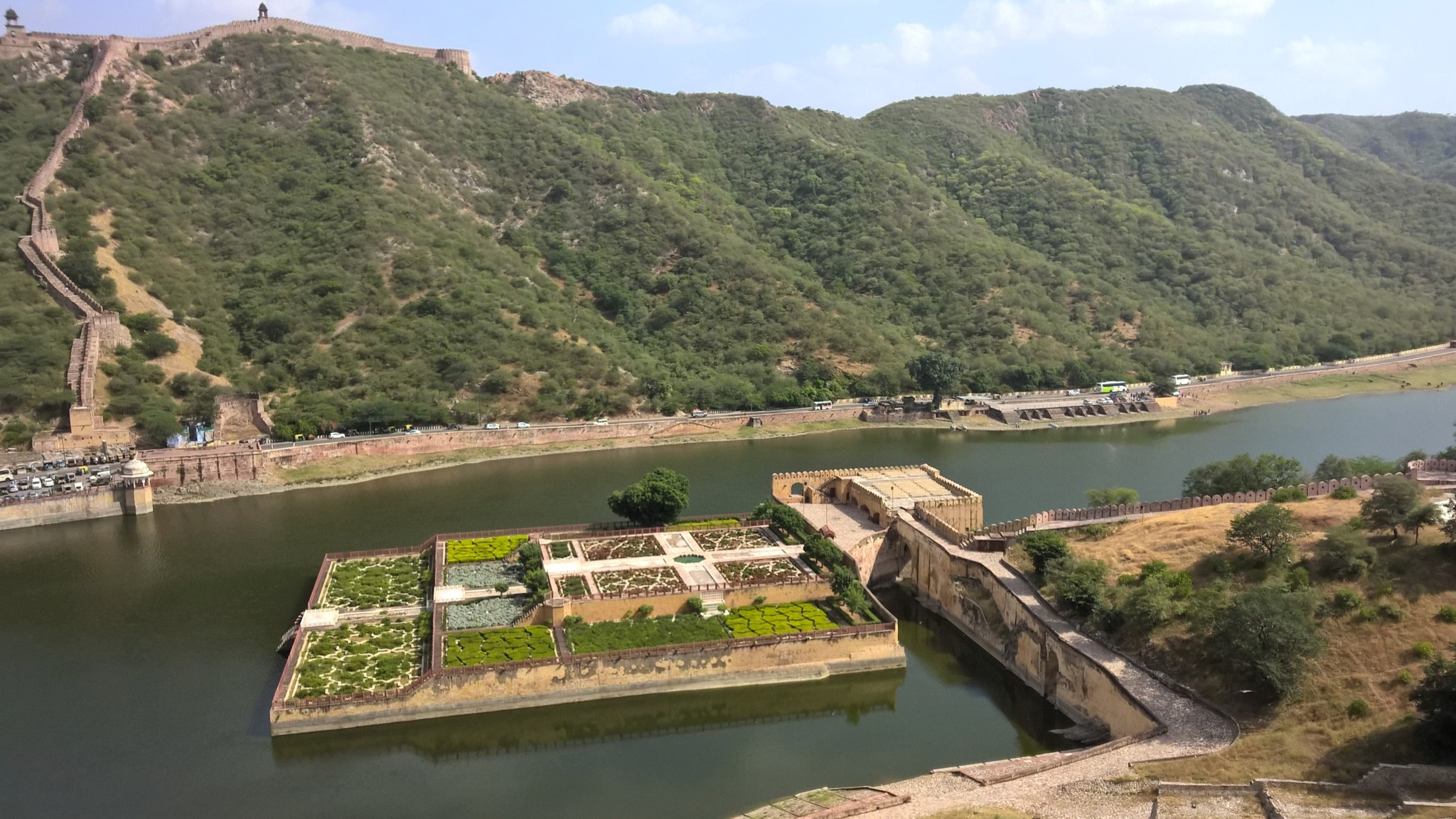
Amer fort, JaipurSaffron Garden, Maota Lake, Amer
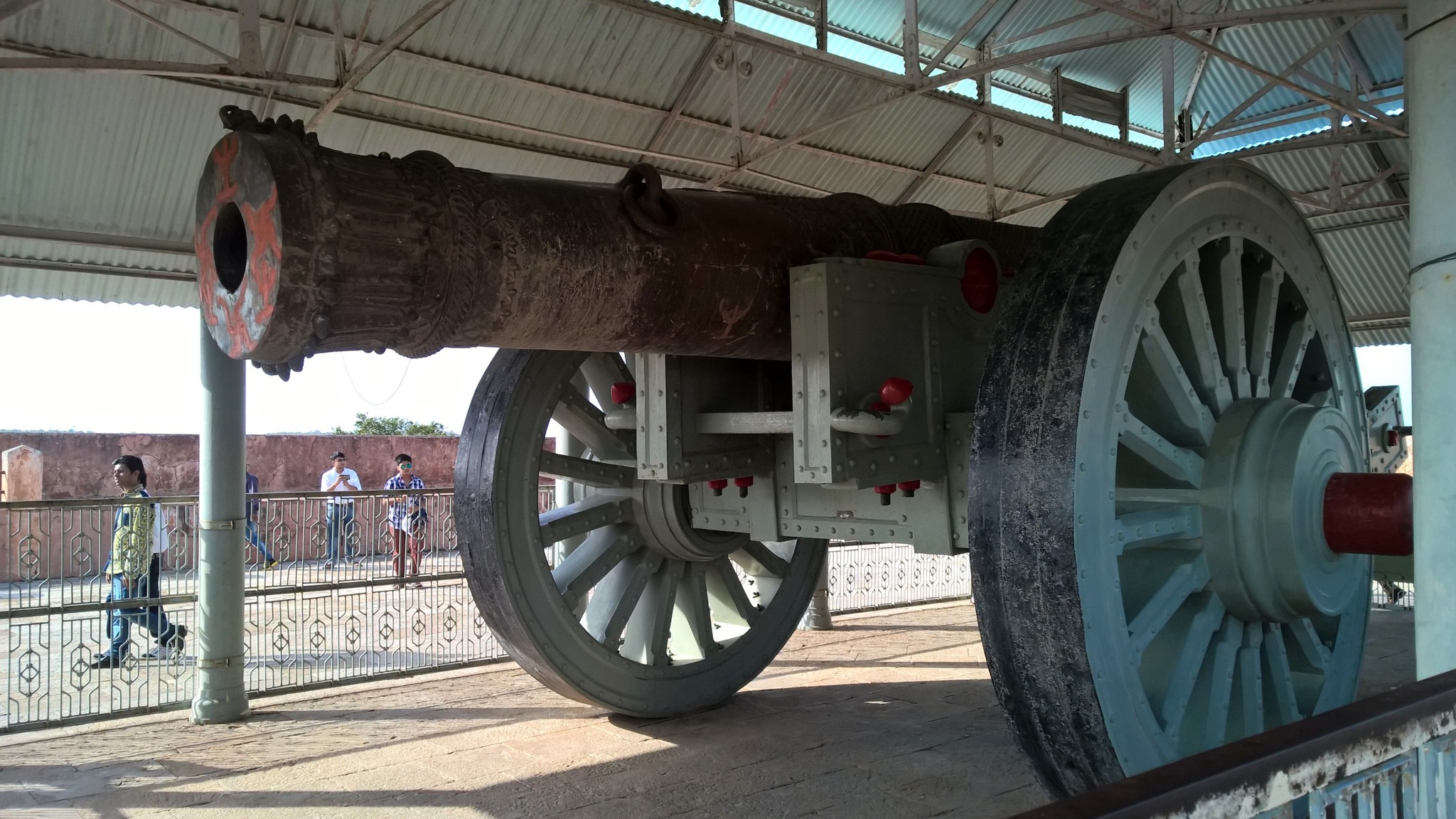
Jaivana cannon, largest cannon in the world at its time of manufacture in 1720 AD, Jaigarh fort
At the roof of Nahargarh fort
Now, where do we go to the next day? I really wanted to go to Sambhar Lake, but not able to find any information on how to reach there, we considered other places, which is when I remembered Mandawa, from two movies released a couple of years ago, namely, P.K. and Bajarangi Bhaijaan. It turned out Mandawa could be reached by public transport, complemented by a bit of local transport.
So, the next day at 8 AM, we set off by public road transport to Mukundgarh. As we passed Sikar, and then, Nawalgarh, I was fascinated by the set-ups of the towns – lying as disjointed clusters in the midst of the semi-arid landscape, with not much construction found along the road connecting the towns. The road cutting through each town was flanked on both sides by houses with their facades aligned, albeit in a jagged manner, with other houses on their respective side of the road. The houses, mostly painted yellow or white, wore an old world charm, transporting you to at least a hundred or more years back.
Getting down at Mukundgarh, we got around to looking for conveyance to Mandawa, when a strange-looking vehicle drew up alongside us. It was an auto-rickshaw which was decked up with fancy colourful decorations, with even more decorations on the inside, and covered with a canopy that formed a closed compartment! We were so intrigued that we hopped into the fanciful auto-rickshaw without even haggling.
As we advanced on the road to Mandawa, we saw the landscape gradually becoming more and more arid, and as we got nearer to Mandawa, we could see on both sides endless expanses of undulating sandy flats with a few sprinklings of low trees and shrub, even as villages each comprising just a handful of huts greeted us from time to time. Soon, we saw a bigger cluster of houses, and were welcomed by an arched gate on a wall that seemingly enclosed a town inside – Mandawa was here.
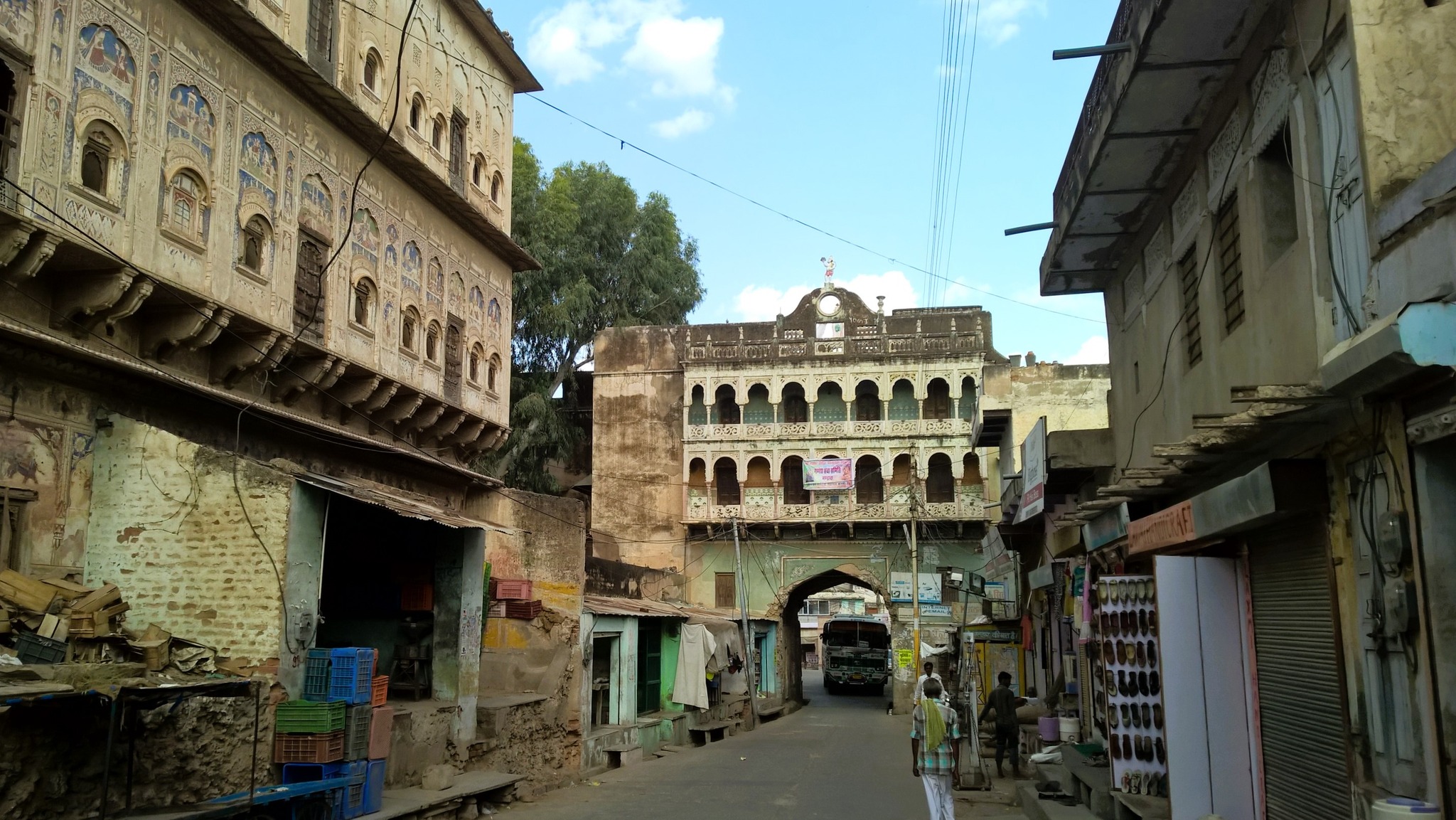
As we entered the gate, we were ushered in by two arrays of verandahs of the buildings abutting either side of the narrow road. Some buildings hosted shops, some others were residences, and some were merely the entrance to a larger building standing behind the front row.
Entrance gate, Mandawa
Before we could get a hang of the place, we entered a bylane that apparently led to the Mandawa castle, but failing to locate the gate, we kept walking, past many havelis, until we reached an open area somewhere adjacent to the castle. We saw a shanty serving Maggi instant noodles and tea, and decided to first fill our tummies, while scratching our heads as to how really to explore the place, in the absence of a guide or any prior knowledge.
This is when appeared a boy – someone we would later refer to as Chhutku – barely 8 years of age, with disheveled hair, dressed in crumpled, undersized clothes, who sensing we were the touristy types, offered to show us around, for a price, and kept insisting on it until we had finished our meal. Partly to humour him, and partly impressed with his enterprise at such an early age, we relented.
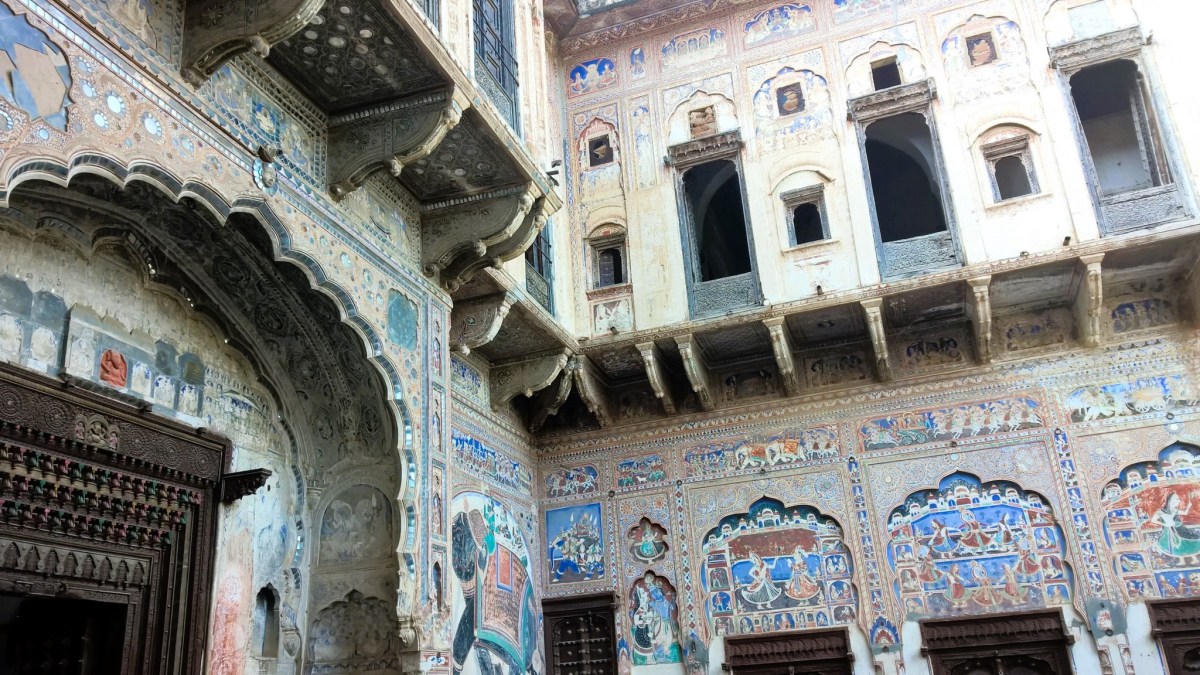
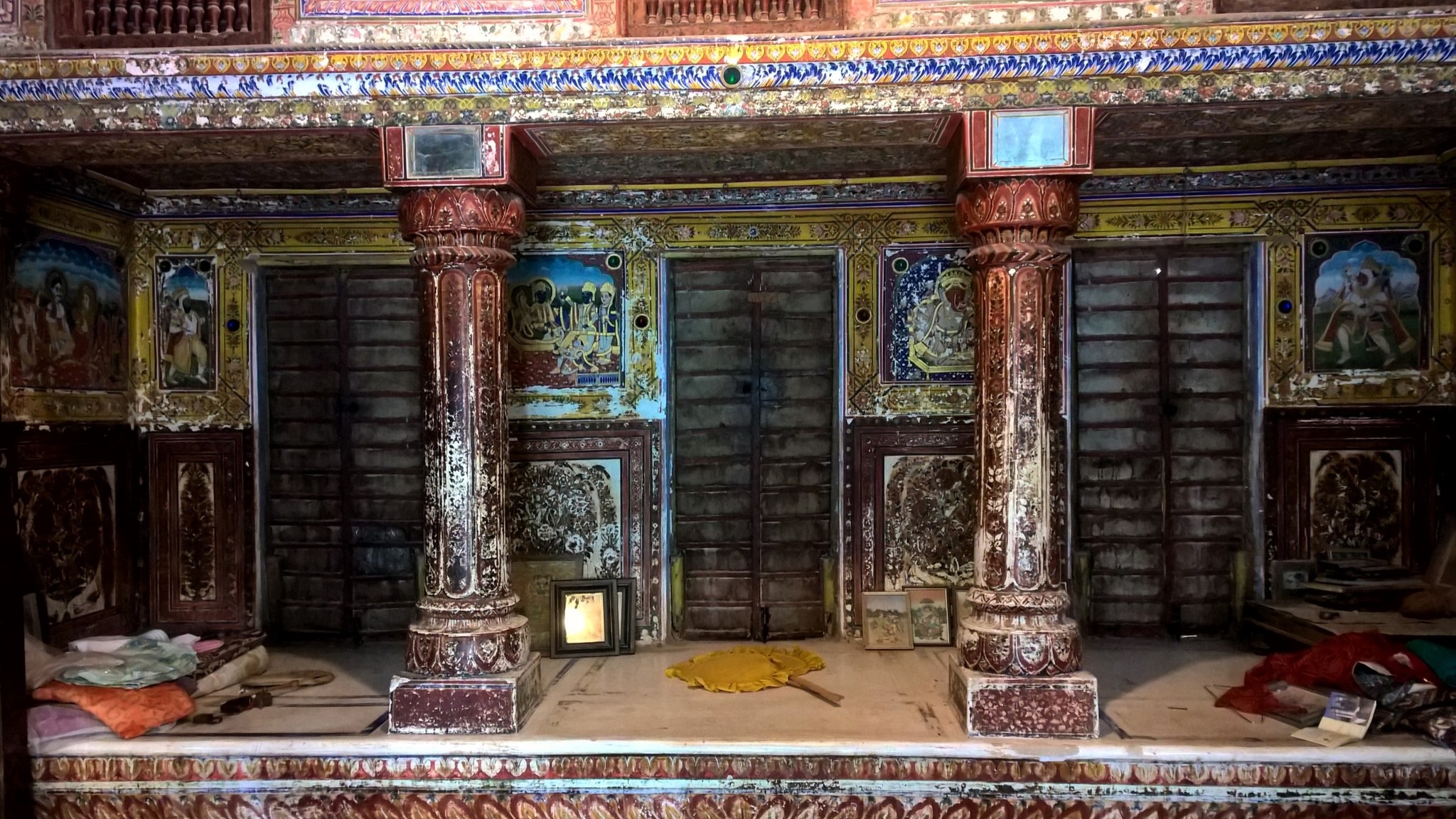
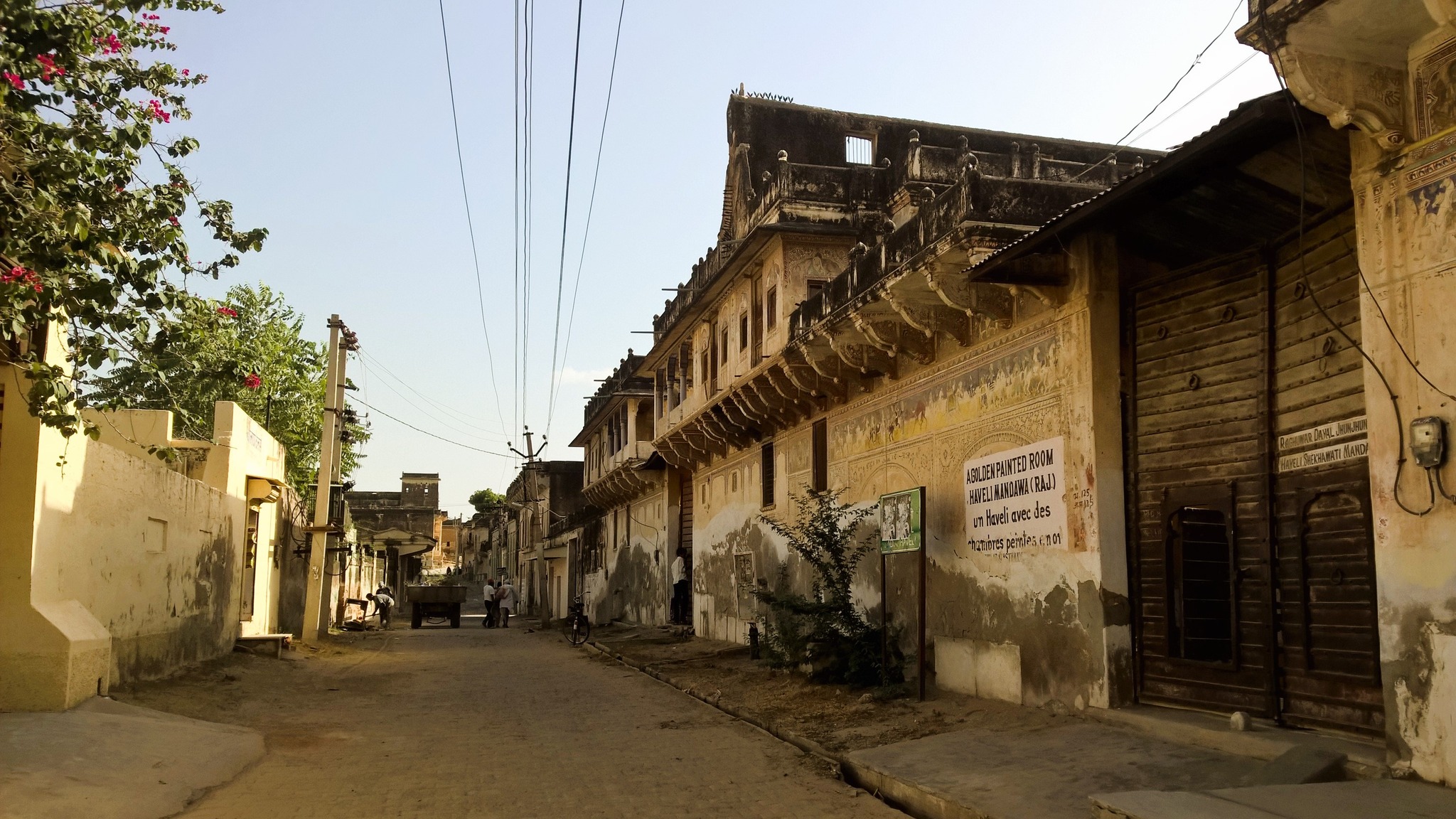
So, courtesy of Chhutku, we saw a handful of havelis, with their painted facades, part covering the balconies jutting out and peering over the street, and part forming the front wall proudly strutting their evocatively painted visages, all but weathered by time. One particular haveli, Jhunjhunwala Haveli, aptly nicknamed the Golden Haveli, houses a room with intricately painted golden-coloured decorations, along with artifacts from a time gone by – giving us a glimpse of the lives and times of the merchants that built and lived in the lavish residences.
Frescoes on the inside of a haveli in Mandawa
Jhunjhunwala’s Golden Haveli, Mandawa
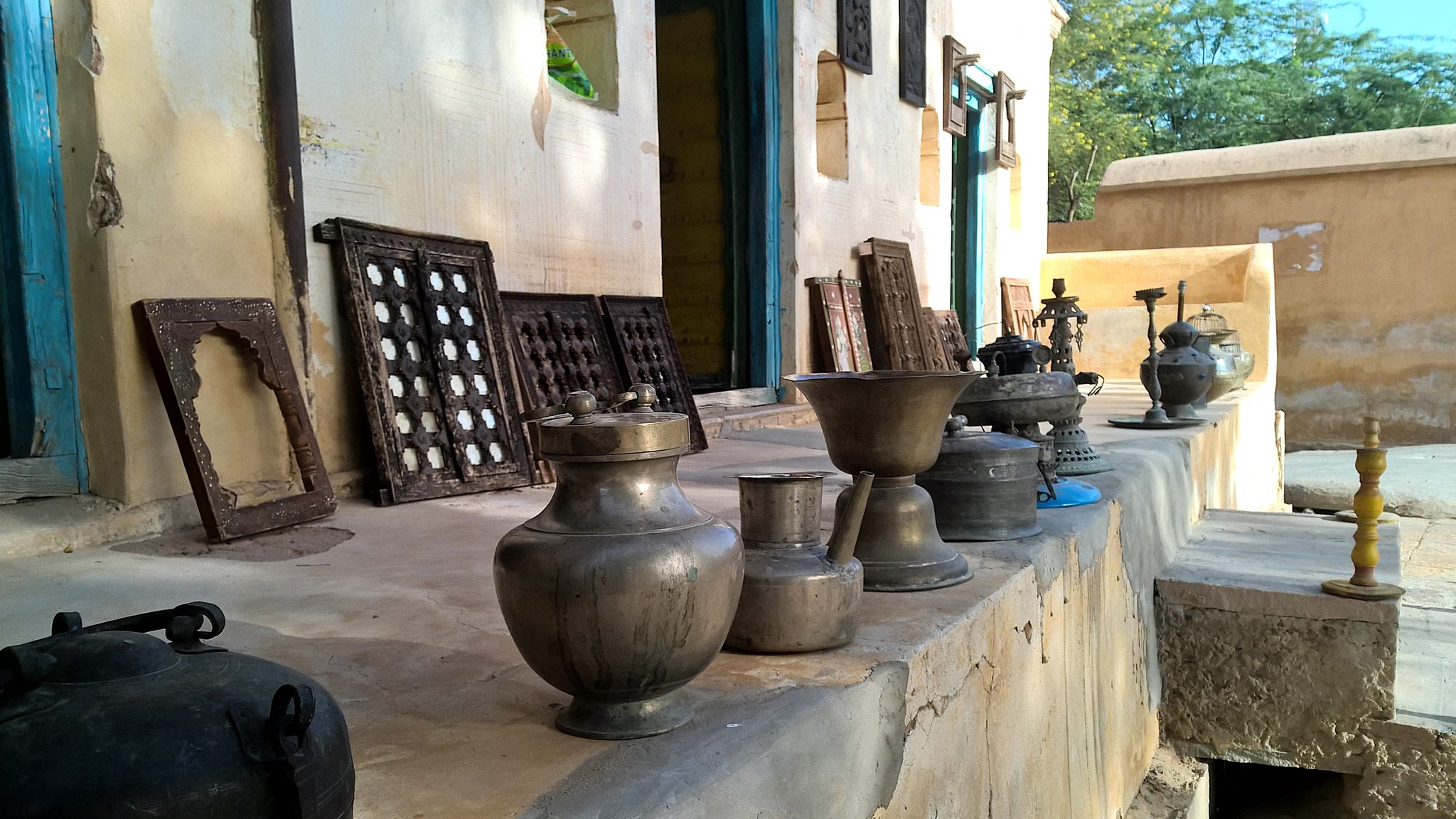
A typical Mandawa laneArtifacts from the past, Mandawa
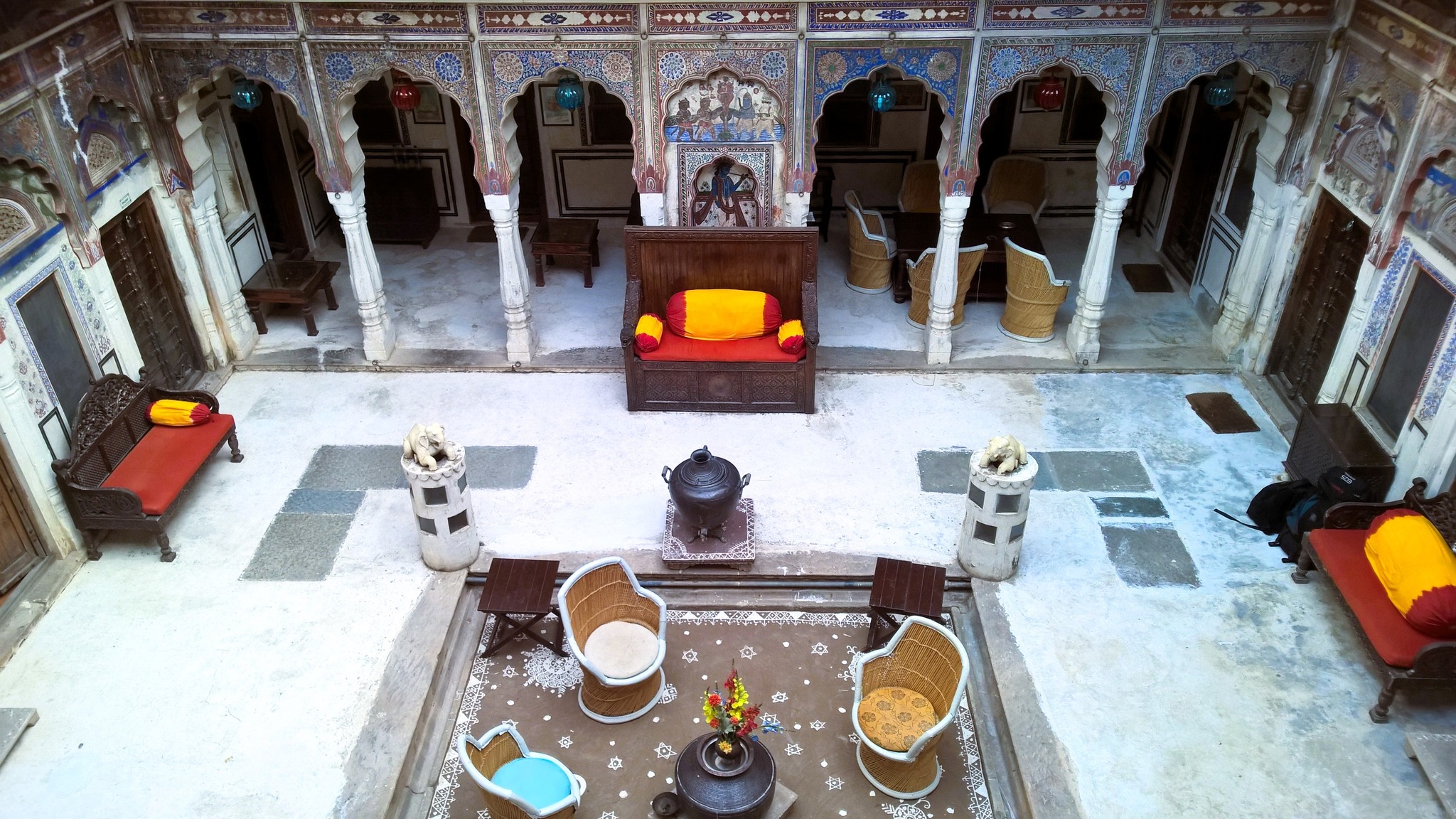
The inner courtyard of the Mandawa Haveli, now turned into a hotel
After the tour of the havelis, Chhutku bid us adieu at the Mandawa Castle, where we learnt the castle had long since been operating as a hotel, but was also open to tourists in lieu of a hefty fee. Nevertheless, we took the opportunity to see around the castle, get views of the town and the countryside from the rooftop, and take pictures around the sprawling swimming pool.
Entering the Mandawa Castle precincts
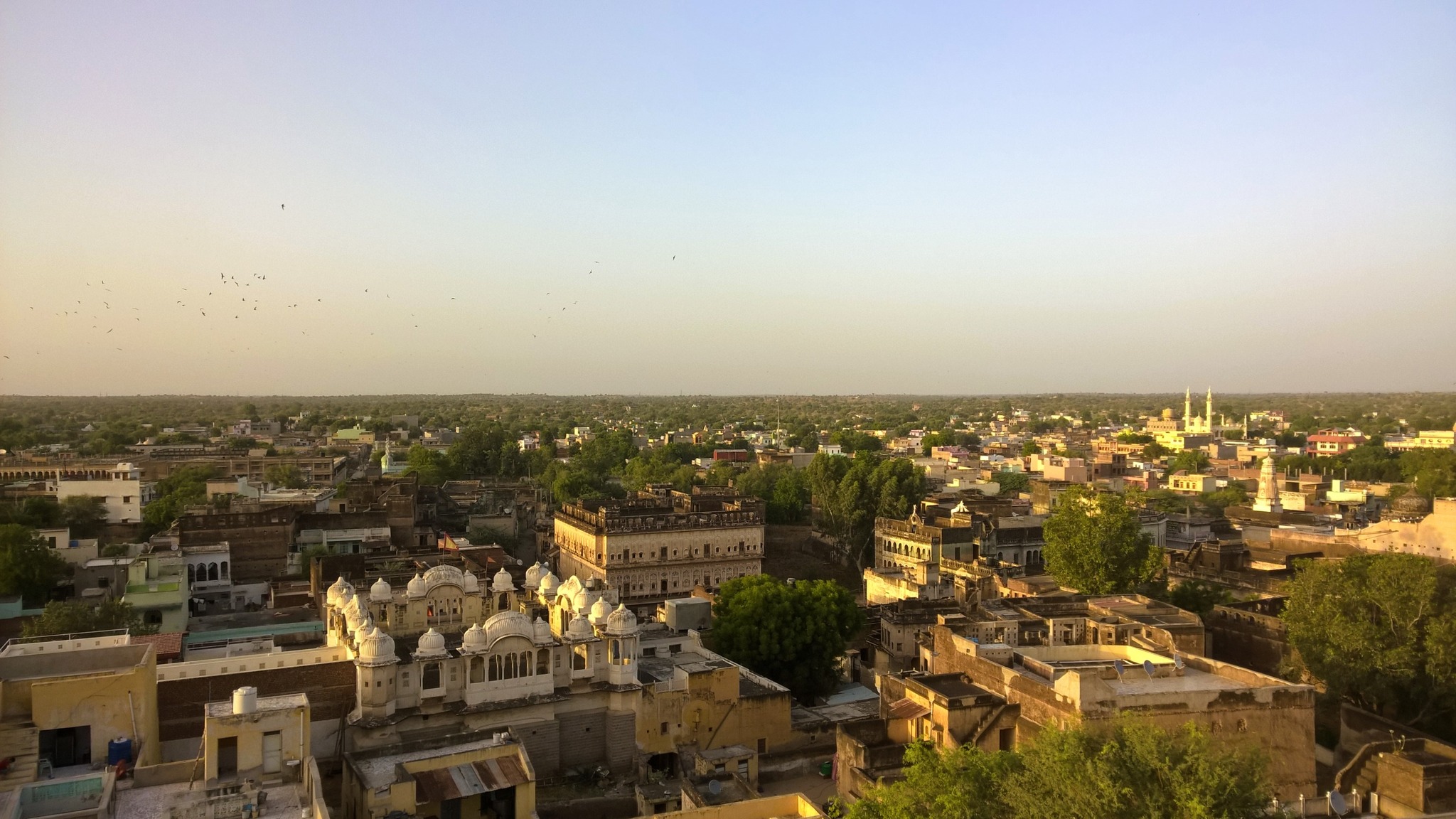
Skyline of Mandawa and beyond
At long last, darkness fell, and it was time to confront the dilemma of whether to stay the night or return to Delhi – it was resolved when we learnt that there was a 10 PM public road transport bus running directly to Delhi. Following dinner at a Tripadvisor-recognized restaurant, we boarded the bus, still not having got a bearing of where exactly we were located with respect to Delhi.
By 5 o’clock in the morning though, when I opened my eyes as we entered Delhi, I was still hungover from the overwhelming and intriguing air of the quaint town that stood astride the trading routes of the past. Although located amidst the barrenness of the desert, the unique vantage point of the town in those times ensured that its mien and ambience remained anything but barren.
Having done one solo trip every year for the last four years now, and with almost half the year already passed, I decided to schedule this year’s solo trip on my birthday in early July, and booked a train ticket two weeks in advance to Abu Road by Rajdhani Express, to see Mount Abu, a place lying on my wish list for a long time. In the week leading to my birthday which was on the coming Saturday, my friend from college who lived near Rewari, called me up asking about my birthday plans, and I invited him to join me. So, booking a waitlisted ticket on the same train, he boarded the train at Gurgaon railway station, from where we shared a single berth till our destination.
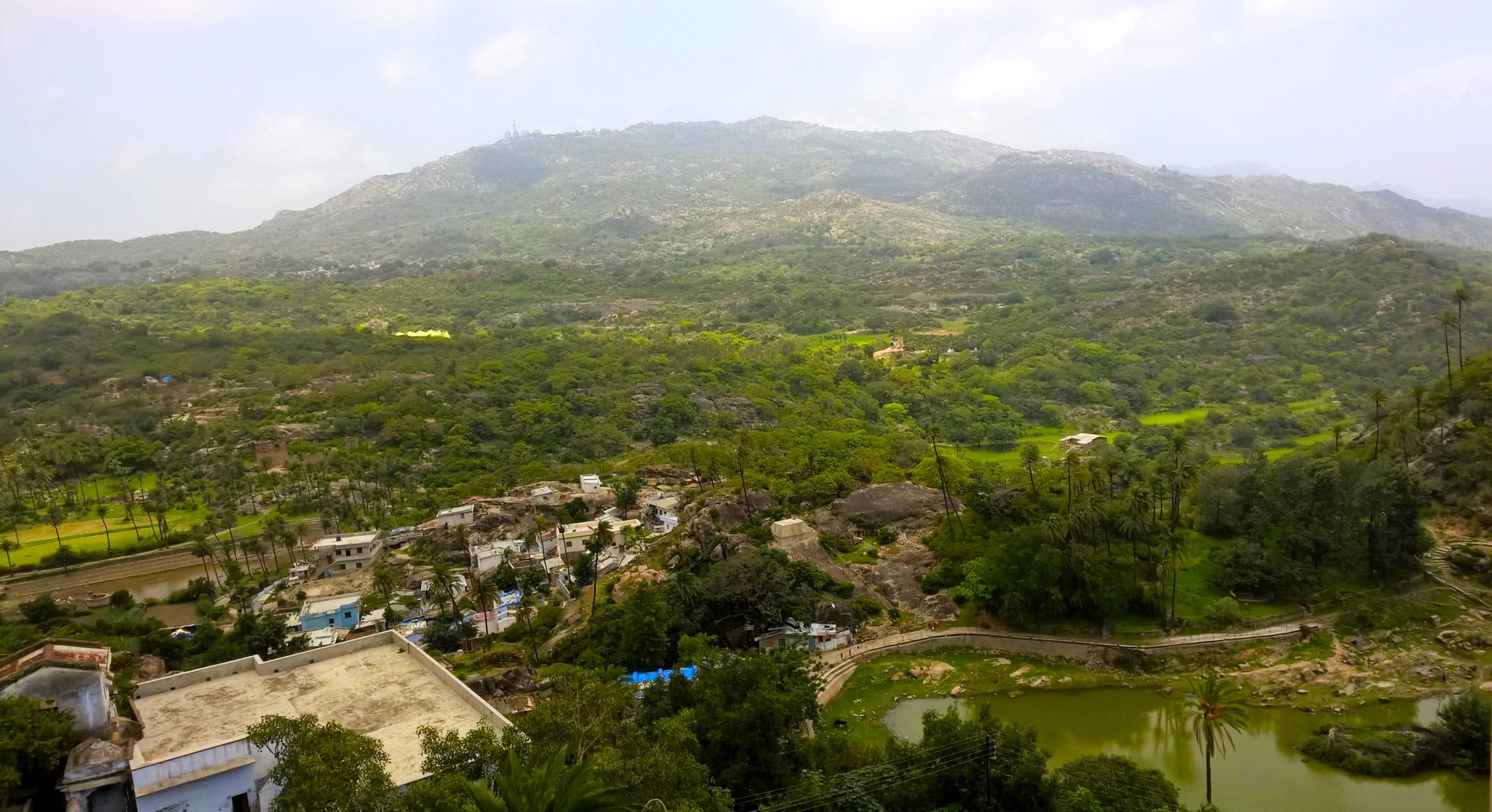
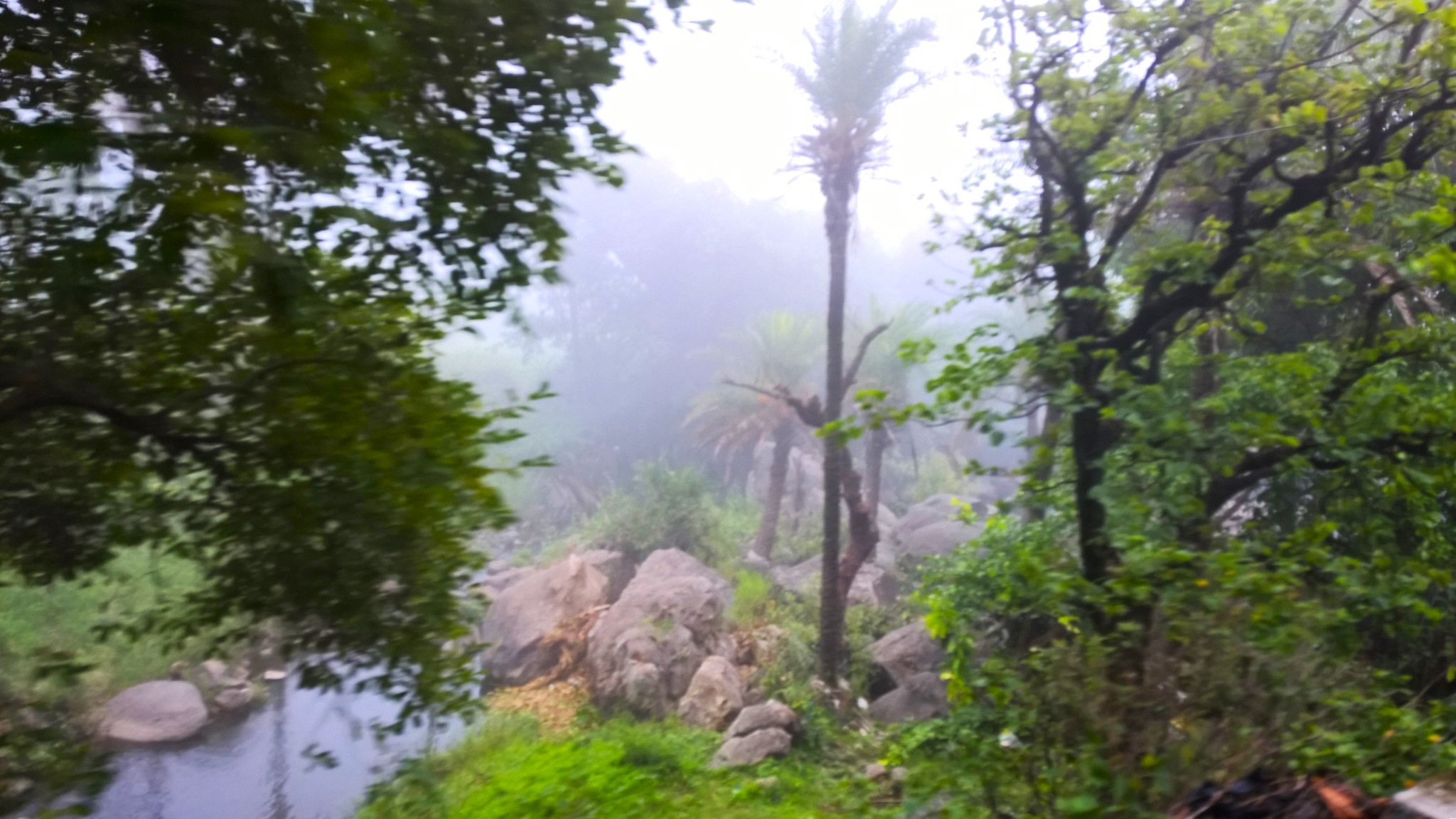
Getting down at Abu Road around 5.30 AM, we caught a public transport bus for Mount Abu. As we ascended through the hill road, we were immediately swimming in a cover of green, with an abundance of date palm trees dotting the roadside. As we gained height, I saw, through my sleepy eyes, that we were submerged in the infinite clouds of mist or actual rain clouds, which was it I am not sure. As we approached Mount Abu town, trying very hard to keep awake, I was taken in by the sight of ponds surrounded by denser forest. The many times I forced myself out of my sleep to see the scenery outside, I was reminded of my the scenery on the way to Ooty and Kodaikanal on my college trips.
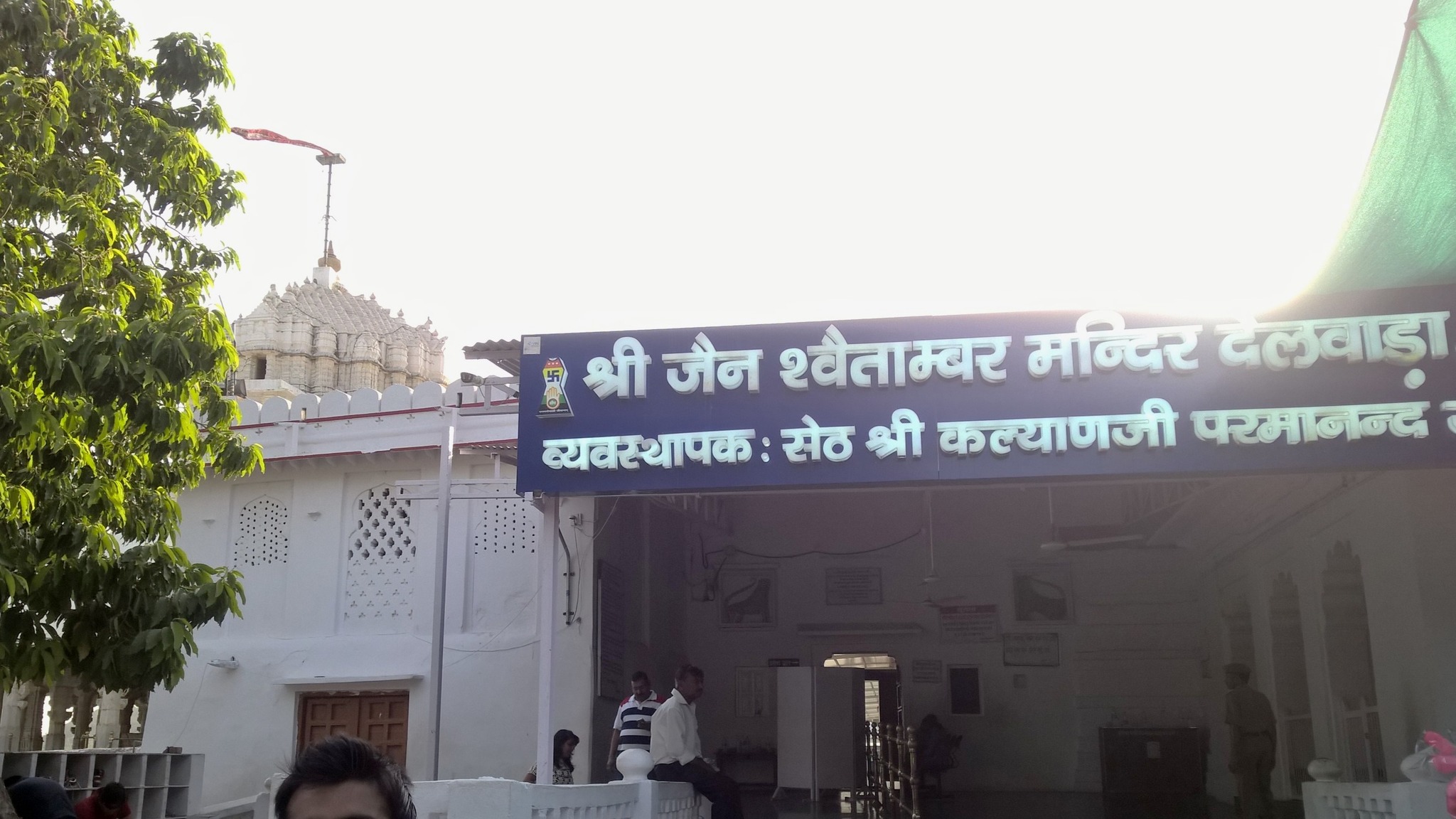
At Mount Abu town, after quickly checking in to a hotel room, we set out for a South Indian breakfast at the city centre. Then, renting a scooter, we set out on the tour, the planning for which my friend entirely left to me on account of it being my birthday. So, we started off with the famous Dilwara Jain temples, the temple that had been synonymous with Mount Abu for me since I was in school, where I had read about the temples in textbooks. The Dilwara Temple complex comprise five primary temples made purely from marble, with two dedicated to Adinatha, the first tirthankara, and the other 3 dedicated to Neminatha, Parshvanath and Mahavira, were built in between 1026 AD and 1582 AD, and serve as an important pilgrimage for Svetambara Jains.
Entrance to the Dilwara temple, photography inside the temple premises is not permitted
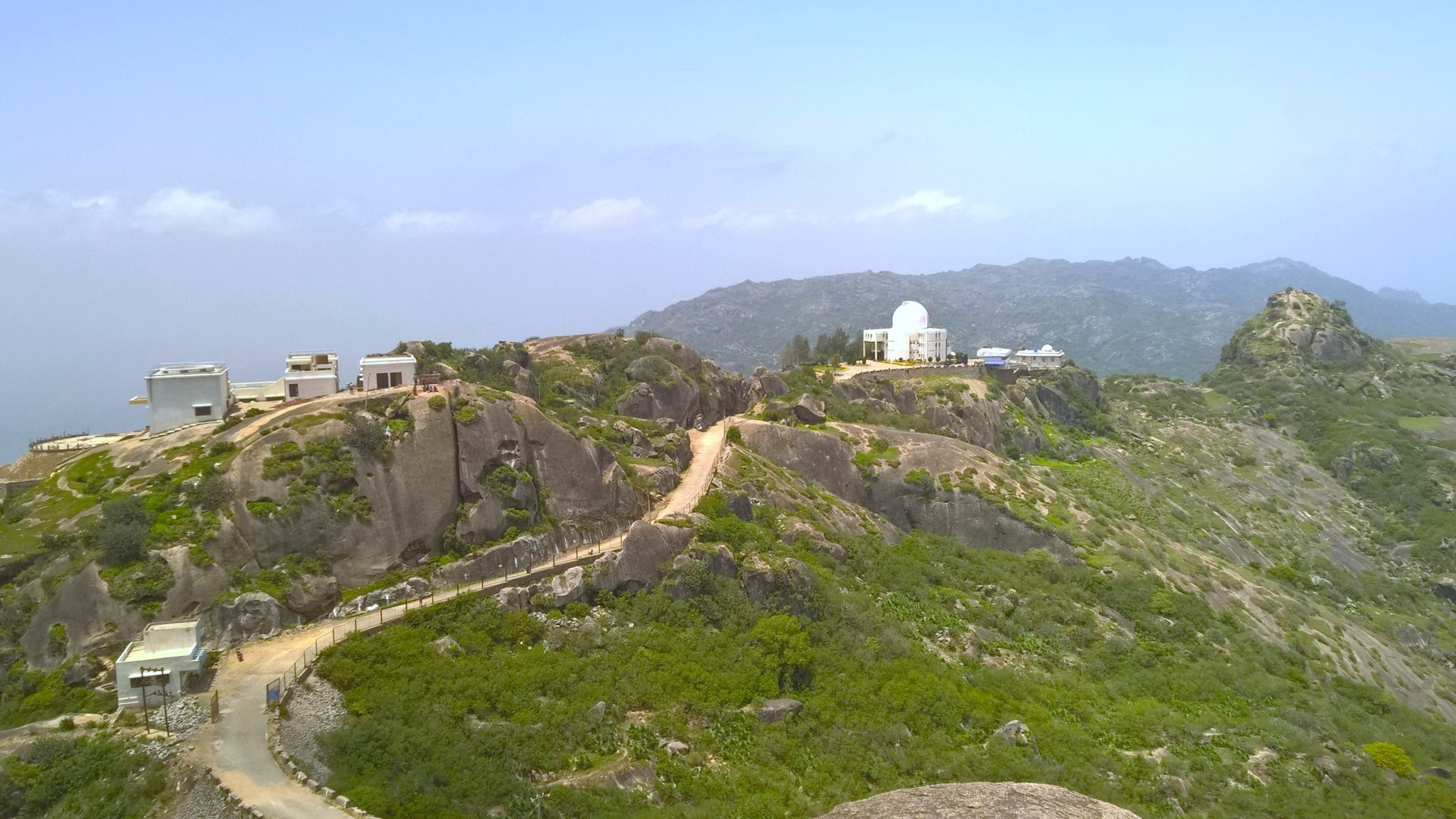
Next, ascending further up the hill road, negotiating mumerous hairpin bends, passing by ponds and patches of forests, we reached Achalgarh. At Achalgarh, climbing up a stony road by foot, we reached the marbe-built Shri Vishnu Jain temple, which also provided breathtaking views of the Aravallis. From there, we rode further up to Guru Shikhar, where we climbed the long flight of stairs to reach the highest point of the Aravallis at 1722 metres. Nearby is the Mount Abu Infrared Observatory (MIRO), which is visible from Guru Sikhar and nearabout, along with green cover on all the nearby peaks and troughs of the Aravallis.
View from Achalgarh fort
View of the Mount Abu Infrared Observatory (MIRO) from Guru Sikhar
Turning back towards Abu, we stopped whenever some view or location caught the eye, the first such stop being at Lover’s Point, from where we got a picturesque view of the Aravallis nestling the Javai Lake. Then descending a little below after manoeuvering a few curves, we reached Javai Lake itself. Rolling further down, we came upon a water-filled fissure on our right side, where getting down, I sat on the rock for a while experiencing an extraordinary state of calm. A little further, we took a short detour to reach the Mini Nakki Lake.
View of Javai Lake nestled in Aravallis, from Lover’s Point
A chance discovery in between Lover’s Point and Javai Lake
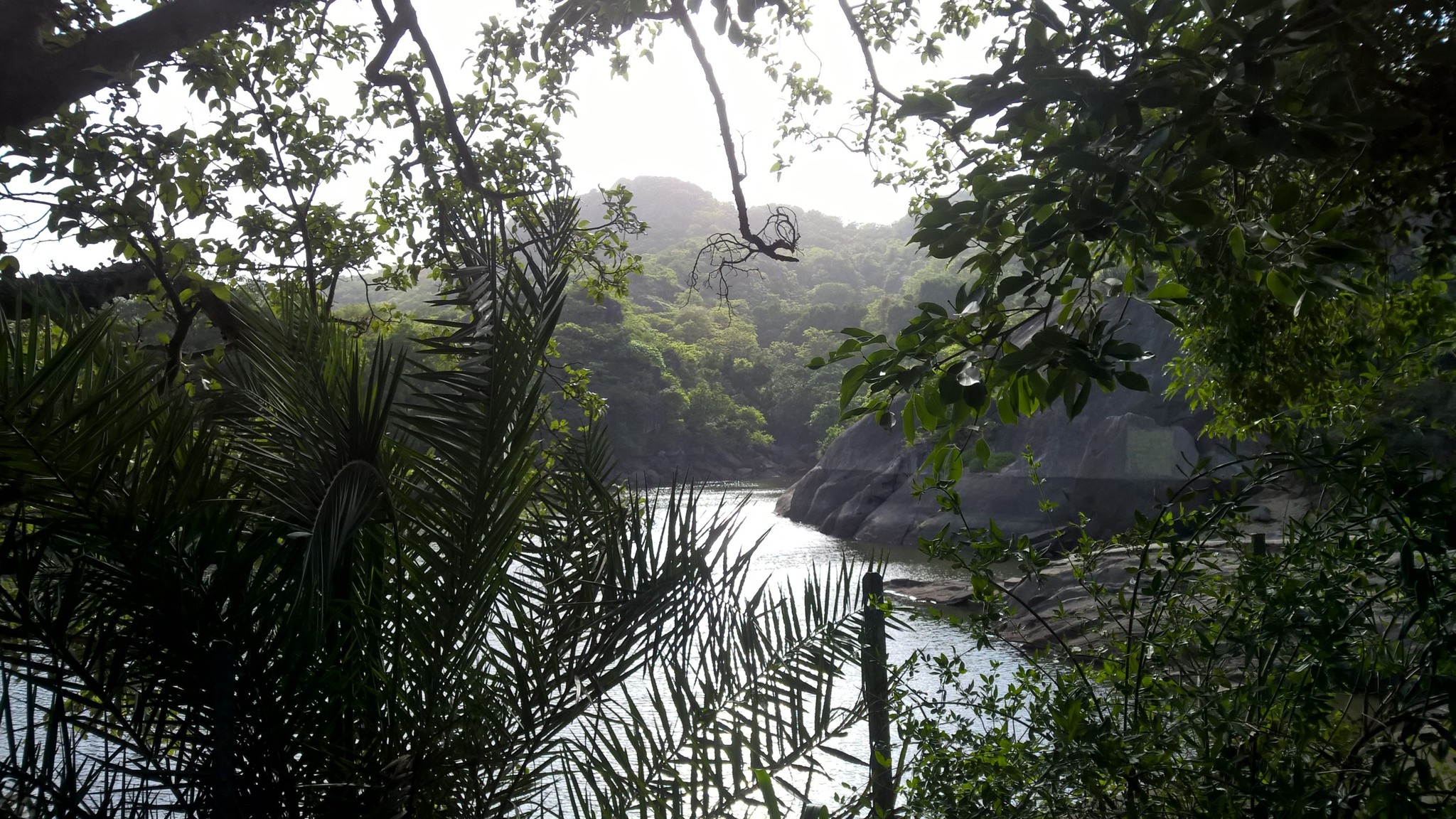
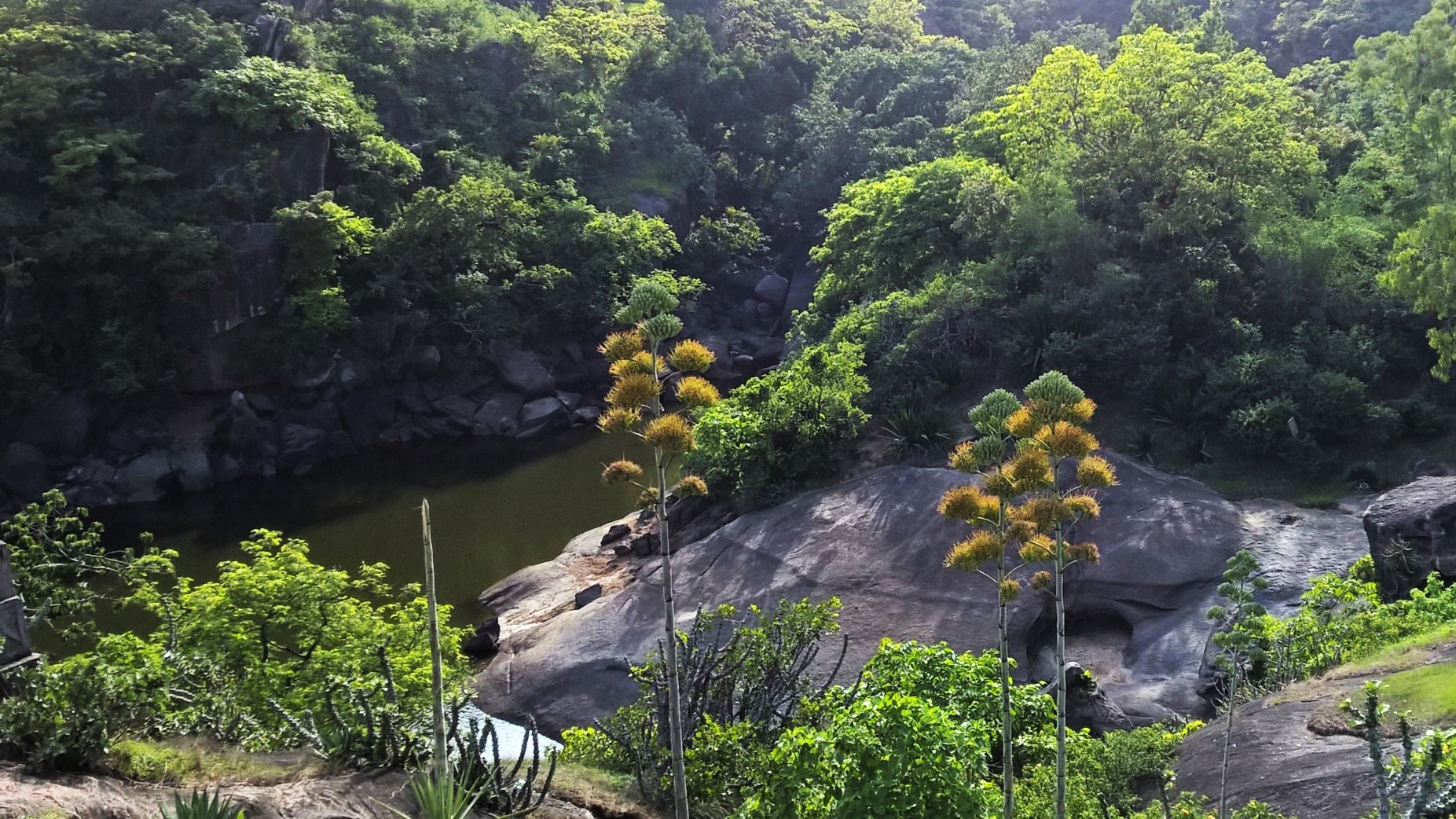
The stop that we made next was at the remarkable Trevor’s Tank, an artificial waterhole, tucked away in the Mount Abu Wildlife Sanctuary, which we reached after taking a kilometre-long diversion. Carved on the side of a barren rocky hill to breed crocodiles by a British engineer after whom it is named, the tank is surrounded by native flora including an abundance of cacti and ferns. The location of the tank could serve both as a picnic spot with family as well as a retreat for some solo contemplation. A trek up the hillock also provides a wider view of the picturesque tank. While this place may not be on most sight-seeing itineraries of Mount Abu, I highly recommend a detour to Trevor’s Tank.
View of Trevor’s Tank
View of Trevor’s Tank through the ferns
View of Trevor’s Tank from the adjacent hillock
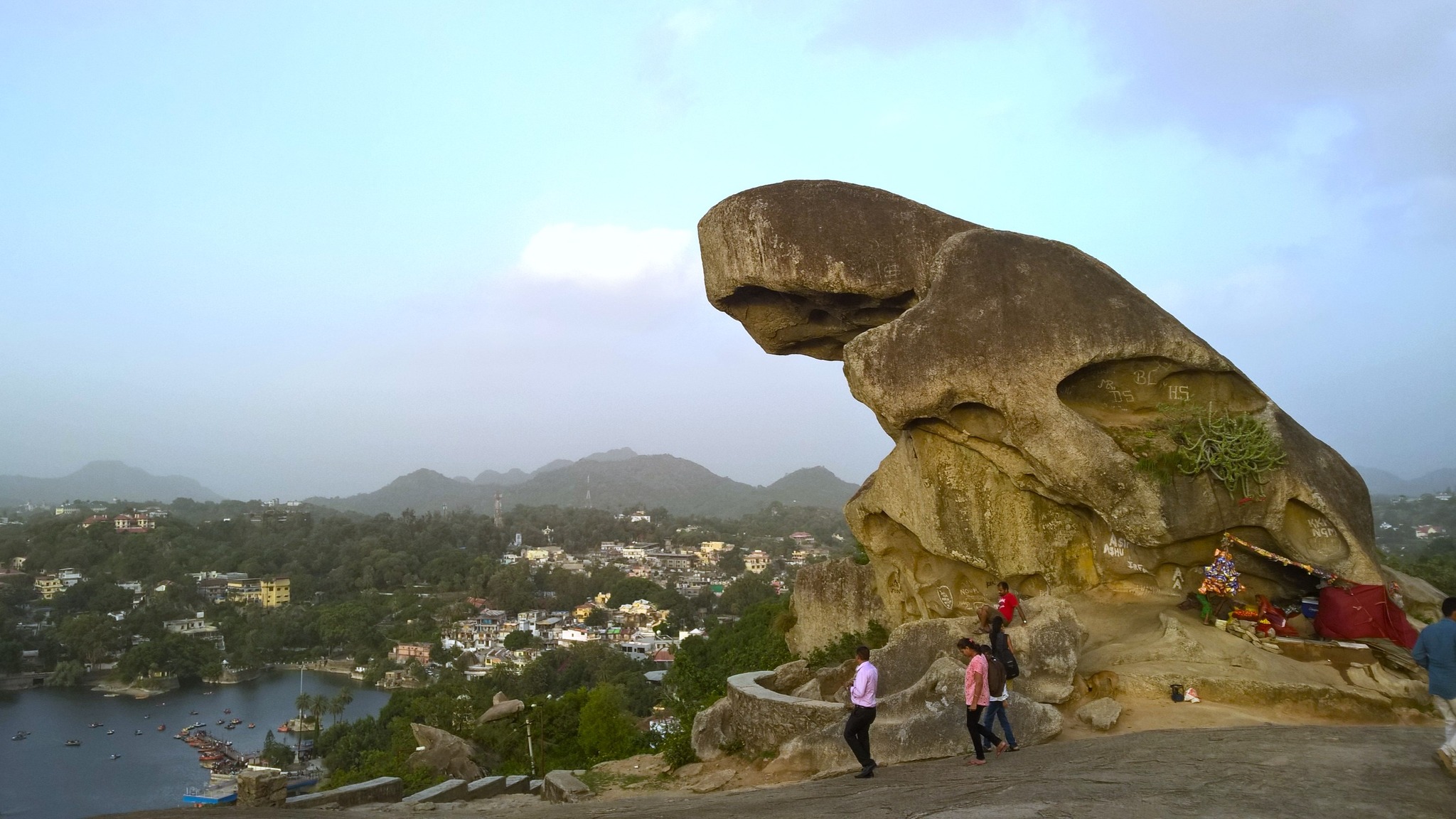
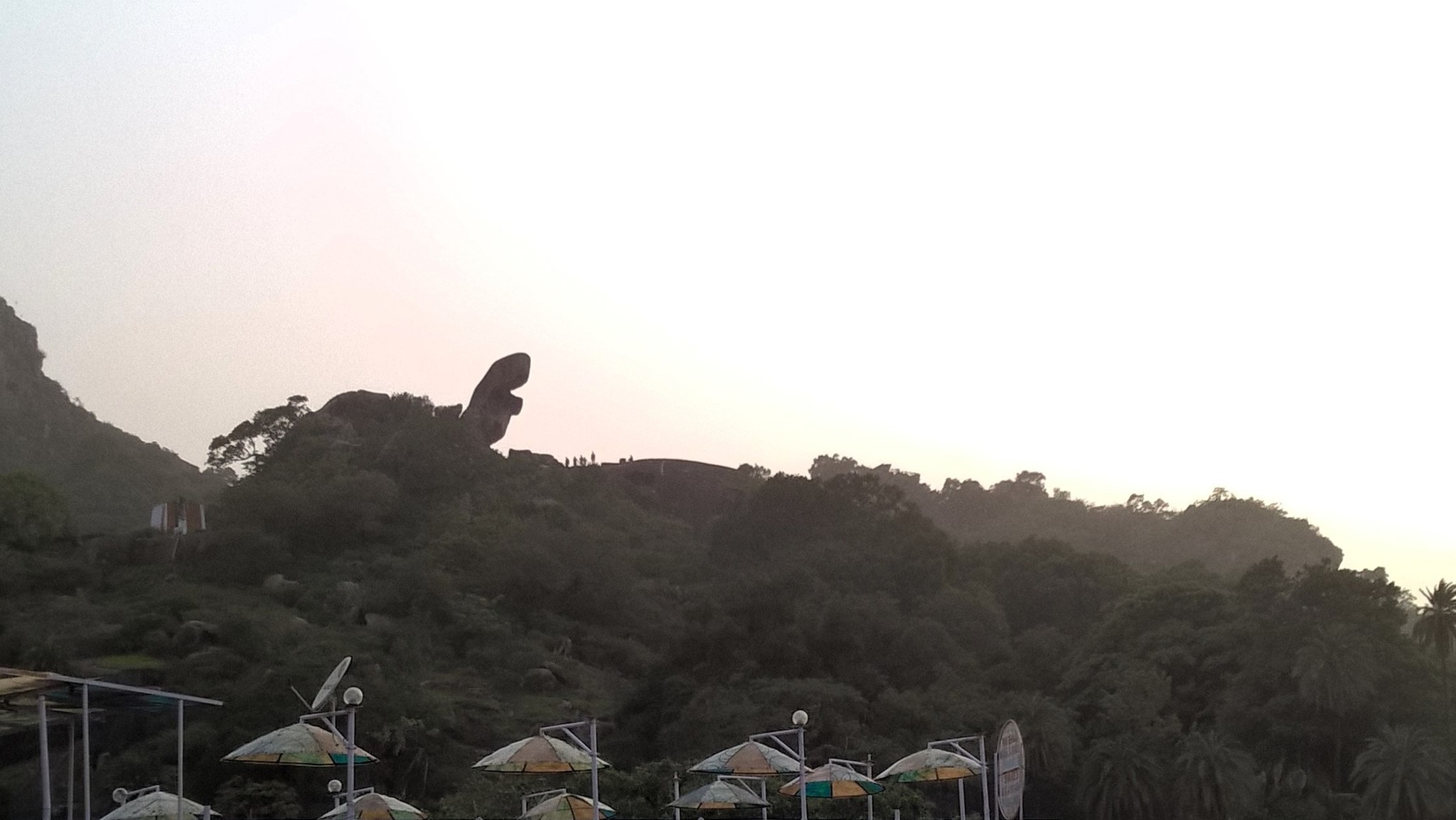
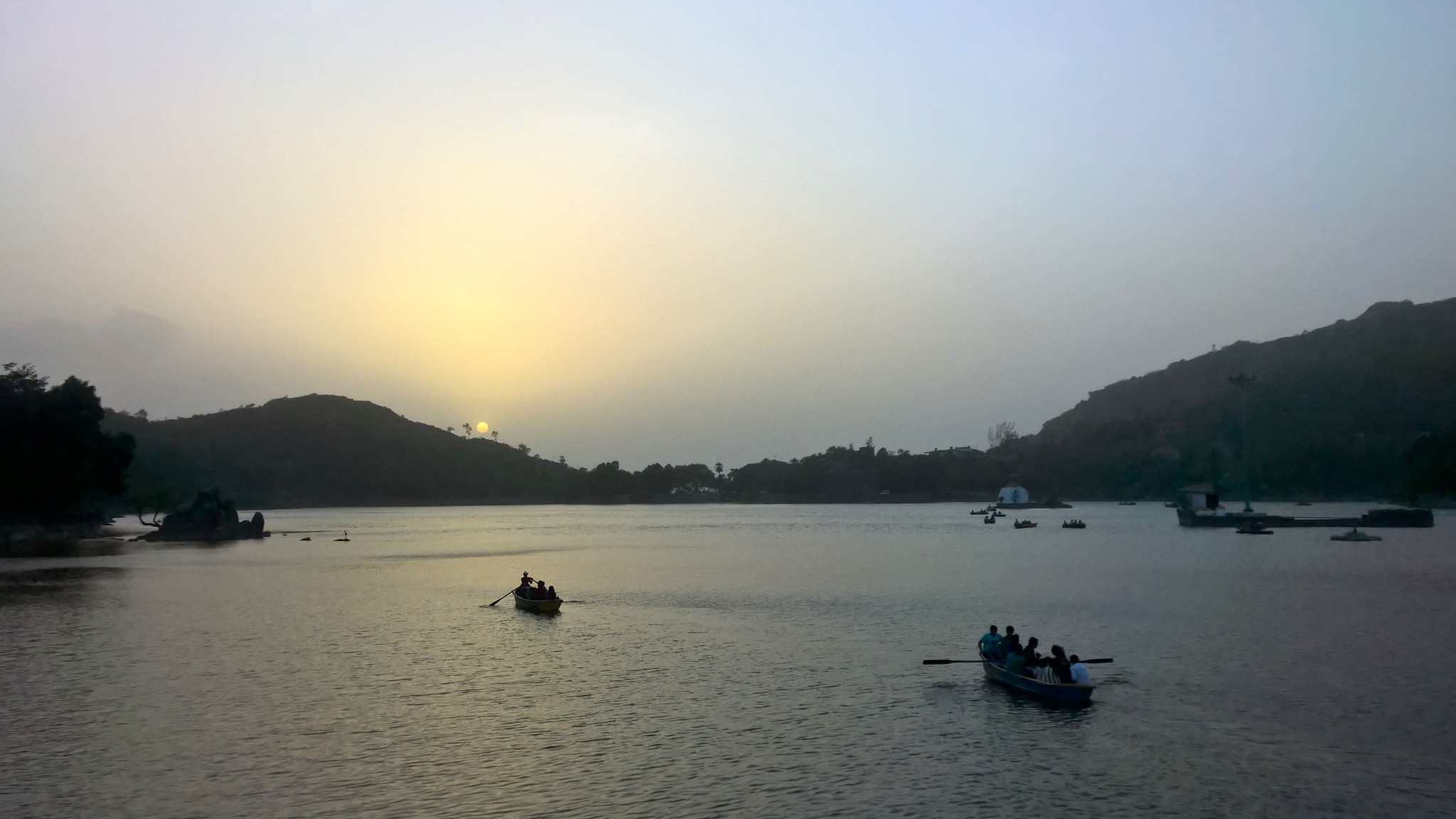
As we neared Abu town, I made a quick but steep and long climb up 360 steps to see the temple of Arbuda Devi, a form of Durga, after whom Abu town is named. It being 6.30 PM, by the time I descended from the temple, we rushed to the Nakki Lake, located at the heart of Abu town. Swami Vivekananda lived for a while in Champaa Caves on its bank, and Mahatma Gandhi’s ashes were also immersed in its waters. On the hillside, which gives excellent views of the town as well as of the Aravallis, there is also natural rock formation resembling a toad, aptly named Toad Point – interestingly, the same rock looks like a tortoise when viewed from another angle from afar. After watching the sunset from the banks of Nakki Lake, I retired to the hotel, where my friend who had skipped the trek up the Nakki Lake hillside, joined me.
Evening falls on Nakki Lake
Toad Point on the hill beside Nakki Lake
The toad looks like a turtle from another angleChampaa caves where Vivekananda lived
Sunset on the Nakki lake
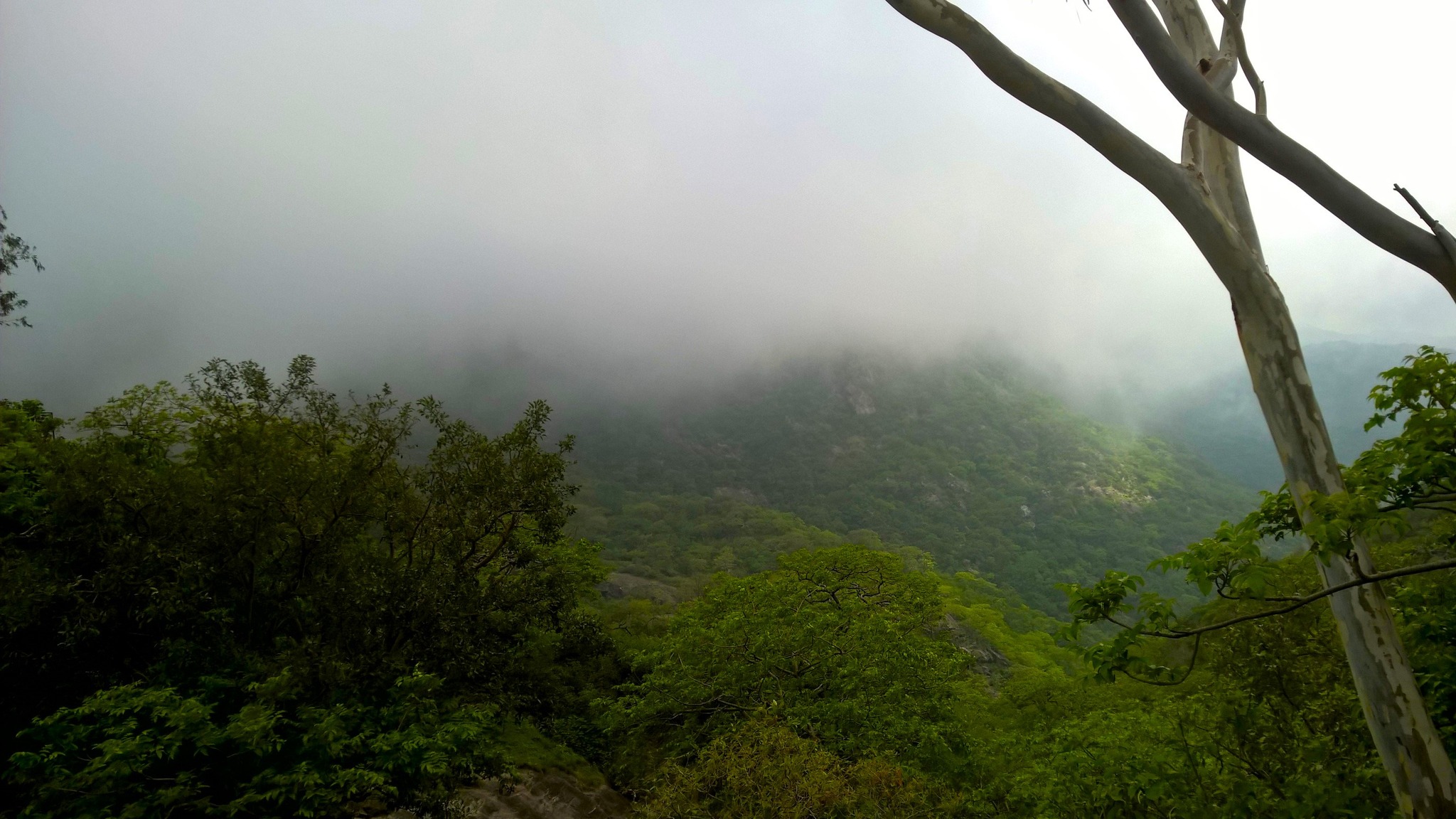
With our whirlwind Abu tour coming to an end, we pondered about how we would get back to Delhi, as I had not booked a return ticket, and had reckoned I would be easily able to get a bus back to Delhi from Udaipur, which was the nearest city to Mount Abu. As it turned out, there were only a couple of buses plying from Mount Abu to Udaipur, the earliest being at 8.30 AM. Thus, the next morning we were headed to Udaipur, again passing through the mist, delighted by views of the hillside shrouded by clouds at eye-level. Sights of streams and ponds ensconced in thick vegetation or surrounded by palm trees, were the icing on the cake.
Floating through the clouds…on a bus, on the way down from Mount Abu
Reaching the base of the Abu hill range, the bus still passed through the lower ranges of the Aravallis, especially as we approached Gogunda, where the sight of the yellowish sides of the hill which had been cut through to make way for the roads, triggered some sort of a reaction in my brain. That is the exact moment I knew I would want to have more of the Aravallis – these sights combined with the images of the flora I had seen back on Mount Abu, and the previous year in Jodhpur, supplemented by memories of the hill passes at Haldighati, struck a chord somewhere in my heart. What was more, the Aravallis propped up the fantastic forts that I had taken a penchant for over my journeys to Rajasthan over the last four years.
****************
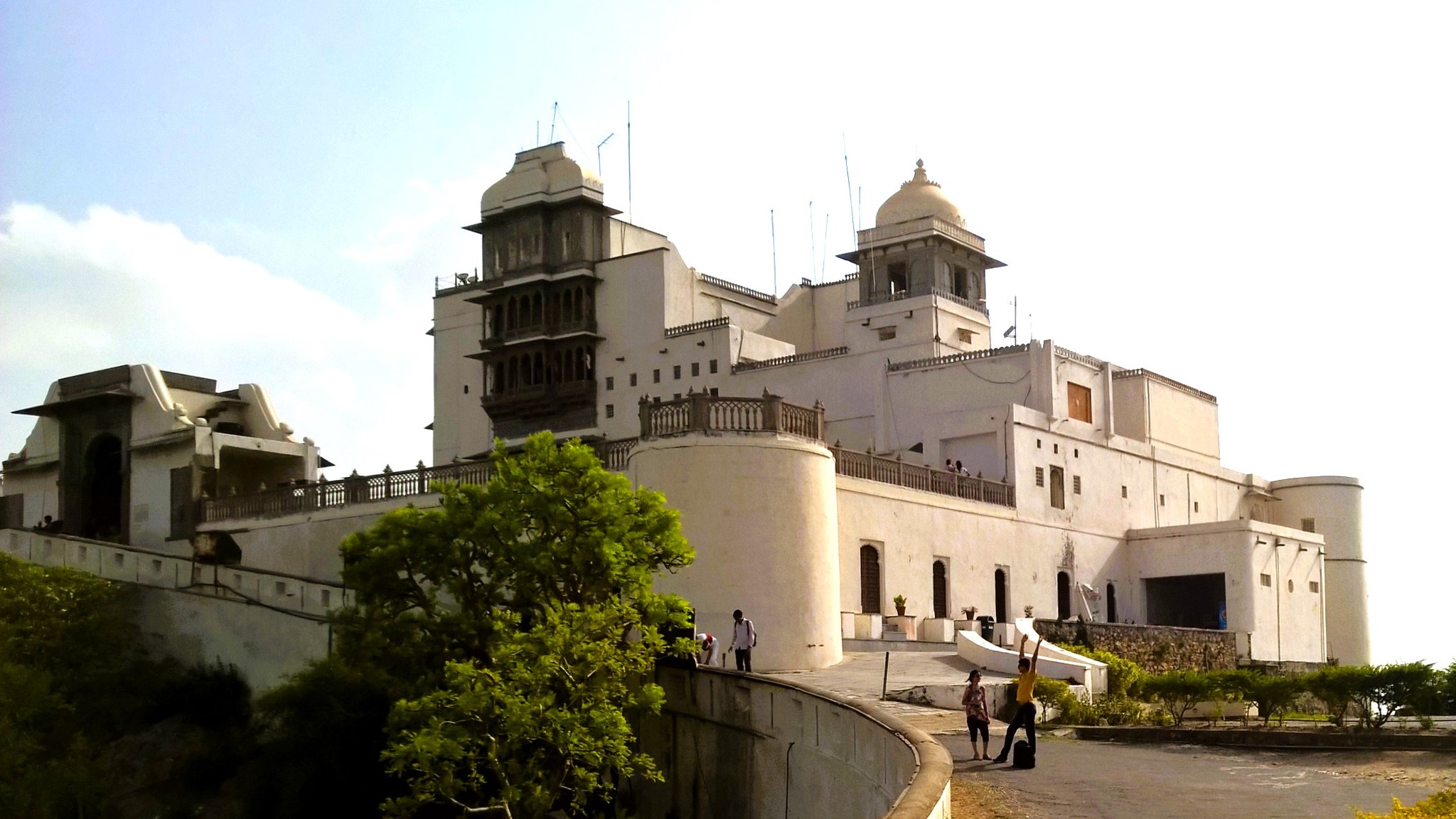
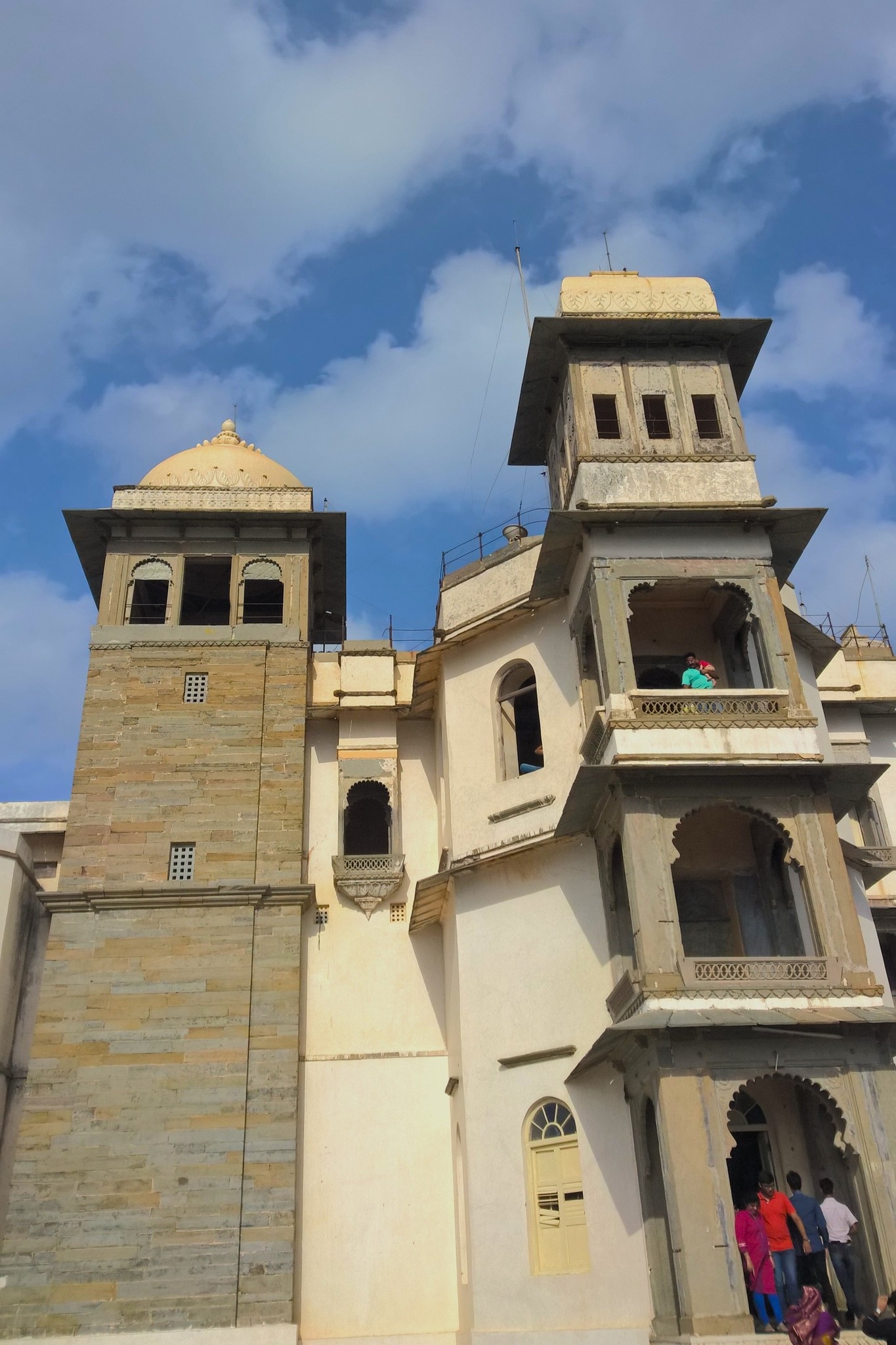
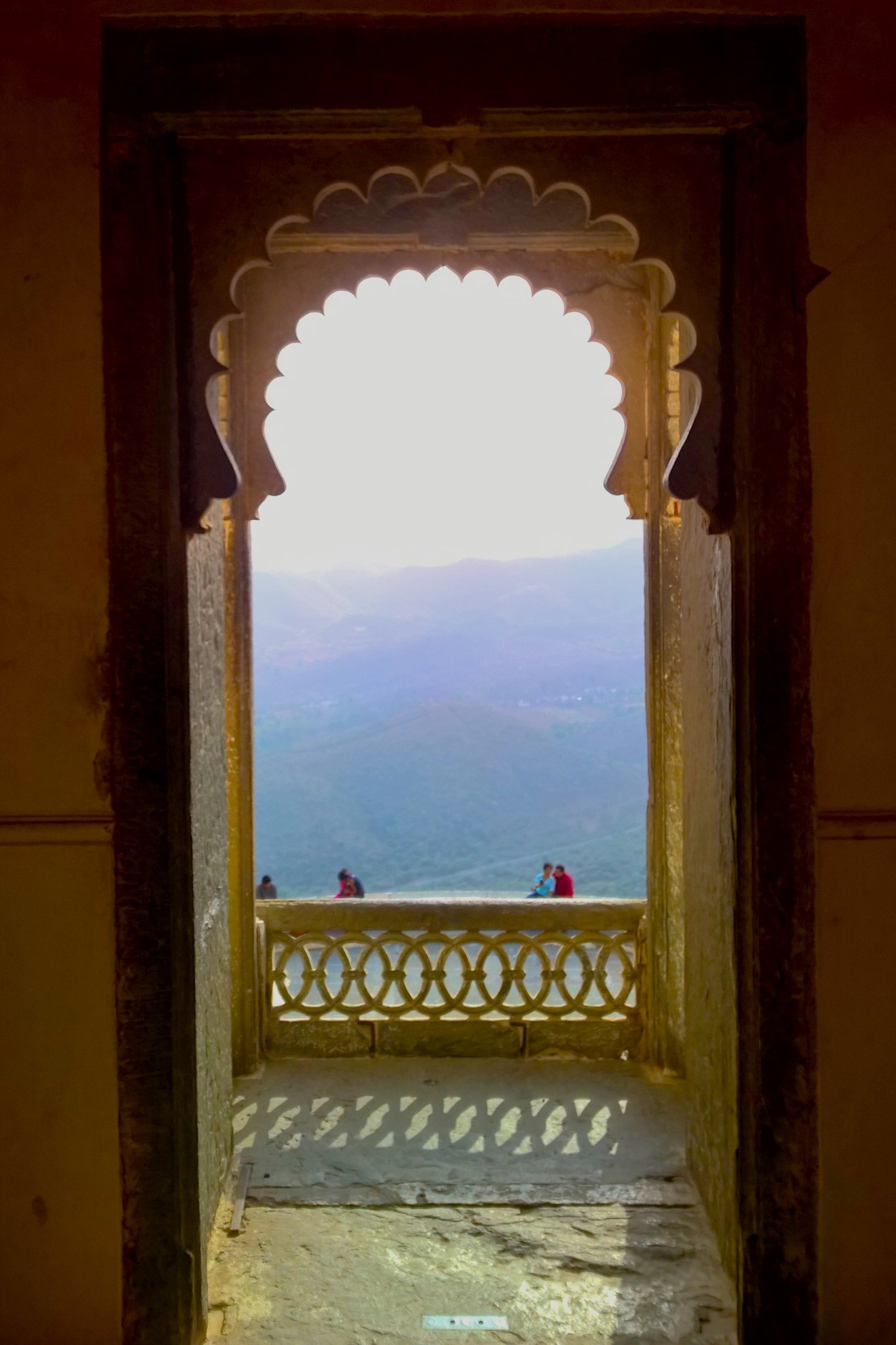
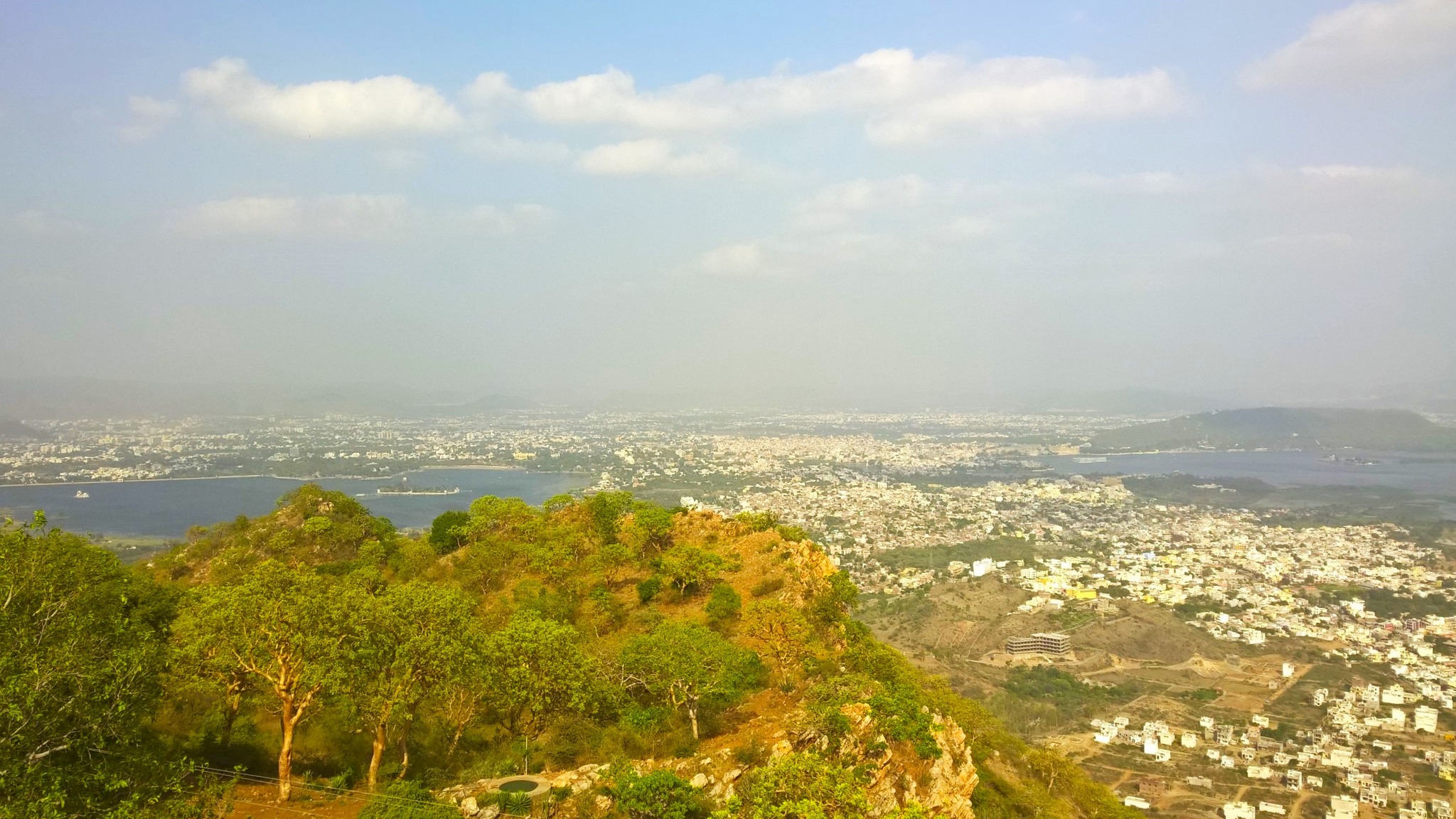
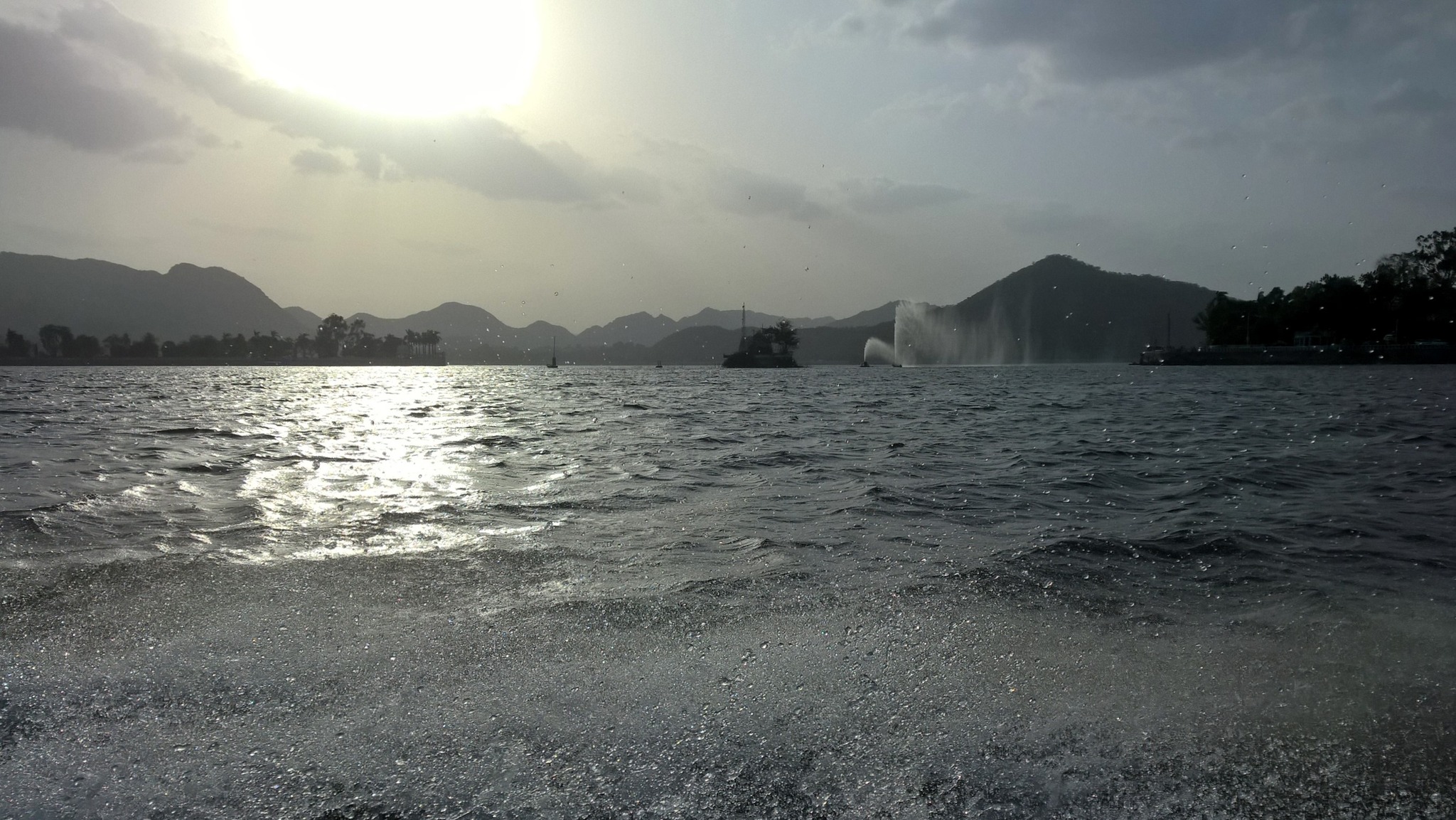
So, for the third year straight, I found myself in Udaipur. I drew up a quick itinerary for us as it was my friend’s first visit to Udaipur. Starting off with a tour of the City Palace, we headed to Sajjangarh Palace, a monsoon palace whose construction was started by Maharana Sajjan Singh in 1884, atop a hill overlooking the Pichola lake. The marble palace is an ideal getaway from the humdrum of the city below, and also affords panoramic views of the city and its lakes, along with picturesque views of the Aravalli hill range behind it. We wrapped up our half-day sojourn at Udaipur with a boat-ride on the Fateh Sagar Lake.
View of Sajjangarh Palace
A portion of the palace as seen from the courtyardView of Aravallis through a window
View of Udaipur city, Fateh Sagar lake (left) and Pichola lake (right) from Sajjangarh Palace
A boat ride on Fateh Sagar lake
Following dinner, we took an overnight sleeper bus for Delhi, concluding a most memorable birthday weekend. I also found a new love – the Aravallis.
It was a cold November evening in Kathmandu, when a charismatic and heavily husky-voiced Nepali pop-cum-rock star, Sabin Rai, finally sang his last song to hand over control to the Masters-of-Ceremony Prosen and Malvika once again. And this time, the duo duly looked over the ushering in of a blue ambience, with the image of a revolving globe on the background screen and the Mikkel Lentz-produced ‘Eternity‘ theme slowly gathering steam. Then amidst the smoke, even as the ‘Salvation’ tune played, appeared the four Viking guys one after the other. Mikkel, clad in a dark brown suit, waved to the crowd, while Kare settled behind his drum-kit and Jascha in a white suit took position at his keyboard, wearing red coloured glasses, probably, a throwback to the good old days of Colours and Played On Pepper. MLTR launched immediately into (this time) the full-blown intro of ‘Salvation‘.
Initially, it felt like the sound was a little weak – either Jascha could not hear the other instruments properly or the surround was not effective, but to me it just felt like something was amiss, a little out of tune (Interestingly, when I listen to the videos on youtube, everything seems perfectly alright, which is a good thing!). When Salvation had been done and dusted with, Jascha said, “The next song is for the child…inside of every man.”, and ‘Sleeping Child‘ commenced accompanied by a very very loud cheer. The sound, according to me, was still a little shaky. This time though, the crowd, which had been mostly oblivious to the lyrics of Salvation, suddenly found its feet, crooning away with Jascha, even when the sound system totally misbehaved and blanked Jascha’s vocals for a line or two.
At the end of it, Jascha said, “It’s really amazing… to travel so far away to Nepal. You really, guys, know all our lyrics and our songs. That’s fantastic.” ‘Love Will Never Lie‘ was on next, and during the second verse Jascha was clearly displeased with the sound, making an animated gesture to the sound guy, and when the second verse had been sung, it all started to seem to be alright, at least that’s what Jascha’s thumbs-up to the sound engineer and the increased volume of Jascha’s vocals would have signified. Jascha played a flowing piano section in the end, by which my friend Rajiv was completely enamoured and had tears in his eyes. They proceeded to play ‘It’s Only Love‘ at the end of which Jascha said, “This is a song which we don’t play often. we have just started playing it in the last few concerts.”
Jascha then said, “The next song is very popular on Youtube…it’s a Youtube hit.’, and people started guessing a lot of names, but it was clear, however, that it was going to be ‘It’s Gonna Make Sense‘. Again, only a handful of people knew the lyrics to this song, which was good because it ensured that when Mikkel launched into a guitar solo just after the bridge, it could be heard clearly. I could, meanwhile, see Kare totally immersed in singing the lyrics to this song. Next, Jascha left his keyboards and slung an acoustic guitar around his neck, and shouted on the mic, “I am not able to see you guys. Are you there?… It’s also a bit difficult to hear you guys at the back. Are you there?” And the rocking intro to ‘Something You Should Know‘ ensued. In the song, I could hear a lot of improvisations, especially in the lead guitar riff, and in the bass line as well. Also the ‘uh hu hu hu’ at the end of the line ‘because I miss you so’ was a little different from the original. Mikkel again showed a glimpse of his guitar skills, when he improvised on the original guitar solo, with the distinctly different riff continuing. When that had ended, Jascha handing away his guitar, joked, “I don’t play the guitar. You probably heard that.” , to some more chuckles from the audience.
Jascha then continued, “The next song is very old song, and it is very special to Michael Learns To Rock. This song is what made MLTR famous a very long time ago…and it goes like this.” And sure enough, it was ‘The Actor‘, to which a fair part of the crowd sang along. After that, the rest of the band disappeared and Jascha remained on the keyboard, telling the crowd the reason as to why the former had left, “They are all old…And I am young.” which was met with peals of laughter. He went on to play ‘Naked Like The Moon‘. Jascha played the chord a trifle late at the beginning of the second verse, and it was becoming clear that he was discomfited by something, possibly a cough, but he braved on without showing it, and at the end of it, he made a gesticulation of wiping his forehead and heaving a huge sigh of relief with a child-like quality to it. And then he disappeared too. (We would later see Jascha having to cope with bouts of cough a couple of times, which he masked or gave vent to by going to the back end of the stage when he had had the chance.)
If one has followed the pattern of MLTR’s past concerts, then he/she would already get a feeling that Jascha plays solo on the piano exactly mid-way through, but we had been only 6-7 songs through when this happened and that planted a doubt in my mind as to whether this was not going to be a short set. All doubts were quelled though when the trio of Mikkel, Kare and the bassist returned to a smokey stage that warmed up to the ambient intro of ‘Take Off Your Clothes‘ followed shortly by a bass riff that sounded a little different to the original one in the song (guess it was a direct consequence of the inclusion of a new bassist). And while we were anticipating the first words of the song, surprise surprise! Mikkel unleashed a mad-cap, almost ‘metallic’, lead guitar solo which was a little but not quite similar to the original solo, even as a part of the crowd, including myself, went completely berserk, and meanwhile Kare thumped away relentlessly at the drums and the bassist slapped away vigorously at his bass guitar. It was a ‘jam’ right in the middle of a supposedly ‘pop’ band’s gig.
Before long, the jam had ended to seamlessly make way for the intro of ‘Hot To Handle‘, once again, with a refreshingly different lead guitar and bass-riffs. By this time, though, Jascha was back on stage, this time in a dark suit, with just a cordless microphone in hand. He came to the edge of the stage and as he sang the first verse, he swayed, jigged with his feet and snapped his fingers a-la performers in the ‘American Idol’ series. After just one verse and chorus, Jascha went back to the keyboard while the backing track seamlessly shifted to the intro of ‘Animals‘. This time, Jascha sang just the opening lines (which actually is also the chorus) and the bridge – ‘in the name of progress, everybody’s gone too far…”, only for the backing track to shift yet again seamlessly to the intro of ‘Blue Night‘. Again, Jascha sang only the first verse and first chorus. It was a medley.
The madness (in a good way) then stopped, and Jascha announced, “The next song is from our forthcoming album which we are going to release in the Spring of next year, and which we are also shooting a music video for. Yesterday, we were running around in the streets of Kathmandu shooting for it. It’s called ‘Anyway You Want It‘. We need your help today to shoot the video…Let’s make a video, a music video, OK?”, and the crowd was only very willing to oblige. We waved our hands and swayed in our places, while two professional cameramen shot away on stage and one of them also came down to the midst of the crowd to shoot a bit. The song was a pleasant, upbeat, although mid-tempo, rock ballad, much reminiscent of Sweetest Surprise, with a soulful short guitar solo. It also had Jascha letting out an ‘exultant’ scream at the end of the bridge. It must be really good in the studio version.
Jascha then thanked the crowd for their help, and went on to introduce the bassist, “You know, in our band we are just four guys. By the way, let me present to you a guy called Lars, playing the bass tonight. It’s actually the first time that Lars is playing with this band…We think that less means more…This is a song with very few instruments, an acoustic guitar only and drums.” It was time for ‘I’m Gonna Be Around‘, during which Jascha, after having threatened to descend the stage many times before, finally did so to walk down the aisle jutting into the crowd.
The next song on the set was ‘Complicated Heart‘ which, again, most of the crowd seemed to know the lyrics to. This song was exactly as we have heard in all the previous live versions. The song then gave way to ‘Nothing To Lose‘ which also had a fairly good response from the crowd. I had never heard a live version of this song, so it was fresh for a change. Then came ‘Angel Eyes‘ that lifted the tempo again. Then lo and behold, another song that I had never heard a live version of, rolled out – ‘How Many Hours‘. This was followed by Jascha saying, “The next song is a Chinese song.”, and even as the intro ensued, the crowed roared in joy to start singing ‘Take Me To Your Heart‘, another popular hit in Nepal. By the end of it people had started yelling, ‘Someday! Someday! Someday!’ given some tough competition by chants of ‘Paint My Love! Paint My Love! Paint My Love!’ as well as chants of ‘Once more! Once more! Once more!’ To which Jascha impishly quipped, “From what you guys are saying, it seems you want us to play our last song.” But then, the intro of ‘Final Destination‘ played, with the song culminating in the now-customary Mikkel guitar solo.
After it had completed, Jascha made a confession, “Our band has a lot of slow songs. This is one of our slowest songs”, and they went on to play ‘Breaking My Heart‘. During the second verse, something went wrong or out of sync, maybe, and Jascha sang the second pre-chorus louder than usual and in a peculiar way. Later, Jascha blurted out the standard introduction to ‘Wild Women‘, “I have seen many wild guys here in Nepal…but I wonder if there are any wild women out there?” The guitar-work on this was quite similar to that on the live versions we have heard. Jascha then introduced the song ‘25 Minutes‘ during the bridge of which Mikkel came down the stage to shake hands with fans. By this time, the demand for the song ‘Someday‘ had reached feverish pitch, and there was no choice left for MLTR than to relent. So they played it after announcing that it was going to be the last song for the night, with the accompaniment of the music video playing on the background screen. Then they waved and disappeared, even as the crowd yelled in excitement, ‘Once more! Once more! Once more!’
However, seasoned fans know better, that their gig is incomplete without ‘That’s Why (You Go Away)’. So, back they were in about 5 minutes to straightaway play magic on ‘Paint My Love‘ and then followed by their magnum opus farewell song, ‘That’s Why (You Go Away)‘. When Jascha, Mikkel and Lars lined up for the final bow, however, Kare could not join them. I learnt from my friends that Kare had been seen limping away to the backstage, the reasons for which are only subject of speculation (cramps? twist? strain? cut?). The stage then bore a deserted look, the music instruments and the equipment left behind seeming to be the only relics of the presence of our pop-rock idols. A dark silence then descended upon the crowd, mingling with the wave of cold that was fast engulfing Tudikhel, which had been hitherto kept warm by MLTR, bringing with it the painful & heavy realization that the road now led back home, lightened, however, by a very recently acquired trove of wistful memories that was going to be ours forever.
Photo courtesy : Fredi Roy
THE CONCERT IN A NUTSHELL
Date : 19th November 2011
Venue : Tudikhel Ground, Kathmandu, Nepal
Time : 6.30 PM to 8.30 PM Nepal Time. Gates opened at 3 PM Nepal time
Crowd : Awaiting accurate/official figures. However, unofficially reported by a newspaper as 6,000 – 10,000 excluding the organizers, volunteers, security personnel and media-persons
Organizers : ODC Networks, Nepal and Engage Entertainment India
Bassist : Lars (Lundholm?)
Set-list : Please refer to the song titles in bold in the note above, and read in the same order.
Lesser known songs played : It’s Only Love, Take Off Your Clothes, Hot To Handle, Animals
Minor hit songs played : Salvation, It’s Gonna Make Sense, How Many Hours
Lesser known but concert regulars : Angel Eyes, Final Destination, Naked Like The Moon
Notable exclusions : Strange Foreign Beauty, Out of the Blue, You Took My Heart Away, I Still Carry On
New Song : Anyway You Want It, from the forthcoming studio album and for which MLTR recorded a video out in Kathmandu and also during the concert.
March 2014. Spring was here, again, bringing with it pangs of fernweh – a feeling of ‘far-sickness’, a longing for distant places – nagging away at my being. The train of heartbreak had barely left the station, all the more reason why I needed to get away in the opposite direction, all on my own, reinforcing at least to myself, the sense of liberation that came of detachment from all things that brew emotional dependence.
However, I could not detach myself from the yearning for the distant lands I had read about in school or seen on TV – the so-called sand dunes and camel rides in the Thar desert in and around Jaisalmer and Bikaner. And then there was Jodhpur, which a General Knowledge book addressed as the Blue City, something about the colour describing a city only piquing the curiosity to see the place in person. I had also taken a liking for forts, my favorite being Chittorgarh, and all these places in the Thar – Jaisalmer, Bikaner and Jodhpur – wore their forts on their sleeves.
After gaining ample confidence from my solo trips to Jaipur and Udaipur in the two preceding years, it was now time to up the ante or increase the dosage, if you will, given how the duration of my previous two Rajasthan trips had incremented by a day each, with the Jaipur sojourn being one day long and the Udaipur one being for two days. Also, the destination on the second trip, Udaipur, was farther from Delhi than was Jaipur, making it imperative that I strike out even further into Rajasthan this year. With these thoughts in mind, choosing the Holi long weekend, Holi falling on 17th March 2014, a Monday, I straightaway booked well in advance a train ticket for my return from Jaisalmer for the evening of Holi.
Finally, on the evening of 13th March, a Friday, I was standing again at Iffco Chowk after office waiting for the next state road transport bus headed to Jaipur. On the bus, it was a familiar feeling with familiar sights, passing through the outskirts of Gurgaon, then passing through the hill forest beyond Manesar, where I remember listening to the Mad Season album by Matchbox Twenty, and then crossing the barrage near Rewari. By 10 PM, I was in Jaipur, where after having a Rajasthani dinner, I hopped onto a state transport bus to Jodhpur, getting a seat beside a foreigner lady accompanied by his Indian guide. By 6 AM next morning, I was in Jodhpur, where like in my Udaipur trip, I simply walked some distance and checked-in to a budget hotel. And started feeling feverish!
Exploring the Blue City
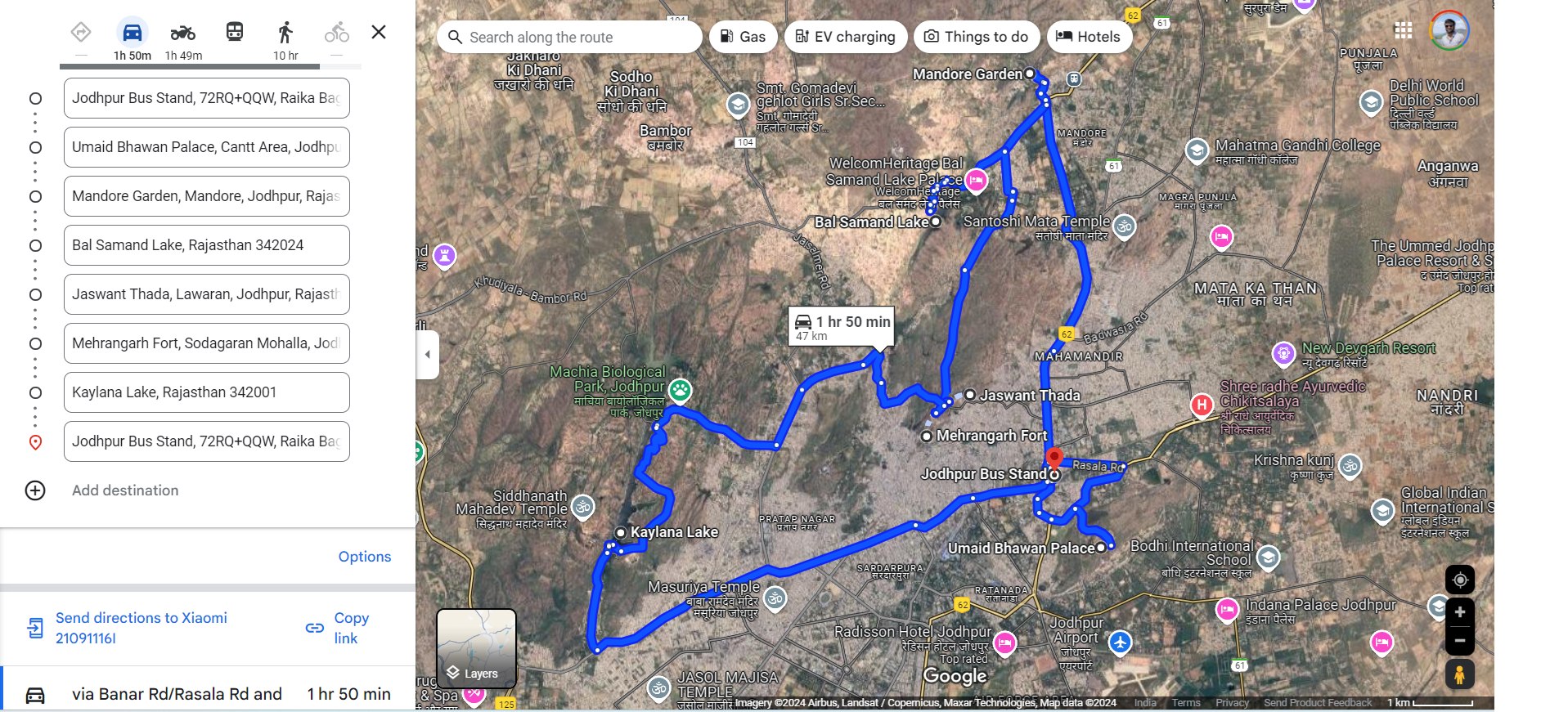
Nevertheless, feeling feverish was a familiar feeling on my solo trips, which I countered this time, by taking a paracetamol tablet following a breakfast of poha. Then, like on my previous trips, I hired an auto-rickshaw with a whole-day tour package that I determined based on the recommendations given by the hotel receptionist, and reached Umaid Bhawan Palace, the current residence of the ruling dynasty of Jodhpur. Located on a hillock, the construction of the palace was started in 1929 by the Maharaja Umaid Singh, 37th Rathore ruler of Marwar state to provide employment to famine-strike farmers, and was completed in 1943, when the Maharaja started occupying it.
The Umaid Bhawan Palace
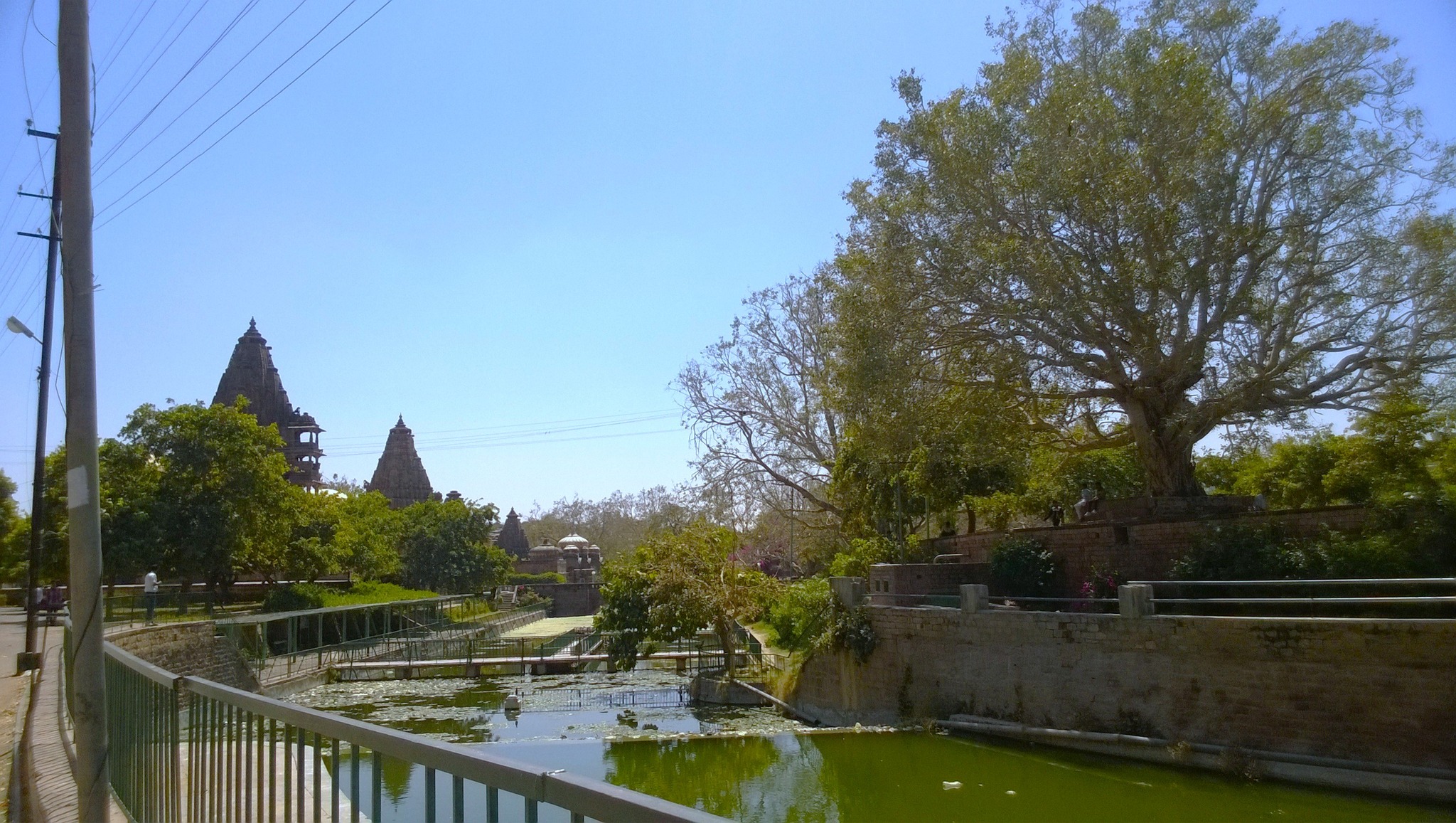
From there, I proceeded to Madore, a place that I only learnt about in Jodhpur, located about 8 km from the city, purported to be the native place of Mandodari, Ravana’s wife. Historically, Mandore, the seat of the Gurjara-Pratiharas in the 6th century AD, later became the capital of the Rathores before Rao Jodha shifted to the newly-founded city of Jodhpur. At Mandore, I was completely mesmerized by the scenes unfolding in front me – beautifully manicured lawns surrounding sandstone temples and cenotaphs, with a stone path trailing beside a canal abounding in lotus and lilies, that crossed a water tank and winded up the hill, with a the ruins of a fort lying on top of the hill. From the hilltop, spires of temples, the domes of the cenotaphs and the lushness of the lawns down in the garden below presented the most eye-pleasing views.
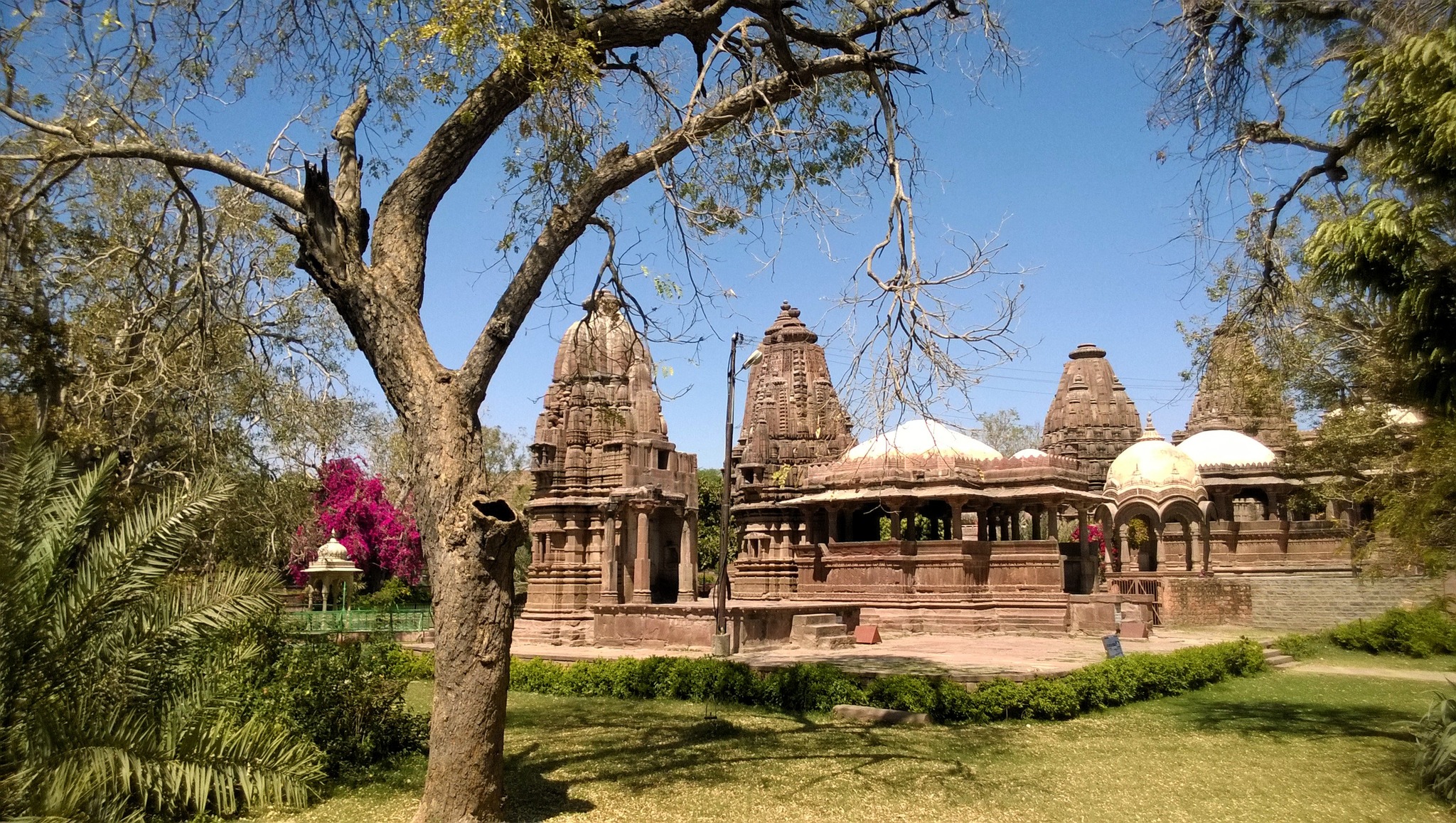
Temples in Mandore Garden
A swimming tank in Mandore GardenRuins of the Mandore fort
A canal inside Mandore Garden
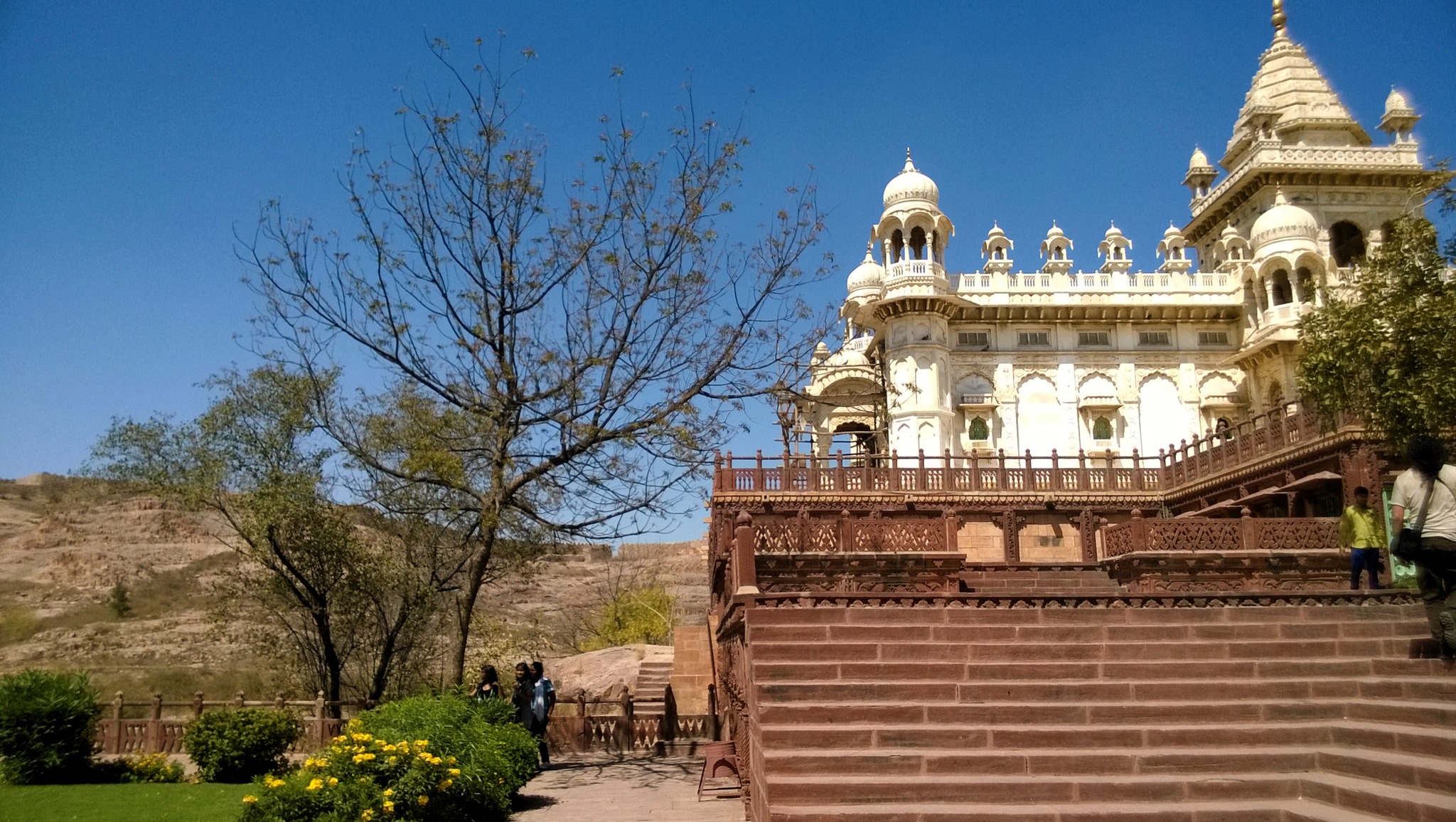
Leaving Mandore with reluctance, the autorickshaw driver drove me to Balsamand Lake, on the banks of which lies a summer palace, and from there, returned inside the city, stopping at Jaswant Thada. The Jaswant Thada, a cenotaph built of Makrana Marble for Maharaja Jaswant Singh II in 1899, itself is located on the top of a flat, barren red-coloured hill of igneous rock, only punctuated with water pools and barely any vegetation, and has the scenic backdrop of the Mehrangarh fort on one side. After admiring the striking landscape around the Jaswant Thada, I moved on to the Mehrangarh fort.
Landscape around Jaswant thadaSide view of the Jaswant Thada
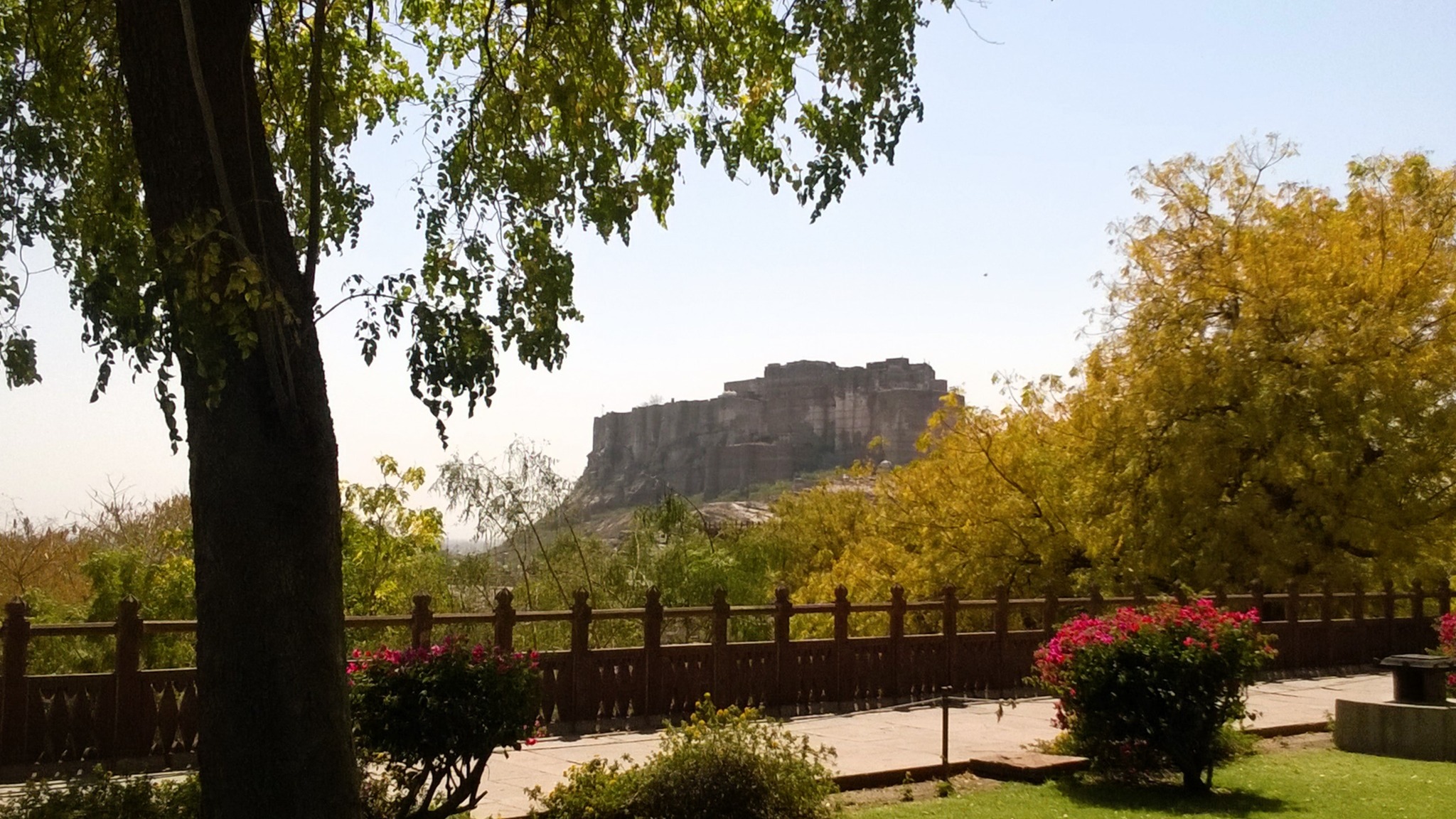
View of Mehrangarh fort from Jaswant Thada complex
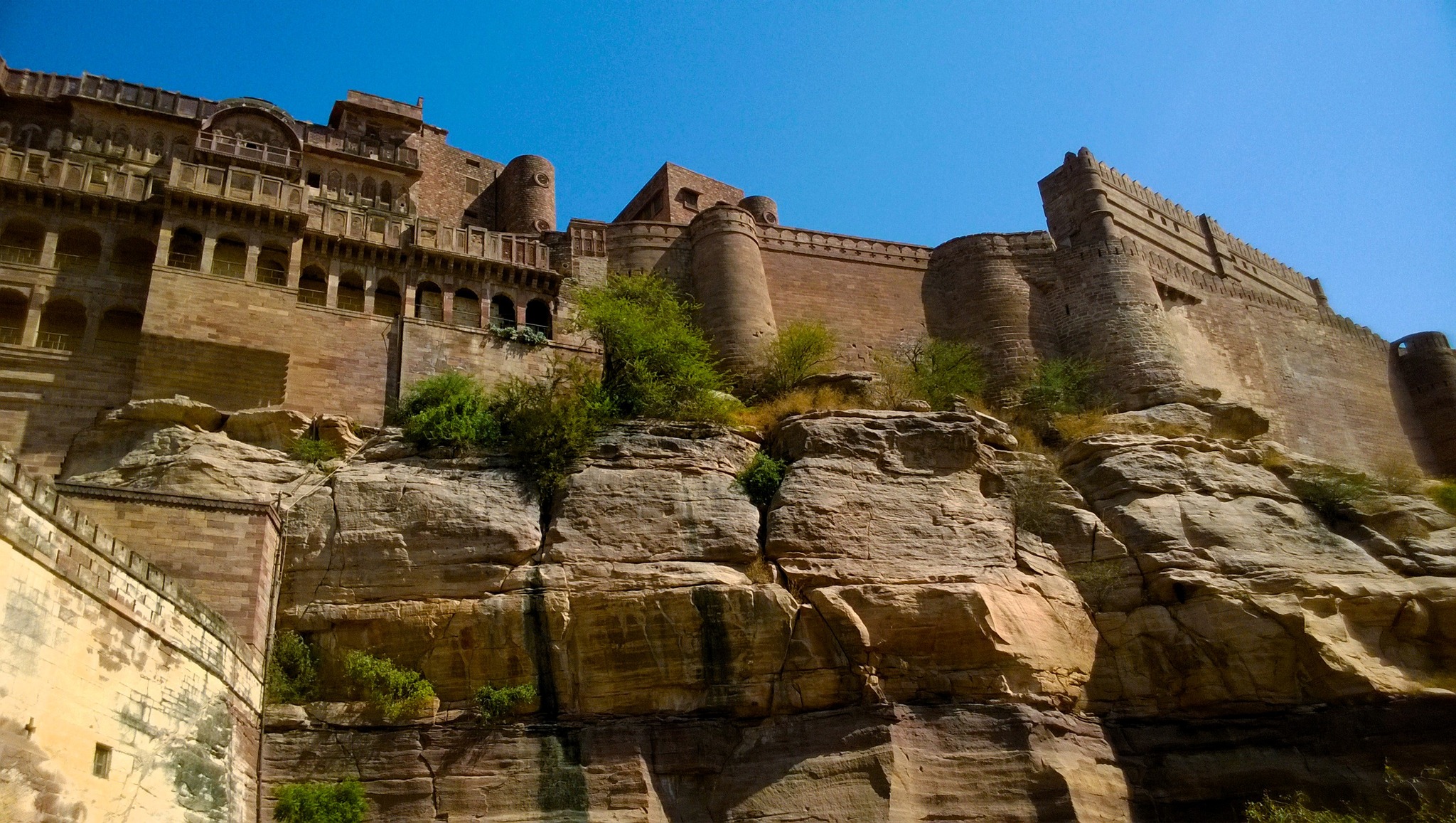
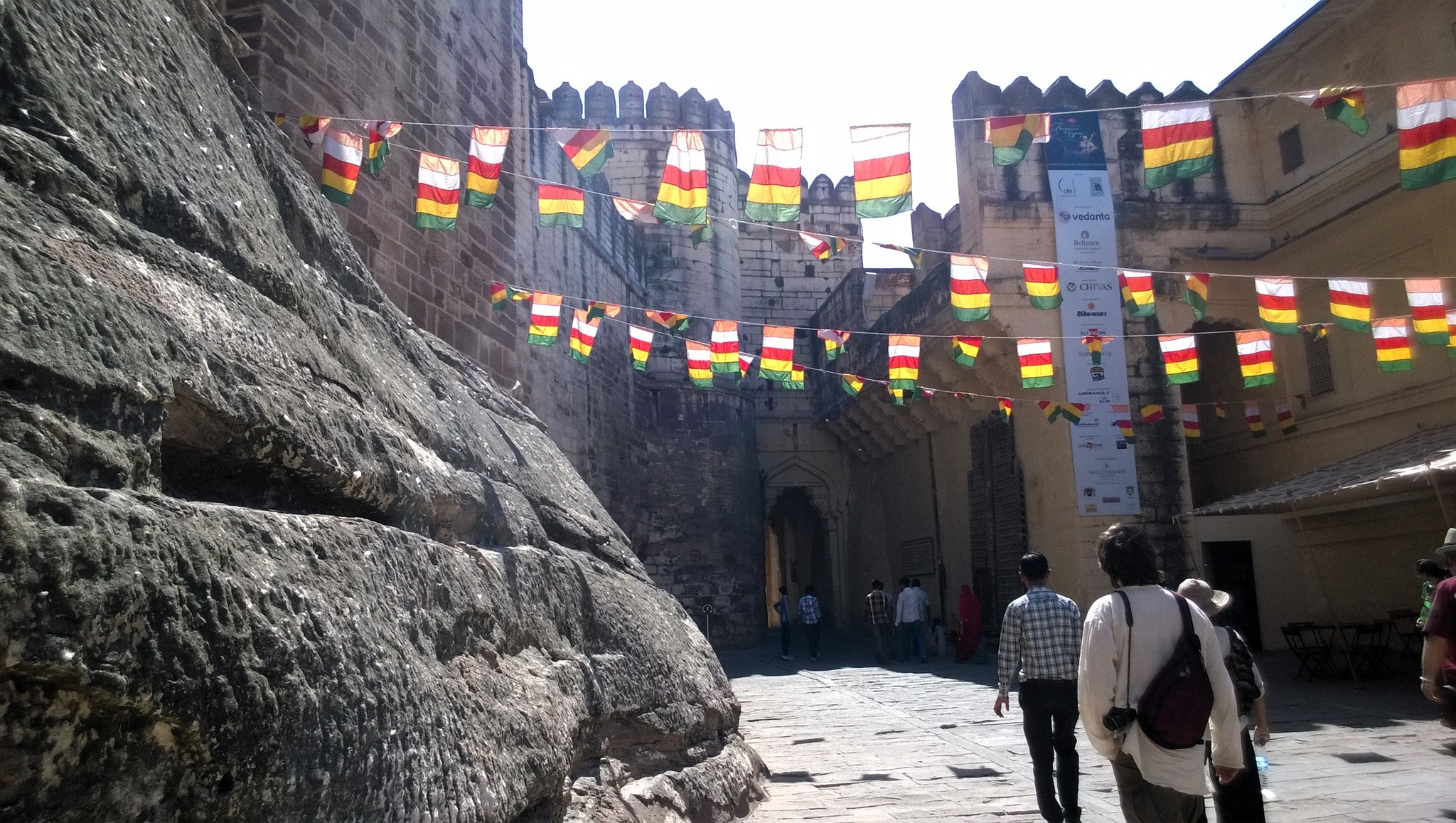
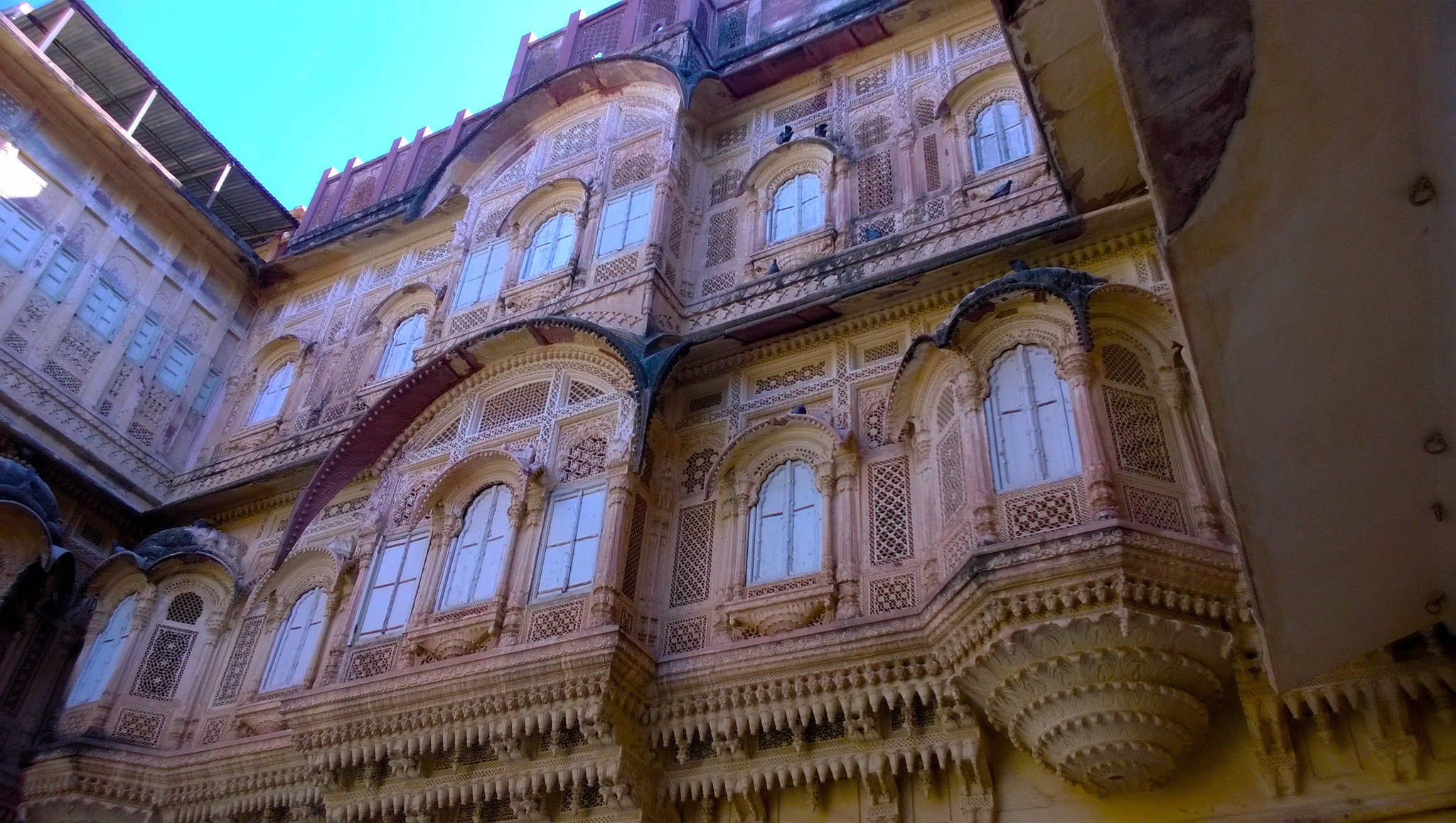
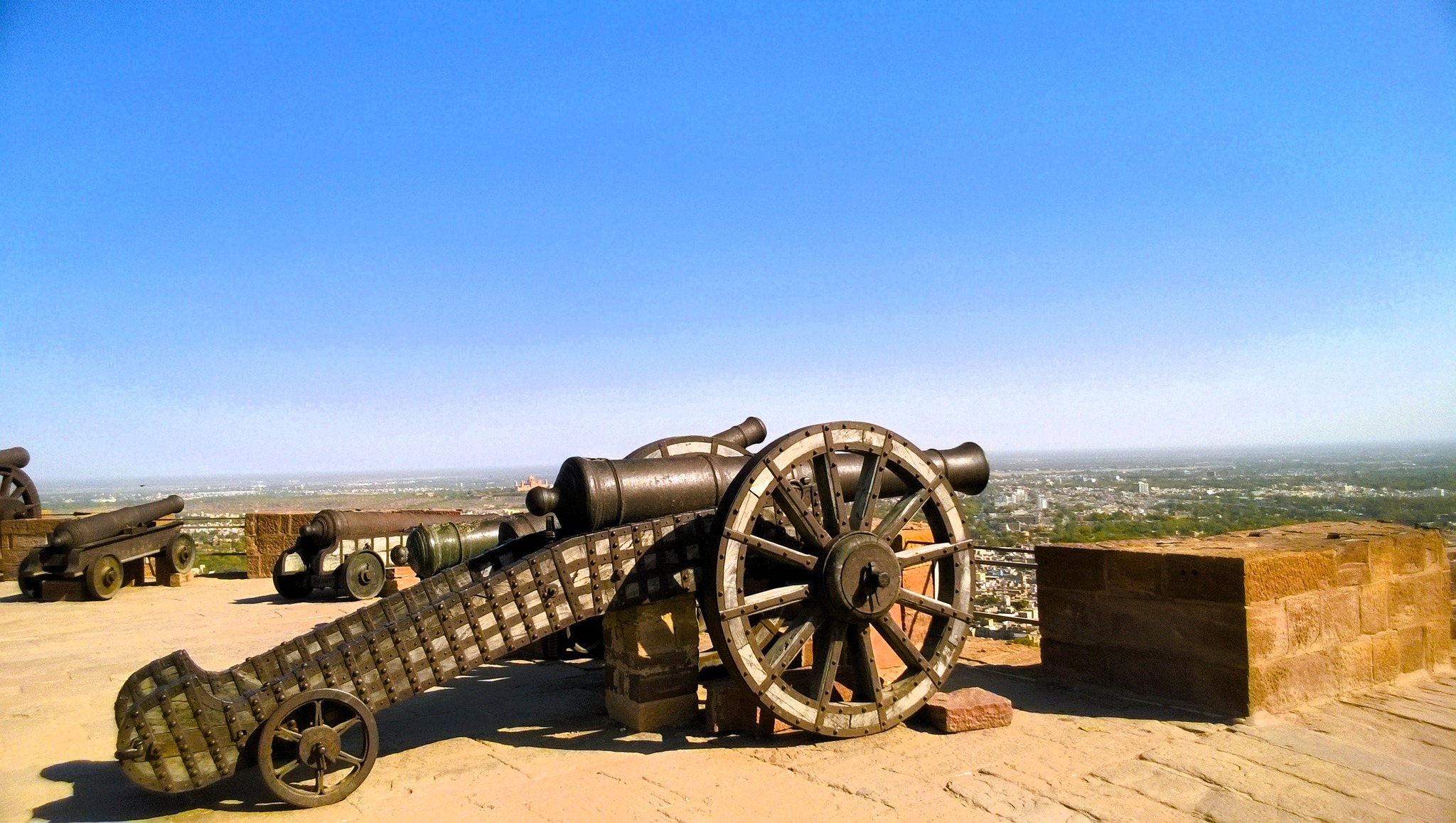
The construction of Mehrangarh fort was started in 1459 AD by Rao Jodha, who founded Jodhpur city after moving from Mandore the same year, with most of the current structures being constructed in the 17th century. The fort stands atop a 122 metre high rocky hill overlooking the city, with its distinct red sandstone profile with the red coloured hill base standing out and visible from long distances all around. I walked through the numerous tall arched gates, and then gawked at the imposing palaces and exquisitely done interiors, before ending the tour at the raised long platform lining the fort wall the end of the fort where the cannons stand.
Mehrangarh fort
An entrance gate of Mehrangarh fortPalace facade inside Mehrangarh fort
Cannons inside Mehrangarh fort
Descending from Mehrangarh, we again headed to the outskirts, this time in the west passing on a road flanked by kumat plants with their golden coloured ears, to Kaylana lake, an artificial lake built by Pratap Singh in 1872, in the midst of igneous rock formations. After spending the sunset on the Kaylana Lake, I returned to the city, stopping at the clock tower, and retired to bed, after a day well spent, with my heart throbbing in anticipation of seeing the desert the next day.
Off to the Dunes
The next morning, I left the hotel and was inside a road transport bus headed to Jaisalmer by 8.30 AM. As we left the city, the landscape became progressively arid, with it becoming more distinctively barren and sandy as the bus approached Pokhran, where khejri trees stood scattered with large expanses of empty space between each other. I distinctly remember listening to the album The Bends by Radiohead as I marvelled at the white-yellowish sparsely vegetated soil shimmering under the sun. At 3 PM, as I stepped down at Jaisalmer, a streak of electrified excitement passed through my body. Soon, I was picked up by a local who I had called beforehand based on a colleague’s referral.
Landscape on the way to Jaisalmer somewhere between Jodhpur and Pokhran
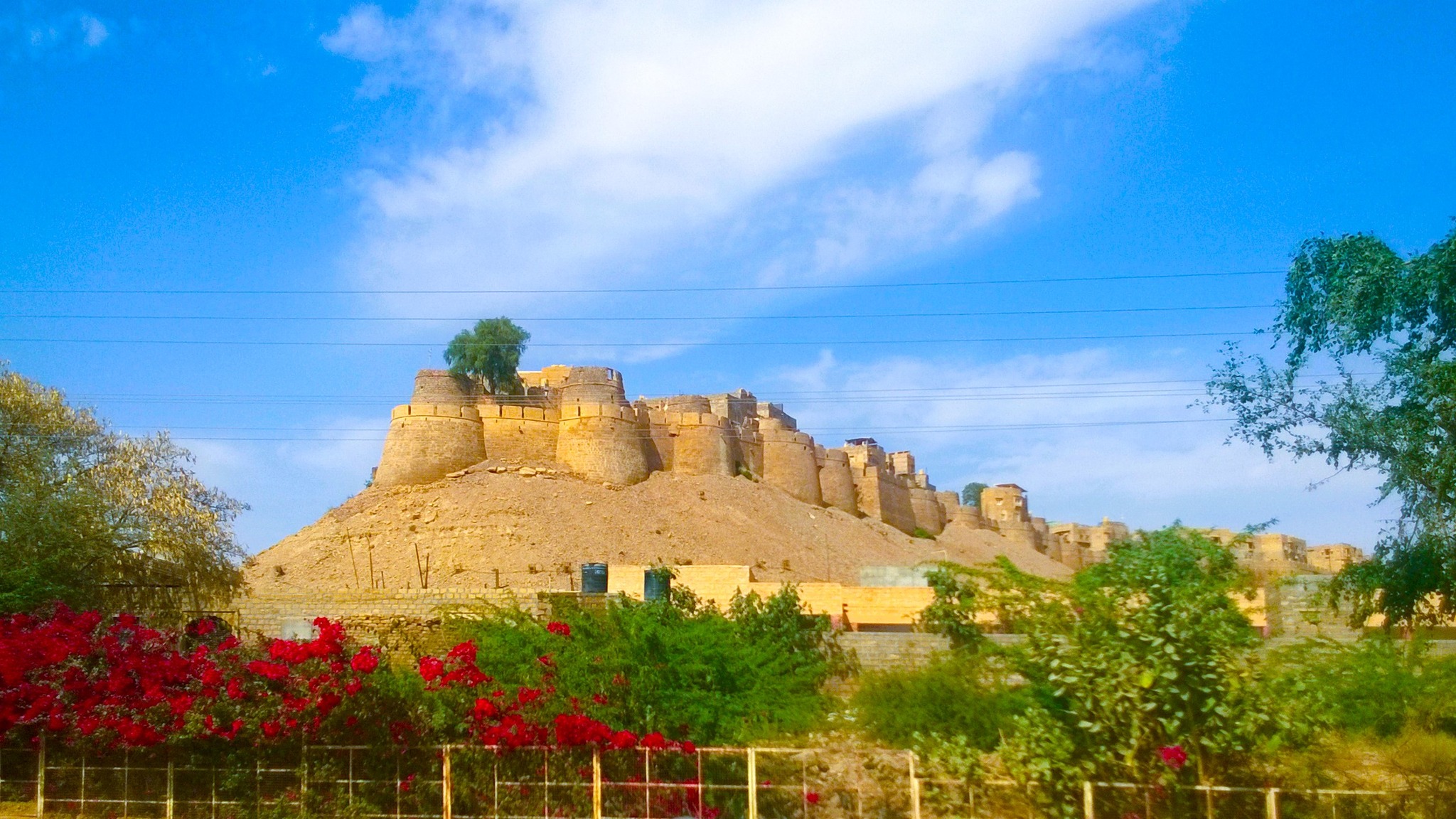
The first sight that struck me as I rode pillion on the local’s motorcycle was that of the Jaisalmer fort radiating in all its golden glory with multiple golden coloured stony turrets stacked one after the other along the edge of a golden coloured rocky hillock. It was the physical manifestation of the images that I had created in my mind from reading in a book or hearing in the context of a movie (Sonar Kella by Satyajit Ray) or seeing in pictures or documentaries. But stepping physically inside that physical manifestation of my mental image had to wait, for there was yet another mental image born from childhood dreams that I had to physically soak in first – the sand dunes.
View of Jaisalmer fort (‘Sonar Kella’, or golden fort, as nicknamed by Satyajit Ray)
So checking into a budget hotel at the foot of the hill on which the fort is located, I rented a scooter from a nearby shop, and armed with a map and directions provided by the rent-a-bike shop scooted off towards Sam. As I left the periphery of the city, habitation and vegetation disappeared, while the road dipped and rose in curves streaking across the arid landscape shooting and disappearing into the horizon. Alongside the road, stood tall windmills in the midst of tall grass, with the skyline in the background lined by a long sandy ridge running from one end to another end of the purview.
As I rode up and down the wavy road, stopping at places to click photographs of the landscape, the thin clusters of huts and the camels either solitary or in groups whiling away time, I was welcomed by flat patches of sand with sparse vegetation on both sides. After almost an hour of riding, resorts in the form of desert camps started appearing, signalling the arrival of the Sam Sand Dunes. Right at the location where the Jaisalmer local’s contact person at Sam Sand Dunes had indicated earlier over the phone, there stood a camel with its minder waiting for me. And soon, the camel, with its minder and I seated on its back, heaved with a jerk from its kneeling position to stand upright, even as I saw the ground beneath sinking away, and lurched into the vast expanse of shimmering mounds of sand lying in front of me.
Glimpses of the landscape on the way to Sam Sand Dunes from Jaisalmer city
After staggering up and down the peaks and troughs of the dunes for about a kilometer, the camel stopped, and the minder beckoned me to get down, and soak in the atmosphere and the sands. As I sat on the sand, sifting through it, taking a fistful of it, and letting it stream down from my hands, I was overcome by the delight and glee of a child that has been left to play in a theme park. I sat marvelling at nature’s unique creation, observing the ribbed contours formed on the sand due to effects of wind, and the trails of footprints left behind by camels and humans and the tracks of the wheel carts swishing across the undulations. Beholding the sun setting behind the dunes, I turned around only to be awestruck by the near full moon hovering just over the horizon in the opposite direction.
The Sam Sand Dunes
A moonlit meeting
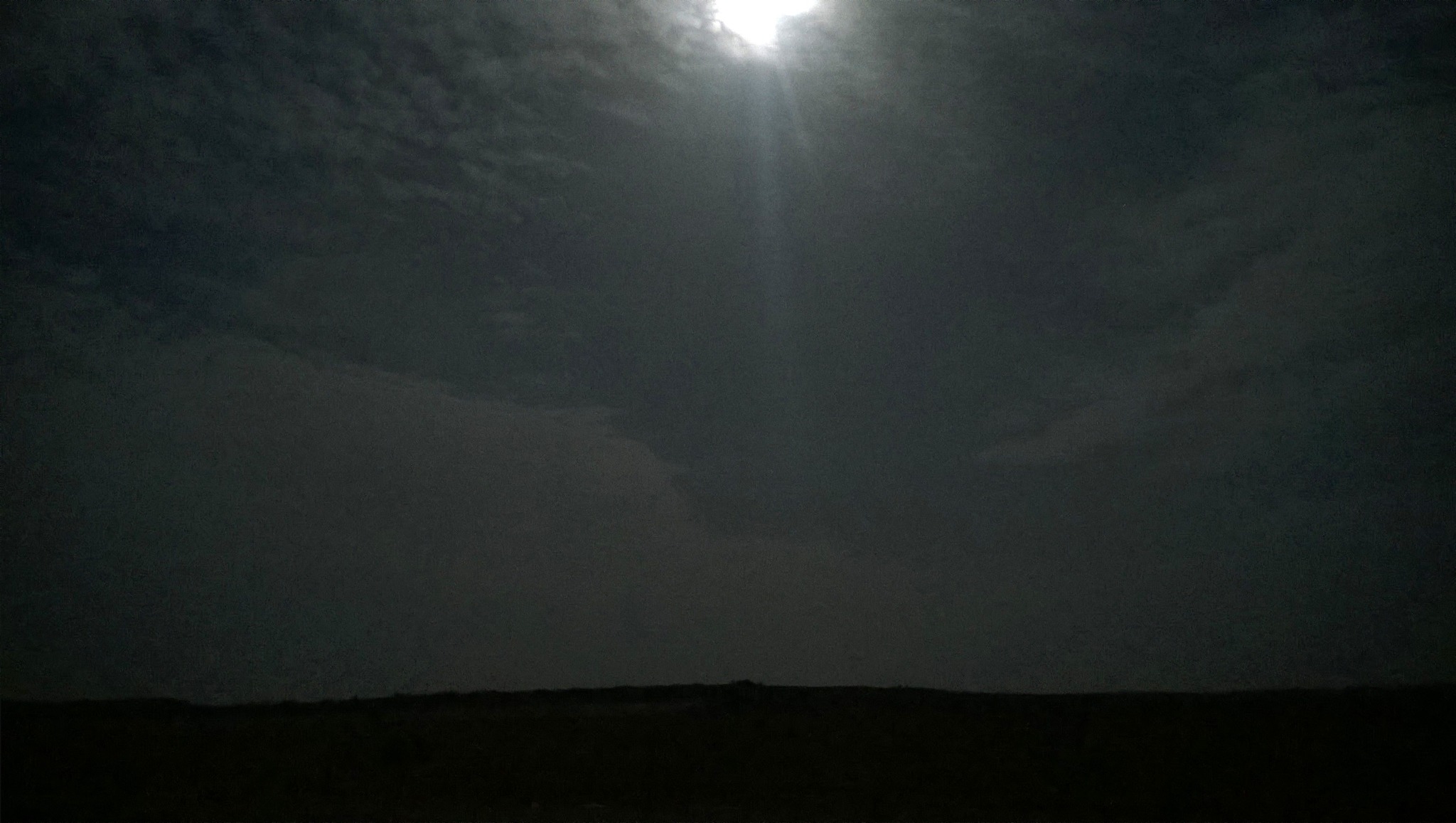
In the twilight, I trod by foot over the sand dunes back to the point where I had parked my scooter, and headed across the road to the resort where the Jaisalmer local had arranged for my dinner. After witnessing a folk programme of Rajasthani music and dance, and gorging on the buffet of Rajasthani cuisine, I headed back on my scooter to the city. Riding all alone at 8.30 PM in the night, with the seas of moonlit sands glimmering all the way to the horizon on both sides of road, the near full moon hanging right over my head keeping me company and the cool breeze blowing against my face, I reckoned that I had transcended all bounds of the material world – I was floating in a meditative plane, wanting the ride to never end. It was pure bliss.
Folk programme inside a desert camp resort
Riding alone through the desert on a moonlit night
Desert Frenzy
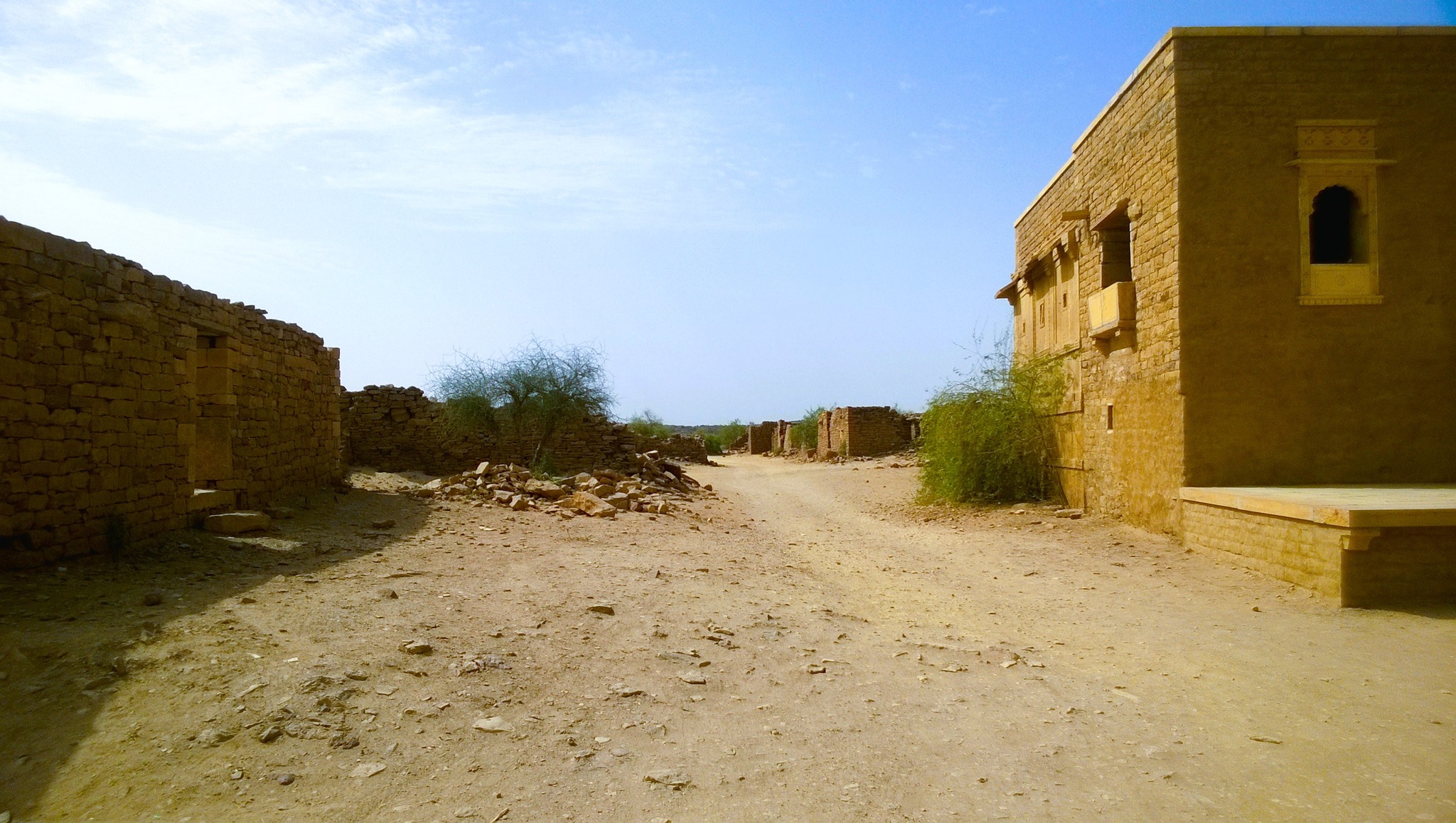
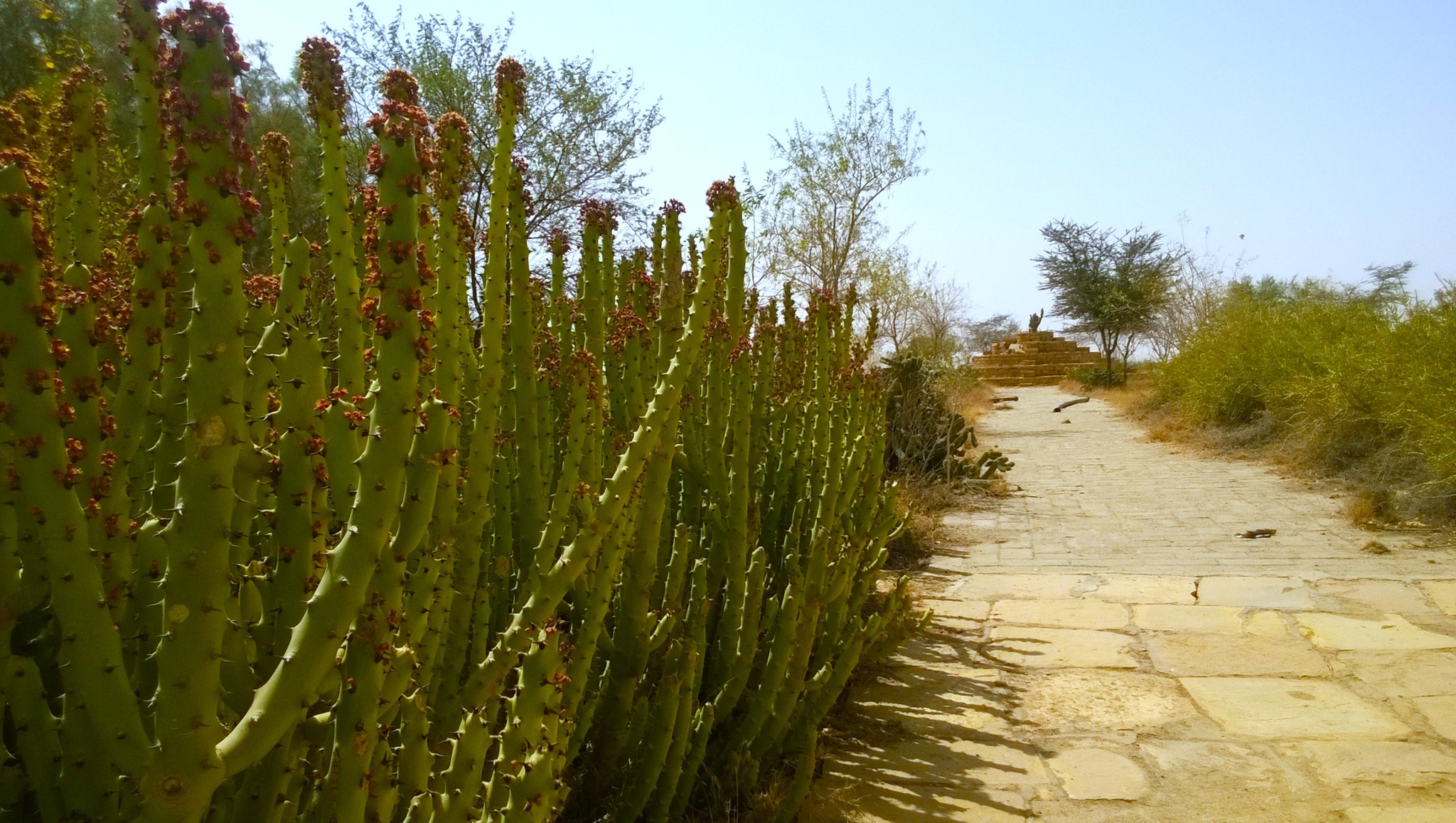
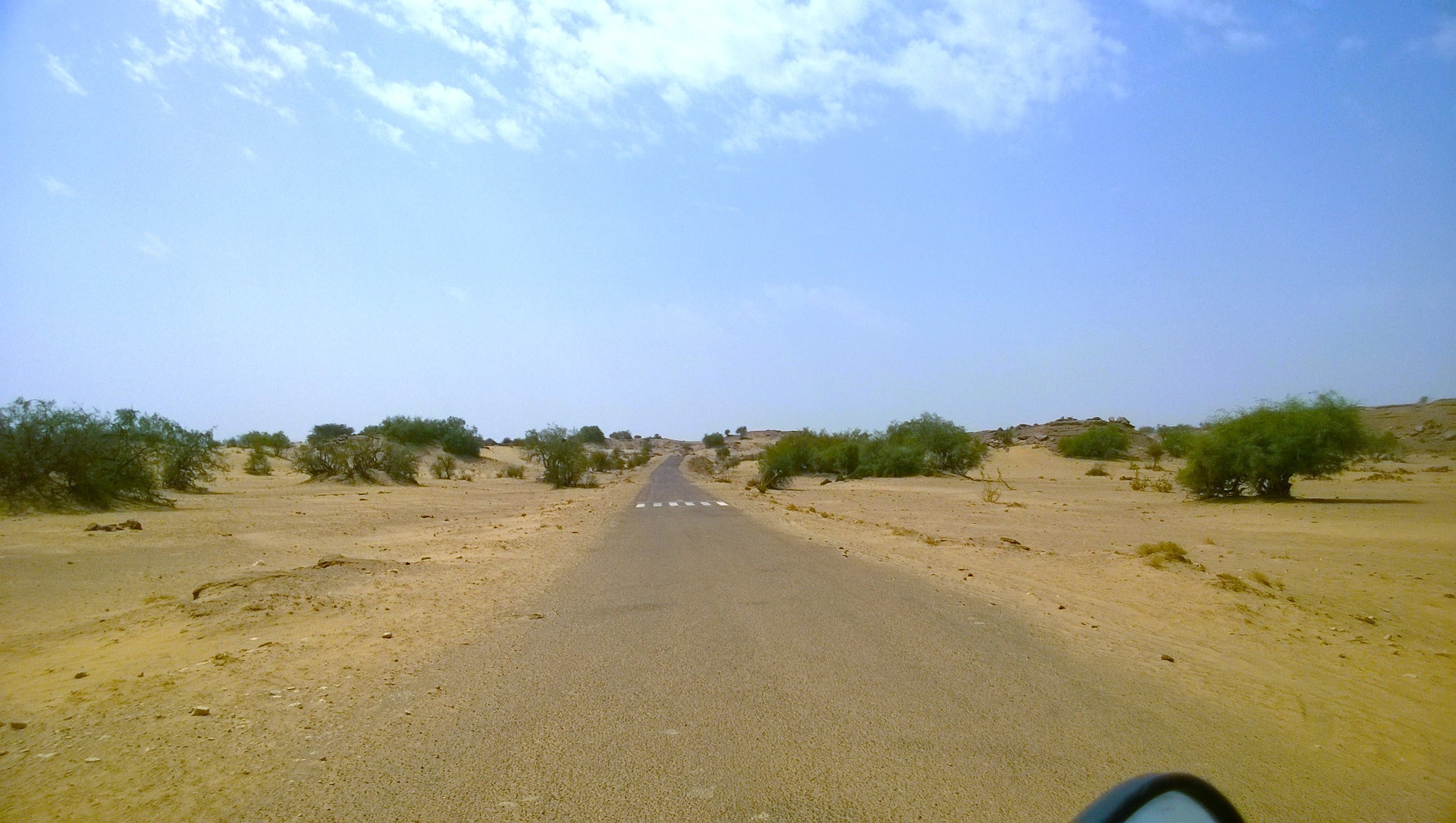
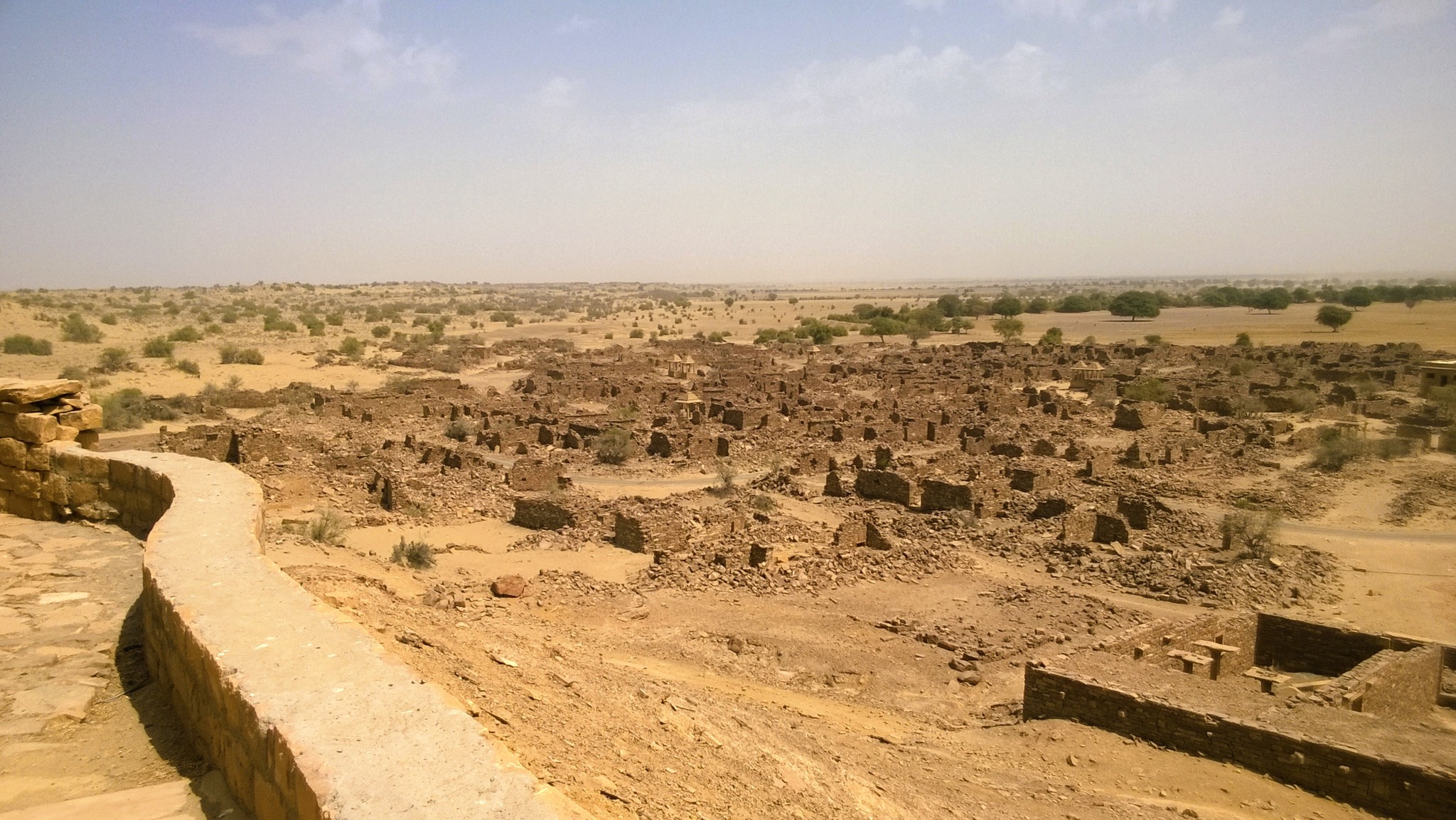
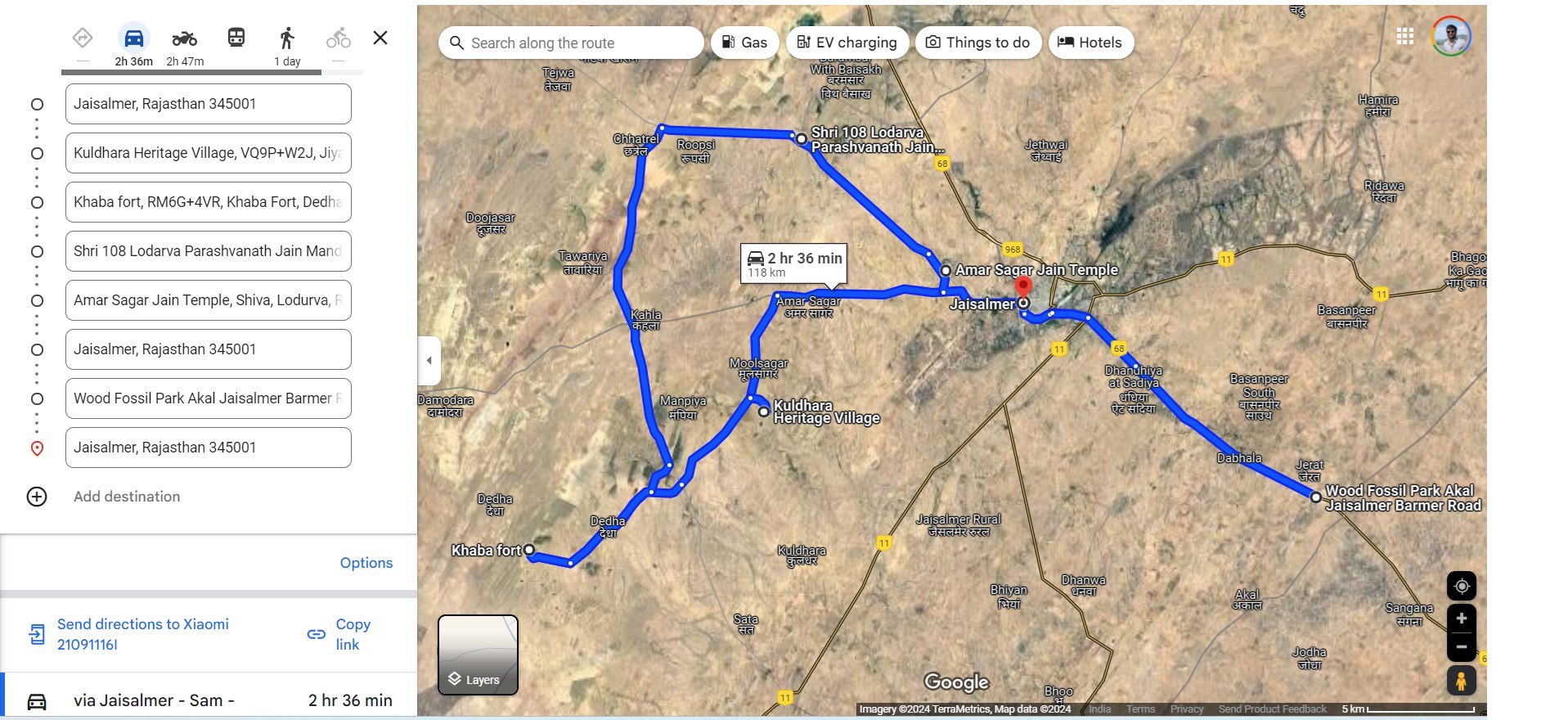
The next day was going to be jam-packed, what with my return scheduled on the 6 PM train that evening. So, I started around 9.30 AM after breakfast on the scooter, and headed back on the same road leading to Sam Sand Dunes. Midway though, I took a left turn and headed off on the narrow road piercing the desert, and reached Kuldhara, an abandoned village, also touted as a haunted site, right in the middle of the desert. At Kuldhara, there lay rows of abandoned stone houses with only their walls remaining, alongside a temple around which the town’s life seems to have centered around. Adjacent to the lies a garden dubbed Jurassic Cactus Park, with a fascinating assortment of cactus varieties.
Established in the 13th century by Paliwal Brahmins who had emigrated from Pali, and is said as per a local legend, to have been abandoned overnight and cursed by the villagers when the prime minister Salim Singh set eyes on the village chief’s daughter and threatened the villagers with dire consequences if they defied his wish. However, research seems to suggest that Kuldhara and other such villages nearby were abandoned gradually over time, mainly due to damage due to earthquakes and dwindling water supply, and the abandonment seems to have been precipitated by early 19th century due to the oppressive tax regime of Jaisalmer state propagated by Salim Singh.
Ruins at Kuldhara village
Cacti at Jurassic Cactus Park in Kuldhara village
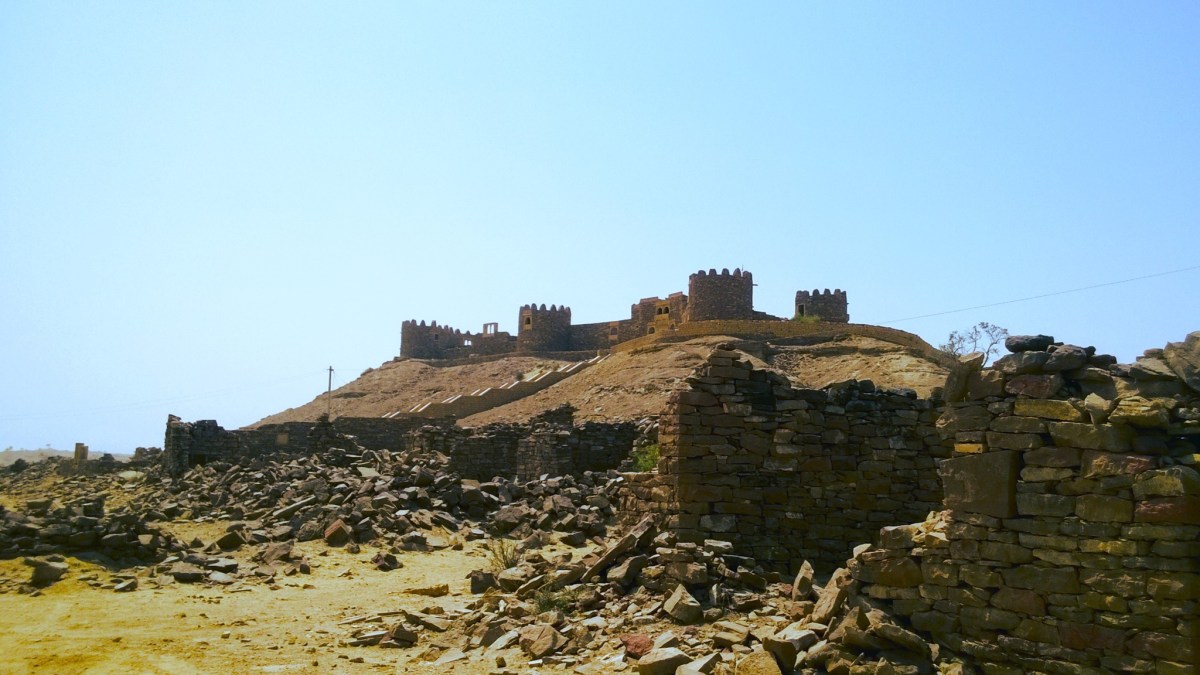
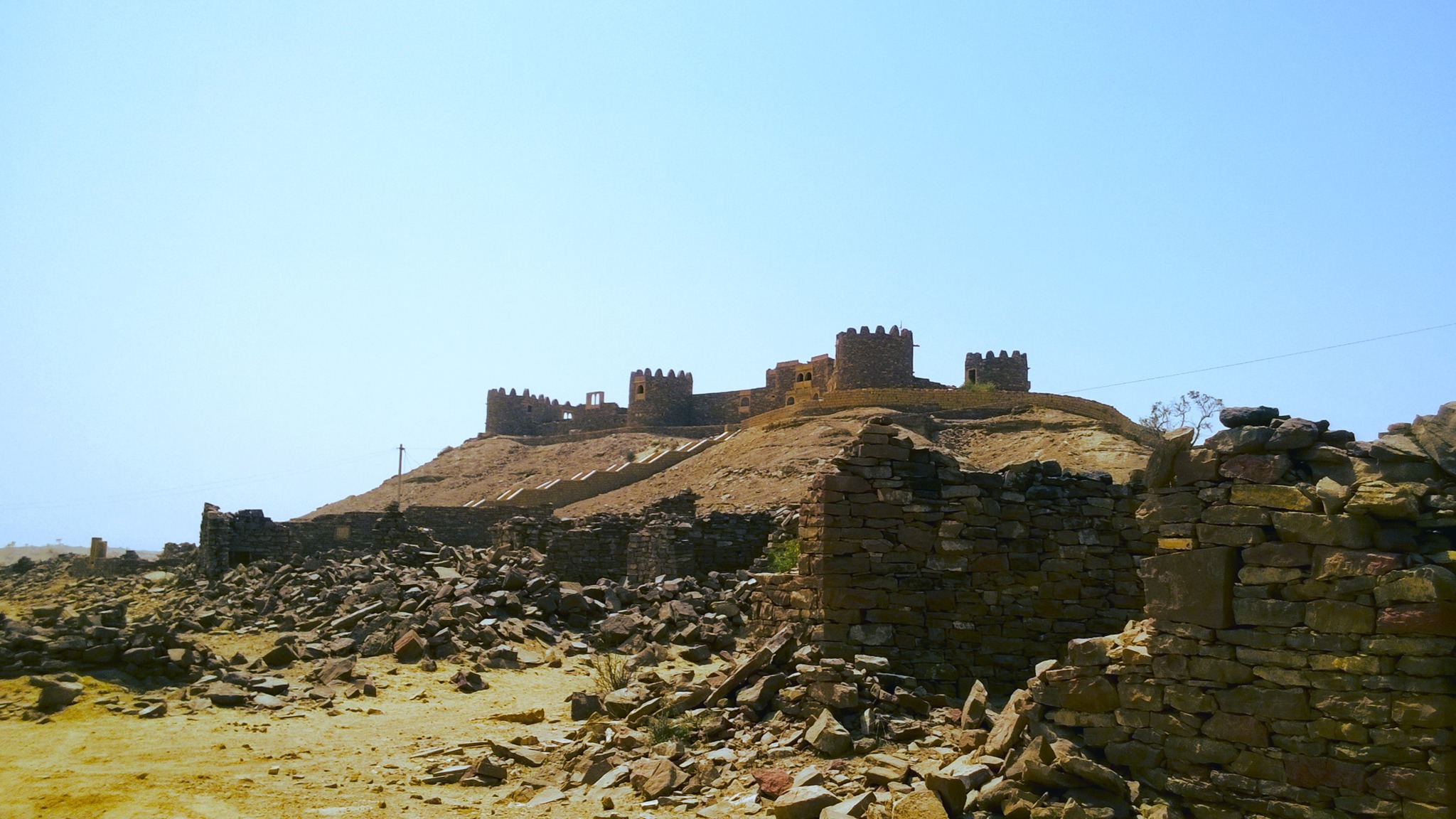
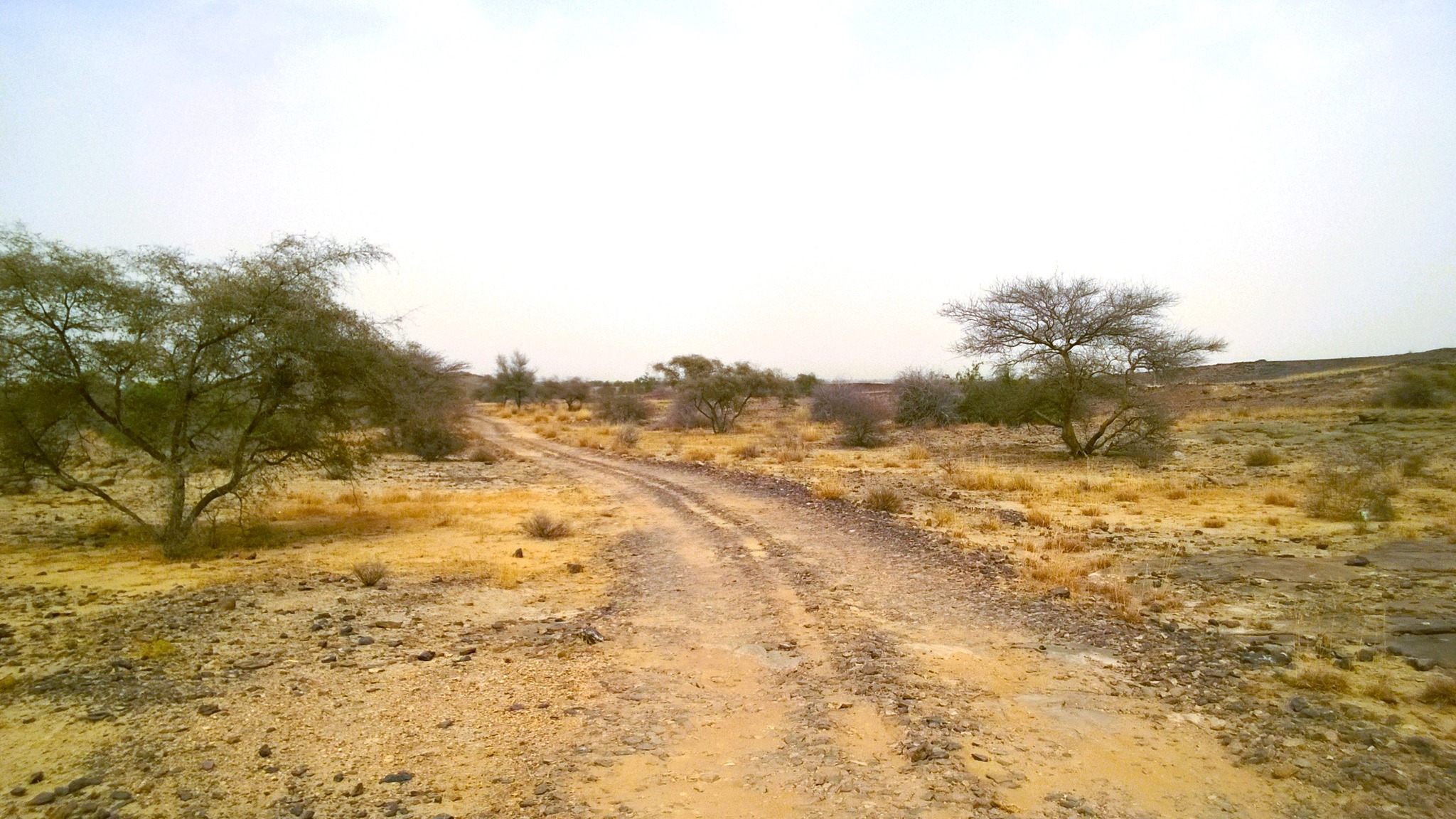
Pushing further into the desert, all alone on the scooter, with nary a human in sight, I headed towards Khabha. About half an hour later, passing through sands with occasional patches of 3 feet tall grass beneath some of which, one or more camels would be resting, I beheld a ridge, resembling a plateau on which stood a compact golden-coloured fort. Ascending up the ridge, I was soon inside the Khabha fort, with tiny turrets lining its peripheral wall, where I was amazed to find a museum of natural history. The fort stood all alone in desolation, a lone sentinel on the edge of a low cliff in the middle of the desert, overlooking, in the escarpment below, the stony ruins of an abandoned village, a sight similar to that I had just seen in Kuldhara.
Somewhere in the desert on the way to Khabha
View of Khabha fort from the foot of the ridge
Ruins at Khabha as seen from Khabha fort
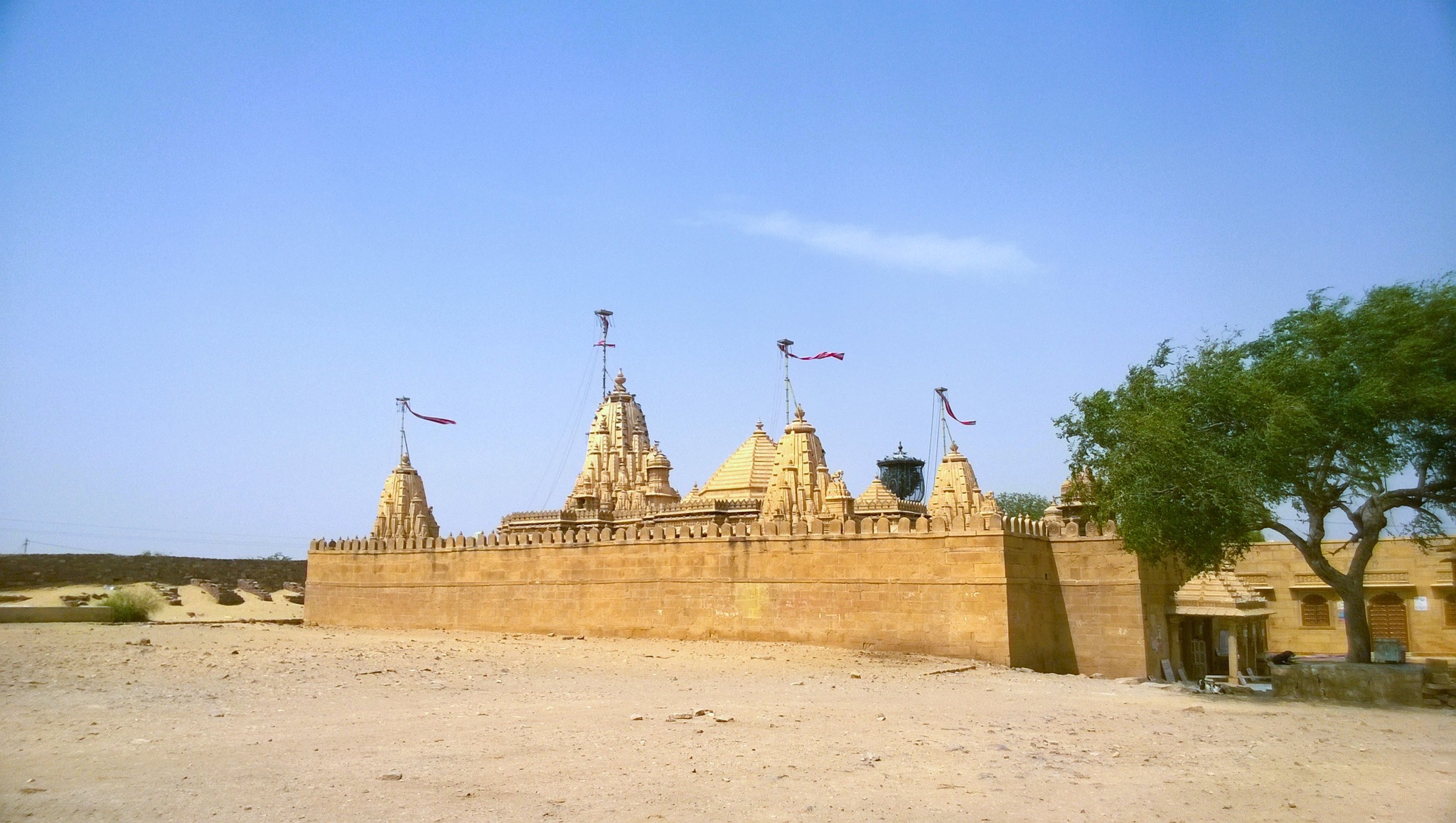
Leaving Khabha, I rode back towards the Sam road, and crossed it to move over to the other side, where the landscape was relatively greener, and then riding parallel to the Sam road but towards Jaisalmer, I reached Lodurva, which was the capital of the Bhattis before Rawal Jaisal founded Jaisalmer in 1156 CE. At Lodurva, I visited the Shree Parshvanath temple, dedicated to the 23rd Tirthankara, built in the 9th century in yellow limestone and sandstone, which was destroyed in 1152 by invaders, and later renovated and repaired in 1615 AD. Riding further, I was accosted by a couple of youth on a motorcycle who were intent on smearing rangoli, since it was Holi. I sped as fast as I could, with the duo in hot pursuit, finally managing to lose them, and only stopped, nearer to Jaisalmer, at the Amar Singh Jain temple.
The Parshvanath temple at Lodurva
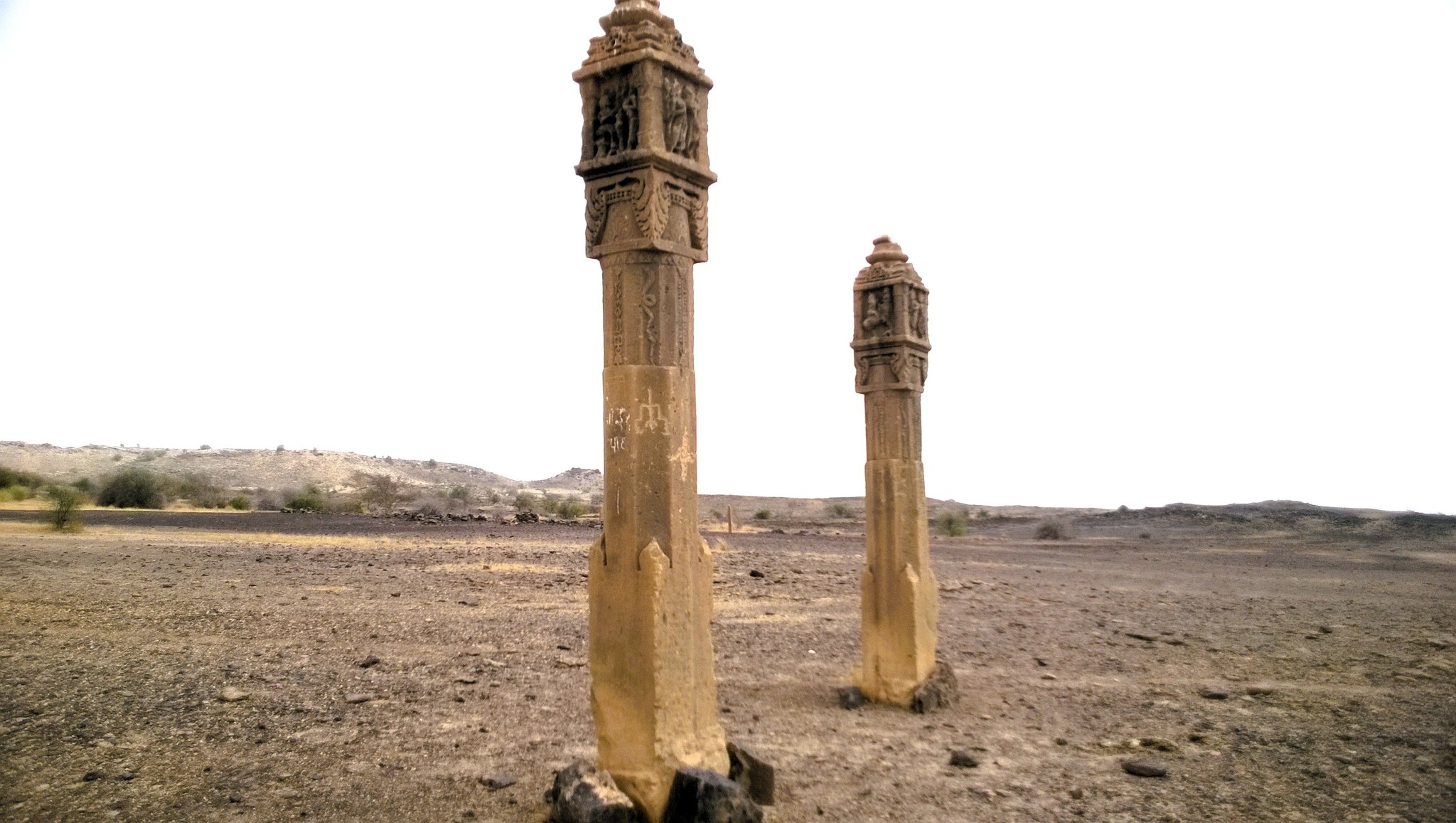
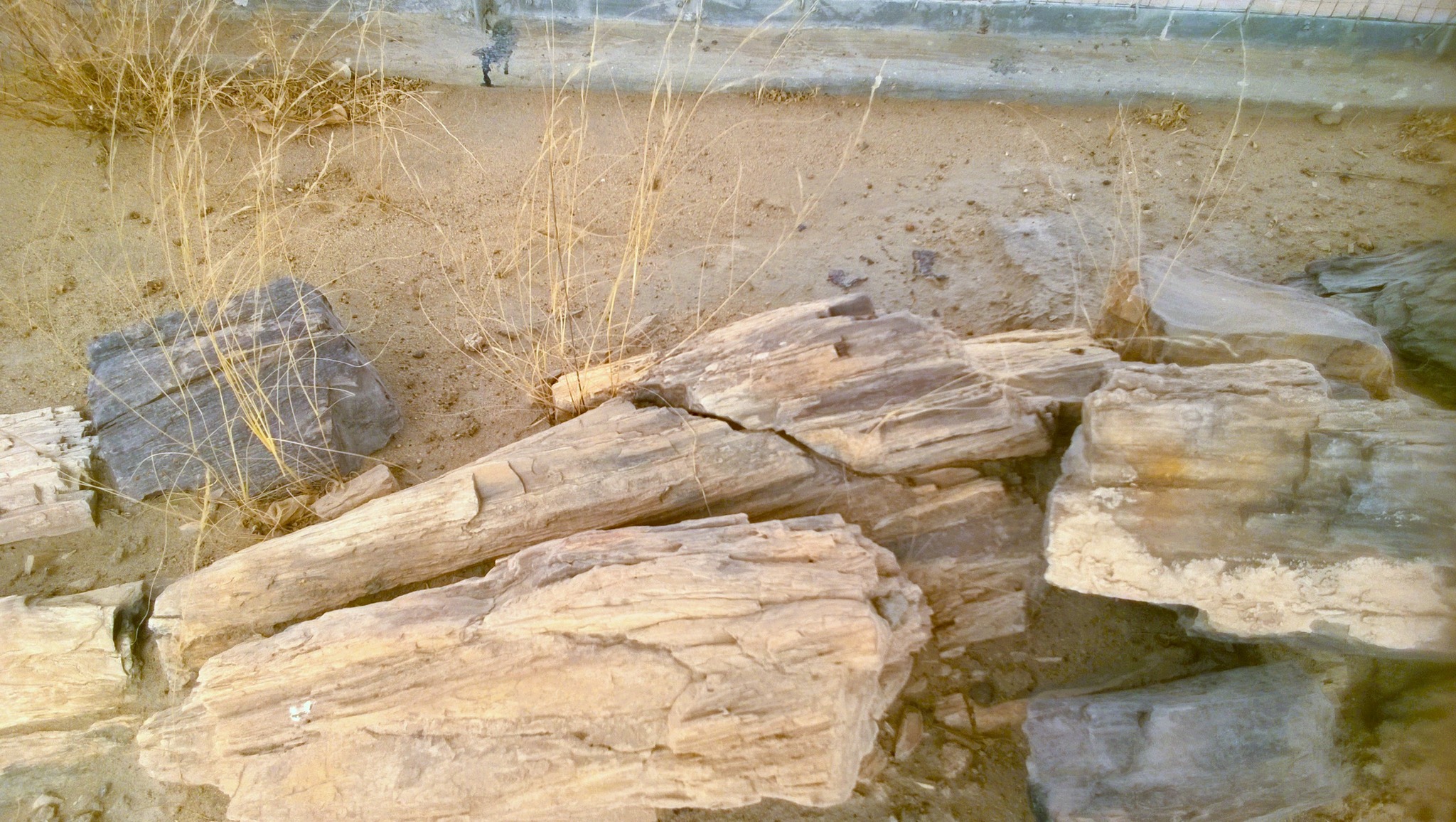
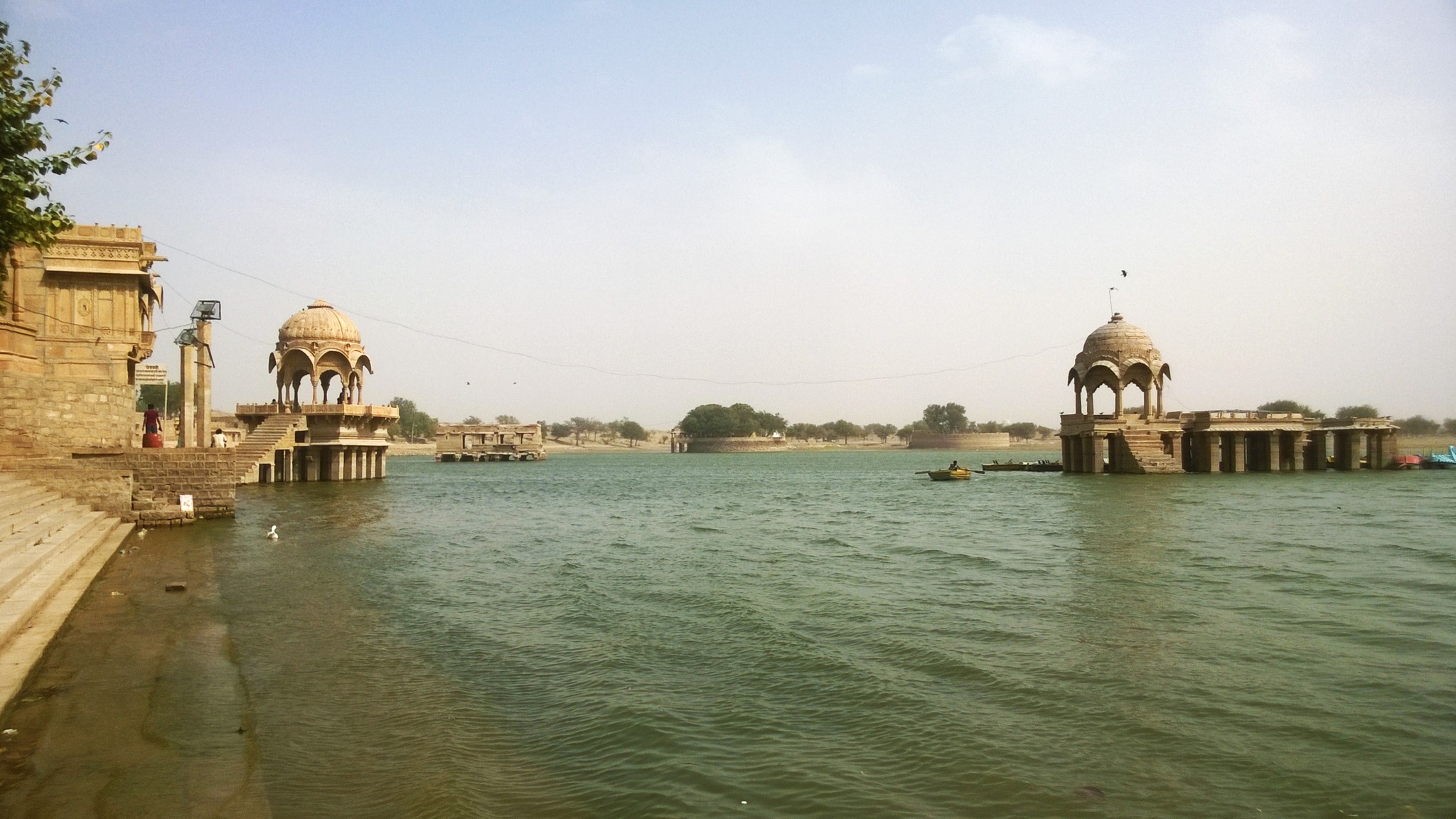
It was now 1 PM, and I had on my wish list, still one more outstation site to see, but this site was located on the other side of the city. Calculating the time I had in hand, I crossed Jaisalmer city, and sped on the Barmer highway to reach Akal Wood Fossil Park, lying about 18 km south-east of Jaisalmer, where I was welcomed by a couple of emus and an assortment of wood fossils dating back to 200 million years. I rode through the desolate desolate brown rocky land, coming across more preserved fossilized wood dating and pairs of pillars for which there was no explanation. After wandering for a while inside the fascinating park, I headed back to the city, where I stopped at Gadisar Lake, an artificial lake created in 1156 to serve as the main water source for the then newly-founded city.
Welcomed by emus in Akal Wood Fossil Park
Riding deep into the Akal Wood Fossil Park
A pair of pillars in Akal Wood Fossil ParkWood fossils in Akal Wood Fossil Park
Gadisar Lake in Jaisalmer city
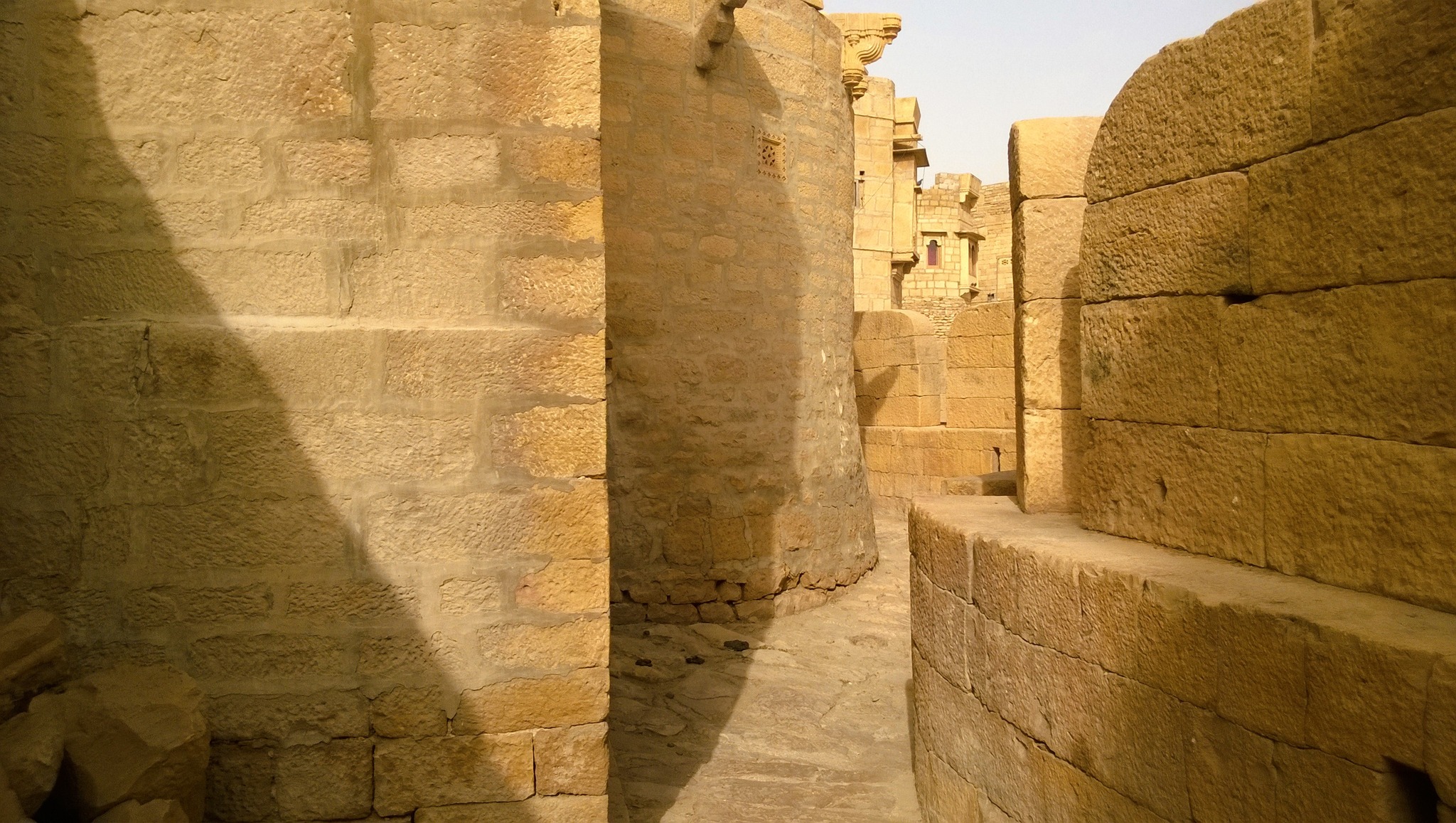
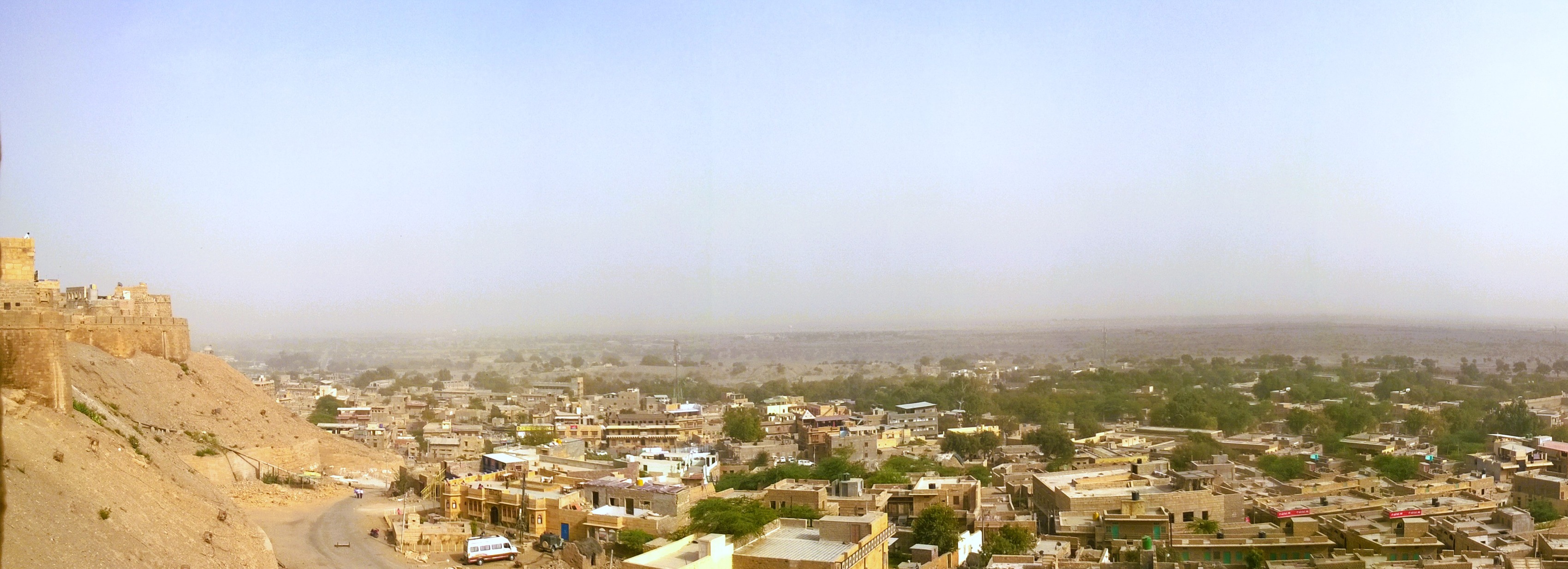
After surrendering the scooter at the rent-a-bike shop, at around 4 PM, I finally found myself inside Jaisalmer fort. Soon, I was walking through the streets of the bustling town lying inside the fort premises. After whizzing past the courtyards, corridors and halls in the palaces, I came upon the the alleys running along the ramparts of the fort, winding around the turrets, in maze-like form. Standing on the ramparts, I was treated to breathtaking views of the cityscape and the barren, desert landscape beyond it with its meeting point with the sky shrouded in a haze of sand, leaving me in a trance.
Inside Jaisalmer fort
Walking on the ramparts of Jaisalmer fort
Panoramic view of the city and beyond from the ramparts of Jaisalmer fort
My reverie was broken when the local who had arranged my accommodation and camel ride at Sam Sand Dunes called, asking if I was prepared to be dropped at the railway station. Walking down the fort road, I was not able to escape an assault of rangoli launched by a passerby, rendering patches of colour on my shirt and hair, leaving me fuming. But then, I saw a group of white tourists who had completely immersed themselves enjoyment of the festival of colours, and I told myself, what’s the big deal?, and greeted them, followed by exchanges of polite colour smearing.
As I mounted the motorcycle to sit behind the Jaisalmer local, with my backpack lugging on my back, I took one parting look at the mesmerizing golden fort sitting proudly and timelessly on the rock. An hour later, I was inside the train, fondly scrolling through the gallery on my Nokia Lumia phone, with the photographs on my phone, the smudges of rangoli on my person, and the wistfulness in my heart, being the only remaining and undying vestiges of my tryst with the Thar.















 The Timber Trawler